The Comedic And The Tragic Meet In Lee Man-hee’s Final Film, 1975’s “The Road To Sampo”

Standard
road to sampo

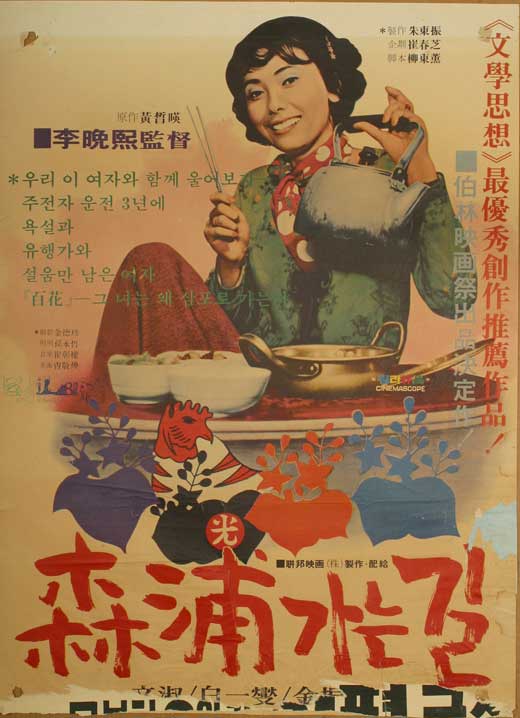
The Deranged Road Film That Is Lee Man-hee’s The Road To Sampo

Before reading any review of the 1975 film, The Road To Sampo, one must first gain an appreciation for the film’s director, Lee Man-hee, who holds the dubious distinction of being the first South Korean director to be arrested for violating his country’s National Security Law.

By 1965, Lee, an awarded Korean War veteran himself,  had become the godfather of the post-war government funded, anti-Communist war film with such popular efforts as 1963’s YMS-504 Of The Navy and Marines Are Gone when he set out to make The Seven Female POWs which depicts a North Korean officer who, while transporting seven female South Korean nurse prisoners, kills a unit of allied Chinese soldiers who attempt to rape the women. The North Korean officer then convinces his unit defect to South Korea to avoid possible court martial from his superiors. Upon seeing the full film, censors imprisoned director Lee as they felt that The Seven Female POWs  humanized the North Koreans while simultaneously showing the American soldiers as unsympathetic. Lee was subsequently released on probation after the South Korean film community protested his arrest but as part of his probation agreement, Lee was forced to edit over forty minutes of the final cut which made the final film virtually incomprehensible that led to the first negative reviews of his career. The arrest did damage Lee’s reputation, but he still ended up directing some thirty six films in the following ten years before his untimely death at the age forty five in 1975 during the editing of his counterculture road film, The Road To Sampo.

It should be noted that similar to American actor Robert Mitchum’s 1948 scandalous arrest for marijuana possession, which temporarily forced the actor out of contention for glamorous films into a career where he took more salacious roles like Harry Powell in Night Of The Hunter and Max Cady in Cape Fear, the Lee Man-hee’s arrest opened the director up to more experimental methods and themes away from the traditional filmmaking that marked his early career. What then followed in 1966 were Lee’s The Water Mill and Late Autumn: two groundbreaking and critically heralded films that depicted a never before seen open eroticism with the latter effort, Late Autumn being shot using a minimally written script that relied more on improvisation than scripting to create a film of palpable sensuality. In 1974, after almost a decade of pushing the creative envelope and with his health waning, Lee began to direct the iconic film, The Road To Sampo, which incorporated his desire for experimentation with bold sexuality along with his wry social commentary during one of the darkest eras in South Korean cinema.

Released a year after French director Bertrand Blier’s revolutionary anti-establishment road film Les Valseuses, The Road To Sampo similarly takes a pair of lost male protagonists through their homeland’s countryside where they engage in a myriad of rudderless, soul-searching situations through an economically depleted era where they soon encounter an equally lost woman whom they decide to take in on their adventures. The essential difference with Lee’s film is that the woman becomes the catalyst of change for our two men who are not only looking for good times and quick cash like our “heroes” in Les Valseuses but also for some sense of stability and place in a South Korea which at the time was growing but also still reeling from years of war.

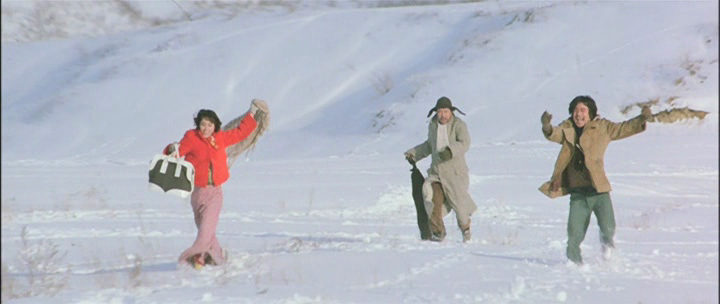
Young-dal is a wandering construction worker wandering aimlessly through the snow covered landscape looking for work until he meets the middle-aged Jeong, who has just spent a dozen years behind bars and now only seeks to return  to his hometown of Sampo, a seaside town that Jeong describes as abandoned during the winter. The pair begins their journey together, and soon they descend down a hill to a small village where they grab a meal and listen to the proprietor’s lament of being understaffed as her waitress slipped away without her knowledge but with her purse which contained a lot of money. The desperate proprietor offers Young-dal and Jeong  substantial money to find her runaway waitress, and, as they are without a cent, they decide to take the job, and after a short search they discover their waitress, a frantic, hostile, but brightly clad young woman named Baek-hwa who claims to have not stolen any money despite bragging about her former bosses’ purse which she has in her possession.  Our men quickly realize that Baek-hwa carries more sadness than a potential for profit so they soon become a trio and head out towards Sampo.

Drawing further comparison to Les Valseuses, except with the gender roles reversed, our Baek-hwa is a fountain of overt sexuality. Baek-hwa wears the mantle of a prostitute with pride and boasts of her exploits as well as a proclivity to become undressed around Jeong and Young-dal who exhibit no sexual aggression towards her.  Jeong left an eight year old daughter in Sampo before his ten years in jail, so he becomes an almost father figure to Baek-hwa, and Young-dal brags of his days as a successful street vendor of rat poison but suggests that his wife may have died from accidentally ingesting the poison that he sold.  Needless to say, Young-dal is in no way looking for a woman and wishes to just work until he gets on his feet, which means that Baek-hwa’s endless sexual innuendos towards him mean virtually nothing as they travel onward.

Their intentionally loosely connected exploits include a hilarious scene where the three, who have not eaten in days, visit a village and crash a funeral in hopes of getting a meal, but they are  discovered when Baek-hwa gets plastered and begins to sing and dance, much to the chagrin of the actual mourners who turn violent as they are there to grieve.  In another scene, Baek-hwa leaves the group to work in a brothel but becomes violent when the johns start to assume that she is there for a sexual tryst.  The three seem always out of their element and become a sad reminder of a 197os South Korea which was full of post-war homelessness and run by a harsh government that was rapidly trying to build an infrastructure but in the process is also leaving many who cannot move with the pace behind. Baek-hwa, Jeong, and Young-dal are hopelessly out of synch with the real world, so as the narrative moves forward, the film goes from comedy to heartbreaking melancholy as you begin to see their time together coming to an end as there is no place for them. Director Lee gets wonderful performances from our leads, especially Suk Mun, who played Baek-hwa and starred in the director’s last three films. Suk’s performance is beautifully textured as she creates the emotional framework for a young woman who can be alternately hysterically gleeful as she is vengeful while eminently real and vulnerable.

 The Road To Sampo Complete Film w English Subs

In 2015, Suk Mun returned to acting in Jong-Teol Baek’s award-winning film, The Beauty Inside after a forty year absence during which time she only starred in one film post Lee Man-hee’s passing.  As for director Lee, his entire body of work was screened at the 2005 Pusan International Film Festival that occurred on the thirtieth anniversary of his passing. That festival sparked a national resurgence of his catalog. and an long-overdue appreciation for a director who took his moment of government produced strife in 1965 and turned it into an daring collection of work.

Generoso’s Smokey And Vegetarian Soup: Zuppe Con Cannellini e Arborio

Standard

Happy Cooking Folks,

This dish is one that I decided to make in honor of my dear friends living on the East Coast this January. This tasty Northern Italian soup has a creaminess and a smoke to it that has little to do with dairy and nothing to do with any meat.   No crazy ingredients here as the creaminess comes from the cannellini beans and the smoke coming from the toasted breadcrumbs and nuts. Total prep and cooking time is about an hour so I hope you will come back to this dish anytime you need need a fast, inexpensive soup to eat on these cold winter days.  

You will need for ingredients: One half head of cabbage, 1/3 cup of cashew or pine nuts, one half of a small Italian roll, four cups of vegetable broth,  one pound can of cannellini beans, two sprigs of fresh rosemary, four cloves of garlic, one cup of olive oil, salt and pepper (grated romano is up to you as a topping).  

Please let us know how yours turns out and stay warm this winter.

Love,
Generoso

Music: Georg Philipp Telemann’s Viola Concerto, TWV 51:G9

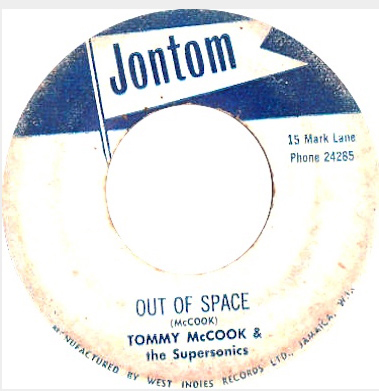
Generoso and Lily’s Bovine Ska and Rocksteady: Phil Pratt’s Jontom Label 1-19-16

Standard
jontom label b

Tommy McCook’s Killer Ska On Jontom

Hello Bovine Ska and Rocksteady Listeners,

After last week’s reggae-heavy spotlight on Willie Francis’ LITTLE WILLIE LABEL, we decided to take this week’s spotlight on the Bovine Ska back to the ska and rocksteady with the JONTOM LABEL, which features tracks from one of our favorite producers, Phil Pratt. That spotlight begins about halfway through the program, so before that, you will hear some reggae, mento, and ska.

To start off the show, we presented a reggae version to version, with the original “Afrikaan Beat” from Lester Sterling and its version, “To The Fields,” from Herman Chin-Loy. In the second set of reggae, we had another version to version matchup with The Bassies “Things A Come Up To Bump” and Sound Dimension’s take on the track, “Black Onion.”

For the mento set 30 minutes into the program, we played one of our favorites, Zach Matalon and the Sonny Bradshaw Quartet’s “Cordelia Brown,” a production from Stanely Motta and his MRS label in 1954. Then, to prepare for the Jontom spotlight, we prepared an extended set of ska showcasing the School Girls’ “Last Time,” Owen & Leon’s “How Many Times,” and Jackie Opel’s triumphant take on the gospel traditional, “Sit Down Servant.”

At the second hour mark, we were happy to finally present an eleven track spotlight on Phil Pratt’s Jontom label.

While we love Phil Pratt for much of his production work in reggae, he got his start as a producer during rocksteady for his own label, Jontom, the subject of our spotlight in this week’s edition of the Bovine Ska and Rocksteady. Born as George Phillips, Pratt moved to England as a teenager to live with his father but returned to Jamaica five years later. Upon his return, he tried to record first for Coxsone Dodd but without success, and when he met Ken Lack, who gave Pratt his stage name when he could not recall his real last name, the two hit it off. Pratt started as a singer for Caltone, and Lack decided to give Pratt his own label to release his own productions, jumpstarting Phil Pratt’s career as a producer. We started off this spotlight with a soul cut from The Uniques titled, “Do Me Good.”

Ken Boothe, who recorded “The One I Love” for Jontom, has an integral role in the creation of Phil Pratt and Ken Lack’s collaboration at Caltone and eventually Jontom. When Phil was trying to work with Coxsone, he met Ken Boothe. Ken introduced him to Roy Shirley, who introduced him to Bunny Lee, and Bunny Lee introduced Pratt to Ken Lack.

To close the show, we had a smooth set of rocksteady that included the ever-so-pretty “Mother Pepper” from Desmond Dekker, “Home, Home, Home” from Derrick Harriott, and “What To Do” from Roy Shirley.

You can listen to our full Bovine Ska and Rocksteady from January 19, 2016 HERE. Subscribe to our show on Mixcloud; it’s FREE, and you’ll get an email every Tuesday when we post a new show.

For all of our listeners on the east coast, we hope this show keeps you warm!!! Please help us and spread the word and repost if you liked the show!

For news on the upcoming spotlights and fun discoveries tied to early Jamaican music, join the group for the Bovine Ska and Rocksteady on Facebook.

Have a great week!

Lily and Generoso

They Don’t Make Them Like They Used To: R. Crumb’s Big Yum Yum Book

Standard

Robert Crumb is a regular name discussed in the Fierro household. We always keep our eyes open for an issue of Zap, Snatch, or Big Ass Comics, and we adore his illustrations for Harvey Pekar’s American Splendor. Despite this admiration and respect for his work, over the holiday, we realized that we did not own the Big Yum Yum Book, and that was an enormous error in judgement.

In order to not wallow too much in the glory of the past (which happens, but more offline), I try to keep reviews here constrained to comics and graphic novels released in the present and no more than three years back. Occasionally, I have to make exceptions for works of the past that I feel have left our collective memory of comics, so this week, I could not pass up the opportunity to write about the Big Yum Yum Book.

Cover for the SLC Books 1995 Printing of the Big Yum Yum Book

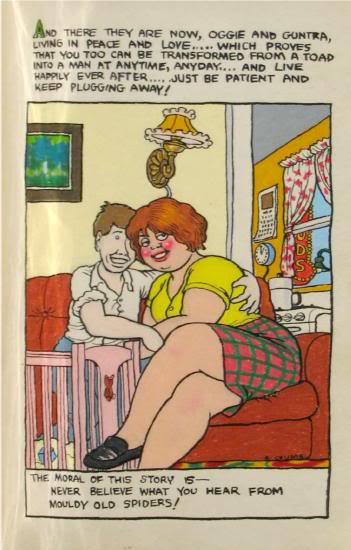
When we think of Robert Crumb, most hardly would describe his work as sweet, endearing, or lovely because of the sexual audacity of his creations in San Francisco’s underground; however, the Big Yum Yum Book, started in 1962 but not published until 1975, presents a softer Crumb, one who was nineteen and had yet to fully understand his carnal desires and his artistic style, and while the book lacks the exaggerated visuals and sexuality of his comics made only a few years after the completion of Big Yum Yum, it reveals the early cleverness and awareness of Crumb that would eventually morph into extreme hyperbole in the figure we now consider as the elder statesman of underground comix. In his introduction to the 1975 original publication, Crumb notes that he finds this book “adolescent and immature” and that others will feel it is “too cute,” but as Harvey Pekar notes in the introduction to the SLG Books 1995 edition, do not let the vivid and exquisite colors and the adorable animal characters and drawing style fool you into believing that this is a naive love story; the Big Yum Yum Book is an exceptional accomplishment that sharply comments on the young of the 1960s and captures life as an aloof observer during that time.

Ogden, a toad and our protagonist, enters college and adulthood with open and cynical eyes. As the child of a prominent business toad who hopes his son will continue his legacy, Ogden immediately realizes that college life does not suit him. He cannot relate to the intellectuals, the open lovers, the beatniks, or the political activists, and after exhausting attempts to fit in, he has an outburst from frustration that changes his life. After crushing and burying the ladybugs in his shared dorm room during his surge of anger, a giant beanstalk erupts from the ground and holds on to Ogden, launching him into space and eventually onto another planet.

Here on this new planet, Ogden has escaped the concrete harshness of the city he had known and has arrived to a beautiful forest abundant with fruit, greenery, and trees. After spending a few days in the bliss of nature, he realizes that, despite all of the greatness of his new home, he is lonely, like Adam in the garden of Eden, and ventures on finding some company. Ogden quickly discovers Guntra, a portly teenage girl, and he instantaneously falls in love. Unfortunately, Guntra only sees Ogden (and every animal that once lived on the planet) as food, but his love will not subside.

The Big Yum Yum Book progresses into a love story, but one from the mind of Robert Crumb, so do not worry, nothing is sentimental here. In the course of Ogden’s pursuit of the ever hungry Guntra, we not only see how love transforms an individual but also how humanity can disintegrate in the surrounding world and how different members of society inadequately react to its downfall. To deliver its biting assessment of our world, the Big Yum Yum Book twists motifs and stories common in Western literature such as the frog prince, the witch hunt, and the fall of the Garden of Eden into its absurdity, making this book undoubtedly one of satire but one that never takes itself too seriously. In turn, the Big Yum Yum Book has a levity to it that balances the severity of Crumb’s own observations of the time, making this book an impressive work for any comicbook creator not to mention a nineteen year old one.

Crumb in the years immediately following the Big Yum Yum Book exponentially increased the absurdity and the perversity in his comics, which definitely heightened the controversy around him and made his work less approachable. For those of us who enjoy these more obscene works, we’ll distill the core essence behind his exaggerations, but for people who do not really comprehend Crumb’s perspective, please read the Big Yum Yum Book, and you’ll understand that much more lies underneath the lurid illustrations of large women in sexual positions; Crumb is a highly perceptive satirist who, like Ogden, does not quite fit in but can use his alienation to assess the world without looking and sounding like a misanthrope. He may lose some friends and completely embarrass himself along the route of self-discovery, but he knows himself, and this self-awareness is the ultimate signature of Crumb that already existed in his earliest works. This key feature would just take on a more extreme and vulgar shell as he progressed as an artist and began to pour out his own psyche onto panels, but you must admire his unrelenting honesty and boldness to admit his inner desires, even if the pages of Snatch make you blush or shudder in shock.

Big Yum Yum Book is available via SLG Books; it features photographs of the original artwork. 

Aromatic Chicken Soup! Lily’s Mien Ga

Standard

As much as we love the heavier dishes of Vietnamese cuisine, we want to eat a bit lighter in 2016. After contemplating on what dishes could be satisfying and delicious without too much salt, sugar, and red meat, Lily remembered Mien Ga, a perfect soup for the winter and spring.

Traditionally, Mien Ga is served with mung bean thread noodles. Lily loves Korean sweet potato glass noodles, so she serves her version with them instead. Additionally, the broth is made with chicken quarters and thighs. For a healthier version, you can use on the bone split breasts; you’ll most likely need to add a bit more fish sauce and salt and cook the stock a bit longer for better flavor.

In this version, Lily served the Mien Ga with a few serrano pepper slices. Beware! They are very hot, so do not place too many in each serving bowl.

Enjoy!

Music provided by Franz Joseph Haydn’s String Quartet, Hob. III:80

Ossie Davis Directs J.E. Franklin’s Harsh Family Drama: “Black Girl” From 1972

Standard
black girl B

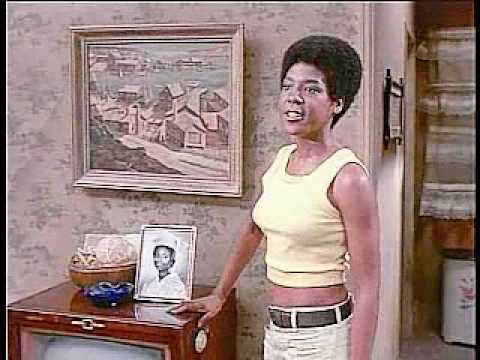
Gloria Edwards As Norma in Black Girl

Needless to say that genre of inner city African-American films that were produced in the late 1960s through the 1970s called “blaxpolitation” had its positive and negative aspects. On the negative side, the message inside a morass of poorly made crime films did little in terms of speaking about the experiences of the bulk of African Americans during that time, concentrating on the worst stereotypes of urban life to sell tickets. On the positive side, the countless films that did give a more honest view the African American community, both contemporary and historical, would not have otherwise been made if not for the success of the aforementioned crime films. Films like Gordon Parks’ The Learning Tree and Marton Ritt’s Sounder along with the mini-series creation of Alex Haley’s novel, Roots may not have happened if films centered on the African American experience were not deemed commercially viable by Hollywood standards.

Such was the situation of Ossie Davis, who was fresh off the immense commercial success of his second feature, the urban crime film, Cotton Comes To Harlem, in 1970. Davis set out to direct a film version of Houston-born playwright J.E. Franklin’s celebrated 1969 work, Black Girl, which was first produced that same year for WGBH, Boston’s public television station, and then run as an off-Broadway play in 1971. The film version of Black Girl centers on several generations of women in a family living in a small house located in the Venice Beach neighborhood of Los Angeles. The “black girl” of the title is Billie Jean (Peggy Pettitt), a seventeen year old who dreams of becoming a ballerina but who, for now, must be content with dancing at her local bar for tips while suffering the jeers from her two half-sisters and her mother. Her mother, who most everyone calls Mama Rosie (Louise Stubbs), gave birth to Billie Jean from a second husband after her first husband Earl (Brock Peters) left the family, leaving Rosie alone to raise their daughters, Norma (Gloria Edwards) and Ruth Ann (Lorette Greene). Also crammed in this tiny house are Rosie’s mother, Mu Dear (Claudia McNeil) and her live-in boyfriend from church, Herbert (Kent Martin), leaving young Billie Jean with only a small makeshift bedroom between the kitchen and the living room to practice her dancing. Unfortunately, Billie Jean’s aspirations come to a halt when Norma and Ruth Ann blab to Mama Rosie about Billie Jean’s dancing at a gin joint and dropping out of high school.

In the midst of all of this tension, Earl shows back up to the house in a new Cadillac, waving around a wad of cash, which is most likely acquired through some illegal activity and dispenses a bit of it along with a reminder as to why he left in the first place. A key moment here is when Mama Rosie suggests that Billie Jean should receive some of Earl’s gift to the family, but Earl doesn’t accept her as his own because he did not sire her and reacts with resistance to this suggestion. Billie Jean takes Earl’s initial hesitance as an insult and refuses the cash but is encouraged to take it by Mama Rosie, which speaks volumes as to Mama Rosie’s current feelings towards the raw deal she feels that she has received in having Billie Jean, her only child with a different (and unmentioned) father. Earl suggests a reconciliation with Mama Rosie, but her heart is hard at this point and closed to such things.

Making the situation worse is that Billie Jean, Norma, and Ruth Ann are constantly reminded of the real apple of their mother’s eye, the much lighter-skin colored Netta (Leslie Uggams), a boarder whom Mama Rosie took in when Netta’s mother (a silent Ruby Dee) lost her mind. Netta is far away at college doing her best but still draws the hatred of the three sisters in the house due to their mother’s clear appreciation of Netta over them, Mama Rosie’s actual flesh and blood. Soon, Netta comes home for a Mother’s Day visit, but after years of torment from Mama Rosie, Norma and Ruth Ann begin twisting Billie Jean’s mind against Netta, claiming that Netta is coming to take Billie Jean’s hovel of a room upon graduation. This sets up a tense third act where the well-intentioned Netta will walk into a buzz saw that is Mama Rosie’s three daughters.

Davis’ loose direction allows for some truly unpredictable moments, and thus the actors’ performances come through far above the plot. Gloria Edwards leads the charge here as she brings a real ferocity to her character of Norma, and the final third has a level of realistic tension that is borderline unbearable. Though the film is set around Billie Jean, Peggy Pettitt has to play with a mostly, silent, brooding character but does the most with her, especially again in the third act. Louise Stubbs is excellent throughout and paints Mama Rosie as a woman who is capable of great joy, as seen through her loving scenes with Earl, but is also someone filled with such an intense loathing of all who exist around her due to the mistakes she has made throughout her life. In the end Black Girl takes advantage of its poor socioeconomic confined setting to show you several generations of one family existing under one roof so that you can closely contrast the different attitudes based on age and skin tone. That amount of people from different eras living on top of one another soon becomes a story of missed opportunities, contempt, and the soul-crushing ability that a family can possess in destroying the dreams of those whom they are supposed to love and encourage to grow so that they can eventually leave the home for good.

Original 1972 Trailer For Black Girl

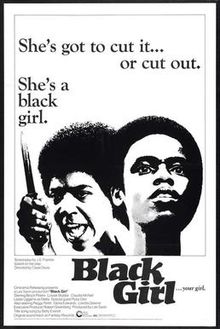
I, for one, am glad that despite its fostering of negative stereotypes, Cotton Comes To Harlem gave Ossie Davis the clout to make a film version of Black Girl. Though the advertising had to give the audience a false impression that they were about to see a blaxploitation crime film, Black Girl is an uncompromised and deeply personal story of an African-American family who is just trying to get over despite the pain they continue to cause to each another, addressing a perspective that was rarely discussed or seen in media during its time.

Riley Rossmo Shines as Others Fall: Dia De Los Muertos

Standard

Of late, I have gobbled up quite a few comicbook anthologies featuring short stories from a range of creators, all united by a single motif. While I never mind diving into a lengthy graphic novel, something about the anthology form, when right, has a spark of light and energy to it that makes reading it enjoyable. That perceived vivacity, in part, comes from my hope to be surprised by the work of creators I already know, but most of my excitement for anthologies stems from the chance to discover new talent. Furthermore, with an anthology contribution, brevity and efficiency emerge as the highest priorities for each story, providing a challenge that tests each creator’s skills and limits and teaches us as the audience how to tackle storytelling constraints. 

Whereas other collections (such as the superb Humanoids anthology, The Tipping Point), have multiple artists and writers, Dia  De Los Muertos has Riley Rossmo as the primary artist paired with the writing talents of Alex Link, Christopher E. Long, Dirk Manning, Joshua Williams, Ed Brisson, Jeff Mariotte, Alex Grecian, Kurtis J. Wiebe, and Joe Keatinge. As a result, Rossmo has the greatest challenge of matching the visuals to the scripts of a range of writers with different specialties and vastly different approaches in interpreting the Day of the Dead, and he rises to the occasion.

Cover for the Dia De Los Muertos anthology that collects three issues containing separate stories

I wish I could give similar praise to the various scriptwriters. With the exception of Alex Grecian’s “Return of the Dead,” Joe Keatinge’s “Day of the Dead 3000,” and Joshua Williamson’s “Mine,” the stories fail to explore the richness and complexity of human emotion and reaction to the traditions and legends Dia De Los Muertos, making many of them feel too facile and unoriginal. In the shadow of Rossmo’s deft ability to transform his style throughout the anthology, most of the stories look even weaker, for the art and the layout have to carry more of the storytelling weight, but alas, even outstanding art cannot save a weak script.

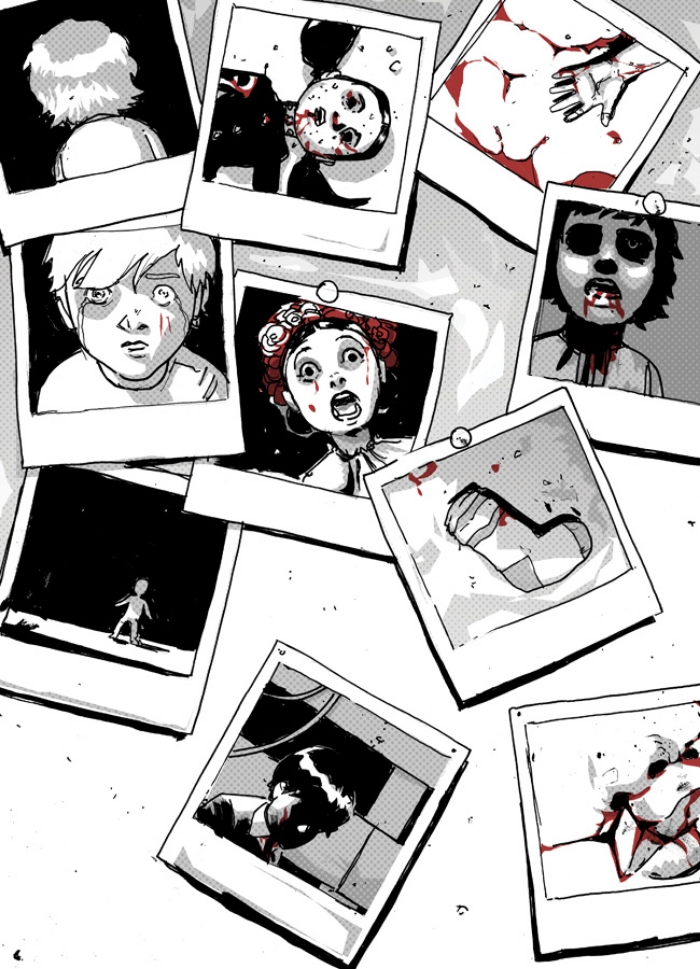
The weakest stories fall into two categories: ghost tales about love or about spirits seeking vengeance. Dirk Manning’s “Te Vas Angel Mio” and Kurtis J. Wiebe’s “Lonesome” look at the love of a lost one with the sentimentality of a Lifetime film or that abhorrent Sandra Bullock vehicle, The Lake House (I’m ashamed that I watched even two minutes of this travesty…). Far different in topic but no less unimaginative, Christopher E. Long’s “Reflections” and Ed Brisson’s “The Skinny One” present ghosts of revenge for wrongdoing that evoke more self-righteousness than any terror. Though Alex Grecian’s “Return of the Dead” does end with a certain level of revenge on an evil one, the story and the art combined create an eerie and horrific tale that will make you shiver, and the extent of the awfulness of the villain provokes fear (and a few shudders), pulling it far above “Reflections” and “The Skinny One,” despite their shared topic.

As much as I enjoyed Grecian’s take on Dia De Los Muertos, I will admit that it did not feature anything beyond prediction. In contrast, Joe Keatinge’s “Day of the Dead 3000” and Joshua Williamson’s “Mine” do have unique and surprising elements to them, thus making them the most distinctive of the collection. Keatinge places the supernatural elements of Day of the Dead in the future and in the hands of a pessimistic and disillusioned fashion photographer, creating a cleverly nihilistic anti-superhero tale that explores the psychology of the adults of the future (and now) who inherit the problems of the past but feel indifferent to them. Paired with Keatinge’s excellent script, Rossmo creates the perfect art to match the fun but slightly cynical tale that incorporates more than just the skulls and ritual of the Day of the Dead.

Joshua Williamson has a far more traditional perspective on the motif, weaving the festival activities in Mexico in the mystery to find a girl, but right before the end, he takes a screeching turn in an unexpected and chilling direction. Illustrated with a innocence and brightness of a comic for children, the antithesis between what Williamson and Rossmo want you to believe will happen and what actually does distinguishes “Mine,” making a story that at first looks cheery all the more disturbing. Placed halfway into the collection, the section of a work that our human minds tend to forget the most, “Mine” will be severed into your memory due to its style and final detour.

As a whole, Dia De Los Muertos has some gems in storytelling, but it mostly serves as a showcase of Riley Rossmo’s diverse talents as a comicbook artist. Though most of the stories are forgettable, the collection is still worth a look for the stronger ones and for Rossmo’s chameleon artistic abilities. And, as with any short film compilation, if one work does not satisfy you, another one will arrive very shortly, a nice feature of the anthology and perhaps one of the reasons why they have caught my attention recently.

Dia De Los Muertos is available via Image Shadowline. 

Generoso and Lily’s Bovine Ska and Rocksteady: Willie Francis’ Little Willie Label 1-12-16

Standard
little willie B

Earl George Cooks On Little Willie!

Hello Bovine Ska and Rocksteady Listeners!

We did a splendid show for you this past week with a spotlight of the rare Jamaican label, Little Willie. About midway through the show, you can check out a the thirty minute Little Willie spotlight of top flight reggae from 1971-1974.

Our show started with two sets of rare ska beginning with Llans Thelwell and His Celestials and their 1964 cut for Federal, Mughead Ska!  We ended the second set with a classic from the trombone of Don Drummond on Beverleys, Dragon Weapon. After a mento set featuring a tune from the queen of mento, Louise Bennett Hol’ M Joe on Folkways.  We ended the first hour with a reggae set that contained a version to version of the Curtis Mayfield classic, Give Me Your Love from the Superfly soundtrack. 1973’s Super Soul from Junior Soul and Superfly from I-Roy from 1974.  We then went into our Little Willie label spotlight.

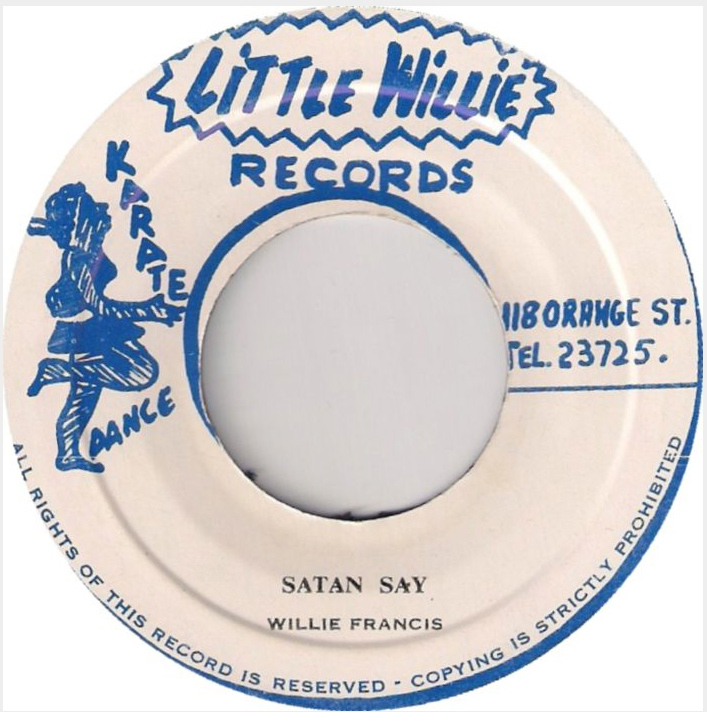
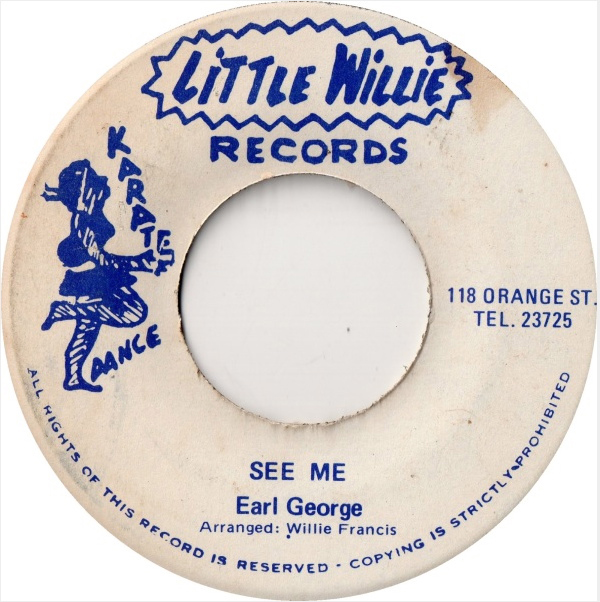
Born in South Manchester, Jamaica, Willie Francis began his career in the Jamaican music industry as a singer in ska. After recording for Prince Buster in the late 60s under the name of Francis, by the time early reggae arrived, Willie opened up the Little Willie Record Label, where he released his own recordings as an artist and as a producer for other musicians. Operating from Francis’s record store on Orange Street, the Little Willie Records label, sometimes called Little Willie Karate Dance Records for the dancer on the label art, released quite a few great reggae cuts that we’re excited to share with you tonight.

Of the artists who stopped by Little Willie, Max Romeo went to the label to record Maccabee Version, which indeed uses the melody of “Good King Wenceslas” and intended to criticize the King James translation of the bible. Searching in the Hills was the debut recording for Calvin Scott, who Willie discovered as a teenager. Willie traveled to Rocky Point, Clarendon to record a group named the Rockydonians. Calvin was the brother-in-law of one of the members, so he hung around them. When the group arrived to the studio, they did not record for Willie; instead Calvin did. Almost ten years later, Calvin would emerge as the artist Cocoa Tea, who has continued to record reggae and has also been quite an influence on dancehall.

You can listen to our full Bovine Ska and Rocksteady from January 12th, 2016 HERE. Subscribe to our show on Mixcloud; it’s FREE, and you’ll get an email every Tuesday when we post a new show.

Happy December!!! Please help us and spread the word and repost if you liked the show! Repost anywhere you see fit.

Join the group for the Bovine Ska and Rocksteady on Facebook.

See you here next week!

Lily and Generoso

The Stunning Visuals And Sounds Of Nicolas Roeg’s 1972 Documentary: Glastonbury Fayre

Standard
fairport convention

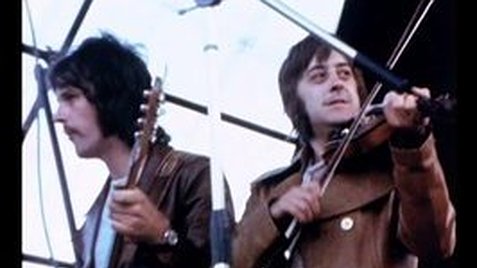
Fairport Convention At Glastonbury Fayre

As I finished writing this review, we were informed that David Bowie has passed away. Bowie was part of the concert featured in Nicolas Roeg’s documentary, but he was omitted from the film. Right now, I wish that he had been included, as there could never have been enough footage of David Bowie.

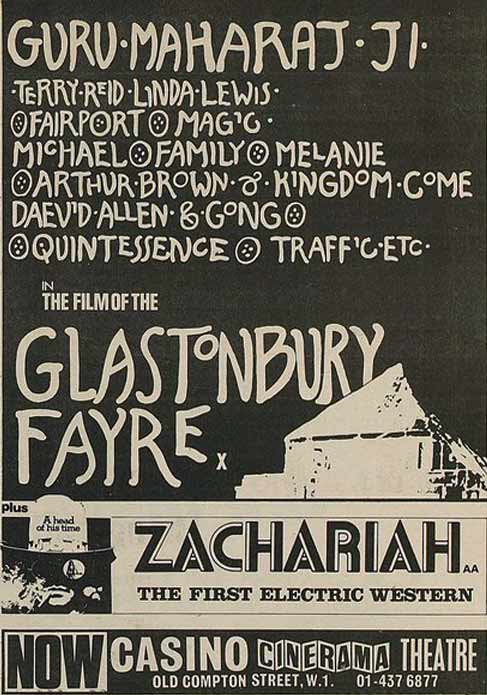
Last week’s entry into Lost In The 1970s With Generoso Blog featured a review of German director Stefan Paul’s 1979 concert film Reggae By Bus, which documented the 2nd edition of the now defunct Reggae Sunsplash Music Festival, which took place in Montego Bay back in year the film was released. As Jamaican music has always been near and dear to me, it was an unequivocal thrill to have finally have seen Paul’s film; though modestly shot with capable sound quality, Reggae By Bus successfully captures not only the music and energy of the event itself but of the community surrounding the festival and their thoughts on the importance of national music of Jamaica. So while I am still basking in the glow of that concert film, I thought to find Glastonbury Fayre, the only concert film directed by one of my all time favorite filmmakers and cinematographers, Nicolas Roeg, and although I am not a fan of most folk rock, I was curious to see what Roeg would come up with for an overall view of the event.

Glastonbury Fayre like Reggae By Bus chronicles the performers and goings on of the second incarnation of a world-renowned music event, the still going strong Glastonbury Festival, which continues to draw over 100,000 people a year to its southwest England location in Somerset. Going into Roeg’s film, I did have two overriding emotions: my love of Roeg’s body of work and what I would expect to be a brilliantly lensed film and my general disdain for the hypocrisy lying underneath the “free love and peace” concert events of the late 1960s/1970s. If that last statement seems unnecessarily caustic, you don’t need to look any further than the 1969 concert at Altamont that featured The Rolling Stones to get a picture of a group of people looking for flower power but instead getting open brutality. From members of Jefferson Airplane being assaulted on stage to the subsequent murder of an attendee, the violence at the Altamont Festival lead many to view that event as the definite cultural end of the peace movement that started in the 1960s.

The film does begin positively with the bassist of Kingdom Come wishing Arthur Brown a happy birthday onstage, a lovely moment for the artist whom many consider one of the pioneers of shock rock. Shortly thereafter, the event’s organizer Michael Eavis speaks directly into the camera as he explains the story of how he came up with the idea of producing the first concert, The Pilton Festival, as it was called before changing its name to the Glastonbury Fair and then finally to the Glastonbury Festival. You then see the masses of the hippy nation descend on the lush green of the fields with painted faces and instruments in hand whilst crews begin to construct the pyramid styled stage that would become the hallmark of the festival for years to come–a truly trippy sight indeed as its Egyptian-themed shape glows with a blue internal light.

As for the music, Terry Reid armed with a fantastic mixed race band of musicians (needs to be mentioned as the event itself is intensely Caucasian) pounds out a scorching version of “Dean” whilst the camera pans through the audience as the crowd gets freakier and more naked with each drum beat. There is some more random hippiness when suddenly the absolutely stunning sounds of Ashley Hutchings’ bass fuels a number played by his group, Fairport Convention. Still active to this day, Fairport Convention delivers one of the finest performances of the film. Once their number ends, though, it’s back to the drum circles and Big Bambu sized joints until an interesting meeting with a African-English Christian minister who explains his happiness with the peaceful attitude of the event. The minister’s positive report makes it fairly clear at this point that the event would not be mired in the same ugliness that had ended so many events in the states. In fact, the appearance and acceptance of a multitude of different faiths being practiced during the film clearly delineate Glastonbury from its American festival counterparts. You see a proper Anglican minister performing a small Sunday service for a crowd of somber ticket buyers whilst the Guru Maharaj speaks to thousands of flopsy mopsy dancing potential Hare Krishna recruits, which is soon followed by Arthur Brown as he ignites a few crosses for a theatrical Satantic ritual after a tune or two. Let’s just say that there is enough polytheism at the Glastonbury Fayre to make the Book of John burst into flames but at least the different tribes are all getting along.

The overall selection of music for the film surpassed my expectations, though I would’ve appreciated the omission of American folk singer Melanie and her crying and downright vicious vocal style. I imagine that some of the selections were made due to rights issues as other artists who performed at the festival such as David Bowie, Hawkwind, Brinsley Schwartz, and Pink Fairies did not make it into the final cut of the film. The final performance by Steve Winwood’s Traffic doing a an off-rhythm version of Winwood’s own hit with The Spencer Davis Group, “Gimme Some Lovin,” was a fitting end to the frenetic musical goings on at Glastonbury.

Glastonbury Fayre Trailer

One would expect that a Nicolas Roeg shot film would possess a dazzling visual style, and there are many moments that bear out Roeg’s daring camerawork, but the cinematography does vacillate between gorgeous and simply competent, which struck me as odd. I did a bit of research here and found out that although Roeg gets the credit as director, he walked away from the project after just a few days of shooting. The story goes that Roeg arrived with several cameramen in tow and shot a decent amount of film but was called away to work on his film Walkabout. An amateur cameraman, Peter Neal, gathered Roeg’s footage and blended it with the 16mm film shot by other amateurs. Though visually inconsistent, this randomness in style and quality does add to the raw energy of the event. Glastonbury Fayre stands as an important document in terms of seeing the genesis of an enduring music festival that scarcely resembles its humble origins now.

The Slow Stewed Beef: Generoso’s Bollito di Carne

Standard

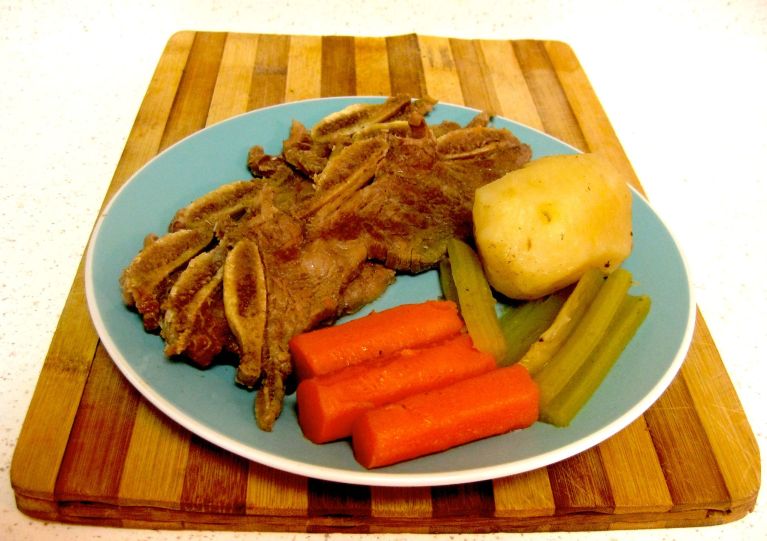
Bollito di Carne translates into “Meat Boil” and although I am using extremely pretty beef short rib for this recipe, I left the recipe as “meat” because you can use this process with pork as well.  Trust me it will be delicious.  The key to this dish is the boil that the aromatics get prior to adding your meat and vegetables and the subsequent cooking of the meat that is extremely slow which guarantees an almost butter texture and flavor that runs through each bite and to make things better, you will end up with a fantastic broth as well.  Total prep to plate should be about three hours but there is little prep involved.

You will need: Two pounds of  sliced (1/2 inch thick) beef short rib (my favorite), 4 potatoes, 3 carrots, 4 stalks of celery (preferably with the leaves on still), thyme, parsley, salt, pepper, parsley, a bay leaf, crushed red pepper. You’ll also need at least a four quart stockpot for all of the magic to happen in one place.  As always, thanks for checking this out and please let me know how yours turned out.

Love,
Generoso

Music: Georg Philipp Telemann’s Trio Sonata in A minor