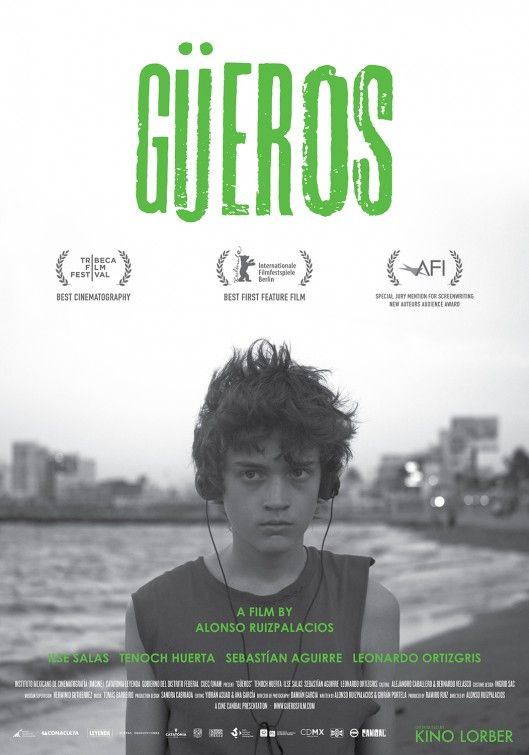
Generoso’s 2015 Top Ten Film List, Supplemental Films, Biggest Disappointments, Worst Film Of The Year and, Best Rep Film Experience

Standard

2015 was a transition year as Lily and I moved west, leaving behind some great friends, WMBR, and some of the best theaters in America. I send much love, thanks, and respect to all of the wonderful programmers out in Boston, to the many years that the blessed Harvard Film Archive in the basement of the Carpenter Center saw our shadows, to Saul Levine’s Film Society screenings that changed our view of experimental cinema forever, to the staff and films at the Coolidge Corner and the Brattle for always trying to make seeing a film a better experience, and extra respect to the small runs of films you would never see otherwise at The Museum of Fine Arts as well as all of the hard working and underpaid staff of the Independent Film Festival of Boston who put on another great festival this year, leaving no doubt as to what is the preeminent film festival in the city.

Since arriving in Los Angeles, we have been astounded by the amount of vital new and repertory cinema happening here. We are members of Cinefamily now, and through them, we have seen our favorite film of the year and met the director as well and have had the opportunity to view so many small indies and rep films that have long since been forgotten. The Cinefamily also supplied us with the best 4th of July that we can ever remember in the form of a barbeque, jazz combo, and a chance to see a print of Jazz On A Summer’s Day. We have loved our evenings at the majestic Egyptian and the Aero theatres as well. The small Music Hall and Fine Arts Theaters on Wilshire have shown films we would have missed if they had not picked them up, and all the goodly people at the American Film Institute put on a beautifully curated/free for everyone festival that helped populate this list. Films that we have waited for all year from world-class directors such as Arnaud Desplechin, Jacques Audiard, Cornelieu Porumbiou, and unfortunately Paolo Sorrentino, were on display at the Chinese Theater for one amazing week that will now be a part of every fall for Lily and myself.  

Of the 250 plus films we saw this year, some films went beyond expectations; a few from proven directors underwhelmed and disappointed, and our favorite film, Güeros, emerged as the winner, which is the the first time a debut effort has risen to the top in the twenty plus years that I have put out this list.  Thanks to my darling Lily for watching these films with me throughout 2015 and for editing this massive document while graciously adding her fantastic thoughts in along the way.   

Here we go….

My Top Ten Films for 2015

1) Güeros (Alonso Ruizpalacios) Mexico

Tomás (Sebastián Aguirre) is a teenage malcontent who lives in Veracruz with his mother. After pulling one nasty prank too many, mom sends Tomás to live with his layabout college student brother Federico/Sombra (Tenoch Huerta), who lives in a miserable apartment in Mexico City with another slack named Santos (Leonardo Ortizgris). Neither is actually in school because they are sitting out the “student strike” at their university caused by a change in policy that will now charge students for tuition for the first time in history. Shortly after arriving, Tomás tells his new roommates that his and Sombra’s favorite rock singer, Epigmeneo Cruz is dying in a hospital, and they have to see him before he goes, which is fine for the boys, since their large downstairs neighbor is about to kill them for stealing electricity. Set in 1999, their comedic voyage through the streets of Mexico City leads them to encounters with protests and freaks on their quest to find a rock hero, and all of the adventure is styled with sometimes funny and poignant nods to the pop culture and French New Wave style that serve to remind you of what we have lost since the 1960s. This film possesses a daring and rare combination of frenetic raw energy and a reverence of film history that I have not seen in many years, and it left me astonished. To say that this is an impressive film debut from Alonso Ruizpalacios is a massive understatement, and I cannot wait for his next film. All I ask is that you stay away from Hollywood Alonso, please. I’m sure you can do more good where you are away from the hipster starlets who descended on you after the Cinefamily screening because Güeros has far more than just denim, distressed tees, and navel-gazing politics and philosophy.

2) Dheepan (Jacques Audiard) France

Sivadhasan (Antonythasan Jesuthasan) is a Tamil Tiger soldier in Sri Lanka whose side has lost the civil war. To gain political asylum in France, he must have a convincing story, so he pretends to be Dheepan, the dead man of the passport he receives. In order to achieve the identity of Dheepan, Sivadhasan is also given a wife, Yalini (Kalieaswari Srinivasan), and a 9-year-old daughter, Illayaal (Claudine Vinasithamby), to make his story more accurate and sympathetic to secure a visa. This new “family” goes through the motions of being a real family while Sivadhasan works as maintenance man for a housing project that is going through a gang war, making his desire to start anew and away from war pretty impossible. In some ways, Dheepan is a reversal of character of the small time hood to crimelord protagonist of Audiard’s magnificent 2009 film, The Prophet; Dheepan tries to veer away from crime and violence, which were integral to his past as a Tamil Tiger. Different in pace than Audiard’s other films, Dheepan is no less intense and heartfelt. What drives this film so high on my list is the naturalist performance from Antonythasan Jesuthasan, who himself was one of the Liberation Tigers of Tamil Eelam and also used fake passports to escape to France. Kalieaswari Srinivasan equally shines as Yalini, who has less desire to remain in her new violent home. Dheepan was the surprise winner of the Palm D’Or at the 2015 Cannes Film Festival and deservedly so.

3) Right Now, Wrong Then (Sang-soo Hong) Korea  

Directors Sang-soo Hong and Nuri Bilge Ceylan seem to genuinely appreciate how vile and brilliant they are as human beings. Their films consistently take their worst intentions to task with the difference being that Sang-soo has a lot of fun pointing out the more lascivious aspects of his persona. Utilizing the same Jungian structure as his previous two films, The Hill Of Freedom and The Day He Arrives, where the outcome of one’s life comes down to small decisions, the protagonist of Right Now, Wrong Then plays out alternative courses of a day on screen in different segments prompted by contrasting neurotic interactions. Right Now Wrong Then’s fill in for Hong’s alter ego is Han Chun-su (Jung Jae-young), an art house filmmaker who visits a small mountain town where he proceeds to spend the day trying to bed a beautiful but shy former model turned painter named Hee-jung (Kim Min-hee). The film is divided into two segments where Han uses opposite but similarly insincere techniques, one “self-effacing” and the other “brutally honest,” to get Hee-jung to love or at least sleep with him. Awkwardly painful in a way that a young Woody Allen would be proud of, Right Now, Wrong Then (which is actually reminiscent to Allen’s Melinda Melinda) is perfectly executed by the cast and Hong. You leave hating yourself for spending even one second hoping that Han and Hee-jung will hit it off, but you admire Hong for getting you to that point of recoil.

4) Mad Max: Fury Road (George Miller) USA/Australia

I love George Miller, and he has never let me down (yes, I even like Happy Feet), but even my expectations were ridiculously high for this, the fourth installment of Mad Max, a series that helped define an era of post-apocalyptic films. I did start to worry though; it had been thirty years since Mel and Tina smashed around Thunderdome, and since then there were a couple of superb talking pig films, an entertaining adaptation of a witchy John Updike novel, and the aforementioned dancing penguin films, which all had me concerned that George had lost some lust for the fuelless ravaged wasteland. My concerns were somewhat quelled once I heard about the casting of Charlize Theron and Tom Hardy, two actors I have admired for years, and then, the first visuals finally convinced me that Mad Max: Fury Road was to be the big blow up film that I was not going to miss this year, and I am glad I didn’t. A brilliant decision by George to make Theron’s Imperator Furiosa the main character, relegating Hardy and virtually all of the men in the film as bystanders in the futuristic allegory that sees the passing of the male dominated film landscape through one hundred and twenty minutes of nonstop action. Maybe a bit more time with formulating some kind of dialog would’ve put this higher on the list, but all in all, this has too much explosive visual candy to not to roll around in over and over again.

5) The Assassin (Hou Hsiou Hsien) Taiwan/China

Sometime in the spring of 2000, The Museum Of Fine Arts in Boston ran a complete retrospective of Taiwan’s greatest living filmmaker, and I gladly watched all of his films to that point, ending with the period piece, Flowers of Shanghai. With each film, I grew in appreciation of his oeuvre; before the series started, I had only seen Hou’s Goodbye South Goodbye, and by the end, I saw the drastic transformation of his style. Over the last fifteen years Hou Hsiou Hsien’s work has concentrated more on contemporary settings and acknowledgments to key players in film history, as seen with his tribute to Ozu in 2003’s Cafe Lumiere. Hou has also relied on the talents of actress Qi Shu, who has starred in two of the director’s films since 2000, Three Times and Millennium Mambo, and now they have teamed up again in Hou’s first wuxia or historical martial-arts genre film, The Assassin. Needless to say that after thirty five years of directing dialog driven narrative film, Hou Hsiou Hsien was not going to direct anything that the genre has seen in the past. Qi plays Yinniang, who had been abducted by a nun as a child and has learned the martial arts of the convent to perfection and is now charged with killing her estranged cousin, a nobleman whom she was once promised to wed. Given the way that premise sounds, you may be thinking Crouching Tiger, Hidden Dragon here, but think again. Hou eschews a formal wuxia narrative and allows the visuals and mood to tell the story more than a tedious, clearly spelled out plot, leaving the viewer to draw all of their attention to Yinniang, whom Hou presents as a sympathetic but fierce protagonist who rivals Imperator Furiosa of Fury Road. With The Assassin, Hou Hsiou Hsien has created a sumptuously realized character study that proves that so much more can be done with the wuxia film than ever before.    

6) Blind (Eskil Vogt) Norway

The second best debut film this year comes from the writer of the painfully underrated 2011 drama, Oslo, August 31st, Eskil Vogt. Blind features a phenomenal performance from actress Ellen Dorrit Petersen as Ingrid, who has recently been gone blind when we first meet her, and we spend much of the film inside of her head as the story unfolds. Ingrid lost her vision suddenly from an unknown condition and now spends her days at home and rarely leaves, even when she is accompanied by her husband, Morten (Henrik Rafaelsen), who works during the day as an architect. Vogt structures the film on the line between objective and subjective reality, as Ingrid believes that Morten sometimes heads home when he should be at work to spy on his wife, and maybe he is, but we are never sure if all of this is real or just Ingrid’s psychological projections. Blind triumphs due to Vogt’s ability to delicately balance comedy and tragedy as the film eventually becomes a bold statement about trust for people in love, and that never ceases to surprise the viewer.

7) The Duke Of Burgundy (Peter Strickland) England

Since his 2009 debut, Katalin Varga, English director Peter Strickland has been on a roll. In his last film, Strickland took the nebbishy Toby Jones to Italy to record foley splatters for giallos in the clever 2012 film, The Berberian Sound System. Strickland’s love of sound design comes to the forefront again early in The Duke Of Burgundy as does his affinity for the mid-1960s brown hues you would recognize from British fare like The Collector. The Duke Of Burgundy follows a housemaid named Evelyn (Chiara D’Anna) who is sexually subjugated by a butterfly scholar and collector named Cynthia (Sidse Babett Knudsen). Is Cynthia actually in charge? We cannot be too sure based on the sexual role playing and alternating dominatrix play that occurs in their home. The Duke of Burgundy  bears down on Evelyn and Cynthia’s idiosyncratic tendencies within their relationship and, in turn, what the pair is willing to do in order to maintain their myth of togetherness. This isn’t the worthless pap that is Fifty Shades Of Grey, which was essentially written to make middle American housewives rebel at their pathetic lifelong aversion of sexuality. Strickland expertly weaves two characters together who are constantly redefining themselves both intellectually and sexually through what they view as growth. Both Cynthia and Evelyn strive to distance themselves away from developing into domicile, “bedroom and kitchen” women, but through their feigned intellectual study and trite sexual endeavors in role playing, the two, especially Cynthia, travel closer to what they are trying so hard to run away from. The Duke Of Burgundy left me content with the thought that between Ben Wheatley, Joanna Hogg, and Peter Strickland, you can finally have some hope for a bright new wave of British filmmakers.

8) The Clouds Of Sils Maria (Olivier Assayas) France

Assayas has always been able to get amazing performances by his lead actresses: From Maggie Cheung in Irma Vep and Clean to Virginie Ledoyen in Late August Early September and Cold Water, Assayas writes beautifully for women and his actresses respond to the words. Such is the case with his latest film, The Clouds Of Sils Maria, where the brilliant Juliette Binoche plays Maria Enders, a veteran actress who learns that her mentor Wilhelm Melchior, a theater and film director, has passed away while she is en route to receive an award for him. When they hear of Melchoir’s death, Maria and her assistant Valentine (Kristen Stewart) were traveling to Wilhelm’s home in Sils Maria, an area in the Swiss Alps known for its haunting cloud formations and where the idea of eternal recurrence came to Nietzsche at “6,000 feet beyond man and time.” At the award ceremony, Maria is given the chance to star in a revival of Melchior’s play that made her famous twenty years earlier, but this time around, she will play the role of the older woman, turning over her original part as the older woman’s wily and tempestuous young lover to a rising Hollywood actress played by Chloë Grace Moretz, which forces Maria to ruminate about her career as an actress, her current friends and rivals, and her future. Much notoriety for this film exists because of Stewart as Valentine, who turns in an acceptable performance at best (giving Stewart a César for playing a one-dimensional uppity hipster is like giving Robert Blake an award for playing a psychotic ladykiller), but it is Stewart’s star power that allows Binoche more freedom with her role, and she takes complete advantage of that freedom to turn in another bravura performance in this contemplative character study.   

9) Afirim! (Rude Jude) Romania, Bulgaria, Czech Republic, France

Radu Jude’s 2015 film, Aferim!, a stunning depiction of early 19th century class and moral struggles, is not an exception to that Romanian film talent surge. Aferim! follows Costandin, a policeman, and his son, who have been hired by a boyar to find Carfin, a gypsy slave who has run away after having an affair with the boyar’s wife, Sultana. Teodor Corban plays Constandin with a grotesque and comical swagger as he doles out unsavory tidbits of wisdom to his son while debating the ethics of potentially releasing his captured gypsy slave, who he knows will suffer an atrocious fate when returned to his owner. Shot in gorgeous black-and-white but with an ugliness similar to a Sergio Corbucci Spaghetti Western, Aferim!’s story plays out in an uncompromising and illuminating way, provoking questions about Romanian history and how moral dilemmas are handled across time. With Aferim!, Radu Jude establishes a distinct perspective on the concept of a period piece, which offers great promise for his work in the future (it is believed that Jude will next adapt Max Blecher’s 1937 book Scarred Hearts).

10) Fassbinder: To Love Without Demands (Christian Braad Thomsen) Germany

It is amazing to me that director Christian Thomsen has been sitting on this footage of his friend, the prolific, and by all accounts, disturbingly fucked up German director, Rainer Werner Fassbinder, for this long. Thomsen fills Fassbinder: To Love Without Demands with archival footage and interviews with his friend beginning with their first encounter at the 1969 Berlinale, when Rainer was booed off of the stage for Love Is Colder Than Death, and closing with footage that Thomsen himself shot of an almost too drunk Fassbinder (even by his normal standard) just a few weeks before the untimely passing of the director of the acclaimed Ali: Fears Eats The Soul. Also in the mix is footage of Rainer flipping out on set and various interviews from a plethora of former actresses/lovers and collaborators who describe the director with a small amount of love and a whole lotta “whew, am I glad that he can’t hurt me anymore” looks. Though I am enjoying writing this review, Thomsen mostly eschews the sentimentality and platitudes while deftly glueing together the archival footage and interviews to create a clear profile of a furiously talented and tormented man, who despite his self-destructive tendencies, was also able to become one the finest directors of his generation. I must admit my own bias here that even if Thomsen had just showed his final interview with Fassbinder uncut, I probably would’ve appreciated that alone, but I am glad that the director added a calmer contemporary viewpoint to all of the madness that gives a more objective perspective on a man whose notoriety as a human has historically rivaled his career accomplishments in capturing the attention of the public.  


SUPPLEMENTAL LIST

Catch Me Daddy (Daniel Wolfe) England

This nasty piece of UK filmmaking that seems to have been directed by Alan Clarke from beyond the grave is actually the debut film of music video director Daniel Wolfe and centers its narrative on the steady rise of “honour killings,” a trend that has gotten so out of hand in England that it now has an official memorial day for the victims of these crimes. “Honour killings” are acts committed to defend the supposed honour or reputation of a family and community. The crimes, usually aimed at Muslim women, can include emotional abuse, abduction, beatings and murder. Director Wolfe informs us of this crisis through Laila (Sameena Jabeen Ahmed), a British-Asian teen who has runaway from home with her caucasian boyfriend Aaron (Conor McCarron) to a trailer park in Yorkshire. Laila’s father wants her dead and hires two gangs to find her: one gang lead by a white Muslim-hating cocaine addict who is in it just for the fix and another by Laila’s brother. This will not end well and for two hours, Wolfe doesn’t let you off the ropes. This is ugly business without any sentiment, and like Clarke’s Made In Britain, which was made over thirty years ago, Catch Me Daddy hollows you out with its real-life inspired story of senseless intolerance.  

Heaven Knows What (Ben and Joshua Safdie) USA

Though many compare this harrowing and impressive film from the Safdie brothers that follows a junkie named Harley and her band of fellow addicts on the streets of New York to Jerry Schatzberg’s 1971 feature, The Panic in Needle Park, to me, it more closely resembles a film that came out a year earlier than Schatzberg’s film, Barbara Loden’s Wanda. Though the protagonist of Loden’s film is not an addict, the titular Wanda, like the Safdie’s Harley, begins the film defiantly alone after leaving their significant other and soon becomes as desperate for connection to anyone while trying to survive. Both films feature naturalist performances from their leads who also wrote the story that they perform, with the notable exception that Arielle Holmes was actually a homeless heroin addict who lived many of the experiences that were transferred to her character. Arielle Holmes is the reason to watch Heaven Knows What as she tears you up as she falls again and again and her performance transcends the dialog during much of the narrative. I rarely add spoilers to my reviews but I applaud the Safdies for ending their film exactly the same way as the landmark film by Loden. It is a smart nod that reminds us that even after forty years, when the bottom falls out, it falls lower for the woman.

Dope (Rick Famuyiwa) USA

So, imagine if Superbad’s smart, nebbishy Evan was not a white suburban kid but instead a smart, nebbishy African-American kid from Compton. What would happen during those final days of high school if Evan messed up to the degree he did in Superbad but without being white and possessing middle class privilege? Well, whatever life-threatening disaster that you think would ensue happens to Dope’s protagonist, Malcolm (a star-making performance from Shameik Moore), a smart young man who dreams of Harvard and whose father left him with one thing before taking off, a VHS of Superfly that will come in handy once he becomes the guy who gets the bag from the guy at a bullet-ridden club party. Malcolm has only his brain and pulls from every source possible to gnaw his way out of the mess he has fallen into. Dope is somewhat of a mess and would’ve been on the top ten if not for the muddled middle third, but director Famuyiwa pulls it together in the end and makes it a fun watch that delivers a strong message for those outside of privilege who just want to get over. The soundtrack cannot boast a Curtis Mayfield track, but it does throw in some impressive early 1990s hip hop that locks in a man lost in his time for most of the film.

In The Shadow Of Women (Phillippe Garrel) France

2015 marks the 51st year of Philippe Garrel’s magnificent career as a director. Garrel has always prided himself on making deeply personal and economically budgeted films, and In the Shadow of Women follows his signature style. His best work since 2008’s Frontier of the Dawn, In the Shadow of Women is a story of Pierre and Manon, two down and out documentary filmmakers who are barely getting by but on the surface seem to care for each other greatly. Things begin to change when Pierre meets Elisabeth at the film conservatory and begins to have an affair with her. As Elisabeth’s love for Pierre grows stronger, a conflict arises as Pierre chooses to maintain his relationship with Manon, even though Manon may have eyes for another. This simple and comedic film is a bit of a departure from the usually intense Garrel relationship examination, but Clotilde Courau and Stanislas Merhar are wonderful as the emotionally confused leads, making this small, new film by Garrel a triumphant one.


MOST DISAPPOINTING FILM (TIED)

Youth (Paolo Sorrentino) Italy/USA

There had been some advanced press regarding the newest film by Paolo Sorrentino (The Great Beauty) as somewhat of a disappointment, but disappointment doesn’t even begin to describe the painfully overstated and poorly acted 2015 film by the Italian director, Youth. A clumsily executed allegory, Youth places veteran actors Michael Caine and Harvey Keitel in a Swiss resort where the young and the old (both of whom are quite haggard looking through Sorrentino’s overly elegant lens) strive to preserve their glory days while suppressing their worst memories and past acquaintances. With the success of The Great Beauty and the anticipated HBO series, The Young Pope, Sorrentino now has an American audience that he wants to continue to cultivate, and Youth is tailor-made to what he believes Americans want from an “Italian film.” As a result, it is a diluted, nearly insultingly dumbed down version of the style of his previous Italian films; Youth is a caricature of what Sorrentino believes the Oscar-following American audiences want, specifically those who herald films such as The Best Exotic Marigold Hotel (which Sorrentino mentioned as an inspiration for commercial success during the Q&A). To add further injury, as made apparent in the post-screening conversation at AFI Fest between Caine and the director, Sorrentino does not have mastery of the English language, and this inability seems to have played a part in the facile dialog, especially between Michael Caine and his daughter in the film played by Rachel Weisz. Unlike his 2013’s The Great Beauty, Youth never fully grabs its central theme, leaving a morass of pandering images and dialog meant to impress rather than to complete a story.

The Club (Pablo Larraín) Chile

Second on our list of disappointments is The Club, Chilean director Pablo Larraín’s first feature film since completing his Pinochet trilogy with the highly acclaimed 2012 film, No. Having seen the predominance of Larraín’s work, it is clear that he is a bit of a hammer when it comes to making a political or social statement in his films. But whereas his earlier films, Tony Manero and Post Mortem, bring the level of symbolism to borderline surreal, The Club mires itself in a predictable story and thinly drawn up characters that cannot substantiate the severity of its best intentions to showcase the excesses and transgressions of the Roman Catholic Church. Much was made prior to the screening about Larraín’s choice to film with 40 year old Russian lenses similar to those used by Andrei Tarkovsky in Stalker, but unlike his choice of using early 1980s camcorders for No, which places you into the time period of that film set during the famed Pinochet “Yes/No” vote, the over diffused lens of The Club fails to enhance the mood or setting of the film, rendering it down to a trivial visual style detail. Alejandro Goic, who portrays Padre Ortega in The Club, explained after our screening that the film was shot in twelve days, and we’re sad to say it looks and feels that way.


       WORST FILM OF THE YEAR

Goodnight Mommy (Severin Fiala, Veronika Franz) Austria

I love horror films; though I wouldn’t consider myself a fanatic by any means, I am always glad to hear about a new film from the genre that has piqued a friend’s interest. Unfortunately over the last few years, I have been besieged with not necessarily bad horror films but bland ones that have been presented to me as “game changers” that turn out to be the same tired premises in a new visual wrapper. Such was the case last year with the painfully bland Jennifer Kent film, The Babadook, which took its tired familial allegory into horror genre in an attempt to make it more interesting but ended up being neither frightening or innovative in any way. This year was David Robert Mitchell’s It Follows, which loses steam quickly despite its clever premise by betraying its own mythology and adding lame CGI effects where they weren’t necessary. Now that I have made my peace with the two films that I just mentioned, let me say that It Follows and The Babadook look like The Exorcist compared to the putrid slop that is this year’s overhyped horror film, Goodnight Mommy. Two worthless bratty, yuppie larvae who play with huge roaches in their pristine country home become suspicious that their recently surgically altered mommy, who has just returned home, is not actually their mommy. The boys hogtie their mom and proceed to torture her while Funny Games styled illusions of potential freedom for mom are danced in front of you to add tension or something like tension. Severin Fiala and Veronika Franz’s lame allegory here is that mom values appearance and status over her adorable yet subhuman children. Needless cruelty and creepy crawlies do not constitute horror nor do trite attempts to place pretentious vile crap like this into a sterile horror wrapper to sell to the States as high art.


BEST REPERTORY EXPERIENCE

Get Mean (Ferdinando Baldi)  1975 Italy/USA at Cinefamily

Shortly after arriving to Los Angeles and becoming members of Cinefamily, we had a blast attending a screening with cast included of a rarely seen spaghetti/time travel western from 1975 entitled Get Mean. Once Asian cinema began to overwhelm the action film landscape in the 1970s, the days of the spaghetti western were numbered, and thus the genre had to get crafty or else ride quickly into the sunset. To the rescue comes actor Tony Anthony, an American living in Italy at the time of Leone, who was well known for The Stranger character that first appeared in 1967’s A Dollar Between The Teeth. That film was successful, but Anthony was one of the first to see the writing on a wall in realizing that the genre needed some fresh ideas, so a year after that film debuted, Anthony and director Luigi Vanzi took The Stranger way east for The Silent Stranger (aka A Stranger In Japan), mixing the western with the samurai film. Tony wasn’t done yet with the Japanese sword epic, as he teamed up with veteran sword and sandal director Ferdinando Baldi and brought in ex-Beatle Ringo Starr to play the heavy for a spaghetti treatment of the blind swordsman, Zatoichi, in 1971 called Blindman, about you guessed it, a blind gunfighter. For years Blindman was next to impossible to get here in the States, and for that reason, it was pushed into cult film status alongside Anthony’s fourth entry into the Stranger series: a bizarre, genre-bending spaghetti from 1975 called Get Mean.

For Get Mean, Tony Anthony reunited with director Baldi and his co-star from Blindman, Lloyd Battista for this fantasy western where The Stranger, shortly after being dragged for a few miles by his dying horse past an ominous Phantasmesque silver orb, is offered fifty grand by a witch to escort a Princess back to Spain where she can regain her throne from the hundreds of Vikings and Moors who are battling it out back home. As bizarre as all of this sounds, Get Mean is an outrageously entertaining film which set up an even more entertaining Q&A between Anthony, Battista, and executive producer Ronald Schneider. They regaled the audience with bizarre stories from the making of the film that defied anything that I have ever heard coming from an independent production. There were also stories of weird financial transactions that kept Anthony on location while everyone else bailed in fear of retribution from investors and stories of close call money deliveries such a tale when twelve thousand dollars came just in time to feed Get Mean’s enormous cast before things “got ugly.” The outrageously charming cast stayed afterwards to sign posters and tell more stories to fans in the Silent Film Theater courtyard. Quite an evening.

A clip from the Get Mean Q&A at Cinefamily:


Original trailer for Get Mean  
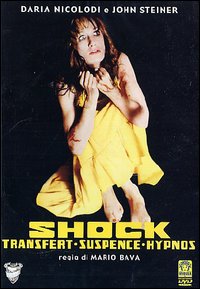


Mario Bava Scares You One More Time With His Final Theatrical Film “Shock” From 1977

Standard
Shock 1

John Steiner and Daria Nicolodi in Bava’s Shock

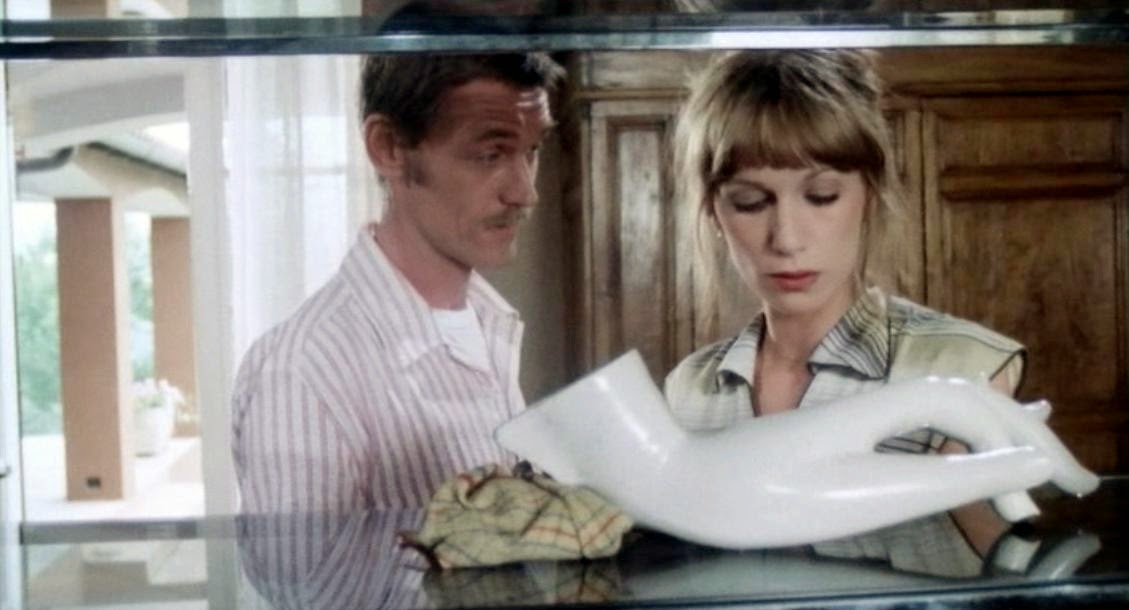
Sometime during the late spring of 2007, my friend Michelle and I hoofed it over to the Brattle Theater in Harvard Square to check out some of their Grindhouse series that they had programmed following the popularity of the recent Tarantino/Rodriguez double feature film experience that revived interest in the exploitation films of the late 1960s and 70s. The day we decided to head over to Cambridge was a way too pretty Saturday afternoon to see a nasty giallo, but such things like a clear sky rarely matter to horror fans, even fans who had just spent the last few months buried under New England snow and grey skies. Also, what helped me convince Michelle to head to the theater that day was the opportunity see a 35mm print of  Shock, the last feature film directed by the father of giallo genre, Mario Bava.

Before he became a pioneer in Italian horror, Bava started his film career assisting his father Eugenio at the special effects department at Benito Mussolini’s film factory, the Istituto LUCE, before becoming a cinematographer himself. Bava had lensed over twenty films before getting his first opportunity to co-direct when director Mario Camerini needed an AD for his sword and sandal film, Ulysses, an Italian production that starred Kirk Douglas. The next year, during production of Riccardo Freda’s 1956 film, Beatrice Tenci, Freda and his friend Bava discussed the possibility of making a horror film, which would be the first Italian horror film of the sound era, as the genre had been banned in Italy throughout the 30s and 40s. The pair negotiated a production deal with Studio Titanus, provided that they could write a script in a few days and have the film done in two weeks to which they agreed, and I Vampiri was born, a nasty low budget film centered around the murders of young women who are found drained of their blood. Though I Vampiri did not perform well at the box office, it wasn’t met with huge opposition either, despite the film’s carnality, so the door was now opened for the horror genre again in Italy.

For a few more years, Bava would shoot several more gladiator films, but in 1960,  he would have the chance to direct a loose adaptation of Nikolai Gogol’s 1865 horror story “Viy” into a feature film, the outrageously gory La maschera del demonio (Black Sunday), a film so visceral that it it would be banned in England for most of the decade but would help launch Bava as a relevant director of the horror genre internationally. After Black Sunday, Bava would occasionally direct a sword and sandal and even a few spaghetti westerns (Roy Colt And Winchester Jack is a favorite), but it was the giallos that he would master such as Black Sabbath, Kill, Baby, Kill and Bay Of Blood.  

Fueled by the success of the Bava giallos, the genre began to flourish, so by the mid-1970s, there were many directors such as Dario Argento, Sergio Martino, and Lucio Fulci challenging Bava for the giallo crown, and even though Mario would always be regarded as the master, the theaters were packed with competing Italian horror films from younger directors. Jumping genres again, in 1974 Bava would direct the nihilistic poliziotteschi, Rabid Dogs, which had been plagued with production issues that were further exasperated when the film’s producer went bankrupt after the main investor died in a car crash. Bava would take two years off from directing after the headaches provided by Rabid Dogs, but he would return in 1977 with Shock, a smart, small horror film that would prove that the master still possessed a bevy of technical tricks from all of his years as a cinematographer to scare you senseless.

Shock stars Daria Nicolodi as Dora Baldini and John Steiner as her husband Bruno, who begin the film by moving back into Dora’s family home. Bruno is Dora’s second husband as her first, Carlo, died several years prior, and the house has been locked up ever since. Given the circumstances of her first husband’s death and the fact that his dead body had never been located, Dora is not too happy about moving back into the home, and her head is not all together there, since years of drugs and electroshock therapy received during her institutionalization after her husband’s death have left her quite the mess. Adding to her daily dilemma is that Dora had a son with her first husband, the waifish-looking Marco (David Colin Jr.), who gets along with his stepfather Bruno, but he is still not one hundred percent accepting of this new man who amorously embraces his gorgeous and slightly catatonic mom. Coming to Marco’s rescue, as the forces of evil always seem to be there to fiendishly assist with the sadness of youngsters, a new friend in the house, an imaginary one, enters Marco’s life, and given that his stepdad is an airline pilot and frequently away, little Bruno spends lots of time talking to his new “friend” and spends much time in the basement where some evil mojo is boiling up in the Baldini home.

Original Trailer for Mario Bava’s Shock

What really bumps Shock’s creepiness up to eleven are the incestuous actions that little Marco (or perhaps Carlo living inside of him) begin to take towards his mother. Marco begins by spying on his mom in the shower, slicing up her panties, jumping on top of her and sexually thrusting, and even romantically touching his sleeping mother’s face and neck with a hand that suddenly transforms into that of a rotting corpse, which all perhaps suggest that maybe Carlo is looking for love from beyond the grave? It is these moments where Marco begins to morph into his dead father that provide the greatest jolts in Shock, including one scene that I will not give away that occurs when Marco runs towards his mother that sent both Michelle and me leaping from our seats. It is the kind of scare that only a master director could imagine, so basic in its visual construction, relying on no special effects, and yet it still scares you silly. Although the scene that I just described may be the best of the film, Shock is loaded with a ton of smart, visual inventions that make you believe that during the two years that Bava was “retired,” he was compiling his terror filled ideas into a notebook for later use, and I, for one, am so glad that he had enough inspiration to make a giallo, one that despite its modest structure and a surface that looks like another post-Exorcist era possession film, comes off with so many jolts to make it a captivating, haunting watch. Shock’s overall dark tone, a killer fusion score from the Italian/Motown signed band I Libra, and low budget but affecting visual elements make it a fitting final theatrical release for the brilliant Bava, who sadly died of a sudden heart attack in 1980 at the age of 65.

I found out shortly after that afternoon screening that Shock was my friend Michelle’s first Bava film, and she was very impressed. In the seconds after the film, I thought that I should’ve started her out with one of the director’s earlier, more accomplished films, but I soon was confronted with the reality that a giallo from a then 62 year old Bava affected Michelle, who was then a young filmmaker herself, making Shock just as qualified as Bava’s other works. I have always said that if a comedy without an audience can make you laugh out loud, then it is very successful, and I guess a similar type of success exists for a horror film that terrorizes you on a pretty day.

Generoso’s Festive and Fried Crocchette di Patate

Standard

As the holidays are approaching, the Neapolitan in me starts to think of fried foods.  My Crocchette di Patate (Italian potato croquettes) are a wonderfully tasty appetizer that you can put on the table at any holiday party that will satisfy your guests. A deep fried mix of potatoes, cheese, ham, and spices that I know you will love.  One key note: The drier your mix before frying the better.  My recipe as it is made is quite wet so allow your mix at least 3-4 hours in the fridge to solidify.  You will need: 6 medium sized russet potatoes,  8 oz of mozzarella, 8 oz of sliced ham (smoked, sweet, your call), 3 oz of pecorino romano cheese, 4 eggs, fresh parsley, oregano, plain breadcrumbs, one bulb of garlic (thanks Bob and Sherry Roffi), white flour, olive oil, salt and pepper.

I have a deep fryer but you don’t need one.  That said, do not skimp on oil when making these as they absolutely need to be submerged in boiling oil for the crocchette di patate to properly cook.

Good luck!  Let us know how yours turns out and Happy Holidays!

Generoso

Music: Gustav Mahler’s Symphony no. 1 in D major

Werner Schroeter’s Playful and Dreamlike 1972 Low Budget Film “Willow Springs”

Standard

willow springs still

“Werner Schroeter will one day have a place in the history of film that I would describe in literature as somewhere between Novalis, Lautréamont, and Louis-Ferdinand Céline; he was an ‘underground’ director for ten years, and they didn’t want to let him slip out of this role.” – Rainer Werner Fassbinder

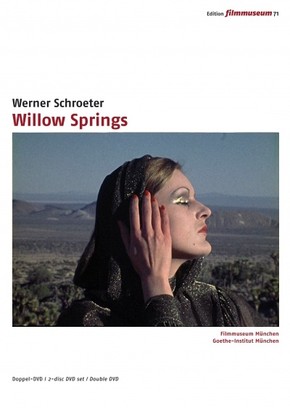
I start this review of the 1972 film, “Willow Springs,” with the above quote from Schroeter’s friend and admirer Fassbinder as it is purely the uncompromising and “underground” nature of Schroeter’s work that made him so respected and in turn kept him from being as well known as the other directors of the German film wave that included Fassbinder, Herzog, and Wenders. A mostly self-taught filmmaker who began his career making short 8mm experimental films, he would soon meet fellow experimental film-maker, Rosa von Praunheim, and this introduction turned into a partnership resulting in their co-direction of “Grotesk-Burlesk-Pittoresk” in 1968. For his first full-length film, 1969’s “Eika Katappa,” Schroeter began to showcase the idiosyncratic techniques that would mark much of his later work. The experimental visuals, mixed minimalism, drama and the incorporation of twentieth century songs to contrast these elements created a film that blurred the line between art and satire. Because of his ambiguous and modernist approach to filmmaking, Schroeter films would rarely be screened outside of his native Germany and would remain virtually unseen in the States until his passing in 2010, which sparked an interest in his work.

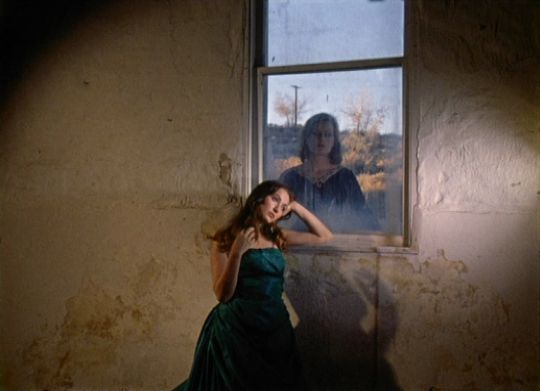
“Willow Springs,” Schroeter’s 1972 film, and his only film that was shot in the United States, sets the scene in a lonely, dilapidated house with a bar on the edge of the Mojave desert; the house, like the place in which it is located, is called “Willow Springs.” Like his 1970s film, “Der Bomberpilot,” the focus is on three women, except that in “Willow Springs,” these women are not passive and waiting for the men in their lives to make all of their decisions; no, this trio of women rob and kill the men who dare to visit their roadside shack. The women are lead by the severe Magdalena (Magdalena Montezuma, the star of many of Schroeter’s films) who dominates the ethereal Christine (Christine Kaufmann), an angelically sad woman who seems content with the middle. And finally at the bottom of the totem pole is the frumpy Ila (Ila von Hasberg), who serves as maid to Magdalena and Christine but is quickly growing unhappy with the situation and voices her displeasure. To unify them in their gender, Magdalena leads them in a Amazonian-like ritual, and in her movements, she has as her soundtrack a mix between the Andrew Sisters “Rum and Coca Cola” and opera, clearly indicating the immortality of her character, while Ila and Christine get free rocking Doobie Brothers to affix them to the early 1970s .

Soon, a drifter named Michael (Michael O’Daniels), a beautiful pure embodiment of the American west, enters “Willow Springs” and falls is love with Ila, who is more than glad to leave, but will Magdalena allow them to do so? What transpires is a sequence that plays into all of Schroeter’s strengths as a director, incorporating dream logic and surrealistic imagery as Magdalena’s attempts to create a unified feminist front in her deserted family home starts to quickly unravel. Shot in California, the film’s location, Willow Springs, plays an important role: One is clearly reminded of the Spahn Movie Ranch where the Manson family congregated and mapped out their plans of Helter Skelter prior to making their ugliness real. There, music in the form of the Beach Boys and Beatles was also used in the same manic way that juxtaposed the eventual violence that would ensue the lives of all involved. Like the music utilized in the film, Schroeter’s cinematography is in constant conflict between the gorgeous still pieces and haunting contempt held within Magdalena’s gazes. As it was the topic of many of the post-1968 directors, “Willow Spring” eludes to a passing of of the flower generation and its conflict with the uglier undercurrents that seemed to circle under all of the love they hoped to make real.

Scene From “Willow Tree” 1972

Though it was made in the States, “Willow Springs” was only seen here through festivals and never found adequate distribution. Receiving steady funding from German television, Schroeter continued to work with Magdalena Montezuma on several films until her until her untimely death in 1984 at the age of 41. Schroeter then worked with the French actress Isabelle Huppert on two fiction films, “Malina” in 1990 and “Deux” in 2001, but increasingly devoted his time to the theater and documentaries. In 1982,  Schroeter was destroyed when his friend Fassbinder, who seemed to admire Schroeter’s underground spirit, was able to get funding and purchased the rights to direct a version of Jean Genet’s novel “Querelle de Brest,” which Schroeter had declared that he was trying to do himself. This effectively ended their friendship, and Schroeter publicly trashed Fassbinder’s film, “Querelle,” which was to be his last as Fassbinder died shortly afterwards at the age of 38.

As for Schroeter, he continued to work for the rest of his life and directed his final feature, “Tonight,” just two years before his death in 2010 at the age of 65. A flamboyant and interesting talent, who, despite not reaching the level of success of his contemporaries, was a defiantly nonconformist director who refused to make film in any other way than in his own idiosyncratic style.

“Dusty And Sweets McGee” from 1971: Think American Graffiti With A Lot Of Heroin

Standard
Dusty-and-Sweets-McGee-1971

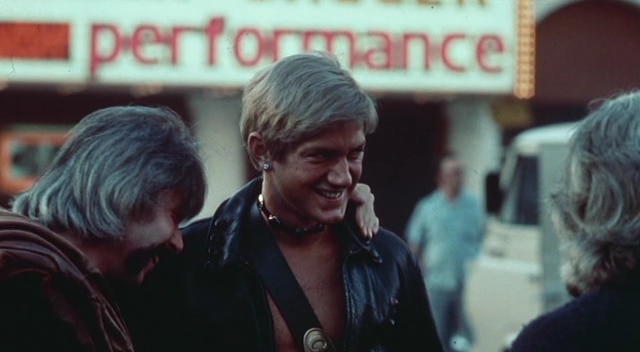
Floyd Mutrux’s Dusty and Sweets McGee

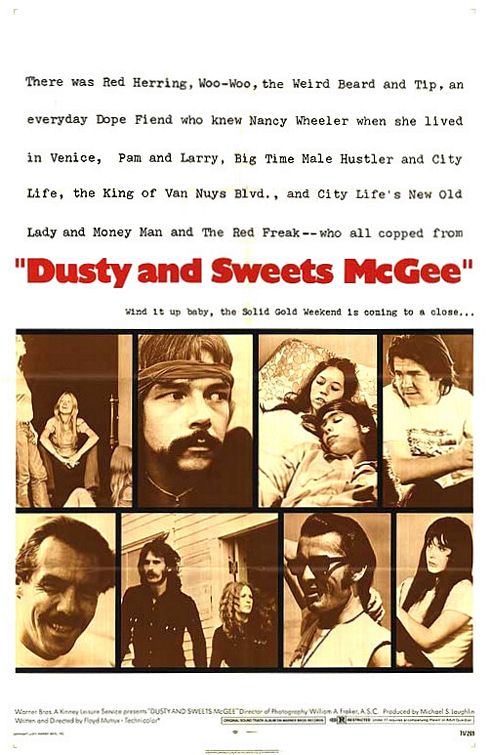
A few months back on this blog, I reviewed American Hot Wax, Floyd Mutrux’s failed 1978 biopic on legendary Cleveland disc jockey, Alan Freed. Though Mutrux’ film contained real life rock and roll pioneers, Chuck Berry,  Jerry Lee Lewis, and Screamin’ Jay Hawkins as well as an excellent performance from Tim McIntyre as Freed, the film’s too loose narrative structure and poorly drawn characters, mixed with flat TV movie visuals killed the film’s energy, making for a pretty mess of a film. I must admit that part of my dismissive review of American Hot Wax was fueled by the film’s release during the 1950-early 1960s nostalgia craze that engulfed American theaters in the mid to late 1970s. After the runaway success of George Lucas’ 1973 music-filled sentimental car romp through Downey, California, American Graffiti, Hollywood seemed like they couldn’t get enough slicked backed haircuts, cute teenage boys and girls, and classic rock and roll blared through car stereos, so they set out to produce as many stories from that era as they could, but what didn’t come along for the ride was the neo-realist style of Lucas’ film, which is its finest quality. The subsequent nostalgic films after American Graffiti relied heavy on cheese and tunes but were mostly rigidly structured narratives for ABC Sunday Night Movie of the Week releases that played out like long episodes of Happy Days. As for Lucas, I often wondered: why would this gadget-obsessed USC graduate, whose feature film career began with the clean Kubrickesque science fiction visuals of THX 1138, follow up his debut with the neo-realism of American Graffiti?  The answer may lie with Floyd Mutrux’s notorious American new wave film released the same year as THX 1138: Dusty And Sweets McGee.

I write “notorious” in describing Dusty and Sweets McGee because the film’s legend has long preceded it because of Warner Brothers’ stark action of pulling it out of theaters a week after its release. As Mutrux’s film was not given the chance to succeed and was also packed with enough doo-wop and rock hits that would incur massive clearance rights issues, the film would remain in the vaults for over twenty years until successful retro screenings in the mid-1990s created a demand that encouraged the studio to strike a few prints. It is rumored that Warner Brothers objected the non-judgmental treatment of the heroin use that the main characters in the film participate in throughout the film, and yes, there is a lot, and it is out there for all to see. Dusty and Sweets McGee, shot in a faux-documentary style, follows an group of unrelated Los Angeles heroin junkies, dealers, and hustlers (mostly non-professional actors) through a weekend where they talk about their love of horse and the problems that have beset them, which doesn’t play out entirely as a cautionary tale.

At the blurred center of the film is Mitch and Beverly (“Dusty and Sweets”) who lie around various LA motels, jamming each other with needles loaded with opiates in long deliberately harsh scenes as they berate one another in a way that would make Sid and Nancy wink with approval years later in the Chelsea Hotel. A few years younger than Mitch and Beverly are an angelically sweet looking couple, named Larry and Pam who also have a love for the needle. Nancy is also strung out but alone in a room with nothing but four walls and a bed. We also hear from Tip, a low level criminal who professes his love for heroin and crime directly into the camera, and Kit, a confident hustler from NYC. Their lives play out over a weekend while famed LA radio DJ, Arnie “Woo Woo” Ginsburg plays the golden oldies ranging from The Marcels to Gene Chandler to Del Shannon…gleeful songs that play over the muted conversations of broken young people, which given the dire situations of the lives, darkly delineate the era they live in from the era that those songs originally played in that brought joy to the boomers who were looking at a very bright post World War Two America. Also cleverly added into the soundtrack at key moments in the film are contemporary songs such as Van Morrison’s “Into the Mystic” and  Harry Nilsson’s “Don’t Leave Me Baby,” which immediately bring the viewer back into the characters’ reality. Much has been made about the soundtrack construction of American Graffiti in that songs were laid out prior to the screenplay and that scenes were created in the timeline using the soundtrack structure. Likewise, the soundtrack of Dusty and Sweets McGee is as integral to the storytelling as it is inLucas’ film, except that instead of using the sentimentality of the older rock and roll cuts that Lucas employs to create empathy for his characters in American Graffitti, Mutrux uses the same sentimentality here to create distance and, even at times, pity. It is an excellent technique, one that produces a intensive subliminal surrounding that goes beyond the drone of most of Dusty and Sweets’ dialog, which feels completely free form but at times too repetitive. The soundtrack also serves to link the characters in a way that goes beyond their lifestyles and addictions, which, again, could become tedious despite the harrowing nature of their problems.

What also separates this work from the rest of Mutrux’s later films is the impeccable visual style he achieved through an astonishing amount of talent behind the camera that was allowed to work on this low budget film. I imagine that the executives at Warner Brothers most likely greenlit this avant-garde project out of desperation to make any film that related to young people; thus they were willing to give Mutrux some serious talent in the form of cinematographer William A. Fraker, who had just lensed the massive hits, Bullitt and Rosemary’s Baby, and photographers of note, Vilmos Zsigmond and László Kovács. Together, this visual team created an halcyon like aesthetic for Dusty And Sweets McGee that would rival any film released in the States that year. Like the soundtrack, this almost Malick-esque visual style adds a pathos to the small conversations of the characters within this film, giving their words greater significance as the film maintains an almost playful attitude in the face of all the horrific goings on with its characters.

Overall, Dusty And Sweets McGee leaves you with a constant feeling of lost desperation, the same despair our protagonists experience. After the six or seventh time you see Nancy, Mitch, Larry, or Pam slowly stick a needle in their arms, legs, or ankles, you wring your hands with realization that the only way their situations will change is through an overdose, which you know will befall one of these kids before the credits roll. This is hardly Scared Straight, but I can’t imagine that anyone at Warner Brothers thought that this film would encourage the use of narcotics in any way, despite its claim that all of the characters are real. As Dusty And Sweets McGee in no way glamorizes the use of drugs, I theorize that execs at Warner Brothers were just not prepared when they saw the faces of their own kids when looking at Nancy, Mitch, or Pam. Like Richard Pryor once said, “They call it an epidemic now. That means white folks are doing it.”

Clip From Dusty and Sweets McGee

Though Dusty And Sweets McGee was yanked after only a few days in theaters, it now remains, after its re-release, as a strong document that looks at a lost generation of kids at the tail end of the hippie movement and as a well crafted film that perhaps inspired more than a few young directors like Lucas to work within that same exciting neo-realistic style until the blockbusters took over and made selling a soundtrack more important than creating a soundtrack that builds a world.

Generoso and Lily’s Bovine Ska and Rocksteady: BB Seaton’s Soul Beat Label 11-17-15

Standard
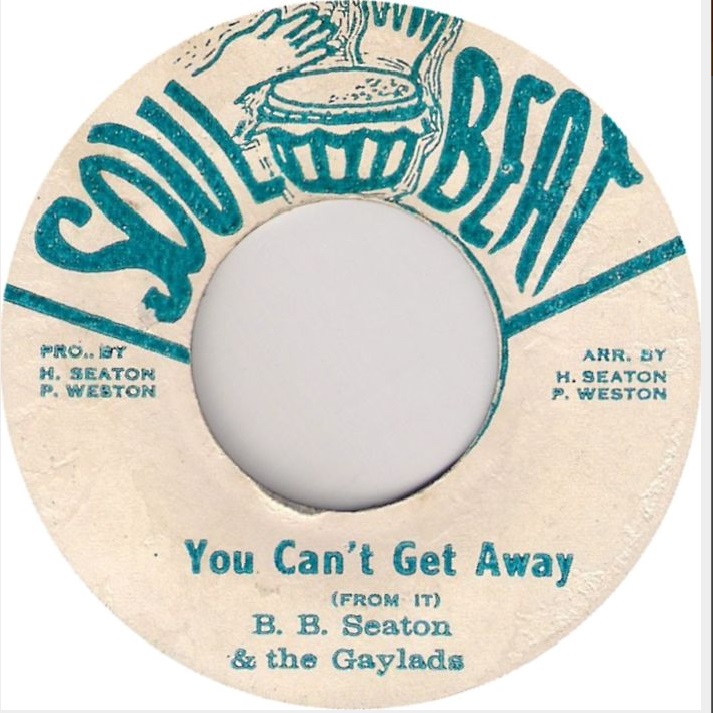
soul beat A

A Great Ken Boothe Cut On Soul Beat!


Hello Bovine Ska and Rocksteady Listeners,

We had a blast with this week’s (11/17/15) episode of Generoso and Lily’s Bovine Ska and Rocksteady which featured a spotlight on BB Seaton’s Soul Beat Label but before we get to that in the second hour, we started the show with two sets of explosive ska, beginning with Ernest Ranglin’s Selected Group and their killer instrumental for Kentone, “Skalvouvia!”  Our second set started with yet another dazzling Kentone cut, “I Am Blue” from Alton Ellis’ singing partner from the Jamaican R&B days, Eddie Perkins.   Our frantic mento set featured a “Round Dance” from the St. Ann Quadrille Band and Count Lasher’s version of the classic “Slide Mongoose.” Our final set for the first hour was of the rocksteady variety and started with a rare instrumental from Skatalites saxophonist, Lester Sterling for the Merritone label called aptly enough “The Lester Sterling Special.”  At the end of this set, we went right into our SOUL BEAT LABEL spotlight…

While we know BB Seaton best as a member of the Gaylads, he was also a producer, songwriter, and A&R representative. Consequently, it is of no surprise that he opened up his own record label, which is still active, Soul Beat. BB Seaton started as a multi-talented musician early in his career. He first arrived at Studio One in early 1960 as a solo artist, recording the first track he wrote, “Only You,” as Harris Seaton. Before recording further as a soloist, BB met Delano Stewart, and together, they recorded as the Diamond Twins and Winston & Bibby for Coxsone. Inspired by The Impressions, Winston and BB added Maurice Roberts to the duo, thus becoming the Gaylads. The group would stick exclusively to recording for Studio One from 1964 to 1967, with BB producing, writing, and even auditioning everyone from Pat Kelly to the Kingstonians for Studio One.

However, after a couple of disputes tied to royalties and the decision to take Alton Ellis and Ken Boothe to England for a tour rather than The Gaylads, who had been completely loyal in their recordings to Coxsone Dodd, the group left Studio One and went over to Sonia Pottinger and her Tip Top label. While at Tip Top, Delano left the group to move to America, so when the group next went to Leslie Kong’s Beverley’s label, BB and Maurice would recruit an extra member. After experiences recording for other producers and labels, BB opened up Soul Beat, which began releasing original recordings in Jamaica in 1971. Soul Beat also had a branch in the UK, and as a result, both released productions of each other in their respective countries. Consequently, some productions have BB Seaton at the producer helm, and others do not.  We appropriately kicked off this spotlight on the Soul Beat label with a track from The Gaylads.

For the original Soul Beat recordings, the Conscious Minds performed as the house band. The Conscious minds were: Arnold Brackenridge on trumpet, Derrick Hinds on trombone, Derrick Stewart on drums, Joe White on piano and vocals, BB Seaton, Ken Boothe, and Maurice Roberts on vocals as well.

Again, can listen to our full show from November 17, 2015 HERE. Subscribe to our show on Mixcloud, it’s FREE and you’ll get an email every Tuesday when our new show goes up.

Happy Halloween!!! Please help us and spread the word and repost if you liked the show! Repost anywhere you see fit.

Join the group for the Bovine Ska and Rocksteady on Facebook.

Love,

Generoso and Lily

A Quick Soup For Fall: Generoso’s Zuppa di Cavolo e Cannellini

Standard

Sometimes our recipes do get a bit intense as far as prep and as this was a cold fall night, I decided to make this quick and delicious soup that is short on prep time and ingredients but big on flavor: Zuppa di Cavolo e Cannellini (Kale and White Kidney Bean Soup). From prep to table should take you about an hour and for your ingredients you’ll need: One can of crushed tomatoes, a bundle of fresh kale, one bulb of garlic, olive oil, a large yellow onion, oregano, salt, and pepper. Hope you enjoy the video below, please let us know how yours turned out!  XO Generoso

Music: Georg Friedrich Händel’s Concerto Grosso in B-flat major no. 7, HWV 325

Lee Marvin, Jeanne Moreau, And Jack Palance Ride The Fading Western: “Monte Walsh” From 1970

Standard
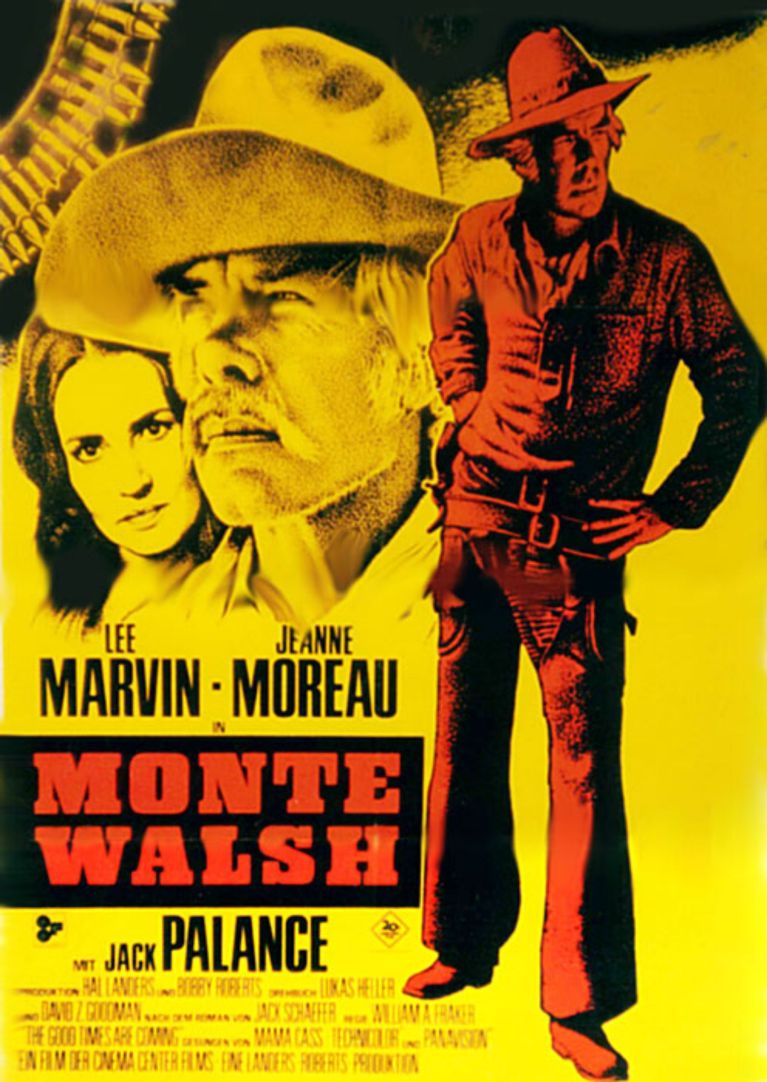
Monte Walsh Image

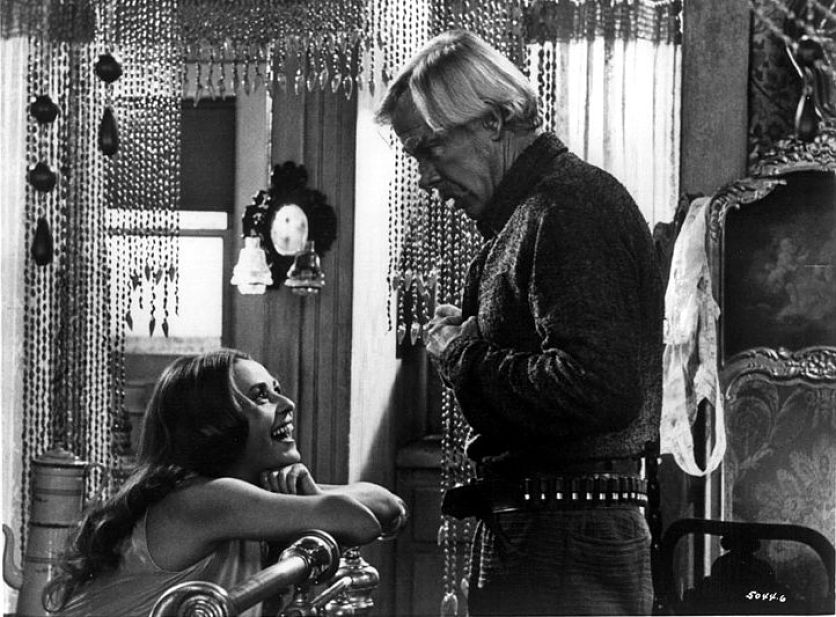
Jeanne Moreau and Lee Marvin In “Monte Walsh”

By the time that veteran cinematographer William Fraker directed his first film, “Monte Walsh” in 1970, the Western genre had undergone a complete overhaul. While Italy’s Sergios (Leone and Corbucci) were adding a never before seen silent but muddy ugliness to the genre, Sam Peckinpah brought a level of violence that was unmatched in most action films of its time, much less the hallowed epic Western.

Throughout the 1960s, Hollywood had been trying to resuscitate the cowboy film, even going as far as to create a screen version of the 1951 Lerner and Loewe Western comedy musical, “Paint Your Wagon” in 1969. With the studio system failing, Paramount threw everything they had at “Paint Your Wagon” in the hopes that it would succeed in the way that other musicals of the era had and many Western had not. The studio spared no expense in getting Academy Award winner Paddy Chayefsky to adapt the musical for the screen, which was an odd choice given that Chayefsky was best known for writing inner city characters like the ones found in Delbert Mann’s “Marty” and Richard Brooks’ “The Catered Affair.” For its stars, “Paint Your Wagon” casted the white hot Clint Eastwood, fresh from the Leone “man with no name” films, Lee Marvin and Jean Seberg: none of whom could actually sing. They also tabbed William Fraker for their cinematographer. Paramount was banking on Fraker, who had just lensed the hugely successful urban-based hits, “Rosemary’s Baby” and “Bullitt” in 1968, to have the eye for such a lavish musical western that was primarily set in the outdoors. As we all know now, “Paint Your Wagon” for the aforementioned reasons, was a notorious flop, both critically and commercially. The only good thing to come out of the “Paint Your Wagon” debacle was the forging of a relationship between actor Lee Marvin and cinematographer William Fraker, which resulted in them creating the beautifully non-epic Western, “Monte Walsh.”

The production company for “Monte Walsh” would be the then recently formed (in 1967) Cinema Center Films, the motion picture subsidiary of CBS television. Early on, CCF’s output and agenda focused on creating lighter fare that would eventually run on television, which was clear when they signed Doris Day to a multi-picture deal for their first few productions like “With Six You Get Eggroll.” By the end of 1969, CCF studio chief, Gordon T. Stulberg, made the decision to get with the times and to shed the studio’s “fluffy” image, so he recommended that his company produce a film version of Mart Crowley’s controversial gay-themed off Broadway play “Boys In The Band,” which was a commercial flop but a critical success, and an adaptation of the satirical Thomas Berger novel about the Little Big Horn massacre, “Little Big Man,” which proved to be a box office hit. While serving as cinematographer on “Paint Your Wagon,” Fraker had learned from the mistakes of director Joshua Logan and felt ready to try directing his own western, and, as Cinema Center Films was more than ready to take risks where the big studios seemed afraid to do so, Fraker got the job of directing the film version of the 1963 Jack Schaefer novel “Monte Walsh.” Schaefer, in 1949, wrote the original novel “Shane,” which was made into the highly successful George Stevens’ film of the same name. In “Shane,” the titular character is a gunfighter who wants to settle down and start a family but is dragged back into his gunslinger ways when a range war erupts where he wants to raise a family. The elements of “Shane” that depict a fading west are also present in “Monte Walsh,” but the cinematic approach that Fraker would take substantially differed from that of Stevens.

From the beginning of “Monte Walsh,” it is clear that you are not watching a golden age Western as Mama Cass sings “The Good Times Are Coming,” a somewhat strange and cheerful pop song for a Western that rolls during an opening montage of reverse-color spaghetti western images. You then get the rugged pair of Lee Marvin and Jack Palance in full cowboy regalia as they joke while bearing down on a wolf to pick up an extra five bucks. Jack Palance is “Chet,” and Lee Marvin is “Monte,” and they are old cowboys who know that their time is coming to an end as Chet says: “Do you realize how many cowpunchers there were out here 10 years ago? Well there’s a hell of a lot less now. And no jobs for them.” Regardless, the boys are still working for now, and after some roughhousing in the bunkhouse, Monte is off to visit Martine (Jeanne Moreau), one of the town’s working girls who is very much fond of Monte. She is also aware that her time in the oldest profession is coming to an end, as she says that hers is a profession of diminishing returns, and she has to move to a railroad town nearby in order to survive. The bosses back east are consolidating all of the ranches out west, and that means less of a need for cowboys, and thus, her client base is going away too. Perhaps everyone is in need of a change?

Despite some teasing from the other cowboys in the bunkhouse, Chet starts to get wedding eyes for the widow who owns the town hardware store and suggests to Monte that perhaps he and Martine should also tie the knot to which Monte responds, “cowboys do not get married.” But once Chet does marry, Monte begins to think that it might be his time to settle down as well and asks Martine who is more than happy to oblige. Still, Monte has to get the cowboy out of his system, so, when he sees the one mustang that even his bronco busting pal Shorty (Mitchell Ryan) cannot tame, Monte saddles the wild animal and takes the beast on a wild ride that destroys half the town in one of the most visually entertaining moments of the film. This turns out to be a good thing, though, as a Wild West show promoter eyes Monte’s rodeo talent on horseback and offers him a weekly salary to be part of the troupe to entertain folks back east. Monte sees this as an opportunity to get out of the cowboy business for good and with enough money, he can marry Martine and get her out too. Sadly, all of these cowboy retirement sentiments change when Shorty guns down a Marshall who is hunting down a member of Monte’s posse, setting off a chain of events that will make Monte use his gun again.

Sure, “Monte Walsh” is packed with enough action to make any Western movie watching fan happy, but what sets it apart are the moments of real passion and tenderness, which were absent in that genre during that time. Kudos to Fraker for believing in Lee Marvin and allowing him to act, whereas most directors of this time reduced our tough guy to a morass of hard facial gestures and catch phrases. Marvin’s scenes with the beautiful Jeanne Moreau are warmly performed and provide the viewer with as much heartfelt emotion as the action scenes provide thrills. Palance as well breaks out of his typecasting as a screen villain and is an excellent foil to Marvin in their scenes together. You feel their friendship, and in turn you have great empathy for their struggle against age and their roles in the dying west. Veteran cinematographer William Fraker does an excellent job in his debut as a director and deserves extra appreciation for hiring cinematographer David M. Walsh for his first time as director of cinematography. In the first hour of the film, Walsh avoids the wide angles utilized in epic Westerns and keeps everything tight in frame while small conversations occur to keep the mood intimate like the more relatable, conversation heavy, European influenced films of the late 60s and early 70s.  Eventually, Fraker opens up the frame once the more classic elements of a Western take place in the second half. And as a result, these visual ideas keep “Monte Walsh” very modern while still adhering to the core elements of the genre, which is an interesting technique. Fraker would have a long a distinguished Hollywood career as a DP for huge box office hits, including “The Goodbye Girl,” “Murder By Death,” and “Private Benjamin.”

“Monte Walsh” Full Movie

Sadly, “Monte Walsh,” though a critical success, did not do well at the box office, so William Fraker would only be given a couple of more opportunities to direct feature films that never seemed to work as well as his debut, and after a few more flops at the box office, Cinema Center Films also closed its doors in 1972. For the rest of his career, Fraker worked as a director of photography in over forty feature films and was nominated for five Academy Awards, most notably, 1978’s “Looking For Mr. Goodbar” and 1985’s “Murphy’s Romance.” History will remember Fraker as a talented cinematographer, but I, for one, feel that some accolades should have been given for his debut, a sweet and tough modern western that remains as one of the finest of its generation; one that would looking for a bit more than just a quick gun and silence in its western heroes

Generoso and Lily’s Bovine Ska and Rocksteady: Ken Khouri’s Kentone Label 11-10-15

Standard
Kentone A

A Top Instrumental By Byron On Kentone


Welcome Bovine Ska and Rocksteady Listeners,

After two weeks where Lily and I covered both Comikaze and the amazing films of AFI Fest for Forces of Geek, we had a blast playing programming tunes we love on the radio show!  Thanks for listening in…If you missed it, check out the November 10th Bovine Ska and Rocksteady on Mixcloud!

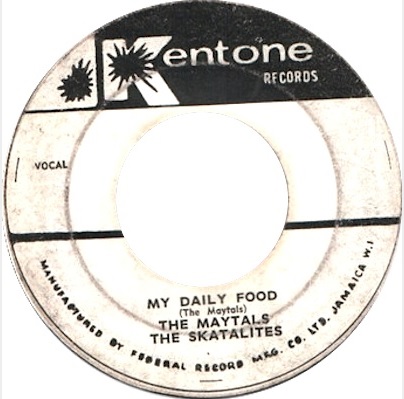
We started this week off with a massive version to version to version to version excursion that we always send out to our dear departed friend Magnus.  We versioned the 1971 hit by Count Prince Miller, “Mule Train” with covers from Roland Alphonso, Dennis Alcapone, and Derrick Morgan!  Our second set began with The Bassies on Studio One in 1969 with “Things A Come Up To Bump” and the version, on Coxsone in 1969, “More Scorcha” from Count Machuki and Sound Dimension.  We then gave you our weekly mento set and to get you ready for the Kentone Label spotlight, we began a long set of rare ska with the Federal Singers and their 1965 cut for Khouri’s Federal label, “My Love.”  We ended that ska set with Bongo Man Byfield doing a borderline nonsensical cover of Sam Cooke’s pop hit “History” that he called “Bongo Man” which was good fun.  We then immediately went into the Kentone spotlight…


Kentone comes from a major lineage in Jamaican music history. Owned by Ken Khouri, it is an example of Khouri’s own evolution of the record industry in Jamaica. 
Born in Kingston, Khouri’s father owned dry goods and furniture shops in Kingston. A family friend also owned a dry goods store, and, after the sons inherited the shop, Ken would work for them. This family owned jukeboxes that were placed across Jamaica, igniting Ken’s interesting in the record business. Consequently, when he found a disc recorder in Miami, he purchased it and brought it back to Jamaica and started to record mento. With the recorder, Khouri would send tapes to London, and they would send back 78s. After working with this method for some time, Khouri realized that it would be helpful to have his own pressing plant, so he purchased the equipment from California and setup a recording studio and pressing plant to his studio, Records Limited, in the late 40s. And with this record pressing plant and recording studio in place, he started Time Records, his first label that was distributed by Alec Durie’s Times Variety Store.

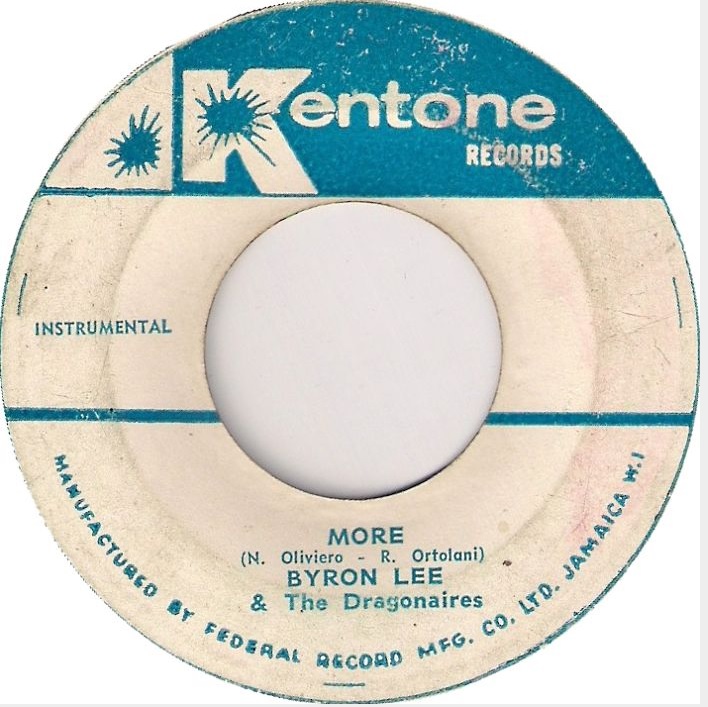
By the mid 50s, Khouri created Pioneer Company, which pressed Jamaican recordings and distributed foreign records as well. When the Pioneer Company moved to the Industrial Estate at Marcus Garvey Drive in the late 50s, Pioneer became a subsidiary of the mighty Federal Records. At Federal Records, plenty of the major soundsystem operators and producers used the studio to record tracks for their labels. Khouri also used his studio for his own record label, Kentone, where Byron Lee and the Dragonaires produced many recordings and also served as the house backing band. We kicked off the spotlight with one of the earliest Kentone releases from The Techniques, “No One,” which was originally recorded for Curtis Mayfield for Columbia Records and only released in the UK. It is unclear if the Kentone release is a Jamaican distribution of that Columbia track, or if The Techniques re-recorded the track for Khouri. A clue could be that the Byron Lee and the Dragonaires were listed as the backing band on the Kentone release, but the answer is not clear.  

As stated earlier,  many of the Kentone releases featured Byron Lee and the Dragonaires.  Circa 1963-1965, the members were Ken Lazarus on Guitar, Byron Lee on Bass, Tommy Ismay on Saxophone, Chester Power on Trumpet, Barry Lloyd on Drums, Victor Chung on Bongos and Percussion, Carl Brady on Bongos and Percussion, Leslie Butler on Organ, Vernon Muller on Trombone, Frank Anderson on Trumpet.

Again, can hear our full show from November 10, 2015 HERE. Subscribe to our show on Mixcloud, it’s FREE and you’ll get an email every Tuesday when our new show goes up.

Happy Halloween!!! Please help us and spread the word and repost if you liked the show! Repost anywhere you see fit.

Join the group for the Bovine Ska and Rocksteady on Facebook.

Love,

Generoso and Lily

“What Have You Done to Solange?” Leone Cinematographer, Massimo Dallamano’s Clever 1972 Giallo

Standard
solange-1

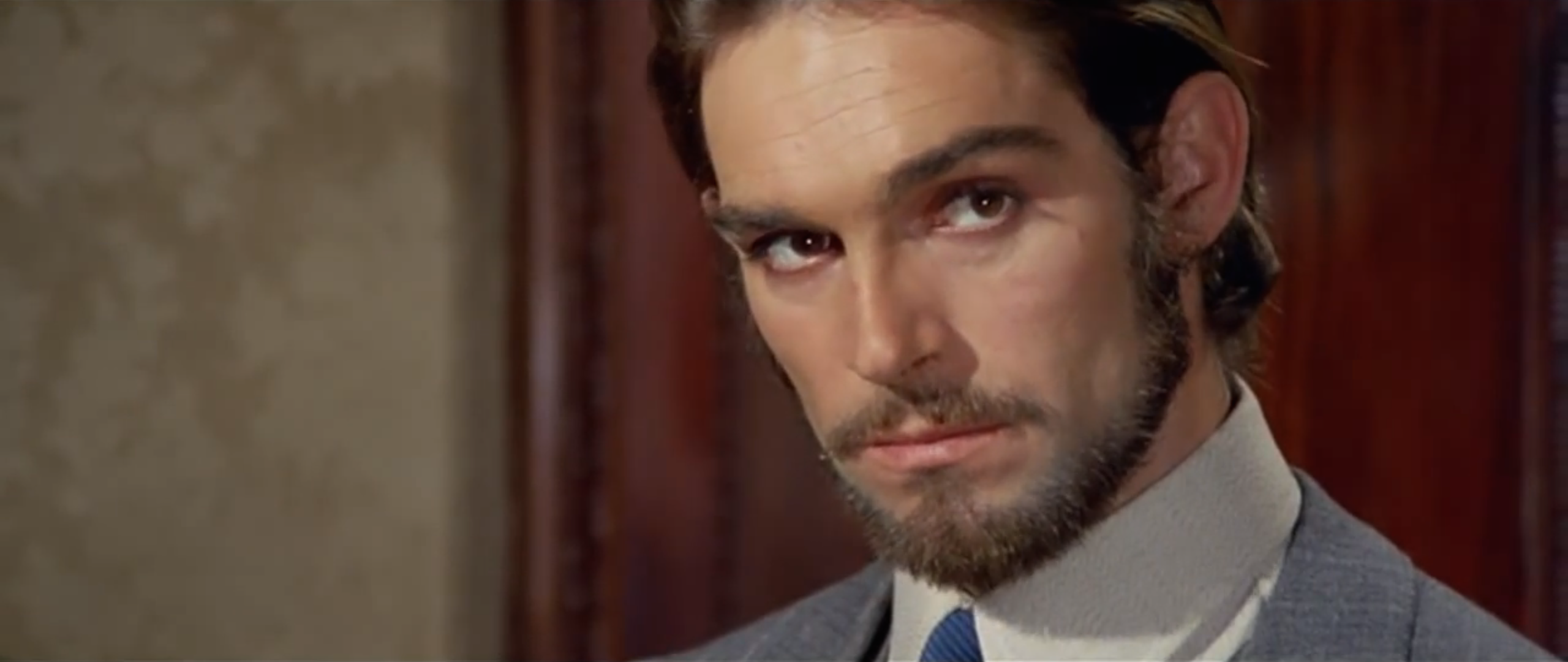
Fabio Testi As The Well Groomed Prof. Rosseni

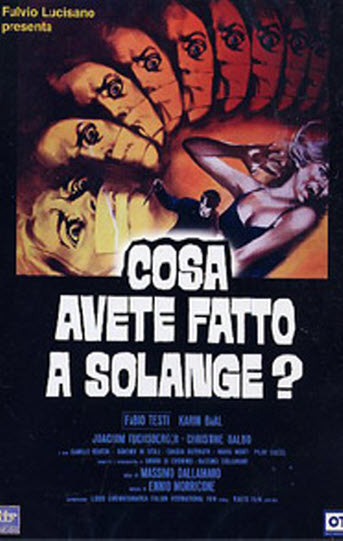
Well, here I am….Another weekend where I am writing a piece for my lost films of the 1970s blog, and yes, another review of a Fabio Testi film! Before I delve deep into this week’s Testi film, the exceptional 1972 giallo, “What Have You Done To Solange,” I must confess that over the last few years, since talking my wife to see Monte Hellman’s 1978 western, “China 9 Liberty 37” at the Harvard film Archive’s 2011 Hellman retrospective, I have watched more than my fair share of Mr. Testi’s work. To be frank, I had seen “China 9” back in the 1980s, and it pales in comparison to the rest Hellman’s output for that decade, but it does provide you with two of the most attractive actors of that era, Fabio Testi and the stunning Jenny Agutter. I also wanted to view the film again, and I did so for the few minutes that Sam Peckinpah takes the screen in addition to Warren Oates, who is a cut above most American actors of his generation. Given the talent in the film, I thought it was worth another look and brought Lily with me for a second opinion. Let’s just say that Lily also felt so-so on the film but was very impressed with Mr. Testi…Very impressed she was. Past some minor jealousy, I have no problem here because Fabio always brings something special to each par,t and Lily’s fascination with him has forced us to look at many smaller Fabio Testi films that we may have never seen. Such is the case when we recently saw a 35mm print of the 1972 Massimo Dallamano directed giallo, “What Have You Done To Solange.”

Born in Milan in 1917, Massimo Dallamano got his start as a camera operator for documentaries and was actually the cameraman who filmed Mussolini’s bullet ridden body after El Duce was murdered by partisans in 1945. Before making the jump to directing with his underrated 1967 spaghetti western, “Bandido,” Dallamano spent 1946-1966 working consistently and at times exemplarily as a cinematographer for films such as Dino Risi’s 1960 comedy,”Love and Larceny,” and Sergio Leone’s first two westerns, “A Fistful Of Dollars,” and “For A Few Dollars More.” I have always loved Dallamano’s timeless visual style behind the camera, so that along with my adoration of his aforementioned film, “Bandido,” and my general love of giallos made my desire to see “What Have You Done To Solange” increase immensely, and it does not disappoint.

Dallamano’s film, based on a novel by Edgar Wallace entitled, “The Curse Of The New Pin,” blissfully begins with a very coiffed professor named Enrico (Fabio Testi) on a rowboat wooing a beautiful young woman named Elizabeth (Cristina Galbó). While in their halcyon state, they witness something happening on land. They see someone running and the shine of a knife, but they aren’t sure of what exactly they are seeing. Cut to a later scene when Enrico hears that there has been a murder at the lake on the radio, so he returns to the scene of the crime to see what has happened. When Enrico returns to the lake where a murder has indeed happened, a press photographer snaps and publishes his picture, so when it is revealed that the girl who was murdered was also a student at the Catholic school where he and his dutiful but gruff wife Herta (Karin Baal) are teaching, Enrico becomes implicated in a string of murders of young women who all attended the same school, and it is up to Enrico and Herta to find the killer before his career is destroyed.

Herta is aware of Enrico’s tryst with Elizabeth as well as other girls at the school, which hurts Herta, but that does not falter her desire to defend here husband, if not for anything but to avoid a scandal. We know where Enrico was when the killing at the lake occurs, so he is not the killer, so is it possible that Herta is the culprit because of her jealousy? Our titular character Solange (Camille Keaton) was also connected to all of the murdered girls and appears not too well, but is she damaged enough to have conspired to kill all of these students? Bit by bit as the movie unfolds, we come to realize that the students at this school were not squeaky clean; drugs, booze, and abortions seem to be the standard at this Catholic school, so could the killer be the snobbish Professor Bascomb (Günther Stoll) or the judgmental headmaster, Mr. Leach (Rainer Penkert), who are so inclined as to resort to murder so that they can keep the escapades of our freewheeling students out of the press? Given that “What Have You Done To Solange” is a giallo, I will spare you the answer because that spoils the mystery and horror of the ride.

One of the more interesting transformations of the film is how Dallamano changes the physical appearance of Herta from a harsh and stern “Helga Of The SS,” non-nonsense looking woman to one that becomes ever so softer and more beautiful as she works harder to clear her husband’s name and thus rekindling their fondness for one another. It is an interesting and subtle choice for our director to make: By making Herta kinder as the plot progresses, Dallamano subliminally encourages the viewer to strike her name off of the list of suspects as the movie progresses. In fact, at one point, when Dallamano includes excerpts from Enrico’s dreams where he questions his own innocence, we as the audience are more likely to suspect Enrico than Herta, even though Herta appears to have the strongest motivation to kill the girls. The reduction of Herta’s harshness is an interesting technique that works well in shuffling the deck of suspects while keeping her character from just being a downtrodden wife that begs for your pity.

“What Have You Done To Solange” 1972 Trailer

Truth be told, I haven’t read the Wallace novel, but this film plays out like a English detective story mixed with a slasher film rather than an eerie Argentoesque supernatural horror film, which I found very compelling. Also missing is the intense viscera that normally coincides with most giallos, making “What Have You Done To Solange” feel more like a murder mystery, which was a refreshing change of pace. As for Testi, he is his usual stunning self (this is Lily speaking, not me), and he is very good in the lead as he commands each scene with that same sorrowful face and desperation that he has in the 1973 Sergio Sollima film that I reviewed last month, “Revolver,” which is also a cut above the average poliziotteschi. As far as the other actors are concerned, Karin Baal really brings a lot to her small role as Herta and is an actress that I will keep an eye out for when I review other films that she starred in during that era. As for the cinematography, it is the strongest point of this film, and much of that credit goes to Dallamano, who I am sure had a say in the shot selection and his young cinematographer, Aristide Massaccesi, who would soon be known as Joe D’Amato, who, like Dallamano, would become a very successful director in his own right.

Sadly, unlike his protege D’Amato, Massimo Dallamano would only make a handful of films after “What Have You Done To Solange,” for he was killed in a car accident in 1976 after finishing shooting the crime film, “Colt 38 Special Squad.” Given his smaller volume of output, Dallamano receives less attention than his peers, but he is a visually smart and sharp director who deserves a great deal of respect for his work in Italian genre cinema.