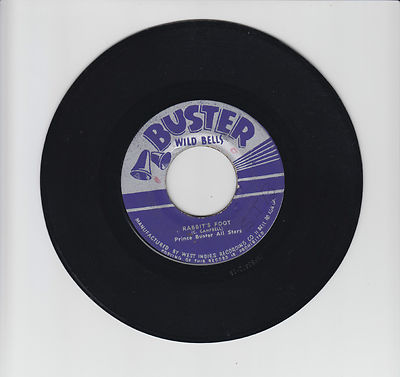
This week (July 7th) on Generoso and Lily’s Bovine Ska and Rocksteady, we started off with a version to version to version extravaganza from Phil Pratt’s Sun Shot Label. We began the second set again with another version to version from Derrick Harriott and the late DJ Scotty, then our bouncy mento set before a long set of early Jamaican rhythm and blues that featured an early Jimmy Cliff side from Leslie Kong’s Beverley’s label called “You Are Never Too Old” to set up the spotlight on Prince Buster’s Wild Bells label.
Born as Cecil Bustamente Campbell, Prince Buster has one of my all time favorite stories about his entry into the music industry. After living with his grandmother in rural Jamaica as a boy, Buster gained an interest in music after singing in churches. Consequently, as a teenager, when he lived on Orange Street, he naturally became attracted to the soundsystem culture, particularly with Tom the Great Sebastian’s soundsystem. As soundsystems further emerged and began to compete against each other, particularly the big two, Coxone Dodd’s and Duke Reid’s, Prince Buster and his crew aligned himself with Coxone, whose soundsystem was more of an underdog in comparison to Duke’s, to provide Coxone’s dances with security. As he stuck around Coxone, Buster learned enough about running a soundsystem that he created his own, which he called Voice of the People. With his soundsystem up and ready for records, Buster was ready to begin recording his own singles, but originally before he could get to producing music for his soundsystem alone, he was asked by Duke Reid to produce records for him. Buster ended up recording 12 tracks at Feral studios, and he gave one to Duke Reid, leaving the rest to be pressed on his own Wild Bells label, which we highlighted this epsiode, beginning with Buster’s very first track as a vocalist, Little Honey, which was released in 1961.
Buster’s Group, the backing band for the Wild Bells label, included members of the future renowned Skatalites band. On drums and percussion was Arkland Parks, better known as Drumbago. On tenor sax was Dennis Ska Campbell. On guitar was Jah Jerry Haynes. On trombone was Rico Rodriguez, and on tenor sax as well was Val Bennett
If you would like to listen to the show, it is HERE!
Join us on Facebook to know what our future spotlight will be, shows and record shops of Jamaican interest in the Southern California area, and the occasional posting of a rare photo or side:
There are two events, one positive and one negative, that precipitated my review of the much maligned 1976 dark comedy, “Mother, Jugs, and Speed:” Extremely negative is the recent damning evidence against Bill Cosby, the titular “Mother” of the film that I am reviewing here, a fellow Philadelphian, and my comic hero whose self-admitted criminal behavior has broken my heart. And on a separate positive note, is the complete Robert Altman retrospective that is currently being mounted in my former town of Boston at The Harvard Film Archive that many of my dear friends are now enjoying. Why Altman you may ask? I will theorize that somewhere in the mix of 70s subgenres, is a rarely discussed collection of films that stem from the success of Altman’s game-changing counterculture film that began the decade, “MASH,” that I will define as “workplace” films. You remember this seemingly endless flow of films that feature a group of irreverent misfits that are all stuck in a job whom you feel real empathy for and are always trying to get one over on the man. A wide array of films from the successful “Blue Collar” to “Car Wash” and ending somewhere around 1981 with “Underground Aces,” an epic flop starring a young Melanie Griffith, about a group of wacky employees in a hotel parking garage in LA. Yes, by that point Hollywood must have ran out of every conceivable place of employ to stage a workplace comedy. At least that film had a kicking theme song from Lionel Ritchie-led Commodores that one-ups the messy soundtrack of the even messier scripted “Mother, Jugs, and Speed.”
In the middle of America’s finest decade of film making, Peter Yates, who had just come off the success of directing Barbra Streisand in “For Pete’s Sake,” and Robert Mitchum in “The Friends Of Eddie Coyle,” decided to throw his hat into the ring of “workplace comedies” with this tale of a group of bawdy Los Angeles ambulance drivers who seem to have an unlimited amount of time to do drugs, mess with each other, pull pranks on their chief competitors, and even buzz a few nuns crossing the street for a quick laugh. Watching the nuns scatter at the sound of an ambulance siren is the main joy of “Mother,” a beer-swilling, message parlor visiting meat wagon driver played by Cosby who per usual manages to be part of these bad goings on without uttering a blue word. This should come as no surprise as Cosby even made a couple of blaxploitation films during that time; “Uptown Saturday Night” and “Let’s Do It Again,” that similarly to “Mother, Jugs, and Speed” received a PG rating. So, unlike our friends at the 4077th, the hijinks committed by our band of upstart paramedics are a bit toned down. Upon my third viewing of this film, I wondered if more than a few urban workplace appropriate expletives would’ve made it into the final script if Gene Hackman (Yates’ original choice for the role of Mother) had accepted Cosby’s part before filming began.
Added to the cast is Harvey Keitel, who that very same year had his pimpish hand off blown off in a whorehouse by Travis Bickle in “Taxi Driver.” Keitel plays the soft-spoken “Speed,” a recently suspended cop and Vietnam Vet who may or may not have sold amphetamines whilst on the job, hence his epitaph. Lastly, there is “Jugs,” played Raquel Welch, who does her best uptight feminist “Hot Lips” Houlihan imitation. “Jugs” never dates the drivers, much to their chagrin, as she spends every night going to school to get her EMT license. She brandishes her license one day at work but has no chance of actually driving a wagon as her boss, Mr. Fishbine (Allen Garfield at his uptight finest) is not going to put a woman out as a paramedic. No 1970s genre film is complete without an ex-football player/actor and here we get Dick Butkus as the cowboy hat wearing “Rodeo,” think a physically larger but similarly racist Duke Forrest from “MASH,” and finally to stay on the “MASH” target, we have the film’s heavy, Murdoch (Larry Hagman) who fills in for Frank Burns as the womanizing and boorish workplace dickhead. There is some real acting talent here and to imitate the character’s idioms from “MASH” is a venial sin, but where the wheels really come off on “Mother, Jugs, and Speed” is the script and Yates’ direction, which reminds us as to why Altman’s 1970 film is considered the masterpiece that it is to this day.
Altman had the gift in “MASH” of balancing some of the funniest moments captured on film with other moments of real drama and even a bit of viscera. Altman’s comic timing is perfect in “MASH,” and it makes the overall experience into a gem. “Mother, Jugs, and Speed” supplies us with many decadent, funny scenes that keep my attention when the film runs on late night cable, but these scenes are awkwardly pressed up against a multitude of poorly framed moments of pathos. Case in point is the scene where Mother’s ambulance partner, Leroy, is murdered by a crazed junkie who wants a fix. It’s a real and tough scene, but Yates immediately follows that scene with a comedic scene that just does not fit, negating any feeling the viewer has towards Leroy’s death and the laughs of the next moment. There are countless scenes that play out this way in “Mother, Jugs, and Speed,” and after a while, you just lose your taste for the film as you wait for inevitable laugh after an ugly moment. Unlike many of the workplace films where the moments of tragedy create empathy for the characters predicament at their job, such as Smokey’s ugly “accidental” death in Paul Schrader’s fine 1978 film, “Blue Collar,” the poor positioning of these moments in “Mother, Jugs, and Speed” feel too divisive and thus become the film’s undoing. Perhaps it was the low budget of the film had that forced such sloppy decisions. We now know that Gene Hackman and the original choice for “Jugs,” Valerie Perrine, both backed out due to low salary offers and perhaps other choices were made to cut corners that resulted in this mess of a film? Sadly, Yates’ film goes down as a sometimes hysterically funny but intensely uneven urban dark comedy whose inability to know what it wants to be stamps out any potential of being a classic in the genre.
Original Trailer for Mother, Jugs, And Speed
A few years later in 1979, Yates would shed the A-list stars and their salaries for a team of then unknowns (Dennis Quaid, and Daniel Stern to name a couple) and master the comedy-drama with the five time Academy Award nominated film,“Breaking Away.” A modern masterpiece that unlike “Mother, Jugs, and Speed” is almost eerily intuitive of American working class people’s dilemmas and dreams.
For many of us over forty year old Americans, the children of the VHS explosion, we remember the notorious “Mondo” films well. Those sort of documentaries from Italy depicting acts of perverse cruelty and sexuality from all over the world were quite popular from the 1960s onwards and made their way from house to house to bootlegs when I was growing up in Philadelphia. If you have never seen them, you weren’t missing much as these “docs” existed only to shock you with sometimes real/sometimes staged footage of bestial violence, war, and torture framed as commentary on the sick nature of humanity. In our neighborhood, the Mondo films would only be surpassed in underground popularity of the even more wretched and even less cinematographic straight to video refuse offerings entitled “Faces Of Death,” a poorly strung together collection of real and fake clips of human and animal suffering that to this day represent the lowest point of the VHS bootleg craze.
Keeping in line with the Mondo films is the first mockumentary from Dutch director Romano Vanderbes, “This Is America” (originally released under the title, “Jabberwalk”). For ninety minutes, Vanderbes takes you to USA to show you the sick excesses of the world’s richest country in all it’s shocking glory because I guess we aren’t as civilized as red light district walking, sex-obsessed Dutchmen. The film promisingly begins with the dulcet sounds of The Dictators performing “America The Beautiful,” and then director Vanderbes immediately takes you to one of the most hallowed traditions in 1970s American culture, that of the demolition derby. The over narration (the star of the film) goes on and on about America’s obsession with the automobile, and I guess the demolition derby is that obsession gone wild. As is the Indianapolis 500, which Vanderbes shows in all its crash up glory as well. Little Romano must’ve been thrilled to have found the footage from what appears to be the 1973 race, as he presents a montage of horrific accidents that took the lives of drivers and crew members. After that dose of bodies being thrown about the tracks of downtown Indianapolis, we immediately cut to the real focus of “This Is America,” …the sex.
We are now at the 1975 “Miss All Bare America Pageant” where, as you guess it, a parade of robust, nude American women goes full frontal for fun and prizes. I’ll save you the suspense; the woman with the largest breasts wins the contest, and she proudly wears her sash between her two massive mammary glands. In the slight chance that a few women may be lurking in the audience of “This Is America” we are whisked away to a ladies club where rejects from Magic Mike “erotically” dance in front of a sea of Melissa McCarthy clones who seem bewildered by the scraggly mess of gyrating men jamming their covered manhood in their faces. OK, that’s it for the ladies as we then are transported to scenic Nevada for a tour of seedy cathouses, some that even come complete with airstrips for that trick on the go who needs his corporate rod smooched. After a trip some naughty American massage parlors (the Netherlands have none of these I imagine) and the Eros Awards (the Oscars for XXX film industry), the director reminds Americans of their fast food fascination by explaining to us the shocking exploitative meat origins of the “hot dog.” Next is a triptych through many of the religious foibles of America, the drive-up church, a Lutheran Church where the priest makes himself up as a clown before handing out the body of Christ, various corny Las Vegas wedding chapels, and an up-close and clearly fake peek into the day to day life of a Mormon man with twelve wives. But then, it’s back to….the sex.
For those kinky folks on a budget who cannot afford a wooden pillory, we have “Rent A Dungeon” where the bored middle class can whip and rack each other into a sexual fantasy. And if that doesn’t shock you, then be prepared for the greatest shock of the entire “documentary,” a tour of an actual dildo factory! Maybe shock isn’t the right word, as I was more stunned by the fact that such things were once manufactured in the good old US of A and not Taiwan. Yes, once in America, teams of middle-aged sexually frustrated women toiled away molding, carving, and shining some of the finest sexual prosthetics that the world has ever known. In this factory, a sexual laboratory once existed to make strides into gratification technology by creating not only dildos the size of a Cub Scout’s arm, but also items like the “Accu-Jack” a personal masturbation machine bears an almost Orwellian quality in modern shape and efficiency. Sorry ladies but if you’re thinking that you get to see the aforementioned item used on a Channing Tatum, you are out of luck as we only get to see “Accu-Jack” tested on a mannequin with a painfully bored countenance.
This Is America/Jabberwalk Full Movie
What sets “This Is America” apart from the predominance of the Mondo films is that it is more on the sex and less on the violence and the entire film is done with a funny; tongue-in-cheek over narration that highlights the ridiculousness of the presented footage. In its few moments of attempted seriousness, the doc gains an almost surrealistic quality as seen through current eyes that exults it into cult film status. After 25 years of bad reality television, “This Is America” stands as a jolly “video nasty” that would pulled out of many of 1980s teenaged boy’s backpack for the purpose of wowing his friends into thinking that he found the Holy Grail of naughty tapes. A watch well worth your time in 2015 if you can gather a group together for giggles or if you can go back in time to my friend Sam’s basement where many a Mondo screened after his mom and dad went to sleep.
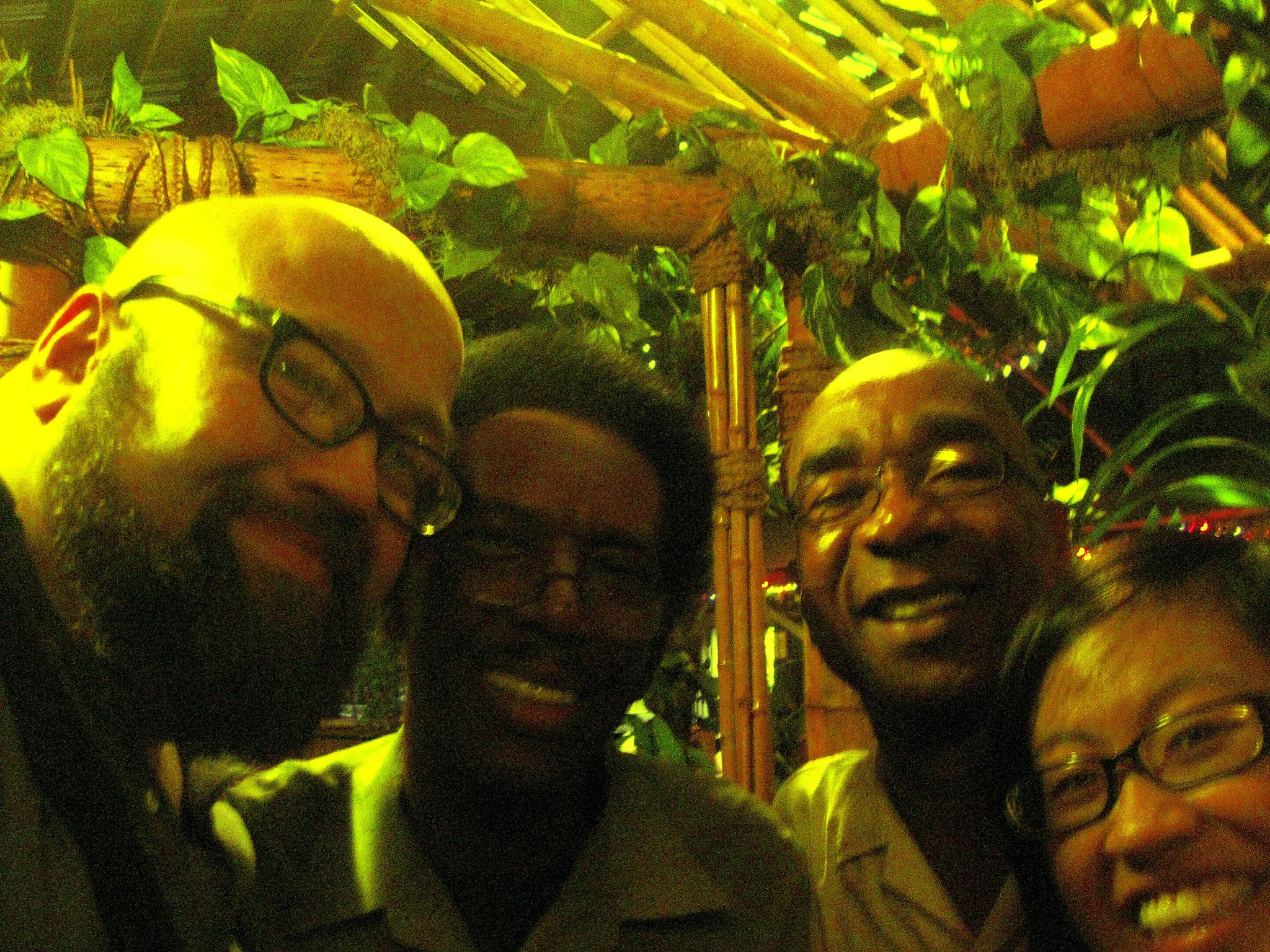
Keith and Tex with Lily and Generoso June 28th, 2015
While living in Los Angeles these last two months, Lily and I have picked up some amazing vinyl and been the beneficiary of some truly great shows of the Jamaican oldies variety. This week, after seeing Keith and Tex wow a crowd at Don The Beachcomber in Huntington Beach, we had the opportunity to get an interview with the dynamic duo of Derrick Harriott’s Crystal/Move and Groove Label. That interview, along with a few selected cuts would be our spotlight for this week’s (June 30th, 2015) episode of the Bovine Ska and Rocksteady.
Before we got to the interview and music spotlight on Keith and Tex, we started off the program with two sets of red hot ska starting with one of our favorite ska-era cuts from Toots and The Maytals entitled “Peggy,” a fun record from BMN in 1965 that begins with some snappy guitar riffs. After our mento set, we went version to version crazy, beginning with the Lee Perry produced Untouchables track, “Confusion” from 1970 and it’s version from Val Bennett and The Upsetters, “Big John Wayne.” After Ken Boothe’s sublime 1969 record, “Just Another Girl” and The Rudies 1970 classic, “The Split,” it was on to the Keith and Tex spot.
We learned much from our interview with Keith and Tex, especially their writing technique from now and then, their output for Derrick Harriott, and their feelings for Lynn Taitt, who played on many of their finest recordings from back in the day, including the iconic riffs present in their biggest and perennially covered classic, “Stop That Train.” Thanks to Keith and Tex for taking the time out to speak with us. Lovely gentlemen that you should see as they are currently on tour. And also thanks to Keith and Tex ‘s manager, Nathan Ranking, for setting up the interview on such short notice.
As my dearest Lily kicked my butt last week with her Cha Gio (Vietnamese Egg Rolls) I had to return the favor by making rolls of my own and so I whipped a pan of my Involtini di Pesce (Italian fish rolls) my take on the traditional Sicilian dish, Involtini di Pesce Spada (Swordfish Rolls). I have made this dish using swordfish before but truthfully, I have used a variety of fish based on whatever was the freshest option I had before me at the market that day, so for this version I am using six beautiful fresh pollock filets. From prep to plate should only take you an hour and you’ll have a sweet and savory piece of fish that will take your taste buds for a loop.
You will need a decently sized backing pan, aluminum foil, and about two pounds of pollock filets, breadcrumbs (I like panko for this), cashew nuts,capers, currants, olive oil, salt, pepper. Enjoy and let us know how yours turned out. Love, Generoso XOXO
Music: Dvorak-String Quintet in E-flat Major, Op. 97, B. 180
So, after last week’s misfire with Mixcloud (it sadly seems that the limit for tracks from a single artist is four) we decided to turn our attention this week to the thunderous and at times daffy early reggae sounds of England’s Torpedo Label. That of course started at the midway point of the podcast. We began the show with two sumptuous sets of rocksteady, beginning with a rare cut from Merritone that you must hear called “Fountain Bliss.” After a mento set that featured a Lord Fly composition called “Mabel.” After a long a frenzied ska set, we went right into our spotlight of the Torpedo Label.
Lambert Briscoe ran the Hot Rod sound system in Brixton, and from the popularity of his soundsystem, emerged the Torpedo record label, which was founded by Briscoe and Eddy Grant, yes the same Eddy Grant of The Equals and eventually Electric Avenue fame. Torpedo was founded in 1970 and was short lived; it folded in the same year but was eventually revived for a stint 1974. As a result of this, we will split this spotlight according to the birth year and the rebirth year of Torpedo, beginning with the very first single released on the label, Pussy Got Nine Life by the Hot Rod All Stars, the Torpedo label’s house band, consisting of Ardley White, Danny Smith, Earl Dunn, and Sonny Binns. Originally known as The Rudies, they were renamed after Lambert Briscoe’s soundsystem as the Hot Rod All Stars, and somewhere between the transformation from The Rudies to the Hot Rod All Stars, the group also spurred off and developed into The Cimarons, who would become the pre-eminent backing band for the English reggae scene. In addition to Lambert Briscoe himself, Larry Lawrence also produced for the Torpedo label, most notably, he was the producer of Errol English’s cover of The Small Faces, Sha La La La Lee.
With 1970 marking the height of the skinhead reggae movement, characterized by a fast, danceable rhythm, the English market was dominated by Trojan and Pama, two heavyweights that had many subsidiary arms and stables with major artists, making it difficult for a small label like Torpedo to survive past its first year, which it unfortunately did not. Then, by 1973, the skinhead reggae of the previous years began to lose traction, signed especially by the folding of reggae specialized music shops. But as the late 60s/early 70s fast reggae left the spotlight in 1973, roots reggae with its markedly slower skank took its place, particularly due to the release of Bob Marley’s To Catch a Fire. Consequently, with this resurged interest in reggae, Eddy Grant opened up the Torpedo label again in 1974, but now focused the releases on more of a roots reggae sound. We kicked off the highlights from the Torpedo revival with Johnny Jonas’s Happy Birthday, a track produced by Eddy Grant himself.
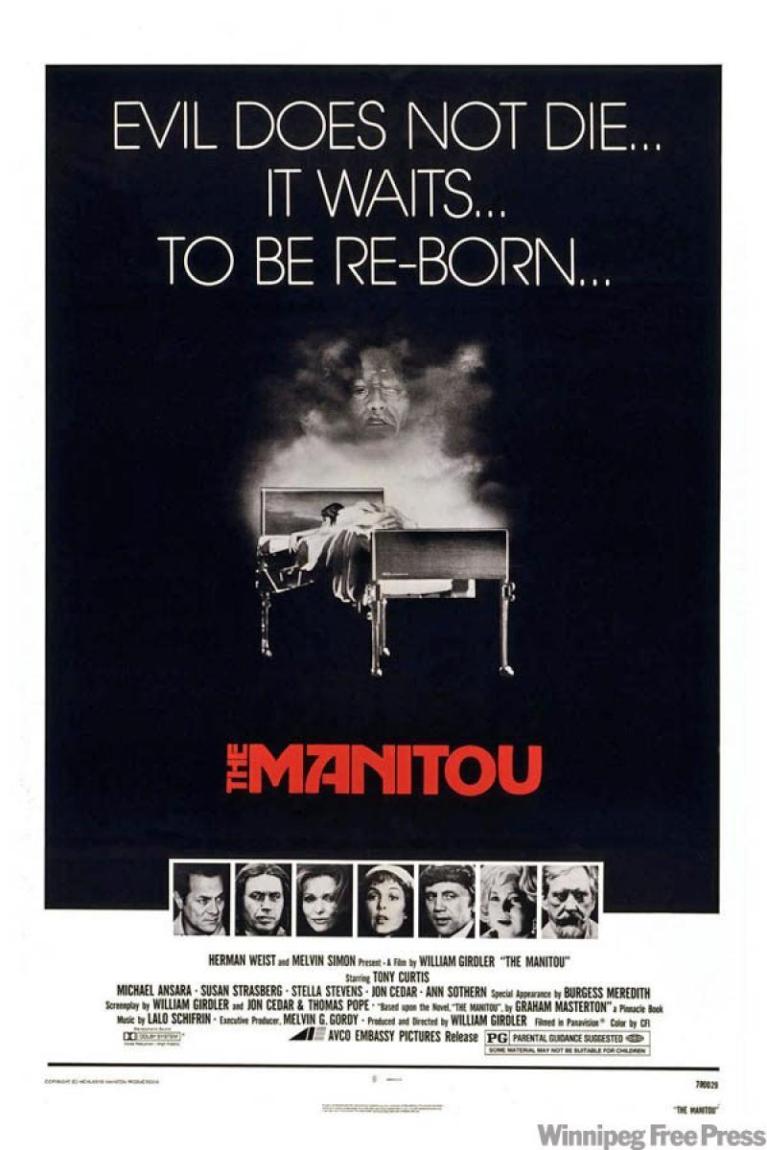
The original tagline for 1978’s “The Manitou” went something like this…Evil Does Not Die…It Waits To Be Re-born. But I’m thinking….
“The new film from the director of the “Jaws’ ripoff, “Grizzly,” comes a horror, space odyssey, Native American, love story kind of thing with Tony Curtis.”
Karen Tandy (Susan Strasberg) has something or someone growing in her neck and it’s up to a team of doctors, her carny fortunetelling lover/friend (Tony Curtis) and shaman, Johnny Singing Rock (Michael Ansara) to save her! Still swimming in the wake of “The Exorcist,” which unfortunately was responsible for an endless sea of Satanic-possession horror film clones from “The Omen” onward, is “The Manitou” an almost inconceivably bad film that attempts to cash in on so many popular 1970s film genres at once, you begin to lose track about midway through the plot. Try and follow me on this one.
Our victim, Karen Tandy, lives in San Francisco, is kind of cute, and has a huge lump on her neck that could be cancerous but cancers rarely have their own heart and lungs. This baffles our crack team of doctors and they plan on operating immediately but not before allowing Karen to wander around the cable car town like an old Rice A Roni ad for a couple of days first. She descends on the Munstersesque apartment of Harry Erskine (Curtis), a Tarot Card reader and amateur psychic who spends the bulk of his days bilking old ladies out of their inheritance. Karen turns to our still adorable Harry for help and a bit of slap and tickle as she needs to know why she has a fetus gestating in her gullet. Harry consults the cards and pulls the “death card” (which you know in Tarot terms doesn’t mean actual “death) but lies to Karen anyway to calm her and perhaps loosen her panties up a bit. They tango and while she sleeps off her bed romp, Karen utters the phrase “Pana Wichy Saratoo” which sounds all mystical, so that springs our Harry into action as a paranormal investigator.
Meanwhile in the surgical theater, traditional medical science fails, as the neck fetus begins to control the hands of our surgeon, making him cut into himself. This is no normal neck fetus here, this thing has all kinds of mojojojo, and now our doctor must consult his super computer for answers. Back in the mystical realm, Harry has now gone off to see out mediums to séance the hell out of Karen’s neck to get her all OK again, but of course that fails as well. So while Karen lies in her hospital bed, the lump has grown into the size of a Billy Barty midget and is looking for a ripping exit. Frustrated, Harry gets the tip from another carny reject (played by a post-Rocky Burgess Meredith) that “Pana Wichy Saratoo” is Native American for “thing that lives in white woman” (actually “my death foretells my return”), and so Harry is off to the reservation to get himself the best Native American shaman that money can buy, and that shaman is Johnny Singing Rock.
“Manitou” Trailer From 1978
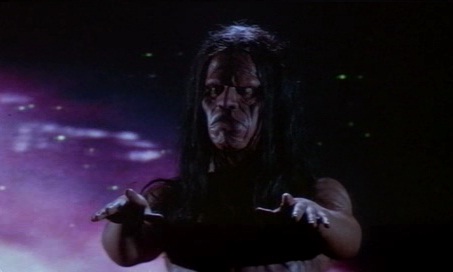
Johnny warns Harry that the “Evil One” is coming and that nothing in his white man world will stop him so Harry offers Johnny a monster load of cash to leave the reservation and battle the creature living in his maybe girlfriend’s neck. But they might be too late; as they head towards the hospital, the big moment occurs, and at least thirty percent of the special effects budget goes ripping out of Karen’s back and thus, the Misquamacus, is born. It is an ugly looking spud, and when Johnny gets a good look at him, well he’s pretty sure that the tiny terror will kill them all. What follows is a rapid blending of genres that goes so quickly that if you can stop giggling for a moment, you will see about four or five of them speed by your bewildered eyes. You get the hospital drama of course, but for a bonus you also get an “Exorcist-like” de-possession ritual, the downtrodden Native American soliloquy to evoke white man’s shame a la “Soldier Blue,” and an all-out “Star-Wars” laser battle between the “Manitou” (the spiritual and fundamental life force understood by Algonquian groups of Native Americans which this film reduces into more Star Wars gimmickry) of the white man’s technology and Misquamamcus in space no less. This final fight scene is all so impressive as it seems that some producer who must have really appreciated Girdler’s “Grizzly” sank some real bucks into the final showdown. Somewhere lost in this of course is the fact that the white man, triumphs over the Native American again and at the end we are supposed to bask in the joy of Tony and Karen sharing a cuddle while the savage’s spirit dies another death. Oh well.
After a career of directing some pretty awful knockoffs and even a blackploitation film (Pam Grier’s Sheba, Baby), “The Manitou” thankfully became Girdler’s final film. At least with “The Manitou” he can say that he directed a film in almost every genre.
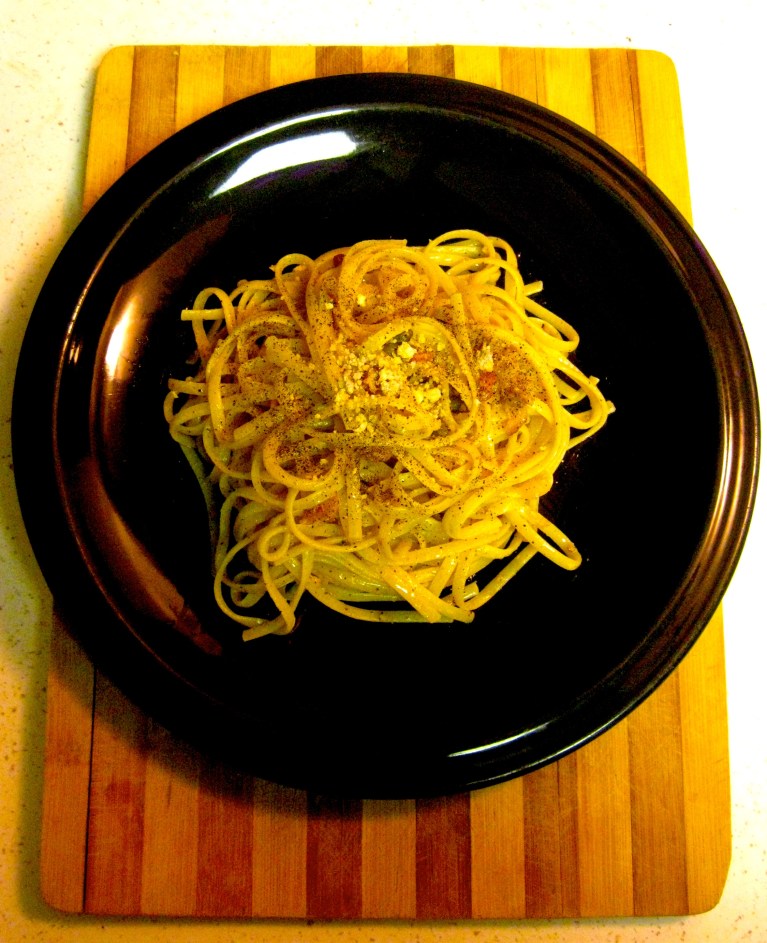
As we are still in a slightly colder than normal June here in Los Angeles, I am still pulling out some of my dishes that are more meant for fall than summer. Unlike my eggplant dish from a couple of weeks back, Timballo di Melanzane, my dish for you this week, Linguine Con Capperi e Pancetta (linguine with capers and bacon), should only take you about 25 minutes from prep to plate. You will need the following, Linguine, olive oil, capers, one sweet onion, four large strips of bacon, 1 cup of light cream or half and half, salt and pepper, 1/2 cup of parmesan and eight cloves of garlic. If you have a large frying pan, a colander, and a pot to boil your pasta, then you are all set. Let us know how yours turned out. This is a tasty and fast dish that you will enjoy again and again. XO Generoso
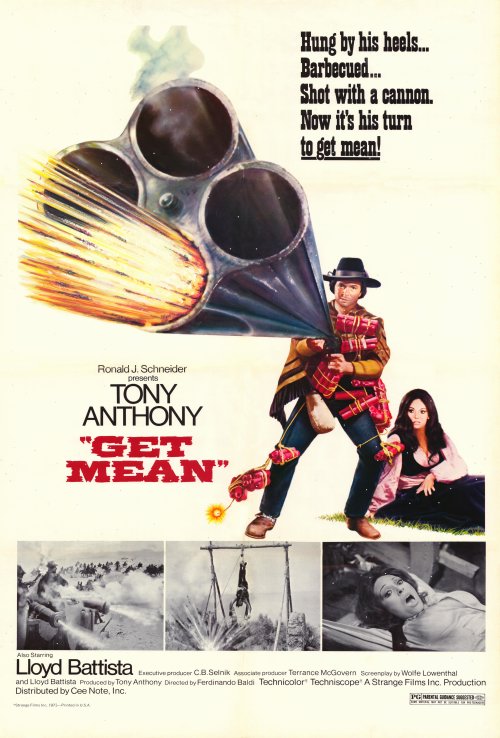
Once Asian cinema began to overwhelm the action film landscape in the 1970s, the days of the spaghetti western were numbered and thus the genre had to get crafty or else ride quickly into the sunset. To the rescue comes actor Tony Anthony, an American living in Italy at the time of Leone, who was well known for The Stranger character that first appeared in 1967’s “A Dollar Between The Teeth.” That film was successful, but Anthony was one of the first to see the writing on a wall in realizing that the genre needed some fresh ideas, so a year after that film debuted, Anthony and director Luigi Vanzi took The Stranger way east for “The Silent Stranger” (aka A Stranger In Japan), mixing the western with the samurai film. Tony wasn’t done yet with the Japanese sword epic, as he teamed up with veteran sword and sandal director Ferdinando Baldi and brought in ex-Beatle Ringo Starr to play the heavy for a spaghetti treatment of the blind swordsman, Zatoichi, in 1971 called “Blindman,” about you guess it, a blind gunfighter. For years“Blindman” was next to impossible to get here in the States, and for that reason, it was pushed into cult film status along side Anthony’s fourth entry into the Stranger series: a bizarre, genre-bending spaghetti from 1975 called “Get Mean.”
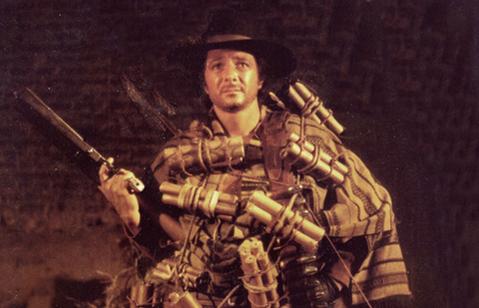
For “Get Mean,” Tony Anthony reunited with director Baldi and his co-star from “Blindman,” Lloyd Battista for this fantasy western where The Stranger, shortly after being dragged for a few miles by his dying horse past an ominous Phatasmesque silver orb, is offered fifty grand by a witch to escort a Princess back to Spain where she can regain her throne from the hundreds of Vikings and Moors who are battling it out back home. After a train and ship whisk him off to Spain from America, The Stranger must go to battle with the Vikings and Moors (what year is this?), find a treasure that is being hidden by ghosts, save the princess, and collect his money from the witch who offered him the money in the first place. All of this done with several hundred explosions, wild modes of torture, and a demonic freak out scene by The Stranger that would only be matched by Bruce Campbell as “Ash” from “Army Of Darkness.” Yes, there is much in “Get Mean” that makes you think that a VHS copy of this film made it into the hands of a young Sam Raimi sometime along the way. There are some huge plot holes and moments that leave you scratching your head, but there is almost a post-modernist element to the goings on here. Does it matter that The Stranger saves the princess or finds the treasure? After a while it doesn’t, but you just revel in the messy joy anyway.
Besides the above-mentioned weirdness in plot, what makes “Get Mean” so enjoyable are the performances of our Tony Anthony, whose “Stranger” distinguishes himself from the Franco Neros and Giuliano Gemmas in the way that he is more a wisecracking Brooklyn Bugs Bunny figure than a silent stare Clint Eastwood type, and Lloyd Battista, one of the films many villains, who reminds me of a demented late 1970s Ollie Reed doing Richard the Third with dynamite in hand.
On June 8th at The Silent Film Theater/Cinefamily I had the honor of seeing a restored version (courtesy of Blue Underground) with Anthony, Battista, and executive producer Ronald Schneider in attendance that included one of the liveliest Q&A sessions I have been to in some time. In this clip that I shot from that evening, Lloyd Battista expresses his opinion on the excellent producer work of Tony Anthony. Seen on the video from left to right is Tony Anthony, Lloyd Battista, Ronald Schneider, and the moderator, Rob Word:
If you thought that the description of the film was beyond logical, for the predominance of the evening, Anthony, Battista, and Schneider made it abundantly clear as to the almost surrealistic efforts that were needed to be made in order to secure the funding to finish “Get Mean,” as well as the shortcuts that were made in order to get most out of the short money that they had to work with for the time in which they had to shoot. As Battista states in the interview I posted above, “every penny that Tony came up with, ended up on the screen.” For example, in an early scene in which The Moors are about to battle the Vikings, director Baldi had to shoot his extras dressed as The Moors in one shot, and because he did not have enough money to get more extras, Baldi then made the extras put on the Vikings costumes in a different shot on the opposite end of the battlefield to make the scene look more epic. Once the Vikings and Moors begin to clash, Baldi redressed some of his Vikings as Moors and relied on close-ups so that the scene looked like two large armies battling. “More work” Battista said, but it came out looking real. There were also stories of weird financial transactions that kept Anthony on location while everyone else bailed in fear of retribution from investors, or the story of twelve thousand dollars that came just in time to feed his enormous cast before things “got ugly.”
Despite all of the tribulations, forty years later this film was restored to its nutty brilliance and I am glad to have been there to see one of its first public screenings since the restoration. As someone who adores the spaghetti western mostly for its admiration but irreverent take on the American western, I have to applaud “Get Mean,” for the genre rarely gets more irreverent and downright deranged than this.
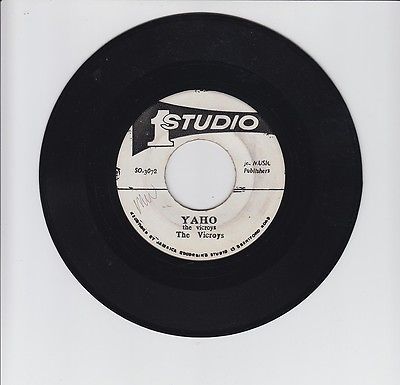
The pirate-themed rocksteady of “Ya Ho” on Studio One
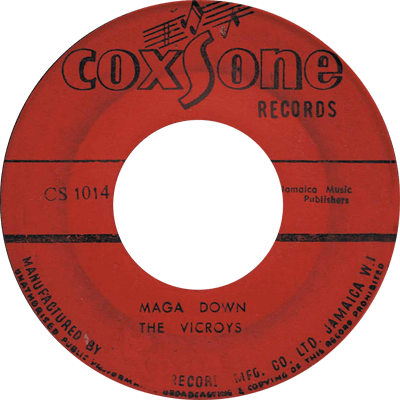
We started off this past week’s Bovine Ska and Rocksteady podcast, our second since leaving Boston with two sets of joyous fast ska beginning with The Checkmates “Invisible Ska.” We ended our first hour with two version to version excursions, ending with Delroy Wilson’s ” I Want To Love You,” followed by Big Youth’s sublime version,”Not Long Ago.” The second hour began with our spotlight on Studio One vocal group, The Viceroys.
The Viceroys began singing together after Wesley Tinglin, Daniel Bernard, and Bunny Gayle met in West Kingston near Spanishtown Road. Tinglin had been singing at Joe Higgs’ music classes in the company of Alton Ellis and Ken Boothe, and after picking up some guitar, he was ready to begin to record with a group. The Viceroys first auditioned for Duke Reid with two tracks written by Tinglin, but Duke Reid was not interested. Consequently, the group went over to Coxone Dodd, who recorded their first single, Lose & Gain, a track also written by Tinglin then arranged by Jackie Mittoo and backed by The Soul Vendors and this was the track that kicked off our spotlight on The Viceroys
Yo Ho was inspired by Tinglin’s interest in The Caribbean Reader, which contained stories about Morgan the pirate and other pirates. After their time with Coxone Dodd, which ended with dissatisfaction with the usually disappointing business practices of Studio One, The Viceroys went over to Derrick Morgan. Our second set began with their rocksteady recorded for Derrick Morgan, Lip and Tongue.
You may listen to this podcast on Mixcloud by clicking HERE! Please subscribe to our podcast series while you’re there.
Please join us on Facebook to learn about our future spotlights, reggae and ska shows in the So. Cal area, record shops of note in Los Angeles and more!






 LILY & GENEROSO 4EVER!