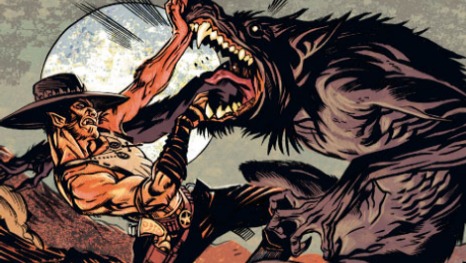
Am I A Western? Looking at High Moon

Standard

As a fanatic of westerns, I felt that it is appropriate that the same love for those films carried over into my graphic novel readings. In the wake of the current craze surrounding East of West, which I admittedly did not enjoy because of its pretentiousness and overbearing dialog, I read the first volume of High Moon, a former webcomic from DC’s online comic branch, Zuda. In 2009, High Moon was selected from a pool of webcomics published by Zuda to be transferred to the print format. After reading the first print volume, I cannot say that the print transition was a bad idea for Zuda, maybe just not the best.

High Moon Volume One

High Moon centers around a man named Macgregor in the opening of its first chapter. Macgregor is a former Pinkerton detective who now has more of the appearance of the archetypal man without a name. He is somewhat of a bounty hunter, and in the tradition of the many bounty hunters of westerns past, he speaks little with the few words he says tied to questions around getting more information on the man he is chasing. After talking to many of the town locals, we find out that there is a little girl missing and that there is something causing blight on the cows and the cowboys around the town. In parallel to Macgregor’s investigation, we get to know more about the the man he is after, Edward Conroy, and we find out that the hunter and the prey are far more similar than Macgregor would believe; both are werewolves who are able to tame their transformations, and both are trying to save the little girl.

As the chapter progresses, the true villains of the Texas town emerge and Conroy and Macgregor, in a very abrupt moment, battle together against the monsters who are the source of the destruction and the massacre in the town. And in a bizarre twist, Macgregor is killed and Conroy absorbs and bears the identity of Macgregor. In the next chapters, we see Macgregor version 2 on his adventures in Texas. On his path, Macgregor runs into traveling performers, bartenders, arguing family members, and train robbers, the universal western peripheral crew. However, he also runs into the supernatural: other werewolves, a Native American tribe with the ability to transform into bird-like super beings, and oddly enough, steampunk accomplices and assistants to Nicolas Tesla.

High Moon is a bit of a tough graphic novel to review. While the main idea of the bounty hunter werewolf is interesting, there are almost too many supernatural elements to the story. By the time the Tesla assistants emerge and use their seemingly mystical robotic weapons, the story loses its greatest strength, its core character. As Conroy Macgregor continues to encounter more monsters in his journey, he defies death more and more. We begin to get the sense that he is invincible, and thus, every monster and supernatural challenge he faces becomes less interesting and engaging because we know that he is going to definitely survive.

Don’t get me wrong; I think that having an invincible protagonist is not necessarily a bad thing, but given that the physical challenges the protagonist will face will have the same outcomes, there must be further attention given to the exact persona of the character in order to keep the reader interested. For example, we never find out why Conroy has decided to become a protagonist in the first place. In the first chapter, we know that Conroy has committed serious crimes, and in the second chapter, we found out that he is the reason behind the death of another young girl. However, we never get a sense of the origins of his change of purpose. Without the layers of character construction, the entire narrative gets reduced to a bunch of moments of big fights and victories, which get all too boring too fast.

I don’t think that the creators David Gallagher and Steve Ellis were oblivious to the fact that they were not building characters. They give us the history of the warring brothers in a town; they give us the history of  the steampunks, Tristan Macgregor and his wife. However, they just do not give history and complexity to their center character, which is a very strange decision because he is the one who warrants and rightfully deserves the most attention.

In terms of a formal style critique, High Moon has dialog and narration written in a very abrupt style. The artwork is beautiful, and I think in order to preserve the art, there are few sentences on each page. Consequently, with few words used to guide the story, there are some events that happen in the narrative that are not relayed to the reader in a clear way. I found myself too often reading a piece of narrative that did not have clear motivations or that did not make sense given the previous events.

High Moon is a messy graphic novel. It has a strong core narrative, but it feels as if someone talked to the authors about avoiding alienating non-western loving audiences, and consequently, they added all of these other elements ranging from steampunk to love triangles to try to pull in a more general audience. All of these additions lead High Moon to become a bizarre mix of stories with an identity crisis.

There is one remaining layer that is the most bizarre of all: the race politics. When we meet Macgregor version 1, he is an Anglo American, again, the archetype of westerns in the past. Then, Edward Conroy, Macgregor version 2, is African American. The authors made this explicit decision to change the race of the bounty hunter, but they did not seem to consider to try to change the clear racial stereotype tied to Conroy’s past: his criminal activity. There is some political statement trying to be made here, but it is cloudy and conflicted, which is probably the deepest, though not necessarily last, nail in the coffin for High Moon.

High Moon has some interesting ideas in it, but the execution sadly leaves the reader wanting more. The artwork is excellent, but the lettering is too sparse. The main character is interesting, but more attention is given to the peripheral characters. There is halfhearted commitment to both traditional western and werewolf narratives. It’s really a shame. High Moon had the potential groundwork to become a magnificent series, but it just got too ambitious and too confused, which is why I suspect that it ended at the beginning of 2011, a little over a year after the first volume of the graphic novel was released.

High Moon Volume One is available via DC Comics. 

How to Make Thit Kho, the Pork Stew of Stews!

Standard

In this week’s edition of cooking with the Fierro family, Lily shows you how to make a staple of any Vietnamese household, Thit Kho, or as she calls it, Caramelized Pork and Egg Stew.

Watch as she explains the mysteries behind melting sugar, fish sauce, and the entire process of making thit kho. This dish is traditionally served with rice and is one that definitely gets better with time….assuming that you have leftovers, which Generoso and Lily rarely do. Music is provided by the very non-Vietnamese Johannes Brahms with his Trio in A Minor.

Forming Beliefs with Harvey Pekar in Not the Israel My Parents Promised Me

Standard

While Generoso is the Pekar aficionado in the Fierro house, for this week’s graphic novel glimpse, I will be reviewing Harvey Pekar’s Not the Israel My Parents Promised Me. I’ve read a few sections from various volumes of American Splendor, and there are many layers to Harvey Pekar to be extracted from those works, and all of those layers are at play in his last work prior to his passing, Not the Israel My Parents Promised Me.

When I think of Harvey Pekar, I think of him as the essential perspective on modern American life. Harvey is fairly neurotic, but he is also sharply insightful. Harvey is a regular man who had a fairly regular 9-5 job but also had a profound love for jazz and comic books. Harvey Pekar has an amazing ability to extract a fable around proper social behavior from some of the seemingly most meaningless details about our existence, and for that, he is a voice that is missing in this post-modern era.

Harvey Pekar via Gerry Shamray and The Comics Journal

Consequently, in light of the current and likely transient ceasefire between Israel and Palestine, I feel that now is a good time to review Pekar’s statement on his political belief on a subject that hits close to home for him. Not the Israel My Parents Promised Me was not Harvey’s first foray into politically focused graphic novels. In 2007, he wrote Macedonia with Heather Roberson, which was his novel dedicated to exploring the political and social climate of Macedonia, one of the few former Yugoslavian states that avoided civil war.

While Not the Israel My Parents Promised Me is a highly political graphic novel that most definitely conveys Harvey’s opinion on the state of Israel, it is more about the formation of one’s political and spiritual perspectives in the progression of life. The novel takes you through the formation of Harvey’s spiritual and political identity without any heavy handedness or any dogmatism. What becomes the most brilliant feature of the novel is its ability to weave  Jewish scripture and theological history with political history across centuries leading up to the current conflict while also unraveling how this gained knowledge of the history of the conflict molded Harvey’s perspective.

In the novel, we see the progression of beliefs that many of us go through, and the various stopping points that stunt people from forming clear, individual beliefs. As a child, Harvey established his beliefs about Israel based on the teachings of highly pro-Zionist parents. Naturally, he accepted what his parents taught him without questioning their’ motives and often clear hypocrisy with a naïve and fervent acquiescence and acceptance that is all too similar to our own belief foundation periods as children when we simply did not have any other frame of reference.

As the narrative progresses, Harvey meets people who began to change his pro-Zionist views, which he held until his twenties. In addition, he weaves in the events in the the late 60s which fully reversed his opinion on Israel. Gradually, we begin to understand why pro-Zionism was erased from the identity of adult Harvey Pekar.

Above all, what is one of the most clever devices of the narrative is its structure and relationship to younger Jewish Americans who Harvey interacts with as he tells the history and the events that led to his change in belief. Harvey interacts with his illustrator, a younger Jewish American who spent time in a kibbutz in Israel, and the sons of a bookstore that he frequents. In establishing the history of the Jewish faith and the diasporas over thousands of years, it becomes clear that the younger men he interacted with either did not have knowledge of this essential history or did not take the time to tie the centuries-old history to the current conflict. And consequently, their beliefs around faith and the intertwined thoughts on the state of Israel are quite uninformed, naïve beliefs. With the interactions with these younger men, Harvey is able to convey how lack of knowledge and lack of commitment to tie all of the parts necessary to form one’s political and spiritual beliefs can lead to passiveness that is detrimental to our own identities, and consequently, our macro identities as a cultural group and as a society.

From the political perspective, Not the Israel My Parents Taught Me is Harvey’s literary piece to convince people to question their pro-Zionist views, but this is all done in the signature Harvey Pekar way. All of the persuasion is as objective as he can make it and is delivered in small moments of his own memories ranging from his memory of his mother never attending synagogue to taking a class with an anti-Zionist peer in college to much larger moments in history ranging from the foundation of the Israeli State to the brash expansion of the state into surrounding occupied territories under Prime Minister Menachem Begin in the 70s. In the formation of Harvey’s beliefs on Israel, we are taken on a fragmented ride that we experience with the formation of any belief, any stance we take in life. And while Harvey is persuading the reader to reject pro-Zionist views and the political motivations of the state of Israel today, he is also persuading us to read, to learn, to question, and to think about any major political and spiritual belief we have in life. He encourages us to understand, dissect, and try to disregard our biases that may come from our parents, our families, and our communities in order to establish beliefs that are informed, intelligent, and ultimately, ones that we can wholly believe in.

Not the Israel My Parents Promised Me is written by Harvey Pekar and illustrated by JT Waldman. It is available via Hill and Wang publishing.

Bovine Ska and Rocksteady 8/20/2014: Ken Parker Spotlight

Standard

On the August 20th edition of the Bovine Ska and Rocksteady, we started off the show with two sets of ska, which included the track, “Can the Poor Survive” from the Four Aces, a single never before played on the BSR. After the mento set of the week, we were delighted to present an interview with Ken Parker to commence the spotlight on the great vocalist.

Ken Parker

Though Ken Parker eventually had a fantastic set of tracks as a soloist, he began his music career as a backup vocalist. When he left Westmoreland Parish and arrived in Kingston, Ken matched up with two men named Bill and Gil to back up vocalists at Studio One as the backing group, The Blues Blenders. During this time period, they would audition for other labels and would cut a few tracks for Coxone’s competitor, King Edwards.

When the Blues Blenders eventually got the chance to audition as a spotlight vocal group, Bill and Gil did not show up for the audition, and Ken went for the audition as a solo artist. After a successful try out, he would stay at Coxone as a soloist for Studio One, where Coxone would give him Nat King Cole, Sam Cooke, and Jim Reeves records in order for Ken to pick the singer’s style that most appealed to him, and the influence of these artists can definitely be heard throughout his recordings. In addition, Ken credits Coxone Dodd as the man who taught him how to sing in the reggae style as compared to a gospel ballad style, which was the way that Ken was most familiar with.

The Ken Parker spotlight includes his recordings with the Blues Blenders and his solo tracks for producers Coxone Dodd, Duke Reid, Bunny Lee, Joe Gibbs, and Lloyd Charmers. It includes Ken Parker’s ska and reggae recordings and two of his most beautiful gospel tracks.

Here is the archive link for this special Ken Parker spotlight, which will be available via the WMBR website until 9/1/2014. LISTEN NOW

Our show can be heard live in the Boston area on 88.1FM, WMBR Cambridge from midnight to 2 am ET on Tuesday nights/Wednesday early mornings or anywhere online at WMBR.ORG.

A Misfit Among Misfits in the 1980s: Deadly Class

Standard

Note: This post is going to be a little more of a traditional review. Please bear with me for the length of the narrative setup. Thank you! 

Marcus is a vagrant outsider.

Marcus is hell bent on avenging the premature deaths of his parents.

Marcus is a pupil in a school for assassins.

Cover of Deadly Class Vol. 1: Reagan Youth

Marcus Lopez is the primary protagonist in the Image Comics series, Deadly Class. At the opening of Deadly Class, we meet Marcus as he wanders the streets of San Francisco. Life has not been kind to him; his parents were accidentally and gruesomely killed when a former psychiatric patient jumped off of a bridge and landed on top of them in the aftermath of Ronald Reagan’s allowance for the de-institutionalization of state mental health facilities from the late 60s to the mid 70s during his terms as governor of California.

After the loss of his parents and his sinking into severe Post Traumatic Stress Disorder, Marcus becomes a homeless vagrant whose constant, overwhelmingly nihilistic thoughts continue to prevent him from moving forward. Despite the intense pessimism of most of his thoughts, Marcus has a bizarre optimism at points that he ties back to the last words about life that his father told him and continues to wander about looking for some meaning in life with a small amount of faith that there may be some deity or being to help him. This optimism and faith in the midst of the Marcus’s dour, miserable world is the beginning of the strange contradictions in Deadly Class.

During a street parade, a mysterious Yakuza affiliated girl rescues Marcus after a series of detectives and police officers chase after him. She takes him to an underground world where a teacher appears who has the semblance of any old, wise master from a karate film. After explaining to a group of students that Marcus was chosen because he has the undying motivation of revenge, the teacher invites Marcus to become a student of the Kings Dominion of the School of the Deadly Arts, a school that marks the humble beginnings of the world’s best assassins. Marcus’s prayers for help to find a path in life may have been answered.

On Marcus’s first day of class, he quickly realizes that he is yet again an outcast, even though all of his classmates are the major outcasts of society, and we, as the readers, are quickly thrusted into an archetypal world of high school but with a little more thirst for bloodshed. For those who went to high school in a place where clique divisions were more dogmatic than the dress code as I did, we are quickly reminded of our experiences, for better and most likely for worst. In the School of the Deadly Arts, the students go through the same issues around perceived image that most teenagers experience, except that image at this school includes one’s propensity to harm others. Who is dating the popular girl is important in this world. Who is the child of who is important in this world, but most of all, who is (or seems) the toughest is important in this world. The first two issues of the series create an interesting setting for the narrative, but there are some peculiar decisions in the progression of Deadly Class.

Although the projects that the students have to complete are outrageous and sensationalistic and the characters that we encounter are handpicked from various arch criminal groups, Deadly Class is mostly a coming of age story, and being so, has some maudlin and, dare I say it, sanguine moments that destroy the dour tone that it worked so hard to set up at its beginning, which confuses me a bit. I’m not entirely sure about the author’s intent on this one. Is it supposed to trace the rise of the outcast from the bottom of the feeding pool to the top? Is it supposed to be a bildungsroman with an assassin training school wrapper? The first volume opens up with an introduction from David Lapham, the author of Stray Bullets, about how he was a nobody in high school in the 80s, and how he met his wife there, who was a member of the popular clique, giving a sense into the motivations of strange optimism embedded in the narrative of Deadly Class: the adolescent mindset of the 1980s instilled by John Hughes films.

As the series unfolds, it becomes a story almost too close to the Breakfast Club, which feels like a betrayal to the intricate and interesting concept of a school for assassins. Marcus tries to get the girl from one of the more popular cliques. He and representatives from some of the major cliques work together to execute Marcus’s revenge on Ronald Reagan, which is the same plot as a group of kids trying to take over a school from an oppressive principal at a larger scale. And in the the most betraying twist of all, Marcus, upon being accepted, has an excitement for life.

Personally, I never really identified with any John Hughes film, where a social pariah rises in ranks by adopting a set of expectations and suddenly loves life, and it seems like writer Rick Remender, identified with them just a little too much. Perhaps I’m a bit of a grim person myself, but I really would have preferred for Deadly Class to be an investigation into the psychology of Marcus. As I continued to read, I kept asking myself, “Why does Marcus, who has some questionably psychopathic and sociopathic tendencies, have such traditional teenage motivations?” I would have loved for the series to wallow in the darkness of Marcus’s internal world and the malice and disregard for societal standards in the school. The story could have explored some interesting frontiers in a sullen, macabre setting, but it sadly does not.

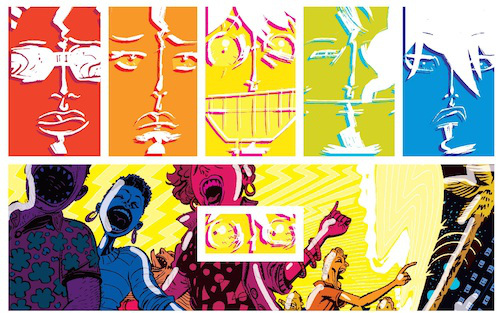
Nevertheless, I do not think that Deadly Class is a horrible graphic novel. I think it simply plays it too safe. I think it is trying to shock its readers with the setting of the School of the Deadly Arts and the consequent events of violence, but it’s core story is far too traditional and suffers from the same fantasy optimism of the films and culture of the 1980s that I think the author may have originally hated but secretly desired. It is still worth a read for at least the artwork; the colorist Lee Loughridge and the illustrator Wes Craig create beautiful sequences, including a fantastic neon, two-dimensional acid trip that Ken Kesey would be proud of. Take a look at Deadly Class, just do not expect a groundbreaking narrative behind its sensationalistic facade.

Deadly Class is published by Image Comics and is currently up to issue six with issue seven to be released in mid-September.


Bovine Ska and Rocksteady 8/13/14: Norman T. Washington Spotlight

Standard

On the August 13th edition of the Bovine Ska and Rocksteady, we started off the show with two sets of ska, a set of mento, and a set of early reggae to prepare us  for our spotlight of the week, the soul and reggae recordings of Norman T. Washington.

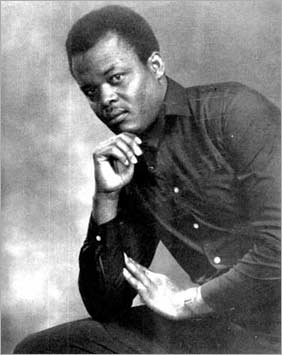
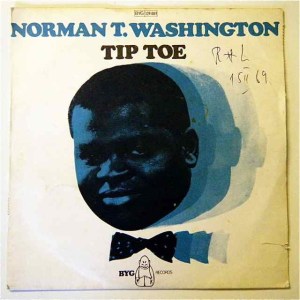
Norman T. Washington on the single cover of Tip Toe

Norman T. Washington on the single cover of Tip Toe

Norman T. Washington, like so many West Indian artists who went to England, would not bring Jamaican rhythms to his earliest recordings. In the case of Jimmy Cliff and Jackie Edwards, for example, both were packaged as soul and pop singers for Chris Blackwell. Like both of these artists, Norman T. Washington would also begin with soul tracks, first recording for Pama. He would then similarly record great reggae cuts later in his career. We started off the spotlight with 5 tracks of the soul kind for the mighty Pama imprint.

Here is the archive for the 8/13/14 show which will be up on the WMBR archive until 8/26/14.  LISTEN NOW

Our show can be heard live in the Boston area on 88.1FM, WMBR Cambridge or anywhere online at WMBR.ORG.

Sex in the Noir World of Satellite Sam

Standard

Once upon a time, I, an avid Hawkeye reader, was waiting for new issues to be released. My local comic book store had kindly realized that other readers were also eagerly awaiting the new issues and placed tags on other series created by the clever Hawkeye writer, Matt Fraction. Right by the familiar space on the shelves where the Hawkeye singles rested were the early issues of Sex Criminals and a reassuring handwritten tag, “From the creator of Hawkeye.”  Immediately, I picked up the first two issues and began to read them the next day.

Sex Criminals Issue 1 Cover

Sadly, my hunger for more Matt Fraction writing was not satisfied with Sex Criminals. The dialog was claustrophobically self-aware, and a pretty clever idea did not blossom as much as it could have. Besides those two points, Sex Criminals has one of my major pet peeves when it comes to the comic book and graphic novel world: highly sexualized women that are advertised as relatable. Given my disappointment with Sex Criminals, I returned to my comic book store looking for a new series to devour. After perusing through different shelves, I saw another handwritten tag that flagged another Matt Fraction series, Satellite Sam.

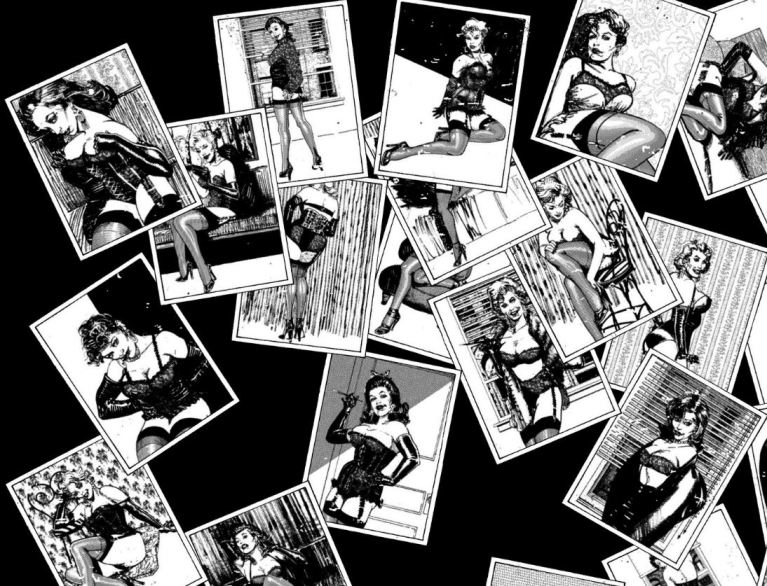
Unlike Sex Criminals and my beloved Hawkeye, Satellite Sam had the most salacious cover art of the three Fraction works, and immediately, my concern alarm went off. However,  Satellite Sam had been illustrated by Howard Chaykin, whose art pays homage to one of my favorite visual trends, 1950s pin-up girls. After opening up the trade and reading the first five pages, I was lured into the glamorized noir world of Satellite Sam.

Satellite Sam Volume 1 Trade Paperback Cover

Satellite Sam follows the stories of the imperfect staff of the Le Monde television station in the aftermath of the murder of Carlyle White, the star of the channel’s signature show in which the graphic novel series is named after. The story arc of Michael White, the son of Carlyle and a minor production assistant for the show, lies at the heart of the series’ narrative. After finding evidence of his father’s deviant sexual habits, White becomes obsessed with his own investigation into his father’s world and his various rendezvous partners to find the person who killed his father. Along the way, Fraction presents other members of the Le Monde staff, and we quickly enter into a noir world where people are not who they seem, and everyone seems to have a reason to harm Carlyle White.

At this point, you may be wondering, why exactly are you okay with the sexuality of Satellite Sam when you had problems with Sex Criminals? My answer: sexuality lies at the heart of both series, but in completely opposite ways.

In Sex Criminals, the main characters talk about their sexual repression and awakening. The two meet and realize they have the supernatural power of stopping time when climaxing. The couple then use this power to rob a bank and eventually face other super characters. Interesting idea, right?

The core narrative of Sex Criminals is fairly a traditional one; it is a story that is not far off from that of Bonnie and Clyde. However, the first two issues become heavily overwhelmed with building the sexual history of the main characters, making the sexuality in Sex Criminals feel like a luring device to try to get people to believe that they are reading something more provocative than the familiar story of criminal partners/lovers. It attempts to make the lead characters more realistic and approachable to this generation of 20-somethings, but both characters are deceptively glamorized like the central characters of the 1967 film of the Bonnie and Clyde story. However, rather than accepting that the story is highly fictional and stylized, the dialog in Sex Criminals constantly tries to remind you with facile comedic interruptions that you have most likely experienced similar situations as these characters. The overall narrative is disingenuous; it suffocatingly feels the need to remind you that the semi-realistic moments of the main characters’ history and present are close to your own current reality when in fact the bulk of the characters’ acts are as fictional, generalized, and glamorized as those of superheroes.

On the other hand, immediately from the start, Satellite Sam sets you in a period long past. It is in a fantasy world, and the actions and stories that ensue are supremely fictional, though they have a setting that once existed with people that once existed (and whose remnants may still exist today). Satellite Sam, in its most diluted form, is a murder mystery that could be from any noir film of the 40s or 50s. However, what makes Satellite Sam so different from a traditional noir narrative is its use of sexuality; the explicit details of the sex lives of the characters could only exist in a period piece made today. The sexuality here portrays what all family-oriented parents in the 40s and 50s were afraid of and consequently preached to their children; highly promiscuous and deviant people pay severe consequences with their lives. Sexuality in Satellite Sam does not act as a way to lure people into a traditional and unimaginative story; it is the Achilles heel of some very flawed people, and it allows us to think more about the characters that we are following. Consequently, the mystery of who murdered Carlyle White takes a back seat in Satellite Sam, and the greatest attention is focused on the development of everyone we meet at Le Monde. The series emerges as studies of ill-fated characters whose motivations are always suspect and whose sexual inclinations give a perspective into who they are and why they behave in certain ways, which is something that could have never been discussed in a 40s or 50s noir and is ultimately what makes each issue so much fun to read. Satellite Sam uses sexuality to make a set of rich stories divergent from a traditional central narrative rather than to add flourishing trim to a standard framework.

Satellite Sam, Sex Criminals, and Hawkeye are published by Image Comics. There are currently 9 issues of Satellite Sam available, with the tenth one to be released on September 10, 2014.