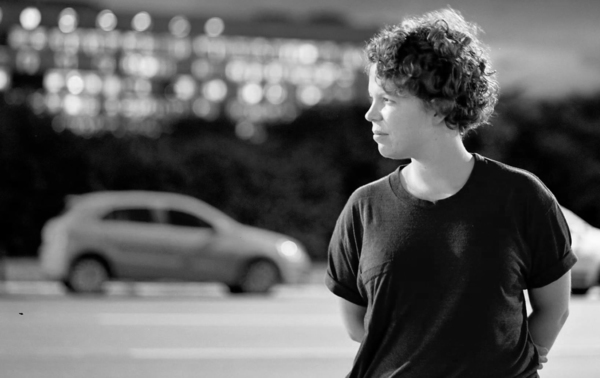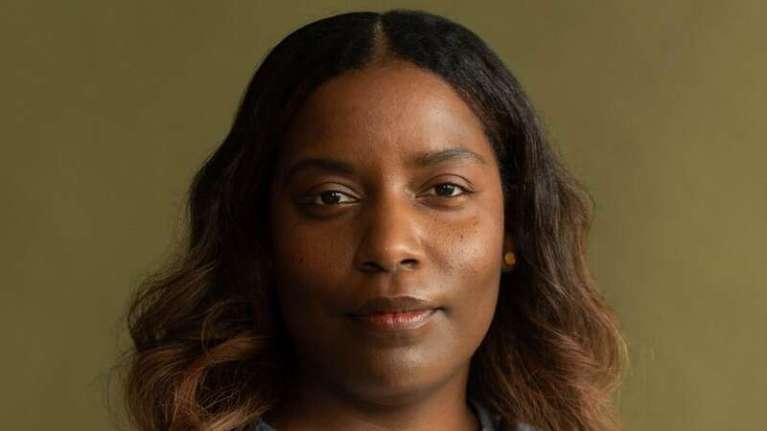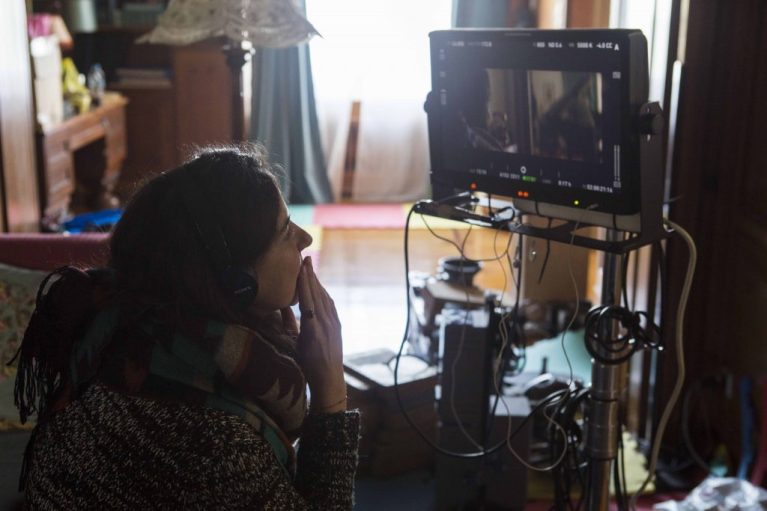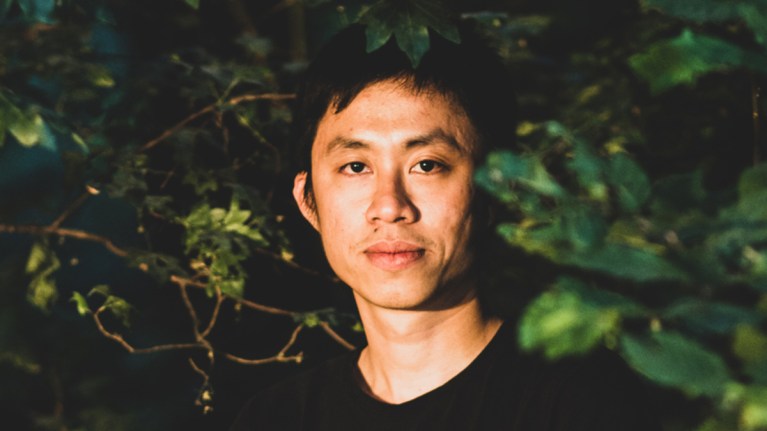
Trương Minh Quý

Standard

Originally published on Ink19 on October 21, 2024

Interview conducted by Lily and Generoso on October 14, 2024

With his previous feature, the hybrid documentary, The Tree House (Nhà cây), director Trương Minh Quý presented his keen essayistic approach to the history of Vietnam by weaving his reflections on home and memory with the stories of members of the Ruc, Kor, and Jarai people, ethnic minorities who have all experienced displacement in the decades after the Vietnam War. The Tree House established Trương as a distinctive voice in Southeast Asia: his cinema examined and challenged the subjectivity and objectivity of the viewer, filmmaker, and documentary subject, all while discussing impacts of the Vietnam War that were lesser known to the West. Trương cleverly sidestepped Western assumptions and charged emotions around the contentious war and instead used it as a common historical reference point to ask broader questions around the forces that shape our attachment to houses and the concept of home.

For his third full-length film and first fiction feature, ​​Việt and Nam, Trương includes the Vietnam War again, but layers on conventions of slow cinema from Tsai Ming-liang and Apichatpong Weerasethakul as well as portrayals of Vietnam in American movies and counterpoints all of these cinematic expectations of Southeast Asia with documentary-like footage of work and home life, elements of classical cinema such as cross-cutting, and meticulously composed shots in various natural settings that manage to take the viewer somewhere far beyond our Earth — all in order to delve further into the history of Vietnam from after the war to the early 2000s and its influence on familial and romantic relationships and the reality of the future. The two titular characters of Việt and Nam form the center of the film’s cosmos: they work together in a coal mine and are lovers as well as each other’s closest friend. Vietnam’s past and recent history collide into their lives via Nam’s mother, who is searching for the body of her husband who was a soldier killed in the war, and through Nam’s preparations to embark on a treacherous migration out of Vietnam, a common but dangerous practice for many Vietnamese seeking better lives and opportunities abroad.

With Việt and Nam, Trương shows us how to sculpt the symbolic and historical weight of every image, every element of cinema into a philosophical yet emotionally striking kind of filmmaking that is entirely his own. After reviewing The Tree House in 2019, we could not wait to see what Trương would do next, and Việt and Nam went beyond our hopes. Thus, when we had the opportunity to speak with Trương in advance of the screening of Việt and Nam at this year’s AFI Fest, we were delighted to talk to the director about his images of Vietnam, his continued interest in the meanings of physical spaces, and his thoughtful manipulations of cinematic grammar to entwine a story of love with the forces of history, time, and place to form an urgent rumination on collective memories and their role in our interpretations of the present and our projections of the future.

• •

LF: For us, Việt and Nam and The Tree House are interpretations of history via landscape. The Tree House was focused on life above the ground level of Earth in various elevations, be it in caves in mountain sides, trees/tree houses, or the highlands. On the other hand, Việt and Nam was about digging into the earth in shallow (when making clay, when looking for the bodies of martyrs) and deep ways (the coal mine). How conscious were you of this difference? After The Tree House, was it important to make a film in the opposite orientation to the surface of Earth?

TMQ: I wasn’t intentionally thinking like that, but now that you’ve mentioned it, I’d like to consider this for a moment. In The Tree House, we see the duality of everything we think of as a house: the normal house and the tree house, but we also have a house for the dead, which is the negative of a normal house. Việt and Nam also begins with a feeling of home, but it’s more like a feeling of homelessness. In The Tree House, we see the physical home, but then as the film goes on, we understand that the film is trying to say something about the memories of the childhood home, which was lost by the characters in the film and by everyone at some point.

Also, Việt and Nam is somewhat set in the present, which is juxtaposed against The Tree House where everyone is concerned with the past and the home that they have lost. In Việt and Nam, we witness Nam, his mother, and their surrounding community residing in their homes in a present timeline, although they still are concerned about the past while living there. As Nam gets ready for the future, we get the impression that his home will become a part of his past because he will be homeless once he departs from his home and country.

In regards to the difference between the surface and underground, it is true that in Việt and Nam we can see that the underground space is very present and occupied visually and emotionally. I’ve noticed that what audiences remember most about the film is the darkness of the underground. My choice of the underground is based on the narrative of living inside and traveling into the Earth not only to search for material, but also to search for the spiritual in a way because there is also a search for a father, and in that sense, the underground becomes a space of the past. We see Nam and Việt and all of the miners, traverse vertically to search for something created by the past, and this becomes a parallel construct to the search for history occurring as the two main characters venture with Nam’s mother to look for Nam’s father’s body.

GF: You ended The Tree House with a quote from Gaston Bachelard’s The Poetics of Space, which we understand was a huge influence for that film. Bachelard focuses on home as the center of the universe, and home as the original, the primordial cave. The Tree House is a direct engagement with this concept, whereas Việt and Nam is a more poetic interpretation and expansion on this concept. Were you regularly revisiting Bachelard in the making of Việt and Nam?

TMQ: I wasn’t doing so consciously, but I believe that his philosophy was certainly there in the back of my mind while making my film. Starting with The Tree House and Gaston Bachelard’s ideas of a house as a place where we store our memories because a house becomes a home when there are memories, and as memories need a physical space, we thought that we could expand this concept beyond a house to a river, a town, or a country. Thus, in spite of the fact that Việt and Nam has no direct connection to Bachelard’s philosophy, it nevertheless plays a significant role in the movie.

For me, when I shot some scenes, like the scene where Nam is in bed with his mother with the darkness around them, and you see the mirror and hear the rain, all of these sensations are an attempt to create a feeling of home, and yes, it is also true that I concentrate on geographies, or should I say locations, because I need to know a place to get a feeling from it so that I can build a story. Most of the locations we used in Việt and Nam are real locations, like the house of Nam and his mother. Their house, for example, looks exactly like that in reality, and we didn’t do anything to change it. In our process, there is first a layer of documenting a real place. We go out and try to find a place with certain memories inherent in that place, and then we add a layer of fiction. But, we try not to interpret or manipulate the reality, the truth that lies in the documentary foundation.

GF: What is incredibly impressive about your films thus far is their ability to capture Vietnam’s landscape and show how elements of it, especially away from the cities, are completely unique. And yet, in these places, due to history, politics, economics, and other external forces, one’s home is no longer felt even despite being born there. The Vietnam that you present is almost its own planet, alien to the west, alien sometimes to even its own inhabitants. How do you exhibit this feeling of Vietnam as this mysterious planet while avoiding a sense of exoticization?

TMQ: It’s very interesting to think about this point. The answer to this question lies in the distance between the filmmaker and Vietnam or elsewhere. When I start to think about a film, I’m thinking more in cinematic terms like how to transfer feelings and all of the values of cinema through the shot and the mise en scène, as well as the texture of the image, and when I think of these things, I’m not thinking about Vietnam. I suppose that it is different for other filmmakers from America. When they make films about Vietnam, everything for them has to have the adjective “Vietnamese” in front of it. Perhaps they fear that they cannot capture Vietnameseness accurately, so their film becomes exotic. In my case, I discussed with my DP how to avoid that feeling of exoticness. I, of course, did not want to have any feeling of exoticness in my film, but in some situations, I could have fallen into that trap.

However, there is one shot in Việt and Nam where I intentionally tried to make it look like a shot of a Vietnamese landscape that you would see in an Oliver Stone film. It is the first shot of the second half of the film — the one of the rice field. It’s almost like a postcard. I used that shot to play with the expectations of the audience. That is the first time where they really see a landscape in the film, and when they see it, they immediately register that it is a kind of Vietnamese landscape that they’ve seen before. The only thing that is not in the shot is a buffalo (laughs)!

LF: Speaking of expectations, the techniques of slow cinema typically evoke a feeling of meditation that leads to introspection. But, in your film, the conventions feel like they boil up to a great mourning and a touch of anger for the loss of youth and vitality. How important was it for you to play around with expectations of slow cinema, which have been heavily attributed to films from Southeast Asia for the past couple of decades?

TMQ: I’ve seen that many of the reviews of my film compare it to the films of Apichatpong Weerasethakul. From the outside, I think that is rightly so, as there is a certain inspiration, but for most of the reviewers, I felt that this comparison is the end and not the beginning. That comparison stopped them from digging deeper into Việt and Nam because, if they did, they could see that this is the least Apichatpong-esque film that I have made (laughs)!

When we look at slow cinema in the vein of directors like Apichatpong and Tsai ming-liang, we can see that their films are more conceptual than mine. They have this conceptual feel and lightness about them that is about a certain spirit of loneliness and memory, for example, but in my film, I’m constantly trying to balance the heaviness of history in the documentary components with the fictional narrative, so you can sense that my film, in fact, is not so light in terms of concept and feeling. Instead, it tries to operate in a direct way with some scenes appearing as documentary, but then it slowly tries to reach for something more transcendent as evidenced in the ending shot. That is how I approach the fictional narrative side: I don’t ignore the weight of the documentary, but rather I try to combine both and connect them with the other aspects of the film.

In terms of expectation, I think it’s true that people may think that Việt and Nam is a work of slow cinema, but it is, in fact, about the grammar of cinema. I chose to use multiple techniques of editing to create a certain mood and response, so this film moves in an unexpected way in terms of form and style. For example, the film editing method changes during the scene in the barbershop and in the birthday sequence you see later in the film. They are both edited in a very conventional way with a lot of closeups and short-cut shots. There are even some shots that last only a few seconds, which is a total contradiction to the shots that last three or four minutes. During these two scenes, I wanted to evoke a more romantic connection between the two titular characters, so I needed a more dynamic editing approach. To sum up, I didn’t commit my film to a certain aesthetic, such as slow cinema. But rather, I wanted to deliberately use different devices of cinematic language to create certain moods, and as a result, my film is not aesthetically uniform by choice.

LF: When looking closer at the layers of possible meaning in the minute details of your film, we started to wonder about your selection of Hoa as the name for Nam’s mother. Hoa is a very common female name, but Hoa is also an important word in relation to the term, “Người Hoa,” Vietnamese people of Chinese ancestry. Many Người Hoa were persecuted before, during, and after the war. Consequently, this is also a group that has complicated relationships with the idea of Vietnam as home. Was this an important reason behind Mrs. Hoa’s name, or was it a mere coincidence?

TMQ: No, I actually didn’t use the name Hoa for that purpose. It is a very popular name for women, which is why I used it in the film, but to speak to your point, there are many facets to my film that audiences interpret in different manners. They see many points, many dialogues, even the names of the characters, and feel that these things have meanings that end up being very different from my intentions. I can’t control this, as the film has the space to leave things up for personal interpretation. One of the most problematic of these interpretations — and I say problematic because the interpretation is far from my intention, not because it’s a problem for me — is the one surrounding the accents of Việt and Nam that are made by Vietnamese viewers of the film who notice that one actor speaks in a Northern accent and the other actor speaks in a Southern accent.

For the Vietnamese audiences of my film, they think that there is a symbolic purpose for the actors to speak in different accents, but the reality is that when I was casting the project, I wanted to have two actors who spoke in a North Vietnamese accent, but, as I’m sure you know, the process of filmmaking is rife with accidents, so you end up working with whatever you have. Due to circumstances beyond my control, we cast one actor from Hanoi and the other from Nha Trang, and I wasn’t going to avoid casting him just because he was from the South — that would not be right. At one point, I even considered dubbing his voice so he would have a Northern accent, which would have also been more narratively coherent, but truthfully, I didn’t care about this difference. However, when Vietnamese people eventually saw the film, they took that difference as having a symbolic and political meaning that changed the weight of what I intended for them. For international audiences, the difference in accents had no impact.

GF: We understand that Nam’s aunt, his bác gái, is economically more successful than his mother, as her son has left Vietnam, settled, and is able to send back money, but she also mentioned that she and her family were previously miners. You don’t mention much about how she was able to ascend. Was there something specifically that happened in the early 2000s that led to more economic gains for people like bác gái?

TMQ: My inspiration for the character of bác gái and her house came from a village in the central north of Vietnam, in the province of Hà Tĩnh. The village is so famous that it is called “Immigrant Village” due to the fact that most of the young people who own homes there live overseas and send money back. In that village, like you see in the film, there are many large houses that are mostly empty and usually occupied by only grandparents who take care of their grandchildren while the parents work and live outside of Vietnam. It is a sad and, frankly, absurd situation, but those houses are mostly purchased as investments by these young people so that they can eventually come back to Vietnam for their retirement and enjoy the results of their hard work.

This primarily happens in provincial areas, but I feel that it was more popular in the past than it is now. Of course, there are many Vietnamese people who still work overseas, but it is much easier to travel now than it used to be, and politically, it is definitely more open these days for people to go to and from Vietnam.

For the character of bác gái, do you remember the long red string candy that she gives Nam in the film? It’s a funny detail, but it is based on personal experience, as I had this neighbor when I was a kid whom my brothers and I used to spend time with given that all of her daughters had been living overseas for a very long time. She would have that red candy, and she gave me a string of it once when I was little, and somehow it has forever been lodged in my memory — this flavor of foreign candy — so I had to put it in my film! (laughs)

GF: I have to ask, did your neighbor also keep that red candy in the shrine in her home as bác gái does in your film? We both found that a bit of a curiosity.

TMQ: That shrine, that little house, is very popular in North Vietnam. People usually put them in front of their houses or on their terraces. I originally didn’t have these little houses in mind at the very beginning of my project, but as I began to create the skeleton of my film, I noticed that many of the houses had them. Additionally, the actress who plays bác gái in real life is a bit spooky, as she used to work as a medium. Early on, she told me that besides working as an actress, she was once paid to help some get rid of ghosts! I found that conversation funny, but it also gave me this feeling of the spiritual, and so I combined the earlier memory of the candy with the little house shrine.

LF: Some of the most important scenes in Việt and Nam for me personally were the ones with the medium/psychic. To be honest, I’ve been frustrated with how mediums are used in our culture to over fixate on the past. I may be projecting, but in the scenes with the medium in your film, I felt a similar frustration: people are spending money they don’t have and a lot of time to hire and work with this medium to find people who are ultimately gone, and in turn, they are not looking at what’s in front of them: the young who are leaving, the young who don’t have a future. Can you touch upon your inclusion of the scenes with the medium?

TMQ: I think it’s paradoxical. A lot of people think that if you believe in some guide like a medium or a monk, then you can attain a spiritual life. I think that most people feel this way out of fear and redemption, though not in the Catholic sense. In my opinion, Vietnamese society is religious, though it is beyond a specific religion, as this medium doesn’t ascribe to any religion. It is more of a spiritual thing. If you ask the average person on the street in Vietnam if they believe in the spiritual, they will say yes, or they won’t say anything at all about it. It’s rare that someone will flat out say that they do not believe. I suspect that they are afraid that if they admit that they don’t believe, they will be punished somehow, and that’s why they would rather admit to a spiritual belief or just not talk about it at all.

That said, this spirituality can be a helpful way for people to express their emotions and to deal with their own guilt, even though this guilt is in no way a product of something they did. For example, if your grandfather died and his body is in a forest somewhere, you feel some amount of guilt if you don’t make a real effort to bring his body home. This comes from an instilled sense of familial obligation and duty.

Hence, in my film, you can view the medium as some sort of scammer or fraud, a bit theatrical and even a bit crazy, but many people in Vietnam don’t take this viewpoint, especially people who have had the experience of hiring a medium and taking a similar journey to search for the remains of their loved ones. For these people, this scene with the medium is very realistic, and thus, there are multiple ways of looking at it, but for me, I didn’t want the film to definitively state if she was a scammer or an actual psychic because that fact is less important than why people depend on the medium and the solace that the medium can bring. In the last shot with the daughter of the soldier, she becomes so emotional that she embraces the coffin with the supposed remains of her father inside. What is inside the coffin could be fake or could be real, but regardless of the contents therein, the emotion she expresses is real. In that sense, the medium’s discovery of the body is helpful for the family, as they need to have something physical, something concrete to worship, to bring back to their hometown, and then to move on with their own lives.

In the end, if you look at it in a philosophical manner, the materials of the body have disintegrated over time, and the fragments of bone can’t be differentiated from a rock, and so you cannot concretely say that this matter you found was in fact your father. By this point, there’s not much of a difference between a piece of soil that you claim belonged to your father’s physical form and an actual piece of your father’s remains; the body has become something else entirely, so this discovery and recovery process becomes only important for the living.

LF: Though we understand that your film is not a direct response to the lorry tragedy in the UK in 2019, we’re curious as to your use of water throughout the film because it’s noticeably present in scenes involving migration or states of change. In many ways, water operates in stark contrast to the cosmic and eternal coal mine setting of Việt and Nam’s intimate moments. Given the past connotation of water as a method of escape post-war, how did the early 2000s in Vietnam shape your approach to the role of water in your film?

TMQ: It’s true that we can form a link between my film and the tragedy that occurred with the Vietnamese migrants who died in the storage container in the UK in 2019, but my film is not about that event specifically. People can make that association, and it’s fine, but that was not my actual intention. What is important for me is for people to see the film through the perspective of time, given that the film is set in 2001 and not 2019. People will ask why this is the case. I chose to set the film in 2001 on the account of the narrative demanding it, as 2001 was not too long after the Vietnam War, but, in addition, by bringing the container event to the past, I could create some distance from it and maybe bring some sense of consolation. For me, it was purely an emotional choice.

As for water, of course, Vietnamese people have many different connections to water as it is such a part of everyday life. We see a lot of rain in the film simply because of my memories of my hometown located in the Central Highlands, as every year there are several months of heavy rain. The memory of those rains, especially the sound of rain hitting the roof at night, gives me a sensation of home, so in my film you can see and hear the rain vividly.

But, water is also a force of destruction. This is part of our mythology in Vietnam, as we are all taught this legend of the battle between the water and land during immemorial times. And we just cannot escape the interpretation of the sea not as the sea itself but rather as a path to a destination beyond: when some people see the sea, they don’t see the water, but only the destination that lies on the other side, and for them, the sea then simply becomes something they have to cross.

This all raises points around how the image itself already has so many meanings and how to try to escape those meanings. Personally, the reception of this film has been odd, as many people see it as very political and symbolic on the outside. But, the moments and details I selected to include in the film, such as the lullaby about the stork that Mrs. Hoa sings to Nam, came from a real emotion that I wanted to draw out. The lullaby mentions water, but I didn’t think about its relation to water’s symbolic meaning when I put it in the film. For me, everything starts with a feeling, and I try to say something about that feeling using cinematic language. Of course, the interpretation becomes much more than what I have within my own mind.

Case in point, the ending, which has the story about the watermelon, has taken on a life I did not expect. I had the idea to use the watermelon story long before the current conflict in Gaza, but when we were in the process of editing the scene, the war in Gaza had begun, so now, when people see the scene, it takes on a different meaning due to people using watermelons as a symbol for Palestine during the protests to the conflict. I never had a specific political intention with that scene, but now I see that some interpret it as relating to the war in Gaza. It’s been strange and fascinating to see how elements of Việt and Nam have taken on new and unintended meanings over time as different audiences view the film. 

Việt and Nam screens at AFI Fest this Saturday, October 26, at 2 pm.

This interview was edited for length and clarity. Featured photo by Daniel Seiffert.
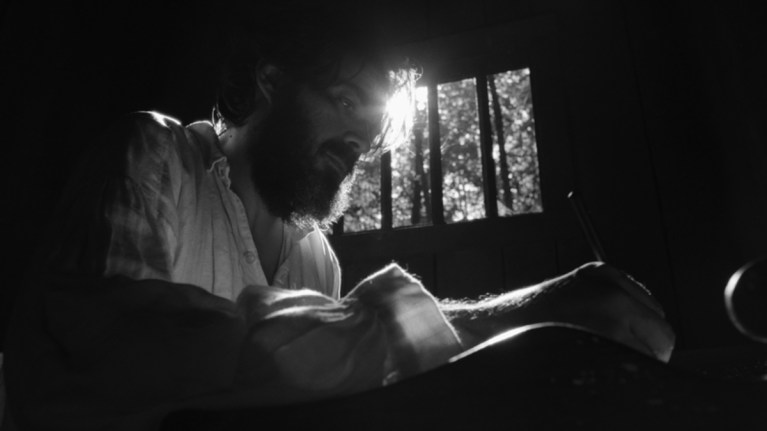
Viet and Nam

Matías Meyer

Standard

Originally published on Ink 19 on June 12, 2024

Interview conducted by Lily and Generoso on June 3, 2024

In the six years since we last spoke with Matías Meyer, the director has experienced a few landmark changes, personally and creatively. In 2019, he released Amores Modernos, which was an exploration into an ensemble cast and multi-threaded narrative contained primarily in the interiors of a family home, all of which were uncharted concepts in the director’s previous works of solitude in expansive environments. And, with his latest film, Louis Riel or Heaven Touches the Earth, which premieres at FICUNAM (Festival Internacional de Cine de la Universidad Nacional Autónoma de México) on Saturday, June 15, 2024, Meyer establishes his personal and professional base in Canada by meditating on the spiritual presence of one of Canada’s most notable and discussed historical figures, Louis Riel.

As a figure who came to symbolize the tensions in culture, language, and religion between the English and French settlers of Canada, Riel has been portrayed in books, films, and television, as well as in the heralded Chester Brown serialized comic and graphic novel, Louis Riel. Most accounts have been rooted in the historical facts of Riel’s life, tracing his beginnings to his execution, but Riel was a prolific writer throughout his life, and during his months in prison prior to his execution, his correspondences and writings were nearly entirely preserved, forming an incredible, direct view into Riel’s mind as he prepared to leave the Earth. These letters set the foundation of Meyer’s film, and the director, who also plays Riel himself, fuses his similar perspectives on nature and Catholicism with the words and thoughts of Riel to present an intimate portrayal of the soul of the man with a legacy and presence that stretches through Canadian history to today.

We were grateful to have the opportunity to speak with Matías Meyer again after all of these years. In our conversation, we discussed his everlasting interest in spirituality, how his life in Montreal has shaped his perspective as a filmmaker, his personal connections to the life and words of Louis Riel, and his grassroots, DIY production process.

• •

LF: In WadleyMoros y Cristianos, and Los Últimos Cristeros, you approached spirituality in relation to its environment: many of your central figures travel through physical spaces to find God in some way. This has been a recurring theme in your work, and it is also present in Louis Riel. Did this consistent intellectual/philosophical interest ultimately compel you towards the story of Louis Riel?

MM: Thank you for presenting this question in these beautiful words, which I couldn’t synthesize in that way. After the retrospective of my films that I had at the UCLA Film and Television Archive in 2016, I realized that all of my films have confined characters, and my film on Louis Riel is very much that. It became so much more physical and even more obvious this time around. In my film, Yo, the central character is trapped in a childlike state, and in Los Últimos Cristeros, the characters are confined by nature, the mountains to be more specific, but in Louis Riel, my lead character is confined by an actual prison cell.

When I came to live in Montreal in 2011, I was very lost in the beginning — and I am still sometimes very lost here — about what I can identify with in this new country and culture. Louis Riel felt familiar to me because his story and words had all of these elements that you raise in your question. Riel has this spirituality, a mixed spirituality seen in my films, like in Los Últimos Cristeros where God is present in nature, in sunlight, in wind, and in the trees alongside the world of Catholicism, and Riel was that for me. He had these beautiful allegories about God and nature. Right now, I am reminded of the line when he says, and I am paraphrasing here, “I have thirty-two days to live, thirty-two hours, thirty-two seconds and how the wind, the chinook, is burning me.”

There is a scene in the film where I am shooting the leaves of a tree and the sun, and I incorporate a passage where he says, “The sun is trying to shine for everyone with the same intensity,” and he then circles that tree so that he can touch every branch. I find words like these so very beautiful. And, I identify with them because I come from a Catholic culture, but at the same time, my actual church is just life and nature. It is that mix that is appealing to me. I feel God when I walk in a natural setting or when I experience phenomena like the recent eclipse. It was magical. It is these relatable aspects of Riel’s perspective and beliefs that made me feel that I could do this film here in Montreal. As a Mexican filmmaker, I had become so accustomed to our culture and country, which is so full of things happening at the same time. There is the pre-Hispanic period, the colonial period, and the modern period — all of them are part of our everyday life, and there is such a mix of all of the colors, the smells, the races, and it is all so noisy. You just step out of your home, and you feel so alive. But here in Canada, you sometimes step outside and wonder where the people are. It is so big, and it can feel empty on occasion.

Beyond my personal interests and my adaptation to Canada, there is another element that attracted me to the story of Louis Riel. In one way or another, we all accept an inheritance from our parents. Since the age of twenty, my father has been very passionate about Louis Riel, and he transferred that passion to me.

GF: In your positioning of Louis Riel in a pastoral setting that further opens him up to direct communication with God, we find a similarity between him and Father Grandier in Ken Russell’s adaptation of Aldous Huxley’s The Devils of Loudun. Father Grandier is also considered a heretic, but receives his revelatory message from God while immersed in nature. From the conversations you include between Riel and Father André, we understand that Riel had proclaimed that he was a prophet, and from historical accounts, we understand that he had messianic callings throughout his life. How important was it to you to show Riel communicating with God in a different way from his past during his imprisonment? How much did the natural setting away from political structures and away from his home play a role in presenting this shift as Riel prepares for death (and Heaven)?

MM: I don’t think that it was fully conceived in the script. It developed organically through location scouting. I was looking for a prison, and luckily, I found this location only one hour from Montreal called Canadiana Village that used to be an open-air museum, but after many years in existence, it began to fall apart. However, about five years ago, a young French man purchased the place and attempted to restore it in order to make it into a new glamping destination. In its current state, it is very much like an old Western town where you can actually go inside of the houses that are there, and these places are furnished. When I visited the place, they had just finished filming a television series. And, by chance, for that series, they had to build a prison, which became the one you see in my film. The prison was in the middle of nature, and I fell in love with it because it was a kind of oasis. The man who owned the village agreed to rent me a couple of the properties there: the prison and the other building where the interview with the journalist is conducted. It all arrived so magically.

In the beginning, I wanted to shoot in Manitoba, not only because of Riel’s legacy there, but also because part of the title, Heaven Touches the Earth, refers to the plains of the region, where there is just a thin line that divides the sky from the earth. But, given that I didn’t have a large budget, I couldn’t afford to move the production there, and so I decided to let go of certain factual elements of Riel’s life in favor of capturing his essence. For example, Riel’s execution occurred on November 16 in Regina, but in my film, it’s clearly not cold when it happens, and the leaves are still on the trees because it was thirty degrees Celsius when we filmed the scene. I didn’t worry about the accuracy of these kinds of specifics, because Riel’s essence is more about how he feels and the words he said than the exact minutiae he experienced. In my film, Riel has a view from his prison cell, but in reality, I’m not sure that he had a view. But, I wanted to show him seeing the trees outside and how they vertically blend with the bars on his windows, and depending on how the focus on the camera was adjusted, you are not sure if you are seeing trees or the bars. Also, on this site, I could go outside, and there were these fields where I shot the scene with my daughter, who portrays Riel’s son in the film. There was this lovely ambiance with nature in this location — it was all un coup de chance, but it ended up being so inspiring.

This happenstance is present in some of my other films as well. In Los Últimos Cristeros, we were scouting, and we discovered this cave. During sunset, the cave had this effect that led to a shot that you may remember: when all of the Cristeros are sleeping and the sun slowly sets, it casts shadows on the walls, giving a feeling that the presence of God was in that place and that He was with them.

LF: Based on what you’ve described so far, it sounds like Riel’s writings always involve this element of poetry and nature, and the location brought out that poetry in an unexpected but meaningful way. It’s amazing that this setting in and around Canadiana Village was the element that clarified the essence that you were trying to capture.

MM: Maybe if I had had some more time or patience I could have waited for the winter, which I’m sure would’ve also been very beautiful too. In the poem that he wrote for Robert Gordon [the prison guard], Riel speaks about the snow and how the ground is all white from when heaven comes here. He saw the symbolism of white as representing purity. I also read that what he asked for as his last meal was what you see in my film: a glass of milk and some hard boiled eggs. Of course, eggs are a Catholic symbol, but he is also trying to arrive at the moment of his death with his soul as pure as possible.

LF: In your research into Riel’s writings from prison, did you see evidence of an abandonment of his beliefs that were considered heretical by the Catholic church? Did he still consider himself as a messianic figure during this time?

MM: Indeed, he did. In the first page of his book, Massinahican, which means “the book” or “the Bible” in Cree, and in his journals, he declared that he was a medium of God. Thus, this was a particularly important aspect to consider when writing and editing the moment when Riel signed the document that rejected the notion of his prophetic nature as a means to be allowed back into the Church. Of course, that signature made me think of Joan of Arc, as depicted in the films of Carl Theodor Dreyer and Robert Bresson, when she is spared execution if she signs a document rejecting her claims. She signs the paper, but then she repents because it would be like claiming that all that had happened to her was a lie.

I wondered if I should have used this moment of Riel’s concession as a dramatic narrative element of my story, but I ultimately made the decision that it wasn’t so important. I think that Riel signed it as a way of convenience because he really needed the Catholic Church to be with him. He needed the healing of a priest, but at the same time, his calling was stronger than him. It wasn’t that he signed the paper and then believed that he wasn’t a prophet anymore. I don’t know what this morally means overall, but for me, he just signed the paper and continued to write his prophecies. As a spectator, do you feel disappointed by that? For me, I don’t care that he signed this paper that asserted that he was not a prophet of the new world.

GF: Louis Riel or Heaven Touches The Earth explains at the beginning that the letters and writings from the period of Louis Riel’s imprisonment were nearly completely preserved, thus establishing the setting and focus of your film. Did you consider including any of Riel’s earlier correspondences and writings to provide a contrast to his state of being, such as the letters to and from Gabriel Dumont, who ultimately convinced Riel to leave the life he created in Montana to return to Saskatchewan, or his religious discourses around the time of his asylum stay while he was in exile in Quebec?

MM: The process of writing was pretty complex, and at some point I made the choice to take a pure and minimalist approach. That decision cut any possibilities of using flashbacks to look at different periods of his life. I have versions of the script that involve the Battle of Batoche and the time when Riel fought his attorneys when they wanted him to take an insanity plea, which he firmly rejected. About the latter incident, he wrote an amazing sentence to the effect of, “If I admit that I am insane, I would be negating my intellect and my humanity, and thus I would become like any other animal.” Regardless, his lawyers asked the judge to forbid Riel from speaking during the trial. He was allowed to speak only at the end of the proceedings, and at that point, he gave a long statement.

Dramatically, I found it interesting that he was fighting his own lawyers because they weren’t defending what he wanted to defend. Riel, in fact, wanted this process to be a moment of truth that exposed all of the crimes that were committed by the government of Canada against the Métis people. I also had written a scene around the moment when Riel surrendered. In the moments before he did, he took off his shoes and walked through the snow to the generals. But, in the end, I omitted these scenes outside of his period of imprisonment.

I feel that the linearity of the way that the film was put together works dramatically in that he moves little by little towards an end that you know is inevitable. This goes against the classic narrative convention where you want to surprise the audience by the ending. You know instinctively by the tone of the film (alongside the historical facts of the subject) that Riel is going to die. The structure is similar to another film by Bresson, A Man Escaped. From the beginning of Bresson’s film, you know what is going to happen at the end, but I like this constraint because you can still build so much on top of that.

I have a friend, a photographer who worked on my earlier films, who asked me to shoot a scene where you see Riel in a state of fury or possession because we know that he had these moments of rage throughout his life. My friend wanted a scene of an enraged Riel as a means of contrast for how we eventually see him in my film, but I didn’t want to do that.

LF: I agree that excluding such an impassioned scene was a good thing because it would have disrupted the tone you constructed. Your film, as it stands, is an extended sequence of meditation up to a very intense and dramatic event. There are also so many accounts of Riel’s more wild moments, so it is good to see this other side of him, whether it is entirely real or done to capture some essence of who he was. One of the things that impressed us immediately after seeing your film was the discipline of tone and the discipline of minimalism. That kind of impassioned scene would take so much away from that.

MM: Yes, it is true that it is difficult to mix tones like that, and what you are saying reminds me of the first page of my father’s book on Louis Riel. He wrote that in his cell, Riel is finally calm. The war, the travels, the persecution, and all of the paranoia has been left behind, and now he can rest and write. It’s strange that the first two or three pages of my father’s book cover my entire film. Riel will be in his prison cell, and he will be at peace. He did what he needed to do, and he surrendered. He created a process where he evidenced all of the bad things that the Canadian government had perpetrated against the Métis. He surrendered because Macdonald wanted Riel, and if he hadn’t given himself up, Macdonald and his officials would’ve continued to go after his people instead.

So yes, he did what he needed to do ever since he began the first movement in 1870, and the many years that followed were very stressful for him. Being a political leader every day was never his ambition. He became a leader because he was so well educated. Riel’s most formative and rigorous years of education started in Montreal when he was around thirteen, and he came back when he was almost twenty five years old to Winnipeg — though of course, it wasn’t called that then — to help his mother because his father had passed away. When he returned, he brought back his learnings from his education as well as the experiences of working at a law firm and a newspaper.

When he arrived at his village, he saw the colonizers coming and surveyors sent by the government, and that was the moment that changed his life. A cousin of Riel’s told him that these people were surveying our land, and Riel responded by going to them, putting his foot down on their Gunter’s chain, and telling these surveyors to get out of their land. From this moment on through the next fifteen years, Riel had so many adventures: becoming the leader of his people, defending their rights, going into exile in the United States, filling himself up with paranoia and ending up in an asylum, getting married, and having some peace while teaching children. But then, he was again called back to his village to defend the rights of the people there. Thus, while awaiting execution in his cell, Riel finally had the time and peace to ponder his spirituality.

GF: We know that you’ve wanted to make this film for years, and we were fascinated to see you performing as Riel himself because you have not acted in your feature films. Was your decision to play Riel based on your proximity to all of the research? What aspect of Louis Riel’s prison correspondence did you key in on while preparing yourself for the titular role?

MM: To be candid, I didn’t need extra preparation for the role. I was prepared by the entire process of writing the script so many times — wanting to not do the film anymore and then coming back to it. I knew that I needed a very good actor to play Riel, but no one would be as passionate about this character as I was because I had been working on this project for so many years, and I had been feeling it so deeply and suffered through a lot of rejection through the process: not finding any producers, not finding any money, and coming to Canada and having to begin all over again here. I made five feature films in Mexico, but they didn’t amount to anything here in Canada, and I had to start from ground zero. I accepted all of this and approached it as I did with my feature, Wadley: I’m going to do this by myself, with no money, and I don’t care.

I also felt like I was incarnating the character in some way — not just lending the film my abilities as a director, writer, and producer, but also giving it my own flesh. I felt this would make the film stronger. Also, I felt that the film was a reflection of my time in Canada and the many years that I spent in this country feeling isolated.

Most of the other people you see in the film are friends of mine whom I met here. None of them are professional actors. Almost everyone is part of my life here in Canada. In the eerie scene — which I love because it’s both erotic and frightening — where a voice of the dead says, “When everyone leaves I will stay here with you because I love you, I want you, and I desire you,” that voice is the voice of my wife Roxanne. My daughter Alina, as I mentioned earlier, plays Riel’s son in the film, and adding to all of this, at that time I had a health issue that has thankfully been resolved.

During the pandemic, I used to travel to the mountains, but I began to have some chest pains, and when the pandemic was over, I went to the doctor and told her about the pains. My doctor took x-rays of my chest, and a few days after that, she asked me to come into the office because she saw something that concerned her. Then, she ordered a CT scan, which caused me great concern. The scan took place during Canada Day, and so I had to wait five days for the results. I remember being on the terrace one day during that waiting period, and Alina entered, and upon seeing her I was so sad. In the end, it turned out to be nothing bad, just a scar that I had for some time, but then they discovered that I had asthma and had been living with it for almost twenty years without knowing.

It was at that period that I decided that I was going to portray Riel because I felt like I was a condemned man (laughs). It all turned out fine, but I felt so close to the character. There were also some very mysterious moments that happened during shooting whenever I was left alone. For example, in the early scene when the priest visits him and says something like, “If you don’t sign this paper, the Church is not going to commute you,” and the priest leaves the room, and I am left alone there. I began to cry at that moment, and that reaction was not scripted or planned. The priest left. I was alone, and it happened. Whenever people would leave the cell, such as when the journalist leaves me alone in the end, these reactions would occur. I wasn’t looking for them. They just happened. That was interesting to me.

Finally, I wanted to leave this film as a portrait for my children, an image of who their father was at this age. Oddly, I was forty-two when I made this film, and Riel was forty-one when he died. I could also speak in French and in English. Many things were in place to connect my person and being to the spirit of Louis Riel. ◼

Featured photo courtesy of La Distributrice de films.

Louis Riel or Heaven Touches the Earth • FICUNAM • Matías Meyer

Phạm Thiên Ân

Standard

Originally published on Ink 19 on January 27, 2024

Interview conducted by Lily and Generoso on January 12, 2024

Phạm Thiên Ân’s meditative, experiential debut feature, Inside the Yellow Cocoon Shell (Bên Trong Vỏ Kén Vàng), opens in Saigon with a game of soccer followed by the spiritual discourse of three friends seated around a hotpot near the field. One friend has decided to abandon the bustling city life for the simplicity of the mountains to reconnect with his faith in God. The other is a cynic who doubts that a more rural existence of solitude will lead to any revelation and asks if his soon-to-be ascetic friend has sold his PS4 yet. The third, Thiên (Lê Phong Vũ), admits that he wants to have faith, but currently lacks it. The discussion between the three is cut short by a surge of rain and the sound of a motorcycle crash involving a man, a woman, and a child. The three ignore the crash and retreat from the rain to a massage center.

Inside a dark massage room, Thiên is mistaken for someone else, and the intimate procession between him and a female masseuse is interrupted by a phone call indicating a family emergency. As Thiên proceeds to walk through the crowded halls of a hospital, he’s calm and almost disaffected as we learn through his interactions with his nephew, Đào (Nguyễn Thịnh), and the hospital coroner, that the motorcycle accident in the opening of the film had, in fact, taken the life of his sister-in-law, Hạnh. With his brother, Tâm, missing for years, Thiên immediately becomes Đào’s primary caretaker and the escort for Hạnh’s body, which needs to be returned to their shared hometown in the Lâm Đồng province in Vietnam’s Southern Central highlands, which is also where the director himself grew up.

The tone and pace of Inside the Yellow Cocoon Shell shifts as the van carrying Hạnh’s coffin exits the city limits and climbs up a steep road to arrive at the misty and lush surroundings of the highlands: time expands; dusk, dawn, day, and night blend into each other; memories, daydreams, and reality flow in and out of the present. And, in the process of Hạnh’s wake and funeral, a dominant Catholic presence is introduced into the film. In this spiritual and physical landscape, Thiên unquestioningly performs his duties to pay respects to Hạnh and her family and to support Đào, but as he completes each request asked of him, he collides into critical moments and places of his past and is forced to unravel the origins of his struggles in finding faith and purpose. When he finally resolves to search for Tâm, he embarks on a motorbike ride and walk that takes him to new spaces within and beyond himself.

Inside the Yellow Cocoon Shell is undoubtedly a child of slow cinema, particularly of the Apichatpong Weerasethakul and Bi Gan kind. The film pays tribute to the dream-like feeling and long-takes of both directors, but it interweaves concepts of Catholicism, which are not often explored in contemporary Asian cinema, into a magnificent and personal portrait of Vietnam’s highlands. For the occasion of the US opening of Inside the Yellow Cocoon Shell on January 19th at Film at Lincoln Center, we had the fortunate opportunity to speak with director Phạm Thiên Ân about the nature of spiritual crises for young Catholics in contemporary Saigon, the magical elements of cinema, and the image creation and definition process for his Camera d’Or winning film.

• •

LF: There’s a play on the Holy Trinity in the relation between Tâm, Thiên, and Đào, with Tâm as the ghost, Thiên as the surrogate father, and Đào as the son. Can you talk about how you thought of the representation of this trio in relation to the discoveries and mysteries of faith that you wanted to portray in the film?

PTA: I wasn’t thinking of the image of the Holy Trinity when I was writing the script, and this is the first time that I’ve heard of that relationship being addressed in this way. It is quite special that you thought of it in that sense, and I will definitely be thinking about it with that lens. At first, I wanted the protagonist to be much closer to myself, and then with the nephew character of Đào, I wanted to emphasize the relationship between these two people.

When it came down to the brother, Tâm, the details of the relationship were left ambiguous in the end because, at first, I wanted Thiên to meet Tâm and have a conversation and create a completely different ending, but I found that if I took it in that direction, I would then give the audience a definitive answer, which would force them into an intended ending that would make the film feel all too predictable. So, when I was filming, I realized that I had to change the ending, and when the song “Tôi Đi Tìm Tôi” (“I Am Going To Find Myself”) came on, it gave me the idea that Thiên will find himself in the film and not another person, not his brother. The brother is a person, but he is also a reflection of Thiên’s inner self. As far as the image of Đào, he is special in that both of his parents have a kind of divine arrangement, and he is there to bridge the gaps between all of these worlds, and he pushes Thiên to embark on this journey to find himself. So, the characters are connected, but I definitely have never thought deeper into that connection in terms of religious imagery, but it always depends on each person to have their own take on what these characters are. That said, I find your view of this relationship to be unique, and I will now try and look at it from this perspective.

GF: In the flashback between Thiên and Thảo, we find it interesting that the ringing of the bell solicits a call out to Frank Capra’s It’s a Wonderful Life. In a faith sense, bells are associated with both Buddhist and Catholic tradition and ritual. But for Thiên, the bell relates to a seminal Western film. How pervasive was Western cinema in your hometown of Bảo Lộc? How did it co-exist with your Catholic upbringing?

PTA: The image of the bell from It’s a Wonderful Life is an attempt to bring in a significant part of myself. Overall, where I grew up, there wasn’t a strong presence of Western cinema because people there are much more attuned to watching films that are shown on television, so not many people have seen It’s a Wonderful Life. However, I found the film very inspiring when I was making Inside the Yellow Cocoon Shell because, even though the Capra film doesn’t talk about religion or anything that is remotely close to it at all, it brings up the concept of questioning one’s own fate that is very attached to my own life. I am always contemplating questions around purpose: what someone’s purpose is, your own purpose, or the purposes of everyone around you. And, that is why I feel that the Capra film connects with what I was trying to portray with my film — I wanted to show that these questions are also at the core of my central characters.

When I was making Inside the Yellow Cocoon Shell, I wasn’t consciously thinking about including an allusion to Capra’s film alongside the use of the bell, but right before filming, I had an instinct to change that dialogue, and it suddenly reminded me of It’s a Wonderful Life and its meaning to me personally. So, when Thiên quotes, “Every time a bell rings, an angel gets his wings,” and Thảo says that she would cry whenever she heard the line, and then asks, “Why don’t people make films like that anymore?” that response in particular came from comments that I read from audience members who had seen It’s a Wonderful Life. I agreed with what they were saying and wanted to include this sentiment in my film.

LF: We understand that Vietnam is the only Asian Communist country that has maintained ties with the Vatican. And for that reason, Thiên’s hometown (and yours too) has a strong Catholic base, but his crisis of faith surfaces in Saigon. Do you feel that’s due to the heavy capitalist/Western influence in Saigon, or is there something about the post-Diệm view of Catholicism in the city that would cause a crisis of faith while living in it?

PTA: Regarding crises of faith in Saigon for young people, and here, as a Catholic, I can only speak about this issue as it relates to my own community and not other communities and other religions, but for young people in Saigon, I’ve found that they are asking more questions about the purpose of their lives and spiritual questions overall as more of their daily needs are readily met — what are they supposed to do in this life? When it comes to Catholicism, I found that my own grandparents were already asking these kinds of questions when they were young, but I am really only seeing this as a widespread issue now. My film is my attempt to ask those questions as well because I found that usually, when people want to investigate a crisis of faith, they will go to religious spaces and meet with figures there to assist them, but I wanted to approach it in a way that brings these internal questions to more public places like the hospitals and the streets of Saigon, places that carry the essence of the city so that you’re more immersed into the inner ponderings of the characters. Within my religion, I got to know a lot of young people and their difficult situations which left them with many questions, but only when these people are challenged by things that are too hard to handle on their own, do they ever seek help from divinity. When life becomes fulfilling, it enables a sense of complacency, and thus there isn’t a motivation to ask these kinds of questions anymore. It was my goal to address these pressing concerns, and I tried to answer these questions for myself through my film.

LF: Magic is often in direct conflict with the divine. In particular, this is highlighted in the Old Testament when the Pharaoh’s magicians were used as proof against God’s miracles presented through Moses. How then does Thiên’s practice and interest in magic play a role in his overall struggle with his own faith?

PTA: Magic actually speaks directly to my own path and interests in middle school, and as this is my first feature film, I wanted to bring more of myself into it, even when it gets to be a bit strange. As for Thiên doing magic, it was first a way for Thiên to get Đào to stop talking about his mother when they were in the hospital, and then it became a way to present the bell as a memory object bridging between Thiên, Đào, and Thảo. I wasn’t thinking about magic as an opposing force to the divine — instead, I was thinking about it in terms of my connection to cinema because, in my head, magic is very similar to cinema. When a film is presented, the audience suspends their beliefs and expects to be fooled to a certain extent. They know that they are watching a fictional work, but they also accept it as truth. Similarly, when I am doing magic tricks for my friends, they know that the trick is not real, but I still want them to believe in it. So, there is this parallel between cinema and magic that I wanted to explore. I also feel that all of the images that are related to magic in the film like the cards and the fish are beautiful. I wasn’t attempting to dig deeper into the metaphorical nature of magic. Instead, Thiên’s tricks are primarily a distraction and a relief for Đào as he grieves the death of his mother. But, when Thiên later gives the bell used in one of his tricks to Thảo at the daycare where he drops off Đào, the additional meaning surrounding that object becomes a force that furthers the story.

GF: When working with your DP, Đinh Duy Hưng, on filming the natural settings of your film, what kind of discussions did you have around creating a purposeful landscape that is dream-like but not too distant from reality, not too mystical?

PTA: Because this was my first feature, I wanted to put as much of where I came from as I could into my film. That was of first importance to me, and I wanted to bring out the most unique aspects of these places. I recognized that where I was from had an unparalleled landscape, and as a child of that land, it would be a disservice not to put it into my first feature. I wasn’t really aware of the uniqueness of my environment when I was growing up: only after I arrived in the United States and returned home did I find my homeland so beautiful, and that’s what furthered my desire to capture it. When I was speaking with my DP, we discussed how we could best find and depict the distinctiveness of these places, and that was a decision that was made from the beginning before anything was set. We were in constant agreement about this approach during the filming, and we worked diligently throughout to adjust the shot that we were planning to the landscape in order to effectively convey what we found to be special about each setting. The surroundings ended up having their own voice, and we followed it as we made the film. ◼

This interview was edited for length and clarity. Many thanks to Ari-Duong Nguyen for her translation assistance in this interview.

Featured photo courtesy of Kino Lorber.

https://kinolorber.com/film/inside-the-yellow-cocoon-shell

Lkhagvadulam Purev-Ochir

Standard

Originally published on Ink 19 on November 20, 2023

Interview conducted by Lily and Generoso on Nov 14, 2023

In Lkhagvadulam Purev-Ochir’s debut feature, City of Wind (Ser ser salhi), the director provides us an opportunity to witness Ulaanbaatar, the capital of Mongolia, at a critical point of transition through the interactions between the city and its rural outskirts with the film’s protagonist, Ze, a teenager reaching adulthood while also serving as his community’s shaman. Though her film is classifiable as a coming-of-age story, Purev-Ochir demonstrates impressive dramatic restraint throughout her film, allowing the contemporary and historical forces that are at play in Ulaanbaatar to flow with and against Ze at various points without causing any great battles or struggles while still encouraging a movement in action or perspective. One of the most important of these moments occurs early in the film and sets Ze on a path of quiet but substantial growth.

Ze’s mother has a friend with a daughter who is about to have invasive heart surgery. Before the procedure, the friend asks for a shaman visit from Ze, who kindly obliges. After bringing forth the grandfather spirit, Ze washes up, and his mother’s friend’s recently blessed daughter, Maralaa, confronts him and calls him a fraud. Despite this less than positive first encounter, Ze takes an interest in Maralaa and decides to visit her in his teenage schoolboy form after her surgery. The two become quick friends and then more, and as their relationship develops, we observe both Ze and Maralaa react to each other and the different spaces that they explore together such as a hyper-modern shopping mall, a semi-abandoned rooftop, and a pulsing, neon-lit nightclub, all representing facets of Ulaanbaatar’s urban center.

In contrast to his city experiences with Maralaa, Ze’s home life is more representative of a past that may be fleeting. He lives in an old Soviet-style building on the outskirts of town. And, nearby in a yurt that hearkens to the nomadic traditions of Mongolia, he performs and practices his shaman duties for his community. However, Ze does not visibly express any sense of angst in his polarized existence, and instead, he demonstrates a calm acceptance that both are parts of his reality that he wants to experience and must harmonize as he goes through moments of bliss, grief, heartbreak, and spiritual awakening.

We spoke with Lkhagvadulam Purev-Ochir over email about the early formation of City of Wind, her collaboration with Tergel Bold-Erdene for his Venice Film Festival award-winning performance as Ze, and the tensions of current day Mongolia that run throughout her film’s characters and surroundings.

LF: We understand that your short films were created after you wrote the script for City of Wind. Mountain Cat and Snow in September both examine teen mortality and sexual awakening and how they are influenced by both modernity and spirituality, all of which are themes within City of Wind. Did you discover anything new with these short films that helped you further develop your main characters of Ze and Maralaa in City of Wind immediately prior to or during filming?

LPO: Mountain Cat and Snow in September are directly and indirectly connected to City of WindMountain Cat is the “proof of concept” for City of Wind. I had written the script and was looking for partners for the project. I made Mountain Cat to give an idea of location and characters because, generally speaking, readers had other ideas about Mongolia than what was presented in the script. It was also an exploration of Maralaa’s character, to see if I was interested in making the feature film from her perspective instead. After doing the short film, I was still interested in doing the feature from Ze’s perspective. At this stage, I also started thinking about the camera and how to explore space and character equally. I knew that I didn’t want to make a film that would follow the main character obsessively. I was keen on capturing a “space and time” that is today’s Ulaanbaatar while following Ze’s journey. With these thoughts in mind, we made Snow in September as a way to explore the other locations for City of Wind (i.e. Soviet buildings) as well as for me to explore my camera. It was like a practice run for Ze.

GF: Maralaa has an immediate aversion to Ze as shaman, and we also see Ze’s classmates mock him a bit about his gift too. Is Western influence the force in contemporary Mongolian society that is pushing young people away from the practice and ideas of shamanism? Or are there other forces at play?

LPO: It’s not Western influence per se. It’s the whole mosaic of our modern life which also includes the entirety of our past history. Mongolian shamanism has endured Buddhism, imperialism, communism, capitalism, and globalization. It is a part of Mongolian life that has been systematically destroyed by different forces and yet continues to endure in the lives of Mongolians. My attempt with this film was to show how shamanism manifests in the day-to-day existence of modern day Mongolians and how it endures in their emotional and psychological landscape too. Shamanism has been and continues to be the emotional support for Mongolians who are in need of care, especially the kind of care that contemporary Mongolian society is incapable of providing. The fact that Maralaa and Ze’s classmates are indifferent, and even at times hostile, to Ze’s shamanism is just part of the fabric of today’s Mongolia. It’s important to note here that I also show that, despite this indifference and hostility to shamanism, these young people, with their varied perspectives and varied tastes and varied dreams for the future, are capable of also forming deep and intimate relationships with each other. Modern day Mongolia is a mosaic of different influences, Western and Eastern and historical, but my hope is that the film shows that young and old and even deceased Mongolians unite in their desire to care for each other. On my part, the film is also my attempt at an act of unification.

LF: During our youth, we often come to understand ourselves through opposing viewpoints and experiences. Ze expresses that he wants an urban, contemporary life, and Maralaa wants a rural life. However, in interacting with each other, both realize that their expressed desires may not be true to who they are. In writing the characters of Ze and Maralaa, how aware did you want them to be of their individual selves?

LPO: I didn’t want to make a film about teenage characters who are too aware of themselves and their desires and futures. What was important for me is that there are different viewpoints and experiences, and that the audience experiences the multiplicity of modern-day Mongolian existence through the film. Ze and Maralaa are both young and have ideas for themselves and their futures, but I wanted these ideas to shift with the film. At the end of City of Wind, both Ze and Maralaa’s futures are uncertain. We don’t know if Ze will graduate with honors and go to university and get a fancy job and buy an apartment. We also don’t know if Maralaa will find a way to move to the countryside and live without herding animals. But I hope that the audience will leave the film with the sense that they have witnessed a shift, a growth in both characters. This is a coming-of-age film, in the sense that Ze and Maralaa are growing right in front of our eyes. A sense of this gentle shift is more important to me than the awareness of clear and certain perspectives and ideas of who they are and what they want.

GF: Ze’s relation to his gift as a shaman evolves over the course of the film. Early on, he is connected quite well to the ancestral spirit, perhaps out of a belief in responsibility to his duty. Then he can’t find it, and later he’s able to re-establish the relationship, but with deeper significance. How did you prepare Tergel Bold-Erdene for this process of spiritual growth and development?

LPO: All I could hope to receive from Tergel as an actor is complete sincerity. I didn’t want him to be aware of a grand arc in his character. He’s an amateur actor; it’s his first role. I didn’t think he would respond well to much intellectualizing. I just needed him to be sincere in his emotions in all the scenes. The idea of spiritual growth and development had to come from the film, not from his “acting.” When I first met Tergel, I knew very quickly that he would be suitable for Ze because I found out that, unlike a lot of young men his age whom I met for casting, Tergel had access to his emotions. This is something quite unusual in men, especially Mongolian men, young and old. I had him recite a children’s poem three times. Before each recitation, we had discussions about love, tragedy, and anger. First of all, he didn’t flee from talking about his emotions. And secondly, each recitation of the poem was colored by his emotions. After talking about a tragedy in his family, he was sobbing as he recited this poem about a little lamb. I caught him at a very delicate time. He was still kind of a child when I cast him, 17-18 years old. He had a delicacy and an innocence which were quickly disappearing because, at this age, he and his peers are facing the adult world. I got very lucky with Tergel because he was hanging on to his innocence.

LF: One of the most interesting elements of your film is the role that parents may or may not play in the lives of their children. Ze’s parents set up a household that quietly encourages their children to explore and define their own path: they’re supportive of Ze’s sister as she faces single motherhood, and they allow Ze to decide on his own whether or not he wants to go to university or work after high school. Interestingly, Maralaa’s mother is mostly hands-off in her parenting style too, but unlike Ze’s parents, Maralaa’s mom is rarely around, and her father is in Korea. In both Ze’s and Maralaa’s cases, both end up finding out what they really want in this world with little explicit guidance from their parents. Could you talk about how you approached developing Ze’s and Maralaa’s family dynamics in relation to their individual experiences? How important was it that neither protagonists’ parents were forceful in their parenting?

LPO: It’s so nice that these thoughts came across in the film! While writing the screenplay, it was very difficult to navigate the relationships with parents because the script “required” the parents to be antagonistic forces. There was a bit of this generational conflict that was written and filmed, but ultimately none of it entered the final cut. These “conflicts” with the parents were too dramatic and too forced. They didn’t suit the universe of the film and what I wanted to say with it. City of Wind is interested in tension, not drama. What I ended up showing in the film is the tension of parents facing the fact that their children are growing and knowing themselves. So, the scenes that were left in the film are basically parents who sit, look, face, observe, and are present as their children transform and shift in different ways around them — like Ze’s parents drinking tea together, sitting with the fact that Oyu is gone, and Maralaa’s mother and Maralaa facing each other as women in the corridor. Ultimately parents can’t do anything. It’s a fact of life that children will grow. It was a decision on my part to not dramatize this fact and instead try to capture a bit of this tension.

GF: To give us a better context to the education that Ze has in the film, we’re curious as to what kind of school he attends? For Westerners, it has the appearance of a private academy, but we sense that may not be the case. How typical is the rigidness and discipline of Ze’s school?

LPO: The school is public. Uniforms are mandatory in public schools. For me, the discipline in Ze’s school is symbolic of the oppressive relationship that Mongolian youth have with their future. The future is presented as rigid and limited for Mongolian youth. The concepts of success and happiness are connected to material things like apartments and cars. The “Mongolian dream” is basically an apartment in the center of Ulaanbaatar city. Coming from a culture of nomads who roam the endless steppes freely, this is tragic for me. In the film, I wanted the youth to break away from this rigidity with an act that is joyful and anarchic. The spirit of youthful companionship and revolt was important for me to express.

LF: Ze’s teacher is one of the only adults who projects a vision of what Ze should become, and her vision is of him being a CEO, which would pull him far away from his gift and responsibilities as a shaman. As you wrote the character of the teacher, how aware is she of Ze’s role as a shaman in his community? Is she representative of a contemporary Mongolian educational system that pushes students to extremely urban lives, thus abandoning any semblance of rural existence and moving away from their own cultural and spiritual history?

LPO: Yes, she is representative of how the educational system and the modern “Mongolian dream” push Mongolian youth to strive for urban lifestyles and to abandon nomadic traditions. I wrote her to be one end on the spectrum of things that Ze needs to be aware of on a daily basis. He is a shaman on one hand, but also a modern Mongolian youth on the other. And at any point in the day, he is somewhere on this spectrum, sometimes more as a shaman and sometimes more as a teenager. But, he is always these two things at the same time. The film wants to portray him and Mongolian life as a mosaic of moments that range from traditional to modern: Ze’s existence is all these things at the same time, just differing in texture.◼

Featured photo courtesy of Aurora Films.

https://www.aurorafilms.fr

RADU JUDE

Standard

Originally published on Ink 19 on November 2, 2023

Interview conducted by Lily and Generoso on October 26, 2023

Part satire, part documentary, part picaresque inverted road movie, part discursive essay, Do Not Expect Too Much From the End of the World collides historical and contemporary ideas and forces into a kaleidoscopic montage of Romanian society cracking up from the unwieldy pressures of capitalism. The film’s title (borrowed from poet Stanisław Jerzy Lec) and its sobering thesis are undoubtedly serious, but Radu Jude weaves a current of absurdity and humor throughout Do Not Expect Too Much From the End of the World to assemble a spectacle that fascinates, disturbs, and informs as it underscores the contradictions and complexities of living and surviving in the grave economic state of Romania today.

Jude presents two Angelas to us in his film: the titular female taxi driver from Lucian Bratu’s 1981 film, Angela Moves On, a work of neorealism from the Ceaușescu era, and the Angela of his own work, a current day production assistant driving within and across Bucharest to support her company’s latest project — a worker safety video for an Austrian furniture manufacturer. On the surface, the footage of the Angela from Bratu’s film may seem nostalgic for a simpler time in comparison to Jude’s overworked and increasingly hopeless Angela, but in his decision to slow down key points from Bratu’s film, Jude reveals the truths of reality and representation under Nicolae Ceaușescu and provides an understanding of how they influence the state of the present-day in which his Angela must operate. Ceaușescu’s reign still haunts the nation and serves as a point in time that many have collectively worked to depart far away from, but the new rulers are multinational corporations that take advantage of the lower cost of living and the shorter history of democracy in Romania and thus bring no relief to issues of exploitation, oppression, and poverty during the time of Angela Moves On.

The dual Angelas is only one key dialectical example in Do Not Expect Too Much From the End of the World. Jude’s film is completely and unapologetically composed of a multitude of contrasts: his Angela lives in our highly polarized times, and her reactions to her boss, her interactions with and descriptions of the injured factory employees she interviews for the worker safety video, her intellectual interests, and her rants as her digital foil Bóbita — a caricature of social media vulgarism at its finest (or lowest depending on your perspective) — are all products of the opposing ideas and beliefs unrelentingly surrounding her. While Angela’s experiences emerge from concerns and problems specifically in Romania, her reflections, frustrations, and motivations resonate with all of us who are trying to navigate societies pulled apart by capitalism of the 2020s where we spend more time working, with little to no promise of job stability and with any hope for the end to the grind getting pushed further beyond the boundaries of possibility.

In our lively and introspective conversation with Radu Jude, we discuss his interest in juxtapositions in his approach to cinema, the expectations of capitalism on image-making, the importance of creating a filmaic architecture, and his desire to encourage reflection before we embrace further change.

• •

GF: This week, Film at Lincoln Center showed the new restoration of Jacques Rivette’s L’Amour Fou, which is one of our favorite films of all time. Though the film centers on Racine’s Andromaque, a classical tragedy, L’Amour Fou possesses a modern energy carried by its two leads, Jean-Pierre Kalfon and Bulle Ogier, interacting with each other, their artistic circle, and the material of Andromaque itself. We watched your press conference at Locarno, and you referenced Rivette’s quote: “Cinema is not storytelling only; it is instead a descriptive essay, an art of juxtapositions and making connections.” In a sense, was Lucian Bratu’s film Angela Moves On your Andromaque as the central focus of juxtaposition?

RJ: Oh, that’s a very interesting and flattering comparison — I’ve never thought of that! Actually, to be completely honest, and I know that this is really shameful, Rivette is a recent discovery for me. Immediately after I finished shooting this film, I accidentally saw one or two films by Rivette, and I became instantly hooked, so I proceeded to see all of his films in the following two months, and I even read the book of his writings, Textes critiques. Then, all of a sudden, Rivette became very important to me in a way that no other director has been for me in the last few years. In fact, I’ll be at the Viennale to give a talk, and the only ticket that I insisted on was for L’Amour Fou because the only version that I was able to watch in the past was from a bad VHS bootleg transfer.

To get back to your question: One of the main ideas in L’Amour Fou is the juxtaposition of this contemporary story with the theater play, and now that you mention it, you are getting a degraded version (laughs) of that with my film, since I am not Rivette, and Bratu is not Racine, of course, but I think there is a common root. Rivette and I both love the idea of montage and Eisenstein and this idea of the juxtaposition of things, which can lead to the creation of new ideas, sensations, feelings, or points of entry.

So maybe, in this way, our films can meet at this idea of the montage. Storytelling in cinema usually means to simply have events or narration that advances and advances and advances, but there is also another way that is less used, which is more similar to a collage or more similar to literature of digressions or more similar even to this idea of montage in a philosophical sense of the clash of elements that creates something new that’s difficult to define. This was the idea for the whole film because it is made with elements that work with and against each other in a certain way or one after another, but not necessarily in a very logical way, but not completely illogical either, so it’s a bit in between.

LF: Do Not Expect Too Much From the End of the World is composed of masks and distortions and disillusionment. The most salient of them is, of course, Bóbita, but we see Angela morph in distinct ways in her reality that feels like different masks too: On the phone with her boss, we see an outraged and frustrated Angela when she’s on the phone with him and when she ultimately submits to his demands. We see a sympathetic, but also distant Angela when she interviews the different factory workers. We see a professional and deeply intellectual Angela when she’s driving Doris Goethe from the airport to her hotel. As you were creating Angela, how did you want to ground her in the midst of all of these masks? How much of her shape-shifting is driven by survival as compared to her own desires?

RJ: This is a complicated question. There is something here that is related to fiction films, but it is also possible to discuss it for documentaries in some cases, and that is: what is a character, and how do you define a character? Here you have many possible answers, starting with the classical example from dramaturgy and also from screenwriting, which creates the idea that a character’s role is just to perform or to exist in such a way as to advance the plot, so a character then becomes simply a pawn for the storytelling. Or, you could go in the other direction, like David Mamet, who says that characters do not exist — that in the beginning you have some words on a page, if it’s either a script or a play, and then you have an actor performing it, so there really is no character. For me, I’m somewhere in between these concepts.

Robert Bresson has a very interesting phrase in his book, Notes on the Cinematographer, where he states that the model, which is how he referred to his non-professional actors, should not play themselves, but he or she should not play a character either; in fact, he or she should play no one. I have this feeling that if we have to define the character as you say, it is a mix or a meeting between the body and the being of Ilinca Manolache, the actress. There is a lot of documentary within this character. It is herself in many ways — in more ways than one. Then, of course, it is something related to myself and to people who I have met, and there is something to the meeting of all of these elements in such a way that you can ask yourself if this character is believable as a real person or not. I think that the character is believable, but what I find a bit boring in the dramaturgy of cinema, and also in theater on many occasions, is that you have to define a character in a few lines and stick with it.

I recently saw Martin Scorsese’s Killers of the Flower Moon, and in every scene, DiCaprio speaks a bit like he’s an idiot, and he plays that very well, a bit worryingly well (laughs), but for my taste, I would have liked a moment where his character is not a complete idiot because I believe that we all have contradictions, and I am very attracted to contradictions. This is why I try to build Angela’s character in a traditional way of speaking where she can quote Proust or Faulkner and be an intellectual, but, for most of the time, she has a bullshit job. She can also be aggressive; she can be angry; she can be pragmatic, and I believe that even if a character exactly like this cannot exist in real life — but then again, who knows — I think that it remains true in a broader sense that we all contain contradictions. No one has only one, two, or three dimensions. I think that people are more complex than that, and not only complex, but also they have things that contrast with one another.

GF: You also stated in that Locarno press conference about your desire for your actors to contribute to their characters’ construction. In terms of the script, did you employ something similar to what Mike Leigh does, where he hands his actors small notes on what the scene should be about and allows them to create dialogue and react to the environment? Or were much of the dialogues and scenarios written and provided in advance? Particularly, we’re thinking about the scene where Angela is eating the massive burrito, and she gives money to a homeless man, who is then shooed away by the restaurant owner. Ilinca Manolache’s response to the owner feels unscripted.

RJ: So, firstly, I think that Mike Leigh does have a method like you describe, but I think it’s even more demanding on the actors than that; I believe he gathers his cast, then they develop the story and their characters themselves. That is Leigh’s process, and I think that’s unique, but it may have been adopted by other filmmakers.

I am not sure that I would be able to do that because I need a bit of distance to create the story or to even think about the story. Also, it depends on the type of actors that you have for your film. I don’t know about British actors, but Romanian actors, regardless of whether they are good or not very good, are not, in my humble opinion, particularly strong in improvisation. I don’t know the reason for this, perhaps it’s because of their school of acting and training, but whenever I have tried to get my actors to improvise, the results have not been satisfactory for me. I think that even Mike Leigh would have trouble making his kind of film with Romanian actors.

Finally, as far as my method, the kind of improvisation where you give an actor a scene and let them run with it just doesn’t work for me because everything that is part of the mise en scène is very important. So for instance, let’s say I am not only interested in the words that people will convey or try to convey — for me, each word is something in and of itself. For example, if someone says “phone” or “mobile phone,” for me, that difference is important. I cannot just let them say what they want, even if in some way it means the same thing. For me, every word has a special meaning, an important meaning, and I am interested in this meaning within the mise en scène, but of course, at the same time, I enjoy the contradiction that I’ve spoken about. I like the accidents that might create the scene, and so in the scene that you mentioned, with Angela and the beggar, that was staged, but we shot it in a real location with real people around, and we put the camera in a hidden place so that when surrounding actions took place, it became a mix because the way people reacted was real, since they didn’t know that we were shooting. So, I like to set up for these kinds of accidents or to rely on hazardous things, but only if I can create the kind of structure to allow these things to happen.

GF: The way you describe your approach, it reminded me of something from a conversation I had with the director Lodge Kerrigan about a film that he directed called, Keane, which we greatly admire. There are scenes in that film that took place in the Port Authority Bus Terminal in NYC, which can be an intense place. I asked him what it was like to shoot there and he explained that they rehearsed on location and shot that scene with the people who happened to be there that day in the background who were reacting naturally to the actor’s actions. I feel that style of filming added so much to that work.

RJ: I have seen Keane, this film with the man who is searching all over New York City for his lost child. It is a very strong film. That manner of shooting is effective, but it depends on the situation. Whenever you try to stabilize a film, there’s a balance you need to find: if you try to control it too much, you can suffocate it, but if you let it loose too much, you can disintegrate it too. It is difficult to know the proper dosage.

LF: In relation to that balance, you always feel chaos in the frame or lurking on the edges throughout Do Not Expect Too Much From the End of the World. But, the driving scenes of both Angelas add a stabilizing pulse to the film while also sharpening the insanity of the surrounding world because it creeps into their vehicles and is heavy on both when they leave their cars. During editing, how conscious were you in building a certain rhythm/structure with the driving scenes?

RJ: I think the film is very structured. It has a broad structure, which is very logical for me. You have the first part where you follow every step of this woman driving and doing her job in a regular workday, which is intercut with images from Lucian Bratu’s film and also with her avatar video creations. Then you have a second part, which is the next day when you see the results of her job, where the focus is on another character, so she then becomes a minor character.

To try to express how much of this is controlled and how much is chaos, it is exactly like the question of how much is fiction and how much is documentary. Because, of course, it is a fiction film, and with that, there is a lot of staging and scripted dialogue, but because we shot in the real traffic of Bucharest, that gives the film a documentary quality and a documentary sense of timing, so to speak.

You know, at some point, I thought that my film was the opposite of Cronenberg’s Cosmopolis because, in his film, you have a rich man who lives his whole life in a limousine, and in my film, you have a working class woman who strives to stay afloat, and her job forces her to live in her car, and her car becomes somewhat like the car in Cosmopolis, but in another way becomes an extension of herself. It somewhat becomes her house and her being. You see it in a realistic way, but you can also see it as a kind of metaphor about this new condition of human beings in capitalist modernity where new technology gives us different degrees of freedom, yet at the same time, it is enslaving you.

It is also an anti-road movie, especially in terms of American cinema from the 60s to the 90s in films like Easy Rider and Thelma and Louise, where the car is seen as the epitome of freedom! You hop into your car and put your “pedal to the metal,” and you race to find your freedom, but I find that in Romania, and especially here in Bucharest, which is so crowded and polluted, a car becomes a trap, and it cannot be a metaphor for freedom anymore.

LF: Yes, we lived in Los Angeles for a few years and there a car becomes not even your home, but almost a coffin.

GF: As we watched the car scenes, Abbas Kiarostami’s Ten and Jafar Panahi’s Taxi immediately came to mind. Like Angela Moves On, both of these films were created under heavy political censorship and yet reveal truths. What is the nature of censorship in the images of contemporary Angela and the factory employees? Is today’s censorship of a capitalist kind in non-totalitarian societies?

RJ: I am afraid that the question is too general for me because, when we speak of censorship, we usually mean the ugliest versions of it, like political or economic censorship. At the same time, there are things in film and really every work of art that are of an illicit nature, which I think is fine for the most part, but I would never say that a snuff film falls under the freedom of expression. For films like that, there should be censorship. So, I do believe that when we talk about censorship, we must consider what kind of censorship and in what context, and this is why I have some difficulty answering in a broad manner. I think of political correctness in the same way. I find some of the ideas normal and even good, and in other cases, I find them idiotic. With that said, if you ask me if I am for political correctness, I will respond, “I don’t know,” because I think that we have to discuss specific issues in detail one by one.

In my film, when a corporation or a private person pays for something, they want something in return. There is then this clash because we all have this belief that art has to show the truth, but when a corporation or commercial entity then dictates what the image needs to say, that creates a conflict. I’m sure that Western societies have been dealing with this kind of issue for forever, but this is something quite new in Romania. The dictatorship had a very strong and clear kind of censorship that was very brutal most of the time, but they could also be fooled on occasion, or there could also be some kind of negotiation. But now, you also have this form of economic censorship or boycotting censorship towards some product, which is an entirely different kind, and it’s quite new.

If you think of my film, it is kind of amazing that there aren’t that many Romanian films that deal with this relationship between individuals and the new gig economy, the new capitalist economy, and the new society because not many of us know how to deal with such issues.

LF: I agree that censorship is a very charged word because it prompts debate about rights to expression, and this new nature of economic censorship is more like economic requirements that financiers define and expect, and that is old here, but even though it’s old, most people still do not know how to deal with it because it is a very complex issue. And, few here have captured these economic expectations as acutely as you have.

RJ: Maybe it’s also because of what Godard used to say that people don’t like to watch people working and work problems as topics for film (laughs).

LF: And your film offers no answers. It explores all of it, and audiences, especially in the United States, want answers and the quick solution to a problem. But in today’s world, it is often unclear what we are supposed to do.

RJ: Yes, but there’s no answer because there’s no question. My purpose with this film was very modest. Getting back to the Rivette quote from earlier in this conversation, cinema has the capacity to describe, in a very broad way, but also in a very complex way with a certain language and with situations, so I tried to describe the lives of some people who are caught between personal relationships and economic relationships in a city, in a community, and in a country with this new economy. So, when people tell me that I don’t offer solutions, I respond by saying that I was simply trying to describe something.

I’ve also been asked a few times, “Does your film change something? Is the film changing people or society?” I paused a bit and thought about how to respond, and I realized that all media tries to change people. A commercial tries to change you by making you want a Pepsi instead of a Coca-Cola. A commercial for a political candidate tries to get you to vote for someone and not for another. I then thought that if my film tries anything, it tries to get people not to change or, at least, to wait a few minutes and reflect on things before changing opinions. I am happy because my films are not trying to change the world; on the contrary, they are trying to get you not to change because things are changing too rapidly.

GF: We felt the same way about your film as we did the third part of Miguel Gomes’ Arabian Nights, “The Enchanted One,” where he shows the bird trappers who are trying to teach the birds songs for a competition. He brilliantly gives you the first two parts where he shows the effects of a world that is rapidly changing, and then by showing these trappers, he shows a community where people can slow everything back down.

GF: You were recently quoted as saying that your “films are becoming more and more amateurish.” We love the urgency in what you’re doing now, but we also love your earlier films Aferim! and Scarred Hearts, which were more formalist in nature. Do you see such formalism as out of place given the pace of change in the world and the state of filmmaking in general?

RJ: There is a mix here. It is mostly due to some personal inclinations, with a certain number of years that have passed over me, but also with the fact that with the cinema of today — and here I can only speak more towards European cinema because I am closer to it than to American cinema — is more and more standardized from many points of view. From storytelling to technical aspects, all points of view in the filmmaking process are more standardized to make what is called “official cinema.” There are all of these workshops these days where you go with a project and you meet experts — experts who tell you to cut your film in a certain way. Then, you go to a lab like Sundance, and they tell you something else that you can do, which can be a good thing, and I’m not against those things per se, but I get the impression now that the wilder things are being cut out in order to make a very rounded work. And so, perhaps because I am fed up with this, little by little, I started to develop a taste for making trashy or unfinished things, which, of course, is not something very new. I think that there was always a kind of tension or dialectic between these kinds of elements.

Look at the 1960s, for example. You still had these great Hollywood films, and at the same time, you had Warhol’s films. You also already saw a strong rise of independent cinema like Cassavetes, and then you also had the films of Jonas Mekas. In the 1970s, you had films like The GodfatherStar Wars, and Apocalypse Now, but you also had these small diary films from the avant-garde.

So, I am more and more interested in learning from underground cinema, and I have always felt that there were dialogues between all of these people who seem to support only one type of cinema and who we falsely assume don’t want to see any other type of cinema. I recently read that David Fincher’s Seven had credits inspired by the films of Stan Brakhage. Of course, you can criticize Fincher for that because he takes these very strong aesthetics and uses them for these credits, but to me, it is evidence that there is always a dialogue between types of cinema. And you can see the alternative in a Warhol film where he incorporated Hollywood themes, like how he utilized the idea of a “superstar.”

I am interested in trying to find myself or to be myself with my work, making a dialogue between the history of cinema, literature, and internet cinema, like TikTok videos, and trying to not see them through their specificity, not be judgmental of them, and trying to see that they are all part of the same kingdom of cinema, so to speak.

LF: As you describe this, I am oddly reminded of a quote from Alain Robbe-Grillet in his essays on the new novel: “There would be a present world and a real world; the first would be the only visible one, the second the only important one. The novelist’s role would be that of an intercessor: by a fake description of visible things — themselves entirely futile — he would evoke the “reality” hidden behind.”

RJ: I have not read Alain Robbe-Grillet’s writings yet, but that is beautiful. It is like the quote, “Cinema tries to film the invisible.”

LF: As a filmmaker, in your current shift away from the structures of your films like Aferim! and Scarred Hearts, are you more in pursuit of that kind of invisible in a conscious sense?

RJ: That is difficult to say, as I don’t know myself that well. I would say something different. In my narrative films, I am interested in two things, which are of course connected. One of them is storytelling, and the other is montage. By storytelling, I mean the structure of the story of the film is extremely important to me. It’s part of the film itself, and I am strongly interested in researching and finding structures that maybe aren’t completely original, but are also not very traditional. Not for the sole reason that I do not want to make a traditional film, but firstly, because I may not able to do it, or I get bored making something traditional — I’m not sure which one — and secondly, I think that the architecture, the structure of the work, is maybe the most important element, which I think is the case more in literature and music than in cinema.

When you read Ulysses by James Joyce or a Faulkner book, the structure of that novel is unique or extremely powerful, not only the story and not only the characters. So, I think that this is what I am most after. I am very fond of John Dos Passos because of his U.S.A. trilogy, which has great narration and storytelling. It has not only political and social elements, but also documentary cuts from newspapers, biographies of politicians, historical characters, and interior monologues. All are put together in these books, and it works! But today, if you made a film like that, it would be labeled as experimental cinema, but I don’t agree, as I feel that that is real storytelling.

LF: Your more recent films contain possibly some transgressive moments in them. With Bad Luck Banging or Loony Porn, there’s the explicit opening sex scene, and with Do Not Expect Too Much From the End of the World, there are some very base elements in Bóbita’s dialogues and Angela’s sex scene in her car. Aferim! has some intense violence that may be considered as transgressive as well. These elements are aligned with traditional definitions of the transgressive. But, where I see your films emerging as incredibly different and beyond what is usually expected, and perhaps accepted, is this mix of high culture and low culture, with things that are very base and mixed with high philosophy. Do you see that blending that you achieved here as a new kind of transgressive cinema?

RJ: You know I saw this word for the first time, “transgressive,” in Tarantino’s book, Cinema Speculation, where he writes that the most transgressive films were those from Abel Ferrara and Paul Verhoeven. But what does this word really mean, though?

LF: It is connotated with its extremeness of subject, and so quite often, transgressive cinema will touch on topics that are, for lack of a better word, unsavory. Nasty sexual deviation, very intense violence, that I wouldn’t say is necessarily cruel or gratuitous, because it is actually grounded in something ugly and real. It is these extreme elements or topics that dive a little deeper into the id of us as humans.

GF: As far as cinema, the New French Extremity films of the late 90s and 2000s, like Catherine Breillat’s Anatomy of Hell and Gaspar Noé’s I Stand Alone, are good examples of the kind of films that could easily be labeled as transgressive.

RJ: Well, I’m not sure then, because if you think of Gaspar Noé and the Extremity film movement, I wouldn’t see myself as that extreme. I would say that I am not very attracted to this idea, in that I would never attempt to do a violent scene or a hardcore sex scene just to be transgressive. For example, in Bad Luck Banging or Loony Porn, I was amazed that people were disgusted by the sex scene at the beginning of the film. Perhaps because they expected it to be an auteur or arthouse film.

When I conceived that scene, I said that I wanted to do the most banal sex scene ever — nothing spicy and not transgressive, as you say. I thought that a banal sex scene would better serve that story and the moral problem that was the issue at hand or the issue of hypocrisy. I also wanted the characters to not have a sex life that was spectacular, like in real amateur porn videos where the sex looks so very sad. You know, just a quick fuck on a Friday night! That’s why it surprised me when people commented that the scene was shocking or transgressive. As you said, Generoso, Gaspar Noé, sure, he’s transgressive in his approach, but not me, no.

So, as far as this mix between highbrow and lowbrow, I am interested in it, of course, but I believe that it is not necessarily a transgressive quality; instead, I think that this is the most important facet of the culture since modern times. There is a book entitled High and Low: Modern Art and Popular Culture by Kirk Varnedoe and Adam Gopnik. It is about how Modernist art was inspired by low forms like commercials, journalism, typography, or caricature, and I found that book and the examples in it to be very good in showing that despite the differences between what is considered high and what is considered low, there can still be a mutual influence between these elements. I strongly believe that you cannot put them both on the same level, but in your mind, you can be inspired by James Joyce and a newspaper comic strip or by Bach and a cartoon or a caricature from Charlie Hebdo or The New Yorker or by a Jacques Rivette film itself. ◼

This interview was edited for length and clarity. Featured photo by Silviu Ghetie, courtesy of 4ProofFilm4.

https://heretic.gr/film/do-not-expect-too-much-from-the-end-of-the-world/

Ashley McKenzie

Standard

Originally published on Ink 19 on May 2, 2023
Interview conducted by Lily and Generoso on April 17, 2023

Queens of the Qing Dynasty opens in a stark hospital room in Unama’ki Cape Breton with nurses moving decisively around Star (Sarah Walker) a young woman who has recently ingested poison and is urged to drink an unnamed antidote from a straw placed in a dark brown bottle. She looks around with wide, slightly glazed eyes that appear to be simultaneously absorbing all of the encircling stimuli while also peering beyond into an imperceivable, alternate world. As we watch Star watch everything moving around her in this clinical setting and then respond in unexpected ways, we are propelled into an empirical mindset that director Ashley McKenzie sets forth and nourishes throughout her latest film.

Soon after, Star meets An (Ziyin Zheng), a student from Shanghai and a hospital volunteer who has been charged with keeping her company and watching over her during her hospital stay. In their first encounter, the two conduct a variety of litmus tests of conversation and expression to understand each other. An pretends to be a housewife preparing dinner. Star pretends to be the husband, and she abruptly ends the kitchen fantasy by picking up the main ingredient, a zucchini still raw, and taking a bite out of it. The two proceed to a chapel in the hospital, and time slows down as they probe and discover each other’s beliefs and perspectives, bringing their distinctive energies in phase.

The duo continues to align as An shares their fascinations with the Qing Dynasty’s concubines and private aspirations, and Star shares her past traumas and keen reactions to An and her environment. And, when An gifts a phone to Star, their understanding of each other flourishes, and they communicate their observations, hopes, and desires openly across multiple forms — text, video, and voicemail in addition to in-person conversation — and grant us, the audience, the ability to take in both of their ways of being through their varying methods of external expression.

Furthermore, in between their interactions with one another, McKenzie presents An’s and Star’s individual interactions with others: An with their friends in a nail salon as they discuss the differences between China and Canada; Star in an inpatient psychiatric hospital; An with their lover. These separate conversations and experiences deepen our understanding of both An and Star — why they have an affinity for each other and what could potentially lead to distance between them — without any explanatory dialog or structure, reinforcing the methodology of the film where words and actions are not used to explain internal states, but rather as manifestations of the changes and persistence of truths in Star’s and An’s existences as they relate to each other and as they progress in their lives.

With Queens of the Qing Dynasty, McKenzie invites us to study An and Star as individuals and as close friends. As we sift through the artifacts and observations they provide us in their behaviors and communication, we arrive at portraits of two unique and vital people vibrating with honesty and clarity, emerging from their surroundings and our current time. We had the privilege of speaking with Ashley McKenzie about her approach to writing Star’s and An’s characters and worldviews, the role of Unama’ki Cape Breton in providing cultural and historical context, representations of mental illness in cinema, and themes such as the complex relationship between technology and society that are emerging in her work.

• •

LF: After watching Queens of the Qing Dynasty, we were thinking about Mark Rappaport’s film, From the Journals of Jean Seberg, specifically, the analysis of Robert Rossen’s Lilith from 1964 where Jean Seberg portrays an institutionalized woman with a caretaker played by Warren Beatty. In Rappaport’s analysis, he brings up how film has often connected women’s mental illness with sexuality, be it a source of madness or a form of madness in and of itself. You make it very clear through Star’s own admission that she’s asexual. We feel that this could possibly be a response to cinema’s recurring portrayal of women’s mental illness and its relation to sexuality. Can you discuss your decision-making process surrounding Star’s declaration of asexuality?

AM: Maybe I’ll start back at the early stages of developing this idea — at that time, I was thinking about the representation of mental illness, specifically in women, in art. I wasn’t really focusing specifically on sexuality then, but the story of Star sort of emerged as part of a portrait series that I was beginning to develop that was looking at women that society may view as having an affliction of some kind. I wanted to write portraits that showed that these so-called afflictions could actually be seen as advantageous qualities. This was a guiding conceptual idea in the early stages of writing, and eventually, in developing these portraits, Star’s character began to materialize more and more, and when An’s character was introduced into the script, it became so large that it grew into its own film.

As I developed the piece on its own, I had this feeling that Star’s character is a very queer one in every sense of the word. I genuinely feel that she defies all of the normative expectations that the world puts on her, so that was something that I realized about her at a certain point, but not until after I had kind of written her character. When I stepped back, I had this moment when I was reading queer theory and noticed that much of it was reflected in Star. So, I was aware that all of that was happening, but I still had not consciously decided to make Star an asexual character — that was something that arose organically or subconsciously in the writing, but I think it does feed into those bigger ideas in queer theory in many ways. Much of my writing comes together in an organic way, so it’s hard to know the exact origins of some of the ideas. But, in post and in releasing the film, that aspect of Star’s asexuality has become more apparent to me, and as I read Angela Chen’s book on asexuality, I realized that I too was on the asexual spectrum. A lot of the things that were in the film became clearer to me after I made it, and in the end, some of the elements in my film were very intentional and some were subconsciously implanted.

LF: That makes sense because one of the things that I love about your film is that it has its own energy, and that energy feels very now, and I think that nowness comes from these organic and structured portrait elements that combine together very nicely and feel incredibly present.

AM: It’s interesting because I watched a trailer for Lilith this morning because I have not seen the film, but it reminds me so much of Splendor in the Grass, which was a film I really loved when I was growing up along with many of the other films from the 1950s and 1960s about repressed sexuality such as Nicholas Ray’s films. These films really spoke to me, but when I was watching the trailer for Lilith, it felt so different than now in terms of the dramaturgy. The inner-turmoil of those characters is so wrought, and I didn’t want Star to feel that way. I didn’t want it to seem like she is tormented on the inside because, to me, she actually seems like she is very clear in her intentions and has a lot of self-knowledge and composure. I think that most of what is out of sync for her is the relation between herself and the pressures that structures and institutions are placing on her. That is where I see the tension existing, and it feels even clearer this morning after watching the Lilith trailer and noticing how much of that film’s energy comes from angst.

GF: While your film is undoubtedly a contemporary one, it also has its own independent sense of time, but its title and An’s fascination with concubines is anchored in a very specific period of Chinese history. Did the fact that the Qing dynasty was the last imperial dynasty of China influence the film in any way?

AM: I think that the biggest influence was Empress Dowager Cixi, and it is more so her in that time period rather than any historical features of the Qing dynasty itself that left a big mark on the film, particularly on An’s character. She is this icon and symbolic figure. There is this matrix of other icons in the film like Marilyn Monroe, but for An, Empress Dowager represents someone who can find their self-power in a system that is not built for them to necessarily access power, and she’s able to do so without sacrificing her femininity. And perhaps, if you get into the history of it, that is not entirely true of her character, but just the idea of concubines that are able to end up in this position of power, or as An says in the film, “being able to expand your empire while keeping your nails long,” represents the possibility of strategizing how to attain some self-power without having to compromise femininity. This speaks to them a lot and Ziyin Zheng, who plays the role of An and who helped develop the character as a script consultant. For Ziyin, growing up watching television melodramas and soap operas about the Royal Palace and concubines was something very meaningful to their development and worldview and shaped the women whom they looked up to. So, An’s fascination with the concubines was coming from a very personal place for them.

I like the idea of how that could become a guiding star for each character and how they are able to see the world differently by looking at these Empresses at that time. I think the other distinctive thing about Empress Dowager Cixi — and maybe this does speak to the Qing Dynasty being the last imperial dynasty — is that she did break tradition a bit. She had a more open relationship with Western culture. She was the first member of royalty to have her portrait done, and she had an American painter [Katharine A. Carl] do her portrait. She also had connections to Theodore Roosevelt, so upon reflection, you can see how all of these details about her connection between East and West would make sense for An’s character and their own journey and the things that they are trying to seek in life.

LF: I did read a bit about how the Qing Dynasty was notably an era of change. The concubine system was simplified. There was unprecedented connectivity between East and West. And, eventually, at the Dynasty’s end, the Republic of China emerged. It does feel like the historic changes of the period inspire An’s character in a subconscious way, and perhaps are in the undercurrents of when Star and An first meet and go to a chapel in the hospital?

In that space, they explore conceptions of each other through ideas of good and evil. Star asserts that she thought An was evil. An sings of angels. And, the image of Christ watches them as they learn about each other. It’s a striking scene because we have the opportunity to see both characters trying to understand each other’s motivations and codes of ethics in a space dedicated to Christian faith, which has its own independent system of action, motivation, and judgment. Could you talk about how this chapel scene was conceived?

AM: More broadly, the chapel scene — before I get into the Christian worldview aspect of it — is, to me, a pivotal moment for the two characters where they are trying to understand how the other person communicates, learns, or expresses themselves, and that takes a bit of trial and error. It’s like rehearsing — seeing do you respond to this or that? I find it so interesting to see them engage in that way and then arrive at an effective model of care. Throughout the film, you watch Star engage with more institutionalized care, and that usually doesn’t arrive at anything effective, but that little bit of extra time and experimentation that it takes to try to meaningfully forge a connection with someone and achieve some attunement was what that chapel scene was all about. To me, that is where the essence of where care or connection can begin, so the chapel scene is part of an experimental process where I could allow them the space to explore each other’s responses back and forth.

Then, in terms of Christianity, I was coming at it from this place where Star has this very particular worldview, and An is able to recognize that and tries to understand it from their own perspective by bringing Celine Dion into the mix as their own sense of worship, which is directed more towards a diva or an empress or a concubine. I was trying to play with those two contrasting perspectives a bit, while also somewhat blowing up Christianity’s influences on both. The way that we conceptualize Star’s backstory is that she did have a Christian worldview that was imposed on her at home with her foster parent, and as thus, she has learned to process things through that narrative, but you can see how it breaks down in the scene. She knows that she does not really fit into this Christian framework, and as she processes An and other stimuli in her environment, she notices they also don’t fit into any part of it either, so the scene is also trying to chip into that structure and expose the flaws in it. Furthermore, at a certain point in the edit, I was thinking about conversion therapy and homophobia, and I thought that this film needs to do the opposite and try and workout and purge internalized homophobia and work towards a queering of everything, relationships and orientations, and converting in a reversed way.

LF: That idea of Christianity’s role as point of departure then re-envisioning is interesting. It makes me think back to Star’s bedroom in the inpatient hospital and the cross that is painted over with wall paint, but is still very much present over her bed.

AM: All of the small town hospitals are kind of like that here. Most of the small towns are Catholic, so when all of these buildings were constructed, it was during a time when religion was very entrenched in all aspects of life, and there hasn’t been a redesign since then. These buildings are generally just running their course, but there are still these remnants of that past era.

GF: The chapel scene does an excellent job in establishing that Star and An both have their own logic that the people, communities, and structures around them don’t understand. And yet, they understand each other, and we as the audience understand them too. Simultaneously, through the interactions that Star and An each have with others, we also come to understand the logic systems outside of theirs (Star’s social worker, An’s friends, An’s lover, Star’s guardian), and all of these different logics cohabitate in the space of Queens without any one becoming too dominant in influencing how we as the audience should interpret the film. How did you approach balancing all of these different ways of operating?

AM: A big part of my filmmaking process is tied to how much I am influenced by the people around me, so there is a lot of real life that makes its way into my films. I can often think back to a person or two or three that I may have in mind at some point when I am developing a character. I think that there is something about having a real life connection to draw on that hopefully pushes me to want to achieve a humanizing portrait. In a broad way, my approach to films is so linked to real life that I want to empathize and understand all of the characters and do them justice in their portrayals. How I try balancing all of that is by putting care and understanding into all stages of the process: from writing to shooting to editing and then getting lots of feedback and taking a long time to do everything and overthinking everything and getting perspectives that are different from my own and trying to be very critical about all of it myself while also knowing that nothing that I have just taken in will give me a very clear answer [laughs] and yet still going down that road of wanting to understand it all in order to represent something that feels honest in the end.

With Queens, I had a clear intention to build a deeper characterization in the writing stage. I very much wanted to focus on dimensionality with everyone, but specifically Star and An. It was my mission to develop those two characters and construct portraits and sculpt them in a way that they are complex and nuanced, so they have different sides, and you cannot easily pin them down.

Sometimes, I felt that in my past work, and in many films that I really love, that there is a certain pure, minimalist, distilled style that emerges in independent/arthouse films where the characters can become a bit elusive, and they don’t say much. In doing so, they can feel as though they are more sophisticated because they are giving you so little, and they are so mysterious, but I felt that I didn’t want to hide behind that convention. In previous interviews, I discussed this idea of an ellipsis. There is an author who brought up that the word “ellipsis” means something that hides behind silence, and I was feeling that in Werewolf and my past films that I was using ellipses in a way that, in developing this film, for me to use an ellipsis in certain scenes and moments felt like I was trying to hide behind something. So, I wanted to give these characters more space to say things and listen to what they say and try to respond to what they are giving me.

I was taking a risk in that things could have gotten messy, and they might have felt uncomfortable, and maybe things from a dramaturgy perspective were going to become awkward, but I believed that I needed to take that risk to arrive at something more honest and richer altogether.

LF: Those risks paid off well. Star and An are such singular characters who feel real because of how they express the complexity and conflicts in themselves and their situations. This is particularly clear when we hear about An’s reflections on Canadian society. We often understand a society by its treatment of its most vulnerable. Though the society in Unama’ki Cape Breton isn’t able to help Star get to a place where she can be independent, it is at least able to provide resources to her to keep her somewhat afloat. In the scene in the nail salon, An says that the Canadian government is “too generous,” and this is a prickly statement because this sentiment could form a stark division between them, as someone trying to leave an oppressive and desperate situation in China to become a new Canadian, and Star as someone who was born and raised in Canada. This assertion about the generosity of the Canadian government doesn’t prevent An from getting closer to Star, but this also is not an idea that they express to her, despite their openness with each other. How much of An’s (and also Ziyin Zheng’s) assessments of Canadian society, good and bad, as an immigrant do you feel plays a role in how An perceives Star?

AM: Because the film plays out in a condensed time period, I don’t think that it reaches that point in Star and An’s relationship where they may have to face more of the prickly realities that you are bringing up. I think the biggest difference that they would have to reckon with is the class separation between them. In some ways, it creates a magnetism between them, but I also think that it could bring about a certain degree of judgment. I do feel that, in the latter half of the film, there is a boundary that emerges as An gains more insight into what Star’s life is shaping up to become and recognizes that they have different visions for themselves.

What An first perceives in Star and is attracted to is her apparent freedom, which comes from her severe marginalization in society where she has been deemed as useless in a capitalist structure, which in turn positions her in this place where she has nothing to lose because she is seen as having nothing of value to contribute. Because An sees Star taking risks, they are attracted to that because they are afraid of taking certain risks as they are an economic immigrant coming from an oppressive place in many ways and seeking paths to better wellness, spiritually and in their mind and body, while also looking for a culture that is more affirming to them. As an economic immigrant, An has to be more careful about what they do because they could very easily be sent out of the country and not secure their residency. In addition, as an economic immigrant, they have connections to a family that may be supporting them financially, and they don’t want to do anything that could jeopardize those ties either.

That class difference between the two of them is the crux of what I believe is feeding into how An perceives Star. They really want to spend time with her. They really love how she can be free, but that gets tempered by class realities. Perhaps they can come to a more nuanced place and probably will by their experiences knowing Star, but I don’t think that they’re ready to sacrifice their position in society to couple in any kind of normative way.

GF: As we close our conversation, we want to discuss the distinctive roles that technology and mechanization play in your debut feature, Werewolf, and in Queens of the Qing Dynasty. In Werewolf, there are two distinctive machines that come to mind: the methadone distribution machine and the ice cream machine. We oddly recalled both during the scene in which Star is given an exercise to evaluate if she is fit to live in a group home and has to use a diagnostic tool that abstractly sets the boundaries of monitoring a stove, but is devoid of any explicit connection to a specific task in a realistic setting.

Altogether, these devices raised to us a theme in your films where technology and machinery accomplish tasks that easily can be handled by humans, but for a variety of reasons cannot or do not anymore. In Queens, this is most apparent in the phone An gifts to Star. The duo should be able to open a channel of communication without the phone, but it galvanizes the creation of the lifeline between them. This is an intriguing, nuanced perspective on technology, society, and humanity. Is this perspective something that you’re mindful of when you’re making your films? How does Unama’ki Cape Breton as your home and your setting influence this?

AM: This question gets into some things that I do see arising in my films, and I feel that I am exploring and using film techniques to try to work out this perspective. I believe that it is fundamentally important to contextualize these ideas in this place. For any symbol or motif, I like the idea that things don’t have to have a dominant meaning or that their meaning could shift based on context. This is something that often comes up in my work because I’m making films in an environment that is very specific to an island, and consequently, everything becomes so shaped by the place in a more pronounced way. So, when I think about using technology or different visual motifs in my films, I try to cast objects in a similar way that I cast performers and scout locations. Objects can be this other vehicle of expression, but, within the particular context of my daily life and the worlds being built in my films, an object’s certain symbolic meaning can shift.

Therefore, when I think about the phone in Queens and how An and Star could open up a channel of communication without the phone, I believe that’s true to some degree. But, in this context of being on an island where geography can be a quite a large barrier for some people if they don’t have access to transportation, having alternative modes of communication can be a critical lifeline, and that was something that fueled the writing of this film based on my personal experiences of how a phone could make a huge difference in people’s lives when they are many layers removed from physical connections. I also think that it’s interesting that people can reveal themselves and express themselves in different ways depending on what mode of communication they are using.

Also, I’m a big Jacques Tati fan, and he comes to mind when I think about technology and machinery. The portraits that he did about living in a mechanized society remind me that it is always more than just good or bad. I so greatly admire the way he approaches these issues complexly and comedically. That was always something that was going through my head as I was making Queens.

Another reference point that is admittedly not a unique correlation is field transference, which is a concept I’ve always loved. You know how in François Truffaut’s book on Hitchcock he describes how objects are exchanged as guilt transference in Hitchcock’s films? And, you see how Claude Chabrol does guilt transference with objects in his work as well? This is an idea that I have internalized, so, for me, if a character is going to exchange an object, they are going to be transferring more than just the object itself because they’ll subliminally package some other things into the mix. That said, the phone doesn’t quite operate as a guilt transference in this context, but I do think there is something more than what is on the surface because of that notion.

Queens of the Qing Dynasty opens at the Metrograph in New York City Friday, May 5, 2023.

Featured photo of Ashley McKenzie by Calvin Thomas.

Queens of the Qing Dynasty

LAURA CITARELLA

Standard

Originally published on Ink 19 on November 29, 2022
Interview conducted by Lily and Generoso

It’s been just over a decade since the premiere of director Laura Citarella’s feature Ostende, the film that first suggested the character of Laura, who appears at the center of her newest feature, Trenque Lauquen. During the time since Ostende, Citarella has enjoyed great success as an integral part of the famed filmmaking collective El Pampero Cine, a major force within the New Argentine Cinema movement. In 2015, Citarella, along with Verónica Llinás, co-directed the critically acclaimed naturalist feature Dog Lady (La Mujer de los Perros), and Citarella followed up that directorial effort with the release of Mariano Llinás’s 808-minute, six part masterwork, La Flor (The Flower), one of our top ten films of the 2010s, which she acted in and produced over a ten-year period. And in 2019, she co-directed the documentary Las Poetas Visitan a Juana Bignozzi with Mercedes Halfon.

Presented into two parts, Citarella’s Trenque Lauquen transforms Ostende’s passive lead character of Laura (Laura Paredes) into a determined botanist who has vanished from the titular town where she had originally been sent to complete a scholarly plant cataloging assignment. Part one begins with the introduction of the two men who are trying to track down Laura: her boyfriend from Buenos Aires and university colleague, Rafael (Rafael Spregelburd), and Ezequiel (Ezequiel Pierri), a hapless municipal driver who has become infatuated with Laura after they shared a passion for the old letters sent between two lovers (Carmen, a teacher in Trenque Lauquen, and Paolo, the father of two of her students) that Laura serendipitously found tucked into the pages of books in Trenque Lauquen’s library donated by the estate of Martín Fierro, the eponymous protagonist of the epic poem by the Argentine writer José Hernández.

Part two of Citarella’s film expands into the history of Laura’s involvement with Trenque Lauquen’s doctor, Elisa (La Flor’s Elisa Carricajo), who has asked Laura for a sample of a yellow flower. This seemingly normal botanical solicitation leads to an event where Laura uncovers Elisa and her partner Romina’s (Verónica Llinás) vocation of protecting the half-human, half-amphibian child that exists in the town’s lake, compelling Elisa and Romina to ask Laura for her assistance in cultivating plants for a habitat that can support the child’s development. Laura complies, and when Elisa, Romina, and the child must leave their home, Laura assumes a greater role in their collaborative efforts while finally and fully connecting to the world around her.

A nominee for the Horizons Award for Best Film at this year’s Venice Film Festival, we adored this emotionally complex and engrossing feature when we saw it at AFI Fest 2022, where we picked it as one of our top watches. In our discussion with Citarella, we spoke about Trenque Lauquen’s connection to José Hernández’s Martín Fierro, the evolution of the character of Laura, the shortcomings of Rafael’s and Ezequiel’s theories, and Citarella’s love of Elvis Presley’s “Suspicious Minds,” and her use of it as her protagonist’s ringtone in both Ostende and Trenque Lauquen.

• •

GF: The name Martín Fierro is a galvanizing clue for Laura in Trenque Lauquen. Martín Fierro, of course, is the legendary protagonist from José Hernández’s duet of poems El Gaucho Martín Fierro (1872) and La Vuelta de Martín Fierro (1879). In addition, the poems were written in a distinctively lyrical style that was inspired by payadas. Were Hernández’s poems a launching point for the structure and the musical nature of Trenque Lauquen? And if so, how much of the writing/experiential process of Hernández, who was well known for being a writer who lived alongside gauchos in the pampas, go into the construction of Laura’s character?

LC: As you may know, I am a part of a group of filmmakers called El Pampero Cine, and El Pampero is a wind that blows in the province of Buenos Aires, so we always work with Buenos Aires as an idea for making films, and so this is the pampas! If you go out from the city of Buenos Aires, you have the province of Buenos Aires where there are different cities, and if you go to the west, you will find Trenque Lauquen, and there you will find the pure pampas of the gaucho and everything in the world of Martín Fierro. Working in this atmosphere is a continuance of working in this place, which is very flat, and I believe that most filmmakers are afraid of shooting there because you never know how to frame it because it is a landscape that has no borders, but we love that. We love to find excuses or stories to invent that could take place in this scenery. That said, when we started working there years ago, we decided that this place would give our production company its name, El Pampero Cine. In 2011, I made a film there called Ostende, which is like the first part of Trenque Lauquen because the concept is to move from one town to another with the same character and build stories about each one, but always with the thought of portraying the pampas. We not only like to shoot in the province of Buenos Aires, but we also like being there, which is very strange as this is a province in Argentina that you usually just travel through to get to the next stop. Needless to say, this area also has an important relationship to Argentinian literature.

LF: One of the most entertaining and fascinating motifs connecting Ostende and Trenque Lauquen is the “Suspicious Minds’’ ringtone on Laura’s phone. Though the song itself and how it is played are identical in both films, the character of Laura has a different relation to the song in each. Whereas the character of Laura in Ostende is a bit lost in her life—she’s currently unemployed and living with her mom—the character of Laura in Trenque Lauquen is an accomplished researcher. Under these different circumstances, Ostende’s Laura’s actions are based on her suspicions, whereas Trenque’s Laura’s actions are based on her instincts. Was this evolution of suspicion into instinct something you wanted to be a directional guide to moving the Ostende series forward?

LC: Yes, that ringtone was chosen for this idea, apart from the fact that, back then, “Suspicious Minds” was my own personal ringtone because I have always been a huge Elvis Presley fan! My dad was a big Elvis fan, and every week, we would always watch Elvis movies together, so “Suspicious Minds’’ is a very emotional song for me. I kept that ringtone for Trenque Lauquen because I wanted to give you some clues that the character is the same, but the character in Trenque Lauquen has no past; her past is not Ostende. It is almost like The Simpsons (laughs) in that whenever a new episode comes out, everything starts again. So that was the idea, but I also wanted to confirm that the character was the same, so I chose to do this with different hints, such as the ringtone or the photo of Laura that Rafael shows everyone when he is trying to find her, which is the photo of Laura that we used for Ostende.

Apart from that, when we finished Ostende we wanted to use similar procedures of scene construction, but some years later, in the next film. However, as years go by, you are no longer the same person as a director. In between Ostende and Trenque Lauquen, I made two more films as a director, and then I also produced La Flor and other films for El Pampero Cine, so as a creator, you change, and with that, your point of view changes. So suddenly, this character that was in Ostende that was always watching situations and thinking about them alone is now involved with what is happening with the fiction of the film. In both films, she is a fan of finding fiction in places, but in the case of Ostende, she only keeps this as a mental activity, but in Trenque Lauquen, she puts her body in the situation. Therefore, if I had to say something concrete about this, it’s that I feel that, as a filmmaker, you always make the same film in one way, but you change with the years, and in some ways, I feel that the evolution of this character parallels my experiences and growth as a director. The character used to just watch, but now she is brave enough to be part of the adventure! She once was like the character in Rear Window, whereas now, she is like the main character in Vertigo.

GF: The unreliability of our own individual observations and theories is a recurring concept throughout Trenque Lauquen that impacts the experiences of many of the characters and even us as the viewers by the end of the film. The second part of the film particularly amplifies this when we find out that all of Rafael’s and Ezequiel’s hypotheses around Laura’s disappearance are proven wrong. At what point in the filmmaking or writing process did you decide that this would be the case?

LC: I like this idea, as I usually don’t like to speak directly about feminism and boys and girls, but suddenly I felt that there was an idea there: that the men are always incorrect, and the women are always right (laughs). I liked the concept, just like that of Antonioni’s L’Avventura, of a woman who disappears, and as a result, people begin to look for that woman. In the beginning, when we wrote this script, it was the other way around. It was a linear structure, but then we decided that it was much better to bring in these two men who are like bad amateur detectives. For us, this was the best way to show that this woman has disappeared. We found it more interesting to see Laura’s disappearance through the experiences of these two men, than by just seeing it directly. Also, I made a film before Trenque Lauquen called Las Poetas Visitan a Juana Bignozzi, which was a documentary, and in the structure of that film, we discovered that Juana Bignozzi was a poet who died. We were tasked with trying to reveal her profile with our film, and to accomplish this, we spoke about her and showed all of her objects until the middle of the film, when suddenly we showed a video of the poet herself. Through this process, I learned that it is very affecting to begin learning about a character through the eyes of someone else or through their objects, and that is why I waited until an hour and forty minutes into Trenque Lauquen to show Laura, and suddenly when you see her at that point, she has a mystery about her because you already are aware of the fact that she has disappeared, which makes for a stronger method of telling her story as you are imbibed with a feeling that you already know her destiny. You see her in flashback, but you, as the viewer, know that something will happen because she has vanished. Also, I liked this idea of different people having different points of views and versions of Laura, which puts in your head the idea that Laura isn’t any definitive way. It becomes more possible to surround her and not define her.

LF: In the first part of Trenque, we see Laura leading initiatives — she leads the cataloging research project, and she leads the hunt for the letters between Carmen and Paolo. And, in her leading efforts, she’s quite goal-oriented, and that applies often to her interactions with people. However, by the second part of the film, when she becomes entrenched in Elisa and Romina’s life, she becomes a contributor to their work to covertly raise the possibly amphibious child, and at this point, she becomes more open to experiences and seems warmer overall. How did you strike the balance between these two versions of Laura? It seemed quite precarious, because going too far with either side could have disconnected her from the audience.

LC: In a way, what I wanted was to make a mutant film that changes all of the time. This idea of changing also involves the character of Laura. I wanted her to experience this same synchronistic change in her ways of behaving. I feel that this film comes from a fantasy of mine to have many lives in one lifetime. But, I know this is something that I cannot do as I live in a society where I have a daughter, and the actor who plays Ezequiel in the film is my husband, so I have this order in my life, and that means that this fantasy of having multiple lives would be viewed as crazy by most standards, so I am living this fantasy through the character of Laura, who embodies this idea of being present in your life and being so alive that you can fall into things without even thinking about the ramifications. It is kind of an instinctive way of behaving that starts in a very rational way in Trenque Lauquen with the discovery of the letters which then transforms into this world with the creature and these women and then everything else changes. Also, when Laura gets to know these women and when the creature appears in the lagoon, I think that some kind of fantastical element changes the logic of the characters. It is something that invades the rational world.

I also believe that, at that point, she dares to have this life, and the men surrounding her also get pulled into the adventure. The difference is that they can only go so far. I feel that Laura experiments with something that helps to make her feel alive, and Rafael and Ezequiel are, in a way, also moved by this. For the first time in their lives, when Rafael and Ezequiel turn into these amateur detectives, they feel that they can also take part in an adventure, but until they attempted these roles, they were both boring people. One is an academic, and the other one is a divorced man with two kids and an ex-wife, living in a little town and working for the municipality of Trenque Lauquen. And, suddenly this idea of moving everything and getting into an adventure is something that Laura has produced.

Furthermore, I feel that what draws Laura’s attention to the Kollontai book [where she finds the first letter between Carmen and Paolo] is this note from the editor that expresses this idea that with the collective, the first person, the singular person “I” becomes “we.” So, in a way, this is also what happens when Laura meets the two women because they work as a team, believing that you can live in that situation and that can only happen with a group mentality, which mirrors the way we all work in El Pampero Cine, which is fundamentally a collective.

Ultimately, I believe that men need to find the logic within things, but women just need to be there. Now, I am not saying that all men are a certain way and all women are a certain way, but in the context of this film, I think that Laura finds in these women a way of living that doesn’t require constant language, explanation, or logic, but instead they live in a way that is more instinctive, and that is really what Laura has been searching for her whole life.

GF: Trenque’s strength lies in its ability to transform myth into reality and vice versa, and one of the most interesting places where this occurs is around the yellow flower that precipitates the relationship between Elisa and Laura. We don’t officially know the name of the yellow flower, but it becomes an important narrative and symbolic device for the second part of the film. How did you go about selecting that flower, and what were your motivations behind leaving the exact species name unknown?

LC: This is kind of a Hitchcockian idea: in a specific element, you build a tension and a mysteriousness. The flower is the excuse for Elisa to approach Laura, and the flower is the excuse as to why Laura goes to Elisa. The mystery is there! I mean, why would Elisa be so obsessed with wildflowers? Perhaps this is a MacGuffin, but the flowers move the characters, and you eventually find out that the flowers provide a source of food for the creature. We need to give it flowers, or else it will die, so this was also a way of not speaking so much about the creature, but speaking more about how it survives. We added the flower into the narrative because, if we did not have an external element to join these women, we would have to reveal too much of the mystery behind this being. Laura went to Elisa’s house because of the being, and without the flower, we realized that we would be in a dangerous situation where we would have to show or speak more about it once Laura arrived, and we didn’t want that because we wanted the being to be a mystery in the midst of many other mysteries. We were concerned that one mystery would supersede the others in the film, so the flowers helped us to organize the enigma surrounding the creature without directly showing any part of its form. 

This interview was edited for length and clarity. Featured photo courtesy of Laura Citarella.

https://produktion.grandfilm.de

Joana Pimenta

Standard

Originally published on Ink 19 on November 25, 2022
Interview conducted by Lily and Generoso

Less than a week after voters selected Luiz Inácio Lula da Silva as the next President of Brazil, we had the opportunity to speak with Portuguese-born director Joana Pimenta on the occasion of the AFI Fest screening of Dry Ground Burning (Mato Seco em Chamas), her newest feature, which she co-directed with Adirley Queirós.

We first encountered Pimenta’s immense talents as a storyteller when she lensed Adirley Queirós’s low-budget dystopian science fiction film, Once There Was Brasilia (Era uma Vez Brasília), one of our top ten films of 2018. Set in the struggling district of Ceilândia, Once There Was Brasilia effectively repurposed cinematic tropes as a tool to expand on how the political landscape of its respective period impacted a community that had long suffered since the construction of the city of Brasilia. However, even though it is set in the same district and also incorporates and recontextualizes known film references, Dry Ground Burning diverges from Brasilia in how it integrates documentary to play against genre cinema images, amplifying the dour reality in Ceilândia and adding a fierce urgency to the film’s depiction of the current political situation in Brazil and the programmatic incarceration of its citizens.

Dry Ground Burning follows the exploits of Chitara (Joana Darc Furtado) and Léa (Léa Alves da Silva), life-hardened half-sisters who have tapped into an underground pipeline that provides them with the gasoline that they then sell to bikers in their favela of Sol Nascente, an area in dire need of any form of economic infrastructure. Concurrently, Chitara and Léa’s friend, Andreia (Andreia Vieira), who enters the film as a fellow gasolinheira, shifts into a political role by drawing together her community to support her campaign to become Sol Nascente’s district deputy candidate for the Prison People Party. Throughout Dry Ground Burning, Pimenta and Queirós provide their actors with ample space to engage each other in dialogues that build empathy for their situations, while the actions playing out around them provide us with a clear and biting metaphor of their government’s failed policies that led to the economic despair in their part of the country.

During our hour-long, in-depth conversation with Pimenta, we discussed her approach to Dry Ground Burning in her roles as both a cinematographer and as a co-director, the complex issues connected to the casting of Léa, the construction of the very real campaign of Andreia, the role of the Evangelicals in her film and in Brazil, and the election of Lula, which happened only days before our talk.

• •

LF: We were fortunate to see Once There Was Brasilia at Locarno in Los Angeles in 2018, and it was one of our favorite films of that year. Whereas Once There Was Brasilia leans heavily on action and visuals for its narrative, much of the weight of Dry Ground Burning is carried on the shoulders of the conversations and interactions of Léa and Chitara. How did this difference shape your approach as a cinematographer?

JP: We wanted to make a film about the daughters of the women who built the city of Ceilândia. If you’ve seen Brasilia and this film, you may know a bit of this story already, but in the 1960s, the President of Brazil at the time decided to build a new capital in the geographic center of the country, so he drew an “X” on the ground in a place that was only just desert before. To facilitate this project, they had to bring in construction workers in open trucks from all over Brazil. Once Brasilia was built, they created this thing called the Campaign for Eradication of Invasions, which is where the “CEI” that is inside the name Ceilândia comes from, and they proceeded to remove everyone who worked on the development to a city 50 km away from Brasilia, which became Ceilândia. After they removed these construction workers, they also removed the women who had been brought to the workers’ city to work as prostitutes because the laborers had not arrived with their families. Many of these women brought small children with them or were pregnant and became single mothers. As a result, because the men were working, they relied on these women to build the shacks and find water and electricity, so these women were the ones who actually built Ceilândia from the ground up. One of these women in Dry Ground Burning is Léa’s mother, and the other is Chitara’s mother, whom we filmed a lot, but unfortunately those scenes didn’t make it into the final cut. And, as discussed in the film, Léa and Chitara both shared the same father, so all four women’s stories are representative of the history of Ceilândia itself.

We knew that we wanted to work with these daughters of the women who had built Ceilândia, this second generation who are also single mothers and who also have an important leadership role in the life of the city. This is where all of the conversation in the film comes from in Dry Ground Burning. These women are not like this new group of women in the city who are in their 20s and are taking over the streets. They have a different kind of body, a different way of dressing, even a different kind of music — they listen to funk, whereas the generation of Léa and Chitara mostly listen to the kind of rap that you hear in the film, and in that way, we thought of Léa and Chitara as these kind of old cowboys who would hang out on the corners in a place where many of the people have been to jail and are unemployed, so they spend their time telling stories.

Thus, the cinematography had to create that space for us because we were not working with a script, and we needed a space for them to mobilize their memories and to be able to depart from the film’s constructed fiction so that they could bring in their own memories and make them the central part of film instead. We were a very small crew of five people, and because of that scale, we had a great deal of time — about eighteen months for this film — which gave us the space to establish the shot and wait for something to happen.

GF: Leá is magnetic — she devours the screen. Since seeing Dry Ground Burning, we’ve been immensely curious about the inspiration behind her performance. How much was her casting based on her own personal experiences and how she recounted them to you and Adirley?

JP: This was complex. We spent six months looking for Chitara. Chitara is a character that we had initially written. We wrote a script, but because we don’t film exact lines, it was more like a structure, a script that functioned for us as a primer so that we could communicate to our actors what kind of film they are getting into. They then knew that it was going to be political, that there was going to be a war, and that made things very clear to them going forward. This communication was super important to us because we were working with non-professional actors.

We had written about this woman who worked at a gas station, who smoked a lot and whose body was so covered and impregnated with gasoline that she was always on the verge of catching fire. This was the archetype for that character, and then it took us about six months to find the actress to play Chitara. We looked everywhere! It must be said that there is no cinema in Ceilândia. In fact, the closest cinema is an hour away, and therefore, there isn’t a tradition for the kind of work we make, and that made it very tough to approach people and convince them to come and have a conversation with us. Eventually, we found Chitara six months after the search began. She was amazing! We read the script together, and she was like, “Well, I smoked a lot. I worked at a gas station, and I know how to shoot a gun, so I’m in!”

At this point, Léa was still in jail for real. She had been in prison for seven years, and because of her behavior, the police kept looking for excuses to keep her inside, leaving us with no idea of when she was getting out. Andreia, who was also in Once There Was Brasilia, and Chitara would always talk about Léa. So, we began shooting and filmed for about eight months, and during that whole time, Chitara and Andreia kept telling stories about Léa, so she became something of a legend while she was still in prison! They would say things like, “Léa is this tall, and her hair is down to her knees, and once she took seven rubber bullets in jail and wouldn’t fall when most men would fall after getting struck with just one bullet.” Chitara and Andreia were constantly building off of their memories about Léa, and that made me and Adirley concerned because she wasn’t a character that was part of the film initially, so we then felt that we had to start searching for an actress to play Léa. But, out of nowhere, the real Léa got out of prison, and only two weeks later she was filming with us!

As you noticed in your question, Léa was even more than anything that we could’ve ever hoped for because she is an amazing natural actress. She just seemed to instinctively understand acting. For example, from the moment that we began filming with her, as soon as one of us would say, “Cut,” she would take off, and we would find her outside smoking or on the corner or on top of the roof. She had been in prison for seven years and didn’t even know what a cellphone was when she got out, but here she was, back in her life, and she was making a film!

In the beginning, Léa may have wanted to work with us because we wrote a twelve month contract with all of the actors, so they all knew that they are going to be paid in a place where it’s hard to find work that can be sustained for a long period of time. But, then, she quickly figured out that she was very good at her job. For instance, when we would tell her that we need to repeat a scene and to do it a certain way, she would respond with, “Oh no, don’t worry. I completely understand because this is the same way that it was in prison. You would have to tell the same story a million times, but every time you tell it, you have to tell it with belief because otherwise the other prisoners would stop listening to you and then you lose your voice of command.”

So, of course, as soon as Léa began working with us, we had to change the tone. We had already filmed for eight months at that point, but we had to make Léa one of the lead characters, and that changed the film into one that was more about her relationship with her half sister. We didn’t have a closed script, and because we had a small crew, we could use our money to buy ourselves some time to film for as long as we possibly could. There was always room to change things so that we could react to things that were happening politically, as well as things that were happening on set.

LF: One of the most striking tone shifts in the film happens when we get to spend an extended amount of time with Andreia as she goes from work to church and to her canvassing and rallies as Sol Nascente’s District Deputy candidate for the Prison People Party. In this section, you and Adirley offer a greatly contrasting trajectory for Andreia. After her time as a gasolinheira, Andreia expands her focus of impact beyond her immediate crew and seeks reform at a community wide level. The gasolinheira life was highly reactive, whereas Andreia’s following chapter is more proactive. Was this contrast something you intended from the beginning, or was it something that came out of editing with Cristina Amaral or Léa’s expanded role in the film?

JP: I think that more than anything, at this point, we were reacting to this idea of incarceration as a public policy. We were filming in a place where 90% of the population had either been to prison or had a direct family member in prison. In fact, everyone in our cast has either spent time in prison or has a mother, father, or son who is incarcerated right now who they usually visit every two weeks. When we started filming, two major things happened: First, Luiz Inácio Lula da Silva, our former President, went to prison, and at the same time, political campaigning was happening in the streets because of upcoming elections. And so, we got together with Andreia, who was always going to bring politics in a direct way into the film, although we weren’t initially certain on how we were going to make that happen, but as soon as both of these aforementioned events occurred, we decided to make a political party that dealt with incarcerated people because they are the people who live in Sol Nascente, and because we work with non-professional actors, we made everything happen in this very concrete way.

We registered Andreia and the party for the campaign, and we opened up political headquarters on the main street of Sol Nascente. Unfortunately, none of this made it into the final cut because we were filming for eighteen months and most of what we shot didn’t make it into the film, but we did create a real campaign. We went door-to-door, we went canvassing, we created a jingle together, but most of all, we wanted Andreia to get elected for real! Since there were 16,000 prisoners awaiting trial who still had their voting rights and we needed 20,000 votes to get elected, we worked on organizing these inmates to vote, and if we could also get these inmates’ families to vote as well, then we could get Andreia elected for District Deputy.

When we started putting the campaign into motion, Andreia’s election, for her and for us, became a real possibility. This was important because we were living in a place where there is a programmatic incarceration of people who are black, poor, and coming from poor districts, and so, to a certain extent, there is a belief that every prisoner in Brazil is a political prisoner. At a time when all of this attention was directed at Lula being a political prisoner, we wanted to create a clear statement with Andreia’s campaign: if one part of our population is imprisoned systematically, then that part is consistently robbed of their right to vote and in turn are political prisoners too. Thus, our party was going to fight for prisoners’ rights from this standpoint.

The importance of the party’s focus became even clearer when Léa was arrested for a second time. Adirley and I actually went to speak at her trial as character witnesses, and we attempted to convince this judge that Léa has a job and a contract in our film, and although the system makes it sound like prison is an opportunity to retrain these prisoners to re-enter society, we had someone in Léa who already had been re-integrated. We asked the judge, “Wouldn’t this be a case for you to not put her back in jail?” But, the judge told us that Léa’s past had condemned her, and that meant to us that Léa went back to jail based on this public policy of systematically incarcerating people.

GF: Given that we are speaking about Andreia’s role in the film, we must ask: what is faith to her? We wanted to discuss this because the scene in the church is fascinating, as there’s so much at play there: the streets flooding outside, the other attendees in the periphery, Andreia’s countenance. We can sense the surrounding instability and the seeking of hope and redemption all in this sequence, yet there’s a lot that feels left unseen and unexplained. How important was this balance between the seen and unseen in constructing Andreia’s church attendance?

JP: That is a good question, as I feel that so many people react violently to that church scene because they feel that it shouldn’t be part of the film. Sometimes, I feel that many progressive people have difficulty in understanding other people’s religions. We ended up having to fight to keep that scene in the film—every filmmaker who saw the final cut wanted us to remove that moment, but we felt that it was crucial to the film because Andreia, Léa, and Chitara are Evangelicals.

There is an Evangelical church on almost every single corner in Sol Nascente, so we knew that we had to address faith. Also, Lula almost didn’t get elected as President this past week because the Workers Party still refuses to acknowledge the importance of Evangelicals in Brazil. It is almost like the people on the political left don’t even know how to start engaging with the Evangelical communities, so they pretend that they don’t exist. At the same time, I am not defending the Evangelical Church as an institution. I myself am not an Evangelical, and I am completely aware of everything that they do that is problematic, but within the context of this community, they fulfill a super important role.

It is impossible to go to an Evangelical church, especially with people you know, and not get very moved. These are people who are humiliated in their jobs, and they spend three hours a day commuting to Brasilia to do menial work, and so when I received this question about the church scene at a film festival here in the States, I explained that, in the US, many people have the need and means to see therapists or psychoanalysts, and I don’t see that practice as being radically different from going to an Evangelical Church where you give your testimony. All of a sudden, for half an hour, there are up to a hundred people who will stop and listen to you and hear about anything that you have done, and it is all understood by this group of people. Adirley and I discussed this a lot because every time people film at an Evangelical church in Brazil, they film outside and don’t go in, and thus they make the parishioners seem like caricatures. But in a space like Sol Nascente in Brazil, the Evangelicals occupy a very important function, so it was essential that we showed the interiors of the church.

As for the flooding outside, when we made the decision to film inside, we filmed over many days, and one day, it rained a great deal, and because of the poor infrastructure, the rain came cascading down the street, and the scene became almost Biblical. We also made the decision to shoot everything from the pews, and we removed the preacher from the scene because we just wanted to see parishioners singing and communicating. We just found the whole scene so beautiful, watching them sing with such passion and sincerity. It was very moving for us, and so we wanted the church to become more about what it meant to the actors, and less about how the church has been viewed politically. I’m glad that you both found that moment important because it was so very important for us too!

LF: While watching your film, we felt this instinctive link to Antonioni’s Red Desert. The dependence on fuel and chemical refinement is certainly a part of it, but, more importantly, both films express a dystopian future set in a contemporary space. Antonioni hints at the future through the distinctive experimental score by Giovanni Fusco so that you see the present, but imagine the future through sound. What elements in Dry Ground Burning were the most significant to you in establishing this convergence of the future and the now?

JP: Oil, for us, was a mark of the past and of the history we wanted to mobilize. In Brazil, oil is nationalized, and at the end of the Lula government, a law was created that said that 75% of the royalties from oil had to go to culture, education, and health. So, for a little bit, there was almost the promise of a complete revolution in Brazil because the government was injecting so many billions into key areas that needed help. Then, there was a coup that took President Dilma from power, and then the Temer government and the Bolsonaro governments sold off the oil fields to multinational companies for the price of bananas. So, today, Brazil has not retained much of its oil rights after these two administrations. Basically, the oil that is in our film is the opposite of what you are saying — it is the elegiac mark to the past and to what could’ve been.

When we decided to take ownership of the oil and approach it from a popular narrative, we began to think about what it could mean if the oil belonged to the people. In turn, I think that there were two aspects that looked towards the future for us. First is the militia car. We started thinking about surveillance, and we had this image of how the police always operated in the district by only seeing citizens from inside of their vehicle or through cameras, so we came to the conclusion that if you only see people through these methods, then it is impossible for you to see them as anything but monsters. To explore this idea, we asked our friends, who are also members from the Movement Without Land, to portray these militia members in the vehicle. They played the opposite of what they do in their daily lives! For their motivation, we told them to imagine that they have not left this car for the last ten years and that they were lost inside of it while observing the city. Then, this officially became the future forward element for us when we eventually disassembled the car and burned it in the end.

You wouldn’t know this from watching the film, but this car was only one of five that was made in Brazil during the end of the dictatorship. It was supposed to represent the promise of a new Brazilian car manufacturing industry, and now this car has become an icon of the extreme right. We acquired the car from an old man in São Paulo who refused to sell it to our art director because she was a woman, which meant that we had to get a man to buy the car. Thankfully, our metal worker, who is also an actor in the film, picked it up, but the old man made him promise to take good care of it. We did burn it, of course, but because the car was so expensive, we stripped it for the parts first and then burned only the frame.

The second piece of looking forward is the last shot of the film that has Léa riding on the motorcycle with all of the other drivers behind her. The song that plays is a song that Léa used to listen to all the time while we were shooting, but neither Adirley nor I knew what it was. At some point, we gave up on guessing, and we just asked her what she was listening to, and then, we contacted the rapper who wrote the song back in the 1990s, and we got it to use in the film. The reason why that is future-looking for me is because it reveals where the film stands at the end in a more straightforward way.

The film could have ended with Léa going to jail. Then, it wouldn’t have been two-and-a-half hours, and instead, it would’ve been more like an hour and fifty minutes, which would’ve made it easier to distribute. It was also a naturally clear ending because we knew that it would be hard to come back from Léa going to jail again. It’s a tough watch because that became such a major closing point to all of this, but we made a deal with the actors: they were not going to lose. They had to take over the streets and become the queens of the neighborhood! So, when we go to the burning of the car and the end with Léa becoming a legend, parading across the city, we felt that the film points to a possible positive future. I mean, for me, if there is any hope for Brazil, it is in them to an extent because their strength, curiosity, and generosity makes me personally want to carry on and make this kind of work. So, for me, it is these two things that direct the film towards the future.

GF: Early in Dry Ground Burning, when Léa gets her shotgun back from her brother, you evoke motifs of the western genre (i.e. gunslinger getting out of jail and receiving his gun back), and as a result, you show a future that has regressed quite far back into the past. In light of the election on Monday where voters brought Lula back, did you have a sense that, politically, people would be looking to the past in response to Bolsonaro too?

JP: I guess that was the hope. Because there is no movie theater in Ceilândia, we kind of have to work with the actors with references that we can share, which are mostly from the late night films that our actors watched on television, usually westerns, kung fu films and classic Hollywood movies. When they were all growing up, there actually was this single cinema in Ceilândia that had one show a day called Sex Karate! That meant a double feature of a porno film and a kung fu film, and so it was in this kind of cinemagraphic space that we tried to collaborate. Obviously, the western became more useful here in terms of the aesthetics that we were trying to propose in terms of scale. We wanted wide shots to be super wide, and we wanted close-ups to be quite close, so we were thinking about an elasticity of scale that would allow us to work with bodies and landscapes in a way that Adirley and I were interested in while also allowing us to mobilize archetypes and the idea of what constitutes a legend in a way that we can all watch, discuss, and think about together. That is how these references to genre, and particularly westerns, came into the project.

As far as the past, I think that what makes me sad is that we, as the left, have lost this narrative battle. The only person who could win an election from Bolsonaro was Lula, and he barely made it! We haven’t in all these years been able to build and rethink what it means to do politics, and I think this is somewhat similar to what’s going on in the US too. It’s almost like we are barely coming to terms with the ascendants of the right, when they are the ones reinventing narrative, reinventing language, reinventing how you make political campaigns. The motorcycle drivers, truck drivers, and the delivery people are a good example of this. They are a huge force in Brazil, and Bolsonaro cleverly assembled them for his campaign, which means that the far right is still winning the political mobilizations, especially these large groups that constitute the majority beyond the city centers, but we, the left, are still under the impression that a voter in Rio or São Paulo is more important than a voter in Ceilândia when they all count the same! We have not been able to motivate the voters or form a political campaign in places outside of Rio and São Paulo that speaks to people who are Evangelical or who are without a job, and that means we are still shying away from going to the heart of how that could translate into a political form that could serve us all.

That said, the one person who has achieved that in the most brilliant and wonderful way is Lula because he loves people. I think that he has done the right things, such as rebuilding the northeast. So, looking to the past is more of a sign of our failure in progressive politics to rethink who are the people we should be campaigning with or doing things for right now. In Brazil, voting is mandatory, and yet, here we are still campaigning towards the politics of the center when that doesn’t represent the majority of the electorate.

This interview has been edited for clarity and length. Featured photo courtesy of Grasshopper Film.

Dry Ground Burning

Miryam Charles

Standard

Originally published on Ink 19 on November 16, 2022
Interview conducted by Lily and Generoso

There are many aspects of this year’s AFI Fest lineup that warrant special distinction. In the eight years that we have covered the event, the programming team has consistently expanded on their commitment to discovering and showcasing emerging talents, with this year’s selections going far beyond previous iterations in terms of their international outreach. AFI Fest 2022 also curated an astonishing amount of documentary features that applied experimental methods in order to distinctly tell their narratives while simultaneously expanding the genre.

Amongst our favorite features this year at AFI Fest were a trio of innovative documentaries that used a plethora of unorthodox techniques to delve into their subjects and topics: Alain Gomis’s Rewind and Play, Véréna Paravel and Lucien Castaing-Taylor’s De Humani Corporis Fabrica, and Miryam Charles’s Cette Maison.

Throughout her early career, Miryam Charles, a Canadian-born filmmaker of Haitian descent, has explored a myriad of issues related to trauma and displacement in her short film work, and now, with her compelling debut hybrid-documentary feature, Cette Maison, Charles examines how the tragic death of her cousin Terra, who died in 2008 under mysterious, violent circumstances at the age of fourteen while living in Bridgeport, Connecticut, impacted her and her extended family. Charles’s film is not concerned with any investigation into the causality of Terra’s death and instead opts for an approach that imagines Terra living in an adult state, which plays out in Cette Maison through a formal staging with actors assuming the roles of Terra and her family. These dramaturgic moments are combined with traditional documentary-like footage and over narration that freeze and shift time to add focus and distance to mirror the emotions behind Terra’s death and the Charles family’s concept of home.

We spoke at length with Charles at AFI Fest on the morning of the screening of Cette Maison and discussed how her short films equipped her to tell such a personal story, her philosophy regarding the use of fictive and documentary elements, her approach to recording the film’s over narration, and how Charles’s family’s immigration to Canada from Haiti affected her life and the construction of her film.

• •

LF: Throughout your short film work, you’ve explored trauma in multiple situations. Given that your cousin’s death occurred when you were a young woman, how important was it for you to explore these outside traumas in your previous works before confronting the loss of your cousin more directly in Cette Maison?

MC: I think that I was actually preparing myself in a way, not consciously, to work on Cette Maison, because, as you said, all of my earlier films do address trauma, and so I think I was creating these films to work up the courage to take on this project and confront the death of my cousin. For years, my family and I were in a bit of denial about what happened, so we tried not to talk about it. But young women were normally at the center of my short films, and they were always trying to overcome trauma and get answers and find the truth, so in creating these works, I was eventually better prepared to make Cette Maison.

GF: Your short films are also highly experimental in nature and consistently blend documentary-like footage with fictional elements. In Cette Maison, you distinctively heighten fictional and nonfictional parts with the black-box theater staging of certain scenes and dialogs. How did you decide which moments would be shot and presented in this staged form?

MC: From the beginning, when I was writing the script, I knew that a scene like the one at the morgue was such a strange and traumatic moment in real life that I decided that I was going to leave that space almost blank and add elements of set design to accentuate the sense of loss we all felt at that time. Also, since I went into this knowing that I wasn’t going to make a traditional documentary, I met with family members to talk about my cousin, her life, and certain memories. When I went to Connecticut to do interviews, I wanted to also film some scenes using my cousin’s mother’s real-life, beautiful garden, but I realized it would be too emotionally difficult, so as a means to protect myself, I made the decision to recreate that garden in the studio to retain that connection to flowers and plants as an homage to my family because they are very much in tune with nature.

LF: Could you talk about your approach and methods for recording and processing the narration? The volume, the cadence, the distance, and the slight distortion add so much additional depth to the images of the film.

MC: I wrote the script, and then I spent a few weeks with the two actresses who narrated the film. We took that time to discuss the text, to which they added elements of themselves, and then we went into the studio together, drank tea, and talked about life in a very calm, loving, and relaxing way. Thanks to this process, the actresses understood from the very beginning that this was a very emotional story, and it all went well. I then did the recording with the two actresses together. The producers had asked me if I wanted to record them separately, but given that we were doing the three voices of the film, I very much wanted to record our voices together.

GF: Some of the most beautiful images of Cette Maison come from your exploration of what returning to Haiti would look like for your cousin had she lived. What was it like to go back to Haiti to try to capture the sense of place through the imagined perspective of your cousin rather than that of your own?

MC: Actually, when I started to work on the film, it was very important for me to go back to Haiti to shoot the film there because I am of Haitian descent, and my cousin never got the chance to return before she passed. It was a very symbolic moment for us to go back there together, but in the end, we didn’t. When we started shooting, it was the beginning of the pandemic, and the situation in Haiti was somewhat difficult, so the insurance company would not insure us to film there. I was very saddened by this, so the producer asked me if I wanted to wait a year and a half to shoot the film, and we decided to wait. Unfortunately, then, there was the situation involving the President of Haiti, and the insurance company again said that they could not insure us, so instead of waiting longer, which I didn’t want to do as I had an emotional need to get this going, we chose to film in St. Lucia and the Dominican Republic. I then altered the script so that when the characters talk about returning home and they look at the map, they are unsure of where they are, which was a way for me to suggest that they weren’t really there at all. This added to the nostalgia of the film because I myself had never been to St. Lucia or the Dominican Republic, so all of the images that I shot were from a distance—just landscapes and not a lot of people. Those images created a feeling of wandering and trying to find a home while knowing that home is not there.

LF: That feeling of not knowing where home is greatly resonated with me and Generoso because of our own familial histories. Your parents departed during the regimes of the Duvaliers in Haiti, but there’s no explicit mention of the political state of Haiti in Cette Maison. Was the impact of the Duvalier family’s government something that subconsciously impacted your family? Did it make you feel more distant from Haiti?

MC: I would say that this exclusion is really coming from what I experienced in my family, and I also have a lot of friends whose families left Haiti during the regimes too and had similar experiences. In my home, my parents wanted to distance themselves from what they fled, and they expressed that through their hopes for us to be integrated into Canada. They really wanted us to be Canadians, and they made sure that we learned French before we learned Creole. That, of course, created some distance between me and the homeland of my parents. I was in my late teens when I finally learned Creole, and, if you know the language, I think that you can hear that in the film because when I narrate in Cette Maison, I do it in a very thick French accent. It always bothered me in a way because, given the history of Haiti and its colonization by France, speaking Creole with a French accent is very difficult and loaded for me. But, I decided not to correct it in the film because this nuance tells the story of displacement and the story of how I learned about my family’s culture at home.

GF: Feeding off of this idea of immigrant upbringing, we wondered about the selection of music in your film. Assimilation for immigrant families is always inconsistent, and each family has their own way to preserve culture from their homelands and to accept outsider culture too. How did your music selections for Cette Maison reflect your family’s approach to assimilation?

MC: Very early in the process, I was telling my cousin’s story, but I was also telling my own story, and I wanted to stay close to home. My parents were classical music lovers, so that’s what we listened to in our home, not the more traditional Haitian music genres such as kompa or zouk. When I met with the film’s composer and he suggested a score that was more Caribbean, I told him that I just didn’t grow up with that kind of music, so we filled the score with classical music as an homage dedicated mostly to my dad instead.

LF: For us, the use of classical music in the film also created its own sort of timespace. Nothing feels dated, but also nothing feels explicitly now either. As a result, the film exists in its own independent timespace that is non-linear and separate from our current reality. Can you talk a bit about the creation of this unique and distinct area?

MC: Cette Maison is a film about memory, trauma, and trying to deconstruct or reconstruct souvenirs, and grief distorts time in this process. When you lose someone, it is difficult to attach that moment to an exact time, even when you know what year it occurred. My cousin’s death happened fourteen years ago, but it feels simultaneously so close and yet so far away. Grief does such strange things with time…

GF: Now that you have created Cette Maison, which is such a personal and emotional story, have you begun thinking about your next project and whether that will be a personal story as well?

MC: Yes, I think that my project will be personal, and it will be a comedy about a Haitian family living in Montreal. 

This interview has been edited for clarity and length. Featured photo by Claudie-Ann Landry.

Cette Maison

Araceli Lemos

Standard

Originally published on Ink 19 on November 29, 2021
by Generoso Fierro

This year’s AFI Fest, which just wrapped up on November 14th, had many remarkable aspects, but the most notable was the impressive output from first-time feature film directors who showed there. In fact, in the seven years that Lily and I have covered the festival for Ink 19 and other outlets, we have never seen anything close to this number of compelling and diverse works created by young auteurs.

Shortly after AFI Fest wrapped, I spoke with director Araceli Lemos, whose provocative debut feature, Holy Emy, received a Special Mention Award earlier this year from the Jury for First Features at the Locarno Film Festival in the Cineasti dei Presenti section.

An emotionally complex film that defies normal classification, Holy Emy follows two close Filipina sisters, Teresa (Hasmine Killip) and Emy (Abigael Loma) as they struggle to find acceptance inside and outside of their ethnic community in Athens, Greece. With their mother forced to emigrate back to her native Philippines due to ominous reasons, Teresa and Emy suss out an existence on their own, and do so working at a neighborhood fish market where Teresa is secretly involved in a sexual relationship with a native Greek man named Argyris (Mihalis Siriopoulos). When Teresa becomes pregnant through Argyris, Emy’s body exhibits a physical manifestation of her own that relates to the mystical healing power that was the cause of the rift between the girls’ mother and Mrs. Christina (Eirini Inglesi), a wealthy Greek woman who seeks to use Emy for her inherited supernatural abilities.

Lemos’s film examines the exoticisization of ethnic groups as a troubling entry point of assimilation for immigrants through the character trajectories of Teresa and Emy. By utilizing sometimes extreme, visceral elements, we observe the sisters’ dramatic transformation of their bodies as a response to their exploitation, and as their forms take different paths, we gain deeper empathy for their predicament as outsiders.

During my conversation with Lemos, we discussed the inspiration for creating Holy Emy, her thoughts on the relationship between exoticization and assimilation, as well as her research process, which included interviewing members from the Filipino community in the neighborhood in Athens where she was living during the inception of the film. Lemos also shared her thoughts with me on the casting of veteran actress and Lav Diaz regular, Angeli Bayani, and actresses Hasmine Killip and Abigael Loma and the resultant collaborative process between the actresses themselves and with the non-professional actors who made up the predominance of the cast.

• •

Often, the sad truth is that the only way that some immigrant groups begin to assimilate into a new country is through their exoticization. Was this something that you had in mind when constructing the two different trajectories that Teresa and Emy take in your film?

This has always been my understanding with the Filipino community in Greece. When the Greeks try to engage with the Filipinos, on many occasions it is done in a limited way. In Holy Emy, this is not only expressed through Teresa’s relationship with Argyris, but also through Emy’s relationship with Mrs. Christina. For Emy and Teresa to feel like they can belong, it becomes a bit like a wall because, on the other side, these people only see these small parts of who they really are. In Teresa’s case, she is sexualized by Argyris. In Emy’s case, she is used by Miss Christina for her healing gift. So, I found it interesting that they were not accepted as a whole package, but as small fragments and only if they could be put into a box.

Teresa and Emy are very close in the film, but as they begin to distance themselves from each other, they each exhibit physical manifestations of the separation. These manifestations are seen in Teresa’s natural change during pregnancy and in Emy’s bloody tears. How did you and your co-screenwriter, Giulia Caruso, settle on such intense bodily changes as the expression of growing apart?

The idea was to catch these two young girls, who were raised together and have lived very similar lives, at the moment when their desires diverge. It starts with Teresa wanting to get a boyfriend and start a social life, which pushes Emy to also discover what she wants, and that forces her to realise that they don’t want the same things. For us, we found it a good narrative choice to embody this change in a more heightened way. In the case of Teresa, you see her body actually become bigger and different from Emy’s. And that change awakens in Emy a part of her that was dormant, the gift that she inherited from her mother that allows her to flourish and that pushes her to follow her path and destiny, but in a more bizarre and intense way than Teresa.

You made the decision to have Teresa and Emy’s mother appear only through their video calls throughout the film, and have the reasons behind her exile back to the Philippines remain mysterious and ominous. Can you talk about these choices?

I think that their mother is a kind of ghost in Emy’s and Teresa’s lives, as they both carry so much of her inside of them, but she is not physically there to guide them either. I found that to be a very important element of the story because I think that at the heart of most immigrant experiences is a carrying of aspects of their lineage and family inside of them to this new place, but because the cultural context is absent, and the family is not there to explain things, a disconnect forms between the things you carry and the place where you have landed. So, that is the main reason why we decided to not have the mom physically present, but I also liked that in the narrative itself the reason why she was not there was because she was a kind of mystical person who was too big for this reality.

There is one more aspect to the mother’s absence: she’s a warning to Emy. Like a looming threat of what could happen to her, the mother’s story is, in a sense, a warning to the girls to not fall into their mother’s footsteps and end up like her. Everyone around them has attempted to brainwash them about the terrible fate of their mother, and these stories came about due to these people never fully accepting their mother in the first place. Basically, the people around Emy and Teresa are using their own mother to say that if you do not conform, then you will suffer the same fate that has befallen her.

You’ve stated in articles that the Filipino community in Greece is very insular, but that you were able to connect with them through the Charismatic Catholic church that we see in the film. Was there ever a moment at the church when this well known mystical healing power that Emy exhibits in the film was ever openly discussed with you?

So, I went there as an observer mostly, and I was very welcomed as a guest by the congregation. I had many conversations with people there, and they all had a very diverse range of beliefs. There wasn’t a strict canon of beliefs in the church. Some people said to me that if someone has a gift, and they have been blessed by the church, then it is like doing the work of God. Other people said no and condemned the gift completely. Those same people would say that this is a way that believers are mislead, and these are works of the devil. Many were skeptical and doubted this power, and then a few would say that this gift is not part of the church, but that they’ve seen it happen and have people in their families who have this gift. So, empirically they shared with me these first-hand stories. In the end, I found that members of the Filipino community in Greece had very diverse opinions on the subject. The Greeks also have equally diverse opinions, but in general, many are skeptical.

When it comes to your experiences in that church, the thing that is a bit unclear to me is the chronology on how you and Giulia developed Holy Emy. Did you begin to formulate your screenplay with Giulia prior to your observations in the church or after?

Because I have been writing it for so many years, I have also lost track of the chronology. (laughs) I’ll say that I think that inspiration comes in waves. Sometimes you have a lot of ideas, and magically they all come together. I think that it all began with this short story about two sisters and how I found their relationship interesting because one of the sisters was acting jealous and feeling like she was being pushed away by the other sister when she became pregnant. I then had a desire to expand on that relationship by making the girls Filipino, primarily because I was living in the Filipino neighborhood in Athens, and I then went to the church and discovered this link between the spiritual and healing. That link intrigued me further, and so I ascribed that ability to Emy because it brought back memories from when I was younger and my mom was looking into alternative forms of medicine. So, I think that was the chronology, but, at the same time, I recently met an old teacher of mine who remembered that years ago I was working on a project that sounded similar to this, which had a different entry point that I had totally forgotten about. So, admittedly, I am a bit lost on the exact chronology of how this all came together. (laughs)

As far as casting, I know that the extras in your film are from the Filipino community, and that Abigael Loma, who plays Emy, is Greek-Filipino, but Hasmine Killip, who portrays Teresa, is not. How did you prepare Hasmine to understand the diaspora so that she could prepare for her role?

That was the nice thing about Abigael and Hasmine—the way they exchanged experiences and information with each other. As Hasmine was an experienced actress, she shared her thoughts on acting, which was important as Abigael did not have any on-screen acting experience before my film. Also, Abigael was very good at letting Hasmine know about the dynamics of being a Filipino in Greece. Because Hasmine took extra time and arrived in Greece two months before shooting to do rehearsals, she went around and asked Abigael as well as the other women who worked on the film questions that pertained to her role, such as how common or uncommon was it for someone in their community to date a Greek man?

Another benefit of putting Abigael and Hasmine together was how Abigael possesses this natural instinct to change the way that she spoke and how she acted a bit shy when she spoke to elder Greeks like Mrs. Christina in the film, but Hasmine didn’t have this attitude, and that was a good thing as I felt that the characters of Emy and Teresa should be more rebellious anyway because they were raised by a mom outside of the community, and so she would’ve taught them to be more independent and to think for themselves. The introduction of Hasmine’s attitude led me to encourage Abigael to lose a bit of her shyness when it came to her interactions with the Greeks as I realized it befitted her role more.

I love your selection of Angeli Bayani to play the role of Linda. Lav Diaz’s film, Norte, the End of History is one of my favorite films from the previous decade. In that film, Angeli is heartbreaking as Eliza, the wife of an innocent man who is sent to prison. What had you seen from Angeli’s previous work that convinced you that she was right for her role in Holy Emy?

I had seen Angeli in Lav Diaz’s work, but also in some short films. I saw her perform well in very different roles in a few films, so I appreciated that she had such a wide range. Also, she had a great deal of experience working with non-professional actors, which made her perfect for Holy Emy as she would have to be part of the community where everyone else was a non-professional actor. We spoke before she arrived, and she told me about her other experiences, and then I asked her if she had any notes for me about the script, and she admitted that she had no idea about what life was like for the Filipino diaspora in Greece, and that facet was a huge reason as to why she was interested in the project because, for her, it would be like a new world. I found that to be a very insightful note. I knew that Linda was a very demanding role, and I just didn’t feel right casting a non-professional in the part, so I found her to possess the perfect balance of having the right experience and comfort with the situation.

Lastly, I saw that AFI Fest listed Holy Emy as a horror film. When I saw Holy Emy, I somewhat sensed a nod to David Cronenberg’s film, Dead Ringers, which utilizes some body horror elements in a story where twin brother surgeons react adversely to changes in one another. I myself wouldn’t specifically categorize your film as horror, but were you and Giulia cautious about that classification when you began using body horror elements?

It has been a bit tricky because we certainly don’t want to create false expectations. We like the idea of playing with elements of suspense and blood motifs that usually exist in more violent or gory films, and reinterpreting these motifs in a predominantly female world. Because there is suspense and mystery here, I believe that there is an element of fear in a psychological sense, and that’s because this film is very much about this creature Emy, who the audience cannot be sure of. We are uncertain about what she is capable of, and consequently, we do not know whether or not we should be afraid of her. So, there is this sort of fear, but for me where it gets interesting is that Emy herself doesn’t know if we should be afraid of her, or even if she should be afraid of herself, and that takes it into the territory of psychological drama. So, since the story changes tone the more we get Emy to open her Pandora’s Box, the film becomes something else. Yes, it has been a challenge to classify this for sure.

I understand that there is that danger associated with genre cinema, being that if you are labeled as a horror director…

Yes! And that is why I haven’t labeled this as horror or thriller. I have tried to stay away from these classifications, but I could see how a festival could see the elements in Holy Emy and think of it as horror. For me, the film is just Holy Emy. (laughs)

Holy Emy had its North American premiere at AFI Fest 2021.

https://www.nonethelessproductions.com/holy-emy-1

This interview has been edited for clarity and length. Featured photo courtesy of StudioBauhaus and Utopie Film.