Martyrs or Not: Sean Lewis and Ben Mackey’s Saints

Standard

Upon returning to America from travels in Italy, it seemed wholly appropriate to pick up Sean Lewis and Ben Mackey’s Saints. As much as Generoso and I have been adjusting our diets as we re-acclimate with America, I figured that I should also readjust to American culture in comics by reading something mildly related to the Catholic churches and the gargantuan paintings we encountered last week. Also, at one point, we stood by the altar that contained Saint Peter’s remains, so Saints feels like a reasonable selection to reacquaint myself with the secular and non-secular blending that is embedded in the identity of America.

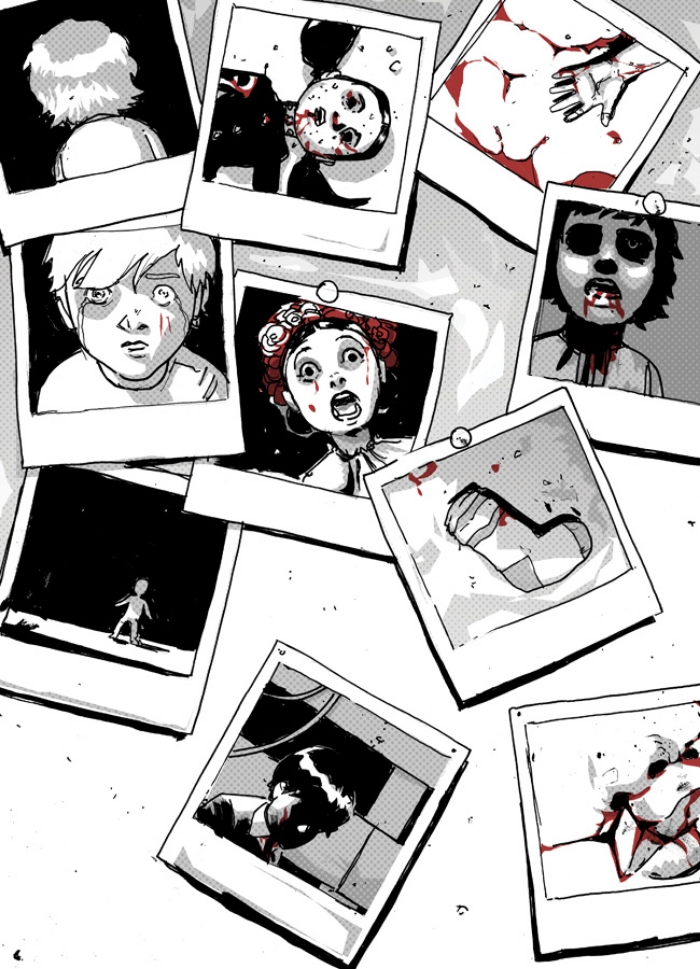
Lewis’s first foray into comics, Saints explores the intersection of reincarnation, sainthood, and the battle against evil. The spirits and the powers of Saint Lucy, Sebastian, Blaise, and Stephen have emerged in today’s world as adults who not only need to adjust to life but also have a divine calling to join together to battle a surge of evil. In biblical times, the archangel Michael defeated the devil and the fallen angels in the battle in heaven, but in our contemporary world, a man who claims to be the incarnation of Michael leads a society of congregations who offer their children to battle against saints, who are believed to bring about the end of times when they reappear on earth. With Michael’s increasing power, Lucy, Sebastian, Blaise, and Stephen begin receiving messages from God that lead them to each other in order to face Michael’s new children’s crusade.

Favorite cover: Issue 5

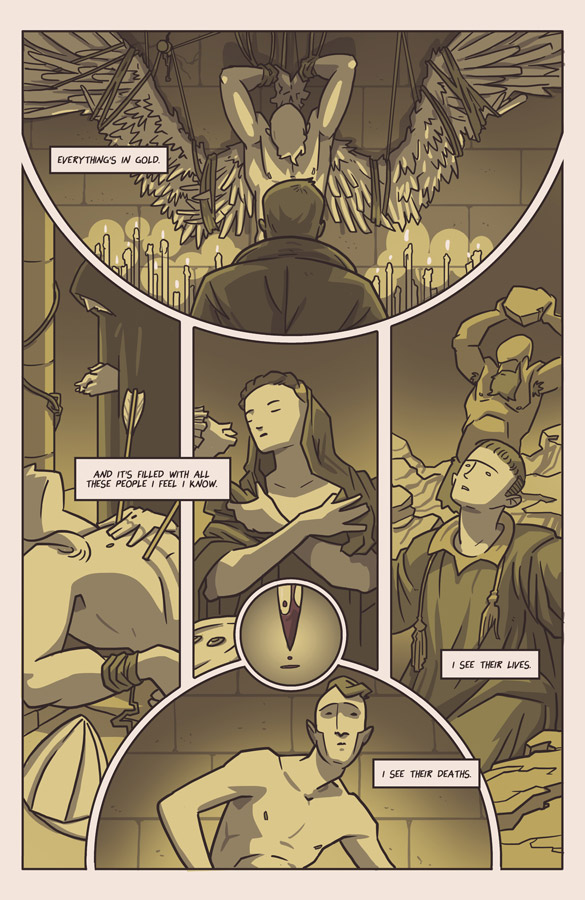
Within a five issues, Saints packs in a ton. Lewis anchors the ensemble tale with the introspection and growth of Blaise, the saint with the least amount of confidence in his own identity much less his responsibilities to God and humanity. In secular reality, Blaise has attached himself to failed metal groups in order to relate to other people, but his connection to the metal groups feels all too thin and full of false idols. Consequently, when Blaise begins having recurring cryptic dreams set entirely in gold with strangers he feels some familiarity with, he does not dismiss them, but he also does not attempt to understand them. That is, until Sebastian, one of the people in the dream appears at a concert and explains that Blaise’s dreams signify a higher calling.

Once Sebastian and Blaise find Lucy and Stephen, the group attempts to decode why they have received messages to come together as well as their history in their previous lives. When the modern Michael’s army begins to attack them, the group goes into hiding and spend more time trying to understand each other, making Saints less of a superhero tale about the battle between good and evil and more of a road tale, where traveling forces characters to better understand their purpose.

Saints has a fascinating premise, and I must admit it kept me engaged even though the execution of the storytelling may not be the best. In an interview, Lewis described the writing process as one where he wrote a short story that he and Mackey then dissected to form the panels. This distillation from a longer story rather than the construction of a script or storyboard leads the first couple of issues of Saints to have a clumsiness and awkwardness in the progression of ideas and conversations from panel to panel and page to page, but by the fourth issue, the bumps begin to smooth out. Mackey’s shifts in color help ease the transitions from dream sequences to the saints’ reality to the building of Michael’s congregation and army, so even though the panel flow does not always work in the first three issues, you never get lost between the different branches of the story.

Given its non-secular focus, I cannot bypass a discussion of the adaptation of biblical concepts. I, in no way, am a scholar of Christianity, but I do understand some of the core tenants of the Bible. Lewis definitely loosely interprets the archangel Michael, but his modernization of the saints does not feel too distant from their original personas. While a secular fictional tale about the faith could use saints’ powers as superpowers, I appreciate that Lewis de-emphasizes the saints’ supernatural abilities and focuses the series on the saints understanding their divine calling; I hope Saints begins to focus more on the psychological aspect of the martyrdom of these saints, for those ruminations could make this series rise from just being entertaining to something daring and innovative. Additionally, the martyrdom aspect of the saints distinguishes these characters from any others out there in the comic book world that have some supernatural ability and some responsibility to other humans; by exploring this security or insecurity in faith and grace or hesitation toward martyrdom, Saints can emerge as a faith based series that intelligently and relatably discusses how to interpret and apply faith in a modern world.

Saints has solid footing in an excellent concept. I hope it digs further into the hearts and minds of its characters and their conflicts with their higher calling, but regardless, I’ll still follow along because Lewis and Mackey are aiming for a big idea and have yet to enter the pretentious territory, and that impresses me.

Saints is written by Sean Lewis and illustrated by Ben Mackey. Issues 1-5 are available via Image Comics.  
The Lucio Fulci Bloodbath Goes West In 1975’s “Four of the Apocalypse”

Standard
fouroftheapocalypse_splash650

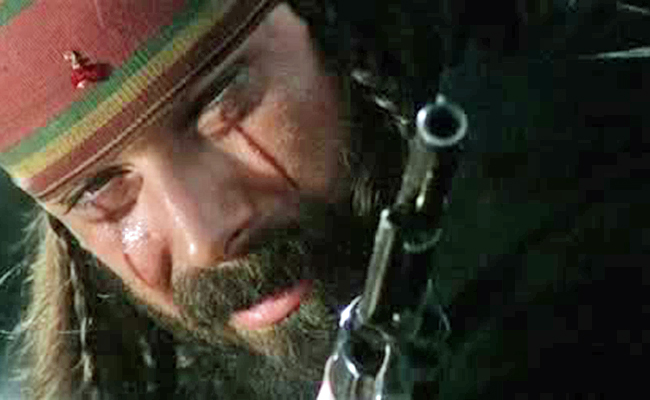
Thomas Milian As The Mansoneque Chaco

One of the more amazing experiences that Lily and I made had our recent visit to Rome was a visit to Cinecitta, the famed Italian movie studio that was built by Mussolini in the late 1930s to save the fading film industry which not only produced propaganda films during the early years of fascism, but also created many popular narrative films, including those of directors such as Raffaello Matarazzo. Unfortunately, the studios were bombed during the final months of World War Two, the damaged buildings and sets became home to thousand of displaced refugees for a few years before being revived as a functioning production studio during the Neo-Realist period.  This Neo-Realist era would subsequently turn into the golden age of Cinecitta with the rise of Italian directors, Frederico Fellini, and Bernardo Bertolucci. as well as the studios becoming the place to shoot sword and sandal films by not only Italian auteurs but also famed American directors like Joseph L. Mankiewicz who shot his epic, Cleopatra which starred Elizabeth Taylor there in 1963.

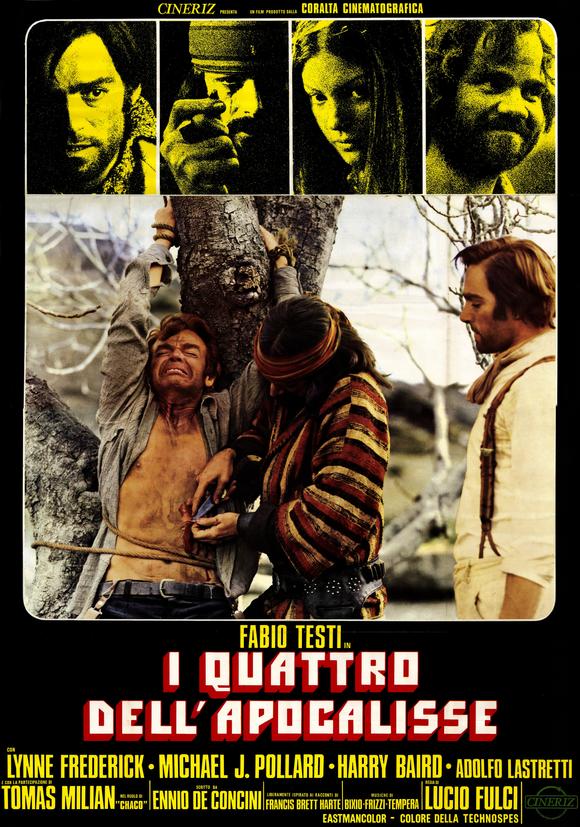
As the 1960s rolled on, the studios began to crank out numerous Italian or spaghetti westerns. a fact that shouldn’t be lost on anyone who reads this blog as I have reviewed several rare titles within the genre over the last few years.  What I did not know until visiting Cinecitta is that many of these films are not revered in Italy as they have been deemed too colonial in their message by a predominance of Italian film goers.  That message of the antiquated perception of these titles was made quite clear during our tour of Cinecitta, though the museum still chose to honor this genre with an impressive, albeit smallish portion of their museum. Long gone were the western town sets that littered the lots of the studio, they were demolished in the 1980s to make way for the construction of sets depicting ancient Rome which were needed for a new generation of  sword and sandal films like HBO’s 2004 series Rome.  This fact being somewhat bizarre to me as the spaghetti western was originally the genre that took sword and sandal out of Italian mainstream popularity.  Lily and I were still thrilled to see their spaghetti western exhibit which had a film tribute to the genre, Clint Eastwood’s actual poncho from Sergio Leone’s classic, For A Few Dollars More,  and a few rare film posters strew around the western saloon edifice for effect.  One such poster was that of a rarely seen 1975 spaghetti that surprisingly was directed by horror master Lucio Fulci (The Beyond, Zombie) that caught Lily’s eye, Four Of The Apocalypse. I was also intrigued and immediately went online to pick up a copy through the folks at Blue Underground who had it waiting for us when we returned from Italy.

Released in 1975 when the western was fading out of vogue for the less costly to produce Eurocrime film, Four Of The Apocalypse was banned in several countries on its initial release because of, you guessed it, the graphic violence and sadistic cruelty that mark many a subsequent Fulci film and although the violence is fairly disturbing at points that should not dissuade you from seeing a very personal and at times, emotionally complex late spaghetti western. No stranger to the western genre after two successful adaptations of Jack London’s White Fang in 1973 and 1974, Fulci drew from two well-known 19th century short stories from famed western writer Bret Harte, The Outcasts Of Poker Flats and in the last third of the film, Fulci uses Harte’s heartwarming tale, The Luck Of Roaring Camp. Our film begins with gambler Stubby Preston (an extremely well-coiffed Fabio Testi) as he arrives via coach to the rollicking gold town of Salt Flats with a plan to bust the town’s casino to only be met by the town’s sheriff, who immediately locks up Stubby in the town pokey with a pregnant hooker named Bunny (Lynne Frederick), the town drunk, Clem (Michael J. Pollard, the wheel man from Bonnie and Clyde) and Bud (Harry Baird), an African American man who does not have all of his marbles. The four quickly bond in the cell and are soon shuffled out of town by the apathetic sheriff when vigilantes decide to do on a murderous coup.

The quartet are cast out upon a wagon but are not at odds with one another.  Sure, there is sometime acrimonious sexual tension between Stubby and Bunny, and Clem is savagely jonesing for a drink but all in all our protagonists have accepted their roles as outcasts and are supportive of one another as they travel onward.  Our group soon stumbles upon a well-meaning wagon train of religious crusaders who distill of bit of homespun wisdom on our misfit travelers but after a few words and a meal, they all go their separate ways.  Juxtaposing the harmony is the sudden jarring inclusion of Chaco (Thomas Milian) a vile Charlie Mansonesque killer, complete with tattoos fashioned under his eyes, who seems to unable to move an inch without killing something in his way and whether that target is a wild animal or the lawmen that are following Chaco, they are doomed to die and in the case of one sheriff, he is brutally tortured and mutilated before dying. Following the carnage, there is a scene that seems to be pulled from Jodorowsky’s psychedelic western El Topo, when Chaco feeds our four misfits some peyote but a trippy voyage does not follow as indeed this Chaco is bad news for everyone he touches and this moment of letting their guard down will cost our broken heroes dearly. Even though the four escape death through the hands of Chaco, they are more damaged than ever before and must make their way to safety with a wounded member on a stretcher and a soon to be delivering Bunny.  They will walk through blazing heat and snow, landing in a ghost town before an eventual visit to an all male mining camp which provides some of the most hopeful moments in Four Of The Apocalypse, moments that are directly pulled from the pages of Harte’s whimsical story, The Luck Of Roaring Camp.

Beautifully lensed by cinematographer Sergio Salvati, and a folksy score that is more McCabe and Mrs. Miller than Morricone, Four Of The Apocalypse consistently strives to be a cut above the later Italian westerns of that period.  All of our leads put in fine performances with special notice going to Milian who completely embodies the horror within the maniacal Chaco.  Milian is absolutely terrifying and gobbles up screen time whenever he appears in the film.  As for the well-noted graphic violence that Fulci employs in Four Of The Apocalypse,  it does in fact hurt the film to the extent that it goes beyond what is necessary to amplify Thomas Milian’s performance as Chaco.  It is almost like Fulci felt the need to add the red stuff because be believed  that the character of Chaco wasn’t compelling/dreadful enough to be the target of the viewer’s ire. Milian’s psycho method-acting driven performance is definitely enough to make you burn with hatred against Chaco and thus audiences could’ve been spared the extra cruelty that is more off-putting than emotionally effecting.

Regardless of the extemporaneous violence, I would still would place Fulci’s Four Of The Apocalypse along with Enzo G. Castellari’s 1976 masterpiece, Keoma as one of the best examples of a late-era Italian western.  Though these films may not be seen as high art in preset day Italy, to me they still resonate as having a brave originality that most American westerns of the same era never possessed.   

Generoso and Lily’s Bovine Ska and Rocksteady: Jah Lloyd’s Teem Label 1-26-16

Standard
teem label b

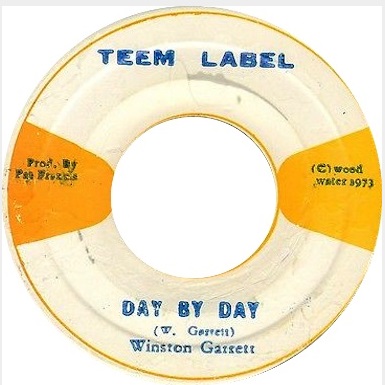
Top Tune From Winston Jarrett On Teem


Howdy Bovine Ska and Rocksteady Listeners!

We started the January  26th. 2016 episode of Generoso and Lily’s Bovine Ska and Rocksteady with two sets of dynamite rare ska beginning with The Spanishtown Ska Beats on the Soulsville Center Label in 1965 doing the original version of the song that Keith and Tex made famous, “Stop That Train.”  A mento set followed which ended with the Sugar Belly Combo and their flying bamboo saxophone version of the classic mento of “Rucumbine” which was released on Studio One in 1966. We ended the first hour with a long set of early reggae that started with a version to version excursion of the Mediators 1970 hit on Success,  “When You Go To A Party.”   After that set we began our half hour spotlight of the TEEM LABEL…

Born Patrick Lloyd Francis, Jah Lloyd, who was also known as Jah Lion and Jah Ali, was introduced to the growing music industry in Kingston when he moved from his hometown of St. Catherine to Trench Town at the age of 12. Early in his recording career, he was a founding member of The Eagles. However, he would not stay with the group, and Francis joined strengths with Fitzroy Bunny Simpson to form The Mediators (sometimes noted as The Meditators). The group recorded for Coxsone Dodd, but Francis found a place with Rupie Edwards, who not only recorded the duo but also gave Francis a job as a salesman for the Success label and record shop.  After working for Success for two years, Francis knew many of the key players in the record industry, and when he himself wanted to record again, he approached Lee Scratch Perry. Inspired by the rise of deejays, particularly Big Youth, Francis decided to toast over records rather than sing for the Upsetter label. After recording a few tracks for Lee Scratch Perry, Francis decided to open up his Teem label with his brother Vincent where he would produce other artists and release some of his own recordings as well.

Francis’s former singing partner, Bunny Simpson re-entered his life, this time with his new group The Diamonds. At this point, they had recorded for Stranger Cole and Derrick Harriot, but at Teem, they scored a big hit with “Shame and Pride.” Francis introduced The Diamonds to Joseph “JoJo” Hoo-Kim, who produced them at Channel One, where the group, who eventually became known as The Mighty Diamonds, rose to great success.

You can listen to our full Bovine Ska and Rocksteady from January 26, 2016 HERE. Subscribe to our show on Mixcloud; it’s FREE, and you’ll get an email every Tuesday when we post a new show.

For all of our listeners on the east coast, we hope this show keeps you warm!!! Please help us and spread the word and repost if you liked the show!

For news on the upcoming spotlights and fun discoveries tied to early Jamaican music, join the group for the Bovine Ska and Rocksteady on Facebook.

Hugs,
Lily and Generoso

The Comedic And The Tragic Meet In Lee Man-hee’s Final Film, 1975’s “The Road To Sampo”

Standard
road to sampo

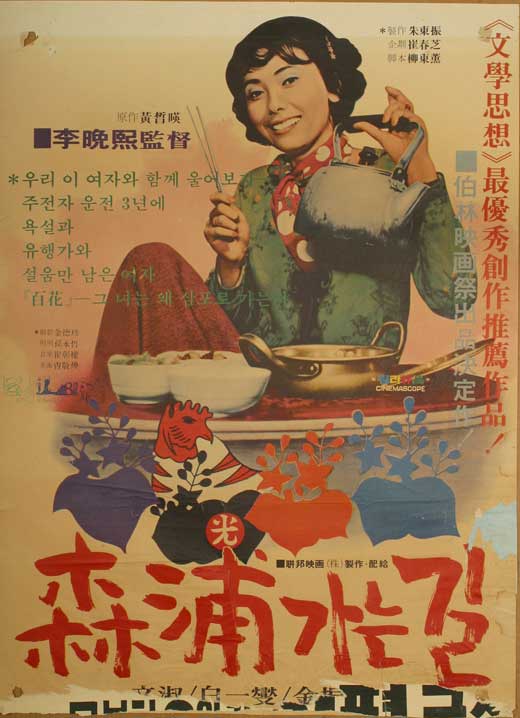
The Deranged Road Film That Is Lee Man-hee’s The Road To Sampo

Before reading any review of the 1975 film, The Road To Sampo, one must first gain an appreciation for the film’s director, Lee Man-hee, who holds the dubious distinction of being the first South Korean director to be arrested for violating his country’s National Security Law.

By 1965, Lee, an awarded Korean War veteran himself,  had become the godfather of the post-war government funded, anti-Communist war film with such popular efforts as 1963’s YMS-504 Of The Navy and Marines Are Gone when he set out to make The Seven Female POWs which depicts a North Korean officer who, while transporting seven female South Korean nurse prisoners, kills a unit of allied Chinese soldiers who attempt to rape the women. The North Korean officer then convinces his unit defect to South Korea to avoid possible court martial from his superiors. Upon seeing the full film, censors imprisoned director Lee as they felt that The Seven Female POWs  humanized the North Koreans while simultaneously showing the American soldiers as unsympathetic. Lee was subsequently released on probation after the South Korean film community protested his arrest but as part of his probation agreement, Lee was forced to edit over forty minutes of the final cut which made the final film virtually incomprehensible that led to the first negative reviews of his career. The arrest did damage Lee’s reputation, but he still ended up directing some thirty six films in the following ten years before his untimely death at the age forty five in 1975 during the editing of his counterculture road film, The Road To Sampo.

It should be noted that similar to American actor Robert Mitchum’s 1948 scandalous arrest for marijuana possession, which temporarily forced the actor out of contention for glamorous films into a career where he took more salacious roles like Harry Powell in Night Of The Hunter and Max Cady in Cape Fear, the Lee Man-hee’s arrest opened the director up to more experimental methods and themes away from the traditional filmmaking that marked his early career. What then followed in 1966 were Lee’s The Water Mill and Late Autumn: two groundbreaking and critically heralded films that depicted a never before seen open eroticism with the latter effort, Late Autumn being shot using a minimally written script that relied more on improvisation than scripting to create a film of palpable sensuality. In 1974, after almost a decade of pushing the creative envelope and with his health waning, Lee began to direct the iconic film, The Road To Sampo, which incorporated his desire for experimentation with bold sexuality along with his wry social commentary during one of the darkest eras in South Korean cinema.

Released a year after French director Bertrand Blier’s revolutionary anti-establishment road film Les Valseuses, The Road To Sampo similarly takes a pair of lost male protagonists through their homeland’s countryside where they engage in a myriad of rudderless, soul-searching situations through an economically depleted era where they soon encounter an equally lost woman whom they decide to take in on their adventures. The essential difference with Lee’s film is that the woman becomes the catalyst of change for our two men who are not only looking for good times and quick cash like our “heroes” in Les Valseuses but also for some sense of stability and place in a South Korea which at the time was growing but also still reeling from years of war.

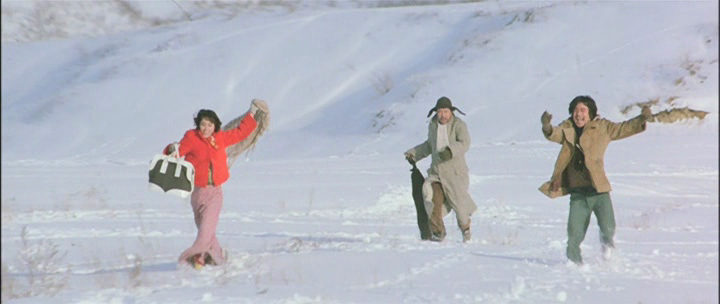
Young-dal is a wandering construction worker wandering aimlessly through the snow covered landscape looking for work until he meets the middle-aged Jeong, who has just spent a dozen years behind bars and now only seeks to return  to his hometown of Sampo, a seaside town that Jeong describes as abandoned during the winter. The pair begins their journey together, and soon they descend down a hill to a small village where they grab a meal and listen to the proprietor’s lament of being understaffed as her waitress slipped away without her knowledge but with her purse which contained a lot of money. The desperate proprietor offers Young-dal and Jeong  substantial money to find her runaway waitress, and, as they are without a cent, they decide to take the job, and after a short search they discover their waitress, a frantic, hostile, but brightly clad young woman named Baek-hwa who claims to have not stolen any money despite bragging about her former bosses’ purse which she has in her possession.  Our men quickly realize that Baek-hwa carries more sadness than a potential for profit so they soon become a trio and head out towards Sampo.

Drawing further comparison to Les Valseuses, except with the gender roles reversed, our Baek-hwa is a fountain of overt sexuality. Baek-hwa wears the mantle of a prostitute with pride and boasts of her exploits as well as a proclivity to become undressed around Jeong and Young-dal who exhibit no sexual aggression towards her.  Jeong left an eight year old daughter in Sampo before his ten years in jail, so he becomes an almost father figure to Baek-hwa, and Young-dal brags of his days as a successful street vendor of rat poison but suggests that his wife may have died from accidentally ingesting the poison that he sold.  Needless to say, Young-dal is in no way looking for a woman and wishes to just work until he gets on his feet, which means that Baek-hwa’s endless sexual innuendos towards him mean virtually nothing as they travel onward.

Their intentionally loosely connected exploits include a hilarious scene where the three, who have not eaten in days, visit a village and crash a funeral in hopes of getting a meal, but they are  discovered when Baek-hwa gets plastered and begins to sing and dance, much to the chagrin of the actual mourners who turn violent as they are there to grieve.  In another scene, Baek-hwa leaves the group to work in a brothel but becomes violent when the johns start to assume that she is there for a sexual tryst.  The three seem always out of their element and become a sad reminder of a 197os South Korea which was full of post-war homelessness and run by a harsh government that was rapidly trying to build an infrastructure but in the process is also leaving many who cannot move with the pace behind. Baek-hwa, Jeong, and Young-dal are hopelessly out of synch with the real world, so as the narrative moves forward, the film goes from comedy to heartbreaking melancholy as you begin to see their time together coming to an end as there is no place for them. Director Lee gets wonderful performances from our leads, especially Suk Mun, who played Baek-hwa and starred in the director’s last three films. Suk’s performance is beautifully textured as she creates the emotional framework for a young woman who can be alternately hysterically gleeful as she is vengeful while eminently real and vulnerable.

 The Road To Sampo Complete Film w English Subs

In 2015, Suk Mun returned to acting in Jong-Teol Baek’s award-winning film, The Beauty Inside after a forty year absence during which time she only starred in one film post Lee Man-hee’s passing.  As for director Lee, his entire body of work was screened at the 2005 Pusan International Film Festival that occurred on the thirtieth anniversary of his passing. That festival sparked a national resurgence of his catalog. and an long-overdue appreciation for a director who took his moment of government produced strife in 1965 and turned it into an daring collection of work.

Generoso’s Smokey And Vegetarian Soup: Zuppe Con Cannellini e Arborio

Standard

Happy Cooking Folks,

This dish is one that I decided to make in honor of my dear friends living on the East Coast this January. This tasty Northern Italian soup has a creaminess and a smoke to it that has little to do with dairy and nothing to do with any meat.   No crazy ingredients here as the creaminess comes from the cannellini beans and the smoke coming from the toasted breadcrumbs and nuts. Total prep and cooking time is about an hour so I hope you will come back to this dish anytime you need need a fast, inexpensive soup to eat on these cold winter days.  

You will need for ingredients: One half head of cabbage, 1/3 cup of cashew or pine nuts, one half of a small Italian roll, four cups of vegetable broth,  one pound can of cannellini beans, two sprigs of fresh rosemary, four cloves of garlic, one cup of olive oil, salt and pepper (grated romano is up to you as a topping).  

Please let us know how yours turns out and stay warm this winter.

Love,
Generoso

Music: Georg Philipp Telemann’s Viola Concerto, TWV 51:G9

Generoso and Lily’s Bovine Ska and Rocksteady: Phil Pratt’s Jontom Label 1-19-16

Standard
jontom label b

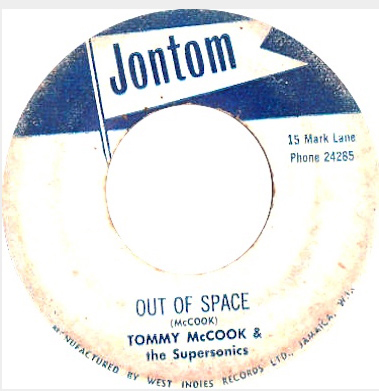
Tommy McCook’s Killer Ska On Jontom

Hello Bovine Ska and Rocksteady Listeners,

After last week’s reggae-heavy spotlight on Willie Francis’ LITTLE WILLIE LABEL, we decided to take this week’s spotlight on the Bovine Ska back to the ska and rocksteady with the JONTOM LABEL, which features tracks from one of our favorite producers, Phil Pratt. That spotlight begins about halfway through the program, so before that, you will hear some reggae, mento, and ska.

To start off the show, we presented a reggae version to version, with the original “Afrikaan Beat” from Lester Sterling and its version, “To The Fields,” from Herman Chin-Loy. In the second set of reggae, we had another version to version matchup with The Bassies “Things A Come Up To Bump” and Sound Dimension’s take on the track, “Black Onion.”

For the mento set 30 minutes into the program, we played one of our favorites, Zach Matalon and the Sonny Bradshaw Quartet’s “Cordelia Brown,” a production from Stanely Motta and his MRS label in 1954. Then, to prepare for the Jontom spotlight, we prepared an extended set of ska showcasing the School Girls’ “Last Time,” Owen & Leon’s “How Many Times,” and Jackie Opel’s triumphant take on the gospel traditional, “Sit Down Servant.”

At the second hour mark, we were happy to finally present an eleven track spotlight on Phil Pratt’s Jontom label.

While we love Phil Pratt for much of his production work in reggae, he got his start as a producer during rocksteady for his own label, Jontom, the subject of our spotlight in this week’s edition of the Bovine Ska and Rocksteady. Born as George Phillips, Pratt moved to England as a teenager to live with his father but returned to Jamaica five years later. Upon his return, he tried to record first for Coxsone Dodd but without success, and when he met Ken Lack, who gave Pratt his stage name when he could not recall his real last name, the two hit it off. Pratt started as a singer for Caltone, and Lack decided to give Pratt his own label to release his own productions, jumpstarting Phil Pratt’s career as a producer. We started off this spotlight with a soul cut from The Uniques titled, “Do Me Good.”

Ken Boothe, who recorded “The One I Love” for Jontom, has an integral role in the creation of Phil Pratt and Ken Lack’s collaboration at Caltone and eventually Jontom. When Phil was trying to work with Coxsone, he met Ken Boothe. Ken introduced him to Roy Shirley, who introduced him to Bunny Lee, and Bunny Lee introduced Pratt to Ken Lack.

To close the show, we had a smooth set of rocksteady that included the ever-so-pretty “Mother Pepper” from Desmond Dekker, “Home, Home, Home” from Derrick Harriott, and “What To Do” from Roy Shirley.

You can listen to our full Bovine Ska and Rocksteady from January 19, 2016 HERE. Subscribe to our show on Mixcloud; it’s FREE, and you’ll get an email every Tuesday when we post a new show.

For all of our listeners on the east coast, we hope this show keeps you warm!!! Please help us and spread the word and repost if you liked the show!

For news on the upcoming spotlights and fun discoveries tied to early Jamaican music, join the group for the Bovine Ska and Rocksteady on Facebook.

Have a great week!

Lily and Generoso

They Don’t Make Them Like They Used To: R. Crumb’s Big Yum Yum Book

Standard

Robert Crumb is a regular name discussed in the Fierro household. We always keep our eyes open for an issue of Zap, Snatch, or Big Ass Comics, and we adore his illustrations for Harvey Pekar’s American Splendor. Despite this admiration and respect for his work, over the holiday, we realized that we did not own the Big Yum Yum Book, and that was an enormous error in judgement.

In order to not wallow too much in the glory of the past (which happens, but more offline), I try to keep reviews here constrained to comics and graphic novels released in the present and no more than three years back. Occasionally, I have to make exceptions for works of the past that I feel have left our collective memory of comics, so this week, I could not pass up the opportunity to write about the Big Yum Yum Book.

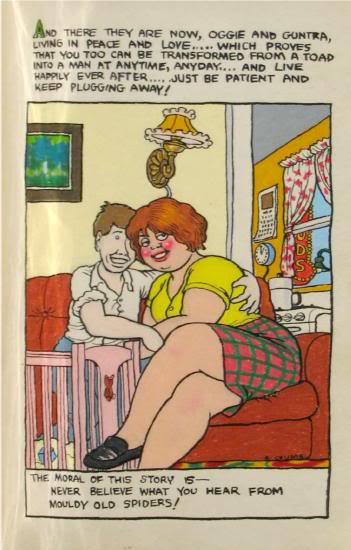
Cover for the SLC Books 1995 Printing of the Big Yum Yum Book

When we think of Robert Crumb, most hardly would describe his work as sweet, endearing, or lovely because of the sexual audacity of his creations in San Francisco’s underground; however, the Big Yum Yum Book, started in 1962 but not published until 1975, presents a softer Crumb, one who was nineteen and had yet to fully understand his carnal desires and his artistic style, and while the book lacks the exaggerated visuals and sexuality of his comics made only a few years after the completion of Big Yum Yum, it reveals the early cleverness and awareness of Crumb that would eventually morph into extreme hyperbole in the figure we now consider as the elder statesman of underground comix. In his introduction to the 1975 original publication, Crumb notes that he finds this book “adolescent and immature” and that others will feel it is “too cute,” but as Harvey Pekar notes in the introduction to the SLG Books 1995 edition, do not let the vivid and exquisite colors and the adorable animal characters and drawing style fool you into believing that this is a naive love story; the Big Yum Yum Book is an exceptional accomplishment that sharply comments on the young of the 1960s and captures life as an aloof observer during that time.

Ogden, a toad and our protagonist, enters college and adulthood with open and cynical eyes. As the child of a prominent business toad who hopes his son will continue his legacy, Ogden immediately realizes that college life does not suit him. He cannot relate to the intellectuals, the open lovers, the beatniks, or the political activists, and after exhausting attempts to fit in, he has an outburst from frustration that changes his life. After crushing and burying the ladybugs in his shared dorm room during his surge of anger, a giant beanstalk erupts from the ground and holds on to Ogden, launching him into space and eventually onto another planet.

Here on this new planet, Ogden has escaped the concrete harshness of the city he had known and has arrived to a beautiful forest abundant with fruit, greenery, and trees. After spending a few days in the bliss of nature, he realizes that, despite all of the greatness of his new home, he is lonely, like Adam in the garden of Eden, and ventures on finding some company. Ogden quickly discovers Guntra, a portly teenage girl, and he instantaneously falls in love. Unfortunately, Guntra only sees Ogden (and every animal that once lived on the planet) as food, but his love will not subside.

The Big Yum Yum Book progresses into a love story, but one from the mind of Robert Crumb, so do not worry, nothing is sentimental here. In the course of Ogden’s pursuit of the ever hungry Guntra, we not only see how love transforms an individual but also how humanity can disintegrate in the surrounding world and how different members of society inadequately react to its downfall. To deliver its biting assessment of our world, the Big Yum Yum Book twists motifs and stories common in Western literature such as the frog prince, the witch hunt, and the fall of the Garden of Eden into its absurdity, making this book undoubtedly one of satire but one that never takes itself too seriously. In turn, the Big Yum Yum Book has a levity to it that balances the severity of Crumb’s own observations of the time, making this book an impressive work for any comicbook creator not to mention a nineteen year old one.

Crumb in the years immediately following the Big Yum Yum Book exponentially increased the absurdity and the perversity in his comics, which definitely heightened the controversy around him and made his work less approachable. For those of us who enjoy these more obscene works, we’ll distill the core essence behind his exaggerations, but for people who do not really comprehend Crumb’s perspective, please read the Big Yum Yum Book, and you’ll understand that much more lies underneath the lurid illustrations of large women in sexual positions; Crumb is a highly perceptive satirist who, like Ogden, does not quite fit in but can use his alienation to assess the world without looking and sounding like a misanthrope. He may lose some friends and completely embarrass himself along the route of self-discovery, but he knows himself, and this self-awareness is the ultimate signature of Crumb that already existed in his earliest works. This key feature would just take on a more extreme and vulgar shell as he progressed as an artist and began to pour out his own psyche onto panels, but you must admire his unrelenting honesty and boldness to admit his inner desires, even if the pages of Snatch make you blush or shudder in shock.

Big Yum Yum Book is available via SLG Books; it features photographs of the original artwork. 

Aromatic Chicken Soup! Lily’s Mien Ga

Standard

As much as we love the heavier dishes of Vietnamese cuisine, we want to eat a bit lighter in 2016. After contemplating on what dishes could be satisfying and delicious without too much salt, sugar, and red meat, Lily remembered Mien Ga, a perfect soup for the winter and spring.

Traditionally, Mien Ga is served with mung bean thread noodles. Lily loves Korean sweet potato glass noodles, so she serves her version with them instead. Additionally, the broth is made with chicken quarters and thighs. For a healthier version, you can use on the bone split breasts; you’ll most likely need to add a bit more fish sauce and salt and cook the stock a bit longer for better flavor.

In this version, Lily served the Mien Ga with a few serrano pepper slices. Beware! They are very hot, so do not place too many in each serving bowl.

Enjoy!

Music provided by Franz Joseph Haydn’s String Quartet, Hob. III:80

Ossie Davis Directs J.E. Franklin’s Harsh Family Drama: “Black Girl” From 1972

Standard
black girl B

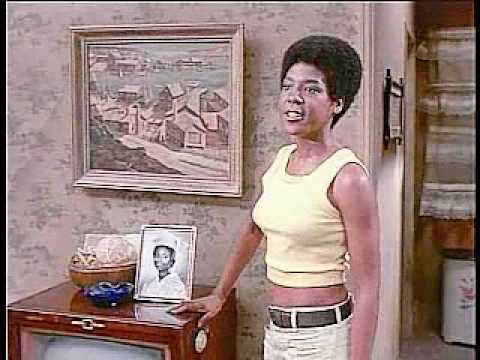
Gloria Edwards As Norma in Black Girl

Needless to say that genre of inner city African-American films that were produced in the late 1960s through the 1970s called “blaxpolitation” had its positive and negative aspects. On the negative side, the message inside a morass of poorly made crime films did little in terms of speaking about the experiences of the bulk of African Americans during that time, concentrating on the worst stereotypes of urban life to sell tickets. On the positive side, the countless films that did give a more honest view the African American community, both contemporary and historical, would not have otherwise been made if not for the success of the aforementioned crime films. Films like Gordon Parks’ The Learning Tree and Marton Ritt’s Sounder along with the mini-series creation of Alex Haley’s novel, Roots may not have happened if films centered on the African American experience were not deemed commercially viable by Hollywood standards.

Such was the situation of Ossie Davis, who was fresh off the immense commercial success of his second feature, the urban crime film, Cotton Comes To Harlem, in 1970. Davis set out to direct a film version of Houston-born playwright J.E. Franklin’s celebrated 1969 work, Black Girl, which was first produced that same year for WGBH, Boston’s public television station, and then run as an off-Broadway play in 1971. The film version of Black Girl centers on several generations of women in a family living in a small house located in the Venice Beach neighborhood of Los Angeles. The “black girl” of the title is Billie Jean (Peggy Pettitt), a seventeen year old who dreams of becoming a ballerina but who, for now, must be content with dancing at her local bar for tips while suffering the jeers from her two half-sisters and her mother. Her mother, who most everyone calls Mama Rosie (Louise Stubbs), gave birth to Billie Jean from a second husband after her first husband Earl (Brock Peters) left the family, leaving Rosie alone to raise their daughters, Norma (Gloria Edwards) and Ruth Ann (Lorette Greene). Also crammed in this tiny house are Rosie’s mother, Mu Dear (Claudia McNeil) and her live-in boyfriend from church, Herbert (Kent Martin), leaving young Billie Jean with only a small makeshift bedroom between the kitchen and the living room to practice her dancing. Unfortunately, Billie Jean’s aspirations come to a halt when Norma and Ruth Ann blab to Mama Rosie about Billie Jean’s dancing at a gin joint and dropping out of high school.

In the midst of all of this tension, Earl shows back up to the house in a new Cadillac, waving around a wad of cash, which is most likely acquired through some illegal activity and dispenses a bit of it along with a reminder as to why he left in the first place. A key moment here is when Mama Rosie suggests that Billie Jean should receive some of Earl’s gift to the family, but Earl doesn’t accept her as his own because he did not sire her and reacts with resistance to this suggestion. Billie Jean takes Earl’s initial hesitance as an insult and refuses the cash but is encouraged to take it by Mama Rosie, which speaks volumes as to Mama Rosie’s current feelings towards the raw deal she feels that she has received in having Billie Jean, her only child with a different (and unmentioned) father. Earl suggests a reconciliation with Mama Rosie, but her heart is hard at this point and closed to such things.

Making the situation worse is that Billie Jean, Norma, and Ruth Ann are constantly reminded of the real apple of their mother’s eye, the much lighter-skin colored Netta (Leslie Uggams), a boarder whom Mama Rosie took in when Netta’s mother (a silent Ruby Dee) lost her mind. Netta is far away at college doing her best but still draws the hatred of the three sisters in the house due to their mother’s clear appreciation of Netta over them, Mama Rosie’s actual flesh and blood. Soon, Netta comes home for a Mother’s Day visit, but after years of torment from Mama Rosie, Norma and Ruth Ann begin twisting Billie Jean’s mind against Netta, claiming that Netta is coming to take Billie Jean’s hovel of a room upon graduation. This sets up a tense third act where the well-intentioned Netta will walk into a buzz saw that is Mama Rosie’s three daughters.

Davis’ loose direction allows for some truly unpredictable moments, and thus the actors’ performances come through far above the plot. Gloria Edwards leads the charge here as she brings a real ferocity to her character of Norma, and the final third has a level of realistic tension that is borderline unbearable. Though the film is set around Billie Jean, Peggy Pettitt has to play with a mostly, silent, brooding character but does the most with her, especially again in the third act. Louise Stubbs is excellent throughout and paints Mama Rosie as a woman who is capable of great joy, as seen through her loving scenes with Earl, but is also someone filled with such an intense loathing of all who exist around her due to the mistakes she has made throughout her life. In the end Black Girl takes advantage of its poor socioeconomic confined setting to show you several generations of one family existing under one roof so that you can closely contrast the different attitudes based on age and skin tone. That amount of people from different eras living on top of one another soon becomes a story of missed opportunities, contempt, and the soul-crushing ability that a family can possess in destroying the dreams of those whom they are supposed to love and encourage to grow so that they can eventually leave the home for good.

Original 1972 Trailer For Black Girl

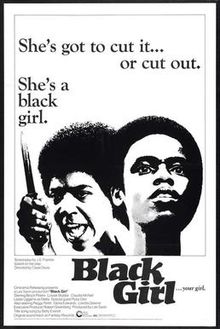
I, for one, am glad that despite its fostering of negative stereotypes, Cotton Comes To Harlem gave Ossie Davis the clout to make a film version of Black Girl. Though the advertising had to give the audience a false impression that they were about to see a blaxploitation crime film, Black Girl is an uncompromised and deeply personal story of an African-American family who is just trying to get over despite the pain they continue to cause to each another, addressing a perspective that was rarely discussed or seen in media during its time.

Riley Rossmo Shines as Others Fall: Dia De Los Muertos

Standard

Of late, I have gobbled up quite a few comicbook anthologies featuring short stories from a range of creators, all united by a single motif. While I never mind diving into a lengthy graphic novel, something about the anthology form, when right, has a spark of light and energy to it that makes reading it enjoyable. That perceived vivacity, in part, comes from my hope to be surprised by the work of creators I already know, but most of my excitement for anthologies stems from the chance to discover new talent. Furthermore, with an anthology contribution, brevity and efficiency emerge as the highest priorities for each story, providing a challenge that tests each creator’s skills and limits and teaches us as the audience how to tackle storytelling constraints. 

Whereas other collections (such as the superb Humanoids anthology, The Tipping Point), have multiple artists and writers, Dia  De Los Muertos has Riley Rossmo as the primary artist paired with the writing talents of Alex Link, Christopher E. Long, Dirk Manning, Joshua Williams, Ed Brisson, Jeff Mariotte, Alex Grecian, Kurtis J. Wiebe, and Joe Keatinge. As a result, Rossmo has the greatest challenge of matching the visuals to the scripts of a range of writers with different specialties and vastly different approaches in interpreting the Day of the Dead, and he rises to the occasion.

Cover for the Dia De Los Muertos anthology that collects three issues containing separate stories

I wish I could give similar praise to the various scriptwriters. With the exception of Alex Grecian’s “Return of the Dead,” Joe Keatinge’s “Day of the Dead 3000,” and Joshua Williamson’s “Mine,” the stories fail to explore the richness and complexity of human emotion and reaction to the traditions and legends Dia De Los Muertos, making many of them feel too facile and unoriginal. In the shadow of Rossmo’s deft ability to transform his style throughout the anthology, most of the stories look even weaker, for the art and the layout have to carry more of the storytelling weight, but alas, even outstanding art cannot save a weak script.

The weakest stories fall into two categories: ghost tales about love or about spirits seeking vengeance. Dirk Manning’s “Te Vas Angel Mio” and Kurtis J. Wiebe’s “Lonesome” look at the love of a lost one with the sentimentality of a Lifetime film or that abhorrent Sandra Bullock vehicle, The Lake House (I’m ashamed that I watched even two minutes of this travesty…). Far different in topic but no less unimaginative, Christopher E. Long’s “Reflections” and Ed Brisson’s “The Skinny One” present ghosts of revenge for wrongdoing that evoke more self-righteousness than any terror. Though Alex Grecian’s “Return of the Dead” does end with a certain level of revenge on an evil one, the story and the art combined create an eerie and horrific tale that will make you shiver, and the extent of the awfulness of the villain provokes fear (and a few shudders), pulling it far above “Reflections” and “The Skinny One,” despite their shared topic.

As much as I enjoyed Grecian’s take on Dia De Los Muertos, I will admit that it did not feature anything beyond prediction. In contrast, Joe Keatinge’s “Day of the Dead 3000” and Joshua Williamson’s “Mine” do have unique and surprising elements to them, thus making them the most distinctive of the collection. Keatinge places the supernatural elements of Day of the Dead in the future and in the hands of a pessimistic and disillusioned fashion photographer, creating a cleverly nihilistic anti-superhero tale that explores the psychology of the adults of the future (and now) who inherit the problems of the past but feel indifferent to them. Paired with Keatinge’s excellent script, Rossmo creates the perfect art to match the fun but slightly cynical tale that incorporates more than just the skulls and ritual of the Day of the Dead.

Joshua Williamson has a far more traditional perspective on the motif, weaving the festival activities in Mexico in the mystery to find a girl, but right before the end, he takes a screeching turn in an unexpected and chilling direction. Illustrated with a innocence and brightness of a comic for children, the antithesis between what Williamson and Rossmo want you to believe will happen and what actually does distinguishes “Mine,” making a story that at first looks cheery all the more disturbing. Placed halfway into the collection, the section of a work that our human minds tend to forget the most, “Mine” will be severed into your memory due to its style and final detour.

As a whole, Dia De Los Muertos has some gems in storytelling, but it mostly serves as a showcase of Riley Rossmo’s diverse talents as a comicbook artist. Though most of the stories are forgettable, the collection is still worth a look for the stronger ones and for Rossmo’s chameleon artistic abilities. And, as with any short film compilation, if one work does not satisfy you, another one will arrive very shortly, a nice feature of the anthology and perhaps one of the reasons why they have caught my attention recently.

Dia De Los Muertos is available via Image Shadowline.