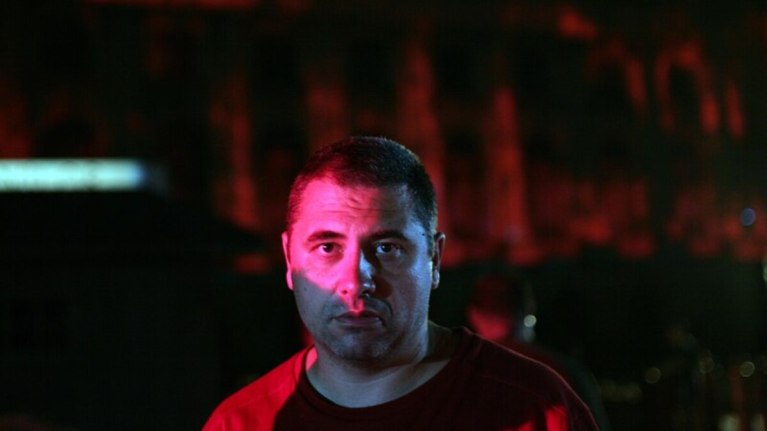
Best of Film 2023

Standard

Originally published on Ink 19 on November 30, 2023

In his essay, “From Realism to Reality” from For a New Novel: Essays in Fiction (Pour Un Nouveau Roman, 1963), Alain Robbe-Grillet discusses the relationship an author has with the real and the perceptible:

There would be a present world and a real world; the first would be the only visible one, the second the only important one. The novelist’s role would be that of an intercessor: by a fake description of visible things — themselves entirely futile — he would evoke the “reality” hidden behind.

We’ve started previous years’ Best of Film lists with one to four specific terms that captured recurring themes and ideas in our favorite features of the year, but for 2023, we felt we had to start with this quote from novelist and filmmaker Alain Robbe-Grillet that remains omnipresent in our minds after discussing it during our interview with Radu Jude on the occasion of the screening of his remarkable latest work, Do Not Expect Too Much From the End of the World, at this year’s AFI Fest. Replace “the novelist” with “the filmmaker,” and adjust “description of visible things” to “description and/or presentation of visible and audible things,” and you’ll arrive at the thread connecting our selections this year: the majority of the films you will see in our list below use elements of fiction in a descriptive manner to illuminate reality.

Many of our favorite films this year contribute additional interpretations to our understanding of hybrid cinema. Whereas previous years’ hybrid standouts such as Joana Pimenta and Adirley Queirós’s Dry Ground Burning, Pedro Costa’s Vitalina Varela, and Anocha Suwichakornpong’s By the Time It Gets Dark, leaned heavily on documentary techniques, this year’s swayed towards methods and notions of fiction — some re-staged/re-enacted real events, others re-envisioned historical events within a fictional construct, and others immersed purely fictional characters and narrative structures into real and uncontrolled settings. Attempting to distill or convey the real by way of fiction is not by any means new — in fact, one could argue that cinema and literature have been trying to accomplish this since their respective inceptions — but, this may just be our only model going forward to understand and process our existence, especially as generative artificial intelligence (a separate polarizing topic of immense concern and fascination discussed throughout the year in mass media and artistic circles) begins to introduce composite, unverifiable representations of knowledge and opinions back into the repositories of the Internet, further eroding beliefs that text and image alone can represent reality anymore. In such a world, we can only hope that artists of any medium will be able to piece together situations and moments that will strike on the real hidden from our basic senses, and that we, as viewers, readers, and listeners, are attuned enough to detect its presence and reverberations.

We send immense gratitude to the fine folks at Acropolis Cinema, AFI Fest, Independent Film Festival Boston, Film Fest Knox, the Brattle Theater, Films at Lincoln Center, and the Coolidge Corner Theater for their ongoing programming efforts that brought exemplary works to screens and audiences across the country throughout the year. Please support these festivals, microcinemas, and independent theaters as they are vital in providing perspectives, visions, and ideas from around the world that have palpable echoes in our individual realities.

• •

Nu astepta prea mult de la sfârsitul lumii (Do Not Expect Too Much From the End of the World) / Romania / dir. Radu Jude
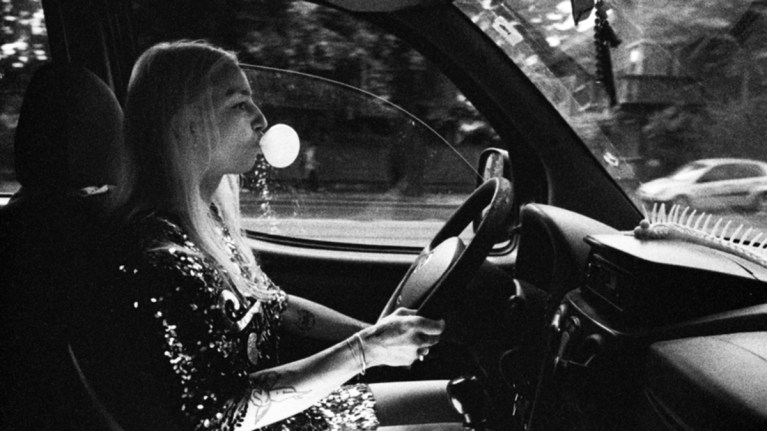
After the fall of Nicolae Ceaușescu în 1989, capitalism began to plant its seeds into Romania’s economy. Now, in the 2020s, it’s in full force, and director Radu Jude describes its overwhelming impact on working Romanians through the contrasts in the lives of two characters named Angela in his latest feature, Do Not Expect Too Much From the End of the World. One Angela (Dorina Lazar) is a taxi driver in Lucian Bratu’s 1981 film, Angela Moves On, and the other (Ilinca Manolache) is a present-day production assistant logging twelve-plus hour days to complete a worker safety video for an Austrian furniture company. Both Angelas drive in and across Bucharest for their work, and both deal with the ugly sides of their occupation and relative point in history. Multiple men assert that Bratu’s Angela is less of a woman because she does a man’s job. Jude’s Angela can barely stay awake at the wheel, despite being occasionally woken by the profanities of male drivers criticizing her driving. Bratu’s Angela falls in love, whereas Jude’s Angela barely can maintain a casual relationship. And, Bratu’s Angela’s work ultimately helps people get from one place to another, while Jude’s Angela’s work will culminate in a slick video that will deflect any corporate responsibility for safety back onto the workers themselves. These two parallel lives form the structure of Do Not Expect Too Much From the End of the World, and Jude layers many juxtapositions on top of his Angela of today to form an urgent and penetrating view of how a polarized contemporary culture where the image and the word are regularly transformed for profit and survival impacts the individual being. Angela’s lewd and satiric with her TikTok avatar, Bóbita. She is professional and sympathetic as she interviews injured workers to cast in the safety video. She is earnest and righteous when she has to help her mother deal with the loss of the family gravesite. And, she is an intellectual who reads Proust in bed and quotes Goethe as she drives. As the epitome of the complexity of contemporary times, Jude’s Angela embraces as much of the now and the past as she can in the midst of a grinding and hopeless job, and that commitment to multi-dimensionality is admirable, but likely unsustainable at the pace she’s going now and where she’s heading towards in the near future. As mentioned in the introduction, we spoke with Radu Jude during AFI Fest 2023 about his approach to making Do Not Expect Too Much From the End of the World, and that conversation is available here on Ink 19.

• •

Queens of the Qing Dynasty / Canada / dir. Ashley McKenzie
Though we saw Queens of the Qing Dynasty quite early in 2023, we were confident that it would be in our top ten of the year. Queens of the Qing Dynasty may be one of the best films to delve into the tension between varying needs for isolation against our basic desire for intimacy, and the role that technology plays in opening channels of communication in this complex space. As thus, it is a film that vibrates with a distinctively fresh energy that could only exist in our current post-pandemic times. Queens of the Qing Dynasty studies the relationship that develops between Star (Sarah Walker) and An (Ziyin Zheng) within and beyond multiple institutions in Unama’ki Cape Breton. An, a student from Shanghai and hospital volunteer who is doing service towards their citizenship requirements, meets Star, a neurodivergent teenager, while she is recuperating after a suicide attempt. During their first encounter, the two play-act a domestic kitchen scene as a husband and wife, with An as the wife and Star as the husband, but the fantasy ends when Star abruptly moves it back towards her reality. An takes the deviation in stride and proceeds to ask Star questions about herself and to play music for her. In doing so, they elicit Star’s cryptic responses to their inquiries and actions along with her idiosyncratic questions in return. From these interchanges, a seedling of their friendship is born, and when An gifts Star a phone, the two draw closer to each other as they share their thoughts, private desires, and visions for their futures through text messages, videos, and voice messages, even though the circumstances of their individual lives, such as Star’s institutionalization and An’s romantic relationship with another international student, require them to be away from each other at times throughout the film. A close-up of the magic and awkwardness in making a new friend in-person within our globalized and technology-pervasive world, Queens of the Qing Dynasty stands out as an intuitive, vibrant, and highly specific portrait of two uncommon individuals that is also sharply aware of the broader social, political, and economic forces that affect and influence how its protagonists will progress together and apart. We had the privilege of interviewing Ashley McKenzie to discuss Queens of the Qing Dynasty in April, and that conversation is available here on Ink 19.

• •

Human Flowers of Flesh / Germany, France / dir. Helena Wittmann
In her second feature, Human Flowers of Flesh, Helena Wittmann opens up the Mediterranean as a physical, historical, and mythical setting for us to explore alongside the all-male crew of a ship chartered by its female captain, the statuesque Ida (Angeliki Papoulia). Early in the film, the seafarers encounter members of the French Foreign Legion in the midst of training, prompting Ida’s fascination with these soldiers to define the course for her voyage. Unable to gain entry into the brotherhood of the Legion, Ida and her crew sail from Marseilles to Corsica then to the original headquarters of the French Foreign Legion in Sidi Bel Abbès, Algeria in the hopes to attain a better understanding of the iconic corps that inspired Claire Denis’s Beau travail and P. C. Wren’s Beau Geste, along with William Wellman’s film adaptation of the same name. As they experience the places on land and the waters of the Mediterranean Sea that generations of Legionnaires once inhabited and traveled, the motivations, interculturality, and legends of the Legion merge with the ancient and current forces of the sea to form an all-encompassing spirit that quietly guides the ship, its men, and its captain as they interact with each other and their surroundings. Throughout Human Flowers of Flesh, Wittmann strips away any characterizations of Ida and her men and instead presents them as antennae for all of the elements of the past, imagined and real, as they flow into the present. In turn, by the time the ship lands at its final destination in Sidi Bel Abbès and Ida meets Denis Levant playing a resurrected form of his character in Beau travail, we need no plot and no discourse, and we simply observe, listen, and absorb as Ida does in this place and moment where past fictions, new reflections, and complicated histories meet. Our full review of Human Flowers of Flesh is available here.

• •

Here / Belgium /dir. Bas Devos
As was the case with his atmospheric 2019 feature, Ghost Tropic, sleep plays an important role in Bas Devos’s Here. But unlike the errant subway nap which causes Ghost Tropic’s Khadija (Saadia Bentaïeb) to miss her stop leaving her no other option than to walk home through the streets of Brussels, Here’s Stefan (Stefan Gota), a Romanian construction worker, who is counting the hours before his vacation back to his homeland to visit his mother, willfully takes to the streets in a restless state due to an extended bout of insomnia. Armed with a desire to empty out his fridge before his trip, Stefan concocts batches of soup out of his remaining vegetables and gifts containers of them to a waiter friend, his mechanic (the brilliant late Teodor Corban from Aferim! and 12:08 East of Bucharest), and his sister, a beleaguered nurse — all essential beings who are keeping the habitat and infrastructure of the city flowing. While on one of his nocturnal walks, after rain comes down hard on him, Stefan finds refuge in a Chinese restaurant, where the owner’s niece, a bryologist named Shuxiu (Liyo Gong), begins a friendly conversation with him. Working on her dissertation, Shuxiu describes mosses as “micro-forests,” and she comes to embody the organic, primordial environment surviving in Brussels in coexistence with the industrial landscape that Stefan and his fellow Romanian workers are shaping. Shuxiu and Stefan soon find themselves in a dreamlike setting as they venture out to explore the natural elements of the city. As Shuxiu describes the nuances of the organic components she finds during their walk, hers and Stefan’s individual states of being in relation to each other and to what they each represent in this terrain synthesize into a wondrous, entrancing plane that Devos invites us to wander. With his exquisite feature Here, Devos, alongside cinematographer Grimm Vandekerckhove, skillfully combines pace and ethereal imagery to create an essay that is poignant while emphasizing the fundamental components of a dynamic ecosystem, be it the moss growing between sidewalk grates or the tenuous, but vital link between immigrants to a foreign land.

• •

Mul-an-e-seo (In Water) / South Korea / dir. Hong Sang-soo
Perhaps Hong Sang-soo’s most somber film to date, In Water seems to tease the audience with its mostly out-of-focus images, but raises serious questions around the purpose of filmmaking and its ability to represent reality. Seoung-mo (Shin Seok-ho) has decided to step into the role of a director after spending his early adult years as an actor. For his debut, he cashes out all of his savings to bring Nam-hee (Kim Seung-yun), an actress friend who will play the lead, and Sang-guk (Ha Seong-guk), a filmmaking colleague who will serve as the cinematographer, to Jeju Island to live, research, and create with him. When Nam-hee and Sang-guk arrive, Seoung-mo admits that the script of the film does not exist, and the three stroll and explore the island as tourists and scouts. During these walks, Hong presents blurred passage ways, roadsides, beaches, and shoreside cliffs, and we settle into the softened, blended edges of the figures and landscapes. In Water represents our visible world in the spirit of Camille Pissarro’s “Cliffs at Petit Dalles” or Paul Cézanne’s “The Bay of Marseille, Seen from L’Estaque” and dares us to look at each scene not as a sum of its individual parts but rather as one complete work where the parts are interlocked and dependent on one another to capture reality in a way that is felt, rather than seen or heard. With such a Post-Impressionistic technique, Hong heightens our senses, and we can better detect and feel Seoung-mo’s confusion, isolation, and sorrow. So, when Seoung-mo’s chance encounter with a woman who voluntarily cleans up garbage thrown onto rocks by tourists on the beach becomes a brief discussion about the intrinsic value she places on her own work, which she knows will go unnoticed, we can instantaneously recognize the gravity of the moment as it relates to Seoung-mo’s struggles to define his own purpose. In turn, when the first-time director decides to re-stage and replicate this interaction in his short film, it takes on a deeper meaning in its repetition and in its connection to the scene he creates to follow it. Incisive, beautiful, and heart-breaking, In Water is a different kind of Hong Sang-soo work, but one that we welcome and hope will serve as a point of further departure in films to come.

• •

Kuolleet lehdet (Fallen Leaves) / Finland / dir. Aki Kaurismäki
After years of acknowledging Kaurismäki as an inspiration, director Jim Jarmusch must have been ecstatic to see his film, The Dead Don’t Die, as the first date movie selected by Holappa (Jussi Vatanen) and Ansa (Alma Pöysti), the beleaguered lovers of Fallen Leaves, the immensely satisfying and welcome continuation of the famed Finnish director’s Proletariat Trilogy. In fact, it has been thirty-three years since the release of The Match Factory Girl, the final installment in the trio of films that began with 1986’s Shadows in Paradise and 1988’s Ariel, and with Fallen Leaves, Kaurismäki returns to his ethereal domain of grays and blues, of dead-end jobs and lost blue-collar souls whose only hopes for ascension from their day-to-day lethargy lie in finding the one person who accepts them wholly. With all of the original trilogy’s thematic elements in place, it is only the aforementioned Jarmusch film and radio broadcasts of the ongoing invasion of Ukraine that act as clear present day cultural identifiers in Fallen Leaves, which amplifies the grim truth that decades after his original trilogy, we are still working too hard to get by and to find love while the uncontrollable forces all around bend us to a possible breaking point, leaving few options but to get through our lives the best we can. Such is the dilemma for Holappa and Ansa, who must navigate a series of misfortunes that hamper their chances of being together, from the simple plight of a lost phone number to Holappa’s grave inability to hold down a job or even make it through a quaint romantic dinner due to his drinking problem. As bleak as all of this may sound, these setups provide yet another opportunity for Kaurismäki to once again exercise his singular and iconic mastery of finding humor through exploiting the absurdities inherent in even the darkest of our realities. And as the director continues to heighten the comical within these frail human connections as a juxtaposition of our inability to effectively react to the dire state of the world of today, he finds a new positivity absent in his original trilogy via our ability to rise above these challenges by forming real bonds with one another through a level of compromise and realization that our leaders continue to reject in favor of unharmonious misery.

• •

L’envol (Scarlet) / France, Italy, Germany / dir. Pietro Marcello
In the few years since the release of Martin Eden, Pietro Marcello’s universally acclaimed adaptation of Jack London’s 1909 novel of the same name, the director returned to the documentary form with Per Lucio, an exquisite piece on legendary singer Lucio Dalla, and contributed to Futura, a Covid-era view of Italian youth culture co-directed along with his contemporaries, Francesco Munzi and Alice Rohrwacher. With Scarlet, Marcello’s first narrative feature since Martin Eden, he has again sought to creatively re-envision a classic piece of literature, that of Aleksandr Grin’s beloved fairy tale from 1923, Scarlet Sails. First adapted for the screen in 1961 in epic form by Aleksandr Ptushko, who faithfully drew from the original story by Grin, Marcello’s take on Scarlet Sails boldly transforms the book’s character of Asole into the righteous Juliette (played chronologically by age by Suzanne Marquis, Asia Bréchat, and Juliette Jouan), the daughter of Raphaël (Raphaël Thiéry), a warmhearted and impoverished seaman who has returned home to find that his wife has died under nefarious circumstances. After Raphaël commits an act that makes him and little Juliette pariahs in their village, Raphaël can only find work via his singular ability to render any piece of wood he scavenges into an objet d’art. Now, along with the help of Madame Adeline (Noémie Lvovsky), a widow whose character is elevated to a more important role than as written in the original story, Raphaël raises Juliette and nurtures a love of the arts. And as she grows into her own person with distinct talents and abilities, not only inspired and shaped by Raphaël and Madame Adeline, but also the lush and pastoral surroundings she’s roamed throughout her life, entrancingly filmed in warm 16mm in an intimate 4:3 frame by cinematographer Marco Graziaplena, she becomes the embodiment of the beauty and vigor of all that is good in her environment and upbringing rather than another iteration of a fairytale princess. So, when Jean (Louis Garrel), a handsome pilot whose grounded aircraft requires a blacksmith’s attention to repair a broken engine part, catches Juliette’s eye, she sees him amorously, but without any need for him to rescue her from her fate. Though Scarlet is set almost a century ago, Marcello, who co-wrote the screenplay with Maud Ameline, Maurizio Braucci, and Geneviève Brisac, rejuvenates Grin’s novel for the present day by adapting Grin’s story away from the Jean character, who was the original book’s emphasis, and focusing on Juliette, a heroine whom Marcello allows us to observe from infancy to early adulthood as she learns how to flourish in spite of the hardships of her life through the love of those who cared for her and the bountiful nature all around her. Read our full review of Scarlet here.

• •

Musik (Music) / Germany, France, Greece / dir. Angela Schanelec
It has only been a year since we lost the talents of the great Jean-Marie Straub, who for over four decades collaborated with Danièle Huillet to create some thirty films that adapted text with an independent method that transformed film language with their preference for the distance of the classical stage over the intimacy of character-driven cinema and the use of music as way to speak more than any form of dialogue. The influence of Straub-Huillet is palpable in Angela Schanelec’s work, particularly in her newest feature, Music, a loose, but affecting adaptation of Sophocles’s Oedipus Rex. Opting for a fixed camera for much of her film’s narrative, Schanelec’s Music begins with what appears to be a series of seemingly unrelated events. We start off with a view of the surrounding mountains in an unnamed location in Greece and only the sound of the wind. The stillness is broken by thunder just as we see a man carrying a woman across the range. They cry out in agony, announcing a birth. Early the following morning, paramedics find the man on the rocky ground. The woman is no longer visible, and the infant is ultimately found with strange wounds on its ankles. The infant is taken home by one of the paramedics, Elias (Argyris Xafis), and he and his wife, Merope (Marissa Triantafyllidou), become the child’s parents. Cut away to young adulthood and that foundling now appears as Jon (Aliocha Schneider), whose carefree day at the beach takes a turn when he is accosted by a man whom he inadvertently kills when a defensive shove causes the man to fall on a rock. While in prison for this act of manslaughter, Jon encounters Iro, a female guard (Agathe Bonitzer), and when Jon is eventually freed, the couple fall in love and start a family. They eventually head back to Jon’s parents’ house, where the last bits of this tragedy transpire.

The challenge with Schanelec’s arrangement of Music is the elliptical technique she uses throughout, which constantly leaves the viewer with the impression that there are some unseen forces (perhaps the original gods of Greek tragedy?) at play, but as we start to detect them, the scene shifts and emits ambiguity into the next. Adding to the enigmatic feel of Music, Schanelec’s actors also maintain a stoicism that turns any desire to identify with their characters into a need to simply observe them. In its opacity, Music excels at contemplating fate on a scale beyond the individual, who, after all, is often powerless against it anyway. And unlike Sophocles’s adaptation of the myth, the protagonist in this version is not made aware of the tragedy in which he’s the lead. He will never understand his wife’s death, but music, as one of the oldest art forms and one of the only channels for the characters in Schanelec’s film to emote anything, can help him connect to her and, most importantly, whatever may be far beyond the realm of his and our own perception.

• •

Gigi la legge (The Adventures of Gigi the Law) / Italy, France, Belgium / dir. Alessandro Comodin
While many of the films on this year’s best of list examine the resounding effects of rapid change in contemporary times, Alessandro Comodin’s latest feature ruminates on the opposite: how to live, imagine, and dream in a place that continues to stay the same. Set in the village where Comodin grew up in the Friuli region of Northeast Italy, The Adventures of Gigi the Law takes us on an extended ride-along with the director’s uncle and former real-life police officer, Gigi, as he patrols his hometown surrounded by forests and fields of crops. The film begins with a fiery argument between Gigi and an unseen neighbor about the potential inconvenience and danger of Gigi’s overgrown trees and then proceeds to a day at work when a man on a bike reports a body on the town’s train tracks. These initial moments set the expectation of more dramatic escalations, but that expectation soon quells down into an undercurrent of ominousness and seriousness below Gigi’s generally uneventful day-to-day interactions and consistent winsome demeanor. For Gigi and his colleagues, the future is rarely a point of major concern in discussions. Consequently, each moment in Gigi’s police car, whether he’s recalling memories or dreams to one of his partners or flirting with the new dispatcher, Paola, over the radio, does not propel Gigi towards anything beyond being. However, Gigi’s existence is not tensionless — his line of work naturally exposes him to dire issues occurring in his jurisdiction such as the lack of opportunities for young people and the lack of proper psychiatric care. But, in a place of relative stasis, he’s well aware of the fact that he’s powerless to make any sweeping change, so all he can do is be as compassionate as possible when encountering and facing such challenges. In his understanding of how he can positively impact others, if only in a quick exchange of words, Gigi could be seen as an updated version of the titular bus driver in Hiroshi Shimizu’s 1936 film, Mr. Thank You, but in his ability to experience his life, always in motion yet always beginning and ending around the same point day after day, without much angst or dread around his lack of great impact, Gigi is a modern day version of Camus’s Sisyphus. He’s not heroic. He’s not cowardly. He exists in a state of contentment that seems as lost in time as the place he’s living and working in, but, alas, it continues on because it is constructed and maintained by him alone.

• •

Sigurno mjesto (Safe Place) / Croatia / dir. Juraj Lerotić
Drawing directly from his painful family history, director and star Juraj Lerotić’s debut feature, Safe Place, is an astonishingly intense yet understated experience. Beginning with a distant establishing shot of the tranquil exterior of a Zagreb apartment complex, the calm is immediately broken by a man who is frantically trying to gain entrance into the building. That man is Boris (Juraj Lerotić), who is responding to a call from his brother Damir (Goran Marković), who has just wounded himself from a botched suicide attempt, and although EMTs immediately provide care to Damir upon arrival, it is Boris who is left to deal with the officers who bombard him with their accusatory interrogations. After picking up his mother (Snježana Sinovčić Šiškov) the next morning, Boris takes her to the hospital to visit a nearly-mute Damir, and the family is pulled through the bureaucratic ringer as they try to understand the hospital’s plan for Damir, who is not pleased with the way that he is being treated by the medical staff. Left with few rational options, Boris and his mother make the ill-advised move of pulling Damir out of his Zagreb hospital in favor of treatment back in their hometown of Split. Among the many astute choices that director Lerotić makes in Safe Place, one of the most notable is his restraint in offering limited exposition into Damir’s background or possible motivations, a choice that puts us squarely into Boris and his mother’s shoes when it comes to their own decision making process. We are made to understand that Damir was well-liked amongst his co-workers and that he welcomed the move to Zagreb, but no information is shared with the audience when it comes to the reasons behind Damir’s sudden psychological turn for the worse because Boris and his mother don’t have any leads themselves. The film then becomes an issue of trust: the trust fostered by family members who only want what is best for their loved ones, and the trust in a healthcare system that degrades due to the non-sympathetic and autocratic handling of an emotional, complex situation by those charged with helping the most vulnerable. Intimately lensed by cinematographer Marko Brdar, with empathetic performances from Lerotić, Marković, and Šiškov, Safe Place is a bold first feature that offers us a rare glimpse into a twenty-four hour period in a family’s life where every action, no matter the size, has a potentially devastating outcome for all concerned.

• •

SUPPLEMENTAL FILMS

• •

The Adults / United States / dir. Dustin Guy Defa
There is an ever-changing definition of the word “adult” as it relates to the current zeitgeist. For many who ponder the term’s meaning, it is usually less about the number of years one has lived and more about a judgment call on the amount of responsibility that one has taken on and handled successfully (or at least with as few negative outcomes as possible). Our preferred choice of environment and the way we address one another also play heavily in achieving the status of an “adult.” And all of these considerations are at play in Dustin Guy Defa’s latest feature, aptly titled The Adults. In his film, Defa presents three siblings, Erik (Michael Cera), Rachel (Hannah Gross), and Maggie (Sophia Lillis), who are all reuniting for the first time since their mother’s passing five years earlier. This tenuous reunion comes courtesy of the slightly grizzled Erik, who is taking a trip to his upstate New York hometown under the pretense of a family get-together with his two younger siblings, but who spends most of his time hunting for poker games to fill some void, be it financial, emotional, or something beyond. Erik presents himself as a success who racks up frequent flier miles due to business interests, but all signs point otherwise, which is of little importance to his baby sister Maggie, a recent college dropout herself, who relishes any time spent with her older brother. Alternately, Rachel, who has assumed the surrogate parental role since their mother’s death and who also carries the proverbial weight of the world in her demeanor, is substantially less enthusiastic of her wayward brother’s presence in their lives. This mingling of now-separate identities and a constantly changing period of visitation caused by Erik’s gambling compulsions leads to tense conversations, which take our family back to a language all their own — one consisting of imitated voices, original songs, and dances that let them express their anger and frustrations with each other while remembering a happier time when these theatrical creations were first conceived. These inventive exchanges are at the heart of The Adults, as they create an intriguing blend of distance and closeness that is eminently watchable while smartly side stepping any dangerous level of sentimentality in favor of a self-awareness and clarity that is so clearly lacking in the lives of our three protagonists. Much of the film’s success can be credited to these moments of verbal and non-verbal communication convincingly executed through the understated yet emotional performances from Cera, Gross, and Lillis who give life to characters who are doing what they can to define themselves individually going forward while drawing strength from their collective past.

• •

Menus-Plaisirs Les Troisgros / United States, France / dir. Frederick Wiseman
We live in fast times where years of dedication to a craft are often judged by a few phrases on some online platform, a photo, or a 30-second video. With such condensed, superficial judgments, we’ve lost our appreciation for detail and for the benefits of additional care and time, and this is particularly true in the world of food, where social media has made people more informed about cuisine without any real, practical understanding of how dishes are made from end to end. This is why Frederick Wiseman’s latest documentary Menus-Plaisirs Les Troisgros is not just about food, but rather about the respect for history, artistry, awareness, and diligence in achieving at an exemplary level now and for any extended period of time. The Troisgrois family forms the nucleus of Wiseman’s film. Michel, the patriarch, is a third generation chef of exceptional and accomplished lineage, and his sons, César and Leo, have remained in the family craft and business. The Troisgrois family’s namesake restaurant earned its first Michelin star in 1955 and has retained three Michelin stars since 1968, and today, father and sons work together to continue to celebrate their family’s history while incorporating new and sustainable tastes and techniques. This balance between past, present, and future weaves throughout every moment of the family’s day in operating the Troisgrois signature restaurant and its sister, La Colline du Colombier, and Frederick Wiseman gives us a front seat (and four hours of time) to observe how this balance is represented in each decision made and each action taken as Michel, César, and Leo prepare for a day of service (both in the kitchen and in the front-of-house), select ingredients based on how they are cultivated and/or processed, and execute the orders as they flood in during lunch and dinner. The level of attention dedicated to the minutiae of operating the family’s restaurants is astonishing and inspiring, and Wiseman’s screen allowances for these intricate operational and artistic details beg us not to forget the importance of every minute, individually and as they accumulate into days, months, and years to form a legacy of excellence that can transcend time itself.

• •

Fumer fait tousser (Smoking Causes Coughing) / France, Monaco / dir. Quentin Dupieux
Shortly after directing his loveliest and most somber film to date, Incredible But True (Incroyable mais vrai), Quentin Dupieux returns with one of his most bizarre and yet no less affecting films of his career, Smoking Causes Coughing. At the center of the director’s tight, seventy-seven minute science fiction comedy is the Tobacco Force, a squad of Ultraman Science Patrol-like combatants whose code names are eerily similar to the dangerous ingredients found in an average pack of cigarettes: Mercury (Jean-Pascal Zadi), Ammonia (Oulaya Amamra), Methanol (Vincent Lacoste), Benzene (Gilles Lellouche), and Nicotine (Anaïs Demoustier). The Tobacco Force, like the aforementioned Science Patrol, are tasked with taking down a creative array of menacing kaiju, but unlike Ultraman’s austere cohorts, the Tobacco Force are led by Chief Didier (voiced by Dupieux regular Alain Chabot), a libidinous, drooling rat who doles out kill orders to our group of heroes from a distant command center. Even though Didier has a harsh appearance and demeanor, he graciously extends an offer to his squad to take a country break after they use their carcinogens to defeat the formidable Gamera-like Tortusse! Released from their vengeance obligations, the group amuses itself by telling ludicrously horrific stories of human devastation that come to reflect the apathy that the team feels towards their daily ingestion of violence. But there is another adversary who shares this indifference, Lézardin, Emperor of Evil (Benoît Poelvoorde), who schemes to destroy Earth because it isn’t as fascinating as it once was, leaving the Tobacco Force with little ability, and possibly little desire, to stop him. Though it is presented as a farce — and a very amusing one at that — Smoking Causes Coughing cleverly conveys its observations of our post-Covid world, where we feed and bore ourselves on endless streams of worthless titillating content that in the end only serve to distract us from the grim reality around us. Read our full review of Smoking Causes Coughing here.

• •

Rotting in the Sun / United States, Mexico / dir. Sebastián Silva
No one is safe from ridicule, criticism, or attack (verbal and/or physical) in a Sebastián Silva film. And with Rotting in the Sun, the director, after looking at the ugliness of privileged Americans and upper class Chileans in his previous films, turns his scrutinizing lens towards himself as a director and painter. In his latest work, Silva plays a filmmaker (of the same name as himself, of course) having an existential crisis as an artist and as a bourgeois. To fill his void in purpose and inspiration, he spends his days creating derivative Neo-expressionist paintings in his studio in Mexico City, loading up on ketamine, reading Emil Cioran’s The Trouble with Being Born, and contemplating suicide by pentobarbital. He’s a caricature of the tormented, serious artist, and upon the recommendation of a photographer who has come to help catalog his paintings, he travels to a gay beachside vacation hotspot. When he swims out to save a man caught in a riptide, Silva coincidentally ends up rescuing and meeting Jordan Firstman, who is also playing a heightened version of himself/his Instagram-personality. Firstman immediately attaches onto Silva and begs the director to collaborate with him on a laughable attempt at a reflexive examination of his own life and persona, but Silva loathes Firstman and everything he represents. Pitifully, upon returning from his vacation, Silva, under pressure to deliver new ideas to HBO, throws out the collaboration with Firstman as a possibility. Much to his dismay, the executives are thrilled, and Silva pathetically calls Firstman, who insists on moving in with him to develop the project. However, when Firstman arrives at Silva’s studio, the director is missing, and no one seems worried. From this point on, Rotting in the Sun becomes a game of cover ups between Silva’s maid, Vero (Catalina Saavedra), and his landlord and close friend, Mateo (Mateo Riestra), with Firstman caught in their dizzying puzzle of lies and partial translations from Spanish to English and vice versa. As he tries to find some truth behind Silva’s disappearance, Firstman’s own projected image of himself on Instagram and in reality wears away, replaced by his obsession with the mystery surrounding the director, which also leads to a personality crisis of his own. It’s no surprise that Rotting in the Sun is Sebastián Silva’s most eloquent and biting work thus far, as it questions and satirizes the delusions of auteurism and privilege in the artform that Silva has focused on for over two decades and the one that he’s clearly putting to the side in the present, as evidenced by his real life focus on painting and his latest exhibition, My Party, which was on view at Galería OMR in Mexico City throughout the fall of this year.

• •

Retratos Fantasmas (Pictures of Ghosts) / Brazil / dir. Kleber Mendonça Filho
Back in 2019, directors Juliano Dornelles and Kleber Mendonça Filho’s expertly realized feature, Bacurau, was an AFI Fest favorite of ours that also ranked high on our best of list for that year . The setup of that film had a young woman named Teresa returning to the titular village, a town in the Brazilian sertão, on the occasion of the passing of its matriarch, her grandmother Carmelita. After Carmelita’s funeral, we begin to see an amalgam of bizarre events and a western invasion of sorts that leads to that community’s potential disappearance off the map, which serves as metaphor for the adverse effects of exoticization by culturally invasive ethnographic documentarians. As we begin Kleber Mendonça Filho’s documentary, Pictures of Ghosts, our director returns to his hometown of Recife and to his family home where his late historian mother, Joselice Jucá, provided both the emotional and physical environments where his appreciation of cinema and his desire to create within the medium was born. Serving as the defacto set for many of his earliest experimentations as a filmmaker, Filho guides us through the rooms of his now emptied home as he shows the scenes from his films that align that space with his cultivation as a cineaste. The film then expands out of Filho’s home and into his youthful memories of a section of downtown Recife as he recounts the story of how that area’s once thriving cinema and arts scene was progressively homogenized into a tourist attraction for the likes of affluent foreigners prior to arriving at its current semi-vacant state. We visit the once majestic movie palaces of Recife, some abandoned, some turned into shops and Evangelical temples, and are also introduced through archival footage to the late Mr. Alexandre, a longtime projectionist from the Art Palácio cinema where Filho once worked, who speaks of the demands placed upon him by governmental censors employed by the dictatorship in power during the 1990s. As the images and sounds of vacated spaces and people who have long passed invoke memories within Filho of a cinematic past that are now a distant memory, he moves us into the final third to show a ray of hope in Recife’s one remaining palace, the Cinema São Luiz, where current generations enthusiastically fill up the theater to build their own personal cinematic history today. Unlike Filho and Dornelles’ Bacarau which uses the action genre to emphatically confront the external forces of change that redefine a place, Pictures of Ghosts beautifully marries the physical edifices where we experience and create art with the mystical properties that will always remain due to the people who labored to give these spaces their intrinsic power and the community that preserves and builds upon those spirits.

• •

The Plains / Australia / dir. David Easteal
The automobile has provided an exquisite cinematic canvas through which the smallest movements of the brush deliver such a wide array of messages. From masterworks like Abbas Kiarostami’s Taste of Cherry and Ten to this year’s darkly comedic feature from Radu Jude, Do Not Expect Too Much From the End of the World, the interior of a vehicle becomes an almost perfect sound chamber where the verbalized thoughts of a protagonist can be simultaneously delivered in conjunction with and in contrast to the changing environment witnessed through their windshield. The subject sitting behind the wheel David Easteal’s engrossing and understated character study, The Plains, is Andrew Rakowski, the middle-aged son of Polish-German emigrants and a former legal colleague of Easteal’s who, in real life, used to give Easteal rides home from work. With a camera mounted in the backseat of his car, Easteal focuses on Rakowski for the majority of the three hours. From this vantage point, we are able to listen to the inner workings of Rakowski’s life, as evidenced by his sporadic use of the car radio, his phone conversations with his wife Cheri and his dementia-stricken mother Inga, and his in-person chats with Easteal himself, who occasionally slides into the passenger seat to talk with Rakowski about his work, his relationships with Inga and Cheri, and his overall assessment of the world, which, for him, largely takes place not too far from his daily commute from the office. Even though Easteal’s debut feature appears to be a pure documentary, it was actually partially scripted based on memories of past conversations. However, the conversations, particularly those between Easteal and Rakowski, flow naturally throughout The Plains, and since we mostly see our driver from behind, even the smallest gestures and vocal tone changes add up to a rich and intimate portrait of a man whose routine daily activities emphasize the consequences of every past choice and all present concessions.

• •

BEST REPERTORY FILM EXPERIENCE

• •

Kahdeksan surmanluotia (Eight Deadly Shots) / Finland / dir. Mikko Niskanen
Originally airing on Finnish television as a four-part mini-series in 1972, Eight Deadly Shots was thankfully restored by The Film Foundation’s World Cinema Project, Yleisradio Oy, Fiction Finland ry, and Fondazione Cineteca di Bologna at L’Immagine Ritrovata laboratory, and was theatrically screened in the US this year by Film at Lincoln Center. For his inspiration, the film’s director and lead, Mikko Niskanen, drew from the life of Tauno Pasanen, a struggling farmer and father of four from Sääksmäki, a rural town in Finland. Tragically, on March 7, 1969, Pasanen shot and killed four police officers who were called to his home on the report of a domestic disturbance. Long heralded by Aki Kaurismäki as “one of the masterpieces of European Cinema,” Eight Deadly Shots begins each of its four parts with the following on screen message: “This film does not claim to reproduce a real event, even though the story is based on one in some important respects. Everyone may have his own truth, but this is the truth I saw and experienced, having been born into these surroundings, having lived this particular life, and having studied these matters.” This sets the scene for our introduction to Pasi (Mikko Niskanen), whose wife Vaimo (Tarja-Tuulikki Tarsala) suffers immensely as a result of her husband’s complicated connection with alcohol, which he uses to support both his addiction and his illegal manufacturing business that provides much needed income. After working hard as a day laborer, Pasi and his neighbor, Reiska (Paavo Pentikäinen), have little money left over from the burdensome policies and taxes of the local government in their village. Therefore, in order to sustain themselves and their families, they are compelled to exploit the limited natural resources in their immediate surroundings to distill their own liquor. However, by engaging in these activities, Pasi and Reiska become outcasts in their community and enrage those who care about them the most. Throughout its over five-hour running time, Niskanen, through his performance and raw direction, delivers a harrowing and thorough portrait of a hard-working man who is constrained by his own vices and the forces of a struggling post-World War Two Finnish society that is unable to provide a clear path for a sustainable life for him and his family. As the inevitable conclusion unfolds in front of us, we are left with a clear sense of a man who tried to fit in with his surroundings and a culture around him that actively engaged in bringing out the darkest sides of himself. Read our full review of Eight Deadly Shots here. ◼

Featured photo (still from Do Not Expect Too Much From the End of the World) courtesy of 4ProofFilm4.

Lily and Generoso Fierro
AFI Fest 2023

Standard

Los Angeles, California • October 25-29, 2023

Originally published on Ink 19 on November 13, 2023

Written by Lily and Generoso Fierro

The American Film Institute Festival, the longest-running international film festival in Los Angeles, is brilliantly positioned towards the end of the year. It recently concluded on October 29th, and each year, it has had the unique advantage of premiering films that will stick in the minds of Academy Award voters the following year. But, most importantly for us, it has been in the position to choose strong and intriguing titles from the numerous essential global cinema showcases. For the last nine years, it has been our distinct honor to review the best that AFI Fest has to offer, and this year’s programming provided us with an exceptional array of films again.

AFI Fest 2023 featured an expanded lineup of almost 140 films in numerous categories. There was a ton to watch during the five days at the iconic TCL Chinese Theatre in the center of Hollywood, with everything from Red Carpet premieres to a rich Discovery section that offered an eclectic mix of features from new voices in contemporary cinema to a Luminaries section that gave us the latest offerings from such internationally renowned directors as Aki Kaurismäki and Hong Sang-soo.

A schedule this size, as you could imagine, would cause some conflicts between the choices that we had circled on our programs, and we regret not being able to catch features from Alice Rohrwacher, Bas Devos, and Catherine Breillat. Nevertheless, in the end, we had the privilege of taking in the outstanding latest works from Frederick Wiseman, Angela Schanelec, Radu Jude, and Kleber Mendonça Filho, and we also reveled in two features from emerging filmmakers in the Discovery slate.

Aligning with our viewing patterns of past iterations of AFI Fest, the majority of the movies we saw for our reviews came from the Discovery, Documentary, Luminaries, and World Cinema sections. For this piece, we have chosen the ten movies that we admired the most, beginning with our number one selection from the festival.

• •

Do Not Expect Too Much From the End of the World / dir. Radu Jude
After the fall of Nicolae Ceaușescu in 1989, capitalism began to plant its seeds into Romania’s economy. Now, in the 2020s, it’s in full force, and director Radu Jude describes its overwhelming impact on working Romanians through the contrasts in the lives of two characters named Angela in his latest feature, Do Not Expect Too Much From the End of the World. One Angela (Dorina Lazar) is a taxi driver in Lucian Bratu’s 1981 film, Angela Moves On, and the other (Ilinca Manolache) is a present-day production assistant logging twelve-plus hour days to complete a worker safety video for an Austrian furniture company. Both Angelas drive in and across Bucharest for their work, and both deal with the ugly sides of their occupation and relative point in history. Multiple men assert that Bratu’s Angela is less of a woman because she does a man’s job. Jude’s Angela can barely stay awake at the wheel, despite being occasionally woken by the profanities of male drivers criticizing her driving. Bratu’s Angela falls in love, whereas Jude’s Angela barely can maintain a casual relationship. And, Bratu’s Angela’s work ultimately helps people get from one place to another, while Jude’s Angela’s work will culminate in a slick video that will deflect any corporate responsibility for safety back onto the workers themselves. These two parallel lives form the structure of Do Not Expect Too Much From the End of the World, and Jude layers many juxtapositions on top of his Angela of today to form an urgent and penetrating view of how a polarized contemporary culture where the image and the word are regularly transformed for profit and survival impacts the individual being. Angela’s lewd and satiric with her TikTok avatar, Bóbita. She is professional and sympathetic as she interviews injured workers to cast in the safety video. She is earnest and righteous when she has to help her mother deal with the loss of the family gravesite. And, she is an intellectual who reads Proust in bed and quotes Goethe as she drives. As the epitome of the complexity of contemporary times, Jude’s Angela embraces as much of the now and the past as she can in the midst of a grinding and hopeless job, and that commitment to multi-dimensionality is admirable, but likely unsustainable at the pace she’s going now and where she’s heading towards in the near future. We spoke with Radu Jude during AFI Fest 2023 about his approach to making Do Not Expect Too Much From the End of the World, and that conversation is available here on Ink 19.

• •

In Water / dir. Hong Sang-soo
Perhaps Hong Sang-soo’s most somber film to date, In Water seems to tease the audience with its mostly out-of-focus images, but raises serious questions around the purpose of filmmaking and its ability to represent reality. Seoung-mo (Shin Seok-ho) has decided to step into the role of a director after spending his early adult years as an actor. For his debut, he cashes out all of his savings to bring Nam-hee (Kim Seung-yun), an actress friend who will play the lead, and Sang-guk (Ha Seong-guk), a filmmaking colleague who will serve as the cinematographer, to Jeju Island to live, research, and create with him. When Nam-hee and Sang-guk arrive, Seoung-mo admits that the script of the film does not exist, and the three stroll and explore the island as tourists and scouts. During these walks, Hong presents blurred passage ways, roadsides, beaches, and shoreside cliffs, and we settle into the softened, blended edges of the figures and landscapes. In Water represents our visible world in the spirit of Camille Pissarro’s “Cliffs at Petit Dalles” or Paul Cézanne’s “The Bay of Marseille, Seen from L’Estaque” and dares us to look at each scene not as a sum of its individual parts but rather as one complete work where the parts are interlocked and dependent on one another to capture reality in a way that is felt, rather than seen or heard. With such a Post-Impressionistic technique, Hong heightens our senses, and we can better detect and feel Seoung-mo’s confusion, isolation, and sorrow. So, when Seoung-mo’s chance encounter with a woman who voluntarily cleans up garbage thrown onto rocks by tourists on the beach becomes a brief discussion about the intrinsic value she places on her own work, which she knows will go unnoticed, we can instantaneously recognize the gravity of the moment as it relates to Seoung-mo’s struggles to define his own purpose. In turn, when the first-time director decides to re-stage and replicate this interaction in his short film, it takes on a deeper meaning in its repetition and in its connection to the scene he creates to follow it. Incisive, beautiful, and heart-breaking, In Water is a different kind of Hong Sang-soo work, but one that we welcome and hope will serve as a point of further departure in films to come.

• •

Kuolleet lehdet (Fallen Leaves) / dir. Aki Kaurismäki
After years of acknowledging Kaurismäki as an inspiration, director Jim Jarmusch must have been ecstatic to see his film, The Dead Don’t Die, as the first date movie selected by Holappa (Jussi Vatanen) and Ansa (Alma Pöysti), the beleaguered lovers of Fallen Leaves, the immensely satisfying and welcome continuation of the famed Finnish director’s Proletariat Trilogy. In fact, it has been thirty-three years since the release of The Match Factory Girl, the final installment in the trio of films that began with 1986’s Shadows in Paradise and 1988’s Ariel, and with Fallen Leaves, Kaurismäki returns to his ethereal domain of grays and blues, of dead-end jobs and lost blue-collar souls whose only hopes for ascension from their day-to-day lethargy lie in finding the one person who accepts them wholly. With all of the original trilogy’s thematic elements in place, it is only the aforementioned Jarmusch film and radio broadcasts of the ongoing invasion of Ukraine that act as clear present day cultural identifiers in Fallen Leaves, which amplifies the grim truth that decades after his original trilogy, we are still working too hard to get by and to find love while the uncontrollable forces all around bend us to a possible breaking point, leaving few options but to get through our lives the best we can. Such is the dilemma for Holappa and Ansa, who must navigate a series of misfortunes that hamper their chances of being together, from the simple plight of a lost phone number to Holappa’s grave inability to hold down a job or even make it through a quaint romantic dinner due to his drinking problem. As bleak as all of this may sound, these setups provide yet another opportunity for Kaurismäki to once again exercise his singular and iconic mastery of finding humor through exploiting the absurdities inherent in even the darkest of our realities. And as the director continues to heighten the comical within these frail human connections as a juxtaposition of our inability to effectively react to the dire state of the world of today, he finds a new positivity absent in his original trilogy via our ability to rise above these challenges by forming real bonds with one another through a level of compromise and realization that our leaders continue to reject in favor of unharmonious misery.

• •

Musik (Music) / dir. Angela Schanelec
It has only been a year since we lost the talents of the great Jean-Marie Straub, who for over four decades collaborated with Danièle Huillet to create some thirty films that adapted text with an independent method that transformed film language with their preference for the distance of the classical stage over the intimacy of character-driven cinema and the use of music as way to speak more than any form of dialogue. The influence of Straub-Huillet is palpable in Angela Schanelec’s work, particularly in her newest feature, Music, a loose, but affecting adaptation of Sophocles’s Oedipus Rex. Opting for a fixed camera for much of her film’s narrative, Schanelec’s Music begins with what appears to be a series of seemingly unrelated events. We start off with a view of the surrounding mountains in an unnamed location in Greece and only the sound of the wind. The stillness is broken by thunder just as we see a man carrying a woman across the range. They cry out in agony, announcing a birth. Early the following morning, paramedics find the man on the rocky ground. The woman is no longer visible, and the infant is ultimately found with strange wounds on its ankles. The infant is taken home by one of the paramedics, Elias (Argyris Xafis), and he and his wife, Merope (Marissa Triantafyllidou), become the child’s parents. Cut away to young adulthood and that foundling now appears as Jon (Aliocha Schneider), whose carefree day at the beach takes a turn when he is accosted by a man whom he inadvertently kills when a shove causes the man to fall on a rock. While in prison for this act of manslaughter, Jon encounters Iro, a female guard (Agathe Bonitzer), and when Jon is eventually freed, the couple fall in love and start a family. They eventually head back to Jon’s parents’ house, where the last bits of this tragedy transpire.

The challenge with Schanelec’s arrangement of Music is the elliptical technique she uses throughout, which constantly leaves the viewer with the impression that there are some unseen forces (perhaps the original gods of Greek tragedy?) at play, but as we start to detect them, the scene shifts and emits ambiguity into the next. Adding to the enigmatic feel of Music, Schanelec’s actors also maintain a stoicism that turns any desire to identify with their characters into a need to simply observe them. In its opacity, Music excels at contemplating fate on a scale beyond the individual, who, after all, is often powerless against it anyway. And unlike Sophocles’s adaptation of the myth, the protagonist in this version is not made aware of the tragedy in which he’s the lead. He will never understand his wife’s death, but music, as one of the oldest art forms and one of the only channels for the characters in Schanelec’s film to emote anything, can help him connect to her and, most importantly, whatever may be far beyond the realm of his and our own perception.

• •

Menus-Plaisirs Les Troisgros / dir. Frederick Wiseman
We live in fast times where years of dedication to a craft are often judged by a few phrases on some online platform, a photo, or a 30-second video. With such condensed, superficial judgments, we’ve lost our appreciation for detail and for the benefits of additional care and time, and this is particularly true in the world of food, where social media has made people more informed about cuisine without any real, practical understanding of how dishes are made from end to end. This is why Frederick Wiseman’s latest documentary Menus-Plaisirs Les Troisgros is not just about food, but rather about the respect for history, artistry, awareness, and diligence in achieving at an exemplary level now and for any extended period of time. The Troisgrois family forms the nucleus of Wiseman’s film. Michel, the patriarch, is a third generation chef of exceptional and accomplished lineage, and his sons, César and Leo, have remained in the family craft and business. The Troisgrois family’s namesake restaurant earned its first Michelin star in 1955 and has retained three Michelin stars since 1968, and today, father and sons work together to continue to celebrate their family’s history while incorporating new and sustainable tastes and techniques. This balance between past, present, and future weaves throughout every moment of the family’s day in operating the Troisgrois signature restaurant and its sister, La Colline du Colombier, and Frederick Wiseman gives us a front seat (and four hours of time) to observe how this balance is represented in each decision made and each action taken as Michel, César, and Leo prepare for a day of service (both in the kitchen and in the front-of-house), select ingredients based on how they are cultivated and/or processed, and execute the orders as they flood in during lunch and dinner. The level of attention dedicated to the minutiae of operating the family’s restaurants is astonishing and inspiring, and Wiseman’s screen allowances for these intricate operational and artistic details beg us not to forget the importance of every minute, individually and as they accumulate into days, months, and years to form a legacy of excellence that can transcend time itself.

• •

Retratos Fantasmas (Pictures of Ghosts) / dir. Kleber Mendonça Filho
Back in 2019, directors Juliano Dornelles and Kleber Mendonça Filho’s expertly realized feature, Bacurau, was an AFI Fest favorite of ours that also ranked high on our best of list for that year. The setup of that film had a young woman named Teresa returning to the titular village, a town in the Brazilian sertão, on the occasion of the passing of its matriarch, her grandmother Carmelita. After Carmelita’s funeral, we begin to see an amalgam of bizarre events and a western invasion of sorts that leads to that community’s potential disappearance off the map, which serves as metaphor for the adverse effects of exoticization by culturally invasive ethnographic documentarians. As we begin Kleber Mendonça Filho’s documentary, Pictures of Ghosts, our director returns to his hometown of Recife and to his family home where his late historian mother, Joselice Jucá, provided both the emotional and physical environments where his appreciation of cinema and his desire to create within the medium was born. Serving as the defacto set for many of his earliest experimentations as a filmmaker, Filho guides us through the rooms of his now emptied home as he shows the scenes from his films that align that space with his cultivation as a cineaste. The film then expands out of Filho’s home and into his youthful memories of a section of downtown Recife as he recounts the story of how that area’s once thriving cinema and arts scene was progressively homogenized into a tourist attraction for the likes of affluent foreigners prior to arriving at its current semi-vacant state. We visit the once majestic movie palaces of Recife, some abandoned, some turned into shops and Evangelical temples, and are also introduced through archival footage to the late Mr. Alexandre, a longtime projectionist from the Art Palácio cinema where Filho once worked, who speaks of the demands placed upon him by governmental censors employed by the dictatorship in power during the 1990s. As the images and sounds of vacated spaces and people who have long passed invoke memories within Filho of a cinematic past that are now a distant memory, he moves us into the final third to show a ray of hope in Recife’s one remaining palace, the Cinema São Luiz, where current generations enthusiastically fill up the theater to build their own personal cinematic history today. Unlike Filho and Dornelles’ Bacarau which uses the action genre to forcefully confront the external forces of change that redefine a place, Pictures of Ghosts beautifully marries the physical edifices where we experience and create art with the mystical properties that will always remain due to the people who labored to give these spaces their intrinsic power and the community that preserves and builds upon those spirits.

• •

In Our Day / dir. Hong Sang-soo
Our second Hong Sang-soo film of the year, In Our Day, comfortably tucks in longtime fans of the director’s work into his typical rhythm of conversations straddling the awkward and the lucid, closed spaces with zoom-ins on semi-connected objects or actions, and outbursts fueled by an undercurrent exposed or too much alcohol (or sometimes both) while exploring similar questions and crises around artistic purpose as his other more melancholic work from this year, In WaterIn Our Day splits its focus on a single day for two artists: Sang-won (Kim Min-hee), a former actress, and Ui-ju (Ki Joo-bong), a poet. Sang-won has returned after deciding on a career change and studying abroad, and she’s staying with her longtime friend Jang-soo (Song Sun-mi) as she settles back into life in Korea. Ui-ju is in failing health, but obliges a film student’s request to be her documentary subject, so the student (Kim Seung-yun) follows and records the poet’s daily life in his modest apartment. A third participant arrives in both artists’ day seeking creative advice — Sang-won’s cousin who wants to become an actress and a young actor inspired by the writings of Ui-ju — prompting discussions about their respective approaches to their artform while also underscoring how their awareness of their surroundings and themselves have shaped their lives and work. Interspersed between conversations and moments of Ui-ju’s and Sang-won’s day, Hong includes title cards with third person omniscient descriptions of the poet’s and the actress’s internal states, and as the film proceeds, we see echoes of Ui-ju and Sang-won in each other’s words and thoughts, forming connections by coincidence or by familial ties left unsaid. In Our Day looks at artistic lives from two separate perspectives and disciplines, but arrives at an elegy to past mistakes and an appreciation for self-honesty in the immediate now.

• •

Die Theorie von Allem (The Universal Theory) / dir. Timm Kröger
Though titled in English as The Universal Theory, Timm Kröger’s film has the original title of Die Theorie von Allem, which translates directly to “The Theory of Everything,” referring to the famous, elusive theory that seeks a way to connect everything in the universe. However, The Theory of Everything is also the title of the 2014 biopic of Stephen Hawking, so the title alteration was certainly necessary to attempt to differentiate Kröger’s fantastical approach to the life-altering discovery of a doctoral candidate named Johannes Leinert (Jan Bülow) away from the life and work of the famed British theoretical physicist. The Universal Theory opens with Johannes’s departure from his family home to attend a conference in the Swiss Alps with his doctoral advisor, Dr. Julius Strathen (Hanns Zischler). On the train ride, Dr. Strathen dismisses Johannes’s current thesis subject and proofs in search of the theory of everything and encourages him to focus on more quantifiable phenomena in order to complete his PhD studies successfully. But, a run in with Dr. Strathen’s maligned colleague Professor Blumberg (Gottfried Breitfuss) offers Johannes some hope that his work is not only intellectually valuable, but also that it captures something possible. When Johannes arrives at the Alps, everything seemingly falls apart: the conference’s featured speaker does not show up; he becomes fixated on Karin (Olivia Ross), a woman whom he recognizes in a church and later in the hotel ballroom; a mysterious illness spreads throughout the conference attendees, and, Professor Blumberg is found dead and then encountered alive again. Johannes follows Katrin and other shadowy figures to try to understand what’s happening and soon uncovers a place where the current time intersects with an infinite number of parallel timelines. As with Ken Russell’s Altered StatesThe Universal Theory uses love as a guide and motivator through space and time, so even though ideas from theoretical physics construct the setting of Kröger’s film, its protagonist remains grounded in a primordial, human concept that can consume and redirect any scientific pursuit and lead to experiences beyond equations and even our current definitions of reality.

• •

Sèr sèr salkhi (City of Wind) / dir. Lkhagvadulam Purev-Ochir
Drawing from her earlier award-winning short films, Mountain Cat and Snow in September, director Lkhagvadulam Purev-Ochir creates an assured debut feature with City of Wind, a bildungsroman that carefully examines the juxtaposition between the identity of place and tradition against the powers of modernity. At the film’s center is 17-year-old Ze (Tergel Bold-Erdene), who is not your typical Ulaanbaatarian high schooler. While his classmates indulge in the media and vernacular of most contemporary American teens, Ze carries himself as a dedicated and somber student who, when he is not matriculating, supports his community as his rural town’s grandfather-spirit, a shaman who has the gift of connecting with ancestral spirits that can guide and protect those he engages with through ritual. One day, Ze is tasked with providing a spiritual connection to Maralaa (Nomin-Erdene Ariunbyamba), an angst-ridden teen whose mother wants a shaman to bless before she undergoes major heart surgery. Ze obliges the family’s request and performs his duty, but once completed, he is immediately called out by Maralaa as an avarice-driven fraud. This stark emotional confrontation pulls Ze out of his spiritual mindset and into a secular one, which compels him to seek out Maralaa after surgery. The teens develop a friendship that eventually leads to a romance, and their pairing will force Ze to question his path, which has been actively and passively defined by his family, teachers, and the community around him. Ze and Maralaa’s surroundings include a wide array of relics, old and new: distant mountain ranges, glass and steel high rises and nightclubs, dilapidated Soviet housing, and posh department stores in a sterile city mall. And, the diversity of these places that coexist in Ulaanbaatar today, along with the local traditional and contemporary music, reflect the various parts of Ze’s and Maralaa’s individual existences. These conflicting aspects of their lives that the protagonists have to carefully balance eloquently depict the dynamic terrain of a contemporary Mongolia being pulled between its historical traditions and its current Western/capitalist aspirations. Much of the strength of City of Wind lies in the naturalistic performances of Ariunbyamba and Bold-Erdene, which enable you to empathize fully with the conflicting expectations and trends that teens in Mongolia and around the world are faced with everyday. We spoke with Lkhagvadulam Purev-Ochir during AFI Fest 2023 about her approach to making City of Wind, and that conversation will soon be available here on Ink 19.

• •

Dispararon al pianista (They Shot the Piano Player) / dirs. Javier Mariscal and Fernando Trueba
In their first joint directorial effort since the Goya-winning film Chico and Rita, Javier Mariscal and Fernando Trueba have once again produced an aesthetically gorgeous animation that deftly blends jazz with the social and political tensions of the time. Constructed as a hybrid-documentary, They Shot the Piano Player follows New York journalist Jeff Harris (voiced by Jeff Goldblum), who deviates from his original desire to write a book encapsulating the broad history of the Bossa Nova when he stumbles upon the story of the young but masterful pianist Francisco Tenório Júnior, who “disappeared” while on tour in Argentina in 1976. This chance discovery compels Harris to travel back and forth from South America to speak with Tenório Júnior’s family and fellow musicians as his fascination with the pianist’s profound influence on the emerging Bossa Nova craze and potentially tragic fate becomes nearly obsessional. As a result, Harris obtains oral histories that not only paint a clear picture of Tenório Júnior the man, but also the artist, aiding in our understanding of his creative journey through extended musical performance scenes that joyously culminate in some of the most breathtaking visual sequences in the film. However, in contrast to these blissful moments that showcase Tenório Júnior’s enormous gifts, we follow Harris as he uncovers the treacherous political situations of South America during the 1960s, particularly in Argentina under the dictatorship of Isabelita Perón, who led a repressive regime that was supported by the United States and was notorious for rounding up innocent people for torture and assassination, and unfortunately, amongst that regime’s victims was the apolitical Tenório Júnior. They Shot the Piano Player, which was originally envisioned as a pure documentary fifteen years ago by Trueba, who started interviewing everyone who knew and loved Tenório Júnior, thrives in its docu-fiction animated form, offering the viewer moments of pure beauty that a traditional documentary structure would otherwise tone down through a more subdued, clinical approach. The movie also succeeds because of Trueba’s avatar Harris, who shares our joy upon realizing Tenório Júnior’s brilliance and our sorrow upon learning that this once-in-a-generation talent was extinguished at a young age for no discernible reason.

• •

All films were screened at AFI Fest 2023. Many thanks and congratulations to the staff and volunteers of AFI Fest for another excellent year of cinema and conversations, and a special thanks to Johanna Calderón-Dakin, Senior Publicity Associate for AFI Fest, who made coverage possible. ◼

AFI Fest

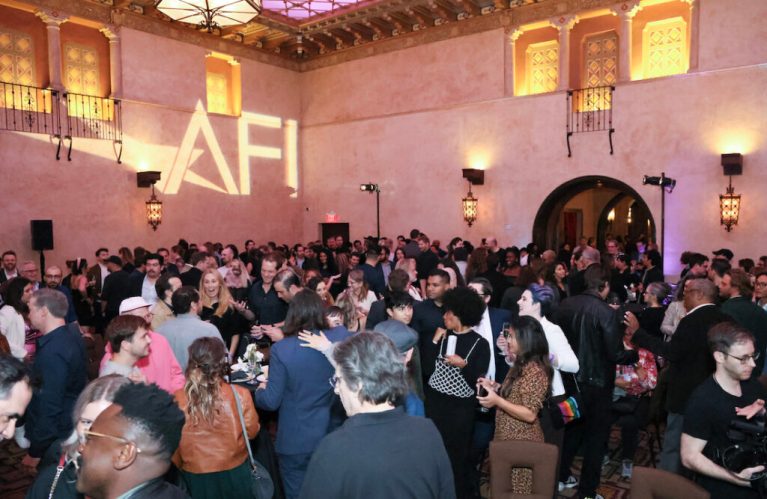
Featured photo courtesy of Rodin Eckenroth / AFI

RADU JUDE

Standard

Originally published on Ink 19 on November 2, 2023

Interview conducted by Lily and Generoso on October 26, 2023

Part satire, part documentary, part picaresque inverted road movie, part discursive essay, Do Not Expect Too Much From the End of the World collides historical and contemporary ideas and forces into a kaleidoscopic montage of Romanian society cracking up from the unwieldy pressures of capitalism. The film’s title (borrowed from poet Stanisław Jerzy Lec) and its sobering thesis are undoubtedly serious, but Radu Jude weaves a current of absurdity and humor throughout Do Not Expect Too Much From the End of the World to assemble a spectacle that fascinates, disturbs, and informs as it underscores the contradictions and complexities of living and surviving in the grave economic state of Romania today.

Jude presents two Angelas to us in his film: the titular female taxi driver from Lucian Bratu’s 1981 film, Angela Moves On, a work of neorealism from the Ceaușescu era, and the Angela of his own work, a current day production assistant driving within and across Bucharest to support her company’s latest project — a worker safety video for an Austrian furniture manufacturer. On the surface, the footage of the Angela from Bratu’s film may seem nostalgic for a simpler time in comparison to Jude’s overworked and increasingly hopeless Angela, but in his decision to slow down key points from Bratu’s film, Jude reveals the truths of reality and representation under Nicolae Ceaușescu and provides an understanding of how they influence the state of the present-day in which his Angela must operate. Ceaușescu’s reign still haunts the nation and serves as a point in time that many have collectively worked to depart far away from, but the new rulers are multinational corporations that take advantage of the lower cost of living and the shorter history of democracy in Romania and thus bring no relief to issues of exploitation, oppression, and poverty during the time of Angela Moves On.

The dual Angelas is only one key dialectical example in Do Not Expect Too Much From the End of the World. Jude’s film is completely and unapologetically composed of a multitude of contrasts: his Angela lives in our highly polarized times, and her reactions to her boss, her interactions with and descriptions of the injured factory employees she interviews for the worker safety video, her intellectual interests, and her rants as her digital foil Bóbita — a caricature of social media vulgarism at its finest (or lowest depending on your perspective) — are all products of the opposing ideas and beliefs unrelentingly surrounding her. While Angela’s experiences emerge from concerns and problems specifically in Romania, her reflections, frustrations, and motivations resonate with all of us who are trying to navigate societies pulled apart by capitalism of the 2020s where we spend more time working, with little to no promise of job stability and with any hope for the end to the grind getting pushed further beyond the boundaries of possibility.

In our lively and introspective conversation with Radu Jude, we discuss his interest in juxtapositions in his approach to cinema, the expectations of capitalism on image-making, the importance of creating a filmaic architecture, and his desire to encourage reflection before we embrace further change.

• •

GF: This week, Film at Lincoln Center showed the new restoration of Jacques Rivette’s L’Amour Fou, which is one of our favorite films of all time. Though the film centers on Racine’s Andromaque, a classical tragedy, L’Amour Fou possesses a modern energy carried by its two leads, Jean-Pierre Kalfon and Bulle Ogier, interacting with each other, their artistic circle, and the material of Andromaque itself. We watched your press conference at Locarno, and you referenced Rivette’s quote: “Cinema is not storytelling only; it is instead a descriptive essay, an art of juxtapositions and making connections.” In a sense, was Lucian Bratu’s film Angela Moves On your Andromaque as the central focus of juxtaposition?

RJ: Oh, that’s a very interesting and flattering comparison — I’ve never thought of that! Actually, to be completely honest, and I know that this is really shameful, Rivette is a recent discovery for me. Immediately after I finished shooting this film, I accidentally saw one or two films by Rivette, and I became instantly hooked, so I proceeded to see all of his films in the following two months, and I even read the book of his writings, Textes critiques. Then, all of a sudden, Rivette became very important to me in a way that no other director has been for me in the last few years. In fact, I’ll be at the Viennale to give a talk, and the only ticket that I insisted on was for L’Amour Fou because the only version that I was able to watch in the past was from a bad VHS bootleg transfer.

To get back to your question: One of the main ideas in L’Amour Fou is the juxtaposition of this contemporary story with the theater play, and now that you mention it, you are getting a degraded version (laughs) of that with my film, since I am not Rivette, and Bratu is not Racine, of course, but I think there is a common root. Rivette and I both love the idea of montage and Eisenstein and this idea of the juxtaposition of things, which can lead to the creation of new ideas, sensations, feelings, or points of entry.

So maybe, in this way, our films can meet at this idea of the montage. Storytelling in cinema usually means to simply have events or narration that advances and advances and advances, but there is also another way that is less used, which is more similar to a collage or more similar to literature of digressions or more similar even to this idea of montage in a philosophical sense of the clash of elements that creates something new that’s difficult to define. This was the idea for the whole film because it is made with elements that work with and against each other in a certain way or one after another, but not necessarily in a very logical way, but not completely illogical either, so it’s a bit in between.

LF: Do Not Expect Too Much From the End of the World is composed of masks and distortions and disillusionment. The most salient of them is, of course, Bóbita, but we see Angela morph in distinct ways in her reality that feels like different masks too: On the phone with her boss, we see an outraged and frustrated Angela when she’s on the phone with him and when she ultimately submits to his demands. We see a sympathetic, but also distant Angela when she interviews the different factory workers. We see a professional and deeply intellectual Angela when she’s driving Doris Goethe from the airport to her hotel. As you were creating Angela, how did you want to ground her in the midst of all of these masks? How much of her shape-shifting is driven by survival as compared to her own desires?

RJ: This is a complicated question. There is something here that is related to fiction films, but it is also possible to discuss it for documentaries in some cases, and that is: what is a character, and how do you define a character? Here you have many possible answers, starting with the classical example from dramaturgy and also from screenwriting, which creates the idea that a character’s role is just to perform or to exist in such a way as to advance the plot, so a character then becomes simply a pawn for the storytelling. Or, you could go in the other direction, like David Mamet, who says that characters do not exist — that in the beginning you have some words on a page, if it’s either a script or a play, and then you have an actor performing it, so there really is no character. For me, I’m somewhere in between these concepts.

Robert Bresson has a very interesting phrase in his book, Notes on the Cinematographer, where he states that the model, which is how he referred to his non-professional actors, should not play themselves, but he or she should not play a character either; in fact, he or she should play no one. I have this feeling that if we have to define the character as you say, it is a mix or a meeting between the body and the being of Ilinca Manolache, the actress. There is a lot of documentary within this character. It is herself in many ways — in more ways than one. Then, of course, it is something related to myself and to people who I have met, and there is something to the meeting of all of these elements in such a way that you can ask yourself if this character is believable as a real person or not. I think that the character is believable, but what I find a bit boring in the dramaturgy of cinema, and also in theater on many occasions, is that you have to define a character in a few lines and stick with it.

I recently saw Martin Scorsese’s Killers of the Flower Moon, and in every scene, DiCaprio speaks a bit like he’s an idiot, and he plays that very well, a bit worryingly well (laughs), but for my taste, I would have liked a moment where his character is not a complete idiot because I believe that we all have contradictions, and I am very attracted to contradictions. This is why I try to build Angela’s character in a traditional way of speaking where she can quote Proust or Faulkner and be an intellectual, but, for most of the time, she has a bullshit job. She can also be aggressive; she can be angry; she can be pragmatic, and I believe that even if a character exactly like this cannot exist in real life — but then again, who knows — I think that it remains true in a broader sense that we all contain contradictions. No one has only one, two, or three dimensions. I think that people are more complex than that, and not only complex, but also they have things that contrast with one another.

GF: You also stated in that Locarno press conference about your desire for your actors to contribute to their characters’ construction. In terms of the script, did you employ something similar to what Mike Leigh does, where he hands his actors small notes on what the scene should be about and allows them to create dialogue and react to the environment? Or were much of the dialogues and scenarios written and provided in advance? Particularly, we’re thinking about the scene where Angela is eating the massive burrito, and she gives money to a homeless man, who is then shooed away by the restaurant owner. Ilinca Manolache’s response to the owner feels unscripted.

RJ: So, firstly, I think that Mike Leigh does have a method like you describe, but I think it’s even more demanding on the actors than that; I believe he gathers his cast, then they develop the story and their characters themselves. That is Leigh’s process, and I think that’s unique, but it may have been adopted by other filmmakers.

I am not sure that I would be able to do that because I need a bit of distance to create the story or to even think about the story. Also, it depends on the type of actors that you have for your film. I don’t know about British actors, but Romanian actors, regardless of whether they are good or not very good, are not, in my humble opinion, particularly strong in improvisation. I don’t know the reason for this, perhaps it’s because of their school of acting and training, but whenever I have tried to get my actors to improvise, the results have not been satisfactory for me. I think that even Mike Leigh would have trouble making his kind of film with Romanian actors.

Finally, as far as my method, the kind of improvisation where you give an actor a scene and let them run with it just doesn’t work for me because everything that is part of the mise en scène is very important. So for instance, let’s say I am not only interested in the words that people will convey or try to convey — for me, each word is something in and of itself. For example, if someone says “phone” or “mobile phone,” for me, that difference is important. I cannot just let them say what they want, even if in some way it means the same thing. For me, every word has a special meaning, an important meaning, and I am interested in this meaning within the mise en scène, but of course, at the same time, I enjoy the contradiction that I’ve spoken about. I like the accidents that might create the scene, and so in the scene that you mentioned, with Angela and the beggar, that was staged, but we shot it in a real location with real people around, and we put the camera in a hidden place so that when surrounding actions took place, it became a mix because the way people reacted was real, since they didn’t know that we were shooting. So, I like to set up for these kinds of accidents or to rely on hazardous things, but only if I can create the kind of structure to allow these things to happen.

GF: The way you describe your approach, it reminded me of something from a conversation I had with the director Lodge Kerrigan about a film that he directed called, Keane, which we greatly admire. There are scenes in that film that took place in the Port Authority Bus Terminal in NYC, which can be an intense place. I asked him what it was like to shoot there and he explained that they rehearsed on location and shot that scene with the people who happened to be there that day in the background who were reacting naturally to the actor’s actions. I feel that style of filming added so much to that work.

RJ: I have seen Keane, this film with the man who is searching all over New York City for his lost child. It is a very strong film. That manner of shooting is effective, but it depends on the situation. Whenever you try to stabilize a film, there’s a balance you need to find: if you try to control it too much, you can suffocate it, but if you let it loose too much, you can disintegrate it too. It is difficult to know the proper dosage.

LF: In relation to that balance, you always feel chaos in the frame or lurking on the edges throughout Do Not Expect Too Much From the End of the World. But, the driving scenes of both Angelas add a stabilizing pulse to the film while also sharpening the insanity of the surrounding world because it creeps into their vehicles and is heavy on both when they leave their cars. During editing, how conscious were you in building a certain rhythm/structure with the driving scenes?

RJ: I think the film is very structured. It has a broad structure, which is very logical for me. You have the first part where you follow every step of this woman driving and doing her job in a regular workday, which is intercut with images from Lucian Bratu’s film and also with her avatar video creations. Then you have a second part, which is the next day when you see the results of her job, where the focus is on another character, so she then becomes a minor character.

To try to express how much of this is controlled and how much is chaos, it is exactly like the question of how much is fiction and how much is documentary. Because, of course, it is a fiction film, and with that, there is a lot of staging and scripted dialogue, but because we shot in the real traffic of Bucharest, that gives the film a documentary quality and a documentary sense of timing, so to speak.

You know, at some point, I thought that my film was the opposite of Cronenberg’s Cosmopolis because, in his film, you have a rich man who lives his whole life in a limousine, and in my film, you have a working class woman who strives to stay afloat, and her job forces her to live in her car, and her car becomes somewhat like the car in Cosmopolis, but in another way becomes an extension of herself. It somewhat becomes her house and her being. You see it in a realistic way, but you can also see it as a kind of metaphor about this new condition of human beings in capitalist modernity where new technology gives us different degrees of freedom, yet at the same time, it is enslaving you.

It is also an anti-road movie, especially in terms of American cinema from the 60s to the 90s in films like Easy Rider and Thelma and Louise, where the car is seen as the epitome of freedom! You hop into your car and put your “pedal to the metal,” and you race to find your freedom, but I find that in Romania, and especially here in Bucharest, which is so crowded and polluted, a car becomes a trap, and it cannot be a metaphor for freedom anymore.

LF: Yes, we lived in Los Angeles for a few years and there a car becomes not even your home, but almost a coffin.

GF: As we watched the car scenes, Abbas Kiarostami’s Ten and Jafar Panahi’s Taxi immediately came to mind. Like Angela Moves On, both of these films were created under heavy political censorship and yet reveal truths. What is the nature of censorship in the images of contemporary Angela and the factory employees? Is today’s censorship of a capitalist kind in non-totalitarian societies?

RJ: I am afraid that the question is too general for me because, when we speak of censorship, we usually mean the ugliest versions of it, like political or economic censorship. At the same time, there are things in film and really every work of art that are of an illicit nature, which I think is fine for the most part, but I would never say that a snuff film falls under the freedom of expression. For films like that, there should be censorship. So, I do believe that when we talk about censorship, we must consider what kind of censorship and in what context, and this is why I have some difficulty answering in a broad manner. I think of political correctness in the same way. I find some of the ideas normal and even good, and in other cases, I find them idiotic. With that said, if you ask me if I am for political correctness, I will respond, “I don’t know,” because I think that we have to discuss specific issues in detail one by one.

In my film, when a corporation or a private person pays for something, they want something in return. There is then this clash because we all have this belief that art has to show the truth, but when a corporation or commercial entity then dictates what the image needs to say, that creates a conflict. I’m sure that Western societies have been dealing with this kind of issue for forever, but this is something quite new in Romania. The dictatorship had a very strong and clear kind of censorship that was very brutal most of the time, but they could also be fooled on occasion, or there could also be some kind of negotiation. But now, you also have this form of economic censorship or boycotting censorship towards some product, which is an entirely different kind, and it’s quite new.

If you think of my film, it is kind of amazing that there aren’t that many Romanian films that deal with this relationship between individuals and the new gig economy, the new capitalist economy, and the new society because not many of us know how to deal with such issues.

LF: I agree that censorship is a very charged word because it prompts debate about rights to expression, and this new nature of economic censorship is more like economic requirements that financiers define and expect, and that is old here, but even though it’s old, most people still do not know how to deal with it because it is a very complex issue. And, few here have captured these economic expectations as acutely as you have.

RJ: Maybe it’s also because of what Godard used to say that people don’t like to watch people working and work problems as topics for film (laughs).

LF: And your film offers no answers. It explores all of it, and audiences, especially in the United States, want answers and the quick solution to a problem. But in today’s world, it is often unclear what we are supposed to do.

RJ: Yes, but there’s no answer because there’s no question. My purpose with this film was very modest. Getting back to the Rivette quote from earlier in this conversation, cinema has the capacity to describe, in a very broad way, but also in a very complex way with a certain language and with situations, so I tried to describe the lives of some people who are caught between personal relationships and economic relationships in a city, in a community, and in a country with this new economy. So, when people tell me that I don’t offer solutions, I respond by saying that I was simply trying to describe something.

I’ve also been asked a few times, “Does your film change something? Is the film changing people or society?” I paused a bit and thought about how to respond, and I realized that all media tries to change people. A commercial tries to change you by making you want a Pepsi instead of a Coca-Cola. A commercial for a political candidate tries to get you to vote for someone and not for another. I then thought that if my film tries anything, it tries to get people not to change or, at least, to wait a few minutes and reflect on things before changing opinions. I am happy because my films are not trying to change the world; on the contrary, they are trying to get you not to change because things are changing too rapidly.

GF: We felt the same way about your film as we did the third part of Miguel Gomes’ Arabian Nights, “The Enchanted One,” where he shows the bird trappers who are trying to teach the birds songs for a competition. He brilliantly gives you the first two parts where he shows the effects of a world that is rapidly changing, and then by showing these trappers, he shows a community where people can slow everything back down.

GF: You were recently quoted as saying that your “films are becoming more and more amateurish.” We love the urgency in what you’re doing now, but we also love your earlier films Aferim! and Scarred Hearts, which were more formalist in nature. Do you see such formalism as out of place given the pace of change in the world and the state of filmmaking in general?

RJ: There is a mix here. It is mostly due to some personal inclinations, with a certain number of years that have passed over me, but also with the fact that with the cinema of today — and here I can only speak more towards European cinema because I am closer to it than to American cinema — is more and more standardized from many points of view. From storytelling to technical aspects, all points of view in the filmmaking process are more standardized to make what is called “official cinema.” There are all of these workshops these days where you go with a project and you meet experts — experts who tell you to cut your film in a certain way. Then, you go to a lab like Sundance, and they tell you something else that you can do, which can be a good thing, and I’m not against those things per se, but I get the impression now that the wilder things are being cut out in order to make a very rounded work. And so, perhaps because I am fed up with this, little by little, I started to develop a taste for making trashy or unfinished things, which, of course, is not something very new. I think that there was always a kind of tension or dialectic between these kinds of elements.

Look at the 1960s, for example. You still had these great Hollywood films, and at the same time, you had Warhol’s films. You also already saw a strong rise of independent cinema like Cassavetes, and then you also had the films of Jonas Mekas. In the 1970s, you had films like The GodfatherStar Wars, and Apocalypse Now, but you also had these small diary films from the avant-garde.

So, I am more and more interested in learning from underground cinema, and I have always felt that there were dialogues between all of these people who seem to support only one type of cinema and who we falsely assume don’t want to see any other type of cinema. I recently read that David Fincher’s Seven had credits inspired by the films of Stan Brakhage. Of course, you can criticize Fincher for that because he takes these very strong aesthetics and uses them for these credits, but to me, it is evidence that there is always a dialogue between types of cinema. And you can see the alternative in a Warhol film where he incorporated Hollywood themes, like how he utilized the idea of a “superstar.”

I am interested in trying to find myself or to be myself with my work, making a dialogue between the history of cinema, literature, and internet cinema, like TikTok videos, and trying to not see them through their specificity, not be judgmental of them, and trying to see that they are all part of the same kingdom of cinema, so to speak.

LF: As you describe this, I am oddly reminded of a quote from Alain Robbe-Grillet in his essays on the new novel: “There would be a present world and a real world; the first would be the only visible one, the second the only important one. The novelist’s role would be that of an intercessor: by a fake description of visible things — themselves entirely futile — he would evoke the “reality” hidden behind.”

RJ: I have not read Alain Robbe-Grillet’s writings yet, but that is beautiful. It is like the quote, “Cinema tries to film the invisible.”

LF: As a filmmaker, in your current shift away from the structures of your films like Aferim! and Scarred Hearts, are you more in pursuit of that kind of invisible in a conscious sense?

RJ: That is difficult to say, as I don’t know myself that well. I would say something different. In my narrative films, I am interested in two things, which are of course connected. One of them is storytelling, and the other is montage. By storytelling, I mean the structure of the story of the film is extremely important to me. It’s part of the film itself, and I am strongly interested in researching and finding structures that maybe aren’t completely original, but are also not very traditional. Not for the sole reason that I do not want to make a traditional film, but firstly, because I may not able to do it, or I get bored making something traditional — I’m not sure which one — and secondly, I think that the architecture, the structure of the work, is maybe the most important element, which I think is the case more in literature and music than in cinema.

When you read Ulysses by James Joyce or a Faulkner book, the structure of that novel is unique or extremely powerful, not only the story and not only the characters. So, I think that this is what I am most after. I am very fond of John Dos Passos because of his U.S.A. trilogy, which has great narration and storytelling. It has not only political and social elements, but also documentary cuts from newspapers, biographies of politicians, historical characters, and interior monologues. All are put together in these books, and it works! But today, if you made a film like that, it would be labeled as experimental cinema, but I don’t agree, as I feel that that is real storytelling.

LF: Your more recent films contain possibly some transgressive moments in them. With Bad Luck Banging or Loony Porn, there’s the explicit opening sex scene, and with Do Not Expect Too Much From the End of the World, there are some very base elements in Bóbita’s dialogues and Angela’s sex scene in her car. Aferim! has some intense violence that may be considered as transgressive as well. These elements are aligned with traditional definitions of the transgressive. But, where I see your films emerging as incredibly different and beyond what is usually expected, and perhaps accepted, is this mix of high culture and low culture, with things that are very base and mixed with high philosophy. Do you see that blending that you achieved here as a new kind of transgressive cinema?

RJ: You know I saw this word for the first time, “transgressive,” in Tarantino’s book, Cinema Speculation, where he writes that the most transgressive films were those from Abel Ferrara and Paul Verhoeven. But what does this word really mean, though?

LF: It is connotated with its extremeness of subject, and so quite often, transgressive cinema will touch on topics that are, for lack of a better word, unsavory. Nasty sexual deviation, very intense violence, that I wouldn’t say is necessarily cruel or gratuitous, because it is actually grounded in something ugly and real. It is these extreme elements or topics that dive a little deeper into the id of us as humans.

GF: As far as cinema, the New French Extremity films of the late 90s and 2000s, like Catherine Breillat’s Anatomy of Hell and Gaspar Noé’s I Stand Alone, are good examples of the kind of films that could easily be labeled as transgressive.

RJ: Well, I’m not sure then, because if you think of Gaspar Noé and the Extremity film movement, I wouldn’t see myself as that extreme. I would say that I am not very attracted to this idea, in that I would never attempt to do a violent scene or a hardcore sex scene just to be transgressive. For example, in Bad Luck Banging or Loony Porn, I was amazed that people were disgusted by the sex scene at the beginning of the film. Perhaps because they expected it to be an auteur or arthouse film.

When I conceived that scene, I said that I wanted to do the most banal sex scene ever — nothing spicy and not transgressive, as you say. I thought that a banal sex scene would better serve that story and the moral problem that was the issue at hand or the issue of hypocrisy. I also wanted the characters to not have a sex life that was spectacular, like in real amateur porn videos where the sex looks so very sad. You know, just a quick fuck on a Friday night! That’s why it surprised me when people commented that the scene was shocking or transgressive. As you said, Generoso, Gaspar Noé, sure, he’s transgressive in his approach, but not me, no.

So, as far as this mix between highbrow and lowbrow, I am interested in it, of course, but I believe that it is not necessarily a transgressive quality; instead, I think that this is the most important facet of the culture since modern times. There is a book entitled High and Low: Modern Art and Popular Culture by Kirk Varnedoe and Adam Gopnik. It is about how Modernist art was inspired by low forms like commercials, journalism, typography, or caricature, and I found that book and the examples in it to be very good in showing that despite the differences between what is considered high and what is considered low, there can still be a mutual influence between these elements. I strongly believe that you cannot put them both on the same level, but in your mind, you can be inspired by James Joyce and a newspaper comic strip or by Bach and a cartoon or a caricature from Charlie Hebdo or The New Yorker or by a Jacques Rivette film itself. ◼

This interview was edited for length and clarity. Featured photo by Silviu Ghetie, courtesy of 4ProofFilm4.

https://heretic.gr/film/do-not-expect-too-much-from-the-end-of-the-world/