
Originally published on Ink19 on October 21, 2024
Interview conducted by Lily and Generoso on October 14, 2024
With his previous feature, the hybrid documentary, The Tree House (Nhà cây), director Trương Minh Quý presented his keen essayistic approach to the history of Vietnam by weaving his reflections on home and memory with the stories of members of the Ruc, Kor, and Jarai people, ethnic minorities who have all experienced displacement in the decades after the Vietnam War. The Tree House established Trương as a distinctive voice in Southeast Asia: his cinema examined and challenged the subjectivity and objectivity of the viewer, filmmaker, and documentary subject, all while discussing impacts of the Vietnam War that were lesser known to the West. Trương cleverly sidestepped Western assumptions and charged emotions around the contentious war and instead used it as a common historical reference point to ask broader questions around the forces that shape our attachment to houses and the concept of home.
For his third full-length film and first fiction feature, Việt and Nam, Trương includes the Vietnam War again, but layers on conventions of slow cinema from Tsai Ming-liang and Apichatpong Weerasethakul as well as portrayals of Vietnam in American movies and counterpoints all of these cinematic expectations of Southeast Asia with documentary-like footage of work and home life, elements of classical cinema such as cross-cutting, and meticulously composed shots in various natural settings that manage to take the viewer somewhere far beyond our Earth — all in order to delve further into the history of Vietnam from after the war to the early 2000s and its influence on familial and romantic relationships and the reality of the future. The two titular characters of Việt and Nam form the center of the film’s cosmos: they work together in a coal mine and are lovers as well as each other’s closest friend. Vietnam’s past and recent history collide into their lives via Nam’s mother, who is searching for the body of her husband who was a soldier killed in the war, and through Nam’s preparations to embark on a treacherous migration out of Vietnam, a common but dangerous practice for many Vietnamese seeking better lives and opportunities abroad.
With Việt and Nam, Trương shows us how to sculpt the symbolic and historical weight of every image, every element of cinema into a philosophical yet emotionally striking kind of filmmaking that is entirely his own. After reviewing The Tree House in 2019, we could not wait to see what Trương would do next, and Việt and Nam went beyond our hopes. Thus, when we had the opportunity to speak with Trương in advance of the screening of Việt and Nam at this year’s AFI Fest, we were delighted to talk to the director about his images of Vietnam, his continued interest in the meanings of physical spaces, and his thoughtful manipulations of cinematic grammar to entwine a story of love with the forces of history, time, and place to form an urgent rumination on collective memories and their role in our interpretations of the present and our projections of the future.
• •
LF: For us, Việt and Nam and The Tree House are interpretations of history via landscape. The Tree House was focused on life above the ground level of Earth in various elevations, be it in caves in mountain sides, trees/tree houses, or the highlands. On the other hand, Việt and Nam was about digging into the earth in shallow (when making clay, when looking for the bodies of martyrs) and deep ways (the coal mine). How conscious were you of this difference? After The Tree House, was it important to make a film in the opposite orientation to the surface of Earth?
TMQ: I wasn’t intentionally thinking like that, but now that you’ve mentioned it, I’d like to consider this for a moment. In The Tree House, we see the duality of everything we think of as a house: the normal house and the tree house, but we also have a house for the dead, which is the negative of a normal house. Việt and Nam also begins with a feeling of home, but it’s more like a feeling of homelessness. In The Tree House, we see the physical home, but then as the film goes on, we understand that the film is trying to say something about the memories of the childhood home, which was lost by the characters in the film and by everyone at some point.
Also, Việt and Nam is somewhat set in the present, which is juxtaposed against The Tree House where everyone is concerned with the past and the home that they have lost. In Việt and Nam, we witness Nam, his mother, and their surrounding community residing in their homes in a present timeline, although they still are concerned about the past while living there. As Nam gets ready for the future, we get the impression that his home will become a part of his past because he will be homeless once he departs from his home and country.
In regards to the difference between the surface and underground, it is true that in Việt and Nam we can see that the underground space is very present and occupied visually and emotionally. I’ve noticed that what audiences remember most about the film is the darkness of the underground. My choice of the underground is based on the narrative of living inside and traveling into the Earth not only to search for material, but also to search for the spiritual in a way because there is also a search for a father, and in that sense, the underground becomes a space of the past. We see Nam and Việt and all of the miners, traverse vertically to search for something created by the past, and this becomes a parallel construct to the search for history occurring as the two main characters venture with Nam’s mother to look for Nam’s father’s body.
GF: You ended The Tree House with a quote from Gaston Bachelard’s The Poetics of Space, which we understand was a huge influence for that film. Bachelard focuses on home as the center of the universe, and home as the original, the primordial cave. The Tree House is a direct engagement with this concept, whereas Việt and Nam is a more poetic interpretation and expansion on this concept. Were you regularly revisiting Bachelard in the making of Việt and Nam?
TMQ: I wasn’t doing so consciously, but I believe that his philosophy was certainly there in the back of my mind while making my film. Starting with The Tree House and Gaston Bachelard’s ideas of a house as a place where we store our memories because a house becomes a home when there are memories, and as memories need a physical space, we thought that we could expand this concept beyond a house to a river, a town, or a country. Thus, in spite of the fact that Việt and Nam has no direct connection to Bachelard’s philosophy, it nevertheless plays a significant role in the movie.
For me, when I shot some scenes, like the scene where Nam is in bed with his mother with the darkness around them, and you see the mirror and hear the rain, all of these sensations are an attempt to create a feeling of home, and yes, it is also true that I concentrate on geographies, or should I say locations, because I need to know a place to get a feeling from it so that I can build a story. Most of the locations we used in Việt and Nam are real locations, like the house of Nam and his mother. Their house, for example, looks exactly like that in reality, and we didn’t do anything to change it. In our process, there is first a layer of documenting a real place. We go out and try to find a place with certain memories inherent in that place, and then we add a layer of fiction. But, we try not to interpret or manipulate the reality, the truth that lies in the documentary foundation.
GF: What is incredibly impressive about your films thus far is their ability to capture Vietnam’s landscape and show how elements of it, especially away from the cities, are completely unique. And yet, in these places, due to history, politics, economics, and other external forces, one’s home is no longer felt even despite being born there. The Vietnam that you present is almost its own planet, alien to the west, alien sometimes to even its own inhabitants. How do you exhibit this feeling of Vietnam as this mysterious planet while avoiding a sense of exoticization?
TMQ: It’s very interesting to think about this point. The answer to this question lies in the distance between the filmmaker and Vietnam or elsewhere. When I start to think about a film, I’m thinking more in cinematic terms like how to transfer feelings and all of the values of cinema through the shot and the mise en scène, as well as the texture of the image, and when I think of these things, I’m not thinking about Vietnam. I suppose that it is different for other filmmakers from America. When they make films about Vietnam, everything for them has to have the adjective “Vietnamese” in front of it. Perhaps they fear that they cannot capture Vietnameseness accurately, so their film becomes exotic. In my case, I discussed with my DP how to avoid that feeling of exoticness. I, of course, did not want to have any feeling of exoticness in my film, but in some situations, I could have fallen into that trap.
However, there is one shot in Việt and Nam where I intentionally tried to make it look like a shot of a Vietnamese landscape that you would see in an Oliver Stone film. It is the first shot of the second half of the film — the one of the rice field. It’s almost like a postcard. I used that shot to play with the expectations of the audience. That is the first time where they really see a landscape in the film, and when they see it, they immediately register that it is a kind of Vietnamese landscape that they’ve seen before. The only thing that is not in the shot is a buffalo (laughs)!
LF: Speaking of expectations, the techniques of slow cinema typically evoke a feeling of meditation that leads to introspection. But, in your film, the conventions feel like they boil up to a great mourning and a touch of anger for the loss of youth and vitality. How important was it for you to play around with expectations of slow cinema, which have been heavily attributed to films from Southeast Asia for the past couple of decades?
TMQ: I’ve seen that many of the reviews of my film compare it to the films of Apichatpong Weerasethakul. From the outside, I think that is rightly so, as there is a certain inspiration, but for most of the reviewers, I felt that this comparison is the end and not the beginning. That comparison stopped them from digging deeper into Việt and Nam because, if they did, they could see that this is the least Apichatpong-esque film that I have made (laughs)!
When we look at slow cinema in the vein of directors like Apichatpong and Tsai ming-liang, we can see that their films are more conceptual than mine. They have this conceptual feel and lightness about them that is about a certain spirit of loneliness and memory, for example, but in my film, I’m constantly trying to balance the heaviness of history in the documentary components with the fictional narrative, so you can sense that my film, in fact, is not so light in terms of concept and feeling. Instead, it tries to operate in a direct way with some scenes appearing as documentary, but then it slowly tries to reach for something more transcendent as evidenced in the ending shot. That is how I approach the fictional narrative side: I don’t ignore the weight of the documentary, but rather I try to combine both and connect them with the other aspects of the film.
In terms of expectation, I think it’s true that people may think that Việt and Nam is a work of slow cinema, but it is, in fact, about the grammar of cinema. I chose to use multiple techniques of editing to create a certain mood and response, so this film moves in an unexpected way in terms of form and style. For example, the film editing method changes during the scene in the barbershop and in the birthday sequence you see later in the film. They are both edited in a very conventional way with a lot of closeups and short-cut shots. There are even some shots that last only a few seconds, which is a total contradiction to the shots that last three or four minutes. During these two scenes, I wanted to evoke a more romantic connection between the two titular characters, so I needed a more dynamic editing approach. To sum up, I didn’t commit my film to a certain aesthetic, such as slow cinema. But rather, I wanted to deliberately use different devices of cinematic language to create certain moods, and as a result, my film is not aesthetically uniform by choice.
LF: When looking closer at the layers of possible meaning in the minute details of your film, we started to wonder about your selection of Hoa as the name for Nam’s mother. Hoa is a very common female name, but Hoa is also an important word in relation to the term, “Người Hoa,” Vietnamese people of Chinese ancestry. Many Người Hoa were persecuted before, during, and after the war. Consequently, this is also a group that has complicated relationships with the idea of Vietnam as home. Was this an important reason behind Mrs. Hoa’s name, or was it a mere coincidence?
TMQ: No, I actually didn’t use the name Hoa for that purpose. It is a very popular name for women, which is why I used it in the film, but to speak to your point, there are many facets to my film that audiences interpret in different manners. They see many points, many dialogues, even the names of the characters, and feel that these things have meanings that end up being very different from my intentions. I can’t control this, as the film has the space to leave things up for personal interpretation. One of the most problematic of these interpretations — and I say problematic because the interpretation is far from my intention, not because it’s a problem for me — is the one surrounding the accents of Việt and Nam that are made by Vietnamese viewers of the film who notice that one actor speaks in a Northern accent and the other actor speaks in a Southern accent.
For the Vietnamese audiences of my film, they think that there is a symbolic purpose for the actors to speak in different accents, but the reality is that when I was casting the project, I wanted to have two actors who spoke in a North Vietnamese accent, but, as I’m sure you know, the process of filmmaking is rife with accidents, so you end up working with whatever you have. Due to circumstances beyond my control, we cast one actor from Hanoi and the other from Nha Trang, and I wasn’t going to avoid casting him just because he was from the South — that would not be right. At one point, I even considered dubbing his voice so he would have a Northern accent, which would have also been more narratively coherent, but truthfully, I didn’t care about this difference. However, when Vietnamese people eventually saw the film, they took that difference as having a symbolic and political meaning that changed the weight of what I intended for them. For international audiences, the difference in accents had no impact.
GF: We understand that Nam’s aunt, his bác gái, is economically more successful than his mother, as her son has left Vietnam, settled, and is able to send back money, but she also mentioned that she and her family were previously miners. You don’t mention much about how she was able to ascend. Was there something specifically that happened in the early 2000s that led to more economic gains for people like bác gái?
TMQ: My inspiration for the character of bác gái and her house came from a village in the central north of Vietnam, in the province of Hà Tĩnh. The village is so famous that it is called “Immigrant Village” due to the fact that most of the young people who own homes there live overseas and send money back. In that village, like you see in the film, there are many large houses that are mostly empty and usually occupied by only grandparents who take care of their grandchildren while the parents work and live outside of Vietnam. It is a sad and, frankly, absurd situation, but those houses are mostly purchased as investments by these young people so that they can eventually come back to Vietnam for their retirement and enjoy the results of their hard work.
This primarily happens in provincial areas, but I feel that it was more popular in the past than it is now. Of course, there are many Vietnamese people who still work overseas, but it is much easier to travel now than it used to be, and politically, it is definitely more open these days for people to go to and from Vietnam.
For the character of bác gái, do you remember the long red string candy that she gives Nam in the film? It’s a funny detail, but it is based on personal experience, as I had this neighbor when I was a kid whom my brothers and I used to spend time with given that all of her daughters had been living overseas for a very long time. She would have that red candy, and she gave me a string of it once when I was little, and somehow it has forever been lodged in my memory — this flavor of foreign candy — so I had to put it in my film! (laughs)
GF: I have to ask, did your neighbor also keep that red candy in the shrine in her home as bác gái does in your film? We both found that a bit of a curiosity.
TMQ: That shrine, that little house, is very popular in North Vietnam. People usually put them in front of their houses or on their terraces. I originally didn’t have these little houses in mind at the very beginning of my project, but as I began to create the skeleton of my film, I noticed that many of the houses had them. Additionally, the actress who plays bác gái in real life is a bit spooky, as she used to work as a medium. Early on, she told me that besides working as an actress, she was once paid to help some get rid of ghosts! I found that conversation funny, but it also gave me this feeling of the spiritual, and so I combined the earlier memory of the candy with the little house shrine.
LF: Some of the most important scenes in Việt and Nam for me personally were the ones with the medium/psychic. To be honest, I’ve been frustrated with how mediums are used in our culture to over fixate on the past. I may be projecting, but in the scenes with the medium in your film, I felt a similar frustration: people are spending money they don’t have and a lot of time to hire and work with this medium to find people who are ultimately gone, and in turn, they are not looking at what’s in front of them: the young who are leaving, the young who don’t have a future. Can you touch upon your inclusion of the scenes with the medium?
TMQ: I think it’s paradoxical. A lot of people think that if you believe in some guide like a medium or a monk, then you can attain a spiritual life. I think that most people feel this way out of fear and redemption, though not in the Catholic sense. In my opinion, Vietnamese society is religious, though it is beyond a specific religion, as this medium doesn’t ascribe to any religion. It is more of a spiritual thing. If you ask the average person on the street in Vietnam if they believe in the spiritual, they will say yes, or they won’t say anything at all about it. It’s rare that someone will flat out say that they do not believe. I suspect that they are afraid that if they admit that they don’t believe, they will be punished somehow, and that’s why they would rather admit to a spiritual belief or just not talk about it at all.
That said, this spirituality can be a helpful way for people to express their emotions and to deal with their own guilt, even though this guilt is in no way a product of something they did. For example, if your grandfather died and his body is in a forest somewhere, you feel some amount of guilt if you don’t make a real effort to bring his body home. This comes from an instilled sense of familial obligation and duty.
Hence, in my film, you can view the medium as some sort of scammer or fraud, a bit theatrical and even a bit crazy, but many people in Vietnam don’t take this viewpoint, especially people who have had the experience of hiring a medium and taking a similar journey to search for the remains of their loved ones. For these people, this scene with the medium is very realistic, and thus, there are multiple ways of looking at it, but for me, I didn’t want the film to definitively state if she was a scammer or an actual psychic because that fact is less important than why people depend on the medium and the solace that the medium can bring. In the last shot with the daughter of the soldier, she becomes so emotional that she embraces the coffin with the supposed remains of her father inside. What is inside the coffin could be fake or could be real, but regardless of the contents therein, the emotion she expresses is real. In that sense, the medium’s discovery of the body is helpful for the family, as they need to have something physical, something concrete to worship, to bring back to their hometown, and then to move on with their own lives.
In the end, if you look at it in a philosophical manner, the materials of the body have disintegrated over time, and the fragments of bone can’t be differentiated from a rock, and so you cannot concretely say that this matter you found was in fact your father. By this point, there’s not much of a difference between a piece of soil that you claim belonged to your father’s physical form and an actual piece of your father’s remains; the body has become something else entirely, so this discovery and recovery process becomes only important for the living.
LF: Though we understand that your film is not a direct response to the lorry tragedy in the UK in 2019, we’re curious as to your use of water throughout the film because it’s noticeably present in scenes involving migration or states of change. In many ways, water operates in stark contrast to the cosmic and eternal coal mine setting of Việt and Nam’s intimate moments. Given the past connotation of water as a method of escape post-war, how did the early 2000s in Vietnam shape your approach to the role of water in your film?
TMQ: It’s true that we can form a link between my film and the tragedy that occurred with the Vietnamese migrants who died in the storage container in the UK in 2019, but my film is not about that event specifically. People can make that association, and it’s fine, but that was not my actual intention. What is important for me is for people to see the film through the perspective of time, given that the film is set in 2001 and not 2019. People will ask why this is the case. I chose to set the film in 2001 on the account of the narrative demanding it, as 2001 was not too long after the Vietnam War, but, in addition, by bringing the container event to the past, I could create some distance from it and maybe bring some sense of consolation. For me, it was purely an emotional choice.
As for water, of course, Vietnamese people have many different connections to water as it is such a part of everyday life. We see a lot of rain in the film simply because of my memories of my hometown located in the Central Highlands, as every year there are several months of heavy rain. The memory of those rains, especially the sound of rain hitting the roof at night, gives me a sensation of home, so in my film you can see and hear the rain vividly.
But, water is also a force of destruction. This is part of our mythology in Vietnam, as we are all taught this legend of the battle between the water and land during immemorial times. And we just cannot escape the interpretation of the sea not as the sea itself but rather as a path to a destination beyond: when some people see the sea, they don’t see the water, but only the destination that lies on the other side, and for them, the sea then simply becomes something they have to cross.
This all raises points around how the image itself already has so many meanings and how to try to escape those meanings. Personally, the reception of this film has been odd, as many people see it as very political and symbolic on the outside. But, the moments and details I selected to include in the film, such as the lullaby about the stork that Mrs. Hoa sings to Nam, came from a real emotion that I wanted to draw out. The lullaby mentions water, but I didn’t think about its relation to water’s symbolic meaning when I put it in the film. For me, everything starts with a feeling, and I try to say something about that feeling using cinematic language. Of course, the interpretation becomes much more than what I have within my own mind.
Case in point, the ending, which has the story about the watermelon, has taken on a life I did not expect. I had the idea to use the watermelon story long before the current conflict in Gaza, but when we were in the process of editing the scene, the war in Gaza had begun, so now, when people see the scene, it takes on a different meaning due to people using watermelons as a symbol for Palestine during the protests to the conflict. I never had a specific political intention with that scene, but now I see that some interpret it as relating to the war in Gaza. It’s been strange and fascinating to see how elements of Việt and Nam have taken on new and unintended meanings over time as different audiences view the film.
Việt and Nam screens at AFI Fest this Saturday, October 26, at 2 pm.
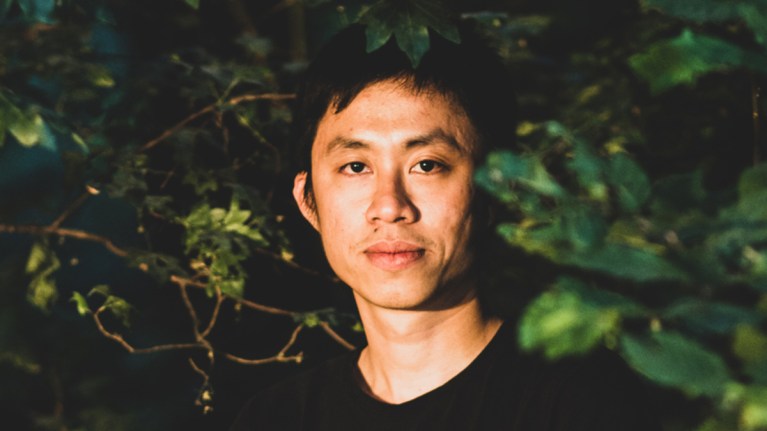
This interview was edited for length and clarity. Featured photo by Daniel Seiffert.
 LILY & GENEROSO 4EVER!