Bovine Ska and Rocksteady 7/14/15: Derrick Morgan’s Hop Label

Standard
hop label A

An early rocksteady hit for the Hop Label

Hello Bovine Ska and Rocksteady Listeners!

This past week Lily and I started off with two sets of rare ska, beginning with Larry Lawrence side on Beverley’s called “Garden Of Eden.”  We ended that first set with a very early cut from The Sensations entitled “Juvenile Delinquent” that they recorded for Treasure Isle in 1966.  Our mento set started off with Lord Power taking a mento classic and converting it into an advert for “Special Amber Calypso.” We ended the first hour with a six song set of rocksteady, ending with the great Roy Panton and The Cabeleros performing “Control Your Temper.”  We then dove right into our spotlight of Derrick Morgan’s Hop Label….

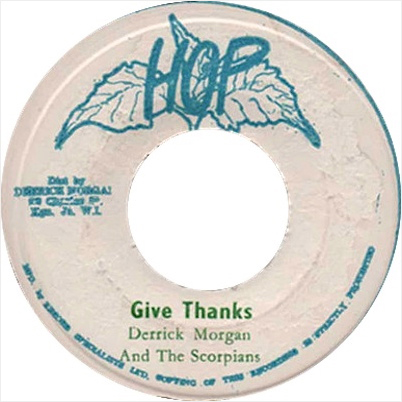
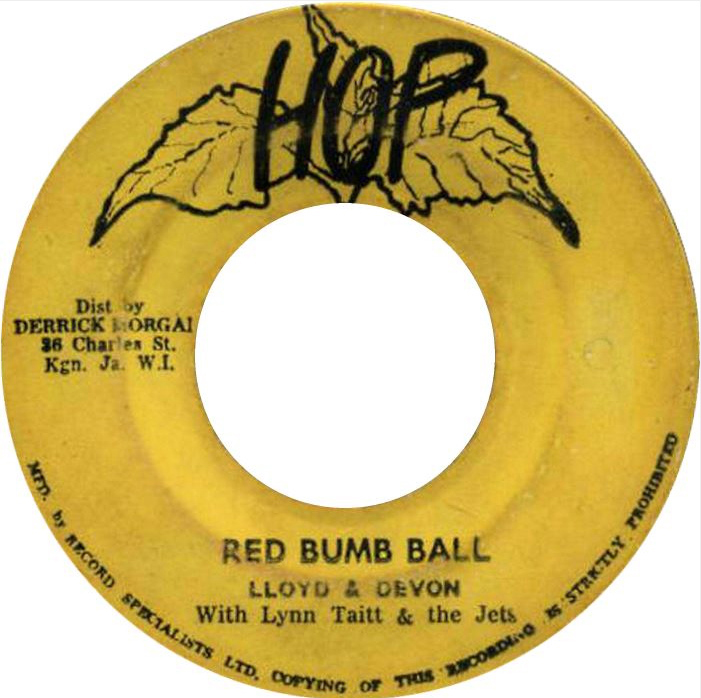
Known as one of the first superstars of Jamaican music, we know Derrick Morgan as a star singer. After recording for Duke Reid, Prince Buster, Coxone Dodd, and Simeon Smith in Jamaica and Emil Shalit in England, Derrick  Morgan arrived at the Beverley’s label. At Beverley’s, Derrick not only sang for Leslie Kong but also ran auditions, discovering Bob Marley, Desmond Dekker, and The Maytals. Furthermore, he ran rehearsals with singers before they recorded, and he also began producing records for Beverley’s as well. Consequently, Derrick was more than prepared to run his own label. So, when ska transitioned into rocksteady, Derrick opened his Hop label, named after his ska hit,under the pseudonym Seymour Morgan and backed by the mighty talent of Lynn Taitt and The Jets as the house band. The first release on the Hop label, Lloyd & Devon’s Red Bum Ball, was a huge hit, and as a result, Derrick continued on with his Hop label. We started off this spotlight on Hop with this first release and hit for Morgan’s label.

In these early tracks, you’ll hear Lynn Taitt on guitar. With Hop productions, Lynn and Derrick worked very collaboratively, with Lynn composing the guitar and bass line and Derrick arranging the vocals. The two worked closely from 1966 up until 1968, when Derrick Morgan moved to England for a second time to produce records for Pama’s Crab subsidiary. After about a year in England, Derrick returned to Jamaica, and picked back up on his Hop releases, recording in reggae, now that rocksteady had fully transitioned into reggae. We then focused the spotlight on rare Hop reggae releases before playing our favorite cut from the label.

This show is available for you to listen on Mixcloud, right HERE! https://www.mixcloud.com/bovineska/generoso-and-lilys-bovine-ska-and-rocksteady-7-14-15/

Join us on Facebook to find out about future spotlights, Jamaican shows of interest in the So. Cal area and more!
https://www.facebook.com/groups/175321709220304/
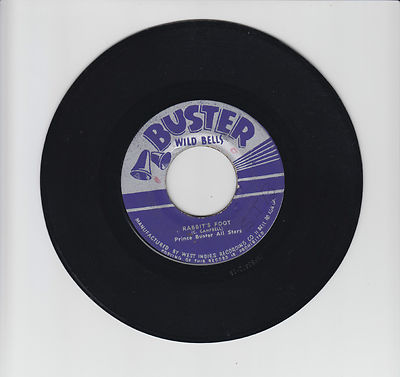
Bovine Ska and Rocksteady 7/7/15: Prince Buster’s Wild Bells Label

Standard
wild bells 2

A great Gabbidon cut on Buster’s Wild Bells Label


This week (July 7th) on Generoso and Lily’s Bovine Ska and Rocksteady, we started off with a version to version to version extravaganza from Phil Pratt’s Sun Shot Label.  We began the second set again with another version to version from Derrick Harriott and the late DJ Scotty, then our bouncy mento set before a long set of early Jamaican rhythm and blues that featured an early Jimmy Cliff side from Leslie Kong’s Beverley’s label called “You Are Never Too Old” to set up the spotlight on Prince Buster’s Wild Bells label.

Born as Cecil Bustamente Campbell, Prince Buster has one of my all time favorite stories about his entry into the music industry. After living with his grandmother in rural Jamaica as a boy, Buster gained an interest in music after singing in churches. Consequently, as a teenager, when he lived on Orange Street, he naturally became attracted to the soundsystem culture, particularly with Tom the Great Sebastian’s soundsystem. As soundsystems further emerged and began to compete against each other, particularly the big two, Coxone Dodd’s and Duke Reid’s, Prince Buster and his crew aligned himself with Coxone, whose soundsystem was more of an underdog in comparison to Duke’s, to provide Coxone’s dances with security. As he stuck around Coxone, Buster learned enough about running a soundsystem that he created his own, which he called Voice of the People. With his soundsystem up and ready for records, Buster was ready to begin recording his own singles, but originally before he could get to producing music for his soundsystem alone, he was asked by Duke Reid to produce records for him. Buster ended up recording 12 tracks at Feral studios, and he gave one to Duke Reid, leaving the rest to be pressed on his own Wild Bells label, which we highlighted this epsiode, beginning with Buster’s very first track as a vocalist, Little Honey, which was released in 1961.

Buster’s Group, the backing band for the Wild Bells label,  included members of the future renowned Skatalites band. On drums and percussion was Arkland Parks, better known as Drumbago. On tenor sax was Dennis Ska Campbell. On guitar was Jah Jerry Haynes. On trombone was Rico Rodriguez, and on tenor sax as well was Val Bennett

If you would like to listen to the show, it is HERE!

Please subscribe to our show, its FREE!: https://www.mixcloud.com/bovineska/

Join us on Facebook to know what our future spotlight will be, shows and record shops of Jamaican interest in the Southern California area, and the occasional posting of a rare photo or side:

https://www.facebook.com/groups/175321709220304/

Love,

Lily and Generoso


Bovine Ska and Rocksteady 6/30/15: Keith and Tex Interview and Spotlight

Standard
Keith and Tex and Generoso and Lily

Keith and Tex with Lily and Generoso June 28th, 2015

While living in Los Angeles these last two months, Lily and I have picked up some amazing vinyl and been the beneficiary of some truly great shows of the Jamaican oldies variety.  This week, after seeing Keith and Tex wow a crowd at Don The Beachcomber in Huntington Beach, we had the opportunity to get an interview with the dynamic duo of Derrick Harriott’s Crystal/Move and Groove Label.  That interview, along with a few selected cuts would be our spotlight for this week’s (June 30th, 2015) episode of the Bovine Ska and Rocksteady.

Before we got to the interview and music spotlight on Keith and Tex, we started off the program with two sets of red hot ska starting with one of our favorite ska-era cuts from Toots and The Maytals entitled “Peggy,” a fun record from BMN in 1965 that begins with some snappy guitar riffs.  After our mento set, we went version to version crazy, beginning with the Lee Perry produced Untouchables track, “Confusion” from 1970 and it’s version from Val Bennett and The Upsetters, “Big John Wayne.” After Ken Boothe’s sublime 1969 record, “Just Another Girl” and The Rudies 1970 classic, “The Split,” it was on to the Keith and Tex spot.

We learned much from our interview with Keith and Tex, especially their writing technique from now and then, their output for Derrick Harriott, and their feelings for Lynn Taitt, who played on many of their finest recordings from back in the day, including the iconic riffs present in their biggest and perennially covered classic, “Stop That Train.”  Thanks to Keith and Tex for taking the time out to speak with us.  Lovely gentlemen that you should see as they are currently on tour. And also thanks to Keith and Tex ‘s manager, Nathan Ranking, for setting up the interview on such short notice.

Check out the show for yourself HERE and do subscribe to our FREE podcast at: https://www.mixcloud.com/bovineska/

To find out about uncoming spotlights, shows and record shops in the So. Cal area, join us on Facebook at:

https://www.facebook.com/groups/175321709220304/
Our podcast is posted every Tuesday evening at 9PM (EST) midnight (PST)


Bovine Ska and Rocksteady 6/23/15: The Torpedo Label

Standard
torpedo B

A fine cut on Briscoe’s Torpedo Label


So, after last week’s misfire with Mixcloud (it sadly seems that the limit for tracks from a single artist is four) we decided to turn our attention this week to the thunderous and at times daffy early reggae sounds of England’s Torpedo Label.  That of course started at the midway point of the podcast.  We began the show with two sumptuous sets of rocksteady, beginning with a rare cut from Merritone that you must hear called “Fountain Bliss.”  After a mento set that featured a Lord Fly composition called “Mabel.”  After a long a frenzied ska set, we went right into our spotlight of the Torpedo Label.

Lambert Briscoe ran the Hot Rod sound system in Brixton, and from the popularity of his soundsystem, emerged the Torpedo record label, which was founded by Briscoe and Eddy Grant, yes the same Eddy Grant of The Equals and eventually Electric Avenue fame. Torpedo was founded in 1970 and was short lived; it folded in the same year but was eventually revived for a stint 1974. As a result of this, we will split this spotlight according to the birth year and the rebirth year of Torpedo, beginning with the very first single released on the label, Pussy Got Nine Life by the Hot Rod All Stars, the Torpedo label’s house band, consisting of Ardley White, Danny Smith, Earl Dunn, and Sonny Binns. Originally known as The Rudies, they were renamed after Lambert Briscoe’s soundsystem as the Hot Rod All Stars, and somewhere between the transformation from The Rudies to the Hot Rod All Stars, the group also spurred off and developed into The Cimarons, who would become the pre-eminent backing band for the English reggae scene. In addition to Lambert Briscoe himself, Larry Lawrence also produced for the Torpedo label, most notably, he was the producer of Errol English’s cover of The Small Faces, Sha La La La Lee.
With 1970 marking the height of the skinhead reggae movement, characterized by a fast, danceable rhythm, the English market was dominated by Trojan and Pama, two heavyweights that had many subsidiary arms and stables with major artists, making it difficult for a small label like Torpedo to survive past its first year, which it unfortunately did not. Then, by 1973, the skinhead reggae of the previous years began to lose traction, signed especially by the folding of reggae specialized music shops. But as the late 60s/early 70s fast reggae left the spotlight in 1973, roots reggae with its markedly slower skank took its place, particularly due to the release of Bob Marley’s To Catch a Fire. Consequently, with this resurged interest in reggae, Eddy Grant opened up the Torpedo label again in 1974, but now focused the releases on more of a roots reggae sound. We kicked off the highlights from the Torpedo revival with Johnny Jonas’s Happy Birthday, a track produced by Eddy Grant himself.

Check out the full 6-23-15 Generoso and Lily’s Bovine Ska and Rocksteady podcast on Mixcloud HERE!

Let us know what you thought of the show and please subscribe to our podcast if you enjoyed it.

Bovine Ska and Rocksteady 6/9/15: The Viceroys

Standard
The Viceroys

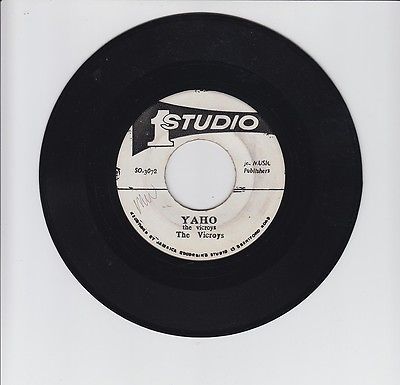
The pirate-themed rocksteady of “Ya Ho” on Studio One

We started off this past week’s Bovine Ska and Rocksteady podcast, our second since leaving Boston with two sets of joyous fast ska beginning with The Checkmates “Invisible Ska.”  We ended our first hour with two version to version excursions, ending with Delroy Wilson’s ” I Want To Love You,” followed by Big Youth’s sublime version,”Not Long Ago.”   The second hour began with our spotlight on Studio One vocal group, The Viceroys.

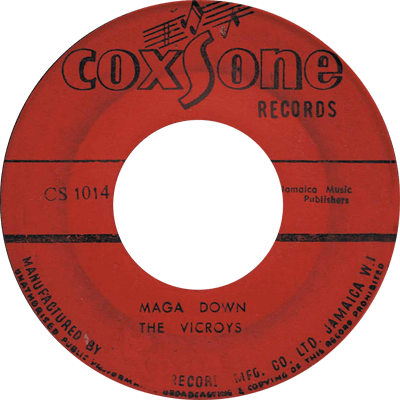
The Viceroys began singing together after Wesley Tinglin, Daniel Bernard, and Bunny Gayle met in West Kingston near Spanishtown Road. Tinglin had been singing at Joe Higgs’ music classes in the company of Alton Ellis and Ken Boothe, and after picking up some guitar, he was ready to begin to record with a group. The Viceroys first auditioned for Duke Reid with two tracks written by Tinglin, but Duke Reid was not interested. Consequently, the group went over to Coxone Dodd, who recorded their first single, Lose & Gain, a track also written by Tinglin then arranged by Jackie Mittoo and backed by The Soul Vendors and this was the track that kicked off our spotlight on The Viceroys

Yo Ho was inspired by Tinglin’s interest in The Caribbean Reader, which contained stories about Morgan the pirate and other pirates. After their time with Coxone Dodd, which ended with dissatisfaction with the usually disappointing business practices of Studio One, The Viceroys went over to Derrick Morgan. Our second set began with their rocksteady recorded for Derrick Morgan, Lip and Tongue.

You may listen to this podcast on Mixcloud by clicking HERE! Please subscribe to our podcast series while you’re there.

Please join us on Facebook to learn about our future spotlights, reggae and ska shows in the So. Cal area, record shops of note in Los Angeles and more!

https://www.facebook.com/groups/175321709220304/

Bovine Ska and Rocksteady 6/2/2015: The Rulers

Standard
The Rulers 2

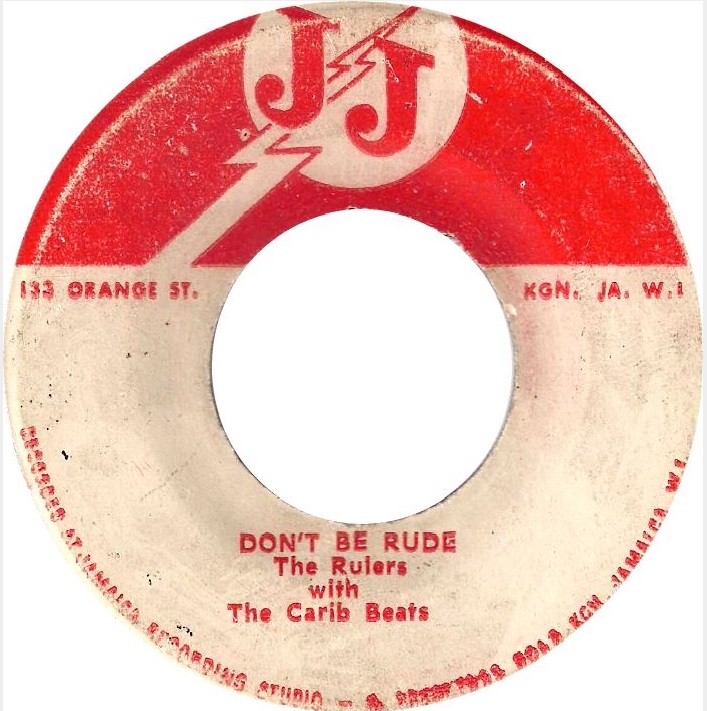
Superb rocksteady from The Rulers prod by JJ

After a one month hiatus where we packed up and moved across the country, Lily and I are back this week to continue the Bovine Ska and Rocksteady as a weekly podcast through Mixcloud being uploaded every Tuesday at 9PM (PST) midnight (EST).  The show’s format will remain the same as it has since 1996, concentrating on early Jamaican music from 1955-1975,with a mento set and artist spotlight midway through the program.  What is new is that we will report out on live Jamaican music happening in the Southern California area as well as Boston area music updates.  We began this week with four versions of The Melodians “Everybody Bawling” that we always send to our friend, Magnus Johnstone.  We ended the first hour with a set of ska which fed directly into a spotlight on the JJ Johnson produced vocal group, The Rulers.

Surprisingly, there is not much known about The Rulers considering their track, Wrong Emboyo, which was originally produced by JJ in 1967, would become one of the many Jamaican songs that would gain notoriety by being covered by The Clash.  What we do know about The Rulers is that the aforementioned track and many of their others have a writing credit to Clyde Alphonso. We also know that JJ’s preferred house band was Bobby Aitken and the Carib Beats, who backed up all of The Rulers’ releases we will hear this evening, for they were all produced by JJ Johnson for his JJ label. Given that the preponderance of their releases are during the rocksteady era, it is no surprise that many of the tracks’’ lyrics are concerned about rude boys. Similar to Alton Ellis, the Rude Boy tracks cut by The Rulers condemn the actions of the rude boys, such as the first track on this evening’s podcast from 1966, Don’t Be a Rude Boy.

This week’s podcast which will remain up for one week, can be heard here:

https://www.mixcloud.com/bovineksa/generoso-and-lilys-bovine-ska-and-rocksteady-6-2-15/

Please let us know what you think and do join us on Facebook for information about the next spotlight artist and relevant Jamaican shows that you can attend.  Click here:

https://www.facebook.com/groups/175321709220304/

Best,
Lily and Generoso


Bovine Ska and Rocksteady 4/15/2015: Slim Smith With The Techniques

Standard

This past week began a special series for the Bovine Ska and Rocksteady. After 4/29/2015, the Bovine Ska and Rocksteady will no longer be on WMBR because we are moving out of Boston. To commemorate the last three shows of the Bovine Ska and Rocksteady in Cambridge/Boston, we began a three episode spotlight on an artist dearest to our hearts, Keith “Slim” Smith.

The mission of the Bovine Ska and Rocksteady has always been to share and uncover rare Jamaican music. Consequently, these last shows will feature short record label spotlights for small labels in addition to the three part spotlight on a star who should be in the global company of Bob Marley and Jimmy Cliff but is not well known outside of Jamaica.

For the 4/15/2015 edition, we started the show with two sets of early reggae, featuring “Dengue Fever” from The Scorchers and the ever-too-pretty “If I Had the Right” from Alton Ellis. After the opening reggae sets, we presented mento from Jamaica’s hotel bands, specifically The Hiltonaires, the house band of Kingston’s Hilton Hotel, The Wrigglers, one of the bands for the Arawak Hotel, and Monty Reynolds and His Silver Seas Orchestra, the house band for the Silver Seas Hotel.

Then, to close the first hour, we presented a short label spotlight on a record label that we’ve wanted to review for sometime but had great difficulty in finding the tracks: the Moo’s label. We know that the man behind the Moo’s label was Charlie Moo, but beyond that, we don’t know much about the origins or the end of the label. The spotlight featured Jamaican Rhythm and Blues tracks from each of the artists from the small catalog of Moo’s label releases: Lloyd Clarke, Basil Gabbidon, Rico Rodriguez, Johnny Moore, Owen Gray and Clancy Eccles.

The second hour was dedicated entirely to the first part of the Slim Smith tribute trilogy: his time with The Techniques.

Techniques-Favorite

Our Selected Favorite from The Techniques


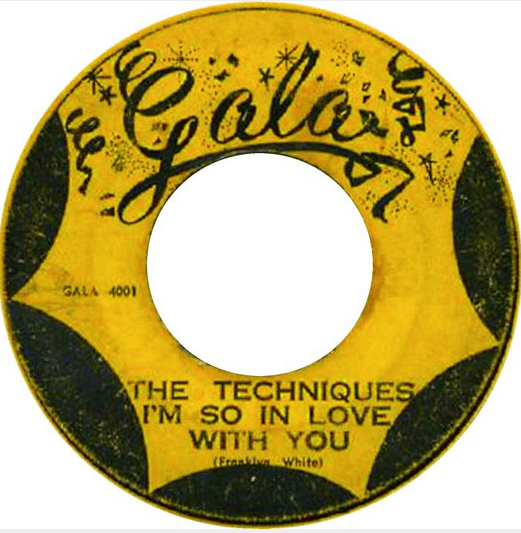
Slim Smith began his music career as a teenager attending Kingston Senior School. He along with classmates Frederick Waite, Franklyn White, the Richards Brothers, and Winston Riley entered Edward Seaga’s Chocomo Lawn youth club in Wellington Street in 1962 to emerge as the house band for the club with all members singing and playing instruments. After spending time backing up solo singers who visited the club and in concerts, Seaga arranged for The Techniques vocal group, now consisting of just Slim Smith on lead vocals, Winston Riley, Frederick Waite, and Franklyn White, to record on their own at Federal records with the track, “No One,” which was produced by Byron Lee and released on Kentone in 1963 to some attention but not too much. We heard this first track and another early Kentone track from the Techniques to kick off this spotlight on Slim Smith.

Everything began to change in 1964 for the Techniques. “No One” would be internationally distributed by Columbia in England in 1964 and by the Curtis Mayfield compiled This Real Jamaica Ska, which was released on Epic in America. Then, as the Victor Youths Band, Slim, Winston, Frederick, and Franklin were winners in the ska and mento contest in the 1964 Jamaica Festival. And, in that same year the Techniques were introduced to Duke Reid by Ken Boothe and Stranger Cole, and they would record, “Little Did You Know” with him, which would become the first major hit for the group. To kick off the spotlight, we presented The Techniques’ finest work with Duke Reid.

After their time with Duke Reid and his Treasure Isle, The Techniques then recorded with Sonia Pottinger at her Gayfeet label, which we presented next.

Often Generoso calls The Techniques the greatest vocal band in Jamaica, and this is because beyond Slim Smith, many of the members who rotated in then out of the group were stars in their own right. After Slim Smith left, the mighty Pat Kelly was brought in to take over lead vocals. Shortly after the arrival of Pat, Bruce Ruffin also joined the group, and this version of the Techniques was responsible for some of the best adaptations of tracks from Curtis Mayfield and The Impressions. In addition to these two talents, the Techniques would also have the voices of Junior Menz, Lloyd Parks, and Dave Barker during the group’s various re-incarnations.

Listen to The Techniques spotlight and the full show HERE.

The archive will be available until 4/28/2015. Enjoy!

And don’t worry, the Bovine Ska will return in another radio form. We’ll be sure to update here!

Bovine Ska and Rocksteady 4/8/2015: Horace Faith

Standard

For this past week’s show, we began with two sets of mid-tempo ska, beginning with a spectacular one from Henry Buckley himself on his own Merritone label entitled, “Reap What You Sew.” Afterwards, in the second set of ska, we presented the amazing “Run Rudies Run” from Lee Perry and the Gaylads.

After the first two sets, we jumped into the mento with “Tongue Tied Mopsie” from The Wrigglers on the Kalypso label. And then to transition into the spotlight on Horace Faith, we shared an extended set of rocksteady, beginning with a too cool Prince Buster track named “Sweet Beat.”

Cover for 7″ of Black Pearl

To start the second half of the show, we featured a memorial spotlight on Horace Faith, who passed away on March 8, 2015.

Unfortunately, we don’t know too much about Horace’s bio. We do know he was born as Horace Smith in Jamaica, but given his extensive recording for English labels and a small tidbit shared with us on an annotated episode of Top of the Pops, we know that he immigrated to England as a young man and spent a good chunk of his music career there.

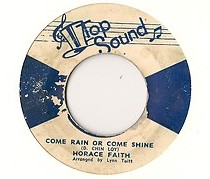
Faith’s career is an interesting one; he recorded lots and lots of covers in reggae and soul but with very lush arrangements. We presented all of his best work in this memorial retrospective on Faith, including his major hit, “Black Pearl.”

“Black Pearl” is a cover of the song with the same title by Sonny & The Checkmates, and with this cover, Horace Faith gained quite a bit of popularity. It reached #13 on the U.S. Billboard top 100 and #13 on the UK singles chart as well.

The spotlight included both reggae and soul cuts from Horace Faith, all of which had beautiful and lavish compositions.

Listen to the spotlight and the full program HERE.

Enjoy! The archive will be available until 4/21/2015.

Bovine Ska and Rocksteady 4/1/2015: Early Clancy Eccles

Standard

For the 1001 episode of the Bovine Ska and Rocksteady, we kicked off the show with an amazing version-to-version-to-version-to-version excursion with the Satta Massa Ganna rhythm, beginning with the original recording of “Satta Massa Ganna” by The Abyssianians.

After that trip down version road, we presented some more reggae, including the chilling and stunning “Devil in Bed” from Cornell Campbell.

After those first two reggae sets, we played the mento set of the week, which included a beautiful one from Laurel Aitken entitled, “Nightfall in Zion.”

Then, in order to glide into the spotlight on Clancy Eccles’s early recordings, we shared a set of Jamaican rhythm and blues, which included “Since Lately,” a very early track from Jimmy Cliff, long before his days in “The Harder They Come.”

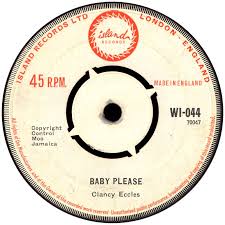
Clancy Eccles's Baby Please - Released in England on Island and in Jamaica on Moo's

Clancy Eccles’s Baby Please – Released in England on Island and in Jamaica on Moo’s

So, you may ask, why only the early Clancy Eccles tracks? In 1965, Clancy left the music industry as a performer and became a tailor and additionally a stage wear designer for Kes Chin, The Mighty Vikings, Byron Lee and the Dragonaires, Carlos Malcolm and The Blues Busters

Consequently, in the spotlight, you will only hear the songs he recorded before he took his two year hiatus from recording and before he returned to the music industry in 1967 when he would record again and produce other artists.

Born in Saint Mary parish in 1940 to a tailor and builder, Clancy Eccles began his love for music in the church. Particularly inspired by his uncle who was a spiritual revivalist, Eccles began singing at church as a boy. As a teenager, he moved to secular music, singing to tourists in the hotel circuit on the Northern Coast of Jamaica. Then, as a young man, he moved to Ocho Rios and performed in nighttime shows where he shared stages with the Blues Busters, Higgs & Wilson, and Buster Brown.

After working the live performance circuit for a few years, Clancy decided to move to Kingston in 1959 where the recording industry was beginning to rise, and eventually, he began working with Coxone Dodd. He first recorded Freedom for Coxone, which was a single played on his sound system before it was pressed for distribution. As a political song discussing repatriation to Africa, Freedom was actually one of the earliest songs to be used in a political campaign; Alexander Bustamente used it in his battle against the Federation of the West Indies in 1960.

You’ll hear Freedom to kick off the spotlight on Clancy Eccles’ early recordings.

By 1962, Clancy began running his own talent shows and producing live shows for artists such as The Clarendonians and The Wailers. The next year, Clancy began working with other producers including Charlie Moo and Lyndon Pottinger. You’ll hear his work from these producers in the second part of the spotlight.

Happy April! Hope you enjoy the show!

Listen to this episode HERE

The archive link will be available until 4/14/2015.


Bovine Ska and Rocksteady 3/11/15: Horace Andy

Standard
horace andy-you are my angel

Horace Andy on Soul Sound in 1972


We started off this past week’s Bovine Ska and Rocksteady with a Derrick and Patsy cover of a song that might go down as one of the most influential in Jamaican music history.  “Let The Good Times Roll” which was a huge hit for Shirley and Lee not only only in the States but in the early days of the Jamaican sound system.  So popular was this cut and Shirley’s childlike vocals that it inspired a generation of Jamaican female vocalists like Millie Small, and Millicent “Patsy” Todd who does a fine job on this cover.  It was followed by seven songs from the Jamaican Rhythm and Blues period including Bobby Aitken’s 1962 cut for the Blues Label, “Hello” and the Blues Busters “Lost My Baby” a beautiful side on the Starlite label in 1992 as well.  And after a set of mento and a pretty set of rocksteady that began with a rare one from Prince Buster from 1967 called “This Gun For Hire!”  We then started a long overdue spotlight of Horace Andy.

Born as Horace Keith Hinds, Horace Andy was born in Kingston in 1951. The cousin of Justin Hinds, he also had a very distinctive voice, so in order to delineate himself from his cousin, Coxone Dodd actually picked a different stage name for him. At the time of Horace’s arrival to the music scene in Kingston, Bob Andy’s career was rising, so Coxone gave Horace the same surname to gain some of the fame coming from Bob. Despite the similar name and the songwriting talent, Horace’s voice however was so different so that when he auditioned for Coxone at Studio One, the producer and label in which he would spend a large chunk of his career, he recalls all of the session musicians at the time dropping their instruments and laughing. Despite the reaction of Studio One’s musicians, another producer had actually heard and taken a chance on Horace Andy first. He actually began his music career with a producer very much adored on the BSR, Phil Pratt. We started with Black Man’s Country, his first recording, which was released on Caltone to kick off this spotlight.

Black Man’s Country did not see too much success, and consequently, Horace ended up at Studio One, where he would gain much of his popularity. His first single for Studio One “Got to Be Sure” was actually the song he auditioned on to the uproarious laughter of the session crew. And at Studio One, Horace would also record his highly regarded LP Skylarking. We heard his debut single for Studio One first and then some highlights from Skylarking next. As a child, Horace spent a lot of time in the library reading, which would end up influencing his songwriting.  A few notes on some of his finest tracks:

Every Tongue Shall Tell: Yes. Well for some Christian minded people and Rasta people it means any wrong you do you are going to have to talk when the time comes. Because that’s what they say the King James Version tells us. That’s what the Bible says and you must live by what the Bible says. But you know the people are not doing it. They only talk it. But that is the reason why [I sang it] because of the inspiration of the Bible. It was before I was even born – “Every tongue shall tell” that means everyone shall confess their wrongs when the right time comes.

See A Man’s Face Inspiration: See A Man was something that happened a long time ago. You see, when you speak the truth no one believes you. I learned that a long, long time ago. Even when you tell your mum “Mum, it’s not me do it” you get bap bap “A you do it!” That’s why more time you have to be close to the kids them and believe them when they tell you things. So I know from a long time ago that no one believes the truth when you talk the truth. That’s why I wrote that song. And because a young man broke my little sister’s heart. It had so much meaning that he broke my little sister’s heart and that’s why I wrote that song then.

You Are My Angel Inspiration: No. Those things just came natural. We love the woman and we look upon her as the mother of the earth. She multiplies and she creates so the father says life. Life is so important so we have to love and respect the woman. Don’t kick them, don’t box them, don’t rape them – no no no. I say it on stage and the ladies scream “We love you Horace!” You are my angel is the original source for the Massive Attack track Angel that Horace collaborated with them on

Money The Root of All Evil:Because I saw it. As a young man growing up I saw it. Because money, wow, it has its good and it has its bad. And because producers weren’t paying me – that’s why I wrote that song.

We hope you enjoy the show!  Love from Lily and Generoso

You can here the entire program: HERE

The archive of this show will be available until 3/25/15