A Creation in the Shadows of Blankets: The Sculptor

Standard

It seems like the theme of trying to find the meaning of life is following me around these days. Perhaps my own interest in the search for the meaning of life has led me to the graphic novels and comic books I have been reading of late, or perhaps there is a general trend in graphic novels and comic books today in a topic that has been the focus of a variety of media for centuries. Regardless of the why, I would like to preface this review of Scott McCloud’s The Sculptor with the acknowledgement that, yet again, I have selected a novel which contains a main character searching for a meaning to his existence.

Cover of The Sculptor

As an unsuccessful artist, irresponsible alcoholic, and overall misanthrope, David Smith has little to live for when his 26th birthday arrives. What joy he once had has all but vanished from his life. Every member of his loving family has passed away. His successful art career dissolved when he publicly insulted his benefactor. And after his fall from grace in the art world, he only has one friend left in New York City, and he does not commit much to maintaining even that relationship.

From the onset, David is not the most likable or sympathetic character, but buried under each insult toward other people’s art, each moment of neuroticism, and each moment of complete social clumsiness, we understand that David carries an enormous amount of pain with him and has not developed a method in which to express the pain. Naturally, as a sculptor, we would expect that the process of creation would enable David to channel and direct his pain away from himself. Unfortunately, this is not the case; his pain instead stunts his creative ability, leaving all of it bottled up inside and ready to erupt at the most unreasonable times.

David vowed to his late father that he would make a name for himself, but sculpting is his only means to make his mark on this world, and at this point, his sculpting will barely allow him to pay the bills let alone gain any acclaim. While wallowing in his despair at a diner he visited in New York with his family when he was ten, David receives a greeting and visit from his Uncle Harry. Surprised by the sudden appearance of his uncle whom he had not seen in years, David recounts his downward spiral from his initial success in the art world to his current state of desperation. Harry counsels and encourages David to continue on with his art but in a more realistic way: by settling down, moving to a less vital art scene, and working as a teacher in the daytime and as a sculptor in the night time, but David refuses this life Harry suggests, leading to the manifestation of Harry’s true identity as Death.

Upon hearing David’s refusal, Harry/Death begins to propose a deal for David to succeed in his art in the way he desires but at a cost. Despite the severe terms of the offer, David seizes the opportunity from Death to have the power to sculpt anything with his hands alone, allowing him to create the sculptures he wanted to create but could not due to budget and resource limitations, and in return, he agrees to sacrifice his life to Death within 200 days of gaining his new, supernatural sculpting abilities. He now has all of the tools he needs to flourish as an artist.

But, alas, having the ultimate set of skills to create does not necessarily lead to the most magnificent artwork, and David quickly learns that as he creates everything he sketched without any discerning self critique or self-reflection, leading to a collection of sculptures lacking a unified theme or concept. David’s realization of his concepts from the past reveal his need for a new source of inspiration, a new breath of life into his work, and upon the understanding of this need, Meg enters David’s life.

As his muse, Meg acts as the galvanizing force behind the revitalization of David’s artwork, but his artistic voice develops most when he begins to love her. Upon falling in love, David begins to live and become more aware of his surroundings as he meets Meg’s friends and sees and enjoys the world with her, and eventually, he decides on the audience for his art: Meg. With his audience decided, David sheds his concerns for what other people think and can alas create at his own artistic pinnacle.

When focusing on understanding what breathes vitality into an artist, The Sculptor succeeds. As members of the audience for any piece of art, we always wonder what process, thought, and experience exist behind an artist’s creation, and McCloud intelligently conveys why David was failing before he met Meg and why he succeeds after he meets her. McCloud clearly understands what would lead an artist to fall into a creative block and what it takes to break it.

Where The Sculptor fails is in its execution of its narrative arc and its character development, which is too consciously constructed to please a general audience.

Parallel to the story of the artist, The Sculptor also explores the meaning of existence. With the days counting down and his recurring interactions with Death, David gradually understands life can end at any moment, so a fulfilling life simply includes the opportunity to love and earn love from someone else. This is a bit of a saccharine meaning of existence, but it is not bothersome to me and is certainly not an uncommon or unpopular argument to the meaning of life in Western culture.

My major problems with The Sculptor come from how McCloud communicates this message. In building David and Meg’s relationship and David’s simultaneous self-realization to the meaning of his life, McCloud has an awkward lack of commitment to realism or to deliberate storytelling. There’s a dissonance between the effort McCloud puts into building the characters’ personas and the desire to convey the themes of the book, making the events used to convey the themes feel too contrived and the moments to build the characters feel too tangential.

Furthermore, McCloud includes narrative events and literary techniques that hearken more to pathos or a commitment to formalism than a desire to achieve successful storytelling. It is admirable that McCloud wanted to create a work containing many archetypes and motifs, but they do not quite combine and congeal into a fully successful novel. He puts in a great deal of effort to detail a deus et machina moment, a clear villain, many foreshadowing events, and Meg’s recurring severe depression, but none of these events or details emerge in a natural way in the course of the narrative, which makes me begin to suspect that many of them were included to try to pull in different types of people to the book. There’s something in The Sculptor for people who like realistic fiction, romance, drama, or fantasy, and there’s even something for the comic analysts, critics, and theorists. There are events and techniques to please all.

As a result of having something for everyone, The Sculptor contains a mixed set of successes and failures. It has a complete narrative skeleton, but the flesh to fill out this skeleton is just too unfocused, overworked, and contrived. There is no doubt that McCloud is an accomplished theorist and scholar on comics, but unfortunately, with The Sculptor, he focuses more on including all of the great ideas he had in his mind and had observed in his analysis of comics and less on pulling The Sculptor together into a complete novel. Oddly enough, The Sculptor suffers the same indecisive and tangential voice revealed when David Smith created only from his sketchbook. Like the David’s sketches, the sketches of The Sculptor contain strong ideas, but when realized into their final form, they lack a clear voice and a clearly selected audience, making them feel as if they were all created to please a general public and no one in particular, even McCloud himself.

The Sculptor by Scott McCloud is available via First Second Books. 

Epilogue:

On further thought and conversation about this critique of The Sculptor with Generoso, I realized where my general unease with the novel came from. After some distillation, I realized that The Sculptor is a supernatural, secular version of Craig Thompson’s highly acclaimed and celebrated Blankets. Blankets similarly focuses on how artist creation intertwines with love, but it also includes how faith interacts with both love and creation, leading to a more complex and nuanced understanding of existence, love, and inspiration.

In addition, Blankets triumphs through its commitment to realism. There is nothing in Blankets that feels like it was included in order to check off a box on a marketing demographics sheet. There is not a single heavy handed literary device in it. And most importantly, Craig Thompson had a clear audience in mind when he wrote Blankets: himself. It is more of a discourse on his understanding of his own growth as a man and an artist than a work to be heralded by people; the celebration of the novel comes from the success of its execution, not its desire to please. The Sculptor, on the other hand, aims to please more than to deliver a story to a specific person, making it almost critic-proof but much less exciting, engaging, and affecting. It is a watered down work created for general public consumption and adaptation, so it is no surprise that its rights have already been picked up for a movie adaptation.
 

Though Once Parodied On SCTV, 1970’s “Goin’ Down The Road” Is One of Canada’s Most Iconic Films

Standard
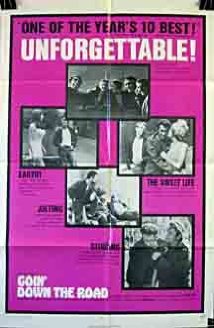
Goin Down The Road Peter and Joey

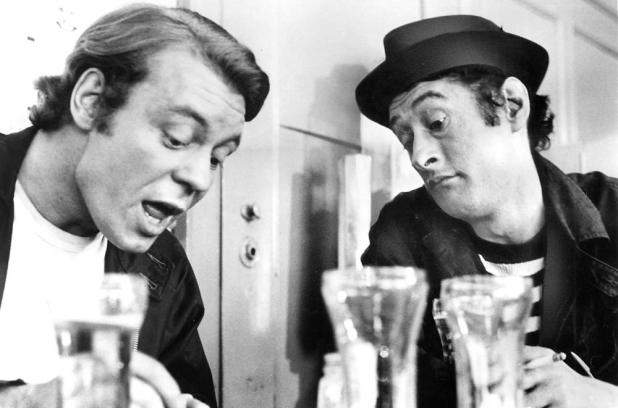
Goin Down The Road’s Peter and Joey Sharing A Pint

As a teenager, I was a huge fan of SCTV, the Canadian-based sketch comedy show that gave us such talents as John Candy, Eugene Levy, and Martin Short. For my money, SCTV blew most of Saturday Night Live away with their original characters, but there was one thing that they truly excelled in, and that was movie parodies. Their demented version of Polanski’s “Chinatown” called “Polynesian Town,” their overly abusive version of “The Godfather,” with their pimpish “network president,” Guy Cabellero, subbing in for “Don Corleone,” and one that I didn’t quite get at the time, “Garth & Gord & Fiona & Alice,” the story of a Moncton doctor and lawyer (who spoke like a more rural Bob and Doug McKenzie) heading to Yonge Street in Toronto to get “all kinds of jobs and girls.” It was an incredibly funny episode of SCTV, but as a young Philadelphian with hardly any exposure to Canadian cinema outside of David Cronenberg, I had no idea that the film that they were having a bit of fun with was one of the most iconic films in Canadian history: Donald Shebib’s documentary-styled 1970 film “Goin’ Down The Road.”

The film tells the story of Joey (Paul Bradley) and Peter (Doug McGrath), who leave their low-paying cannery jobs in Nova Scotia for the chance at a better life in Toronto. Wide-eyed and optimistic through the promises of their friend that they will get higher paying jobs and the promise of a place to stay with family, the boys head west with their car that dons the message “Our Nova Scotia Home” spray-painted on the side. The harsh reality of that move west hits home quickly when their relatives recoil and hide upon seeing how uncouth the boys are, and the promise of a job goes up in flames when they find out that their friend Anton from back home has lost his job some time ago and cannot help them find work. Though somewhat discouraged, Joey still hopes for an office job while Peter will gladly settle for anything that will get them out of their temporary Salvation Army hostel.

The next day, Peter gets a job at a bottling plant, while Joey’s dream of an office job in advertising goes down the tubes when the human resources department breaks the news that he has absolutely no qualifications. Peter then helps Joey get a job at his plant and armed with some spending money, the pair hit Yonge Street looking for girls just like Candy and Joe Flaherty in the now infamous SCTV parody. A key scene for both characters happens here as Peter prowls the street looking for anything in a skirt, while Joey tries to flirt and is rejected by a beautiful young woman who is listening to Erik Satie’s “Gymnopédie No. 1.” Again, they both want a better life, but Joey realizes for a second time that the life of an urban sophisticate may be too far out of his reach.

These scenes in the streets of Toronto are played out in the same way that John Schlesinger freely rolls out Ratso Rizzo and Joe Buck in New York City, in an honest and almost documentary-like style that had come into fashion during the recent British films of the late 1960s. This style is the defining greatness of “Goin Down The Road,” with its natural flow that feels true to the film’s two protagonists. They are lost, good-natured men in a big city and the low budget raw visuals work in line with their plight. This film is the first for actors McGrath and Bradley, and they do a fine job immersing themselves in their roles, and it shows because nothing in their performances seems remotely contrived. Also, in a perfect pairing that was becoming somewhat commonplace in that era,  like Earth, Wind, and Fire’s music for Melvin Van Peebles “Sweet Sweetback’s Baadasssss Song,” the soundtrack features two original folk songs from the then unknown talents of legendary singer Bruce Cockburn, who would go on to become one of Canada’s most celebrated musicians. Cockburn’s songs for “Goin’ Down The Road” lyrically address the plight of the film’s leads.

The Opening Scene From “Goin’ Down The Road”

“Goin’ Down The Road” reflects the real life issue that occurred  in Canada when thousands of young people emigrated from the Maritimes to Ontario looking for work throughout the 1950s and 1960s. A trend that became so prevalent at the time that the Ontario government began building many housing projects in the early 1960s just to handle the rapid influx of internal immigrants from the east. This wave of immigration changed in the late 1960s when a new group of immigrants from Africa and the Caribbean began to settle in Toronto in mass, thus leaving folks like our Joey and Peter without any affordable housing in their own country. Though the film never relates any direct conflict between the main characters and the new wave of immigrants, it does offer some insight as to why two Canadian citizens would feel estranged not too far from their own hometown. Toronto was quickly becoming an international, cosmopolitan place that was so far removed from Joey and Peter’s upbringing that they would soon be crushed by it quickly. In the end, despite the bad jobs, bad relationships, and bad luck, Peter and Joey stay true to each other like good Canadian boys, consistently bailing each other out of various jams, and director Donald Shebib does not spare any of the awkwardness and the fear of strangers in a strange land, even if it is their own country.

Bovine Ska and Rocksteady 2/18/15: The Twinkle Brothers

Standard
The Twinkle Brothers

This Week’s Spotlight Artist: The Twinkle Brothers

 Last week (2/11/15), the Bovine Ska and Rocksteady did its 19th Annual Anti-Valentine’s Day radio show but please never let it be known that Lily and I are against the concept of love.  We are just against the idea that we need a holiday to show that we have love for one another.  Sadly, we found out that on February 15th, Professor Irving Singer, a colleague of Generoso’s while he was at the CMS Program at MIT had passed away.  Irving was a great teacher, philosopher and writer, and a World War Two combat veteran. He wrote the celebrated three volume collection, “The Nature Of Love,” as he spent much of his later life thinking about why we love one another.  We dedicate this show to Irving and we started the show off with two positive sets about love, with tracks like Winston Samuel’s 1964 release for the SEP label, You Are The One (I Love).  And after a mento set and a set of gorgeous rocksteady cuts, we launched into our never before done on the show spotlight of The Twinkle Brothers.

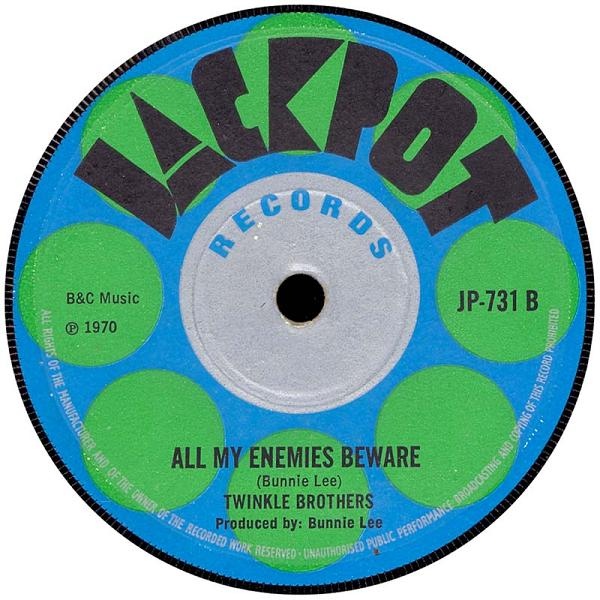
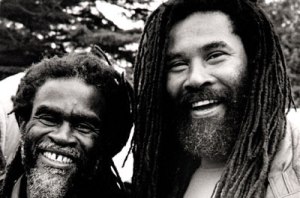
Formed by Norman and Ralston Grant in Falmouth, Jamaica, the Twinkle Brothers began their musical careers, as many of their peers, performing in local festivals and contests. The original line up consisted of: Norman Grant (drums and vocals), Ralston Grant (vocals and guitar), Derrick Brown (bass), Karl Hyatt (percussions), Eric Bernard (Piano) and Bongo Asher (percussion). Shortly after their foundation in 1962, the Twinkle Brothers won the Trelawney Mento Festival, beginning their streak of festival success for the next 6 years, which culminated in gold medals for Norman as a solo artist and the Twinkle Brothers as a group in the all island contest in 1968. In the midst of these festival performances, The Twinkle Brothers caught the attention of Leslie Kong and recorded their first single, “Somebody Please Help Me” in 1966, which is the first track to kick off this spotlight on The Twinkle Brothers.  The name The Twinkle Brothers from an interview with Norman Grant in 2006: “We were rehearsing one day when a Rasta elder by the name of So-Me-Say heard us play and told us he was going to give us a name. He came up with the name Twinkle Brothers. I guess that because it was already nightfall, he got inspired by the stars in the sky. We’ve held that name ever since.”

1970 was a busy year for the Twinkle Brothers. By 1970, the Twinkle Brothers began recording for Bunny Lee, whom they would record about 14 tracks with, and who Norman Grant recalled as his favorite producer.  Bunny also introduced the group to Lee Scratch Perry, and they recorded only one single “Reggae For Days” with him, which is a rare and difficult track to find In 1973, the Twinkle Brothers moved to Phil Pratt and recorded for his Sunshot label. By the mid-70s Norman had begun to dedicate his work in other directions. He opened a record store in Falmouth, and in 1975, he joined the Sonny Bradshaw band. Eventually, Norman moved to the UK.

Listen to the full program: HERE.

Enjoy! The archive will be available until 3/2/2015


Generoso’s Fiendishly Delicious Chicken Scarpariello! (Shoemaker’s Chicken)

Standard

Today, we will teach you how to make Chicken Scarpariello (Shoemaker’s Chicken) Truthfully, I have absolutely no idea why it’s called this or the origins of this incredibly bad for you dish.  What I will say is that the final product, a creamy mix that has sausage, chicken and artichoke hearts was so delicious but heavy, that it knocked Lily and I out for about an hour.  If done correctly, the whole dish should take you about an hour but we really feel that it is worth it.

You will need the following: 2 pounds of chicken breast, 1 pound of Italian sausage (we used our local butcher’s Calabrese sausage for this as it’s a bit more firm but harder to find), three medium sized potatoes, one cup of chicken stock, a tablespoon of butter, two cups of white flour, six ounces of artichoke hearts, a lemon, rosemary, salt, pepper, onion powder, and olive oil.

You can put this on top of a light pasta if you are insane but trust me, you really want to avoid making this dish any heavier than it is.  Let us know how yours came out.  Love, Generoso and Lily!

Music:Niccolò Paganini’s Violin Concerto No. 1, Op. 6


Bovine Ska and Rocksteady 2/11/15: The 19th Annual Anti-Valentine’s Day Show

Standard
$(KGrHqNHJEgE8oY,psQNBPU2M-Srwg~~60_12

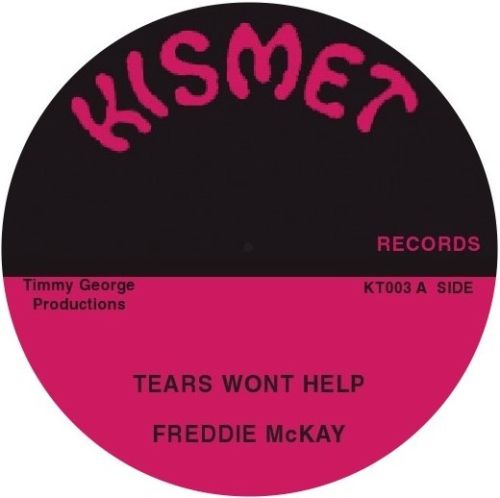
A great sad cut by the late Freddie McKay

OK, I assume that after reading the title of this post, you completely understand where we are coming from with this special edition of The Bovine Ska and Rocksteady. People for varying reasons hate this holiday so we should give you ours: it is the greatest relationship destroying holiday of all time! Unlike other relationship crushing holidays like Christmas, Valentine’s Day sets itself apart in the area of emotional (and sometimes materialistic) expectations.  What to give and plan if the relationship is just a few weeks old could result in an a cataclysmic outcome.  So, what does this have to do with Jamaican music?  Well, like any songwriters and performers of ska, rocksteady and reggae are not exempt from the tortures of love gone awry and this show was packed with their miseries.

Our show began with an hour long tribute to the concept of loneliness featuring such tracks as: “I’ve Been Lonely” by Peter Tosh and Hortense Ellis (Studio One-1966) and “Sometimes I’m Lonely” by The Pioneers (Trojan-1972).  Followed by a second hour which featured tributes to “Tears” and “Sadness” featuring cuts like Errol English’s “Sad Girl” (Torpedo-1972) and “Tears From My Eyes” by the great Jackie Opel (Top Deck-1965).  Each break punctuated by our Anti-Valentine’s Day theme of “He/She Left Me for What?”  Real life excuses, read by Lily, written by couple who broke up over the most trivial of reasons.

Listen to the full program: HERE.

Enjoy! The archive will be available until 2/24/2015

Understanding Transience and Time – Here by Richard McGuire

Standard

Upon picking up Here, I admittedly knew nothing about Richard McGuire, and I suspected there was another reason why our dear friend Chris sent over this graphic novel beyond its content. Once I finished this brilliantly minimalist work, I reached the sleeve insert on the back cover, which revealed Chris’s motivation behind this gift and an insight into the tone and style of the novel: Richard McGuire founded Liquid Liquid, one of my favorite New York No Wave/Disco Not Disco bands. With this enlightened knowledge of McGuire’s musical history, a sudden clarity on the intention and the voice of the novel struck me.

Cover of Here

Like Liquid Liquid’s musical construction, destruction, and reconstruction of familiar themes and rhythms, Here combines familiar motifs and settings to create an overall mood of transience through utilitarianism. Despite all of the fragments and interruptions placed in each page, there’s a constant rhythm to Here parallel to the constant rhythm underlying wavering moments in Liquid Liquid’s musical compositions.

Set entirely within one room, Here documents the evolution of a space over time through moments layered and weaved into other moments. Within Here, McGuire completely disassembles the concept of chronological order to create fragments of time ready to be compiled into neat and orderly collages. Each page of Here displays the date used for each piece of the collage, thus revealing how little or how much people, animals, language, mannerisms, and non-living items such as decor change.

Cleverly, McGuire begins the novel with a family’s memories in the room, providing a human-centric perspective of the room in the 20th century and making you suspect that Here may be a graphic novel version of the acclaimed Up Series. However, that suspicion begins to quickly disappear when fragments of prehistoric, pre-colonial, and colonial times begin to interrupt the narrative following the family. Gradually, glimpses into the future begin to appear on the pages next to other moments older in time, and, despite the potentially disorienting shifts and interruptions of time, we begin to develop an overall sense that the world as we have understood it for the past 300 years is only a tiny lapse in the course of the world’s history.

Illustrated in the most unassuming color palette and flat drawing style, Here approaches the line of pretension with its grandiose message delivered through its utilitarian illustration and uniquely non-linear yet rigorously organized narrative technique; however, its dry, distant style fortifies the argument of the narrative. With so few lines and figures to become attached to each image, each moment, each object, and each person in time, we, as the readers, better understand the overall capricious nature of existence because we do not have any anchors to attach ourselves to any character or any moment in the narrative. Reading Here feels like you are traveling in time viewing only the life of others without any memories or foresight into our own, thus giving us the distance to reflect and ruminate on the meaning of our own lives in the context of history and time.

By constructing an overall mood rather than a narrative with major plot events and characters to complete a story arc, Here encourages us to dissolve any sentiment of hubris. By the end of the novel, we see the past, and we see what the future holds, a future brought about by our own creation of destruction and then atoned for by nature. We have brought about our own end, but alas, nature continues to survive to reinvigorate and repopulate the Earth with life, though clearly non-human again as in prehistoric times.

Possibly interpreted as a work of nihilism, Here reminds us that humans are only a small moment in the life of the Earth and universe, and we will most likely be nothing more than a small moment in the course of history like the tyrannosaurus rex or woolly mammoth. Though it minimizes the significance of human existence, Here establishes that message of insignificance through a certain reverence for forces far bigger than human life, making the novel much less dour or pessimistic. Here does not condemn humans (though it does put into perspective the damage we have done to other living creatures); instead, it reminds us that we are an era in the Earth’s history, like eras before and eras to come.

Here is less about the concept that everything is nothing and more about the understanding that all life has its own cycle on Earth. Consequently, with this understanding that this human era will one day meet its end, we should not fear death, and simultaneously we should not fear life. Here stresses the fact that we as humans cannot believe we can live forever and change nature’s plans. The only control we have is over our own current actions in our own lives, so we should live life as fully as possible without holding on to too much to our past, without fearing the future, or without overestimating our own strength. For, regardless of how powerful we may think we are now, how much we fear our own future, or how much we ruminate on our pasts, one day, our home will be the grazing field for giant creatures who are the new inhabitants of Earth, and our remains, if we are lucky, will be the soil for future species of blossoming trees, and we have absolutely no control to prevent this all from happening.

Here by Richard McGuire is available now via Pantheon Books.

Hey, it’s the week of Lunar New Year! Let’s Celebrate with Banh To!

Standard

Lily has the fondest memories of Banh To. To her, it was always a crispy, chewy treat that arrived in her grandmother’s home the week before Lunar New Year. It was also a delicious snack only she and her grandmother enjoyed, so the pans of Banh To were always devoured by the two of them together before, during, and after the New Year’s celebrations.

This year is the year of the goat, Lily’s zodiac year, and to celebrate, she decided to make her own Banh To, especially since she has not been able to find it, since she no longer lives in a Vietnamese concentrated city.

In this week’s video, she’ll show you how to make Banh To and fry it up for Lunar New Year. It takes some time to cook, but the cooking time allows you to spend more time with your loved ones on this major holiday. Enjoy!

Music by Felix Mendelssohn’s Piano Concerto No. 2 in D minor, Op. 40.

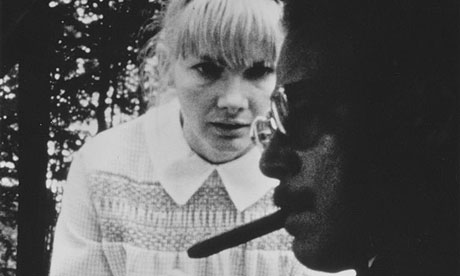
Barbara Loden’s Debut Film, ”Wanda” From 1970, Is A Cinema Verite “Badlands”

Standard
Wanda FilM Image

Barbara Loden and Michael Higgins in “Wanda”

There is a moment in Barbara Loden’s only directorial effort, “Wanda,” when our titular protagonist removes the onions off of the burger she was ordered to get her newest man, Mr. Dennis, that sums up this film well. You see, Wanda (also played by director Loden) has met our Mr. Dennis (Michael Higgins) just the night before while he was robbing a bar, and they are now on the lam, shacked up together in a dingy motel room when he lashes out at her for forgetting the one item he desperately wants off of his food order, the onions. It is a sad moment, but Wanda quickly performs this task soon after going out to get the food in the middle of the night and makes up for her mistake in the exact same way, with a tired resolve and dead eyes.

Wanda has recently left her husband and children in a mining town somewhere in rural Pennsylvania; she didn’t want that life anymore nor a life with the first man she jumps in bed with after her husband or the man after him. In fact, it’s made pretty clear that her lot in life traps Wanda. She is a poor, pretty, and not very bright young woman who like Sissy Spacek’s Holly in “Badlands,” is just willing to tag along for lack of anything else to do, but unlike Badland’s Holly, Wanda is emotionally numb and frankly just stupid enough to believe that she can handle what is about to go down.

There is much to be admired of “Wanda,” the first theatrically released featured film to be simultaneously written, directed, and starred by a woman here in the United States. “Wanda” has a raw, improvisational style of acting that heightens the realism of the performances and a well-matched low budget stretched 16mm cinematography by Nicholas Proferes. There are no long gorgeous shots during “magic hour” here, where the cold shabbiness of the visuals add to the hollow desperation of the film’s leads. After “Wanda,” Proferes, would go on to lens her husband, Elia Kazan’s 1972 film, “The Visitors.” Kazan, the brilliant director of “On The Waterfront,” claims to have little to do with “Wanda” during its production but would go on to say that Loden and Proferes would combine to make an excellent team by bouncing ideas off one another.

What I found to be the key in the success of “Wanda” is that Loden never betrays her two lead characters. The film is never sentimental or heroic, for Wanda and Mr. Dennis would not be heroic by any means in real life. As you go deeper into their relationship you see the shell of two very broken people, who have been told by those around them that they would never amount to much, and, despite any effort, they never will. You somehow know that the big job that they are going to pull is not going to work. A grand end just cannot happen, as that would be out of line with their life paths. It is a nihilistic yet entrancing film that steps into darker territory with each scene, culminating with one of the most soul crushing endings this side of Jeanne Dielman. But, in the end, we do not have a modern feminist hero nor an anti-hero for that matter; we only have another walking causality who will fade into nothingness.

Director Loden Speaking with Mike Douglas About “Wanda”

Shortly after winning the International Critics Award at the Venice Film Festival for “Wanda,” director Barbara Loden, who was born in Marion, North Carolina, told film critic Michel Ciment about her hometown: “If I had stayed there, I would have gotten a job at Woolworth’s, I would’ve gotten married at 17 and had some children, and would have got drunk every Friday and Saturday night. Fortunately, I escaped.”

It has been said of Barbara Loden that she was a shy and soft-spoken loner, like her character in “Wanda.” Sadly, Loden and her real life husband Elia Kazan would become estranged after she received many accolades for her directorial debut and only film, and they would remain estranged her until her death in 1980 at the age of 48 from breast cancer.

Rip Torn Plays a Mean Guitar in “Payday”, 1972’s Overlooked Country Music Tragedy

Standard
payday

“Payday’s” “hero,” Maury Dann,with his entourage

I’ll start off this review by saying that I have always been a huge fan of actor, Rip Torn. He is that hulking man with the confident grizzled look, who is armed with a voice that can only be described as “pleasantly gravelly.” Going back some twenty years ago after seeing Rip’s fine comedic performance as Albert Brooks’ jolly attorney in “Defending Your Life,” my friend Steve asked me, “Have you ever seen Rip Torn in that dark film where he plays a country singer, called “Payday?” I had never heard of it at the time, but it was his second comment that really sold me on the quest to find it, “The film is as if you followed a character from Altman’s “Nashville” into hell.” I had seen Rip Torn play mean in that world as Dino, the evil country music promoter in Alan Rudolph’s 1984 film, “Songwriter,” but nothing could prepare me for the vile character of Maury Dann, who Rip plays in Daryl Duke’s “Payday.”

To say that “Payday” is about country music is to akin to saying that “The Man With The Golden Arm” is about drumming. Rip Torn’s Maury Dann is a minor country music star, famous enough to afford a Cadillac and a driver/cook/bodyguard named Chicago (Cliff Emmich), his hot girlfriend Mayleen (Ahna Capri), and an enormous bag of uppers, but he is still playing small dive bars where he has to hustle to keep caravan moving. Maury’s crew is somewhere in Alabama heading from state to state to record and play more gigs, but along the way, Maury’s going to inflict some major damage to almost everyone around him.

The film opens with Maury performing at a roadhouse; it’s a fine song, but if you are looking for a music-filled “Inside Llewyn Davis” styled narrative, then you have the wrong film. Again, “Payday” isn’t about country music as much as the world of the country music performer rotting from the inside out. Soon after the gig, our Maury takes a young fan into the back of the Cadillac for a quickie, while his guitarist Bob (Jeff Morris) meets another fan named Rosamond (Elayne Heilveil) who he takes back to his motel room and rapes her after she is put off by Bob’s advances. The next day, Maury heads back home, as any good country singer should do to see his mama, but she is conveniently “bedridden,” strung out on uppers, and soon harasses her son for more bennies to fuel her day’s chores. He hands her a bag, picks up the hound dog, and is soon off to duck hunt with some good old boys, but this picture of southern normalcy also gets broken the moment he returns when Maury beats up Bob for asking to buy his mom’s dog because mom is too messed up to take care of it. After the fight, Bob is left behind by Maury, who leaves his dog as well, and picks up Rosamond, who he adds to his entourage despite the protests of Mayleen, who quickly understands, as we are, that Maury is thinking that he’s too big for his cowboy boots.

In a trailing car, is Maury’s band, and slick city manager McGinty (Michael C. Gwynne) who advises Maury on just about everything along the way, including a stop at a radio station to do some airtime promotion with a small time disc jockey who Maury bribes with some game birds and a bottle of Wild Turkey. Despite the “gifts,” once Maury turns down the disc jockey’s request to play a charity gig later that week, Maury clearly gets the word that his new record “Payday” might not get the additional spins he wants. Yes, payola is still alive and well in the Deep South just like the north, and we again see the breakdown of the homespun country music star take another rough tumble.

There will be more rough times ahead and Maury is coming apart with every attempt at playing the game the old country music way, but with every effort going up in flames, including what should be a touching birthday visit with his son, which ends in disaster when Maury’s ex-wife reminds him that his son’s actual birthday was eight months ago. We know now that this was the beginning of days of Merle Haggard, Waylon Jennings, and the whole outlaw country music scene, so the question becomes: Is Maury a good old boy himself pretending to be an outlaw or the other way around?

Original trailer for “Payday”

Released a few years before Altman’s “Nashville,” “Daryl Duke’s “Payday” never lets you off the hook in its viciousness, its bold non-use of music, and its total lack of joy which keeps you riveted to your seat. Sadly, Duke only directed one other film of note, the 1978 heist film, “The Silent Partner,” before spending his remaining career directing television mini-series like the highly successful, “Thorn Birds.” Rip Torn’s performance as Maury Dann is just extraordinary, a standout for 1970s, the last era of the actor and the reason why you should watch this film. Torn is the complete embodiment of his character and fills the screen with sadness and rage as he missteps over and over again while trying to balance the country music outlaw against a soft-hearted small town man who just wants to make it big.

The Impressive Realism of OR_NGE

Standard
Or_nge

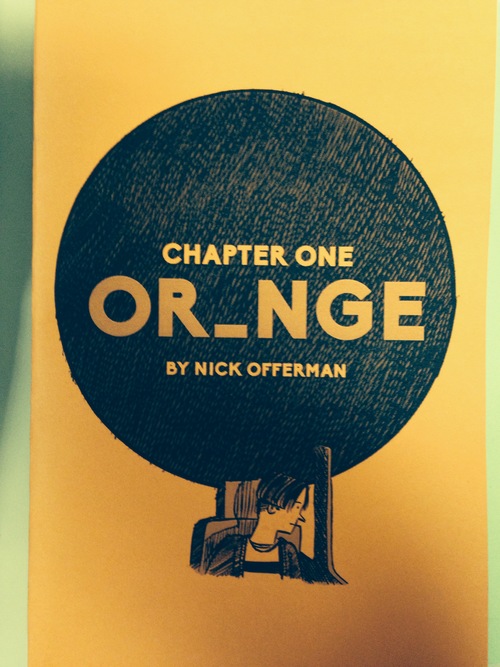
Cover for Chapter One of OR_NGE

The first chapter of OR_NGE opens Henry McNeil’s story of self-discovery. Orphaned upon the unexpected and possibly self-inflicted passing of his mother, Henry has spent most of his formative years in Detroit, raised by his uncle and aunt. There is nothing….absolutely nothing that is out of the ordinary in his daily life. He works a job as a stocker for a nameless hardware or indoor furnishings store. He occasionally sneaks a smile at a female patron as she enters the shop. He returns home after work to his aunt and uncle and repeats. However, there is something unsettling to Henry; he feels there is a hole in his life and/or identity, and his aunt and uncle feel the same thing.

Consequently, in the attempt to find a course to his life and to fill this unknown void, Henry decides to pick up his non-impacting life in Detroit and take a pilgrimage to his birthplace and his mother’s hometown, Toronto, to better understand his mother, her life, and his own origins.

By the end of the first chapter, the core narrative of OR_NGE does not offer too much in terms of innovation; like so many other protagonists before him, Henry McNeil embarks on his voyage to adulthood by trying to understand his past. With that being said, if there is nothing new to Henry McNeil’s story, then what will keep the reader excited and interested in this series? My answer: the ability of the narrative to create a world like our own and to pull you into it.

Despite the normalcy of Henry’s motivations and goals, Nick Offerman (the cartoonist and NOT the well known actor/comedian) gifts Henry and the omniscient narrator with peculiarly neurotic yet endearing voices and personas. Henry’s internal dialog fixates on numbers, whether he’s estimating the speed of a bus or counting the number of months marking the major landmarks in his past, yet, despite his slight number eccentricity, there’s a certain humbleness to Henry that makes you feel like his world is your own. You sit by Henry on the bus. You are in the store with Henry as he moves boxes. You are sitting at the table with Henry’s aunt and uncle as he tersely greets and abruptly says goodbye.

Henry’s dialog and interactions exemplify the palpable realism of OR_NGE. In Chapter One, none of the characters feel exaggerated, and none of their conversations, minimal or otherwise, seem overly constructed, allowing the reader to ease into the series and almost feel like a close observer. This realism to the characters and the events make OR_NGE shine and exhibit the potential for the series.

In addition to the notable realism and honesty established by the narrative and dialog of the first chapter, Offerman’s introduction to the series with an explanation of the properties of orange as an object and adjective conveys his strength in storytelling. Mixing in the descriptions of orange with short moments of Henry McNeil’s life, we understand that Henry’s life will intersect somewhere with the definition of orange outlined in the introduction. Here, Offerman writes and illustrates intelligently and cleverly without being overly self-aware, making even the potentially pedantic opening an inviting and welcoming one foreshadowing the things to come for the series.

OR_NGE has a strong start so far, and it looks like Chapter Two will be on its way soon. Check out the humble realism of Henry McNeil’s world in OR_NGE; he’s going to remind you very much of your own moments of directionlessness, and you’ll be just as curious to see where his travels take him as you are with your own.

OR_NGE Chapter One by Nick Offerman is an independentally published work and is available via goodklown.com