Generoso’s Dangerously Fatty and Delicious, Neapolitan Sausage Soup!

Standard

I wait for the coldest and snowiest days of the year to make this soup, a blend of small and large flavors with a whole lot of fat to keep you going through the wintry mess. Though no cream is added, you will find this to be a savory and creamy soup that I hope you will enjoy despite the rather unhealthy ingredients 🙂

You will need: One pound of sweet Italian sausage, four strips of bacon, one sweet onion, one leek, two large potatoes, ten ounces of kale, one box of vegetable stock, salt, pepper, olive oil, four cloves of garlic and shredded Parmesan. Enjoy and let me know how yours turned out!

Music: Symphonie Fantastique, Op. 14 by Hector Berlioz

Bovine Ska and Rocksteady 2/4/15: Bobby Aitken

Standard
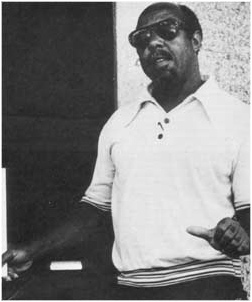
Bobby Aitken photo

Our spotlight artist Bobby Aitken 

Coming to you from a frozen, snow-covered Cambridge, it’s the Bovine Ska and Rocksteady!  Wow, these last few weeks have been rough with bad weather.  We are also back this week, after missing last week’s show due to Generoso’s hospital stay.  He’s improving but that combined with the snow has made doing the show difficult but we were glad to be back.   Starting the show off this week were two sets of delicious early reggae, beginning with a massive tune from Sound Dimension, “Great Mu Gu Ra Ga” which was released on Bamboo in the UK in 1970.  Our spotlight would be on the early vocal tracks of Bobby Aitken.

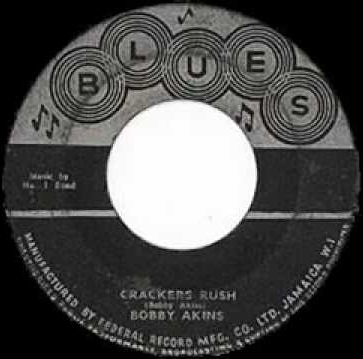
Brother of the godfather of ska, Laurel Aitken, Bobby Aitken, was born in Havana in 1933 and was orphaned in Jamaica at the age of eight. As a boy, he became a mason when his uncle pulled him away from a street gang and introduced him to the masonry trade in order to survive on his own. However, music became a more reasonable means for Bobby, especially seeing that he had a natural gift for it. A precocious 11 year old Bobby built his first banjo from sardine cans and learned how to play guitar on his own. And, by his mid-20s, Bobby had built up his guitar skills and formed the Carib Beats with Charlie Organaire and a man named Morgan in late 1959/early 1960. Together, the group performed primarily calpyso with a few skas, but the trio broke up after the rest of the group did not show up for a performance at the Blue Ribbon Club in Kingston.  As a result, Bobby returned to masonry for a stint, only to make a comeback to music within a year as a solo artist with his single, Cracker’s Rush, which commented on a food shortage in Jamaica and was released in 1961 on the Blues label by Count P, an operator of a soundsystem on Spanishtown Road. We’ll began with this first solo recording of Bobby Aitken to kickoff tonight’s spotlight.

Eventually, after recording for a range of producers including Prince Buster, Coxone Dodd, Linden Pottinger, and King Edwards, Bobby Aitken formed The Carib Beats again with Charlie Organaire and Mike Williams. Other musicians including Bobby Kalphat, Vincent White, Conroy Cooper, Ansel Collins, Carlton Santa Davis, and Val Bennet would also rotate in and out of the group. The Carib Beats recorded for Joe Gibbs, Clancey Eccles, Bunny Lee, and most famously, JJ Johnson.  The second incarnation of The Carib Beats would eventually break up as Bobby decided to focus more on his faith and became who he is known as today: the Reverend Robert Simmonds.

Listen to the full program with our Bobby Aitken spotlight: HERE.

Enjoy! The archive will be available until 2/17/2015 

Richard Dreyfuss Makes Blue Movies The Old Hollywood Way in 1975’s â€śInserts”

Standard
Inserts_1_1975

Richard Dreyfuss as “Boy Wonder” in “Inserts”

There is something magical about In Your Ear, a Boston record store/institution that lies in the basement of a Brazilian martial arts center on Commonwealth Ave. An eclectic shop where after a particularly bad week you will most likely find my wife Lily and I gleefully rummaging through the endless supply of old records, 8-track players, Mexican lobby cards, and vintage movie posters, many of which are for films that have been long forgotten. Unless of course you are Reed Lappin, a lovely man whom I’ve known for most of my thirty years in this city. Reed is the owner of In Your Ear and has always had a great admiration for movies, especially those small lost American movies, which to our good luck, he is always in the mood to talk about late on a Friday night. This past week’s excavation project at In Your Ear produced a poster of a British film from 1975 that starred Richard Dreyfuss and Jessica Harper that we had never heard of entitled “Inserts.” This nostalgic poster was reminiscent of Peter Bogdanovich’s “Nickelodeon,” but this one advertised a film that instead possessed an “X” rating and a tagline reading “A Degenerate Film, With Dignity.” As a result, it piqued our interests, and after a quick description of the plot by Reed, we decided to track it down.

The film is set in a disheveled Hollywood bungalow, sometime in the early 1930s, where we find a scruffy Boy Wonder (Richard Dreyfuss) sauntering around his home in the middle of the day, wine bottle in hand  but still in his house robe as he talks up a one-hundred–words-a-second actress named Harlene (Veronica Cartwright) about shooting a scene. We soon find out that something has happened to Boy Wonder, and he has not left this home in some time, and, due to his fallout with the Hollywood system, he has been reduced to shooting pornographic loops in his living room. Harlene is one of his regular actresses, a pretty girl with a fairly irritating voice that is so shrill that we immediately understand why her transition to “talkies” has not been an easy one. Boy Wonder also had a problem making the jump from silent films, but we are not sure as to why this has happened, since directors made the move much easier than some actors who just did not have a “voice.” Early on, Harlene regales Boy Wonder with a conversation between Josef von Sternberg and Clark Gable that she overheard while waitressing where Sternberg had said that Boy Wonder was so down and out that he was panhandling, but that “this kid Gable” had defended him stating that “Boy Wonder was the only real genius in Hollywood and that he wanted to make a film with him,” a fact that Boy Wonder just shrugs off as he gets Harlene ready to shoot some “inserts,” which are short cuts to edit into to final film. Harlene does some smack and then tries to turn Boy Wonder on, even though it is widely known that his “rope won’t rise even a magic flute.”

Soon the male “talent” enters, an actor/mortician comically called “Rex The Wonder Dog” (Stephen Davies), a handsome, stoic young man who is a bit on the slow side and so very anxious to get a role in a “real movie” that he must hustle through his scene today to meet with some Hollywood producer in his hotel room for a shot. Boy Wonder then uses every director’s trick in his bag to get a violent rape scene out of Rex and Harlene, which is indeed as intense as needed, but, alas, Boy Wonder’s camera runs out of film before the climax, so he will eventually need to shoot another “insert” to finish his porno. It is during this scene that we understand that deep inside the dishevelment, Boy Wonder is a real director who is drowning in his own fear.

In walks in our heavy, Big Mac (a pre-“Pennies From Heaven” Bob Hoskins), the new Hollywood, tough and mean with enough money to bankroll Boy Wonder’s skin flick. Big Mac is thinking burger chains and freeways and reminds everyone in the room of Boy Wonder’s collapse from fame. He’s also shown up as usual, unexpectedly, but this time with another wannabe starlet, Cathy Cake (Jessica Harper). She wants to get into the “real movies” as well and makes it clear that although she may appear to just be “silly girl,” she is also more than willing to do what it takes to make it as a star. All that Harlene is looking for right now is her fix of heroin from Big Mac, who supplies her quickly so she is off to go upstairs to fix up despite the pleas of Boy Wonder who tells her she’s had enough. But she doesn’t heed Boy Wonder’s suggestion as we can clearly see that Harlene has had enough in more ways than one and soon she is found dead upstairs. It’s now up to Big Mac to make Harlene disappear, so he leans on Rex’s desire to become a star as Rex has the funeral connection that they need to get rid of the body. That leaves us with Boy Wonder and Cathy who give us almost sixty minutes of intense back and forth dialog as Cathy not only wants to get in the pictures but also get in the head of Boy Wonder. It is this scene with these two fine actors, which makes up the emotional core of the film. Here, Jessica Harper does provide us with the finest performance of the film as she brilliantly skirts the line between vulnerable ingénue and sexual coach.

Director John Byrum Talks About Casting Richard Dreyfuss

First time director John Byrum, who also wrote “Inserts,” creates this world in just one room and amazingly enough, in one take. It should not be surprising then that I should say that “Inserts,” though about the film industry, is really arranged like a stage play with actors having marked dramatic entrances. Though shot on one set, “Inserts” could’ve benefitted from a more daring cinematographer who could have exploited the small moments between Dreyfuss and Harper, which would have better accented the emotional intensity of their performances. One also wonders the necessity of the “X” rating the film received from the MPAA in 1975. Though the dialog may be tawdry, there is little sexually that would warrant an “X,” which even during this decade of sexual freedom might have been the reason for its unfortunate box office failure. One still has to admire this film’s ability to capture 1930’s Hollywood so well, a time and place where one small mistake could make or break a career and where talents could rise up through some very dark passages.

Thanks Reed for picking this one out of the bin for us.

Lily’s Shrimp-less Version of Banh Xeo

Standard

Banh xeo can be found as an appetizer in most Vietnamese restaurants. Lily has two main memories of Banh Xeo

  1. The giant banh xeo that took up an entire food tray made by a stand in a food court at the Vietnamese market/mall in Houston
  2. The hurried banh xeo made at banh xeo parties where someone was always at the stove churning out the treat and passing it to empty plates

In most translations, banh xeo is called Vietnamese crepe. Sometimes you’ll even see it described as Vietnamese pizza. Regardless of what it is called, banh xeo is a delicious dish perfect for entertaining and sharing. The coconut milk and the mung bean paste in the batter make the banh xeo batter perfectly savory, rich, and the tiniest bit sweet. Paired with lettuce, mint, and fish sauce, each bite of banh xeo has a mix of flavors, textures, and even temperatures.

There’s a good amount of preparation required for this dish, but don’t be intimidated; the cooking time is actually very short. Enjoy!

Music: Symphony no. 2 in Cm, WAB 102 by Anton Bruckner

A South to Love, Fear, and Remain: Southern Bastards

Standard

After living in the Northeast for a few years now and hearing folks mock southerners and after watching media create shows, films, and cartoons which do the same, I am always a little weary when I pick up anything that looks like it could be an inflammatory jest at the place I once considered home and still love. Despite my initial concern when I picked up Southern Bastards Volume One: Here Was A Man, when I read the introduction by Jason Aaron, I was sold on picking it up and writing about it for this week.

Cover of Southern Bastards Volume One

As a young child, I loved gothic horror, and as an adult, I came to adore westerns. It is thus of little surprise that one of my favorite short stories of all time is William Faulkner’s A Rose For Emily, my introduction to the sub-genre of the Southern gothic. Southern Bastards carries on the tradition of the southern gothic but in more modern times, which despite the missing Victorian and plantation style houses, is damn well just as terrifying.

The first volume of Southern Bastards introduces us to Earl Tubb and his return to Craw County, Alabama. Earl found every way to try to leave his hometown and succeeded when he fought in Vietnam as a U.S. Marine and when he settled in Birmingham as an adult. Craw County is an insular, country town which has traces of its past coexisting with its ugly present. It’s a paradox of a place where traces of a Christian ethic remain in the air, but a crippling economic state has left people in a new level of desperation, and humanity has been traded in order to get by.

Earl has the responsibility of packing up his family home, but his return to Craw County causes much more than just the reawakening of the ghosts and nightmares of his past. When he witnesses the oncoming of a fatal beating of an old acquaintance, Dusty, by a local gang, Earl’s father’s spirit possesses him, and he begins to shed the persona of a modern, city person that he worked so hard to build and transforms into a punishing vigilante, rising to the legacy of his tough as nails father who was once the sheriff in town. Unfortunately, Earl’s first confrontation of the gang in his valiant and successful effort to rescue Dusty is not met with gratitude from the man he saved or with resignation by the gang he beat.

By upsetting this local gang run by a man named Coach, Earl entrenches himself in the world he rejected and decides to single handedly lead a battle against the tirade of Coach and his gang. As the volume progresses, we see Earl’s noble motive and his immense bravery, but gradually we realize that Earl’s march against the Coach may just be more than he can handle as an older man.

Like every western, our protagonist Earl, has the greatest odds against him but continues to wield his signature weapon, his father’s own giant, wooden whooping stick, with a clear motive of justice. However, in the modern Craw County, Earl is a figment of the past with an antiquated and extinct mindset of unrelenting righteousness, which will most likely bring about his own end rather than begin a revolution.

In combination with the severe narrative, what really pulls together Southern Bastards as a Southern gothic is its artwork. Deftly colored with a muted palette, with moments of dark red during flashes of stinging memories or brutal violence, the illustration of Southern Bastards captures the true and consuming Hell of Craw County. With jarring panels mixing the memories of war, the present, and the ghost of Earl’s father, the artwork of Southern Bastards heightens our understanding of Earl Tubb’s experience and enforces the tone of the series. Together, the narrative and the artwork meld flashes of and allusions to William Friedkin and Tracy Lett’s Killer Joe, Steven Cronenberg’s adaptation of A History of Violence, and Clint Eastwood’s High Plains Drifter along with the tiniest splash of Gran Torino, making Southern Bastards an amalgam of familiar characters and motifs now immersed into the horrifying, miserable, and darker-than-Hell world of Craw County in need of a hero and a cleansing.

Southern Bastards Volume One: Here Was A Man captures the transitions of eras from one to another and how the fixtures of each face extinction and eradication as time passes. But, alas, there is something about the South that allows the good and bad spirits of the past linger, and there’s almost something supernatural in how these spirits return, whether it is through a seemingly coincidental strike of lightning or a wild, possibly prophetic dog reminding the people that the misery and despotism of modern Craw County once existed before and once eroded before. The violence of people’s actions never quite disappear in this South, and vengeance almost always makes an unexpected appearance. The motifs of westerns and Southern horror stemming from the South of the past re-emerge in the current Craw County where horses have been replaced by cars, gangs dress in modern garb, and the gang leader continues a reign of terror with his muscle and power harnessed through the fanaticism of high school football. Yet, despite all of the elements of modernity enveloping it, the Southern spirit of old in Southern Bastards has never been more alive.

Southern Bastards Volume One: Here Was A Man is written by Jason Aaron and illustrated by Jason Latour. It is now available via Image Comics.