Being that the last couple of weeks have seen the weather cool off considerably here in Los Angeles, I have decided to show you how to make one of my favorite fall dishes, Arista di Maiale Al Latte (Pork Loin Cooked In Milk). This is an easy to make creamy, hearty dish that you can serve as a secondi. Cooking time should be about two hours so save this one for the weekend. Not too much prep but you will need a lot of cooking time. The ingredients you will need are: A two pound piece of boneless pork loin, 750ml of whole milk, eight cloves of garlic, thyme, 3 spring onions, olive oil, salt, pepper. Lily really loved this one. Let us know how yours turns out and enjoy the fall!
XO Generoso
Music: Felix Mendelssohn: Organ Sonata, Op. 65 no. 111
Thanks to you all for the kind words and listens to our Jamaican Halloween show last week. It was super fun, and has inspired Lily and I to some more investigations into the different kinds of floating specters!
This week was a less spooky Bovine Ska and Rocksteady as we did a spotlight on Rupie Edwards’ Success Label. That spotlight starts in the middle of the show. We started off with two sets of rare ska, featuring “You Made Me Warm” a punchy ska from a seldom recorded band known as The Sharks which came out on Kentone in 1965. “What To Do” fr0m The Federal Singers was another rare ska from 1965 which began the second set. That one was recorded at the Federal label of course. We started our mento set with a slow and lovely bamboo sax led cut from the king of the bamboo sax, Sugar Belly! You heard the classic mento of “Land Of Sea and Sun” After the three song mento set, we played a long set of rocksteady that began with a version to version excursion using Buster’s “Judge Dread” rhythm..”Musical College” and “Barrister’s Pardon.” We ended with a pretty cut Merritone as The Merritone Singers sang “House Upon The Hill” which was released in 1967. It was then the second hour and the spotlight on Rupie Edwards’ SUCCESS LABEL.
Known for many roles in the music industry, including being the co-songwriter of Judge Dread’s Big 7, Rupie Edwards began his career in music as a singer, recording his first single, “Guilty Convict” in 1962 at the age of 17. After recording further as a soloist, he created The Virtues with Junior Menz, Lloyd Robinson, Basil Gabbidon, Eric Frater and Dobby Dobson. After working extensively as a recording artist since 1962, by 1968, Edwards began to dedicate more time as a producer of his own label, most likely first working on his own track with The Virtues, “Falling in Love” and with Karl Bryan, also known as Cannonball Bryan on the track, “Sweet Nanny.” In Jamaica, Rupie was releasing his productions on his own imprint, and in England, he gained the interest of the gargantuan Pama label, which distributed his productions with a Success UK imprint. Success label engineers were Syd Bucknor and Lynford ‘Andy Capp’ Anderson, and together with Rupie, the team created a distinctive sound and rhythm for the label, one that we are thrilled to have shared with you, beginning with the earliest known Success recording from Rupie Edwards himself. Here’s “Falling In Love.”
We played more than a few instrumentals and backing all of the vocal artists are The Rupie Edwards All Stars which featured: on san, Tommy McCook, trombone Vin Gordon, drums: Carlton ‘Santa’ Davis, guitar: Hux Brown, piano: Gladstone Anderson, bass: Clifton ‘Jackie’ Jackson and on organ: Winston Wright.
You can hear our full show from November 3, 2015 HERE. Subscribe to our show on Mixcloud, it’s free and you’ll get an email every Tuesday when our new show goes up.
Happy Halloween!!! Please help us and spread the word and repost if you liked the show! Repost anywhere you see fit.
He will have passed by her, right by her without really noticing her, because she was one who gives no clues, who has to be questioned patiently, one of those difficult to fathom. Long ago, a painter would have made her the subject of a genre painting…
Seamstress
Water girl
Lacemaker
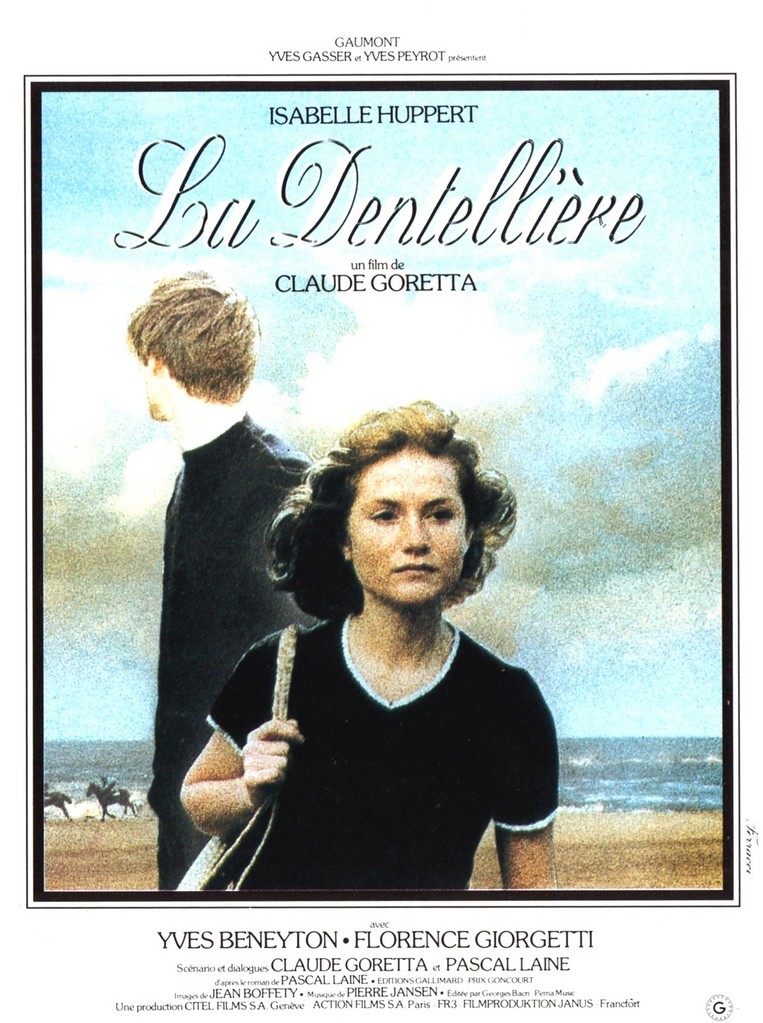
The lines above roll up screen at the end of Claude Goretta’s 1977 film, “The Lacemaker” and are there to sum up Beatrice, a naturally beautiful and shy young woman in a Parisian hair salon where she works as the shampoo girl and occasionally sweeps up the clipped hair. Beatrice lives with her mother, a lovely middle-aged woman who, like her daughter, lives a quiet, unassuming life without apparent joy or anger. Though Beatrice’s dad left them both when Beatrice was still a small child, both mother and daughter go through their days appearing content and relatively unfazed by everyone and everything around them. This setup is similar to that of his previous film from 1974, “The Wonderful Crook,” where Goretta creates an almost too peaceful environment before showing the small cracks in the armor of his characters and their surroundings. With “The Lacemaker,” Goretta has shifted from the pastoral French countryside to an almost overly serene Paris where our protagonist will soon be faced with options for her life, which to this point could be the life of a thirteen year old and not a young woman.
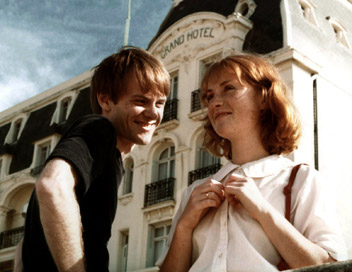
In an early scene, we see Beatrice at the apartment of the comely Marylene (Florence Giorgetti), Beatrice’s closest friend at the salon. Beatrice watches Marylene’s world come apart as she achingly ends her three year relationship with a married man over the phone. Marylene, overwhelmed with grief, threatens suicide via her apartment window, but, instead, she opts to toss out the over sized teddy bear gifted to her from her lover, serving as a comedic sacrifice that establishes Marylene’s flighty character. Still sour over getting dumped, Marylene drags Beatrice for company to the French coastal town of Calbourg during the off season to help get over her ex lover. Once in the sleepy town, the women immediately go to their hotel room, where they listen to the couple next door in mid-coitus, which seems to only mildly embarrass Beatrice and somewhat turn Marylene on to the point that she asks Beatrice to turn down the radio. Goretta leaves Marylene’s sexuality as somewhat ambiguous as she seems to have a somewhat romantic bend towards her friend, but it becomes very clear that the chaste Beatrice has no desire to be outwardly amorous with anyone. After a couple of trips to the local discotheque where Beatrice refuses to dance with male suitors, Marylene hooks up with an American man and abandons Beatrice for the remainder of their vacation, which again does not effect Beatrice in the slightest. Here, one begins to wonder, if anything will make Beatrice finally react positively or negatively. The only pleasure that Beatrice indulges in is chocolate ice cream, which she eats alone until she meets Francois (Yves Beneyton), an awkward, scrawny and slightly older literature student who awkwardly engages Beatrice in conversation. The pair do not exchange contact information, but in one of the best scenes in the early part of the film, they each spend the entire next afternoon trying hard to casually meet again, which they do. With Marylene nowhere to be found, Beatrice and Francois spend every day together, and after Francois proposes they spend the night together, Beatrice, as she does with everything proposed to her, goes along with it, and they becomes a couple.
Once back in Paris, Beatrice and Francois find an apartment together, and after a brief conversation with Beatrice’s mother which ends with “as long as she is happy,” the young couple are off to start a life together in a modest (tiny) Parisian apartment. I need to establish something that I think is key before this world comes crashing down: Director Goretta shows in more than a few scenes that the couple are actually in love; although it is never said, Francois is at times overwhelmed with affection for his woman. I believe that this moment is key as the conflict that will soon arise from Francois’ rapid growth as a budding pseudo-intellectual university student will cause doubt in his mind as to the adaptability of his new found love. When a colleague of Francois’ arrives before Beatrice gets home from work, Francois begins to describe her to his friend in the same way that a teacher would talk about a elementary school student rather than a fully formed adult in regards to potential. You begin to believe at this point that Goretta may begin to make an overarching statement about the anti-humanist tendencies of academics, but it doesn’t go in that direction as Francois’ intellectual friends appreciate Beatrice for who she is and believe that she is good for Francois, who seems to be regarded by them as emotionally closed. You might also believe that this is a setup for demonizing the character of Francois, but that is not Goretta’s intention either, nor is it his intention to paint Beatrice as a dolt. They are both portrayed sympathetically, but their conflict as a couple becomes more a question of being content with one’s own persona. Simply put… Beatrice is content with her passive existence, and Francois, who clearly loves Beatrice, is not content with any of his roles of his own life, as a son, a boyfriend, or as an academic and projects his insecurities onto Beatrice.
As I stated in an earlier review of Goretta’s “The Wonderful Thief,” the Swiss-born Goretta does not simply attack class as Luis Buñuel would in “Diary Of A Chambermaid,” for example. Though Goretta and his writing partner Pascal Lainé on “The Lacemaker” initially create characters who have simple desires, they also create an environment that exposes the smallest discrepancies in those characters, which allows their transformations to occur naturally if you notice their faults. Such is the case when Francois invites Beatrice for dinner at his parents home. Goretta takes painstaking efforts setting this scene up for the viewer. Francois’ family home, once stately, is now rundown. His parents have a servant, as any good upper middle class family would, but she acts more familiar with her employers, further indicating that the days of their historically held wealth are most likely in the past. Francois’ fear (or perhaps hope) that his parents will reject Beatrice are unfounded as his father takes an immediate liking to Beatrice, whereas Francois’ mother is colder but not condemning of his relationship in any way. Again, there is not a class war happening here, since the only person who is unhappy with Beatrice, is Francois, because he is not happy with anything about himself.
Original Trailer (no English subtitles, sorry!)
Goretta leaves nothing to chance with “The Lacemaker” in selecting every facet of his character’s world, and just as he did with The Wonderful Crook”, Goretta formulates early pleasant scenes to allow you to calmly gather your feelings towards his protagonists before leading you to a tragic ending when you suffer with all involved. Once the screen fades to black and the statement that I posted at the beginning of this article appears in front of you, it is painfully clear that the beauty that Francois wants to posses in Beatrice has always been in demand for many generations and that perhaps the beauty comes with a passivity that you must allow to continue for the beauty to stay intact.
Happy Halloween Bovine Ska and Rocksteady Listeners!
Truthfully, back in 1996 when I put together my first Jamaican Halloween radio show at WMBR, I couldn’t find more than a couple of sets spooky reggae and ska from 1955 to 1975 but year by year just like the lost souls rising from the beyond, we have found a coven of rare Jamaican cuts to make a two hour show of eerie sounding reggae, ska, mento, and rocksteady happen! This year’s show was a blast as we mixed those cuts that feature horrifying screams, corpses rising out of graves, and heavy rhythms with some haunting sounds of our own, and Lily’s explanations of the different types of undead apparitions which was pretty mind-blowing! In years past we always did a half-hour spotlight of the enigmatic vocalist known as King Horror but being that Mixcloud does not allow so many tracks glued together from one artist, we played a greater variety of Halloween reggae and ska than ever before!
Of course, we did start the show with King Horror with what could be the most bizarre organ intro of any track we will play this evening…The Joe Mansano produced 1969 classic, “Dracula Prince Of Darkness!” In fact, the first set of four songs was a tribute to the former Vlad The Impaler and his urban counterpart, Blacula! We followed King Horror with a creepy one from the Crystal label house band, The Crystalites with “Blacula” from 1973, The Vulcans 1973 cut for Trojan, “Dracula,” and The Upsetters ending that set with their homage to our fanged friend, “Dracula” from 1970. We had a mento set that began with an appropriate selection from Chin’s Calypso Sextet, “Woman Ghost Fool Man” and ending with the classic “Zombie Jamboree” performed by Lord Jellicoe in 1966. We ended the first hour with a ska set that included such holiday wonders as Byron Lee and The Dragonaires “Frankenstein Ska” from 1964, and our favorite dark ska cut, Lloyd Clarke’s “Living Among The Dead” which Lloyd recorded in 1964 at Federal.
The second hour featured a six reggae tribute to satan with a highlight being “Dr. Satan’s Echo Chamber” by Rupie Edwards from 1974, and a nine song version to version laden set of “duppy” (Jamaican for ghost) including four versions of Bob Marley and The Wailers Duppy Conqueror performed by The Wailers, Dennis Alcapone, and The Joe Gibbs All Stars.
You can hear our full show from October 27th, 2015 HERE. Subscribe to our show on Mixcloud, it’s free and you’ll get an email every Tuesday when our new show goes up.
Happy Halloween!!! Please help us and spread the word and repost if you liked the show! Repost anywhere you see fit.
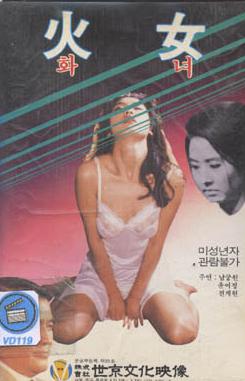
Just how much had Korea changed during the eleven years between the Kim Ki-young’s wildly successful Buñuelesque 1960 film about fading societal roles, “The Housemaid,” and the frenetic remake Kim directed in 1971, “Woman Of Fire?” Korea was neither politically nor economically stable in the decade between the two films and this constant upheaval seriously threatened the urban middle classes, who like every class, dreamed of economic growth. As was the case with most 20th century post-war economies, rapid production and a rebuilding of the infrastructure meant that the social order was going to be affected, and both men and women laborers from the countryside became a human resource for industry or servants in urban middle-class families. This economic situation was clearly present when Kim directed the original “Housemaid,” but it is clear from the earliest scenes in the “Woman Of Fire” that the nuances to the story were primarily intended to reflect the roles that women were now playing in contemporary early 1970s Korean society, which like America, had seen a change in attitudes from women resulting from the liberation movement.
Kim Ki-young cleverly acknowledges the impact of his original film by opening “Woman Of Fire” at a police station where Jeong-suk, the matriarch of a doomed middle class family, is being interrogated about the murder of her husband and the family’s housemaid. A deranged young man has confessed to the murders, but also in the interrogation room is a close friend of our murdered housemaid who is there with a letter from her dead friend that points to the matriarch as the actual killer. The ending is un fait accompli as, again, we are keeping the progression of the story fairly close to the original of the 1960 film, which was massively successful, so there seemed to be no need to build suspense and progressively unfold the tragedy, and by doing so, the viewer can spend time watching the entire narrative reacting to the nuances made to the characters which brings out Kim’s clear comments about the changing roles of women.
As with the original, we have a middle class family in trouble. This traditional middle class family has a mother, father, and two children, a boy and girl. They own a home where the father Dong-sik is a piano-playing songwriter who primarily lives off the labor of his wife, but unlike its 1960 counterpart, in “Woman Of Fire,” the wife, Jeong-suk, isn’t just a seamstress who is pregnant and is having issues maintaining the home and her layabout husband. The matriarch of the family in the 1971 version owns a large chicken ranch, which is profitable but not profitable enough for her to afford a housemaid for the family, which is essential in keeping up the false appearance of a successful middle class family living in Seoul. Still, Jeong-suk is off to a placement service broker to find a suitable housemaid and soon meets Myeong-ja, a country girl who runs away to the city with her friend after killing the two men who tried to rape them in the countryside, who has arrived in Seoul with different agenda than her companion. Myeong-ja’s friend wants to become a barmaid (polite term for prostitute), but Myeong-ja wants to be a housemaid in a wealthy home where she could “learn valuable things” and eventually find a husband. Jeong-suk is quick to tell Myeong-ja that she has financial issues, which suits Myeong-ja fine as she only asks that her new boss find her a suitable husband as payment, which becomes their agreement for her employment. This scene and an earlier scene in which the investigating officer expresses his loathing for “country girls who come to Seoul for illicit purposes” quickly bear out the fragile economic situation in South Korea of the early 1970s.
The sexuality is another area in which the differences between the two films become readily apparent. Though not visually graphic, the situations and dialog force to the surface an attitude where women are beginning to take a more demonstrative role in the urban family. Such is the scene where Jeong-suk, after a tryst, playfully jokes with her husband and freely discusses their need for innovation and “role playing” with their love making to which Dong-sik satirically responds by condemning the “things that women write these days about sex.” This frank discussion occurs while Myeong-ja is in her bedroom, but what is not clear is whether Kim Ki-young wants us to believe that Myeong-ja has overheard this conversation. Regardless, something motivates Myeong-ja to creep towards her employer’s bedroom where she definitively sees them having intercourse and responds by falling to the floor while having a fit.
I find this scene somewhat problematic as it sets up Myeong-ja’s eventual psychotic over-sexual behavior and possessiveness as being more of a result of either Myeong-ja’s attempts to emulate the fairly healthy attitudes she overheard about sexuality or as a PSTD response to seeing sexuality after her rape in the countryside, as opposed to the point of the original film, where there is no doubt that Myeong-ja is a victim of a fraudulent class imperative that is enforced on her after she must miscarriage (here it is an abortion) when she becomes pregnant from a rape by Dong-sik which leads to her subsequent sexual and violent actions. The original class elements of the 1960 original film are in place with the remake, but the focus here in the 1971 remake is on Kim Ki-young’s sexual message, where Myeong-ja’s friend from the country, who now works a prostitute, is applauded by the director for being honest about her intentions with money and men, which conflicts with the then current attitude where a middle class woman lives a lie by prostituting herself for a husband in order to maintain the social order. The final shot of the film, where Myeong-ja’s seductively dressed friend carries a fallen, shoeless, all-in-white Jeong-suk through the rain, is a grim final statement about a fading society where the modern promiscuous yet honest woman is seen as stronger than the middle class family woman.
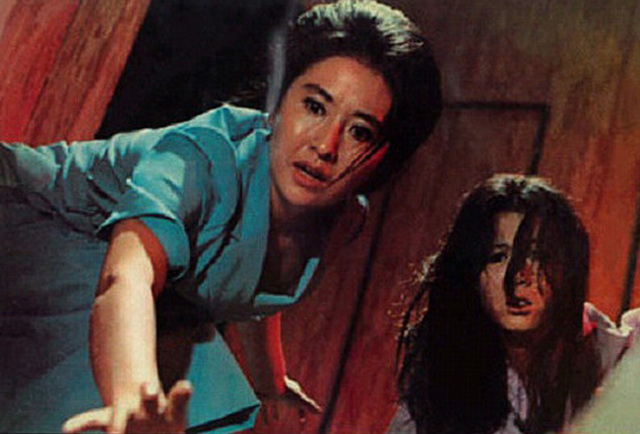
Two things that Kim ki-young does greatly improve on in his 1971 entry into the “Housemaid” trilogy is the use of sound and visuals. The original 1960 film is shot in grim black and white, and Kim uses shadows and dimly lit rooms to express the middle class failure in the home of the main characters. The way characters enter each scene and from what direction are good visual tools that help us subliminally understand their intentions. In “Woman Of Fire” the black and white is gone and replaced with two primary colors, blue and red, that aggressively add to the mood of certain scenes. The scenes where either the married couple make love or Myeong-ja is raped have the same red filter to indicate that there is the same negative connotation to the sexuality in those vastly different interactions. In a scene where Myeong-ja eavesdrops on a conversation between Dong-sik and Jeong-suk where they discuss getting rid of their housemaid, Myeong is bathed in a tragic blue light. Alternatively, the off-kilter music that is used when the children are playing to express unrest in the home is also played when Myeong-ja kills a rat under her foot shortly afterwards. These choices add to the mood of “Woman Of Fire” and match the scenes of complete insanity that will soon follow as things spiral out of control in a louder, uglier way that its predecessor perhaps couldn’t do in 1960.
The Full “Woman Of Fire” With English Subs
I have in the past questioned a director’s desire to remake a successful film which they have already created. Such was the case with Michael Haneke’s superb 1997 film,”Funny Games,” which seems to have been remade with Hollywood actors in 2007 if only to further mock the”Hollywood/happy ending” where the good guys always win. Even with that intention, I found the shot by shot remake to be a waste of that talented director’s skills, and after hearing Haneke speak at the Harvard Film Archive in the same year the Naomi Watts/Tim Roth version was released, it seemed clear that the request to remake the film came as an edict from Haneke’s US representation. As for Kim ki-young’s 1971 remake of “The Housemaid,” despite some needlessly harsh comments the director makes in the film regarding the divisive use of sexuality by women in early 1970s South Korea, “Woman Of Fire,” remains as an important document that sometimes brutally stresses the reality of a ever fading middle class, with its impossible to maintain social imperatives that were still hanging around in a economically ravaged South Korea that wasn’t improving even after a decade. Whereas the original took its family’s decline in a slow. but ultimately shocking conclusion, Kim ki-young directs “Woman Of Fire” in a dizzying and even borderline nightmarish way that amplified the need for an immediate change in social attitudes that were harming both the rich and the poor for no other purpose but preserving pride.
This delicious and beautifully easy to make dish comes from Catania on the north coast of Sicily and is always perfect for a cool fall day. From prep to table should take about ninety minutes but there is not a huge amount of chopping to be done here. My recipe for this dish varies on a few ingredients, one being the use of ricotta salata which is usually a bit tough to find no matter where I’ve lived so I have always used large grated pieces of romano instead. I also love a bit of kick to my Norma sauce so I add a good amount of crushed red pepper and then for an extra mellow flavor that melds perfectly, I opt for a few ounces of olives.
Here’s what you will need to make this dish happen: One box of penne pasta, one can of puree tomatoes, one large eggplant, olive oil, a dozen olives, 6 ounces of hard romano cheese, fresh parsley, fresh thyme, salt, and pepper.
We were joined by our dear friend Oriana for this video. Thanks for her help and smiles when we were making this dish.
Let us know how yours turns out and thanks for watching!
Love,
Generoso
Music: Tchaikovsky’s Concerto No.1 in B flat minor Op.23
First off, thanks again to all of you who wrote and wished Generoso a happy birthday! Last week’s all 1968 show was a tad silly but we had fun doing it and we were glad you liked it as much as you did. We are also happy to announce are very happy to say that our weekly show besides being uploaded to Mixcloud will now also be part of Rasta Radio JA, Barbara Blake Hannah’s radio station based out of Kingston, Jamaica. Every Friday from 2PM-4PM Jamaican time our show will air for the good people of Jamaica. We could not be prouder.
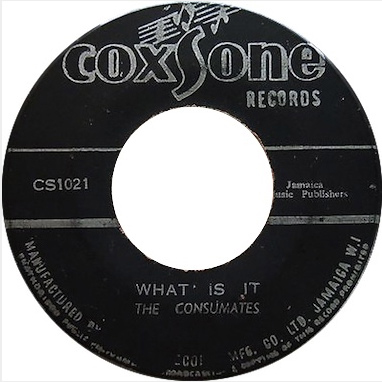
This week’s show began with two sets of rare rare rocksteadys, starting with a tune from a little known group, The Swingers, with a track called “Show It Now” which was released on Prince Buster’s Olive Blossom Label in 1967. We followed that with another rare cut, this time from Coxsone in the same year, 1967, “Have Mercy” from The Jamaican Shadows. Two wonderful tracks that got the ball rolling. After another set of rocksteady, we started our weekly mento set with “How You Come Over,” a tune from the queen of mento, Louise Bennett from her “Jamaican Folk Songs” LP which was released back in 1954. We ended the first hour with a long set of Jamaican rhythm and blues to put you in the mood for our King Pioneer spotlight. A standout duet during that last set of the first hour featured two amazing singers who both visited The Bovine Ska in the past, Owen Gray and Laurel Aitken. They teamed up in 1962 for the Dee’s Label with the boisterous “She’s Gone To Napoli.” After that set, we started our half hour tribute to Theo Beckford’s King Pioneer Label….
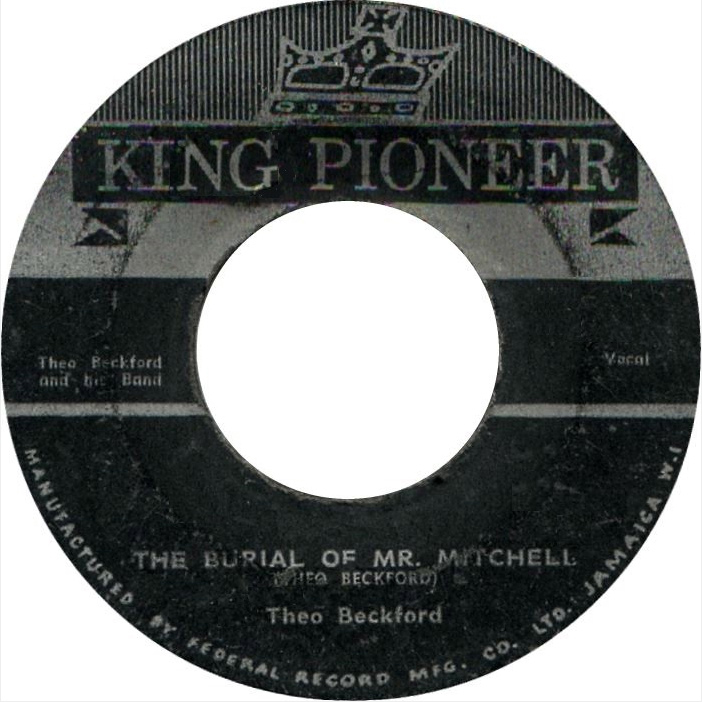
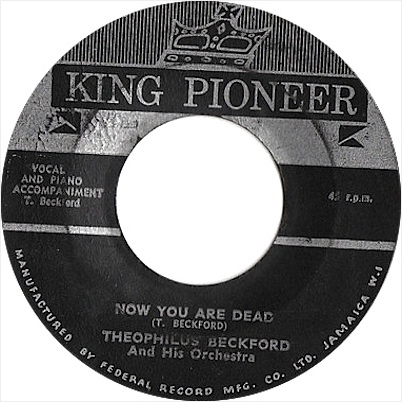
Born in Trenchtown, Kingston, Theophilus (Theo) Beckford taught himself how to play piano at the Boys’ Town School, gaining inspiration from Roscoe Gordon and Fats Domino, whose records were extremely popular in 1940s and 1950s Jamaica. With Stanley Motta’s mento recording business (his side project from his photo supply shop), Beckford found a role as a session musician for the MRS label, backing up mento artists such as Lord Composer and the mighty Count Lasher. In 1956, Beckford recorded “Easy Snappin” for Coxone Dodd’s Downbeat soundsystem, during what is believed to be Coxone Dodd’s first studio session at a time in Jamaican music history where 78s were no longer popular and when American R&B was not as accessible in Jamaica. Beckford met Coxone Dodd through Ken Khouri; Beckford would sing for Khouri’s Federal Records, and Coxone Dodd decided to record at Federal Studios. While “Easy Snappin” is often considered and regarded as the first ska track in Jamaica, it contains that signature rollick of Jamaican Rhythm & Blues, so that claim is a little questionable. Regardless of where “Easy Snappin” falls in the transition from R&B and into ska, it was a huge hit for the soundsystem and eventually for Dodd’s Studio One when it was released as a record in 1959. Beckford would continue to record for Dodd and eventually all of the major soundsystem operators: King Edwards, Prince Buster, and Duke Reid. In 1963, after much experience as a session musician, Theo Beckford opened up his own label for greater independence, and that is the King Pioneer label, our label spotlight of tonight. King Pioneer was a full labor of love. Beckford created the name and the label artword, drawing the signature crown himself.
Backing up the the King Pioneer records were the The Theophilus Beckford Orchestra and The King Pioneer All Stars are not 100% clear; as with many house bands, there’s a rotating cast. Some of the members were: Drumbago and Wackie Henry on drums, Lennie ‘Blues’ Gordon on bass, Lloyd ‘Ace’ Richard and Lord Jellicoe on guitar, Val Bennett and John the Baptist on alto sax, Baba Brooks and Raymond Harper on trumpet, Ronald Wilson on trombone, Lester Pegart, Stanley Notice, and Dennis Campbell on tenor sax, and of course, to round out the instrumentalists, Theo himself contributes piano and organ in addition to production.
You can hear our full show from October 20th, 2015 HERE. Subscribe to our show on Mixcloud, it’s free and you’ll get an email every Tuesday when our new show goes up.
Enjoy!! Please help us and spread the word and repost if you liked the show! Repost anywhere you see fit.
In between his brilliant feature film debut in Lindsay Anderson’s prophetic 1968 counterculture film “If” and his current job making “Lunchables” commercials, the wheels came off the career of legendary English actor Malcolm McDowell.
During the late 1970s, with his career booming off of critical and commercial successes such as Lindsay Anderson’s “O Lucky Man,” which Malcolm starred in and co-wrote the screenplay, to portraying Captain Flashman in Richard Lester’s 1975 hit “Royal Flash” to his most famed role as Little Alex in Kubrick’s adaptation of Burgess’ “A Clockwork Orange,” it seemed that nothing could unseat him from being regarded as one of the great young talents in British cinema. That is until 1979, when Malcolm appeared in three films, two of which saw small popularity and decent press and one film which saw international headlines but for all the wrong reasons: the Tinto Brass directed and Bob Guccione produced hardcore porn Roman epic, “Caligula.” “Caligula’s” rank violence and often grotesque sexuality offended just about everyone and was relegated to a single screen in a NYC theater that Guccione purchased just so that his X-Rated opus could screen anywhere without incident. “Caligula” starred John Gielgud, Peter O’ Toole, and a young Helen Mirren, all of whom came out of the experience with their careers fairly unscathed, but after all, none of them were playing the title character, and for that, McDowell saw his performance singled out and savaged for its flamboyancy, which frankly was no less flamboyant than the performance that he gave as a ruthless Nazi commander in “The Passage,” which was released the same year. Then again, in our polite society, I guess it’s more acceptable to play a torturing fascist than a Roman leader with a penchant for anal fisting newlyweds.
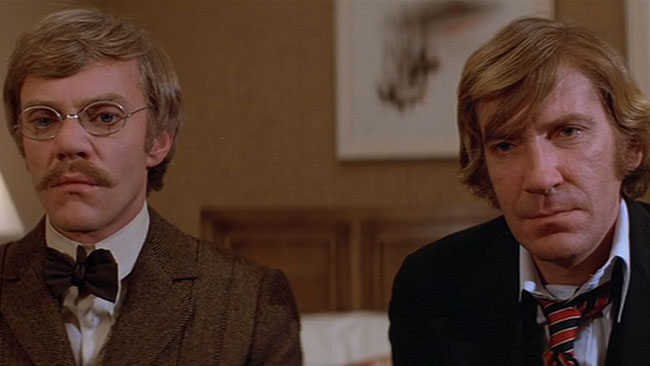
In the summer of 1979, Caligula had been released in Rome and the word of this bleak, over budget porno had begun to hit the United States with word that the film would be released early the following year. That same summer I was thrilled to head to my local single-screen theater to see McDowell, who I had followed since seeing “A Clockwork Orange” at the age of ten when my friend and I watched it on tape, playing author HG Wells in a new movie called “Time After Time.” In this whimsical, mostly romantic and far less geeky film, McDowell plays Wells with a heartfelt charming conviction. The film opens in the year 1896 with a grizzly killing committed by none other than real life serial killer, Jack The Ripper. Soon, we are whisked to the home of Wells who is hosting a dinner party for his peers where he plans to give special unveiling of a new project later in the evening. Once the last of his dinner guests, Doctor Stevenson (David Warner), arrives, Wells adjourns the group to his basement where he shows them his proud creation, a very ornate almost amusement park ride looking contraption Wells calls “a time machine” (we are to guess that he has not written that book yet). Wells boldly explains the functionality of his creation, but when he is asked if it actually works he sheepishly admits that he has not “worked up the nerve to test it out yet.” His guests laugh off the invention, but the laughter soon ends when Scotland Yard knocks on the door. As we the viewer know but Wells’ guests don’t, The Ripper has struck again, and the proof that Doctor Stevenson is most likely the man that they are looking for sends the austere house into a frenzy, but after a thorough search, the bad doctor is nowhere to be found. It then dawns on Wells that someone had the nerve to use his invention, and that man is Stevenson whom Wells, well known for his utopian ideals, must now stop as he (Wells) is certain that Stevenson will run amok with violence in the future, a place where HG imagines being devoid of war and strife. So, our protagonist must follow Stevenson into the future, 1979 San Francisco to be exact.
After a dazzling time-travel sequence, Wells arrives in swinging 1979 San Francisco. Cleverly the future has allowed him to land his ship in a museum exhibit featuring Wells’ entire study and his time machine which the sign indicates “never worked,” which is odd as the key that only Wells possesses is only needed to prevent the machine from automatically returning to where it came from, meaning that anyone could just type in a date and make it fly. OK, I feel me getting geeky here, so I will move along, but did you notice how I didn’t mention that Wells could’ve simply ended the story at the beginning by taking his time machine back an hour in 1896 to alert the police that Stevenson was The Ripper? Yes, the story does have some gaping holes when playing with its time travel plot, but, as I don’t want to trip out on the sci-fi aspects just yet, I will now really move along.
Wells immediately understands that the utopia he had predicted in the future has not yet arrived. There is violence, mistrust, and poverty, but McDowell shrugs it off and like Sherlock Holmes, who he mentions many times in the film, uses deductive reasoning and goes bank to bank asking about Stevenson as Wells suspects that he will try and exchange Sovereigns somewhere in the city before building up a body count. Wells’ quest leads him to a desk at the Bank of England where he meets a young manager named Amy (a wonderfully ditsy Mary Steenburgen). Amy does point HG in the right direction as she referred Stevenson to the Hyatt, where the nebbish Wells will soon confront the larger serial killing Stevenson and try, through conversation, to get him to return to 19th Century England to face the authorities (not sure how the screenwriter thought that made any sense). Stevenson tells Wells that their present location and time in the United States is a violent place where Stevenson finally feels at home, and after a scuffle where Stevenson unsuccessfully tries to locate the time machine key on Wells, they take their chase on foot to the streets, where Stevenson is hit by a car and is presumed dead. Wells, believing that his job is now over, seeks out our good bank clerk Amy for a chance at gaining knowledge of this place in time and perhaps the odd chance at a cuddle. Not phased that HG is dressed like a Sherlock Holmes-era dandy, Amy beds and falls in love with Wells, who is in no rush to go back to the days when seeing a woman’s exposed ankle was considered erotic.
Through news reports on the radio, Wells soon realizes that The Ripper is still alive and well and slicing up the women in the Bay area, so he must hunt him down and inadvertently gets Amy mixed up in the quest, so she then becomes hunted by Stevenson as Wells will not surrender his key. Of course Stevenson could just get back into the time machine and go farther into the future or deeper into the past to kill prostitutes but without the key, that would mean that Holmes would still be after him. I, for one, began to wonder, even at the age of eleven, why that would even be of concern to Stevenson unless he is foolish enough to head back to 1896 England. Anywhere else, Wells would be seen as a crackpot having to explain his investigation of Stevenson through the time space continuum.
In this way, “Time After Time” does not succeed as science fiction; in fact the science fiction engine of this film is only there to set up the romance between HG and Amy, which is fine for me. There is a palpable chemistry between McDowell and Steenburgen onscreen, as they did actually fall in love during filming of “Time After Time” and were married the next year, and they stayed married for the next decade. To add to the lovely performances of McDowell and Steenburgen, David Warner is also fantastic as Jack The Ripper, and if the plot had less about the relationship between HG and Amy, it would’ve been an entirely different film, one that would’ve relied more on the facts that we know about Jack The Ripper and HG Wells to further a plot of cat and mouse as opposed to the fictional character of Amy, a perspective that has me curious of the outcome, but, nevertheless, I greatly enjoyed the romantic perspective that director Meyer takes with the story. Adding further to the enchanting mood of “Time After Time” is a lavish old Hollywood score composed by the great Miklós Rózsa, who had scored almost one hundred films in his career from “Ben Hur” to “Spellbound” to “Double Indemnity.” The score for “Time After Time” would mark the end of Rózsa’s magnificent Hollywood career.
The following year in 1980, Steenburgen would deservedly win the Academy Award for her portrayal of Lynda the wife of Melvin Dummar in Jonathan Demme’s classic “Melvin and Howard.” That same year Caligula would open in the U.S., and its presence on our shores would cause immense controversy and forever link McDowell negatively to the titular role. Buried with the controversy that year and now virtually forgotten was another fine performance by McDowell in “Look Back In Anger,” directed by his friend Lindsay Anderson. Two years later, Anderson would direct McDowell in the last of his Mick Davis trilogy in the dark comedy that is “Britannia Hospital.” That film, a smart satire on the British Health Service, also failed at the box office. In the following years, McDowell was mostly relegated to villainous roles, a few notable performances being “Mr. A” from Robert Altman’s ballet drama “The Company” in 2003 and that same year as the heavy in Mike Hodges’ underrated anti-gangster film, “I’ll Sleep When I’m Dead.”
“Time After Time” Original Trailer
Despite its flaws in storytelling, I always looked at “Time After Time” as that last beautiful moment for McDowell in cinema. Pigeonholing an actor, either positively or negatively, is never a good thing if you have the talent that McDowell exhibited during his career. “Time After Time” proved that Malcolm could be comedic but also romantic and charming while eating up the screen as he did as a psychotic in many films. Sadly, there isn’t a real time machine for McDowell to go back and reconsider his role of a demented orgy-obsessed Roman emperor, but let’s hope that before he leaves this world, he turns down a check to shill for a packaged lunchtime product to make a small film that mattered like his “Caligula” counterpart Peter O’Toole did in 2006’s sublime film “Venus.”
This show this past week had a singular purpose, and that was to celebrate Generoso’s birthday the only way he knows how: By playing only Jamaican cuts from the year of his birth, 1968. He has been doing exactly that since the show started on WMBR, 88.1FM in Cambridge in 1996. As for 1968, that was a tumultuous year in history as it saw the assassinations of Martin Luther King Jr. and Robert Kennedy. The shooting of Andy Warhol by Valerie Solanis, the May 1968 riots in Paris but in the positive was the successful Apollo 8 mission, Shatner laying a kiss on Nichelle Nichols on Star Trek, and the end of rocksteady and the birth of reggae in Jamaica!
We began Generoso’s birthday with two sets of rocksteady and reggae that feature “1968” in their title. In the sets you heard cuts like The Three Tops track for Coxsone, “Great 68′ Train.” Lord Creator’s “Come Down ’68” which he recorded for Vincent Randy Chin. Some of the sensational 1968 rocksteady and early reggae cuts that made it onto the show are “Soul Day” from The Ethopians on Merritone, “Fun Galore” a top side from The Kingstonians on JJs and many many more. Between these songs, we played promos from 1968 television shows, we talked about the big records in the United States that year. A silly, fun, program that we hope you will enjoy!
You can hear our full show from October 13th, 2015 HERE. Subscribe to our show on Mixcloud, it’s free and you’ll get an email every Tuesday when our new show goes up.
Enjoy!! Please help us and spread the word and repost if you liked the show! Repost anywhere you see fit.
If you regularly read my reviews of lost 1970s films, you may have noticed that only two months ago I already reviewed a poliziotteschi (Italian crime film) called “The Big Racket,” and that one also starred Fabio Testi. So, why, you may ask, am I reviewing another film within the same genre so soon?
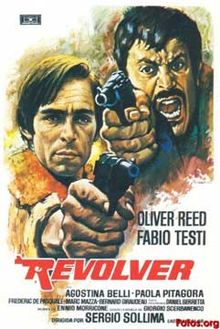
Most importantly, I really love the early spaghetti westerns of director Sergio Sollima, who sadly passed away back in July at the age of ninety four, so I thought to re-watch some of his best films. High on my list of his work in the spaghetti genre are “The Big Gundown,” “Face To Face,” and “Run Man Run,” all back to back from 1966 to 1968 and all starring the steely-eyed Cuban-born actor Thomas Milian. Director Sollima was never as epic in scale or poetic as Leone or as gruesome as Corbucci; no, what distinguished a Sollima western was the cold solemnness that set him apart from many of his peers. I loved taking a second glance at his work these last few months and was even more motivated to watch his 1973 poliziotteschi, “Revolver,” aka “Blood In The Streets,” the Sollima work with the brooding talents of Fabio Testi, who at the time had just scored a hit in the crime genre with “Gang War In Naples,” and the legendarily erratic and intense English thespian, Oliver Reed. With both actors also ranking high on my wife Lily’s list of 1970s male film star crushes, there was a lot riding on this watch between Lily’s love of Reed and Testi, and my adoration for both actors and Sollima’s films. Luckily “Revolver” delivers on both of our expectations.
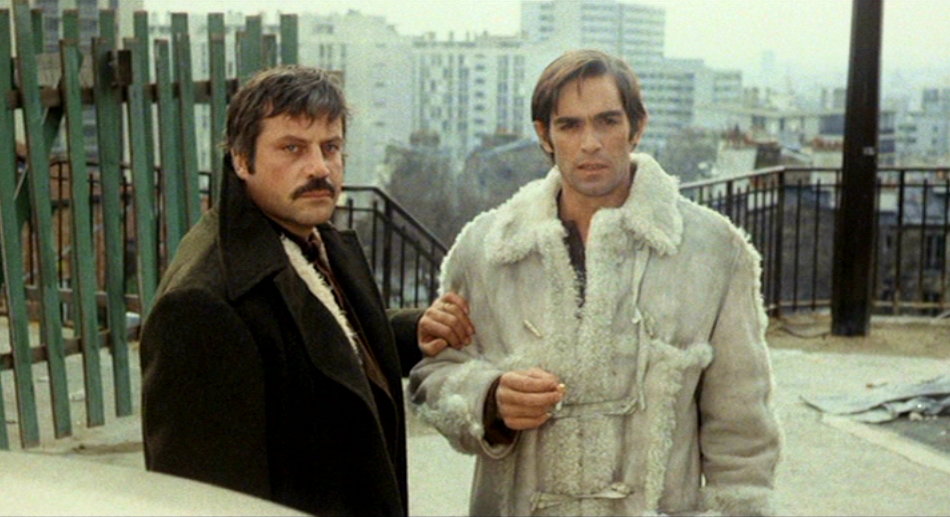
“Revolver” opens in the dead of night where Milo Ruiz (Testi) is carrying his partner in crime who is badly wounded after a security guard shoots him during a burglary attempt. Milo clearly cares deeply for his accomplice in crime who is not going to make it and asks Milo for his dying request to bury him secretly and to keep his dead body out of the hands of the coroners. Milo obliges and he sadly buries his friend in a riverside ditch. After the burial, we cut to the next scene where you have the very Anglo Oliver Reed playing (brace yourself) Vito Cipriani, a tough prison official who spends his nights in the arms of his ridiculously gorgeous wife Anna, played by the luminous Agostina Belli. Everything is all well and good, which based on the genre you know won’t last long, until one day Vito gets a call that his wife has been kidnapped. When the abductor calls, he only asks for one item in return of Vito’s wife, and that is the unofficial release of a prisoner being held in Vito’s jail named Milo Ruiz. As Vito loves his wife dearly, he immediately descends on the prison cell of Milo and begins an intense round of questioning and a bit of beatdown on our wisecracking felon who appears to not be in on the kidnapping and has no ideas who his “friends” are who are stealing wardens’ wives to barter for his freedom. After a few more face slaps and armed with the prospect of early freedom, Milo breaks out with the help of Vito and they begin a Walter Hill/”48 Hours” style relationship of putdowns and punches to the head as they race against the clock to try and rescue Anna. Neither Vito nor Milo knows why they want Milo as their ransom, but, as the movie progresses, we start to realize that Milo may be as innocent as Anna in all this, and that his arrival to these mobsters may mean his own demise.
This plot so far sets up Vito as the classic poliziotteschi protagonist in that he is a by the book official who does everything he can legally, but he even must break the law in order to fight the forces of evil. As corruption was rampant in Italy, the poliziotteschi mirrored Italian’s frustration with a system that could not represent or protect them adequately. The unique twist in “Revolver” is the chemistry that forms between Vito and Milo or should I say Reed and Testi? As Sollima would say in his interview for Blue Underground, Testi was cursed by being so damn “good looking” as no one ever asked him to really act. Testi was a fine actor as evidenced by many of his films during his long career, most notably in Andrzej Żuławski’s brilliant 1975 melodrama, “That Most Important Thing: Love.” Reed was quite possibly the finest English speaking actor of the 1970s, an actor who was most noted for his intensity but was also capable of heart wrenching tenderness as evidenced in Ken Russell’s 1969 film “Women In Love” and 1971 film, “The Devils.” You can see a real friendship developing between Reed and Testi, which translates into their characters, Milo and Vito, who must make hard choices as the plot deepens between the care for a friend, the love of a woman, and ultimately their own self-preservation. Unfortunately, as it was the case for many Euro-crime dramas of the 1970s, both actors’ voices were dubbed into English (why does an English actor like Reed need to be dubbed anyway?) in that same fake American-English accent that sounds like Mel Gibson’s suicidal cop in the “Lethal Weapon” films. Still, Reed and Testi carry so much pathos with just their eyes and gestures that it should be shown to young film actors.
Given the talents of the leads’ ability to handle whatever their roles demand, the plot can and does become quite complex and much credit has to be given to Sollima who co-wrote the screenplay with Massimo De Rita, and Arduino Maiuri. This isn’t a simple plot of revenge as was the case with the other Testi film I wrote about back in August, “The Big Racket,” which was an interesting view if only for its sheer level of brutality and non-stop action. No, with “Revolver” Sollima, De Rita, and Maiuri have created a complex plot and a set of characters that carry very different agendas, which propel the story towards a much unexpected ending. Further solidifying “Revolver” as one of the finest Euro crime film ever is the score by Morricone which in my opinion ranks amongst the best of his 1970s work. It is a bold majestic score that seems more designed for a Leone film, but, given the dark nature of “Revolver’s” plot, the music is an excellent counterbalance in tone that pushes the dramatic hit of more than a few small scenes.
Adding to the majestic nature of “Revolver” is the daring cinematography by Aldo Scavarda, who a decade earlier had lensed Michaelangelo Antonioni’s masterpiece, “L’avventura.” Scavarda does very well with the action scenes, especially taking some odd angles with the driving sequences, but he really shines when he focuses on the intimacy between actors. When I set out to write this review, I immediately recalled the first moments of Reed and Agostini on screen which establishes their character’s love for one another via a long, low-level tracking shot of Agostini, in knee high yellow socks, walking around her apartment on the tops of Reed’s bare feet. I also think of a two-shot of Reed and Testi briefly holding hands for a few seconds after they escape an almost deadly encounter: these are simple visual ideas that make this crime drama into an emotionally immersive experience as opposed to just another standard Euro shoot-em-up.
International Trailer for “Revolver”
Based on the interview conducted with Sollima for the DVD release, “Revolver” flopped at the box-office, not because of bad reviews, but for his producers and distributors having foolishly spent all of their ad money when the film was expected to be released in Italy in the fall of 1973 but was not due to unclear delays that pushed the release into spring of the next year. The film was released in the U.S. the following year and was marketed to take advantage of the runaway success of Charles Bronson’s “Death Wish” but never found an audience here either. Thanks to Blue Underground for releasing “Revolver,” an exceptional film loaded with exceptional acting by two of the finest acting talents that decade, an excellent score and visuals, and one of the last great films by the late Sergio Sollima.








 LILY & GENEROSO 4EVER!