The August 23rd, 2016 Bovine Ska and Rocksteady began with two sets of ska, including a set of COWBOY-themed ska which was a silly, last minute decision based on us acquiring the Prince Buster’s 1962 single, Cowboy Comes To Town! We love westerns so what can you do? We ended the two sets of ska with the king of the reggae harmonica, Roy Richards, on Studio One in 1965 with Double Trouble. Our weekly mento show had a few rare gems this week, including The Dictator With The Jamaican Calypsonians and their 1955 tune for the Kalypso label, Chinese Cricket Match. We ended the first hour with a long set of rocksteady starting with the seldom heard band, The Jupiters who cut a Judge Dread styled courtroom tune, The Return Of Ezekial for Joe Gibbs Amalgamated label in 1967. That set ended with another track from 1967, this time a cover of Maurice Williams doo-wop classic, Stay, this time performed by The Summertaires for the Coxsone label. We then went into our spotlight of the Triumph Label.
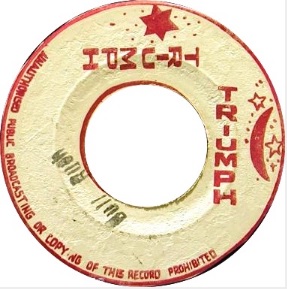
The Triumph label is one of those short lived labels that we are always amazed to dig up! Carlton Bradford was the owner and producer, with releases on Triumph concentrated in rocksteady and early reggae. Bradford was primarily known as a singer; he was a member of The Vibrators and The Soul Cats, both groups that were prolific throughout early Jamaican music. With Leslie Bailey and Solomon Gayle, Bradford recorded as a vocalist as part of The Vibrators, who started with Justin Yap and his Top Deck label. The trio would record through rocksteady and reggae, serving often as backing vocalists for many labels, including Coxsone and Gay Feet.
With Ewan McDermott and Kevton Williams, Bradford sang as a member of The Soul Cats, who were active in reggae in the late 70s. The Soul Cats would actually open up the Bradmack label together in America, releasing their own tracks as The Mighty Soul Cats for the label that had its home in New Jersey and was distributed out of the Bronx.For Triumph, we get to hear Bradford focused on rocksteady and early reggae as he got his start as a producer. He attracted quite a lot of talent to Triumph and excellently produced their recordings. Many of Bradford’s productions were picked up by Blue Cat and Pama’s subsidiary Nu Beat in England, but they originated on Triumph.
Winston Wright was one of the most prolific organists in Jamaican music. As a member of Tommy McCook and the Supersonics and Lynn Taitt and the Jets, he recorded extensively with Duke Reid early in his career. He would see enormous success from his essential part in “Liquidator,” the hit from the Harry J All Stars and would go on to record for the backing bands of some of the biggest labels and producers, including Clancy Eccles, Byron Lee, King Jammy, Alvin Ranglin, and Lee Scratch Perry just to name a few. One of the labels that Winston Wright stopped by was Triumph, and he performed with the Triumph All Stars to cut a track for Bradford.
We hope that you enjoy the August 23rd, 2016 Bovine Ska and Rocksteady:
A triple version of Delano Stewart’s That’s Life, a pretty 1968 tune for Sonia Pottinger’s High Note is how we commenced the August 16th, 2016 Bovine Ska and Rocksteady. We continued the with another set of early reggae that ended with Leonard Wilson’s 1975 track for Mighty Cloud, I Want To Thank You and the version by The Mighty Cloud Band, Thank You Instrumental. We thought to go with an uptown mento sound for this week’s mento set…Baba Motta’s Jamaica Talk , Tony Johnson and His Carousel Band’s Give Her Banana, and Clyde Hoyt and George Moxey Quartet’s Montego Calypso. To end the first hour, a long set of rare ska to get you ready for the ska of King Edward’s Giant Label that ended with The Originators, Chelip Chelip, which was released on SEP in 1966. It was then off to the spotlight…
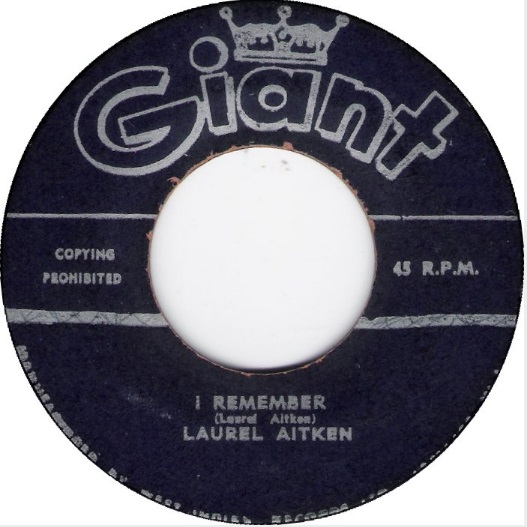
Vincent ‘King Edwards’ began his career as a sound system operator with his brother George. Vincent traveled to America in 1954 and brought back records and the equipment for a sound system. Upon his return to Jamaica, Vincent and George opened up the Rock and Roll soundsystem, but the first dance did not go well, and Vincent and his brother George took some time to improve the soundsystem. Rock and Roll returned to the scene in 1956, and immediately started to be called the Edwards Sound. Shortly thereafter, King was added to the sound system name, emerging as the King Edwards soundsystem. Vincent would get exclusive records from artists in America, specifically Philadelphia where his sister lived and from the south where, giving the King Edwards soundsystem an edge that would append ‘The Giant’ onto the name.
Like many other sound system operators, the Edwards brothers would play primarily American soul and R&B, but as the 60s arrived, they began recording acetates in Jamaica customized for his soundsystem, and that led to a natural transition into recording and releasing records for the public in the early 1960s. There is of course the flagship label that many know of: The King Edwards label, but here on the Bovine Ska, we wanted to spotlight a label that was the other part of the soundsystem name, and that is The Giant label.
Vin and George Edwards were extremely active throughout ska, but the label stopped releasing records as rocksteady and by the early 70s the soundsystem completely closed it doors. A few factors played into this: Vin’s interest shifted toward on politics; he served as a Councillor and then became a member of parliament. He was also getting into horse training, which is something he still does today. George moved to the countryside of Jamaica, away from the city and the music scene. Furthermore, Vin was not a marijuana smoker (nor an alcohol drinker), and after a while the rampant smoking that would occur in the studios made the music business difficult for Vin.
Please let us know if you enjoy the August 16th, 2016 Bovine Ska and Rocksteady:
We spent the bread that we would’ve used to buy food to get records for the August 9th, 2016 Generoso and Lily’s Bovine Ska and Rocksteady Radio Show, but please don’t let the guilt that you should feel influence you in any way to listen to the this week’s show! Midway through the show, we have a spotlight on Lee “Scratch” Perry’s Wizz-dom label (1972-1973) which is so good that we have almost forgotten how satisfying a square meal feels like when you get to eat one. Amazing cuts from The Heptones, Melodians, Junior Byles and of course, The Upsetters! As the Wizz-dom label is so thick with the reggae, we decided to start off this show the ska, beginning with Joe White’s festive 1965 cut for Duke Reid’s Treasure Isle label, Irene. Our mento set featured the title cut from Percy Dixon’s Scandal In Montego Bay LP which was released on Sue in 1964. After that set, we launched into a long set of rocksteady with a real rarity being The Minstrels 1968 tune for Coxsone on Studio One, Giving Up On Love. We then went right into the Wizz-dom label spotlight.
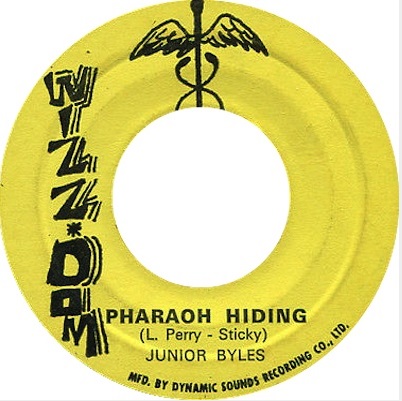
We are thrilled to present a spotlight on a label from one of the most inventive producers, engineers, and all-around performers tonight….Lee Scratch Perry. Over the course of his career, Perry founded many labels. Upsetters, Goodies, and Justice League are just a few, but this week we decided to focus in on the Wizz-dom label. Believed to be born in Kendal as Rainford Hugh Perry, Scratch got his recording first name from his mom’s nickname for him, Leeburn. Perry’s path to music began in Negril. On moving to Negril from Clarendon, where Lee had built up a reputation as a great dancer, Lee worked on construction as a part of Jamaica’s development of the region as a tourist site. During his days spent moving rocks on construction sites, the sounds of the shifting and the clashing of stones spoke to Lee and pointed him toward Kingston to make music. In the Kingston music scene, Lee wore many hats for Coxsone Dodd and Studio One writing and arranging songs and appearing in front of the microphone as a recording artist. After spending a lot of time with Coxsone, Perry moved over to Joe Gibbs before eventually venturing out and creating his iconic Upsetter label, giving him his own avenue to flourish as a producer and arranger.
At Wizz-dom, we see Scratch as the mastermind for all goings-on for the music being recorded and the distribution of his recordings. In the early days of Wizz-dom, Pat Francis approached Scratch with “King of Kings,” and after recording it, Scratch felt that Francis would be a good salesman for Wizz-dom and the other labels he had, so Francis became a salesman for Scratch, a position he held for three years. We kicked off the spotlight with this track that started the Pat Francis and Scratch business relationship, King of Kings, a majestic track that set the tone for this Wizz-dom spotlight.
The Upsetters, the house band for Lee Scratch Perry productions, had three distinct line ups. By 1972, when the Wizz-dom label was launched, the Upsetters had a fluctuating lineup, but Perry would always insist on using the best musicians he could find for each recording. By 1974, the band membership became more stable with Boris Gardiner on bass, Earl “Chinna” Smith on guitar, Winston Wright & Keith Sterling on keyboards, and Sly Dunbar or Benbow Creary on drums.
Enjoy the August 9th, 2016 Bovine Ska and Rocksteady
Happy Jamaica Independence Day Bovine Ska and Rocksteady Listeners,
Saturday, August 6th, 2016, was Jamaican Independence Day! In honor of this momentous occasion, we presented a special Generoso and Lily’s Bovine Ska and Rocksteady Radio Show on August 2nd, 2016 that featured two hours of the best Jamaican rhythm and blues recordings released in the year of Jamaica’s Independence,1962! Joyous songs of freedom from Prince Buster, Owen Gray, Laurel Aitken, Don Drummond and many many more!
From 1934-1939, Jamaica would experience the British West Indian labour unrest due to the the severe inequalities between British settlers and native Jamaicans. This protest for equality for native Jamaicans would galvanize the beliefs for Jamaican autonomy, with Alexander Bustamante emerging as the thought leader for the protest and a founder of the Bustamante Industrial Trade Union. Alongside the Union, Norman Manley, Bustamante’s cousin, formed the People’s National Party. Originally, Bustamente approved the party and was a member, but he disagreed with parts of the party’s platform. As a result, he founded the Jamaica Labour Party in 1943. The JLP and PNP would dominate the politics in these years leading up to independence.
In 1944, Jamaica got Universal Adult Suffrage whereby each adult had the right to vote irrespective of gender, race or financial status, beginning to raise further thoughts around independence. In 1955, a new constitution was ratified and put in place a two-chamber legislature and organized an Executive Council made up of ten members of the legislature and chaired by the new position of Premier, the head of government. It also set a foundation for a system of checks and balances.
In 1958, Jamaica gained more authority when the nation became independently accountable for all internal affairs and in 1958, Jamaica became a province in the Federation of the West Indies. Immediately, the political parties in power were weary of the federation because the capital was chosen to be in Trinidad
On May 30, 1960 Bustamante, pulled himself and the members of the JLP from the West Indies Parliament. Then, on September 19, 1961, Manley, who was the Premier at the time, demanded a referendum vote to see if Jamaica’s residents wanted to participate in the federation or not. Jamaica sought to secede from the federation in 1962, igniting another spark to begin seeking independence from Britain. In February 1962 marked a major success line for the movement for Jamaican autonomy; both Manley and Bustamante traveled to meet with the British Parliament to discuss independence and a new Constitution, and the independence date.
Immediately after the meeting, April 10th was set as the voting day to elect the first Prime Minister of Jamaica. Alexander Bustamante won the election in April, becoming Jamaica’s first Prime Minister and then, on July 19th, 1962, the British Parliament passed the Jamaica Independence Act, granting independence on August 6th, 1962. On that independence day, Princess Margaret traveled to Jamaica to represent the Queen in the opening session of Jamaica’s Parliament. Across the island, celebrations began with the exchange of the British flag with Jamaica’s black, gold, and green flag. The inaugural Jamaica Independence festival occurred on independence day with the event initiated by Edward Seaga featuring many music performances, including one from Lynn Taitt’s own band from Trinidad, who had been invited by Byron Lee. Furthermore, Eric Coverly, the man behind the floats of the Jamaica Bandwagon and the husband of Louise Bennett, designed floats and arranged for additional arts celebrations for the momentous day.
This weekend prior to the July 26th, 2016 Bovine Ska and Rocksteady, Lily and I had an awesome visit from our old friend Jeff and our new friend Lodrina, we saw a ton of Pialat movies at UCLA and pulled one beast of a Generoso and Lily’s Bovine Ska and Rocksteady Radio Show for you! For our spotlight this week, we put together a special ONE HOUR look at Lloyd Charmers’ SPLASH label which features some of the best Jamaican covers of American soul and pop cuts that we have ever heard. BB Seaton covering The Persuaders, Alton Ellis covering The Spinners, The Now Generation covering Bobby Womack..This label is truly special! The spotlight starts midway through the show.
Leading up to the Splash label spotlight which started midway through the show we began the program with two sets of ska which had a very short but tasty Maytals track that Toots and the band cut for the ND label in 1964, Hey Hey Girl. We played another short, but spectacular ska during these two sets with The Charmers on Prince Buster’s Voice Of The People, It’s A Dream. We started our mento set with The Diggers take on Peanut Vendor for Top Sounds in 1964 and ended that set with our favorite mento artist, Count Lasher on Caribou in 1956 with Calypso Cha Cha. We ended the first hour with a long set of reggae and Sir Harry on Carib-Dis-Co in 1972 with My Time Now. We then went deep into the special one-hour spotlight on the Splash Label…
The Fierro household adores Lloyd Charmers.
We love him as a member of The Charmers. We love him as a member of The Uniques. And we really love him for his wildly salacious recordings as Lloydie and the Lowbites, so much so that we are always on the lookout at for any Lloydie records wherever we go.
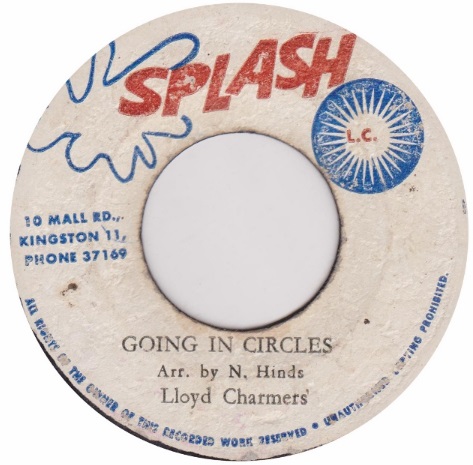
Born in Kingston as Lloyd Tyrell, Lloyd Charmers began his career as a singer in the duo known as The Charmers with Roy Willis. The two competed, like so many wonderful Jamaican musicians did, on the Vere Johns Opportunity Hour, and caught the attention of producers in the music scene. The Charmers would record with heavy hitters Prince Buster and Coxsone Dodd, and they would appear in the film This is Ska, but the two would part ways, with Lloyd recording as a soloist and then joining Slim Smith and Jimmy Riley as a member of the second reincarnation of The Uniques.
At the close of the sixties and the beginning of 70s, Charmers starting working on his other musical talents. He established a reputation as an excellent keyboardist, and he opened up the Splash label to work on his own productions, bringing in phenomenal talent and his own great love for American soul of the 1970s. We’re thrilled to present you this hour long spotlight on Splash because there are outstanding productions and some covers of soul tracks that challenge the originals. We began with Lloyd himself and the 1969 classic, Birth Control, which was later adapted by The Specials on Two Much Too Young.
Charmers house backing band of choice was the Now Generation Band. The seed that started the group was planted when Mikey Chung and Val Douglas were students at the College of Arts and Sciences Technology. The two both went to the same high school together, but they did not begin practicing and recording together until later. They began using the equipment of the disbanded group, Ti & the Titans, and they formed the band the Mighty Mystics. Then the Mighty Mystics broke up and joined an existing band known as Now Generation, creating the house band that people would come to know well throughout reggae. The members of the group were brothers Mikey and Geoffrey Chung on guitar, Val Douglas on bass, Mikey Boo and Martin Sinclair (who was only a member for early recordings) on drums, Robbie Lyn and Wire Lindo on keyboards.
We hope you enjoy the July 26th, 2016 Bovine Ska and Rocksteady:
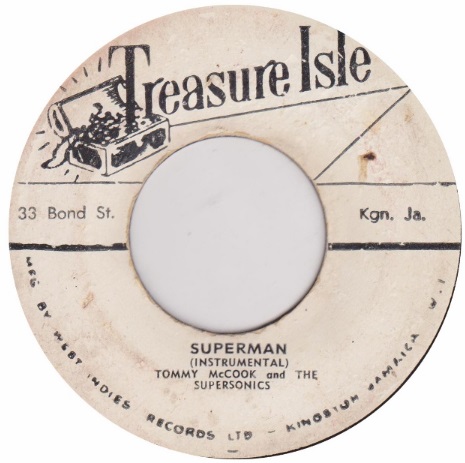
The July 19th, 2016 Bovine Ska and Rocksteady may go down as one of the silliest shows that we have done in the twenty year history of the radio show. It seems that the heroes of comic strips and comic books were firmly in the minds of some of Jamaican greatest recording artists as we have comic book inspired tunes about Batman, Superman, Popeye, Spider-Man, Jungle Jim being performed by everyone from Hopeton Lewis to The Upsetters to Big Youth! Here’s a bit of background on comic books and their relation to Jamaican music to help you prepare for this show!
Golden Age of Comics– approximately from the late 1930s to the beginning of the 1950s. Era that introduced to world to Superman, Batman, and Captain America and marked the foundations of the Marvel and DC dynasties
Silver Age of Comics – approximately from the mid 1950s to the early 1970s. In the Silver Age, the superheroes of the Golden Age continued to exist, but the era also introduced the world to two other superheroes: Hulk and Spider-man
These superheroes of the Golden and Silver Ages would make their way all over the world, and Jamaica was not an exception. In Jamaica, comic books would be sold alongside general goods sold at Chiney shops. In addition to the superheroes, comic strips and comics from other genres would also gain popularity, especially the Western comics such as Kid Colt, Lone Ranger, and Roy Roger whose title characters would become the performing names for many artists in reggae.
This may be one of the silliest shows we’ve ever done, but theme shows are some of our favorites to put together, and we think you’ll have a lot of fun with this one. In addition to the tracks that all reference comics, you’ll hear lots of comicbook fun, including chidren’s recordings involving some of your favorite cmics and some comicbook disco as well
Dick Tracy – The strip premiered on October 4, 1931 in the Detroit Mirror and what we now know as Tribune Media Services picked it up and nationally distributed the strip. Created by Chester Gould, who drew the series until the late 1970s, Dick Tracy followed the investigative cases of the title character. A police detective, Dick Tracy lives in a noir world, and over time, his look and his cases would evolve to match the times, taking him to space in the 60s and putting him in the company of a hippy in the 1970s
Jungle Jim debuted on January 7, 1934. Created by Alex Raymond, Jungle Jim was focused on the story of the hunter Jim Bradley. Raymond also created Flash Gordon, one of Generoso’s favorites, and Jungle Jim was intended to compete with the successful Tarzan stip and to sit above Flash Gordon. As a result, both Jungle Jim and Flash Gordon reached the public eye for the first time on the same day.
Andy Capp is a British comic strip that first appeared in the Daily Mirror in 1957. Andy is a working class man from Hartlepool, and for decades, readers have seen Andy at his home, local pub, and about town. Though a bit gruffer than gruff, Andy has had a strong following through the years, and the strip is still going strong to this day.
Of all of the comicbook characters we found for this show, there was none more popular than Jughead. Interestingly, Jughead Jones made his debut in 1941 in Pep Comics, and he has continued to exist in the Archie universe since. Known for being a little bit of an outsider, Jughead has a signature humor and an S on his shirt, which is believed to be from an abbreviation of Skunk Hill in Haverhill, MA.
We hope that you enjoy this very special Bovine Ska and Rocksteady:
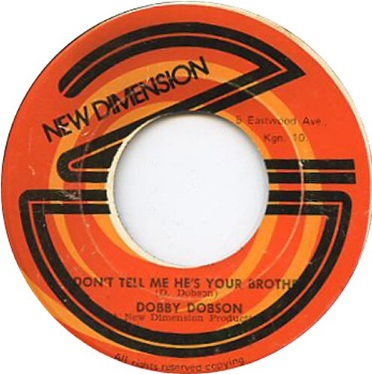
Being that our spotlight for the July 12th, Bovine Ska and Rocksteady was reggae heavy, with the New Dimension label we thought to start out show with two sets of ska and why not one from the king of the ska trombone, Don Drummond. Don D recording this ska for Coxsone in 1964, the sensational, Royal Flush. Our mento set began with a cheeky 1956 Kalypso 7″ from Count Zebra And The Seasiders, Cat-O-Nine. We followed the mento set with a long set of early reggae to get you ready for the New Dimension spotlight. In that long set of reggae we included a back to back version with the late great Delroy Wilson and his cuts for Attack in 1972, Mood For Love. At the end of the reggae set we went right into our spotlight of the New Dimension label…
Here on the Bovine Ska, we look for any excuse to play tracks from Count Ossie and Cedric ‘Im’ Brooks, and that was what led us to this week’s label spotlight on the New Dimension label.
Brooks’s career got its humble start at the Alpha Boys School, and upon graduation, he toured with the Jamaica Military Band. Originally a clarinet player, he switched to saxophone when he played with the Vagabonds and would stay with sax in the years to come as a member of Sonny Bradshaw’s stage band and the Granville Williams Orchestra. Brooks’ style evolved when he moved to Philadelphia in the late 60s, and as a student at the Combs College of Music, he got further exposure to the experimental jazz work of Sun Ra and Pharoah Sanders, and they would heavily influence his arrangements and his playing style when he returned to Jamaica.
On his return, Brooks first created the Mystics to perform the works combining the jazz he learned in Philadelphia with reggae, which was surging on the island. The Mystics met Count Ossie and his percussion group, forming Count Ossie & The Mystic Revelation of Rastafari. Arthur Wedderburn, a jazz collector, opened up the New Dimension studio and label to record the seminal Count Ossie & The Mystic Revelation of Rastafari record Grounation Wedderburn produced and engineered with that record, and it is one of the few productions he did for the label. Many of the recordings on New Dimension had other producers, giving us the sense that outside of the Count Ossie record, New Dimension was a studio and label that artists and producers could bring their songs to for recording and pressing.
Regardless of the producer, what is consistent throughout these New Dimension recordings is a richness in the arrangements and the vocals, and that is one of the many reasons why we are excited to present this spotlight tonight. And, of course, we began with the Count Ossie and Cedric Im Brooks collaboration that is The Mystic Revelation of Rastafari with their track, Lumba.
We hope you enjoy the July 12th, 2016 Bovine Ska and Rocksteady:
The July 5th, 2016 Bovine Ska and Rocksteady began with a version to version excursion with Shark Wilson & the Basement Heaters 1971 cut for Moodisc, Make It Reggae. We actually played two sets of early reggae to start the show ending with another version to version with Barbara Jones cover of the Patti Page classic, Changing Partners which Jones recorded for GGs in 1974. Our weekly mento set contained a gem from The Wrigglers Sing Again LP which was released by Kalypso in 1958, the suggestive tune, Biggest Maracas. The final set of the first hour, a ska set in fact, started with a Stranger Cole tune that has never been played on the show before, a 1963 cut entitled Morning Star for the Dutchess label, We ended the first hour with Lee Perry’s Trial and Crosses which he recorded for Coxsone Dodd’s Worldisc in 1964. We then began our spotlight of the Down Beat Label.
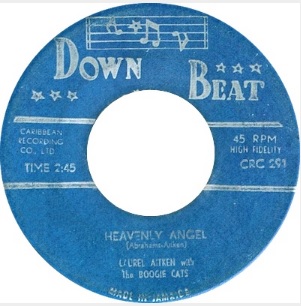
Deonaire ‘Dada’ Tewari started out as a businessman. His family had a growing dry goods business, and in addition, they owned the Tivoli Theater, which would later become the Queen’s Theater. Tewari worked primarily in his family’s businesses until 1953, when he opened the Caribbean Recording Company, one of the earliest recording facilities to be opened in Jamaica, opened only after the recording studios of Ken Khouri and Stanley Motta. Two labels existed to distribute the music recorded at the Caribbean Recording Company: Caribou and Down Beat. You’ve heard selections from Caribou during our weekly mento sets, but we have yet to share a mass of tracks from Down Beat. Consequently, Down Beat was our label spotlight.
We started the second hour with Laurel Aitken, an artist who got his start with Tewari. After getting spotted at the V-Rocket sound system, Laurel was introduced to Dada Tewari. He recorded many tracks for Tewari, including the early hit “Roll Jordan Roll” for the Caribou label, and “Boogie Rock” for the Down Beat label, the track which will start this spotlight. A student of the Alpha Boys School, Lester Sterling began playing trumpet before switching over to alto sax. He performed as a member of the Jamaica Military Band before entering the recording industry. Throughout his career, Sterling worked extensively with Coxsone Dodd, and this next track “Pipe Dream” is one product of their collaborations. Though Tewari did produce many recordings on Down Beat, some of the tracks released on the label were also produced by Coxsone Dodd. Tewari’s Caribbean Recording Company, located on Torrington Road, was highly productive throughout the fifties and early sixties. Unfortunately, we don’t hear any recordings from Tewari after the ska rhythm because the facilities experienced a fire, and Tewari did not return to the music industry.
We hope you enjoy the July 5th, 2016 Bovine Ska and Rocksteady:
On June 17th and 18th, the UCLA Film & Television Archive presented the first complete retrospective on the work of emerging independent Mexican filmmaker Matías Meyer. The retrospective collected the short films across Meyer’s career, including his first films made as a student at Centro de Capacitación Cinematográfica, and his four feature films, with his most recent film, Yo, receiving its US premiere on the opening night of the series.
In all of Meyer’s films, voyages frame the narratives for both the characters and the viewers, and in each voyage, the environment and the characters have a tacit yet well-understood relationship with each other, moving in a fluid call-and-response way to the presence of one another. As a result, the environment is as much, if not more, of a character than the people in Meyer’s films. With the exception of his most recent short, which was filmed in Meyer’s current half-home of Quebec, Le champ des possibles (“The Field of Possible”), the director’s focus is committed to the ever-changing environment of Mexico, whether looking at its past, as seen in his documentary, Moros y Cristianos (“Moors and Christians”), about the largest open-air group presentation in all of Latin America, a re-enactment of the 16th century Battle of Lepanto, and his most ambitious narrative feature, Los Últimos Cristeros (“The Last Cristeros”), set during Zapata-era Mexico, or its present day, with films like Wadley, an experimental view into one man’s journey through the wild Mexican landscape, and Yo, which, based on our conversation with Matías during the series, is his most personal film to date.
Yo refers to the title character (played by Raúl Silva Gómez), a large man in his early twenties who we soon realize is functional, yet developmentally challenged, and as thus, he remains in a state of perpetual adolescence. Yo is under the care of his mother (Elizabeth Mendoza), and they both live and work at the family restaurant where Yo has the unenviable task of slaughtering and plucking the chickens that they serve. Also residing with Yo is his mother’s lover Pady (Ignacio Rojas Nieto), a brutish man in his fifties who has a tendency towards being abusive towards Yo, which seems to have become so commonplace that no one in the house raises any concern, including Yo, who seems content with his menial tasks and chances to play with his coins on the floor of the restaurant and goes unnoticed to the patrons as though he is a piece of furniture, a trivial part of the restaurant setting. This is the first moment that one notices humans’ interactions with their surroundings, a key element in most of Meyer’s previous work.
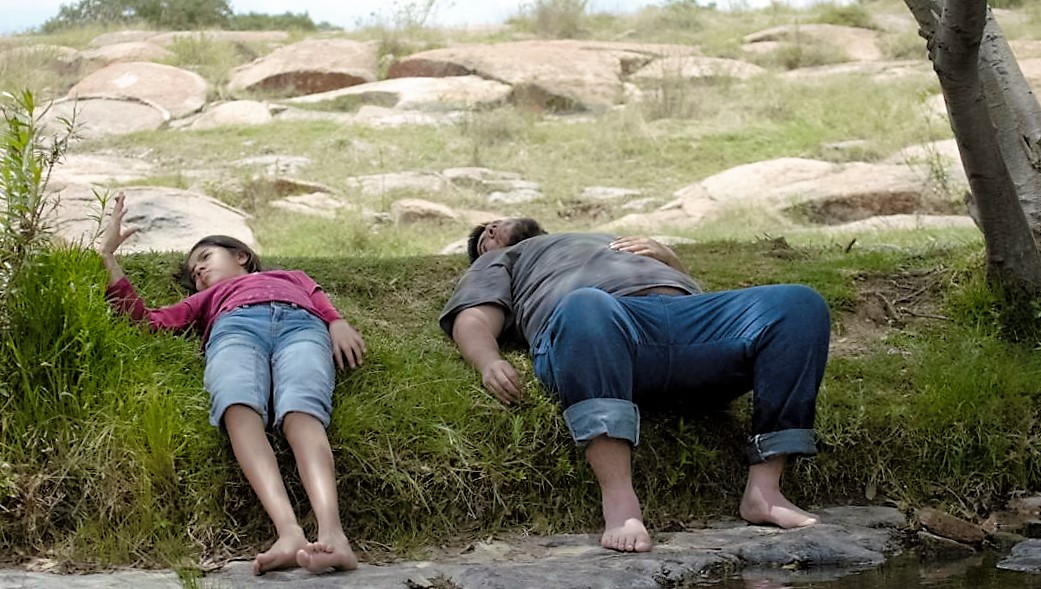
Furthering this motif of man’s reaction to his environment, man-made or natural, are the moments when Yo, who takes great joy in watching the giant tractor-trailer trucks that tear through his normally serene Mexican village, becomes plagued by nightmares of the local river dangerously overflowing, which wakes Yo from his sleep and forces his mother to reassure him by taking him to the still, placid river in the middle of the night. Even though Yo’s mother turns a blind eye to the abuses in the home by championing her lover over her son, she is still overprotective of Yo when it comes to how he might function outside of her grasp.
With business in the restaurant improving, Yo’s mother hires a woman to help her out who must also bring her eleven-year-old daughter, Elena (Isis Vanesa Cortés), to the restaurant everyday. Elena and Yo immediately become friends, but with this newfound friendship comes a layer of tension for the viewer as Yo, who has had limited interactions with women, may not have the emotional maturity to control his sexual impulses. Yo and Elena take frequent trips to the nearby river together and play with one another in a flirtatious way, but Elena, who seems beyond her years in maturity, deflects any casual advances from Yo. Though Yo is twenty-two, these moments with Elena are most likely his first foray into society without the guarded eye of his mother there to establish order. No one has gotten hurt, but soon Yo will be forced to face the outside world head-on when Pady purchases a machine that can handle Yo’s singular chore of killing and plucking the chickens for the restaurant. Pady then calls in friends to get Yo work hauling rubble at a local construction site, so Yo can begin the process of becoming an adult away from his mother’s daily reach.
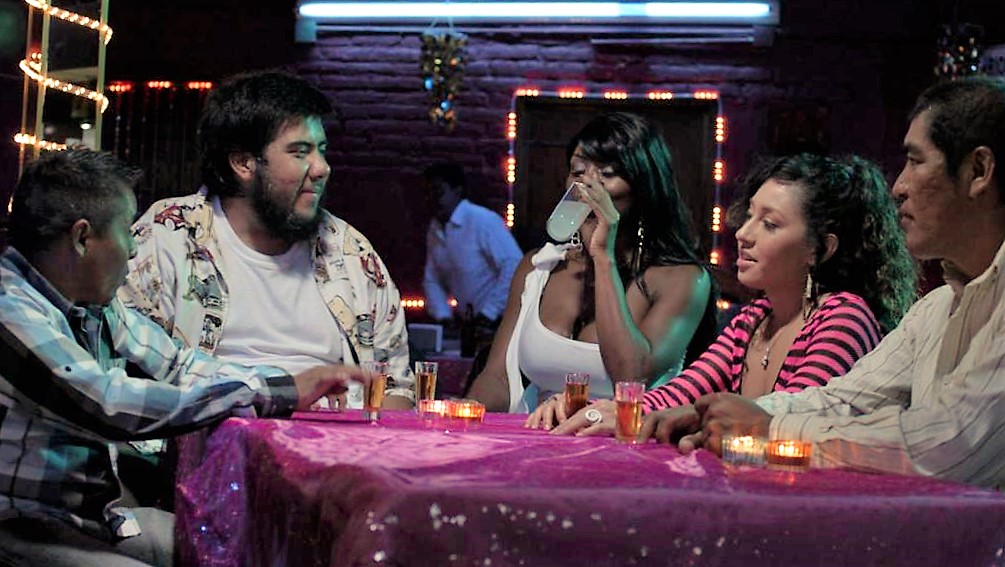
Once on the construction site, Yo does hard physical labor and is up to the task, much to the delight of his co-workers and his supervisor. Yo even makes friends at his new job, friends who expose Yo even further to mainstream society as they introduce Yo to the vices of alcohol and prostitution. Whether Yo’s newfound friends are laughing with him or at him, they welcome him as part of their group and take him to nightspots where Yo again blends into his surroundings without appearing too out of place, but just like the river that Yo imagines overflowing, how long will his inner peace remain intact given the ever changing environment around him?
As opposed to Meyer’s previous feature, the Zapata-era film, Los Últimos Cristeros, Yo is a fairly modest production that involves a small amount of actors, the usual use of the set, one-camera shot for most scenes, and a few locations, but like his previous feature, it utilizes the spacious natural terrain of Mexico to cleverly further the development of the film’s central characters. The tension that Meyer creates with his character of Yo and his disenfranchisement with his surroundings is palpable throughout the film in the same eerily quiet and ominous way that Iranian director Jafar Panahi presents in his equally marginalized central character of Hussein, the beleaguered and impoverished pizza delivery man who wanders through a unwelcoming Tehran, in his 2003 film, Crimson Gold. As in Crimson Gold, an excellently crafted level of tension is what drives the narrative even during the most tranquil of scenes, which provided the main reason why we were so completely engaged with the film.
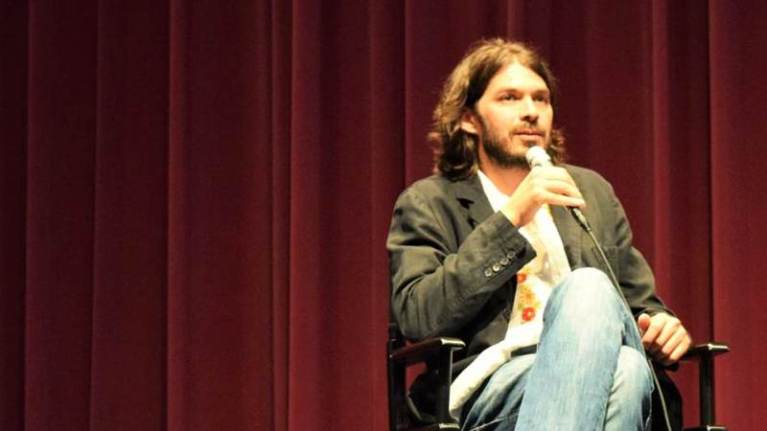
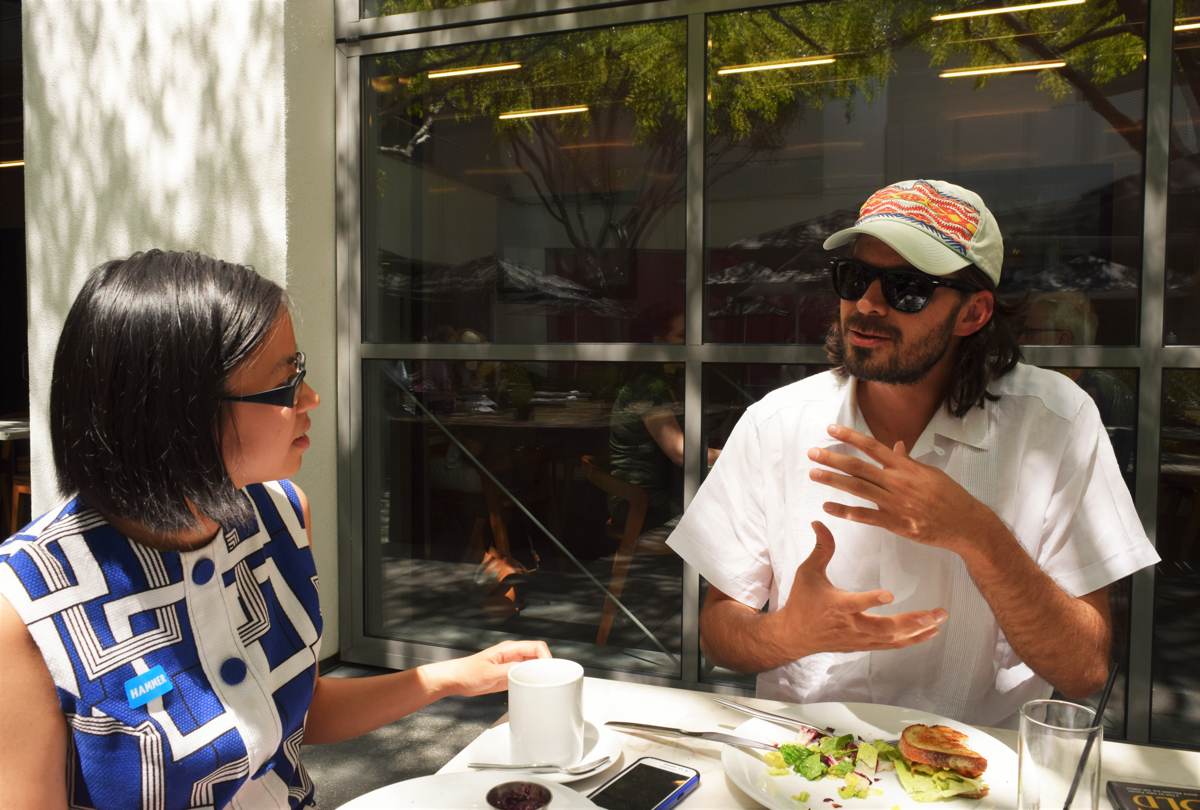
Impressed by Meyer’s achievement in his fourth feature, my wife Lily and I were fortunate enough to sit down with the young director to discuss his work the day after attending the screening of Yo at UCLA.
PHOTO BY GENEROSO FIERRODirector Matías Meyer speaks with Lily Fierro at the UCLA’s Hammer Museum
• •
Lily Fierro : Last night, during the premiere of Yo, you spoke about the invisibility of Mexican cinema. In your answer, you had mentioned that some of your fellow directors believe that making films more specific to what audiences want, is a solution to this issue. You said that this would not be your own approach. In what way do you think that Mexican filmmakers can make films that capture Mexico’s landscape, culture, and tradition without concern that foreign audiences may feel alienated?
Matías Meyer : The thing is in Mexico City, recently, there was the Mexican “Oscars,” called The Ariel Awards, and we went to the ceremony and saw the famed director Paul Leduc, who was receiving a Golden Ariel for his career, make a speech for fifteen minutes that focused on the invisibility of Mexican cinema. The government is very proud to say that they have produced one hundred and fifty films a year, and he responded by saying that yes, but no one ever sees them. He then said something that really registered for me, and that was, “Mexicans do not really want to be Mexican. Culturally, they are more into the American cultural empire.”
I myself, grew up in a small town in Mexico, and for most young people, it was about wearing Nikes to be more like Michael Jordan or about American football and Deion Sanders, so it was more about this part of American culture. So, you have this American dream, about how cool it is to live in the United States, and for entertainment and films, you have the Rambos and the Commandos that you watched on television, but on the other side, you have the telenovelas, that are all about drama and class struggles. Mexicans are always watching television; even when you see a taco vendor in the street, they will have a small television, and if they are not watching sports, they are watching the telenovelas. So, the public has not been created for accepting other kinds of movies, which leads me to think that the problem is that the public has not been properly informed. I think that the bigger problem in Mexico is about education. Now, there is a large movement of teachers pushing for educational reform, but the roadblocks are the syndicates and the political power of syndicates, so the whole thing ends up being not about learning and educating. I don’t know how we can fight against this problem; we can try to find a goal via entertainment, but I don’t believe that we can succeed.
I am working on a new film that I hope is less niche than the films that I have done to this point in the hopes of having a wide appeal, but I am not sure if I can achieve this. In the long term, perhaps showing more Mexican films on television is the solution, so Mexican culture, instead of American culture, becomes the norm on the most popular medium for people of Mexico.
Generoso Fierro : Given that Mexicans prefer television as their main source of ingesting media, does a place exist where arthouse cinema is still shown on a large screen?
Matías Meyer : There is in Mexico City, in Coyoacán, which is the area where Frida Kahlo used to live, a cinematheque that has existed for thirty or forty years that has just been remodeled. It used to have six screening rooms, and now, it has twelve. It is a beautiful place where you can have coffee, and there are even outdoor screenings that are free for the public. The theater gets about a million patrons a year, and if your film is there, it will definitely have an audience. I have just released Yo in Mexico City and six other cities, and to this point, five thousand people have seen the film, and the cinematheque represents forty-five percent of that total viewership. As far as the other theaters that have shown it, they have pulled it after one week, so films like this shouldn’t be at a multiplex; they should be screened at arthouse cinemas, so we really need more of them. Mexico City has twenty five million people but only one arthouse theater, so the need is there for more cinematheques in not only Mexico City but in the other cities and villages as well.
Lily Fierro : Could you speak about the origins of Yo?
Matías Meyer : Yo was made right after Los Últimos Cristeros (2012), which is the biggest film I have made until now. That film is a western that is set in the 1930s during the revolution, which was a labor-intensive process, so after its completion, I was looking for a different kind of project. One day, my mother gave me this book by Jean-Marie Le Clézio, and she told me that it was a collection of short stories and that there was one story that she felt that I might like, and she was correct. Even though I liked all of the stories, there was indeed one story that I wanted to adapt and see onscreen and that was the story called “Yo”. Also, these days, whenever I think of a film, I immediately take into account the production concerns, which ultimately makes me ask myself the question: Am I going be able to make this film? Most of the story takes place in the restaurant and only involves a few characters, so the production would not be too complicated, and as Jean-Marie Le Clézio was a friend of my family, since he met my father while they were in their early twenties, he graciously gave me the rights to make the film. As “Yo” impacted me so heavily, the next day I contacted a screenwriter friend of mine in Canada and told him that this story would make a good film and that I would send it to him immediately. He read it soon afterwards and agreed that it would make an excellent film.
In a personal way, I wanted to make the film as I have a nephew who reminds me of Yo, as they have similar developmental issues, and my nephew was at the same point in his life where he was becoming an adult and was beginning to have a sexual attraction to other people. For my nephew and Yo, dealing with sexuality becomes so socially awkward because even if they have been presented with normal societal examples of how to deal with their feelings, they still have issues with their expressions of sexual desire. Besides the connection to my nephew, I also wanted to make a more narrative film as Los Últimos Cristeros is more about wandering and experiences, and with “Yo” I thought there was the potential for more traditional narrative structure and the opportunity to convey the anxiety that comes through in the story. There is a feeling of suspense that manifests due to unpredictable nature of Yo’s character that I also found interesting.
Generoso Fierro : Does the short story by Jean-Marie Le Clézio occur in France? What was the process of adapting an originally French story for Mexico?
Matías Meyer : I felt that the story was very universal. It is about this boy living with his mother on the side of the highway and his relationship with the little girl and the workers whom he comes to be with, so the film could’ve been shot anywhere. I knew that funding would’ve been easier in Mexico as opposed to where I live now in Canada, but I did write the script in French and translated it to Spanish because the co-writer is French-Canadian.
Lily Fierro : We were able to see two of your films yesterday evening that focused on sojourns into nature. The lead character in your first feature film, Wadley, exists entirely in nature as he escapes the city for the desert, and in your newest film, Yo, the titular character uses the the nearby river as a place to re-center himself, for it is a place of purity. But, does the river also represent the source of Yo’s essence of being, where he is more of an embodiment of nature than others?
Matías Meyer : I think that is a good interpretation. I like to leave my films open to personal interpretation to allow the viewer to be more interactive and less passive with what is onscreen. There is the scene in Yo when the mother takes the girl Elena and says, “Where were you? I was very worried, and I do not want you going to that place again,” and Yo goes to the waterfalls, and there is the moonlight, and I don’t know why, but this scene reminds me of Percival from Le Morte d’Arthur. I had this memory from when I was a child of watching this film on television where Percival is showered with the blood of a dragon that he has slain and that blood will make him immortal. So, I don’t know why, but I felt that this scene always made me believe that nature is a mystical place.
Generoso FIerro : There is a level of mechanization that increases in Yo as he is haphazardly forced onto a journey to manhood. The chicken barrel displaces his role as a chicken plucker in his mom’s restaurant, and on the construction site, trucks and cranes appear and carry far more than any human can, foreshadowing the eventual mechanization of his job hauling construction excess. Simultaneously, Yo is encountering more men in his life, and they place him in precarious situations involving alcohol and sexuality. How were you thinking about balancing conflicts between the pure essence of male human nature and evolving environment?
Matías Meyer : In a certain way, I think that it is good that Pady, the man who is the lover of Yo’s mother, is a bit forceful with Yo because mothers can be a bit too protective of their children. So, I like that Pady pushes Yo, which forces will him evolve and to find his own place in society. In his mother’s house, Yo is never going to succeed, and I think that is part of the problem when you have a disabled child: that you, as a parent, become too frightened for them if they go out into the world.
Generoso Fierro : I think that you exemplify that point visually about halfway through in the film. There is a great shot where Yo is playing on the floor of his mother’s restaurant when Pady brings in the construction workers who Yo will eventually work for as Yo’s role in the restaurant has changed now that a machine has been brought in to pluck the chickens.
Matías Meyer : Yes, there is a position in nature, and there is also a place for human constructed spaces like the beautiful land near the restaurant that is violated by the highway with its cars and loud noise. There is this element of man against nature that I wanted to show: how the world that man has created is so noisy, which conflicts with nature, and how by immersing yourself in a natural setting we can find a more original state where we can live harmoniously.
Lily Fierro : Given your fascination with Mexico’s culture and your desire to depict it on screen, we have to address the non-secular elements of Yo. Specifically, Yo’s Madonna-Whore complex that plays out between the four main women of the film: his mother, Elena, Jenny, Luisa. You avoid idolatry in all of the settings, but elements of Catholicism are subtly portrayed through Elena’s parochial school uniform and in the music you use, especially in the club scene where a disco version of “Ave Maria” plays in the background. Do you see organized faith (or its integration into society) as being as much in conflict with the natural environment as rapid mechanization?
Matías Meyer : That disco version of “Ave Maria” is in the book, actually. There are some people who say that Roman Catholicism is a lie because the day that Christ is born is actually the shortest day of the year, so by doing that, they are associating astronomy with religion. And I respond with, “Well yes, but is that is the opposite of religion?” I personally don’t think so as Christ is the son of God, and you can see this with the use of icons, which only help us to identify more with faith. It is just a very intelligent construction of symbolism. So, I would never say that faith or religion is bad; it is what we make of it, the same as science, which you should never say is a bad thing. I come from a religious family, but I never went to church. In terms of faith, my father would read the Bible to us on Sunday night before we went to sleep, and for me this was perfect, and that is why I don’t have any issues with Catholicism because I was never forced to go to church, which I think is a terrible way to introduce faith to a child. It is better for your children to discover God in their own way.
• •
We would live to give special thanks to Matías Meyer for his time and for his generous responses during our interview with him, and to Shannon Kelley, the Head of Public Programs, UCLA Film & Television Archive, who made this series possible. ◼
We started off the June 28th, 2016 Bovine Ska and Rocksteady with two sets of Jamaican rhythm and blues, beginning with the tune, Call Me, a superb 1961 track on Wild Bells from his eminence, Prince Buster and ending with Bunny and Skitter’s song, A Little Mashin’ for Vincent Randy Chin’s Randy’s label. We then followed with our weekly mento set and a top cut from Chin’s Calypso Sextet, Give Her Love, released on Chin’s in 1956 and we ended that first hour with a very long set of rocksteady that started with Rugged Girl, Bumps Oakley’s cover of The Four Seasons hit, Rag Doll. After that set, we went right into our spotlight on Charles Ross’ Flame Label!
As a Trojan subsidiary, Blue Cat distributed the recordings of many producers including: Joe Gibbs, Joe Mansano, Bunny Lee, Alvin Ranglin and Coxsone Dodd. Some of the strongest releases came from a producer whose legacy has not received as much attention over the years, and that producer is Charlie Ross. Outside of his own Sugar label, which had its own distribution in the UK, Ross also owned the Flame label in Jamaica, which reached the UK via Blue Cat. On the Bovine Ska, we love Charlie Ross as a producer, and we are thrilled to present these Flame recordings because Ross’s work is exceptional. Keep in mind that there were two other well known labels that share the same name with this label, but those labels existed later, and you can identify this one because of Ross’s excellent understanding of arrangement and production.
Backing up many on the Flame label was Lynn Taitt and Karl Cannonball Bryan. Of the major saxophonists, we’ve discussed Roland Alphonso and Cedric Im Brooks, but we also would like to highlight Cannonball Bryan. Like many other phenomenal Jamaican musicians, Cannonball attended the Alpha Boys’ School. As a performer, he backed many touring artists during their visit to Jamaica, including everyone from the Mighty Sparrow to Jackie Wilson. As a recording artist, he worked with many producers including Coxsone Dodd, Prince Buster, Clancy Eccles, and of, course Charley Ross
We hope you enjoy the June 28, 2016 Bovine Ska and Rocksteady:













 LILY & GENEROSO 4EVER!