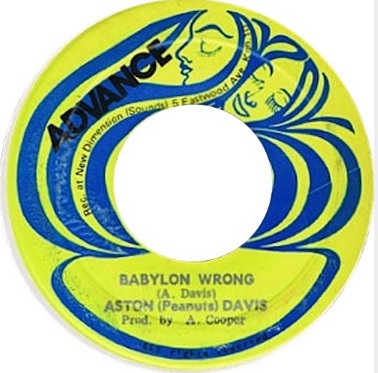
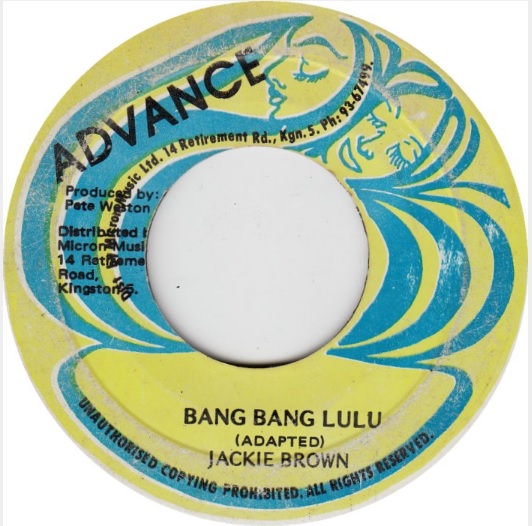
A lovely week of weather and good eating lead into the festive May 10th, 2016 Bovine Ska and Rocksteady so we decided to do a deep and extended spotlight on Pete Weston’s wonderful, reggaerific ADVANCE LABEL which features top tune from Junior Byles, Alton Ellis, Shorty The President, Ken Boothe and many more. The spotlight, as always, begins in the middle of the show!
The show began with two sets of ska, beginning with Eric Monty Morris’s forthright tune for Duke Reid from 1964, Drop Your Sword! Prince Buster and Hazel followed with World Peace, a top cut on Buster’s own Voice Of The People label from 1963. Sammy and the Drumbago Band was next with You’ve Been Drunk which was originally released on Count John The Lion in 1963 and we ended that first set with the Spanishtown Ska Beats and King Solomon from 1964. The mento set started with a track never before played on The Bovine Ska, a mento from the Chin’s label entitled, Not Guilty, which is amazing considering we have been doing a mento set for almost fifteen years! A long rocksteady set was next and that began with a cool one from the vocal group, The Lyrics on Coxsone’s Studio One, called A Get It from 1966. That set ended with a Tommy McCook instrumental released on Sure Shot in 1967, Soul For Sale. We then got into the special one hour spotlight on the ADVANCE LABEL.
We do not know a ton about the Advance label, but we do know that it was a subsidiary of Micron Music, which was owned by Michael Johnston, Ronnie Burke, and Pete Weston. Michael Johnston and Ronnie Burke were roommates at Jamaica College who loved jazz, and the two founded Micron Music together. They soon brought Pete Weston on board, with Pete adding his production gift to Johnston and Burke’s distribution and promotion sensibilities. Pete Weston entered the world of production when he approached Herman Chin Loy. At the time, Pete wanted to leave his work in the insurance industry to become a producer, and Herman Chin Loy took him in, allowing him to work on Chin Loy’s projects. Quickly, Weston established himself as a strong producer, and he headed over to Micron Music. It is unclear when the Advance imprint opened up, but it must have been shortly after the creation of Micron and Pete Weston’s arrival because Weston’s productions dominate the releases. However, the label had some flexibility with production, and as a result, a variety of artists and producers released a handful of tracks for the imprint.
Scouty Whyte was one of these producers, recording one of Advance’s earliest releases in 1971, Ken Boothe’s Make Me Feel Alright, which is the track that kicked off the spotlight. As a producer, Pete Weston attracted quite a bit of talent to Advance, and one of the major artists was Lee Scratch Perry. Their collaboration was solidified in 1975, and Scratch would distribute records through Micron, and he would also collaborate with Pete as a producer and as an engineer on the Advance label.
The show started with two sets of ska, beginning with a lost classic from Derrick Morgan and Patsy Todd entitled Money, which was released on Voice Of The People in 1964. The set also featured It’s Impossible a pretty 1966 mid-temp ska on Studio One from the late great Delroy Wilson. For our mento set, we started with a track, courtesy of our friend, and longtime listener, Scott, who years ago gave us a perfect copy of Scandal In Montego Bay, the 1964 Sue Label LP from Percy Dixon and His Merry Boys. From that wonderful record, we played the tune, Balimbo. We then went into a rocksteady set and the wonderful voice of keyboardist Glen Adams on S-H-I (I’m Shocking) on the Lee Label. After that set of rocksteady, we rolled into our STAG label spotlight.
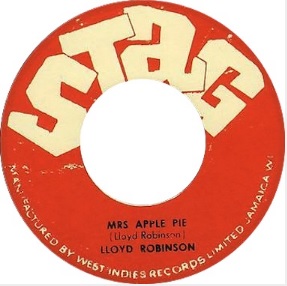
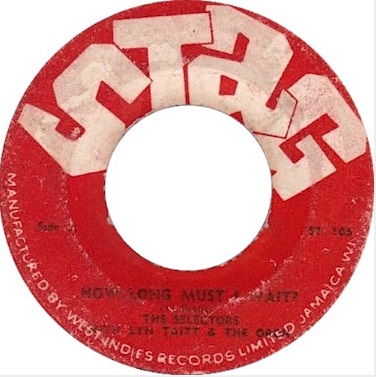
We’re not 100% sure of the primary owner of the Stag label, but we definitely know who was responsible the rocksteady sounds of Stag. Lynn Taitt arranged and produced most of the singles released on the label, and as a result, you’ll hear some fine rocksteadys along with pretty soul cuts in this spotlight. Born in Trinidad, Lynn Taitt began performing and creating music on steel pan at the age of eight. Around the age of fourteen, Taitt hid a guitar for his friend who had taken it from a drunken sailor. His friend did not pick up the guitar for sometime later, and as a result, by the time he returned to get it, Taitt was already learning how to play the instrument, so Taitt simply purchased it from his friend. After he learned how to play guitar, Taitt joined a group called the Dutch Brothers for a couple of years and then formed his own group. This group received an offer to perform at the Jamaica Independence celebration, and on this trip, Taitt decided Jamaica would be his new home, and he joined the stage band known as the Sheiks, kicking off the beginning of his presence in the Jamaican music industry. Despite not being labeled as the primary producer on countless rocksteady tracks, Lynn Taitt was in fact the arranger on a large percentage of that rhythm’s output from 1966-1968. On Stag, we do see him listed as a producer on the predominance of tracks, and we started off with two soul tracks from the vocalist Glen Miller backed up by the Lynn Taitt orchestra.
As far as the era we cover here on The Bovine Ska (1955-1975), Lloyd Robinson is an artist whom we love and have played frequently . During the Jamaican Rhythm and Blues, Robinson performed with Basil Gabbidon in the Mellowlarks. During rocksteady, he recorded as a member of the group The Tartans and as a member of a duo with Glen Brown, and during reggae, he recorded with Devon Russell and in dancehall, he saw fame as a soloist again.
At every Vietnamese celebration, there is always a bowl of piping hot Sup Mang Cua. Incredibly simple, the crab meat of the soup has somewhat made the dish a delicacy for only special events, but whenever crab meat is on sale, I always think of this soup.
Overall, Sup Mang Cua is pretty light, making it a perfect soup for springtime, especially with the addition of fresh asparagus and the garnish of cilantro and scallions. Hope that it makes it to your table this May!
After a bit of a hiatus from the blog due to a surge of event reporting, interviews, work, regular life, and the facelift of this site (we have our own domain now!), we’re finally back. During the past few months, I’ve picked up plenty of comicbooks and graphic novels, and they have piled up waiting for review. In the spirit of the content I post here, I figured the return should be a selection from the underground, and after a debate, I grabbed Aaron Whitaker’s The City Troll, a graphic novel I picked up at the hectic but fruitful LA Zine Fest 2016.
From start to finish, there is nothing entirely original about The City Troll, yet it managed to have this peculiarly engaging rhythm and momentum that kept me reading. After spending a few days ruminating on how to describe the novel, I finally realized why I continued to care about the characters in The City Troll: they vaguely remind of characters in Whit Stillman’s films.
Stillman’s characters tend to be criticized for their unrealistic dialog, but regardless of how you feel about the formalist and dialectic nature of the characters’ speech, the best Stillman characters capture the dysfunction and hypocrisy of young bourgeoisie adults trying to understand their own lives. Whitaker’s main characters, Ian and Paul similarly represent the modern young bourgeoisie with their actions and reactions to the various parts of life, and as a result, even though I cannot necessarily agree with the trajectories that they take, they do reflect the nebulous lines between morality, loyalty, and love that exist in our post-internet times. Thus, Ian and Paul probably resemble more of the leads of a Mumblecore film, and Whitaker does allude to this similarity to the indie talkie genre in the formation of Paul’s ideal love, but Whit sets the gold standard of conversation-focused films on young people, so I had his work most in mind as I read The City Troll.
Cover for Whitaker’s debut graphic novel
Ian is a perfect being with one exception: his sad-sack, pathetic, self-loathing friend Paul. The two come as a package, so they both move in tandem, for better or for worse. Ian always falls in love, and Paul always pines for love, creating the foundation for an eventual disaster from conflicts between jealousy and loyalty. Amazingly, the two are in their late 20s, and a meltdown has yet to occur, but that entirely changes when Emily enters both men’s lives at separate moments. Ian completely falls for Emily and wants to spend his life with her, but Paul also believes that Emily is the long awaited girl of his fantasies. Ian, as expected, makes the first move, but Paul sneaks himself in between the two, forming a classic love triangle. The battle for Emily’s attention and love follows the course you would expect from all love triangles, making this narrative center the weakest part of the book, since you can predict the entire course that it will take between Ian and Emily, Paul and Emily, and of course, Ian and Paul.
If the core frame of the book fails, then why did I feel compelled to read The City Troll further? The answer: for Paul’s interactions with his father.
Paul struggles with his verbally abusive mother, and we see a few glimpses into that battle, but his relationship with his father is a loving one, even though the two very clearly do not understand each other, especially given that his father has met a hippie woman named Understanding who drastically changes his father’s lifestyle. As Understanding begins to play a larger role in Paul’s family life, we begin to see more of Paul’s evil alter ego, the City Troll, who survives on Paul’s own inability to handle any change and aims to destroy in order to feel satisfied.
This interaction with his father gives us the deepest insight into Paul, and the exchanges between father and son feel the most honest, uncomfortable, and relatable. Given his strained relationship with his mother, it is of no surprise that Paul struggles with the opposite sex, but how he finds shelter in non-romantic relationships with other males creates a far denser premise. Unfortunately, Whitaker focuses on the dysfunction with women through the trite device of a love triangle, pushing the relationships with Ian and the father to the side when they have the most substance to form a stronger narrative. But, tidbits of the father-son bond and the friendship with Ian do remain in The City Troll, and they encourage you to continue on to see what happens to Paul, even if the relationship with Emily feels far too cliché.
As a first graphic novel, The City Troll is unspectacular, but it is not awful. Constructed from Whitaker’s own screenplay, the book’s strongest asset comes from its deliberate yet empathetic conversations between characters, and the weakest comes from the romantic parts, which, sadly, are the most marketable in the film world. Alas, graphic novels and comicbooks do not require as much return on investment as a film does, so marketability should take lower priority than character development and investigation, but the need for a profit in the screenplay rears its head into the graphic novel creation. The City Troll shows that the comicbook medium could work for Whitaker, but he may need a little less American arthouse cinema in his work and more Clumsy era Jeffrey Brown.
The City Troll is written and illustrated by Aaron Whitaker. It is a self-published work.
Back in March of this year, I was fortunate to have chatted at great length with one of my favorite actresses of my youth, Mary Woronov, for an interview that I conducted for Forces Of Geek to help promote her appearance at a screening at The Cinefamily here in Los Angeles of the uproariously funny, 1982 dark comedy that Mary starred in and Paul Bartel directed, Eating Raoul. If you’ve never seen Eating Raoul, I highly recommend an immediate viewing; it is an outrageously funny, last nail in the coffin of the 1970s swinger scene in Los Angeles as its plot revolves around an exceedingly straight couple, played to eerie 1950s perfection by Bartel and Woronov, who pose as swingers to rob and kill oversexed deviants for the cash they bring as payment for a promise of fetishistic pleasure.
The midnight screening of Eating Raoul drew a full house, which seemed to surprise Mary and her costars from the film who were also in attendance, Robert Beltran and Susan Saiger, who were visibly touched that so many people came out to this old film that they viewed as more of a lark when they starred in it over thirty years ago. I, for one, was not so surprised, as I still find the film as funny and as audacious as I did when I watched it for the first time in the dorm room of my friend Ian Koss during our freshman year of college back in 1986 when we were forced to reside in a sub-leased hall at Emmanuel, a Boston-area all-girl Catholic college (it sounds cheekier than it was). I have always been indebted to Ian for picking that film out of the video store rental racks from a shop in the school’s neighborhood, the Fenway, which was, at the time, a predominantly LGBT area in Boston (again, sounds more daring than it was, but it oddly fit the film that we were watching). OK, I will say that the location of our 1986 screening made watching the film a better overall experience (Catholic guilt kicked in there), but it was the pairing of Bartel and Woronov that made it a movie that I will always turn to when I am feeling a bit off.
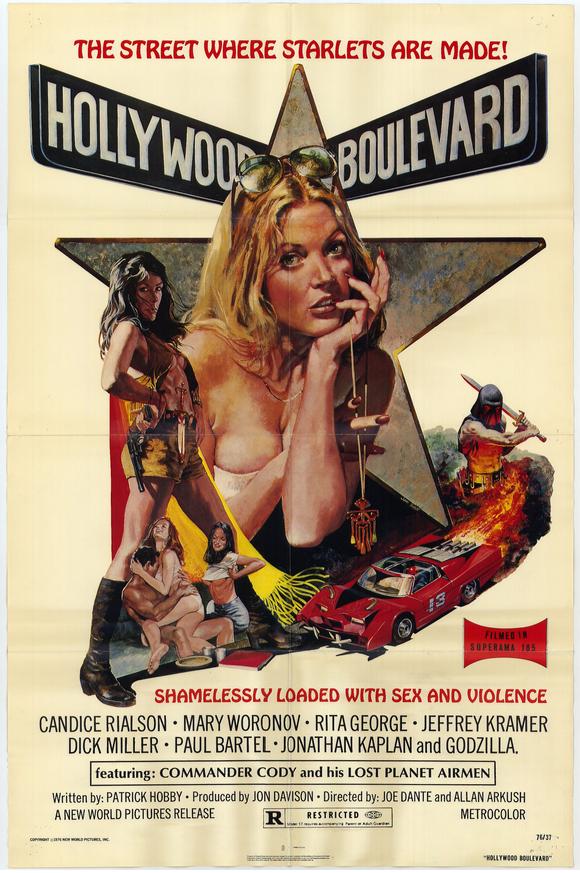
From my conversation with Mary earlier this year, there were a few surprises that came up whenever I mentioned her multiple collaborations with Paul Bartel. Most surprising was her hatred for a film of theirs that I have always loved, the Mazursky-esque 1989 film, Scenes From The Class Struggle In Beverly Hills, which Mary loathed due to Bartel’s desire to make a more “serious” film with no improvisation, and her love of their 1976 Roger Corman/exploitation film send-up, Hollywood Boulevard, that was co-directed by Joe Dante of Gremlins fame and Allan Arkush, who would later direct Mary and Paul in the classic Rock ‘n’ Roll High School. I was surprised by this opinion from Mary, as even though I love both her and Bartel, I had never heard of this film, but based on her effusive review, I quickly hunted down a copy.
The backstory for Hollywood Boulevard is nutty, even by Roger Corman standards… Producer Jon Davison wagered Corman that he could create the least expensive movie in the history of Corman’s New World Pictures. Corman gave Davison ten days to shoot this magnum opus and a budget of sixty thousand, which, again, is low for even mid-1970s Corman standards. As per usual in the Roger Corman factory, young talent who were already working for Roger and who were eager to direct something with any budget were brought in to helm the film. In this case, Allan Arkush and Joe Dante were tabbed for the honor of assembling a narrative from clips of New World’s previous exploitation films and whatever acting they could get out of a cast in the aforementioned time period allotted.
Our film opens when a stunt woman is killed after her parachute fails to open much to the disaffected dismay of Miracle Pictures director, Eric Von Leppe (Paul Bartel). If they are going to finish this movie, they are going to need a new stunt woman and quick. We soon meet the buxom Candy Wednesday (Candice Rialson), who has just landed in Los Angeles in the hopes of making it as a actress, and like a true exploitation thespian, Candy meets her up to no good agent Walter Paisley (the eternally shifty Dick Miller), who signs her up to replace the recently squashed stunt woman for his friends at Miracle Pictures. It’s the classic Hollywood story you’ve come to love with the bonus sleaziness of a 1970s Roger Corman production.
Candy takes to her new role as a daring stunt woman and makes friends with her fellow starlet, Jill (Tara Strohmeier) and the screenwriter Pat (Jeffrey Kramer), but Mary (Mary Woronov), the grand dame at Miracle, isn’t too happy with the way that Candy is quickly fitting into her role and becomes quite threatened. Despite the tension from Mary, the crew is off to the Philippines to shoot Machete Maidens of Mora Tau with the help of a lot of footage from previous Corman films with bigger budgets to add that certain something, but the production takes its toll as Jill is shot in the stomach. No matter, the show must go on, and they wrap this classic and head home, where they attend the premiere of their new film at a local drive-in theater. The night turns into disappointment when Candy finally realizes that she isn’t making the next Citizen Kane as she is horribly disgusted at what she sees, but she still stays with the company, even though it soon becomes clear that someone else is also not too happy with Miracle Pictures as some other foul play wreaks havoc on the set of the next film, sending everyone into a panic while they continue to work diligently to finish the film.
You almost have to invoke the Tarantino “Grindhouse” rule when watching Hollywood Boulevard, meaning that when you are making a movie that emulates something that is inherently flawed, you have the a lot of latitude in making it as messy as you want and believe me, Hollywood Boulevard is messy as it parodies the shambolic New World universe, but it is really the stars who carry you through the film. Dick Miller plays Walter Paisley as a wonderfully sweet sleaze, a kind of affectionate uncle who appears to means well, but might “accidentally” grab your friend’s ass when he is saying goodbye. Paul Bartel as the pompous director and Mary Woronov as the psychotic lead actress steal the film away , as they do in many a Corman production with their wit and larger than life presence, from the supremely adorable but bland lead character. Mary’s performance as the villainous soon to be forgotten starlet in Hollywood Boulevard recalls the absurdity and expressiveness of her role as Calamity Jane in Death Race 2000, overshadowing many of the other performances because Mary is just too entertaining in her caricature of the maniacal actress taken to the extreme. Candice Rialson does the most with her role as Candy, but, again, invoking the “Grindhouse” rule, she is, like most leads in an exploitation film, a lovely woman for you to put in the middle of the poster to sell more tickets.
Original Trailer for Hollywood Boulevard
During our interview, Mary brought up Hollywood Boulevard to exemplify the comedic talents of her late friend, Paul Bartel, who she claims was one of the funniest people whom she has ever met. As the audacious director of slop in the film, Bartel delivers every line of ridiculousness with deliberateness and the slightest touch of surprise; Bartel knows what he is saying is absurd, and he says it with contradictory seriousness and humor. A man who could improvise brilliantly at the drop of a hat to make anyone in the room burst out with laughter, Bartel proves that here and in the countless films that he and Mary starred in together for years to come, and although Hollywood Boulevard may be purposefully or accidentally rough around the edges, I am still glad that I gave it a watch. Thanks Mary.
For those who love music like we do, this last week has been a tough one to take. On April 21st, Prince and Lonnie Mack passed away. Two days later Philly soul legend Billy Paul also passed at the age of 82 and a few days before them all, the great vocalist, Lord Tanamo died at the same age of 82 as Billy Paul. A sad week indeed.
Lord Tanamo was born Joseph Abraham Gordon and was raised in Denham Town in Kingston. He began singing mento on the street and then in hotels with Cecil Lawes, a rhumba box player but eventually Tanamo would cut great mentos at Caribou. With ska quickly becoming the island’s national rhythm, Tanamo, along with Doreen Shaffer and Jackie Opel, would eventually become one of the main singers of The Skatalites. In fact it was Tanamo himself who gave the band their name as he would proudly tell me himself whenever we met.
I first met Tanamo back in 1998, when The Allstonians, who did a great job his backing band at the time, graciously brought him down to WMBR where I got a chance to interview him. I would chat with him on a few occasions after that over the years. A great singer and performer. He will be very missed by many. Before the April 26th, 2016 Bovine Ska and Rocksteady, Melanie Gordon, the daughter of Lord Tanamo, kindly asked me to read the following statement before our tribute on our program: Speaking on behalf of my family ..we would love to pass our heartfelt appreciation and thanks to you and your listeners for their tributes and kind words. We celebrate with joy, dads music forever.
We honored Lord Tanamo by opening our show with four of our favorite tracks that he sang on. Three amazing skas: You’ll Never Know (caribou-1965) , If You Were Only Mine (caribou-1965) , and Come Down (SEP-1965) and a superb mento, Little Fist (caribou-1955). R.I.P. Tanamo. Thank you for all you did.
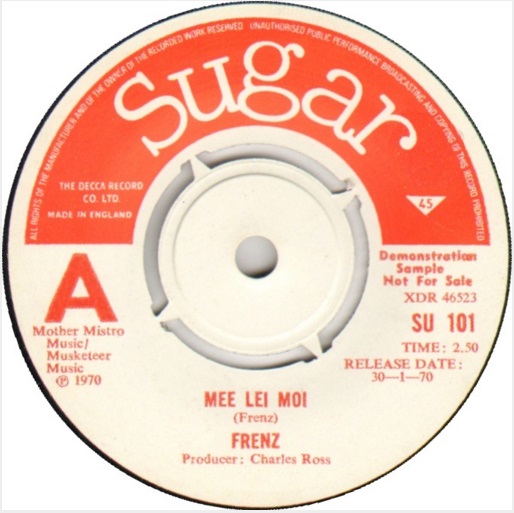
Anglo-Indian Charles Ross as a producer in Jamaica, Charley Ross was best known for his rocksteady productions from his Flame label and from the records that were distributed in England on the Blue Cat label, a subsidiary of Trojan. Given Ross’ reach to England, it is no surprise that he would continue to work with labels there, and in 1969, the Sugar label, a subsidiary of Pye Records, the label responsible for releases from Lonnie Donegan, The Kinks, and Petula Clark, opened, and Ross was named as the production director of the label.
Ross would produce the records in Jamaica, and Pye Records would press and distribute the records in the UK and then Bell Records would distribute them in the U.S. For reasons unclear, this deal with Pye somewhat came to a close, and Sugar was then under the supervision and control of Decca. Hoping that Sugar would be Decca’s definitive reggae arm, the label giant became disappointed in the very short lived output of the label, and Sugar’s last record would be released in 1970.
Sadly, that was the last the music world heard from Charley Ross, and it’s such a shame because his productions were recorded exceptionally well. We kicked off this spotlight with the beautiful vocals of Joe White and My Guiding Star from 1969.
Sugar released two full-length LPs in its final year: Claude Sang’s World of Reggae Volume One and Charles Ross Reggae Combo’s World of Reggae Volume Two. The Two Zorro Five tracks that we played on the spotlight before our favorite cut from Sugar were supposed to be released on Sugar toward the end of the label, but given its mysterious termination, the Zorro Five singles were transferred to Decca.
As our Pat’s Label spotlight was a mix of hot ska and early reggae, we decided to start the April 19th, 2016 Bovine Ska and Rocksteady with some smooth, pretty rocksteady…Two sets worth actually, beginning with Dandy Livingstone and Play It Cool from his 1967 LP release on Giant, Rock Steady With Dandy.
A mento set followed the rocksteady sets which had a wonderful tune from The Jamaican Calypsonians on Times Record entitled, Donkey City and for the final set of the hour, we have you a fierce set of ska beginning with the Buster’s All Stars and their TV inspired song, The Fugitive which came out of Voice Of The People in 1965. After that set, we went full force into the Pat’s Label spotlight.
In terms of dynasties in Jamaican music, there is no family more prolific than the Chins. Born in Kingston, Vincent “Randy” Chin got started in the music industry working for Isaac Issa, who owned jukeboxes across the island. Vincent would rotate in new records and remove older ones from the jukeboxes. With this job, the old records were discarded, and knowing that these records, while not the newest should not be wasted, Vincent accumulated them, creating the starting inventory for the Randy’s Record Mart when it opened in Kingston in 1958.
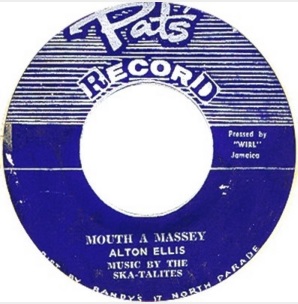
First, Vincent recorded and produced artists in Jamaican Rhythm and Blues in the early sixties for his Randy’s label, seeing success with Lord Creator and Bunny and Skitter and by 1962, Vincent and Patricia, his wife and business partner, built the formal recording studio known as Studio 17, which would see the talents of everyone from The Skatalites to John Holt to Lee Scratch Perry to Bob Marley as the studio progressed. Besides the signature Randy’s label, during the early sixties, the Chins also created Pat’s Record as an imprint, which is the subject of our record spotlight tonight. Absolutely named after his wife, Vincent would take the helm of producing the tracks released on Pat’s Record.
While Vincent did produce the recordings, this spotlight would not be right without discussing the role of the lovely Miss Pat, the inspiration for Pat’s Record, in the Chin family music career. Pat was seminal in the creation of a one-stop record store in Kingston while Randy’s Record Mart did of course sell in house productions, it also sold the records of other producers, and those distribution deals were created by Miss Pat.
The Tuesday, April 12th edition of Generoso and Lily’s Bovine Ska and Rocksteady began with a hearty tribute to Toots and the occasion that he will be on tour again this summer after a three year hiatus due to the jerk who hit him with a bottle for no reason whatsoever. We have always loved Toots and have honored him multiple time during the twenty years of the radio show but this time means something more so we started off the beautiful cut that he and the Maytals recorded in 1964 for Coxsone, Heaven Declare. We stayed on the ska for the first two sets of the show with a highlight being BB Seaton as Bibby with The Astronauts on the Astronaut label from 1964 and Wicked Men.
For our mento set, we began with one of the many tunes featuring a mento band attached to a Jamaican hotel, which was the thing back in the day. Here we have the Montego Beach Hotel Calypsonians on the (you guessed it) Montego Beach Hotel Gift Shop Label and the song, Red Head, from 1959. Thanks as always to Mike from mentomusic.com for the information on many of the mento cuts we play on the show. An invaluable resource for us over the years on the Bovine Ska.
The final set of the first hour started with a version to version of Lloyd Young’s killer reggae from 1972 on Shalimar, Butter and Bread which we followed with The Shalimar All Stars and Bread and Butter. After a few more early reggae cuts, we launched into our spotlight of Keith Hudson’s IMDIBIMTS LABEL!
Often referred to as the Dark Prince of Reggae, Keith Hudson is an amazing figure in Jamaican music. He attended the Boys Town School in Kingston and frequented Coxsone’s Downbeat sound system constantly which would lead to also hanging around Coxsone’s studio musicians, carrying Don Drummond’s trombone to recording sessions. As a teenager, Hudson became very well known for his sense of style and his pragmatic sensibilities when it came to his music
First, Hudson was a newspaper salesman, and afterwards, he became a dental technician, specializing in fitting dentures, and from this work, he used his earnings to fund his first record label, Imbidimits, named for the patois word for dental embedments. Imbidimits featured plenty of stars, including John Holt, who recorded for Keith Hudson in 1969, and who will kick off the spotlight with “Never Will Hurt My Baby”
Zap Pow were a Jamaican reggae band, whose members have included guitarist Dwight Pinkney, singer Beres Hammond and trumpeter David Madden. They existed from 1969 to 1979. In terms of great talents at Imbidimits, the house band for the label was Soul Syndicate, who Hudson somewhat strongarmed into working with. Hudson’s muscle, Derrick Stamma Hobson, was sent to convince the group to record for Imbidimits, and though that almost led to a violent confrontation, Hudson reassured the group that he was simply a fan of the group and would like to work with them
Ken Boothe’s Old Fashioned Way put Keith Hudson on the map as a producer and after that, his collaboration with Dennis Alcapone would launch Alcapone’s career. Speaking of deejays, Hudson would also be integral in the rise of Big Youth, who recorded S90 Skank for the Imbidimts label which had the rhythm of Keith Hudson’s own We Will Make.
Trojan’s imprint Green Door would distribute Hudson productions. By the mid 70s, Hudson stopped producing and transitioned into a career as a singer. He moved to London then New York, where he signed a deal with Virgin records, who hoped he would be the next Bob Marley. Always trying to record something new, Hudson was always trying out something. It’s such a sin that he was diagnosed with lung cancer in August 1984 and passed only three months later. He was an enormous talent
It’s been a tough year for entertainment, and we are sad to pass on the news of Gilmore Grant’s of The Silvertones passing. He went to the hospital with severe stomach pains on March 28th and passed away two days later, just a couple of weeks after The Silvertones performed in St. Elizabeth.
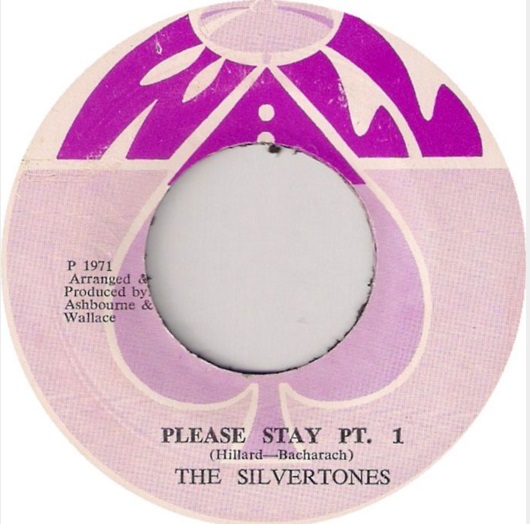
Originally a duo of Gilmore Grant and Keith Coley, the Silvertones became a trio with the addition of Delroy Denton. The group saw early success with Duke Reid, and then proceeded to work with Sonia Pottinger, Clancy Eccles, and Coxsone Dodd. In the late sixties, Denton moved to America, and he was replaced by Clinton “Tennessee” Brown, and the group would continue to record together until Brown’s passing in 1999. In 2013, Grant and Coley added Joel Brown, and the group recorded again and performed live as well.
We send many condolences and respect to Gilmore Grant’s family. We honored Gilmore with our opening set of the group he helped form, The Silvertones.
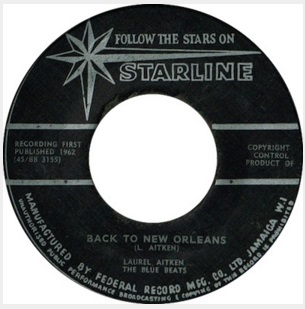
Starline is a subsidiary of Melodisc that produced Jamaican rhythm and blues and ska. The label predominantly released Byron Lee productions along with a few from Laurel Aitken, who produced and performed his own tracks for the label. It is no surprise that Laurel Aitken has recordings on Starline. As an artist whose work was readily distributed on the well known Melodisc subsidiary Blue Beat in England, Laurel Aitken naturally had the ability to record and produce at Starline. Born in Cuba, Laurel began his career in music as a mento performer for the Jamaican Tourist Board and as a performer in plenty of Jamaica’s talent shows. He first recorded for Stanley Motta and then LR DePass, a businessman who released and sold a few mento and calypso records from his shop which also sold furniture, music instruments, records, and appliances. After he made the move to England in 1960, he continued to record, and when he returned to Jamaica in 1963, Laurel was still productive, recording the body of work that would earn him the nickname and title of the Godfather of Ska.
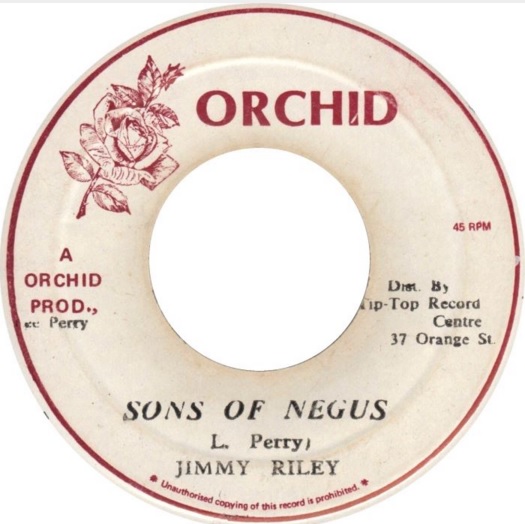
It is with sadness that we must share the new that Jimmy Riley passed away on March 23 from bone cancer at the age of 61.
Jimmy Riley is a chameleon of music. As a singer, he performed with the Uniques and the Sensations prior to becoming a solo artist, and additionally he emerged as a producer as reggae grew. Furthermore, he is also the father of the noted musician Tarrus Riley. Jimmy will be remembered as a fine singer, a talented producer, a caring father, and a dedicated mentor to musicians. We are so very sad to hear of his passing, and tonight, we will spotlight each facet of Jimmy Riley’s career. We send much respect to his family and all who worked with him.
To start off, we will began with recordings from the group that he helped form: The Sensations. Jimmy Riley went to school at Kingston Senior High School with Slim Smith, and he very much wanted to be a member of the Slim’s group, The Techniques, but the group already had four members, so adding a fifth did not make sense, even though Jimmy did his best to join the band, helping to carry clothes to and from shows and rehearsing with them as well. As a result, Jimmy formed the Sensations with Cornell Campbell, Aaron Davis, and Buster Riley, creating a group that had great talent in their own right. The quartet auditioned for Gladdy Anderson at Treasure Isle and were accepted on the spot. King Sporty came by the studio and brought Frankie Lymon & the Teenagers’, “Juvenile Delinquent,” and the Sensations began to rehearse their own version of it. The group’s version of that iconic track was their first recording, and they saw success with it at the dances in Jamaica. Next, we’ll hear The Sensations’ “Juvenile Delinquent,” the track that marks the strong beginning of Jimmy Riley’s career as a recording artist.
After the Techniques disbanded, Slim Smith founded the Uniques with Franklyn White and Roy Shirley. That first version of the Uniques separated after their early recordings failed to take off, and Slim took some time to record as a soloist. Well, the Sensations would disband during this time, and upon this, Jimmy reunited with Slim Smith along with Jackie Parris and Lloyd Charmers as a vocalist for the second version of the Uniques. The Uniques saw great success, defeating Bob Marley and Wailers to win the Battle of the Groups at the Ward Theater. We’ll heard Jimmy Riley with the Uniques next. “Lesson of Love” was written by Jimmy Riley.
After the Uniques split up, Jimmy Riley began to record as a soloist, first for Bunny Lee. Born as Martin James Norman Riley, Jimmy is credited as a recording artist and a producer as either Martin or Jimmy Riley. While most know Jimmy as a soloist for his track, “Love and Devotion,” which he recorded for Sly and Robbie, his early solo works are excellent, and you’ll hear them next.
As a producer, Jimmy Riley created his own labels, which included PEE, the subject of one of our label spotlights, along with Yes and Full Moon later in reggae. Plenty of his productions also made their way to England, to be distributed by some of our favorite English imprints. To kick off this hour of Jimmy Riley productions, we’ll start of with three tracks from the mighty PEE label.
For a younger generation, many know Jimmy as the father of Tarrus Riley, and the two of them would often perform as a duo, including most recently at Central Park’s Summer stage last year. We send much respect and many condolences to Tarrus.







 LILY & GENEROSO 4EVER!