Happy Holidays Bovine Ska and Rocksteady Listeners!
For the nineteenth year in a row, we have produced a show that not only features some of the best and rarest Jamaican Christmas tunes from 1955-1978 like Glen Adams’ 1974 cut for Straker’s Records Christmas Rock Reggae and Jackie Mittoo’s 1978 After Christmas, a dubby haunting organ driven version of Joy To The World, but also we gave you tidbits of Jamaican holiday traditions and foods as well.
Christmas across all cultures has a variety of traditions. Here in America, traditions are often focused on the food we share on the holiday, with staples including turkey, ham, eggnog, and gingerbread cookies. For Americans, you may wonder, what is Christmas like in Jamaica? Christmas time in Jamaica often means the creation of traditional items for the table, and one of those staples is Sorrel drink. Sorrel is a cold, delicious, spicy and festively red-pink tea made from Sorrel, which is also known as roselle. The roselle is a plant in the hibiscus family, and after the flower blooms on the plant, the sepals of the flower become the source for the tea. The roselle grown in Jamaica was transported to Latin America in colonial times, thus creating the agua de Jamaica you see in Mexico and in taquerias in Los Angeles. The Sorrel drink in Jamaica is often spiced with pimento berries, the fruit that makes allspice, and ginger along with a wee bit of rum, making a festive drink that is perfect for celebrating Christmas, especially in the warm weather of Jamaica.
One of the other staples of Christmas is Christmas cake, a black rum cake made with dried fruit that makes American fruit cake look shameful. Christmas cake is sometimes made for weddings as well, but it is most common around Christmas time. With origins from English Christmas Pudding, Jamaican Christmas cake uses rum and red wine to soak dried fruits such as prunes, raisins, cherries, and dates, which gives the dessert an intense brown color.
Another major tradition of Christmas in Jamaica is the visit to the Grand Market on Christmas eve. The Grand Market opens in major towns, with vendors selling toys, sweets, fresh fruit, snacks, games, and clothes. Sound systems and bands also play music throughout the day, and families gather to celebrate the holiday together with some shopping, strolling, eating, and viewing of Christmas decorations on nearby buildings.
Jonkonnu bands were long ago a tradition of the Christmas season. The Jonkonnu bands would parade down the street in large, masquerade costumes. The traditional set of Jonkonnu characters include the horned Cow Head, Policeman, Horse Head, Wild Indian, Devil, Belly-woman, Pitchy-Patchy and sometimes a Bride and House Head who carried an image of a great house on his head. Today, these theatrical bands are not as common, but a few still perform around the holiday.
After Christmas Day, Boxing Day is celebrated, which is a day to further spend with family and to spread cheer. Boxing Day is often spent with extended family and is the time to thank people who provide a service to you throughout the year such as the postal or newspaper delivery or local businesses that you regularly frequent.
You can listen to our full Gladdy Anderson retrospective from December 20, 2015 HERE. Subscribe to our show on Mixcloud; it’s FREE, and you’ll get an email every Tuesday when we post a new show.
Happy December!!! Please help us and spread the word and repost if you liked the show! Repost anywhere you see fit.
It is quite cold here in Southern California and as I had a cold as well I thought to make this warm comforting soup for you, Zuppa con Lenticchie e Pomodori (Italian Lentil and Tomato Soup) . This is an easy to make and hearty soup that only needs a few ingredients and just a bit of cooking time (about one hour). Here is what you’ll need: One pound of lentils, one an of crushed tomatoes, one container of chicken broth, 3 spring onions, 6 large carrots, one bulb of garlic, salt, pepper, and olive oil. Give the short video a watch and let me know how yours turned out. Happy New Year!!
We started off this week’s show with a a version to version of The Ethiopians’ classic, Pirate and Gregory Issacs Do You Ever to highlight our first two sets of early reggae. After a stirring mento set, we ended the first hour with a set of blazing ska before going into the Olive Blossom Label spotlight at the start of the second hour.
In the years of ska, King Edwards, Duke Reid, and Coxone Dodd, and Prince Buster dominated the sound systems and the charts. As rocksteady arrived, Prince Buster fell a bit out of the limelight as Coxone, Duke, and Leslie Kong attracted the stars to their labels. During this rocksteady period, Prince Buster opened up his Olive Blossom imprint, which had beautiful tracks and excellent productions, even if the biggest singers were not recording for Buster.
Fundamental to the great sounds of the Olive Blossom label was the contribution of Lynn Taitt and last week’s spotlight artist, Gladstone Anderson. This pair, as they did with Merritone, Gayfeet, and any other label they traveled to during the rocksteady era, arranged the musicians for this new rhythm that they were seminal in creating. Adding to the talents of Taitt and Anderson was Prince Buster’s fearless commitment to placing unique sounds within his recordings, which he did in the ska era and is in the foreground of our favorite track that you’ll hear at the closing of this label spotlight. We started with a killer cut from Dawn Penn with the mid-tempo ska/rocksteady, “Are You There.”
At this point, you may be wondering, what are all of Buster’s labels? There are plenty, with each dedicated to a specific period in Jamaican music or a specific period of Buster’s life. The imprints included: Prince Buster, Shack, Soulsville Center, Islam, Olive Blossom, Buster Wild Bells, and Voice of the People. And, if you were wondering if Prince Buster continued to be tough through the rocksteady, Lee Scratch Perry, who recorded “Call On Me” for Olive Blossom, has said that one of the benefits of recording for Buster during the Olive Blossom years was that Buster was fair to his artists and that he stood up and protected his artists if other people wanted to give them a hard time.
Subscribe to our show on Mixcloud; it’s FREE, and you’ll get an email every Tuesday when we post a new show. Happy December!!! Please help us and spread the word and repost if you liked the show! Repost anywhere you see fit.
With Christmas just around the corner, I immediately think of sweets I ate around the holidays. After thinking about the different che I had over the years, I realized I had forgotten the one that I had the most: Che Ba Ba. Che Ba Ba is perfect for the holidays because it has all of the warmth from a variety of potatoes and a delicious richness from the coconut milk, making it the perfect closer to your holiday meal.
My version is made with taro, gold sweet potato, and purple sweet potato. Though Che Ba Ba is traditionally made with cassava as well, we really enjoyed the different types of sweet potato in lieu of cassava.
Make the che as sweet as you like! I prefer my che less sweet in order to taste more of the coconut, but do feel free to adjust the sugar to your taste! Enjoy! Merry Christmas! Happy eating!
Music provided by Jacques Offenbach’s Overture to “Orpheus in the Underworld”
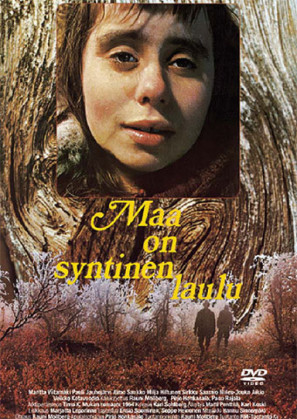
One can only imagine the unsettling rural environment that Timo Mukka, the author of the novel that would become the film, Maa On Syntinen Laulu (The Earth Is A Sinful Song), was raised in during his short life. Born in Sweden, Mukka’s family migrated to the village of Orajärvi in Northern Finland during the last months of the Lapland War, a rarely spoken of conflict that was separate from World War Two which was fought between Finland and Germany from September 1944 to April 1945 in Finland’s northernmost Lapland Province. After fascism had been defeated, Mukka’s village was divided between conservative Lutheran Laestadianist Christians and communists, and it is in that kind of Lapland village with its diametrically opposed social and political attitudes that would become the setting for The Earth Is A Sinful Song.
The film follows a sexually awakening young woman named Martta Viitamäki (Martta Mäkelä) who lives in a one room farmhouse with her grandfather (Aimo Saukko) in a small village in Lapland. Though they share the room, Martta sleeps in the nude, which is a source of duress for her grandfather, who scolds her in a shockingly vulgar fashion. Soon, Martta is up and about, tending to her farming chores. Given the simplicity of these moments,I am immediately reminded of Liv Ullman’s 1995 adaptation of Kristin Lavransdatter, the Norwegian historical novel about the travails of a farmer’s daughter who grows up during the 14th Century, except The Earth Is A Sinful Song is set shortly after The Lapland War, in 1947. There is nary a modern element in this village, and this adds to the timeless naturalism of the film. This very well could be the Scandinavian village from Kristin Lavransdatter, not only due to the homes, wagons, and sleds, which appear to be those of a different century, but also, as we will soon find out, the primordial ways that the inhabitants behave behave towards each other.
This is a poor village village where Martta begins to explore her options for a man, but it is also brutal beyond the butchering of animals that is commonplace on a farm (not for the faint of heart as the beatings of horses, dogs and killings of animals are all real in a way that makes the electric hammer in a slaughterhouse seem like a kiss on the forehead). At the end of one day when the village gathers for a dance by the water, a drifter who is dancing with some of the local women gets murdered, which receives the reaction that one would expect when finding roadkill: “What was he?” “Oh well.” and life goes on. When Martta’s grandfather works all night to only end up delivering a stillborn calf of a woman’s prize cow, there is only a small moment of pause before the cow’s owner offers a fuck to grandpa as a form of payment. In fact, most of the film is delivered in such an unsentimental way, creating a harsh documentary-like feeling, which also borders on nihilism. You await the moment when someone becomes affected by the grotesqueness around them, but rest assured, that will be a long wait. Adding into the daily atrocities towards animals throughout the film is the hideous response to Martta’s growing desires as a woman, which is met with the occasional grope and rape from the boorish men in the town. As horrible as all of this sounds, none of it is sensationalized, which is an excellent show of restraint by first time feature director Rauni Mollberg. Though tough to watch at times, the almost absurd nature of the goings on play into the overwhelmingly realistic and somewhat claustrophobic feeling of this town.
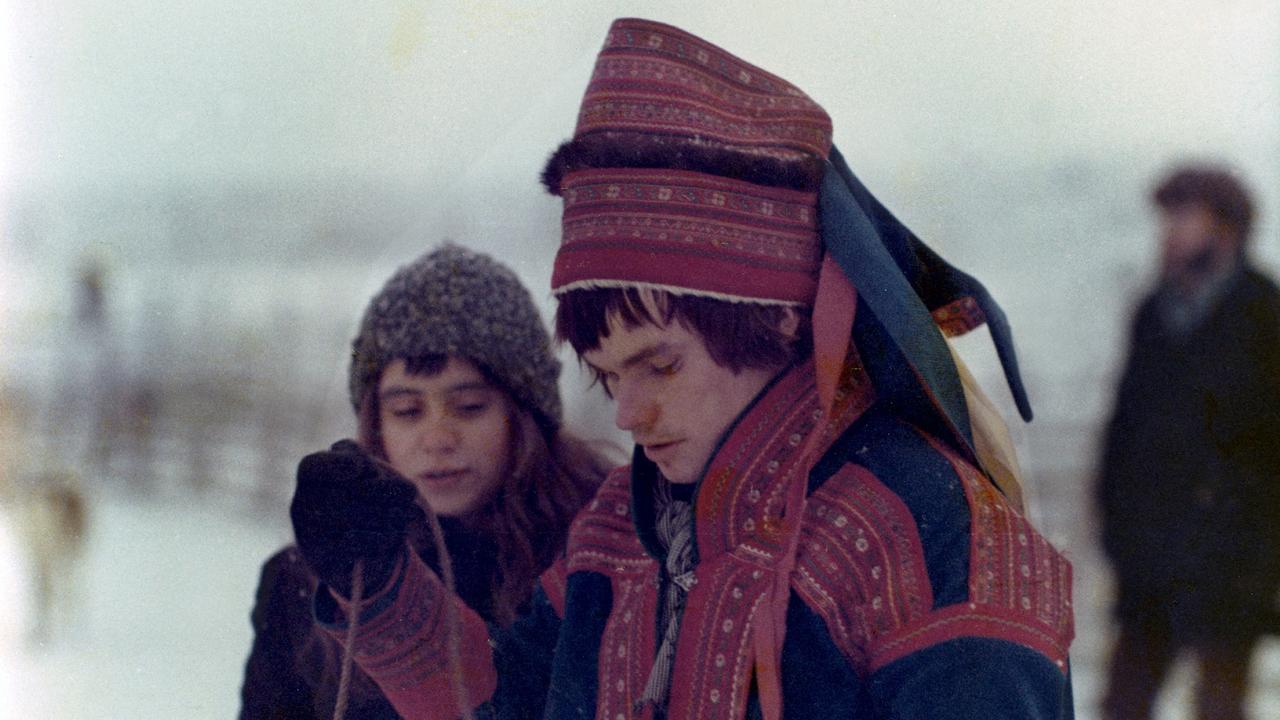
Needless to say that at this point the romantic prospects for Martta seem slim; that is until Oula (Niiles-Jouni Aikio), a boyishly handsome and sweet reindeer herder and salesman, comes to town. Oula also has an eye for Martta, and after a quick scene in which a group of reindeer are corralled and stabbed repeatedly in a scene reminiscent to many a drunken Memorial Day picnic in Philly gone wrong from my youth, they talk of sex. In fact after the Caligulaesque bloodletting of the reindeer sale, the whole town starts in on a bit of a bone sucking-marrow guzzling Roman-era orgy with its ferocious pairing off, which goes so off the rails that the other faction in town evokes the power of everyone’s favorite party killers, the clergy. In fact, this is the hardcore, one-room-God-forbid-you-fall asleep-for-a-second kind of sermon that scares everyone straight for a moment with the threat of hell fire. I write “just for a moment,” as Martta, who is now pregnant with someone’s child, turns her attention to Hannes, a young naive boy in the village who Martta seems intent on schooling in her favorite pastime while she awaits the return of Oula. With all that is happening in Martta’s sexual explorations, you await her grandfather’s reaction, which ends up being fairly passive, despite a few rude comments. It is only when Juhani, Martta’s usually absent father, comes into the picture that you see a day of reckoning looming over Martta and her illegitimate child. Juhani carries a level of self-loathing and violence that goes well beyond any of the rogues we have seen so far in the film. This will get even uglier quickly.
The Earth Is A Sinful Song is one of those rare films that manages to juggle intense drama with a naturally flowing storytelling style that keeps the viewer engaged in a way that you feel that you are watching a perfectly constructed documentary. Much of the success can be attributed to Mollberg’s cinéma vérité approach to the characters created by Mutta that offers a snapshot of the politically bipolar community where the author was raised. The town reveled in its post war sexual freedoms as much as it was repelled by them due to the teachings of their organized faith, creating an antithetical, passively brutal yet hedonistic society.
The holidays always conjure up past memories, with some related to family, others related to friends, and some related to people who have no role in your life but manage to stay in your memory because you managed to cross paths with them whether in pre-school or at a party many years ago. While your imagination cannot be as active with pondering the courses of the lives of your family and friends if you still are in contact with them, it can ruminate on the people who you briefly met or only knew as an acquaintance, spending endless amounts of time thinking about “where are they now?” It is this curiosity that leads to shameless fascination in the Jerry Springer episodes focused on that question and to moments of deliberation on whether or not to attend your nth year high school or college reunion.
In our wired world, some of the allure of imagining what became of people you knew has been lost with the ability to search workplace websites and social media in order to get a small sense of what happened. But, what about people you never knew? People who lived in an era long before you were born? People who are pretty untraceable today? In this realm, your fictional whims and thoughts can thrive and wander on these strangers of the past, so much so that you could dig yourself into a perpetual abyss unless you had a group of people to fixate on.
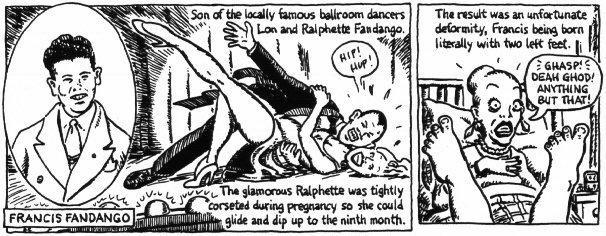
Robert Triptow thankfully has a cast of strangers he can focus on for Class Photo while letting his imagination soar with their fictional lives. Inspired by a class photograph taken in 1937 of the P.S. 49 school in Brooklyn that he discovered with his uncle, Triptow creates humorous, strange, and wacky outcomes for each of the children in the photo while weaving in pieces of pre and post WWII American history and culture into each person’s life. No one in Class Photo can escape Triptow’s rampant and wild fantastes, and as a result, the class members’ lives veer toward the insane and the extraordinary despite their humble beginnings in a school that is believed to have existed for children seeking refuge from Hitler’s reign in Europe.
Cover for the Fantagraphics Release of Class Photo
Triptow takes great care in developing complex and concise profiles on each of the Class of 1937, and in the spirit of the American underground, leaves in all of the lurid details of life and injects the outrageous and sensational into his characters to conversely remind us of how we are simultaneously more regular and more strange than we believe. Beginning with Francis Fandango, the double left footed child of famous dancers who eventually became a Best Boy for a television show, and ending with Pat Flatt, the only member of the class to live an All-American life, the collected futures of the class remind us in the most hyperbolic way possible that life is strange and takes different turns for a variety of people. Yet, despite all of the crazy things that happen to various members of the class ranging from preventing an alien invasion to ascending the royal throne of Iceland, Triptow manages to capture how people’s lives tend to re-converge because of a similarity based on a specific place and time, and this is a normal concept that anchors the novel amidst his grandiose fantasies for the class members
As a result of the mix of the imaginary and the real, with a bias toward the fictional, Class Photo feels like an absurd walk through a 50th school reunion, making you laugh at the ridiculousness of some of the events of the individuals’ lives (I kept giggling as I read the tale of Gunther Spalch, the man with flatulence so potent that he became a research weapon for the U.S. government) and making you wonder about how peculiar your own future and those of your classmates will be. Sure, for the most part, our lives will lean more toward the ordinary, but reality does have a way of surpassing imagination sometimes, so who knows?
While there is a bit of a philosophical layer in Class Photo, the graphic novel, Triptow’s first solo book, ultimately showcases the author’s humor, sharply delivered through the expressions of his characters, the narration of their lives, and the dialog throughout the profiles of the Class of ’37. All of Class Photo can be summed up by one statement in its opening, “This book is highly recommended for your bathroom, as each page is about the right reading length per sitting and handy if you run out of tissue.” Class Photo entertains without ever getting too pretentious, despite its NPR-worthy found media premise, because of its self-deprecation and absurdity, so, really, enjoy it on an abbreviated or extended #2, depending on whether one page does or does not provide enough time for you to do your business. That is, after all, one of the common places for you to wonder about where people are today, since what else is there to do in a sanitary fashion while on the toilet?
Class Photo is written and illustrated by Robert Triptow and is available via Fantagraphics Books.
With heavy hearts we are sad to report that pianist and vocalist Gladstone “Gladdy” Anderson has passed away.
As a studio musician and an arranger, Gladdy worked for many labels and many house bands, making this memorial show probably one of the most difficult to put together, but one that we are proud to present to honor the fantastic work of Gladdy Anderson. Born in Jones Town in 1934, Gladstone “Gladdy” Anderson had musical influences quite early in his life. Though his father was a railway engineer, his uncle was Aubrey Adams, pianist for groups such as Clue J and the Blues Blasters and band leader for the Courtleigh Manor Hotel house band. Adams taught Gladdy how to play piano as a boy. As Gladdy continued to practice as a teenager, Adams took a trip to Panama, and when he returned, he introduced Gladdy to Duke Reid, where Gladdy first focused on playing rhythm parts on piano, occasionally getting a chance to play with his uncle, who performed the primary piano, organ, and keyboard parts. At Duke Reid’s Gladdy would also rise in the ranks, becoming one of the first people hopeful artists would audition for. Given Gladdy’s early history with Duke Reid, wekickoff off this memorial spotlight on Gladdy Anderson with three tracks from the Duke Reid All Stars; tracks where Gladdy would play with his uncle Aubrey Adams.
The sheer number of tracks that Gladdy played on is staggering as was the many different musicians in bands that he recorded with throughout his legendary career.
Duke Reid All Stars
Drumbago, Aubrey Adams, Cluett Johnson (bass), Ernest Ranglin (guitar), Rico trombone, Rolando Alphonso (saxophone), Theo Beckford (piano)
Buster All Stars
Drumbago, Cecil Bustamente Campbell, Dennis “Ska” Campbell, Ernest Ranglin, Gladstone Anderson, Jah Jerry Haynes, Karl Bryan, Lloyd Knibbs, Oswald Brooks, Raymond Harper, Rico Rodriguez, Val Bennett
Skatalites
The Skatalites – Gladdy would be on the piano parts for the Skatalites, replacing Jackie Mittoo because Duke Reid preferred Gladdy
Tommy McCook and the Supersonics
initial lineup: Johnny Moore and Lloyd Knibb, the group also included trombonist Danny Simpson. Herman Marquison sax, pianist Gladstone Anderson, Winston Wright on organ, Clifton ‘Jackie’ Jackson on bass and either George Tucker or Ranny ‘Bop’ Williams on guitar
Lynn Taitt and the Jets Gladdy with Hux Brown (guitar), Bryan Atkinson, Joe Isaacs, Deadly Headly, and Carlton Samuels
Gladdy was uniquely prolific, and given his reputation and constant work beginning in the 50s, he was present at some key points in the evolution of Jamaican music. When in the studio with Lynn Taitt, who Gladdy helped as a translator and band leader because many musicians had difficulty understanding Lynn because of his Trinidadian accent, Gladdy was in the band that would record the first rocksteady track, Hopeton Lewis’ “Take It Easy.” In fact, it is believed that Gladdy may have been the person to name the rocksteady genre, given that he described the recording of “Take It Easy” as “rock steady.”
With the tune, “Hold Them” -Roy Shirley had this melody and brought it over to Gladdy and Joe Gibbs. During the rehearsal, he brought Slim Smith and Ken Boothe to perform backing vocals, but after rehearsing the song, Gladdy suggested that Roy perform the song as a soloist because he better understood the rocksteady rhythm at the time.
A gifted vocalist, the second hour of our tribute began with tunes from The Seraphines, which was the name Stranger Cole and Gladdy came up with when they sang fro Sonia Pottinger and her Gayfeet label. The duo would also record hits under their own names like “Just Like A River” and “Seeing Is Knowing” but due to Mixcloud’s policy that limits the amount of tracks that one program can play from one artist, we limited his vocal spotlight to the Seraphines cuts. We welcome you to find these tracks yourself as they are quite impressive.
During this period that saw Gladdy arise as a vocalist, he of course continued to play on a huge amount of tunes during the rocksteady and reggae eras.
The Crystalites
Barry Biggs, Bongo Herman, Bongo Les, Gladstone Anderson, Jackie Jackson (3), Karl Bryan, Larry McDonald, Lynford Brown, Paul Douglas, Wallace Wilson (2), Winston Wright
Clancy Eccles’ Dynamites, the backing band for Eccles’ productions
Gladdy Anderson (piano) Hux Brown (lead guitar), Jackie Jackson (bass), Winston Grennon (drums), Neville Hinds (organ) and Wallace Wilson (rhythm guitar), while others who recorded with the group included Hugh Malcolm (drums) and Winston Wright (organ)
Harry J All Stars
Winston Wright (organ, keyboard), Val Bennett (saxophone), Aston “Family Man” Barrett (bass), Boris Gardiner (bass), Jackie Jackson (bass), Carlton Barrett (drums)
Mudie’s All Stars
known as Gladdy’s All Stars occasionally for tracks led by Gladdy
Joe Gibbs and the Professionals 1. Sly Dunbar, Bobby Ellis, George Fulwood, Vin Gordon, Tommy McCook, Lloyd Parks, Robbie Shakespeare, Earl Chinna Smith, and Ruddy ThomasR.I.P. Gladdy. Thank you for all that you did to drive this music we love forward.
You can listen to our full Gladdy Anderson retrospective from December 8, 2015 HERE. Subscribe to our show on Mixcloud; it’s FREE, and you’ll get an email every Tuesday when we post a new show.
Happy December!!! Please help us and spread the word and repost if you liked the show! Repost anywhere you see fit.
In 2010, legendary South Korean actress Yoon Jeong-hee came out of a sixteen year retirement to play Yang mi-ja, the protagonist of Lee Chang-dong’s internationally acclaimed film, Poetry. For Yoon’s textured performance as a grandmother who is steadily succumbing to Alzheimer’s while trying to keep her grandson, whom she is raising, out of prison for a rape charge earned her a much deserved Los Angeles Film Critics Association Award for Best Actress. To most of us in the West, Poetry gave us our first exposure to Yoon Jeong-hee, a talented and occasionally controversial actress in the South Korean cinema of the 1960s and 70s, an actress who was often referred to during her heyday as part of the “Troika” (three) along with Moon Hee and Nam Jeong-im as the most popular actresses of their generation and given Yoon’s performances in some of the more notorious titles from that period of South Korean cinema, she was a natural choice for the lead in “Poetry” as her character, Yang mi-ja, must resort to any means necessary to save her grandson, including sexual soliciting at the age of sixty six.
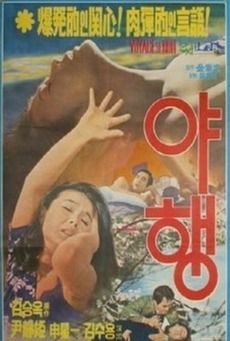
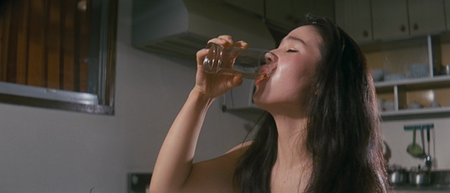
One of more notorious titles that Yoon Jeong-hee starred in during her youth was in Yahaeng (Night Journey) a 1977 film by prolific director, Kim Soo-yong where Yoon plays Miss Lee, an unmarried bank clerk in an immense bank in downtown Seoul. I mention that she is unmarried as that fact is bandied about her office along with the flippant use of the “old maid” tag which has been bestowed upon her and one other female co-worker, a woman that is Miss Lee’s last unwed colleague who is about to tie the knot, an occasion that Miss Lee is not at all that happy about, as that wedding will leave her as the only single woman in her office.
Seated slightly behind Miss Lee at the bank is Mr. Park, Miss Lee’s supervisor, who only occasionally throws a glance at our protagonist though it seems that she is interested in him. After her shift is over, Miss Lee takes a bus and gets off at a military cemetery, heads to the grocery store where she picks up a few things and goes home to her apartment where Miss Lee cooks herself dinner and falls asleep on the couch. While still asleep the door opens and Miss Lee’s supervisor Mr. Park menacingly walks in and carries her off to the bedroom which is shot in a way that doesn’t look too consensual, and he proceeds to mount her for what seems like eight seconds, gratifies himself, and rolls off to sleep which which makes it abundantly clear that Mr. Park is not into sharing an orgasm with Miss Lee. We then learn that the two have been living together but they have kept this fact a secret from their coworkers upon Mr. Park’s request in order to avoid gossip which in conjunction with his poor sexual performance, makes their relationship even more pathetic.
Given the impending marriage of her co-worker, Miss Lee also wants to go legit but Mr. Park describes marriage as “lame” and you understand quickly that this relationship isn’t going anywhere fast. To add insult to injury, Miss Lee has to go stag to the wedding of co-worker so she takes a week’s vacation and decides to visit her hometown to explore her past where you learn that the one true love of her life was killed while serving in the Vietnam War, and that he is buried in the cemetery across the street from her Seoul apartment. Miss Lee soon returns to the city, and she heads to the bars, not necessarily looking for love but more to test the potentially dangerous ramifications of being a single woman engaging a world full of singles, similar to the character of Theresa in Richard Brooks’ equally controversial film released the same year, Looking For Mr. Goodbar.
Night Journey remains as one of the highlights of Kim Soo-yong’s oeuvre, and it is adapted from a work by the acclaimed 20th-century novelist Kim Seung-ok. Though it is based on Kim Seung-ok’s novel, Night Journey also shares a lot with Mr. Goodbar, the aforementioned film of Richard Brooks besides the central plot of a woman who is desperate to see a world beyond her past, using sexuality to compensate for loss which in the case of Miss Lee’s loss of her true love, whereas Theresa it is more an issue of lost time from her youth caused by illness and Catholic repression. Kim soo-yong employs a similarly loose narrative structure and mixes daring cinematography and sound to create a modernist aesthetic that allows you into the mind of the film’s central character. Actress Yoon Jeong-hee brings a beautifully righteous rebellion to Miss Lee in the same way that would do over thirty years later with her character in Poetry. Both characters are trapped by their age and the customs of the society that they live in which assumes that they must be complacent, waiting for men to rescue them so that they can live out their lives.
Given the time period when most South Korean films were shot to give only the male perspective, Night Journey remains as a striking statement for a growing number of women of its era who wanted to free themselves from repression. As righteous as the film is though, there is one scene that possibly does go against the makeup of Miss Lee’s character and that is a scene in which Miss Lee, during one of her solo escapades into the city, is raped and appears to have enjoyed it so much that she goes to the same location the next night seemingly to have the moment happen again. If the rape had occurred with Miss Lee’s outrage, I would’ve assumed that this was added to supply a punishment for her rebellion, serving as a precautionary tale in order for the film to make it past the censors but she clearly seems to enjoy it.
If director Kim’s goal was to make a point that Miss Lee’s desire to willingly be a victim of rape due to the fact that her current sex life is a collection of unsatisfying moments, that would be very bold condemnation of that era’s men but what I actually feel is the purpose of that rape is that Miss Lee’s perception of sexuality has been augmented based on her first sexual experiences being derived from a teacher who molested her as a teen that we see in flashbacks early in the Night Journey. If the latter rationale is the case, then one has to wonder as to what is the overarching statement of sexual freedom and repression that director Kim is making with Night Journey. Is that statement that all women in society have been punished by men for so long that the line between the sexual act of love and the brutality of rape has been blurred?
Night Journey Full Movie
Incredibly, given the film’s salacious content in a country that is even more sexually repressed than the United States, the production of Night Journey actually predates Mr. Goodbar by four years as it wrapped in 1973 but was attacked by censors and was shelved for years before being released in an edited version in 1977. Rumors persist that two cuts of the film exist, but director Kim maintains that this is not true though I personally would love to have seen his true vision for the film. Regardless, of the cuts that one imagines were made, Night Journey is an intelligently made film depicting one woman’s impossible struggle to free herself from past tragedies, violence, and contemporary repression. As for actress Yoon Jeong-hee, given her performance here and in such magnificent films like 1967’s Mist, I am thrilled that she ended her career with 2010’s Poetry, forever solidifying Yoon as an actress who never strayed away from controversial and important roles for women.
Supernatural creatures seem to dominate media attention in cycles. In a matter of 5 years, we’ve seen vampires return to vogue with an oversaturation of vampire themed TV, books, and films that made the blood-sucking motif transition into the trendy and then the passé. At the moment, the zombie craze may just reach a similar oversaturation line, forcing the subgenre to also begin to lose its steam, which means that a new supernatural horror creature can take over. Will we see a return of the werewolf next? Or Frankenstein? If comics continue to influence TV and film and vice versa, then I suspect the new supernatural fixture to capture the terror of the public will be…witches.
Witches? Is there anything new to add to the mythology? Haven’t witches remained in our collective imaginations for hundreds of years? While witches never really disappeared from the horror genre over the years, the last time I can recall witches in the foreground of public attention is in the 1990s, and those witches tended to be more of the sillier, more kid-friendly kind (think Sabrina the Teenage Witch, Hocus Pocus, Halloween Town, and late night episodes of Bewitched on Nick at Nite). Based on the enormous success of Scott Snyder’s Wytches, it looks like the cute witches of the 90s are getting a makeover, one that brings them closer to the primordial connection of witches to the earth and to evil.
Taking a similar approach with the grim, eerie witches of Snyder’s creation, Cullen Bunn, the mind behind the magnificent Western series, Sixth Gun, creates Harrow County, the fictional setting that gives the the series its name and the place destined to feel the influence of Hester, a witch who once healed the citizens of the area with her powers but eventually succumbed to the evil around her and in her inherent power. Though the residents of Harrow County killed Hester, her connection to the earth allows her to live on, particularly through her ability to create humans from elements of the earth, and to carry on her own spirit, she has created Emmy, a child born from a tree. While everyone in Harrow knows about Emmy’s non-human origins, she does not, and on the eve of her eighteenth birthday, when dreams become strange and people begin to gather in the night, Emmy and her powers begin to awaken.
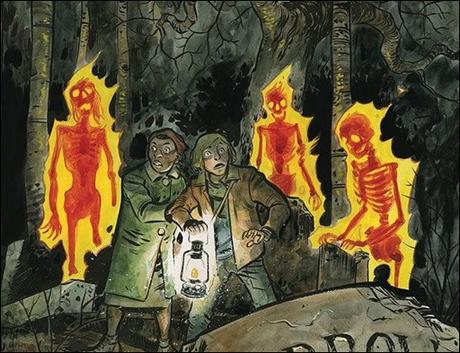
Cover for Harrow Country Volume One: Countless Haints
As with any strong horror work, the horror here represents something more universal; in Harrow County, Emmy’s discovery of her power and her attempt to wrangle its darkness symbolize a less supernatural experience almost all of us go through: growth into adulthood. For Emmy, adulthood not only means learning more about life away from the farm she knows but also learning about the forest, all of the Haints (ghosts of wandering spirits who cannot seem to leave the world) who wander there, and the graveness of her powers. Emmy’s struggle to understand the internal and external ambiguities between good and evil in her world exaggerate the belief formation process we experience as we develop as adults and begin to understand that good and evil can be relative rather than exact.
Consequently, while Harrow County certainly exists as a work of the horror genre, it is ultimately a coming of age tale. As a result, the core plot of the series focusing on Emmy’s growth and conflict does not contribute anything particularly groundbreaking and is a tiny bit stale. However, Tyler Crook’s artwork and Cullen Bunn’s imagination for the creatures Emmy encounters strengthens Harrow County and pulls it up from falling into being yet another alternative form of the bildungsroman. In Harrow County, there are uniquely creepy ideas and images. From glowing skeleton ghosts to multi-eyed creatures that look like minotaurs crossed with Giger’s Aliens to a decrepit tree with jaws and crooked teeth to a little boy who can shed his skin and use it as a communication device while the rest of his body travels elsewhere and reports back on any impending danger, the creepy crawlies of Harrow County are the reason to return to this series. Bunn’s ideas for characters capture your fear and dread, and Crook’s illustrations colored with loose and haunting watercolors make them just real enough to be believable but also loose enough to be almost mythical and archetypal.
Emmy discovering the boy whose skin can speak about what his flesh sees
The first volume of Harrow County, Countless Haints, includes character development sketches as well as the original prose chapters for the story, which Bunn originally intended to publish in parts online. These materials provide an insight into Crook and Bunn’s collaboration and their thought process in creating a complex setting, making the first volume a fun first read but also an enjoyable re-read after getting a better sense of the creators’ thoughts on the world they have created. For someone taking a beginner’s step into contemporary horror comics, Harrow County Countless Haints is a strong candidate as a starter book; it has a balance of horror and non-horror concepts, providing some chills but with the familiarity of a coming of age drama.
Though I prefer Snyder’s take on the witch, Bunn and Crook have undoubtedly created a fascinating, unsettling, and scary world in Harrow County that I hope will get further incorporated into the plot as the series progresses. After the first four issues, Harrow County has promise, but I would like to see it steer away from familiar journey to adulthood devices and move toward exploring the combination of its environmental and external horror with psychological internal horror for Emmy, which will take her character on more uncharted paths. Regardless, if my prediction comes true that witches will soon dominate our television sets and movie screens, I will look forward to seeing a version of Harrow County beyond comicbook pages.
Harrow County Volume One: Countless Haints collects issues 1-4 of the series, which is written by Cullen Bunn and illustrated by Tyler Crook. It is available now via Dark Horse Comics.
2015 was a transition year as Lily and I moved west, leaving behind some great friends, WMBR, and some of the best theaters in America. I send much love, thanks, and respect to all of the wonderful programmers out in Boston, to the many years that the blessed Harvard Film Archive in the basement of the Carpenter Center saw our shadows, to Saul Levine’s Film Society screenings that changed our view of experimental cinema forever, to the staff and films at the Coolidge Corner and the Brattle for always trying to make seeing a film a better experience, and extra respect to the small runs of films you would never see otherwise at The Museum of Fine Arts as well as all of the hard working and underpaid staff of the Independent Film Festival of Boston who put on another great festival this year, leaving no doubt as to what is the preeminent film festival in the city. Since arriving in Los Angeles, we have been astounded by the amount of vital new and repertory cinema happening here. We are members of Cinefamily now, and through them, we have seen our favorite film of the year and met the director as well and have had the opportunity to view so many small indies and rep films that have long since been forgotten. The Cinefamily also supplied us with the best 4th of July that we can ever remember in the form of a barbeque, jazz combo, and a chance to see a print of Jazz On A Summer’s Day. We have loved our evenings at the majestic Egyptian and the Aero theatres as well. The small Music Hall and Fine Arts Theaters on Wilshire have shown films we would have missed if they had not picked them up, and all the goodly people at the American Film Institute put on a beautifully curated/free for everyone festival that helped populate this list. Films that we have waited for all year from world-class directors such as Arnaud Desplechin, Jacques Audiard, Cornelieu Porumbiou, and unfortunately Paolo Sorrentino, were on display at the Chinese Theater for one amazing week that will now be a part of every fall for Lily and myself. Of the 250 plus films we saw this year, some films went beyond expectations; a few from proven directors underwhelmed and disappointed, and our favorite film,Güeros, emerged as the winner, which is the the first time a debut effort has risen to the top in the twenty plus years that I have put out this list. Thanks to my darling Lily for watching these films with me throughout 2015 and for editing this massive document while graciously adding her fantastic thoughts in along the way. Here we go….
My Top Ten Films for 2015 1) Güeros (Alonso Ruizpalacios) Mexico
Tomás (Sebastián Aguirre) is a teenage malcontent who lives in Veracruz with his mother. After pulling one nasty prank too many, mom sends Tomás to live with his layabout college student brother Federico/Sombra (Tenoch Huerta), who lives in a miserable apartment in Mexico City with another slack named Santos (Leonardo Ortizgris). Neither is actually in school because they are sitting out the “student strike” at their university caused by a change in policy that will now charge students for tuition for the first time in history. Shortly after arriving, Tomás tells his new roommates that his and Sombra’s favorite rock singer, Epigmeneo Cruz is dying in a hospital, and they have to see him before he goes, which is fine for the boys, since their large downstairs neighbor is about to kill them for stealing electricity. Set in 1999, their comedic voyage through the streets of Mexico City leads them to encounters with protests and freaks on their quest to find a rock hero, and all of the adventure is styled with sometimes funny and poignant nods to the pop culture and French New Wave style that serve to remind you of what we have lost since the 1960s. This film possesses a daring and rare combination of frenetic raw energy and a reverence of film history that I have not seen in many years, and it left me astonished. To say that this is an impressive film debut from Alonso Ruizpalacios is a massive understatement, and I cannot wait for his next film. All I ask is that you stay away from Hollywood Alonso, please. I’m sure you can do more good where you are away from the hipster starlets who descended on you after the Cinefamily screening because Güeros has far more than just denim, distressed tees, and navel-gazing politics and philosophy.
2) Dheepan (Jacques Audiard) France
Sivadhasan (Antonythasan Jesuthasan) is a Tamil Tiger soldier in Sri Lanka whose side has lost the civil war. To gain political asylum in France, he must have a convincing story, so he pretends to be Dheepan, the dead man of the passport he receives. In order to achieve the identity of Dheepan, Sivadhasan is also given a wife, Yalini (Kalieaswari Srinivasan), and a 9-year-old daughter, Illayaal (Claudine Vinasithamby), to make his story more accurate and sympathetic to secure a visa. This new “family” goes through the motions of being a real family while Sivadhasan works as maintenance man for a housing project that is going through a gang war, making his desire to start anew and away from war pretty impossible. In some ways, Dheepan is a reversal of character of the small time hood to crimelord protagonist of Audiard’s magnificent 2009 film, The Prophet; Dheepan tries to veer away from crime and violence, which were integral to his past as a Tamil Tiger. Different in pace than Audiard’s other films, Dheepan is no less intense and heartfelt. What drives this film so high on my list is the naturalist performance from Antonythasan Jesuthasan, who himself was one of the Liberation Tigers of Tamil Eelam and also used fake passports to escape to France. Kalieaswari Srinivasan equally shines as Yalini, who has less desire to remain in her new violent home. Dheepan was the surprise winner of the Palm D’Or at the 2015 Cannes Film Festival and deservedly so.
3) Right Now, Wrong Then (Sang-soo Hong) Korea
Directors Sang-soo Hong and Nuri Bilge Ceylan seem to genuinely appreciate how vile and brilliant they are as human beings. Their films consistently take their worst intentions to task with the difference being that Sang-soo has a lot of fun pointing out the more lascivious aspects of his persona. Utilizing the same Jungian structure as his previous two films, The Hill Of Freedom and The Day He Arrives, where the outcome of one’s life comes down to small decisions, the protagonist of Right Now, Wrong Then plays out alternative courses of a day on screen in different segments prompted by contrasting neurotic interactions. Right Now Wrong Then’s fill in for Hong’s alter ego is Han Chun-su (Jung Jae-young), an art house filmmaker who visits a small mountain town where he proceeds to spend the day trying to bed a beautiful but shy former model turned painter named Hee-jung (Kim Min-hee). The film is divided into two segments where Han uses opposite but similarly insincere techniques, one “self-effacing” and the other “brutally honest,” to get Hee-jung to love or at least sleep with him. Awkwardly painful in a way that a young Woody Allen would be proud of, Right Now, Wrong Then (which is actually reminiscent to Allen’s Melinda Melinda) is perfectly executed by the cast and Hong. You leave hating yourself for spending even one second hoping that Han and Hee-jung will hit it off, but you admire Hong for getting you to that point of recoil.
I love George Miller, and he has never let me down (yes, I even like Happy Feet), but even my expectations were ridiculously high for this, the fourth installment of Mad Max, a series that helped define an era of post-apocalyptic films. I did start to worry though; it had been thirty years since Mel and Tina smashed around Thunderdome, and since then there were a couple of superb talking pig films, an entertaining adaptation of a witchy John Updike novel, and the aforementioned dancing penguin films, which all had me concerned that George had lost some lust for the fuelless ravaged wasteland. My concerns were somewhat quelled once I heard about the casting of Charlize Theron and Tom Hardy, two actors I have admired for years, and then, the first visuals finally convinced me that Mad Max: Fury Road was to be the big blow up film that I was not going to miss this year, and I am glad I didn’t. A brilliant decision by George to make Theron’s Imperator Furiosa the main character, relegating Hardy and virtually all of the men in the film as bystanders in the futuristic allegory that sees the passing of the male dominated film landscape through one hundred and twenty minutes of nonstop action. Maybe a bit more time with formulating some kind of dialog would’ve put this higher on the list, but all in all, this has too much explosive visual candy to not to roll around in over and over again.
5) The Assassin (Hou Hsiou Hsien) Taiwan/China
Sometime in the spring of 2000, The Museum Of Fine Arts in Boston ran a complete retrospective of Taiwan’s greatest living filmmaker, and I gladly watched all of his films to that point, ending with the period piece, Flowers of Shanghai. With each film, I grew in appreciation of his oeuvre; before the series started, I had only seen Hou’s Goodbye South Goodbye, and by the end, I saw the drastic transformation of his style. Over the last fifteen years Hou Hsiou Hsien’s work has concentrated more on contemporary settings and acknowledgments to key players in film history, as seen with his tribute to Ozu in 2003’s Cafe Lumiere. Hou has also relied on the talents of actress Qi Shu, who has starred in two of the director’s films since 2000, Three Times and Millennium Mambo, and now they have teamed up again in Hou’s first wuxia or historical martial-arts genre film, The Assassin. Needless to say that after thirty five years of directing dialog driven narrative film, Hou Hsiou Hsien was not going to direct anything that the genre has seen in the past. Qi plays Yinniang, who had been abducted by a nun as a child and has learned the martial arts of the convent to perfection and is now charged with killing her estranged cousin, a nobleman whom she was once promised to wed. Given the way that premise sounds, you may be thinking Crouching Tiger, Hidden Dragon here, but think again. Hou eschews a formal wuxia narrative and allows the visuals and mood to tell the story more than a tedious, clearly spelled out plot, leaving the viewer to draw all of their attention to Yinniang, whom Hou presents as a sympathetic but fierce protagonist who rivals Imperator Furiosa of Fury Road. With The Assassin, Hou Hsiou Hsien has created a sumptuously realized character study that proves that so much more can be done with the wuxia film than ever before.
6) Blind (Eskil Vogt) Norway
The second best debut film this year comes from the writer of the painfully underrated 2011 drama, Oslo, August 31st, Eskil Vogt.Blind features a phenomenal performance from actress Ellen Dorrit Petersen as Ingrid, who has recently been gone blind when we first meet her, and we spend much of the film inside of her head as the story unfolds. Ingrid lost her vision suddenly from an unknown condition and now spends her days at home and rarely leaves, even when she is accompanied by her husband, Morten (Henrik Rafaelsen), who works during the day as an architect. Vogt structures the film on the line between objective and subjective reality, as Ingrid believes that Morten sometimes heads home when he should be at work to spy on his wife, and maybe he is, but we are never sure if all of this is real or just Ingrid’s psychological projections. Blind triumphs due to Vogt’s ability to delicately balance comedy and tragedy as the film eventually becomes a bold statement about trust for people in love, and that never ceases to surprise the viewer.
7) The Duke Of Burgundy (Peter Strickland) England
Since his 2009 debut, Katalin Varga, English director Peter Strickland has been on a roll. In his last film, Strickland took the nebbishy Toby Jones to Italy to record foley splatters for giallos in the clever 2012 film, The Berberian Sound System. Strickland’s love of sound design comes to the forefront again early in The Duke Of Burgundy as does his affinity for the mid-1960s brown hues you would recognize from British fare like The Collector. The Duke Of Burgundy follows a housemaid named Evelyn (Chiara D’Anna) who is sexually subjugated by a butterfly scholar and collector named Cynthia (Sidse Babett Knudsen). Is Cynthia actually in charge? We cannot be too sure based on the sexual role playing and alternating dominatrix play that occurs in their home. The Duke of Burgundy bears down on Evelyn and Cynthia’s idiosyncratic tendencies within their relationship and, in turn, what the pair is willing to do in order to maintain their myth of togetherness. This isn’t the worthless pap that is Fifty Shades Of Grey, which was essentially written to make middle American housewives rebel at their pathetic lifelong aversion of sexuality. Strickland expertly weaves two characters together who are constantly redefining themselves both intellectually and sexually through what they view as growth. Both Cynthia and Evelyn strive to distance themselves away from developing into domicile, “bedroom and kitchen” women, but through their feigned intellectual study and trite sexual endeavors in role playing, the two, especially Cynthia, travel closer to what they are trying so hard to run away from. The Duke Of Burgundy left me content with the thought that between Ben Wheatley, Joanna Hogg, and Peter Strickland, you can finally have some hope for a bright new wave of British filmmakers.
8) The Clouds Of Sils Maria (Olivier Assayas) France
Assayas has always been able to get amazing performances by his lead actresses: From Maggie Cheung in Irma Vep and Clean to Virginie Ledoyen in Late August Early September and Cold Water, Assayas writes beautifully for women and his actresses respond to the words. Such is the case with his latest film, The Clouds Of Sils Maria, where the brilliant Juliette Binoche plays Maria Enders, a veteran actress who learns that her mentor Wilhelm Melchior, a theater and film director, has passed away while she is en route to receive an award for him. When they hear of Melchoir’s death, Maria and her assistant Valentine (Kristen Stewart) were traveling to Wilhelm’s home in Sils Maria, an area in the Swiss Alps known for its haunting cloud formations and where the idea of eternal recurrence came to Nietzsche at “6,000 feet beyond man and time.” At the award ceremony, Maria is given the chance to star in a revival of Melchior’s play that made her famous twenty years earlier, but this time around, she will play the role of the older woman, turning over her original part as the older woman’s wily and tempestuous young lover to a rising Hollywood actress played by Chloë Grace Moretz, which forces Maria to ruminate about her career as an actress, her current friends and rivals, and her future. Much notoriety for this film exists because of Stewart as Valentine, who turns in an acceptable performance at best (giving Stewart a César for playing a one-dimensional uppity hipster is like giving Robert Blake an award for playing a psychotic ladykiller), but it is Stewart’s star power that allows Binoche more freedom with her role, and she takes complete advantage of that freedom to turn in another bravura performance in this contemplative character study.
9) Afirim! (Rude Jude) Romania, Bulgaria, Czech Republic, France
Radu Jude’s 2015 film, Aferim!, a stunning depiction of early 19th century class and moral struggles, is not an exception to that Romanian film talent surge. Aferim! follows Costandin, a policeman, and his son, who have been hired by a boyar to find Carfin, a gypsy slave who has run away after having an affair with the boyar’s wife, Sultana. Teodor Corban plays Constandin with a grotesque and comical swagger as he doles out unsavory tidbits of wisdom to his son while debating the ethics of potentially releasing his captured gypsy slave, who he knows will suffer an atrocious fate when returned to his owner. Shot in gorgeous black-and-white but with an ugliness similar to a Sergio Corbucci Spaghetti Western, Aferim!’s story plays out in an uncompromising and illuminating way, provoking questions about Romanian history and how moral dilemmas are handled across time. With Aferim!, Radu Jude establishes a distinct perspective on the concept of a period piece, which offers great promise for his work in the future (it is believed that Jude will next adapt Max Blecher’s 1937 book Scarred Hearts).
10) Fassbinder: To Love Without Demands (Christian Braad Thomsen) Germany
It is amazing to me that director Christian Thomsen has been sitting on this footage of his friend, the prolific, and by all accounts, disturbingly fucked up German director, Rainer Werner Fassbinder, for this long. Thomsen fills Fassbinder: To Love Without Demands with archival footage and interviews with his friend beginning with their first encounter at the 1969 Berlinale, when Rainer was booed off of the stage for Love Is Colder Than Death, and closing with footage that Thomsen himself shot of an almost too drunk Fassbinder (even by his normal standard) just a few weeks before the untimely passing of the director of the acclaimed Ali: Fears Eats The Soul. Also in the mix is footage of Rainer flipping out on set and various interviews from a plethora of former actresses/lovers and collaborators who describe the director with a small amount of love and a whole lotta “whew, am I glad that he can’t hurt me anymore” looks. Though I am enjoying writing this review, Thomsen mostly eschews the sentimentality and platitudes while deftly glueing together the archival footage and interviews to create a clear profile of a furiously talented and tormented man, who despite his self-destructive tendencies, was also able to become one the finest directors of his generation. I must admit my own bias here that even if Thomsen had just showed his final interview with Fassbinder uncut, I probably would’ve appreciated that alone, but I am glad that the director added a calmer contemporary viewpoint to all of the madness that gives a more objective perspective on a man whose notoriety as a human has historically rivaled his career accomplishments in capturing the attention of the public.
SUPPLEMENTAL LIST Catch Me Daddy (Daniel Wolfe) England
This nasty piece of UK filmmaking that seems to have been directed by Alan Clarke from beyond the grave is actually the debut film of music video director Daniel Wolfe and centers its narrative on the steady rise of “honour killings,” a trend that has gotten so out of hand in England that it now has an official memorial day for the victims of these crimes. “Honour killings” are acts committed to defend the supposed honour or reputation of a family and community. The crimes, usually aimed at Muslim women, can include emotional abuse, abduction, beatings and murder. Director Wolfe informs us of this crisis through Laila (Sameena Jabeen Ahmed), a British-Asian teen who has runaway from home with her caucasian boyfriend Aaron (Conor McCarron) to a trailer park in Yorkshire. Laila’s father wants her dead and hires two gangs to find her: one gang lead by a white Muslim-hating cocaine addict who is in it just for the fix and another by Laila’s brother. This will not end well and for two hours, Wolfe doesn’t let you off the ropes. This is ugly business without any sentiment, and like Clarke’s Made In Britain, which was made over thirty years ago, Catch Me Daddy hollows you out with its real-life inspired story of senseless intolerance.
Heaven Knows What (Ben and Joshua Safdie) USA
Though many compare this harrowing and impressive film from the Safdie brothers that follows a junkie named Harley and her band of fellow addicts on the streets of New York to Jerry Schatzberg’s 1971 feature, The Panic in Needle Park, to me, it more closely resembles a film that came out a year earlier than Schatzberg’s film, Barbara Loden’s Wanda. Though the protagonist of Loden’s film is not an addict, the titular Wanda, like the Safdie’s Harley, begins the film defiantly alone after leaving their significant other and soon becomes as desperate for connection to anyone while trying to survive. Both films feature naturalist performances from their leads who also wrote the story that they perform, with the notable exception that Arielle Holmes was actually a homeless heroin addict who lived many of the experiences that were transferred to her character. Arielle Holmes is the reason to watch Heaven Knows What asshe tears you up as she falls again and again and her performance transcends the dialog during much of the narrative. I rarely add spoilers to my reviews but I applaud the Safdies for ending their film exactly the same way as the landmark film by Loden. It is a smart nod that reminds us that even after forty years, when the bottom falls out, it falls lower for the woman.
Dope (Rick Famuyiwa) USA
So, imagine if Superbad’s smart, nebbishy Evan was not a white suburban kid but instead a smart, nebbishy African-American kid from Compton. What would happen during those final days of high school if Evan messed up to the degree he did in Superbad but without being white and possessing middle class privilege? Well, whatever life-threatening disaster that you think would ensue happens to Dope’s protagonist, Malcolm (a star-making performance from Shameik Moore), a smart young man who dreams of Harvard and whose father left him with one thing before taking off, a VHS of Superfly that will come in handy once he becomes the guy who gets the bag from the guy at a bullet-ridden club party. Malcolm has only his brain and pulls from every source possible to gnaw his way out of the mess he has fallen into. Dope is somewhat of a mess and would’ve been on the top ten if not for the muddled middle third, but director Famuyiwa pulls it together in the end and makes it a fun watch that delivers a strong message for those outside of privilege who just want to get over. The soundtrack cannot boast a Curtis Mayfield track, but it does throw in some impressive early 1990s hip hop that locks in a man lost in his time for most of the film.
In The Shadow Of Women (Phillippe Garrel) France
2015 marks the 51st year of Philippe Garrel’s magnificent career as a director. Garrel has always prided himself on making deeply personal and economically budgeted films, and In the Shadow of Women follows his signature style. His best work since 2008’s Frontier of the Dawn, In the Shadow of Women is a story of Pierre and Manon, two down and out documentary filmmakers who are barely getting by but on the surface seem to care for each other greatly. Things begin to change when Pierre meets Elisabeth at the film conservatory and begins to have an affair with her. As Elisabeth’s love for Pierre grows stronger, a conflict arises as Pierre chooses to maintain his relationship with Manon, even though Manon may have eyes for another. This simple and comedic film is a bit of a departure from the usually intense Garrel relationship examination, but Clotilde Courau and Stanislas Merhar are wonderful as the emotionally confused leads, making this small, new film by Garrel a triumphant one.
MOST DISAPPOINTING FILM (TIED) Youth (Paolo Sorrentino) Italy/USA
There had been some advanced press regarding the newest film by Paolo Sorrentino (The Great Beauty) as somewhat of a disappointment, but disappointment doesn’t even begin to describe the painfully overstated and poorly acted 2015 film by the Italian director, Youth. A clumsily executed allegory, Youth places veteran actors Michael Caine and Harvey Keitel in a Swiss resort where the young and the old (both of whom are quite haggard looking through Sorrentino’s overly elegant lens) strive to preserve their glory days while suppressing their worst memories and past acquaintances. With the success of The Great Beauty and the anticipated HBO series, The Young Pope, Sorrentino now has an American audience that he wants to continue to cultivate, and Youth is tailor-made to what he believes Americans want from an “Italian film.” As a result, it is a diluted, nearly insultingly dumbed down version of the style of his previous Italian films; Youth is a caricature of what Sorrentino believes the Oscar-following American audiences want, specifically those who herald films such as The Best Exotic Marigold Hotel (which Sorrentino mentioned as an inspiration for commercial success during the Q&A). To add further injury, as made apparent in the post-screening conversation at AFI Fest between Caine and the director, Sorrentino does not have mastery of the English language, and this inability seems to have played a part in the facile dialog, especially between Michael Caine and his daughter in the film played by Rachel Weisz. Unlike his 2013’s The Great Beauty, Youth never fully grabs its central theme, leaving a morass of pandering images and dialog meant to impress rather than to complete a story.
The Club (Pablo Larraín) Chile
Second on our list of disappointments is The Club, Chilean director Pablo Larraín’s first feature film since completing his Pinochet trilogy with the highly acclaimed 2012 film, No. Having seen the predominance of Larraín’s work, it is clear that he is a bit of a hammer when it comes to making a political or social statement in his films. But whereas his earlier films, Tony Manero and Post Mortem, bring the level of symbolism to borderline surreal, The Club mires itself in a predictable story and thinly drawn up characters that cannot substantiate the severity of its best intentions to showcase the excesses and transgressions of the Roman Catholic Church. Much was made prior to the screening about Larraín’s choice to film with 40 year old Russian lenses similar to those used by Andrei Tarkovsky in Stalker, but unlike his choice of using early 1980s camcorders for No, which places you into the time period of that film set during the famed Pinochet “Yes/No” vote, the over diffused lens of The Club fails to enhance the mood or setting of the film, rendering it down to a trivial visual style detail. Alejandro Goic, who portrays Padre Ortega in The Club, explained after our screening that the film was shot in twelve days, and we’re sad to say it looks and feels that way.
WORST FILM OF THE YEAR
Goodnight Mommy (Severin Fiala, Veronika Franz) Austria
I love horror films; though I wouldn’t consider myself a fanatic by any means, I am always glad to hear about a new film from the genre that has piqued a friend’s interest. Unfortunately over the last few years, I have been besieged with not necessarily bad horror films but bland ones that have been presented to me as “game changers” that turn out to be the same tired premises in a new visual wrapper. Such was the case last year with the painfully bland Jennifer Kent film, The Babadook, which took its tired familial allegory into horror genre in an attempt to make it more interesting but ended up being neither frightening or innovative in any way. This year was David Robert Mitchell’s It Follows, which loses steam quickly despite its clever premise by betraying its own mythology and adding lame CGI effects where they weren’t necessary. Now that I have made my peace with the two films that I just mentioned, let me say that It Follows and The Babadook look like The Exorcist compared to the putrid slop that is this year’s overhyped horror film, Goodnight Mommy. Two worthless bratty, yuppie larvae who play with huge roaches in their pristine country home become suspicious that their recently surgically altered mommy, who has just returned home, is not actually their mommy. The boys hogtie their mom and proceed to torture her while Funny Games styled illusions of potential freedom for mom are danced in front of you to add tension or something like tension. Severin Fiala and Veronika Franz’slame allegory here is that mom values appearance and status over her adorable yet subhuman children. Needless cruelty and creepy crawlies do not constitute horror nor do trite attempts to place pretentious vile crap like this into a sterile horror wrapper to sell to the States as high art.
BEST REPERTORY EXPERIENCE
Get Mean (Ferdinando Baldi) 1975 Italy/USA at Cinefamily
Shortly after arriving to Los Angeles and becoming members of Cinefamily, we had a blast attending a screening with cast included of a rarely seen spaghetti/time travel western from 1975 entitled Get Mean. Once Asian cinema began to overwhelm the action film landscape in the 1970s, the days of the spaghetti western were numbered, and thus the genre had to get crafty or else ride quickly into the sunset. To the rescue comes actor Tony Anthony, an American living in Italy at the time of Leone, who was well known for The Stranger character that first appeared in 1967’s A Dollar Between The Teeth. That film was successful, but Anthony was one of the first to see the writing on a wall in realizing that the genre needed some fresh ideas, so a year after that film debuted, Anthony and director Luigi Vanzi took The Stranger way east for The Silent Stranger (aka A Stranger In Japan), mixing the western with the samurai film. Tony wasn’t done yet with the Japanese sword epic, as he teamed up with veteran sword and sandal director Ferdinando Baldi and brought in ex-Beatle Ringo Starr to play the heavy for a spaghetti treatment of the blind swordsman, Zatoichi, in 1971 called Blindman, about you guessed it, a blind gunfighter. For years Blindman was next to impossible to get here in the States, and for that reason, it was pushed into cult film status alongside Anthony’s fourth entry into the Stranger series: a bizarre, genre-bending spaghetti from 1975 called Get Mean.
For Get Mean, Tony Anthony reunited with director Baldi and his co-star from Blindman, Lloyd Battista for this fantasy western where The Stranger, shortly after being dragged for a few miles by his dying horse past an ominous Phantasmesque silver orb, is offered fifty grand by a witch to escort a Princess back to Spain where she can regain her throne from the hundreds of Vikings and Moors who are battling it out back home. As bizarre as all of this sounds, Get Mean is an outrageously entertaining film which set up an even more entertaining Q&A between Anthony, Battista, and executive producer Ronald Schneider. They regaled the audience with bizarre stories from the making of the film that defied anything that I have ever heard coming from an independent production. There were also stories of weird financial transactions that kept Anthony on location while everyone else bailed in fear of retribution from investors and stories of close call money deliveries such a tale when twelve thousand dollars came just in time to feed Get Mean’s enormous cast before things “got ugly.” The outrageously charming cast stayed afterwards to sign posters and tell more stories to fans in the Silent Film Theater courtyard. Quite an evening.












 LILY & GENEROSO 4EVER!