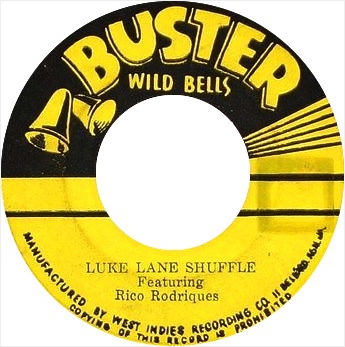
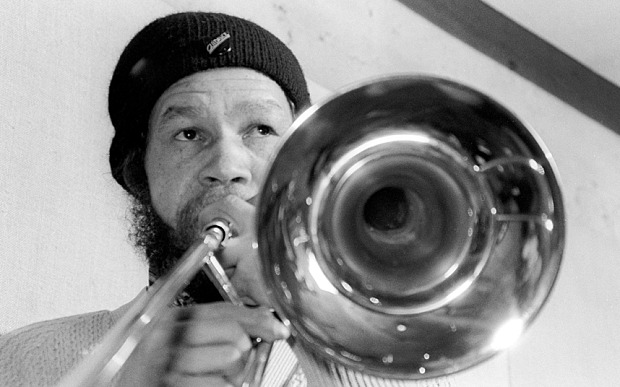
Both Lily and I are deeply saddened by the news of the passing of legendary trombonist, Emmanuel “Rico” Rodriguez, who died on September 4th, 2015 at the age of 80. Many of you may know him from his work with The Specials or with Jools Holland’s Rhythm and Blues Orchestra, but long before his recordings and performances in England, Rico was performing on the tracks of early ska and Jamaican Rhythm and Blues, and these earliest recordings are the ones we want to highlight to pay our respects to the mighty Rico. For this tribute show, we decided to examine Rico’s work prior to his emigration to England in 1962 for the second hour of the program.
Born in Havana, Cuba to a Jamaican mother and Cuban father, Rico and his family moved to Kingston as a child and attended the Alpha Boys School in the company of many future Jamaican music all-stars. In fact, his time at the Alpha Boys School allowed him to cross paths with another trombone king in Jamaica, Don Drummond, who would introduce Rico to the instrument he came to master and taught and mentored as a young musician. While learning from Don, Rico joined the Jamaica Jazz Orchestra with Don, Rupert Anderson, and Carlos Malcom. There’s a bit of contention around which track is the first recorded track by Rico. In interviews, we’ve seen The Jiving Juniors, “Over the River” as the first and in others, we’ve seen Continental Shuffle as the other. Given the dating of the record pressings, we began this spotlight on Rico’s spectacular trombone playing with Bridgeview Shuffle by the Matador All Stars.
By the time Rico left for England in 1962, he was in high demand, and as thus, it is no surprise he recorded for multiple labels and played on many many sessions.. Beyond his records for Lloyd Daley, Dada Tuari, and Duke Reid, Rico, like many artists in Jamaica, also recorded for Coxone Dodd. We heard Rico backing up Lascelles Perkins on “Lonely Robin,” recorded for Worldisc in 1961. In the late 50s, Rico moved to Count Ossie’s community in Wareika Hills, which was introduced to him by Don Drummond, who would invite Rico up to the hills after school to practice and perform. During this time, he got to explore multiple forms of music and would perform with Ossie, consequently, allowing him to perform on Ossie’s records in the early 60s.
In 2007, Rico received the Member of the Order of the British Empire award for his contributions to music. And, in 2012, he received the Silver Musgrave Medal for his musical contributions to Jamaica. We thank him for his legacy, and we send much respect to his family and to all of the artist who had the opportunity to work with him.
Listen to the entire program from September 8th, 2015 with the one hour tribute to Rico Rodriguez on MIXCLOUD HERE.
Please let us know what you think of the show via the comments and if you you enjoyed what we did, please subscribe to us on Mixcloud. It is FREE!
Oh, where did the weekend go? It’s early Monday morning, and as I wake from my short overnight nap, I think about the fast-paced, sensory-overloaded past two days at Long Beach Comic Con. Generoso and I will be providing our overview of our visit to our first major comic convention for Forces of Geek later this week, but for this week’s review, I wanted to select something from the many goodies we picked up over the weekend.
We spent much of our time at Long Beach in the many rows of Artist Alley, which reminded me of my beloved Hub Comics’ consignment section but scaled to a glorious giant’s size. Toward the end of Saturday, after attending panels and snaking through a majority of the tables, we stumbled (yes, actually stumbled because we only had a little under three hours of sleep from the night before) upon comic book artist and writer, Sam Spina.
Sam’s table included multiple standees of his characters and his table contained a dozen or so books in a varying array of colors and images, making our selection a difficult one. After deciding on a couple of items, a package of shrink-wrapped mini-comics caught my eye, and we added it to the modest stack.
Simply and elegantly packed with a cover card and a sticker, The CompleteTarn collection contains five sequential issues where four independent storylines in four separate issues crash into each other in the final one. Mr. Futts, Pigboss, Sans San, Mr. Harland all live in their own worlds until they all meet on the maiden voyage of the Titanic 2, a mammoth airplane flying to Brazil. Each character in some way is on the run from his own reality, and, in turn, the trip on the Titanic 2 most certainly allows them to depart from their existence. And, throughout each of these character’s worlds, looms the presence of Tarn’s head executive, Bich Bird, an omnipresent force throughout the series.
Cover Card for the 5 issue collection of Tarn
Part one introduces Mr. Futts who loves to eat butts; yes, that rhyme brought both me and Generoso laughter for well over an hour. In contrast to the struggling existence of Mr. Futts, part two presents Pigboss, an arrogant, self-obsessed, demanding celebrity with a highly successful police show on television. Across the Pacific Ocean in Japan, in part three, Sans San cannot get his life together. He has trouble starting and keeping any job he receives, and fortune always seems to run far away from him. In part four, we meet Mr. Harland, an egomaniac airplane builder and descendant of Edward James Harland, the founder of the firm that built the doomed RMS Titanic. Mr. Harland has built the Titanic 2, and despite all warnings from safety inspectors, the airplane will make its first flight on a course from Tampa Bay, Florida to Brazil. Finally, in part five, Bich Bird, the ruler of the Tarn corporation and really the universe of the Tarn series.
While each Tarn issue focuses on a completely different character, each packs no less amount of entertainment and outrageously funny dialog and scenarios. Spina’s absurdist and outlandish sense of humor shines and slaps you in the face throughout the concise and efficient series. Fully contained and realized, Tarn represents the pinnacle of how a developed mini-comic concept can come to outstanding fruition.
Tarn was exactly what we hoped to find at the Long Beach Comic Con. Completely devoid of pretension and filled with strange, bright comedy, Tarn has a distinctive and impressively spirited and succinct visual and narrative style that never becomes too self-aware of its humor and weirdness. Each issue stands alone as a solid piece of work, but together, the five issues create a perfect start to finish series that leaves no plot or character holes. While it may be considered as a sketch or a short exercise in plot development, Tarn exhibits Spina’s strength and surgical preciseness as an illustrator, storyteller, and humorist, revealing why it is of no surprise that he storyboards for the The Regular Show, a fifteen minute cartoon of pure whimsy, imagination, and fun.
The Complete Tarn demonstrates the effectiveness of minimalism and deliberate construction in funny comics. Despite its laconic approach, these wildly playful comics are as satisfying to a reader as butts are to Mr. Futts.
The Complete Tarn is available via Birdcage Bottom Books.
I’ve been thinking about the treats I remembered eating when I was a kid, and I recalled family functions with trays of banh bot loc wrapped in banana leaves. These chewy, sweet, and savory tapioca flour based dumplings are fragrant and delicious for lunch or even breakfast.
While the filling traditionally contains pork belly and shell on shrimp, I prefer to use minced pork loin and shrimp. Served with Nuoc Mam, banh bot loc is a lot of fun for your next party or for a dinner with friends. Its transparent dough wrapped in the bright green banana leaf makes for a very pretty presentation, and its bouncy texture combined with the rich flavors of the filling make for a layered and satisfying bite.
Enjoy! Music provided by Liszt’s Piano Sonata in B minor, S. 178.
On this week’s episode of Generoso and Lily’s Bovine Ska and Rocksteady WE WILL TAKE REGGAE TO THE MOON!
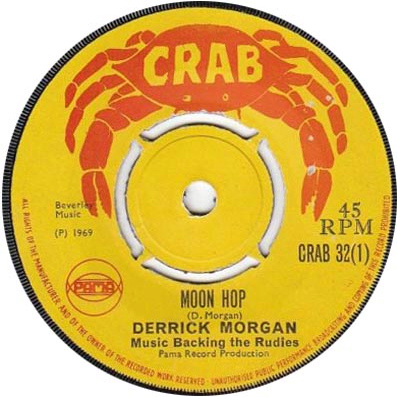
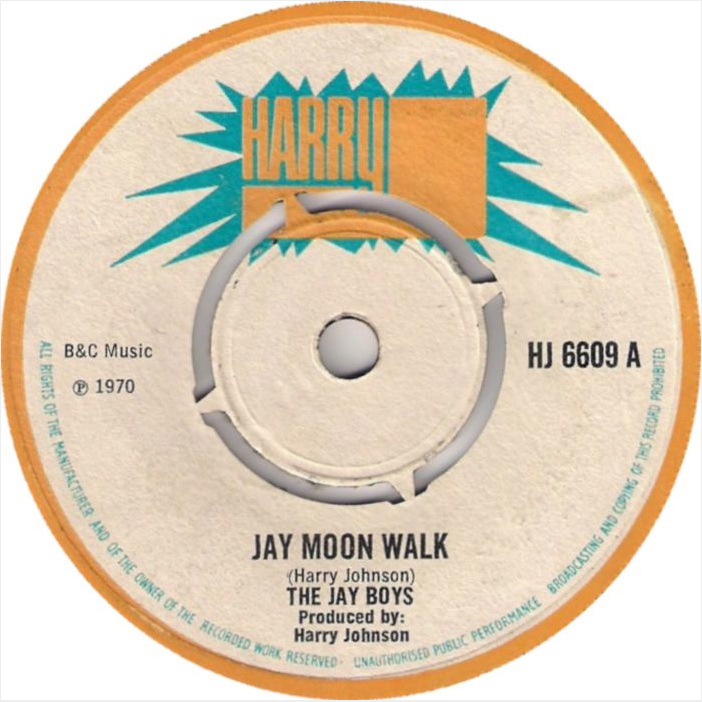
Shortly before and for years after Neil Armstrong became the first man to step on the moon, Jamaican and UK artist began churning out a wild assortment of amazing tracks dedicated to Earth’s only natural satellite. This past week we put together a two hour show featuring reggae tracks inspired by the 1969 NASA moon landing! And whether they directly address human exploration of the moon or old classics that speak lovingly about that gorgeous glowing orb, we pulled many of our favorites. We then mixed those rare and well known JAMAICAN SIDES FROM 1969-1978 in between news reports of the that moment in history and some wild late 1970s SPACE DISCO in the background! It is an exploration into deepest darkest silliness with a reggae beat!
You can listen to the Sept 1st, 2015 Reggae Goes To The Moon show HERE!
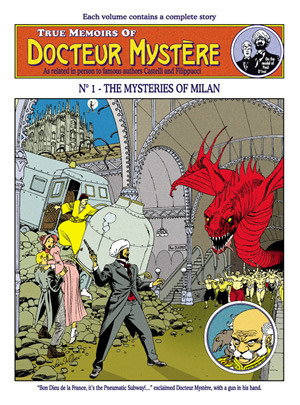
A few weeks ago, while perusing through the used comics section at Amoeba Records, I picked up Alfredo Castelli and Lucio Filippucci’s True Memoirs of Docteur Mystere, No. 1: The Mysteries of Milan on a complete whim. With its science fiction, steampunk style, on a quick flip through the pages, the True Memoirs of Docteur Mystere appeared like something outside of my normal taste, but something about it intrigued me, and despite my usual genre and style preferences, I decided to give it a closer look.
This sense of undefinable instinctive allure I felt while deciding on purchasing this comic book continued as I delved into the early pages of The Mysteries of Milan.
A dragon, mob of Chinese warriors, cathedral, damsel in distress, and silver train, all on the cover of The Mysteries of Milan
Docteur Mystere may be the most interesting and capable man in the world. He has a stupendous wealth of knowledge and skills gained from his extensive travels and interactions with every martial arts, monastic, criminal, and dark arts group in the world. Docteur Mystere almost possesses too many skills and knows almost too many people. He excessively fits his character as a Jules Verne-esque, savvy, and worldly hero.
Similarly, all of the other characters in The Mysteries of Milan fit their archetypes to excess. Lady B***, the truest damsel in distress and the woman who calls on Docteur Mystere to help find her husband who disappeared after completing his top secret pneumatic subway, cries out, “Virgin Mother,”and faints anytime she sees anything shocking. Chin, Docteur Mystere’s long-time friend and his accomplice and aid for the mission to find Lady B***’s husband, looks and speaks like he stepped out of a hybrid production between Flower Drum Song and a C grade knock-off of Enter the Dragon that you would see on cable in the wee hours of a Tuesday morning. Lastly, Cigale plays the all too ignorant and naive sidekick/assistant to Docteur Mystere, constantly making you ask, “Why in the world would such a great man as Mystere have such a nimrod for a sidekick?”
This question of Cigale’s existence exposes the intention of Castelli and Filippucci’s Docteur Mystere series, since the ridiculousness of his behavior and Mystere’s patronizing remarks to him hearken back to many comedic sidekicks we’ve seen before, especially Igor from Young Frankenstein and Cato from The Pink Panther. After Mystere’s third insult to Cigale, Lady B**’s fourth faint, and Chin’s fifth line in broken Chin-glish, you realize the True Memoirs of Docteur Mystere parodies the science fiction set in Victorian times fueling the steampunk movement. And when that elucidating moment of realization arrives, The Mysteries of Milan transforms into a rollicking, hilarious, and over-the-top adventure.
Beyond jests at the the science fiction of Jules Verne and H.G. Wells, The Mysteries of Milan also takes a stab at conspiracy theory fiction, particularly the works of Dan Brown. Released in 2004 at the height of the world’s obsession with Dan Brown’s novels about conspiracy in the Catholic Church, The Mysteries of Milan pokes fun at conspiracies churning in the catacombs of Italy and unveiled by what seems like an unrelated, isolated event. The entirety of this first issue of the True Memoirs of Docteur Mystere focuses on the search for Lady B***’s husband, but in the process, the search takes a step back from the foreground to give more importance to a mission to save the world from the sorcerer Fu Manchu. Lady B***’s husband may have accidentally gotten mixed up with Fu and his minions attempting world domination, so in order to find him, Mystere and Chin will need to figure out how to first defeat Fu, the ethnic caricature of Asians seen in literature in the early to mid 1900s.
Indicative of the sense of humor of Castelli and Filippucci, Chin and Fu have a history together, and Chin has been carrying around his own pinky fingers laced with magic powers for the day that he and Fu cross paths again. Fu cut off Chin’s pinky fingers, and Chin wants these severed digits to be his humiliating weapon of choice to destroy Fu. Consequently, the climax of The Mysteries of Milan contains outrageously funny illustrations of pinky fingers flying from an ornamented box toward Fu Manchu’s eyes. This battle scene, more than any other in the book, conveys the humor in the utter abandon of any sense of reality and the exaggeration of character and plot archetypes in True Memoirs of Docteur Mystere.
Without revealing too much of the end, all of the hullaballoo to find Lady B***’s husband occurs in complete futility, completing the entire parody of science and conspiracy fiction that had transpired with a single punchline. The Mysteries of Milan ends without inspiring any sense of catharsis for the reader or any satisfaction of the answer to the primary mystery; it simply ends by provoking one giant, hearty laugh.
Clever and awakening in its humor, True Memoirs of Docteur Mystere: The Mysteries of Milan, points out the silliness of fiction set in complete fantasy where the characters are not represented as fellow humans. Admittedly, I loved Matt Fraction’s Five Fists of Science, the work I would consider to most resemble the type of story Castelli and Filippucci scorn with the True Memoirs of Docteur Mystere, but I do understand that there’s an absurdly ridiculous amount of suspension of disbelief required to read a steampunk type work like Five Fists of Science. In sum, Castelli and Filippucci mock the fiction that utilizes characters less as empathetic humans and more as devices to fuel an extravagant plot and to establish and perpetuate a mood and setting, which could apply to multiple genres, but unfortunately, science fiction of the steampunk variety is the major culprit of this style and, in turn, makes itself most susceptible to their parody.
Sadly, the wittiness of Castelli and Filippucci and their True Memoirs of Docteur Mystere only lasted for two issues. It must have turned off science fiction fans, and fans of more realistic fiction must have completely bypassed it. I still do not entirely know what lured me in based on just the cover and a few cursory page flips, but I’m so glad my instinct picked up on the gem hiding inside the overwhelmingly busy, action-packed, and insane cover.
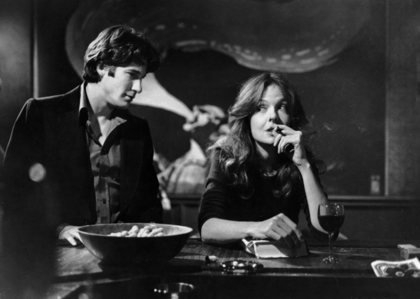
Richard Gere and Diane Keaton in “Looking For Mr. Goodbar
I wouldn’t be the cineaste that I am today if not for my late sister Rosaria. As it was the 1970s during most of my adolescence, movies were an affordable route to an elevated state and one that could exalt an otherwise poor family to experience art for short money. One of my earliest film memories was that of my sister, hiding me under her coat so that I could get in to see Bob Fosse’s “Lenny” when I was all but six years old. Why, you may ask? Well, she had to babysit me, but it was in its last week at the theater, and she so desperately wanted to see this Lenny Bruce biopic that she felt the need to commit such a desperate act.
I couldn’t recall much when I was asked about the movie from my friend Paul, but I did remember seeing two women kiss one another, which prompted a few questions for my sister after the film that were met with the answer “It happens,” but I couldn’t tell you much more than that. On top of that somewhat illegal screening experience, my sister and I watched a lot of films together, both in the theater and on television. Such was the case with Richard Brooks’ misunderstood 1977 film, “Looking For Mr. Goodbar,” which appeared as the ABC Movie Of The Week in 1980, with only a few edits for content. When it aired, I was the wise-old age of eleven, and I in my overconfident mind thought that I got more out of the film than with “Lenny.” I mean I was eleven by that point and the reality that I lived in the inner city made me wise above my years, but more importantly, Rosaria was a woman of twenty two, who loved going to the discos, and was the eldest daughter of a working poor Roman Catholic family.
Disparaging words had been said about “Looking For Mr. Goodbar” during one weekly church sermon as the film depicted a woman who gleefully engaged in promiscuity, rampant drug use, and one the most grievous of sins for a Catholic, a hysterectomy. By 1980, my sister had long since ceased attending mass and was eager to see to see the film as she, like many women of her generation, had been a staunch advocate of women’s rights. She had missed the film’s initial theatrical run so she was excited when it ran on television. As my dad would be asleep before it aired, and my mom was working second shift, we sat down and watched the film together. My sister had heard about Roseann Quinn, the murdered NYC schoolteacher who the novel and subsequent film was based on, which added a more somber element and raised curiosity to the screening. It had a profound effect on both of us that night, and since then, I have gone on to be a huge admirer of Richard Brooks’ films, but as the film has never been released on DVD ( I have a battered VHS copy from back in the day), I haven’t seen it in years, and, frankly, I have avoided seeing it because my sister passed almost two years ago. Just the other day, my good friend Mitch forwarded to me a recently uploaded copy of the film, and I felt that I was finally in the right frame of mind to watch it again.
Watching the film now, and understanding the case as I do, Brooks didn’t take substantial liberties with the story, except that the main character of the film is not as hell bent on destruction as portrayed by the Rossner novel. Brooks and Diane Keaton do a magnificent job in presenting Theresa as a woman who is struggling to find her own way in the world, writhing out of the grips of her smothering family, her self-destructive envy of her gorgeous hedonistic sister and daddy’s favorite, Katherine (Tuesday Weld), and the crippling Catholic guilt that she deals with every day. Theresa is a teacher for young deaf students at a NYC school (just like the real-life Quinn) who begins her sexual explorations by having an affair with her over-intellectual married college professor, but that fails to materialize into anything more than a tawdry fling. She leaves her family home to move into the building that was recently purchased by her sister Katherine’s new husband. Now at new digs, Theresa begins to explore the city proceeding cautiously at first with her new found freedom, choosing to hit singles bars armed with just reading glasses and a good book. She soon meets a hustler, Tony (a wide eyed carnal Richard Gere) who beds her giving Theresa her first positive sexual experience free of emotional hang ups.
She then dates James (an extremely creepy William Atherton) who behaves in a way that most sociologists would call the “good son.” James is an Irish-American welfare inspector who Theresa meets when he appears at the home of Amy, one of her impoverished students who cannot afford a hearing aide. James immediately becomes obsessed with Theresa and infiltrates her family’s home to become a fixture in her life, much to Theresa’s disdain. After another slightly dangerous one night fling with the clearly psychotic Tony, Theresa hits the bars, does some coke, and begins to falter as a teacher. Theresa’s downward spiral goes into overdrive when she begins turning a few tricks with older, unattractive men which also was rumored to be the case with Roseann Quinn. Again, unlike the book, Theresa engages in these scenarios with a certain amount of fear but still with the excitement of expanding her outlook on life, both sexually and philosophically, and ending the cycle of shame and guilt that she has possessed her entire life. In the film’s final scene, Theresa like Roseann Quinn, has her life taken away when she takes the wrong man home for a sexual tryst whom she meets at a New Year’s Eve party. In the film, but unlike the actual case, this man is portrayed as a self-loathing homosexual named Gary (played by Tom Berenger in one of his earliest roles) who meets Theresa shortly after almost being killed by gay bashers on the street. True to the real incident, Theresa is brutally stabbed to death by Gary after he fails to achieve an erection.
Much was made at the time of the film’s release that Brooks had crafted a film that served as a precautionary tale and even worse, as an indictment of 1970s feminism, which is why I feel that this film was completely misunderstood when it first was screened. The normally left of center treatment in most of Brooks’ work would be your first indication that his plan for this adaptation of the Rossner novel was not to condemn women for their new found sexual freedom. If you examine this film carefully, “Looking For Mr. Goodbar” is more of an indictment of the 1970s male than anything else which was eluded to by my sister as she had said at the time. “Look at the men, she dates. They are the screwed up ones aren’t they, not her?” Case in point is Theresa’s first sexual partner, the professor, who despite his intellectual prominence, prematurely ejaculates only seconds after penetrating Theresa. He then throws around clichéd 1970s bravado: “I hate to talk with women I just fucked,” to hide the fact that he is terrified by Theresa’s open sexuality. The character of Tony is what we would now called a PTSD affected veteran, who is more lost than Theresa as he has no idea as to how to function in civilized society. James is a classic “mama’s boy” and a callow liberal who cannot simply sleep with women due to his Catholic repression, and lastly, there is Gary, a violent and repressed homosexual character who would most likely be removed from any current film for his gross political incorrectness. To me, this film is in hindsight a look at the fractured post-Vietnam War American male and not a cautionary tale for sexually liberated women who were finally able to experience free love without the ridicule of the past.
What few negative critiques I offer are in the form of stylistic differences, specifically the use of flashbacks, which act more like filler than anything that truly enlightened Theresa’s inner-self. I feel that those scenes could’ve been replaced with more scenes between Theresa and her sister Katherine, who is the sexual role model for Theresa. Katherine is inserted in some key scenes, but her character was woefully underdeveloped, which is regrettable as her open sexuality could’ve stressed Theresa’s unspoken agenda for freedom. It is a small critique against an otherwise strong film and Richard Brooks’ last good film as his follow up efforts, “Wrong Is Right” and “Fever Pitch” were universally panned and failed at the box office.
Opening Credits For “Looking For Mr. Goodbar”
It is odd seeing this film now with the knowledge of the life that my sister led until her passing. When we saw the film in 1980, Rosaria was dating a man named Bobby, who similar to James, was a good Catholic boy with dreams of domesticity, which my sister firmly rejected. Rosaria’s next long term relationship lasted over twenty years, but its abrupt ending led to a sadness which played a role in her death. True to what she promised me that night, my sister never married because she never wanted a family of her own for reasons that were not too dissimilar from the anti-familial desires of the character of Theresa. One thing that was always certain for both of them is that guilt is usually too powerful an emotion for goodhearted people to ever fully leave behind. To this day, I’ve often wondered if that film played a role in that life choice that Rosaria made. And even though I too have left Catholicism behind and feel that the ending for a life concerned with true freedom doesn’t have to end so tragically, as I get older I do sometimes question, like the character of James, as to how much we truly have gained from possessing the freedoms that we desire away from a traditional family.
When thinking about Switzerland’s contribution to the thriving period of European 1970s filmmaking, two names immediately spring to mind; Alain Tanner and the director of the film I will be writing about today, Claude Goretta. Both internationally celebrated filmmakers, these two talented auteurs made their directorial debut together in the 1957 documentary entitled “Nice Time” about the then seedy area known as Piccadilly Circus in London, but since that effort, they have diverged in styles dramatically. As Alain Tanner’s films are usually presented in a dire stark reality with a clear political message; Goretta’s early work is more or less presented in a delicate comedic fashion, with its overall message being no less politically charged and socially conscious as Tanner’s work. After the comedic brilliance of his 1973 Cannes Grand Jury Prize winning film, “The Invitation,” Goretta returned in 1975 and delivered the understated gem, “The Wonderful Crook.”
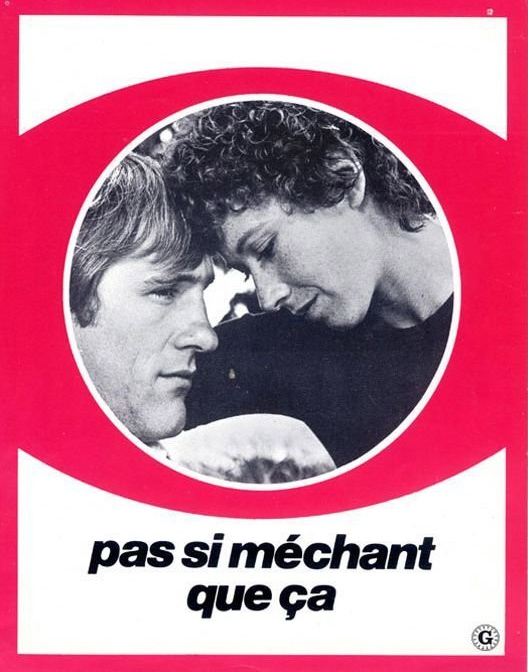
Pierre (Gerard Depardieu) is living the good life. He’s a married father of one, who barely puts in a day of work at his father’s handmade furniture factory, and wants for very little, living in his seemingly idyllic country town. One day when his father has a stroke, Pierre must assume control of the business and immediately discovers that the factory is steadily dying because no one wants pay for the expertly made furniture they produce anymore. Pierre doesn’t tell a soul about the failing business and responds as any good slacker would, by picking up a gun and robbing banks and postal shops. With his newly acquired gains, Pierre doesn’t try to upgrade his factory for the modern world; instead, he just creates fake orders for furniture for imaginary clients, furniture that he then burns at the dump as to not raise suspicions at the factory or at home with his adoring wife.
At home, it’s business is usual, Pierre plays with his child (played by Gerard’s actual son, the late Guilliame Depardieu) and makes love to his wife Marthe (Dominique Labourier) seemingly without an ounce of guilt for what he has done, but the eventual guilt manifests itself after a failed robbery at a stamp shop where a lovely clerk named Nelly (another excellent performance from Marlene Jobert from Maurice Pialat’s “We Won’t Grow Old Together”) faints after Pierre fires his one bullet into a lamp that is usually meant to “make an impression.”
Pierre then becomes somewhat obsessed with Nelly, or to be more exact, Nelly despite her strong objections at first, becomes the one person he (Pierre) feels the need to apologize to for his wrongdoings, and the one person whom he can tell of the reasoning as to why he needs to be a thief. Goretta smartly leaves open the possibilities of why Pierre confides in Nelly and also why Nelly becomes involved with Pierre’s mission. Nelly resembles Pierre’s wife Marthe, both waifish redheads, which may explain Pierre’s fascination with her, but for Nelly, is it physical attraction for Pierre? Is it sympathy or a longing for a thrill? Or is it just the case of two people who have people who love them, but feel the need for more? It’s clear here that paradise is never is as perfect as people perceive it on the surface. A key to this facade of paradise and the breaking of the myth might be contained in an early scene in which locals at a pub brutishly mock an Italian immigrant for dancing with a vase of flowers to impress a pretty woman. What might be seen in a Rohmer film as a classic moment of French romance, Goretta cleverly distorts in order to make clear that the definition of traditional love in a changing world is vanishing in the same way that the old world craftsmanship found in the furniture that Pierre must now burn to keep up the facade.
Gerard And His Infant Son Guilliame In The Wonderful Crook
With its superb acting, script, and mostly favorable reviews, it is a somewhat surprising that “The Wonderful Crook” has not survived the test of time. This may be credited to the letdown that occurs when a director tries to follow up a hugely celebrated hit such as “The Invitation,” leaving audiences hoping for another masterpiece, but I feel that it is mostly due to the fact that “The Wonderful Crook” was released the same year as another, more sexually audacious Gerard Depardieu film in which he plays a thief, Barbet Schroeder’s, “Maitresse,” which attracted worldwide curiosity for its depiction of fetishistic sexuality, eventually propelling it to cult classic status. Unlike the subtle nature and comedy of Goretta’s film, “Maitresse’s” hard-edged story of a burglar who breaks into the home of a dominatrix and manages to become not only her assistant but also her lover once he realizes that her employment as a sex worker is primarily driven by the need to support her children may have played more into the growing decadent yet pragmatic mindset of the 1970s, than the understated, yet no less important message about love inside of Goretta’s work.
Last Sunday, Generoso and I visited the Los Angeles Comic Book and Science Fiction Convention on a bit of whim. The first comic book convention for us, we did not know what exactly to expect, but we nevertheless entered the room of The Reef exhibition space like bright eyed toddlers when we caught sight of tables of vintage comics, stands of toys, and wire racks and bins of hard to find DVDs.
While most of the convention was dedicated to comics of the DC and Marvel universe, one exhibition table stood out from all of the others, and that was the stand of Tony Raiola Books and his Pacific Comics Club. After walking up and down the rows of The Reef, strolling by the line to meet Hayley Atwell from Agent Carter, and searching through bins for any underground comics, Tony’s table lured me in with an extensive collection of Italian comics, including multiple English volumes of Milo Manara’s gorgeous and almost dangerously erotic comics. Then, the Raiola area quickly reeled in a Generoso with multiple Flash Gordon collections available in large print with vibrant, stunning colors.
After extensive internal debate on what to take home, especially given that we only had only a bit of cash left, and the ATMs in the building had been drained, we decided on a three volume collection of Krazy Kat daily strips from one of the original fathers of alternative, underground comics, George Herriman.
As a fan of Harvey Kurtzman and Robert Crumb, I’ve always seen George Herriman’s name in their company but had yet to encounter a collection of his work in comic book stores. Fantagraphics has printed multiple volumes of his work, but for the most part, they are only available online. Consequently, when I saw the paperback volumes of Pacific Comics Club Presents Krazy and Ignatz, I knew I could not leave without them.
Cover for the Book 1 with the strips printed in 3.25 x 4 inch blocks
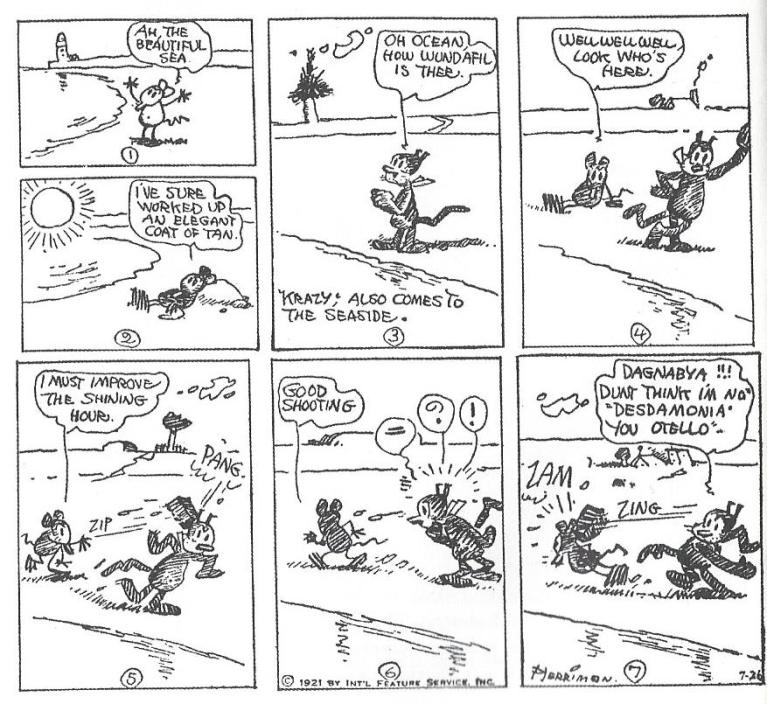
Book one of the Krazy and Ignatz volumes collects Krazy Kat daily strips from January 1921 to December of the same year. Upon opening the book, what immediately catches your eye is Herriman’s boldness, outlandishness, and intelligent playfulness in Krazy Kat. Despite its age, the Krazy Kat comics, like the silent films of Charlie Chaplin, still pack laughs while tackling some high political, social, and artistic concepts in a welcoming and relatable form.
Each page of the book contains one strip, more often than not beginning with Krazy Kat or Ignatz talking about something and always ending with Ignatz delivering a brick to Krazy’s head paired with a clever, laugh out loud punchline. Sure, this may sound repetitive after 300 pages, but each Krazy Kat and Ignatz strip has its own fascinating story, and despite the same start and ends, each strip has a different path to travel between the two points.
Beyond the timeless absurdist humor embedded in all of Krazy Kat that consistently reminded me of W.C. Fields (a Fierro house favorite), the various topics addressed by the strips pushes the series far ahead of its time. First and foremost, the ambiguous, possibly sado-masochistic relationship between Ignatz the male mouse, and the sometimes male, sometimes female Krazy Kat almost shocks even a modern day reader. Krazy Kat pines for Ignatz and his bricks as Ignatz gains pleasure from tormenting Krazy. In addition, Herriman implicitly yet keenly addresses race relations between Americans, illustrating Krazy Kat with black fur and Ignatz with white fur and occasionally swapping their colors. And in between the Krazy Kat and Ignatz frenzy stands Officer Pupp, the policeman of the town, who has an overwhelming affection for Krazy Kat and always tries to protect him/her from Ignatz, though such a thing stands against Krazy’s desires.
Beyond the advanced understanding and representation of dysfunctional relationships between people (though conveyed by animals), Krazy Kat and Ignatz also addresses blue laws, prohibition, race relations, and English language and societal idiosyncrasies, presenting questions about the various aspects of life we encounter but all with a smirk. In addition to these political and societal topics, Herriman also plays with the cartooning form itself, having Krazy and Ignatz interacting with drawing elements on the page such as a horizon line or adding in his own commentary about the colors of objects, since the strips were printed in black and white.
Above all, Herriman constructs a distinctively humorous and fantastical set of comics with the dailies of Krazy Kat. Light on his feet with his story and illustration techniques and sharp as a tack with his wit, George Herriman set the foundation of comics and cartoons in the generations to come. After reading Krazy and Ignatz, you’ll see his influence everywhere ranging from Looney Tunes to Tom and Jerry to The Simpsons to Crumb’s Fritz the Cat to maybe even George Orwell’s Animal Farm (after all, Herriman did very early popularize in media the practice of using animals to satirize human behavior), signifying his lasting impact on our culture, even if his name may not exist today as a household one.
Go out and pick up the Pacific Comics Club collections of Krazy and Ignatz; you’ll get paradoxically transported back to the 1920s and forward to an almost outer space planet/desert with the bizarre, smart, and fascinating comic styling of George Herriman allowing for constant laughter and self-reflection throughout your journey.
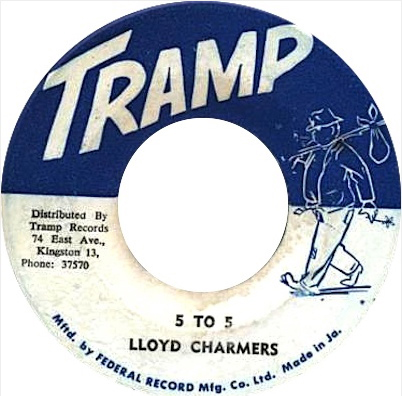
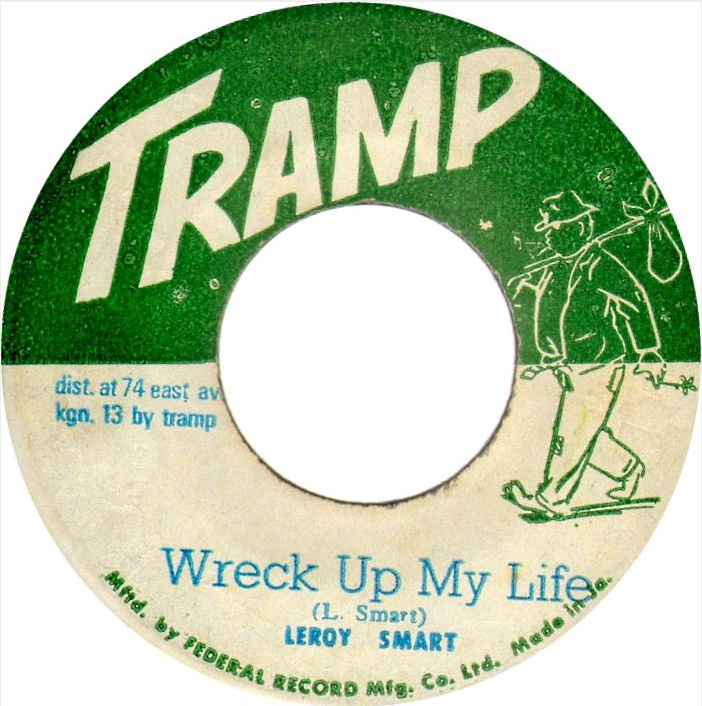
This week’s edition of Generoso’s Bovine Ska and Rocksteady began with a two sets of ska classics and rarities starting with Red Sea, a rare vocal cut from the king of the ska harmonica, Charley Organaire and ending with Rolando Alphonso magnificent ska instrumental from 1966 for Winston Blake’s Merritone label, “Sai Pan” We rarely mention it on the blogpost but our backing album was just too good not to mention here, and that was Zulema’s 1975 disco classic, Ms. Z. After an upbeat mento set, we ended the first our with two version to version pairings, starting with Ken Boothe’s “I Don’t Want To See You Cry,” and Delroy Wilson’s “I’m Not A King.” We then began the second hour with a spotlight of the rare Winston Lowe produced label, TRAMP.
Two years ago, Generoso finished a documentary he had been working on for the previous four years on Chinese Jamaicans and their contribution to Jamaican music. From artists to producers, there is an amazing history of Chinese Jamaican participation in turning reggae into a worldwide phenomenon. Many know the names of Byron Lee, Leslie Kong, and Vincent and Pat Chin, but rarely is the name Winston Lowe mentioned. A friend of Bunny Lee, Winston Lowe ran his Tramp label in Greenwich Farm, creating some truly illustrious productions during its brief period of activity from 1968 to 1972. Amongst the artists who would stop by at Tramp, the Melodians and Lloyd Charmers would cut some of their finest sides for the label. Of the rotating artists, The Uniques recorded some of their best material at Tramp on loan from Bunny Lee, including an outstanding version of “For What It’s Worth” by Buffalo Springfield entitled “Watch This Sound,” which started this evening’s label spotlight.
Soul Syndicate backed up many of the Tramp label tracks of the early 70s, with members including Bovine Ska friend Tony Chin, Earl “Chinna” Smith, Carlton “Santa” Davis, and George “Fully” Fullwood. The band still performs today, with many of the original members performing at Don the Beachcomber in Huntington Beach every Sunday, which is an awesome thing!
You can listen to our show from August 25th, 2015 by clicking HERE.
Subscribe to the show on Mixcloud to get reminders when we post up the show, and join us on Facebook to get updates on upcoming spotlights, record discoveries, and upcoming Jamaican music performances and shows in the Southern California area!
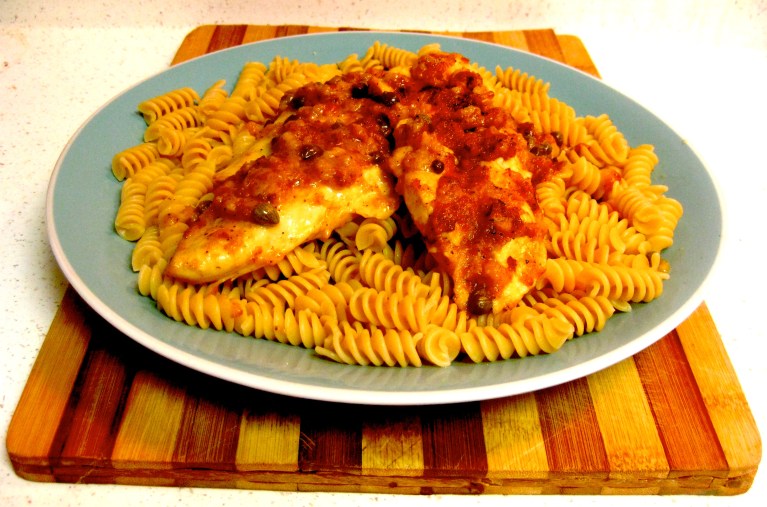
With only a few more weeks of summer left, Generoso decided to end the week with the bright, delicious taste of the classic dish, chicken scallopini. Super easy and quick to make, this chicken (pork or veal is fine as well without altering the other ingredients in the recipe) with its light summery sauce should make any hot night come alive. You will need 24 oz of chicken breast, 1/4 cup of white wine, 3/4 cup of fresh lemon juice, 1/2 cup of chicken broth, 2 tablespoons of capers, olive oil, breadcrumbs, salt, pepper, and rotini pasta (or any non-thread pasta of your choosing). Please let us know how yours turns out and enjoy!
Music: Hungarian Rhapsody No.2, S.244:2 by Franz Liszt








 LILY & GENEROSO 4EVER!