Bovine Ska and Rocksteady 6/30/15: Keith and Tex Interview and Spotlight

Standard
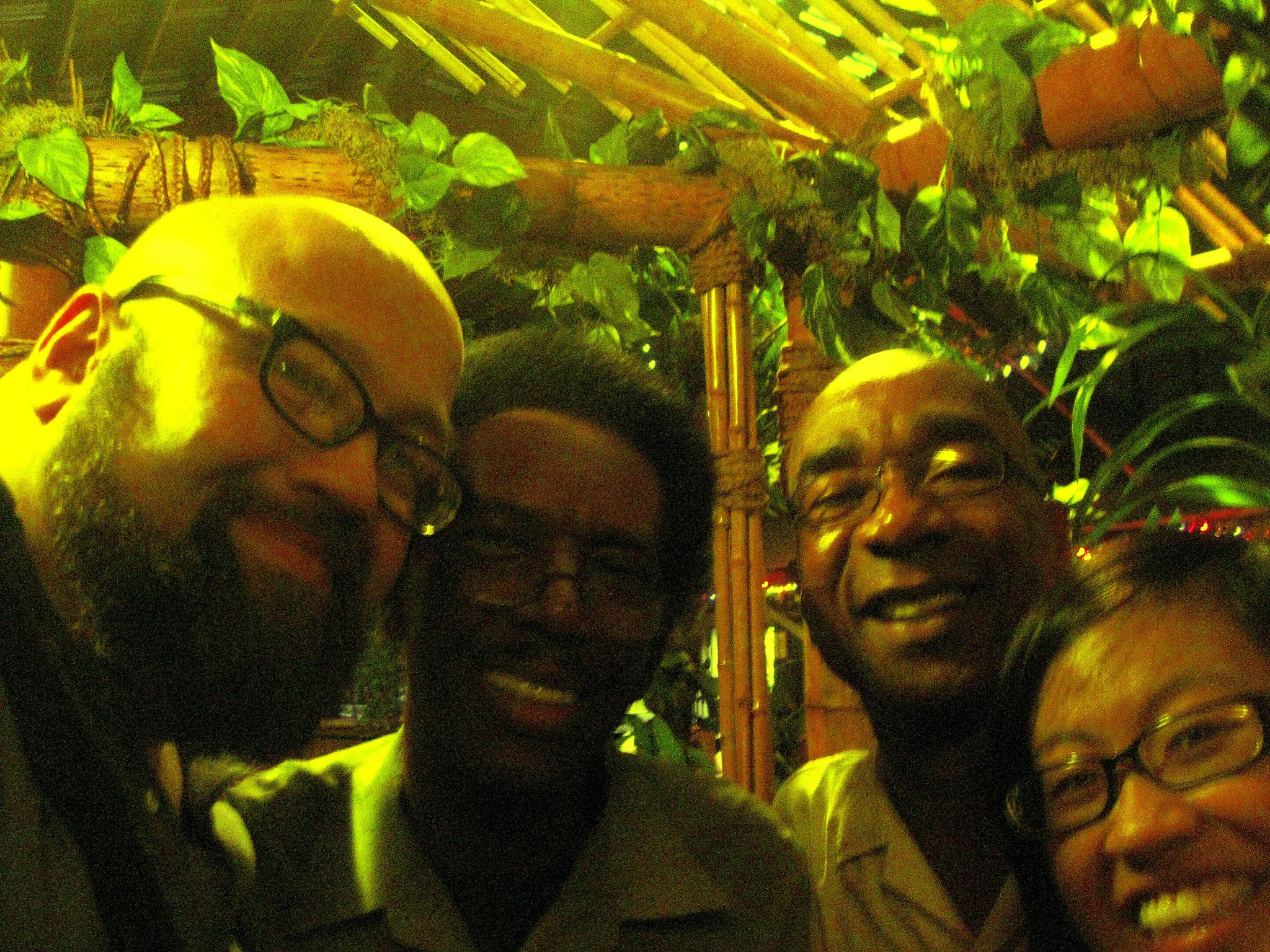
Keith and Tex and Generoso and Lily

Keith and Tex with Lily and Generoso June 28th, 2015

While living in Los Angeles these last two months, Lily and I have picked up some amazing vinyl and been the beneficiary of some truly great shows of the Jamaican oldies variety.  This week, after seeing Keith and Tex wow a crowd at Don The Beachcomber in Huntington Beach, we had the opportunity to get an interview with the dynamic duo of Derrick Harriott’s Crystal/Move and Groove Label.  That interview, along with a few selected cuts would be our spotlight for this week’s (June 30th, 2015) episode of the Bovine Ska and Rocksteady.

Before we got to the interview and music spotlight on Keith and Tex, we started off the program with two sets of red hot ska starting with one of our favorite ska-era cuts from Toots and The Maytals entitled “Peggy,” a fun record from BMN in 1965 that begins with some snappy guitar riffs.  After our mento set, we went version to version crazy, beginning with the Lee Perry produced Untouchables track, “Confusion” from 1970 and it’s version from Val Bennett and The Upsetters, “Big John Wayne.” After Ken Boothe’s sublime 1969 record, “Just Another Girl” and The Rudies 1970 classic, “The Split,” it was on to the Keith and Tex spot.

We learned much from our interview with Keith and Tex, especially their writing technique from now and then, their output for Derrick Harriott, and their feelings for Lynn Taitt, who played on many of their finest recordings from back in the day, including the iconic riffs present in their biggest and perennially covered classic, “Stop That Train.”  Thanks to Keith and Tex for taking the time out to speak with us.  Lovely gentlemen that you should see as they are currently on tour. And also thanks to Keith and Tex ‘s manager, Nathan Ranking, for setting up the interview on such short notice.

Check out the show for yourself HERE and do subscribe to our FREE podcast at: https://www.mixcloud.com/bovineska/

To find out about uncoming spotlights, shows and record shops in the So. Cal area, join us on Facebook at:

https://www.facebook.com/groups/175321709220304/

Our podcast is posted every Tuesday evening at 9PM (EST) midnight (PST)


Currants, Capers, and Pollock Join Forces For Generoso’s Involtini di Pesce

Standard

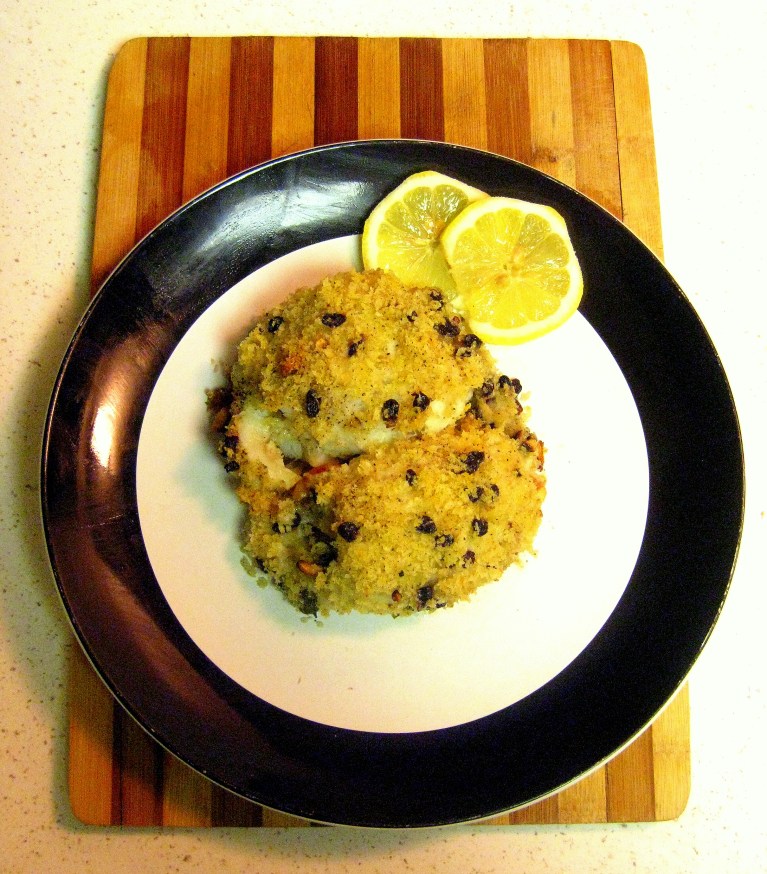
As my dearest Lily kicked my butt last week with her Cha Gio (Vietnamese Egg Rolls) I had to return the favor by making rolls of my own and so I whipped a pan of my Involtini di Pesce (Italian fish rolls) my take on the traditional Sicilian dish, Involtini di Pesce Spada (Swordfish Rolls).  I have made this dish using swordfish before but truthfully, I have used a variety of fish based on whatever was the freshest option I had before me at the market that day, so for this version I am using six beautiful fresh pollock filets.  From prep to plate should only take you an hour and you’ll have a sweet and savory piece of fish that will take your taste buds for a loop.

You will need a decently sized backing pan, aluminum foil, and about two pounds of pollock filets, breadcrumbs (I like panko for this), cashew nuts,capers, currants, olive oil, salt, pepper. Enjoy and let us know how yours turned out. Love, Generoso XOXO

Music: Dvorak-String Quintet in E-flat Major, Op. 97, B. 180

Bovine Ska and Rocksteady 6/23/15: The Torpedo Label

Standard
torpedo B

A fine cut on Briscoe’s Torpedo Label


So, after last week’s misfire with Mixcloud (it sadly seems that the limit for tracks from a single artist is four) we decided to turn our attention this week to the thunderous and at times daffy early reggae sounds of England’s Torpedo Label.  That of course started at the midway point of the podcast.  We began the show with two sumptuous sets of rocksteady, beginning with a rare cut from Merritone that you must hear called “Fountain Bliss.”  After a mento set that featured a Lord Fly composition called “Mabel.”  After a long a frenzied ska set, we went right into our spotlight of the Torpedo Label.

Lambert Briscoe ran the Hot Rod sound system in Brixton, and from the popularity of his soundsystem, emerged the Torpedo record label, which was founded by Briscoe and Eddy Grant, yes the same Eddy Grant of The Equals and eventually Electric Avenue fame. Torpedo was founded in 1970 and was short lived; it folded in the same year but was eventually revived for a stint 1974. As a result of this, we will split this spotlight according to the birth year and the rebirth year of Torpedo, beginning with the very first single released on the label, Pussy Got Nine Life by the Hot Rod All Stars, the Torpedo label’s house band, consisting of Ardley White, Danny Smith, Earl Dunn, and Sonny Binns. Originally known as The Rudies, they were renamed after Lambert Briscoe’s soundsystem as the Hot Rod All Stars, and somewhere between the transformation from The Rudies to the Hot Rod All Stars, the group also spurred off and developed into The Cimarons, who would become the pre-eminent backing band for the English reggae scene. In addition to Lambert Briscoe himself, Larry Lawrence also produced for the Torpedo label, most notably, he was the producer of Errol English’s cover of The Small Faces, Sha La La La Lee.
With 1970 marking the height of the skinhead reggae movement, characterized by a fast, danceable rhythm, the English market was dominated by Trojan and Pama, two heavyweights that had many subsidiary arms and stables with major artists, making it difficult for a small label like Torpedo to survive past its first year, which it unfortunately did not. Then, by 1973, the skinhead reggae of the previous years began to lose traction, signed especially by the folding of reggae specialized music shops. But as the late 60s/early 70s fast reggae left the spotlight in 1973, roots reggae with its markedly slower skank took its place, particularly due to the release of Bob Marley’s To Catch a Fire. Consequently, with this resurged interest in reggae, Eddy Grant opened up the Torpedo label again in 1974, but now focused the releases on more of a roots reggae sound. We kicked off the highlights from the Torpedo revival with Johnny Jonas’s Happy Birthday, a track produced by Eddy Grant himself.

Check out the full 6-23-15 Generoso and Lily’s Bovine Ska and Rocksteady podcast on Mixcloud HERE!

Let us know what you thought of the show and please subscribe to our podcast if you enjoyed it.

Deep Frying Fun Episode #1 – Lily’s Gia Gio

Standard

The Fierros have now acquired a deep fryer!!!! Now, with both a deep fryer and a mandolin, we can finally make gia gio a.k.a Vietnamese egg rolls.

Lily grew up eating egg rolls made from these egg roll wrappers:

But after years of eating Vietnamese egg rolls with a delicious bubbly, crispy skin in restaurants, she decided she would use the filling she loved with rice paper to make cha gio that would achieve this more complex egg roll skin.

Rolled gingerly and fried carefully in medium low heat, these cha gio are fun for a summertime party. Wrap with crisp lettuce and dip in fish sauce, and you have a perfect bright, fresh, crispy, chewy bite! They’re also super delicious cold and straight from the refrigerator! Enjoy!

Motherlover: The Reality in the Underground

Standard

When in a comic book store, sometimes the most exciting finds come from the small press/consignment sections. Last year, I picked up Dash Shaw’s 3 Stories, and that led to a binge reading of Dash Shaw graphic novels.

Consequently, with our arrival to a new city, I looked forward to what I would find in a new comic book store now that my beloved Hub Comics is so many miles away. After a few excursions through the small press section of Sunset Boulevard’s Meltdown Comics, we managed to dig out a couple of books from stacks of very pretty (and quite expensive) DIY comics with impeccable artwork but alas very little content. What makes small press DIY comics special is also what sometimes kills it: there are no rules.

As a result, these comics fall everywhere across the good to bad spectrum, with the good potentially being exceptional, the bad being remarkably so, and the mediocre being outrageously lukewarm. Thankfully, one of our selections fell on the good side of that aforementioned spectrum.

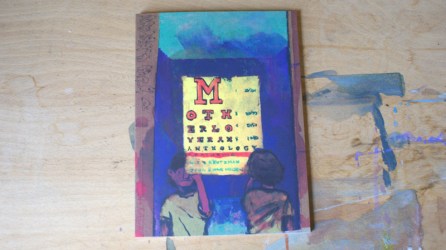
Motherlover: An Anthology contains four small works from Nic Breutzman and John and Luke Holden with elaborate coloring by Raighne Hogan. Each piece experiments with visual technique or storytelling forms, making Motherlover a fun, fast, and quite sinister read.
motherlover-product-1

Cover of Motherlover: An Anthology

Hailing from Minnesota’s comic underground, the authors and artists of the Motherlover anthology fill their work with a darkness, vulgarity, and absurdity reminiscent of the glory days of San Francisco’s comic underground but progressed into the 21st century. The opening bit, Mood Ring sets the tone and pace of the adventure to come. Intentionally crudely drawn in an almost comic book Expressionist way, Mood Ring shows adolescent boys just being boys with a stolen mood ring. General indifference…check. Cursing…check. Reference to their hormonal state of hyper-sexuality…check. Mood Ring borders the obscene in its topic and in its shortness, but it certainly sets the mood with its punch-line type ending which transitions into the title card.

Photograph, the next story in line, opens with a stunning and ominous photograph of a man holding a skull at a gravesite on a snowy mountain. With this picture, we expect to hear a tale about a curse stemming from the picture or some ill fortune occurring to the man in it, but Breutzman surprises us and focuses on the process of creating a picture and the story of the people behind it. Photograph centers its narrative on the grandson of the man in the opening photograph attempting recreate a photo of Louise Bourgeois, and in the course of the day after the photo attempt, we find out the origin of the mysterious skull picture. Photograph, in few pages, explores why we take pictures in a state of boredom and how we come to reflect on those photos in the moments and years after.

The Boys, the third in the book, stands out as the strongest story of the bunch. Styled with grotesque looking characters and almost ghost-like smears and splotches of purples, reds, and acid green, The Boys features the best of mix of discomfort, crudeness, and strangeness that makes Motherlover an entrancing read. The Boys explains the odd characters we encounter in life and each of their idiosyncrasies and how we come to interpret them when we are young and somewhat sheltered. The Boys is by far the most unsettling work of the book, but, despite its uncanniness, it captures a certain honesty about what an adolescent boy wants and sees in the imperfect world around him.

You Can’t Be Here closes off the anthology, and of the collection, and I must admit I really did not know what to make of it. After re-reading it a few times, I began to like it much more; I initially thought it was the weakest, but after a while I realized my initial reaction of dislike came from my surprise in its difference in visual style and storytelling; You Can’t Be Here is the most normal and traditional looking story in Motherlover, but it contains the most insight into nostalgia for a place called home. With a bits of humor stemming from the main character’s cluelessness in the world, Breutzman digs into that uncomfortable, aloof feeling you have when you realize you do not belong in the place you grew up, and you really do not belong in the place you always aimed to escape to. In few words and few pages, You Can’t Be Here captures the conflicted feelings of nostalgia and disassociation you have when you return to a familiar place because you do not really know where else to go.

Without any structure or formal guidelines to follow, Motherlover thrives. With the brevity of each story, you realize every image matters, every word matters, every bit of detail has an intention. Motherlover has no fatty excess on it; sure, there are plenty of moments of lewdness, but none of them exist just to be shocking, which is a critical feature to the ebb and flow of the full book. While reading the 72 pages of Motherlover, you’ll manage to feel a full range of emotions including horror, humor, regret, disgust, nostalgia, and befuddlement, all which lead to a final moment of contemplation and sobering to allow you to reflect on similar moments you may have had as an adolescent or young adult. Let’s just hope that your moments had fewer occasions of braless demon-like moms, adventures in digging up graves, and/or out in the open pooping.

Motherlover: An Anthology by Nicholas Breutzman and John and Luke Holden is available via 2dcloud.

1978’s “The Manitou”…Or, How Many Genres Can We Fit Into One Bad Horror Film

Standard
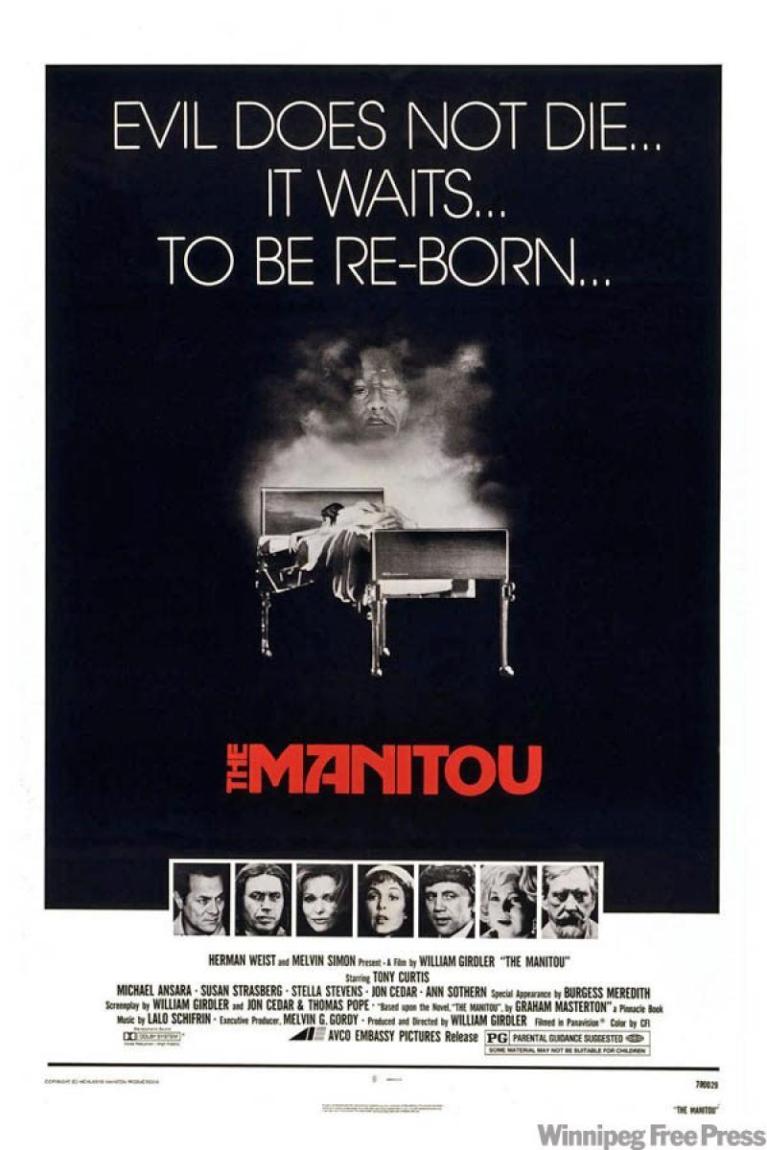
Manitou

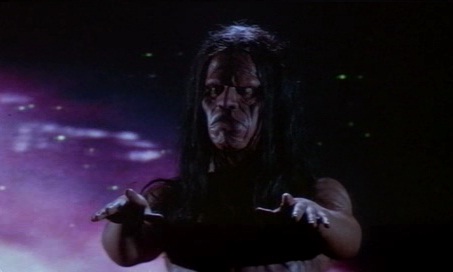
“Mommy, why am I in space?”

The original tagline for 1978’s “The Manitou” went something like this…Evil Does Not Die…It Waits To Be Re-born.  But I’m thinking….

“The new film from the director of the “Jaws’ ripoff, “Grizzly,” comes a horror, space odyssey, Native American, love story kind of thing with Tony Curtis.”

Karen Tandy (Susan Strasberg) has something or someone growing in her neck and it’s up to a team of doctors, her carny fortunetelling lover/friend (Tony Curtis) and shaman, Johnny Singing Rock (Michael Ansara) to save her! Still swimming in the wake of “The Exorcist,” which unfortunately was responsible for an endless sea of Satanic-possession horror film clones from “The Omen” onward, is “The Manitou” an almost inconceivably bad film that attempts to cash in on so many popular 1970s film genres at once, you begin to lose track about midway through the plot. Try and follow me on this one.

Our victim, Karen Tandy, lives in San Francisco, is kind of cute, and has a huge lump on her neck that could be cancerous but cancers rarely have their own heart and lungs. This baffles our crack team of doctors and they plan on operating immediately but not before allowing Karen to wander around the cable car town like an old Rice A Roni ad for a couple of days first. She descends on the Munstersesque apartment of Harry Erskine (Curtis), a Tarot Card reader and amateur psychic who spends the bulk of his days bilking old ladies out of their inheritance. Karen turns to our still adorable Harry for help and a bit of slap and tickle as she needs to know why she has a fetus gestating in her gullet. Harry consults the cards and pulls the “death card”  (which you know in Tarot terms doesn’t mean actual “death) but lies to Karen anyway to calm her and perhaps loosen her panties up a bit. They tango and while she sleeps off her bed romp, Karen utters the phrase “Pana Wichy Saratoo” which sounds all mystical, so that springs our Harry into action as a paranormal investigator.

Meanwhile in the surgical theater, traditional medical science fails, as the neck fetus begins to control the hands of our surgeon, making him cut into himself.  This is no normal neck fetus here, this thing has all kinds of mojojojo, and now our doctor must consult his super computer for answers. Back in the mystical realm, Harry has now gone off to see out mediums to séance the hell out of Karen’s neck to get her all OK again, but of course that fails as well. So while Karen lies in her hospital bed, the lump has grown into the size of a Billy Barty midget and is looking for a ripping exit. Frustrated, Harry gets the tip from another carny reject (played by a post-Rocky Burgess Meredith) that “Pana Wichy Saratoo” is Native American for “thing that lives in white woman” (actually “my death foretells my return”), and so Harry is off to the reservation to get himself the best Native American shaman that money can buy, and that shaman is Johnny Singing Rock.

“Manitou” Trailer From 1978

Johnny warns Harry that the “Evil One” is coming and that nothing in his white man world will stop him so Harry offers Johnny a monster load of cash to leave the reservation and battle the creature living in his maybe girlfriend’s neck. But they might be too late; as they head towards the hospital, the big moment occurs, and at least thirty percent of the special effects budget goes ripping out of Karen’s back and thus, the Misquamacus, is born. It is an ugly looking spud, and when Johnny gets a good look at him, well he’s pretty sure that the tiny terror will kill them all. What follows is a rapid blending of genres that goes so quickly that if you can stop giggling for a moment, you will see about four or five of them speed by your bewildered eyes. You get the hospital drama of course, but for a bonus you also get an “Exorcist-like” de-possession ritual, the downtrodden Native American soliloquy to evoke white man’s shame a la “Soldier Blue,” and an all-out “Star-Wars” laser battle between the “Manitou” (the spiritual and fundamental life force understood by Algonquian groups of Native Americans which this film reduces into more Star Wars gimmickry) of the white man’s technology and Misquamamcus in space no less. This final fight scene is all so impressive as it seems that some producer who must have really appreciated Girdler’s “Grizzly” sank some real bucks into the final showdown. Somewhere lost in this of course is the fact that the white man, triumphs over the Native American again and at the end we are supposed to bask in the joy of Tony and Karen sharing a cuddle while the savage’s spirit dies another death.  Oh well.

After a career of directing some pretty awful knockoffs and even a blackploitation film (Pam Grier’s Sheba, Baby), “The Manitou” thankfully became Girdler’s final film.  At least with “The Manitou” he can say that he directed a film in almost every genre.

Generoso’s Quick and Tasty Linguine Con Capperi e Pancetta

Standard

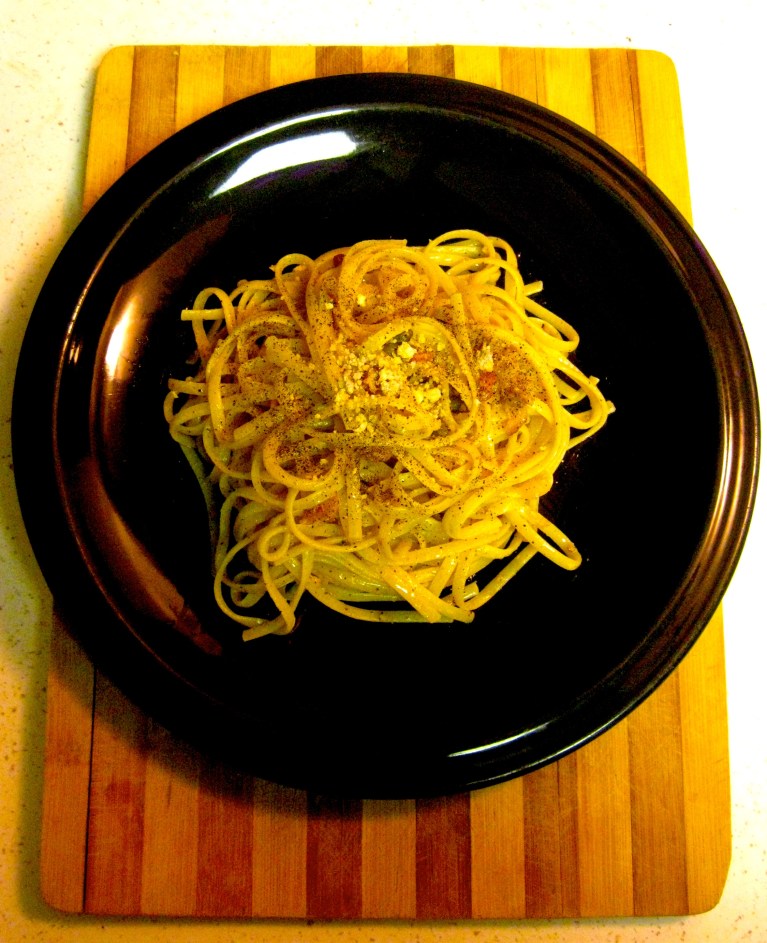
As we are still in a slightly colder than normal June here in Los Angeles, I am still pulling out some of my dishes that are more meant for fall than summer.  Unlike my eggplant dish from a couple of weeks back, Timballo di Melanzane, my dish for you this week, Linguine Con Capperi e Pancetta (linguine with capers and bacon), should only take you about 25 minutes from prep to plate.  You will need the following, Linguine, olive oil, capers, one sweet onion, four large strips of bacon, 1 cup of light cream or half and half, salt and pepper, 1/2 cup of parmesan and eight cloves of garlic.  If you have a large frying pan, a colander, and a pot to boil your pasta, then you are all set.  Let us know how yours turned out.  This is a tasty and fast dish that you will enjoy again and again.  XO Generoso

Music: Frédéric Chopin’s Ballade No. 3 in A-Flat Major, Op. 47.


Vikings, Moors, And Explosions Fill Tony Anthony’s Lost 1975 Spaghetti “Get Mean.”

Standard
tony anthony

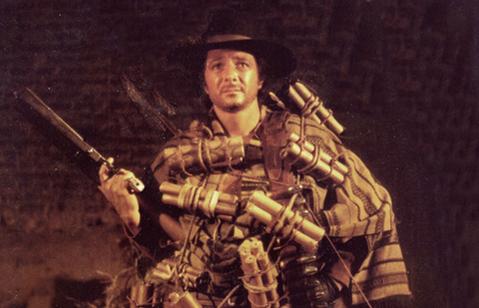
Tony, are you sure that’s enough dynamite?

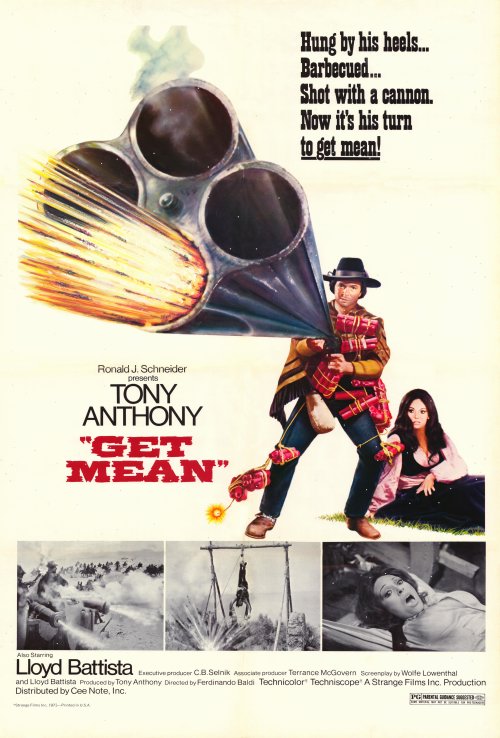
Once Asian cinema began to overwhelm the action film landscape in the 1970s, the days of the spaghetti western were numbered and thus the genre had to get crafty or else ride quickly into the sunset. To the rescue comes actor Tony Anthony, an American living in Italy at the time of Leone, who was well known for The Stranger character that first appeared in 1967’s “A Dollar Between The Teeth.” That film was successful, but Anthony was one of the first to see the writing on a wall in realizing that the genre needed some fresh ideas, so a year after that film debuted, Anthony and director Luigi Vanzi took The Stranger way east for “The Silent Stranger” (aka A Stranger In Japan), mixing the western with the samurai film.  Tony wasn’t done yet with the Japanese sword epic, as he teamed up with veteran sword and sandal director Ferdinando Baldi and brought in ex-Beatle Ringo Starr to play the heavy for a spaghetti treatment of the blind swordsman, Zatoichi, in 1971 called “Blindman,” about you guess it, a blind gunfighter. For years“Blindman” was next to impossible to get here in the States, and for that reason, it was pushed into cult film status along side Anthony’s fourth entry into the Stranger series: a bizarre, genre-bending spaghetti from 1975 called “Get Mean.”

For “Get Mean,” Tony Anthony reunited with director Baldi and his co-star from “Blindman,” Lloyd Battista for this fantasy western where The Stranger, shortly after being dragged for a few miles by his dying horse past an ominous Phatasmesque silver orb, is offered fifty grand by a witch to escort a Princess back to Spain where she can regain her throne from the hundreds of Vikings and Moors who are battling it out back home. After a train and ship whisk him off to Spain from America, The Stranger must go to battle with the Vikings and Moors (what year is this?), find a treasure that is being hidden by ghosts, save the princess, and collect his money from the witch who offered him the money in the first place. All of this done with several hundred explosions, wild modes of torture, and a demonic freak out scene by The Stranger that would only be matched by Bruce Campbell as “Ash” from “Army Of Darkness.” Yes, there is much in “Get Mean” that makes you think that a VHS copy of this film made it into the hands of a young Sam Raimi sometime along the way. There are some huge plot holes and moments that leave you scratching your head, but there is almost a post-modernist element to the goings on here. Does it matter that The Stranger saves the princess or finds the treasure? After a while it doesn’t, but you just revel in the messy joy anyway.

Besides the above-mentioned weirdness in plot, what makes “Get Mean” so enjoyable are the performances of our Tony Anthony, whose “Stranger” distinguishes himself from the Franco Neros and Giuliano Gemmas in the way that he is more a wisecracking Brooklyn Bugs Bunny figure than a silent stare Clint Eastwood type, and Lloyd Battista, one of the films many villains, who reminds me of a demented late 1970s Ollie Reed doing Richard the Third with dynamite in hand.

On June 8th at The Silent Film Theater/Cinefamily I had the honor of seeing a restored version (courtesy of Blue Underground) with Anthony, Battista, and executive producer Ronald Schneider in attendance that included one of the liveliest Q&A sessions I have been to in some time.  In this clip that I shot from that evening, Lloyd Battista expresses his opinion on the excellent producer work of Tony Anthony. Seen on the video from left to right is Tony Anthony, Lloyd Battista, Ronald Schneider, and the moderator, Rob Word:

If you thought that the description of the film was beyond logical, for the predominance of the evening, Anthony, Battista, and Schneider made it abundantly clear as to the almost surrealistic efforts that were needed to be made in order to secure the funding to finish “Get Mean,” as well as the shortcuts that were made in order to get most out of the short money that they had to work with for the time in which they had to shoot. As Battista states in the interview I posted above, “every penny that Tony came up with, ended up on the screen.” For example, in an early scene in which The Moors are about to battle the Vikings, director Baldi had to shoot his extras dressed as The Moors in one shot, and because he did not have enough money to get more extras, Baldi then made the extras put on the Vikings costumes in a different shot on the opposite end of the battlefield to make the scene look more epic. Once the Vikings and Moors begin to clash, Baldi redressed some of his Vikings as Moors and relied on close-ups so that the scene looked like two large armies battling. “More work” Battista said, but it came out looking real. There were also stories of weird financial transactions that kept Anthony on location while everyone else bailed in fear of retribution from investors, or the story of twelve thousand dollars that came just in time to feed his enormous cast before things “got ugly.”

Despite all of the tribulations, forty years later this film was restored to its nutty brilliance and I am glad to have been there to see one of its first public screenings since the restoration. As someone who adores the spaghetti western mostly for its admiration but irreverent take on the American western, I have to applaud “Get Mean,” for the genre rarely gets more irreverent and downright deranged than this.

Rampant Consumerism and Indifference in Hunt Emerson’s Calculus Cat

Standard

There’s an insidiousness in the implicit connection between entertainment and advertising. When we consume any media form, we make ourselves vulnerable to consuming other products, for in the act of consuming entertainment, which we have committed to see and/or hear based on our own tastes and preferences, we make a tacit pact with the entertainment provider that we like the program they offer, so we are willing to stick to the program even if it is interrupted by advertisements. In today’s digital age, commericals are completely and utterly inevitable. For the most part, they carry more burden than any utility in that they rarely advertise a product or service we actually want, and they interrupt the entertainment forms we consume, whether that is a TV show, a YouTube video, a Netflix show, a Facebook news feed, or even this blog (is there an ad on this page? Probably).

Before today’s highly diverse world of entertainment channels, Hunt Emerson acutely critiqued the dubious relationship between entertainment and advertising that drives people in a never-ending cycle of consumerism in his comic, Calculus Cat, picking up on the same topic addressed in John Boorman’s Having a Wild Weekend but a decade later and in a more television saturated world. Beginning in 1978, Calculus Cat first focuses on the role of commercials on television. By day, Calculus Cat grins, attempting to entertain and give people joy for free, and by night, after a day of heckling and attacks from the people he encounters on the job, Calculus Cat finds himself trying to drown out the miseries of his day with his favorite television shows.

Cover for the Calculus Cat Collection

Unfortunately, his television has its own priorities that conflict with Calculus Cat’s expectations for his television. While Calculus Cat’s shows do play on the TV, they will not begin until a TV announcer repeatedly declares commercials for Skweeky Weets, a cereal company. The incessant commercials drive Calculus to the brink of madness on a daily basis, but right at the moment when he prepares to destroy the television, the commercials for Skweeky Weets end, and the program he had hoped for finally starts.

This battle between Calculus Cat and the television repeats everyday, and each story in the Calculus Cat collection focuses on a new day of their altercation and Calculus Cat’s eventual surrender to the television, pulling our cat into a never-ending cycle of consumption, where he grudgingly consumes the commercials of Skweeky Weets then consumes his favorite television show, be it Rawhide, The Addams Family, or Bronco. Skweeky Weets commercials dominate every station and every type of program and eventually begin to dominate the markets such that it becomes the only cereal bar available in Calculus Cat’s world, and given the persistent commercials that infuriatingly block entertainment programming and the elimination of all other snack food choices, Calculus Cat too must succumb to finally purchasing Skweeky Weets products.

Calculus Cat, though filled with humor stemming from his belligerence toward his TV, contains a grim statement about the state of the human interaction with entertainment media in a post television age. With the expansion of the series for the collection released by Knockabout Comics last year, Emerson must have felt some pride (and horror) in his initial assessment of how we digest an enormous amount of advertisements in return for a chunk of entertainment given that this compromise between entertainment and commercials have permeated so much of society. Ultimately, Calculus Cat documents the numbing of individual thought and preferences through commercials and entertainment seen all in the comfort of one’s home because with each repetition of a commercial, especially the same one, we begin to become more indifferent toward the commercial itself and eventually toward the entertainment itself because we have to bear the commercials in order to actually see the entertainment we want, making it unclear what we actually want to consume. And after all desire wears away, we transform into mindless couch potatoes, seated and hypnotized by the television (or in this modern day, the computer) by compulsion and habit, and when we do go out, we purchase the products we see on the screens without second thought or question about whether or not we really need them.

Beyond the dissolution of human thought and preferences, what really makes the relationship between entertainment and advertising manipulated to drive consumerism really despicable is its ability to isolate individuals and pull them out of any socially or intellectually stimulating scenario, so much so that we begin to lose our ability to interact positively with others. Outside of Calculus Cat’s war with his television is his war with the world around him that he attempts to bring happiness to with simply a smile, but that world cannot process the smile and only returns anger and bitterness to his toothy grin. In seeking entertainment from a screen in the isolation of our homes, have we become unable to bear our own realities?

Calculus Cat really has no ties to calculus other than its attempt to understand the derivation of the malaise of our existence today. The series managed to foreshadow the general indifference toward each other and toward even entertainment in the decades to follow its incarnation, especially in today’s highly connected internet world where entertainment in the palm of your hand is more instantaneous than ever, and for that, it deserves a thorough read for anyone who just cannot get their phone out of their hand or cannot bear to do anything after work but return home to surf the web or watch television. If you are one of those people, please do read this collection in its book form, and perhaps, if you dare, read it in a public place or with someone. Otherwise, just go out and make something and talk to someone face to face….it’s a good thing, and avoid any Sweeky Weets products if you can.

Calculus Cat by Hunt Emerson is available via Knockabout Comics. 

Bovine Ska and Rocksteady 6/9/15: The Viceroys

Standard
The Viceroys

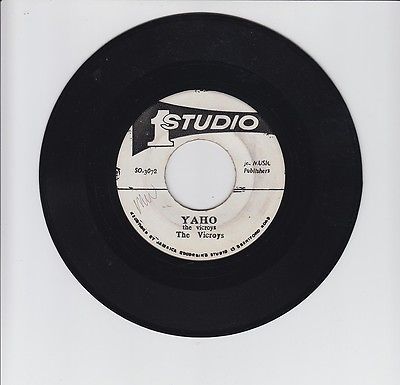
The pirate-themed rocksteady of “Ya Ho” on Studio One

We started off this past week’s Bovine Ska and Rocksteady podcast, our second since leaving Boston with two sets of joyous fast ska beginning with The Checkmates “Invisible Ska.”  We ended our first hour with two version to version excursions, ending with Delroy Wilson’s ” I Want To Love You,” followed by Big Youth’s sublime version,”Not Long Ago.”   The second hour began with our spotlight on Studio One vocal group, The Viceroys.

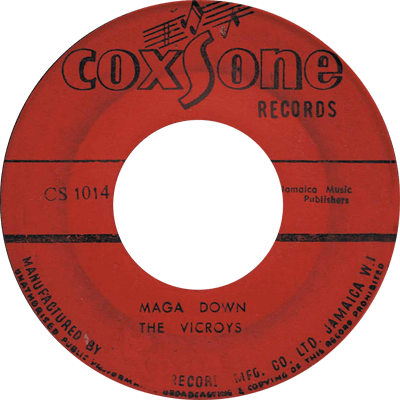
The Viceroys began singing together after Wesley Tinglin, Daniel Bernard, and Bunny Gayle met in West Kingston near Spanishtown Road. Tinglin had been singing at Joe Higgs’ music classes in the company of Alton Ellis and Ken Boothe, and after picking up some guitar, he was ready to begin to record with a group. The Viceroys first auditioned for Duke Reid with two tracks written by Tinglin, but Duke Reid was not interested. Consequently, the group went over to Coxone Dodd, who recorded their first single, Lose & Gain, a track also written by Tinglin then arranged by Jackie Mittoo and backed by The Soul Vendors and this was the track that kicked off our spotlight on The Viceroys

Yo Ho was inspired by Tinglin’s interest in The Caribbean Reader, which contained stories about Morgan the pirate and other pirates. After their time with Coxone Dodd, which ended with dissatisfaction with the usually disappointing business practices of Studio One, The Viceroys went over to Derrick Morgan. Our second set began with their rocksteady recorded for Derrick Morgan, Lip and Tongue.

You may listen to this podcast on Mixcloud by clicking HERE! Please subscribe to our podcast series while you’re there.

Please join us on Facebook to learn about our future spotlights, reggae and ska shows in the So. Cal area, record shops of note in Los Angeles and more!

https://www.facebook.com/groups/175321709220304/