Lily Makes Summertime Bun Thit Xao Xa!

Standard

Summer is almost here, and with the warm weather, Generoso very kindly asked Lily if she could make a bun dish.

Bun (vermicelli) comes in many forms. It can be served with soup, or it can be served with crisp, fresh veggies.

For this week’s recipe, Lily made bun with lemongrass pork, a cross between the very traditional Bun Thit Nuong (Vermicelli with BBQ pork) and Ga Xao Xa Ot (chicken with lemongrass and chilies) that you will find in most Vietnamese restaurants.

This episode also has a new friend in it….the mandolin! It is a great tool to prepare the carrots and the cucumbers that give this dish perfect amounts of crisp textures and freshness.

Music by Franz Liszt, Piano Sonata in B minor, S. 178

Enjoy! Happy summertime!

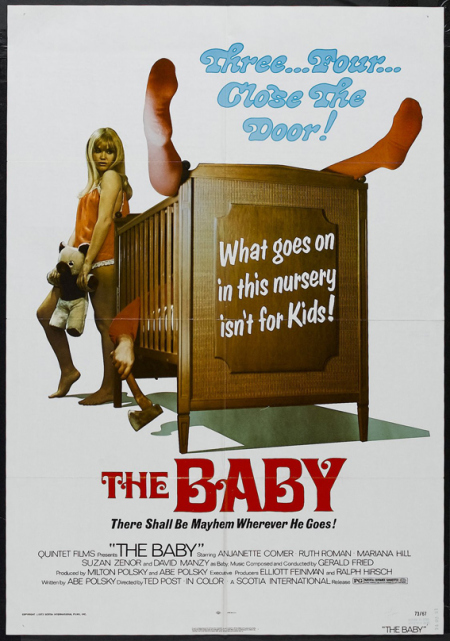
From Dirty Harry To Messy Diapers: Ted Post’s 1973 Infantilism Fantasy Film “The Baby”

Standard
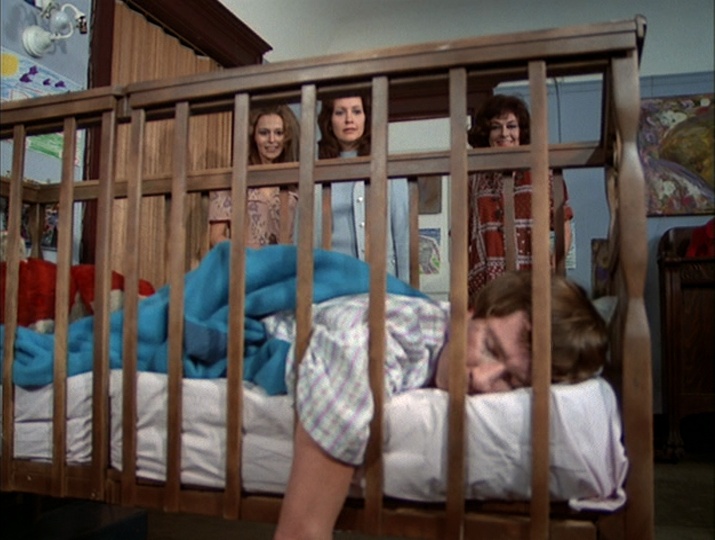
the baby still photo

“No, I think that it’s your turn to change “Baby.”

For his output in 1973, Ted Post may go down as having the single most wildly eclectic year for an American director.  He scored a huge hit that year with “Magnum Force,” the second of Clint Eastwood’s “Dirty Harry” series about the somewhat racist San Francisco cop who shoots a lot of bad guys but still ends up pissing off his captain. Though critically panned, “Magnum Force” ended the year outgrossing the original film in the series by a bunch. Ted also directed a young hunky Don Johnson and Don’s soon to be mother-in-law, Tippi Hedren, that same year in The Harrad Experiment, a pseudo-serious sexploitation take on the best selling novel of the same name about a Dr. Kinsey inspired college where students are encouraged to do the horizontal cha cha. Much to no one’s surprise, “The Harrad Experiment” went flaccid at the box office.  So, if you think that the two films I just referenced are wildly apart in themes, then allow me to introduce you to the third film that Mr. Post’s directed in 1973, a torrid tale of forced infantilism entitled, “The Baby.”

At the core of “The Baby” is bright young social worker Ann Gentry (Anjanette Comer) a dedicated young woman who gets the stunningly suburban Wadsworth family as her case. The Wadsworths have a “mother” for the ages (Ruth Roman); her two oversexed daughters, Germaine (Marianna Hill) and Alba (Susanne Zenor) and their brother Baby (David Manzy), a grown man in diapers who is enabled by the Wadsworths to live in a state of perpetual newborn. Ann’s response, being that she is a seemingly normal state worker who soon realizes that Baby’s disfunction is not physical but conditional, is to get Baby some therapy so that he can stop sucking his thumb and pooping himself in his massive crib. A crazy idea indeed, but mother always knows best and soon mother Wadsworth  puts an end to Ann’s wild idea of turning her son into a grownup who could potentially leave the home and have a life of his own or at least a son that doesn’t need his bum bum talced thrice daily. I guess if our hero Ann investigated a bit further she could’ve had Baby legally taken away from the Wadworths, what with his sisters occasionally supplying Baby with sexual enticement and the odd poke from a cattle prod.  No, this isn’t just maternal instinct gone Munchausen syndrome, it’s more like a reversal of Baby Jane done during the feminism movement. By 1973, the Vietnam war had been going on for over a decade, and women finally were expressing a desire to be something more than a baby machine. Most importantly, an entire generation of men had been taken away, and I guess the ones that were left to look after the women weren’t seen as the epitome of the manly man, and thus we have it’s most extreme example, Baby.

You would think that all of the above activities in “The Baby” would define it as a dark comedy. I mean, we are talking about a draft aged male prancing around in diapers while a family of almost human Stepfordesque women simultaneously nurture and torment our grown infant into further regression, but you never feel okay enough to laugh at this because somewhere in all of the exaggerated moments is the horrifying thought that this behavior shown on Baby most likely didn’t start last week, and that it is a systematic routine of going back to Baby’s actual infancy. You suddenly think back to Alba’s freewheeling use of the cattle prod on Baby as being done on an actual newborn, and the goings on don’t exactly bring one to giggles. If director Post’s goal was to show a new generation of feminist women who look at a child as an albatross, then the point is well made here in a frenetically unfunny way. You have Mrs. Wadsworth as the matriarch who hails from a past generation, a woman can only see herself as a mother and her young daughters who are reviled by the thought of motherhood. Even our young social worker Ann, who appears loving and concerned is hiding a pretty big skeleton in her closet as well.

“The Baby” 1973 Trailer

A scene that truly brings home the notion that Mrs. Wadsworth is beyond seeing herself as a sexual being and just a mother as any woman would from her generation is the birthday party for Baby. Mrs. Wadsworth gets a ton of attention from the men at the party (who by the way don’t seem remotely bothered to be there to celebrate the birth of man baby), but she soon shrugs off that attention as she remains mommy, first, second, and third. After a decade of young men going off to Vietnam and not coming back or coming back broken, Mrs. Wadsworth has created her own version of the perfect man. A “man” who will always need her, and one who is going to be with her for ever and ever. “The Baby” was promoted as horror in the same way that Larry Cohen’s baby-gone-psycho film, “It’s Alive” was promoted a year later. And although “The Baby” doesn’t pack the visceral punch as director Cohen’s film, it still has enough cringeworthy moments to nestle it firmly into that genre more than just pure satire. I guess that generation had lots to fear from the newborn, whether that newborn be big or small. As for this generation, I immediately wondered if “The Baby” would play well as midnight cult film or would a screening end up like it did in our home, with confused looks and muffled giggles and a bit more than a little concern for why this film was made in the first place.

More than the feminism movement, America’s participation in Vietnam effected almost every film genre from action, to romance, to yes, the family horror dramas as is the case with “The Baby.”  A few years later, our director Ted Post to a look at the beginning of our involvement in Vietnam when he directed “Go Tell The Spartans,” a film about a US Army major, played by Burt Lancaster, who goes to South Vietnam in the early 1960s as an advisor who immediately begins to understand that our growing presence there would be a futile effort that would just get a lot of Americans killed. Perhaps it was our major who had a talk with with Mrs. Wadsworth that encouraged her to go into the eternal-baby making business?

Mixing Media and Reality – Pistolwhip: The Yellow Menace

Standard

With Dark Horse’s release of the complete Pistolwhip last week, I figured it was time to jump into this series. Oddly enough, I dived into the Pistolwhip series in a disjointed way…I started with the second volume: Pistolwhip: The Yellow Menace.

Cover for Volume Two of Pistolwhip

Cover for Dark Horse’s The Complete Pistolwhip

Even though I began with the second volume, which was the only volume available at my local comic book store, this volume stands as its own solid, self-contained piece; the arc is fully realized and resolved in The Yellow Menace volume that you could even be fooled into believing that this volume was a single graphic novel and not a volume containing only a snippet of stories part of a much bigger series.

Before the days of Kick-Ass and Super, Jason Hall and Matt Kindt explored the idea of blurring lines between superheros, supervillains, and everyday people with Pistolwhip. Jack Peril guards a city reminiscent of a 1940s Los Angeles, but some uncertainty lies around whether he really even exists. A fixture of popular media, Jack has a radio show program, a comic book series, a film series, and a pulp novel series dedicated to his various adventures and battles against evil with a particular focus on his arch nemesis, the Yellow Menace, a grim, cruel, and abominable villain who commits some quite macabre crimes.

When a possible copycat killer who follows the ghastly attacks of the Yellow Menace in each week’s new episode of Jack Peril, be it in the comic book, radio program, pulp novel, or film, brings fear to the city, reality and the fictional world of Jack Peril begin to intertwine. Jack Peril is seen on the streets by some. The Yellow Menace is fatally seen by others too. Caught between the fiction and the reality, Pistolwhip, a down-and-out private investigator begins to work with Jack Peril to figure out the whereabouts and the identity of the Yellow Menace.

Beyond Pistolwhip, Jack Peril, and the Yellow Menace himself, there are the main players of the mystery behind the Yellow Menace killer: Mr. Loom, Isla Rose, Ray Ford, and Charlie Minks.

With this battle between Jack Peril and the Yellow Menace unfolding on radios, on pages, on big screens, and on newspaper front pages, the Jack Peril media dynasty captures the attention of the city, much to the horror (and maybe even a bit of satisfaction) of Roderick Loom, a pseudo-academic philosopher/preacher preparing for a lecture at the Chase Hotel which will cite recent Yellow Menace events to demonstrate how fictional media corrodes our society.

Along with Mr. Loom, we also meet Isla Rose and Ray Ford in the Chase Hotel. Isla is a housekeeper at the hotel carrying a heaviness coming from her past. Ray is a chipper but over-zealous police officer placed on guard after the Hotel’s previous night detectives on duty were murdered. And, in the mix of all of the characters stands Charlie Minks, Jack Peril’s confidant who carries a secret past and operates on a covert mission; she’s most likely our femme fatale, but there’s some humanity to her which may suggest otherwise.

Fundamentally, all of the characters in Pistolwhip represent archetypal mystery and film noir characters. Almost all of them have something burdensome in their past that haunts them and has lead to their downfall. Consequently, they relish in any opportunity to return to any level of grace. Yet, despite the archetypal characters, Jason Hall and Matt Kindt manage to deviate from preconceived notions of each of the characters by blurring the lines between reality and fiction from within the volume, making the reader question who is real and who is not, and making the motivations of each character difficult to guess, and as a result, the series lures you in because of its twists and turns and your own curiosity and desire for a resolution to the mystery behind the Yellow Menace.

However, what really makes Pistolwhip a commendably innovative and imaginative series is its ability to build up and shift character personas in non-sequential pieces weaved into the core narrative. While the mystery of the identity of the Yellow Menace sets the pace of the story, each character adds rich texture and harmonies to the narrative. As a result, over the course of the volume, your interest in the final answer to the mystery will begin shift because you will not only wonder, “Who did it?” but also “How will [insert character name here] be affected by the reveal of the Yellow Menace?”

One of the most exciting reads I’ve encountered, Pistolwhip brilliantly mixes in mystery, film noir, and superhero motifs to create a self-contained world where parts of a story can emerge from any source of realistic or fictional media, all from within a fictional media form itself. With its various layers of reality and fiction, it brings up fundamental questions around goodness and evil in each person’s individual actions as a regular human and/or as a hyperbole of a human. All together, Pistolwhip places us in a morally ambiguous world, where some semblance of hope still exists, and ultimately, we still long for a good guy to triumph, even if that good guy may not be who we expect.

Pistolwhip: The Yellow Menace by Jason Hall and Matt Kindt is available via Top Shelf Productions. The Complete Pistolwhip is available via Dark Horse Comics. 

Bovine Ska and Rocksteady 6/2/2015: The Rulers

Standard
The Rulers 2

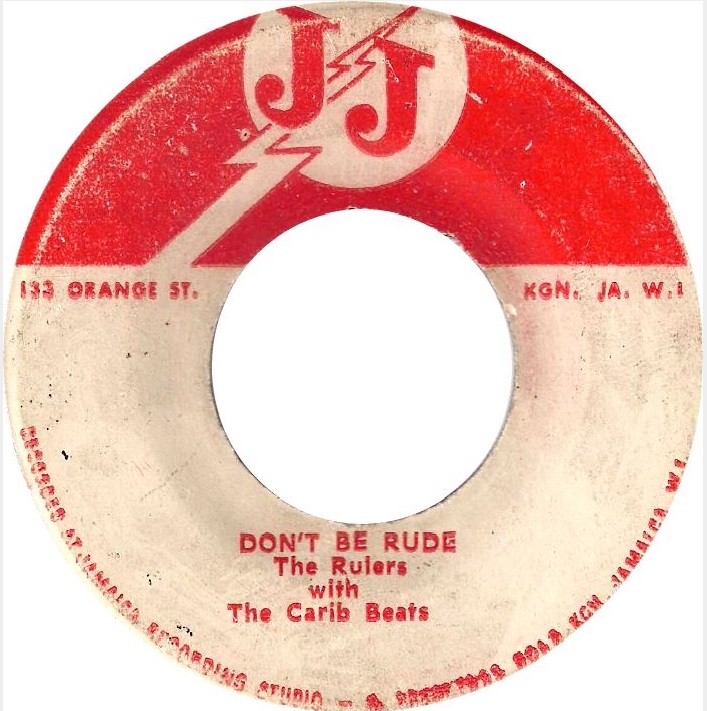
Superb rocksteady from The Rulers prod by JJ

After a one month hiatus where we packed up and moved across the country, Lily and I are back this week to continue the Bovine Ska and Rocksteady as a weekly podcast through Mixcloud being uploaded every Tuesday at 9PM (PST) midnight (EST).  The show’s format will remain the same as it has since 1996, concentrating on early Jamaican music from 1955-1975,with a mento set and artist spotlight midway through the program.  What is new is that we will report out on live Jamaican music happening in the Southern California area as well as Boston area music updates.  We began this week with four versions of The Melodians “Everybody Bawling” that we always send to our friend, Magnus Johnstone.  We ended the first hour with a set of ska which fed directly into a spotlight on the JJ Johnson produced vocal group, The Rulers.

Surprisingly, there is not much known about The Rulers considering their track, Wrong Emboyo, which was originally produced by JJ in 1967, would become one of the many Jamaican songs that would gain notoriety by being covered by The Clash.  What we do know about The Rulers is that the aforementioned track and many of their others have a writing credit to Clyde Alphonso. We also know that JJ’s preferred house band was Bobby Aitken and the Carib Beats, who backed up all of The Rulers’ releases we will hear this evening, for they were all produced by JJ Johnson for his JJ label. Given that the preponderance of their releases are during the rocksteady era, it is no surprise that many of the tracks’’ lyrics are concerned about rude boys. Similar to Alton Ellis, the Rude Boy tracks cut by The Rulers condemn the actions of the rude boys, such as the first track on this evening’s podcast from 1966, Don’t Be a Rude Boy.

This week’s podcast which will remain up for one week, can be heard here:

https://www.mixcloud.com/bovineksa/generoso-and-lilys-bovine-ska-and-rocksteady-6-2-15/

Please let us know what you think and do join us on Facebook for information about the next spotlight artist and relevant Jamaican shows that you can attend.  Click here:

https://www.facebook.com/groups/175321709220304/

Best,
Lily and Generoso


Generoso’s Delicious Timballo di Melanzane

Standard

Be warned: This dish is not a quick meal. Prep and cooking time should be about three hours but I assure you that it’s well worth it! Think timpano but instead of dough and bechemel you will used fried eggplant slices. You will need two large eggplants, a box of penne pasta, romano cheese, sweet Italian sausage, 1/2 pound of ground beef, one onion, one can of puree tomatoes, olive oil, salt, pepper, ground oregano, six cloves of garlic, 1 ounce of fresh basil.

Make sure you let the dish cool for 30-40 minutes before cutting as it will fall apart.

Music: Ravel’s Ma mère l’oye

Horror, Nature, and Polish Cinema in Sand & Fury

Standard

Generoso and I rarely write about works that have almost identical characters and themes. Perhaps it’s the nature of the medium we each focus on, or perhaps it’s the time period, but in general we seldom manage to cross paths.

Consequently, when I picked up Sand & Fury a few days before our cross country move, I would have never guessed that the book would somewhat be an adaptation and expansion on Jerzy Skolimowski’s The Shout and the Robert Graves poem it adapted.

Cover of Sand & Fury

Whereas Alan Bates’s Crossley character in The Shout remains for the most part an enigma, his female screaming/shouting counterpart in Ho Che Anderson’s Sand & Fury receives a full character development treatment in the graphic novel. Our unnamed female lead carries a scream that brings death onto a person destined to die. Though her supernatural skills make her somewhat of a grim reaper, this angel of death is unwillingly on duty for someone else’s reign of terror; she has met and interacted with all of the victims of the the summer Hammer Killer, and all of these victims hear the angel’s scream right before the Hammer Killer strikes.

Consequently, the moments with the victims before the scream and before the Hammer Killer’s fatal blow haunt our grim reaper. To make matters worse, she let the Hammer Killer escape death from her scream once upon a time. She undoubtedly lives a horrific reality, but flashes of the angel’s previous life weave in and out of the current time, and gradually we understand that our reaper’s existence and all of the sadness and terror she must come to terms with stems from her hedonistic and selfish past.

Unlike some supernatural spirit directly out of the mouth of the underworld, this grim reaper once lived on Earth. A shark-like businesswoman and human being over all, she preyed on others’ emotions to reach her goals. Ranging from business partners to lovers to spouses, she chewed them up and spit them out with her philosophy of existence consisting of solely reckless hedonism unchecked by morality, loyalty, or any crumb of selflessness.

Though her pleasure seeking methods for the most part worked, she crossed paths with Elio Angermeyer, her boss, and after a long winded affair and a promotion, she also threw him aside, but alas, he was the wrong one to toss away. In a moment of pure wrath, Elio murdered the human predecessor to our angel of death and buried her in the desert; however, nature had something else planned for her, and when a rancher’s boy discovers her body and unearths it, she is unconscious but alive. When she wakes from her coma, she emits a scream that kills the family that discovers and begins her life as the angel of death bearing the fatal scream.

Loosely structured with fragments of various moments of time weaved together out of sequence, Sand & Fury experiments with the narrative structure to slowly reveal our angel of death’s connection to the Hammer Killer, but the reveal of this mystery lives in the shadow of the strength of the narrative: its ability to develop a rich understanding of why our unnamed reaper possesses her difficult power.

Toward the last third of the novel, our angel of death meets another screamer , Lydia Philadelphia and asks why they have the powers they do, and Lydia replies with, “It’s our burden.” In that simple and vague statement combined with the moments of the reaper’s past, we begin to understand that her current existence as the reaper and thus all of the awful moments she has to witness and prompt serve as an atonement to nature for her evil ways on earth before she died. The unnamed reaper carried no burden despite her cruel actions toward other people in her life, and after her mortal death, she now must carry the burden of the force of death.

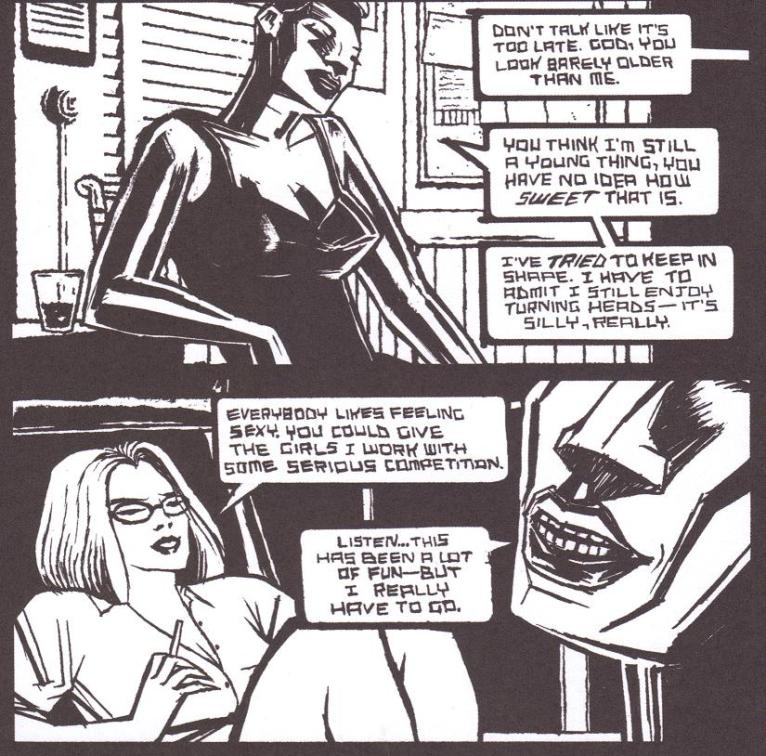
Ho Che Anderson fills Sand & Fury with unnervingly horrific ideas, some which are realistic and others which are supernatural, and together, they succeed in what horror does best: understanding the truth behind human behavior under the most intense terror and duress. To further heighten each moment of terror, Anderson transitions his art style from a more flat black-and-white style to a more realistic black-and-white drawing style with splashes of red anytime blood is spilled, making each moment of violence more painful for the reader and for our grim reaper as well.

An example of the Black, White, and Red Illustration Style

With his narrative and visual form, Anderson alludes plenty of film styles, especially those of gialos and film noirs, but alas, his style in Sand & Fury most closely parallels that of Andrzej Żuławski’s in Possession with his use of hyperbolic moments of violence, fantasy, and horror and frenetic energy to better understand human existence. Whereas Possession uses horror to capture a spouse’s fears and sentiments about an infidelity, Anderson uses the same devices to understand karma-like forces, which restore balance to the world and to individual lives.

With the tale of the unnamed grim reaper in the Sand & Fury, we realize, as with The Shout, that as much as we feel we have control over our own environment and existence, forces exist (be it karma, God, Mother Earth, or the god and goddesses on Mount Olympus) that have their own plans for us, especially if we live only to please ourselves without any regard for others and even more so if we believe we can live beyond the grasp of their powers.

Sand & Fury by Ho Che Anderson is available via Fantagraphics Books.

Bob and Carol and Ted and Alice and a Whole Lot of LSD: The Sexorcists From 1970 Seen With The Cinefamily

Standard
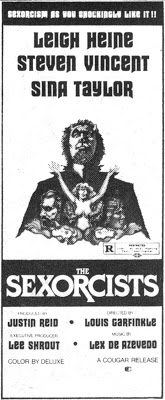
sexocists beautiful_people

Original poster from 1970 Beautiful People/Sexorcists

My wife Lily and I have recently relocated to Los Angeles, and for one of our first film experiences here in the city, we went on down to the Cinefamily/Silent Film Theater on Fairfax, which is widely known for its rare niche programming to see “The Sexorcists,” a film that they even described as “one of the great white whales of sexploitation cinema—so elusive and rare, even we haven’t seen it yet.” Armed with that too tantalizing blurb we were thrilled to spend our late Thursday night on one of the plush couches at the Silent Film Theater.

Before I get into the experience of seeing this rarely seen cult film, directed by Louis Garfinkle, one of the screenwriters of The Deer Hunter no less, I should say that as a lifelong East Coaster, I have to address my preconceived notions of California that I concocted during my adolescence of watching spacey exploitation films depicting California as land of sexed out LSD ingesting freaks who are always trying to “experience” things that most East Coast Catholic boys would simply deem as satanic. Even more “mature” California scene films ranging from Mazursky’s 1969 film, “Bob And Carol And Ted And Alice,” to Bill Persky’s massively underrated 1980 film, “Serial,” did little to change my hardened heart that the other coast was a deranged place of self-help gurus and orgies. So, now that we know where I stand here, let’s address “The Sexorcists.”

Originally released in 1970 as “Beautiful People” to cash in on the aforementioned psychedelic scene, the film was re-titled and re-released (with a few scenes added in to keep it up to date with its new epitaph) as “The Sexorcists” in 1974. The film begins with Dr. Voxuber (in Halloween quality devil’s attire) letting you in on his evil plot to control the desires of his group of victims. We then cutaway to a pastoral camp known as “Godiva Springs” where our not good doctor runs a camp in which a group of California clichés is put together to “learn more about their bodies than they would ever dream of learning.” The group consists of Boobs (Leigh Heine), a gorgeous example of a wild 1970s California love child, Ruby Begonia (Sonja Dunson), a repressed African American church woman who is not too thrilled to be surrounded by a gaggle of messed up Caucasians, Shrink (Sina Taylor), a pretty housewife who is looking for a quick screw, Howitzer (Frank Whiteman), a hunky and slightly uptight man looking to lay whatever he can find, and Ding Dong (Ann Staunton), a spinster teacher who never gets much screen time. There is also Bubblegum (John Quinn), a blonde surferboy who chews a lot of gum and does little else, Sheena (Branch Halford), a gay transvestite who takes his character to a place that would make the average liberal arts school undergraduate snap in half from political incorrectness, and finally Burp (Harvey Shain), who is mute except for the occasional expressive oral flatulence.

Voxuber has a list of draconian rules that he announces to his California clan at the start of their stay that includes one that causes more than a few arguments which is “no touching under the waist and above the knees.”  Howitzer seems the most pissed by this development and the doctor would spend the entirety of the film, pulling him off of almost every woman in the camp at some point, much to the delight of the Cinefamily crowd. And as I now write about this evening’s crowd at Cinefamily, I would be remiss in my duties to not share their favorite moment, which seems to go off about every ten minutes of the film: an EST-style primal scream that each character does in an ISO shot directly into the camera. They come as randomly as the rest of the plot, and those moments are always met with a good laugh from the audience because they frankly are pretty damn funny. Voxuber spends most of the film putting our group of 1970s California cartoon characters through a series  of random self-help exercises but seems to spend most time with the most repressed Ruby Begonia, trying to bring her to  a state of self-induced seizure orgasm while our campers watch in amazement and joy. Even after such an experience, Ruby is still filled with enough uptightness to freak out a room of Junior League women.

You may be wondering where the mandatory LSD scenes are hiding, and they are of course near the end of our film when or Voxuber dispenses his LSD infused brandy. An all-night group grope ensues of the trippy kind, but the next day the fuzz is there to whisk Voxuber away because (drum roll) he’s not an actual doctor. Oh no! What is our group to do with Dr. Voxuber’s list of commandments? I guess they just have an even bigger orgy involving a series of shots of underwater boobies and wee wees which is really the only time the “sex” in “Sexorcists” appears on the screen.  Now comes another added scene of Dr. Voxuber (now  looking a tad like Jon Lovitz’s SNL devil) explaining his successful execution of his master plan or the “orcists” portion of “Sexorcists.”

The evening ended with the Cinefamily curators receiving an ovation of the almost packed house and a promise from them to search for more lost cult films if we liked “The Sexorcists.” I then wondered at this moment how a film like this would’ve played out to an East Coast cult film crowd who might be looking at these characters with the same level of “you see, I told you they are all freaks out here” lodged in their subconscious as it was with me at the start of this evening. Then the thought occurred to me that California residents in attendance might actually have known real people like the ones depicted in the film, which brought me my first moment of actual horror from the evening.

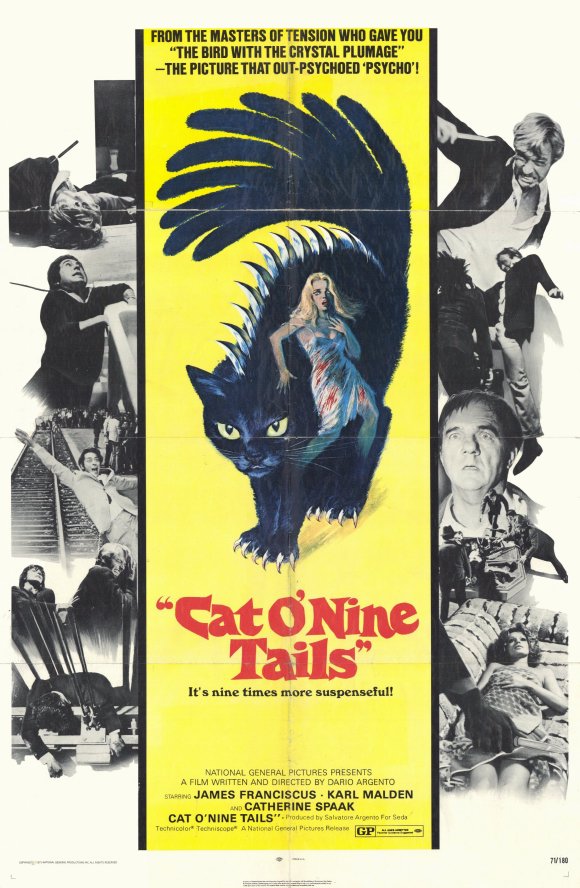
Karl Malden Shines In Part Two of Dario Argento’s “Trilogia Degli Animali,” 1971’s “The Cat o’ Nine Tails”

Standard
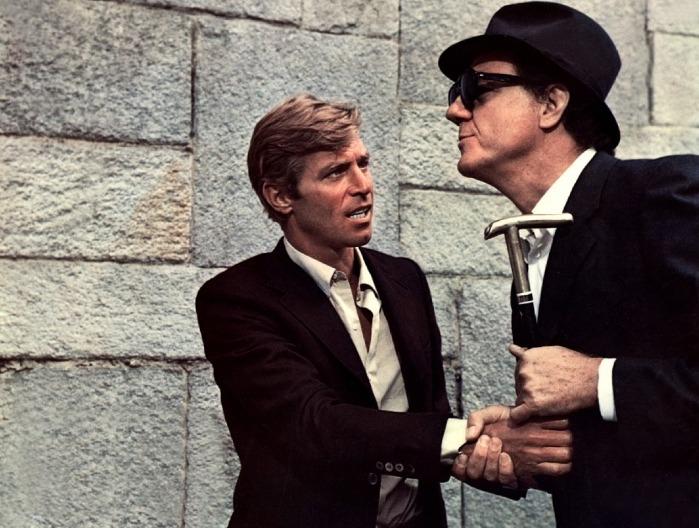
the-cat-o-nine-tails-1971-karl-malden-james-franciscus

Cookie (Karl Malden) Meet Carlo (James Franciscus)

Before I write one critique about Dario Argento’s second film in his “animal trilogy,” “Cat o’ Nine Tails,” let me first commend him on casting the usually gruff talent of Karl Malden in the role of Franco “Cookie” Arno, a blind ex-reporter who creates crossword puzzles while taking care of his adorable niece, Lori. Sure, Malden is solid in this role as always, but the mind swims at the concept of Dario possibly sitting at his office and pitching to his producer/brother Salvatore that Malden would be perfect as the lovable Cookie, a year after Malden’s tough portrayal of General Omar Bradley in “Patton.” Either Dario is a genius, or Malden could just nail any part that came before him. I also wonder if Michael Douglas ever pulled the “Cookie” card on Malden the following year when they began filming “The Streets Of San Francisco?”

You might think that it is a bit odd that I am reviewing the middle film in a trilogy without ever reviewing the first and third films, but let me assure you that there is absolutely no connection between the three that might encourage you to watch Dario’s first in the series, “The Bird With The Crystal Plumage,” before reading further into my review.   What is true about this period in Argento’s work is that it represents his thriller output before he would embrace more of the supernatural aspects that would define his later films. In “Cat o’ Nine Tails” you have our young director drawing from Hitchcock, as so many of his peers were, but here he adds that element of sinister violence that is less gory than his later masterpiece “Suspiria,” but still quite jarring at times, especially one very creative and teeth-clinching elevator-related death. Though not a masterwork, I found “Cat o’ Nine Tails” to be as solid a thriller as Argento would make at this point in his career.

Our story begins with a burglary occurring at a genetics lab and the sounds of this event being picked up by our darling Cookie, who becomes interested a la James Stewart in Rear Window, so he then teams up with a young and all too hunky reporter, Carlo Giordani (played by the rugged and coiffed American television star, James Franciscus). After a few folks associated with the lab start ending up dead, it becomes clear that the lab has discovered some genetic strand that bears out the criminal tendencies that lie within people, and they have also created a drug that can cure these bad thoughts, but someone isn’t thrilled with one of these two discoveries, so the bodies start to fall. As stated earlier, the murders are not of the lavish, glowing straight razor variety that you would come to expect from Argento; most of our victims in “Cat o’ Nine Tails” are dispatched in the rope around the neck style. This is fine by me as Dario tries to make the plot the star around our killings, as opposed to a sketch of a plot that exists just to glue together a series of baroque imagery as in many of his giallos. My only real stylistic complaint comes from the enviable sex scene between Carlo, our dedicated reporter, and the wealthy daughter of the genetic lab’s director, Anna (Catherine Spaak, the gorgeous lead from Dino Risi’s 1962 film, “Il Sorpasso”). I’m not sure why Argento insisted on filming their coupling in the most robotic way possible, but as an Italian man, I am a bit taken aback by such non-emotional touching that given the dire circumstances that those two characters were surrounded by, should’ve heated up their illicit tryst.

Kudos again to Dario for the attempt at plot complexity here, but it may just be a bit too complex as the “nine” in the title refers to the nine potential criminal leads that are never followed fully enough to potentially draw your interest away from the reveal of the actual killer making the ending, despite a stunner of a death scene, fairly anticlimactic.  There is also a score created by legendary composer Ennio Morricone, that is pretty lackluster, which is not surprising considering that Ennio has scored over five hundred projects over his illustrious career. There has to be a few throwaways in the bunch, and sadly we have one of those here. Malden and Franciscus are the main reasons why you stay in your seats as they are veteran actors that can make any scene work a cut above the rest.

Original 1971 Trailer For Cat o’ Nine Tails

“Cat o’ Nine Tails” is a decent enough film that now stands as a kind of testing ground for a young Dario Argento for what would and would not work and not work in his subsequent films. There are more than enough visual creations that will make you jump, and the overall cinematography is more than a cut above the usual early 1970s giallo.  Finally, I tip my hat to director Argento for acquiring the acting talents of Malden and Franciscus for this, only his second feature film. I don’t know if I would have the nerve to fly an actor the stature of Malden across the Atlantic and saddle him with a character named “Cookie,” but I still admire Argento for thinking that Malden would fit into that character so well.

Bovine Ska and Rocksteady 4/15/2015: Slim Smith With The Techniques

Standard

This past week began a special series for the Bovine Ska and Rocksteady. After 4/29/2015, the Bovine Ska and Rocksteady will no longer be on WMBR because we are moving out of Boston. To commemorate the last three shows of the Bovine Ska and Rocksteady in Cambridge/Boston, we began a three episode spotlight on an artist dearest to our hearts, Keith “Slim” Smith.

The mission of the Bovine Ska and Rocksteady has always been to share and uncover rare Jamaican music. Consequently, these last shows will feature short record label spotlights for small labels in addition to the three part spotlight on a star who should be in the global company of Bob Marley and Jimmy Cliff but is not well known outside of Jamaica.

For the 4/15/2015 edition, we started the show with two sets of early reggae, featuring “Dengue Fever” from The Scorchers and the ever-too-pretty “If I Had the Right” from Alton Ellis. After the opening reggae sets, we presented mento from Jamaica’s hotel bands, specifically The Hiltonaires, the house band of Kingston’s Hilton Hotel, The Wrigglers, one of the bands for the Arawak Hotel, and Monty Reynolds and His Silver Seas Orchestra, the house band for the Silver Seas Hotel.

Then, to close the first hour, we presented a short label spotlight on a record label that we’ve wanted to review for sometime but had great difficulty in finding the tracks: the Moo’s label. We know that the man behind the Moo’s label was Charlie Moo, but beyond that, we don’t know much about the origins or the end of the label. The spotlight featured Jamaican Rhythm and Blues tracks from each of the artists from the small catalog of Moo’s label releases: Lloyd Clarke, Basil Gabbidon, Rico Rodriguez, Johnny Moore, Owen Gray and Clancy Eccles.

The second hour was dedicated entirely to the first part of the Slim Smith tribute trilogy: his time with The Techniques.

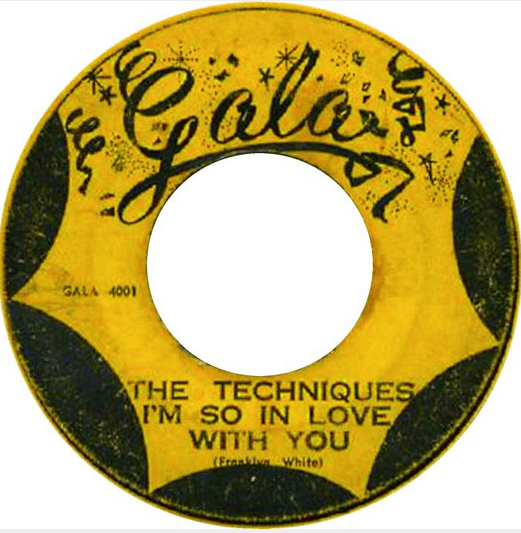
Techniques-Favorite

Our Selected Favorite from The Techniques


Slim Smith began his music career as a teenager attending Kingston Senior School. He along with classmates Frederick Waite, Franklyn White, the Richards Brothers, and Winston Riley entered Edward Seaga’s Chocomo Lawn youth club in Wellington Street in 1962 to emerge as the house band for the club with all members singing and playing instruments. After spending time backing up solo singers who visited the club and in concerts, Seaga arranged for The Techniques vocal group, now consisting of just Slim Smith on lead vocals, Winston Riley, Frederick Waite, and Franklyn White, to record on their own at Federal records with the track, “No One,” which was produced by Byron Lee and released on Kentone in 1963 to some attention but not too much. We heard this first track and another early Kentone track from the Techniques to kick off this spotlight on Slim Smith.

Everything began to change in 1964 for the Techniques. “No One” would be internationally distributed by Columbia in England in 1964 and by the Curtis Mayfield compiled This Real Jamaica Ska, which was released on Epic in America. Then, as the Victor Youths Band, Slim, Winston, Frederick, and Franklin were winners in the ska and mento contest in the 1964 Jamaica Festival. And, in that same year the Techniques were introduced to Duke Reid by Ken Boothe and Stranger Cole, and they would record, “Little Did You Know” with him, which would become the first major hit for the group. To kick off the spotlight, we presented The Techniques’ finest work with Duke Reid.

After their time with Duke Reid and his Treasure Isle, The Techniques then recorded with Sonia Pottinger at her Gayfeet label, which we presented next.

Often Generoso calls The Techniques the greatest vocal band in Jamaica, and this is because beyond Slim Smith, many of the members who rotated in then out of the group were stars in their own right. After Slim Smith left, the mighty Pat Kelly was brought in to take over lead vocals. Shortly after the arrival of Pat, Bruce Ruffin also joined the group, and this version of the Techniques was responsible for some of the best adaptations of tracks from Curtis Mayfield and The Impressions. In addition to these two talents, the Techniques would also have the voices of Junior Menz, Lloyd Parks, and Dave Barker during the group’s various re-incarnations.

Listen to The Techniques spotlight and the full show HERE.

The archive will be available until 4/28/2015. Enjoy!

And don’t worry, the Bovine Ska will return in another radio form. We’ll be sure to update here!

Bovine Ska and Rocksteady 4/8/2015: Horace Faith

Standard

For this past week’s show, we began with two sets of mid-tempo ska, beginning with a spectacular one from Henry Buckley himself on his own Merritone label entitled, “Reap What You Sew.” Afterwards, in the second set of ska, we presented the amazing “Run Rudies Run” from Lee Perry and the Gaylads.

After the first two sets, we jumped into the mento with “Tongue Tied Mopsie” from The Wrigglers on the Kalypso label. And then to transition into the spotlight on Horace Faith, we shared an extended set of rocksteady, beginning with a too cool Prince Buster track named “Sweet Beat.”

Cover for 7″ of Black Pearl

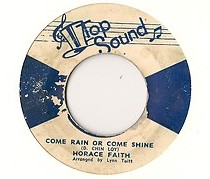
To start the second half of the show, we featured a memorial spotlight on Horace Faith, who passed away on March 8, 2015.

Unfortunately, we don’t know too much about Horace’s bio. We do know he was born as Horace Smith in Jamaica, but given his extensive recording for English labels and a small tidbit shared with us on an annotated episode of Top of the Pops, we know that he immigrated to England as a young man and spent a good chunk of his music career there.

Faith’s career is an interesting one; he recorded lots and lots of covers in reggae and soul but with very lush arrangements. We presented all of his best work in this memorial retrospective on Faith, including his major hit, “Black Pearl.”

“Black Pearl” is a cover of the song with the same title by Sonny & The Checkmates, and with this cover, Horace Faith gained quite a bit of popularity. It reached #13 on the U.S. Billboard top 100 and #13 on the UK singles chart as well.

The spotlight included both reggae and soul cuts from Horace Faith, all of which had beautiful and lavish compositions.

Listen to the spotlight and the full program HERE.

Enjoy! The archive will be available until 4/21/2015.