Best of Film 2025

Standard

Originally published on Ink19 on December 2nd, 2025

“Apocalyptic” is far too harsh and hyperbolic an adjective to describe the tone of the predominance of selections in this year’s Best of Film list. Perhaps “elegiac” is the right word instead?

Constant geopolitical chaos, increasing threats to language, perception, and artistic expression via AI, and ongoing decline of the human capacity for communication point us toward the closing chapters of the book of modernity. Sure, we’re past the 20th century already, but we’re moving toward a radical departure from the bedrocks of our culture and society inherited from that era, and we’re moving past whatever has briefly stuck around in the 21st century thus far. We’re barreling toward an end of some kind, and many of our favorite films acknowledge this transition in our world in one way or another.

Five explore the shifts in the meaning, usage, and purpose of language. Two look at the process of image creation, manipulation, and dissipation of historical artistic figures. Three ruminate on the unsustainably isolating and delusion-inducing effects of current day technology. One says goodbye in a spectacular fashion to the spy genre and its feelings of international intrigue based on the wars of the 20th century. Another captures the months leading up to Russia’s invasion of Ukraine for a group of independent journalists oppressed by Vladimir Putin. And one directly confronts our senses about the arrival of the end of the world.

As with every year, we’d like to give our appreciation to the outstanding folks behind Acropolis Cinema, AFI Fest, Independent Film Festival Boston, the Brattle Theater, Films at Lincoln Center, the Coolidge Corner Theater, Film Fest Knox, and the Cleveland Cinematheque for their programming and their steadfast efforts to preserve the awe of experiencing cinema on a big screen with an audience who can all simultaneously delight in the joys, sorrows, laughs, tensions, and revelations that only film can supply. Please support these festivals, microcinemas, and independent theaters in their work because, hey, if the world is really ending, then let’s watch good films together.

• •

Dracula / Romania / dir Radu Jude

Capitalism has reared its ugly head in Romania, and Radu Jude is the master of showing the havoc that it and its tentacles of technology and foreign investment continue to inflict on Romanian society. With 2023’s Do Not Expect Too Much from the End of the World and this year’s Kontinental ‘25, Jude established then expanded his gonzo but revelatory collage style with its outrageous sexuality and vulgarity mixed with realism, philosophy, and the history of cinema to uncover tragic suffering as economic pressures warp his homeland. And with Dracula, he completes his magnum opus of capitalist and technological destruction by using the famed myth of Dracula/Vlad the Impaler, one of Romania’s most well known exports (even if the country during its years under Ceaușescu did not know it), to impart the ways that AI and the ruthless pursuit of economic gain commoditize, desecrate, and bastardize humanity, art, and culture. The film begins with a series of AI-generated Vlad the Impalers who challenge the viewer to perform fellatio on him. Soon after, we meet a director (Adonis Tanța) sitting at a desk in a sparse bedroom, and he outlines the structure for Dracula’s close to three hour running time. The director needs to make a commercial, approachable Dracula film, and he seeks the assistance of the large language model, Dr. Judex 0.0 (naturally voiced by Jude himself). As Dracula progresses, the director orally submits new prompts to the model, and it returns a story tailored to the request. The primary story, which continues in segments interspliced between the fourteen others, sees two leads of a tacky Dracula dinner theater (Gabriel Spahiu and Oana Maria Zaharia) trying to escape their working lives where the low-rent performance of Bram Stoker’s version of the myth leaves them on stage for the derision and mockery of tourists nightly. Story number two contains a series of late night infomercials using images from Murnau’s Nosferatu; number five is a mournful tale of love and heartbreak inspired by a story from author Nicolae Velea; number eleven features Vlad as the cruel owner of an abandoned factory that houses an operation where international buyers pay Romanian workers to play the lower levels of a video game for them; number nine is a distorted but period accurate interpretation of Vampirul, the first Romanian Dracula novel. And in the closing stories, Vlad the Impaler is discussed as a national icon via an influencer video and an elementary school performance. Throughout Dracula, the myth of the character is distilled down to its most basic, recognizable parts (i.e. blood drinking, impaling) and then projected onto a form that incites the most shock and reaction, an optimization that urges more clicks, views, shares, and purchases. Jude’s Dracula has something for everyone — yes, it has a multitude of genres and storytelling methods, but more importantly, it has something to say about how capitalism affects us individually and how we are each complicitous in its exponential growth. Our full review written for the theatrical release of Dracula can be found at Ink 19.

• •

Sorella di Clausura / Romania, Serbia, Italy, Spain / dir Ivana Mladenović

We were first introduced to actor/director Ivana Mladenović’s filmmaking at AFI Fest 2019, which screened her third feature, Ivana the Terrible, a hybrid-fiction comedy centered around Mladenović’s 2017 return to her hometown of Kladovo in Serbia, where she errantly attempted to cope with the joint burnout stemming from making her successful debut feature and from starring in Radu Jude’s Scarred Hearts while also serving as the central ambassador for the Serbian-Romanian Friendship Festival. We were enthralled by Ivana the Terrible’s frenetic, reflexive character study, an urgent and provocative piece that stressed the complex relationship between Mladenović’s homeland and its neighbor across the Danube. Co-starring in the film with Ivana was celebrated singer-songwriter Anca Pop, who sadly passed away a year after its premiere when she lost control of her car. A longtime friend of Mladenović’s, Pop once upon a time recommended that the director consider an unpublished autobiographical manuscript by Liliana Pelici for one of her films, and now, in Anca Pop’s honor, Mladenović has adapted the text into her strongest film to date, Sorella di Clausura. Set in 2008, the year of Romania’s entry into the EU, the film follows Stela (Katia Pascariu), a middle-aged, quasi-employed clothing factory worker and failed philologist who lives in a crammed Timișoara apartment with a pack of older relatives who relish every opportunity to slam Stela’s feeble earnings as well as her only true love, an elderly Balkan pop star named Boban (portrayed by Ivana’s own father, Miodrag Mladenović), whom she has been obsessed with since her childhood. Guided by only her fascination with Boban, Stela steals her uncle’s pension to buy a ticket to see her idol, causing her family to be short on rent, leaving them no option but to move out to the countryside. Undaunted, Stela refuses to leave the apartment and instead, doubles down on her Boban obsession, which turns sour when she sees that Boban himself has developed an infatuation with a local pop star, the free-spirited Vera Pop (Cendana Trifan). Stela responds to this imaginary transgression against her by vigorously attacking Vera on Facebook, but that effort positively backfires when Vera sees the value in Stela’s creative online barrage and offers to be her patroness. Vera provides Stela the means and the places to write a book while also dragging her into a myriad of absurd get-rich schemes that mirror the cash-grab economy of Romania during that period. Lensed by Radu Jude’s regular DP Marius Panduru who gives the film a fitting fatalistic aura of brokenness, Sorella di Clausura will invariably draw comparisons to the Romanian director’s work, but like Mladenović’s previous feature, her newest owes more to the Yugoslav Black Wave than any contemporary filmography. The film’s 2008 setting serves as an apt platform for resounding comments on the place for women in a post-Communist country with an emerging ramshackle economy and on our internet-fueled obsession with celebrity as a method for avoiding self-reflection, but its intentionally shambolic mood, exceptionally funny characters, and audacious setups allow the messages to seep in completely without any degree of heavy-handedness or self-importance impeding their delivery.

• •

Pin De Fartie / Argentina / dir Alejo Moguillansky

A film of variations, Pin de Fartie projects, stretches, and morphs the acts of viewing and storytelling inherent in Samuel Beckett’s Endgame (Fin de Partie) to form a vital dialog about filmmaking itself. In the sections closest to Beckett’s play, a girl (portrayed by director Alejo Moguillansky’s daughter and regular collaborator Cleo Moguillansky) serves as a weary caretaker to a demanding blind man (Santiago Gobernori). We also watch two silent and unnamed filmmakers creating sounds and models for the film we’re actively viewing, two actors rehearsing Endgame and falling in and out of their characters and their emerging romance, a mother and son reading Endgame and aligning their reality with the fiction, and a couple living in a large garbage bin somewhere in Buenos Aires. Interspliced between these various storylines, a woman (Luciana Acuña, Moguillansky’s wife and creative partner) provides connective narration alongside a musician (Maxi Prietto) who sings the sentiments and themes of each scenario. And, to top it all off, we view glimpses of the director’s hand underlining key passages in a printed copy of EndgamePin de Fartie brings together literature, music, and cinema, allowing the three to share the stage of the frame and communicate with each other. From their intertwining, Moguillansky reveals the magic of film as the conduit that can incorporate each artform’s strengths to bring us to new truths. A work ever moving toward farewells, Pin de Fartie has a mournful tone for what has been and what will be lost in each of its stories and in our overall zeitgeist, but rejoices in the endurance and infinite possibilities of the moving image and encourages us to place our hope there. A work that reaffirms El Pampero Cine’s standing as one of the most significant filmmaking collectives in the world, Pin de Fartie is a culmination of Moguillansky’s innovative, spirited, and collaborative methods of cinema and perfectly represents the ethos of the collective he co-founded. We had the privilege of speaking with director Alejo Moguillansky at AFI Fest 2025, and that conversation is available at Ink 19.

• •

Tóc, giấy và nước… (Hair, Paper, Water…) / Belgium, France, Vietnam / dirs Nicolas Graux and Trương Minh Quý

These days, the humanness of language is at the forefront of our minds. Multiple films on our list this year center on wordsmiths, but only Nicolas Graux and Trương Minh Quý’s Hair, Paper, Water…, the winner of the Pardo d’Oro in the Cineasti del Presente section at this year’s Locarno Film Festival, directly addresses how language historically sat at the foundation of our shared humanity and our umwelt and how its standing is changing. Part elegy, part homage, part memoir, the film sets forth Cao Thị Hậu, one of the primary subjects of Trương’s outstanding 2019 documentary, The Tree House, as our guide through the essence of language, and her grandson leads us through its preservation and transformation. Mrs. Cao speaks about her life and recounts memories and tales primarily in the critically endangered Rục language, and the directors pair her reflections and stories with sumptuous images, all captured with only two Bolex cameras, of her daily life and surroundings in a lush, nearly primordial valley not too far from the caves where she was born. Mrs. Cao forages medicinal plants, harvests cassava, sweeps out flood waters from her home, travels by canoe to her birthplace, and cares for grandson, whom she teaches the Rục language word-by-word. As she speaks the fundamental words around human cognition such as remember, fear, and think, as well as the essential terms for our habitats such as light, rain, fire, earth, and sky, and her grandson repeats each one in Rục, we see the Vietnamese equivalent in red text paired with striking glimpses of the natural setting. We also observe the grandson learning how to read and write Vietnamese through his homework; we watch and listen to him and his classmates learn how to read and speak English at school; and, we hear him tell the story about his father’s abandonment and his hopes for his own future in Vietnamese. The film is not only a rich anthropological study on generational change for the Rục ethnic minority, but also a poetic, delicate essay on how we universally learn how to perceive and describe the elements and phenomena in our world through family, education, and experience. Though the film never explicitly calls out the threat to language by contemporary technology, its visual and linguistic portrait of Mrs. Cao and her grandson capture a fleeting personal and cultural history, making Hair, Paper, Water… a touching archive of a key point in time and a contemplative farewell. And personally, for us, Hair, Paper, Water… takes on special significance because it recalls our memories of our first languages (Italian for Generoso and Vietnamese and Cantonese for Lily), our sorrow when struggle to remember the vocabulary, and our rejoicing when we can speak the words that first helped us understand our existence.

• •

Grand Tour / Portugal, Italy, France, Germany / dir Miguel Gomes

Having long admired Miguel Gomes’s work (his 2016 feature Arabian Nights topped our Best of Film list for the 2010s), we were beyond frustrated when his most recent film, Grand Tour, slipped through our fingers time and time again at multiple festivals in 2024. This fact is, of course, painfully ironic for us, as the central conceit of Grand Tour is the cat-and-mouse game through the Asian continent commenced by the nebbishy, but discombobulated Englishman Edward (Gonçalo Waddington), who makes the sudden and unexplained decision at a railway station in Rangoon to opt out of reuniting with his fiancé, Molly (Crista Alfaiate), whom he has not laid eyes on for the past seven years. Initially drawing inspiration from W. Somerset Maugham’s The Gentleman in the Parlour, a travelogue of Maugham’s 1923 trip through Burma and Siam, ending in Haiphong, Vietnam, Gomes, with his co-writers, Maureen Fazendeiro, Telmo Churro, and Mariana Ricardo, set the narrative of Grand Tour in 1918 but intersperse it with footage captured from Asia in the 2020s. The film takes on Edward’s perspective of his scattershot, play it by ear marital escape through multiple Asian countries during the first half before switching to Molly’s purposeful viewpoint in the latter half as she commits to “dragging Edward by the throat” if she finds him. Separate from one another and driven by different agendas, the individual journeys of Edward and Molly forgo any romantic tension, allowing the viewer to tag along. And in bringing together the disregard for period accuracy as Gomes did with the music and other cultural identifiers in his 2012 feature, Tabu, and the playfulness in the experimental comedic anarchy of the director’s 2021 comedy, The Tsugua DiariesGrand Tour develops into a pure experiential voyage that starts with specific travel destinations and opens up to the wonders of cinema, that magical realm where the laws of time and space don’t apply and where fiction can signify the real and vice versa. Created during pandemic restrictions, Gomes employed two cinematographers to film the Asian locales, Guo Liang and Apichatpong Weerasethakul’s regular DP, Sayombhu Mukdeeprom, and then staged the rest of the film with set pieces shot by the third DP, Rui Poças, in studios in Portugal, and this balance of the real and clearly artificial forms an enigmatic, timeless atmosphere fertile for a wide dearth of emotional reactions and interpretations along with a reawakened receptivity to the world around us and the worlds of the screen. A magnificent culmination of Gomes’s career so far, Grand Tour, for some, might seem like an unrequited love story between two people looking for entirely different outcomes, but for us, it is an ode to the power of observation and imagination and the places you can go when they intermingle.

• •

Geu jayeoni nege mworago hani (What Does That Nature Say To You) / South Korea / dir Hong Sangsoo

When we think of Hong Sangsoo’s films, we first recall his consistent tools for filmmaking: his regular players, particularly Kim Minhee and Kwon Haehyo, alcohol (often in soju or makgeolli form), cigarettes, and an artist protagonist. In reflecting on some of our favorite films of Hong, we recognize another common device — a painfully uncomfortable, embarrassing, and awkward confrontation. In 2024’s A Traveler’s Needs, the cringing point arrives when the mother of poet In-guk histrionically questions the young man’s reasons for allowing a French stranger (Isabelle Huppert) to live with him. In 2015’s Right Now, Wrong Then, it appears when the painter (Kim Minhee) awakens the director (Jung Jaeyoung) from his drunken sleep and proceeds to berate him after she learns about his reputation of disingenuousness. And in Hong’s latest, What Does That Nature Say To You, a genteel drinking challenge generates one of the most tortuous outbursts we’ve ever seen in a Hong Sangsoo film. What Does That Nature Say To You captures a single day for thirty-something poet Donghwa (Ha Seongguk). It all begins innocently enough: Donghwa drives his girlfriend Junhee (Kang Soyi) to her family home in Yeoju. He plans to drop her off and return immediately back to Seoul, but when he pulls up the driveway, Junhee’s father (Kwon Haehyo) is outside and insists that Donghwa stay for dinner. This naturally forces Donghwa to meet all of Junhee’s family for the first time, and they seize the opportunity to learn more about the boyfriend they’ve heard about for the past few years. Junhee’s sister (Park Miso) fixates on Donghwa’s esteemed attorney father and repeatedly prods to try to understand how much of his wealth has landed on Donghwa. Junhee’s father gives him a tour of the lush grounds of the family home originally built for Junhee’s grandmother, and in the process, quietly tests for Donghwa’s intentions with his daughter as well as his capacity to feel. Then, once she arrives home from work, Junhee’s mother (Cho Yunhee) makes a feast for everyone and proceeds to inquire about Donghwa’s poetry. Throughout the meal, Donghwa is gracious, complementary, respectful, and incredibly thoughtful in his comments around the mother’s poetry and the father’s landscaping talents. The parents meanwhile appear as good hosts, but in between smiles and then eventually drinks poured non-stop by Junhee’s father, they reveal their skepticism about Donghwa’s attempts to be independent, his philosophy for simple living, and his talent as a poet. After an intoxicated recitation of one of his poems and a modest criticism from Junhee’s sister, Donghwa melts down, precipitating a sequence of brutal revelations. With What Does That Nature Say To You, Hong utilizes the typical family drama trope of meeting a child’s romantic partner for the first time to provoke challenging questions about how familial structures and economic viability erode artistic inspiration and pure intentions. Donghwa may not be a good poet, but his spirit is exemplary, and watching it get challenged throughout What Does That Nature Say To You makes this one of Hong’s more tragic films to date.

• •

Sirât / France, Spain / dir Oliver Laxe

In the Sahara Desert, modernity has made few gains. Amongst the ancient sand, hills, and canyons, time as we know it is insignificant, and the environment is indifferent if not adversarial to our needs and desires as humans, making it a sobering grand stage for Oliver Laxe’s Sirât, a work that seeks to understand human and societal transitions and impermanence. Set in the Moroccan stretch of the Sahara during some unspecified point in the collapse of civilization, Sirât takes us on a grueling spiritual and physical journey as Luis (Sergi López) searches for his daughter Mar alongside his young son, Esteban (Bruno Núñez Arjona), and a pack of ravers (Stefania Gadda, Joshua Liam Herderson, Richard Bellamy ‘Bigui’, Tonin Janvier, and Jade Oukid, all non-professional actors and members of a rave collective). Disciplined in its structure and composition (narratively, visually, and sonically) while still reverent to the loose and uncontrollable nature of reality, Sirât forces us to repeatedly question how its title — named after As-Sirāt, the bridge over hell that must be crossed in order to attempt to reach paradise on the Day of Judgment in Islam, which Laxe explains plainly in text at the beginning of the film — manifests itself in the shared and divergent trajectories of each of its characters, who, out of the reach of most contemporary trappings, potentially enter interplanes separating Earth, purgatory, Hell, and Heaven. Though the desert landscape remains constant, Laxe, his cinematographer, Mauro Herce, and composer Kangding Ray astonishingly tie together image and sound to transmit ecstatic and terrifying glimpses into these spaces on and beyond Earth. We are at the denouement of life as we know it, and Sirât presses us to look at the path in front of us and to follow it as fearlessly as possible to where it ends.

• •

My Undesirable Friends: Part One—Last Air in Moscow / United States / dir Julia Loktev

What began in 2021 as a documentary about opposition journalists working at the last independent television station in Russia, TV Rain, which had been labeled as a “foreign agent” by Putin’s government, director Julia Loktev boldly expands into a harrowing and deeply personal film with multiple viewpoints on the repressive political maneuverings in the months leading up to the February 2022 invasion of Ukraine. Divided into five segments and clocking in at almost six hours, Loktev begins her feature by introducing us to Anya (Anna Nemzer), the senior host of two political programs at TV Rain and a mother raising an adolescent daughter in her family’s longtime apartment. These early scenes set what will turn out to be the comprehensive tone for Loktev’s film as she provides us unlimited access into Anya’s life, which includes everything from tension-filled workplace encounters to making dinner for her daughter and friends to the many direct-to-camera conversations with Loktev about the degrading state of Russia and the sometimes futile nature of her work that occur while the pair gets repeatedly stuck in Moscow traffic jams. Through Anya, we begin to meet the many journalists who will make up the rest of Loktev’s ensemble portrait: her co-worker Ksyusha (Ksenia Mironova), a young reporter at TV Rain whose fiancé has been jailed for treason, Olya (Olga Churakova) and Sonya (Sonya Groysman), who were amongst the first to be labeled as “foreign agents,” a fate which also befell Ira (Irina Dolinina) and Alesya (Alesya Marokhovskaya), who work at the investigative media outlet Important Stories, and celebrated veteran correspondent Lena (Elena Kostyuchenko), a dedicated writer for Novaya Gazeta who had been reporting on Russia’s actions against Ukraine since 2014. As she did with Anya, Loktev spends ample time with each of the aforementioned journalists as they valiantly attempt to inform the public about their firsthand observations on the authoritarian crackdowns that initially targeted only a small number of colleagues that will soon eliminate their entire professional community as Russia begins its full-scale war. Some 27 years ago, Loktev’s powerful debut documentary feature, Moment of Impact, meticulously explored the damaging effects of a car accident on her own parents’ lives, and in many ways, that same level of seldom-seen intimacy exists throughout My Undesirable Friends: Part One. After over three years of Russia’s horrific assault on the people of Ukraine, we might forget the circumstances that led to that action, but through Loktev’s film and her unprecedented look at the day-to-day lives of the people committed to telling the true story, we receive an alarmingly clear understanding of how each transgression against the press can lead to a total suppression of rights under a brutal dictatorship.

• •

Henry Fonda for President / Austria, Germany / dir Alexander Horwath

Director Alexander Horwath’s expansive experimental 185-minute essay, which is among the most impressive debut features we’ve seen in some time, explores the decades-long public façade of the everyman demonstrated in the films of the legendary star of Mister Roberts and how that image was created and reflected back onto the nation and even Fonda himself. Beginning with a scene from the Norman Lear sitcom Maude where the titular character devises a plan to run Fonda for the White House to heal the nation post-Watergate, Horwath’s film incorporates a staggering amount of clips from Fonda’s movie and television work that solidified his position as the ultimate do-gooder citizen, helping Americans to buy into the myth of homespun decency that became essential to the country’s self-perceived identity. Throughout the film, these scenes are astutely juxtaposed against a raw and never-before-released audiotaped interview with Fonda that occurred during his final year of life by Playboy magazine’s Lawrence Grobel that dispels the actor’s flawless persona with his own words. Horwath also presents further proof of the souring of the American ethos of right over might when he incorporates present-day recorded footage of the settings of Fonda’s films, such as the still-active migrant camps that Fonda’s Tom Joad experienced in The Grapes of Wrath and the town of Tombstone, Arizona, the setting for Fonda’s turn as famed lawman Wyatt Earp in My Darling Clementine, now reduced to a cheesy Western-reenactment attraction for tourists. As Horwath’s film progresses chronologically through Fonda’s life, we see an alignment of the actor’s selection of roles that furthered the public’s perception of him as the wise and friendly elder statesman that rings false now against the truths of his known rocky relationship with his children and the allegations made by his previous wives that labeled him as distant and cold. In the film’s final moments, Henry Fonda for President stresses the very real dangers of the constructed persona and how that feeds into our constant need to reinforce our own belief systems, even when we inherently know that the person whom we are rallying behind was most likely created to promote values that have been proven, time and time again, to be nothing more than a fantasy. Our full review of the film from earlier this year can be found at Ink 19.

• •

Reflet dans un diamant mort (Reflection In a Dead Diamond) / Belgium, Luxembourg, Italy, France / dirs Hélène Cattet and Bruno Forzani

It’s been eight years since Cattet and Forzani gave us their dazzling poliziotteschi-esque feature, Let the Corpses Tan, a scintillating adaptation of Jean-Patrick Manchette’s debut novel that transformed a relentless festival of gunfire under the Corsican sun into a wildly provocative performance art spectacle that was so enrapturing for us that it subsequently landed high on our Best of the 2010s film list. Drawing again from pulp literature and cult cinema’s past for their latest feature, Reflection In a Dead Diamond gathers its particular inspirations from the multinational productions of Euro-espionage thrillers from the 60s and 70s and the fumetti that inspired them for an adrenaline-fueled narrative that somehow outmatches the breakneck pace of their previous effort. For the film’s lead, Cattet and Forzani fittingly select the eternally elegant veteran of countless Euro-crime films, Fabio Testi, to portray John Diman, an elderly distinguished gentleman who spends his days relaxing oceanside by a palatial hotel on the Côte d’Azur that he calls home. It’s an idyllic final abode for John, but one that is suddenly disturbed by the appearance of his next-door neighbor, a stunning woman whose presence prompts a whirring recollection of his past exploits as a spy, or perhaps of his life as an actor who once portrayed a spy. Within these memories, which Cattet and Forzani present in a bedazzling and almost overwhelming manner, we meet John’s younger self (Yannick Renier), who dashingly fulfills his duties as a man of intrigue, complete with exceptionally tailored clothes, nifty techy tools, and a cadre of storybook foes, including the ninja-like leather-ensconced Serpentik (Thi Mai Nguyen), flashed quickly and without much explanation to eschew the outdated idea of a singular enemy. Although all of this may simply seem like a fetishistic cinematic homage, this feverish blending of various genre inspirations creates its own filmic language that fosters a compelling state of doubt for the viewer between the real and the unreal that entertainingly relinquishes any inclination you may have to attach yourself to a character or traditional genre outcome that would weigh down the experience of plunging into John’s memories. For its entire 87-minute running time, Reflection In a Dead Diamond bombards us with visuals and sounds that toy with how we recall the past while miraculously forging a storytelling technique that confronts our perspective on cinema.

• •

SUPPLEMENTAL FILMS

L’Accident de piano (The Piano Accident) / France / dir Quentin Dupieux

Perhaps the finest chameleon-esque actress working today, Adèle Exarchopoulos has fearlessly taken on an eclectic array of characters over her nearly twenty-year career. Though she’s mostly known for her dramatic projects, prior to The Piano Accident, Adèle had twice lent her considerable talents for small roles in Dupieux’s absurdist comedies, most notably in 2020’s Mandibles, where she drew peculiar inspiration from Greta Thunberg and uproariously punctuated scene after scene with her high-decibel line readings as an aggressively audibly impaired houseguest. For Dupieux’s newest feature, Adèle finally takes the lead as Magalie Moreau, an adult braces-wearing, poorly coiffed, and consistently marred social media sensation who has amassed considerable wealth from the time she was a tween by creating Tik Tok-length videos of her injuring herself through, at first, simple and then extravagant methods ranging from a drive-by baseball bat assault to getting run over by a wheel of a monster truck. Born without a shred of any real talent, but possessing an affliction that prevents her from feeling any pain, Magalie began her dubious career of self-abuse after seeing her unsupportive father roar in laughter while watching an episode of Jackass. As foul as all of this is, it’s seemingly business as usual for the callous Magalie and her obedient, but beleaguered manservant Patrick (Jérôme Commandeur) as they descend on an opulent secluded chalet for a bit of rest. However, once they arrive, there is trouble afoot in the form of Simone (Sandrine Kiberlain), a blackmailing journalist who knows a dark secret about one of Magalie and Patrick’s recent stunts gone wrong that could land them both in the clink. In response, the pair offer the journalist a tidy sum for her silence, but Simone demands the one thing that Magalie despises, a revealing interview for her publication that might open Magalie up and uncover the psyche that led her to this point in her life. One of the darkest and most affecting comedies Dupieux has made in his career, The Piano Accident finds the director continuing a theme that has been omnipresent in his work going back to Deerskin and through Smoking Causes Coughing and up to The Second Act: in our hyper connected world, the line between the truth and fiction for images captured from reality has blurred more than ever, leaving us unable to see who humans actually are and eroding our senses of self. As with most of Dupieux’s work, there is a lot packed into the short running time of The Piano Accident, but by smartly focusing almost exclusively on Adèle’s borderline sociopathic yet complex depiction of Magalie, it’s successful in gaining empathy for an unlikable figure, who, like so many in today’s world, is desperately manipulating technology to fit their own definition of a tangible existence.

• •

Kontinental ‘25 / Romania / dir Radu Jude

In the final scene of Rossellini’s neo-realist film, Europa ‘51, the namesake and quasi-inspiration for Radu Jude’s latest feature, a grief-stricken bourgeois wife of an American businessman, Irene Girard (Ingrid Bergman), now committed to a mental hospital, waves at the grateful destitute people she’s tried to help throughout her journey, and they proclaim her as a modern saint. Overwhelmed and rendered near catatonic by the unexpected suicide of her young son in the film’s first quarter, Irene’s journey in Europa ‘51 begins as a serendipitous clandestine mission outside of any faith or political agenda to help everyone she encounters as a method to compensate for a life of tone-deafness toward all outside of her elite circle. For Irene, a walk through any post-war Roman neighborhood beyond her own provides an instant opportunity for a philanthropic effort, but can she really make any difference given the scale of misery around her at that time? The same question can be asked of Kontinental ‘25’s Orsolya (in an outstanding performance from Eszter Tompa), an ethnic Hungarian court bailiff in the city of Cluj, Romania, who, like Irene, is gobsmacked from the guilt of a suicide she feels responsible for — that of a homeless man who crudely hangs himself when she gives him a moment to collect his belongings while she is carrying out her court-appointed duty of evicting him from a squat. Like Rossellini’s Irene, Orsolya at first takes refuge in her bed, but as the story of the suicide becomes more public through partisan news reports, she must also confront the onslaught of online comments from people who not only show their hatred for her actions, but also seem to relish the opportunity to slam her Hungarian background, stressing that particular divide in the country. Now inconsolable, Orsolya decides to let her family vacation without her in Greece as she roams the streets of her city, telling everyone she can find, from her mother to a priest to a former student turned bike delivery person, about her sadness. She is rudderless, and as we would expect from a Jude film, her journey is a dark and absurdly comedic one that has Orsolya taking an almost opposite path of that of Irene’s that is more endemic of our time of constant meaningless input. Lost in her misery, she helps no one in her travels, opting instead to clumsily descend toward a debaucherous rock bottom to gain some sense of clarity. In many ways, but most importantly with its use of a flawed but empathic protagonist, Kontinental ‘25 is the logical next feature for Jude, whose immensely profound and utterly enjoyable gut punch from 2023, Do Not Expect Too Much From the End of the World, also utilized a film from the past in its structure as a contrasting force to aggressively jab at the pitfalls of the Romanian version of late-stage capitalism that sees profits over the best interests of its citizens, who, like Orsolya, are uncertain of the necessary philosophy to adopt to overcome.

• •

Measures for a Funeral / Canada / dir Sofia Bohdanowicz

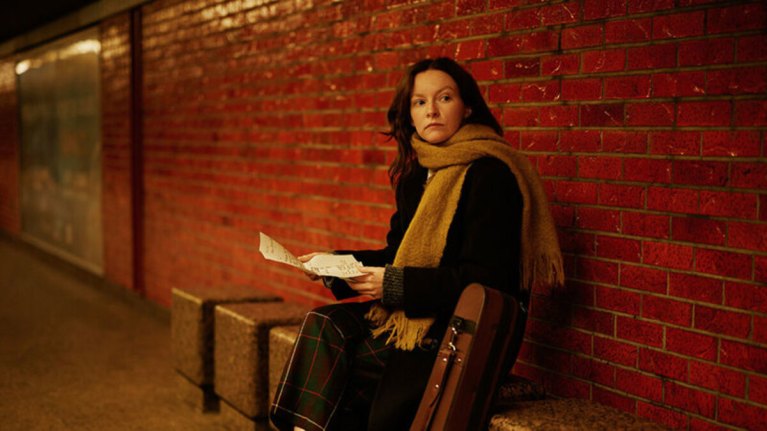
We first met the character of Audrey Benac (played by the brilliant Deragh Campbell) in 2019 when we viewed Sofia Bohdanowicz’s idiosyncratic and impressively reflective portrayal of archive excavation, MS Slavic 7. Since then, we’ve gone back into Bohdanowicz’s filmography to see earlier stages of Audrey in 2016’s Never Eat Alone and 2018’s Veslemøy’s Song and followed her progression in 2020’s Point and Line to Plane and 2021’s A Woman Escapes. Throughout the Audrey Benac films, the main character operates as a roman à clef lead, standing in for the director Bohdanowicz herself and navigating the history and present of the director’s own family’s artistic legacies to progress a discourse around the threads between self and kin. Suitably, Measures for a Funeral brings that discussion to its peak and close. The 2025 representation of Audrey is struggling on multiple fronts. Her dying mother throws a suffocating amount of guilt on her as she reveals her regret in sacrificing her career as a professional violinist to become a mother and requests that her daughter destroy her father’s violin, one of the only relics of his that remains. Her PhD thesis languishes as she falls deeper into the archives of her subject, the famed Canadian violinist Kathleen Parlow, who was also the mentor and teacher of her own grandfather. And she’s lost in her romantic life after deciding to end her long-term relationship with her partner without any clear reason. To try to recharge at least her academic pursuit, Audrey travels to England to visit one of her closest friends and to seek inspiration in Meldreth, a town that Parlow lived in for many years. On the trip, she, for the first time, speaks with full candor and vulnerability about why and how she feels so lost, and in this moment of openness, her friend provides new kindling to help Audrey’s self-illumination by suggesting that she restage the lost violin concerto by Johan Halvorsen, Opus 28, which was written for Parlow. Energized by this task, Audrey goes to Norway to bask in the space where Parlow performed the concerto for the first and only time and to seek the collaborators to make the restaging possible. Of course, Audrey’s personal reality bleeds in, since her father’s violin remains strapped to her back throughout her journey, and she must finally delineate her identity from the webs of her family and set the course for her own life. Measures for a Funeral feels like Bohdanowicz’s last film for Audrey Benac, but it releases her to a world of newfound possibilities, and we’re excited for both the director and her signature character. Our full review from August is available at Ink 19.

• •

I Dannati (The Damned) / Italy, United States, Belgium, France, Canada / dir Roberto Minervini

For the last two decades, director Roberto Minervini has created an impressive list of hybrid documentaries that examine the American identity with an incisiveness that few have been able to accomplish. A native-born Italian, Minervini has long lived in the Southern United States and has employed his objective position as an immigrant to examine a multitude of social and historical factors that led to the stagnant evolution of our indigent communities with his films such as 2015’s The Other Side and 2018’s What You Gonna Do When the World’s on Fire? Given his interest in our historical development, it only makes sense that for his first fiction feature, Minervini decided to go back to 1862 and the early days of the Civil War. The Damned follows a group of woefully unprepared Union soldiers sent to the Northwest part of the United States for reasons that the director purposefully obfuscates. Encamped in a wintry outpost, the men spend their days drinking, shooting at wild game, and chatting in an anachronistic vernacular that mashes up words from the present and the past to discuss various topics, including how their moral structure and faith played into their position on the abolition of slavery. The days are long for the men, and without any stated strategy to guide them, they wait for anything to happen. When an attack eventually commences without provocation, an erratic and terrifying blur of bodies and bullets surround our soldiers, leaving them to fire haphazardly at foes that they cannot see. They watch as their comrades’ bodies quickly fall to the ground, and after a few extremely harrowing minutes, the battle is over. It’s a grim scene, and all that the men can do is bury their dead and move on with their undefined mission, but as the days pass, their conversations turn to their depleting supplies and more random attacks, while their overall resolve weakens. By using an experimental technique that divorces the narrative from any historical details and cultural identifiers, Minervini, with The Damned, gives us an impactful way of looking at disenfranchised Americans who find themselves in a harrowing predicament that we are in no position to judge. The soldiers in The Damned are like any group of indigent people trapped by their situations in present-day America seen in the director’s previous films, people who are fighting for their lives due to unknown circumstances that put them in volatile places, leaving them without any real options to find peace and with no choice but to search for an undefinable enemy. Our full review of the film from earlier this year can be read at Ink 19.

• •

Fiume o morte! (Rijeka or death!) / Croatia, Italy, Slovenia / dir Igor Bezinović

This year marks the 106th anniversary of the unparalleled absurdity that was the siege and occupation of the Adriatic port of Fiume led by the eminent Italian poet, playwright, aristocrat, and army general Gabriele D’Annunzio. Angered that the city, which once had a substantial population of ethnic Italians, would be annexed by the then newly established Kingdom of Serbs, Croats, and Slovenes, D’Annunzio led a force of 186 “legionaries” from Ronchi in Italy to Fiume with the initial goal of reclaiming the former Roman province of Dalmatia for the new state of Italy. Once established in Fiume, these troops received reinforcements totalling over 2,500 men who were composed of Italian veterans of the Battles of the Isonzo and nationalists who subsequently forced the withdrawal of the Allied occupying forces there, leading to the establishment of the self-proclaimed state of the Reggenza Italiana del Carnaro, an event so audacious that it inspired the political leanings of a young Benito Mussolini. Now, as historically significant as all of this sounds on paper, a casual questioning of the current residents of Rijeka, Croatia (the former Fiume) garners only spotty recollections of this event, if any at all. Thus, in a salute to what Spanish-American philosopher George Santayana once wrote, “Those who cannot remember the past are condemned to repeat it,” hometown director Igor Bezinović leads the people of Rijeka into recreating D’Annunzio’s invasion for his oddly entertaining, but thought-provoking hybrid documentary, Fiume o morte! Fittingly, as a method to reconstruct the event for this current era of media oversaturation to forever bind this part of the town’s history in the minds of locals, Bezinović recruited anyone willing to don the military regalia of the invading forces to play a part and opted as well to find an endless throng of bald-headed men to play the Duce himself. With our players in place, and with the ethos similar to that of D’Annunzio, who hired professional photographers and cinematographers back in 1919 to film his actions to appear more like an artistic rendezvous rather than a hard-fought military campaign, the proceeding filming by Bezinović and cinematographer Gregor Bozic matches note for note the grand splendor of the images that were once sent back to the Italian homeland, where D’Annunzio, already revered as a celebrated artist and war hero, would be lauded as a conquering ruler. These contemporary scenes filmed by Bezinović are matched with archival footage and photographs throughout Fiume o morte!, which at first feel whimsical as the locals jest while being costumed, but as the combined images segue to December of 1920, when the city’s bridges were destroyed and soldiers laid dead after the town was stormed by the Royal Italian Army, these merged scenes dramatically change the tone of the film to accentuate the fatuity of that dark moment in Rijeka’s past. That shift in tone hammers home the ultimate message inherent in Fiume o morte!: although few in Rijeka remember D’Annunzio’s occupation, elaborately staged and documented audacious acts perpetrated by a cult of personality have an eternally seductive power that survives in many figures of today.

• •

Friendship / United States / dir Andrew DeYoung

Much has been created in the last twenty-plus years in cinema to illustrate the negative impact that internet technology, and especially its ugly stepchild of social media, has had on contemporary society, but what of the plight of the denizens of lonely cubicles and shared desks around the world who toil incessantly to maximize brand clicks, push forward company agendas, and make apps more addictive despite the questionable nature of these duties? The latter lot in life is sadly that of Craig Waterman (Tim Robinson), a moderately successful marketing lead and unknowing poster child for autism who is shunned by his equally socially awkward workmates as well as his family, who all dismiss Craig’s feeble attempts at being a well-rounded man. It’s a sad sight to see, but from afar, Craig might seem a step or two up on the evolutionary vocation chain from his cinematic counterpart from six decades earlier, C.C. Baxter, Jack Lemmon’s shell of a man masquerading as an insurance clerk in Billy Wilder’s The Apartment, but the dire loneliness and unbeknownst lack of humanity are just as profoundly felt on this side of the screen. Craig is clearly frustrated by the lack of connection, but trudges on, and so, when he is tasked by his wife to bring a misdelivered package from their home to that of a nearby neighbor who just moved into their subdivision, he does so willingly. During this neighborly interaction, he meets Austin Carmichael (Paul Rudd), a local weatherman and alpha male, who soon invites Craig over for a drink and shows off the prehistoric weapon within the package that had been errantly dropped on his doorstep. They chat for a bit, and Austin takes a liking to Craig and proceeds to drag his new friend on adventures around town and into the woods akin to Water Rat and Mole from Wind in the Willows. Finally, Craig has excitement for something in his life outside of the home, but when a guys’ night at Austin’s house turns sour due to a misstep and then an overreaction from Craig, he is shunned by Austin. Alone again and visibly jarred by the rejection, Craig turns toward his family with new ideas for connection learned from his brief time with Austin, but he’s now even more psychologically ill-equipped to share his experiences with them, causing him to spiral out further. Not sure why pull quotes on Friendship labeled it as “laugh out loud funny.” This is a dark comedy of the 99% cacao variety of dark, and although a few scenes grant us an embarrassingly awkward laugh or two thanks to Tim Robinson’s uncanny talent of being affable while exuding sadness, Friendship operates as social tragedy. As Craig’s blunders pile up, director Andrew DeYoung molds a chilling portrait of the dysfunctional post-Covid male, who, to survive, has filled his life with rules and numbers that extinguish any natural instincts to evolve socially and render him unable to navigate our contemporary malaise.

• •

Un Poeta (A Poet) / Colombia, Germany, Sweden / dir Simón Mesa Soto

What a coincidence that the poet’s struggle lies at the heart of two of our favorite films from this year’s AFI Fest. And yet, it’s not a surprise in a time when expressive language, written for the mysterious and often indescribable moments and feelings of human existence, is declining, replaced by words generated from a massive corpora of all things online or, more frightfully, by a reductive language that seeks optimal superficial reaction with the fewest words and concepts. In Simón Mesa Soto’s A Poet, Oscar Restrepo (Ubeimar Rios) has been battling for an extended period against the forces that led to our current state of language and unfortunately has continued to fail. Once a young and award-winning poet and notable professor, Oscar now spends his days and nights as a drunkard who lives at home with his elderly mother. He consistently avoids working on his next book and takes any opportunity he can to espouse the virtues of poetry and lionize his hero, the tragic poet José Asunción Silva. A constant disappointment and embarrassment to his family and colleagues, Oscar learns about his daughter’s upcoming college plans and consequent financial needs and wants to contribute, even though he’s unequipped to do much. So with the help of his sister, he begrudgingly takes a job as a high school teacher. During one of Oscar’s inebriated lectures attempting to explain poetry to his uninterested pupils, the students point out Yurlady (Rebeca Andrade) as the sole young poet in the class, and he’s moved by the natural talent and earnestness in her writings and drawings. Oscar attempts to mentor Yurlady and convinces his poet colleagues to accept her into their poetry school. And for the first time in many years, the community of poets who have long seen Oscar as a wayward stepchild are delighted by one of his actions. But quickly their motivations misalign with Oscar’s: instead of encouraging Yurlady to build on her voice, they immediately laser in on the political value of Yurlady, who comes from a very poor family, and put in place the machinations to create a star sociopolitical poet perfect for the appetite of European donors and sponsors. Though a satire of the commoditization and debasement of art as well as the suffering for art, A Poet maintains an impressive humanity carried by the man portraying Oscar, Ubeimar Rios, a non-professional actor who is actually a high school philosophy teacher in real life. Rios soaks the delusional high poet Oscar with electric feeling and lures us into Oscar’s self-aggrandizement, self-loathing, and self-pity without alienating the viewer. Undoubtedly, Oscar is frustrating, but Rios’s performance along with Simón Mesa Soto’s direction and script instill a peculiar kind of nobility and innocence in a character who, despite all of the disappointing elements of life, art, and society, continues to seek the beauty of unadulterated poetry rooted in the sanctity of words, unfeigned emotion, and sober self-examination.

• •

BEST REPERTORY/RESTORATION SCREENING

Slade in Flame / United Kingdom / dir Richard Loncraine

First and foremost, we adore all manifestations of the glam into hard rock band Slade, but with the utmost respect to film critic Mark Kermode, who once described Loncraine’s bold and darkly comic feature Slade in Flame as “The Citizen Kane of British Pop Films,” we strongly feel that his appraisal is more fitting to John Boorman’s Catch Us If You Can, an utterly enjoyable and well-crafted pessimistic romp starring The Dave Clark Five from a decade earlier. That stated, we were as ecstatic as Kermode to see a new restoration of the glorious revelation that is Slade in Flame, which was completed and released just in time for the film’s fiftieth anniversary! Produced by Gavrik Losey, who is responsible for two of our all-time favorite music films, Joe Massot’s Two-Tone label concert extravaganza, Dance Craze, and Franco Rosso’s exquisite socially conscious reggae feature, BabylonSlade in Flame tells the origin story and subsequent demise of the fictional titular band Flame (Slade), the composite of two Midlands bands who selectively combine forces in prison following a clash during and after a shambolic gig. Once assembled, this newly formed band plays a raucous set at a nightclub, which simultaneously garners jeers and a dismissal from their low-level crime boss manager, Harding (Johnny Shannon), and positive interest from talent scout Tony Devlin (Kenneth Colley), who offers the band a visit to a London-based agency run by his upscale boss, Robert Seymour (Tom Conti). A businessman first and hardly a lover of music of any kind, Seymour is nevertheless genuinely interested in commoditizing Flame no differently than he would a brand of packaged fish sticks. Sans management, our group takes the offer of a new puppetmaster, and they’re off to lavishly staged photo shoots and carefully orchestrated bullet-soaked publicity stunts designed to push their new single, which soon flies off the shelves, leading the band to massive concert halls and eventually bitter infighting as the marketing and spectacle overtake the joys of creating and playing. Though they certainly include an endless buffet of comedic moments and exceptional live performances, Loncraine and screenwriter Andrew Birkin underlay their film in the world of the kitchen sink as they underscore the economic despair of the era, and like Catch Us If You CanSlade in Flame achieves a seamless construction that combines the bliss of being in a young rock band and the painful disappointment that comes with the added artificial, soul-crushing commercialization needed to sell the masses what the machine wants them to buy. Oh, and here, we 100% agree with Mark Kermode: Slade in Flame is the band’s best album.

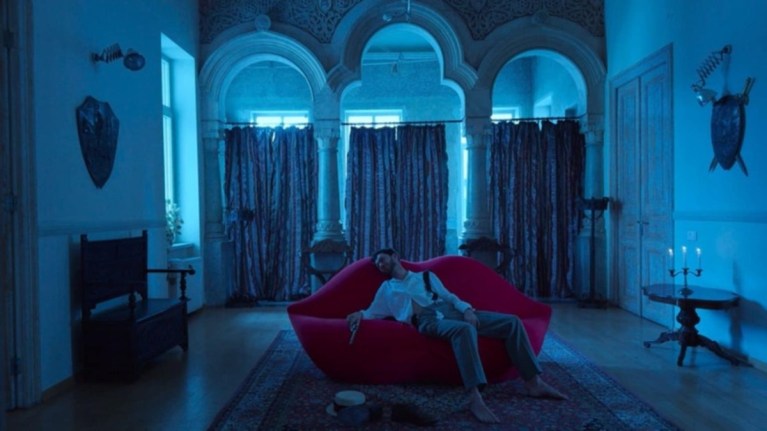
Featured photo from Radu Jude’s Dracula is courtesy of 1-2 Special.

Lily and Generoso

Lily and Generoso Fierro

AFI Fest 2025

Standard

Originally published on Ink19 on November 3rd, 2025

AFI Fest 2025
Los Angeles, California • October 22-26, 2025


For us, no fall is complete without reviewing the wildly eclectic offerings of the American Film Institute’s five-day festival that annually takes over the TCL Chinese Theatres on Hollywood Boulevard.

Every October, for five days and nights, AFI Fest presents some of the finest shorts and features drawn from the year’s prominent film festivals and pairs them with star-studded Hollywood premieres and first-time offerings. Over the last eleven years, we have frantically caught everything that we could during the fest and presented you with our capsule reviews of our favorite watches.

This year, we carefully selected 17 feature films to watch from the over 161 films in a stellar program comprised of 7 Red Carpet Premieres, 12 Special Screenings, 14 Luminaries selections, 15 Discovery films, 20 World Cinema selections, 15 Documentaries, 6 After Dark titles, 44 Short films, and 23 films from the AFI Conservatory Showcase! As has been the case in previous years at AFI Fest, the majority of our picks this year were drawn from the Luminaries, World Cinema, Documentary, and Discovery sections. Another strategy for us, especially given the larger than ever amount of programming offered, was to avoid films that already had scheduled nationwide releases for shortly after the festival, which allowed us to conserve our time for those that most likely wouldn’t make it to US theaters until 2026.

Mixed into the offerings were 19 Best International Feature Oscar® submissions, and we are thankful that we had the chance to see several of them, including Simón Mesa Soto’s accomplished second feature, Un Poeta (A Poet), from Colombia, Igor Bezinović’s innovative hybrid-documentary, Fiume o morte! (Rijeka or death!), and Jeunes mères (Young Mothers), another in a long line of social realist masterworks from the Dardenne Brothers representing Belgium, all three of which we have reviewed for you below along with five other films that we admire, beginning with our favorite from this year’s festival.

• •

Pin De Fartie

dir Alejo Moguillansky / Argentina

A film of variations, Pin de Fartie projects, stretches, and morphs the acts of viewing and storytelling inherent in Samuel Beckett’s Endgame (Fin de Partie) to form a vital dialog about filmmaking itself. In the sections closest to Beckett’s play, a girl (portrayed by director Alejo Moguillansky’s daughter and regular collaborator Cleo Moguillansky) serves as a weary caretaker to a demanding blind man (Santiago Gobernori). We also watch two silent and unnamed filmmakers creating sounds and models for the film we’re actively viewing, two actors rehearsing Endgame and falling in and out of their characters and their emerging romance, a mother and son reading Endgame and aligning their reality with the fiction, and a couple living in a large garbage bin somewhere in Buenos Aires. Interspliced between these various storylines, a woman (Luciana Acuña, Moguillansky’s wife and creative partner) provides connective narration alongside a musician (Maxi Prietto) who sings the sentiments and themes of each scenario. And, to top it all off, we view glimpses of the director’s hand underlining key passages in a printed copy of EndgamePin de Fartie brings together literature, music, and cinema, allowing the three to share the stage of the frame and communicate with each other. From their intertwining, Moguillansky reveals the magic of film as the conduit that can incorporate each artform’s strengths to bring us to new truths. A work ever moving towards farewells, Pin de Fartie has a mournful tone for what has been and what will be lost in each of its stories and in our overall zeitgeist, but rejoices in the endurance and infinite possibilities of the moving image and encourages us to place our hope there. A work that reaffirms El Pampero Cine’s standing as one of the most significant filmmaking collectives in the world, Pin de Fartie is a culmination of Moguillansky’s innovative, spirited, and collaborative methods of cinema and perfectly represents the ethos of the collective he co-founded. We had the privilege of speaking with director Alejo Moguillansky prior to the festival, and that conversation is available here.

• •

Geu jayeoni nege mworago hani (What Does That Nature Say To You)

dir Hong Sangsoo / South Korea

When we think of Hong Sangsoo’s films, we first recall his consistent tools for filmmaking: his regular players, particularly Kim Minhee and Kwon Haehyo, alcohol (often in soju or makgeolli form), cigarettes, and an artist protagonist. In reflecting on some of our favorite films of Hong, we recognize another common device — a painfully uncomfortable, embarrassing, and awkward confrontation. In 2024’s A Traveler’s Needs, the cringing point arrives when the mother of poet In-guk histrionically questions the young man’s reasons for allowing a French stranger (Isabelle Huppert) to live with him. In 2015’s Right Now, Wrong Then, it appears when the painter (Kim Minhee) awakens the director (Jung Jaeyoung) from his drunken sleep and proceeds to berate him after she learns about his reputation of disingenuousness. And in Hong’s latest, What Does That Nature Say To You, a genteel drinking challenge generates one of the most tortuous outbursts we’ve ever seen in a Hong Sangsoo film. What Does That Nature Say To You captures a single day for thirty-something poet Donghwa (Ha Seongguk). It all begins innocently enough: Donghwa drives his girlfriend Junhee (Kang Soyi) to her family home in Yeoju. He plans to drop her off and return immediately back to Seoul, but when he pulls up the driveway, Junhee’s father (Kwon Haehyo) is outside and insists that Donghwa stay for dinner. This naturally forces Donghwa to meet all of Junhee’s family for the first time, and they seize the opportunity to learn more about the boyfriend they’ve heard about for the past few years. Junhee’s sister (Park Miso) fixates on Donghwa’s esteemed attorney father and repeatedly prods to try to understand how much of his wealth has landed on Donghwa. Junhee’s father gives him a tour of the lush grounds of the family home originally built for Junhee’s grandmother, and in the process, quietly tests for Donghwa’s intentions with his daughter as well as his capacity to feel. Then, once she arrives home from work, Junhee’s mother (Cho Yunhee) makes a feast for everyone and proceeds to inquire about Donghwa’s poetry. Throughout the meal, Donghwa is gracious, complementary, respectful, and incredibly thoughtful in his comments around the mother’s poetry and the father’s landscaping talents. The parents meanwhile appear as good hosts, but in between smiles and then eventually drinks poured non-stop by Junhee’s father, they reveal their skepticism about Donghwa’s attempts to be independent, his philosophy for simple living, and his talent as a poet. After an intoxicated recitation of one of his poems and a modest criticism from Junhee’s sister, Donghwa melts down, precipitating a sequence of brutal revelations. With What Does That Nature Say To You, Hong utilizes the typical family drama trope of meeting a child’s romantic partner for the first time to provoke challenging questions about how familial structures and economic viability erode artistic inspiration and pure intentions. Donghwa may not be a good poet, but his spirit is exemplary, and watching it get challenged throughout What Does That Nature Say To You makes this one of Hong’s more tragic films to date.

• •

Kontinental ‘25

dir Radu Jude / Romania

In the final scene of Rossellini’s neo-realist film, Europa ‘51, the namesake and quasi-inspiration for Radu Jude’s latest feature, a grief-stricken bourgeois wife of an American businessman, Irene Girard (Ingrid Bergman), now committed to a mental hospital, waves at the grateful destitute people she’s tried to help throughout her journey, and they proclaim her as a modern saint. Overwhelmed and rendered near catatonic by the unexpected suicide of her young son in the film’s first quarter, Irene’s journey in Europa ‘51 begins as a serendipitous clandestine mission outside of any faith or political agenda to help everyone she encounters as a method to compensate for a life of tone-deafness towards all outside of her elite circle. For Irene, a walk through any post-war Roman neighborhood beyond her own provides an instant opportunity for a philanthropic effort, but can she really make any difference given the scale of misery around her at that time? The same question can be asked of Kontinental ‘25’s Orsolya (in an outstanding performance from Eszter Tompa), an ethnic Hungarian court bailiff in the city of Cluj, Romania, who, like Irene, is gobsmacked from the guilt of a suicide she feels responsible for — that of a homeless man who crudely hangs himself when she gives him a moment to collect his belongings while she is carrying out her court-appointed duty of evicting him from a squat. Like Rossellini’s Irene, Orsolya at first takes refuge in her bed, but as the story of the suicide becomes more public through partisan news reports, she must also confront the onslaught of online comments from people who not only show their hatred for her actions, but also seem to relish the opportunity to slam her Hungarian background, stressing that particular divide in the country. Now inconsolable, Orsolya decides to let her family vacation without her in Greece as she roams the streets of her city, telling everyone she can find, from her mother to a priest to a former student turned bike delivery person, about her sadness. She is rudderless, and as we would expect from a Jude film, her journey is a dark and absurdly comedic one that has Orsolya taking an almost opposite path of that of Irene’s that is more endemic of our time of constant meaningless input. Lost in her misery, she helps no one in her travels, opting instead to clumsily descend towards a debaucherous rock bottom to gain some sense of clarity. In many ways, but most importantly with its use of a flawed but empathic protagonist, Kontinental ‘25 is the logical next feature for Jude, whose immensely profound and utterly enjoyable gut punch from 2023, Do Not Expect Too Much From the End of the World, also utilized a film from the past in its structure as a contrasting force to aggressively jab at the pitfalls of the Romanian version of late-stage capitalism that sees profits over the best interests of its citizens, who, like Orsolya, are uncertain of the necessary philosophy to adopt to overcome.

• •

Fiume o morte! (Rijeka or death!)

dir Igor Bezinović / Croatia, Italy, Slovenia

This year marks the 106th anniversary of the unparalleled absurdity that was the siege and occupation of the Adriatic port of Fiume led by the eminent Italian poet, playwright, aristocrat, and army general Gabriele D’Annunzio. Angered that the city, which once had a substantial population of ethnic Italians, would be annexed by the then newly established Kingdom of Serbs, Croats, and Slovenes, D’Annunzio led a force of 186 “legionaries” from Ronchi in Italy to Fiume with the initial goal of reclaiming the former Roman province of Dalmatia for the new state of Italy. Once established in Fiume, these troops received reinforcements totalling over 2,500 men who were composed of Italian veterans of the Battles of the Isonzo and nationalists who subsequently forced the withdrawal of the Allied occupying forces there, leading to the establishment of the self-proclaimed state of the Reggenza Italiana del Carnaro, an event so audacious that it inspired the political leanings of a young Benito Mussolini. Now, as historically significant as all of this sounds on paper, a casual questioning of the current residents of Rijeka, Croatia (the former Fiume) garners only spotty recollections of this event, if any at all. Thus, in a salute to what Spanish-American philosopher George Santayana once wrote, “Those who cannot remember the past are condemned to repeat it,” hometown director Igor Bezinović leads the people of Rijeka into recreating D’Annunzio’s invasion for his oddly entertaining, but thought-provoking hybrid documentary, Fiume o morte! Fittingly, as a method to reconstruct the event for this current era of media oversaturation to forever bind this part of the town’s history in the minds of locals, Bezinović recruited anyone willing to don the military regalia of the invading forces to play a part and opted as well to find an endless throng of bald-headed men to play the Duce himself. With our players in place, and with the ethos similar to that of D’Annunzio, who hired professional photographers and cinematographers back in 1919 to film his actions to appear more like an artistic rendezvous rather than a hard-fought military campaign, the proceeding filming by Bezinović and cinematographer Gregor Bozic matches note for note the grand splendor of the images that were once sent back to the Italian homeland, where D’Annunzio, already revered as a celebrated artist and war hero, would be lauded as a conquering ruler. These contemporary scenes filmed by Bezinović are matched with archival footage and photographs throughout Fiume o morte!, which at first feel whimsical as the locals jest while being costumed, but as the combined images segue to December of 1920, when the city’s bridges were destroyed and soldiers laid dead after the town was stormed by the Royal Italian Army, these merged scenes dramatically change the tone of the film to accentuate the fatuity of that dark moment in Rijeka’s past. That shift in tone hammers home the ultimate message inherent in Fiume o morte!: although few in Rijeka remember D’Annunzio’s occupation, elaborately staged and documented audacious acts perpetrated by a cult of personality have an eternally seductive power that survives in many figures of today.

• •

Jeunes mères (Young Mothers)

dirs Jean-Pierre Dardenne and Luc Dardenne / Belgium, France

For many months before viewing Young Mothers, the newest feature from veteran social realist directors Jean-Pierre and Luc Dardenne, we’ve had their work at the forefront of our minds as Émilie Dequenne, the bright star of the brothers’ Palme D’Or-winning feature from 1999, Rosetta, passed away at the age of 43 in March of this year. Dequenne deservedly picked up a Best Actress award at Cannes for her devastating performance as the titular character, the only child of an incapable alcoholic mother who ferociously scrapes out a meager existence while living in a despot trailer park. Rosetta, like many of the protagonists of the Dardennes’ films, is thrust into a role that would hobble many adults twice her age while still only a child herself. A similar predicament can be said of the women at the center of Young Mothers: Jessica (Babette Verbeek), Perla (Lucie Laruelle), Julia (Elsa Houben), and Ariane (Janaïna Halloy), an in-need group of teens with dramatically different backgrounds who have recently given birth or are expecting to and who all reside in a publicly funded center in the Belgian city of Liège that offers them forms of assistance as they transition into parenthood or opt to offer their children up for adoption. Visually structured to feel like a hybrid documentary, our protagonists were actually portrayed by non-professional actresses who triumph when they convey their emotional makeups every time the focus shifts to their plights in this rare ensemble piece from the Dardennes, who have, over their long careers, normally opted to concentrate their stories on one or two central characters. In fact, given the subject matter of Young Mothers, it is near impossible not to think of the brothers’ film from twenty years ago, L’Enfant, which centers on a young couple who are ill-prepared to raise a child and consequently make criminal decisions to attempt to improve their situation. But unlike the desperate nature and pace of L’Enfant and RosettaYoung Mothers distinguishes itself in its ability to absorb the hard times experienced by its central characters through a complete picture of each of their struggles in conjunction with the support system of the group home that allows each of them to understand the options for their futures with some clarity. Although the outcome is far from a happy ending, this affecting and poignant feature presents a compelling positive shift in perspective for the Dardennes, who here illuminate a pathway for their characters that stems more from individual growth facilitated by community support and less from the survival instincts needed to overcome daily hardships that marked the predominance of their early work.

• •

Un Poeta (A Poet)

dir. Simón Mesa Soto / Colombia, Germany, Sweden

What a coincidence that the poet’s struggle lies at the heart of two of our favorite films from this year’s AFI Fest. And yet, it’s not a surprise in a time when expressive language, written for the mysterious and often indescribable moments and feelings of human existence, is declining, replaced by words generated from a massive corpora of all things online or, more frightfully, by a reductive language that seeks optimal superficial reaction with the fewest words and concepts. In Simón Mesa Soto’s A Poet, Oscar Restrepo (Ubeimar Rios) has been battling for an extended period against the forces that led to our current state of language and unfortunately has continued to fail. Once a young and award-winning poet and notable professor, Oscar now spends his days and nights as a drunkard who lives at home with his elderly mother. He consistently avoids working on his next book and takes any opportunity he can to espouse the virtues of poetry and lionize his hero, the tragic poet José Asunción Silva. A constant disappointment and embarrassment to his family and colleagues, Oscar learns about his daughter’s upcoming college plans and consequent financial needs and wants to contribute, even though he’s unequipped to do much. So with the help of his sister, he begrudgingly takes a job as a high school teacher. During one of Oscar’s inebriated lectures attempting to explain poetry to his uninterested pupils, the students point out Yurlady (Rebeca Andrade) as the sole young poet in the class, and he’s moved by the natural talent and earnestness in her writings and drawings. Oscar attempts to mentor Yurlady and convinces his poet colleagues to accept her into their poetry school. And for the first time in many years, the community of poets who have long seen Oscar as a wayward stepchild are delighted by one of his actions. But quickly their motivations misalign with Oscar’s: instead of encouraging Yurlady to build on her voice, they immediately laser in on the political value of Yurlady, who comes from a very poor family, and put in place the machinations to create a star sociopolitical poet perfect for the appetite of European donors and sponsors. Though a satire of the commoditization and debasement of art as well as the suffering for art, A Poet maintains an impressive humanity carried by the man portraying Oscar, Ubeimar Rios, a non-professional actor who is actually a high school philosophy teacher in real life. Rios soaks the delusional high poet Oscar with electric feeling and lures us into Oscar’s self-aggrandizement, self-loathing, and self-pity without alienating the viewer. Undoubtedly, Oscar is frustrating, but Rios’s performance along with Simón Mesa Soto’s direction and script instill a peculiar kind of nobility and innocence in a character who, despite all of the disappointing elements of life, art, and society, continues to seek the beauty of unadulterated poetry rooted in the sanctity of words, unfeigned emotion, and sober self-examination.

• •

Sehnsucht in Sangerhausen (Phantoms of July)

dir Julian Radlmaier / Germany

How and why certain film titles receive entirely new names when they cross the Atlantic completely perplexes us. One case we frequently cite is Wim Wenders’s Im Lauf der Zeit: the title’s direct translation is something along the lines of “as time goes by,” but in the US, the film became known as Kings of the Road. We felt similarly confounded when we learned that Julian Radlmaier’s Sehnsucht in Sangerhausen translates directly to “longing in Sangerhausen,” an apt title given its examination through four different stories set in the eastern German town of Sangerhausen, all unified by the working person’s desire for an unspecified better life, a commonality that triumphs over time, nationality, and personal experience. However, in arriving to American audiences, the title somehow became Phantoms of July, which captures the slightly fantastical tone of the film, but completely erases the importance of the setting and the force that motivates the film’s characters. Please forgive us for the extended complaint, and let’s put aside concerns about the name because Phantoms of July ruminates on the isolation and yearning of workers with an impressive acuity and refreshing gentleness that deserves attention in this year’s AFI Fest wrap up. The film opens in the late 1700s in the home of the German aristocrat and famed romantic poet, Novalis, the author of Heinrich von Ofterdingen, the story which introduced the blue flower as a symbol of longing for the Romantic movement. Instead of focusing on Novalis, Radlmaier points our attention to Novalis’s housemaid Lotte, who finds a strangely beautiful blue stone in a field one morning while fetching milk. Lotte later meets a vagabond performer who dreams of travelling to France, for he’s heard, “They cut off the necks of princes there. All people are now equal and live freely like birds.” Inspired by such a place, Lotte and the performer take a horse from Novalis and try to escape to the freer land, but don’t get there. Fast forward to the Sangerhausen of the 21st century where Ursula, Neda, and Sungnam strive to make a living. Ursula, a daughter of the town whose family has lived in the area for too many generations to count, works as an off-hours cleaner for a furniture depot and as a waitress for the cafe in the Sangerhausen’s famous rose gardens. Neda, an Iranian refugee, travels around the town with her arm in a sling from an unknown injury and records sterile and insincere commentary of the sights. A former filmmaker who studied with Iran’s greatest directors, she’s attempting to build a career as a travel influencer and struggling to make ends meet. And in the town square, Sungnam, donning a neck brace, offers tours in an aging powder blue van daily without any takers. The three don’t have any reason to interact with each other, but elements from their working lives coincidentally propel them towards each other and towards Sangerhausen’s history. Phantoms of July excels in understanding how class and status as immigrants create separations between people and how such divides can be breeding grounds for cruelty but also unity without overstating its purpose and intention. In fact, Phantoms of July has a light touch that reveals a mutual hope between its characters that enables them to have empathy for each other, an understanding that we desperately need now.

• •

The Ozu Diaries

dir Daniel Raim / USA

I (Generoso) owe an almost four-decades-overdue thanks to the clerk of a now defunct art video store off of South Street in Philadelphia who insisted that I couldn’t leave his shop without renting Yasujirō Ozu’s Tokyo Story. As a young cineaste who had only seen a few essential films by Kurosawa up to that point, including an unplanned screening of Ran during a rainstorm that I hold as a pivotal point in my development, I outwardly longed to view more Japanese cinema, which inspired the aforementioned rental challenge from the employee at the video store, who thankfully was always beyond eager to make an on-point recommendation. My subsequent viewing of Ozu’s film, despite the less-than-ideal quality of the VHS tape and my small television screen, affected me in a way that few films had, which led me to hunt for as many of Ozu’s other works that I could find on video at that time in the 1980s and to read whatever books and articles I could to help me understand why these films impacted me so profoundly. A trip to the downtown central library put Donald Petrie’s book, Ozu: His Life and Films, in my hands, and although I have read multiple pieces since, I am forever interested in delving deeper into Ozu’s biographical history and creative process. Fortunately, back in 2018 and 2019, director Daniel Raim, who clearly shares a similar passion for Ozu, created two short films that examined specific aspects of the creative underpinnings of the director: The Search for Ozu and Ozu and Noda. The former film delves into the inspirations and techniques that went into the visual composition of Ozu’s films, and the latter shorter piece takes a look at Ozu’s personal relationship and screenwriting partnership with Kogo Noda, which resulted in twenty-seven films over a thirty-five year period that ended with Ozu’s death in 1963. For his latest full-length documentary, The Ozu Diaries, Raim uses unprecedented access to Ozu’s personal journals to create a more intimate portrait of the director that spans from his earliest memories of his parents, through his experiences as a young filmmaker and a combat soldier, and into to his most private thoughts as a veteran director looking at his cinematic collaborators and close friends. Structurally, apart from an early scene in The Ozu Diaries where Ozu elucidates on his father’s death, Raim’s film follows a linear timeline and uses voiceovers that draw directly from Ozu’s writings, which are placed over an astonishing array of corresponding visuals of photos and segments from Ozu’s films that effectively draw you into Ozu’s mindset, creating a somber tone for the documentary, disrupted only by spliced in testimonies to Ozu from contemporary filmmakers, which do more to distract than add to the overall impact of the piece. Despite the inclusion of these talking heads, The Ozu Diaries successfully builds on Raim’s earlier shorts on Ozu while accomplishing its goal of offering insight into the filmmaker’s life to give any admirer of the director a deeper understanding of the possible motivations and inspirations behind the perspicacious and affecting choices that he made for the screen.

• •

All films were screened at AFI Fest 2025. We offer our thanks and congratulations to the staff and volunteers of AFI Fest for another excellent year of cinema and conversations, and we send a special thanks as always to Johanna Calderón-Dakin, Senior Publicity Associate for AFI Fest, who made our coverage possible.

Featured photo of Guest Artistic Director Guillermo del Toro at AFI FEST 2025 courtesy of AFI Fest.

Alejo Moguillansky

Standard

Originally published on Ink19 on October 21, 2025

Interview conducted by Lily and Generoso on October 10, 2025

A polyglot of artistic languages and a keen observer of the evolving conditions of our reality, Alejo Moguillansky has built his directorial oeuvre on mixtures of permutations drawn from literature, music, cinema, dance, and the process of filmmaking itself. One of the co-founders of El Pampero Cine, the collective of renegade independent filmmakers responsible for some of the most innovative films from Argentina for over two decades, Moguillansky, as an editor, has worked on the predominance of the output of El Pampero Cine, including Mariano Llinás’s magnum opus, La Flor, and Laura Citarella’s renowned extended mystery, Trenque Lauquen. And outside of the collective, he has edited the films of fellow directors such as Matías Piñeiro, Santiago Mitre, and Hugo Santiago. In turn, it is no surprise that Moguillansky’s own films move and flow with a rhythm and jazz-like discipline in creating structure from a multitude of riffs only possible from the eyes and timing of a consummate editor.

In his latest feature, Pin de Fartie, Moguillansky selects Samuel Beckett’s Endgame for the base melody and provides three variations of it while also layering in passages that celebrate filmmaking, storytelling, and music. In the first variation, which stands as the closest to the source material, Cleo (played by the director’s daughter and longtime ensemble member Cleo Moguillansky) and Otto (Santiago Gobernori) live, contemplate, and bicker in the closing days of their complicated father-daughter and master-servant relationship. In the second variation, two actors (Laura Paredes and Marcos Ferrante) rehearse Endgame and vacillate between the harshness of their characters and their growing love for each other. In the third variation, a son (played by the director himself) and his blind elderly mother (the renowned pianist and regular collaborator Margarita Fernández) stop their daily ritual around piano performance and replace it with daily recitations of Endgame, illuminating the similarities between the piece and the relationship between the parent approaching the end of life and the adult child. Connecting these variations, co-director and longtime collaborator Luciana Acuña and composer Maxi Prietto provide a chorus built on narration and acoustic rock. To top it all off, Moguillansky gives us delightful interludes of cinematographers Inés Duacastella and Ana Roy at work making movie magic happen: producing the sound of planes overhead with a moving blow torch, creating the reflection of the moon in a pool of water, and manufacturing the sound of waves on rocks within a plastic container.

Such a description may sound overwhelming, but the many parts bounce off each other and dance together with a wondrous coherence that is Moguillansky’s signature playful, irreverent, revelatory, and wide-eyed spirit. His films are knowing yet effervescent, never weighed down by cynicism, grounded in a deep understanding of the sorrows and difficulties of the times, invigorated by the profound joy and fascination that the director finds in all art forms, and lifted with an appreciation for the absurd. Pin de Fartie epitomizes the director’s methodology and declares his devotion to cinema, resulting in a work that assures us that film is alive and well even under the increasing chaos of today.

On the occasion of Pin de Fartie’s screening at AFI Fest 2025, we had the privilege of interviewing Alejo Moguillansky. We spoke about the impact of the pandemic on his viewpoint as a filmmaker, his approach to conceptual and visual motifs, and his dedication to finding truth and beauty through film and cinematic history.

• •

LF: Towards the end of La edad media (The Middle Ages), in a heartbreaking moment of revelation, your wife and creative partner, Luciana Acuña, states, “As if it didn’t make sense that we should be the ones who construct that new form of post-pandemic art, […] I reckon we have to quit.” How did that declaration of the need for change after the pandemic play out in the formation of Pin de Fartie? How did it motivate you to shift your focus away from the struggle of working as an artist, a recurring theme in your films that’s not explored in Pin de Fartie?

AM: I don’t know if there is an answer for that, but I remember that statement in The Middle Ages very well. It was a sensation that we all had during those days. The pandemic and this situation of us being all together and enclosed at home led to questions regarding future generations. Specifically, would this be the end of our generation? Who will need us after all of this? This is a clever question…Pin de Fartie has this long feeling of an ending, and yet something is trying to survive, and it is condemned not to die. That is the tricky thing about Pin de Fartie. There are two people saying goodbye and saying goodbye forever. So, now that I think about it, Pin de Fartie is totally related to that statement in The Middle Ages, but I wasn’t conscious of this before.

Of course, after the pandemic restrictions in Argentina, we had a Libertarian government made of very right wing vulgar people — people who were nearly trying to destroy culture and destroy cinema, but you, of course, are no luckier that we are with this situation in the United States, yes? So, this predicament of being a stranger in your own country is inherent in Pin de Fartie as well as that comment from Lu in The Middle Ages. After the pandemic when this synchronization occurred with all of us returning to our daily lives, our lives collided with the right wing government, which produced a precarious climate where the predominance of artists in our country began to feel like they were foreigners in their own land. And it wasn’t just this feeling of being outsiders in our country, it was more that we were beginning to struggle with the idea of “homeland” itself.

Actually, Pin de Fartie began filming in Switzerland, in a little town called La Tour-de-Peilz which is near Lausanne. I had a residency as a professor teaching film at the École cantonale d’art de Lausanne, and as it happened, I arrived at the school the same day our president in Argentina was elected. So this all felt very strange to me. Arriving at this place, near that lake, in this country. I mean, really, what is Switzerland? Is it even a country (laughs)? I was in this odd place, but I was also from a country that I didn’t even recognize anymore. This notion was in my skin. It was the first sensation that provoked the making of Pin de Fartie.

GF: In Pin de Fartie, there’s an absence of the telescope, which is a part of Beckett’s Endgame and is central to La edad media. We only hear about a telescope in the narration of the life of the mother played by Margarita Fernández. In thinking of La edad media and Pin de Fartie as two works in connected periods of transition, how did you think about the progression of what the telescope represents as a symbol and object?

AM: I don’t think of the telescope as a symbol, really. It is just an instrument like a camera that allows you to look at the world, to look at the stars and to look at people. Therefore, as an instrument, it is very interesting because you can see more with a camera and with a telescope than you normally can with the eye alone. You see more about stars, but you also see more about people, the relationships between them and with the background. I think the telescope is a way to discuss the filmmaking process, or the creation of the film, which is a theme we often revisit. The action of using a telescope somehow invokes the idea of the connection between the image and the people who make it because, in my films, the people who are in front of and behind the camera are regularly interchangeable. Given that cinema itself is present within the film, perhaps the telescope echoes the camera, pointing at the concept of seeing with an instrument that allows you to see more than you ever could with your normal sight.

LF: Speaking of sight and seeing, there’s a comical repetition of concerns around the literalness of representations of hot and cold in Helmut Lachenmann’s opera in La vendedora de fósforos (The Little Match Girl)Pin de Fartie plays with many variations on the concept of sight and seeing and the moon without ever being too literal or overly opaque — you find a perfect in between. How much of that balance is decided during writing versus editing?

AM: There is no writing process that involves the moon or the trains. None of that has to do with scripting. Not at all. They are like visual motifs that we have, and somehow, we work with these motifs in a similar way that musicians work with motifs and themes. The opening notes to Beethoven’s Fifth Symphony is a theme in the same way that the moon in my film is a theme. Maybe we all just select and work with themes that are, for whatever reason, interesting to us. But at the same time, there is a reason behind those moons and those skies and trains — the image doesn’t have to capture the actual object to be true. Or to phrase it better, cinema can create a new truth. If someone or something belongs to beauty in cinema, then it’s true! If something belongs somehow to a cinematographic idea that allows us to trust in that moon, then it is true! It doesn’t matter that it is a little light toy that we used to create that moon. The same goes for the electric trains that you see on the table in Pin de Fartie — if we want to believe that it’s a train, then we can do it.

Perhaps the film is simply saying that. Up against this idea of hyperrealism that artificial intelligence gives to us, where AI overpollutes the best details of the image, then maybe it’s more honest and less fake to present these things that are obviously toys. A good example is the moon that you see in Georges Méliès’s Le Voyage dans la Lune (A Trip to the Moon). When I think of a moon in cinema, I always think of the moon in Méliès’s film or the moon surrounded by clouds that Murnau presents to us in Faust. It is nice to think of this idea that cinema is always dealing with reality, and that reality doesn’t have to mean that something is real. Perhaps, reality just needs to be something that belongs to beauty, and in some way, if you can create a cinematographic motif, then that can be as true as a moon from Murnau. If it belongs to cinema, then it becomes true.

GF: Staying with this idea of cinema and the real, while Pin de Fartie feels like the most tonally somber film in your career thus far, it is also one that marvels in the possibility of cinema — exemplified by the gorgeously filmed scenes of Inés Duacastella and Ana Roy working on creating images and sounds using a variety of models and tools. In parallel to this, there’s also an undercurrent of Cleo’s arrival to adulthood: we first see Cleo in El loro y el cisne (The Parrot and The Swan), and she’s been a part of all of your subsequent films all the way up to your newest. In these previous films, Cleo acts in a semi-documentary context, but in Pin de Fartie, she acts in a more fictional cinematic one. In making your latest, how important was it for you to welcome Cleo to take part in the artistic wonders of cinema now that she is older?

AM: We’ll see how this develops in the future. When we were shooting in Switzerland, I had this thought about Beckett’s play and how it is about two people saying goodbye. What we were making is not an adaptation, but more of an anagram of Endgame with Santiago and Cleo in Switzerland. I recall this thought of saying goodbye as it was very touching for me because it was like saying goodbye to a daughter’s childhood before she goes off into adulthood. Of course, this question of whether or not she’ll be working with us in the future was a question that was very emotional because we have no idea if she ever will work with us again. Somewhere in our thought process was this belief that this might indeed be the last time that we’ll ever work together. That was how I personally felt as a father of a teenage daughter, and at the same time, there was this need to portray our era.

For example, as you both know my film The Middle Ages very well, you’ll remember that there is a scene where this character arrives in a cloud of smoke. Well, that character was played by Luis Biasotto, who was like Luciana’s brother as he was co-director of Lu’s dance-theatre troupe Grupo Krapp for twenty years. He was like part of our family in a very, very deep way, and sadly, he died from Covid only a few weeks after the shooting of the film. For us, his death was like a knife to the heart, and it was especially hard for Luciana.

After Luis’s death, that silly scene with the Jedi swords suddenly became sacred to us as we had shot the final performance of a great artist. In a way, that was like a miracle. In the end, you come to the conclusion that you are always shooting people who won’t be here forever, and thus, you have a moral responsibility as a filmmaker. You are portraying someone, and you must be aware that what’s filmed will be an archive of that person. You better do it well!

You have to put great thought into it and make a good shot. So, in those terms, each shot that you shoot in a film like this becomes very particular. Furthermore, Pin de Fartie is a film that is in love with the actors, what they are capable of by going from nothing to fiction. What then becomes worthwhile is this ability to portray a generation. That is the moment when things get more dangerous and important as you care about the shots even more. You’re always making fiction, but as a shortcut to portray your own generation. It feels more interesting that way because the most truthful image that you can make comes from fiction. In that sense, when portraying the actors or the DP Inés and her assistant or the gaffer in the film, it all becomes the same. You’re just making an archive of your group.

LF: That makes sense as it becomes an ode to all of the parts that go into filmmaking. It celebrates it, and I think that’s one of the reasons why so many of the scenes in Pin de Fartie are as exceptionally beautiful and moving as they are.

GF: Especially the ending, which touches me greatly because it suggests to me that although Cleo may not be physically involved with your films in the future, she is still a force that presides over them.

AM: In the end, our homeland is cinema, no? That is where we really belong. In the case of a cinephile like me, you will always find a countershot. So somehow the end of the film says that Cleo is going to be like the water against the rock. It suggests that you will always find an image. Our last place will be an image that belongs to cinema. It’s interesting to think of this in terms of our homeland. Case in point, what is Argentine cinema? What is American or French cinema now? Can we talk about French cinema? You can say that there are two or three directors from a particular country who interest you, but maybe we are past thinking about a country’s specific cinema.

LF: That makes sense. Our national identities have a part to play in our own fiction and realities, but we’re also extremely interconnected. We’re super global now. So what does it mean to say “homeland” when the devices we have in our lives bring us everywhere and anywhere in the world at any time, and meanwhile, there is also this homogenizing force of everything that is the internet.

AM: Yes. Here in Argentina, everyone always talks about national cinema. It is a term, “national cinema,” and you can’t imagine this idea of a Swiss person talking about national cinema. It is interesting how this works. In the United States, do people talk about this idea of national cinema?

LF: In America, we don’t talk about national cinema, but we do discuss this brand of America, how America has its own brand of entertainment more than anything that captures a distinctive sense or feeling of our present and how we are connected to our history.

GF: Oddly, I feel that the ideal for our national cinematic identity should be more about the idiosyncratic aspects of each region: the south, the west coast, New England. This thought partially comes from a talk we had with John Sayles and Maggie Renzi a decade ago about their hope that American independent directors from the 80s and 90s would have continued to make distinctively regional films that represented the specific communities and places of America that each director came from, which could have altogether defined an inherently mosaic-like filmmaking identity of the States. They were disappointed that over time most of these independent directors moved away from that ideal and into more generalist films that didn’t define any region.

LF: What we so greatly admire in your filmography since Castro is your ability to create a grounded notion of play. By this, we think of your use of dance, music, literature, slapstick comedy, and cinema as forms with structures and principles that you work within and depart from to create a sense of freedom and imagination while still also being completely conscious of the limitations of reality — be it fiscal or economic such as the challenges of producing art and surviving or psychological such as the obligation to family and artistic collaborators. How much does your sense of play naturally emerge from improvisation?

AM: Yes, sometimes it is improvisational, but that’s not the case in all of my work. Sometimes my films are born out of documentary material, for example like Lachenmann’s rehearsals in Teatro Colón in La vendedora de fósforos or Grupo Krapp’s rehearsals in El loro y el cisne. Little by little, we surrounded the documentary with fiction with countershots and were led by the idea that one image might provoke a countershot. That’s how we work. We imagine how that one shot could give us something else which then brings us to another countershot. That is the real strategy of writing for us. For example, with El loro y el cisne, first there is this idea of someone dancing; then, there is this idea of having the dancer with the soundman with a boom mic, which then creates the film crew. Okay, now that we have created the film crew, we must create other dance companies who are being framed by this film crew! This is how we work.

Of course, we delve a lot into improvisation, yes, but I wouldn’t say that my films emanate from improvisation, but instead they come from work. In the beginning of filming, there are always images that become interesting to us, and those images create countershots, and those countershots become the script in the end. I would say that this is our logical path. The improvisation comes into play more with the actors like in theater situations. We encourage that kind of improvisation. We have a lot of fun with that because those efforts become more of the silly jokes of the film.

GF: I understand, but to be more specific, in the case of El loro y el cisne, what was the step-by-step progression of turning El Pampero Cine’s sound engineer Rodrigo Sánchez Mariño into the central character of the film?

AM: I like him, of course! I like his body, and I like the way he is in the world. I like his kind of quiet character, but eventually, the path was exactly as I described before. During that time, I felt that it took a huge effort to hide the boom mic from the shots. So I started to include more shots of the boom microphone, and then more shots of Rodrigo’s arm, and then his whole body because I thought, “Why are we hiding this man who is such a good character? Why?” It’s all part of this idea that film can conquer everything in the end. The film can conquer its own countershot, even its own backstage.

This is also connected to the idea that film has always been able to conquer other languages. Film was able to conquer theater; it was able to conquer opera; it was able to conquer ballet. Film is a language that is so flexible like water that it is able to become another thing like music or opera. Everything except for television because it was television that became the conqueror of cinema (laughs). We see this very clearly now. The language of the films on platforms like Netflix have more to do with television language than with filmmaking.

Thus, when thinking about that and trying to create a resistance, it might be logical for cinema to continue to shoot in other languages, in other arts. I think of this example from André Bazin and his book on Jean Renoir where he discusses Renoir’s thoughts on shooting theater and framing the whole stage. By giving a distance and not going onto the stage, this creates a distance between you and the theatrical representation, and this distance talks about theater, but it also talks about cinema as well because you are seeing the dialog between two languages. I think that’s what we do with literature in how we film my hand underlining the lines in pages of Endgame, and we take a similar approach in shooting music with the way we present Maxi Prietto playing guitar and singing in Pin de Fartie as this sort of Greek chorus that he provides with Luciana for the film in the recording studio.

It is obvious that when you shoot other artistic languages that you are at the same time shooting your own language. Therefore, when we go to another language such as dance or literature or music, we are always trying to talk about cinema.

Every image is the encounter of two points of view, and a true image is achieved when you have this dialog inside of the image. So this incorporation of other languages is the way for cinema to resist against becoming the common television language that makes the predominance of what we see look uniform today.

Pin de Fartie screens at AFI Fest on Thursday, October 23 and Saturday, October 25 with Alejo Moguillansky in attendance.

Featured photo courtesy of El Pampero Cine. This interview was edited for length and clarity.

AFI Fest 2025 • El Pampero Cine

Measures for a Funeral

Standard

Originally published by Ink19 on August 1st, 2025

Measures for a Funeral
directed by Sofia Bohdanowicz

Nearly a decade ago, director Sofia Bohdanowicz unveiled her cinematic stand-in, Audrey Benac, the emotionally enigmatic scholar akin to Arnaud Despechin’s alter ego, the struggling academic of three features, Paul Dédalus.

In 2016’s Never Eat Alone, Bohdanowicz’s hybrid-documentary feature debut, we first meet Audrey (the always brilliant Deragh Campbell), the granddaughter of the director’s real-life grandmother, Joan Benac, who recruits Audrey in a quest to find a recording of her former lover and television singing partner from decades before. The film is an impressive debut that introduces the research and archive excavation process that will become essential to her character as she delves into familial history that expands into larger statements on gender, memory, and the arts in successive Audrey Benac films.

The most open version of Audrey is present in Never Eat Alone: though we see her by herself at moments, she spends most of the film in warm and affectionate exchanges with her grandmother, whom she clearly adores. At this point, Audrey is not internally oppressed by the onerous demands associated with completing her self-imposed research work that would beset her character in later films, and most importantly, Never Eat Alone presents Audrey without the the grief of losing a loved one, the obligation to preserve a loved one’s memory, or the loss of self and attempts to recover it from the depths of family history as she would be in Bohdanowicz’s later films, 2019’s MS Slavic 7 (for which Lily interviewed the director), 2020’s Point and Line to Plane, and A Woman Escapes from 2022, which Bohdanowicz co-directed with filmmakers Burak Çevik and Blake Williams.

The composition of Audrey Benac in Bohdanowicz’s latest and most ambitious feature, Measures for a Funeral, which was co-written by Deragh Campbell, has its genesis in the director’s 2018 short, Veslemøy’s Song, where Audrey and her grandmother discover a book about the unquestionably talented, once famous, but mostly forgotten Canadian violin virtuoso, Kathleen Parlow, who mentored and taught Audrey’s (and Bohdanowicz’s real life) grandfather, Andrew Benac, himself a violinist for the Toronto Symphony. An examination of the book unearths a poem, typed by Andrew about Parlow, that was hidden away for years between the pages. Intrigued by Parlow and her relationship to her family, Audrey speaks to her uncle who shares his knowledge: how the famed violinist did tests with Edison as the inventor was developing the cylinder phonograph and how she had a 100 page concerto written for her by the Norwegian composer Johan Halvorsen that included an encore piece entitled “Veslemøy’s Song.” With her curiosity piqued, Audrey boards a plane and travels to the New York Public Library to listen to the only known recording of the piece.

The Audrey Benac of Measures for a Funeral is a transformation of the character from the aforementioned short film, as she is imbued with varying aspects of Audrey from both MS Slavic 7, where she uses her isolating research both as a coping mechanism to find her own purpose and as an opposition against her family, who sees her appointed title of literary executor as a threat to the estate of her deceased great-grandmother, and the distraught Audrey of A Woman Escapes, who chooses to mitigate her grief through video correspondences with two filmmakers while she takes shelter in the Parisian apartment of her recently deceased friend. Measures for a Funeral continues Audrey’s pursuit of the legacy of Kathleen Parlow that began in Veslemøy’s Song; however, what was once a curiosity based on the teacher-student connection between Parlow and Audrey’s grandfather has become a far larger fascination with the violinist, now the subject of Audrey’s much delayed Ph.D. thesis. Audrey can’t find the catalyst to bring all of her explorations into Parlow’s day books, photos, and letters together, and simultaneously, she cannot reconcile the reality of her existence, which is dominated by her terminally ill mother’s emotionally abusive barrage of regrets in deciding to raise Audrey instead of pursuing a career as a violinist, which her husband was able to accomplish successfully. Audrey’s father’s violin haunts her existence, standing as a complex relic of her mother’s bitterness and sacrifice and Audrey’s own consequent inability to connect with her father while he was alive. She inherited the violin upon her father’s passing, and it’s a physical and psychological albatross that she carries on her back. Furthermore, in expressing her final wishes given that she is soon to pass, Audrey’s mother demands that the violin be cremated with her, making the instrument an object of additional anguish and yet one that Audrey unwaveringly protects.

As in Veslemøy’s Song, Audrey’s quest through archives and diaries leads her to Johan Halvorsen’s composition of Opus 28, a violin concerto written for Parlow, dedicated to her when she was only seventeen, and performed only once publicly due to the negative response to the piece upon its premiere. Now, buoyed by this discovery, but under the duress of diminishing time and funding for her research to complete her thesis, Audrey closes the doors on her own personal life, including an unceremonious break up with her partner of multiple years, and opens herself as much as possible to the life of Kathleen Parlow by traveling to England where she stays at the home of her close friend Melanie (Melanie Scheiner) with the goal of visiting Parlow’s house in Meldreth.

Up until this point, Audrey exudes the aloof demeanor reminiscent of the Audrey of MS Slavic 7. As stated in interviews with Bohdanowicz, a key influence on Measures for a Funeral is the first entry of Kieślowski’s Three Colours Trilogy: Blue, which has as its protagonist, the withdrawn widow of a recently deceased composer, striving to detach herself from her past before deciding to confront it once an infidelity is discovered. The influence of Kieślowski’s film in terms of mood and character is especially evident in the first half of Measures for a Funeral as Audrey’s motivations for researching Parlow take on clearer personal significance when she gains greater distance from her mother and her life in Toronto.

This first leg of her travels provides one of the most cathartic moments for the Audrey Benac character when she is confronted by Melanie, who was left to tour the rest of Meldreth alone with a guide after Audrey abandons her shortly after the visit to Parlow’s former country home is completed. In a candlelit pub, Melanie expresses her frustration with Audrey’s refusal to speak about her personal life and her “obsessive blindness” to the people around her. Never has Audrey Benac become more cognizant of the ramifications of her pattern withdrawal than here in Measures for a Funeral, and for the first time in any of Bohdanowicz’s films centered on the character, we see Audrey speak about why she feels so lost, conflicted, and wounded. The scene between Audrey and Melanie transpires with kindness and understanding, and its effects impact her character in her treatment of others throughout the second half of the film while also propelling her with an idea suggested by Melanie — to restage Opus 28.

Audrey then heads to Norway, which provides the setting for a more lucid version of herself to visit the National Theater where Parlow performed Opus 28 and to meet with Misha (Maxim Gaudette), a teacher at the Oslo Conservatory of Music, and concert violinist Elisa (portrayed by real-life virtuoso Maria Dueñas), who plays exquisitely in their presence. When Audrey articulates her desire to stage a performance of the concerto, Misha offers his professional advice on the difficulty of staging such a piece, particularly one that was never revered during its era, prompting Audrey to build a case for the value of minor works and demonstrate her newfound determination further. All the more, when Misha explains that the violin she has been vigilantly guarding is in fact Parlow’s Guarnerius Del Gesù, the obstruction over Audrey’s sight and perception built by the pressures of her mother’s failures and sublimation of artistic dreams subsides, and Audrey can finally look at the violin not as an emblem of her familial pain and history and rather as an object that carries the talents and devotion of a world class violinist and, most importantly, serves the purest instrument of Parlow’s voice. Hence, the necessity to stage Opus 28 becomes the defined purpose that Audrey Benac has long sought, which finally brings her nearer to forming her own identity away from her family and encourages her to complete something outside of her long-term state of interiority.

Admirably and with great effect, the final segment of the film features a slightly edited down for time orchestral performance of Opus 28 by Montreal’s Orchestre Métropolitain under the baton of Yannick Nézet-Séguin with Elisa, filling in for Kathlen Parlow complete in a period-inspired gown, on lead violin. Sumptuously lensed by cinematographer Nikolay Michaylov, the breadth and depth of this concert as seen through the heartfelt reactions by Audrey are an understated yet powerful triumph of personal will to overcome the weight of familial history and expectations as well as the failings of past mistakes. With the final performance, Bohdanowicz gracefully brings Audrey Benac’s journey of self-discovery to a perfect logical and emotional end, and we can sense the director saying farewell to her signature character. It’s unlikely that we’ll see Audrey again, but we can peacefully say goodbye knowing that she’s headed towards a life of purpose in the world, not in archives alone.

Featured photo courtesy of Totem Films.

Measures for a Funeral

Lily and Generoso Fierro

Apichatpong Weerasethakul

Standard

Originally published in Ink 19 on Oct 31, 2016

As part of his recent week-long visit to Los Angeles sponsored by the Los Angeles Filmforum, Film at REDCAT, and CalArts Film/Video, during which he taught classes and screened his globally acclaimed features at The Cinefamily and the Aero Theatre, director Apichatpong Weerasethakul visited the Billy Wilder Theater at the UCLA Film and Television Archive to take part in a two-night complete retrospective of his rarely screened short films. These appearances by Weerasethakul had long been circled on our calendars (and those of many others who attended the sold-out screenings) as we have joyously followed his career since seeing his exceptional 2004 Cannes Jury Prize winning film, Tropical Malady.

We were thrilled to have an opportunity to sit down with Weerasethakul for a short interview that turned into a fascinating and sometimes bizarre ninety minute discussion about everything from his filmography to the beauty and ugliness of Buddhism to censorship issues in pre- and post-military coup Thailand to the failure of media to represent innovations in science. Weerasethakul has exceptional sensibilities in capturing the many layers of reality around him, and for that reason his films and his conversations with us and the audiences who attended any of his screenings are engaging, giving, and outstandingly thought-provoking.

Lily Fierro (LF): One of the things I’ve loved about your films is that they are films of contrast. And this is especially true for Uncle Boonmee Who Can Recall His Past Lives and Syndromes and a Century, where you have very different characters, time periods, ghosts, and problems in and outside of the city. Could you speak about how you get inspired by the city and the places outside of it and how the two can exist in the same space even though they are so different?

Apichatpong Weerasethakul (AW): I grew up in a small town that now is big, so I’ve seen really rapid change all over Thailand and also Asia over the past 30 to 40 years. Also, these contrasts are even clearer because there’s this feeling in Thailand that everything is always part of a very centralized culture that revolves around Bangkok. So, I have had this feeling that I don’t like the city of Bangkok, and that lasted until now. When I started in movies, I tried to avoid Bangkok, and I just traveled around. And then with my next film, Tropical Malady, I was in the jungle in a small town, and with that, I was really interested in the contrast because even though the movie is staying in place, the emotion is shifting from the beginning, which starts very pleasantly, to the end, where even the same environment, the same sounds of birds become very oppressive, very heavy So, I think it kind of shifts, and also when shooting in the jungle, you see the shadow and the sun, and when you are waiting for something or when you are preparing during the day and night, you see different characters of nature, so that’s why I decided to make Tropical Malady about this difference between darkness and light, present and past.

LF: As a practicing Buddhist, I must say that you perfectly capture the conflicts and difficulties with living with the belief system in society, past or present. Here, in the West, it is rare to see the complexities of Buddhism on the big screen, and your films always have a Buddhist influence. For example, many of your films mention the merit system at one point or another, especially when a monk appears. Could you talk about how you look at Buddhism and how you integrate your perspective and thoughts on it into your films?

AW: In fact, I’m quite fascinated by the karmic law that we believe. And, it’s so hard to shake it off, especially when you were young and raised with those ideas, and I just feel that it’s a curse. I really feel that karmic law is so, in this century in a third world country, prone to abuse politically, and so people become quite passive. For example, they would say, “This is our faith. This guy gained good merit before, so he deserves to be that and that.” It creates a strong hierarchy system in Thailand, so that and also the awakening of the country’s narrative through different media and the internet over the years makes you start to feel that there was a lot of propaganda around when you were growing up. The identity of the country is kind of shaking, so with the history, politics, and religion, it placed Thailand onto a very dangerous path now, I think. For me, we have so many rituals dealing with Buddhism from Hindu influence, and I think that is a big problem, to install something so physical into these beliefs, and so over the years, I was less and less interested in the ritual and more into what to present from karmic law. It is so fascinating; it’s just so beautiful and ugly at the same time, this manifestation of the merit system. I’m also quite interested in the meditation parts and how Buddhist philosophy is so scientific.

LF: Yes, there are the cosmic planes! I really appreciate your description of the implementation of the merit system as “beautiful and ugly” because as someone born into the faith system in America, I always saw this in the temples here, and it is something I always struggled with, and it is why your films mean so much to me because they capture this paradox between the faith and the way it is practiced.

AW: It shows in daily life, and so for me when I make film, sometimes I add just a little jab, or sometimes I am just inspired by these actions of myself and people.

LF: Was this conflict of Buddhism in daily life something you noticed and had a discourse on before you went to America, or did you notice it more after your time at the School of the Art Institute of Chicago?

AW: After. After. Before, when I studied architecture in Thailand, let’s say, I still believed in reincarnation. Even the first few years after going back home, I still believed, but now, I don’t. I just feel that it’s such a waste of time, and also it doesn’t really make people see the beauty of life actually, of just living. Instead of opening their eyes, they always think about the future; they always think about just going to the temple. Physically, you know, it is beautiful; it is exotic, but in fact, there’s a trap, and I feel that is the wrong path of Buddhism in Thailand.

LF: It makes sense that Buddhism has led to passiveness because you’re always thinking about the next life, and you think to yourself, “I’ll get to that in the next life,” so you don’t do it in this one. Do you think this passiveness of people caused by Buddhism integrated into society is going to change after King Adulyadej’s passing?

AW: No, I think it might get worse because the King’s passing is prone to manipulation by the current government. The situation is already showing on the street. How this situation has been used to make people feel together is a good thing, of course, but at the same time, it can justify certain evil from the government. I never approved of the army government that used weapons to create fear in people and silence critics, so with this collective mourning time, people are really fragile, so they can follow things so easily, so I am very worried about that.

LF: Now that I think about it, you always include military figures or monks in all of your films. Is that because you see the military and monks regularly when you live in a town, or is it that they are supposed to be symbolic representations of forces at play in Thai society?

AW: Oh, did I? Not really for the monks. For the military, yes. But for monks, I did not consciously put them in because you can see them so easily in the street. For military, yes, it’s the role I’ve seen them take over the years to be more and more repressive figures.

apichatpong-weerasethakul-syndromes
A scene from Syndromes and a Century (2006)

Generoso Fierro (GF): During the Q&A session from last night here at UCLA, you said that Syndromes and a Century was censored by the Thai government. I can see the issue that the post-military coup government might have with Cemetery of Splendor, but it’s unclear to me as to what issue the previous government had with Syndromes and a Century.

AW: It was not really a military time–we had a normal government then. They objected to moral issues because Thailand is super conservative, even though we have so many vices, but they just think of film as something that does not represent reality; it should serve some purpose. That’s why films in Thailand have a lot of fantasy, ghosts, or martial arts. With a film that is reflecting life and being done in such a natural way, they were alarmed about things like the doctors drinking, or the monk playing guitar, or the monk playing with the UFO toy, even though in real life, you see a lot worse. So, they really asked me to cut these moments out. At the time, the police department was taking care of film censorship, and they invited different people from different organizations that were linked to the film’s content, meaning that they invited people from a doctor’s association, a Buddhist group, and a journalist association along with a film scholar too to meet with a policeman around this round table, and I wasn’t allowed to enter the discussion until later when they decided, “We have #1, this scene, this scene.” And then, each one started to say, “Why don’t you make a film that shows doctors helping patients in surgery? Why don’t you make a film that shows the monks being good?” It was a really backwards way of thinking of film as propaganda that has to serve certain things. That was 2007; it was not 100 years ago, and the scary thing is that many people have this mentality until now, a majority of people, more than half, I’m sure. I was really angry, of course, and the film teacher from the university said, “Hey Apichatpong, you should stop making film. You should go back to school and learn how to make movies again.” That was really hurtful, but anyway, I just got out of that session, and I started the campaign for the Free Thai Cinema movement. We had protests, and we went to Parliament to try to change this law; it was an archaic law that had been around for a long time. And then, the censorship role shifted from the police to the ministry of culture, and so they have a rating system now, better but still a little backwards, but better than before.

GF: With Tropical Malady and any other time when you address homosexuality in your films, have the censors drawn issues with that?

AW: Not really. Now, somehow, homosexuality has been in the media for quite a long time. We have a very popular series about this teenager’s love, and it really is accepted. Thailand is one of those very odd countries in terms of human rights; there are many problems, but at the same time, people are very accepting of gay issues. It’s really common to see two men or two women holding hands. When you go to a 7-11, sometimes the people behind the counter are transvestites; this is really common. Transexuals also are often flight attendants. Sexuality is quite fluid in Thailand. I live with my boyfriend in a small village in a remote area, and people are very friendly and so accepting.

LF: We’re glad to hear that. Southeast Asia is still so conservative politically and socially, so it is fascinating that somehow, Thailand is at least somewhat progressive on issues surrounding sexuality.

AW: Thailand is still really xenophobic, but gay issues are okay somehow.

apichatpong-weerasethakul-tropical-malady
A scene from Tropical Malady (2004)

GF: While Uncle Boonmee Who Can Recall His Past Lives has been often described as dream-like, I always thought of it more as an experiment of imagination because I’ve always wondered what forms people will take once they have passed away. How did you determine what form each of Boonmee’s visitors would take?

AW: Oh, the forms came up from my memories of media because Boonmee is a tribute to things that I love: old television, old royal costume drama, old horror movies. Actually, Boonmee has six reels; it’s the film that I knew would be my last film shot on celluloid, and it was, so I divided it into the film system because when you show the film, each 35mm can holds about 20 minutes max, so for me, the film has six reels, and each reel has a different representation. The audience might not notice because it creates one storyline, but if you look at each reel, there is some different shift in color, different shift in lighting, and even the acting style, which sometimes is really realistic or sometimes really stiff like old TV. And one reel is a royal costume drama, the one with the princess. And the jungle in the last reel is my old adventure tales memory. Compared to the jungle in Tropical Malady, which is almost like a realistic jungle, the jungle for Uncle Boonmee is a jungle of media, so it has this day for night shooting, so there’s a really artificial blue tint for the jungle. This is why I introduce this film as a collection of memories.

GF: In many of your conversations during your screenings this past week, you have mentioned your love for old science fiction. You have spoken of making a film called Utopia, which you originally said had a setting of the Starship Enterprise and would include notable science fiction film leading ladies like Jane Fonda from Barbarella. We have been hoping to hear word of you filming this. We love old science fiction, and this premise is too alluring. Is there any chance it will ever happen?

AW: I think it’s very hard because I think I need to rewrite a lot of that. Because for me when I do projects, it is always about, like Mekong Hotel, which is showing now, revisiting old ideas but then changing it because it represents myself; not me, I mean, I’m not the person in the past called “Apichatpong,” and now, everything feels really distanced very quickly for me, so Utopia needs to be rewritten, but of course, if someone gives me the money, of course I would love to do it. It’s quite universal, and it’s really relevant now actually. I don’t know why I wrote that originally, but Utopia is all about violence in nature. The whole film is about the collapsing of the landscape in North America. Not in the city, but in the snow mountains and in all of these places. It’s almost like a very violent nature.

apichatpong-weerasethakul-uncle-boonmee
A scene from Uncle Boonmee Who Can Recall His Past Lives (2010)

GF: Your regular cinematographer, Sayombhu Mukdeeprom, was stolen from you by Miguel Gomes for Arabian Nights, leading to him spending more time in Portugal than expected, which prevented him from being able to film Cemetery of Splendor. When you and Sayombhu work together, how much do you influence each other’s vision because you can definitely see elements of your style in Arabian Nights and Cemetery of Splendor has a different look in its use of artificial lighting and color?

A: AW: Yes, Sayombhu was stolen. With Sayombhu, it went back to Blissfully Yours. That was his first feature film, and he used to only work in advertising, but he really understands me; he’s one of the very few DPs who understands what’s the difference between advertising and cinema in terms of image, and he also studied at a Russian film school under the DP of Tarkovsky, so he has quite an eye and a philosophy of cinema, so we got along very well from the first film. And so he influenced me a lot, and also, he knows me and my preferences. It is the same with my editor and sound designer.

GF: You develop that personal relationship. We saw Leos Carax speak about his cinematographer who recently passed away. Though the two weren’t great friends, they ate breakfast together nearly everyday, and that’s not something you can easily replace. I can imagine that it was strange when Sayombhu was stolen. Did you get a chance to see Arabian Nights yet?

AW: Unfortunately no. It was at Cannes, and I was just too busy.

GF: It is a magnificent film. If it is a consolation, you lost Sayombhu, but he did phenomenal work on Arabian Nights.

LF: Cemetery of Splendor was filmed by Diego García who came recommended from Carlos Reygadas, a director whose sensibilities are not too far from yours. You have said that Cemetery of Splendor is most likely your last film shot in Thailand, and in last night’s Q&A, you mentioned that Latin America may be your next destination. Did working with García and/or speaking with Reygadas point you even closer to Latin America?

AW: Exactly. Not only Carlos, but also just being there in Mexico City because I have a gallery there that I work with for visual art, so I went there quite a number of times, and I think my draw to Mexico is because it is actually the reflection of Thailand because it’s so comparable. Something like Tropical Malady or other Thai myths and jungle stories that I liked were written in the ’60s and ’70s, and they were actually influenced by the American or European writers that went to South America to create stories about these adventures and animals during colonial times, and they wrote, really, about a romanticized jungle. So actually, for me, there’s a trace of this influence to make me interested in the allure of the jungle, so I think maybe going to South America is like going back to the source to this thing. I was in Peru, and it was like going home somehow. I don’t know why. To see the ruins and the technology of the past is almost like science fiction to me but reversed in time.

GF: When you see a Mayan temple, it really does feel as though you are entering a science fiction film. South America has become so fruitful in its cinema too–the new movements in Chilean and Argentinian cinema are just two of the scenes that are thriving, so it would be a wonderful place for you.

apichatpong-weerasethakul-cemetary
A scene from Cemetery of Splendor (2015)

LF: Science is clearly something you love; it always has a visual influence in your films, and it also has a thematic role too. In Syndromes and a Century, science has a very interesting role in the way that it impacts our daily relationships. How much of your interpretation of science, its applications to the past and present and how it can make people more separated from each other even though it can help make life better, goes into your films?

AW: For me, science is like art. For me, they are very inter-woven. In Cemetery of Splendor, it is really about perception, and how our brain works and how loneliness can trigger something, and how dreams can manifest desire and imagination. I don’t know; it’s hard to explain, but it’s all these inner-workings when we sleep or when we dream that I am interested in, and I did quite a lot of research and tried to present it in the film–how some logic seems to be in our dreams, how some logic seems to be okay even though it seems so outlandish sometimes. So, this representation of dream is very interesting to me. It’s not like when you dream in let’s say mainstream cinema, sometimes you can see something like a Salvador Dalí painting, things melting or something like that, but for me dreams are really so ordinary, but there is some little chip of logic in them.

LF: And, that’s why you have the different colors of light in the hospital, right? I read that you had been interested in how colors can modulate brain activity?

AW: Yeah, there is really amazing research about how colors can trigger false memories in mice; it can introduce information there. I think maybe we already do that with film. When you look at cinema or media it’s already there, you know, you just put information in people. For me, the sleeping soldiers and all this shifting light maybe are about just putting all this narrative into their dreams. It’s like education; it’s like how we grow up: what we are told and how we are being lied to about different pasts.

GF: You had mentioned in a Q&A after the first night of short films that you were a big fan of Gattaca, so much so that it was part of one of the listening exercises that you conducted with students at CalArts this week to get them to be more aware of sound. Gattaca was so underappreciated here because I think that when most Americans think of science fiction, they think of Star Wars and that type of science fiction film. Gattaca is a very intelligently made film; I wish Hollywood would look at science fiction less as action cinema and more as an opportunity to operate a narrative in a genre that is so expansive; you can do so much with science fiction, but for the most part, it always turns into Guardians of the Galaxy. And, it doesn’t have to be that.

LF: And science in and of itself, has smaller things happening than space travel that are fascinating, and you can explore them in film. For example, we’ve seen research where microelectrodes can be implanted into a mouse’s brain, and a radio can be used to control their movements. There’s also active research about the neural encoding activity of birds as they learn how to form their own birdsongs. There are a lot of strange and amazing things happening in science that would be great platforms for science fiction, but I don’t think they will get used.

AW: I love Gattaca. This country is so big that the progress of science is so fascinating, the research. But at the same time, it is not reflected in the media, in popular media, so it seems like it is not really well synchronized. It should, no? Media should reflect the humanity of these times, so scientific progress should be in the media.

GF: Thank you so much for taking the time to speak with us. This conversation reminds me of the one that I was very fortunate to have when I had the opportunity to interview Abbas Kiarostami many years ago in Boston before it became impossible for him to get a visa to visit the United States. A great deal of our conversation that day involved his issues in creating cinema during the Iranian Revolution and the continued censorship he had to deal with as a filmmaker. Understanding your current issues with censorship, we so appreciate your open candor in regards to not only your work but also your comments about the current state of Thailand.

We would like to give special thanks as well to Los Angeles Filmforum, CalArts Film/Video, and Film at REDCAT for bringing Apichatpong Weerasethakul for an expansive retrospective. We would also like to give additional thanks to Kelly Anne Graml of the UCLA Film & Television Archive for making this conversation possible.

Generoso and His Triple Layer Italian Cream Birthday Cake!

Standard

It is 1:15AM on Generoso’s Birthday so I guess its now time to make his birthday cake!! A triple layer Italian chocolate and vanilla cream cake which is damn delicious, if not terribly decorated (we have no skill here). This cake does take some time but I think you will love to make one for yourself and Generoso and Lily will show you how.   You will need at least a dozen eggs, a pound of butter, confectioners sugar, a couple of large chocolate bars, vanilla extract, sugar, milk, flour and one serious blender!

Background music is by  my buddy, Ottorino Respighi and his Suite no. 1 from Ancient Airs and Dances.