Generoso and Lily’s Bovine Ska and Rocksteady: Gilmore Grant Memorial and The Starline Label 4-5-16

Standard
Starline Silvertones B

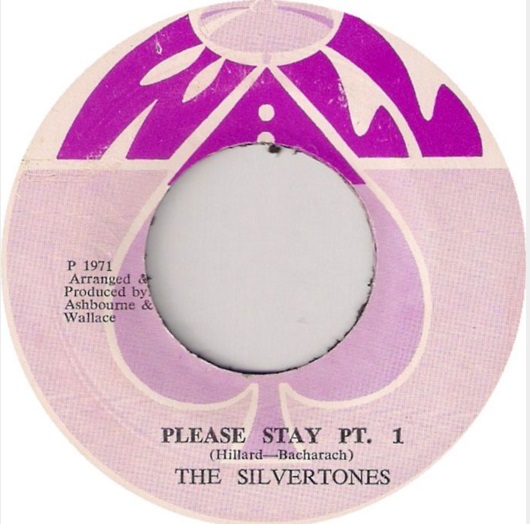
R.I.P. Gilmore Grant Of The Silvertones


It’s been a tough year for entertainment, and we are sad to pass on the news of Gilmore Grant’s of The Silvertones passing. He went to the hospital with severe stomach pains on March 28th and passed away two days later, just a couple of weeks after The Silvertones performed in St. Elizabeth.

Originally a duo of Gilmore Grant and Keith Coley, the Silvertones became a trio with the addition of Delroy Denton. The group saw early success with Duke Reid, and then proceeded to work with Sonia Pottinger, Clancy Eccles, and Coxsone Dodd. In the late sixties, Denton moved to America, and he was replaced by Clinton “Tennessee” Brown, and the group would continue to record together until Brown’s passing in 1999. In 2013, Grant and Coley added Joel Brown, and the group recorded again and performed live as well.

We send many condolences and respect to Gilmore Grant’s family.  We honored Gilmore with our opening set of the group he helped form, The Silvertones. 

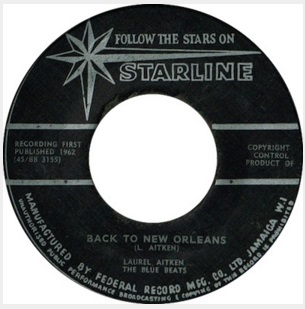
Starline is a subsidiary of Melodisc that produced Jamaican rhythm and blues and ska. The label predominantly released Byron Lee productions along with a few from Laurel Aitken, who produced and performed his own tracks for the label.
It is no surprise that Laurel Aitken has recordings on Starline. As an artist whose work was readily distributed on the well known Melodisc subsidiary Blue Beat in England, Laurel Aitken naturally had the ability to record and produce at Starline. Born in Cuba, Laurel began his career in music as a mento performer for the Jamaican Tourist Board and as a performer in plenty of Jamaica’s talent shows. He first recorded for Stanley Motta and then LR DePass, a businessman who released and sold a few mento and calypso records from his shop which also sold furniture, music instruments, records, and appliances. After he made the move to England in 1960, he continued to record, and when he returned to Jamaica in 1963, Laurel was still productive, recording the body of work that would earn him the nickname and title of the Godfather of Ska.

For news on the upcoming spotlights and fun discoveries tied to early Jamaican music, join the group for the Bovine Ska and Rocksteady on Facebook.

XOXO,
Lily and Generoso

Here is our April 5th, 2016 Bovine Ska and Rocksteady which featured a memorial for Gilmore Grant and a spotlight on the Starline Label.


Generoso and Lily’s Bovine Ska and Rocksteady: Jimmy Riley Memorial Show 3-29-16

Standard
Jimmy Riley A

R.I.P. Jimmy Riley

It is with sadness that we must share the new that Jimmy Riley passed away on March 23 from bone cancer at the age of 61.

Jimmy Riley is a chameleon of music. As a singer, he performed with the Uniques and the Sensations prior to becoming a solo artist, and additionally he emerged as a producer as reggae grew. Furthermore, he is also the father of the noted musician Tarrus Riley. Jimmy will be remembered as a fine singer, a talented producer, a caring father, and a dedicated mentor to musicians. We are so very sad to hear of his passing, and tonight, we will spotlight each facet of Jimmy Riley’s career. We send much respect to his family and all who worked with him.

To start off, we will began with recordings from the group that he helped form: The Sensations. Jimmy Riley went to school at Kingston Senior High School with Slim Smith, and he very much wanted to be a member of the Slim’s group, The Techniques, but the group already had four members, so adding a fifth did not make sense, even though Jimmy did his best to join the band, helping to carry clothes to and from shows and rehearsing with them as well. As a result, Jimmy formed the Sensations with Cornell Campbell, Aaron Davis, and Buster Riley, creating a group that had great talent in their own right. The quartet auditioned for Gladdy Anderson at Treasure Isle and were accepted on the spot. King Sporty came by the studio and brought Frankie Lymon & the Teenagers’, “Juvenile Delinquent,” and the Sensations began to rehearse their own version of it. The group’s version of that iconic track was their first recording, and they saw success with it at the dances in Jamaica. Next, we’ll hear The Sensations’ “Juvenile Delinquent,” the track that marks the strong beginning of Jimmy Riley’s career as a recording artist.

After the Techniques disbanded, Slim Smith founded the Uniques with Franklyn White and Roy Shirley. That first version of the Uniques separated after their early recordings failed to take off, and Slim took some time to record as a soloist. Well, the Sensations would disband during this time, and upon this, Jimmy reunited with Slim Smith along with Jackie Parris and Lloyd Charmers as a vocalist for the second version of the Uniques. The Uniques saw great success, defeating Bob Marley and Wailers to win the Battle of the Groups at the Ward Theater. We’ll heard Jimmy Riley with the Uniques next. “Lesson of Love” was written by Jimmy Riley.

After the Uniques split up, Jimmy Riley began to record as a soloist, first for Bunny Lee. Born as Martin James Norman Riley, Jimmy is credited as a recording artist and a producer as either Martin or Jimmy Riley. While most know Jimmy as a soloist for his track, “Love and Devotion,” which he recorded for Sly and Robbie, his early solo works are excellent, and you’ll hear them next.

As a producer, Jimmy Riley created his own labels, which included PEE, the subject of one of our label spotlights, along with Yes and Full Moon later in reggae. Plenty of his productions also made their way to England, to be distributed by some of our favorite English imprints. To kick off this hour of Jimmy Riley productions, we’ll start of with three tracks from the mighty PEE label.

For a younger generation, many know Jimmy as the father of Tarrus Riley, and the two of them would often perform as a duo, including most recently at Central Park’s Summer stage last year. We send much respect and many condolences to Tarrus.

For news on the upcoming spotlights and fun discoveries tied to early Jamaican music, join the group for the Bovine Ska and Rocksteady on Facebook.

XOXO,
Lily and Generoso

Here is our March 29th, 2016 Bovine Ska and Rocksteady Jimmy Riley Memorial Radio Show

Generoso and Lily’s Bovine Ska and Rocksteady: Lloyd Daley’s Syndicate Label 3-22-16

Standard
Syndicate Label A

A Classic From Alton Ellis On Syndicate

Welcome Bovine Ska and Rocksteady Listeners,

If you love the ska, and we think you do, then you will love the beginning of this week’s Generoso and Lily’s Bovine Ska and Rocksteady from March 22nd, 2016.  We started with two sets of rare ska beginning with the massively underrated vocalist and guitarist, Basil Gabbidon and his 1963 cut for Prince Buster’s Wildbells Label, Dig The Dig.  Our mento set this week featured an awesome tune from Joseph Gordon, aka Lord Tanamo entitled Wicked Woman that was released on the Caribou label.  We ended the first hour of the show with an early reggae set beginning with a version to version excursion from 1972 on the Sioux Label.  Joe Higgs’ Lay A Foundation was followed by Jackie Rowland’s version.

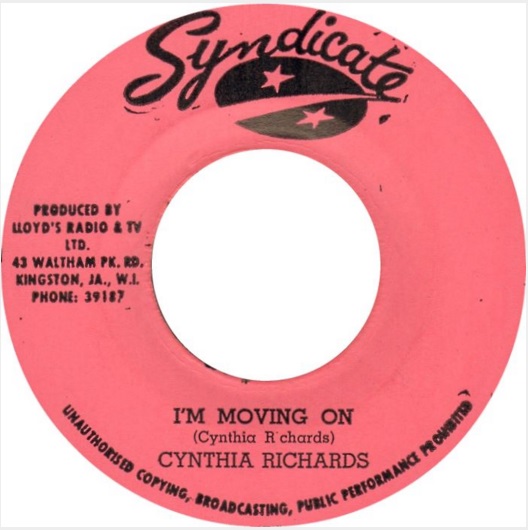
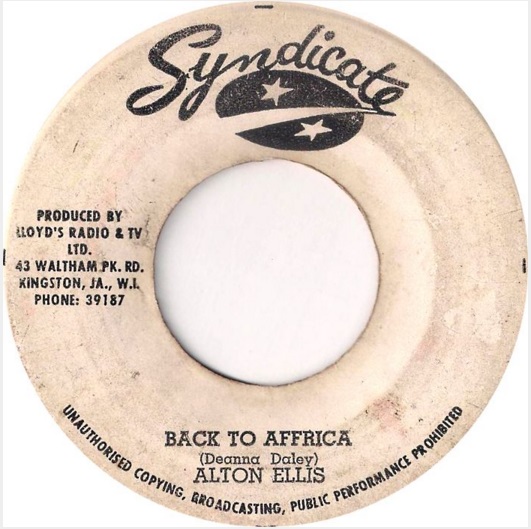
Lloyd the Matador Daley is one key figure in the Jamaican music industry that we love on the Bovine Ska. While best known for his Matador label and soundsystem, Lloyd Daley has much more known to his name.

As a young man, Daley graduated from Kingston Technical High School with a focus on electronics. As a result, he had the skill to transform his amplifier to one for a sound system. In 1958, the popular Matador sound system opened up on Victoria Avenue, and nearly simultaneously, Daley also opened up Lloyd’s Radio and Television Service to repair electronics in Kingston. Given this technical gift, Daley was able to create a purer, richer sound for the Matador system, giving him an advantage over others and allowing him to advertise his sound systems to other selectors and operators who would then purchase their equipment from Daley.

Due to difficulty in getting records, Daley decided to record his own tracks starting in 1958, beginning in the Rhythm & Blues. Given his sound engineering focus, Daley’s recordings would come to be known as some of the cleanest, undistorted recordings in R&B and ska.

As with many operators, Daley had plenty of record labels, including Mystic and secret Agent in addition to his signature Matador label, and the one we want to highlight tonight is Syndicate, an excellent reggae label laden with Daley’s deep knowledge and skill of sound production.  The Matador sound was so strong that on the celebration of Big Junior, who had just been a part of Dr. No, Duke Reid and Lloyd Daley were set to each play an hour set. However, Duke Reid decided he wanted more than an hour, and in order to correctly take his turn, Daley, laid down Lloyd Lambert’s “Heavy Sugar” and turned up the volume, eventually drowning out Duke Reid.

When police gave Daley a hard time about the noise produced by the sound system, he took it down and sold parts of it to fund a recording studio in the new electronic repair shop. In this studio and recording space, Jackie Mittoo’s “Dark of the Sun” and The Scorchers’ “Ugly Man” were recorded.


For news on the upcoming spotlights and fun discoveries tied to early Jamaican music, join the group for the Bovine Ska and Rocksteady on Facebook.

XOXO,
Lily and Generoso

Here is our March 22nd, 2016 Bovine Ska and Rocksteady:


Generoso and Lily’s Bovine Ska and Rocksteady: Tribute To Jamaican Women Vocalists 3-15-16

Standard
Women Reggae A

One Of The Prettiest Skas From Doreen Shaffer

Howdy Bovine Ska and Rocksteady Listeners,

Per the request of our longtime listener Melody,  we decided to dedicate the entirety of the March 15th, 2016 Bovine Ska and Rocksteady  to our favorite women vocalists in Jamaican music history.  We started that show with a long set of the male/female duets that were quite popular during the Jamaican rhythm and blues era.

  1. In 1956, “Let the Good Times Roll” from American duo Shirley & Lee hit the number spot on the US R&B charts. Given the fact that at that time, American music was still very much prominent on Jamaican radio and at sound systems, the male-female duo started emerging in Jamaican Rhythm & Blues, pulling female voices into the foreground more than ever before. The duos succeeded and included:  
    1. Keith & Enid were Keith Stewart and Enid Cumberland, and they were one of the first duos to see chart success, scoring a #1 single in 1960.
    2. Derrick and Patsy’s “Love not to brag,” which was inspired by Eric Monty Morris, who was better off than Derrick’s family and may have had the tendency to brag about the things he had.
      1. Patsy Todd
        1. Born in West Kingston, Patsy grew up adoring Frankie Lymon, so much so that her dream was to marry him. When Patsy ended up leaving school at the age of 14, Derrick Morgan approached her to sing on a record a duet with him on a tip from Patsy’s mother, who had approached Derrick and told him that Patsy had a great voice. And that help from her mom started a successful duet that began with “Love Not To Brag, Love Not To Boast,” a hit for Duke Reid’s Dutchess label. Patsy also collaborated with Stranger Cole; then in the late 60s, she moved to America, giving up on the music industry, and worked as a hospital secretary for three decades, only to return to music in more recent years with retro shows.
  2. Millie Small
    1. Millie Small is the first Jamaican female singer to achieve international success with her cover of Barbie Gaye’s “My Boy Lollipop,” which introduced a much wider audience to ska. But before that enormous hit, she got her start at Vere Johns Opportunity Hour, winning the contest at the young age of twelve. In her early recording career, she recorded in duos, including the track you just heard from Millie and Roy Panton, “We’ll Meet,” which was a hit in Jamaica.
  3. The Soulettes
    1. The Soulettes were Rita Marley, her cousin Constantine Walker, and Rita’s school friend Marlene Gifford. One day, Rita heard that the Wailers walked by her house, and the Soulettes approached them and sang a quick song, which Peter Tosh reacted to and consequently invited them to record at Studio One, where Bob was auditioning singers at the time and gave the trio their name.   
  4. Doreen Schaffer
    1. Doreen got her start at Studio One, and was one of the original four singers for The Skatalites and the singing partner of Jackie Opel.
  5. Phyllis Dillon
    1. Born in Linstead, Phyllis began her musical career performing with the Vulcans as a young singer, and when the group played at the Glass Bucket Club in Kingston, she caught the eye of Lynn Taitt, who brought her over to Duke Reid’s Treasure Isle. In 1967, Phyllis moved to New York, but she would continue to fly back to Jamaica to record for Duke Reid.  
  6. The Gaylettes
    1. The Gaylettes were originally Judy Mowatt, Merle Clemenson, and Dawn Hanchard. The earliest tracks of the original group were not successful, so Judy Mowatt returned to dancing, which was actually her original desired career path, and The Gaylettes went on hiatus. While dancing with a group in Kingston and selling products for the Colgate-Palmolive Company to survive, Judy met Beryl Lawson. While rehearsing a dance routine at the Baby Grand Club, Judy and Beryl began to sing together, and upon realizing their ability to harmonize together, Judy called over Merle Clemenson, forming a trio that would become the next incarnation of The Gaylettes.  
  7. Marcia Griffiths
    1. As a teenager, like so many of Jamaica’s great voices, Marcia Griffiths’ passion for singing began as a member of the church choir. However, her singing at home would launch her career. Philip James of the Blues Busters heard Marcia’s voice next door when he went to visit his girlfriend, and he immediately brought her over to Byron Lee and insisted that she be a part of the line up for an upcoming talent show at the Carib Theater on Easter Sunday. Though skeptical, Byron Lee included her in the show, where Marcia’s cover of Carol Thomas’s “No Time to Lose” caught the attention of Ronnie Nasralla, who brought her over to JBC that same evening to perform on television.
  8. Ebony Sisters
    1. Originally a gospel group who recorded for Coxone Dodd’s Tabernacle label as the Soul Sisters, the group would also record as the Reggae Girls before becoming the Ebony Sisters. As the Ebony Sisters, they recorded for Harry Mudie and Bunny Lee. During their career, they would also join forces with I Roy and Ralph Haughton.
  9. Nora Dean
    1. One of the most creative and daring of singers, Nora Dean recorded in many forms. As a solo artist, she recorded for the big producers in Jamaica including Coxone Dodd, Duke Reid, Lee Perry, and Bunny Lee. She was also a member of The Ebony Sisters, The Soul Sisters, and The Soulettes.
  10. Hortense Ellis
    1. Hortense Ellis, like many of the great Jamaican artists, got her start on the Vere Johns Opportunity Talent Show, entering her first contest at 18 and making it to the final round four times. As the sister of Alton Ellis, Hortense did get a bit overshadowed by her brother, but she did see success with her talent, winning the silver cup as Jamaica’s Best Female Vocalist in 1964 and 1969. She toured with Byron Lee and the Dragonaires in the 60s and recorded with the major producers in Jamaica, including Duke Reid, Coxone Dodd, and Ken Lack.
  11. Cynthia Schloss
    1. The wife of Winston Blake, Cynthia got her start in 1972 when her friends from work at the Jamaica Telephone Company tricked her into auditioning for the Merritone talent series. She caught Blake’s attention, and he produced and released her record Ready and Waiting, which was a success for her and the Merritone Music label.

Other key female figures

  1. Sonia Pottinger
    1. Sonia was one of the most powerful women in the Jamaican music industry, for she was the first female record producer and label owner. She and her husband first recorded artists and sold records from their home, and after the two split up, she built a pressing plant and recording studio behind the record store.
  2. Janet Enright
    1. Janet Enright got an early start in music, performing as a guitarist for the prime minister and Louise Bennet as a teenager. She joined the Eric Deans Orchestra at the age of fourteen. Here, she befriended Don Drummond and Wilton Gaynair, and she would join them as a member of Wilton Gaynair and the All-Stars. When Janet formed her own band, she performed for American artists who visited Jamaica.
  3. Doris Darlington
    1. Coxone Dodd’s mom and the first female sound system operator
    2. When Coxone was traveling to buy records, Doris would setup dances and select  records for the Downbeat soundsystem. She also sold Studio One records at her shop, Music Land, providing a store front in Spanishtown to sell records.

For news on the upcoming spotlights and fun discoveries tied to early Jamaican music, join the group for the Bovine Ska and Rocksteady on Facebook.

XOXO,
Lily and Generoso

Here is our March 15th, 2016 Bovine Ska and Rocksteady tribute to Jamaican women vocalists:


Generoso and Lily’s Bovine Ska and Rocksteady: Rupie Edward’s Opportunity Label 3-8-16

Standard
Opportunity Label A

Hot Reggae Cut From Joe White On Opportunity

Hello Bovine Ska and Rocksteady Listeners,

We started off the March 8th, 2016 Bovine Ska and Rocksteady with two sets of uplifiting ska to counterbalance the reggae heavy OPPORTUNITY LABEL spotlight that starts midway through the program.  We kicked off the ska with a rollicking Derrick Morgan cut from 1965 which was released in England on Blue Beat entitled, Baby Face.  A mento set followed the opening two sets of ska and had as part of it one of our favorite golden age mentos, Chamboline by Lord Power.  We ended the first hour of the show with a set of early 1970s reggae to put you in the mood for the reggae of the Opportunity Label beginning with Errol Dunley’s 1973 track for the African Museum Label, Movie Star. We then went into the Opportunity Label spotlight…

Here on the Bovine Ska, we adore Rupie Edwards. We underscored his well known Success label a few months ago, and on one of our search excursions, we saw the sweet label art of Opportunity, and we knew we had to spotlight this label, which has some excellent Rupie reggae on it.

Born in Goshen, St Ann’s Parish but raised in St. Catherine, Rupie Edwards had a very early start in music. As a child, Rupie learned about music in school by his teacher’s lessons where she would tap a melody and the class would have to recognize it. By the age of 7, Rupie had a band with his classmates. As his bandmates played tin cans, drums, and comb kazoos, Rupie played the bamboo pipe, and at the age of 13, he moved to Kingston with his mother, arriving to a growing, thriving music scene.

After attending Kingston Senior School for two years, Rupie focused on his music career at the young age of 15, first recording for Simeon Smith and his Hi-Lite label. The tracks did not take off his recording career, so Rupie pragmatically became a mechanic who repaired cars, and one of his jobs included Coxsone Dodd’s own Buick.

During his time as a mechanic, Rupie did not give up music. He recorded with the Virtues, receiving his first production credit in 1966 for their track, “Burning Love,” but by 1968, the group split up. That same year, Rupie was able to open up his Success record store, where he hired Bob Andy to run the store, since Rupie still needed to be a mechanic for a bit in order to finance the shop. But ultimately, the music industry always beckoned him, and Rupie took the record shop as his full time job, focusing on his work as a producer and record label owner, releasing his productions on both Success and our label of tonight, Opportunity.  

Gregory Isaacs introduced Errol Dunkley to Rupie Edwards, and we are thankful for that because Dunkley’s tracks for Rupie are just too good.

In his excellent biography, Some People Rupie hypothesizes that his own fascination with versions may have come from the fact that when he was a child, he learned God Save Our Gracious King and sang it in school. Then, when King George passed and Queen Elizabeth took over, the children all had to sing God Save Our Gracious Queen, giving Rupie a primer on how to change parts of songs while keeping the same melody, a technique he would most certainly utilize for his excellent versions on Opportunity.

For news on the upcoming spotlights and fun discoveries tied to early Jamaican music, join the group for the Bovine Ska and Rocksteady on Facebook.

XOXO,
Lily and Generoso


Generoso and Lily’s Bovine Ska and Rocksteady: Winston Blake Memorial 3-1-16

Standard
Winston Blake B

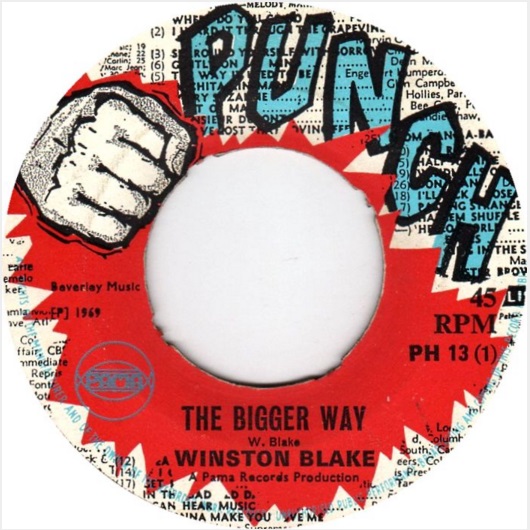
R.I.P. Winston Blake

Welcome Bovine Ska and Rocksteady Listeners,

On the March 1st, 2016 Bovine Ska and Rocksteady we shared the sad news of the passing of Winston, “Merritone” Blake. Winston passed away on Saturday morning at the University Hospital of the West Indies at the age of 75.  We send much respect and many many condolences to our dearest friend Barbara and the entire Blake family. The Merritone legacy is an enormous one, and we would like to dedicate this entire show to Winston Blake’s impact through his work bringing Jamaican music to the world.

Born in Morrant Bay, in the St. Thomas parish, Winston Blake grew up with music constantly in his life. In the Blake family home, there was always a gramophone and music to listen to, and this was one of the early catalysts that would lead to the Merritone sound system, one of the longest to exist in Jamaica.

The Merritone sound has always been a family business. The Mighty Merritone sound system opened up in St. Thomas, the first in the parish, in 1950 by Winston’s father, Val. The soundsystem idea emerged as the Blake brothers, Trevor, Winston, Tyrone, and Monte, would frequently visit a chinese restaurant at the bus stop on their way home from Kingston, where the owner, a Mr. Chin, played records on his Skyrocket sound system; the sounds and setup here inspired the brothers to propose the idea to their father, who was a civil servant, in order to improve the family’s finances. After some consideration, their father returned from a trip abroad with a Philips 21 amplifier, two speakers, and Garrard turntables to get the system setup as Winston and his brothers made connections on how to source records. Six years after the beginning of the soundsystem, Val passed away, and Winston and Trevor took over it full time, eventually moving the Merritone sound to Kingston in 1962.

In Kingston, the Merritone soundsystem rose in ranks, becoming a favorite at the Copacabana, The Wheel, Sombrero Club, and the Glass Bucket. During this time, Winston Blake caught the eyes of Federal Records, and the sons of Ken Khouri, Paul and Richard, opened up a subsidiary named Merritone to produce original records that had a label name that people would associate with the vibrant and popular sounds of the Merritone soundsystem. Winston did not produce records for this label, but the decision of the Khouris to name the label after the Blake family’s sound is an enormous testament to the impact of Winston and Merritone music.

We began this memorial show, with the substantial ska and rocksteady that was produced for the Merritone record label.

One of my favorite stories about the rise of an artist in Jamaica is that on Don Henry Buckley, who got his start at Merritone. During the daytime, Buckley was a police officer and was the conductor for the Jamaica Constabulary band. At night, Buckley would write, sing, and record for the Merritone label. Buckley wrote the Gaylettes’ “Silent River Runs Deep” and “Emergency Call.” In the spirit of collaboration, like many label’s artists, the musicians on the Merritone label would also sing on other artists’ tracks. Consequently, you’ll hear Judy Mowatt’s Gaylettes provide backup vocals on Buckley’s recordings.

By the late 60s, Winston began recording for Rupie Edwards’ and Harry J’s labels. As a recording artist, he was recording DJ tracks, and occasionally, he was known here as The Blake Boy.  During the soundsystem days, the Merritone team initially got the records from American R&B in three ways:

  1. From sellers who would hang outside of whorehouses to sell records
  2. From people who traveled to America to do farm work and would bring records back
  3. When radio stations in Tennessee were later re-broadcasted in Jamaica, the late night shows played ads for record shops in the state that offered fixed price bulk record deals where they would send a set of records for a price

By the 1970s, the market and popularity for American records had definitely dried up, and like many other operators, Winston began to produce his own records, which was an absolutely sensible direction because by this point, the Merritone soundsystem had been in existence for two decades, and Winston had been holding talent shows to discover new talent.  One of the talents Winston discovered with the VIP Talent Series was Cynthia Schloss. The tracks you heard were from the Ready & Waiting record, which Blake arranged and produced, and he definitely spared no expense in the backing band for this album. The band included: Cedric Brooks and Tommy McCook on horns; Val Douglas on bass; and the great Marcia Griffiths providing backing vocals.

Winston was not only responsible for the Merritone sound system and label, which brought music to people since the 1950s to today, he was also responsible for fostering community up until today. He was the creator of the Merritone and Family Fun Day which was held in Connecticut for the last 15 years before moving to Long Island last year. He also created the Merritone Family Reunion & Homecoming Event, which celebrates its 26th anniversary this year, to bring together all who hold the Merritone sound near and dear to them.

In the 1970s, Winston opened the Turntable Club on Red Hills Road in Kingston. This would be the epicenter of nightlife in Kingston, and in the tradition of the original Mighty Merritone sound system, the Turntable Club allowed all people, regardless of socioeconomic status, to listen to the best artists and selectors in the city. As a result, everyone stopped by the Turntable Club, including the Rolling Stones, Bob Marley, and King Tubby.

For his contributions to the Jamaican music and entertainment industry, Winston received the Order of Distinction in 1998. In 2012, he received a proclamation from the office of Yvette Clarke, 11th Congressional District, New York for his contributions to music.

For news on the upcoming spotlights and fun discoveries tied to early Jamaican music, join the group for the Bovine Ska and Rocksteady on Facebook.

XOXO,
Lily and Generoso


Here is our Winston Blake Memorial Program from March 1st, 2016

Generoso and Lily’s Bovine Ska and Rocksteady: Byron Lee’s SOUL Label 2-23-16

Standard
Soul Label A

A Jolly Ska From Llans Thelwell on SOUL

Welcome Bovine Ska and Rocksteady Listeners,

The February 23rd, 2016 Bovine Ska and Rocksteady began with two sets of smooth rare rocksteady beginning with a fine release on Buster’s Olive Blossom imprint that featured a duet between Buster and Larry Marshall from 1967 entitled Broken Heart.  After our weekly mento set that included woeful Rent Worries from Chin’s Calypso Sextet we launched into the ska to get ready for the spotlight on Byron Lee’s SOUL Label.

In looking for this week’s spotlight, we realized that while we still have more ground to cover with Duke Reid, Coxsone Dodd, Prince Buster, and the Pottingers, we have missed one other major and prolific producers of Jamaican music: Byron Lee.

Born in Christiana in Manchester Parish, Byron Lee received his first introduction to music from the Jonkunoo and Bruckins dances which his family practiced, being that though his father was from Hong Kong, his mother was from Auchtembeddie in the same parish. At the age of eight, the Lee family moved to Kingston, and he attended the Mount St. Joseph’s Catholic school. Here, he was introduced to music in a more formal way; he took music lessons and learned piano from a nun who offered them as a deterrent from teasing and giving the girls at school a hard time.  

By the time college came around, Lee’s music took a backburner to football, where he thrived. But, after a win, the college had a dance and needed a band, and music returned into his life when he formed a band to perform at the event. A year after this fortuitous reacquaintance with music, the Dragonaires formed with Byron playing bass and serving as band leader.  

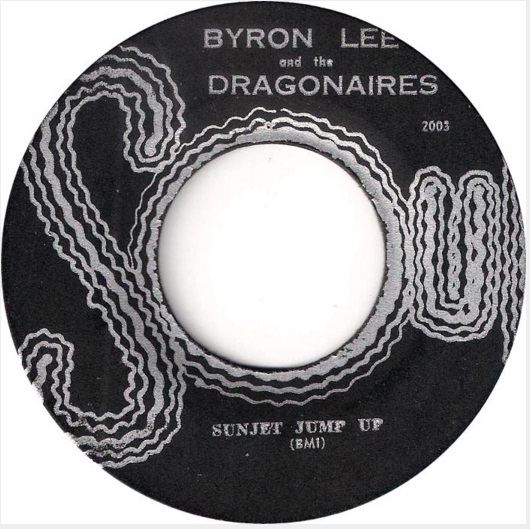
They first worked with Edward Seaga for their recordings and with Ronnie Nasralla, the future owner of BMN records which the Dragonaires would record at later, as the manager of the group. During these years, Lee quickly emerged as a producer and arranger. Over the course of his prolific career, Lee would have many labels including our favorites, Tiger and Jaguar.

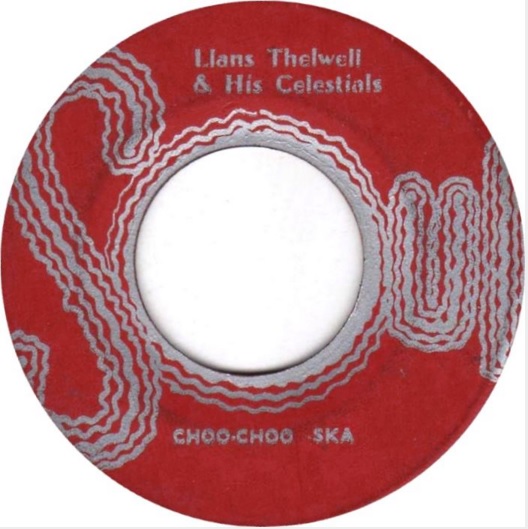
One of the earlier labels in Lee’s recording stable was Soul, a ska label, and the subject of our spotlight tonight. We kicked off the spotlight with Keith Lyn and Ken Lazarus backed up by the Dragonaires on “I Don’t Love You Anymore,” a track off of the original Come Fly With Lee LP.

In addition to Byron Lee and The Dragonaires, there was another backing band for the Soul label: Llans Thelwell and his Celestials. The line up for the Celestials was:

  1. Bass Guitar – Llans Thelwell
  2. Congas [Tumba] – Francis Dennis
  3. Cover [Design] – Ronnie Nasralla
  4. Directed By [Musical Director] – Llans Thelwell
  5. Drums – Dennis Robinson 
  6. Guitar – Jack Hurst, Neville Headley
  7. Lead Vocals – Busty Brown
  8. Tenor Saxophone – Stanley Notice
  9. Trombone – Barry Hayles
  10. Trumpet – Joe Bennett*, Tony Wong

Vocals, Percussion – Barry Malcolm, Junior Chambers

For news on the upcoming spotlights and fun discoveries tied to early Jamaican music, join the group for the Bovine Ska and Rocksteady on Facebook.

XOXO,
Generoso and Lily

Generoso and Lily’s Bovine Ska and Rocksteady: Jimmy Riley’s PEE Label 2-16-16

Standard
Pee Label B

A Killer Reggae Cut from Dave Barker on PEE!


Welcome Bovine Ska and Rocksteady Listeners,

After a bit of hospital interruptis on Generoso’s part, we were extremely happy to present this Bovine Ska and Rocksteady on February 16, 2016 with it’s tribute to Jimmy Riley, a few weeks before he passed away on his PEE Label.  That was midway through the show as we began with two sets of fierce ska, beginning with a rarely heard gem from one of our favorite singers, Justin Hinds And The Dominoes entitled Look Into That which was released on Treasure Isle in 1965.

Jimmy Riley was a member of Sensations, Uniques, PEE is one of many labels the Riley formed. Born in Kingston, Jimmy Riley attended Kingston Senior High School with Slim Smith. As Slim began to see success with The Techniques, Riley hoped to sing with them, but he unfortunately did not get into the group. As a result of this, Riley formed The Sensations with some great voices: Cornell Campbell, Aaron Davis, and Buster Riley. However, Riley eventually did get to sing with Slim Smith, not as a member as the Techniques but as a member of the second incarnation of the Uniques that included Jackie Parris and Lloyd Charmers as members.

Eventually, the Uniques disbanded and although Riley would record as a soloist, he also gave production a shot, creating the Yes and Full Moon labels as well as the PEE label, the subject of our spotlight tonight. From phenomenal instrumentals to his own recordings, the PEE label showed Riley’s talent as a producer. We are really excited to present this one to you, and started with “Daddy Don’t You Walk So Fast” from his own group, The Sensations.

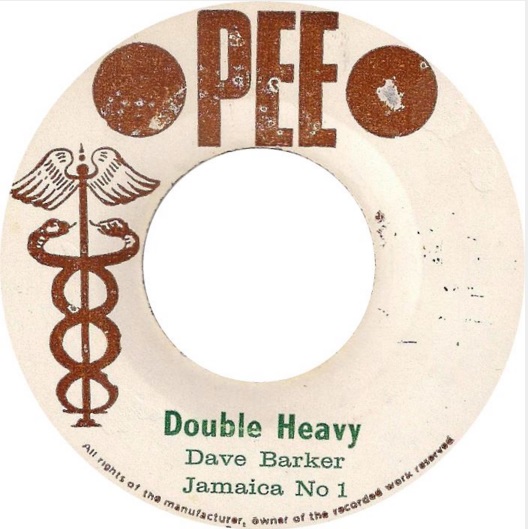
The PEE label is an interesting one. The name is a bit of an odd choice, but what is even more mysterious is the caduceus stamped in large format on the label. As the symbol of Hermes, the messenger in Greek mythology, the caduceus is an interesting choice for a label cover. If anyone out there has any further information on how the PEE label came to be, we would definitely love to hear from you.

For news on the upcoming spotlights and fun discoveries tied to early Jamaican music, join the group for the Bovine Ska and Rocksteady on Facebook.

XOXO,
Lily and Generoso

Here is the Feb 16th, 2016 Bovine Ska and Rocksteady


Generoso and Lily’s Bovine Ska and Rocksteady: The 20th Annual Anti-Valentine’s Day Show! 2-9-16

Standard
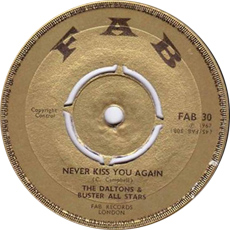
daltons kiss

Well Daltons, Don’t Do It Then!

Hello Bovine Ska and Rocksteady Listeners!

A prized tradition during the almost twenty year run of Generoso And Lily’s Bovine Ska And Rocksteady from when it was started was the Annual Anti-Valentine’s Day. This is where I, Generoso, would play two hours of songs featuring sets dedicated to many maladies associated with love like the pain breaking up, revenge, sadness, rejection…Yep, you get the picture.  These sets would be combined with dire facts relating to love like the current divorce rate and the costs of such splits and stories, many sent in by listeners, that regale accounts of tragic relationships from blind dates to the end of thirty year marriages. Fun!

Why would I do this, a now happily married man take such an assault on the saccharin, greeting card created holiday that ruins couplings both young and old?  Well, you got part of the answer there but the other part consists of feelings held by the long term committed bachelor that I was prior to meeting my lifelong cohost Lily.  You see, I had seven relationships in my past life as a single end between the first and fourteenth of February with three ending on the very saint’s feast day. Coincidence, no I don’t think so as this “holiday” puts an unneeded pressure on relationships as the kind of gift/evening is contingent on the current duration/affection amount of the union.  For example, let’s say that you have been dating for two weeks when the dreaded Cupid Day occurs…What amount of buy in are you supposed to have? If you do too much, it may make a more sensible partner run from level jumping and not enough pageantry might convince the more romantic partner that they are not the intended apple of your eye.

Hence, Valentine’s Day is the giant foot stamping on the flower of budding romance.

The 2016 year’s Anti-Valentine’s Day Show selected sets based on the following moments of a doomed relationship in a chronological breakup order…The FOOL set which normally occurs during the Valentine’s Day preparation that leads to failure, the set that highlights the moments when you let that love GO, the music assembled for the times when you realize that they are GONE. The subsequent set of songs about HEARTACHES when you start to notice that your love is no longer sitting with you on the couch.  As you stare at the empty couch, you begin to feel SORRY for messing it all up which forces you to sadly REMEMBER all of the good times you had as opposed to moments like when she opened up your Valentine’s Day present and called you an asshole for getting her a set of car air fresheners because you thought that it would be funny to remind her that her car smell like an old man’s armpit (I thought she would think it was funny).

So, you can now profit from my years of pain and listen to a superbly curated Anti Valentine’s Day Radio Show that features top ska, rocksteady, and reggae by such artists as The Heptones, Alton Ellis, Bob Andy and many more in the comfort and safety of your own home via Mixcloud.

Please share the show on Facebook and Mixcloud.

Enjoy and screw Valentine’s Day

Love,
Generoso and Lily


“The Cars That Ate Paris,” Peter Weir’s Fiendishly Funny Debut Is The Prequel To Mad Max

Standard
cars that eat people

George Miller, I Think You’ve Seen This Car

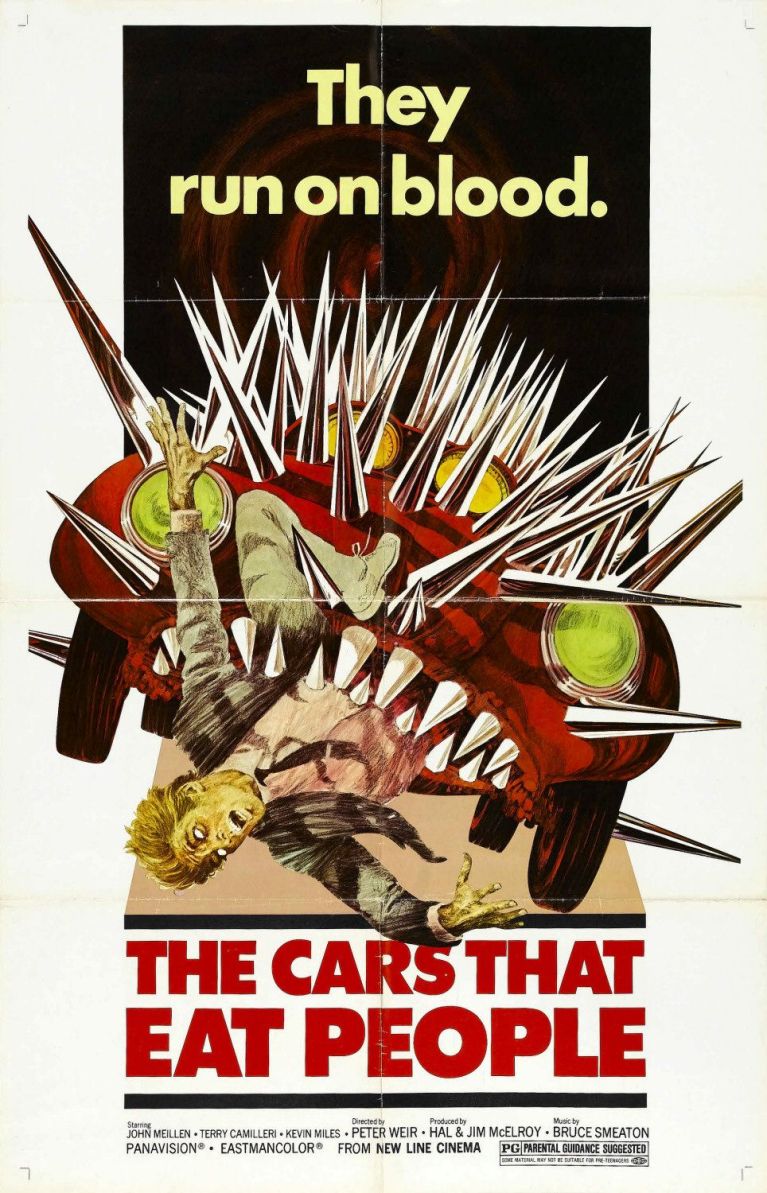
During the idyllic opening scene of Peter Weir’s debut film, The Cars That Ate Paris, we spy a well-to-do couple who are footloose and fancy free getting into their snappy roadster. They are wearing the finest vines, and sport that seventies natural-looking hair while smoking fine uppity cigarettes as they take a drive in the scenic Australian countryside, but things don’t stay lovely for long as the couple is hurled off the side of a hill and killed in a gruesome roll out. Crash. You see, our commercial-quality travelers were living the high life that few lived in 1970s Australia, but now they have crossed the town line of Paris–Paris, Australia that is, where cars and the people who drive them become the solution to a community’s financial woes.

Yes, all is not well in the Weir’s genre-defying town of Paris, Australia. Travelers who dare to broach its gates soon find a “boneshaker” of a road that is complete with “traps” designed by the town elders to guarantee that tourists donate more than a few coins for a picture postcard at the local gas station. There is a process in place for these visitors that is divided into two categories: those who die and those who survive. Those who die have their smashed up cars taken to the local chop shop to be salvaged for parts that will eventually be made into bizarre post-apocalyptic road rockets to be driven by Paris’ wild and uncontrollable youths. Next the deceased’s clothes, money, and gadgets will be first divvied up by the town’s government, led by their righteous Mayor (John Meillon, who most American audiences will identify as Crocodile Dundee’s dimwitted sidekick, Walt), and whatever remains will be distributed to the remaining common Parisians who use the items as bartering tools for food, gas, etc like a dysfunctional farming community.

Those who live will not only get the aforementioned pilfering of their valuables like their deceased fellow travelers but also will get the special prize of a free lobotomy at the local hospital so that they can turned into various states of “veggie.” Why make the damaged tourists into “veggies” you may ask? To use them as guinea pigs for experimental procedures that the local doctors are dying to try out, since “you can’t do these things in a city hospital,” one doctor explains. You now begin to think of the town of Paris as a Spam factory: There is no waste as they use every single part of the animal.

There is another unofficial use for the living as evidenced by the mayor’s beautiful “adopted” children and a recent arrival, Arthur Waldo (Terry Camilleri), whose brother George is killed when their caravan unsurprisingly goes flying off of one of the town’s many road traps. Arthur, is a heartbreakingly sullen, and seemingly nonthreatening fellow who escaped death with nary a scratch, which makes him eligible to become the makeshift offspring of our jolly mayor. Through his own admission, we find out that Arthur, who is still crushed from his brother’s untimely demise, is also a convicted felon, who years earlier was responsible for vehicular death of an elderly man, so he is not too eager to get behind the wheel of a car again, which is good because no one really makes it out of Paris alive anyway, which appears to be Weir’s gentile nod to a protectionist Australia which barred immigration until the late 1970s. Yes, Arthur is “fixed” to take in the sights and is content to be stay put. Content in a way that would make the denizens of a Yorgos Lanthimos film simply green with envy.

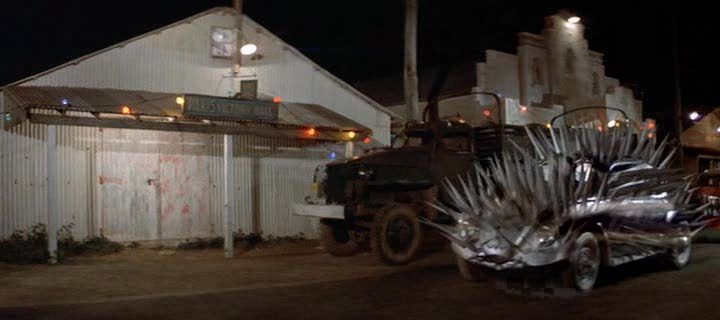
Arthur is given a job at the chop shop/hospital and gets a lot of half answers from the doctors and orderlies as to why the wards are packed with the Monty Pythonesque bandaged (my brain hurts anyone?) mentally disabled “veggies.” Arthur doesn’t particularly care for his new employment as a guardian of the lobotomy farm, but as he is still going into a mad panic of flashbacks whenever he sits behind a wheel, he will stay and accept a new position that was recently created by his father/mayor, that of “town parking supervisor,” which will put the sheepish Arthur right in the cross hairs of the town’s rambunctious and growing swell of young Road Warrior extras who, judging from their western attire, seem to be auditioning for a new Sergio Leone film, and who have more than a few jalopies that Miller would use in subsequent editions of his own post apocalyptic films of the Max variety.

The Town That Ate Paris mostly succeeds both as a comedy and as social commentary throughout even though the last third of the film is more Animal House than Dogtooth in terms of examining societal woes of a then economically challenged Australia. One scene does hint as Weir’s societal focus on a future project: the scene where the mayor’s unflattering aboriginal sculpture is defiantly destroyed by the hands of Paris’ renegade hot rod driving teens. That moment provides the strongest reminder that Weir would eventually create a film that stays on point with its clever attack on contemporary Australian society and its history of the treatment of the Aborigines, 1977’s The Last Wave.

                           Trailer For The Cars That Ate Paris

Nonetheless, Weir’s film is quite an impressive debut as it is chock full of wretchedly insane ideas and not too gentile pokes at the ruling class who must confront an ever increasing population of unemployed youth before the big one hits and the elderly are at the mercy of these desperate teens and their soon to be new leader, Lord Humongous.