The Erotic Comic Book Series “Valentina” Goes Big Screen In Corrado Farina’s 1973 Film, “Baba Yaga”

Standard
Baba "Connects" With Valentina In Baba Yaga

Valentina Is Really Not Feeling Baba Yaga Here

Having just spent the last two days at Long Beach Comic Con, attending panels, wading through a sea of cosplayers (both sensual and non), and speaking with a multitude of comic book writers and artists for our soon to be published Forces Of Geek piece, the inevitable concern of what the final goal of their art might be does come to mind. There are the comic creators who are clearly delving into the world of zombies, solely for the purposes of being pitched a film or television deal as “The Walking Dead” has made the shambolic undead the hottest commodity around. There are also cosplayers who dream of being in the circles of the more famous in their craft like Alodia Gosiengfiao who collects in millions in endorsements or those who simply create because of the reason we all hope for: The need of artistic expression with the final goal of making people laugh, cry, understanding a political leaning of some sort, or to just turn them on via overt eroticism.

Sadly, as far as erotic expression in comic books in the United States is concerned, there has not been a great deal of respect thrown that way, and a lot of what is produced that is sexually themed here is relegated to a niche market, and imports of such material (outside of manga) are currently incredibly difficult to locate in the US much less in the late 1960s. Such was the case with the work of Italian comic book writer, Guido Crepax whose important erotic series “Valentina” barely saw the light of day here in America despite its immense popularity in Europe.

Valentina was originally a character in an earlier science fiction based Crepax series called “Neutron,” who eventually became the protagonist of her own series in 1967 due to the popularity of the issues of “Neutron” in which her character was featured. This is not surprising as Valentina Rosselli was exceptionally illustrated and written as a gorgeous and intelligently opinionated Milanese fashion photographer and left leaning journalist who progressively abandons the more science fiction facets of her persona in “Neutron” for a more enticing and stark mix of promiscuity, sadomasochism, and just about any other kink that you could imagine. Though outrageously explicit, it is clear that Crepax did not want Valentina to be seen as only a sexual being but more as a fully rounded heroine to be admired. Unlike Theresa, the protagonist from “Looking For Mr. Goodbar,” (my review from last week) who is an American single Roman Catholic woman who engages in sexual escapades that end with guilt, condemnation, and death, Valentina’s stylistic fused sexuality is a celebration of her freedom as a woman who during her time could explore sexuality however she wants. I mean she is living in Italy, after all.

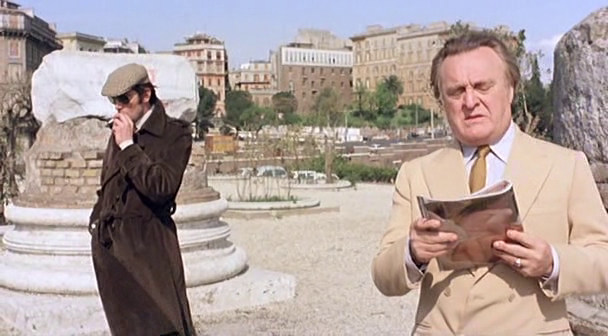
After achieving an almost cult status in Italy, Valentina was given a film adaptation by young director Corrado Farina who seemed like a solid choice as he had given Bram Stroker’s “Dracula” a truly bizarre giallo treatment in his 1971 film, “Hanno Cambiato Faccia, (They Have Changed Their Face). Isabelle de Funes (the niece of famed French actor, Louis de Funes) was selected to play Valentina as she bore a striking resemblance to the character that was illustrated in Crepax’s series. And playing the role of the older witchy dominatrix Baba Yaga is the luminous American actress Carrol Baker of “Baby Face” fame, who like many Hollywood stars had moved to Italy a few years before when her career in the States began to wane. So you may be wondering then: If this is the first film adaptation of the “Valentina” series then why is the title “Baba Yaga” and not “Valentina,” the latter title being the obvious choice for an American comic book adaptation. My theory is that given the state of sadomasochism that was depicted in giallos during the early seventies, producers must’ve been thrilled when “Baba Yaga” the 1971 issue of the then popular “Valentina” series was issued, as it was the first in that popular series to introduce the protagonist to the world of B&D.

The film opens with an occultist political theater production that is being staged by hippies in a cemetery (that resembles the graveyard scenes in Bob Clarke’s “Children Shouldn’t Play With Dead Things”), where we first see Valentina taking shots of the scene, which suddenly disbands once the police arrive and gets us to the opening credits and one of the true stars of this film, the jazz/prog score by Piero Umiliani. Soon after Valentina rejects her part time lover, a commercial director named Arno (George Eastman), she defiantly walks home alone and nearly dies while trying to rescue a dog about to be run over by a Bentley-driving society woman named Baba Yaga.   Baba takes a more than subtle sexual interest in Valentina, even going as far as stealing a piece of Valentina’s stockings as a keepsake. Baba takes Valentina home but insists that Valentina visit her the following day. The next day Valentina is back behind the Hasselblad snapping picks of a ravenously gorgeous model in the comfort of her modern giallo set designed swanky Italian apartment, which is complete with animal skins on the walls, a blood red tiled kitchen, and glowing orbs for lamps. She discusses her left leaning politics with her clearly fascist model friend before going off to visit Arno on set at a slum where he fishes out a rodent that he films some hot rat action for the sake of symbolically shaming politicians.

Then its off to Baba’s home, a large gothic setting equipped with an old movie spookiness that Norman Bates would feel more than a bit comfortable wheeling around in if not for the scattered bondage gear, fetish footwear, and bullwhips. Valentina spears somewhat concerned and soon she finds a bottomless pit hidden under a Persian rug in the study that somehow doesn’t seem to freak out Valentina enough to leave the apartment screaming in terror. Finally, to make matters over the top creepy, Baba gifts Valentina a fetish doll named “Annette” who will “protect her (Valentina) from danger” because nothing scares away evil more than a sexed up cupie/voodoo doll. Valentina’s luck starts to turn very bad after she begins to photograph (after some incredibly politically incorrect motivational speech) a black man and white woman engaged in some aggressively naughty hand-holding to make a political statement about racial unity. After the shoot, the white model is felled by a puncture wound to the leg that no one can account for. Valentina also takes down a protesting hippy with the lens of her camera after taking his picture. It seems that these people are paying for Valentina’s leftist ways, but why would Baba curse her in that way? When more things go wrong, Valentina is off to return Annette to Baba at her home where we then have a scene of voluntary domination and discipline that is inflicted on Valentina by Baba. It is indeed an erotic turn of events, but Valentina never seems to be the victim, and although she is strapped in for the ride, she never loses control of her sexuality.

Original Trailer For Baba Yaga

I am completely onboard with the style of this film, as I am with many giallos of the early 1970s. It is a slickly shot film that is matched with a hip soundtrack and gorgeous actors, and the sexuality is provocative enough to keep one’s attention during the gaps, but I must admit that the politics of this film are a tad confusing. It seems that Baba Yaga is trying to use her sexuality to tame Valentina of the free sexuality that Valentina exhibits throughout the film, but if that is the case and Baba is some remnant of the right wing, then why would she use deviant sexuality to dominate her? There are a few scenes in the films where Arno knocks Valentina’s politics as well, leading me to believe that this film is a slam against the left wing, but you just cannot be sure as there is evidence to prove the opposite as well.  You cannot escape the feeling that Farina’s intention of this adaptation is that politics is just the fodder of the well off, and you should just shut up and watch the sexual fireworks in all its eternal coolness.

There is a key scene early on when Valentina’s intellectual friends argue at a party about the value within the low budget film work of Godard to which Valentina replies, “I prefer Chaplin films, because at least you laugh.” Perhaps that message is the one we must follow when watching “Baba Yaga,” the message being that for the rich, the discussion of politics and art is just conversation for effect that has no real impact and that sometimes your best intention for creating art should what I stated earlier, to make someone laugh, or to cry, or in the this case to turn them on, but perhaps to leave the politics behind for the politicians.
Generoso and Lily’s Bovine Ska and Rocksteady: Celebrating Pre-1962 Rico Rodriguez 9-8-15

Standard
rico1_3431883b

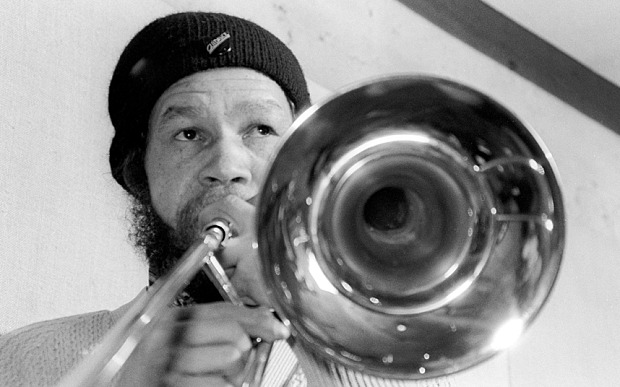
R.I.P. Rico Rodriguez

Hello Bovine Ska and Rocksteady Listeners:

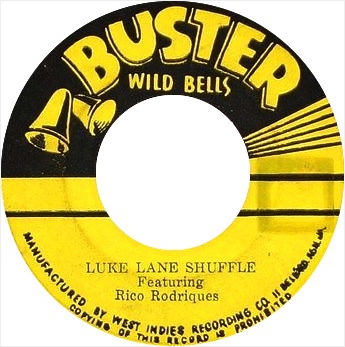
Both Lily and I are deeply saddened by the news of the passing of legendary trombonist, Emmanuel “Rico” Rodriguez, who died on September 4th, 2015 at the age of 80. Many of you may know him from his work with The Specials or with Jools Holland’s Rhythm and Blues Orchestra, but long before his recordings and performances in England, Rico was performing on the tracks of early ska and Jamaican Rhythm and Blues, and these earliest recordings are the ones we want to highlight to pay our respects to the mighty Rico. For this tribute show, we decided to examine Rico’s work prior to his emigration to England in 1962 for the second hour of the program.

Born in Havana, Cuba to a Jamaican mother and Cuban father, Rico and his family moved to Kingston as a child and attended the Alpha Boys School in the company of many future Jamaican music all-stars. In fact, his time at the Alpha Boys School allowed him to cross paths with another trombone king in Jamaica, Don Drummond, who would introduce Rico to the instrument he came to master and taught and mentored as a young musician. While learning from Don, Rico joined the Jamaica Jazz Orchestra with Don, Rupert Anderson, and Carlos Malcom. There’s a bit of contention around which track is the first recorded track by Rico. In interviews, we’ve seen The Jiving Juniors, “Over the River” as the first and in others, we’ve seen Continental Shuffle as the other. Given the dating of the record pressings, we began this spotlight on Rico’s spectacular trombone playing with Bridgeview Shuffle by the Matador All Stars.

By the time Rico left for England in 1962, he was in high demand, and as thus, it is no surprise he recorded for multiple labels and played on many many sessions.. Beyond his records for Lloyd Daley, Dada Tuari, and Duke Reid, Rico, like many artists in Jamaica, also recorded for Coxone Dodd. We heard Rico backing up Lascelles Perkins on “Lonely Robin,” recorded for Worldisc in 1961. In the late 50s, Rico moved to Count Ossie’s community in Wareika Hills, which was introduced to him by Don Drummond, who would invite Rico up to the hills after school to practice and perform. During this time, he got to explore multiple forms of music and would perform with Ossie, consequently, allowing him to perform on Ossie’s records in the early 60s.

In 2007, Rico received the Member of the Order of the British Empire award for his contributions to music. And, in 2012, he received the Silver Musgrave Medal for his musical contributions to Jamaica. We thank him for his legacy, and we send much respect to his family and to all of the artist who had the opportunity to work with him.

Listen to the entire program from September 8th, 2015 with the one hour tribute to Rico Rodriguez on MIXCLOUD HERE.

Please let us know what you think of the show via the comments and if you you enjoyed what we did, please subscribe to us on Mixcloud.  It is FREE!

Join Generoso and Lily’s Bovine Ska and Rocksteady on Facebook for news of upcoming spotlights, rare Jamaican tracks and photos!

XOXOXO
Generoso and Lily


Generoso and Lily’s Bovine Ska and Rocksteady: Reggae Takes A Voyage To The Moon 9-1-15

Standard
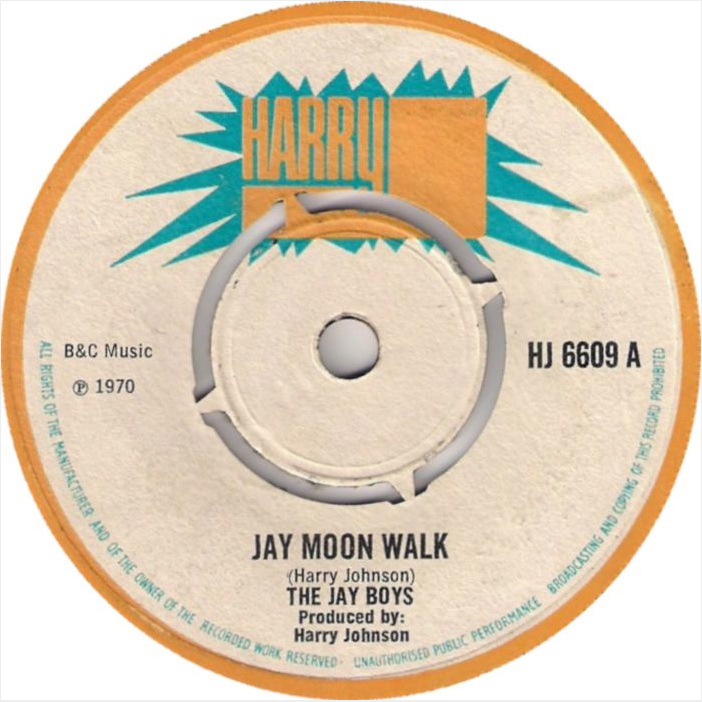
Jay Boys Jay MooN Walk

The Jay Boys And Harry J Are Going On A Moon Walk


Welcome Bovine Ska and Rocksteady Listeners!

On this week’s episode of Generoso and Lily’s Bovine Ska and Rocksteady WE WILL TAKE REGGAE TO THE MOON!

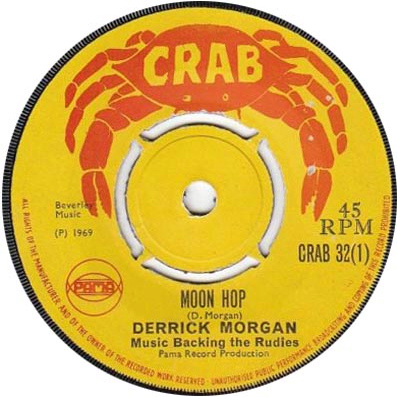
Shortly before and for years after Neil Armstrong became the first man to step on the moon, Jamaican and UK artist began churning out a wild assortment of amazing tracks dedicated to Earth’s only natural satellite.  This past week we put together a two hour show featuring reggae tracks inspired by the 1969 NASA moon landing!  And whether they directly address human exploration of the moon or old classics that speak lovingly about that gorgeous glowing orb, we pulled many of our favorites. We then mixed those rare and well known JAMAICAN SIDES FROM 1969-1978 in between news reports of the that moment in history and some wild late 1970s SPACE DISCO in the background! It is an exploration into deepest darkest silliness with a reggae beat!

You can listen to the Sept 1st, 2015 Reggae Goes To The Moon show HERE!

Join Generoso and Lily’s Bovine Ska and Rocksteady on Facebook for news of upcoming spotlights, rare Jamaican tracks and photos!


Watching The ABC Movie Of The Week With My Sister: Richard Brooks’ Controversial 1977 Film, “Looking For Mr. Goodbar”

Standard
looking gere keaton_

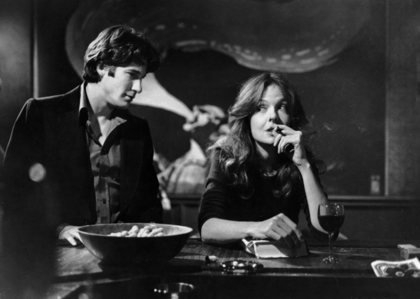
Richard Gere and Diane Keaton in “Looking For Mr. Goodbar

I wouldn’t be the cineaste that I am today if not for my late sister Rosaria. As it was the 1970s during most of my adolescence, movies were an affordable route to an elevated state and one that could exalt an otherwise poor family to experience art for short money. One of my earliest film memories was that of my sister, hiding me under her coat so that I could get in to see Bob Fosse’s “Lenny” when I was all but six years old. Why, you may ask? Well, she had to babysit me, but it was in its last week at the theater, and she so desperately wanted to see this Lenny Bruce biopic that she felt the need to commit such a desperate act.

I couldn’t recall much when I was asked about the movie from my friend Paul, but I did remember seeing two women kiss one another, which prompted a few questions for my sister after the film that were met with the answer “It happens,” but I couldn’t tell you much more than that. On top of that somewhat illegal screening experience, my sister and I watched a lot of films together, both in the theater and on television. Such was the case with Richard Brooks’ misunderstood 1977 film, “Looking For Mr. Goodbar,” which appeared as the ABC Movie Of The Week in 1980, with only a few edits for content. When it aired, I was the wise-old age of eleven, and I in my overconfident mind thought that I got more out of the film than with “Lenny.” I mean I was eleven by that point and the reality that I lived in the inner city made me wise above my years, but more importantly, Rosaria was a woman of twenty two, who loved going to the discos, and was the eldest daughter of a working poor Roman Catholic family.

Disparaging words had been said about “Looking For Mr. Goodbar” during one weekly church sermon as the film depicted a woman who gleefully engaged in promiscuity, rampant drug use, and one the most grievous of sins for a Catholic, a hysterectomy. By 1980, my sister had long since ceased attending mass and was eager to see to see the film as she, like many women of her generation, had been a staunch advocate of women’s rights. She had missed the film’s initial theatrical run so she was excited when it ran on television. As my dad would be asleep before it aired, and my mom was working second shift, we sat down and watched the film together. My sister had heard about Roseann Quinn, the murdered NYC schoolteacher who the novel and subsequent film was based on, which added a more somber element and raised curiosity to the screening. It had a profound effect on both of us that night, and since then, I have gone on to be a huge admirer of Richard Brooks’ films, but as the film has never been released on DVD ( I have a battered VHS copy from back in the day), I haven’t seen it in years, and, frankly, I have avoided seeing it because my sister passed almost two years ago. Just the other day, my good friend Mitch forwarded to me a recently uploaded copy of the film, and I felt that I was finally in the right frame of mind to watch it again.

Watching the film now, and understanding the case as I do, Brooks didn’t take substantial liberties with the story, except that the main character of the film is not as hell bent on destruction as portrayed by the Rossner novel. Brooks and Diane Keaton do a magnificent job in presenting Theresa as a woman who is struggling to find her own way in the world, writhing out of the grips of her smothering family, her self-destructive envy of her gorgeous hedonistic sister and daddy’s favorite, Katherine (Tuesday Weld), and the crippling Catholic guilt that she deals with every day. Theresa is a teacher for young deaf students at a NYC school (just like the real-life Quinn) who begins her sexual explorations by having an affair with her over-intellectual married college professor, but that fails to materialize into anything more than a tawdry fling. She leaves her family home to move into the building that was recently purchased by her sister Katherine’s new husband. Now at new digs, Theresa begins to explore the city proceeding cautiously at first with her new found freedom, choosing to hit singles bars armed with just reading glasses and a good book. She soon meets a hustler, Tony (a wide eyed carnal Richard Gere) who beds her giving Theresa her first positive sexual experience free of emotional hang ups.

She then dates James (an extremely creepy William Atherton) who behaves in a way that most sociologists would call the “good son.” James is an Irish-American welfare inspector who Theresa meets when he appears at the home of Amy, one of her impoverished students who cannot afford a hearing aide. James immediately becomes obsessed with Theresa and infiltrates her family’s home to become a fixture in her life, much to Theresa’s disdain. After another slightly dangerous one night fling with the clearly psychotic Tony, Theresa hits the bars, does some coke, and begins to falter as a teacher. Theresa’s downward spiral goes into overdrive when she begins turning a few tricks with older, unattractive men which also was rumored to be the case with Roseann Quinn.  Again, unlike the book, Theresa engages in these scenarios with a certain amount of fear but still with the excitement of expanding her outlook on life, both sexually and philosophically, and ending the cycle of shame and guilt that she has possessed her entire life.  In the film’s final scene, Theresa like Roseann Quinn, has her life taken away when she takes the wrong man home for a sexual tryst whom she meets at a New Year’s Eve party. In the film, but unlike the actual case, this man is portrayed as a self-loathing homosexual named Gary (played by Tom Berenger in one of his earliest roles) who meets Theresa shortly after almost being killed by gay bashers on the street. True to the real incident, Theresa is brutally stabbed to death by Gary after he fails to achieve an erection.

Much was made at the time of the film’s release that Brooks had crafted a film that served as a precautionary tale and even worse, as an indictment of 1970s feminism, which is why I feel that this film was completely misunderstood when it first was screened. The normally left of center treatment in most of Brooks’ work would be your first indication that his plan for this adaptation of the Rossner novel was not to condemn women for their new found sexual freedom. If you examine this film carefully, “Looking For Mr. Goodbar” is more of an indictment of the 1970s male than anything else which was eluded to by my sister as she  had said at the time. “Look at the men, she dates.  They are the screwed up ones aren’t they, not her?” Case in point is Theresa’s first sexual partner, the professor, who despite his intellectual prominence, prematurely ejaculates only seconds after penetrating Theresa. He then throws around clichéd 1970s bravado: “I hate to talk with women I just fucked,” to hide the fact that he is terrified by Theresa’s open sexuality. The character of Tony is what we would now called a PTSD affected veteran, who is more lost than Theresa as he has no idea as to how to function in civilized society. James is a classic “mama’s boy” and a callow liberal who cannot simply sleep with women due to his Catholic repression, and lastly, there is Gary, a violent and repressed homosexual character who would most likely be removed from any current film for his gross political incorrectness.  To me, this film is in hindsight a look at the fractured post-Vietnam War American male and not a cautionary tale for sexually liberated women who were finally able to experience free love without the ridicule of the past.

What few negative critiques I offer are in the form of stylistic differences, specifically the use of flashbacks, which act more like filler than anything that truly enlightened Theresa’s inner-self. I feel that those scenes could’ve been replaced with more scenes between Theresa and her sister Katherine, who is the sexual role model for Theresa.  Katherine is inserted in some key scenes, but her character was woefully underdeveloped, which is regrettable as her open sexuality could’ve stressed Theresa’s unspoken agenda for freedom. It is a small critique against an otherwise strong film and Richard Brooks’ last good film as his follow up efforts, “Wrong Is Right” and “Fever Pitch” were universally panned and failed at the box office.

Opening Credits For “Looking For Mr. Goodbar”

It is odd seeing this film now with the knowledge of the life that my sister led until her passing. When we saw the film in 1980, Rosaria was dating a man named Bobby, who similar to James, was a good Catholic boy with dreams of domesticity, which my sister firmly rejected. Rosaria’s next long term relationship lasted over twenty years, but its abrupt ending led to a sadness which played a role in her death. True to what she promised me that night, my sister never married because she never wanted a family of her own for reasons that were not too dissimilar from the anti-familial desires of the character of Theresa. One thing that was always certain for both of them is that guilt is usually too powerful an emotion for goodhearted people to ever fully leave behind. To this day, I’ve often wondered if that film played a role in that life choice that Rosaria made. And even though I too have left Catholicism behind and feel that the ending for a life concerned with true freedom doesn’t have to end so tragically, as I get older I do sometimes question, like the character of James, as to how much we truly have gained from possessing the freedoms that we desire away from a traditional family.

This piece is dedicated to Rosaria.

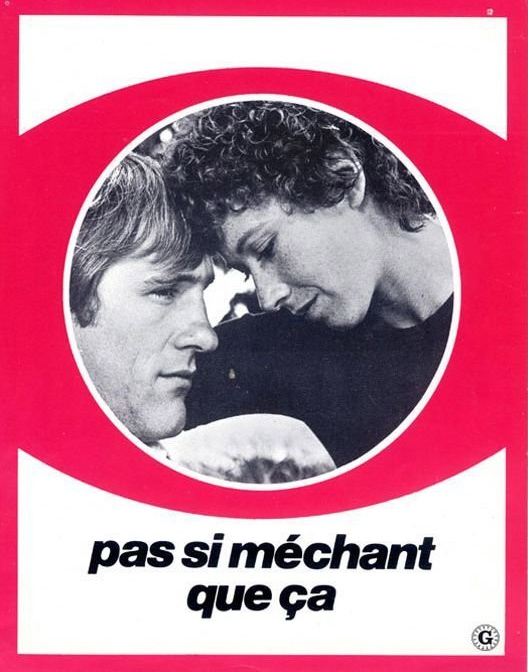
The Sweet But No Less Poignant Comedy Of Claude Goretta’s 1975 Film, “Pas si Mechant Que Ca” (The Wonderful Crook)

Standard
wonderful crook 2

Gerard Depardieu In The Wonderful Crook

When thinking about Switzerland’s contribution to the thriving period of European 1970s filmmaking, two names immediately spring to mind; Alain Tanner and the director of the film I will be writing about today, Claude Goretta. Both internationally celebrated filmmakers, these two talented auteurs made their directorial debut together in the 1957 documentary entitled “Nice Time” about the then seedy area known as Piccadilly Circus in London, but since that effort, they have diverged in styles dramatically. As Alain Tanner’s films are usually presented in a dire stark reality with a clear political message; Goretta’s early work is more or less presented in a delicate comedic fashion, with its overall message being no less politically charged and socially conscious as Tanner’s work. After the comedic brilliance of his 1973 Cannes Grand Jury Prize winning film, “The Invitation,” Goretta returned in 1975 and delivered the understated gem, “The Wonderful Crook.”

Pierre (Gerard Depardieu) is living the good life. He’s a married father of one, who barely puts in a day of work at his father’s handmade furniture factory, and wants for very little, living in his seemingly idyllic country town. One day when his father has a stroke, Pierre must assume control of the business and immediately discovers that the factory is steadily dying because no one wants pay for the expertly made furniture they produce anymore. Pierre doesn’t tell a soul about the failing business and responds as any good slacker would, by picking up a gun and robbing banks and postal shops. With his newly acquired gains, Pierre doesn’t try to upgrade his factory for the modern world; instead, he just creates fake orders for furniture for imaginary clients, furniture that he then burns at the dump as to not raise suspicions at the factory or at home with his adoring wife.

At home, it’s business is usual, Pierre plays with his child (played by Gerard’s actual son, the late Guilliame Depardieu) and makes love to his wife Marthe (Dominique Labourier) seemingly without an ounce of guilt for what he has done, but the eventual guilt manifests itself after a failed robbery at a stamp shop where a lovely clerk named Nelly (another excellent performance from Marlene Jobert from Maurice Pialat’s “We Won’t Grow Old Together”) faints after Pierre fires his one bullet into a lamp that is usually meant to “make an impression.”

Pierre then becomes somewhat obsessed with Nelly, or to be more exact, Nelly despite her strong objections at first, becomes the one person he (Pierre) feels the need to apologize to for his wrongdoings, and the one person whom he can tell of the reasoning as to why he needs to be a thief. Goretta smartly leaves open the possibilities of why Pierre confides in Nelly and also why Nelly becomes involved with Pierre’s mission. Nelly resembles Pierre’s wife Marthe, both waifish redheads, which may explain Pierre’s fascination with her, but for Nelly, is it physical attraction for Pierre? Is it sympathy or a longing for a thrill? Or is it just the case of two people who have people who love them, but feel the need for more? It’s clear here that paradise is never is as perfect as people perceive it on the surface. A key to this facade of paradise and the breaking of the myth might be contained in an early scene in which locals at a pub brutishly mock an Italian immigrant for dancing with a vase of flowers to impress a pretty woman. What might be seen in a Rohmer film as a classic moment of French romance, Goretta cleverly distorts in order to make clear that the definition of traditional love in a changing world is vanishing in the same way that the old world craftsmanship found in the furniture that Pierre must now burn to keep up the facade.

Gerard And His Infant Son Guilliame In The Wonderful Crook

With its superb acting, script, and mostly favorable reviews, it is a somewhat surprising that “The Wonderful Crook” has not survived the test of time. This may be credited to the letdown that occurs when a director tries to follow up a hugely celebrated hit such as “The Invitation,” leaving audiences hoping for another masterpiece, but I feel that it is mostly due to the fact that “The Wonderful Crook” was released the same year as another, more sexually audacious Gerard Depardieu film in which he plays a thief, Barbet Schroeder’s, “Maitresse,” which attracted worldwide curiosity for its depiction of fetishistic sexuality, eventually propelling it to cult classic status. Unlike the subtle nature and comedy of Goretta’s film, “Maitresse’s” hard-edged story of a burglar who breaks into the home of a dominatrix and manages to become not only her assistant but also her lover once he realizes that her employment as a sex worker is primarily driven by the need to support her children may have played more into the growing decadent yet pragmatic mindset of the 1970s, than the understated, yet no less important message about love inside of Goretta’s work.

Bovine Ska and Rocksteady 8/25/2015: Winston Lowe’s Tramp Label

Standard
tramp b

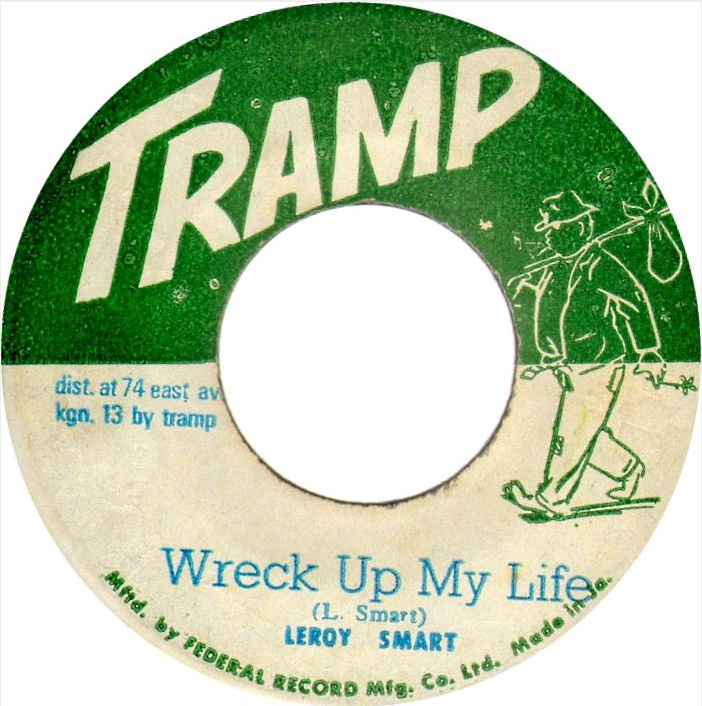
A Tramp Label Classic From Leroy Smart


Hello Bovine Ska and Rocksteady Listeners:

This week’s edition of Generoso’s Bovine Ska and Rocksteady began with a two sets of ska classics and rarities starting with Red Sea, a rare vocal cut from the king of the ska harmonica, Charley Organaire and ending with Rolando Alphonso magnificent ska instrumental from 1966 for Winston Blake’s Merritone label, “Sai Pan”  We rarely mention it on the blogpost but our backing album was just too good not to mention here, and that was Zulema’s 1975 disco classic, Ms. Z.  After an upbeat mento set, we ended the first our with two version to version pairings, starting with Ken Boothe’s “I Don’t Want To See You Cry,” and Delroy Wilson’s “I’m Not A King.”  We then began the second hour with a spotlight of the rare Winston Lowe produced label, TRAMP.

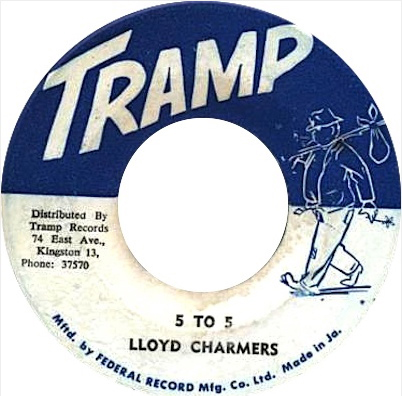
Two years ago, Generoso finished a documentary he had been working on for the previous four years on Chinese Jamaicans and their contribution to Jamaican music. From artists to producers, there is an amazing history of Chinese Jamaican participation in turning reggae into a worldwide phenomenon. Many know the names of Byron Lee, Leslie Kong, and Vincent and Pat Chin, but rarely is the name Winston Lowe mentioned. A friend of Bunny Lee, Winston Lowe ran his Tramp label in Greenwich Farm, creating some truly illustrious productions during its brief period of activity from 1968 to 1972. Amongst the artists who would stop by at Tramp, the Melodians and Lloyd Charmers would cut some of their finest sides for the label. Of the rotating artists, The Uniques recorded some of their best material at Tramp on loan from Bunny Lee, including an outstanding version of “For What It’s Worth” by Buffalo Springfield entitled “Watch This Sound,” which started this evening’s label spotlight.

Soul Syndicate backed up many of the Tramp label tracks of the early 70s, with members including Bovine Ska friend Tony Chin, Earl “Chinna” Smith, Carlton “Santa” Davis, and George “Fully” Fullwood. The band still performs today, with many of the original members performing at Don the Beachcomber in Huntington Beach every Sunday, which is an awesome thing!

You can listen to our show from August 25th, 2015 by clicking HERE.

Subscribe to the show on Mixcloud to get reminders when we post up the show, and join us on Facebook to get updates on upcoming spotlights, record discoveries, and upcoming Jamaican music performances and shows in the Southern California area!

Enjoy!

XOXOXO Lily & Generoso


The Summery Taste Of Generoso’s Chicken Scallopini

Standard

With only a few more weeks of summer left, Generoso decided to end the week with the bright, delicious taste of the classic dish, chicken scallopini. Super easy and quick to make, this chicken (pork or veal is fine as well without altering the other ingredients in the recipe) with its light summery sauce should make any hot night come alive. You will need 24 oz of chicken breast, 1/4 cup of white wine, 3/4 cup of fresh lemon juice, 1/2 cup of chicken broth, 2 tablespoons of capers, olive oil, breadcrumbs, salt, pepper, and rotini pasta (or any non-thread pasta of your choosing).  Please let us know how yours turns out and enjoy!

Music: Hungarian Rhapsody No.2, S.244:2 by Franz Liszt

Bovine Ska and Rocksteady 8/18/2015: Saying Goodbye To Maurice Roberts And A Spotlight On Justin Yap’s Top Deck Label

Standard
top deck label A

BB Seaton Thrills On This Top Deck Cut

Hello Bovine Ska and Rocksteady Listeners,

Unfortunately, we started off the show this week with some very sad news from BB Seaton of The Gaylads…He posted that his friend, bandmate and co-founder of The Gaylads, Maurice Roberts had passed away.  “Joe” as he was affectionately called by his friends, died after a long period of illness.  We first heard of Joe’s passing health when we interviewed BB Seaton back in the spring of 2012, but there was little information being released on the status of his health so this comes as a surprise.  We started off our program with a few of our favorite Gaylads tracks that were recorded in the early reggae period, including “Someday I Will Be Free,” “Wha She Do Now,” and “My Jamaican Girl” as well as the version of that tune recorded by the Conscious Minds, to which Joe also passed bass.  We send our love and respect to Maurice Robert’s family, and The Gaylads.  RIP Joe.  We ended the first hour with some rare Jamaican rhythm and blues tracks before going into the spotlight of Justin Yap’s Top Deck Label.

Born in 1944 as Phillip Yap, Justin Yap had an early entry into the music industry. As the son of ice cream parlour and restaurant owners, he had the opportunity to play music for his parents customers, setting up an in house sound system. Like so many other sound system operators, Yap realized that in order to stand out, especially to a girl he had a crush on, he had to record original music. Consequently, he began writing songs, and he recruited Ephraim Joe Henry to record  a few tracks for his emerging Top Deck label, including“There She Goes,” which is the track that kicked off our spotlight on the Top Deck label. After the first recordings of Joe Henry, Top Deck was not quite a successful label, but after the arrival of Fitzroy “Larry” Marshall, the label began to gain traction with his cover of Paul Martin’s “Snake in the Grass,” which reached the number one spot in the Jamaican charts.   After working with Baba Brooks and recording his hit of “Jungle Drums,” Yap began to search for more instrumentals. And as a result, he arrived to The Skatalites after finding out that they were not exclusive to Coxone Dodd through a friend. To make the most of his recording time with the Skatalites, which he offered a double rate for, Yap had one enormous session with them that resulted in Ska-Boo-Da-Ba. This outstanding record was recorded in an intense 18 hour session in November of 1964.

Yap moved to America in 1966, where he became a soldier and would eventually fight in the Vietnam War. Consequently, no Top Deck recordings exist in reggae, but thankfully, Yap brought his master tapes with him to America, and consequently, his tapes have been re-mastered and re-released over time. Sadly, Justin Yap passed away in 1999 in liver cancer, but the legaacy of his recordings have continued to live on.

You can listen to our show from August 18th, 2015 by clicking HERE.

Subscribe to the show on Mixcloud to get reminders when we post up the show, and join us on Facebook to get updates on upcoming spotlights, record discoveries, and upcoming Jamaican music performances and shows in the Southern California area!

Enjoy!

XOXOXO Lily & Generoso


Riding The Early 1970s Post Apocalyptic Wave In Jim McBride’s “Glen and Randa”

Standard
glenandranda1

Glen and Randa Huddled Together

One can only imagine the level of artistic prostitution that occurs on any given day in production offices all over Tinseltown. The scene opens with an ambitious, yet sincere young film director who has a couple of acclaimed small budget arthouse films under his belt. Spurred on by the desire to have a meal that isn’t just boiled spaghetti with nothing on it, or the calls from an agent that is tired of only receiving a percentage of his client’s critical well wishes as payment, he takes a meeting with a production house that is interested in making his next masterpiece. Now, let’s say that year is 1970, and two years earlier the riotously popular post apocalyptic mythology of “The Planet Of The Apes” was thrust upon the world. Well, it would seem that no matter what pitch walked in the door, it most likely would be reset in a world after the great wave of nuclear/space travel gone wrong madness. The good news is that you can get a paycheck and still retain the option of not having your leads as ape people as long as they’re cute, and you show some full frontal because that sells as well. There were a bevy of films of varying degrees of quality made after the box office triumph of “The Planet Of The Apes” that seem to fit this scenario and one that always stuck out for me as somewhat positive was Jim McBride’s 1971 X-rated film, “Glen and Randa.”

I should go on record by saying that I have always had an almost unreasonable love for McBride’s work, even to the degree of my declaring that his tawdry 1983 remake of Godard’s classic “Breathless” superior to the original…Yes, even with the slightly more dismal acting talents of Valerie Kaprinsky as Gere’s paramour. I adored the frenetic energy of that version, energy that seemed to be missing from Godard’s story of a pair of shoegazing lovers, one being an obnoxious poseur, the other being a beautiful, yet relatively soulless dolt. Regardless of which version you prefer, “Breathless” is at its core is a love letter to low budget films from a Hollywood that already had disappeared. Before making the big jump to mainstream films, McBride had received accolades for a trio of very personal independent docudramas, beginning with his debut film, 1967s “Henry Holzman’s Diary,” a film that toys with the trappings of cinema vérité. McBride’s 1971 post-apocalyptic film, “Glen and Randa” is also is having a go at cinema but not at something as esoteric as cinema vérité; this is more of an ode to the death of the Hollywood system, whether the producer was aware of it or not.

The film opens with a magician (Garry Goodrow) who wanders the wasteland on his motorbike that is packed with all of the essential vestiges of a world long since destroyed: Comic books, porno, maps, and more which he shows to a group of survivors, including the titular, Glen and Randa. Fueled by his recent finds, a Wonder Woman comic and a map of Idaho, Glen (Steve Curry) drags his apathetic and pregnant mate Randa (the lovely Shelley Plimpton from “Putney Swope”) and a horse like the figures of a lost western through the treacherous forest and mountains to the sea in search of the mythical city of Metropolis described in his comic he carries. The pair eventually reaches the ocean where they meet Sidney (played by Woodrow Chambliss) who gives them shelter (with his wife’s skeleton inside, but it’s the apocalypse so what can you do?), so Randa can give birth. Sidney regales Glen and Randa with stories from the past and even goes as far as to point to the sea in the same way that Charlton Heston would glance at a submerged Statue of Liberty uttering the line, “Howard Hawks owned all the land in there. He grew the best potatoes in Idaho,” an obvious slam by McBride and his writing partner Rudy Wurlitzer, who that same year had also penned the equally elegiac “Two Lane Blacktop,” on the current unimaginative sad state of Hollywood storytelling in the face of its once glorious past.

Similar to “Two Lane Blacktop” much of “Glen and Randa” flows without dramatic intensity as it seems more than happy to give you a meandering plotline that is punctuated with small visual jabs at Hollywood and the awesome character of Sidney, who becomes the most enjoyable part of McBride’s whimsical film. Steve Curry does a decent enough job as the wide-eyed dreamer Glen, but he is limited by his obnoxiously boyish/hippyish dialog that makes him more of an optimistic fool than probably intended by McBride and Wurlitzer’s script. Another unavoidable failing of this film that fits its era is the unjustified X-Rating it received, which places it in the company of a slew of other mainstream films during that era such as “Midnight Cowboy” and “Fritz The Cat” that rode the “X,” except that the latter two films reached a level of popularity that most films given the mark of shame could not replicate. What Jim McBride does particularly well with “Glen and Randa” is its tongue in cheek delivery of what the Hollywood system was wanting while simultaneously showing Hollywood everything that was missing after the fall of the studio system.

Original Trailer For Glen and Randa

Though “Glen and Randa” was not huge box office hit for Sidney Grazier ( I assume the character of Sidney was ironically named after him), who had just successfully produced Woody Allen’s “Take The Money and Run” and Mel Brooks’ “The Producers,” he must’ve been somewhat pleased with the results when Time Magazine picked “Glen and Randa” as one of the top ten films of 1971, helping it to make a small profit on its $500,000 investment. With more films being produced like “Glen and Randa,” it was clear that Hollywood wouldn’t be casually investing on the Cleopatra scale anymore, but it would soon be bailed out by a generation of forward thinking filmmakers who would tell stories in the way that would be more in line with their generation, as opposed to picking through potato fields that had had long since been washed up.

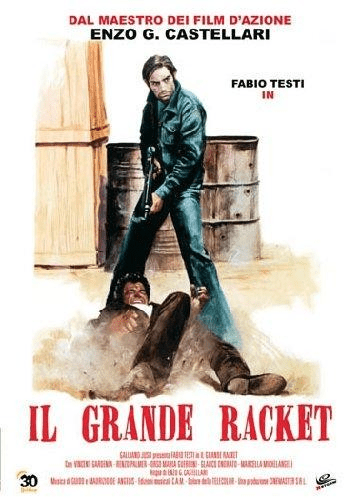
“Il Grande Racket” Is Director Enzo Castellari’s Nastiest Poliziotteschi

Standard
Big Racket Testi

Testi and Gardenia Talk Shop In “Il Grande Racket”

In the late 1960s, there had already been many American crime films that were able to let the blood and filth flow to show the true stories reflected in the current wave of rapidly growing street crime. Even the subgenre of the serial killer film saw its birth during this time as the American public was finally ready to hear about real life mass killers, Raymond Fernandez and Martha Beck in the underrated Leonard Castle film released in September of 1969, “The Honeymoon Killers.” It only makes sense that the public was up for it as the Zodiac Killer was making his murderous way around San Francisco, and the Manson Family had tried their best to start Helter Skelter in March of 1969. The stories that had dominated the evening news in the states were finally allowed to be given the Hollywood treatment in such a graphic way that even the brutally shocking 1960 Alfred Hitchcock film, “Psycho,” had not been able to get away with showing. As far as organized crime was concerned, we had always made gangster films here, but they rarely showed mobsters as they truly were. Even Coppola’s superb 1972 film, “The Godfather,” as violent as it was, still gave the mob a style and even an elegance in the carrying out their wrongdoings that definitely sent the wrong message out to future crime lords living on the East Coast on what the day to day of an organized crime boss was like. Trust me, as an Italian-American growing up in Philadelphia when the Godfather came out, more of my classmates wanted to grow up to be a Michael Corleone than a Richard Nixon.

In Italy during the late 1960s, especially in the south and Sicily, organized crime and the corruption that traveled with it was akin to our street crime in that it was everywhere, especially in urban areas. So during this robust period of the high art films of Antonioni, Fellini, and Pasolini, when the extremely popular genre cinema of the Spaghetti Western was filing box offices in Italy and soon after in the US, the Italians were crafting another genre, The Poliziotteschi, crime films that were reflecting Italy’s growing concerns with the brutality and growth of organized crime that were made without the nostalgia of many of the French New Wave’s low budget crime films. The Poliziotteschis as well as the Spaghetti Westerns took their cues from the new wave of American crime films as far as their brutality was concerned, but it was the realism of the American police films that made the poliziotteschis so intense when it came to revealing the corruption and savagery of organized crime in Italy. As the 1970s rolled in and the Spaghettis started to repeat their plots and even characters (how many Django films were there anyway?), many of the directors of that genre began to also work on the crime film. Such was the case with Enzo Castellari. As far as Italian genre cinema goes, Enzo may be the king with Macaroni Combat films, Spaghetti Westerns, a Giallo here and there and yes, many many Poliziotteschis.

Castellari had scored big with two Poliziotteschis, “High Crime” (1973) and “Street Law” (1974) both starring the original Django, Franco Nero. Franco carried a lot of presence to any film he starred in, but as he was in such high demand, Castellari had to look for another lead for his next entry into the genre, and that actor would be rising international star, Fabio Testi. By 1976, Testi had a few leads in Poliziotteschis, starring in “Blood In The Streets” with Oliver Reed, and “Gang War In Naples” with Jean Seberg. In contrast to Nero’s smoldering sensuality and intensity, Testi was an almost too pretty and brooding actor of the Daniel Day Lewis variety. An accomplished actor, Testi brought a real sadness and empathy to any of the righteous characters of he would play in Italian crime dramas.

In 1976s “Il Grande Racket” (The Big Racket) Testi plays Nico Palmieri, a straight and narrow Rome detective who while witnessing a gang crime is violently attacked and is thrown off a cliff while still in his car in one of the more visually impressive scenes of action in this film. Nico survives, but his righteousness goes into overdrive while in the hospital as he becomes obsessed with taking down this gang who almost did him in and who is also shaking down every local business in the area for protection money. This gang in question, led by an English gangster named Rudy (Joshua Sinclair) is almost surrealistically brutal, almost past the point of most villains in poliziotteschi films, as evidenced in one early scene where a restaurant owner goes to Palmieri to become a prosecution witness after being leaned on for protection. It only takes one cut for the gang to be in possession of the restaurant owner’s young daughter who they gang rape to death in a grotesque scene clearly inspired by the gang rape at the beginning of the American film, “Death Wish.” In a later scene where an Olympic skeet champion aids Palmieri with some shotgun fire during an ambush, Rudy’s gang shows up again to rape and incinerate his wife.

After the gang skips through the judicial system again, Palmieri realizes that he has no ability legally to get Rudy and his posse, so he reaches out to a con friend, Pepe, played by veteran American character actor Vincent Gardenia, the detective in “Death Wish.” The casting of Gardenia is clearly the strongest nod to that revenge film, which was very popular in Italy at the time. He enlists Pepe and Pepe’s nephew to pull a few jobs and guarantees that there won’t be any police interference in order for them to be recruited into Rudy’s gang. When that fails due to some snitch high up, Palmieri is fired from the police force and decides to grab another hood from jail, who is a contract killer, a conman/club owner who had been screwed over by Rudy, the restaurant owner whose daughter had been killed, and the Olympic skeet shooter who lost his wife to form a killing team to wipe out all of the bosses and their henchmen in one spree. As the theme of overall corruption from government, police, and industry is key to many of Castellari’s poliziotteschis, “The Big Racket” has as its final location a manufacturing plant owned by the bosses.

Il Grande Racket Original Trailer

The final scene is done with an immense amount of gunplay, punctuated with the individual revenge fantasies of all of Palmieri’s group. There may not be a better payoff for a revenge film made during the entirety of the Italian crime drama genre. It is a glorious ending to a no holds barred, one hundred minute blast of a movie that for me, goes down as one of the nastiest poliziotteschis. Castellari’s film was indeed a box office hit in Italy, and inspired by the success of this crime film he would reunite with Testi a year later in 1977 and direct, “La via della Droga” (The Heroin Busters), another intensely violent and satisfying poliziotteschi.

Somewhere in between filming “The Big Racket” and “The Heroin Dealers,” Castellari would once again enlist Franco Nero and he would make the last great spaghetti western, “Keoma,” which needs mentioning because as I write this in the summer of 2015, Castellari has announced that he will start filming “Keoma Unchained,” a new Spaghetti where he has enlisted not only his favorite leads, Nero and Testi but also a virtual who’s who of Spaghetti Western royalty: Bud Spencer, Thomas Milian, and American actor John Saxon, the star of one of Castellari’s earliest Westerns, 1968’s “The Three That Shook The West.” Just like Detective Palmieri in “The Big Racket,” no matter what happens, there seems to be no loss of the fight inside Castellari. From Macaroni Combats, Giallos, and post-apocalyptic action films, give the man a genre, and he will crush it no matter what.