Bovine Ska and Rocksteady 11/18/14: Roman Stewart

Standard
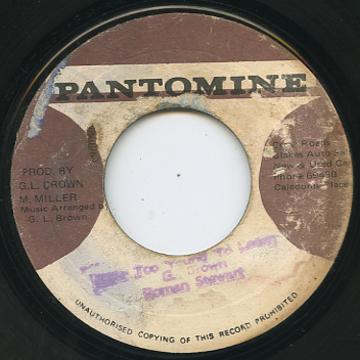
Roman Stewart Never Too Young To Learn

Great rhythm and vocals of “Never Too Young To Learn”

After a whirlwind of a fundraising show, we wanted to present a very special thank you show for all who donated and all who tune in each week to the Bovine Ska and Rocksteady.

We grabbed some great tracks, which have never been played on the BSR, to share with you this past week including “Everybody Rocking,” a sensational rocksteady from Hopeton Lewis and an excellent cover of The Beatles’ “Rain,” courtesy of Tomorrow’s Children.

To mix up the format of the show, we also played a full set of Jamaican soul tracks, including “Today” by Boris Gardiner, a too cool soul track perfect before a brand new spotlight of rare tracks from the reggae artist Roman Stewart (a.k.a Mr. Special).

Known for his later tracks, particularly “Rice and Peas,” Roman Stewart recorded some phenomenal reggae songs in the early to mid 70s.

As the younger brother of Tinga Stewart, songwriter and singer who saw popularity in Jamaica in the mid-70s, Roman Stewart had a parallel successful career to that of his brother’s. Born in 1957, Roman began singing at a very young age. As a young boy, Roman would sing with Freddie MacGregor by cruise ship docks to perform for the tourists as they arrived and left Jamaica. Like his childhood singing partner Freddie, Roman also began recording at a very young age, releasing his first track, “Walking Down the Street”, as an eleven year old for George Murphy and his Tennors label.

After his first single, four years passed until Roman Stewart emerged as a solo recording artist. In the early 1970s, he would record for a range of producers, ranging from Derrick Harriot to Glen Brown to Augustus Clarke, not quite scoring a hit with any of them, but certainly showcasing his vocal talent. But, in 1974, Roman would gain much more popularity with “Hooray Festival,” a song penned by his brother Tinga, and the track that won that year’s Festival Song Contest. Until 1976, Roman would continue recording in Jamaica, recording Phil Pratt, Leonard Chin, and even taking a try at producing his own work.

In 1976, Roman moved to New York, where he would live until he passed away far too young from heart failure in 2004. During his time in New York, Roman would gain the nickname “Mr. Special” from his great stage presence but also his amiable nature off of the stage.

We were delighted to present the spotlight on Roman Stewart. Listen to this past week’s show HERE.

The archive will be available until 12/1/2014. Enjoy!

Bovine Ska and Rocksteady 11/11/14: Stax versus Motown

Standard

On this week’s edition of the Bovine Ska and Rocksteady, in honor of Fundraising Week at WMBR, we decided to pick a special theme for the show. After a few weeks of debate, we finally settled on the winner in the wee hours of the morning a few days before the show….Stax versus Motown covers!

The rules were as follows:

  1. Each artist from each label would get three songs to be represented by covers by Jamaican artists.
  2. One Motown artist would face one Stax artist at a time

Heralding from the famed Hitsville U.S.A., our Motown competitors were:

  1. The Temptations
  2. Smokey Robinson and The Miracles
  3. The Four Tops
  4. Stevie Wonder
  5. The Jackson Five

And, battling against those Detroit giants were the Memphis Stax champions:

  1. Booker T. & the M.G.’s
  2. William Bell
  3. Eddie Floyd
  4. Otis Redding

With brilliant source material from these American soul champions, Jamaican stars such as The Heptones, Pat Kelly, Ken Parker, and Bob Andy recorded some incredible interpretations that we were thrilled to share for this special occasion on the Bovine Ska and Rocksteady.

Decide who should win the battle between Stax and Motown by listening to the show HERE.

Enjoy! The archive link will be available until 11/24/2014.

THANKS TO EVERYONE WHO PLEDGED!  SPECIAL THANKS TO KEVIN DAVLIA, SABINA MADDILA, and ELLE TRAIN for answering the phones.


Bovine Ska and Rocksteady 11/5/14: Girl Group Extraordinaire “The Gaylettes”

Standard
gayletts son of a preacher man

The Gaylettes do Dusty Springfield proud.

This week we started off with two sets of fun Jamaican ska, beginning with a cut, recently unearthed by Lily from The Sensations, called “Juvenile Delinquent,” which was released on Treasure Isle in 1966. We then we ended that two set ska start of the show with “Sun Rises In The East” by Dotty and Bonny, also on Treasure Isle, this time from 1963. We ended the first hour of the show with a set of rocksteady, culminating with the king of the reggae harmonica, Roy Richards, and a tune he cut for Bongo Man in 1966, “Rub A Dub.”

We started the second hour with a spotlight, selected by Lily, on the Gaylettes.

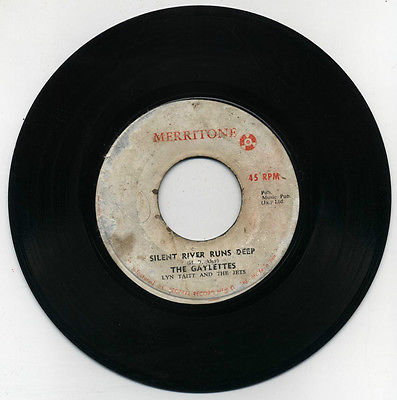
The Gaylettes were originally Judy Mowatt, Merle Clemenson, and Dawn Hanchard.  As a trio, the girls first recorded as a group for Linford Pottinger’s Gaydisc label. However, after their earliest tracks did not lead to great popularity, Judy Mowatt returned to dancing, which was actually her original desired career path, and The Gaylettes went on hiatus. While dancing with a group in Kingston and selling products for the Colgate-Palmolive Company to survive, Judy met Beryl Lawson. While rehearsing a dance routine at the Baby Grand Club, Judy and Beryl began to sing together, and upon realizing their ability to harmonize together, Judy called over Merle Clemenson, forming a trio that would become the next incarnation of The Gaylettes. Good reputations for the girls formed as they performed together, and eventually the trio caught the attention of Lynford Anderson, an engineer and record mastering supervisor for WIRL in 1967. Anderson connected The Gaylettes to Lee Scratch Perry, who was at the time a freelance producer/engineer after his departure from Joe Gibbs’ stable. After hearing the girls perform, Lee Perry invited them to sing backup on “How Come.”  Perry would continue to work with the Gaylettes while they recorded at WIRL. We played one of their only other WIRL tracks next, this time its a one that was not so dirty. After this last of the WIRL tracks, we then played The Gaylettes recordings for Merritone while they were under contract with Federal Records, where they would record their first big hit, “Silent River Runs Deep,” a track written by Henry Buckley.

With Anderson as a major supporter of the Gaylettes, The group would continue to work with Lynford Anderson throughout 1969, seeing great success with spectacular covers of everyone ranging from Dusty Springfield to O.V. Wright. By 1969, they were the most popular female group in Jamaica, but at toward the end of the year, the Gaylettes broke up when Beryl and Merle immigrated to America. The Gaylettes were still under contract with Federal, so Judy went under another name and sang some solo tracks. Mowatt eventually became an “I-Three”  along with Rita Marley, and Marcia Griffiths who would sing backup for Bob Marley throughout the 1970s.

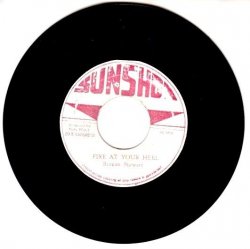
After a really lovely spotlight of one of the few prominent girl groups to come out of Jamaica in the 1960s,  we ended the show with a long intense set of early reggae which featured a gem from Roman Stewart called “Fire At Your Heel” which came out on Sun Shot in 1975.

Listen to the this 11/5/14 edition of the Bovine Ska and Rocksteady HERE.

Enjoy! The archive will be available until 11/18/2014.


Bovine Ska and Rocksteady 10/29/14: Happy Halloween with King Horror!!!

Standard

This past week’s Bovine Ska and Rocksteady is one of our favorite shows of the year….the Halloween show!!!

The show featured songs with ghoulish, sinister themes and titles ranging from devilish reggae, duppy mento, dracula reggae, and zombie ska. There’s even an entire set of duppy themed reggae and a duppy story weaving through the sets! We started off with a set of “Satan” themed reggae, beginning with a new acquisition here at The Bovine Ska and Rocksteady, “Satan Side” by Keith Hudson and Chuckles which was released on DUKE in 1972 and was produced by Keith Hudson himself.  That opening set ended with a back to back version excursion from The Ethiopians on Matador, “Satan Gal” and “Satan Boy.”

Given that the Bovine Ska and Rocksteady almost always needs a spotlight, this show has a special one from the most terrifying reggae voice of all, King Horror!

King Horror-Frankenstein

This 1969 King Horror cut is pretty spooky!

Much of the fun of the King Horror spotlight comes from the question: Who is King Horror?

The real answer is that we have no idea, but we have a few suspicions. Across all accounts, the most likely answer is that King Horror was Lord Davey, who was produced by Laurel Aitken. Given the involvement of Laurel, there is some confusion surrounding who really performed on the King Horror tracks. On many of the tracks, it is clear that you do not hear Laurel‘s voice, which would confirm that King Horror is actually Lord Davey. But, of course to make the identity more puzzling, it is believed that Laurel Aitken actually did cut a few singles as King Horror, but the rest of the singles were Young Growler, a calypsonian named Errol Naphtah Davy who immigrated to London from Trinidad in 1961.

Given the name similarities, we could guess that Young Growler and Lord Davey are most likely the same person. While multiple sources point to Davy, there is another claim to the King Horror name out there. Joe Mansano, of Brixton’s Joe’s Record Centre, claimed that King Horror was one of his DJs known as Lloydie and Lloyd the Matador, not to be confused with Lloyd the Matador Daley. Lloydie was apparently not the best looking man, and consequently, Joe and his people began to call him King Horror.

Regardless of the identity, all of these King Horror tracks feature eerie sound effects, great screams, and amazing reggae rhythms.

Listen to the spooky edition of the Bovine Ska and Rocksteady HERE.

Enjoy! The archive will be available until 11/11/2014.

Bovine Ska and Rocksteady 10/22/14: Saying Goodbye To John Holt

Standard
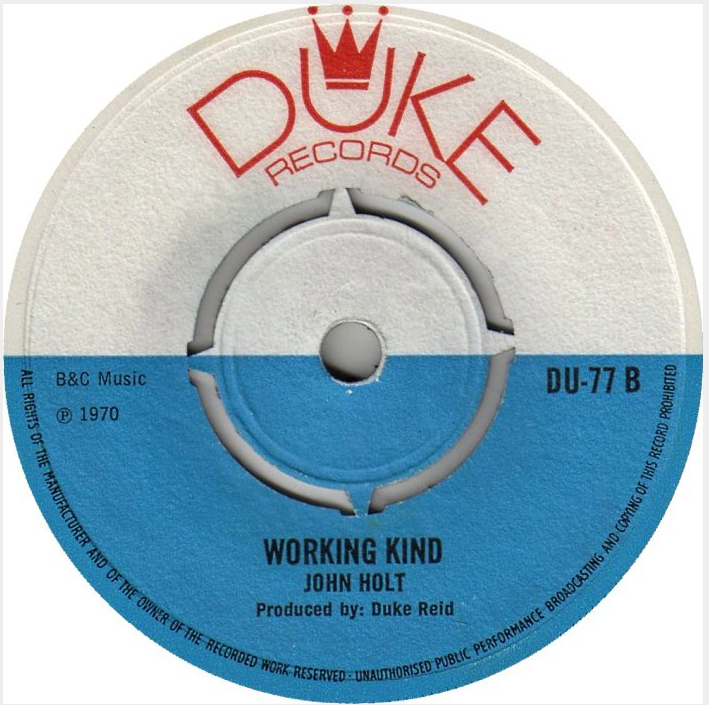
John Holt Working Kind

John Holt’s 1970 Release “Working Kind”

When I started the Bovine Ska and Rocksteady back in 1996, a show that has always focused on early Jamaican music, I knew that there would be a time when a lot of the artists that I had loved from that period would begin to pass away but I would never have imagined the occurrences that have happened these last few months.  Hopeton Lewis, Jackie Bernard, Tito Simon and now, arguably the most celebrated of that group, Sir John Holt, has passed away at the age of 69 in London.  There had been rumors of his passing since Holt had collapsed at the One Love Festival in England not too long ago but now the rumors are confirmed true.  This past week, we dedicated the entire show to John Holt, from his earliest recordings with Leslie Kong at Beverley’s, through his time as the lead singer of the hugely successful vocal group, The Paragons, and finally as an even more popular solo artist.  You will hear one of the finest voices to have ever recorded in Jamaica.

John Holt was born in Greenwich Farm, Kingston on July 11th, 1947.  At the young age of 12, Holt entered the music industry with performances at talent shows. Like so many of his peers, Holt would perform in these shows and would also eventually make multiple appearances on the (like Veer Left) Vere John’s Opportunity Knocks Talent Show. During these early competition years, Holt won a total of 28 awards. As Holt gained fame from the shows, he attracted the attention of Lesley Kong and recorded his first single for the Beverley’s label in 1962. His first recorded single is what we started off with during this John Holt memorial show.

Given the popularity of vocal groups and duos in the early 1960s in Jamaica, a very young Holt teamed up with Alton Ellis to record a duet in 1964, for Vincent Randy Chin called “Rum Bumpers,” a fun ska number about bootlegging. That same year John Holt would join what would soon become one of the most popular vocals groups in Jamaican history, The Paragons. However, he was not initially involved when the group was conceptualized at the back of the Kingston Parish Church, by Keith Anderson, better known as Bob Andy, and Tyrone Evans in the very early 1960s. Andy and Evans were members of the church and started singing as a duo on the church compound.  Bob Andy, in an interview from 2013, explained the group’s beginnings.

“There were lots of duos in the market at the time: The Blue Busters, Keith and Enid, Higgs and Wilson, Alton and Eddy, to name a few. Tyrone felt that was kind of a strong field, so we started listening to groups with more than two, like The Drifters, The Four Tops, and The Temptations. While we rehearsed and played the piano, lots of people would join in. We tried many, until we settled with Evans, Howard Barrett and myself. Then someone told us about John, who was on his way to becoming a solo artiste after winning on Vere Johns, and so we got him into the group. He fit perfectly and we continued as four until I left, and they decided they’d remain a trio,” he said.  

Andy went further, explaining that at one point the group swelled to five, with the inclusion of Junior Menz, a future lead vocalist of the Techniques and the name Pentagon was contemplated, but when Menz left, they settled with the name, Paragons. The Paragons version with Holt first cut tracks for Coxone’s Supreme label, and we played those songs first. After recording for Coxone, the Paragons traveled over to his rival, Duke Reid and cut more tracks for Treasure Isle and would see their greatest fame as a trio. In 1967, at the peak of rocksteady, The Paragons would record a few tracks for Winston Blake’s Merritone Label.

Though the Paragons officially split up in 1970 with the immigration of Tyrone Evans and Howard Barrett to America, Holt had been recording singles as a solo artist throughout the late 60s at the Paragons main label, Treasure Isle but also for his old producer, Coxsone Dodd, and young producer Bunny Lee. We’ll hear those singles next.  Holt’s popularity continued to grow in both Jamaica and in England and the demand for full length releases of his solo work grew rapidly. His first full length would come courtesy of Coxsone and the superb 1970 LP, A Love I Can Feel.   He would record his subsequent LP with Coxsone, for UK release, with it’s hit title cut, OK Fred. A follow-up record simply entitled “Holt,” produced by Bunny Lee and released on Jaguar would also prove hugely popular in England with the hit version of “Stick By Me.” Holt would also contribute vocals to a couple of brilliant songs on the seminal Prince Buster produced release featuring a young DJ named Big Youth, entitled “Chi Chi Run” in 1972.  He would then work with Harry Mudie on the lavishly produced 1972 classic, “Time Is The Master.”  Giving Holt’s vocals that string accompaniment that would become the trademark of many of his recordings, specifically aimed at the UK audiences.

Putting this show together reminded us as to how great his voice was.  John Holt will truly be missed.  R.I.P. John.

Listen to the show via the WMBR archives here: LISTEN HERE

This link will be active until 11/4/2014

Bovine Ska and Rocksteady: 10/15/14 Generoso’s Birthday Show and 1968!

Standard
Three Tops Great 68 Train

The Three Tops “Great 68 Train” from 1968

Besides being the year of Generoso’s birth, 1968 was one hell of a year for Jamaican music. That year saw the end of the rocksteady era and the rise of a new rhythm in Jamaica…reggae. As the tradition goes during the last eighteen years of the Bovine Ska and Rocksteady, Generoso’s birthday radio program is punctuated by having good friends stop by the station, the making of a cake with one slightly disturbing word as it’s message for the year, and the playing of tracks from 1968, both rocksteady and reggae of course.

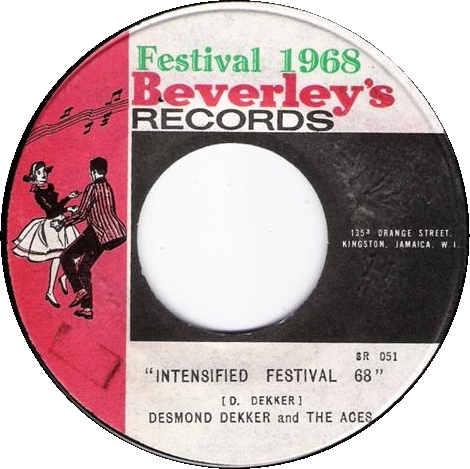
The show begins this year with eight tracks that actually feature the year “1968” in their title, many of which were Jamaican song competition entries for that year like “Intensified ’68” by the late, great Desmond Dekker which begins this year’s show followed by the version from Lynn Taitt and The Jets going out as always to Magnus. The Three Tops punchy rhythm on “Great ’68 Train” produced by Coxsone followed and a smart reggae from producer/vocalist Clancy Eccles “Festival ‘68” ended that opening set. Of the 1968 titled tracks we played, we must say that “Come Down 68” featuring the smooth voice of Trinidadian, Kentrick Patrick, a.k.a. Lord Creator is my favorite. We so wished that Creator had cut more tracks during early reggae as his voice was made for the rhythm and the track does remind me of his masterpiece, “Such Is Life,” which he cut for Randy’s.

This year, we called out to the listeners for their favorite 1968 tracks and our good friend Melody Wining suggested the track that many people regard as the very first reggae release… “Do The Reggay,” a Beverley’s produced cut that does possess that irresistible early reggae rhythm that we love here on the show, and a lead vocal from Toots which is as always as raw and brilliant as you could ever hope for in a cut.

Finally, we want to wish love to you our Brian, Nancy, and Brett who came to the station that night to help us celebrate and to all of our listeners and friends who called or emailed good wishes throughout the day and the show.

Listen to the show via the WMBR archives here: LISTEN HERE

This link will be active until 10/28/2014

Bovine Ska and Rocksteady 10/8/14: Clarendonians Ska

Standard
clarendonians photo

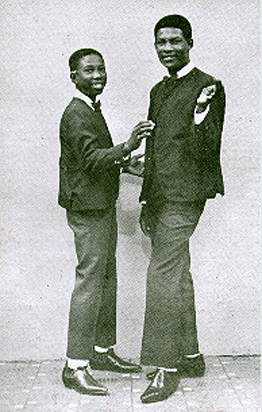
Ernest Wilson and Peter Austin: The Clarendonians

We started off the Bovine Ska and Rocksteady this week with a thunderous version to version excursion which we always send out to my mentor and dearest departed friend Magnus Johnstone:  Errol Dunkley and his killer cut on Count Shelly from 1973, “Where Must I Go,” followed by Daddy URoy’s version, “Merry Go Round” which was cut for High Note in 1976.  We had a fun mento set this week that started with a bizarre release on MRS that featured a new-report style tribute to Princess Margaret entitled “Caribbean Curtsy.”

The history behind the Clarendonians is a bit unclear and conflicting.  We know for a fact that Fitzroy Ernest Wilson and Peter Austin were the two founding members of the group. Both grew up in Hayes, Clarendon and formed the duo in 1963 when Austin was 18 and Wilson was only 12. After performing in local talent shows, the Clarendonians caught the eyes of the music industry and recorded first for Leslie Kong in 1963 with their single, “A Day Will Come.” As Austin and Wilson continued to perform, they caught the attention of Coxone Dodd and began recording for his Studio One And after this point, things get very confusing, but before we dive into the cloudy history of the Clarendonians line up, we’ll first hear “A Day Will Come,” their first single and then their early cuts for Studio One. We know that Freddie McGregor joined the Clarendonians at the age of seven, and it is believed that Coxone Dodd was the one who suggested that Freddie should be the member to expand the Clarendonians into a trio. While the Clarendonians recorded as a trio, the members of the group also recorded in duets with each other. McGregor recorded with Wilson as the duo Freddie and Fitzie, and Austin also recorded with McGregor as Freddie and Peter. And even though the duet recordings did not include all three members of the Clarendonians, the recordings of the duets were often branded with the Clarendonians name. And to make matters much more confusing, each member of the Clarendonians recorded solo tracks that were occasionally pressed with the Clarendonians name as well.

Despite all of the confusion and mystery surrounding who exactly is on each recording that claims to be that of the Clarendonians, we do know that there are three core members, and as a trio they predominantly recorded for Studio One.  Austin became disaffected with Dodd in the late 1960s and went on to record as a solo artist for producer Ken Lack and Phil Pratt, but eventually left the music industry and went on to work as an aviation supervisor at Norman Manley International Airport. Of the Clarendonians, Ernest Wilson was the first member to establish himself as a solo artist. McGregor took more time to establish himself as a solo artist, working at Studio One as a session drummer and backing singer, and eventually found success with “Bobby Bobylon”, and of the trio, had one of the most successful careers. On “The Best of the Clarendonians” record pressed by Studio One, there are only pictures of Austin and Wilson (as seen above). In addition, there is written introduction and description completed by Vin Dunning which does not mention Freddie McGregor in any way.

On October 8th, 2014, we did our spotlight on The Clarendonians from the earliest recordings during the ska era only.  We hope you enjoy it!

Listen to the full spotlight and the show via the WMBR archives here: LISTEN HERE

This link will be active until 10/21/2014.

Bovine Ska and Rocksteady 10/1/14: Bop and The Beltones

Standard

1968 Trojan Records release of “I’ll Follow You.”


A joyous week at the Bovine Ska and Rocksteady as we celebrated our first wedding anniversary as married peoples 🙂  Thus we began with two sets of killer Jamaican ska and a mento set of questionable virtues!  We also did as our spotlight, one that has never been done on this show, that of Bop and the Beltones!

Bop and The Beltones were originally Rudolph Simmonds (who was known as Bop the dancer), Keith Mitchell, and Owen Laing who first recorded with Coxsone at Studio One and were under contract with him for some time in their early career. Trevor Shields was a young musician who would practice with his guitar and sing at school when he would one day run into The Beltones who invited him to ‘jam’ with them.  This was a strange time for the group because they were frustrated with the lack of progress coming from Studio One, and at the same time Bop left the group in order to pursue a dancing career in the U.S.   In a moment of fate, Keble Drummond introduced the Beltones to Harry J, who at the time was only an insurance salesman looking to enter the music industry. Harry J heard the group and wanted the Beltones to be a part of his emerging label, and the group accepted.

After hearing the group rehearse No More Heartaches, a track written by the newly appointed Beltone, Trevor Shields, Harry J actually rearranged the harmonies in the group, making Trevor the Lead instead of Keith, who was the original lead for the track. After the rearrangement, the group recorded No More Heartaches with Harry J as the producer, but given that Harry did not have a studio yet, the single was actually physically recorded at the studio of Studio One. After No More Heartaches got the Beltones some popularity in Jamaica, the group performed at the Carib theater, toured the North Coast, and appeared on both  TV at JBC and radio at RJR.  Their recordings ended up doing well in England because they were distributed by Trojan, but the band did not see a ton of success, and eventually, they called it quits, with Owen moving to Canada and Keith moving to the U.S. Trevor would continue recording as a solo artist and with other groups.

On October 1st, 2014, we did our spotlight on Bop and the Beltones from the earliest recordings during the rocksteady era with Studio One through their time with Harry J.

Listen to the full spotlight and the show via the WMBR archives here: LISTEN HERE

This link will be active until 10/14/2014.


Bovine Ska and Rocksteady 9/24/14: The Passing of Tito Simon

Standard

R.I.P. Tito Simon

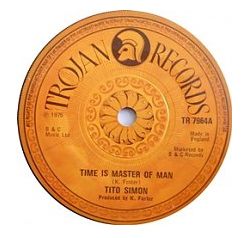
The last few weeks have been hard for lovers of Jamaican music as Hopeton Lewis and Jackie Bernard have both left this earth.  It brings us great sadness to bring the news that another reggae star has died, as Tito Simon passed away on Saturday Sept 20th, 2014 in Jamaica from a sudden heart attack. Born as Keith Foster in St. Mary Jamaica in 1948, Tito would record ska, soul, and reggae recordings during his career. He recorded and wrote under a ton of aliases including Sugar Simone, Lance Hannibal, and also under his birth name. However, he was most commonly known and referred to as Tito Simon.

In 1961, Tito moved to England and began his recording career in 1964 with Dandy Livingstone as the duo Sugar ‘N’ Dandy. Together, the two would record ska tracks with the Carnival label. There has been a rumor over the years that Sugar ‘N’ Dandy was actually just Dandy Livingstone recording solo and having his voice doubled to appear as a duo, as duos were very popular at that time in Jamaican music. What we can say is at the time of Tito’s passing Dandy took to social media to express his sadness for the loss of his “singing partner, ” Sugar Simone, aka Tito Simon.

To answer the rumor of “Was there vocal doubling on Sugar N’ Dandy tracks?”  We received this message from Dandy Livingstone himself a few weeks after the show that finally answers the question:

“Hi Generoso,Tito Simon and I only did one session together. The songs were….. “Only Heaven Knows” and “Let’s Ska.”The late Roy Smith and I did two sessions. Those dates produced three songs…….1.One Man Went to Mow 2.Time and Tide 3.I’m Not Crying Now…….The remainder were doubled by me. Nuff greetings from Jamdown”

After Sugar ‘N’ Dandy, the two parted ways for solo careers, and Tito took a two-year break from recording. In 1967, he returned to the music industry, singing very briefly with the Jetliners, who only have one single to be found. As for his return as a solo artist, in the same year, Tito began recording great soul tracks, which were released on Sue Records. After the solo soul tracks, Tito took another two year break from recording. When he returned to the music industry this time, he began recording in yet another style, reggae, which is what he is best known for.

During the show we played Tito’s reggae recordings for the Dr. Bird and Upfront labels, starting with Tell Me, released on Dr. Bird in 1969. In1972, Tito returned to Jamaica and worked with Clancy Eccles. With Clancy, he would record some of his most popular tracks. We’ll first hear Easy Come Easy Go off of the Just LP released on Horse in England in 1973

On September 24th, we did a full retrospective of Tito’s career, from those early recordings as Sugar ‘N” Dandy through his soul music period and his subsequent triumphs in reggae. R.I.P. Tito.

Listen to the full spotlight and the show via the WMBR archives here: LISTEN HERE

This link will be active until 10/6/2014.

Bovine Ska and Rocksteady 9/17/14: Honoring Jackie Bernard of The Kingstonians

Standard

R.I.P. Jackie Bernard

We are again saddened by the passing of another Jamaican legend, Jackie Bernard, the lead singer and founder of the seminal vocal group, The Kingstonians.  Jackie had fallen on hard times over the last decade and according to Jackie’s sister, Monica Bernard-Kelly, Jackie passed away from a pneumonia at the Kingston Public Hospital on Sept 14th.   Rafael Ruiz, a Spaniard living in Jamaica, began a foundation in January of 2014 for Jackie, who had been diagnosed with diabetes and was struggling to afford medication and treatment to battle his disease and Jackie was living in an unfurnished one room house in Maxfield, Kingston. The foundation was able to help improve his living conditions and help him get better medical attention, and for that we are grateful and send much respect to everyone involved in the Jackie Bernard Foundation.

The Kingstonians were founded in 1966 by Jackie Bernard and his brother Footy, along with their friend Lloyd Kerr, who originally recorded under the name, The Apostles, for Derrick Harriot’s Move and Groove Label, but that was short lived.  As the Kingstonians, they saw early success at JJ Johnson’s JJ label, but would continue to record for other producers as well, including Coxone Dodd, Leslie Kong, and again with Derrick Harriott.  With Harriot, they released a compilation of singles in 1970 under the album titled, Sufferer, which was the record that heightened the success of the trio. Sufferer gained much popularity in England, where it was released and distributed by the Trojan label.  After finding success with Derrick Harriot, they would return to JJ, who was also having great success with another stellar vocal group, The Ethiopians.  Over the next ten years of the 70s, Jackie Bernard would record as both a solo artist and with his fellow Kingstonians for his own Stun King label, where he would arrange and produce his own work with the writing support of his brother Footy.

On the September 17th edition of the Bovine Ska, we presented Jackie’s best work with the Kingstonians, along with his impressive solo releases to help give you an understanding of the immense talent that Jackie was.  R.I.P. Jackie.

Listen to the full spotlight and the show via the WMBR archives here:   LISTEN HERE

This link will be active until 9/30/2014.