First off, we just want to thank everyone who gave us love for last week’s 20th Anniversary episode of the Bovine Ska. It was a tough show to glue together so we are so happy that you all loved it so much. Here’s to another twenty years!
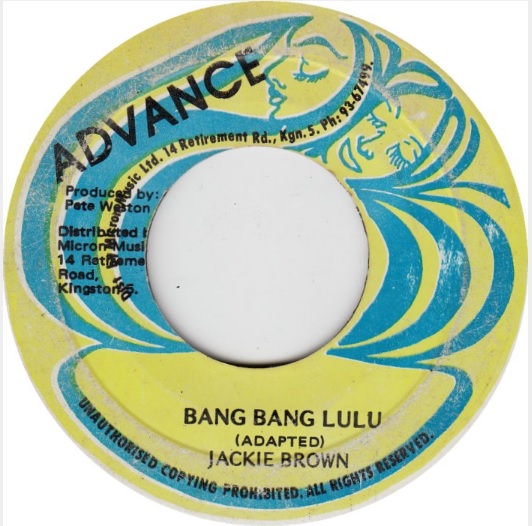
Our weekly mento set began with Miss Goosie from Count Owen’s Rock Steady Calypso LP which came out on Federal in 1968 and ended with Lord Power’s wildly festive, Let’s Do It on Hi Lite in 1956. We ended the first hour with a rousing set of ska, with our final track being Hortense Ellis disguised as Little Darling and No One, which she recorded for Prince Buster on Voice Of The People in 1965. We then began our spotlight on Sir Mike The Musical Dragon Label…
From the early soundsystem era, we always hear about Lloyd Daley’s Matador, Duke Reid’s Trojan, Coxsone’s Downbeat, Prince Buster’s Voice of the People, and Vincent and George Edwards (collectively known as King Edwards) The Giant sound systems. Mike Shadeed’s Sir Mike the Musical Dragon Sound System stood in the company of these big names, but we often do not hear of Shadeed’s work.
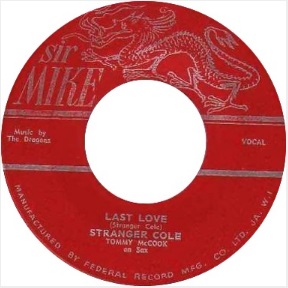
Sir Mike the Musical Dragon was considered one of the big six sound systems in Jamaica, so much so that Shadeed was invited by the Jamaican government to partake in Independence celebrations and dances in the mid-60s. As a testament to the reputation and popularity of the Sir Mike sound system, King Tubby, in interviews, has even discussed the power of Sir Mike’s, saying that Sir Mike was even stronger than Coxsone Dodd’s Downbeat and Duke Reid’s The Trojan by the time the mid-60s arrived. Sir Mike the Musical Dragon also introduced the music world to Prince Far I, who was a DJ for the sound system before he became a recording artist.
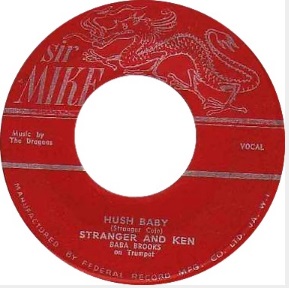
As a record label, Sir Mike the Musical Dragon gave us some excellent ska from some of the best artists at the time. We kicked off this spotlight on the Sir Mike label with a duo of great talent, Stranger & Ken, Stranger Cole and Ken Boothe, who recorded, Hush Baby, for Mike Shadeed in 1963.
Before playing melodica in the 1970s, Joe White recorded primarily as a vocalist in the 1960s. For the Sir Mike the Musical Dragon label, White recorded two beautiful skas. Wanna Go Home, features a simple and gorgeous trumpet line from Baba Brooks playing in tandem with White’s solid voice, and “When You Are Wrong” also features Baba Brooks, but White’s voice shines in the track. We started off the second set of the spotlight with both of these wonderful Joe White recordings.
XOXO
Lily and Generoso
Here is the June 21st, 2016 Generoso and Lily’s Bovine Ska and Rocksteady:
Happy Anniversary Bovine Ska and Rocksteady Listeners!
Twenty years ago this week, Generoso arrived to the basement of the Walker Memorial building at MIT and stepped into the studios of WMBR, 88.1FM Cambridge where he filled in for his friend Chris’ radio show, Spiddle, Urine, Phlegm, and Blood by playing two hours of a mix of original Jamaican and Two Tone Ska. The program director at the time enjoyed his show and offered Generoso a slot on Tuesdays at midnight and the show remained at that time for the next nineteen years. In 2010, Generoso met Lily and they began doing the show together ever since. The show remained on the schedule at WMBR until 2015 when Generoso and Lily moved to Los Angeles where the show continues on Mixcloud.
Over the last twenty years The Bovine Ska and Rocksteady has played early Jamaican music from 1955-1975 ( we sometimes go much earlier than that but rarely later) concentrating on the earliest recorded musics in Jamaica, mento, rhythm and blues, ska, rocksteady, and early reggae. We have also been fortunate to have some of the greatest recording artists in Jamaican music history visit the show from Jimmy Cliff to Owen Gray, Prince Buster, Roy and Yvonne, BB Seaton, Lynn Taitt, Eric Monty Morris, Keith and Tex, Big Youth, Lord Tanamo, Derrick Morgan, and Laurel Aitken as well as modern performers like Dave Wakeling of The English Beat, Greg Lee from Hepcat and David Hillyard (who composed our opening theme) and Glen Pine from The Slackers. This has been a blast these last two decades.
Over the last few weeks, Lily and Generoso have rummaged through the years via piles of old cassette tapes, DATs, CDs and MP3s to create this past week’s twentieth anniversary show, Included are interviews from the aforementioned artists and live performances from the show, and even a set from the patron saint of The Bovine Ska, Magnus Johnstone, who passed away in 2013, as well as the rare recordings of tracks from the performers that you have come to expect over the last twenty years.
We have no intentions of stopping what we have been doing since 1996 and we would like to thank all of the listeners, artists, and WMBR for their support over the years.
XO
Generoso and Lily
So, please celebrate with us by listening to our 20th Anniversary Special:
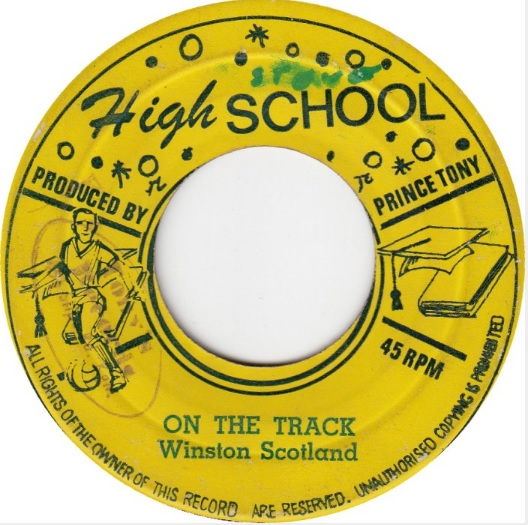
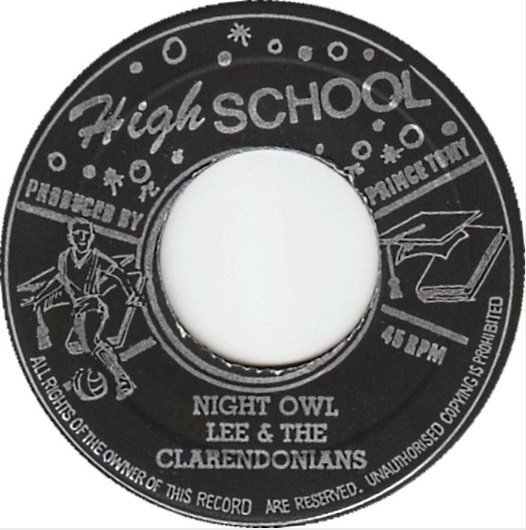
As the Bovine Ska veered towards its 20th Anniversary on June 14th, 2016, we decided to stay the course and do a traditional show (traditional for us) that you have heard these last twenty years. Our spotlight, which occurs midway through the show as always, was on Prince Tony’s reggaerific HIGH SCHOOL LABEL!
The show began with two sets of superb rare ska beginning with a Maytals cut which has never before been played on The Bovine Ska, a gem from Toots from Rolando and Powie in 1963 entitled, Make Me Do. We are still celebrating Toots’ return to the stage this summer after a three year absence. Do check him out when he comes to your town! Starting our mento set was Harold Richardson and The Ticklers’ cover of Don’t Fence Her In on MRS in 1952 and we ended our first hour with a long set of rare rocksteady included a version to version on Studio One of Alton Ellis’ Mad Mad Mad. After that set we started on our thirty minute spotlight on Prince Tony’s High School Label.
Prince Tony is the king of the deejays and the version, so this spotlight on the High School label had plenty of both! Known as Prince Tony as a producer, Tony Robinson began his production career in reggae. Many of his productions would make their way over to England, where plenty of his artists would see success. Though the High School label releases did get decent distribution through Trojan and Pama subsidiaries, Prince Tony’s production legacy is often tied to The Gladiators’ LPs Trenchtown Mix Up and Proverbial Reggae and Big Youth’s LP Dreadlocks Dread, so we are excited to show the brilliance of his earlier productions for the High School label. This spotlight has many major names in it, and we were excited to kick it off with one of the biggest deejays out there, Dennis Al Capone, here known as Young Al Capone and his recording “Girl Called Clover” and its version.
One of the deejays that spent a lot of time at High School was Winston Scotland. Believed to be the brother in law of U-Roy, another fine deejay and an artist who also stopped by the High School label, Scotland got his start toasting over the selections at the Sound of Muzik and the Soul King sound systems. As a recording artist, Scotland worked with Joe Gibbs and Phillip Monroe before heading over to the High School label. At High School, Scotland recorded some of his best tracks, including “Buttercup,” which Prince Tony had great ambitions for with his licensing of the track over to the Philips label in the UK for major distribution.
For our disco background for the first hour this week was The Tee Cee’s 1978 LP on AVI, Disco Love Bit and for the second hour, Barbara Mason’s Lady Love LP superb 1973 release on Buddha.
XO
Generoso and Lily
For your listening pleasure, here is our June 7th, 2016 Generoso and Lily’s Bovine Ska and Rocksteady:
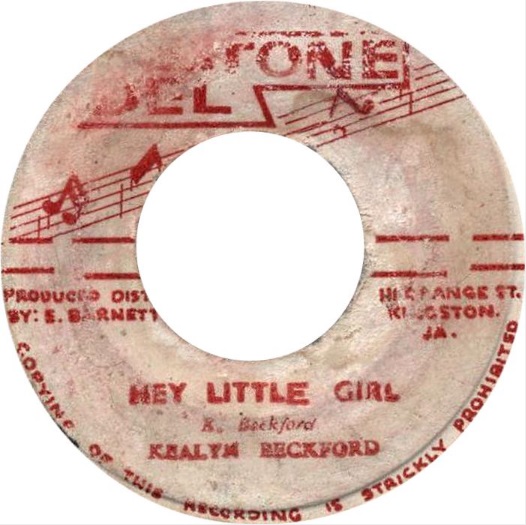
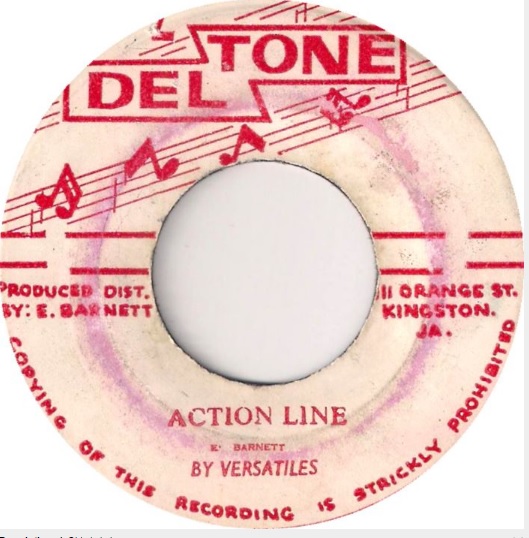
The May 31st, 2016 Bovine Ska and Rocksteady began with a never before played on the show ska single from Justin Hinds and The Dominoes which was released on Treasure Isle in 1965, Zion Higher. In fact the first two sets of the show were of the ska variety ending with Trial and Crosses from a very young, Lee “Scratch” Perry which was released on Coxsone’s Worldisc label in 1964. In honor of Memorial Day, we began our weekly mento set with a 1956 MRS recording entitled, Soldier Man, from the seldom played Arthur Knibbs. I say seldom as even though he was as prolific an artist that existed during mento, finding his recordings has been a real chore but as always we continue to search the racks. We started the final set of the hour with the Bassies, too pretty for words rocksteady cut on Coxsone in 1967, River Jordan. When that set ended, with the end of the first hour. we launched right into our spotlight of Enid Barrett’s DELTONE LABEL.
One of the most interesting things about Deltone is the names of two women attached to it. There is solid evidence to believe that Dorothy Barnett owned the label. Meanwhile, there are other claims that Enid Barnett owned the label, which most likely comes from the fact that Enid is credited as the producer of many records on Deltone. From what we can tell, Enid is a relative of Dorothy’s or Dorothy’s producer name, if anyone listening has any thoughts on this, we’d love to hear from you. We do know that Dorothy Barnett had some solid experience in the record industry before she ventured out to create her own label and record shop. She worked as Coxsone Dodd’s secretary, and from her observations of the ins and outs of the record business, she opened up Deltone, the shop and label. The shop, like other legendary ones, had its storefront on Orange street, and as a result, Barnett’s record label had the ability to attract much talent, including Lee Scratch Perry, who would engineer plenty of tracks for Deltone. We kicked off this spotlight in the rocksteady with Some of Them A Bawl from The Pioneers.
Deltone was somewhat of a family business. One of the musicians who saw the greatest success at Deltone was Keeling Beckford, who was Dorothy’s cousin. Also, as a result of Keeling’s presence at the label, Theo Beckford, Keeling’s uncle, would play piano on multiple Deltone tracks. The Versatiles had worked consistently with Joe Gibbs, but they decided to venture out and went over to Deltone. Teardrops Falling, Someone to Love, and Children of Today were engineered by Scratch for Deltone!
XOXO Generoso and Lily
Here is the May 31st, 2016 Bovine Ska and Rocksteady for your listening pleasure….
No one seemed to complain in 2000 when Wong Kar Wai followed up his melancholy tale of unrequited love from three years earlier, Happy Together, with his equally melancholy tale of unrequited love, In The Mood For Love. To be accurate, it actually went beyond not complaining, as Happy Together, though it was critically praised, did not receive one-tenth of the accolades garnered by In The Mood For Love . The latter film, a perfectly sculpted narrative centered around two once-in-a-lifetime performances, ended up on many critics’ lists as the best film of the 2000s. Sadly, WKW should’ve quit while he was ahead as his eagerly awaited follow-up, 2046, was a universally panned, needlessly sentimental, muddled mess.
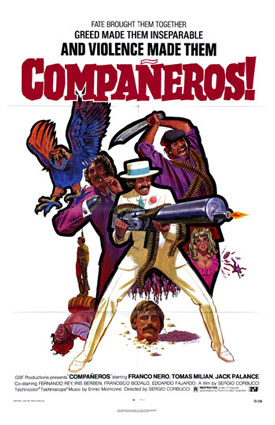
It is a common practice in film, among even the finest directors, to take an earlier work of their own creation and to refine it to their satisfaction, so even a film that was well received will sometimes get a do over. This process of revisiting and renovation is common with theater directors who will change a production for each year of its run, but I feel that we still look at this retooling in cinema as odd due to the fact that filmmaking is an expensive process that produces a physical medium which can be seen again, making it ripe for scrutiny. So why would Sergio Corbucci, the famed director of the original Django, want to follow up his popular 1968 Zapata western, The Mercenary, complete with its overdone, left-of-center politics, with Compañeros!, which similarly uses the 1913 Mexican revolution as its setting to push Corbucci’s political stance? And, why for main characters, would he have, again, two adversarial protagonists/buddies who hate/love each other? Corbucci even recruited Franco Nero and Jack Palance from The Mercenary for the leads, but I suppose to nuance his earlier film, he made the decision to switch out the slightly terrifying Tony Musante for the even more terrifying Tomas Milian, two actors who possess pairs of the craziest eyes in spaghetti westerns this side of Klaus Kinski. You may think that with all of this hemming and hawing that I don’t like Compañeros!, but that is not the case. It is more action packed than its similarly themed and cast predecessor, and despite losing some steam in the second half, Compañeros!, without giving too much of the plot away, has one of the better endings of any Corbucci western.
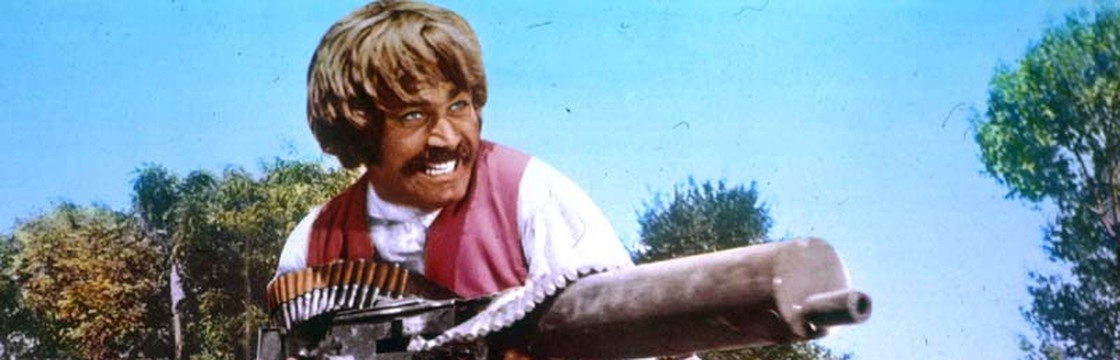
Franco Nero plays the well-coiffed, avarice-fueled Swedish (?!) arms dealer, Yodlaf Peterson, who has come to Mexico during the revolution of 1913 to sell his wares to the tyrannical General Mongo (yes, this film was made before Blazing Saddles, and yes, I was giggling a bit when I heard the name). Soon after arriving in town to make his deal with Mongo, Peterson meets Vasco (Milian), the leader of a group of banditos who have assumed power along with Mongo after they have killed the army colonel in command. The pair exchange macho stares, and a mysterious coin gifting occurs between the two before Peterson checks into the only hotel where he finds Lola (German actress Iris Berben), who is leading a group of student counter revolutionaries led by Professor Xantos (Fernando Rey). Xantos has been imprisoned by the United States army after refusing the terms for the money the U.S. government has given him to fund his non-violent revolution against Mongo; the terms being that the U.S.A. wants the rights to all of Mexico’s oil resources. So, where is the money that Xantos got for his revolution? It is in an indestructible safe, and only Xantos knows its combination. As Mongo needs the money to pay for more arms, he sends the dueling pair of Vasco and Peterson to bust Xantos out of the army jail. Standing in their way, besides the U.S. Army guarding the prison of course, is an American named John (Jack Palance), who wants Peterson, his former business partner, extremely dead. Some time ago, the greedy Peterson had left John to die after he was crucified, leaving John’s beloved, a hawk named Marcia, to peck his right hand off to save him. John has a legitimate gripe with Peterson and will go to some extreme methods to get him, including using a gopher as a torture device in one of the film’s more squirm-inducing scenes. The good news is that Peterson is ready for John as our Swedish arms dealer doesn’t only sell weapons, he is good at using them too, so you know that the obligatory Django-esque scenes must occur with Nero utilizing a normally too heavy to lift belt-fed machine gun to kill more bad guys than any six-shooter could ever attempt to accomplish. Yes, long before Rambo, Corbucci’s Django was the king of the one man army.
Now that you have a good idea of the plot, we still have to address the question that I brought up in the beginning and that is…What was left out of The Mercenary that bothered Corbucci enough to basically remake the film two years later? One thought is that, like many of the significant Italian directors who were making westerns in the late 1960s/early 1970s, the western was an excellent vehicle for attacking greed and, more topical for the time, the United States and their allies’ efforts against Communism around the globe, especially in Southeast Asia. After all, when Compañeros! was produced in 1970, the worldwide opinion against foreign military involvement in the war in Vietnam had reached it’s height, and what better struggle to reference American involvement in Vietnam than the 1913 Mexican revolution? But again, that political message was covered with The Mercenary, so what is the new message being delivered in Compañeros!? The character that stands out the most, is that of the non-violence preaching Professor Xantos, who I assume is a stand-in (and this is a stretch, mind you) for Thích Quảng Đức, the Vietnamese Mahayana Buddhist monk who famously immolated himself in 1963 to protest the South Vietnamese government’s persecution of Buddhists. Weeks after Quảng Đức’s suicide, many other monks also committed suicide by fire, which raised awareness of their struggle worldwide, but I cannot imagine that the Thích’s message was in Corbucci’s mind when he created the character of Xantos.
The Dazzling Original 1970 Italian Trailer For Compañeros!
Lastly, if you are thinking that perhaps Corbucci was just trying to cash a check by banking on his most popular film, then why don’t we see Django IV in 1970? Lord knows, every other spaghetti director did a Django ripoff during that time to varying degrees of commercial success, but Corbucci never did try and capitalize on that film’s immense box office receipts through sequels. Even though I cannot pinpoint the necessity for Corbucci to make a film so similar to The Mercenary, its heart seems to be in the right place, even if the political message is somewhat unclear, but more importantly, Compañeros! is an entirely entertaining western from one of the master directors of the genre, who like Sergio Sollima and Leone could still impress even when they weren’t entirely on point. The film’s pacing is quite good, a mark above other westerns of that era, as are the over-the-top performances and the lavish, yet playful, score by Ennio Morricone. It was also a treat to see Nero in another film where he uses his own speaking voice. In The Mercenary, Corbucci had Nero play the Polish mercenary, Sergei Kowalski, just so Nero’s Italian accent could be masked, and he could use his own expressive voice. If Compañeros! was solely invented just to have the popular actor, Franco Nero voice his own character to get the film’s message across to a global audience more genuinely than a potentially bad overdub, then perhaps this not too different take on the Zapata Western was worth the effort for that alone.
The night after the Bovine Ska and Rocksteady this week, The Rastafarians played a brilliant set at Dub Club here in LA, that was further enhanced by Scientist, who was manning the boards and spinning the band’s sound into wild beautiful experiments. We are still a bit tired as their set went very very late which is tough for a Wednesday but who’s complaining. It was great.
The opening set of the May 24th 2016 Bovine Ska and Rocksteady was inspired by my good friend Douglas Purdy, who posted Kris Kristofferson’s 1971 classic, Loving Her Was Easier which started a conversation about the famed singer/songwriter and actor. We wondered if the current generation was even aware of Kristofferson’s huge impact on music during the 1960s and 70s and as a response, I selected a few of my favorite Jamaican versions of his songs including: Ken Parker’s take on Help Me Make It Through The Night which he cut for Treasure Isle in 1972 and Glen Adams interpretation of For The Good Times, released on Straker in 1971.
After the next set of early reggae from 1971-1973, we went to our weekly mento set that started with Count Owen’s Draw Down More from the Rock Steady Calypso record which was released on Kalypso in 1968. We then ended the first hour with a long set of Jamaican rhythm and blues to get you ready for this week’s spotlight on the early Coxsone Dodd imprint, SENSATIONAL. The set of rhythm and blues began with the very first recording by famed vocalist Gene Rondo, who cut a two sides for the Magico label in 1960. We played his track with Roy entitled Little Queenie. We followed that with a rare cut from the famed duo of Joe Higgs and Roy who cut the early rude boy tune, Gun Talk for Luxor in 1961. When the set was over, we started the second hour with our spotlight on The Sensational Label…
We’ve been focusing quite a bit on reggae labels recently, and for this week’s show, we thought we should go back in time and genre to the Jamaican Rhythm & Blues. This early style had plenty of smaller producers such as BSR favorites Charlie Moo and Simeon Smith, but the era was dominated by Coxsone Dodd. The man of the Downbeat Sound System, Clement Seymour Dodd received the nickname Coxsone from the sport of cricket, far from the world of music where he would make his name. As a young man, he was a strong cricket player, and for that he was given the nickname “Coxsone” after Alec Coxon, a member of the Yorkshire County Cricket Club.
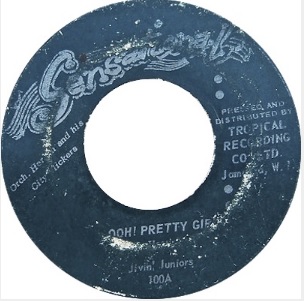
Dodd had many imprints that released R&B tracks, and Sensational was one of them. It’s a special one because there was a lot variety in sounds here, with the short life of the label including multiple backing groups and distinct arrangements. And to begin the spotlight, we’ll start off from a group that epitomized the R&B sound, The Jiving Juniors. In these early days of Coxsone productions, two of the backing bands he relied on a great deal were Rolando Alphonso and his Alley Cats and Hersang & the City Slickers.
We hope that you enjoy the show. Here is the May 24th, 2016 Bovine Ska and Rocksteady:
How’s it going, Bovine Ska and Rocksteady Listeners!
Lily and I were super excited after dancing to a fantastic set of original reggae and ska from David Hillyard and The Rocksteady Seven at La Cita on Friday night that we went home at 1AM and began pulling a massive Bovine Ska and Rocksteady for May 17th! Sure, we were a bit danced out, but we still grabbed some killer tracks for you, beginning with two sets of ska which started with Lee “Scratch” Perry’s anti-Prince Buster tune for the N&D Label in 1963, Don’t Copy! Our second set of ska began with a version to version of Count Ossie and The Upsetters’ ( the vocal group, not the Lee Perry backing band) Studio One gem, Turn Me On, which was followed by the version from Rolando Alphonso, also on Studio One in 1965, Tall In The Saddle.
A mento set followed with Percy Dixon and His Merry Boys leading the way with their version of the naughty, Ben o Dict. We ended the first hour with rocksteady to get you in the mood for the DOUBLE B Label spotlight. Part of that rocksteady set had a tune from beautiful voice of Ken Parker, from the DOUBLE D Label which has nothing to do with your spotlight label, DOUBLE B, called The Search Is Over from 1968. Yes, we did that just to confuse you. Soon, we were off to do the DOUBLE B Label spotlight! Major props to Lily for doing the research on this one as there is very little known about this small, but vital label.
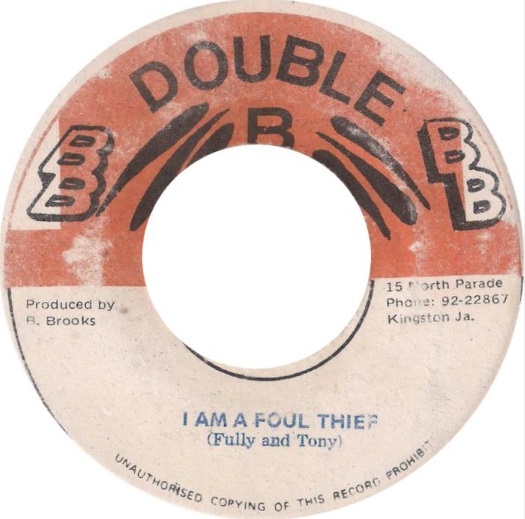
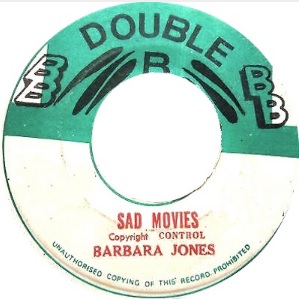
The Double B label existed from 1972 to 1975, and all of the records were produced in Jamaica and based on the early releases and the name of the label, we have reason to believe that the owner of the label was Baba Brooks. Baba Brooks produced the debut single for Double D, and then most of the remaining productions were created by vocalist Glen Lee. We began the label spotlight, with Barbara Jones’s Sad Movies, followed by Sir Harry’s version of the track, both produced by Baba Brooks. Sad Movies is a cover of Sue Thompson’s track of the same name from 1961, which went to #5 on the American Billboard charts. Sad Movies is also Barbara Jones’s debut recording.
As mentioned in the introduction, Glen Lee was both a vocalist and a producer. He recorded as a singer for Double B as he produced other artists. In the early 70s, he would gain further notability as a producer for his work with George Faith. And Glen Lee’s recording studio was not too far from Lee Scratch Perry’s record shop, and this proximity would facilitate the beginning of Lee Scratch Perry’s collaboration with George Faith. We hope you enjoy the spotlight!
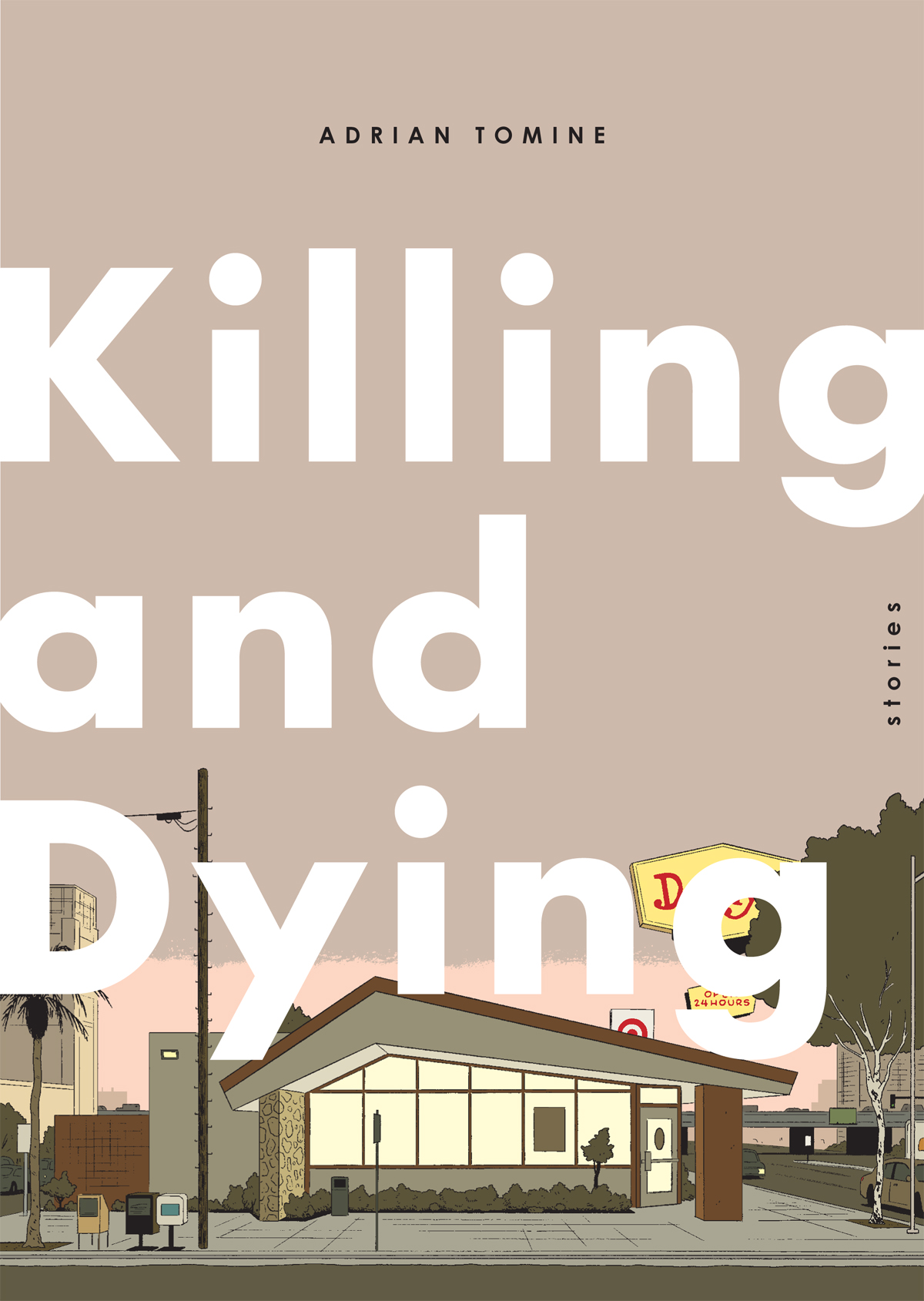
When completing Adrian Tomine’s Killing and Dying, only one word could describe my first reaction: distance. When reading Killing and Dying, you always feel like an outsider looking into the world of the people in the six stories. You never feel close to the characters, and the visual style has a sterile perfection to it that reinforces this sense of distance. Reality inspires the world of the graphic novel, but a genericness to the scenery makes every setting seem like a faceless suburb somewhere in California, giving way to a coldness in the delivery of each story.
However, this distance is not a bad thing, and it makes plenty of sense when you live here.
Yes, I’m late to this renowned graphic novel of last fall, but after living in California for a year, the atmosphere of the book makes more sense now than it would have in October 2015. This state has an abundance of beauty in it, and it still has an undercurrent of untamed energy that you can trace back to the wild west of the past, but California, despite the sun, mountains, trees, and ocean, has this palpable sadness to it. Maybe it comes from the lost hope from dreams that never came true or maybe from the interactions that never happen because so many spend a large percentage of time in their cars, making a sense of community feel far away, but regardless of the reason, this dourness lies just under the topsoil that sees the frequent sun. This gloom manifests itself in many ways, and one of them emerges in distance between people.
Adrian Tomine perfectly captures this sullen mood of life in California with his stories in Killing and Dying. Similar in its construction and tone to Wong Kar-wai’s Fallen Angels, but with desperation and sadness stemming from a different place than the return of Hong Kong to China, each story has similar elements of compulsion and absurdity stemming from miscommunication or misinterpretation by people and their actions.
In “A Brief History of the Art Form Known as ‘Hortisculpture,’” Harold, a gardener, finds inspiration in the thoughts and work of Isamu Noguchi and begins a new creative enterprise, which he terms as “Hortisculpture.” Part formal sculpture, part horticulture, Harold’s art fuels a passion in him for his work, and this passion develops into obsession as his Hortisculptures fail to attract the attention and capital of his gardening clients, his colleagues, and his own family. The Hortisculpture fixation lasts six years, and it consumes his existence and tears up his family. In a state historically looked at as a beacon of opportunity, Harold’s story resembles that of every actor, actress, technologist, and inventor whose creations and work fail to gain the attention of people, making it an excellent opening story to set the tone of the book. He gives everything to his creativity, but it goes nowhere and takes him far too long to realize when his artistic dreams need to be placed on a hiatus.
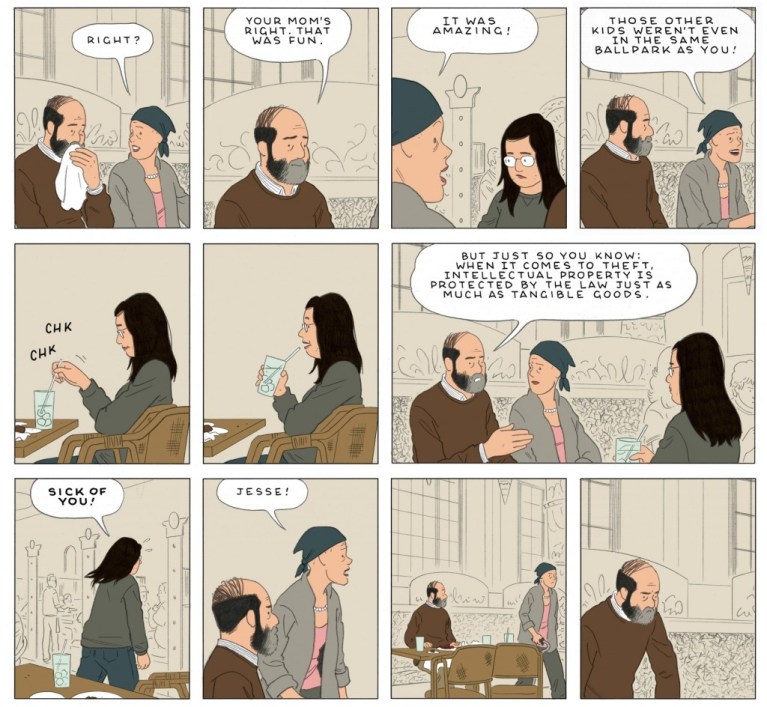
In the title bearing story, the daughter in a family wants to test out comedy as a potential for a career. The mother offers unbounded support and gives the daughter the opportunity to try out this creative outlet, and the father, the pragmatist, offers his skeptical opinions. As we see the daughter’s development and failures in comedy, we also see how the mother’s illness shapes the father’s bitterness, the daughter’s fearlessness, and the mother’s optimism. The strongest of the six stories included in the graphic novel, “Killing and Dying,” condenses killing in a comedic sense, dying of embarrassment, dying of humiliation, and death into a quiet story constructed entirely from conversations and comedic performances, good and bad. The dream to become an entertainer makes “Killing and Dying” a California-centric story, and its disappointments coming from failures and life further place the story here.
Killing and Dying closes with “Intruders,” hearkening again to Wong Kar-wai, but this time, to the film Chungking Express. In between tours, a man returns to his home city. Unwelcome by his family and lacking a permanent home, he establishes a base camp in a hotel room, waiting to travel again. During this period, he gets the keys to his old apartment from a young woman who once house sat for him, and he begins to live in the apartment in the hours that the current tenant leaves it for work. Like “Killing and Dying,” “Intruders” toys with multiple interpretations of the term intruder, and it concisely sums up the book, for by the end, you also feel like you have intruded on the lives of all of the people in the stories, and as a result, you will most likely have one of two reactions. You may want to start narrowing this separation from others, or you may want to make it larger and only view people and places through your windshield.
Killing and Dying has received adulations from the literary and alternative comics world, and that praise is well deserved. Tomine understands the motivations, disappointment, and derailment of people, and he discusses them with minimalism and detachment that draws empathy without pathos, allowing you to see the underlying sadness of the setting, which exactly feels like modern day California.
California is a place where people can become larger than life. California is a place where people can fall far from grace. California is a place where finding your own identity and understanding yourself feels far harder than anywhere else because others always feel far away physically and emotionally, and Killing and Dying examines this distance and resulting melancholy with a sharp eye and efficient tongue, reminding all that not everything is golden on the edge of the Pacific.
Killing and Dying is written and illustrated by Adrian Tomine and is available via Drawn & Quarterly.
I don’t know too many men my age that never delved into the occasional Gilligan’s Island episode during their youth for a glimpse of Daisy Dukes wearing Mary Ann. A silly, yet borderline offensive show at times, Gilligan’s Island fit in well with the panorama of inane shows of The Beverly Hillbillies and Green Acres variety that intentionally seemed to have a bare minimum plot so that you could see an Elly May Clampett type parade around scantily-clad group of unwashed yokels to get an instant jolt of middle class superiority. There was perhaps one positive benefit from my years of watching the seven castaways fumble around the island trying to make batteries out of coconuts, and that came from of a 1965 episode entitled, “Sorry, My Island Now,” in which a lost “Japanese” sailor, ( “Japanese” because the sailor was played by Neapolitan actor, Vito Scotti) complete with super thick Mickey Rooney Breakfast At Tiffany’s-styled Asian glasses, holds the gang hostage as he is under the belief that World War Two was still an ongoing conflict in 1965. The episode is a morass of terrible racial stereotypes that were common for the time, so it is not worth hunting down, but the positive that emerged was that twelve year old me wondered if such a thing had ever occurred, and I subsequently made my way to the main library to find out, and the truth was a tough one to swallow.
The “holdouts” as they would come to be known, were Japanese soldiers who had served in the Pacific Theater who were either stationed in remote islands or cut off from official communications, and as a result, they simply didn’t know that the war was over. Or, they were dogmatic fighters who refused to believe that the war was over, even though they had heard communications of the fact but yet held firm their military appointments without conflict or found another fight somewhere else and pretended that World War Two was still happening. What boggled my mind was that some of these “holdouts” held on until the early 1990s! The last of these men, Shigeyuki Hashimoto and Kiyoaki Tanaka, returned to Japan from Malaysia. After the Japanese surrender, they joined with the Communist Party of Malaysia guerrilla forces to continue fighting against the British, only returning after the CPM laid down its arms and signed a peace treaty. The story of the “holdouts” was not wildly reported on in Philadelphia, where I was an adolescent in the 1970s, but I imagine that this was commonly known in Manila, the hometown of Death Force director, Cirio H. Santiago.
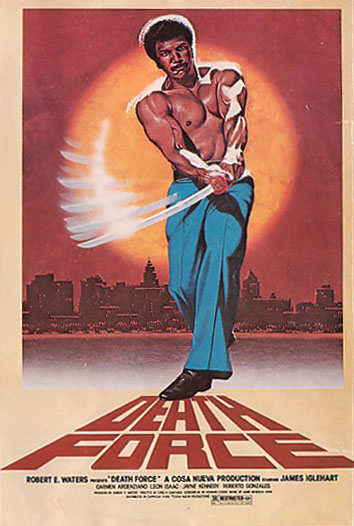
I often refer to director Santiago as the “Roger Corman Of The Philippines” as the producer/director was not only a pioneer of blaxploitation films like 1974’s TNT Jackson and 1976’s She Devils In Chains but also a production platform that helped launch the careers of Jonathan Demme, Joe Dante, and Carl Franklin. He can film action, and in the case of Death Force, he can, along with screenwriter, Howard Cohen, come up with some rich characters and dialog that is at times, dare I say, touching. Death Force begins with three American Vietnam Veterans, Doug Russell (James Iglehart, the hunky weightlifter from Russ Meyer’s Beyond The Valley Of The Dolls), Morelli (Carmen Argenziano), and McGee (played by a pre-Penitentiary Leon Issac Kennedy), who have just stolen a ton of gold from Santiago’s native Philippines. Doug just wants his cut so that he could reunite with his gorgeous wife, Maria, and who could blame him as she is played by Jayne Kennedy, fresh from her appearance at the Miss USA Pageant, but Morelli and McGee want to take their cut back to Los Angeles and become ruthless crime kingpins, which suits Doug fine, so they board a boat with their new found riches and head for home. But boys will be boys, and McGee and Morelli, like five year old kids on Christmas Eve, cannot be patient and start their Michael Corleone fantasy trip on the boat as they cut poor Doug’s throat and toss him overboard so that the greedy jerks can keep his cut too. Michael Corleone at least waited until Fredo screwed him over before having him plugged on a fishing boat. Get with the program boys!
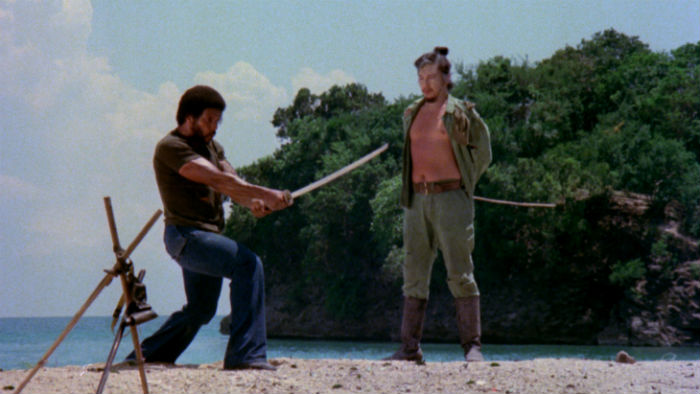
Amazingly (though not for blaxpolitation) Doug washes up on a beach with a pulse and is discovered by two Japanese “holdouts”(Filipino actors Joe Mari Avellana and Joonee Gamboa), an enlisted man and an officer. Even though they perceive him as the enemy, the holdouts nurse Doug back to health in the hope that he can at least help out with gathering coconuts on the island. Doug makes a smashing recovery, and the officer begins to see Doug’s immense strength and size as an asset, so he begins to show him the way of the Bushido and turns him into a samurai. It is in these early scenes that Death Force begins to stand out among the usual mid-1970s action film, as these scenes on the island, which may have gotten the Gilligan’s Island treatment in Hollywood, are done tastefully and more importantly are sympathetic to the holdouts and their code of honor. The holdouts instill in Doug their particular code of honor and teach him to use the katana, and he becomes one of them. After the enlisted man tragically dies in an accident and the officer commits seppuku when a group of Filipino soldiers attempt to peaceably locate holdouts on their island, Doug returns to Los Angeles where, as you can imagine, he is looking to get some payback on Morelli and McGee. The latter now hounds Doug’s wife and makes it impossible for her to get work as a singer after she remains loyal to Doug and rejects his advances. Doug wants revenge, but as his his Japanese mentor warns him, “You never win battles in anger.”
What occurs next is what you would expect from a mid-1970s blaxpolitation film in terms of violence, but the pacing of the film becomes another positive aspect of the narrative. This could easily go down after the island scenes as a quick bang-bang revenge film, which was so prevalent in the post-Death Wish era, but Santiago allows the characters whom Doug meets to develop along with the plot, and you start to develop genuine empathy for not only our main protagonist but also those who aid him on his quest to find honor, where honor has been removed from his life. There are no quick solutions and as the film veers towards an ending, you have some much needed space between the beheadings (yes, there are a bunch) to feel the stories of all involved.
Original Trailer for Death Force
Though not as tightly put together as Mike Hodges’ masterfully crafted 1971 British gangster revenge film, Get Carter, Death Force does remain true to Doug, our hero, as Hodges’ film does to Jack Carter. Death Force is an impressive feat for a low budget film shot in the Philippines, which at the time was a breeding ground for many a schlockfest, which were quickly done to get the most bang for your dollar. Death Force is not Melville’s Le Samourai, but it does wisely incorporate the code of the Bushido, allowing that doctrine to energize the story and provide a interesting motivation, past simple revenge, for its main character which is more than I can say for any Hollywood production of its time. One can only credit the influence of Bruce Lee and the proliferation of martial arts films in the West during the 1970s for the change in the stereotypical depiction of Asians in films here in Hollywood. Sadly, this didn’t last long as the 1980s brought in an entirely new middle class generation that needed to pray on these outdated Asian stereotypes with characters like Long Duk Dong in Sixteen Candles and Ben Jabituya in Short Circuit. After John Woo and the bullet throwing Hong Kong action films of the 1990s, there was a brief reprieve from the thick glasses and funny English found in the Asian characters of 80s films, but here it is, 2016, and we have Fresh Off The Boat and Outsourced. I guess the only thing that Hollywood can ever respect from the East, is when they can depict violence like the West.
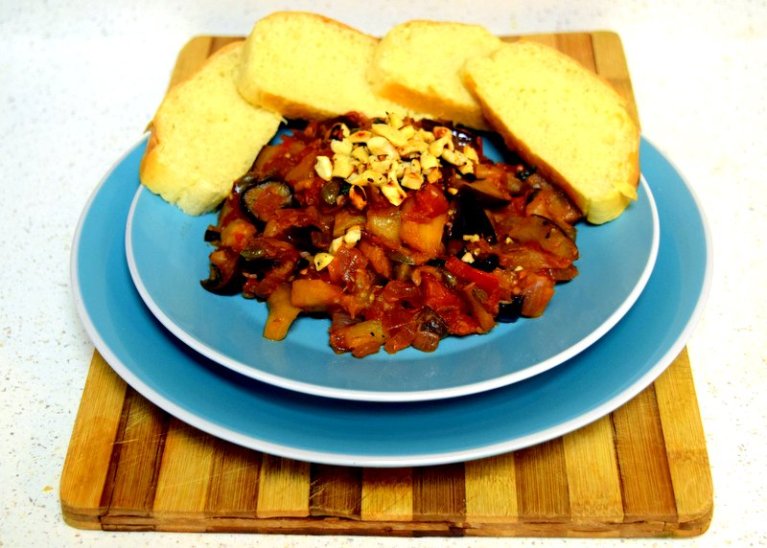
Now that summer is approaching, Generoso loves making this simple sweet and slightly sour eggplant and caper based antipasto that is quick to make (about 40 minutes) and delicious. For this recipe you will need one large Italian eggplant, 1/2 cup of capers, three medium sized tomatoes, five cloves of garlic, one cup of red wine, one red onion, two stalks of fresh basil, extra virgin olive oil, sea salt, and pepper. Let us know how yours turns out and thanks for watching! XO Generoso and Lily
Music: Ottorino Respighi’s Ancient Airs and Dances, Suite No. 1



 LILY & GENEROSO 4EVER!