Truth Be Known and the 1990s Comics Underground

Standard

Inspired by last week’s pick of Tadao Tsuge’s Trash Market, I hoped to dig even deeper to unearth more avant-garde/underground comics treasures this week (and in general going forward).  And to my luck, on a bookcase of used comics at Amoeba Records yesterday, I found Maximum Traffic’s Truth Be Known.

Cover of the Truth Be Known Collection

An anthology of Traffic’s work as an Obscuro comics artist along with his editing work for the White Buffalo Gazette zine, Truth Be Known contains a underlying, cohesive argument in the midst of a frenetic mix of semi-collage artwork, comic panels, and single pages of text. Fiercely bold, political, philosophical, comedic, and absurd, Truth Be Known exemplifies the independent voice of zine culture, one I only know a little about, especially since the comics from zines of the 1990s were created when I was a still a small child.

Adding to my own lack of familiarity of  the 1990s comics underground, little mass public attention (even via the internet today) has been given to the zines producing those comics. Plenty has been written about the early underground comics, especially on that now famous San Francisco scene Robert Crumb led with its foundations in the satirical works of Will Eisner and Harvey Kurtzman. However, the next generation of the comics zine world of the 1990s and its delivery of the descendants of original underground comics has remained largely underground and accessible only through zine fests. Consequently, my own knowledge of the vitality and content of this alternative media form before and after the the internet age is pretty thin.

What I do know about zine culture of the 90s comes from stories of Generoso’s friends who notoriously gobbled up two industrial sized toner cartridges publishing an edition of their anarchist focused zine. A media form with no rules and often even no desire for monetization, anything goes in the zine world, making it a perfect incubator for creative, political, and philosophical opinion. As a result, there’s plenty of noise found amongst the zines published in the past and present, but given the wild west freedom of the media outlet, there are plenty of gems, and one gem distinctively comes from Maximum Traffic and his stable of artists and writers of the White Buffalo Gazette and Obscuro group.

A labor of love, passion, and desire to discuss current morality, politics, faith, and any element of society that influences our thoughts and opinions for better or more likely for worse, Truth Be Known contains works that study and investigate our fears, our comforts, and our culture with righteousness, humor, and most importantly humanity. Some of the comics are more traditional in structure, and others are more like a psychedelic dream, creating a nice pace of reading and viewing throughout the collection. The moment you begin to feel you’ve had enough of the ethereal, a more traditional (though no less entertaining and insightful) comic arrives, and the moment you begin to crave something a bit more challenging and unclassifiable, one of the looser, hallucinogenic comics starts. You never get too complacent with stability or instability with Truth Be Known, since both exist and constantly complement each other.

Some of this ebb and flow between the avant-garde and the traditional comes from the mix of artists and corresponding styles included in the anthology. Steve Willis contributes his funny and reality crossing Morty Dog comics; Mike Hill contributes his satirical Modernman comics; and, Maximum Traffic contributes his outstandingly beautiful Neo-Psychedelic Man comics. With this mix of artists and voices, every story in the anthology has a purpose; Maximum Traffic excluded anything that would be considered as filler here, showcasing his clever and deft editing skills in addition to his brilliant collages that alone make Truth Be Known worth a look.

Truth Be Known contains an energy and a specific commitment to honesty and creativity only found in a publication where no commercial expectations exist. All are free to roam in the world of Truth Be Known, and despite their drastically different approaches, all unite to develop works to not only entertain readers but also provide an alternative perspective on life, mass media, and existence.

While the references in the anthology may clearly date Truth Be Known, the collection still stands as a relevant body of underground comics. In their challenge to existing popular comic forms and desires to innovate in a format with established conventions, Maximum Traffic and his Obscuro friends progressed the comic form then and hopefully continue to inspire artists today to do the same now. If you can find it, do pick up Truth Be Known and any copies of the White Buffalo Gazette, and while you’re at it, go out and pick up any zine for a fresh, sobering breath of zine frontier air.

Thankfully, the creative and thought independence of the tradition of zine culture still lives on, which means that modern underground comics gems are out there; they’re just waiting to be discovered and shared.

Truth Be Known collected by Maximum Traffic is available via Maximum Traffic publications. 

Bovine Ska and Rocksteady 8/4/15: The UK “Giant” Label

Standard
giant dandy LP

A Rare Giant LP Featuring It’s Star, Dandy Livingstone

Hello Bovine Ska and Rocksteady Listeners,

Thanks for making last week’s show, our two hour tribute to Jamaican Doo Wop Covers such a success as it was the number five ranked ska show on Mixcloud last week!  If you missed the show, it is here for your enjoyment:  https://www.mixcloud.com/bovineska/generoso-and-lilys-bovine-ska-and-rocksteady-jamaica-covers-doo-wop/

For this past week’s show on August 4, 2015, we went back to our label spotlights by focusing on the releases of the UK Giant Label.  But before we did, we did an hour of reggae and rocksteady, beginning with version to version to version excursion of Dennis Brown’s 1972 hit for producer Lloyd Daley, “Things In Life” which was released on the Syndicate label in 1972.  We ended that four song set with possibly the most popular side of the night, the ruthlessly catchy 1972 Techniques Label classic by Johnny Osbourne, “Ready Or Not.”  Our second set began with a version to version of the Toots Hibbert penned “Come Down” sung by Carey and Lloyd.  After a mento set and a long rocksteady set, that began with a exceptional soul cut from Prince Buster called “Land Of Imagination,”  Lily and I launched into the second hour and a spotlight of the rocksteady-heavy UK “Giant” Label.

Benny and Rita King distributed a lot of Jamaican music in England. In 1959, they opened up their R&B record shop in Stamford Hill where they would originally sell records, but by the early sixties, the two began to distribute their own records through their parent label R&B. Rita would often go to Jamaica to find talent and to talk to Jamaican record labels, and over their career in the record industry, the Kings redistributed Ken Lack’s Caltone releases along with tracks from U Roy, Roy Shirley, and Max Romeo, along with their star, Dandy Livingstone, who prompted the creation of one of R&B’s imprints, the Giant label, which is our label spotlight tonight.  In 1967, Dandy’s Rudy, A Message to You was released on Ska Beat, another R&B subsidiary, and saw quite a bit of commercial success, and as a result, the Kings decided to open Giant as a label that same year dedicated to Dandy’s work. The label had a total of 39 issues with 26 of them including Dandy’s involvement either as a vocalist or producer. Given Dandy’s seminal role in the creation of the Giant label, we felt it was appropriate to start off with one of his great tracks for the label, People Rocksteady. Beyond Dandy works, Giant also pressed/distributed some work from Jamaica, including Albert Tomlinson’s Don’t Wait For Me and Roy Shirley’s Dance Arena.

The August 4th, 2015 show with its Giant Label spotlight is available for your listening pleasure HERE ON MIXCLOUD.  If you like what we do, please subscribe to our show, its FREE!!!

Please do join us on Facebook to hear about upcoming spotlights and Jamaican shows in the So Cal area, rare Jamaican photos, and more!

https://www.facebook.com/groups/175321709220304/

XOXO
Lily and Generoso

Bovine Ska and Rocksteady 7/28/2015: Jamaica Covers Doo Wop

Standard
heptones sea of love

The Heptones brilliant cover of the classic, “Sea Of Love”

For many years, Generoso and Lily have talked about collecting all of the Doo Wop covers we know of in  Jamaican music into a show. Generoso was born and raised in a Doo Wop center, and he carried over that love to Lily, so this show was built on a great love for American Doo Wop and the humming of melodies to try to match them to what we heard in Jamaican music. Consequently, as each show happened and a Doo Wop cover was identified, we would tag and label the tracks in the hope to eventually culminate all of the songs into one grand Doo Wop extravaganza.

Finally, this past week, our celebration of Jamaica’s Doo Wop covers occurred. Despite all of our efforts to collect tracks over the years, this show took a particularly unique amount of hunting, given that plenty of the covers did not have the same name as the original tracks. Thankfully, we uncovered plenty of gems and are thrilled to share them with you.

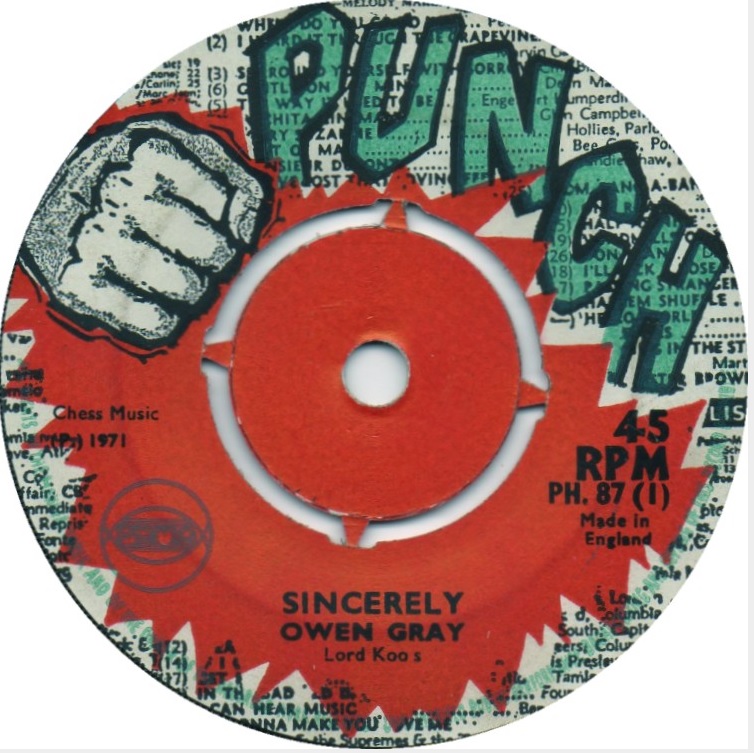
This Doo Wop show had plenty of highlights. In the first set, Prince Buster and his All Stars showed how to improve on the slightly offensive “Ling Ting Tong” by the Five Keys. Then, in the third set, one of our favorite discoveries appeared, a lesser known cover of Gene Chandler’s “Duke of Earl” by Cornell Campbell, which emphasized how much a doo wop track could be transformed and enhanced by a reggae rhythm and vocal styling. In the second hour, we also included a 4 song set of different versions of The Moonglows’ “Sincerely” from Dorothy Russell and Ken Parker, Owen Gray, and Joe Higgs.

Listen to this special Bovine Ska and Rocksteady from July 28, 2015 HERE. Enjoy!

Join us on Facebook to hear about upcoming spotlights, to see rare Jamaican music photos, and more!

 https://www.facebook.com/groups/175321709220304/

“La Vallee”, Barbet Schroeder’s 1971 Hippiedom Nature Exploration

Standard
vallee-6

“Well honey, at least we aren’t in Paris anymore.”

I rarely begin a review with a direct quote, but I thought it was important to include this quote from a 1971 interview with “La Vallee” director, Barbet Schroeder, conducted by famed French director, Bertrand Tavernier in understanding our director’s intentions for his film:  “It’s up to each individual to decide whether or not he wants to conclude that his dream of returning to the bosom of nature is a sad utopian vision, and a flight from the self and its implications in society.”

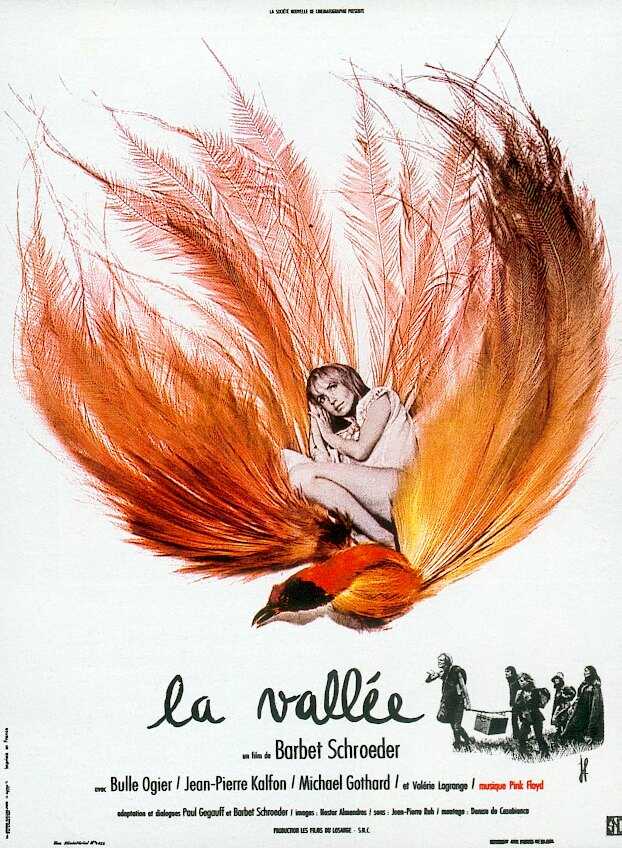
The early 1970s were rife with films depicting this return to the “bosom of nature” as Schroeder stated about his film, “La Vallee,” with many being forced into pastoral exile as seen by Jim McBride’s superb 1971 post-apocalyptic tale, “Glen and Randa,” Nicolas Roeg’s violently abandoned school children negotiating the outback in “Walkabout,” or Mark the radical and Daria the free spirit in Antonioni’s “Zabriskie Point.” The time seemed to be right for abandonment of all things urban in favor of a Utopian or at least survivable natural experience that stemmed from the fear of a never-ending Cold War. That hunger for a utopia is very much the mission for our band of hippies in “La Vallee,” Barbet Schroeder’s almost distractedly beautiful 1971 film.

Viviane (Bulle Ogier) is in New Guinea purchasing exotic feathers for a shop in Paris. She is a gorgeous, well to do but bored wife of a French diplomat from Melbourne. She is being sold on some overpriced feathers and faux native trinkets at a trading post when she meets the beefy hippyish Oliver (Michael Gothard who played the most zealous priest that same year in Ken Russell’s The Devils). Olivier throws some wild boasts and the promises of more feathers to our uptight Viviane and eventually persuades her to visit his band of traveling freaks during the expedition into the jungles of New Guinea. Olivier shows Viviane his collection of rare feathers (the jungle version of etchings I suppose) but refuses to sell her any of them. No, if Viviane wants her precious feathers, she needs to join his band of freaks and find them them herself but not before a bit of the old in and out (sorry that’s a different 1971 film). I guess that a trip to utopia to gain a higher consciousness must first have a stop through Olivier’s pants. Such is hippydom I suppose…

At the camp, Viviane meets Olivier’s band of explorers, including the fiercely primal Gaetan, played by Jean-Pierre Kalfon, Ogier’s co-star in Jacques Rivette’s “L’Amour Fou,” a brilliant film that fosters the discussion about the relations between film and theater and even theater and theatrical aspects of reality, which culminates with Ogier and Kalfon turning their chic Paris apartment into a scene of primal expressionism. Watching the interactions between Viviane and Gaetan in “La Vallee” is an almost follow up of their characters from “L’ Amour Fou” if Ogier never left Paris and is meeting Kalfon whom she forced into such into a state of base behavior two years earlier.  Soon, Viviane and her new friends are on the road with the promise of spiritual enlightenment in an uncharted valley, which sets up the plot with the potential of Viviane undergoing a transformation and finding herself in the wilderness. This is soon sidetracked when Viviane meets a native, who she is told will not sell feathers but will give them away to people whom he likes. Viviane makes no real connection to the native, except for a very western attempt to use her beauty to influence him, which bizarrely works in her favor. It is clear at this point that if a transformation is to occur within Viviane, it is to take place slowly or through some moment of dire circumstances.   Viviane makes some attempts at connecting with nature, even at one point wrapping a serpent around her neck, much to the dismay of Olivier, but soon after Olivier makes it with another woman within the group, and it’s back to the jealousies and insecurities of the western world for Viviane.

Whilst continuing their travels towards the titular valley, our group stumbles upon a the Mapugas tribe and takes part in their rituals, shot in an almost documentary style that seems detached from the subdued Sierra Club visual storytelling which is the predominance of the “La Vallee.” Though Schroeder attempts to remove all gratuitous hippy folklore from the goings on of his film, there is still the slight air of liberal arts college field trip inherent in our hippies’ interaction with the Mapugas tribe, so much so that one wonders if Viviane is still picturing the chief’s majestic feathers sitting in a display case in some shop near the Eiffel Tower for a back to nature sale.   These scenes between our actors and the tribe are of course improvised, and with that, there seems to be a natural disconnect as the over-reverence that the actors clearly possess in trying to relate to the tribe encumbers what should be a more of a transformative moment for their characters. Too many smiles from Viviane and company amidst the hog butchering and face painting take away from what should be a state of bewilderment. Was this Schroeder’s final goal: To show that these westerners/hippies could never truly immerse themselves into this wild frontier after all? Their subsequent journey to the mythical or symbolic valley would indicate that Schroeder thought otherwise in that a potential state of enlightenment was there for them at the end.

Perhaps it is my own western biases coming into play here, but like Roeg’s “Walkabout” I sometimes have to check myself to see if I am I am seeing the transformation of the urban being into a less complicated part of nature, or am I just watching a gorgeously filmed bit of environmental porn to overindulge in for two hours. “La Vallee” was shot by Eric Rohmer/Terence Malick’s cinematographer, Nestor Almendros, who does a brilliant job at capturing the landscapes, but he does keep the proceedings quite stoic, which again would indicate that Schroeder would want to infer that our group of free form travelers is forever locked into their western reality. Also the much heralded original Pink Floyd soundtrack that is less Syd Barrett era psych, and more sitting in your bedroom, staring at the gatefold cover while on shrooms Roger Waters style, goes even further in keeping the viewer from a totally immersive experience.

Original trailer for La Vallee

In the aforementioned interview with Schroeder from 1971, the director viewed the hippies as “the only contemporary movement which has produced a lunatic fringe filled with a spirit of adventure,” and “La Vallee” does make it clear that the spirit of adventure was very much alive with this collection of hippies, but perhaps that adventure had an emotional glass ceiling that was located in a small apartment somewhere in the 1st Arrondissement in Paris.

Generoso’s Creamy and Savory “Risi e Bisi” (Italian Rice and Peas)

Standard

This delicious and dangerously unhealthy Italian dish usually makes it may to the table in Italy sometime during the spring when the peas are harvested, but here Generoso shows you how to make this dish in the dead of summer in our Los Angeles apartment.  From prep to plate this dish should take you a little over thirty minutes to prepare, and for the most part is created in a way similar to that of any risotto.   So get ready for a lot of stirring.  You will need two cups of arborio rice, four cups of peas, 1/2 cup of ground Parmesan, one half yellow onion, 1/2 pound bacon/pancetta, four tablespoons of butter, olive oil, salt and pepper. Let us know how yours turns out. XOXO Generoso and Lily

Music: “Felix Mendelssohn: Songs Without Words”

A Stark, Desperate Post-War Japan in Tadao Tsuge’s Trash Market

Standard

I have not delved too far into Japanese manga, not to mention gekiga, so the recent collection of Tadao Tsuge’s comics collected into a volume entitled Trash Market was a sobering breath of fresh air into new territory for me.

Cover of the Trash Market Volume

Perhaps the Japanese counterpart to America’s Harvey Pekar, Tadao Tsuge’s work has the same spirit of sharp observation as American Splendor but with a bleakness and dourness only possible from a person living in the slum and red light district of post war, attempting to reconstruct Tokyo. And, if the approaches toward comics realism did not parallel Tadao’s work to Harvey Pekar’s enough, his brother, Yoshiharu Tsuge is known as the Robert Crumb of Japan, who attempted to get Tadao work as professional cartoonist and who also included Tadao’s works in his own publications. However, while Tadao did have a few years where he worked solely as a cartoonist, he spent most of his life working low skill blue collar or white collar jobs by day to make a living and drawing and writing at night as somewhat of a hobby, making his life and perspective that much closer to those of Harvey Pekar.

But, unlike Pekar, Tadao Tsuge’s stories, though somewhat autobiographical, do not have Tsuge in the foreground teaching a specific lesson to the reader; they attempt to capture societal issues faced by the lower and middle classes in a Japan devastated by war purely through observation combined with a layer of surrealism and absurdism without explicit rhetoric or argument. In addition, Tsuge’s work has an overwhelming sense of sorrow that punches you in the stomach, for his stories have few moments of lightness and focus on the desperation of people trying to survive after a devastating war that not only destroyed the land but also the morale of the nation.

Trash Market contains six stories: “Up on the Hilltop, Vincent Van Gogh…,” “Song of Showa,” “Manhunt,” “Gently Goes the Night,” “A Tale of Absolute and Utter Nonsense,” and “Trash Market.” In addition, the volume also contains, “The Tadao Tsuge Revue (1994-1997)”, a short memoir about his life and the people and issues he encountered as a dual working class Japanese man and cartoonist in the late 1950s and early 1960s. With all six stories and the memoir, Tsuge reveals a side of Japan rarely seen by Western audiences, devoid of the honor and stoic countenance of the samurai culture Westerners have come to love and completely devoid of the hyperbolic style and sexuality of manga. In relation to film, Tsuge is less Akira Kurosawa and more of Susumu Hani, with his realistically surreal style to portray a decrepit Japan stumbling from the ashes of war.

Tsuge at his best captures masculine pain and men’s misguided attempts to handle it in a highly repressive culture where most of the men have died and those who remain carry the shame of losing a war. As a result, “Song of Showa,” “Gently Goes the Night,” and “Trash Market” rise as the strongest stories of the Trash Market collection. The most autobiographical of the bunch, “Song of Showa,” details the erosion of the family unit in Japan’s red light district. “Gently Goes the Night” follows the mental breakdown of a veteran once sent to fight in Burma who is now at home attempting to live a normal life with a loving family. And lastly, “Trash Market,” a perfect closer to the volume and the ideal title piece, expands on a note in a urinal at the blood bank Tadao worked at from a former Japanese naval lieutenant forced to sell blood to live. Tsuge’s Japan has no glory, no honor, just plenty of broken people trying to make ends meet.

Consequently, Tadao Tsuge’s work walks the line between existentialism and pure nihilism. Defiantly apolitical, Tsuge’s stories in Trash Market do not glamorize or celebrate any of the student movements and protests occurring as he wrote and published in the late 1960s and early 1970s. In fact, he articulates his own sense of politics in the supremely nihilistic “A Tale of Absolute and Utter Nonsense,” where revolutionary, idealistic students clash against the police and soldiers of the government, and both sides completely destroy each other, leading to no progress whatsoever. From this destruction, we are able to see that Tsuge had far less interest in the politics of the government and of the rising youth and far more interest in studying people in their daily lives without a political lens stemming from any manifesto or ideals.

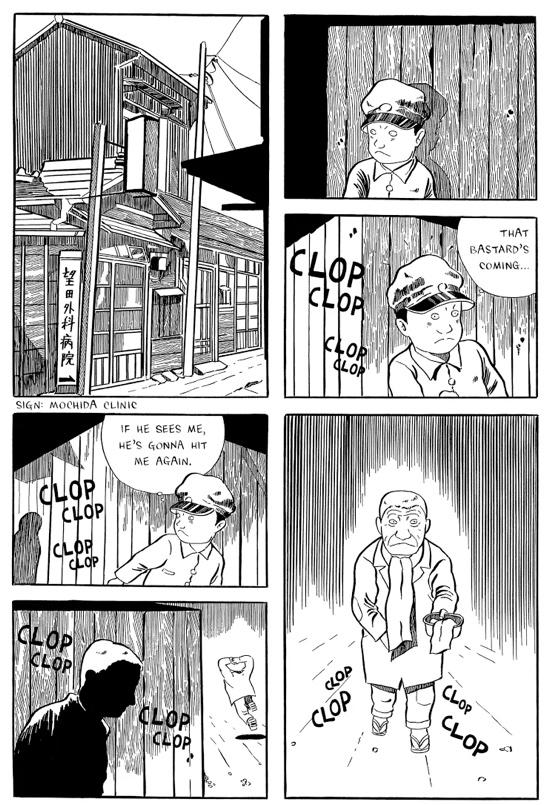
A page from Song of Showa

Given his topics and perspective, Tadao Tsuge’s comics are incredibly far from manga. His drawings are simple and at times coarse, and his storytelling methods are more atmospheric, lacking a definitive plot structure and clear protagonists and antagonists. His work focuses on the daily activities of a declining civilization, and, as a result, Trash Market conveys a unique, stark sense of despair and gloom. Thus, it is of no surprise that Ryan Holmberg, the editor and translator of Trash Market, reversed the orientation of the original stories, making the volume read from left to right instead of the right to left that we as the West have come to correlate with the novelty of manga.

Tsuge’s work may not be the best reading choice on a bad day, but his own portrayal of life’s small brutalities will force you to see a world hardly discussed in Western history and will provoke sympathy for a former enemy nation during a time when it was still considered as the enemy. Through interactions between people, Tsuge details a rotting, abject world that few deserve to experience. Altogether, Trash Market reveals a part of Japan’s history that we should better understand.

Expect no babydolls or samurai here–only the honest, somber post-occupation Japanese reality lurking beneath the luster of Japan’s exports lies in Tadao Tsuge’s stories.

Trash Market is written and illustrated by Tadao Tsuge and edited and translated by Ryan Holmberg. It collects six stories published from 1968-1972It is available now via Drawn & Quarterly.


Bovine Ska and Rocksteady 7/21/15: Alvin Ranglin’s GG Label

Standard
GG Label A

A great early hit for the GG Label

Hello Bovine Ska and Rocksteady Listeners,

This week’s program which aired on Tuesday, July 21st, started with two sets of fantastic ska beginning with one of the most unheralded singer/songwriters in Jamaica music history, Wilburn “Stranger” Cole’s 1963 cut for Duke Reid’s Dutchess label, “Boy Blue.”  Gaylad, BB Seaton, ended the first set with a fierce solo cut, “Power” produced by Coxsone in 1963.  After another, mostly instrumental ska set, we charged into our mento set with The Tower Islander’s informative tune, “Advice To Men.”  We ended our first hour with an unusually long rocksteady set, beginning with The Originators, “Red Hot Iron” for Gayfeet in 1967 and ending with Junior Smith flute-infused rocksteady, “Cool Down Your Temper.”  At the end of the first hour it was time to spotlight Alvin Ranglin’s GG Label.

Born in the rural district of Eden in Clarendon in Alvin Ranglin’s interest in music began when he was a child as a choir member in the Adventist church. As a teenager, he moved to May Pen for a better school. In May Pen, Ranglin began to sing publicly in concerts. Music, however, was not his original industry of choice. Ranglin first attempted to become a carpenter, then mason, and then a welder, with no luck. At that point, his mother suggested going to England, but Ranglin stayed and became an electrician, emerging after training as a radio and television technician. Given his skills, Ranglin built tube amplifiers that were sold to musicians, and in the hope to get more music to people beyond the amplifiers, Ranglin opened up his GG’s sound system, named after family members, Gloria, her sister, and a cousin nicknamed Girlfriend. With the soundsystem open and connections to the jukebox industry, Ranglin was ready to record his own singles. The earliest to his label were the Maytones and his singing partner Emmanuel Flowers. With the duo Flowers & Alvin, the label scored a hit with Howdy & Tenky, which was further promoted by Ranglin’s own jukebox circulation.  A major entrepreneur with hands in many businesses ranging from TV repair to gaming machines, Ranglin also opened a record store in May Pen, then Kingston, then Halfway Tree, Old Harbour, and eventually in London and Brooklyn.

The Maytones, Vernon Buckley and Gladstone Grant, were early stars on the GG’s label. Buckley was doing book work and Grant was a mini-bus driver, and the two formed the Mighty Maytones and auditioned for Alvin Ranglin when they heard about his record store in Maypen. The Maytones would see great success with Ranglin until Buckley left Jamaica for Canada in 1980. The house band for the label was the GG All Stars and amongst the rotating musicians who played for GG’s All Stars are: Winston Wright or Glen Adams on keyboards.  On trumpet Bobby Ellis and on sax Roy Samuel or Felix Bennett.  On guitar Alva Lewis or Hux Brown. on Drums were Winston Grennan and Calrton Barrett. On bass Clifton Jackson or Aston Barrett and on piano Theo Beckford or Glady Anderson.

Listen to the 7/21/15 edition of Generoso and Lily’s Bovine Ska and Rocksteady on Mixcloud HERE.

Join our group on Facebook!


Michael Schultz Directed Richard Pryor In Two Films in 1977 And “Greased Lightning” Was The One That Got Away

Standard
greased lightning pryor

Richard Pryor Takes The Wheel in “Greased Lightning.”

Michael Schultz was one of the most successful African-American directors of the 1970s. Starting out in television as a director for the early part of the decade, Schultz graduated to the big screen in 1974 directing Diana Sands in “Honeybaby, Honeybaby,” a low budget action film that was to be Sands’ last film before she passed away in 1973. Schultz immediately returned with the successful 1975 film, “Cooley High,” a entertaining high school comedy/drama that many refer to as the “Black American Graffiti.” In 1976, Schultz hit it big with “Car Wash,” one of the many “workplace comedies” of the 1970s that was inspired by Altman’s “M*A*S*H,” and a film that also produced a number one soundtrack for the disco era. That film contained about eight minutes of a rising comic named Richard Pryor, who sometime between filming and release developed into a star after nine years of small parts (with the notable exception of 1″The Mack”) in over a dozen films. Schultz rushed out to cast Pryor in the lead role, and so in 1977, Schultz cast Pryor in a US remake of Lina Wertmuller’s “The Seduction Of Mimi,” called “Which Way Is Up,” converting the eternal schlubby Mimi of Wertmuller’s film into Leroy, a California grape picker who accidentally becomes a union leader. It is easily one of Pryor’s best performances as he (Pryor) plays several different characters in the same way that he could do onstage, with total commitment and at the drop of a hat.

While “Which Way Is Up” was filming, another successful African-American director from that decade, Melvin Van Peebles, contacted Pryor. Melvin wanted to make a biopic about Wendell Scott, a World War Two veteran, moonshine runner, and a stock car racer on the Dixie Circuit who would become the first African-American to drive for NASCAR. With another opportunity to play the lead, Pryor was onboard for the project, and the film would be fittingly titled, “Greased Lightning.” Unfortunately, somewhere during the casting process, Van Peebles and the producers of “Greased Lightning” began to have artistic differences, and Van Peebles was dismissed, leaving the film without a director. Eager to play Scott, Pryor asked Schultz while making “Which Was Is Up” to helm the project, and Schultz agreed. Shortly after the wrap of “Which Way Is Up,” Schultz and Pryor began work on “Greased Lightning.”

A lot of talent was attached to “Greased Lightning.” Besides Pryor, the absolutely gorgeous and talented Pam Grier was selected to play Scott’s wife, Mary, and she turns in the best performance of the pic. Cleavon Little (Sheriff Bart from the Pryor scripted Blazing Saddles) as Scott’s best friend, Peewee. Beau Bridges as Hutch, Scott’s only white friend and mechanic, and famed folks singer Richie Havens as would play Scott’s other mechanic, Woodrow and also contribute more than a few songs for the soundtrack, songs that at times supply the Greek Chorus for the film. Sadly even with all of that talent, it becomes clear as to what the artistic differences must’ve been between Van Peebles and the producers as this feels like quite the hatchet job.

First off, the tone of the film is almost unbearably light, like that of “The Buddy Holly Story,” which considering the amount of racism inherent in Wendell Scott’s story, some pretty awful moments of real hate from Scott’s life play out almost as comedy, and I would imagine Van Peebles would never even think of shooting it that way. What is truly unbelievable about the mellowing of those moments is that during the filming of “Greased Lightning,” racially biased locals in Georgia did everything they could to louse up the production, including whistling and yelling whenever director Schultz would yell “action.” Things got so bad in fact that Schultz would have to substitute the words “action” for “cut” so that the antagonizing yokels would be confused as to when to start yelling. Also the producer’s “feel good movie” intentions are made even clearer as “Greased Lightning” was released with a “PG” rating, which almost guarantees that any edge of that pesky racism would be almost entirely removed without expletives that would naturally be attached to such hateful speech.

Secondary to the watering down of Wendell Scott’s story is the editing which stunts almost every moment of real emotion from carrying through to the viewer. As stated earlier, Pam Grier puts a ton of love into her performance as Scott’s wife Mary, she carries so much love and hurt on her face, but most of her scenes are quickly cut before they can impact you. Beau Bridges’ gives a fine performance and is comedically great as Hutch, who first mocks but then befriends Wendell. Their scenes together are quite good, but, again, they are sliced down to almost nothing by the middle of film, so we never see the relationship mature in any logical way. Cleavon Little is relegated to just quick comedic insertions during most of his scenes, which is a waste for such a talented actor. The few racing scenes are well shot and are very exciting, especially Scott’s first race where he goes over the wall and comes back to finish the race, but those scenes are few and far between. The greatest editing sin is that shortly after Scott finally begins to win a race, the film cuts to him as an aging and medically challenged retiree at the age 42! The jump is stupefying as we have little idea of where his friends and crew have been during this time, and it makes his eventual win at the Grand Nationals, which ends the film, anticlimactic.

Original 1977 Trailer for Greased Lightning
http://www.youtube.com/watch?v=YTlM__C5AbE

It feels like there is more of a film there somewhere as “Greased Lightning” isn’t sure whether it wants to concentrate on Scott the driver, Scott the husband, or Scott the friend, and the film does none of these aspects of this heroic man any real justice. Richard Pryor does as well with the material as he can and proves that he can perform drama almost as well as comedy, and only one year later in 1978, Pryor would stun critics with his fine dramatic performance in director Paul Schrader’s best film, “Blue Collar.” Sadly, Michael Schultz, who continues to direct television to this day, in that same year of 1978, directed Peter Frampton and The Bee Gees in a musical interpretation of the Beatles, “Sgt. Pepper’s Lonely Heart Club Band,” a film so horribly misconceived and painfully executed that it makes you wonder if Schultz was so rattled by the poor box office and criticism of “Greased Lightning” that his instincts were completely off for the remainder of the decade.

A Bite Sized Appetizer Transforms Into a Meal: Lily’s Banh It

Standard

Vietnamese food from the Hue region is some of my favorite food. Particularly, I have fond memories of eating a version of banh it with a chewy, crispy piece of fried dough underneath it in a grimy restaurant specializing in food from the Hue region in Houston as a child. Man, that restaurant was a rough place to eat at, but the food really was unlike any other.

Unable to find that version of banh it again, I decided to make my own interpretation. The version I had as a kid was served in bite sized servings as an appetizer, but since I lack such a level of portion restraint, I made my banh it much larger, making them less of an appetizer and more of a meal.

There are many steps to this recipe, but I promise the outcome is a delicious mix of flavors and textures, especially when served with a piece of lettuce to wrap around these hybrid steamed and fried rice flour dumplings and all topped with nuoc mam.

Perfect for a special occasion, banh it will definitely impress your friends and loved ones! Enjoy!

LA Inspired Apocalypse: Ed Laroche’s Almighty

Standard

There’s something paradoxical about Los Angeles as a city. Right beneath the neon lights and the glitter lies a deep layer of decay and loss. Under the bright California sun lies both buildings of glass and steel and abandoned, empty buildings of eras long past. It’s a city of hopes and dreams, both simultaneously fulfilled and unfulfilled. Thus, it is of no surprise that LA has inspired film and literature for nearly a century, and after living here for only a few months, I understand why this is the city of film noir.

Consequently, after reading Ed Laroche’s post-apocalyptic Almighty, I was not surprised to learn that he has lived in this City of Angels for his entire life and that Almighty was released in 2008, the year of the modern economic collapse we remember most.

Opening Image of Almighty

Set in a wasteland hill and plain then mutant city possibly in California in 2098, Almighty grabs that sensation of lost hope and despair ever rampant in LA and pulls it to the surface. After a devastating economic collapse in the future, a new Great Depression arrives. And in addition to the crippling economic failure leaving people homeless and without any infrastructure to re-create the society they knew, a major military conflict stifles any potential to return to normalcy, and an experiment has gone very wrong, leaving an entire section of the region filled with infantile mutants covered in boils who were once human but now roam the desolate streets looking to tear apart animals and returning to a great mother for sustenance.

As expected with any great economic downturn, some people attempt to sustain themselves on meager means while others resort to crime. In the world of Almighty, those who resort to crime band together as a group of paramilitary vultures, bringing terror to the people who bypass their headquarters far outside of the city and picking off whatever they can from their victims. On one of their attacks on an RV filled with supplies, the group, known as Golden State, capture Del, a volunteer medic, after they murder everyone else in the vehicle. Held prisoner for days, she finally tries to escape, but her captors stay quickly on her tail and confront her.

However, as the captors narrow in on Del, an unknown guardian and protector fires from an unseen location, allowing her to survive. After the blink of carnage that eliminates seven of the captors on Del’s trail, Fale, an androgynous woman, emerges from the tall grass in the field to the clearing where Del lies to explain she has been hired to rescue and return Del home. Immediately, the two jump on Fale’s bike to begin the long trek back, but unfortunately, that first battle will be the easiest one the two will encounter for the rest of the rescue mission.

Most of Almighty focuses on the grim state of the world through the eyes of Del and Fale, with Del as the crestfallen and jaded idealist and Fale as the ultimate survivor and mercenary. Both are new to this world of all lost hope, and both try to adapt and maintain their own humanity as the line between human and animal blurs. As a result, the mission of Almighty serves merely as a framework to the plot; the meat of the volume lies in all of the post-apocalypse terrors they encounter and the consequent effects on their relationship as humans in a dying world.

For a graphic novel set in catastrophe, Almighty has an enormous amount of restraint. Laroche never overburdens the dialog, and he presents every moment of violence and action with an incredible amount of detail and viscera but quickly balances it with a moment of reflection or assessment of the damage done. In addition, the visual style of the volume follows a similar ebb and flow, with action sequences drawn with a sharp style with disorienting and unstable energy and more narrative sequences drawn with a more static, calm style. Reading Almighty feels like a natural harmony between stress and rest and despair and hope.

Ultimately, Almighty explores the fundamental question of what exactly draws the line between human beings and animals. By setting the story in a world where society has been broken, Laroche can ask that question without the frivolities and the pseudo-stability we find in our civilized world and hone in on an answer when that line of humanity is truly tested. He offers his answer in the graphic novel, but as with any great work, he leaves you the room to decide on your own.

Almighty exploits our greatest fears of when the world goes wrong in a large metropolis and, through its horror inspired methods of removing the blocks of civilization that we have become so familiar with, forces us to think about what lies beneath all of the baubles and the images we create for ourselves. As I wander through this land of image myself, I wonder what lies beneath all of the sparkling glass and gold as well. To get a hint of my answer and the one Laroche has proposed with Almighty, you only need to look to the abandoned theaters and offices with decaying ornate plaster and gilded molding in almost every neighborhood in LA, and soon you will see.

Almighty by Ed Laroche is available via Blackhalo Productions.