Generoso and His Beloved Linguine Carbonara

Standard

Generoso will teach you how to make this classic dish that originated in Lazio, Italy his way.   Quick to cook, linguine carbonara has a modest list of ingredients: Pecorino Romano cheese, eggs, bacon, parsley, garlic, light cream, salt, pepper, olive oil and of course linguine. A quick dish that is great for cold winter nights. Let us know how yours turned out!  Music:  Ottorino Respighi’s Suite no. 1 from Ancient Airs and Dances.


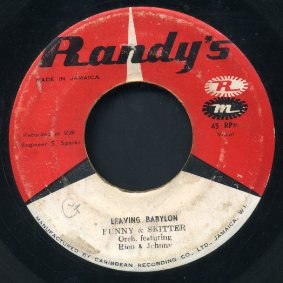
Bovine Ska and Rocksteady 11/25/14: Bunny and Skitter

Standard
Bunny and Skitter Chubby Single

Count Ossie Adds Some Furious Drumming To This Bunny and Skitter Classic

As this week’s show aired twenty four hours before Thanksgiving 2014, we just had to start with the only Jamaican track to honor our day of overeating, football, and some thanks, Prince Buster’s sublime mid-tempo ska, Thanksgiving.  A fun cut that was released in Jamaica on the “What a Hard Man Fe Dead” LP in 1967.    We then surrounded that cut with two sets of tantalizing rocksteady, culminating with a Merritone label track from Hopeton Lewis entitled “At The Corner of The Street,” which up until recently was a long forgotten song on tape until the kind folks at Dub Store Records in Japan released it.

Our last set of the first hour featured some splendid ska instrumentals which included “One More Time” from Lloyd Brevett and his Group, released on Lyndon Pottinger’s SEP Label in 1964 and ending with a sensational instrumental from Roland Alphonso recorded for Justin Yap called, “Live Desire.”

For our spotlight this week, we chose the early Jamaican rhythm and blues duo, Bunny and Skitter, who despite recording some fantastic hits during the pre-ska era, also remain quite the enigma as there’s still a little bit of mystery surrounding the identities of Bunny and Skitter.  There is some solid agreement on the identity of Skitter, who was Vernon Allen. There are reports that Bunny was Zoot Simms and other reports that identify him as George Dudley. Though, the exact identity of Bunny is not clear, we do know quite a bit about their discography. Bunny and Skitter recorded their earliest tracks for Coxone’s Worldisc label and after working with Coxone, the duo would work with Prince Buster and Vincent Randy Chin.  It must be said that although they would only do one session with Buster, it would produce a high point for their career in the song called “Chubby.”

When “Chubby” was recorded in 1961, the Rastafarian was still viewed as a cult by proper Jamaican society.  This fact seemed to elude Buster who had always operated with a downtown ethic.  For this recording, Buster brought in the Nyahbingi drumming of Count Ossie and a team of four burro drummers as he had with the Folks Brothers R&B hit, “Oh Carolina” but here Buster removed the R&B elements to produce the first pure example of Nyahbingi drumming ever recorded in Jamaica which also proved a hit for Bunny and Skitter.  Shortly after the success of “Oh Carolina” and “Chubby”, several other Jamaican producers such as Coxsone Dodd and Vincent Chin would turn to Count Ossie for a hit.  With Bunny and Skitter’s voices and the Count Ossie drumming, a musical revolution had begun.

We were delighted to present the spotlight on Bunny and Skitter. Listen to this past week’s show HERE.

The archive will be available until 12/8/2014. Enjoy!


Changes Forced by the Loony Family Reunion in Bottomless Belly Button

Standard

A little over two months ago, I ranted and raved about Dash Shaw’s 3 New Stories. Excited by his experimental approach to graphic novel/comic book illustration and storytelling techniques, I have looked forward to the opportunity to explore more of the Shaw catalog.

Bottomless Belly Button back cover, spine, and front cover

On the surface, Bottomless Belly Button, a novel conceived from 2005 to 2007, looks like a conventional family drama. Upon the decision to divorce after forty years of marriage, the elders of the Loony family, David and Maggie, call their children and their respective families to the Loony headquarters (a beach house on a mysteriously desolate strip of sand) to break the news to everyone. As expected with any sort of major change, each member of the Loony family reacts in distinctive ways based on individual age and experience.

Dennis, the eldest brother, launches into a full adult tantrum and hysteria, determined to get an answer to why his parents decided to split. As the next-in-line head patriarch, Dennis feels a responsibility to understand his parents split and to try his best to keep the Loony family somewhat together by getting a reasonable answer. Accompanied on this trip by his wife, Aki, and son, Alex, Dennis unfortunately abandons them more and more as he delves deeper and deeper into his investigation of his parents’ relationship history and trajectory from the beginning up to the present.

On the other hand, Claire, the middle sister, remains unflinched. As a divorcee herself, marriage dissolution does not phase her; however, this indifference may stem from her current difficulty in returning to a romantic life and inability to release some residual feelings for her artist ex-husband. In addition, Claire must raise her awkward adolescent daughter, Jill, who also arrived with her mother for the family reunion before family disbanding. On the Loony beach, Claire and Jill both attempt to better understand themselves and escape their current situations, steering their focus away from Grandpa and Grandma Loony’s divorce.

Peter, the youngest of the Loony children, displays the least amount of distress of all. As the youngest and the outcast of the family (with his isolation exacerbated by Shaw’s illustration of Peter as a young man with a frog head), Peter has never felt any serious emotional connection to his family. His distance is further highlighted by the blueprints of the Loony beach house, showing how Peter’s room stands as the only room on the fourth floor of the house, far away from the rooms of his family and any communal rooms. As a failing filmmaker at the age of 26 whose inability to relate to his family transferred to a general inability to interact with other people with any modicum of social grace, Peter reacts to the divorce of his parents like a stranger invited to a family dinner where the uncomfortable news is released.

Consequently, Peter wanders, as usual, on his own course. Peter walks the beach with his kid niece Jill and eventually meets Kat, a girl who Jill bullies him to speak to. As his parents’ marriage ends, Peter begins a flourishing new relationship with Kat, a beach camp counselor who may be far younger than he is. Peter and Kat’s relationship has some truly awkward moments because of Peter’s inexperience, but their growth towards each other serves as a strong foil against the disintegration of David and Maggie Loony’s marriage.

Again, from what has been described, Bottomless Belly Button seems like a standard relationship drama for a white, middle to upper-middle class family. What I have yet to mention, though, is the presence of some undescribed, unidentified supernatural force that carries through the narrative, gradually smoothing away tensions, fears, and hatred. As Bottomless Belly Button progresses, every member of the Loony family reaches a level of acceptance of their situation; the Loony parents’ break up galvanizes a period of growth for all members of the family, and this mysterious force of nature or force of calm, be it from a deity or from elsewhere, pushes each Loony member onto a track that forces each person to experience something new and also reflect on past actions, allowing each member by the end of the book to have the resolution to return to their separate lives with a new perspective and a better ability to care and support the people in their lives.

Beyond the strength of the core narrative, what really makes Bottomless Belly Button special is its ability to weave in artifacts of each character into the story, ranging from childhood pictures to love letters between David and Maggie to even a review of Peter’s failed film. By entangling these seemingly trivial pieces of memories, Shaw immerses the reader into the characters, allowing us to understand the motivations and the full perspective of each person at the beginning of the visit, which then allows us to compare the shifts in demeanor and viewpoints by the end. Further supported by some brilliantly expressive, yet simple illustrations, Bottomless Belly Button sets a consistent tone and mood that pulls the reader into the full world of the Loony’s, making the reading of the somewhat intimidating 720 pages feel like a drive where the end is unknown, but there is a general synchrony with the surroundings that forces you to pull your eyes away from the clock and speedometer, causing you to release your thoughts and engross yourself in the small microcosm currently existing around you.

Loony Family Pictures found in Dennis’s search for answers

Bottomless Belly Button, despite its many quirks, is overall a serene and meditative work. It reminds the readers of the different stages of life in which we can attain further development and how that growth impacts the people in our lives. Though not a read for children (as the spine of the novel warns), Bottomless Belly Button is a graphic novel that should be handed to any person currently approaching a major shift in their lifestyle or in their perspective of the world.

Bottomless Belly Button by Dash Shaw is available via Fantagraphics Books.

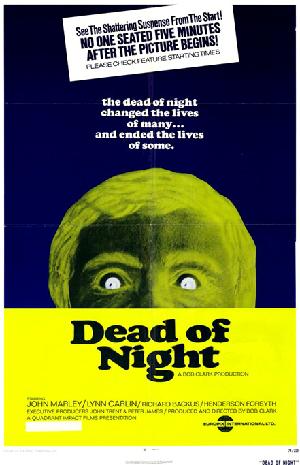
Bob Clark, Director of “A Christmas Story,” Gives Us a Soldier’s Horrific Homecoming from Vietnam: 1972’s “Deathdream.”

Standard
Deathdream Poster

“Dead of Night” (Deathdream) Original Poster from 1972

I could easily dedicate this blog to just “post-Night of The Living Dead zombie films of the 1970s” as the genre was simply flooded after the cult film success of the Romero classic that defined the word zombie for decades to come. In fact to show how niche the genre got, just last week I reviewed the sublime and campy 1977 underwater Nazi zombie film by Ken Weiderhorn, “Shockwaves,” about a group of extremely loyal soldiers (they’re dead) of Adolf who still live and fight for the Third Reich while vacationing in the Caribbean. Someone else who definitely took inspiration from Romero was director Bob Clark, who knocked out a couple of rare underrated films in that genre, 1972’s “Dead of Night” (Deathdream) and 1973’s “Children Shouldn’t Play With Dead Things,” before bizarrely going off to make the seminal holiday film, “A Christmas Story” and the equally seminal but repulsive ten sex comedy, “Porky’s.”

“Deathdream” could easily be lumped into another genre that was also quite overloaded during this time period, the misery the returning Vietnam veteran film. The intense drama of those Vietnam era films is very much in place in “Deathdream,” with the caliber of acting from two of its leads, John Marley and Lynn Carlin, who were last seen together in Cassavetes “Faces” carrying much of the sadness of this horrific and well thought out film. It is the story of a US Soldier, Andy Brooks (Richard Backus), who is shot and killed in Vietnam, and as he lies dying, he hears his mother’s plea to “come back home.” The family receives Andy’s official death notice from another soldier, but his mom Christine (Lynn Carlin) still believes in her heart that the message is a lie and someday her son will come home. Unfortunately, Christine is right and Andy is on his way home, but Andy has been changed by the war; he rarely speaks, and for some unknown reason, he murders and drains the blood out of a truck driver who has kindly given Andy a lift home.

Andy sneaks into his family’s house soon after the killing, and after being warmly greeted by his family, Andy is still very quiet, avoiding seeing anyone outside of the immediate family and exhibiting small moments of rage, which seems just about right for a soldier just recently removed from combat. The next day, while lounging outside, Andy is greeted by the mailman, a longtime friend of the family, who gleefully explains how his experiences during World War Two were vastly different than Vietnam. This enrages Andy, and he finds refuge in his old bedroom where he pathologically rocks in rocking chair all day and night, drawing the concern of his father Charlie (John Marley) who will also recount how he never behaved like that after his service in World War Two. It is in these scenes where Bob Clark reminds the viewer of the old adage that was once uttered by the head of the Veterans Administration; “When a soldier returned from World War Two, everyone bought him a drink. When a soldier came back from Korea, he bought his own drink. And when a solider came back from Vietnam, he has to buy everyone else a drink.” Even though the town is adorned in flags and patriotic symbols, there is little patience for the PTSD exhibited by the soldiers who served in Vietnam, and in “Deathdream,” the PTSD is transformed into a need for Andy to drain the blood from the living in order to continue being part of this society that may not have time for him. More than most political metaphors that the zombie genre has carried over the years, this one really hits home.

Though there are a few scenes where a kind of comic relief is put in, the overall mood of “Deathdream” is dire and extremely sad. Attempts to reintegrate Andy into a world that no longer exists for him by his family are met with brutally violent ends, physically manifesting any soldier’s genuine contempt for those around him who have no desire to understand his pain and sacrifice during that unpopular war. The unrelenting and tragic end of this film, involving Andy’s parents and sister, show a commitment by Clark to illustrate the level of impact that war takes on a solider and those around him, even when the soldier is met by the best intentions of loved ones who even offer psychological counseling as the Brooks family offers their son Andy. “Deathdream” though brutal, hammers home the sad truth that if your son were even able to come home, he may never actually be home again.

Deathdream Trailer from 1972:
http://www.youtube.com/watch?v=eIqA1ZbpYFw

As stated earlier, what truly pulls “Deathdream” together are the performances of Carlin, Marley, and Backus who take a minimal amount of dialog top help create a terse, heartfelt film that makes for a very necessary statement piece on the particular plight of Vietnam veterans. “Deathdream” succeeds by using grotesque horror methods to illustrate the struggle of Vietnam vets in ways that even award winning films like “Coming Home” and “The Deer Hunter” sometime fail to execute.

Director Bob Clark showed a clear talent for being able to draw top flight performances out of his actors in his early career.  Several years after “Deathdream, Clark would direct legendary actor, Jack Lemmon, to an Oscar nominated performance in the equally forgotten 1980 drama, “Tribute.” It is a pity that the end of Clark’s career would be filled with the likes of Sylvester Stallone’s “Rhinestone,” and “Baby Geniuses,” as there was a true maverick talent that seemed to be destroyed after the unbelievable financial success of his “Porky’s films. Sadly, Bob Clark was killed in 2007 in a car accident with his son Ariel, a tragic end to a talent who for at least a decade was making interesting films, both in and out of the Hollywood system.

Lily Creates Her Irresistible Bo Kho (Vietnamese Beef Stew)

Standard

Bo Kho is an anise charged, lemongrassed fueled Vietnamese beef stew that we love to have here in the Fierro home the moment the thermometer dips. For this slow cooked dish, you will need about 2 pounds of beef, star anise, garlic, fish sauce, soy sauce, oyster sauce, black and cayenne pepper, ginger, olive oil, one can of puree tomatoes, and a packet of Vietnamese beef stew seasoning which you can get in almost any Asian grocery store.   Enjoy and let us know what you think when you make yours!!

Music is by that Beethoven guy, Violin Concerto in D, Op. 61.  Enjoy!

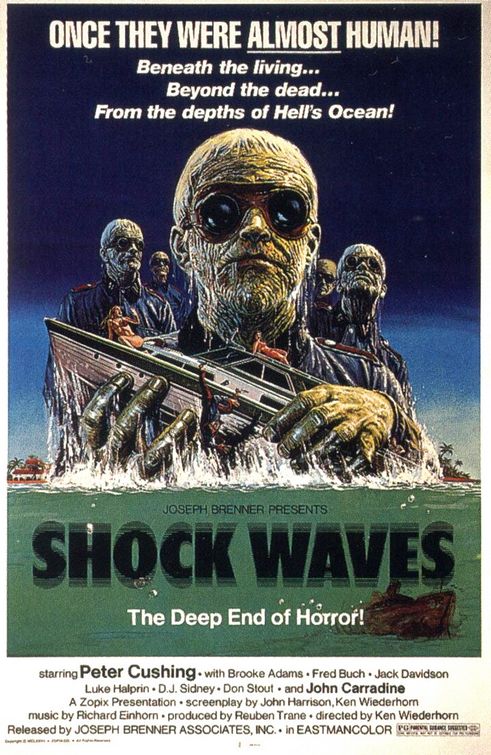
I Was Attacked by Underwater Nazi Zombies at The Coolidge Corner: A Midnight Screening of a Restored “Shockwaves” from 1977

Standard
shock_waves poster

Original Poster for Shockwaves

What a mind-opening experience it was to hear director Ken Weiderhorn talk about his most famous film, “Shockwaves,” last week at the Coolidge Corner. Though I was thrilled to hear him speak in person about his now notorious 1977 underwater Nazi zombie film, his overall tone that night was that of a dad who was forced to talk about his son’s recent ballet recital. After hearing him sadly recount his story of how a late night CBS television screening of his film caused folks at his then television job to lose respect for him, thus making it difficult to thrive in his chosen career, I get it, he was not happy. But let’s put the potentially un-PC, career-ending subject matter aside, “Shockwaves” is a visually unique chunk of horror that can boast about a cast containing a pre-“Days Of Heaven,” Brooke Adams, and B-horror movie legends( who were only paid for four days of shooting BTW) Peter Cushing and John Carradine at their creepiest. Also, “Shockwaves” can still give you the thrill of saying to your co-workers, “well tonight I’m seeing one of those underwater Nazi zombie films” because that statement should be good for at least another forty years of bad looks.

The film begins with a father and son who rescue a sunburned, disturbed woman from her rudderless dinghy.   Something horrific has happened to her and you need to know why. As she starts to recall what occurred, you begin the backtracking by placing her on a pleasure boat that is being captained by a very drunk John Carradine (he’s was really good at this) , with a salty crew of young and old, and a passenger list containing a cast of vacationers that any 70s film would be proud to have: You have the hunky curly-haired guy, the annoying know-it-all redhead, who is of course married to the whiny Herb Tarlick-styled salesman, and the radiant, raven haired, level-headed protagonist of our film, Brooke Adams, who was our gal adrift at sea whom we just saw at the beginning of the film. The boat is far from ship-shape, the meals are cooked my a man who usually eats chili with his fingers, and the captain played the always cantankerous John Carradine, who has a pony bottle of Bob’s Vodka permanently glued to his hand as an accessory. As mutiny begins to fill the air, they are sideswiped by a ghost ship which does some damage and are forced to land the SS Minnow on a desolate island that has the shell of a long since destroyed military ship off its coast. Our captain goes missing and is then found dead, and so now it’s up to the passengers crew to figure out a rescue plan.

photo 2

Director Ken Weiderhorn at The Coolidge Corner

They soon come across the lavish, dilapidated estate of a semi-retired SS Commander (Peter Cushing), I say “semi” as he almost immediately explains that his group of “Death Corps,” a scientifically created group of immortal soldiers, still roam the island. These troops were designed to be U-Boat crew members so they really like the deep blue sea and continue to live there, but as World War Two had ended some thirty years prior, they just got to kill everything they see out of loyalty or boredom once they uniformly pop up from the various rivers and ponds on the island. Armed with this knowledge, the crew find a place to hide and try not get killed before they can and make a dash off of Club Hitler the next day. I must admit the story is pretty thin but the Death Corps zombies are the most interesting thing about “Shockwaves.” These zombies (for lack of a better word) behave more like” Val Lewton” zombies and not like the Romeroesque “eat your face” zombies of “Night Of The Living Dead” which had come  forth from beyond a decade earlier. More maniacal and cunning than shambolic, yes this 70s cast will not be a food source for walking meatloaves; they will be drowned and strangled by these highly trained, and oddly nostalgic, undead fascists. These choices of murder strategies that they employ were due more to budgetary restraints, than a thoughtful desire to omit bloody outcomes. In fact, as we learned from Mr. Weiderhorn that night, a lot of this film was guided by the lack of funds. Ken stated that the money people had a desire to bankroll a horror film because, “they always make their money back,” and according to our director, they did make their bread back with “Shockwaves.” Also as we all know, sometimes being restricted by funds does bring out some creative alternatives that work better than the usual, and there are several clever ways that Ken got results out of small money.

As we now know, every zombie has an Achilles Heel, and these happy go lucky denizens of the deep cannot lose their special Biggles of the Camel Squadron goggles or they go all floppy. Why?  According to Ken, “we had to come up with an easy way of killing them that would not compromise their makeup, which was the biggest challenge of the shooting, as getting makeup to stay on when the Nazi’s are going in and out of water is a pain.”  Still, the look of eyeless, waterlog undead creatures of the sea writhing in pain with screeching synth music playing behind their passing adds a good amount of dare I say, “shock.” Also, getting back to their particular killing style, these whimsical fascists love bringing the living back down to their murky un-graves as they seem pretty upset about having to live out eternity as overdressed bottom-dwellers, so I suppose that they want company. Unlike the flesh-eating in Romero films which I rarely found scary, these slow suffocating deaths are actually quite chilling. And the Death Corp, unlike the boogeymen of children’s stories, love walking around in plain sight during broad daylight, which I would say is pretty ballsy. Because of this brash behavior, you usually see them before their victims see them, and that too adds to the shock of “Shockwaves.”

So where did the idea for these creatures come from? I was lucky to have personally asked Ken the question of where he got his inspiration for such a strange horror film monster. Sure, these days you can’t turn on the History Channel without some program on “Hitler and the Occult” or “The Satanic Armies of the Third Reich,” but what was there in 1975 when the film was written to inspire such a creation. Ken responded that there was a book that he had read entitled “Occult Reich” that had all of this info about Hitler and his weird obsession with the Satanic rites, so from there he thought that perhaps that wacky millennialist was using these methods to fuel his campaign of world domination by creating some kind of super solider. Ken continued by saying, “Even their symbol, the swastika, wasn’t that a sacred Buddhist symbol that was perverted by Adolf and crew to go counter-clockwise?” I’m glad he answered that question and I am very glad that he showed up to the Coolidge that night, a night when a hundred or so loyal horror film fans braved some seriously cold weather to see his film, ask him some questions, and acknowledge his 1977 work as a lost and nifty film that is packed with some well-done politically incorrect instruments of terror.

 Original 1977 trailer for “Shockwaves”
http://www.youtube.com/watch?v=AUemv6hW2S8

The good folks at Blue Underground have also acknowledged this work and just recently, they have released “Shockwaves” on Blu Ray. Pick one up, it looks great.

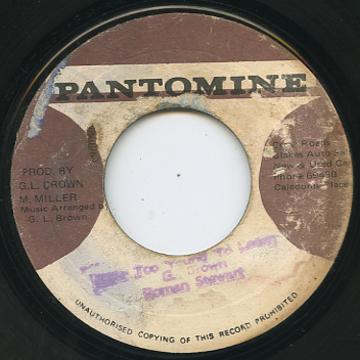
Bovine Ska and Rocksteady 11/18/14: Roman Stewart

Standard
Roman Stewart Never Too Young To Learn

Great rhythm and vocals of “Never Too Young To Learn”

After a whirlwind of a fundraising show, we wanted to present a very special thank you show for all who donated and all who tune in each week to the Bovine Ska and Rocksteady.

We grabbed some great tracks, which have never been played on the BSR, to share with you this past week including “Everybody Rocking,” a sensational rocksteady from Hopeton Lewis and an excellent cover of The Beatles’ “Rain,” courtesy of Tomorrow’s Children.

To mix up the format of the show, we also played a full set of Jamaican soul tracks, including “Today” by Boris Gardiner, a too cool soul track perfect before a brand new spotlight of rare tracks from the reggae artist Roman Stewart (a.k.a Mr. Special).

Known for his later tracks, particularly “Rice and Peas,” Roman Stewart recorded some phenomenal reggae songs in the early to mid 70s.

As the younger brother of Tinga Stewart, songwriter and singer who saw popularity in Jamaica in the mid-70s, Roman Stewart had a parallel successful career to that of his brother’s. Born in 1957, Roman began singing at a very young age. As a young boy, Roman would sing with Freddie MacGregor by cruise ship docks to perform for the tourists as they arrived and left Jamaica. Like his childhood singing partner Freddie, Roman also began recording at a very young age, releasing his first track, “Walking Down the Street”, as an eleven year old for George Murphy and his Tennors label.

After his first single, four years passed until Roman Stewart emerged as a solo recording artist. In the early 1970s, he would record for a range of producers, ranging from Derrick Harriot to Glen Brown to Augustus Clarke, not quite scoring a hit with any of them, but certainly showcasing his vocal talent. But, in 1974, Roman would gain much more popularity with “Hooray Festival,” a song penned by his brother Tinga, and the track that won that year’s Festival Song Contest. Until 1976, Roman would continue recording in Jamaica, recording Phil Pratt, Leonard Chin, and even taking a try at producing his own work.

In 1976, Roman moved to New York, where he would live until he passed away far too young from heart failure in 2004. During his time in New York, Roman would gain the nickname “Mr. Special” from his great stage presence but also his amiable nature off of the stage.

We were delighted to present the spotlight on Roman Stewart. Listen to this past week’s show HERE.

The archive will be available until 12/1/2014. Enjoy!

Imagination and Reality in Lowriders in Space

Standard

I must confess that I have a secret admiration for cars, all kinds of cars.

Sports cars. Muscle cars. Hot Rods. 1930s, 1940s, 1950s cars.

There is something fascinating about the engineering behind a car. And, there is always something alluring about a beautifully designed car.

Consequently, when Generoso woke me up on Saturday morning to say that local artist Raúl the Third would be at our local comic book store (huzzah Hub Comics!) signing copies of his newest book, Lowriders in Space, we rolled out of bed on a cold, pre-winter Massachusetts morning to pick up our copy.

Cover for Lowriders in Space

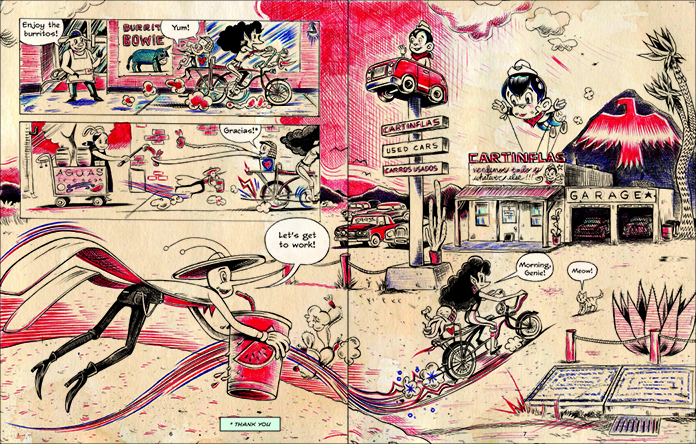
Lowriders in Space written by Cathy Camper and illustrated by Raúl the Third follows the restoration process mechanic extraordinaire, Lupe Impala, auto detail wizard, El Chavo Flapjack, and dazzling auto body artist, Elirio Malaria, endeavor to win the Universal Car Competition. The competition carries recognition and fame for our team of auto transformation champions, but most importantly, it awards enough prize money for the team to open up their own independent garage, a goal that would be impossible with their currently non-existent funds.

After gathering spare parts to get a stalled (and well forgotten) car up and running into at least the base of a good lowrider, the team take their new ride on a test drive, and rather than traveling down the block, their lowrider rockets into space, where they receive the assistance of the constellations and the planets of the universe to add the final, perfect touches to make their entry into the Universal Car Competition completely unforgettable.

Lowriders in Space is a fun and imaginative adventure tale for children and adults written about a culture that is rarely discussed in children’s books. We’re used to the knight battling the dragon, the children deceiving the witch, and the princess who needs rescue in children’s tales, but rarely do the protagonists in a child’s tale have a goal of realistic creative freedom gained from skills diligently and independently developed, as our auto team in Lowriders in Space do. Furthermore, in works created for mass consumption, lowrider culture has rarely been portrayed in a non-caricature fashion, and these historical portrayals almost never delve into the mechanical details and efforts taken to create the lowriders that people adore.

Lowriders in Space, while containing a clearly fictional component with the team’s space travel in a car, conveys the hard work, care, and passion dedicated to achieve the independence to create on one’s own terms, which is a nice, realistic, non-abstract message for all audiences. It’s a simple, effective narrative enhanced by some spectacular artwork, making it a perfect read on a Saturday morning or anytime you need a reminder that regardless of your current circumstances, reality does not need to be bleak.

Lowriders in Space is written by Cathy Camper and Raúl the Third is available via Chronicle Books.


Bovine Ska and Rocksteady 11/11/14: Stax versus Motown

Standard

On this week’s edition of the Bovine Ska and Rocksteady, in honor of Fundraising Week at WMBR, we decided to pick a special theme for the show. After a few weeks of debate, we finally settled on the winner in the wee hours of the morning a few days before the show….Stax versus Motown covers!

The rules were as follows:

  1. Each artist from each label would get three songs to be represented by covers by Jamaican artists.
  2. One Motown artist would face one Stax artist at a time

Heralding from the famed Hitsville U.S.A., our Motown competitors were:

  1. The Temptations
  2. Smokey Robinson and The Miracles
  3. The Four Tops
  4. Stevie Wonder
  5. The Jackson Five

And, battling against those Detroit giants were the Memphis Stax champions:

  1. Booker T. & the M.G.’s
  2. William Bell
  3. Eddie Floyd
  4. Otis Redding

With brilliant source material from these American soul champions, Jamaican stars such as The Heptones, Pat Kelly, Ken Parker, and Bob Andy recorded some incredible interpretations that we were thrilled to share for this special occasion on the Bovine Ska and Rocksteady.

Decide who should win the battle between Stax and Motown by listening to the show HERE.

Enjoy! The archive link will be available until 11/24/2014.

THANKS TO EVERYONE WHO PLEDGED!  SPECIAL THANKS TO KEVIN DAVLIA, SABINA MADDILA, and ELLE TRAIN for answering the phones.


Richard Burton Doing His Best Ronnie Kray Imitation in 1971’s “Villain”

Standard
villain-movie-poster-1971-1020255446

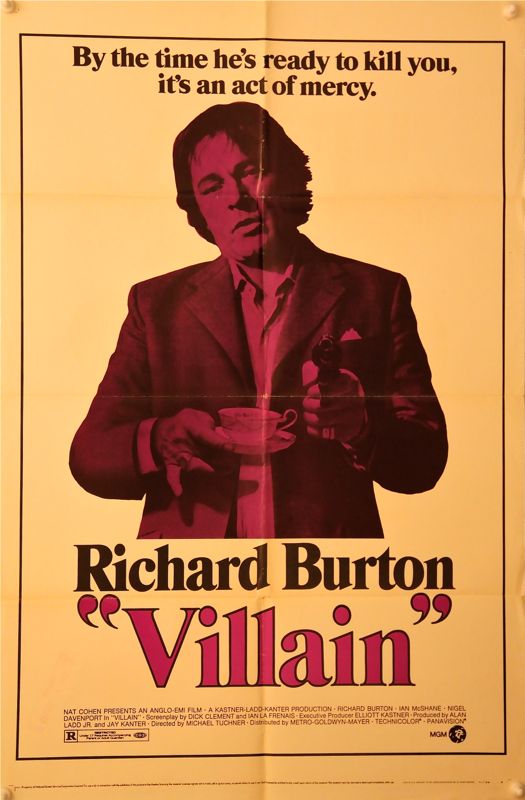
1971 Poster for “Villain”

The British gangster film is truly its own genre that normally delineates itself from its American and Japanese counterparts by including a kind of ugly humor and coldness that is rarely seen in any other crime film genre. Starting with John Boulting’s superb 1947 film, “Brighton Rock,” through the 50s and 60s, the genre flowed next to The British New Wave and was quite popular even though the plot lines and characters had gotten a bit too formulaic that is, until real life gangsters and brothers, Reggae and Ronnie Kray dominated the headlines. Though the Krays were as violent and ruthless as Hisayuki Machii and Al Capone, there were two distinct things that differentiated them from their American and Japanese counterparts: Reggae and Ronnie were both exceedingly lovely towards their mother Violet, and Ronnie had been well known in crime circles as bisexual, a fact that British journalists had a field day with at the time.   British gangster films of course took notice of these facts and “homosexuality and bisexuality” would play a role in many of the genre’s subsequent films. From early efforts like Nicolas Roeg’s “Performance” released in 1970 to John Mackensie’s 1980 film, “The Long Good Friday,” and even recently in films such as Mike Hodges, “I’ll Sleep When I’m Dead” in 2003.” But somehow lost in this melee of bisexual, mother-loving, sadistic gangster films is Michael Tuchner’s strong 1971 film “Villain.”

“Villain” is the story of Vic Dakin, a charismatic but vicious crime lord who like the real life Ronnie Kray, loves his ailing mum and is bisexual, depicted here as Dakin maintains a turbulent sexual relationship with amateur pimp to the mob and heartthrob Wolfie (an young Ian McShane), a good-looking lad who Vic must punch around a bit before a session of lovemaking. Though Vic is the master of his neighborhood, he wants a bigger score and sets up the mark with another kingpin as they set in to rob a plastic factory. When the deal goes down badly and his co-conspirator is wounded in the heist, Vic wants to silence his partner in crime before the police inspector (well done by Nigel Davenport) can get a confession out of him.   From there its a game of cat and mouse as Vic tries to find the money and elude capture while sneaking away occasionally to share a moment or two of sexual violence with Wolfie. It must be said here that you never see any actual sexual moments in “Villain” between McShane and Burton as their one lovemaking scene was deemed too racy for early 1970s England and discarded from the final cut. What was kept in “Villain,” are a few scenes of violence that Little Alex in “Clockwork Orange” would describe as “ultra violence.” The English audiences may not have been primed for the kind of sexuality that Villain wanted to portray but the time was right for this level of “red red groovy” to be shown on the screen.

 1971 Trailer for “Villain”


The last third of this film plays out tightly and with real grit as a both main characters play off of each other in trying to avoid prison. Burton, who for most of his career had played a sex symbol, is raw and ugly and although he is not given much in terms of dialog, plays a fairly complex character well with varying intensities of emotion. Ian McShane, who had gotten good notice for his performance as Charlie in the sweet 1969 Mel Stuart film, “If Its Tuesday, This Must Belgium,” is the shining star of “Villain” as he brings a lost, desperate overtone to the character of Wolfie. If one aspect of “Villain” is truly lacking, it is the visual aesthetic of the film. Tucher, fresh off of television does not have much of an eye, and thus the cinematography seems very small-screen. Compared with “Performance” shot by the always-daring eye of Nicolas Roeg a year earlier, “Villain” must have underwhelmed an English audience hoping to see something in their favorite genre that would knock their sock offs.

Although “Villain” also boasted the star talent of the great Richard Burton, it did not do well both with critics and at the box office as it was publicly known that all was not well with Richard. Two years earlier, Burton had played Rex Harrison’s gay partner in Stanley Donen’s dreadful drama-comedy “Staircase,” about a pair of flamboyant East End barbers who are constantly at each other for laughs. That film was a critical and box office disaster and although Burton took home a hefty salary of 1.2 million, it was the beginning of a bad period for Richard as he notably took a slew of bad parts just to cash a check. Possibly after that fiasco, Britain was not ready for Burton playing bisexual again which is a pity, as they would’ve most likely had been impressed with this hard as nails fictional take on the real-life Ronnie Kray.   Audiences would have to wait almost twenty years for an actual biopic on the Krays, as director Peter Medak would enlist real life brothers Gary and Martin Kemp from the new wave group, Spandau Ballet to play Reggie and Ronnie. Who knows, given the recent successes of Nick Love and Ben Wheatley’s modern British gangster films, “Piggy” and “Down Terrace” respectively, we may see a new audience dust off “Villain” and give it the viewing it deserved in 1971.