Bovine Ska and Rocksteady 3/4/15: Derrick Harriott’s Crystal Label

Standard
crystal B

The Jiving Juniors On The Crystal Label

This week was a special two hour retrospective of Derrick Harriott’s Crystal/Move and Groove Labels.

Born in Kingston in 1939, Derrick Harriott was the youngest of 5 children. At a very young age, he sang in church, and eventually, his singing and performing would accelerate when he went to school. Derrick Harriott began his music career with his friend Claude Sang Jr with the duo, Sang and Harriott. The two attended Excelsior High School together, and in school, they would practice together and perform, wooing their schoolmates with their music, and in turn, their schoolmates encouraged the duo to enter the Vere Johns Opportunity Hour talent show in 1955. The two did not make the final round this initial time, but they would win it in 1957 and at a minimum manage to be in the finals after their first win.  Despite their popularity in the live performance circuit, Sang and Harriott broke up when Sang left Jamaica for schooling. In 1958, Harriot formed the Jiving Juniors with Eugene Dwyer (bass), Maurice Wynter (Tenor), Claude’s younger brother, Herman Sang on piano, and Harriott on lead tenor and falsetto. The Jiving Juniors gained quite a bit of fame with successful performances on the Vere Johns Opportunity Hour, so successful in fact that they earned a special spot on the show.

We started this two hour spotlight on The Crystal Label by playing four tracks from Derrick Harriott and the Jiving Juniors. The Crystal label, which was named supposedly because of “a fortune teller with a crystal ball… and crystal means very clear”  Here, at the Crystal label, he would first release his own solo tracks, but he quickly began to record other artists. We also played one excellent solo track from Derrick, and then his early recordings for the Crystal label with other artists in ska such as Roy Panton and Don Levy.

Very early in the label’s career, Derrick had a great eye and ear for talent, being one of the first to record many singers. Keith and Tex started with him, and they also helped recruit some talent over to Derrick, including who you just heard from, Rudy Mills, who was Keith Rowe’s cousin’s husband, and Keith brought Rudy over to Crystal to first record.

Backing up the vocal artists and recording a many instrumentals of their own, were The Crystalites, Derrick’s house band, which had a rotating line up, but Derrick selected from an amazing pool of session musicians including: Barry Biggs, Bongo Herman, Gladstone Anderson, Jackie Jackson, Larry McDonald, Lynford Brown, Paul Douglas, Wallace Wilson, Winston Wright.

By 1970, Derrick had really built up a reputation as a strong producer, so much so that his output that year would gain him the title of the best producer of 1970 by Swing magazine.  We then played The Ethiopians No Baptism next, which was a highlight from a great year of productions and a hit for the Crystal label. As mentioned before, Keith and Tex got their start with Derrick Harriott and gained quite a lot of fame with him, who in addition to singing their tracks for him, they also sang harmony for other Derrick Harriott productions. Stop That Train was an enormous hit for them, so much so that other DJs who came to the Crystal label would toast on them.

One story has Derrick who had heard people talking about Big Youth, going out and searching for him in order to record him. Big Youth would actually end up using his promotional picture on the Those Reggae Oldies album released on the Crystal label for the artwork on his own Negusa Nagast label

Another DJ that had success on Crystal was Scotty,  born David Scott, originally started singing with Valman Smykle and  Franklin Spence in the rocksteady group, The Federals, but he would come into his greatest prominence as a DJ/toaster for Derrick Harriott’s Crystal label. He would toast on versions of early hits from the Crystal label, like the version of Stop that Train heard in the first hour of the show. Now then played another version to version. We then heard Scotty toasts over his boss’s hit “The Loser.” Scotty was given the full LP treatment by Derrick on the Crytal label in 1971 with a collection of his best toasting on the album School Days.

In 1966, Derrick opened up Derrick’s One Stop record shop on 125 King Street, making him one of few singers who produced, ran his own label and his own record shop. The name One Stop was perfect because up and coming artists could go to the shop to pitch music to Derrick, and he could record them and sell the record in his own shop. In addition, visitors to the shop were attracted to the big hits on other labels in stock, but given that they stepped into Derrick’s shop, they could also gain more exposure to the Crystal label releases than they would in other record shops in Kingston. This record shop extension of Derrick Harriott’s work would help further Derrick’s success as more and more hits were released on the his labels.

You can here the entire program: HERE

The archive of this show will be available until 3/18/15
 

Bovine Ska and Rocksteady 2/25/15: Roy and Millie

Standard
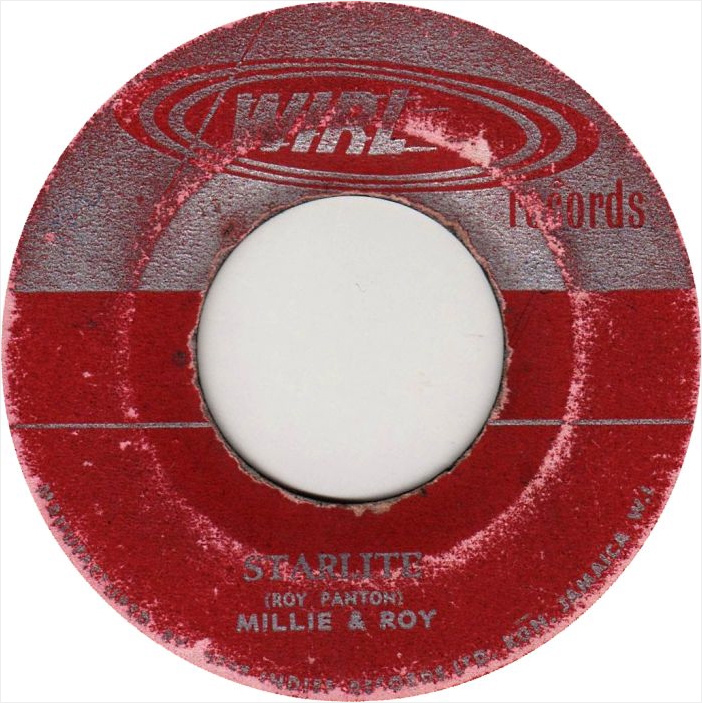
Roy and Millie Starlite

The Wonderful Vocals of Roy and Millie from 1963 on WIRL

This was a fun show and we were more than thrilled to send it out to all of you.  Starting off with a deep cut from the late sister of Alton Ellis, Hortense Ellis gave us the superb 1970 track, “Love Is The Key.” We continues with two full sets of early fast reggae ending with Gladdy Anderson’s 1969 vocal cut for Duke Reid, “Dollars and Cents,” which was released in England on the might Trojan label. As this week was without major snow for the first time all month, we felt the need to have a joyous spotlight in the form of a Roy and Millie spotlight.

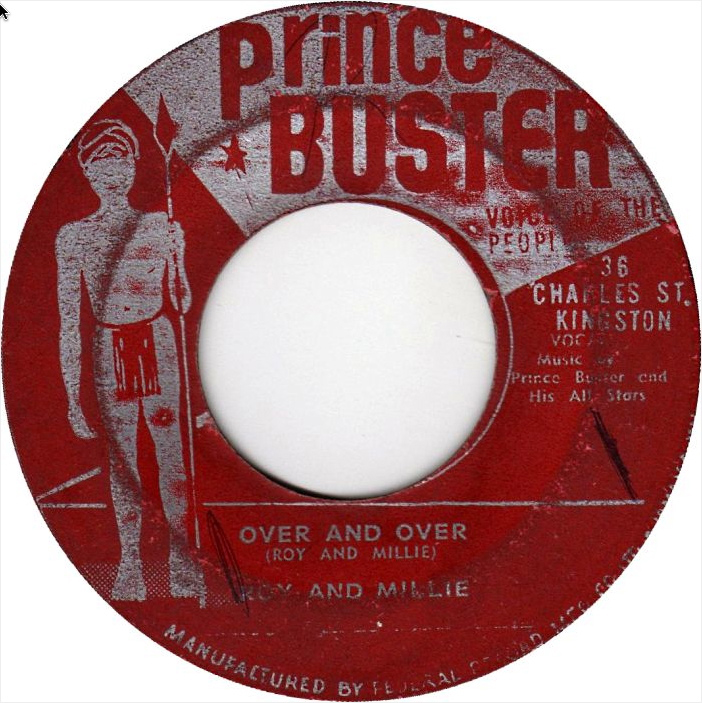
Born in Clarendon, Jamaica to a sugar plantation overseer, Millie Small began her music career on the Vere Johns Opportunity Hour. After winning the contest, Millie decided to move to Kingston for a greater opportunity to record and perform. As a young teenager, she first recorded Sugar Plum at Studio One with Owen Gray in 1962, which Roy Panton harmonized with her on because Coxone Dodd wanted a stronger voice on her part because Millie’s voice was much higher than other female voices. And after that initial collaboration, Coxone, seeing the success of the male-female duo through Derrick and Patsy, he suggested Roy and Millie sing as a duo, which was a good instinct; they would see so much local success and popularity together that Millie would eventually capture the attention of Chris Blackwell, who led her to her mega hit in England, My Boy Lollipop. We begun this spotlight on Roy and Millie, starting off with their first recording as a duo together, “We’ll Meet,” which was a debut hit for them that rose to the top ten of the Jamaican charts in 1962.

They would record many times afterwards Roy Panton would continue his recording career as a solo artist and with Yvonne Adams (Harrison) and they still perform to this day. Sadly, the whereabouts of Millie Small are unknown.  We know that she emigrated to England and has a daughter but little else is known. In 2011, Millie was awarded the Order of Distinction in Jamaica but the former Prime Minister, Edward Seaga, excepted it for her in her absence.

Listen to the full program: HERE.

Enjoy! The archive will be available until 3/9/2015


Bovine Ska and Rocksteady 2/18/15: The Twinkle Brothers

Standard
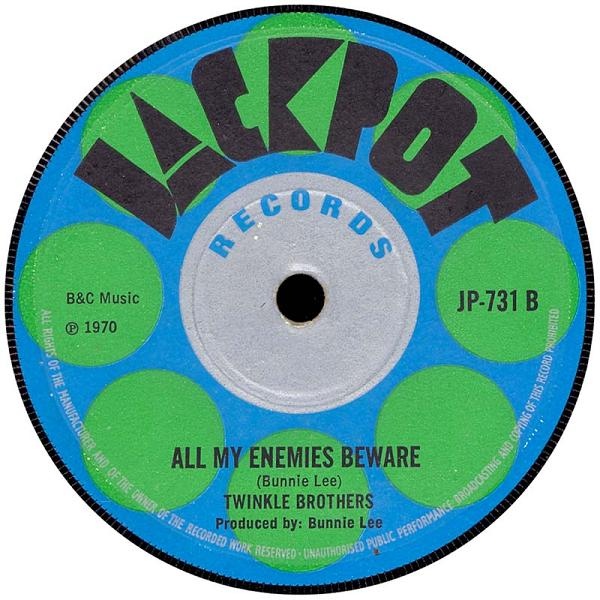
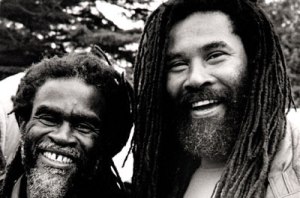
The Twinkle Brothers

This Week’s Spotlight Artist: The Twinkle Brothers

 Last week (2/11/15), the Bovine Ska and Rocksteady did its 19th Annual Anti-Valentine’s Day radio show but please never let it be known that Lily and I are against the concept of love.  We are just against the idea that we need a holiday to show that we have love for one another.  Sadly, we found out that on February 15th, Professor Irving Singer, a colleague of Generoso’s while he was at the CMS Program at MIT had passed away.  Irving was a great teacher, philosopher and writer, and a World War Two combat veteran. He wrote the celebrated three volume collection, “The Nature Of Love,” as he spent much of his later life thinking about why we love one another.  We dedicate this show to Irving and we started the show off with two positive sets about love, with tracks like Winston Samuel’s 1964 release for the SEP label, You Are The One (I Love).  And after a mento set and a set of gorgeous rocksteady cuts, we launched into our never before done on the show spotlight of The Twinkle Brothers.

Formed by Norman and Ralston Grant in Falmouth, Jamaica, the Twinkle Brothers began their musical careers, as many of their peers, performing in local festivals and contests. The original line up consisted of: Norman Grant (drums and vocals), Ralston Grant (vocals and guitar), Derrick Brown (bass), Karl Hyatt (percussions), Eric Bernard (Piano) and Bongo Asher (percussion). Shortly after their foundation in 1962, the Twinkle Brothers won the Trelawney Mento Festival, beginning their streak of festival success for the next 6 years, which culminated in gold medals for Norman as a solo artist and the Twinkle Brothers as a group in the all island contest in 1968. In the midst of these festival performances, The Twinkle Brothers caught the attention of Leslie Kong and recorded their first single, “Somebody Please Help Me” in 1966, which is the first track to kick off this spotlight on The Twinkle Brothers.  The name The Twinkle Brothers from an interview with Norman Grant in 2006: “We were rehearsing one day when a Rasta elder by the name of So-Me-Say heard us play and told us he was going to give us a name. He came up with the name Twinkle Brothers. I guess that because it was already nightfall, he got inspired by the stars in the sky. We’ve held that name ever since.”

1970 was a busy year for the Twinkle Brothers. By 1970, the Twinkle Brothers began recording for Bunny Lee, whom they would record about 14 tracks with, and who Norman Grant recalled as his favorite producer.  Bunny also introduced the group to Lee Scratch Perry, and they recorded only one single “Reggae For Days” with him, which is a rare and difficult track to find In 1973, the Twinkle Brothers moved to Phil Pratt and recorded for his Sunshot label. By the mid-70s Norman had begun to dedicate his work in other directions. He opened a record store in Falmouth, and in 1975, he joined the Sonny Bradshaw band. Eventually, Norman moved to the UK.

Listen to the full program: HERE.

Enjoy! The archive will be available until 3/2/2015


Bovine Ska and Rocksteady 2/11/15: The 19th Annual Anti-Valentine’s Day Show

Standard
$(KGrHqNHJEgE8oY,psQNBPU2M-Srwg~~60_12

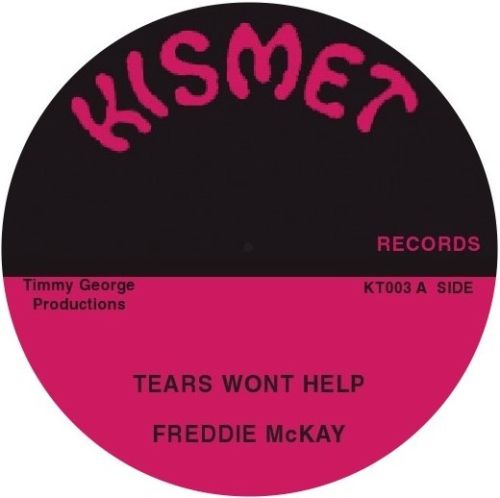
A great sad cut by the late Freddie McKay

OK, I assume that after reading the title of this post, you completely understand where we are coming from with this special edition of The Bovine Ska and Rocksteady. People for varying reasons hate this holiday so we should give you ours: it is the greatest relationship destroying holiday of all time! Unlike other relationship crushing holidays like Christmas, Valentine’s Day sets itself apart in the area of emotional (and sometimes materialistic) expectations.  What to give and plan if the relationship is just a few weeks old could result in an a cataclysmic outcome.  So, what does this have to do with Jamaican music?  Well, like any songwriters and performers of ska, rocksteady and reggae are not exempt from the tortures of love gone awry and this show was packed with their miseries.

Our show began with an hour long tribute to the concept of loneliness featuring such tracks as: “I’ve Been Lonely” by Peter Tosh and Hortense Ellis (Studio One-1966) and “Sometimes I’m Lonely” by The Pioneers (Trojan-1972).  Followed by a second hour which featured tributes to “Tears” and “Sadness” featuring cuts like Errol English’s “Sad Girl” (Torpedo-1972) and “Tears From My Eyes” by the great Jackie Opel (Top Deck-1965).  Each break punctuated by our Anti-Valentine’s Day theme of “He/She Left Me for What?”  Real life excuses, read by Lily, written by couple who broke up over the most trivial of reasons.

Listen to the full program: HERE.

Enjoy! The archive will be available until 2/24/2015

Bovine Ska and Rocksteady 2/4/15: Bobby Aitken

Standard
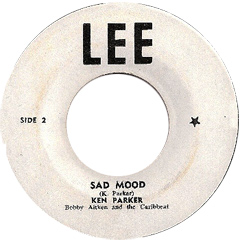
Bobby Aitken photo

Our spotlight artist Bobby Aitken 

Coming to you from a frozen, snow-covered Cambridge, it’s the Bovine Ska and Rocksteady!  Wow, these last few weeks have been rough with bad weather.  We are also back this week, after missing last week’s show due to Generoso’s hospital stay.  He’s improving but that combined with the snow has made doing the show difficult but we were glad to be back.   Starting the show off this week were two sets of delicious early reggae, beginning with a massive tune from Sound Dimension, “Great Mu Gu Ra Ga” which was released on Bamboo in the UK in 1970.  Our spotlight would be on the early vocal tracks of Bobby Aitken.

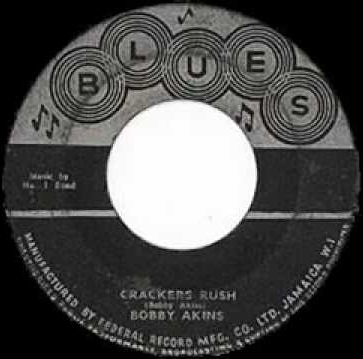
Brother of the godfather of ska, Laurel Aitken, Bobby Aitken, was born in Havana in 1933 and was orphaned in Jamaica at the age of eight. As a boy, he became a mason when his uncle pulled him away from a street gang and introduced him to the masonry trade in order to survive on his own. However, music became a more reasonable means for Bobby, especially seeing that he had a natural gift for it. A precocious 11 year old Bobby built his first banjo from sardine cans and learned how to play guitar on his own. And, by his mid-20s, Bobby had built up his guitar skills and formed the Carib Beats with Charlie Organaire and a man named Morgan in late 1959/early 1960. Together, the group performed primarily calpyso with a few skas, but the trio broke up after the rest of the group did not show up for a performance at the Blue Ribbon Club in Kingston.  As a result, Bobby returned to masonry for a stint, only to make a comeback to music within a year as a solo artist with his single, Cracker’s Rush, which commented on a food shortage in Jamaica and was released in 1961 on the Blues label by Count P, an operator of a soundsystem on Spanishtown Road. We’ll began with this first solo recording of Bobby Aitken to kickoff tonight’s spotlight.

Eventually, after recording for a range of producers including Prince Buster, Coxone Dodd, Linden Pottinger, and King Edwards, Bobby Aitken formed The Carib Beats again with Charlie Organaire and Mike Williams. Other musicians including Bobby Kalphat, Vincent White, Conroy Cooper, Ansel Collins, Carlton Santa Davis, and Val Bennet would also rotate in and out of the group. The Carib Beats recorded for Joe Gibbs, Clancey Eccles, Bunny Lee, and most famously, JJ Johnson.  The second incarnation of The Carib Beats would eventually break up as Bobby decided to focus more on his faith and became who he is known as today: the Reverend Robert Simmonds.

Listen to the full program with our Bobby Aitken spotlight: HERE.

Enjoy! The archive will be available until 2/17/2015 

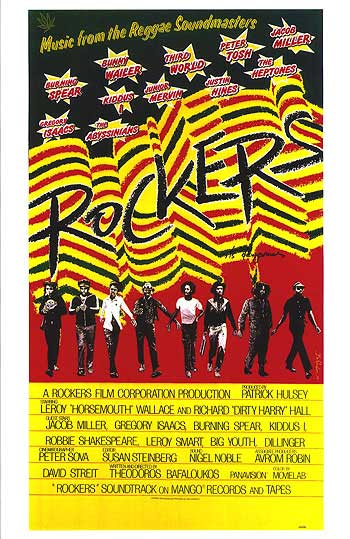
De Sica’s “Bicycle Thieves” Turned Robin Hood in Jamaica, 1978’s Reggae Film,“Rockers”

Standard
rockers ted-and-leroy-horsemouth

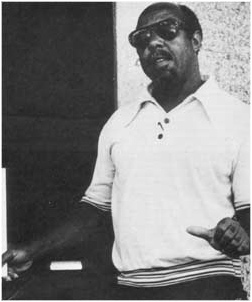
Director Ted Bafaloukos and Leroy “Horsemouth” Wallace from 1978

Living in Boston these last thirty years, I have come to have great pride in the role this town had in bringing international fame to Perry Henzell’s breakthrough cult reggae film, “The Harder They Come.”  The film had not been well received on its initial release in 1972 but was eventually launched into cult film status when the Orson Welles Theater here in Cambridge began running it continuously as a midnight film in 1973 and would continue to do so over the next ten years.  Despite the sometimes frigid weather, this town has been a hotbed for reggae music ever since and in 1996 I even began deejaying a ska and rocksteady radio show which I still produce to this day on WMBR in Cambridge and I even directed a few docs on the subject of reggae myself.  Also for many years I curated the European Short Film Festival here so with “Rockers,” I have found a movie that falls right I between those two great loves of mine, Jamaican music and European cinema.   Though “Rockers” is centrally about the Rastafarian lifestyle, I also believe that it falls into the sub-genre of the many films inspired by Vittorio De Sica’s 1948 neo-realist masterpiece, “Bicycle Thieves.”  Well at least it begins that way for sure.

De Sica’s “Bicycle Thieves” begins with our protagonist, Antonio, who is struggling to feed his family in an economically depressed post-war Italy.  To get work as a poster hanger, Antonio Ricci needs a bicycle so his wife sells their wedding linens, the only prize possession of the family, to afford to buy a bike for Antonio.    Shortly after Antonio buys his bike; it is stolen, putting the lives of his family to risk so he must take swift action to find it before he loses his new job.  Move the time and location to a post-colonial economically-depressed late 1970s Jamaica and you have the beginning of Greek-born director, Theodoros Bafaloukos’ “Rockers.”   Antonio Ricci is replaced by Leroy “Horsemouth” Wallace, who in real life is a very well respect drummer who many credit as creating the “rockers” style, and a man who is trying to feed his family on the meager money he makes as a session drummer and for playing watered-down reggae for tourists at a posh hotel outside of Kingston.   He proposes to his wife the idea of being a record salesman to make more money and so he needs a motorcycle which she must begrudgingly fund.  Horsemouth collects some debts, makes some loans and buys his motorcycle and immediately has it painted with the “Lion of Judah,” which refers to Revelations 5:5 to which Rastafarians interpret as the arrival Emperor Haile Selassie I of Ethiopia.  Horsemouth keeps his word and hustles some discs that he gets on account from legendary producer Joe Gibbs, and proceeds to sell them to the various record shops and sound system operators like Jack Ruby.  This does not last long as just like our hero in Bicycle Thieves, Horsemouth’ s motorcycle is soon stolen and he must take action to recover it quickly or his future is in serious jeopardy.

What becomes interesting is the way that Horsemouth, our hero in “Rockers,” distinguishes himself not only from De Sica’s film, but also from its reggae predecessor, “The Harder They Come. “  Jimmy Cliff’s Ivanhoe is at least on appearance, a born-again Christian, but is also the quintessential angry young man that uses violence at the first opportunity when trouble arises.  Whereas our Horsemouth, shortly after he avoids a violent encounter, goes through the trouble of breaking the fourth wall, speaking directly to the camera as he explains that he is an avowedly a non-violent Rastafarian.    Horsemouth saunters through the early parts of “Rockers” not with a pistol in his hand like “The Harder They Come’s” Ivanhoe but with a smile and a passive attitude, that is until he realizes that his autocratic cheapskate boss at the hotel is also responsible for stealing his beloved motorcycle leaving Horsemouth, as he would say, “vexed.”   After a botched attempt to retrieve his motorbike where Horsemouth takes a beating from his boss’ goons, he (Horsemouth) must now assemble his friends, who happen to be some of the greatest names in 1970s reggae music, from Big Youth to Dillinger to Richard “Dirty Harry” Hall, to not only steal back his beloved motorbike but to also “acquire” a wealth of riches to spread through Trenchtown in a Robin Hood-styled way.  Different than the outcome of De Sica’s film but they both share an ending where the common man understands the reality of the economic slide.

All of the above occurs with a laid-back and even almost comedic level; different from the previous incarnations of the plot as this is a Jamaica that has begun to look at Rastafarianism, not as previous generations have in the past as a dangerous cult, but as a religion with accepted social practices.  No scene bears this out more than when Horsemouth runs into his grandmother who berates him for his non-Christian lifestyle during a baptism in a river. Horsemouth is respectful of his grandma but still walks away with a smile as he extolls his Rastafarian beliefs as he is down but not out because he knows that Jah will see him through.    It is a small scene but one that puts the protagonist’s actions in this film in the right framework.

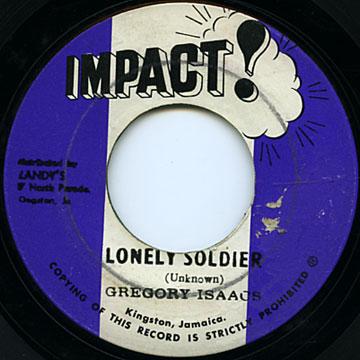
The mostly non-professional actors do their best with their roles, especially the late “Dirty Harry” who shines in a now notorious scene where he and Horsemouth take over a DJ booth at a club because they just aren’t down with soul (the West).  Of course the real star of the film is the soundtrack which has too many scenes of note to list here but three that always stand out for me: the aforementioned deejay scene with Dirty Harry, a concert scene featuring a beautiful performance from Gregory “The Cool Ruler” Issacs, and a small poignant scene where Burning Spear sings a cappella to Horsemouth to affirm his resolve after his motorcycle is stolen.

“Rockers” Trailer 1978

Though produced on a small budget, “Rockers” is visually more accomplished than “The Harder They Come” as many of these scenes are smartly framed by cinematographer Peter Sova and director Bafaloukos, who sadly would never direct another feature film but would go on to be the production designer for many of Errol Morris’ finest documentaries including: “TheThin Blue Line,” “A Brief History of Time,” and “The Fog of War.”  It is uncanny to me that a Greek citizen, whose introduction to Jamaica was getting arrested there in 1975 on suspicion of being a CIA spy while on assignment as a press photographer, would have the kind of understanding of Jamaican culture that would be needed to make a film like “Rockers.”  Though given the desperate political and economic realities of Greece these last fifty years, he might have understood a character and situation like Horsemouth’s more than any of us could.


Bovine Ska and Rocksteady 1/21/2015: The Cables

Standard
cables what kind of world

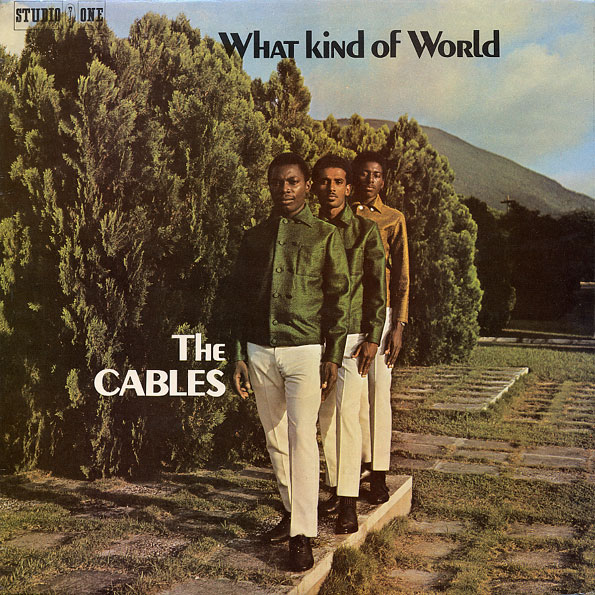
The Cables superb LP, “What Kind of World,” on Studio One

This week’s program began with two sets of fantastic ska which started with a cut from the virtually unknown artist named “Pulus” with a track entitled “Sow To Reap” for Merritone in 1966. Thanks again to the good folks at Dub Store in Japan for finding and pressing these lost tapes from the Merritone vaults.  I hope that there is only more lurking somewhere to be released soon.  After a brisk mento set, we launched into the sounds of vocal group extraordinaire, The Cables.

The Cables are Vincent Stoddard, Elbert Stewart and Keble Drummond. Named after a modified spelling of Keble’s own name into The Cables, which he felt was a right name because cables could send a message to the world. Born in St. Elizabeth, The Cables’ frontman Keble Drummond moved to Kingston as a child and grew up in the dire neighborhoods that would produce some of Jamaica’s greatest talent. Spending most of his adolescent years in Ghost Town, Drummond interacted with some of Jamaica’s greatest talents including Rita Marley, who lived in Ghost Town as well. Drummond attended Chetola Park School and then Kingston Senior School, a school that produced the great talents of Earl Morgan from the Heptones and Marcia Griffiths, so music was not a surprising path for him. Growing up in neighborhoods where musicians were often performing, Keble began to interact and sing with local groups. Eventually, Kebel met Peter Austin of the Clarendonians who taught him his first guitar chords. Keble then saw a flyer for Herb Moral Song Studio Training, and he attended a song writing course. In this course, he wrote his first song, “You Lied,” which would be the first track he would record with The Cables for Linden Pottinger’s SEP label, the track that begun our hour long spotlight on this phenomenal vocal group.   It’s a bit of a coincidence that the last of the Cables is called “You Betrayed Me.” The Cables would stop working with the Pottingers because they did not receive payment for their recordings, which had gone directly to Bobby Aitken and his band, who was the backing band for many of the tracks on the SEP label. After leaving the Pottingers, The Cables traveled over to Coxone Dodd to record for his labels. At Studio One, The Cables had to audition for Jackie Mittoo, who at first pushed off the group, but after a bit of a yelling scuffle, finally gave the group a chance to record. We then played The Cables’ Studio One output next.

One of their most popular tracks, “Baby Why” was written about a failed relationship with one of his Keble’s girlfriends who moved from the country to the city to try to start a new life with him.  As with many Jamaican artists, The Cables did not have great financial success or luck with Coxsone. Consequently, when an up-and-coming Harry Johnson (Harry J) met The Cables as he was transitioning out of insurance sales and into the recording industry, the group took the opportunity to go over to the Harry J and show him how to record while they were still on contract with Coxone. With Harry J, Keble developed a friendship with him, and their closeness is definitely reflected in the music because the Harry J cuts are some of the strongest Cables’ recordings.  When Harry J did not have his own recording studio, his recording sessions happened at Dynamic, so it is natural that The Cables would also record for the Dynamic label, except with Syd Bucknor at the Producer helm.  In following the trend of befriending his producers, Keble and the Cables were also close to Hugh Madden, who Keble still visits in Jamaica .

Thankfully, the Cables perform to this day.

Listen to the full program with The Cables smooth vocals sounds: HERE.

Enjoy! The archive will be available until 2/3/2015

Bovine Ska and Rocksteady 1/14/2015: King Sporty

Standard

Prior to the preparation for this week’s show, we were informed of the sad news of King Sporty’s passing. Consequently, this past week’s show featured a memorial on the great DJ who would emerge as an amazing songwriter and producer.

To begin the show, we began with two sets of rocksteady, including never-before-played tracks from The Merritone Singers and Victor Morris. We then heard mento from Count Owen, Lord Foodos, and Charlie Binger prior to a set of ska to precede King Sporty’s early ska toasting tracks.

R-2265428-1273249302.jpeg

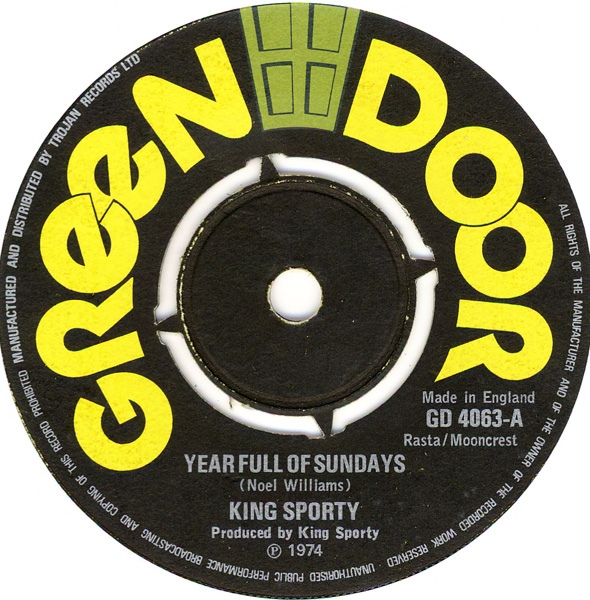
King Sporty’s Self-Produced Single Yearfull of Sundays

King Sporty passed at the age of 71 in Miami on January 5th. Born as Noel G. Williams, King Sporty began his career in Jamaican music as one of Coxone Dodd’s DJs for his soundsystem. In Jamaica, King Sporty would record for Coxone and for Justin Yap prior to his move to Miami in 1968.

Upon his move and work in America, King Sporty would transition his writing and production into soul and disco. However,we will focus this spotlight on King Sporty’s own tracks in ska and reggae before he gained popularity in the world music arena. We will pay honor to the great talents of King Sporty in an one hour tribute of his best DJ recordings, beginning with his first vocal toasting track in ska named El Cid, which was released on Justin Yap’s Top Deck label.

Even though the memorial spotlight focuses on his own recordings, King Sporty was not only a phenomenal DJ and producer but also a talented songwriter. He penned many hits for Studio One and such well known tracks as the Blues Busters, “Thinking of You” and a song that he originally recorded that Bob Marley made globally famous, “Buffalo Soldier.”

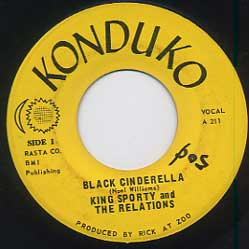
In Miami, King Sporty opened up his labels, Tashamba and Konduko, allowing him to write, produce, and release his own recordings and those of artists he liked. During this time in Miami, King Sporty would become very close to the Miami soul scene, distributing records from his label through Henry Stone, the king of the Miami’s T.K. Records. Sporty also married Betty Wright, T.K. Records’ leading soul lady.

One of the tracks that King Sporty sold to Henry Stone was one from Lily’s favorite Glades/T.K. Records artists, Timmy Thomas. In fact, King Sporty had discovered Timmy Thomas’s “Why Can’t We Live Together” and brought the track to Henry Stone’s door. Stone purchased it from Sporty immediately and pressed it on his Glades label in 1972. The Timmy Thomas track gained traction on the American charts, and this would be one of King Sporty’s most successful discoveries within the Miami soul world.

Listen to the full program with King Sporty’s stellar recordings in ska, reggae, and even soul HERE.

Enjoy! The archive will be available until 1/27/2015.

Bovine Ska and Rocksteady 1/7/2015: Gregory Isaacs

Standard

For this past week’s edition of the Bovine Ska and Rocksteady, we kicked off the show with a newly unearthed Justin Hinds and the Dominoes ska track entitled, “Verona.” Then, in order to make sure that all genres were covered, the program progressed from ska to mento to the rocksteady, with recordings from Winston and Bibby, Clyde Hoyte, Tomorrow’s Children, and The Lyrics before all of the reggae featured in our hour long spotlight on the early recordings of Gregory Isaacs.

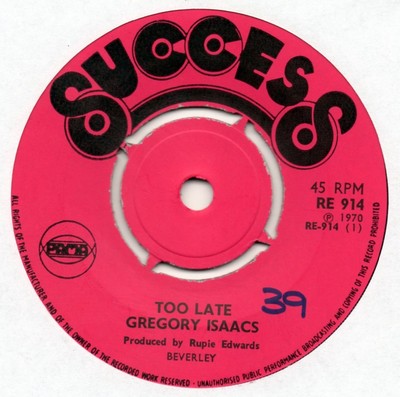
Too Late – One of Gregory Isaacs’ first solo recordings

Gregory Isaacs is a singer who gained great popularity during his early career, so much so that he was even signed to a record contract with Virgin Records in his later career. Admittedly, the Bovine Ska and Rocksteady has not featured Isaacs as a spotlight because his most popular tracks are ones that stylistically do not fit in the time frame that we like to focus this show on. However, we were able to find some of Isaacs’s first recordings, and they were perfect for this artist spotlight.

Born in Fletcher’s Land, Kingston, Gregory Isaacs was raised by his mother near Denham Town. Attracted to music through his own mother’s singing as she ironed, as a teenager, Isaacs began competing in talent shows and showcasing his voice, occasionally even performing duets with his brother Sylvester. A duet with another artist, Winston Sinclair, from his neighborhood would be Isaacs’s first recording in the Jamaican music industry. This duet track, “Another Heartache,” did not gain a ton of success, and Isaacs went on to join The Concords with two men known as Penroe and Bramwell. The group was short lived, but they produced some really beautiful recordings.

After beginning his music career working with other singers, Isaacs eventually decided to become a solo artist, continuing to work with Rupie Edwards, who worked with The Concords and would be a continuing collaborator throughout Isaacs’s career.

In 1973, Isaacs scored his first hit with the Phil Pratt produced track, “All I Have is Love.” After that success, he would jump to other producers including Leonard Chin, Alvin Ranglin, and  Sydney Crooks, with Isaacs scoring a number one hit on the Jamaican charts with “Love is Overdue,” a single recorded for Alvin Ranglin’s GG label. And with the success seen in 1973 and 1974, Isaacs’s career would propel in the coming years.

In 1973, Gregory Isaacs teamed up with Errol Dunkley to create the African Museum record label and shop. Here, Isaacs would write, record, and produce his own tracks, with the earliest African Museum releases exploring more of a roots reggae sound.

After a long battle with lung cancer, Isaacs died on 25 October 2010 at his home in south London. As a testament to his fame and popularity, a memorial service was held on November at Kingston’s National Indoor Sports Centre, including a musical tribute from artists including Lloyd Parks and We the People Band, Ken Boothe, Freddie McGregor, Shaggy, Judy Mowatt, The Tamlins, and Bongo Herman, before his remains were interred at the Dovecot Cemetery.

This spotlight on Gregory Isaacs features his earliest recordings and follows his early progress and growth as a singer, songwriter, and producer, giving honor to his great talent as a young musician.

Listen to the full program HERE.

This edition of the Bovine Ska and Rocksteady is available until  1/20/2014. Enjoy!

Bovine Ska and Rocksteady 12/24/14: Christmas In Jamaica!

Standard
rupie edwards-Christmas Rush

Rupie Edwards from 1974

We have done a Christmas in Jamaica show every one of the eighteen years that the Bovine Ska and Rocksteady has been in existence.  And every year, we do our best to remove the intense cheesiness that is on display from every other radio show that tries to do a holiday program.   This lack of cheesiness was evidenced in our selection of Jamaican rhythm and blues, ska, rocksteady and even dub records of a Christmas kind but alas the Christmas disco from the SalSoul Orchestra which was used in the background did not live up to the rigid standards set forth by us during the selection of sets.  To put it mildly, it was cheese town when we were on the microphone but don’t let that dissuade you from checking out this show while it is still the holiday season.  Lily spoke about Jamaican Christmas traditions, we played a Jamaican patois version of “The Christmas Story” and played a lot of stellar records!

You will hear many rare holiday cuts, from artists like The Upsetters, Reuben Anderson from Andy and Joey fame, and the late great Desmond Dekker.

Merry Christmas from Lily and Generoso!

Listen to the two hour holiday program HERE.

The archive will be up until 1/6/15. Enjoy!