Bovine Ska and Rocksteady 7/21/15: Alvin Ranglin’s GG Label

Standard
GG Label A

A great early hit for the GG Label

Hello Bovine Ska and Rocksteady Listeners,

This week’s program which aired on Tuesday, July 21st, started with two sets of fantastic ska beginning with one of the most unheralded singer/songwriters in Jamaica music history, Wilburn “Stranger” Cole’s 1963 cut for Duke Reid’s Dutchess label, “Boy Blue.”  Gaylad, BB Seaton, ended the first set with a fierce solo cut, “Power” produced by Coxsone in 1963.  After another, mostly instrumental ska set, we charged into our mento set with The Tower Islander’s informative tune, “Advice To Men.”  We ended our first hour with an unusually long rocksteady set, beginning with The Originators, “Red Hot Iron” for Gayfeet in 1967 and ending with Junior Smith flute-infused rocksteady, “Cool Down Your Temper.”  At the end of the first hour it was time to spotlight Alvin Ranglin’s GG Label.

Born in the rural district of Eden in Clarendon in Alvin Ranglin’s interest in music began when he was a child as a choir member in the Adventist church. As a teenager, he moved to May Pen for a better school. In May Pen, Ranglin began to sing publicly in concerts. Music, however, was not his original industry of choice. Ranglin first attempted to become a carpenter, then mason, and then a welder, with no luck. At that point, his mother suggested going to England, but Ranglin stayed and became an electrician, emerging after training as a radio and television technician. Given his skills, Ranglin built tube amplifiers that were sold to musicians, and in the hope to get more music to people beyond the amplifiers, Ranglin opened up his GG’s sound system, named after family members, Gloria, her sister, and a cousin nicknamed Girlfriend. With the soundsystem open and connections to the jukebox industry, Ranglin was ready to record his own singles. The earliest to his label were the Maytones and his singing partner Emmanuel Flowers. With the duo Flowers & Alvin, the label scored a hit with Howdy & Tenky, which was further promoted by Ranglin’s own jukebox circulation.  A major entrepreneur with hands in many businesses ranging from TV repair to gaming machines, Ranglin also opened a record store in May Pen, then Kingston, then Halfway Tree, Old Harbour, and eventually in London and Brooklyn.

The Maytones, Vernon Buckley and Gladstone Grant, were early stars on the GG’s label. Buckley was doing book work and Grant was a mini-bus driver, and the two formed the Mighty Maytones and auditioned for Alvin Ranglin when they heard about his record store in Maypen. The Maytones would see great success with Ranglin until Buckley left Jamaica for Canada in 1980. The house band for the label was the GG All Stars and amongst the rotating musicians who played for GG’s All Stars are: Winston Wright or Glen Adams on keyboards.  On trumpet Bobby Ellis and on sax Roy Samuel or Felix Bennett.  On guitar Alva Lewis or Hux Brown. on Drums were Winston Grennan and Calrton Barrett. On bass Clifton Jackson or Aston Barrett and on piano Theo Beckford or Glady Anderson.

Listen to the 7/21/15 edition of Generoso and Lily’s Bovine Ska and Rocksteady on Mixcloud HERE.

Join our group on Facebook!


Michael Schultz Directed Richard Pryor In Two Films in 1977 And “Greased Lightning” Was The One That Got Away

Standard
greased lightning pryor

Richard Pryor Takes The Wheel in “Greased Lightning.”

Michael Schultz was one of the most successful African-American directors of the 1970s. Starting out in television as a director for the early part of the decade, Schultz graduated to the big screen in 1974 directing Diana Sands in “Honeybaby, Honeybaby,” a low budget action film that was to be Sands’ last film before she passed away in 1973. Schultz immediately returned with the successful 1975 film, “Cooley High,” a entertaining high school comedy/drama that many refer to as the “Black American Graffiti.” In 1976, Schultz hit it big with “Car Wash,” one of the many “workplace comedies” of the 1970s that was inspired by Altman’s “M*A*S*H,” and a film that also produced a number one soundtrack for the disco era. That film contained about eight minutes of a rising comic named Richard Pryor, who sometime between filming and release developed into a star after nine years of small parts (with the notable exception of 1″The Mack”) in over a dozen films. Schultz rushed out to cast Pryor in the lead role, and so in 1977, Schultz cast Pryor in a US remake of Lina Wertmuller’s “The Seduction Of Mimi,” called “Which Way Is Up,” converting the eternal schlubby Mimi of Wertmuller’s film into Leroy, a California grape picker who accidentally becomes a union leader. It is easily one of Pryor’s best performances as he (Pryor) plays several different characters in the same way that he could do onstage, with total commitment and at the drop of a hat.

While “Which Way Is Up” was filming, another successful African-American director from that decade, Melvin Van Peebles, contacted Pryor. Melvin wanted to make a biopic about Wendell Scott, a World War Two veteran, moonshine runner, and a stock car racer on the Dixie Circuit who would become the first African-American to drive for NASCAR. With another opportunity to play the lead, Pryor was onboard for the project, and the film would be fittingly titled, “Greased Lightning.” Unfortunately, somewhere during the casting process, Van Peebles and the producers of “Greased Lightning” began to have artistic differences, and Van Peebles was dismissed, leaving the film without a director. Eager to play Scott, Pryor asked Schultz while making “Which Was Is Up” to helm the project, and Schultz agreed. Shortly after the wrap of “Which Way Is Up,” Schultz and Pryor began work on “Greased Lightning.”

A lot of talent was attached to “Greased Lightning.” Besides Pryor, the absolutely gorgeous and talented Pam Grier was selected to play Scott’s wife, Mary, and she turns in the best performance of the pic. Cleavon Little (Sheriff Bart from the Pryor scripted Blazing Saddles) as Scott’s best friend, Peewee. Beau Bridges as Hutch, Scott’s only white friend and mechanic, and famed folks singer Richie Havens as would play Scott’s other mechanic, Woodrow and also contribute more than a few songs for the soundtrack, songs that at times supply the Greek Chorus for the film. Sadly even with all of that talent, it becomes clear as to what the artistic differences must’ve been between Van Peebles and the producers as this feels like quite the hatchet job.

First off, the tone of the film is almost unbearably light, like that of “The Buddy Holly Story,” which considering the amount of racism inherent in Wendell Scott’s story, some pretty awful moments of real hate from Scott’s life play out almost as comedy, and I would imagine Van Peebles would never even think of shooting it that way. What is truly unbelievable about the mellowing of those moments is that during the filming of “Greased Lightning,” racially biased locals in Georgia did everything they could to louse up the production, including whistling and yelling whenever director Schultz would yell “action.” Things got so bad in fact that Schultz would have to substitute the words “action” for “cut” so that the antagonizing yokels would be confused as to when to start yelling. Also the producer’s “feel good movie” intentions are made even clearer as “Greased Lightning” was released with a “PG” rating, which almost guarantees that any edge of that pesky racism would be almost entirely removed without expletives that would naturally be attached to such hateful speech.

Secondary to the watering down of Wendell Scott’s story is the editing which stunts almost every moment of real emotion from carrying through to the viewer. As stated earlier, Pam Grier puts a ton of love into her performance as Scott’s wife Mary, she carries so much love and hurt on her face, but most of her scenes are quickly cut before they can impact you. Beau Bridges’ gives a fine performance and is comedically great as Hutch, who first mocks but then befriends Wendell. Their scenes together are quite good, but, again, they are sliced down to almost nothing by the middle of film, so we never see the relationship mature in any logical way. Cleavon Little is relegated to just quick comedic insertions during most of his scenes, which is a waste for such a talented actor. The few racing scenes are well shot and are very exciting, especially Scott’s first race where he goes over the wall and comes back to finish the race, but those scenes are few and far between. The greatest editing sin is that shortly after Scott finally begins to win a race, the film cuts to him as an aging and medically challenged retiree at the age 42! The jump is stupefying as we have little idea of where his friends and crew have been during this time, and it makes his eventual win at the Grand Nationals, which ends the film, anticlimactic.

Original 1977 Trailer for Greased Lightning
http://www.youtube.com/watch?v=YTlM__C5AbE

It feels like there is more of a film there somewhere as “Greased Lightning” isn’t sure whether it wants to concentrate on Scott the driver, Scott the husband, or Scott the friend, and the film does none of these aspects of this heroic man any real justice. Richard Pryor does as well with the material as he can and proves that he can perform drama almost as well as comedy, and only one year later in 1978, Pryor would stun critics with his fine dramatic performance in director Paul Schrader’s best film, “Blue Collar.” Sadly, Michael Schultz, who continues to direct television to this day, in that same year of 1978, directed Peter Frampton and The Bee Gees in a musical interpretation of the Beatles, “Sgt. Pepper’s Lonely Heart Club Band,” a film so horribly misconceived and painfully executed that it makes you wonder if Schultz was so rattled by the poor box office and criticism of “Greased Lightning” that his instincts were completely off for the remainder of the decade.

A Bite Sized Appetizer Transforms Into a Meal: Lily’s Banh It

Standard

Vietnamese food from the Hue region is some of my favorite food. Particularly, I have fond memories of eating a version of banh it with a chewy, crispy piece of fried dough underneath it in a grimy restaurant specializing in food from the Hue region in Houston as a child. Man, that restaurant was a rough place to eat at, but the food really was unlike any other.

Unable to find that version of banh it again, I decided to make my own interpretation. The version I had as a kid was served in bite sized servings as an appetizer, but since I lack such a level of portion restraint, I made my banh it much larger, making them less of an appetizer and more of a meal.

There are many steps to this recipe, but I promise the outcome is a delicious mix of flavors and textures, especially when served with a piece of lettuce to wrap around these hybrid steamed and fried rice flour dumplings and all topped with nuoc mam.

Perfect for a special occasion, banh it will definitely impress your friends and loved ones! Enjoy!

LA Inspired Apocalypse: Ed Laroche’s Almighty

Standard

There’s something paradoxical about Los Angeles as a city. Right beneath the neon lights and the glitter lies a deep layer of decay and loss. Under the bright California sun lies both buildings of glass and steel and abandoned, empty buildings of eras long past. It’s a city of hopes and dreams, both simultaneously fulfilled and unfulfilled. Thus, it is of no surprise that LA has inspired film and literature for nearly a century, and after living here for only a few months, I understand why this is the city of film noir.

Consequently, after reading Ed Laroche’s post-apocalyptic Almighty, I was not surprised to learn that he has lived in this City of Angels for his entire life and that Almighty was released in 2008, the year of the modern economic collapse we remember most.

Opening Image of Almighty

Set in a wasteland hill and plain then mutant city possibly in California in 2098, Almighty grabs that sensation of lost hope and despair ever rampant in LA and pulls it to the surface. After a devastating economic collapse in the future, a new Great Depression arrives. And in addition to the crippling economic failure leaving people homeless and without any infrastructure to re-create the society they knew, a major military conflict stifles any potential to return to normalcy, and an experiment has gone very wrong, leaving an entire section of the region filled with infantile mutants covered in boils who were once human but now roam the desolate streets looking to tear apart animals and returning to a great mother for sustenance.

As expected with any great economic downturn, some people attempt to sustain themselves on meager means while others resort to crime. In the world of Almighty, those who resort to crime band together as a group of paramilitary vultures, bringing terror to the people who bypass their headquarters far outside of the city and picking off whatever they can from their victims. On one of their attacks on an RV filled with supplies, the group, known as Golden State, capture Del, a volunteer medic, after they murder everyone else in the vehicle. Held prisoner for days, she finally tries to escape, but her captors stay quickly on her tail and confront her.

However, as the captors narrow in on Del, an unknown guardian and protector fires from an unseen location, allowing her to survive. After the blink of carnage that eliminates seven of the captors on Del’s trail, Fale, an androgynous woman, emerges from the tall grass in the field to the clearing where Del lies to explain she has been hired to rescue and return Del home. Immediately, the two jump on Fale’s bike to begin the long trek back, but unfortunately, that first battle will be the easiest one the two will encounter for the rest of the rescue mission.

Most of Almighty focuses on the grim state of the world through the eyes of Del and Fale, with Del as the crestfallen and jaded idealist and Fale as the ultimate survivor and mercenary. Both are new to this world of all lost hope, and both try to adapt and maintain their own humanity as the line between human and animal blurs. As a result, the mission of Almighty serves merely as a framework to the plot; the meat of the volume lies in all of the post-apocalypse terrors they encounter and the consequent effects on their relationship as humans in a dying world.

For a graphic novel set in catastrophe, Almighty has an enormous amount of restraint. Laroche never overburdens the dialog, and he presents every moment of violence and action with an incredible amount of detail and viscera but quickly balances it with a moment of reflection or assessment of the damage done. In addition, the visual style of the volume follows a similar ebb and flow, with action sequences drawn with a sharp style with disorienting and unstable energy and more narrative sequences drawn with a more static, calm style. Reading Almighty feels like a natural harmony between stress and rest and despair and hope.

Ultimately, Almighty explores the fundamental question of what exactly draws the line between human beings and animals. By setting the story in a world where society has been broken, Laroche can ask that question without the frivolities and the pseudo-stability we find in our civilized world and hone in on an answer when that line of humanity is truly tested. He offers his answer in the graphic novel, but as with any great work, he leaves you the room to decide on your own.

Almighty exploits our greatest fears of when the world goes wrong in a large metropolis and, through its horror inspired methods of removing the blocks of civilization that we have become so familiar with, forces us to think about what lies beneath all of the baubles and the images we create for ourselves. As I wander through this land of image myself, I wonder what lies beneath all of the sparkling glass and gold as well. To get a hint of my answer and the one Laroche has proposed with Almighty, you only need to look to the abandoned theaters and offices with decaying ornate plaster and gilded molding in almost every neighborhood in LA, and soon you will see.

Almighty by Ed Laroche is available via Blackhalo Productions. 


Generoso’s Crispy and Sweet Polenta Fritto con Spinaci!

Standard

Polenta is that delicious corn meal bite that is perfect for dinner after a cold day outside. My recipe for these fried polenta slices with spinach should make for a different appetizer for your next event. You will need cornmeal, spinach, butter, red wine, garlic, salt, olive oil, black pepper, and whole milk mozzarella. Let us know how yours turned out!

XO Generoso and Lily

Music: Robert Schumann’s Fantasiestucke Op 88


Bovine Ska and Rocksteady 7/14/15: Derrick Morgan’s Hop Label

Standard
hop label A

An early rocksteady hit for the Hop Label

Hello Bovine Ska and Rocksteady Listeners!

This past week Lily and I started off with two sets of rare ska, beginning with Larry Lawrence side on Beverley’s called “Garden Of Eden.”  We ended that first set with a very early cut from The Sensations entitled “Juvenile Delinquent” that they recorded for Treasure Isle in 1966.  Our mento set started off with Lord Power taking a mento classic and converting it into an advert for “Special Amber Calypso.” We ended the first hour with a six song set of rocksteady, ending with the great Roy Panton and The Cabeleros performing “Control Your Temper.”  We then dove right into our spotlight of Derrick Morgan’s Hop Label….

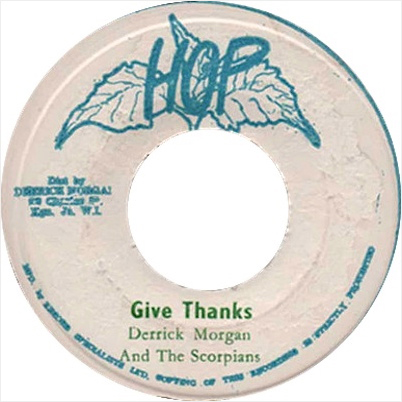
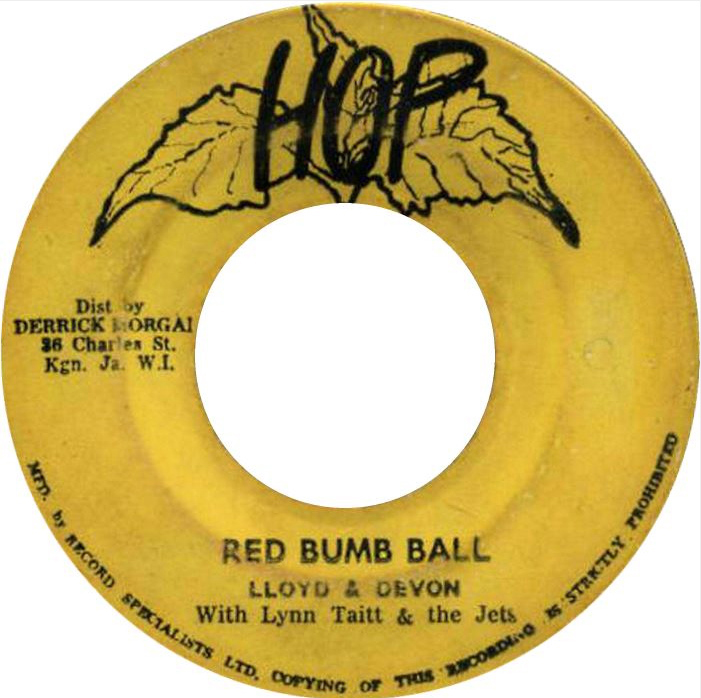
Known as one of the first superstars of Jamaican music, we know Derrick Morgan as a star singer. After recording for Duke Reid, Prince Buster, Coxone Dodd, and Simeon Smith in Jamaica and Emil Shalit in England, Derrick  Morgan arrived at the Beverley’s label. At Beverley’s, Derrick not only sang for Leslie Kong but also ran auditions, discovering Bob Marley, Desmond Dekker, and The Maytals. Furthermore, he ran rehearsals with singers before they recorded, and he also began producing records for Beverley’s as well. Consequently, Derrick was more than prepared to run his own label. So, when ska transitioned into rocksteady, Derrick opened his Hop label, named after his ska hit,under the pseudonym Seymour Morgan and backed by the mighty talent of Lynn Taitt and The Jets as the house band. The first release on the Hop label, Lloyd & Devon’s Red Bum Ball, was a huge hit, and as a result, Derrick continued on with his Hop label. We started off this spotlight on Hop with this first release and hit for Morgan’s label.

In these early tracks, you’ll hear Lynn Taitt on guitar. With Hop productions, Lynn and Derrick worked very collaboratively, with Lynn composing the guitar and bass line and Derrick arranging the vocals. The two worked closely from 1966 up until 1968, when Derrick Morgan moved to England for a second time to produce records for Pama’s Crab subsidiary. After about a year in England, Derrick returned to Jamaica, and picked back up on his Hop releases, recording in reggae, now that rocksteady had fully transitioned into reggae. We then focused the spotlight on rare Hop reggae releases before playing our favorite cut from the label.

This show is available for you to listen on Mixcloud, right HERE! https://www.mixcloud.com/bovineska/generoso-and-lilys-bovine-ska-and-rocksteady-7-14-15/

Join us on Facebook to find out about future spotlights, Jamaican shows of interest in the So. Cal area and more!
https://www.facebook.com/groups/175321709220304/

The Joyous Power Within The 1971 Concert Film, “Soul To Soul”

Standard
ike and tina

Ike and Tina Turner Stun The Crowd In “Soul To Soul”

The concert film, that relic of the screen before MTV, is still kicking around in 2015, though an artist has to reach the level of international fame of a Katy Perry or Justin Bieber before producers are willing to bankroll a two hour ego extravaganza to be seen by screaming teeny boppers worldwide. Prior the dawn of MTV, the concert film was the only way for many small town folks throughout USA and the globe to see a range of world class acts who wouldn’t come to their town in a larger than life way. As a boy I loved staying up late to watch Don Kirschner’s Rock Concert, the syndicated weekly live music show that brought many of us our first glimpse at rock and soul acts from Curtis Mayfield to Cheap Trick, but there was nothing like going to a theater to see a twenty foot tall Mick Jagger strut his stuff. In these years prior to the insanely expensive fees that now exist for music licensing, the concert film of the 1970s was a low risk moneymaker.

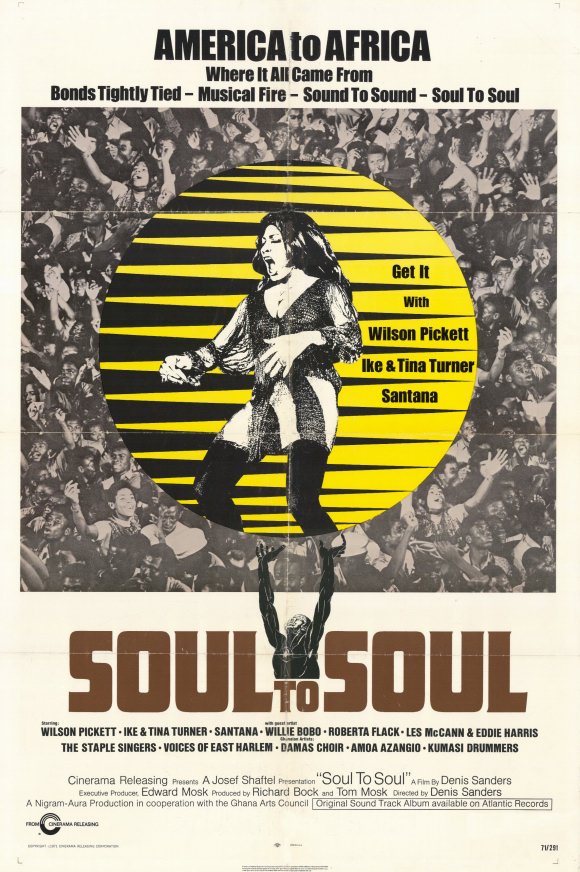
Adding into the frenzy of rock concert films was the wake left by the popularity of Gordon Park’s 1971 blaxploitation crime drama “Shaft” and its Academy Award winning soundtrack by Issac Hayes. Finally, Hollywood was now not only looking to distribute Afro American narrative films but also documentary films celebrating soul music that had the added potential of releasing a high selling soundtrack. Columbia distributed “Wattstax,” a 1973 concert film depicting the Stax Label fueled musical event that commemorated the Watts riots of 1965, and “Save The Children,” the film of the star-studded show attached to 1972 Jesse Jackson-led PUSH exposition held in Chicago, which was distributed by Paramount Pictures. Hot on the heels of “Shaft” and before even “Wattstax” and “Save The Children” was Denis Sanders’ superb documentary on the fourteen-hour concert that took place in Accra, Ghana in 1971, “Soul To Soul.”

After declaring its independence from England in 1957, Ghana had attempted to connect with a multitude of African diasporas and succeeded by getting the attention of poet Maya Angelou, who reached out to Ghana’s Prime Minister, Kwame Nkrumah, to invite many Afro American musicians to Ghana to help the newly independent country celebrate its freedom. Many years later, after Nkrumah was deposed, producers Tom and Ed Mosk presented the same idea to the Ghana Arts Council who agreed that the time was right for such an event to happen and thus the Soul To Soul concert was born. Amongst the American artists who would perform were some immensely popular soul artists: The Staple Singers, Ike and Tina Turner, Roberta Flack, and Wilson Pickett. The San Francisco rock group Santana would join the bill as would jazz performers Les McCann and Eddie Harris. Many Ghanian artists such as Kwa Mensah, The Kumasi Drummers, Charlotte Dada, and even house band for the Ghana Arts Council, The Anansekromian Zounds would play their hearts out for the tens of thousands in attendance.

The narrative construction of “Soul To Soul” would be much different from the previous mentioned “Wattstax” and “Save The Children” as far as showing the political (read: non musical) environment surrounding the concert. Gone are the moments within the town to hear what non-musicians think about the day-to-day lives. The few interviews that do exist in this documentary are mostly relegated to the beginning of the film, when the planeload of traveling soul artists is asked about their expectations for performing in Ghana. The musicians speak with great enthusiasm on their feelings about going back to the motherland, the clothes they will find and the people they will meet, but they all seem rather underwhelmed by the potential of hearing great music while there. Once they all land in Ghana, the wide-eyed tourist in our American envoy quickly disappears, as once they hear what their fellow musicians from Ghana can bring to the table, it becomes all about the music from that moment onward. A wide-eyed Tina Turner learning how to sing from a powerful Ghanian vocalist in the street is a moment that sums up the early collaborations well.

We then see the live concert, expertly filmed with brilliant sound that surpasses many films of its kind from that era. On stage, Ghanian musicians playing solo or with some of the American acts add a powerful communal element to the show. Also not lost on this viewer are the looks of awe from the audience upon seeing Tina and her backup singers howling out notes and gyrating wildly during “River Deep-Mountain High” in a way that I am sure would be scandalous for musical performances by women in Ghana at that time. Some dance in the crowd, but many just stare with open mouths and confused stares. More subdued but no less awe inspiring is the performance of Curtis Mayfield/Donny Hathaway written soul stirrer; “Gone Away” that Roberta Flack heartbreakingly sings that almost silences the enormous crowd. Strangely, Santana performs the most African sounding music of any of the American artists much to the crowd’s delight. The Staple Singers are given a few numbers on film and in general perform even better than they did on “Wattstax,” especially Mavis Staples on lead vocals, and the great Wilson Pickett, an audience favorite, gives his all as he always does.

There many powerful moments woven in between the live concert scenes, including a wedding and a funeral ritual that are seen without any over narration, and a trip to one of the many “slave castles” in Ghana that is done with few words from the guide and with a very poignant rendition of “Free” sung in acapella in the background. These scenes feel organic due to their placement, and therefore, flow well within the film’s construction as opposed to the attempts at similar emotional moments that are dispersed haphazardly in “Save The Children,” which leave you cold.

Original 1971 Trailer For Soul To Soul

 Sadly, “Soul To Soul” saw less distribution than needed during its initial run, and the Mosks did not make back their initial investment, so the documentary was near impossible to locate for many years. Thankfully, The Grammy Foundation paid for a restoration of the film and reissued it back in 2005 with added footage, interviews, and a companion soundtrack that I’m sure would’ve been a must-have had the film be seen by more of an audience back in the day.

Failure to Travel from TV to Comics: Rick and Morty

Standard

Rick and Morty restored my faith in animation on television.

As a devout Simpsons fan from about 1996 to 2009, I once had a great love for television animation. After my college years without a TV, when I did return to watching television regularly, with the guidance and wisdom of Generoso, I dedicated myself to Adult Swim’s programming. At first, mostly the live action shows captured my attention. The Eric Andre Show, Loiter Squad, and Your Pretty Face Is Going To Hell were early favorites. And one day, a commercial for Rick and Morty appeared after an episode of The Eric Andre Show, signaling the arrival of a new favorite.

After the first season of Rick and Morty brought hours of unbearable laughs to the Fierro home, when news of a comic book extension of the series emerged, I was ecstatic; however, a formal review would have to wait until I had amassed a few issues.

Now, I’ve collected issues 1-3 of the comic book arm of Rick and Morty, so I have enough material for a review, but unfortunately, as much as I had hoped to write a positive review this week, the Rick and Morty comics did not warrant one.

Cover for Rick and Morty Issue 1

Rick and Morty, the television show, possesses a unique frenetic energy and wild unpredictability to hypnotize its audience. Consequently, transferring Rick Sanchez’s fast, slurred speech and consistent, overly caffeinated, hyperactive manner along with Morty Smith’s stammering and constant state of unease proved to be an enormous challenge for the comic series’ writers. In addition to the difficulty of embodying Rick and Morty in print, the balance of energy, bizarreness, and occasionally sweetness of Rick and Morty’s adventures compared to the parallel ones of Jerry, Beth, and Summer Smith’s, make the television show even harder to adapt to a static medium.

The comic makes one major damning mistake; the adventure Rick and Morty go on in the comic feels uncharacteristic of their personas. In the comic book, Rick and Morty travel in space to invest in stocks that will succeed in the future, leading them to enormous prosperity. As expected, the time traveling and illicit stock trading lead the grandfather-grandson pair into trouble, and when Jerry reports the two to the time police, Rick and Morty have a much bigger adventure to experience.

Fundamental to their characters, Rick and Morty rarely go on adventures to seek great riches; they go on adventures as a consequence of Rick’s scientific tampering, which often leads to Morty needing to help Rick in some way. Occasionally, they travel for Rick to make some sort of illicit sale or trade for more resources or funds for his experiments, but the two never go on an adventure only to strike it rich. As a result, their adventures focus less on the goal and more on the twists and turns the two experience together. Thus, surprisingly, Rick and Morty, the television show, is less about a misanthropic, outcast scientist and more about a story of a grandfather and grandson getting to know each other. Sure, Rick and Morty follows a dysfunctional family, but beneath all of the aliens, the time traveling, the Meseeks, and the laser guns, lies a story about a mad scientist making reparations with a family he once abandoned.

Given this warm, fuzzy heart buried underneath Rick and Morty, all of the characters involved have a mix of paradoxical characteristics. Rick is angry yet nonchalant and weirdly loving in his own eccentric way. Morty is the hesitant and weary sidekick who somehow manages to keep his wily grandfather in check. Jerry is the anxious, failing husband who craves attention from his wife Beth and is somewhat jealous of Rick, but he continues to try his best to impress Beth and the rest of his family. Summer is the passive teenager with standard teenage issues, but she also seeks adventures and time with her grandfather Rick and her mom. And, Beth is a genius who had big dreams until she unexpectedly began her family, and though her family exists as her burden, she still greatly cares for them.

With the television show, we get to see all of the dimensions of the characters. With the comic book, we only see shells of each. The comic series could have expanded on the complex characters beloved by the fans of the show, but instead, it dilutes them and the adventures that make Rick and Morty stand out as one of the most entertaining, funny, innovative, and watchable television series out there.

More disappointing than the characters and the narrative arcs in the Rick and Morty comics is the lack of Dan Harmon and Justin Roiland’s presence in them. Consequently, the wit and humor of the comics lack the charming acidity of the show, and the jokes and conversations lack the references to pop culture and the sneering jabs at media works appropriately deemed unacceptable by Harmon and Roiland (remember the unrelenting insults toward Inception in the “Lawnmower Dog” episode?). As a result, Rick and Morty the comic feels much less vital and less relevant.

I had hoped that the Rick and Morty comic book would stave off my hunger during my wait for the return of the series for its second season, but instead, it only reminded me that sometimes TV empires should not cross over into comic books and/or vice versa. Rick and Morty had the opportunity to explore each character through small vignettes or stories as seen with the Bob’s Burgers comics or expand the television narrative into a different storytelling form like Joss Whedon’s Serenity comics, but it does does neither, failing to understand the full complexity of the narratives, settings, and characters established by the show, thus guaranteeing that it will not add any additional richness to the Rick and Morty universe. As a result, I’m more agitated by the paltry offerings of the comic version and much more ravenous for the television Rick and Morty.

If the comic series was a ploy to create a foil against the television series to lure fans into buying the comics only to allow them to articulate why Rick and Morty the television show rises above all other shows, then bravo to the mastermind who came up with the plan. Only a deviant like Rick Sanchez could come up with that outlandish, conniving plan, so perhaps after all, the creators of the comic book do understand their main character. But then again, Rick does not seem like he would love being part of a marketing/PR racket, so it looks like the comic creators have still missed the mark on understanding Rick and Morty.

Let’s leave the cryptic, insane mind of Rick Sanchez to Dan Harmon and Justin Roiland, and the Rick and Morty empire will be mighty fine on its own.

Rick and Morty (the comic series) is written by Zac Gorman with art by CJ Cannon, Ryan Hill, and Marc Ellerby and available via Oni Press. 

Ginger Syrup and Vietnamese Mochi: Che Xoi Nuoc

Standard

Here in the Fierro house, we are trying to push our own boundaries of our cooking. In my last edition, I made egg rolls with the help of my new friend, the deep fryer, and this week, I attempted to make Che Xoi Nuoc, one of my favorite Vietnamese desserts.

Made from sweet rice flour, the mochi in Che Xoi Nuoc are filled with savory mung bean and then served with a ginger brown sugar syrup and salty-sweet coconut milk.

A bit of a heavier dessert, it is perfect when served at room temperature or warm. There’s quite a bit of work (and many pans!) involved, but it is completely worth it for the sweet, savory, and chewy fun of Che Xoi Nuoc.

If you have left over mung bean filling, you can use it to make mung bean pancakes or more of the mochi treats! And if you’re feeling adventurous, you can deep fry the mung bean filled mochi as well and serve with nuoc mam for a savory appetizer as compared to a dessert. Enjoy!

Si Spencer’s Disjointed/Unified England in Bodies

Standard

This weekend, synchronicity rules my selection of what to read and review. On Friday night, I watched Mike Leigh’s Naked, a spectacular masterpiece of English filmmaking and possibly one of the most English films to date. Then, on Saturday, after visiting Golden Apple Comics, I picked up Si Spencer’s Bodies, and to my surprise, when I arrived home to read it, I realized Tula Lotay of last week’s review of Supreme: Blue Rose illustrated a part of Bodies.

Now, how exactly do Naked, Supreme: Blue Rose, and Bodies tie together?

Most clearly, all three have English creators. All three take place in some form of dystopia, be it more of a realistic one in Naked or a futuristic one in Supreme: Blue Rose or both in the case of Bodies. Naked and Bodies center their narratives on forces perceived or known to corrupt the existence of English citizens. Bodies and Supreme: Blue Rose construct their protagonists and antagonists in fragments across time. Bodies contains the realism of Naked crossed with the time traveling and futurism of Supreme: Blue Rose.

All three tackle major political and philosophical concepts. Naked has a fiercely raw energy weaving throughout the film, which enforces its overwhelming sense of desperation and desolation in Thatcher’s England. Supreme: Blue Rose reinvents the Supreme mythology into a fresh new, time-shifting and complex exercise in understanding fundamental existence and persona. Bodies aims to construct a murder mystery across time in order to understand the history of England’s perceived internal enemies to English tradition and values. While Naked and Supreme: Blue Rose reach for ambitious concepts with underlying comments on politics and human existence and successfully execute them without ever stepping to the pulpit, Bodies reaches for the moon in its concept, but unfortunately, it only reaches the troposphere of the earth.

Cover for Bodies Volume One

Bodies divides its narratives into 4 timelines in London: 1890, 1940, 2014, and 2050. In each, a detective of the time discovers a mutilated body in Longharvest Lane in the East End of London. At a first glance, each of the detectives tie the body to Jack the Ripper, but upon further inspection, the corpse shows ties to something far more supernatural. Each detective possesses some quality which has been or will be rejected by the traditional English society. Inspector Hillinghead, the detective of the 1890 component of the story, is homosexual. Inspector Karl Whiteman, the 1940 detective, is a Polish Jew who escaped from Krakow. Detective Sergeant Shahara Hasan, the 2014 detective, is Pakistani and Muslim. And, Detective Maggie Belwood, the 2050 detective, is an amnesic rendered into almost a borderline infantile state from some unknown force.

Across each narrative arc, the corpse has wounds which bring about suspicions of some form of ritualistic killing. To make things stranger, as each detective dives deeper into the investigation, the corpse disappears and returns to life. In each incarnation, the corpse emerges from death as a slender blonde man with an eyepatch with a variety of names, but fundamentally, he encourages each detective to accept his or her own identity and past, coaxing each into an act which will allow them to finally incorporate themselves into the world they belong, whether that world is a past or future England or a void beyond the earth.

After unpacking all of the characters and the role of the revived corpse, Bodies studies the history of England’s disenfranchised people across time, addressing the conflicts each face and how they eventually assimilate into society. Unfortunately, Bodies does a disservice to its detailed discussion of different marginalized groups by incorporating a facile message of acculturation: “Know you are loved.” As a result, by the end, Bodies feels less like an intelligent discourse on England’s hesitance toward foreign cultures and lifestyles across time and more like a hippy peace rally filled with chants of love without a full understanding of how a conservative nation comes to accept once marginalized groups.

Ultimately, the detectives who do assimilate into English society with the help of the reborn one-eyed man accept their differences while still proclaiming their pride as citizens of England, revealing Spencer’s belief in patriotism as a unifying force. Then, to reinforce his thesis, Spencer closes Bodies with a sanguine salute to England that accepts all of its flaws, cherishes its strength, and aims to instill a sense of pride in the nation, a pride which allows each of the characters to become accepted by others, and a pride which Spencer hopes will allow future disenfranchised groups to feel unity with the people around them.

However, this belief that a common pride in a nation can create bridges between people of different gender, sexuality, culture, and heritage is one that is far too idealistic and far too removed from reality. Undoubtedly, patriotism can unify people to a certain degree, but understanding between people occurs at a much more personal level than pride in one’s own nation. Consequently, Bodies exists more as a manifesto of ungrounded beliefs and less as an observational argument on assimilation and mutual understanding.

Bodies lacks nuance and evidence to establish its thesis, and as a result, even the wonderful artwork and the fascinating idea to have different illustrators dedicated to each time period cannot save this series. After all of the time traveling and the rise from the dead are said and done, only the unfounded thesis is left along with many irritating repetitions of, “Know you are loved.” More of a comic book stylized kumbaya, Bodies contains naive politics mixed with an ambitious concept, thus creating an all too pretentious (and of course completely marketable) series.

With the rise of the xenophobic national front spreading across England and Europe, Spencer had an excellent opportunity to research and discuss the origins of the movement and its recent resurgence, but instead of asking, “What is the origin of the fear of foreigners in England? Why is this happening in mass again?” he asks “Why can’t we love each other?” making Bodies much less of an effective and galvanizing work.

If you’re looking for a work which studies the marginalization of England’s people, go watch Mike Leigh’s Naked instead. I promise you will not be able to look at media and its ability to comment on the fragmentation of a society in the same way again. You probably also will not be preaching a message of universal love at the end of it either…

Bodies is written by Si Spencer with artwork by Dean Ormston, Phil Winslade, Meghan Hetrick, and Tula Lotay and coloring by Lee Loughridege. It is available via Vertigo.