Generoso’s Spaghetti alla Vongole Is Clam Paradise

Standard

As a proud Neapolitan I am thrilled to show you how to make Spaghetti alle Vongole (spaghetti and clams) which originated in Naples and is very popular throughout the surrounding Campania region. Easy to make but as all Italian food is about ingredients, you cannot skimp when it comes to your clams. Make sure that they are fresh and closed when you buy them. I’ll show you how to clean your clams and the entire process. You will need a box of spaghetti, two pounds of manila clams, 1/2 cup of white wine ( I like Riesling for this), 3 ounces of fresh parsley, 4 cloves of garlic, 8 ounces of cherry tomatoes, red pepper flakes, olive oil, salt, and black pepper.

Let us know how yours turns out!

Music: Dvorak: String Quintet in E-flat Major, Op. 97, B. 180


Sidney Poitier Fights Against Apartheid Again In 1975’s “The Wilby Conspiracy”

Standard
Wilby-Conspiracy

From left to right, Hauer, Caine, Gee, and Poitier.

Until the 1980s the word “apartheid” had been absent from daily speech here in America. Suddenly with growing attention from the western news, the anti-Sun City Movement, and films like “Cry Freedom,” “A Dry White Season,” and “A World Apart,” “apartheid” began to be a part of an open dialog in the USA. As a pre-teen in the late 1970s, I distinctly remember the first time that I heard the word spoken, which happened during an episode of the CBS drama, “The White Shadow,” a weekly series about a white coach of an almost all-African American basketball team in South Central Los Angeles. During one particular episode, Coach Reeves appoints the only white, but popular, player on the team, “Salami,” to be captain, which is fine with most of the team except for one player who speaks openly about the then current political situation in South Africa called “apartheid,” where the white privileged minority had been ruling the land without any members of the black African majority. The episode had left me curious, but even though I was growing up in a largely African American neighborhood in South Philadelphia, finding any information about apartheid at my local library was fairly impossible, that was of course until the middle of the subsequent decade when t-shirts declaring  “Free Nelson Mandela” were seen everywhere you went in the city.

Even though the policies of apartheid had been established in after the general elections in South Africa in 1948, Hollywood had stayed clear of the subject until I assume it became a profitable “cause.” Finally, when television and film began depicting stories of this oppression from the last forty years, I became curious again, except this time I wondered if Hollywood had ever tried to tell these stories before during a period when it perhaps wasn’t in vogue to do so. The only example that stands out for me occurred in during the mid-1950s, when the massively underrated talents of director Richard Brooks touched on the subject in his film, “Something Of Value” which starred Rock Hudson and Sidney Poitier. Though the film was not about South Africa but Kenya, it successfully brought to the screen Robert C. Ruark’s novel of the same name about the real Mau Mau uprising that occurred in colonial Kenya during the 1950s. In that film, Sidney Poitier plays the African, Kimani, who despite being raised with his white friend Peter (Rock Hudson) has his father imprisoned by Peter’s father who protests Kimani’s father’s participation in a native Kenyan custom then deemed to barbaric by the colonial government. Outraged by his father’s imprisonment, Kimani joins an insurgency group called the Mau Mau that leads a bloody rebellion against the colonial leadership and eventually this forces Kimani to clash with his lifelong friend Peter. Though the film doesn’t directly address the situation in South Africa, it is Hollywood’s first and really only attempt before the 1980s (Brooks’ film was a box office flop) to expose American audiences to the growing political unrest in Africa stemming from apartheid colonial rule.

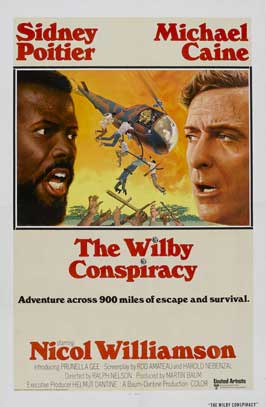
Twenty years later in 1975, Sidney Poitier is at his anti-apartheid ways again in the UK produced film “The Wilby Conspiracy,” an entertaining action film disguised as a political/cause thriller. What may have prompted the production of this UK film was that by the mid-1970s, mass paranoia was coming into vogue due to the Watergate scandal and Hollywood was frantically putting out political/anti-government thrillers with fairly complex plots such as David Miller’s “Executive Action,” Sydney Pollack’s “Three Days Of Condor,” and Alan J. Pakula’s “The Parallax View,” all of which were met with good critical and commercial success which surely prompted our friends in the UK to follow suit. “The Wilby Conspiracy” uses the apartheid situation in South Africa to run its plot, but due to the subject matter, filming was not permitted in South Africa and bizarrely the film would have to be shot in Kenya, the country that was the setting for Poitier’s earlier film, “Something Of Value.” Here Poitier plays Shack Twala, a jailed revolutionary who is released from prison at the beginning of the film by his Afrikaner attorney Rina van Niekerk (Prunella Gee) who has recently left her husband Blane (played by a very young Rutger Hauer in his first English speaking role), and she is now seeing British mining engineer Jim Keogh (Michael Caine).

Shortly after Shack’s release, the three are off to celebrate but are soon met by the South African police who hassle them for identification. When Shack, Jim, and Rita cannot produce the necessary ID needed, they are arrested but successfully fight off the police and make a run for it. Their arrest angers Major Horn (brilliantly played by Nicol Williamson who is best known to US audience as “Merlin” in John Boorman’s Excalibur) who chastises his second in command for not only his campaign of harassing black South Africans but also for arresting Shack, as his arrest will drive even more against the prevailing government. On the run yet again, Shack seeks out the assistance of Doctor Mukharjee (Saeed Jaffrey), an Indian dentist and fellow member of Black Congress. Soon Jim, Rita, and Shack are in the possession of a stash of uncut diamonds that will aid the Black Congress and their leader, Wilby (Joe De Graft), but, despite this success, they still must outrun the cunning Major Horn, who is still manically hunting them. You then have the necessary prerequisites for a 70s political action film with a few clever twists, a lot of very exciting car chases (Caine and Poitier were actually almost killed in one accident involving the car camera which became displaced), and even a bit of an unnecessary sex scene which is reminiscent of thrown in Dunaway/Redford tryst in “Condor.” Poitier and Caine do the absolute most given the fairly thin dialog which heavily leans on the buddy film tip, and they do produce some chemistry in their scenes together. Overall, the actors do a fine job, and script does provide a few laughs, but Nicol Williamson does steal the show as the intelligently written but villainous Major Horn.

“The Wilby Conspiracy” was directed with flair by American Ralph Nelson, who twelve years earlier had helmed the wildly successful and enjoyable nun extravaganza, “Lilies Of The Field,” which garnered an Oscar for his lead, Sidney Poitier, the first best actor Oscar awarded to an African American. Nelson would also direct Poitier and James Garner and hone his talents as an action director in the less successful but still entertaining 1966 western “Duel At Diabolo.” Through not possessing the intense drama of Brooks’ “Something Of Value,” Nelson keeps the pace quick in “The Wilby Conspiracy,” and with that fast pace he keeps up your interest in the story while never losing focus of dire conditions in South Africa at that time in history.

The Wilby Conspiracy Trailer

It would be almost a decade more before Hollywood would jump on the anti-apartheid bandwagon with their tear-jerking/heavy-handed offerings; films which now seem more concerned with preaching to a left leaning choir than opening up the discussion by presenting the situation in an action-driven political thriller format that would speak to a  wider audience. Nelson’s film is illustrative about apartheid rather than didactic and thus, more effective in getting its core message out.

Bovine Ska and Rocksteady 8/4/15: The UK “Giant” Label

Standard
giant dandy LP

A Rare Giant LP Featuring It’s Star, Dandy Livingstone

Hello Bovine Ska and Rocksteady Listeners,

Thanks for making last week’s show, our two hour tribute to Jamaican Doo Wop Covers such a success as it was the number five ranked ska show on Mixcloud last week!  If you missed the show, it is here for your enjoyment:  https://www.mixcloud.com/bovineska/generoso-and-lilys-bovine-ska-and-rocksteady-jamaica-covers-doo-wop/

For this past week’s show on August 4, 2015, we went back to our label spotlights by focusing on the releases of the UK Giant Label.  But before we did, we did an hour of reggae and rocksteady, beginning with version to version to version excursion of Dennis Brown’s 1972 hit for producer Lloyd Daley, “Things In Life” which was released on the Syndicate label in 1972.  We ended that four song set with possibly the most popular side of the night, the ruthlessly catchy 1972 Techniques Label classic by Johnny Osbourne, “Ready Or Not.”  Our second set began with a version to version of the Toots Hibbert penned “Come Down” sung by Carey and Lloyd.  After a mento set and a long rocksteady set, that began with a exceptional soul cut from Prince Buster called “Land Of Imagination,”  Lily and I launched into the second hour and a spotlight of the rocksteady-heavy UK “Giant” Label.

Benny and Rita King distributed a lot of Jamaican music in England. In 1959, they opened up their R&B record shop in Stamford Hill where they would originally sell records, but by the early sixties, the two began to distribute their own records through their parent label R&B. Rita would often go to Jamaica to find talent and to talk to Jamaican record labels, and over their career in the record industry, the Kings redistributed Ken Lack’s Caltone releases along with tracks from U Roy, Roy Shirley, and Max Romeo, along with their star, Dandy Livingstone, who prompted the creation of one of R&B’s imprints, the Giant label, which is our label spotlight tonight.  In 1967, Dandy’s Rudy, A Message to You was released on Ska Beat, another R&B subsidiary, and saw quite a bit of commercial success, and as a result, the Kings decided to open Giant as a label that same year dedicated to Dandy’s work. The label had a total of 39 issues with 26 of them including Dandy’s involvement either as a vocalist or producer. Given Dandy’s seminal role in the creation of the Giant label, we felt it was appropriate to start off with one of his great tracks for the label, People Rocksteady. Beyond Dandy works, Giant also pressed/distributed some work from Jamaica, including Albert Tomlinson’s Don’t Wait For Me and Roy Shirley’s Dance Arena.

The August 4th, 2015 show with its Giant Label spotlight is available for your listening pleasure HERE ON MIXCLOUD.  If you like what we do, please subscribe to our show, its FREE!!!

Please do join us on Facebook to hear about upcoming spotlights and Jamaican shows in the So Cal area, rare Jamaican photos, and more!

https://www.facebook.com/groups/175321709220304/

XOXO
Lily and Generoso

“La Vallee”, Barbet Schroeder’s 1971 Hippiedom Nature Exploration

Standard
vallee-6

“Well honey, at least we aren’t in Paris anymore.”

I rarely begin a review with a direct quote, but I thought it was important to include this quote from a 1971 interview with “La Vallee” director, Barbet Schroeder, conducted by famed French director, Bertrand Tavernier in understanding our director’s intentions for his film:  “It’s up to each individual to decide whether or not he wants to conclude that his dream of returning to the bosom of nature is a sad utopian vision, and a flight from the self and its implications in society.”

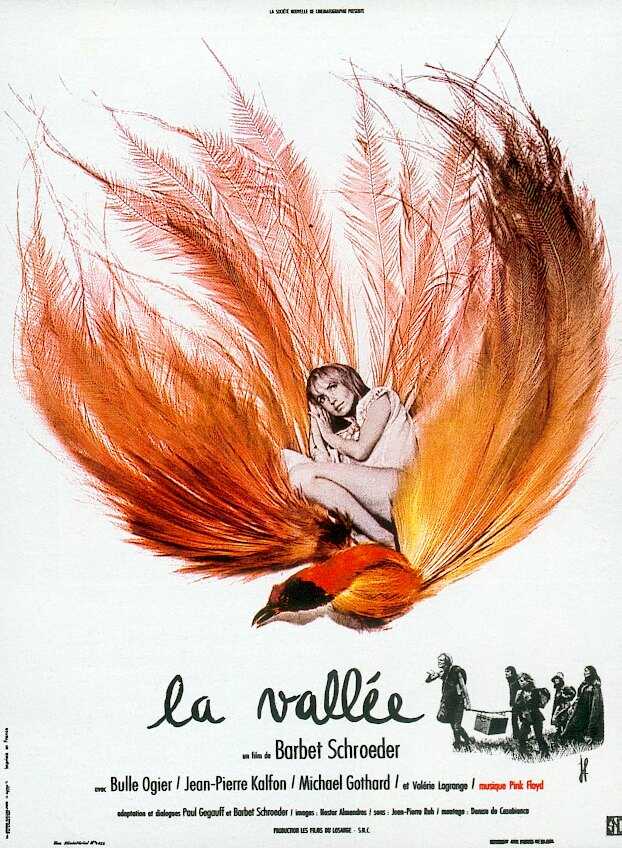
The early 1970s were rife with films depicting this return to the “bosom of nature” as Schroeder stated about his film, “La Vallee,” with many being forced into pastoral exile as seen by Jim McBride’s superb 1971 post-apocalyptic tale, “Glen and Randa,” Nicolas Roeg’s violently abandoned school children negotiating the outback in “Walkabout,” or Mark the radical and Daria the free spirit in Antonioni’s “Zabriskie Point.” The time seemed to be right for abandonment of all things urban in favor of a Utopian or at least survivable natural experience that stemmed from the fear of a never-ending Cold War. That hunger for a utopia is very much the mission for our band of hippies in “La Vallee,” Barbet Schroeder’s almost distractedly beautiful 1971 film.

Viviane (Bulle Ogier) is in New Guinea purchasing exotic feathers for a shop in Paris. She is a gorgeous, well to do but bored wife of a French diplomat from Melbourne. She is being sold on some overpriced feathers and faux native trinkets at a trading post when she meets the beefy hippyish Oliver (Michael Gothard who played the most zealous priest that same year in Ken Russell’s The Devils). Olivier throws some wild boasts and the promises of more feathers to our uptight Viviane and eventually persuades her to visit his band of traveling freaks during the expedition into the jungles of New Guinea. Olivier shows Viviane his collection of rare feathers (the jungle version of etchings I suppose) but refuses to sell her any of them. No, if Viviane wants her precious feathers, she needs to join his band of freaks and find them them herself but not before a bit of the old in and out (sorry that’s a different 1971 film). I guess that a trip to utopia to gain a higher consciousness must first have a stop through Olivier’s pants. Such is hippydom I suppose…

At the camp, Viviane meets Olivier’s band of explorers, including the fiercely primal Gaetan, played by Jean-Pierre Kalfon, Ogier’s co-star in Jacques Rivette’s “L’Amour Fou,” a brilliant film that fosters the discussion about the relations between film and theater and even theater and theatrical aspects of reality, which culminates with Ogier and Kalfon turning their chic Paris apartment into a scene of primal expressionism. Watching the interactions between Viviane and Gaetan in “La Vallee” is an almost follow up of their characters from “L’ Amour Fou” if Ogier never left Paris and is meeting Kalfon whom she forced into such into a state of base behavior two years earlier.  Soon, Viviane and her new friends are on the road with the promise of spiritual enlightenment in an uncharted valley, which sets up the plot with the potential of Viviane undergoing a transformation and finding herself in the wilderness. This is soon sidetracked when Viviane meets a native, who she is told will not sell feathers but will give them away to people whom he likes. Viviane makes no real connection to the native, except for a very western attempt to use her beauty to influence him, which bizarrely works in her favor. It is clear at this point that if a transformation is to occur within Viviane, it is to take place slowly or through some moment of dire circumstances.   Viviane makes some attempts at connecting with nature, even at one point wrapping a serpent around her neck, much to the dismay of Olivier, but soon after Olivier makes it with another woman within the group, and it’s back to the jealousies and insecurities of the western world for Viviane.

Whilst continuing their travels towards the titular valley, our group stumbles upon a the Mapugas tribe and takes part in their rituals, shot in an almost documentary style that seems detached from the subdued Sierra Club visual storytelling which is the predominance of the “La Vallee.” Though Schroeder attempts to remove all gratuitous hippy folklore from the goings on of his film, there is still the slight air of liberal arts college field trip inherent in our hippies’ interaction with the Mapugas tribe, so much so that one wonders if Viviane is still picturing the chief’s majestic feathers sitting in a display case in some shop near the Eiffel Tower for a back to nature sale.   These scenes between our actors and the tribe are of course improvised, and with that, there seems to be a natural disconnect as the over-reverence that the actors clearly possess in trying to relate to the tribe encumbers what should be a more of a transformative moment for their characters. Too many smiles from Viviane and company amidst the hog butchering and face painting take away from what should be a state of bewilderment. Was this Schroeder’s final goal: To show that these westerners/hippies could never truly immerse themselves into this wild frontier after all? Their subsequent journey to the mythical or symbolic valley would indicate that Schroeder thought otherwise in that a potential state of enlightenment was there for them at the end.

Perhaps it is my own western biases coming into play here, but like Roeg’s “Walkabout” I sometimes have to check myself to see if I am I am seeing the transformation of the urban being into a less complicated part of nature, or am I just watching a gorgeously filmed bit of environmental porn to overindulge in for two hours. “La Vallee” was shot by Eric Rohmer/Terence Malick’s cinematographer, Nestor Almendros, who does a brilliant job at capturing the landscapes, but he does keep the proceedings quite stoic, which again would indicate that Schroeder would want to infer that our group of free form travelers is forever locked into their western reality. Also the much heralded original Pink Floyd soundtrack that is less Syd Barrett era psych, and more sitting in your bedroom, staring at the gatefold cover while on shrooms Roger Waters style, goes even further in keeping the viewer from a totally immersive experience.

Original trailer for La Vallee

In the aforementioned interview with Schroeder from 1971, the director viewed the hippies as “the only contemporary movement which has produced a lunatic fringe filled with a spirit of adventure,” and “La Vallee” does make it clear that the spirit of adventure was very much alive with this collection of hippies, but perhaps that adventure had an emotional glass ceiling that was located in a small apartment somewhere in the 1st Arrondissement in Paris.

Generoso’s Creamy and Savory “Risi e Bisi” (Italian Rice and Peas)

Standard

This delicious and dangerously unhealthy Italian dish usually makes it may to the table in Italy sometime during the spring when the peas are harvested, but here Generoso shows you how to make this dish in the dead of summer in our Los Angeles apartment.  From prep to plate this dish should take you a little over thirty minutes to prepare, and for the most part is created in a way similar to that of any risotto.   So get ready for a lot of stirring.  You will need two cups of arborio rice, four cups of peas, 1/2 cup of ground Parmesan, one half yellow onion, 1/2 pound bacon/pancetta, four tablespoons of butter, olive oil, salt and pepper. Let us know how yours turns out. XOXO Generoso and Lily

Music: “Felix Mendelssohn: Songs Without Words”

Bovine Ska and Rocksteady 7/21/15: Alvin Ranglin’s GG Label

Standard
GG Label A

A great early hit for the GG Label

Hello Bovine Ska and Rocksteady Listeners,

This week’s program which aired on Tuesday, July 21st, started with two sets of fantastic ska beginning with one of the most unheralded singer/songwriters in Jamaica music history, Wilburn “Stranger” Cole’s 1963 cut for Duke Reid’s Dutchess label, “Boy Blue.”  Gaylad, BB Seaton, ended the first set with a fierce solo cut, “Power” produced by Coxsone in 1963.  After another, mostly instrumental ska set, we charged into our mento set with The Tower Islander’s informative tune, “Advice To Men.”  We ended our first hour with an unusually long rocksteady set, beginning with The Originators, “Red Hot Iron” for Gayfeet in 1967 and ending with Junior Smith flute-infused rocksteady, “Cool Down Your Temper.”  At the end of the first hour it was time to spotlight Alvin Ranglin’s GG Label.

Born in the rural district of Eden in Clarendon in Alvin Ranglin’s interest in music began when he was a child as a choir member in the Adventist church. As a teenager, he moved to May Pen for a better school. In May Pen, Ranglin began to sing publicly in concerts. Music, however, was not his original industry of choice. Ranglin first attempted to become a carpenter, then mason, and then a welder, with no luck. At that point, his mother suggested going to England, but Ranglin stayed and became an electrician, emerging after training as a radio and television technician. Given his skills, Ranglin built tube amplifiers that were sold to musicians, and in the hope to get more music to people beyond the amplifiers, Ranglin opened up his GG’s sound system, named after family members, Gloria, her sister, and a cousin nicknamed Girlfriend. With the soundsystem open and connections to the jukebox industry, Ranglin was ready to record his own singles. The earliest to his label were the Maytones and his singing partner Emmanuel Flowers. With the duo Flowers & Alvin, the label scored a hit with Howdy & Tenky, which was further promoted by Ranglin’s own jukebox circulation.  A major entrepreneur with hands in many businesses ranging from TV repair to gaming machines, Ranglin also opened a record store in May Pen, then Kingston, then Halfway Tree, Old Harbour, and eventually in London and Brooklyn.

The Maytones, Vernon Buckley and Gladstone Grant, were early stars on the GG’s label. Buckley was doing book work and Grant was a mini-bus driver, and the two formed the Mighty Maytones and auditioned for Alvin Ranglin when they heard about his record store in Maypen. The Maytones would see great success with Ranglin until Buckley left Jamaica for Canada in 1980. The house band for the label was the GG All Stars and amongst the rotating musicians who played for GG’s All Stars are: Winston Wright or Glen Adams on keyboards.  On trumpet Bobby Ellis and on sax Roy Samuel or Felix Bennett.  On guitar Alva Lewis or Hux Brown. on Drums were Winston Grennan and Calrton Barrett. On bass Clifton Jackson or Aston Barrett and on piano Theo Beckford or Glady Anderson.

Listen to the 7/21/15 edition of Generoso and Lily’s Bovine Ska and Rocksteady on Mixcloud HERE.

Join our group on Facebook!


Michael Schultz Directed Richard Pryor In Two Films in 1977 And “Greased Lightning” Was The One That Got Away

Standard
greased lightning pryor

Richard Pryor Takes The Wheel in “Greased Lightning.”

Michael Schultz was one of the most successful African-American directors of the 1970s. Starting out in television as a director for the early part of the decade, Schultz graduated to the big screen in 1974 directing Diana Sands in “Honeybaby, Honeybaby,” a low budget action film that was to be Sands’ last film before she passed away in 1973. Schultz immediately returned with the successful 1975 film, “Cooley High,” a entertaining high school comedy/drama that many refer to as the “Black American Graffiti.” In 1976, Schultz hit it big with “Car Wash,” one of the many “workplace comedies” of the 1970s that was inspired by Altman’s “M*A*S*H,” and a film that also produced a number one soundtrack for the disco era. That film contained about eight minutes of a rising comic named Richard Pryor, who sometime between filming and release developed into a star after nine years of small parts (with the notable exception of 1″The Mack”) in over a dozen films. Schultz rushed out to cast Pryor in the lead role, and so in 1977, Schultz cast Pryor in a US remake of Lina Wertmuller’s “The Seduction Of Mimi,” called “Which Way Is Up,” converting the eternal schlubby Mimi of Wertmuller’s film into Leroy, a California grape picker who accidentally becomes a union leader. It is easily one of Pryor’s best performances as he (Pryor) plays several different characters in the same way that he could do onstage, with total commitment and at the drop of a hat.

While “Which Way Is Up” was filming, another successful African-American director from that decade, Melvin Van Peebles, contacted Pryor. Melvin wanted to make a biopic about Wendell Scott, a World War Two veteran, moonshine runner, and a stock car racer on the Dixie Circuit who would become the first African-American to drive for NASCAR. With another opportunity to play the lead, Pryor was onboard for the project, and the film would be fittingly titled, “Greased Lightning.” Unfortunately, somewhere during the casting process, Van Peebles and the producers of “Greased Lightning” began to have artistic differences, and Van Peebles was dismissed, leaving the film without a director. Eager to play Scott, Pryor asked Schultz while making “Which Was Is Up” to helm the project, and Schultz agreed. Shortly after the wrap of “Which Way Is Up,” Schultz and Pryor began work on “Greased Lightning.”

A lot of talent was attached to “Greased Lightning.” Besides Pryor, the absolutely gorgeous and talented Pam Grier was selected to play Scott’s wife, Mary, and she turns in the best performance of the pic. Cleavon Little (Sheriff Bart from the Pryor scripted Blazing Saddles) as Scott’s best friend, Peewee. Beau Bridges as Hutch, Scott’s only white friend and mechanic, and famed folks singer Richie Havens as would play Scott’s other mechanic, Woodrow and also contribute more than a few songs for the soundtrack, songs that at times supply the Greek Chorus for the film. Sadly even with all of that talent, it becomes clear as to what the artistic differences must’ve been between Van Peebles and the producers as this feels like quite the hatchet job.

First off, the tone of the film is almost unbearably light, like that of “The Buddy Holly Story,” which considering the amount of racism inherent in Wendell Scott’s story, some pretty awful moments of real hate from Scott’s life play out almost as comedy, and I would imagine Van Peebles would never even think of shooting it that way. What is truly unbelievable about the mellowing of those moments is that during the filming of “Greased Lightning,” racially biased locals in Georgia did everything they could to louse up the production, including whistling and yelling whenever director Schultz would yell “action.” Things got so bad in fact that Schultz would have to substitute the words “action” for “cut” so that the antagonizing yokels would be confused as to when to start yelling. Also the producer’s “feel good movie” intentions are made even clearer as “Greased Lightning” was released with a “PG” rating, which almost guarantees that any edge of that pesky racism would be almost entirely removed without expletives that would naturally be attached to such hateful speech.

Secondary to the watering down of Wendell Scott’s story is the editing which stunts almost every moment of real emotion from carrying through to the viewer. As stated earlier, Pam Grier puts a ton of love into her performance as Scott’s wife Mary, she carries so much love and hurt on her face, but most of her scenes are quickly cut before they can impact you. Beau Bridges’ gives a fine performance and is comedically great as Hutch, who first mocks but then befriends Wendell. Their scenes together are quite good, but, again, they are sliced down to almost nothing by the middle of film, so we never see the relationship mature in any logical way. Cleavon Little is relegated to just quick comedic insertions during most of his scenes, which is a waste for such a talented actor. The few racing scenes are well shot and are very exciting, especially Scott’s first race where he goes over the wall and comes back to finish the race, but those scenes are few and far between. The greatest editing sin is that shortly after Scott finally begins to win a race, the film cuts to him as an aging and medically challenged retiree at the age 42! The jump is stupefying as we have little idea of where his friends and crew have been during this time, and it makes his eventual win at the Grand Nationals, which ends the film, anticlimactic.

Original 1977 Trailer for Greased Lightning
http://www.youtube.com/watch?v=YTlM__C5AbE

It feels like there is more of a film there somewhere as “Greased Lightning” isn’t sure whether it wants to concentrate on Scott the driver, Scott the husband, or Scott the friend, and the film does none of these aspects of this heroic man any real justice. Richard Pryor does as well with the material as he can and proves that he can perform drama almost as well as comedy, and only one year later in 1978, Pryor would stun critics with his fine dramatic performance in director Paul Schrader’s best film, “Blue Collar.” Sadly, Michael Schultz, who continues to direct television to this day, in that same year of 1978, directed Peter Frampton and The Bee Gees in a musical interpretation of the Beatles, “Sgt. Pepper’s Lonely Heart Club Band,” a film so horribly misconceived and painfully executed that it makes you wonder if Schultz was so rattled by the poor box office and criticism of “Greased Lightning” that his instincts were completely off for the remainder of the decade.


Generoso’s Crispy and Sweet Polenta Fritto con Spinaci!

Standard

Polenta is that delicious corn meal bite that is perfect for dinner after a cold day outside. My recipe for these fried polenta slices with spinach should make for a different appetizer for your next event. You will need cornmeal, spinach, butter, red wine, garlic, salt, olive oil, black pepper, and whole milk mozzarella. Let us know how yours turned out!

XO Generoso and Lily

Music: Robert Schumann’s Fantasiestucke Op 88


Bovine Ska and Rocksteady 7/14/15: Derrick Morgan’s Hop Label

Standard
hop label A

An early rocksteady hit for the Hop Label

Hello Bovine Ska and Rocksteady Listeners!

This past week Lily and I started off with two sets of rare ska, beginning with Larry Lawrence side on Beverley’s called “Garden Of Eden.”  We ended that first set with a very early cut from The Sensations entitled “Juvenile Delinquent” that they recorded for Treasure Isle in 1966.  Our mento set started off with Lord Power taking a mento classic and converting it into an advert for “Special Amber Calypso.” We ended the first hour with a six song set of rocksteady, ending with the great Roy Panton and The Cabeleros performing “Control Your Temper.”  We then dove right into our spotlight of Derrick Morgan’s Hop Label….

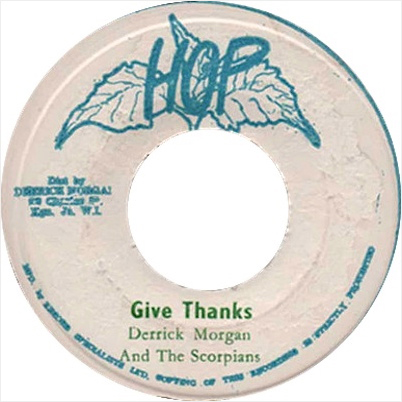
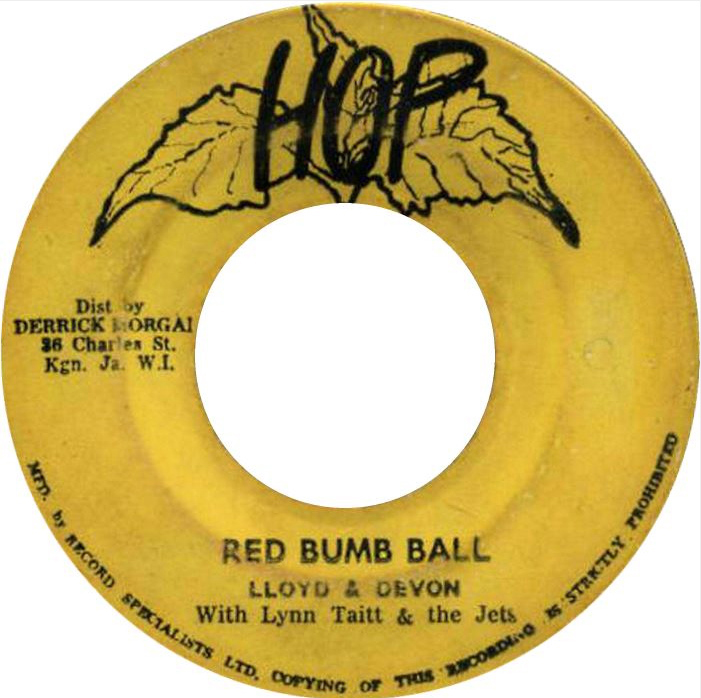
Known as one of the first superstars of Jamaican music, we know Derrick Morgan as a star singer. After recording for Duke Reid, Prince Buster, Coxone Dodd, and Simeon Smith in Jamaica and Emil Shalit in England, Derrick  Morgan arrived at the Beverley’s label. At Beverley’s, Derrick not only sang for Leslie Kong but also ran auditions, discovering Bob Marley, Desmond Dekker, and The Maytals. Furthermore, he ran rehearsals with singers before they recorded, and he also began producing records for Beverley’s as well. Consequently, Derrick was more than prepared to run his own label. So, when ska transitioned into rocksteady, Derrick opened his Hop label, named after his ska hit,under the pseudonym Seymour Morgan and backed by the mighty talent of Lynn Taitt and The Jets as the house band. The first release on the Hop label, Lloyd & Devon’s Red Bum Ball, was a huge hit, and as a result, Derrick continued on with his Hop label. We started off this spotlight on Hop with this first release and hit for Morgan’s label.

In these early tracks, you’ll hear Lynn Taitt on guitar. With Hop productions, Lynn and Derrick worked very collaboratively, with Lynn composing the guitar and bass line and Derrick arranging the vocals. The two worked closely from 1966 up until 1968, when Derrick Morgan moved to England for a second time to produce records for Pama’s Crab subsidiary. After about a year in England, Derrick returned to Jamaica, and picked back up on his Hop releases, recording in reggae, now that rocksteady had fully transitioned into reggae. We then focused the spotlight on rare Hop reggae releases before playing our favorite cut from the label.

This show is available for you to listen on Mixcloud, right HERE! https://www.mixcloud.com/bovineska/generoso-and-lilys-bovine-ska-and-rocksteady-7-14-15/

Join us on Facebook to find out about future spotlights, Jamaican shows of interest in the So. Cal area and more!
https://www.facebook.com/groups/175321709220304/

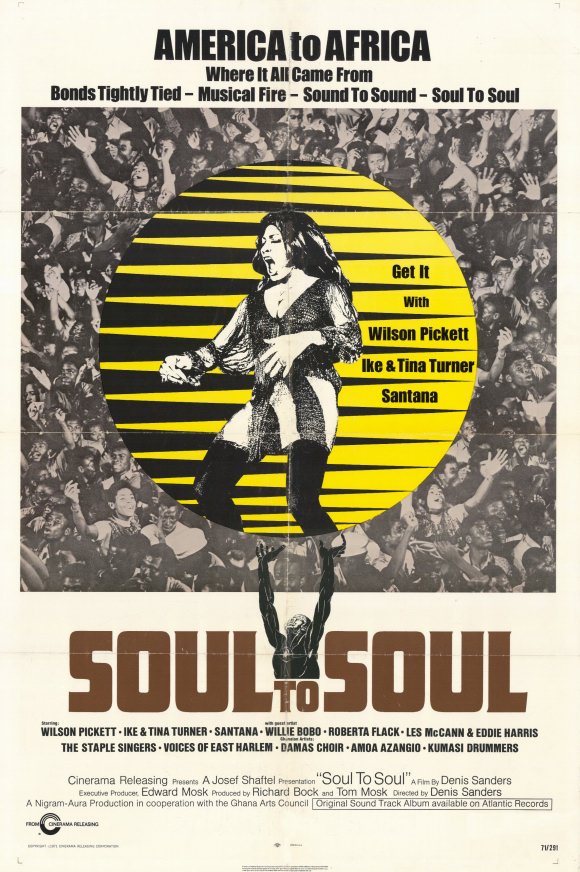
The Joyous Power Within The 1971 Concert Film, “Soul To Soul”

Standard
ike and tina

Ike and Tina Turner Stun The Crowd In “Soul To Soul”

The concert film, that relic of the screen before MTV, is still kicking around in 2015, though an artist has to reach the level of international fame of a Katy Perry or Justin Bieber before producers are willing to bankroll a two hour ego extravaganza to be seen by screaming teeny boppers worldwide. Prior the dawn of MTV, the concert film was the only way for many small town folks throughout USA and the globe to see a range of world class acts who wouldn’t come to their town in a larger than life way. As a boy I loved staying up late to watch Don Kirschner’s Rock Concert, the syndicated weekly live music show that brought many of us our first glimpse at rock and soul acts from Curtis Mayfield to Cheap Trick, but there was nothing like going to a theater to see a twenty foot tall Mick Jagger strut his stuff. In these years prior to the insanely expensive fees that now exist for music licensing, the concert film of the 1970s was a low risk moneymaker.

Adding into the frenzy of rock concert films was the wake left by the popularity of Gordon Park’s 1971 blaxploitation crime drama “Shaft” and its Academy Award winning soundtrack by Issac Hayes. Finally, Hollywood was now not only looking to distribute Afro American narrative films but also documentary films celebrating soul music that had the added potential of releasing a high selling soundtrack. Columbia distributed “Wattstax,” a 1973 concert film depicting the Stax Label fueled musical event that commemorated the Watts riots of 1965, and “Save The Children,” the film of the star-studded show attached to 1972 Jesse Jackson-led PUSH exposition held in Chicago, which was distributed by Paramount Pictures. Hot on the heels of “Shaft” and before even “Wattstax” and “Save The Children” was Denis Sanders’ superb documentary on the fourteen-hour concert that took place in Accra, Ghana in 1971, “Soul To Soul.”

After declaring its independence from England in 1957, Ghana had attempted to connect with a multitude of African diasporas and succeeded by getting the attention of poet Maya Angelou, who reached out to Ghana’s Prime Minister, Kwame Nkrumah, to invite many Afro American musicians to Ghana to help the newly independent country celebrate its freedom. Many years later, after Nkrumah was deposed, producers Tom and Ed Mosk presented the same idea to the Ghana Arts Council who agreed that the time was right for such an event to happen and thus the Soul To Soul concert was born. Amongst the American artists who would perform were some immensely popular soul artists: The Staple Singers, Ike and Tina Turner, Roberta Flack, and Wilson Pickett. The San Francisco rock group Santana would join the bill as would jazz performers Les McCann and Eddie Harris. Many Ghanian artists such as Kwa Mensah, The Kumasi Drummers, Charlotte Dada, and even house band for the Ghana Arts Council, The Anansekromian Zounds would play their hearts out for the tens of thousands in attendance.

The narrative construction of “Soul To Soul” would be much different from the previous mentioned “Wattstax” and “Save The Children” as far as showing the political (read: non musical) environment surrounding the concert. Gone are the moments within the town to hear what non-musicians think about the day-to-day lives. The few interviews that do exist in this documentary are mostly relegated to the beginning of the film, when the planeload of traveling soul artists is asked about their expectations for performing in Ghana. The musicians speak with great enthusiasm on their feelings about going back to the motherland, the clothes they will find and the people they will meet, but they all seem rather underwhelmed by the potential of hearing great music while there. Once they all land in Ghana, the wide-eyed tourist in our American envoy quickly disappears, as once they hear what their fellow musicians from Ghana can bring to the table, it becomes all about the music from that moment onward. A wide-eyed Tina Turner learning how to sing from a powerful Ghanian vocalist in the street is a moment that sums up the early collaborations well.

We then see the live concert, expertly filmed with brilliant sound that surpasses many films of its kind from that era. On stage, Ghanian musicians playing solo or with some of the American acts add a powerful communal element to the show. Also not lost on this viewer are the looks of awe from the audience upon seeing Tina and her backup singers howling out notes and gyrating wildly during “River Deep-Mountain High” in a way that I am sure would be scandalous for musical performances by women in Ghana at that time. Some dance in the crowd, but many just stare with open mouths and confused stares. More subdued but no less awe inspiring is the performance of Curtis Mayfield/Donny Hathaway written soul stirrer; “Gone Away” that Roberta Flack heartbreakingly sings that almost silences the enormous crowd. Strangely, Santana performs the most African sounding music of any of the American artists much to the crowd’s delight. The Staple Singers are given a few numbers on film and in general perform even better than they did on “Wattstax,” especially Mavis Staples on lead vocals, and the great Wilson Pickett, an audience favorite, gives his all as he always does.

There many powerful moments woven in between the live concert scenes, including a wedding and a funeral ritual that are seen without any over narration, and a trip to one of the many “slave castles” in Ghana that is done with few words from the guide and with a very poignant rendition of “Free” sung in acapella in the background. These scenes feel organic due to their placement, and therefore, flow well within the film’s construction as opposed to the attempts at similar emotional moments that are dispersed haphazardly in “Save The Children,” which leave you cold.

Original 1971 Trailer For Soul To Soul

 Sadly, “Soul To Soul” saw less distribution than needed during its initial run, and the Mosks did not make back their initial investment, so the documentary was near impossible to locate for many years. Thankfully, The Grammy Foundation paid for a restoration of the film and reissued it back in 2005 with added footage, interviews, and a companion soundtrack that I’m sure would’ve been a must-have had the film be seen by more of an audience back in the day.