Bovine Ska and Rocksteady 1/21/2015: The Cables

Standard
cables what kind of world

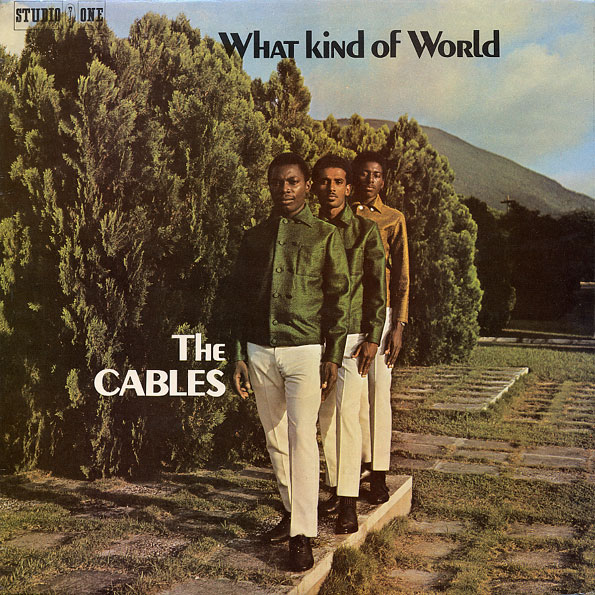
The Cables superb LP, “What Kind of World,” on Studio One

This week’s program began with two sets of fantastic ska which started with a cut from the virtually unknown artist named “Pulus” with a track entitled “Sow To Reap” for Merritone in 1966. Thanks again to the good folks at Dub Store in Japan for finding and pressing these lost tapes from the Merritone vaults.  I hope that there is only more lurking somewhere to be released soon.  After a brisk mento set, we launched into the sounds of vocal group extraordinaire, The Cables.

The Cables are Vincent Stoddard, Elbert Stewart and Keble Drummond. Named after a modified spelling of Keble’s own name into The Cables, which he felt was a right name because cables could send a message to the world. Born in St. Elizabeth, The Cables’ frontman Keble Drummond moved to Kingston as a child and grew up in the dire neighborhoods that would produce some of Jamaica’s greatest talent. Spending most of his adolescent years in Ghost Town, Drummond interacted with some of Jamaica’s greatest talents including Rita Marley, who lived in Ghost Town as well. Drummond attended Chetola Park School and then Kingston Senior School, a school that produced the great talents of Earl Morgan from the Heptones and Marcia Griffiths, so music was not a surprising path for him. Growing up in neighborhoods where musicians were often performing, Keble began to interact and sing with local groups. Eventually, Kebel met Peter Austin of the Clarendonians who taught him his first guitar chords. Keble then saw a flyer for Herb Moral Song Studio Training, and he attended a song writing course. In this course, he wrote his first song, “You Lied,” which would be the first track he would record with The Cables for Linden Pottinger’s SEP label, the track that begun our hour long spotlight on this phenomenal vocal group.   It’s a bit of a coincidence that the last of the Cables is called “You Betrayed Me.” The Cables would stop working with the Pottingers because they did not receive payment for their recordings, which had gone directly to Bobby Aitken and his band, who was the backing band for many of the tracks on the SEP label. After leaving the Pottingers, The Cables traveled over to Coxone Dodd to record for his labels. At Studio One, The Cables had to audition for Jackie Mittoo, who at first pushed off the group, but after a bit of a yelling scuffle, finally gave the group a chance to record. We then played The Cables’ Studio One output next.

One of their most popular tracks, “Baby Why” was written about a failed relationship with one of his Keble’s girlfriends who moved from the country to the city to try to start a new life with him.  As with many Jamaican artists, The Cables did not have great financial success or luck with Coxsone. Consequently, when an up-and-coming Harry Johnson (Harry J) met The Cables as he was transitioning out of insurance sales and into the recording industry, the group took the opportunity to go over to the Harry J and show him how to record while they were still on contract with Coxone. With Harry J, Keble developed a friendship with him, and their closeness is definitely reflected in the music because the Harry J cuts are some of the strongest Cables’ recordings.  When Harry J did not have his own recording studio, his recording sessions happened at Dynamic, so it is natural that The Cables would also record for the Dynamic label, except with Syd Bucknor at the Producer helm.  In following the trend of befriending his producers, Keble and the Cables were also close to Hugh Madden, who Keble still visits in Jamaica .

Thankfully, the Cables perform to this day.

Listen to the full program with The Cables smooth vocals sounds: HERE.

Enjoy! The archive will be available until 2/3/2015

Generoso Makes The Italian Wedding Soup Happen!

Standard

Generoso has been asked on many occasions, “Is Italian wedding soup actually served at weddings?” to which he usually responds, “Not only is Italian wedding soup not served at weddings, it isn’t even Italian in origin!”  So, why is Generoso making Italian wedding soup for this week’s blog video?  Because it is synonymous in the Fierro house with a snowy day which it is here in Boston.  The “wedding” in question comes from the marriage of meat and vegetables, so no people are involved.  The tradition of “minestra maritata” (wedding soup) harkens back to the Spanish occupation of Italy as forms of this delicious soup were brought to Italy by the Spaniards, who make their version with a heavy heavy meat base.  For our version you will need a bunch of things, escarole (or endive), pork,  three eggs, bread crumbs, salt, pepper, flour, one onion, fresh parsley, pecorino romano cheese, four cups of chicken stock.  Have fun and let us know how yours turned out!  Love from Generoso and Lily.  Music: Symphony in Dm by César-Auguste-Jean-Guillaume-Hubert Franck


Lily’s Delicious Xoi Dau Xanh (Sweet Rice with Mung Beans)

Standard

Xoi refers to the glutinous sweet rice dish with many forms in Vietnamese cooking. There are savory versions of xoi, and there are sweet versions of xoi. Lily will show you how to make Xoi Dau Xanh, which is a sweet version of xoi with mung beans that she grew up eating for breakfast. Xoi Dau Xanh is served with sesame sugar salt and is perfect when you need a midday snack. This is a super simple recipe that requires little preparation and more passive cooking time depending on the type of steamer you use.

Lily used Korean sweet rice here, but if you find Thai sweet rice, do go for it!

Enjoy! Let us know how it goes!

Music provided by Conradin Kreutzer’s Grand Septet Eb, Op, 62.


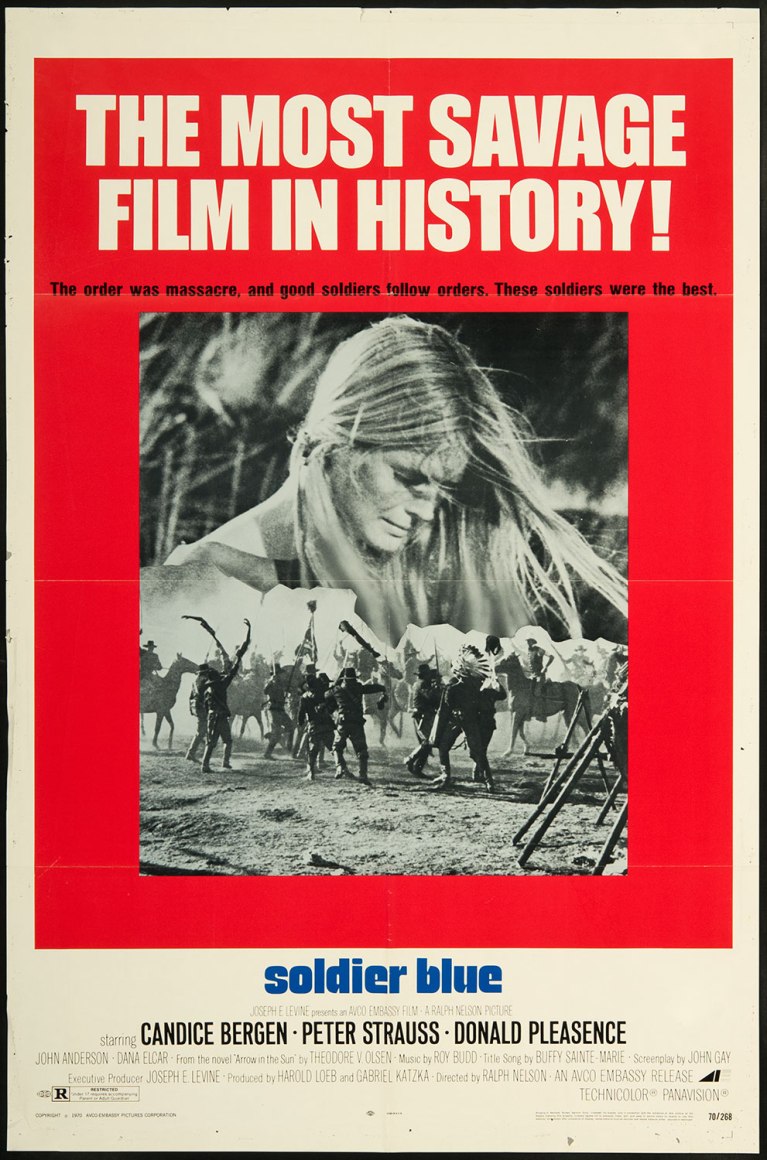
1970’s “Soldier Blue” Is a Vile Exploitation of the Sand Creek Massacre

Standard
soldier blue landscape poster

Why Is There An Image Of A Naked Bound Native American Woman Next to A White Couple Kissing?

Before anything can be said of Ralph Nelson’s 1970 film, “Soldier Blue,” we must first look at the horrific real-life event that film is based on; The Sand Creek Massacre of November 29, 1864. On that day, the Colorado Territory militia descended on a village of peaceful Cheyenne and Arapaho, murdering, raping and even mutilating over 150 people, mostly women and children. Led by US Army Colonel John Chivington, the cavalrymen planned the attack on a village, one that had entered into a peace treaty with their attackers and were even flying an American flag as well as a white flag to show their peaceful intention. Though the event was investigated by the Joint Committee on the Conduct of War, no one was ever prosecuted. A statement was issued by the committee on the massacre that included the following: “Having full knowledge of their friendly character, having himself been instrumental to some extent in placing them in their position of fancied security, he took advantage of their in-apprehension and defenseless condition to gratify the worst passions that ever cursed the heart of man.”

Some seventy plus years later, Hollywood began to take notice of this grim chapter in American history and began to depict the massacre in several films to varying degrees of accuracy and correct accountability, including; “The Guns of Fort Petticoat” (1957) and “Tomahawk” (1951). By 1970, the world had been shocked at the news of the My Lai Massacre of 1968, in which a company of the US Army soldiers premeditated the murder of a village of unarmed Vietnamese women and children. During this same era, activism lead by Native Americans had increased, culminating in the nineteen-month occupation of Alcatraz by United Indians of All Tribes, a group of predominantly university educated Native Americans in 1969. The time was right for a mainstream film to accurately capture the almost forgotten tragedy of the Sand Creek Massacre. Unfortunately, “Soldier Blue” was to be that film.

“Soldier Blue” was advertised in 1970 as “The Most Savage Film in History” which already draws some concern as this would be the selling point for this mess of a film. Indeed, the violence goes far beyond the threshold of violence that was set by Arthur Penn’s “Bonnie and Clyde” a few years earlier. Truthfully, the Sand Creek massacre scene is as wretched as advertised and does include every horrific detail that was brought up in testimony to the Joint Committee on the Conduct of War. On this point, director Ralph Nelson did not leave anything out to spare domestic audiences, but it is what leads up this moment that concerns me, as the narrative is banal collection of awkward acting and moments that cannot justify the coup de grace that occurs at the end of the film. Though applauded during its time, it is just another film that explores a tragedy in American history that was perpetrated by whites, where the whites come off as the real heroes. I usually refer to this phenomenon as “Mississippi Burning Syndrome,” referring to the dreadful 1988 Alan Parker film, where two FBI agents become the real heroes of the civil rights movement.

In “Solider Blue,” two white people, Cresta (Candice Bergen whose accent and behavior appear as though she was pulled out a checkout line during a Labor Day sale at JC Penney) and a soldier, Honus Gent (a sheepish Peter Strauss), who are the only survivors of a Cheyenne attack on their group. They must now travel across the frontier together to get to Fort Reunion where Cresta’s fiancée, an Army officer, awaits. Like so many films where a couple must battle the wilderness to only become closer, their story is eerily similar to many that have come before them with the only difference being that Cresta has lived with the Cheyenne for the last two years and is empathetic to their plight (think Radcliffe girl with a cause of the week). While our cavalryman, Honus, is a flag waver who believes that the USA can do no wrong and must be convinced of the opposite. The film of course leads to the scene in which Honus watches in terror as his beloved cavalry burn, rape and murder an entire village of innocent people. Director Nelson’s major error here is Cresta, who is played by Bergen as though she has no concept of the era her character is acting in during the film, or the fact that Cresta, despite her overwhelming sense of hippie entitlement, would never be allowed the kind of righteous access to the Cheyenne culture as an outsider and as a woman in the mid-nineteenth century. Sadly, the actual perspective of the Cheyenne and Arapaho is all but an afterthought. Lastly, the acting from our two leads as well the many supporting actors don’t go far beyond a mid-1960 TV western serial in quality.

Original Trailer for “Soldier Blue”

Though critically praised, “Soldier Blue” was not well received here in the US by audiences as I assume that most people here circa 1970 during the height of the Vietnam War were just not in the mood to see American soldiers commit more atrocities on screen so soon after My Lai. Soldier Blue did do surprisingly well in England, where it was the #3 box office draw when it was released there in 1971, which should not be a surprise as I would imagine that the folks who lined up to see Cy Enfield’s “Zulu” were waiting on another film to satisfy their blood lust for witnessing another massacre of indigenous peoples by occupying forces. We weren’t too much better here in the States; before the news of My Lai hit the news broadcasts in 1968, folks lined up in glee for John Wayne’s pro-US involvement in Vietnam film, “The Green Berets.”

Director Ralph Nelson had on many occasions taken up the plight of marginalized people in his films, ranging from 1978’s “A Hero Ain’t Nothin’ But A Sandwich” to “Charly” to “…tick…tick…tick..,” and to his defense, most directors cannot control the kind of advertising that a distributor can create for a film, but, with “Soldier Blue,” Nelson’s original intentions just cannot accurately be understood here as the desire to bring this story to light is just buried under a morass of old western clichés, lame performances, and a campaign to stress the film’s violence as a selling point and not the perspective of the people who were really affected.

Wim Wenders Smartly Adapts Peter Handke’s “The Goalie’s Anxiety at the Penalty Kick”

Standard
the-goalies-anxiety-at-the-penalty-kick still

A still from “The Goalie’s Anxiety at the Penalty Kick”

Seen from the other end of the soccer field, Josef Bloch (Arthur Brauss) appears to be in control, but as all goalies are during many moments of the game, he is completely alone. But to the extent of how alone and how lonely is Josef Bloch, we will soon find out. Though we see the play is happening from a distance, Josef is a rickety mess of twitches and ticks.  Eventually, the play moves towards him, and his skills should be put to the test, but do to a moment of uninspired carelessness; we soon understand how a small mistake can become the tipping point for a man on the emotional decline.

For his second feature film, Wim Wenders had decided to adapt the novel by Peter Handke, a book that remains as one of the best analogies for sport defining human emotions. Tragically, the mistake that Josef makes on the pitch precipitates a series of events that transpire in a way that some would look at as soulless, but when you take a closer look, Josef is coming apart with a blinding silent rage. You see, Josef’s mistake does not end on the field; his blunder is carried with him to Vienna where he goes to a film, listens to some Roy Orbison at a bar, meets a nice girl who takes him home; they make love; she makes him breakfast, and then he strangles her, which on the surface does not impact him a bit, but as the viewer we are inexplicably drawn to his character. Josef passively keeps track of the investigation of the death of his victim, and as a viewer we soon fear that other murders may occur, but we feel more concerned about the moment when Josef’s disconnected façade will begin to show the cracks.

“Anxiety at the Penalty Kick” is a meticulous film of small movements and dialog. At times, one would even think that they are watching an Aki Kaurismaki film, as “Anxiety” even possesses the mandatory jukebox scene in the midst of the all of the disaffected gestures, but absent is the humor that lies underneath the saddest moments of Kaurismaki’s work. Josef is also not the silent murderess Iiris, of Kaurismaki’s film “The Match Factory Girl, who saunters around her life of infinite sadness, getting by with her bleak job and horrible family to eventually commit an act of defiant freedom. Here, our Josef has lashed out, but Wenders does not frame his crime with any clear motive except that Josef wanted to commit the act.  We imagine that the inspiration of this act might be the pressures of sport, but perhaps we are just seeing behavior that is more like Meursault, the protagonist of Camus’ “The Stranger.”  There will be more actions that cannot be explained throughout this film, and Wenders wants your imagination to figure out why.

A Short Scene from “The Goalie’s Anxiety at the Penalty Kick”

Though a low budget production, Wenders is aided for the second time by the soon to be legendary cinematographer, Robbie Muller, who usually keeps his distance from our central figure as the viewer would in real life, but at times pulls in to see what we fear the most, a hollowed out shell of a human that has no regard for those around him. Mueller correctly pulls back in several scenes when we begin to feel that Josef is connecting, giving us the false hope of a moment that is warm in nature but cold and distant in reality. The camera is static for every shot, and, with that, it amplifies the passive nature of Josef’s idiosyncratic inner being. “Anxiety,” though striking in its composition, does not possess the eerie beauty that exists in Wenders and Muller’s greatest collaboration, 1976’s “Im Lauf der Zeit” (Kings of the Road), nor is it an elegy on the passing of eras. Instead, it is a hard look at a modern world, where the Josefs are not the melodramatic villains of Hitchcock’s mind but the villains of a non-communicative world that allows them to slip in and out without notice.

Portobello Mushroom and Spring Onion Risotto with Generoso

Standard

Inspired by the sensational risotto we ate at Rosso B, a brand new corner pizzeria in Haymarket here in Boston, I decided to make my family’s take on risotto for you this week.  Risotto is really a blank canvas and you can make it however you would like.  This week, Lily and I found some beautiful spring onions and portobello mushrooms for cheap at Haymarket so that was going to be the basis for this risotto.  I also love making it with a pesto base and seafood but I find that the vegetable risotto really brings out the creaminess of the arborio rice, which is the one essential ingredient for our risotto, that and a lot of butter and goat cheese.  You will need about 4 cups of vegetable broth, 2 cups of arborio rice, 4 ounces of goat cheese, 1/2 cup of white wine, 2 sticks of butter, 5 gloves of garlic, 1 spring onion, two portobello mushrooms, pepper, salt.  Let us know how yours turned out and buona fortuna!

Music is Pictures At An Exhibition by Modest Mussorgsky.


The Last Great Spaghetti Western: Enzo Castellari’s Elegiac “Keoma”

Standard
keoma_ulc_08

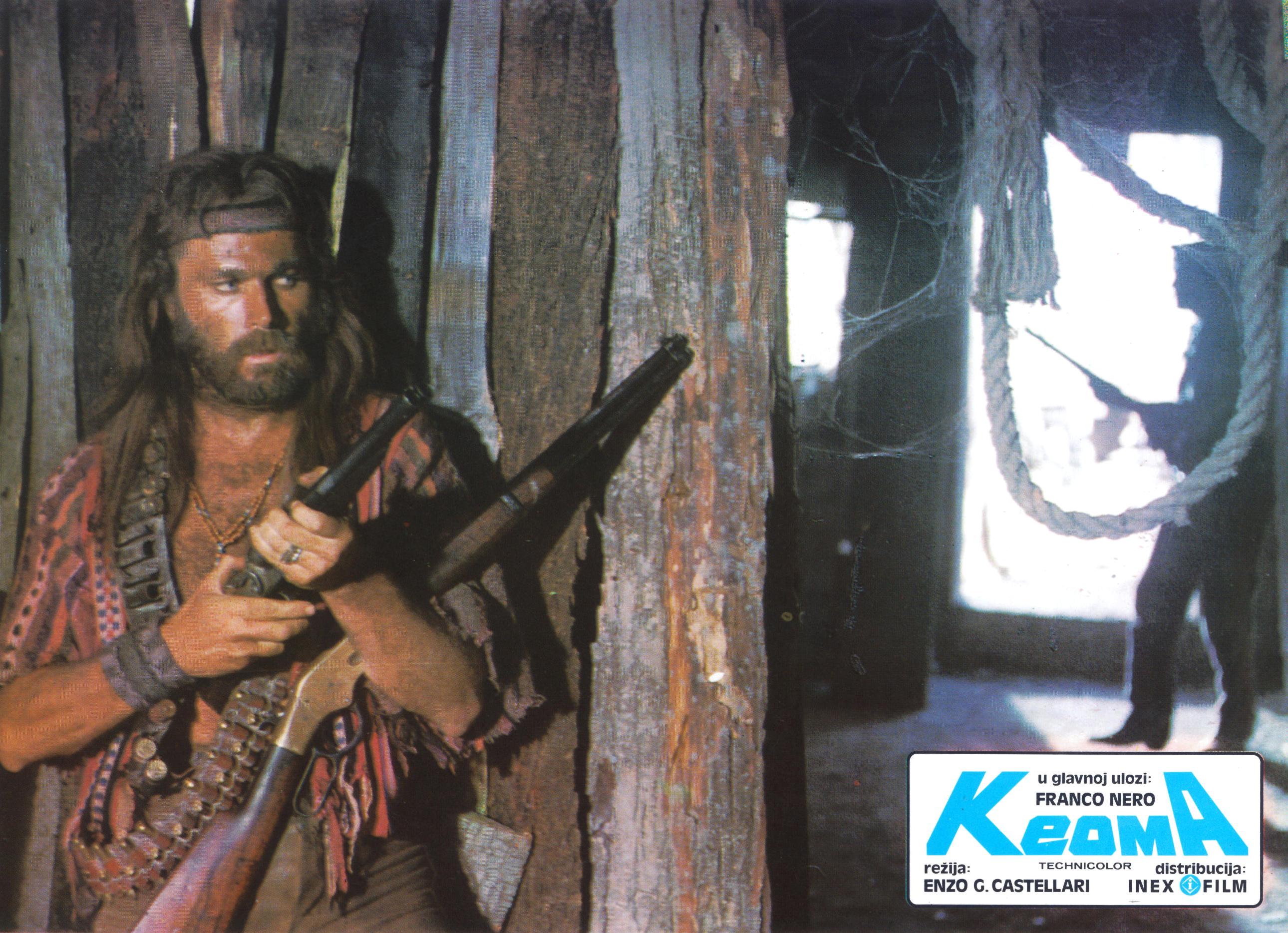
1976 Lobby Card for “Keoma”


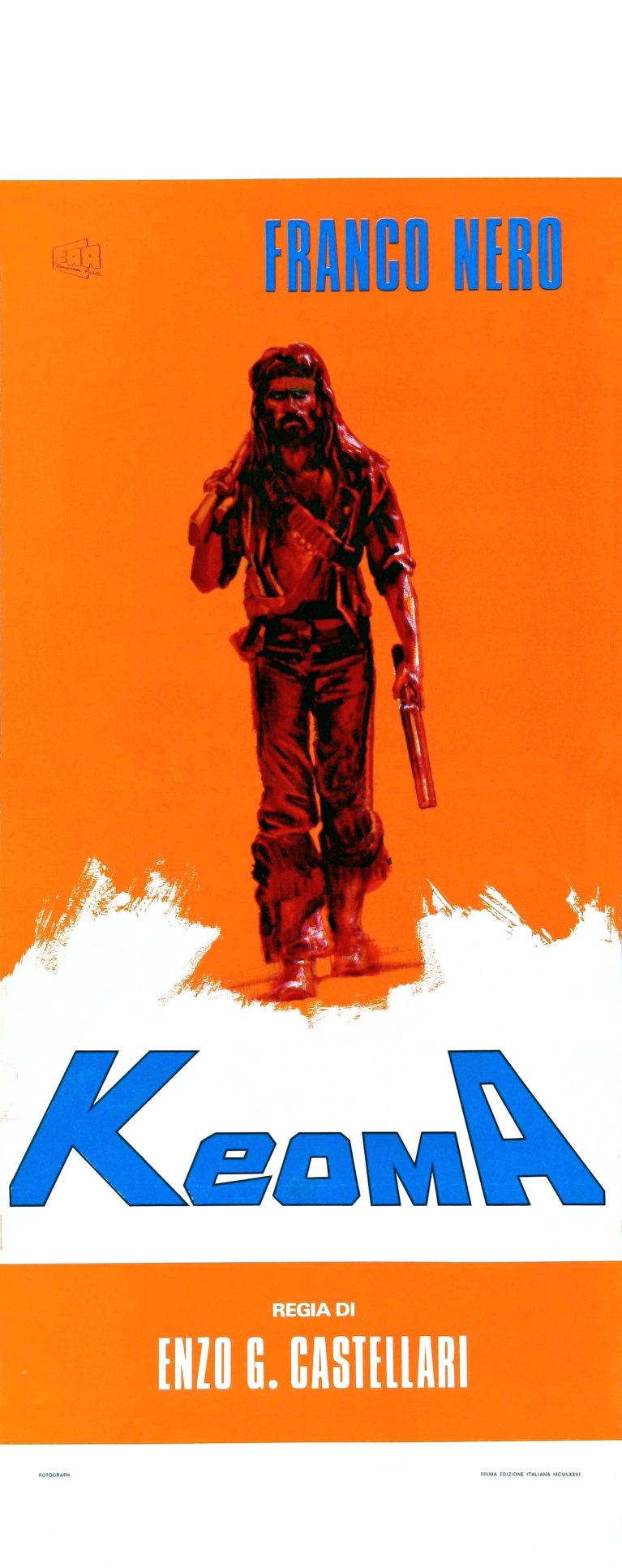
By 1976, the mania surrounding the spaghetti western had all but died out. Due to the success of the Godfather films, Italian crime dramas were all the rage and the few westerns that were being produced in Europe fell more into the comedic realm than the dramatic one due to the success of the Terence Hill/Bud Spencer films that became extremely popular in the early part of the decade. Even veteran directors like Enzo Castellari, who had directed several superb spaghetti westerns, including “Johnny Hamlet,” had moved on to Italian crime dramas, as did the genre’s biggest star, Franco Nero, of “Django” fame. Gone was Nero’s cowboy hat in favor of his Borsalino; that is until “Keoma.”

There is a real reverence for all westerns in “Keoma,” which was written and directed by Castellari and released in 1976. I say “all westerns” because the film is packed with many of the standard motifs of fellow Italian western directors, Corbucci and Leone but also Sam Peckinpah and even John Ford. I guess if this was to be Castellari’s last western, he was going to put all of it out on the table.

Playing Keoma (the word means “far away” in Cherokee) is Franco Nero, and he is again the quiet ex-soldier who comes to a town in trouble and who must now fight valiantly to save everyone. There is a plague in the town that is killing everyone, but evil landlord Caldwell is keeping medicine and supplies away from townspeople and is sending the infected to a camp to die. Keoma is half-Native American and was adopted by William Shannon (William Berger), who already had three sons of his own who are now part of Caldwell’s gang. The brothers were brutal to Keoma when he was a child, detesting that their father would raise a half-breed, which is seen during one of the many flashbacks (another key motif in many spaghetti westerns) in the film. After Keoma rescues a pregnant woman who is about to be sent to camp, he draws the ire of Caldwell’s men, setting up the conflict of the film. The dour and almost hopeless tone of these scenes rival Sergio Corbucci’s, “The Great Silence,” the 1968 film that set the standard for surrealistically depressing westerns for years to come.

Many of the gunfights that ensue are those of the Peckinpah variety, with long slow motion shots of diving shooters and the over pronounced sounds of ricochets, but as so many spaghetti westerns have taken their cues from Peckinpah, this is not a surprise. What is a surprise influence in the film is Ingmar Bergman, whose inspiration takes form in a witch (Gabriella Giacobbe) who speaks to our ex-solider Keoma in the same way about the purpose of it all as the Grim Reaper would speak with Antonious in “The Seventh Seal.” Our witch is asking Keoma why he would put the effort in to save a town that is beyond saving; however, Keoma is there to not only to save the people of his town but to correct the wrongs that had been done to him as a boy.

Trailer for “Keoma” 

Nero is great in the titular role, as is the cast, which was comprised of many spaghetti western regulars doing some of their finest work. What sadly hurts “Keoma,” though not fatally, is the ear-piercing folksy soundtrack. It has been written that during filming, Castellari had been enamored of the music that Leonard Cohen had done for Altman’s “McCabe and Mrs. Miller” and wanted something that worked in the same way to propel the narrative. Unfortunately, the virtually shrieking vocals from the soundtrack composed by the De Angelis brothers and sung by Sybill and Guy bombard many scenes in the film and do not give the same kind of earthy goodness that Cohen’s tracks give Altman’s revisionist masterpiece.

The soundtrack is an otherwise small mistake in a film that provides a somber yet triumphant elegy to the spaghetti western. Like previous films in the spaghetti western genre, “Keona” uses every cliché available to tell it’s grim story, but this isn’t a cheaply made lark thrown together to try and cash in on a trend. No, it is an elegantly composed farewell by Castellari and Nero to a kind of film that clearly meant so very much to them and all of those who still loved the raw storytelling of the spaghetti western.

Marco Ferreri’s 1978 Film, “Bye Bye Monkey,” Says So Long To Masculinity

Standard
bye-bye-monkey french poster

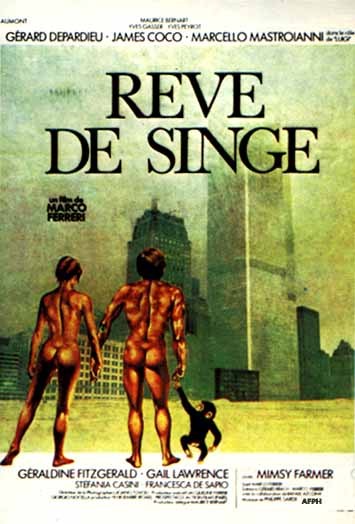
French Poster for “Bye Bye Monkey”

Surprisingly, as an excessively sexual and carnivorous Italian man, I had been ignorant of Ferreri’s work until my soon to be roommate Doug ranted to me about a 1973 Ferreri film entitled, “The Grande Bouffe.” A film whose plot is centered around four middle-aged men who lock themselves into a villa and then proceed to fatalistically gorge on food and wine while screwing until they die. A kind of stay-at-home, non-violent, Italian version of “The Wild Bunch,” with these four men, who have become tired of their lives, end it all without firing a shot, which if you think about it, was more in line with the softening seventies male. If the passing of masculinity into the sensitive seventies had not been metaphorically shot down there, Ferreri’s next film, 1976’s “The Perfect Woman,” went so far with this new emasculation that our director would make hunky French film star, Gerard Depardieu, cut off his own manhood with an electric kitchen knife after another deflating argument with his wife.

For his first U.S. film, the dystopian “Bye Bye Monkey,” Ferreri would keep up this same trend of metaphorically depicting the downward spiral of masculinity, and why wouldn’t he? After all, wasn’t the United States responsible for setting the world standard in that decade for helping the loafer clad males get in touch with their feelings through overpriced weekend sensitivity training classes? For this film, Ferreri reenlists the beefy Depardieu to play the down and out New York electrician, Lafayette (sarcastically named for the gallant French General who would help American revolutionaries win the war of independence) who works two jobs: one, as an electrician at a Roman Empire wax museum and another as the lighting technician for an all female feminist acting troupe. While men in hazmat suits roam the streets hunting down rats during an epidemic, our feminist theater group laments the fact that they have not experienced any of the real hardships that modern women have faced, so when they come up blank for a theme for what their next performance should be, they sheepishly select rape. The “bad” news is that none of them have been victims of rape, so they decide to rape their electrician, Lafayette, after a member of the company knocks him out.

The next day Lafayette is angered by the events of the previous evening and takes a walk with his older friend Mr. Luigi (Marcello Mastroianni) on the beach near the World Trade Center where they discover a life-sized King Kong lying on the beach dead, with Kong, of course, as the ultimate symbol of a tough guy from a distant place who hit NYC and got the prettiest girl in town. Clutched in Kong’s hand though would not be scantily clad Fay Wray but instead a tiny monkey baby whom Mr. Luigi refuses to take care of due to his advanced age, so Lafayette takes the job and plays mother to the orphaned baby, raising it like a human child. Once home and domesticated, Lafayette becomes the target of admiration for Angelica (Gail Lawrence, better known as Abigail Clayton during her porn star years), one of the theater troupe who originally spurned Lafayette’s advances but is now interested due to what I can determine is Lafayette’s new found maternal instinct. This is where we really see Ferreri, drawing the hard line between men and women. Not during the female on male rape but here as a faux mother is where Lafayette succumbs to his sensitive side and becomes more accessible to the women around him.

On several occasions in the film, Lafayette seeks out the advice of his boss at the wax museum, Mr. Flaxman (James Coco), so when Lafayette arrives with his new monkey to work, Mr. Flaxman tells Lafayette that the monkey will eventually lead to his downfall (loss of masculinity for those following in the cheap seats). Lafayette heeds his boss’s advice and tries to abandon the monkey, the soon be named Cornelius (Planet of the Apes anyone?) But when Lafayette tries to leave Cornelius in the park, Cornelius cries and runs to Lafayette who just cannot leave his new baby, so his motherhood is now complete. Lafayette tries to go about his life, but with Cornelius with him, the prophecy of Mr. Flaxman comes true and everything goes south for Lafayette. In fact his friend Mr. Luigi, a clear symbol of the masculinity of the past, sees his penchant for non-vegetarian eating and his inability to find love in the new land as a harbinger for his eventual checking out of this world. Even Mr. Flaxman sees the writing on the wall when he is blackmailed into changing the faces of his wax sculptures Julius Caesar and Nero into Nixon and Kennedy.

1996 Interview With Marco Ferreri About “Bye Bye Monkey”

Ferreri cleverly uses Depardieu and Mastroianni as examples of two generations of actors from Europe, which was still going through an ultra machismo period, behaving here like they would in a contemporary film from their home countries. As outsiders, it is then up to their characters to decide in “Bye Bye Monkey” on whether they will acquiesce to the way of the seventies male or just stop living all together. What is made clear then by Ferreri with his “punch you in the head but you still find it uneasily interesting” symbolism, is that empires will always fall, and it is the rats who come out of every civilization that expires. Of course Marco Ferreri is not a soothsayer like his Mr. Flaxman, but the now eerie image of the former World Trade Centers looming in the background during many of “Bye Bye Monkey’s” key moments, somewhat bear out Marco Ferreri’s prediction of an American empire, once lead by strong men, fading out in the not too distant future.

Generoso’s Bizarre Take On Rollatini di Melanzane

Standard

We have all had some kind of mutant version of eggplant rollatini.  Just think of all of the times where you have been accosted with this faux traditional Italian delight at work potlucks, elderly birthday parties, and bizarre down home small neighborhood baby showers (I hear that’s where this dish really lives).  Well, I have been the recipient of many of these attempts and have been making my own version for years, but soon after a visit to a Ethiopian restaurant I had the idea to add a couple of bizarre ingredients into my ricotta filling: spinach and cinnamon.  I eventually loved the way those products broke up the acidity of the tomatoes and I have been using them ever since.  Hopefully, you will love this taste as well.  You will need three long eggplants, 20 ounces of unflavored bread crumbs, four cloves of garlic, one can of crushed tomatoes, two 32 ounce containers of WHOLE MILK ricotta, 4 cups white flour, olive oil, salt, pepper, ground cinnamon, grated parmesan, and one bunch of fresh spinach.  Let me know how yours turned out! Music: Cell sonata in D, from 12 Sonatas, Op 6 by Pietro Locatelli


Bovine Ska and Rocksteady 12/24/14: Christmas In Jamaica!

Standard
rupie edwards-Christmas Rush

Rupie Edwards from 1974

We have done a Christmas in Jamaica show every one of the eighteen years that the Bovine Ska and Rocksteady has been in existence.  And every year, we do our best to remove the intense cheesiness that is on display from every other radio show that tries to do a holiday program.   This lack of cheesiness was evidenced in our selection of Jamaican rhythm and blues, ska, rocksteady and even dub records of a Christmas kind but alas the Christmas disco from the SalSoul Orchestra which was used in the background did not live up to the rigid standards set forth by us during the selection of sets.  To put it mildly, it was cheese town when we were on the microphone but don’t let that dissuade you from checking out this show while it is still the holiday season.  Lily spoke about Jamaican Christmas traditions, we played a Jamaican patois version of “The Christmas Story” and played a lot of stellar records!

You will hear many rare holiday cuts, from artists like The Upsetters, Reuben Anderson from Andy and Joey fame, and the late great Desmond Dekker.

Merry Christmas from Lily and Generoso!

Listen to the two hour holiday program HERE.

The archive will be up until 1/6/15. Enjoy!