Generoso and Lily’s Bovine Ska and Rocksteady: BB Seaton’s Soul Beat Label 11-17-15

Standard
soul beat A

A Great Ken Boothe Cut On Soul Beat!


Hello Bovine Ska and Rocksteady Listeners,

We had a blast with this week’s (11/17/15) episode of Generoso and Lily’s Bovine Ska and Rocksteady which featured a spotlight on BB Seaton’s Soul Beat Label but before we get to that in the second hour, we started the show with two sets of explosive ska, beginning with Ernest Ranglin’s Selected Group and their killer instrumental for Kentone, “Skalvouvia!”  Our second set started with yet another dazzling Kentone cut, “I Am Blue” from Alton Ellis’ singing partner from the Jamaican R&B days, Eddie Perkins.   Our frantic mento set featured a “Round Dance” from the St. Ann Quadrille Band and Count Lasher’s version of the classic “Slide Mongoose.” Our final set for the first hour was of the rocksteady variety and started with a rare instrumental from Skatalites saxophonist, Lester Sterling for the Merritone label called aptly enough “The Lester Sterling Special.”  At the end of this set, we went right into our SOUL BEAT LABEL spotlight…

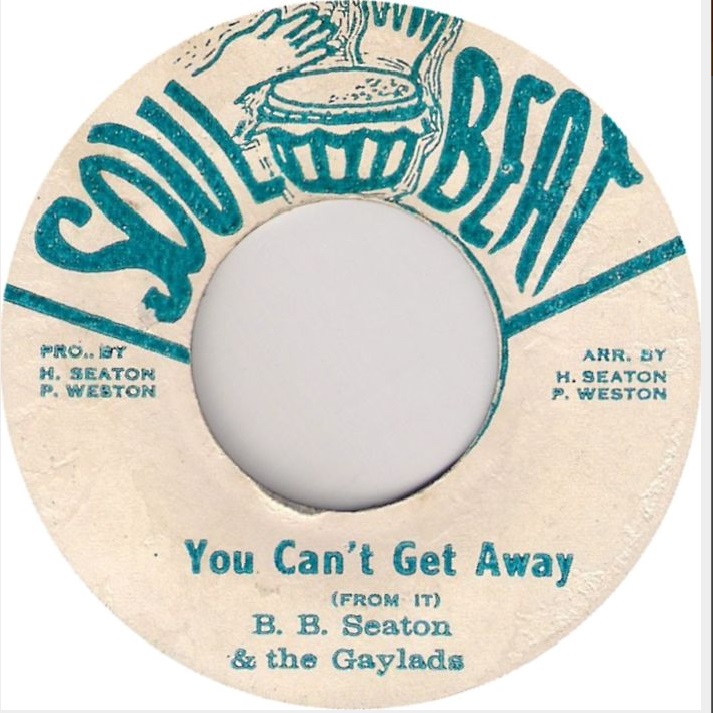
While we know BB Seaton best as a member of the Gaylads, he was also a producer, songwriter, and A&R representative. Consequently, it is of no surprise that he opened up his own record label, which is still active, Soul Beat. BB Seaton started as a multi-talented musician early in his career. He first arrived at Studio One in early 1960 as a solo artist, recording the first track he wrote, “Only You,” as Harris Seaton. Before recording further as a soloist, BB met Delano Stewart, and together, they recorded as the Diamond Twins and Winston & Bibby for Coxsone. Inspired by The Impressions, Winston and BB added Maurice Roberts to the duo, thus becoming the Gaylads. The group would stick exclusively to recording for Studio One from 1964 to 1967, with BB producing, writing, and even auditioning everyone from Pat Kelly to the Kingstonians for Studio One.

However, after a couple of disputes tied to royalties and the decision to take Alton Ellis and Ken Boothe to England for a tour rather than The Gaylads, who had been completely loyal in their recordings to Coxsone Dodd, the group left Studio One and went over to Sonia Pottinger and her Tip Top label. While at Tip Top, Delano left the group to move to America, so when the group next went to Leslie Kong’s Beverley’s label, BB and Maurice would recruit an extra member. After experiences recording for other producers and labels, BB opened up Soul Beat, which began releasing original recordings in Jamaica in 1971. Soul Beat also had a branch in the UK, and as a result, both released productions of each other in their respective countries. Consequently, some productions have BB Seaton at the producer helm, and others do not.  We appropriately kicked off this spotlight on the Soul Beat label with a track from The Gaylads.

For the original Soul Beat recordings, the Conscious Minds performed as the house band. The Conscious minds were: Arnold Brackenridge on trumpet, Derrick Hinds on trombone, Derrick Stewart on drums, Joe White on piano and vocals, BB Seaton, Ken Boothe, and Maurice Roberts on vocals as well.

Again, can listen to our full show from November 17, 2015 HERE. Subscribe to our show on Mixcloud, it’s FREE and you’ll get an email every Tuesday when our new show goes up.

Happy Halloween!!! Please help us and spread the word and repost if you liked the show! Repost anywhere you see fit.

Join the group for the Bovine Ska and Rocksteady on Facebook.

Love,

Generoso and Lily
A Quick Soup For Fall: Generoso’s Zuppa di Cavolo e Cannellini

Standard

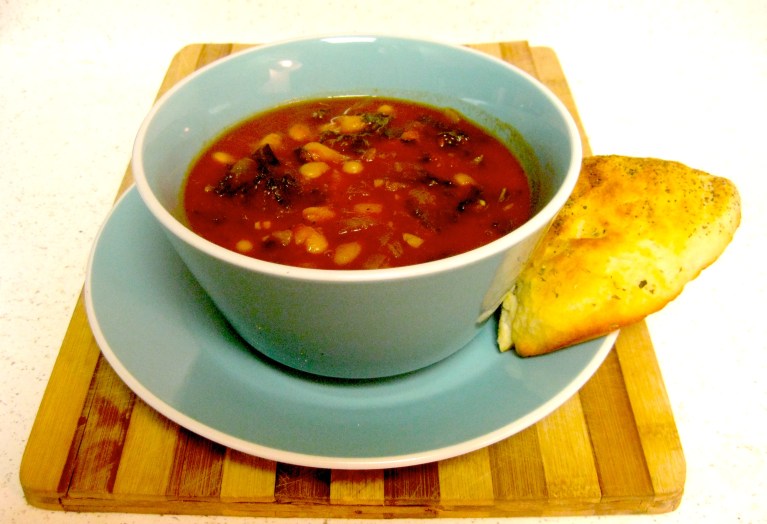
Sometimes our recipes do get a bit intense as far as prep and as this was a cold fall night, I decided to make this quick and delicious soup that is short on prep time and ingredients but big on flavor: Zuppa di Cavolo e Cannellini (Kale and White Kidney Bean Soup). From prep to table should take you about an hour and for your ingredients you’ll need: One can of crushed tomatoes, a bundle of fresh kale, one bulb of garlic, olive oil, a large yellow onion, oregano, salt, and pepper. Hope you enjoy the video below, please let us know how yours turned out!  XO Generoso

Music: Georg Friedrich Händel’s Concerto Grosso in B-flat major no. 7, HWV 325

Fried Pork Goodness! Thit Rang Muoi

Standard

What to do when you have a pork loin in the house and don’t feel like making Thit Kho? Why not deep fry the pork?

Rang Muoi is a five-spice batter that can be used to fry any meat of your choice. It is frequently used with squid or shrimp, but given that I love pork, we used pork to make Thit Rang Muoi.

The batter requires plenty of dry goods, but, overall, the recipe is pretty simple. As a quick note, on the initial ingredient listing, I forgot to mention that oyster sauce will be required for the final sauce to toss the crispy pieces of pork in.

Thit Rang Muoi can be served with rice, but for extra brightness, I served the fried deliciousness with lettuce lightly tossed in lime juice. Enjoy!

Learning How to Create Comics With a Rabbit Samurai – Stan Sakai’s Usagi Yojimbo: Samurai and Other Stories

Standard

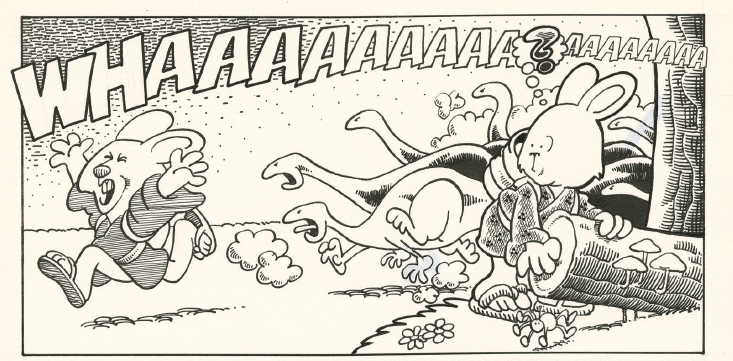
Given my natural affinity to Westerns, I am amazed that I have yet to dive to far into the samurai genre, the foundation for most of the tropes and themes in the Westerns I adore. With the variety of samurai adaptations seen over the years, I always wonder what each incarnation has to offer. Melville’s Le Samouraï placed the concept of the bushido code in 1960s France. In contrast, Kobayashi’s and Takeshi Miike’s versions of Harakiri remained true to the Edo period. Consequently, when I found the gallery edition of Usagi Yojimbo, I was curious to see the effect of anthropomorphism on the story of the traveling ronin.

UsagiCover

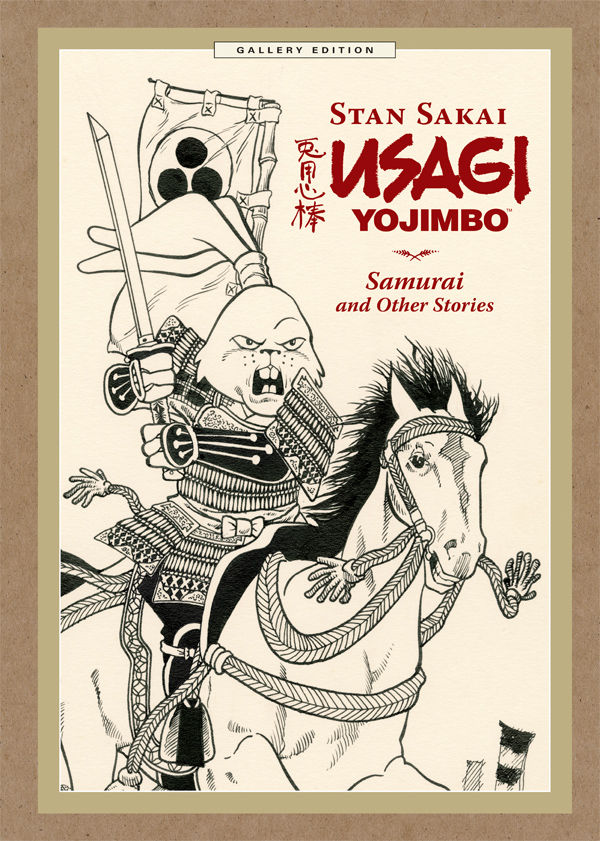
Cover for Gallery Edition Volume One of Usagi Yojimbo: Samurai and Other Stories

A series spanning over nearly three decades, Usagi Yojimbo follows Miyamoto Usagi, a former samurai whose lord died in battle. As a ronin (i.e. lordless samurai), Miyamoto wanders across Japan during the shifting Edo period, offering aid to towns in need and offering services as a yojimbo, a bodyguard. Unlike the images of samurai we know, Miyamoto is a rabbit, and his world involves other animals in the place of humans.

Certainly entertaining, Usagi Yojimbo has a far different tone than the standard samurai tale. Rather than using minimal and distant storytelling, Stan Sakai, the creator of the series, focuses on making Usagi Yojimbo more didactic. By using animals in the place of humans, Sakai invites younger audiences to read the stories, and by including explanations of core samurai concepts, Sakai also teaches readers about the fundamental basics of the samurai genre.

The early stories of Miyamoto included in the gallery edition, Usagi Yojimbo: Samurai and Other Stories, explore the bushido code in addition to human motivations, ranging from honor to guilt to greed. In sum, all of the stories focus on Miyamoto’s code of ethics in a changing world where the samurai has begun to face extinction. While less dire than Harakiri, the Japan of Miyamoto Usagi needs the original samurai code of ethics, but the people do not seem to realize it. Usagi Yojimbo teaches readers about the way of a righteous samurai in contrast to the ignoble ones he encounters as the feudal society around him begins to change.

Given its educational leanings, Usagi Yojimbo may be a bit frustrating for readers looking for a new perspective on the samurai. However, for what Usagi Yojimbo lacks in complexity, it makes up in charm. With the gallery edition, Sakai earnestly draws himself introducing the collection, and he even conveys how he creates each page of Usagi Yojimbo. Furthermore, the gallery edition includes re-prints of the original, unedited, Bristol artboards used for the collected stories, which span the first ten years of Miyamoto Usagi. Thus, as a collection, the gallery edition of Usagi Yojimbo not only teaches the audience about standard samurai motifs but also how to create a professional comic. In addition to explaining techniques at the beginning, the stories include imperfect pages with an occasional whiteout spot here or there, serving to remind and encourage any new or seasoned comic book artist or letterer to keep on practicing and creating.

Admittedly, if it were not for the gallery presentation of Usagi Yojimbo, I am not sure if I would have enjoyed the book as much. Miyamoto Usagi, the samurai rabbit, is an appealing character, but beyond his manifestation as an animal, he differs little from other ronins we’ve seen in samurai films and the various versions of ronin adapted over the years ranging from the man without a name to the rogue yukuza. Despite this, Sakai’s humble and welcoming introduction along with the large format pages make the book something special. You can study each line, each letter, each character and combine all of them to admire Sakai’s vibrant, kinetic visual style. Usagi Yojimbo: Samurai and Other Stories serves best as a comic book creator’s resource or as a gateway into the samurai genre for a new reader, but regardless of your understanding of samurai or comicbooks, you’ll still have fun seeing rabbits with top knots fight rhinos, moles, and cats and get excited to see the adorable tokage (lizards) that look like a cuddly cross between a brontosaurus and Al Capp’s Schmoo; I know I certainly did.

Usagi Yojimbo: Samurai and Other Stories by Stan Sakai is available via Dark Horse. 

Lee Marvin, Jeanne Moreau, And Jack Palance Ride The Fading Western: “Monte Walsh” From 1970

Standard
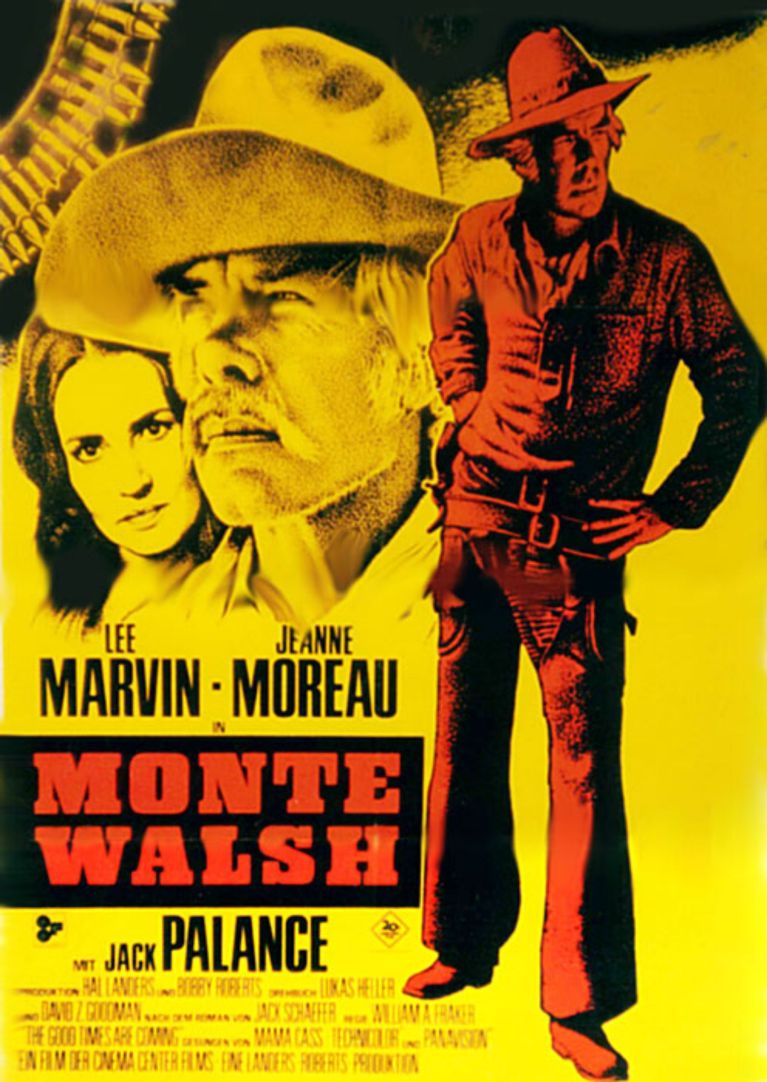
Monte Walsh Image

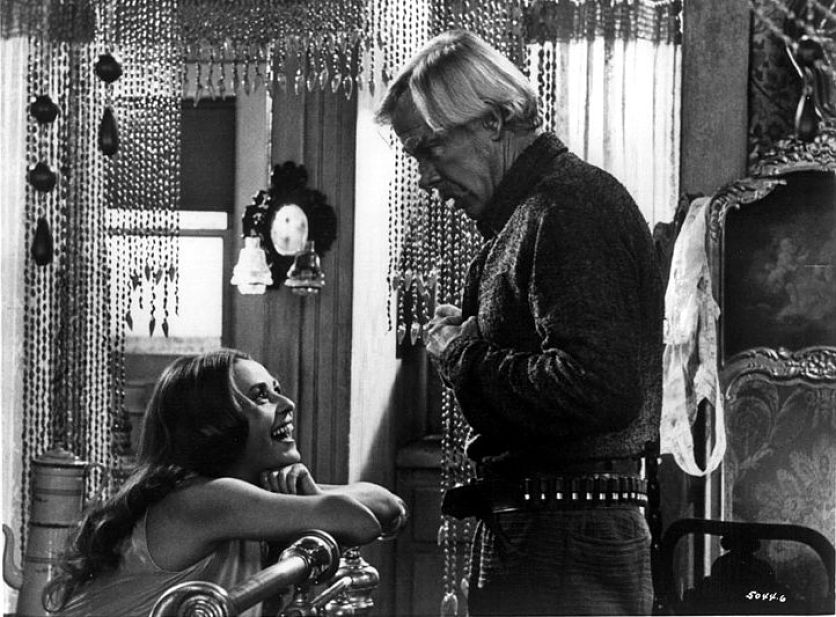
Jeanne Moreau and Lee Marvin In “Monte Walsh”

By the time that veteran cinematographer William Fraker directed his first film, “Monte Walsh” in 1970, the Western genre had undergone a complete overhaul. While Italy’s Sergios (Leone and Corbucci) were adding a never before seen silent but muddy ugliness to the genre, Sam Peckinpah brought a level of violence that was unmatched in most action films of its time, much less the hallowed epic Western.

Throughout the 1960s, Hollywood had been trying to resuscitate the cowboy film, even going as far as to create a screen version of the 1951 Lerner and Loewe Western comedy musical, “Paint Your Wagon” in 1969. With the studio system failing, Paramount threw everything they had at “Paint Your Wagon” in the hopes that it would succeed in the way that other musicals of the era had and many Western had not. The studio spared no expense in getting Academy Award winner Paddy Chayefsky to adapt the musical for the screen, which was an odd choice given that Chayefsky was best known for writing inner city characters like the ones found in Delbert Mann’s “Marty” and Richard Brooks’ “The Catered Affair.” For its stars, “Paint Your Wagon” casted the white hot Clint Eastwood, fresh from the Leone “man with no name” films, Lee Marvin and Jean Seberg: none of whom could actually sing. They also tabbed William Fraker for their cinematographer. Paramount was banking on Fraker, who had just lensed the hugely successful urban-based hits, “Rosemary’s Baby” and “Bullitt” in 1968, to have the eye for such a lavish musical western that was primarily set in the outdoors. As we all know now, “Paint Your Wagon” for the aforementioned reasons, was a notorious flop, both critically and commercially. The only good thing to come out of the “Paint Your Wagon” debacle was the forging of a relationship between actor Lee Marvin and cinematographer William Fraker, which resulted in them creating the beautifully non-epic Western, “Monte Walsh.”

The production company for “Monte Walsh” would be the then recently formed (in 1967) Cinema Center Films, the motion picture subsidiary of CBS television. Early on, CCF’s output and agenda focused on creating lighter fare that would eventually run on television, which was clear when they signed Doris Day to a multi-picture deal for their first few productions like “With Six You Get Eggroll.” By the end of 1969, CCF studio chief, Gordon T. Stulberg, made the decision to get with the times and to shed the studio’s “fluffy” image, so he recommended that his company produce a film version of Mart Crowley’s controversial gay-themed off Broadway play “Boys In The Band,” which was a commercial flop but a critical success, and an adaptation of the satirical Thomas Berger novel about the Little Big Horn massacre, “Little Big Man,” which proved to be a box office hit. While serving as cinematographer on “Paint Your Wagon,” Fraker had learned from the mistakes of director Joshua Logan and felt ready to try directing his own western, and, as Cinema Center Films was more than ready to take risks where the big studios seemed afraid to do so, Fraker got the job of directing the film version of the 1963 Jack Schaefer novel “Monte Walsh.” Schaefer, in 1949, wrote the original novel “Shane,” which was made into the highly successful George Stevens’ film of the same name. In “Shane,” the titular character is a gunfighter who wants to settle down and start a family but is dragged back into his gunslinger ways when a range war erupts where he wants to raise a family. The elements of “Shane” that depict a fading west are also present in “Monte Walsh,” but the cinematic approach that Fraker would take substantially differed from that of Stevens.

From the beginning of “Monte Walsh,” it is clear that you are not watching a golden age Western as Mama Cass sings “The Good Times Are Coming,” a somewhat strange and cheerful pop song for a Western that rolls during an opening montage of reverse-color spaghetti western images. You then get the rugged pair of Lee Marvin and Jack Palance in full cowboy regalia as they joke while bearing down on a wolf to pick up an extra five bucks. Jack Palance is “Chet,” and Lee Marvin is “Monte,” and they are old cowboys who know that their time is coming to an end as Chet says: “Do you realize how many cowpunchers there were out here 10 years ago? Well there’s a hell of a lot less now. And no jobs for them.” Regardless, the boys are still working for now, and after some roughhousing in the bunkhouse, Monte is off to visit Martine (Jeanne Moreau), one of the town’s working girls who is very much fond of Monte. She is also aware that her time in the oldest profession is coming to an end, as she says that hers is a profession of diminishing returns, and she has to move to a railroad town nearby in order to survive. The bosses back east are consolidating all of the ranches out west, and that means less of a need for cowboys, and thus, her client base is going away too. Perhaps everyone is in need of a change?

Despite some teasing from the other cowboys in the bunkhouse, Chet starts to get wedding eyes for the widow who owns the town hardware store and suggests to Monte that perhaps he and Martine should also tie the knot to which Monte responds, “cowboys do not get married.” But once Chet does marry, Monte begins to think that it might be his time to settle down as well and asks Martine who is more than happy to oblige. Still, Monte has to get the cowboy out of his system, so, when he sees the one mustang that even his bronco busting pal Shorty (Mitchell Ryan) cannot tame, Monte saddles the wild animal and takes the beast on a wild ride that destroys half the town in one of the most visually entertaining moments of the film. This turns out to be a good thing, though, as a Wild West show promoter eyes Monte’s rodeo talent on horseback and offers him a weekly salary to be part of the troupe to entertain folks back east. Monte sees this as an opportunity to get out of the cowboy business for good and with enough money, he can marry Martine and get her out too. Sadly, all of these cowboy retirement sentiments change when Shorty guns down a Marshall who is hunting down a member of Monte’s posse, setting off a chain of events that will make Monte use his gun again.

Sure, “Monte Walsh” is packed with enough action to make any Western movie watching fan happy, but what sets it apart are the moments of real passion and tenderness, which were absent in that genre during that time. Kudos to Fraker for believing in Lee Marvin and allowing him to act, whereas most directors of this time reduced our tough guy to a morass of hard facial gestures and catch phrases. Marvin’s scenes with the beautiful Jeanne Moreau are warmly performed and provide the viewer with as much heartfelt emotion as the action scenes provide thrills. Palance as well breaks out of his typecasting as a screen villain and is an excellent foil to Marvin in their scenes together. You feel their friendship, and in turn you have great empathy for their struggle against age and their roles in the dying west. Veteran cinematographer William Fraker does an excellent job in his debut as a director and deserves extra appreciation for hiring cinematographer David M. Walsh for his first time as director of cinematography. In the first hour of the film, Walsh avoids the wide angles utilized in epic Westerns and keeps everything tight in frame while small conversations occur to keep the mood intimate like the more relatable, conversation heavy, European influenced films of the late 60s and early 70s.  Eventually, Fraker opens up the frame once the more classic elements of a Western take place in the second half. And as a result, these visual ideas keep “Monte Walsh” very modern while still adhering to the core elements of the genre, which is an interesting technique. Fraker would have a long a distinguished Hollywood career as a DP for huge box office hits, including “The Goodbye Girl,” “Murder By Death,” and “Private Benjamin.”

“Monte Walsh” Full Movie

Sadly, “Monte Walsh,” though a critical success, did not do well at the box office, so William Fraker would only be given a couple of more opportunities to direct feature films that never seemed to work as well as his debut, and after a few more flops at the box office, Cinema Center Films also closed its doors in 1972. For the rest of his career, Fraker worked as a director of photography in over forty feature films and was nominated for five Academy Awards, most notably, 1978’s “Looking For Mr. Goodbar” and 1985’s “Murphy’s Romance.” History will remember Fraker as a talented cinematographer, but I, for one, feel that some accolades should have been given for his debut, a sweet and tough modern western that remains as one of the finest of its generation; one that would looking for a bit more than just a quick gun and silence in its western heroes

Generoso and Lily’s Bovine Ska and Rocksteady: Ken Khouri’s Kentone Label 11-10-15

Standard
Kentone A

A Top Instrumental By Byron On Kentone


Welcome Bovine Ska and Rocksteady Listeners,

After two weeks where Lily and I covered both Comikaze and the amazing films of AFI Fest for Forces of Geek, we had a blast playing programming tunes we love on the radio show!  Thanks for listening in…If you missed it, check out the November 10th Bovine Ska and Rocksteady on Mixcloud!

We started this week off with a massive version to version to version to version excursion that we always send out to our dear departed friend Magnus.  We versioned the 1971 hit by Count Prince Miller, “Mule Train” with covers from Roland Alphonso, Dennis Alcapone, and Derrick Morgan!  Our second set began with The Bassies on Studio One in 1969 with “Things A Come Up To Bump” and the version, on Coxsone in 1969, “More Scorcha” from Count Machuki and Sound Dimension.  We then gave you our weekly mento set and to get you ready for the Kentone Label spotlight, we began a long set of rare ska with the Federal Singers and their 1965 cut for Khouri’s Federal label, “My Love.”  We ended that ska set with Bongo Man Byfield doing a borderline nonsensical cover of Sam Cooke’s pop hit “History” that he called “Bongo Man” which was good fun.  We then immediately went into the Kentone spotlight…


Kentone comes from a major lineage in Jamaican music history. Owned by Ken Khouri, it is an example of Khouri’s own evolution of the record industry in Jamaica. 
Born in Kingston, Khouri’s father owned dry goods and furniture shops in Kingston. A family friend also owned a dry goods store, and, after the sons inherited the shop, Ken would work for them. This family owned jukeboxes that were placed across Jamaica, igniting Ken’s interesting in the record business. Consequently, when he found a disc recorder in Miami, he purchased it and brought it back to Jamaica and started to record mento. With the recorder, Khouri would send tapes to London, and they would send back 78s. After working with this method for some time, Khouri realized that it would be helpful to have his own pressing plant, so he purchased the equipment from California and setup a recording studio and pressing plant to his studio, Records Limited, in the late 40s. And with this record pressing plant and recording studio in place, he started Time Records, his first label that was distributed by Alec Durie’s Times Variety Store.

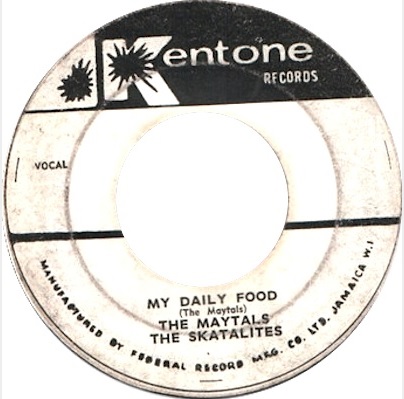
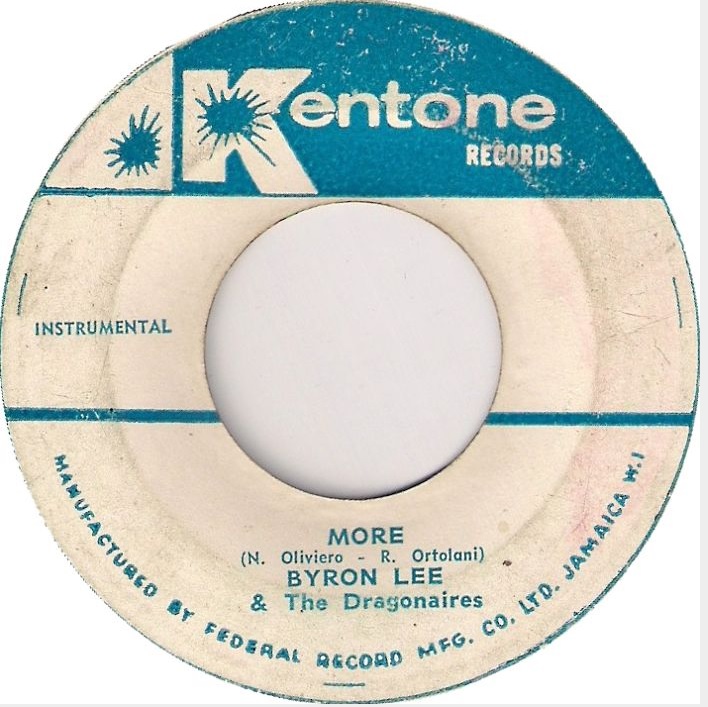
By the mid 50s, Khouri created Pioneer Company, which pressed Jamaican recordings and distributed foreign records as well. When the Pioneer Company moved to the Industrial Estate at Marcus Garvey Drive in the late 50s, Pioneer became a subsidiary of the mighty Federal Records. At Federal Records, plenty of the major soundsystem operators and producers used the studio to record tracks for their labels. Khouri also used his studio for his own record label, Kentone, where Byron Lee and the Dragonaires produced many recordings and also served as the house backing band. We kicked off the spotlight with one of the earliest Kentone releases from The Techniques, “No One,” which was originally recorded for Curtis Mayfield for Columbia Records and only released in the UK. It is unclear if the Kentone release is a Jamaican distribution of that Columbia track, or if The Techniques re-recorded the track for Khouri. A clue could be that the Byron Lee and the Dragonaires were listed as the backing band on the Kentone release, but the answer is not clear.  

As stated earlier,  many of the Kentone releases featured Byron Lee and the Dragonaires.  Circa 1963-1965, the members were Ken Lazarus on Guitar, Byron Lee on Bass, Tommy Ismay on Saxophone, Chester Power on Trumpet, Barry Lloyd on Drums, Victor Chung on Bongos and Percussion, Carl Brady on Bongos and Percussion, Leslie Butler on Organ, Vernon Muller on Trombone, Frank Anderson on Trumpet.

Again, can hear our full show from November 10, 2015 HERE. Subscribe to our show on Mixcloud, it’s FREE and you’ll get an email every Tuesday when our new show goes up.

Happy Halloween!!! Please help us and spread the word and repost if you liked the show! Repost anywhere you see fit.

Join the group for the Bovine Ska and Rocksteady on Facebook.

Love,

Generoso and Lily

“What Have You Done to Solange?” Leone Cinematographer, Massimo Dallamano’s Clever 1972 Giallo

Standard
solange-1

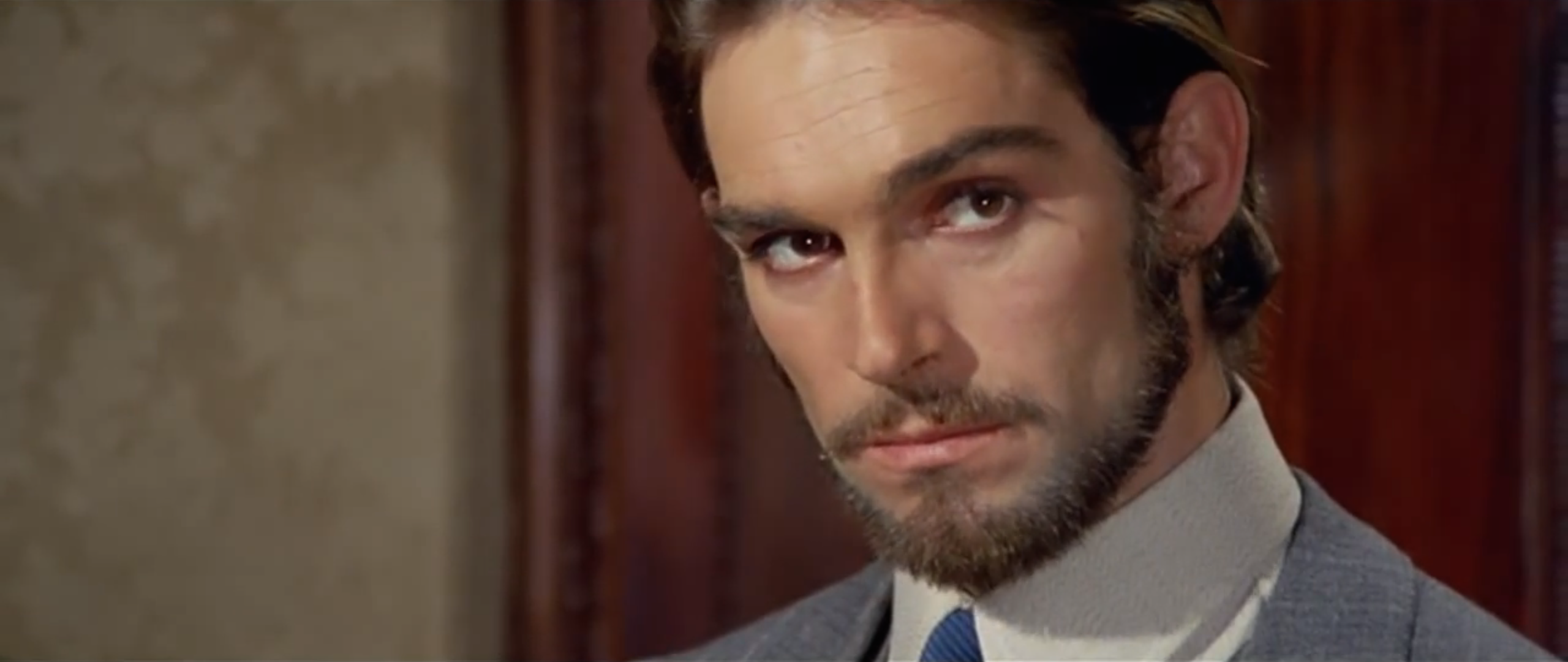
Fabio Testi As The Well Groomed Prof. Rosseni

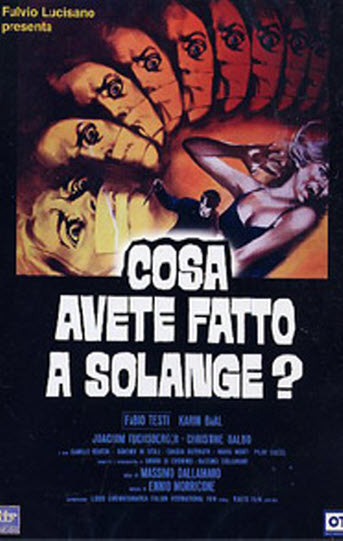
Well, here I am….Another weekend where I am writing a piece for my lost films of the 1970s blog, and yes, another review of a Fabio Testi film! Before I delve deep into this week’s Testi film, the exceptional 1972 giallo, “What Have You Done To Solange,” I must confess that over the last few years, since talking my wife to see Monte Hellman’s 1978 western, “China 9 Liberty 37” at the Harvard film Archive’s 2011 Hellman retrospective, I have watched more than my fair share of Mr. Testi’s work. To be frank, I had seen “China 9” back in the 1980s, and it pales in comparison to the rest Hellman’s output for that decade, but it does provide you with two of the most attractive actors of that era, Fabio Testi and the stunning Jenny Agutter. I also wanted to view the film again, and I did so for the few minutes that Sam Peckinpah takes the screen in addition to Warren Oates, who is a cut above most American actors of his generation. Given the talent in the film, I thought it was worth another look and brought Lily with me for a second opinion. Let’s just say that Lily also felt so-so on the film but was very impressed with Mr. Testi…Very impressed she was. Past some minor jealousy, I have no problem here because Fabio always brings something special to each par,t and Lily’s fascination with him has forced us to look at many smaller Fabio Testi films that we may have never seen. Such is the case when we recently saw a 35mm print of the 1972 Massimo Dallamano directed giallo, “What Have You Done To Solange.”

Born in Milan in 1917, Massimo Dallamano got his start as a camera operator for documentaries and was actually the cameraman who filmed Mussolini’s bullet ridden body after El Duce was murdered by partisans in 1945. Before making the jump to directing with his underrated 1967 spaghetti western, “Bandido,” Dallamano spent 1946-1966 working consistently and at times exemplarily as a cinematographer for films such as Dino Risi’s 1960 comedy,”Love and Larceny,” and Sergio Leone’s first two westerns, “A Fistful Of Dollars,” and “For A Few Dollars More.” I have always loved Dallamano’s timeless visual style behind the camera, so that along with my adoration of his aforementioned film, “Bandido,” and my general love of giallos made my desire to see “What Have You Done To Solange” increase immensely, and it does not disappoint.

Dallamano’s film, based on a novel by Edgar Wallace entitled, “The Curse Of The New Pin,” blissfully begins with a very coiffed professor named Enrico (Fabio Testi) on a rowboat wooing a beautiful young woman named Elizabeth (Cristina Galbó). While in their halcyon state, they witness something happening on land. They see someone running and the shine of a knife, but they aren’t sure of what exactly they are seeing. Cut to a later scene when Enrico hears that there has been a murder at the lake on the radio, so he returns to the scene of the crime to see what has happened. When Enrico returns to the lake where a murder has indeed happened, a press photographer snaps and publishes his picture, so when it is revealed that the girl who was murdered was also a student at the Catholic school where he and his dutiful but gruff wife Herta (Karin Baal) are teaching, Enrico becomes implicated in a string of murders of young women who all attended the same school, and it is up to Enrico and Herta to find the killer before his career is destroyed.

Herta is aware of Enrico’s tryst with Elizabeth as well as other girls at the school, which hurts Herta, but that does not falter her desire to defend here husband, if not for anything but to avoid a scandal. We know where Enrico was when the killing at the lake occurs, so he is not the killer, so is it possible that Herta is the culprit because of her jealousy? Our titular character Solange (Camille Keaton) was also connected to all of the murdered girls and appears not too well, but is she damaged enough to have conspired to kill all of these students? Bit by bit as the movie unfolds, we come to realize that the students at this school were not squeaky clean; drugs, booze, and abortions seem to be the standard at this Catholic school, so could the killer be the snobbish Professor Bascomb (Günther Stoll) or the judgmental headmaster, Mr. Leach (Rainer Penkert), who are so inclined as to resort to murder so that they can keep the escapades of our freewheeling students out of the press? Given that “What Have You Done To Solange” is a giallo, I will spare you the answer because that spoils the mystery and horror of the ride.

One of the more interesting transformations of the film is how Dallamano changes the physical appearance of Herta from a harsh and stern “Helga Of The SS,” non-nonsense looking woman to one that becomes ever so softer and more beautiful as she works harder to clear her husband’s name and thus rekindling their fondness for one another. It is an interesting and subtle choice for our director to make: By making Herta kinder as the plot progresses, Dallamano subliminally encourages the viewer to strike her name off of the list of suspects as the movie progresses. In fact, at one point, when Dallamano includes excerpts from Enrico’s dreams where he questions his own innocence, we as the audience are more likely to suspect Enrico than Herta, even though Herta appears to have the strongest motivation to kill the girls. The reduction of Herta’s harshness is an interesting technique that works well in shuffling the deck of suspects while keeping her character from just being a downtrodden wife that begs for your pity.

“What Have You Done To Solange” 1972 Trailer

Truth be told, I haven’t read the Wallace novel, but this film plays out like a English detective story mixed with a slasher film rather than an eerie Argentoesque supernatural horror film, which I found very compelling. Also missing is the intense viscera that normally coincides with most giallos, making “What Have You Done To Solange” feel more like a murder mystery, which was a refreshing change of pace. As for Testi, he is his usual stunning self (this is Lily speaking, not me), and he is very good in the lead as he commands each scene with that same sorrowful face and desperation that he has in the 1973 Sergio Sollima film that I reviewed last month, “Revolver,” which is also a cut above the average poliziotteschi. As far as the other actors are concerned, Karin Baal really brings a lot to her small role as Herta and is an actress that I will keep an eye out for when I review other films that she starred in during that era. As for the cinematography, it is the strongest point of this film, and much of that credit goes to Dallamano, who I am sure had a say in the shot selection and his young cinematographer, Aristide Massaccesi, who would soon be known as Joe D’Amato, who, like Dallamano, would become a very successful director in his own right.

Sadly, unlike his protege D’Amato, Massimo Dallamano would only make a handful of films after “What Have You Done To Solange,” for he was killed in a car accident in 1976 after finishing shooting the crime film, “Colt 38 Special Squad.” Given his smaller volume of output, Dallamano receives less attention than his peers, but he is a visually smart and sharp director who deserves a great deal of respect for his work in Italian genre cinema.


American Flagg! Howard Chaykin’s Dystopian, Futuristic Noir

Standard

As seen by my great affection for Satellite Sam, I really enjoy Howard Chaykin’s work, perhaps a little more than I should. Thus, it is of no surprise that American Flagg!: Hard Times from 1985 forced me to stop my digging as I flipped past collections of Bill Griffith’s Zippy and Will Eisner’s The Spirit on the Comikaze exhibition floor.

Cover for Hard Times Trade Paperback

Chaykin’s male protagonists and femme fatales (or really any peripheral female character in general) fit the idealized form for both genders. They are figures inherently from the past in that they really no longer exist. The women are almost always voluptuous and clad to emphasize their curves; they have the proportions of Jayne Mansfield and the sultriness of Marilyn Monroe or Barbara Stanwyck, with much of their words loaded with double entendre. As for the other part of the Chaykin gender equation, the protagonist men are rugged with square jawlines and shoulders; they have somewhat charmingly naive faces and ever so slightly sinister smirks to remind you that they have more than just brawn; Chaykin’s male protagonists are the Guy Madisons, Rock Hudsons, and Gary Coopers of comics.

The villains, on the other hand, deviate far from the ideal images of the male protagonists and the women. They are overly thin or portly. They are too short. They are balding. They are unkempt.

But, despite the visual contrast between the protagonists and the antagonists, the characters in Chaykin’s work tend to all be quite flawed and somewhat rotten, and such is the case with the cast in American Flagg!

In the opening by Michael Moorcock, he addresses, rather bluntly, the consistent criticism of American Flagg!: that it is sexist. Sure, it is true that the protagonist of American Flagg! is your all-American, standard white, heterosexual male. However, returning to my previous statement, no character in the series is perfectly clean and pure; everyone in the Chicago of American Flagg! has clear weaknesses, be it power, wrath,  lust, or greed, and those vices drive them toward poor decisions. Under the pristine faces and bodies lies dark thoughts and deeds, making the characters fundamentally more like characters of film noir and less like those of 1980s teen films. In fact, you should be more offended by John Hughes films’ portrayal of women than Chaykin’s in the comics he was creating in the same time period, but I’ll avoid saying more and let you ruminate on that statement.

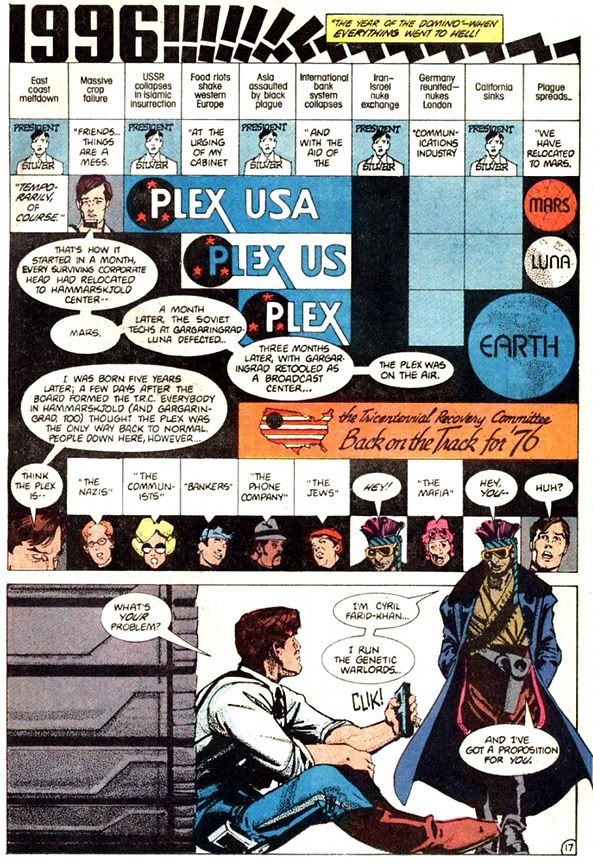
American Flagg!: Hard Times collects issues 1-3 of the series, completing the story arc of Rueben Flagg’s arrival to Chicago and his first experience as a ranger for Plex, the corporation that runs the universe after a series of great misfortunes and catastrophes force the government and corporation onto Mars. As a washed up television star replaced by a hologram and drafted into service duty by Plex, Rueben Flagg lands on Earth as a Martian by birth but Earthling by blood. Flagg has a naive patriotism for America and feels an obligation to help make Chicago a safer town to live in, but after meeting Chief Ranger Krieger and his daughter Mandy, he realizes that his gun-toting, Western style understanding of good and evil does not exist in the place he has landed.

The Chicago of 2031 has the rampant corruption of the Chicago of 1931. Plex, the major corporation that rules over the universe, parallels the organized crime outfits running the major cities in America in the 1920s and 1930s. Like the mobsters of the past, Plex has tyrannical control over everything, and every law has seemingly only one purpose: to make the executives at Plex richer and thus more powerful.

As with any dystopian government/authority, Plex also manipulates its people. Here, in American Flagg!, the company uses media to galvanize violence and create gang wars that generate profit through arms dealing and highly popular television broadcasting of the fights. Plex also uses subliminal messaging to encourage violence on innocent people, leaving the citizens in Chicago feeling vulnerable and in need of the Plex Rangers for security.

Unfortunately, Rueben does not understand the magnitude of Plex’s omniscience before his assignment, and he spends Hard Times finding out about its corruption of society and humanity. American Flagg!, at its core, is a science fiction noir; where Rueben, the outsider, must navigate a dirty, filthy world that will likely swallow him whole in his attempts to fix it.

And as a noir, American Flagg! could not be complete without its potential femme fatales. In this case, we have Mandy Krieger, the sharp-shooting, blunt, coarse, and sensuous daughter of Rueben’s boss. Mandy has a clear fascination with Flagg that draws the two closer and closer (and into bed, of course). In addition to Mandy, we also have the hostess (i.e. madame) Gretchen Holstrum and pilot Crystal Marakova. By the end of Hard Times, it is a bit unclear who will lead Flagg to the greatest danger, but we do know that his own lasciviousness will naturally get him into trouble. Combine his inclination to jump into bed with any attractive woman who approaches and his overly optimistic sense of duty to incite change, and Rueben Flagg stands on a course that cannot lead to neither a good end nor an overwhelming sense of catharsis.

Beyond the alluring characters and plot, American Flagg!: Hard Times also features exceptional artwork, mixing structured panels and free-form constructions on its pages. The Chicago of 2031 as imagined by Chaykin in the mid-1980s certainly has more art-deco influences than I suspect the real 2031 one will have when it arrives, but as a result, his world, while cold in its pervasive technology, also has a certain elegance to it in its clothing, cars, and marquees.

Given its noir qualities, American Flagg!, though set in 2031, which is not too far away from today, still remains relevant. It serves as a reminder that despite the progress we make in technology, we will still fundamentally have issues with corruption and media manipulation in the future to come, and if we get wrapped up in the consumerism associated with technological advances, we’ll have progressed no further as a society than from where we were in the 1930s. I wonder if 2031 will also bring about a talking cat such as Raul, Reuben Flagg’s confidante, that can sense subliminal messages and navigate through the human world as a covert listener and watcher. I hope so, since he’ll be an especially insightful, enlightening, and perhaps the last neutral party in a post-internet, advanced data and technology age.

American Flagg!: Hard Times was first published in 1985 by First Comics.  Image and Dynamite have since published collected volumes of American Flagg! 

Generoso’s Version Of The Hearty Dish: Arista Di Maiale Al Latte

Standard

Being that the last couple of weeks have seen the weather cool off considerably here in Los Angeles, I have decided to show you how to make one of my favorite fall dishes, Arista di Maiale Al Latte (Pork Loin Cooked In Milk).  This is an easy to make creamy, hearty dish that you can serve as a secondi.  Cooking time should be about two hours so save this one for the weekend.  Not too much prep but you will need a lot of cooking time.  The ingredients you will need are: A two pound piece of boneless pork loin, 750ml of whole milk, eight cloves of garlic, thyme, 3 spring onions, olive oil, salt, pepper. Lily really loved this one. Let us know how yours turns out and enjoy the fall!

XO Generoso

Music: Felix Mendelssohn: Organ Sonata, Op. 65 no. 111

Generoso and Lily’s Bovine Ska and Rocksteady: Rupie Edwards Success Label 11-3-15

Standard
success B

Excellent Cut On Success By The Concords

Hello Bovine Ska and Rocksteady Listeners,

Thanks to you all for the kind words and listens to our Jamaican Halloween show last week.  It was super fun, and has inspired Lily and I to some more investigations into the different kinds of floating specters!

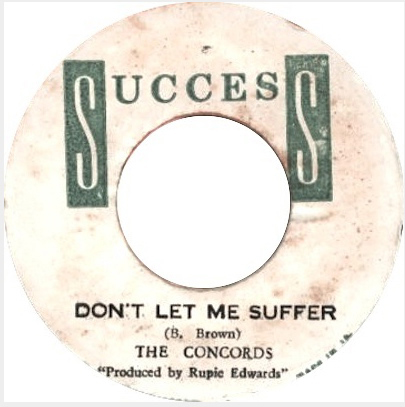
This week was a less spooky Bovine Ska and Rocksteady as we did a spotlight on Rupie Edwards’ Success Label. That spotlight starts in the middle of the show.  We started off with two sets of rare ska, featuring “You Made Me Warm” a punchy ska from a seldom recorded band known as The Sharks which came out on Kentone in 1965.  “What To Do” fr0m The Federal Singers was another rare ska from 1965 which began the second set.  That one was recorded at the Federal label of course. We started our mento set with a slow and lovely bamboo sax led cut from the king of the bamboo sax, Sugar Belly!  You heard the classic mento of “Land Of Sea and Sun”  After the three song mento set, we played a long set of rocksteady that began with a version to version excursion using Buster’s “Judge Dread” rhythm..”Musical College” and “Barrister’s Pardon.”  We ended with a pretty cut Merritone as The Merritone Singers sang “House Upon The Hill” which was released in 1967.  It was then the second hour and the spotlight on Rupie Edwards’ SUCCESS LABEL.

Known for many roles in the music industry, including being the co-songwriter of Judge Dread’s Big 7, Rupie Edwards began his career in music as a singer, recording his first single, “Guilty Convict” in 1962 at the age of 17. After recording further as a soloist, he created The Virtues with Junior Menz, Lloyd Robinson, Basil Gabbidon, Eric Frater and Dobby Dobson. After working extensively as a recording artist since 1962, by 1968, Edwards began to dedicate more time as a producer of his own label, most likely first working on his own track with The Virtues, “Falling in Love” and with Karl Bryan, also known as Cannonball Bryan on the track, “Sweet Nanny.” In Jamaica, Rupie was releasing his productions on his own imprint, and in England, he gained the interest of the gargantuan Pama label, which distributed his productions with a Success UK imprint. Success label engineers were Syd Bucknor and Lynford ‘Andy Capp’ Anderson, and together with Rupie, the team created a distinctive sound and rhythm for the label, one that we are thrilled to have shared with you, beginning with the earliest known Success recording from Rupie Edwards himself. Here’s “Falling In Love.”

We played more than a few instrumentals and backing all of the vocal artists are The Rupie Edwards All Stars which featured: on san, Tommy McCook,  trombone Vin Gordon,  drums: Carlton ‘Santa’ Davis, guitar: Hux Brown, piano: Gladstone Anderson, bass: Clifton ‘Jackie’ Jackson and on organ: Winston Wright.

You can hear our full show from November 3, 2015 HERE. Subscribe to our show on Mixcloud, it’s free and you’ll get an email every Tuesday when our new show goes up.

Happy Halloween!!! Please help us and spread the word and repost if you liked the show! Repost anywhere you see fit.

Join the group for the Bovine Ska and Rocksteady on Facebook.

Love,
Generoso and Lily