Staying Right At the Middle: Gene Luen Yang’s Level Up

Standard

In recent memory, Amy Chua’s Battle Hymn of the Tiger Mother was the last time I heard about the Asian-American experience in popular news. I’ll skip over my thoughts on the work because that demands an extended conversation for a different time and avenue, but with the high publicity of Chua’s work, Asian-Americans have an opportunity to begin to describe their experiences living within two somewhat contradictory cultures, and most importantly, to emerge as distinct voices (ideally, from my perspective, against the Amy Chua practices for breeding replicant, financially successful but soul and imagination empty Asian-Americans).

Released in the same year as Battle Hymn, Gene Luen Yang’s  Level Up, tackled the Asian-American experience from the child’s rather than the parent’s perspective and aimed its message at children and young adults.

Before this review continues, I will make a specific distinction in describing the experiences of Yang’s and Chua’s work. In general Western media, they identify as works that discuss the Asian-American experience. However, as an Asian-American myself (who is culturally Vietnamese though genetically half-Chinese), I will say that the “Asian-American experience” is a far too broad of a term because the acculturation process in America greatly differs from culture to culture and nation to nation of origin. Consequently, I will take a stance and say that Battle Hymn of the Tiger Mother and Level Up are specifically works that address the Chinese-American experience. With that moment of semantics over, let’s continue…

Cover for Level Up

In Level Up, Dennis Ouyang loves video games, but his destiny forbids him from pursuing his video game passion and gifts. Since early childhood, Dennis has received constant reminders that he must study and become a medical doctor, specifically a gastroenterologist, from his strict Chinese parents. Under the restrictions of his parents and their constant reminder that life is pain and full of sacrifices, Dennis succeeds in high school and stays on the course defined for him, but life changes when he encounters death for the first time; Dennis’s father dies of liver cancer right before he begins college.

To express his grief, Dennis devours video games, and in turn, shifts his priorities from academic success to beating video games, thus committing hours and hours to moving pixels rather than organic chemistry. As his destiny of medical school seems farther and farther away, a group of tiny angels appear in Dennis’s life, reminding him that he must become a doctor. With their constant urging and support on household tasks and studying, the little angels get Dennis back on track toward the day of his Hippocratic oath, and Dennis manages to go to medical school. Despite his academic success, Dennis has yet to answer the essential question: “What is my purpose in life?”

Thus, to no surprise, Dennis has a mental breakdown in his first year of medical school, realizing his decision to pursue a career as a gastroenterologist has no foundations in his own desires, only those of his parents. With this awakening, Dennis begins to introspectively question his motivations and slowly unravels his parents’ definition of his destiny to begin the journey of defining his own.

While I appreciated Yang’s ability to capture the guilt and the pressure to succeed in Chinese-American households and his own encouragement to young people to ask why one decides to pursue a career, I was greatly disappointed by the end of Level Up: Dennis, despite a brief hiatus from the doctor life as a competitive video gamer, returns to medical school, with the only new perspective to his career being that he will consider other medical specialties. After his brief introspection and his final understanding that this course to become a doctor existed because his father had failed to become one, Dennis does not really forge his own path; he defaults to the path he has always been told to follow, or, even worse, his father’s guilt in his own failure has become Dennis’s motivation to succeed as a doctor himself. Regardless of which reason is the one, neither sets Dennis up for a satisfied career as a doctor. 

With Level Up, Yang had the great opportunity (and somewhat responsibility) to explore what success and ultimately happiness and confidence look like outside of Chinese-American standard expectations, but like Dennis the character, he chooses a safer route that does not completely rock the boat. Level Up could have been a work that encouraged young Chinese-Americans to explore their own interests and passions, but instead, it latently tells them that parent-defined expectations are the ultimate route we follow. Yang himself took his own life and career in a direction far from the Chinese preferred ones as a doctor, professor, or lawyer, and that thought process for his own life should have influenced the arc of Dennis Ouyang and made Level Up a far richer and far more revolutionary novel. But, alas, Dennis decides on becoming a doctor and even has some of his gaming interest filled with the game-like controller used in a Lower GI (oh, how, cute!).

To arrive at this happy doctor ending, Dennis does not ask himself if the medical material fundamentally interests him. He does not ask himself if the life of a doctor is what he really wants. He does not ask himself what other options exist to help people, which is the reason why he decides to return to medical school. He just decides that the gaming world is too trivial for him, and he selects the only other course he has ever known, preparing him for another crisis not too far down the road.

Level Up could have been a youth-oriented counterpoint to Battle Hymn of the Tiger Mother, but, sadly, it is somewhat of a complementary piece. I’ll have to keep waiting and hoping for that book from the Asian-American community that finally stands up and says no more to the Chinese-American standards of success. I just hope that it arrives before the onset of my own mid-life crisis.

Level Up, available by First Second, is written by Gene Luen Yang and illustrated by Thien Pham.
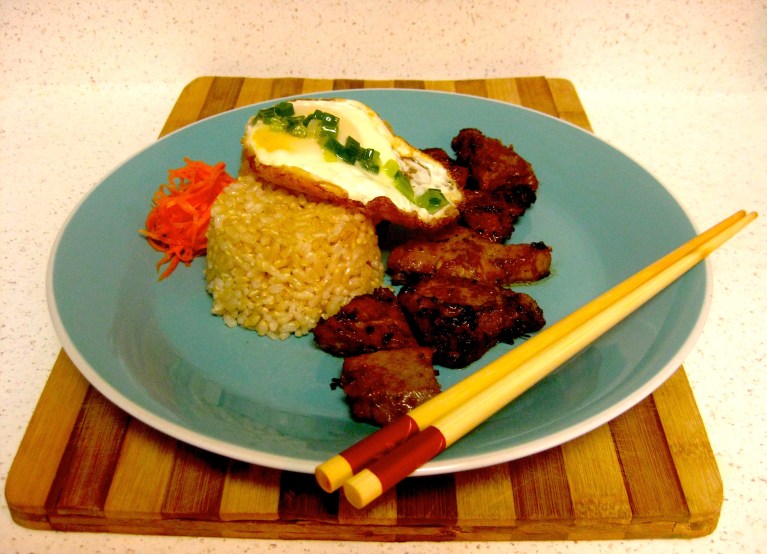
An Update to Com Tam: Lily’s Thit Suon Nuong

Standard

With the Los Angeles perpetual summer continuing its rampage, I have been running out of non-soup based recipes to show you. After some discussion and a recent purchase of four pounds of beautifully trimmed pork shoulder, Generoso, upon seeing pictures, asked if I could make the pork chops served with Com Tam.

Com Tam is a blanket term for rich dishes served with crushed jasmine rice and a small bowl of nuoc mam to pour over all of the treats on the plate. There are many variations on Com Tam, which contain different types of meats and preparations, but my favorite has always been the version with Suon Nuong, and that is what I decided to modify.

First, in my version, I use molasses as my source of color and caramelization to the meat. You can certainly use brown sugar if you would like! I also use pork without the bone; again, this is a preference. I also serve the pork with brown rice, which is a bit healthier, and this dish needs all of the help it can get when it comes to health. In addition, I serve my Com Tam without nuoc mam (the signature lime and fish sauce based dipping sauce); I let the pork marinade shine on its own but balance the richness of the dish with pickled carrots. Lastly, I pan fry my pork, whereas most preparations call for grilling or broiling. I like the texture of the pan fry myself, but you are welcome to broil or grill the Suon Nuong!

Please note: In the opening ingredient introduction, I forgot to mention fish sauce. There’s almost no savory Vietnamese recipe that does not have fish sauce! Make sure that you always have it on hand when you’re making Vietnamese food! 🙂

Enjoy! Please do share your results and variations of Suon Nuong!

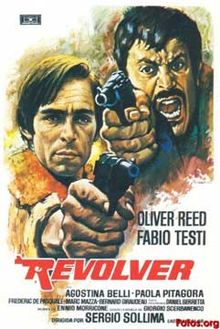
Oliver Reed And Fabio Testi Fight Each Other And The Clock In The Exceptional 1973 Poliziotteschi, “Revolver”

Standard
revolver4

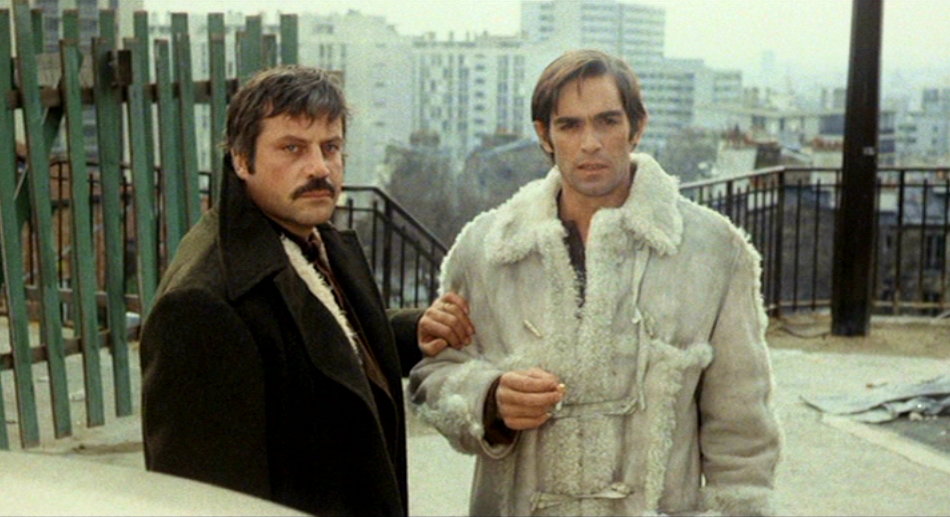
Reed and Testi Are Sporting Serious Outerwear!

If you regularly read my reviews of lost 1970s films, you may have noticed that only two months ago I already reviewed a poliziotteschi (Italian crime film) called “The Big Racket,” and that one also starred Fabio Testi. So, why, you may ask, am I reviewing another film within the same genre so soon?

Most importantly, I really love the early spaghetti westerns of director Sergio Sollima, who sadly passed away back in July at the age of ninety four, so I thought to re-watch some of his best films. High on my list of his work in the spaghetti genre are “The Big Gundown,” “Face To Face,” and “Run Man Run,” all back to back from 1966 to 1968 and all starring the steely-eyed Cuban-born actor Thomas Milian. Director Sollima was never as epic in scale or poetic as Leone or as gruesome as Corbucci; no, what distinguished a Sollima western was the cold solemnness that set him apart from many of his peers. I loved taking a second glance at his work these last few months and was even more motivated to watch his 1973 poliziotteschi, “Revolver,” aka “Blood In The Streets,” the Sollima work with the brooding talents of Fabio Testi, who at the time had just scored a hit in the crime genre with “Gang War In Naples,” and the legendarily erratic and intense English thespian, Oliver Reed. With both actors also ranking high on my wife Lily’s list of 1970s male film star crushes, there was a lot riding on this watch between Lily’s love of Reed and Testi, and my adoration for both actors and Sollima’s films. Luckily “Revolver” delivers on both of our expectations.

“Revolver” opens in the dead of night where Milo Ruiz (Testi) is carrying his partner in crime who is badly wounded after a security guard shoots him during a burglary attempt. Milo clearly cares deeply for his accomplice in crime who is not going to make it and asks Milo for his dying request to bury him secretly and to keep his dead body out of the hands of the coroners. Milo obliges and he sadly buries his friend in a riverside ditch. After the burial, we cut to the next scene where you have the very Anglo Oliver Reed playing (brace yourself) Vito Cipriani, a tough prison official who spends his nights in the arms of his ridiculously gorgeous wife Anna, played by the luminous Agostina Belli. Everything is all well and good, which based on the genre you know won’t last long, until one day Vito gets a call that his wife has been kidnapped. When the abductor calls, he only asks for one item in return of Vito’s wife, and that is the unofficial release of a prisoner being held in Vito’s jail named Milo Ruiz. As Vito loves his wife dearly, he immediately descends on the prison cell of Milo and begins an intense round of questioning and a bit of beatdown on our wisecracking felon who appears to not be in on the kidnapping and has no ideas who his “friends” are who are stealing wardens’ wives to barter for his freedom. After a few more face slaps and armed with the prospect of early freedom, Milo breaks out with the help of Vito and they begin a Walter Hill/”48 Hours” style relationship of putdowns and punches to the head as they race against the clock to try and rescue Anna. Neither Vito nor Milo knows why they want Milo as their ransom, but, as the movie progresses, we start to realize that Milo may be as innocent as Anna in all this, and that his arrival to these mobsters may mean his own demise.

This plot so far sets up Vito as the classic poliziotteschi protagonist in that he is a by the book official who does everything he can legally, but he even must break the law in order to fight the forces of evil. As corruption was rampant in Italy, the poliziotteschi mirrored Italian’s frustration with a system that could not represent or protect them adequately. The unique twist in “Revolver” is the chemistry that forms between Vito and Milo or should I say Reed and Testi? As Sollima would say in his interview for Blue Underground, Testi was cursed by being so damn “good looking” as no one ever asked him to really act. Testi was a fine actor as evidenced by many of his films during his long career, most notably in Andrzej Żuławski’s brilliant 1975 melodrama, “That Most Important Thing: Love.” Reed was quite possibly the finest English speaking actor of the 1970s, an actor who was most noted for his intensity but was also capable of heart wrenching tenderness as evidenced in Ken Russell’s 1969 film “Women In Love” and 1971 film, “The Devils.” You can see a real friendship developing between Reed and Testi, which translates into their characters, Milo and Vito, who must make hard choices as the plot deepens between the care for a friend, the love of a woman, and ultimately their own self-preservation. Unfortunately, as it was the case for many Euro-crime dramas of the 1970s, both actors’ voices were dubbed into English (why does an English actor like Reed need to be dubbed anyway?) in that same fake American-English accent that sounds like Mel Gibson’s suicidal cop in the “Lethal Weapon” films. Still, Reed and Testi carry so much pathos with just their eyes and gestures that it should be shown to young film actors.

Given the talents of the leads’ ability to handle whatever their roles demand, the plot can and does become quite complex and much credit has to be given to Sollima who co-wrote the screenplay with Massimo De Rita, and Arduino Maiuri. This isn’t a simple plot of revenge as was the case with the other Testi film I wrote about back in August, “The Big Racket,” which was an interesting view if only for its sheer level of brutality and non-stop action. No, with “Revolver” Sollima, De Rita, and Maiuri have created a complex plot and a set of characters that carry very different agendas, which propel the story towards a much unexpected ending. Further solidifying “Revolver” as one of the finest Euro crime film ever is the score by Morricone which in my opinion ranks amongst the best of his 1970s work. It is a bold majestic score that seems more designed for a Leone film, but, given the dark nature of “Revolver’s” plot, the music is an excellent counterbalance in tone that pushes the dramatic hit of more than a few small scenes.

Adding to the majestic nature of “Revolver” is the daring cinematography by Aldo Scavarda, who a decade earlier had lensed Michaelangelo Antonioni’s masterpiece, “L’avventura.” Scavarda does very well with the action scenes, especially taking some odd angles with the driving sequences, but he really shines when he focuses on the intimacy between actors. When I set out to write this review, I immediately recalled the first moments of Reed and Agostini on screen which establishes their character’s love for one another via a long, low-level tracking shot of Agostini, in knee high yellow socks, walking around her apartment on the tops of Reed’s bare feet. I also think of a two-shot of Reed and Testi briefly holding hands for a few seconds after they escape an almost deadly encounter: these are simple visual ideas that make this crime drama into an emotionally immersive experience as opposed to just another standard Euro shoot-em-up.

International Trailer for “Revolver”

Based on the interview conducted with Sollima for the DVD release, “Revolver” flopped at the box-office, not because of bad reviews, but for his producers and distributors having foolishly spent all of their ad money when the film was expected to be released in Italy in the fall of 1973 but was not due to unclear delays that pushed the release into spring of the next year. The film was released in the U.S. the following year and was marketed to take advantage of the runaway success of Charles Bronson’s “Death Wish” but never found an audience here either. Thanks to Blue Underground for releasing “Revolver,” an exceptional film loaded with exceptional acting by two of the finest acting talents that decade, an excellent score and visuals, and one of the last great films by the late Sergio Sollima.

A Lightning Bolt of Fun: Michael Brennan’s Electric Girl

Standard

While I regularly fail to maintain a well-balanced food diet, I try my best to stick to a well-balanced media consumption regimen. For some reason, of late, I’ve been directed in my comic book reading toward lighter works than my taste generally prefers. While the short-term break from my preferred dour and serious comics fare has been refreshing, it has also been somewhat enlightening in understanding my own perceptions when simultaneously digesting works of different media forms, styles, genres, or moods.

On a recent early morning trip out to Marina del Rey, we immediately turned around our car after we saw the electric blue walls of Dreamworld Comics. Perhaps it was my early morning craving for something to start off the day in a bright way, or perhaps it was the enormous open windows and bright sun filling the room and making me feel far more joyful than I would ever be at nine in the morning, but the turquoise spine and the premise of Michael Brennan’s Electric Girl caught my eye, and I left the shop with it (along with some neon green Hot Wheels for dearest Generoso).

Cover For Volume One

Mischief follows Virginia, the protagonist of Electric Girl; Oogleeoog, a goblin of menace, has had his grips on her from the day she was born. As part of his long term plan of interference, Oogleeoog gave Virginia the ability to produce electricity from her own body, and he also graced her with his eternal presence. As a result, Virginia not only manages to shock people and ruin electronics on humid days but also carries trouble for anyone around her when Oogleeoog must execute his goblin duties to make each daily task that much harder, whether that is making a phone call, sleeping, or watching a baseball game.

While this premise lured me in and kept me entertained throughout the first volume of the series, when the time arrived to tackle this review, I found little I could say about it, so I began to go through my mental checklist of dissecting my own reaction.

Did it evoke a positive or negative type of entertainment? Certainly positive.

Did I like the characters? Yes.

Did I like the dialog? Yes.

Did I like the artwork? Yes.

What adjectives would I use to describe this work? Silly, fun….

And at that point in the list, I realized why I had little else to say about Electric Girl. Brennan does not focus the series on some grandiose message about existence and responsibility of a super power; he just wants to make Electric Girl a simple, funny read. As a result, at least in the first volume, Virginia never uses her power as anything more than a convenience, and the ability to conduct electricity does not become more than an annoyance for Virginia, making the entire series feel a little Bewitched or I Dream of Jeannie of the 1960s, entertaining and enjoyable but definitely a bit thin on philosophical and intellectual dimensions because we do not get to see her experience any major struggle or triumph from possessing this quality.

Virginia, like Samantha and Jeannie of the aforementioned TV shows is charming and adorable. She similarly gets into quirky situations that always have a layer of cuteness to them in their emergence and solutions, especially when her adorable dog Blammo enters the plot. Virginia’s powers are more of a small eccentricity that lead to party tricks and little giggles than a complex part of her identity.

And the same goes for Oogleoog. He is less of a foreboding character and more of a wacky sidekick. His tricks on others cause far less nuisance than one would expect from a goblin, and with every trick he throws in, you almost want to say, “Aw, that darn silly Oogleoog. What did he do this time?” while in your best 1950s housewife pose with hands on your hips and a smirk in knowing that someone has stolen socks off of the clothing line or a cookie from the cookie jar.

Despite my own teasing of the basic concepts of Electric Girl, times do exist when you want more simplistic plots and characters, and if you like to keep your comic book consumption as broad as possible, Electric Girl will fit in at a specific time, place, and mood. As long as you take the series at its face value and do not expect to find some profound observation of humanity in it, you’ll have fun reading Electric Girl, exactly like the fun you have watching Bewitched, I Love Lucy, or I Dream of Jeannie. None of these works are life changing, but you come to appreciate them when you have a lot on your mind, when you’re having a bad day, when you’re getting ready for the day, or when you just want something basic in your own complicated reality. These works don’t demand much from you: just some attention and some laughs. They are perfect palette cleansers in between heavy works; they deliver the same uncomplicated joy of a chocolate chip cookie.

But, as said before, for a balanced diet, you need more than just the cookie, and for me, reading Electric Girl reminded me that while any piece of media or art has its own inherent value, it also develops separate layers of value based on your own mental state and in comparison to the contributions of other works you enjoy. Consequently, while the simplicity of Electric Girl may feel overly saccharine and juvenile to some, it allowed me to step out of my own ruminating thoughts of existence based on my current piecemeal reading and digestion of Jack Kerouac’s On The Road and other general life circumstances, and there is value in that ability to deliver a quick shot of untaxing amusement, even if it does not answer your own questions about the meaning of life.

Electric Girl by Michael Brennan is available via AiT/Planetlar.

Generoso and Lily’s Bovine Ska and Rocksteady: Phil Pratt’s Sounds United Label 10-6-15

Standard
Sounds United B

Top Tune From Roy Shirley On Sounds United

Hello Bovine Ska and Rocksteady Listeners!

After beginning last week with all that version to version madness, we decided to hit the ground running with some terrific skas beginning with The Maytals and their wonderful cut for the Kentone label in 1964, “One Look,” and we ended that first set with the offbeat drumming behind Norma Fraser’s terrific vocals on “Come On Pretty Baby,” a top tune for Vincent Randy Chin in 1963. The second set of ska featured a killer solo from the late Don Drummond on “Garden Of Love,” which was released on Treasure Isle in 1964. After that set, we gave you a mento set with one of the best versions of “She Pon Top,” done here by Baba Motta. Ending the first hour was a long set of rocksteadys that included one of the meanest breakups songs of all time, “Tripe Girl” by The Heptones. Listen to the lyrics on that one friends, as that relationship must have ended extremely poorly to invoke that kind of hatred. We then started the second hour with our tribute to Phil Pratt’s sensational reggae imprint, SOUNDS UNITED.

Born as George Phillips, Phil Pratt is a regular favorite in the Fierro house. Originally trained as an upholsterer, French polisher, and cabinet maker, Pratt got his foot into the music industry as a box carrier for Coxone Dodd’s Downbeat soundsystem. After hearing him sing and produce, Roy Shirley introduced Pratt to Bunny Lee, who would then take him to Ken Lack of Caltone, the man who really jumpstarted Pratt’s work as a producer, releasing his productions and eventually giving him his own imprint, the Jontom label. After Jontom, Pratt opened up his Sunshot label on Orange Street. Along with Sunshot, Pratt had another label of his own called Sounds United, with many of the releases being produced and arranged by Pratt himself, and this is the label we are shining a light on in this episode of the Generoso and Lily’s Bovine Ska and Rocksteady, beginning with Pat Kelly’s reworking of The Techniques hit, “I Wish It Would Rain,” from 1971.

Of the artists who spent time with Phil Pratt and the Sounds United label, one of the most productive artist-producer collaborations occurred with Al Campbell. Oddly enough, when Pratt decided to record Al Campbell, many people were surprised, believing that Al did not have a singing voice suitable to be recorded. However, Pratt felt he had something and worked with him to shape up his vocal style for records, and that faith and trust between Pratt and Campbell can be heard in the recordings.

In 1982, Pratt bowed out of the music industry. He lives in London and spends his time today in his two restaurants.

You can hear our full show from October 6th, 2015 HERE.  Subscribe to our show on Mixcloud, it’s free and you’ll get an email every Tuesday when our new show goes up.

Enjoy!!  Please help us and spread the word and repost if you liked the show!  Repost anywhere you see fit.

Join the group for the radio show on Facebook.

Love,
Generoso and Lily

Quick and Irresistible: Generoso’s Tuna Carpaccio

Standard

Generoso been under the belief that his beloved carpaccio was a Sicilian dish, as many of the best dishes of the fish variety emanate from Sicily, but there is enough evidence that Tuna Carpaccio first appeared in a Venetian cafe sometime in the 16th century. Regardless of its true origin, this dish has been changed a million times for a million different tastes. Most Italian dishes are contigent on getting the freshest and finest ingredients that you can find, and Generoso’s take on tuna carpaccio may be the best example of a Italian dish that demands the best ingredients. You will need about 8 ounces of sushi-grade tuna (nothing else will do), extra virgin olive oil, one shallot, two ounces of fresh basil, two large garlic cloves, a half glass of white wine, two large lemons, and two ounces of capers.  The tuna is “cooked” like ceviche using citrus so the time from prep to plate is short, about 30 minutes. A good baguette will be a welcome addition when serving this.

Super for hot summer nights, like the 100+ day when we made this dish. Enjoy! And let us know how yours turns out!

Music: Polovetsian Dances by Borodin.


Larb and Goi Unite in Lily’s Goi Ga

Standard

As a kid, I never really liked goi ga, a fresh Vietnamese salad often containing cabbage, carrots, cilantro, shredded chicken, and roasted peanuts, all topped with fish sauce.

However, as I got older, I began to really appreciate the simplicity of the dish, especially when you’re constantly eating heavier, starch based foods (which my appetite tends to lead me toward). Recently, I’ve really come to love the Thai Larb, which is a meat salad with more lime flavor than the Vietnamese goi ga and with more mint.

Consequently, in this week’s recipe, I made my version of goi ga with larb influences. It’s a light dish that is surprisingly filling because of all of the fresh veggies. Perfect for a picnic, my version of goi ga is bright, colorful, and filled with plenty of different, yet complementing flavors.

Enjoy!

Vincent Price Does Shakespeare In The Red! 1973’s Theatre Of Blood

Standard
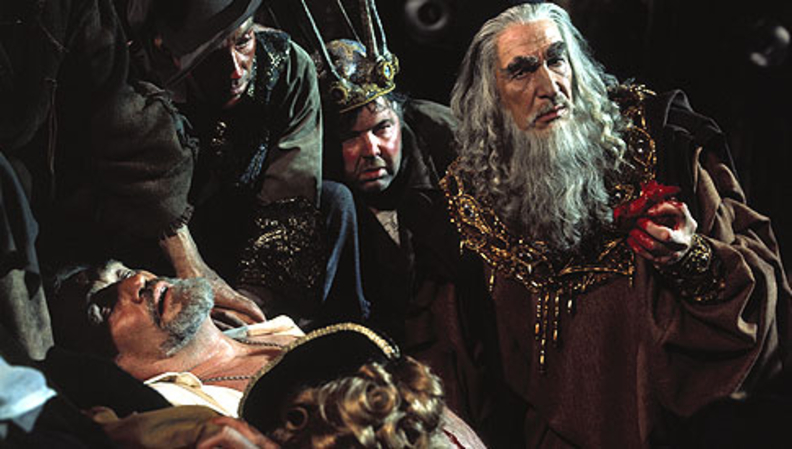
Theater-of-Blood_jpg

Oh Dear, a Bit More Than a “Pound Of Flesh”

I guess I have always loved Vincent Price in the same way that so many others do: in the ghoulish Edgar Allen Poe reciting kind of way.  Even we fans of Mr. Price sometimes forget that he didn’t start in films that dripped blood. Sure, early on, he starred in a few horror films such as “Tower of London” with Karloff in 1939 and in “The Invisible Man Returns” in 1940, but Vincent was also an exceptional character actor in film noirs like Otto Preminger’s Academy Award winning “Laura” and “The Web,” starring against Edmund O’Brien. Things changed for Vincent after 1953 when “House of Wax” became a huge hit in the middle of the 3-D fad, and then it was almost all horror after that with the success of “The Fly” and of course “The Return of The Fly” and many more Hollywood horror films from that decade. Come the 1960s and Roger Corman getting his hands on Price for AIP,  Price was locked into a feast on the terror train as he made several adaptations of the aforementioned Poe with Corman including, “The Pit and The Pendulum,” “The Masque of the Red Death,” and “The Raven.” In fact Vincent and Roger made no less than eight adaptations of Poe’s work, all fairly low budget but always coming in above expectations courtesy of Price in the lead. I have often wondered if Vincent enjoyed being the king of horror as so many people have called him over the years.  After all, Price studied Fine Arts at the University of London and began his stage career in Orson Welles’ Mercury Theatre, so when I heard that he attempts Shakespeare in “Theatre Of Blood,” I was intrigued. Could Price go back to his roots and perform Shakespeare on screen after almost forty years of stabbing zombies? Well, I am thrilled to write “yes,” but you know that Shakespeare with Vincent Price is going to come with a bit of deliberately served ham and a hefty body count.

Price plays Edward Lionheart, a “serious” actor who attempts suicide by diving into the Thames but is secretly rescued by a pack of riverside hobos. Lionheart’s suicide attempt comes after an evening when he is humiliated by The London Theatre Critics Circle who trash a series of Shakespearean plays that he has just produced, and as far as the theatre community is concerned, Lionheart jumped to his death and is nevermore. With his death a fabrication, our thespian Edward, like so many of the heroes contained in Bill Shakespeare’s works is craving revenge and, with his newfound homeless friends in tow as his band of brothers, sets on the critics who have scorned him by giving them a performance of “The Bard” that they will never forget because it will be the last thing they will ever see. You see, Edward isn’t going to give them a humorous scene from “Twelfth Night” or “Much Ado About Nothing.” No, when Edward performs a scene from “The Merchant Of Venice,” he will bring in our critic and actually take his “pound of flesh” in this translation as payment for the bad reviews that he has always received from his now kidnapped critics in some fairly graphic scenes that come to life in a way that I’m sure would’ve made even Shakespeare himself shudder a bit. The plays are then acted out for Lionheart’s most attentive audience of all, The Theatre of Blood which is his adorning collection of tramps.

Yes, all of your favorite Shakespearean nasties are here for you to witness in living color. One envious critic is conned by Lionheart into murdering his wife just like Othello murders his bride Desdemona. Another critic gets the Julius Caesar Ides of March treatment in the form of a dozen knife-wielding hobos. An alcoholic critic is drowned in a vat of wine and dragged through a cemetery by wild horses à la Richard III. With the bodies of the recently critical reviewers piling up and armed with the suspicion that our non-dead thespian might be behind the killings, our comical Inspector Boot (Milo O’Shea) and Sergeant Dogge (Eric Sykes) scour the streets of London to locate Lionheart, starting with his faithful daughter, Edwina (an always fetching Diana Rigg), a make-up artist. She is defiant in the face of the law which isn’t a surprise as she is in league with her father and his artistic vendetta. Alas, she convinces the last surviving critic to visit the Theatre Of Blood, setting up the final scene of demented pathos.

Original Trailer For Theatre Of Blood

Director Douglas Hickox commands the entirety of the film with a bold vigor and rarely matched lunacy and comedy that keeps the narrative flowing with ease. The scenes of gore are, again, a bit tough to take at points, but those moments are needed to push the comedic back into the horrific. Riggs, O’ Shea, and Sykes are wonderful in their supporting roles, but this truly is the role that Vincent Price was born to play. Outside of the gory mayhem that only the haunting Price could bask in unlike no other, there are the many moments of joy that seem to fly out of Price when performing the myriad of Shakespearean characters that he must play in “Theatre Of Blood.” I had to check myself to see if what I was witnessing was an Edward Lionheart, who gleefully has finally found the audience he was always looking for, or screen actor Vincent Price, who finally gets to read soliloquies that he has always dreamed of performing on screen, even if they are played for a laugh and with some amount of cinematic blood on his hands.

Satellite Sam Volume Three: Adios New York! Hello Los Angeles!

Standard

From the start, Matt Fraction and Howard Chaykin’s Satellite Sam set out to be more than just a standard noir. Certainly more on the tawdry side, emphasized by Chaykin’s illustrations, Satellite Sam contains a dirtier, uglier, and far more sinister America than we’ve seen historically in the noir genre, so much so that I feel a little scummy every time I read it (and even ickier when I admit to how much I really enjoy this series).

Volume Three, Satellite Sam and the Limestone Caves of Fire, marks the closing of the first major arc of the series. While the first volume sets the foundation for the series and puts the mystery of Carlyle White’s death into motion, the second and third volume move further away from the whodunnit component of the first and instead, focus more on the individual characters and their own focused minor arcs. In fact, by the middle of the second volume, you pretty much know the identity of the murderer; you stick along for the ride to see how the different people involved react and the peripheral plots develop.

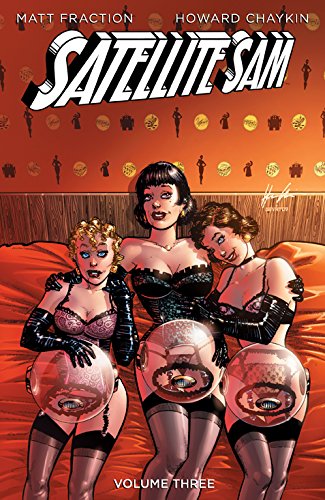
51xC4-V-WoL

The Always Suggestive Cover of Satellite Sam

Now, with the murder mystery interest cast to the side, Satellite Sam emerges primarily as a work of pure mood creation, with its characters and storylines built to convey the underbelly of post World War II America and the bleakness, desperation, and abandonment of normalcy of not only those who fought in war but those who survived. This is the lurid America of The Naked City rather than that of Don’t Knock the Rock.

As mentioned in my discussion of the first volume, unlike the traditional noir, Satellite Sam reveals all of the debauchery that consumes people and discusses the social issues of the era with a freedom unaccepted in the 1940s and 1950s. From the dialog referencing the abundance of Antisemitism in the television world to the strained race relations seen through the tormenting of Eugene Ford, the first black man (though originally represented as white to audiences) to be on television, Satellite Sam captures the overall turmoil and tension of the era that we’ve looked back on with images of jukeboxes, poodle skirts, and Elvis Presley’s singing and dancing. Most significantly, the series concentrates on the deviant sexuality of the era we often recall as the age of the cheerful teenager. Running with America’s fascination with Bettie Page’s bondage images, Fraction and Chaykin use sexual perversity as their primary tool to explore a rotting America where sex is used as a weapon of power and domination. As a result, the sex never gets too sensationalistic; it is a symptom of a diseased state of being evinced by Michael White’s descent (and eventual sobering) as well as Carlyle White’s fall along with Reb Karnes’s and Madeline Ginsberg’s.

With this focus on the overall mood of the era, the third volume of Satellite Sam feels a bit anticlimactic, since the atmosphere and characters keep more interest than the sequence of actions as Michael White closes in on his father’s murderer and the conspiracy boiling up behind the scenes of the LeMONDE network. Consequently, this greater focus on telling stories about a time and place rather than just setting a story somewhere at sometime prepares the series for its extension. With volume three, Fraction and Chaykin have completed their portrayal of New York City in the golden television age, exposing the underside of what lies right under the cold, the dirt, and the garbage of the city. Now, it is time to begin a new tale about a new place…Los Angeles.

As a modern day recent transplant from the east coast to the west coast myself, I look forward to seeing how the cast of Satellite Sam will adapt and how perhaps they participate in the rise of what we know as television today. Unlike New York, which we see drawn in a dour black and white for nearly the entire city, Los Angeles is represented in color in a few of the closing pages of the volume. New York’s disease lived under and was the byproduct of the starkness and severity of the city. We’ll see where the depravity lies in Los Angeles for Michael White, Libby Meyers, Eve Nichol, and Eugene Ford. I’m guessing it will not be far from the spotlights, red carpets, well tanned skin, and sunglasses.

And most of all, I look forward to the new illustrations and short descriptions of the characters at the end of each issue, since after all, I myself enjoy a good bit of slick art and bylines filled with wit and a touch of sleaze.  

Generoso and Lily’s Bovine Ska and Rocksteady: Prince Buster’s Islam Label 9-29-2015

Standard
islam A

A Top Tune From The Maytals on Islam

Welcome Bovine Ska and Rocksteady Listeners!

This week’s program began with a massive triple version of Johnny Clarke’s 1974 tune,”None Shall Escape The Judgement.” We followed that set with another set of early reggae gems beginning with two awesome versions of The Impressions gem, “You Must Believe Me” performed by Ninety and Dennis Alcapone and the Rupie Edwards All Stars.  Our mento set began with an awesome track from Roy Shurland and the Trenton Spence Quartet who gave us their take on the classic which was released on the Kalypso Label, “Matty Belly.” After two more mento cuts, we played you a set of skas which featured one of our favorites from the smooth voice of Ken Parker, “Before and After” which he recorded for Studio One in 1966.  We ended the first hour with another Coxsone Dodd production, this time from Winston Stewart from 1964,”Leave Me Alone.” We started the second hour of the show with our spotlight on Prince Buster’s ISLAM label.

Another Prince Buster label for the spotlight you ask?  Why yes!  Two months ago, we featured the earliest Buster imprint, Wild Bells and this week, we are looking at his Islam label. In 1964, Prince Buster, under the invitation and encouragement of Muhammad Ali, attended a Nation of Islam talk at Mosque 29 in Miami. Upon returning to Jamaica, he converted from his original Christian faith to the Islam faith. Upon this spiritual change, Buster created a new imprint in honor of his conversion, appropriately named Islam. We begun the spotlight on this Prince buster label with a full set of tracks from the year of the Islam label’s foundation, 1964. One of the reasons why we selected the Islam label was the variety of artists who recorded for the label, including Lord Inventor, who you just heard from Lord Inventor was a Guayanese singer who traveled to Jamaica to cut some sides for notable producers, including Prince Buster. We also played a track  from The Watermen, who were actually The Royals and they were: Roy Cousins, Errol Green, Berthram ‘Harry’ Johnson, and Maurice ‘Professor’ Johnson. For some odd reason, the pressings of Save Mama at the time, for Islam and the English press on Blue Beat listed group under the name of The Watermen, and this would be the only single for The Royals under this pseudonym.  Also played in this spotlight were The Charmers, the duo of Lloyd Tyrell and Roy Willis. They were super prolific in 1964, recording for Coxone Dodd, Duke Reid, and that one for Prince Buster on the Islam label in its primary year. As the duo’s career continued, they would also record for Sonia Pottinger while continuing their recordings with Coxsone.

You can hear our show from September 29th, 2015 HERE.

Enjoy!!  Please help us and spread the word and repost if you liked the show!  Repost anywhere you see fit.

Join the group for the radio show on Facebook.

Love,
Generoso and Lily