Sarah Adina Smith

Standard
afi-sarah-adina-smith

Buster’s Mal Heart Director Sarah Adina Smith

I was thrilled to speak with director Sarah Adina Smith after viewing her impressive second feature, Buster’s Mal Heart, our favorite film of the New Auteurs programming section at this year’s AFI Film Festival. Set during the Y2K panic but eerily relevant for present day, Smith’s film presents a complex antihero named Jonah (Rami Malek), a hotel concierge who decides to take refuge in the empty vacation homes of the wealthy while being hunted by the law. As the mystery of Jonah’s crime unfolds via a clever and ambitious blending of dream logic, fantasy, and reality, we start to get a portrait of a young man who is barred from acceptance into the community he so desperately wanted to become a part of for the sake of his family, and whose apparently insane actions might be fueled by an abundantly clear vision of society that is seemingly on the brink of disaster.  

One of the aspects of Buster’s Mal Heart that struck me is the way that you deal with issues of class and race within the film. Jonah is a Hispanic and working poor man who is trying to take care of his family in a predominantly white, middle class area during the Y2K panic of 1999. What do you feel is important in terms of that era and the class and race relations that you are trying to say with the film?

It was extremely important to me that Jonah’s character be a bilingual person of color at the center of this class struggle that you especially feel more acutely when you are part of a community that doesn’t look or sound like you. So, I wanted Jonah to be at the center of that hurricane of social pressures. In terms of setting it near Y2K, for me, that was a very interesting moment in time. I was in high school and was completely convinced that the world was going to come to an end—that it was going to end in a nuclear holocaust, and then I had this absurd feeling when nothing actually happened. (laughs) I liked the notion of setting it during Y2K as part of a sort of psychotic break or part of this feeling that the end was nigh or that all of this was leading to a more cosmic rift in the universe. For Jonah, these social pressures don’t just end on a socio-political level; the social class pressures translate into this larger problem of whether or not it is possible to be free in a universe governed by causality and the oppression of a God, or lack thereof, or nature or whatever you want to call it—this way in which we are oppressed on a cosmic or spiritual level. So, I wanted to tie all of those things together in his psyche to fuel what, on appearance, may seem like a psychotic break. I don’t know that I chose Y2K for any particular historical reasons in terms of the economy and the history of racism. It just felt like a strange moment that had all of this momentum moving towards it, but then suddenly the hysteria seemed to be forgotten the next day.

I was reminded while watching your film of Ondi Timoner’s documentary, We Live In Public, about the first internet millionaire. For years, that was the definitive film that captured the hysteria of Y2K and the things that people were envisioning as a potential outcome, with people gearing up for conflict and/or going off the grid. That’s why I must give you extra kudos for casting DJ Qualls in Buster’s Mal Heart as “The Last Free Man.”  His performance truly embodies that grim level of panic that existed at the time. Which of Qualls’ previous performances made you think that he was perfect for the role?

DJ Qualls is just amazing. I had seen DJ in so many films where he, for lack of a better term, plays the “nerd,” or the guy without much confidence, and I thought it was be a twist to have him play this character who is a hyper-confident/borderline arrogant man, which was something we had never seen him do before, and I think that is why he had so much fun playing that character…the guy who owns the room. Mostly, I knew DJ from Hustle and Flow, but even in the Road Trip scenario, his character was designed to be as though we are all in on this joke about this nerdy kid, and then we find out in the end that he can be cool. I just liked the idea that he is the guy who has all of the answers at the beginning, and then later in the film, when he is weaker and vulnerable, we see his realization that he needs some human connection and wants to be loved.  

In terms of comparison between your first feature, The Midnight Swim, and Buster’s Mal Heart, when I think about The Midnight Swim, I think of a natural setting where you have main characters who on appearance seem broken, even obsessive. The characters in The Midnight Swim immerse themselves in the natural environment, whereas Jonah seems to be happy to subsist with what humans make out of that setting. Could you explain that shift in your approach to human relationships with nature?

There is a scene in Buster’s Mal Heart when Jonah has an argument with Marty (Kate Lyn Sheil) in the kitchen where Marty angrily says, “You don’t even know how to build a fucking house!” Jonah has all of these ideas about being this self-sufficient mountain man who is in communion with nature, but he isn’t that. Like so many of us who would love to have that connection with nature, we just do not have the skills to know how to survive when push comes to shove. So, I thought that there was something particularly sweet and sad about a portrait of an American man during this time when our environment is rapidly dwindling, and our relationship with nature is disappearing with it. It feels that soon we will not remember how to survive in the wild without the trappings of civilization.

afi-rami-malek

Rami Malek as Jonah in Buster’s Mal Heart

I’m glad that you mentioned that moment in the kitchen when Jonah and Marty have an extremely ugly argument. Jonah appears fairly docile up to this point in the film, and that is the first time we see his anger take over his persona, which in context becomes more startling. You have very real scenes like this balanced against moments of absurdist humor such as the genteel kidnapping of the elderly couple who enjoy Jonah’s homemade Christmas dinner. The somewhat comedic scenes blend well into the film and seem to happen naturally within the flow of the narrative. What were your thoughts about adding these elements to the film?

For me, the humor does come into the film naturally. I was interested in reflecting the tone of our experiences in life—that struggle and suffering that meets absurdity within our human existence and a lack of grace in our darkest and most dire moments. We start to expect that we will be part of this perfect narrative of our lives in some way, but it usually doesn’t work out like that because life is clumsier than the way that we imagine it. There was one image that came to mind very early in the process of writing this film, and that was the image of Jonah walking up a snowy hill and stumbling back down again, over and over, and not being able to gain traction. That sad portrait, which is absurd and comical too, is almost like this Sisyphean image of being this eternal joke. Part of the tragedy of this story is Jonah’s lament from wanting to become free of being the butt of this joke, and he is seeking a reckoning with the powers that be, and he just wants out and wants to become free, but that is directly in conflict with love, as there always seems to be this paradox between freedom and love, and the movie asks whether it is possible to have both at the same time and, at the end of the day, which is the stronger force.

Jonah is a truly tragic character for those reasons. He wants traction in the “real world,” but he doesn’t have the skills/tools necessary, so he ends up as a concierge in this hotel where he gets walked on by both the guests and the management.

When we meet him, Jonah is the most stable that he has ever been in his whole life. I only give hints of this in the film, but you can imagine that Jonah has has struggled with mental health issues for most of his life. He was homeless when Marty meets him, and he is saved by her and her church, and, in some ways, he has gotten it together by getting the job in the hotel, so when we see Jonah at the beginning, he has started to behave like a functioning member of society, and he wants to be functional because he loves his family. He doesn’t want to have a bad heart, so his own struggle is really against the heart that he is born with, which is not his fault. None of us choose to be here. None of us get to choose the circumstances into which we are born. None of choose the heart that we are given. Jonah wants to heal his own heart, and from this desire, he almost achieves the ability to function in normal society, but I think this sleeplessness cracks him.

This might be a strange reference, but I remembered an episode of the Korean war sitcom, M*A*S*H, when Hawkeye, the character Alan Alda plays, endures an intense few days of insomnia that cause him to go into an almost trancelike state where he seems to experience clarity about the war and the situation that he is in, which reminded me of Jonah’s condition in your film.  

(Laughs) I think that this is true that sleeplessness can allow a trancelike state of mind to take over, where you have a kind of honesty in ideas and feelings that you do not normally have access to in a regular frame of mind. There is an easy interpretation of this movie where Jonah struggles with mental illness in a world that is not meant for him, but I do think that there is another interpretation of this movie where Jonah is a visionary and a rebel in some ways who sees more than we see and who is rebelling against a system that is rigged against him.

I also accept the latter interpretation of Jonah in the way that you visually construct his inner conflict through “The Last Free Man,” who to me represents his alter-ego, one that desires to go completely off the grid yet also is someone who has avarice and craves a room in the hotel when it is cold outside. In normal consciousness, he sees the system that he cannot survive through, but this insomnia state gives him the clear message that he must completely get out of the system that is sublimating him. What I wondered about when watching Buster’s Mal Heart, in terms of improvisation, is that given the different states of Jonah’s being that you depict in the film: the reality of the present day as a mountain man, his past with Marty, his current employment at the hotel, and the dream sequences on the boat, it became clear that the structure of the film did not lend itself too much room to go off of the script, since balancing these states must have been difficult. Was there a place for the actors to improvise?

The process was very structured and specific in terms of creating the architecture of the film, but within that architecture there was quite a lot of improv, although improv may not be exactly the perfect word for my process. The script that we used was more of a weirdo document outline/short story with images and bits of fully scripted dialog and bits of stuff that were more lyrical in nature, so there was a lot of room to flush out these characters together on set in a very sort of deliberate way; the improvisation was rarely, if ever, a free-for-all; it was much more directed, which is a credit to the tremendous cast who dove in and were willing to go through that process with me. We all just really trusted each other. In the case of DJ Qualls’ character, “The Last Free Man,” he was much more fully scripted because he is this almost otherworldly vision or messenger, so there is a certain heightened quality to his visitations, and so that needed to be fully scripted, whereas the scenes with the family at home are much more organic as we wanted the audience to feel that they we are simply observing their world.

Thank you so much Sarah and the best of luck with your film.

Interview conducted by Generoso Fierro on Nov 16th, 2016

Official Trailer for Buster’s Mal Heart


afi-busters-mal-heart


Juho Kuosmanen and J.P. Passi

Standard
afi-juho-and-jp

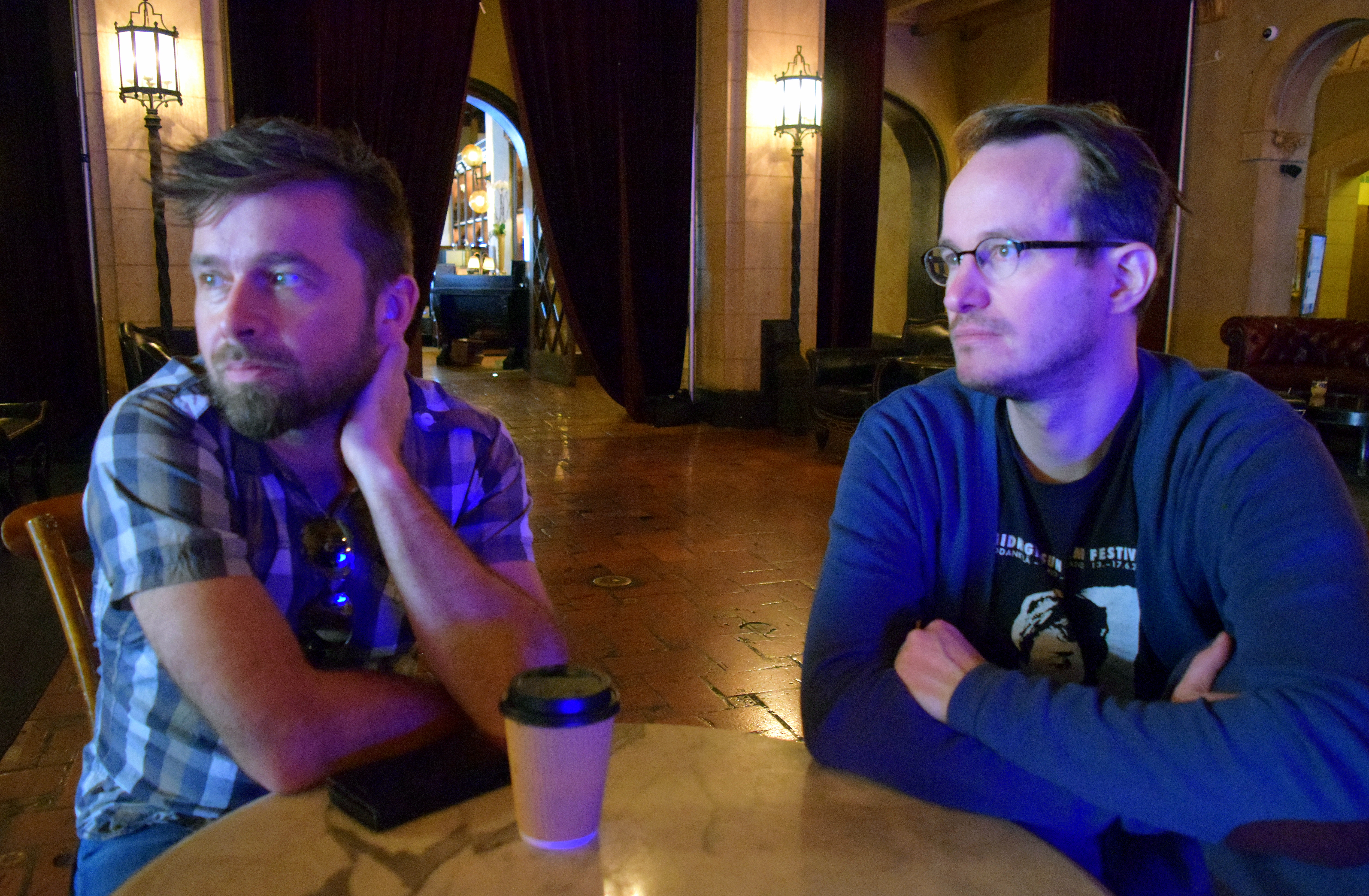
Cinematographer J.P. Passi and Director Juho Kuosmanen

In the midst of the frantic final day of this year’s AFI Film Festival, we were very excited to sit down with director, Juho Kuosmanen and cinematographer, J.P. Passi to discuss their wonderful new film, The Happiest Day in the Life of Olli Mäki, which was honored with Un Certain Regard at this year’s Cannes Film Festival. Their film is an endearing but critical look at the true story surrounding the highly publicized World Featherweight Title fight between the Finnish born Olli Mäki and the American champion, Davey Moore, which took place in Helsinki in 1962. Kuosmanen creates a unique boxing film, one that is less concerned with the Hollywood cliché of building up to the big fight and more interested in the manipulation of the media and the creation of a false heroes. In our conversation, we discuss Kuosmanen’s approach to telling this well-known story, the input he received from the real life Olli and his wife Raija, the challenges contained in hiding present day Helsinki to allow the film to appear like the early 1960s, and the good and the bad associated with making film in Finland under the shadow of the nation’s most applauded director, Aki Kaurismäki.

GF: I understand that you were born in the same town as Olli Mäki, and so you knew of him, of course, but what aspect of his famed fight inspired you to tell his story?

JK:  I think that came down to a moment after I had done some research about Olli Mäki when I discovered a documentary that was made about him during the period when they were trying to make him into the next world boxing champion. When I saw the documentary, I thought that there was something comical inherent in the contradiction of people wanting Olli to become a hero when Olli himself had the feeling that he had no chance of winning the fight.

GF: After speaking with Olli, do you feel that his belief that he was unable to win the fight was more from his inability as an athlete to beat Davey Moore or the fact that he felt that the promoters and his manager were building the whole event up in a way that wasn’t honest to Olli and the people who were buying tickets?

JK: Olli knew at the time that the whole thing was fake—that the whole world that he is being dragged into is being built out of these images that weren’t real at all. For example, in the scene where Olli sees the photo advertisement of himself where he is taller than model standing next to him as he and Raija are walking down the street, he knows that, in reality, he had to stand on a stool to be taller than the model; he knows he is living in an environment where everything is false.  

GF: Was Olli aware of how good of a boxer Davey Moore was at the time?

JK: Olli did know Moore’s record, but Olli and his manager also knew that Moore had issues with his weight and that he (Moore) was a bit past his prime at the time. So, even though Moore was the better boxer, he had weaknesses, so Olli’s manager did believe that there was some chance that Olli could win or at least go for more rounds so that the fight would make for a better event. Olli himself said that there was no chance of winning, and that is why everyone annoyed him so much as they kept insisting for their personal reasons that he would be the champion.

GF: Being from a boxing town (Philadelphia), I myself boxed when I was young. I have a genuine love for the sport, which is one of the reasons I really wanted to see your film, and I genuinely enjoyed it for how realistically you depicted boxing. One thing did strike me as odd when I watched your film. For many years, I remember there being a three-knockdown rule in place to protect fighters in the event that they hit the canvas three times. In your film, during the second and final round, Olli does get knocked down three times, but the referee allows him to continue fighting. I know that you studied the actual footage of the Moore/Mäki fight; is that what actually happened?

JK: We did exactly reference the footage of the actual fight. At the time of the Moore vs. Mäki fight, the rules of the match could be agreed upon before the fight by both sides, and in this case, both Moore’s and Mäki’s team agreed to allow the fight to continue in the event that either boxer was knocked down three times. But again, this rule has to be agreed upon before the fight occurs as it did here.  

GF: J.P., I wanted to compliment you, as the cinematography of the film is quite remarkable; it seems to fit the era perfectly. You said in the post screening Q&A that the film was shot on 16mm, but did you use a special film stock or an older camera or vintage lenses?

JP: The film stock I used is Kodak 3X Reversal black and white stock. I used a modern camera, but I used very old Zeiss lenses.  
LF: J.P., yesterday, during the Q&A as well, you said you dreaded making a boxing film due to the fact that there are so many other boxing films that this film would be compared to, which is understandable. Can you talk a bit about filming the final fight sequence? That scene has some gloriousness to it, and it is beautifully shot, but it is not like any of the fight scenes in more legendary Hollywood boxing films like Raging Bull. Instead, Mäki’s final fight is shot in a way that magnifies Olli’s thoughts on the insignificance of the event.  

JP: We wanted there to be a clear difference between the way the sparring matches were filmed and the way that the final bout was filmed. We shot the sparring scenes with cameras in the ring with Olli, but when it came to the title fight, we wanted Olli to be alone in the ring with Moore, with the camera outside the ropes to create distance so that we could amplify how Olli was feeling alone during the fight. It was much easier overall to shoot the final fight. The sparring scenes required us to be very close to the fighters, and to do this, we had to study their choreography, so we could get in close for the best shot while trying to avoid accidentally getting hit in the process.  

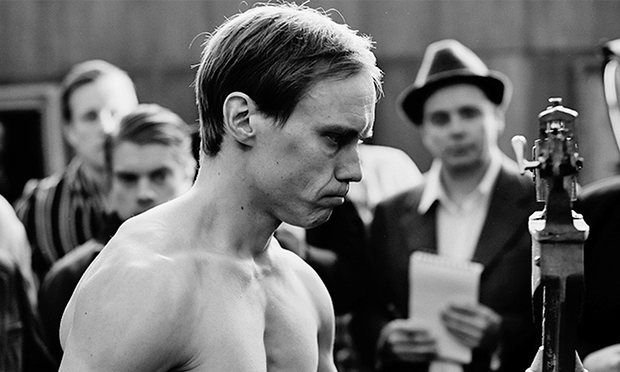
Jarkko Lahti as Olli Mäki

GF: That level of intimacy does come through during the sparring with those closeup shots but also with the sound design, which was excellent in conveying how brutally the punches echoed when a boxer was hit. Did you use live sound for that, or was it all foleyed in post production?

JK: Both actually. We did use the original sound, but we added so many foley layers.  

JP:  Truthfully, the original sounds were not very fierce because the actors were not allowed to hit each other with real force, so we had to compensate for that.  

JK: When we did the foleys, we wanted to have more than the punch itself. We wanted to add textures to the sounds like sweaty skin; in the scene when they are sparring in the rain, we wanted to add wet layers. We worked with this Danish sound mixer, sound designer, and foley artist who were involved with the film even before shooting began, so yes, we had many discussions about the sound design before filming those scenes. They were all extremely talented. We knew that if you didn’t include these textures of leather, skin, and water that, in the end, it would end up sounding artificial.

GF: The film is set during August, but given that a large portion of the film is shot outdoors, and in Finland, you really only have a few months on the calendar in which you can shoot without fear of wintry weather, did that cause issues with filming?

JK: Not really. We started shooting on the last day of August and ended in the last week of October—six weeks in total.

GF:  Were you able to shoot the film chronologically?  

JP:  We did shoot all of the countryside scenes in the film in the first week. We broke the chronology early, but we tried to maintain the chronology as best as possible after that because it really helps the feel of the film when you can shoot in chronological order. That said, even though we were shooting in the countryside at the end of August, when we filmed the scene where Olli swims in the lake, the temperature was 10 degrees Celsius, which is quite cold.  

GF: Have Olli and his wife Raija seen the film yet?

JK: Seven times actually!

GF: They must really love it then, but was there anything onscreen that they objected to?

JK: Both Raija and Olli saw the script beforehand, and the only thing that Raija objected to was that her character was smoking in the film, and she never smoked. We added that into the script because there were many scenes where Raija is just standing there with no dialog, and we thought that if she were smoking that it would make her appear less tense about what was happening, but since the real Raija didn’t like the idea, we removed that characteristic.

LF: Your film is not a period piece, but there is a difference between 1962 Helsinki and present day Helsinki. This isn’t so much an issue when shooting in the countryside, but how did you scout city locations?

JK: It was very difficult at times. We wanted to shoot in many directions, but that was very hard to do sometimes.

JP:  The format was a huge help here. For example, there are a few scenes that we filmed where there are modern cars in the background of the shot, but because of the black and white texture and because we shot from a long distance, we were able to hide them from the audience.  

JK: We also filmed most of the city scenes at night, and post-production helped as well. In one of the shots, there was a large building that we had to wipe out, and we did that in post. In the scene at the airport, which we wanted to shoot 360, we would always have something modern in the background, but there was enough in the foreground that we could work with in order to make it look correct. We could move a camera one way, and if someone could position themselves in front of a modern object in the background it would work; in one case, we even put an extra in front of a new garbage can that we couldn’t simply move. It sounds hard, but it was fun.  

GF: This might be an odd question, but what inspired it was a screening that we attended this past Sunday when we saw a Polish mermaid musical called, The Lure. Before the screening, the director felt that she had to explain that she was happy to finally be able to make a musical in Poland because, for years, no one wanted to because Krzysztof Kieślowski hated musicals. What influence, if any, did Aki Kaurismäki, Finland’s most prominent director in the eyes of most of the world, have either directly or inspirationally?

JK:  Well, first I should show you this photo of Aki, Olli, and Raija. Aki actually arranged the screening and the afterparty for our film. While it was going on, he said lots of nice things, and he was joking when he said to me, “I have been waiting thirty-five years to have a colleague in Finland.” He also said that we shared two of the same locations and exactly the same images that are in his new film. Particularly, he pointed out the scene where Olli is walking alone with his suit on when he is traveling the post-fight party; Aki has the same scene except that his character is walking the other way in the same place.  

afi-juho-aki

Juho shows us a photo of the real Olli and Raija Mäki sitting with legendary director Aki Kaurismäki

JP: I think that he is one of a kind in Finland. Finnish financiers, for example, don’t expect anyone else to do the kind of films that Aki makes.

JK: Outside of Finland, people are always trying to find similarities or differences between our film and Aki’s films; some people feel that the ending to our film is similar to Aki’s work, but if you watch classic films, you will also see similarities between our ending and those of other classic Hollywood films. One other fact of note about the ending is that the older couple who walk past the actors playing Olli and Raija are actually the real Olli and Raija themselves.
 
GF: That is wonderful.  Were the real Olli and Raija on set for a lot of the shooting?

JK:  They were in two other scenes in the film as well. They are in the wedding scene that takes place in the countryside, and they are also in the stadium scene because, that day, they were both being interviewed for the newspapers about our film.

JP:  They used that opportunity to stage a photo shoot with the real Olli in the ring for the newspapers so that they could commemorate the occasion of the fight after fifty-four years.

Interview conducted by Lily and Generoso Fierro on November 17th, 2016 at the Roosevelt Hotel in Hollywood

The Happiest Day in the Life of Olli Mäki Official Trailer

afi-fest-olli-maki-poster


Just What Did Happen at Stan Lee’s Comic Con 2016?

Standard

In Southern California, there are three comicbook conventions that we never miss: Long Beach Comic Con, Long Beach Comic Expo, and Stan Lee’s Comikaze. For the comicbook lovers out there, the Long Beach events cater to you. Their Artist Alleys are always packed with sensational veteran and up and coming comicbook artists, so you will undoubtedly leave the event with some new discoveries and some insight into how those works were developed, since you purchased them directly from a creator. In addition, the Long Beach events have one entire track of event programming known as Creator Lab, which offers advice and education for all aspects of comicbook creation. Long Beach Comic Con and Long Beach Comic Expo preserve and celebrate the spirit and importance of comicbooks in and of themselves.

Meanwhile, Stan Lee’s Comikaze is an event that is more reflective of what the general public think about a modern day comic con. It has some comicbook content with a general focus on the big two (DC and Marvel), but it mostly underscores pop culture pieces of the television and movie variety, and even though the convention definitely spotlights Marvel and DC’s television and film properties as well, Comikaze always has space for things of an odder variety, things a bit more on the fringe. Consequently, Comikaze is the place for the fan of really any media; regardless of what you like, there’s something for you on the exhibition floor or in the panel rooms.

This year, Stan Lee’s Comikaze became Stan Lee’s Los Angeles Comic Con (SLLACC), and the newly branded convention had a perfect mix of pop culture mainstays and oddities of the past and present. We have a considerable age gap between us (Generoso and Lily, your guides to Los Angeles Comic Con 2016), but given the diversity of the programming of the convention, our various interests and thirsts for media were overwhelmingly satisfied throughout the weekend.

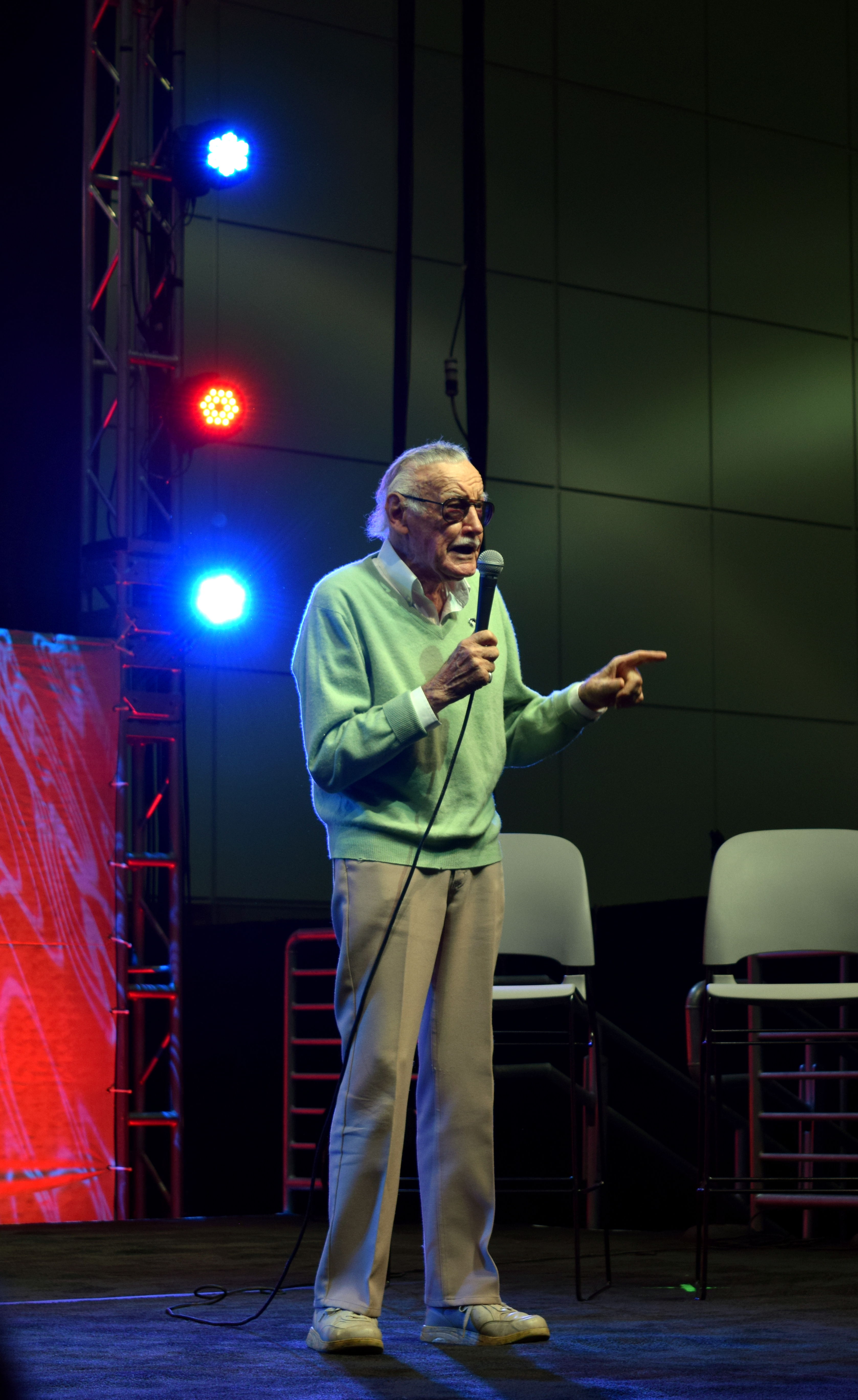
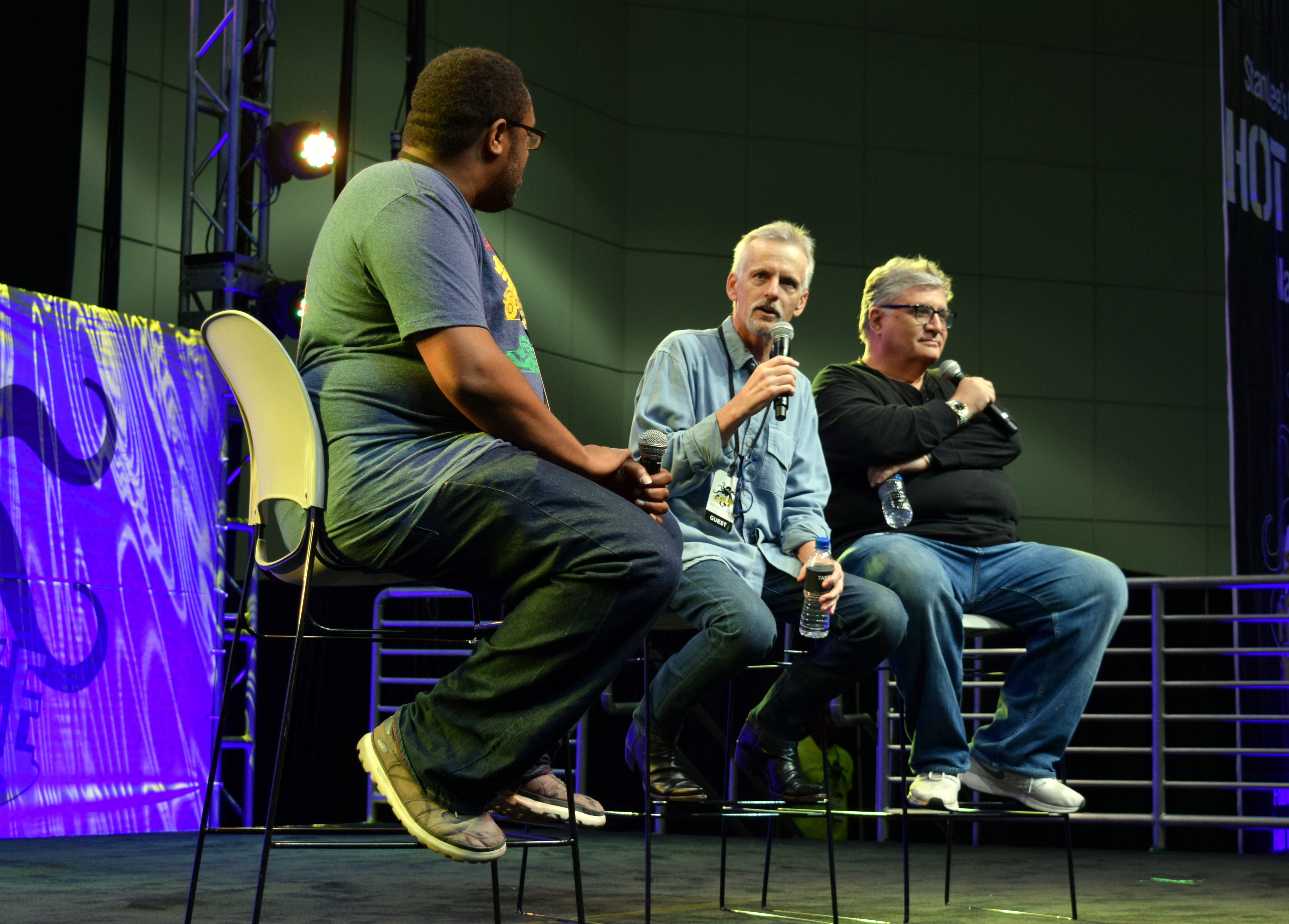
One of the highlights to Stan Lee’s Los Angeles Comic Con was of course the chance to see Stan The Man himself. Always exuberant and more energetic than most of us who are are decades younger, Mr. Lee always opens up the convention with an enthusiastic introduction paired with a spectacle related to his current projects on the Hot Topic Stage, the main stage where the special guests of the con arrive to speak. Last year, the opening included a green crystal figure of a character from his upcoming anime series, The Reflection. This year, Stan packed in far more than we expected into his introduction.

comic-con-stan-lee-a

Stan The Man, looking good!

First, he gave us a preview to the second season of Stan Lee’s Lucky Man, his successful television series about a man who possesses the superpower of luck that currently can only be seen on TVs in the UK but will be arriving to America in the near future. The shining star of the Sky 1 network, Stan Lee’s Lucky Man has a premise that will likely lure in audiences based on curiosity, since, after all, when you were a little kid, was great luck a superpower you wanted? And, of course, the series benefits from its action cinema approach, creating explosions and settings that could be seen on the big screen but prefer not to be.

Immediately after the preview for Stan Lee’s Lucky Man, we received an update on the previous year’s announcement of The Reflection. Though we did not get any animation previews, we did get to see poster art and receive a glimpse into the music for the show via an awkward presentation that started with an earnest introduction of the producers and the artist of the anime series but morphed into a neon festival of J-pop (or more correctly, electropop). The Japanese idol group 9nine collaborated with Trevor Horn, the man responsible for “Video Killed the Radio Star” and Yes’s album Drama, for music on the show, and both were in attendance for the updates on The Reflection. After getting a glimpse into Horn’s hits via clips filled with big hair and synthesizer sounds, 9nine performed one of their hits in neon tutus, metallic sneakers, and cutoff school vests. As the dolled up girls danced on stage, Generoso stood behind Lily embarrassed because Lily is a small Asian woman, and in the face of the 9nine’s cloyingly adorable performance, something seemed too uncomfortable about Lily standing right in front of Generoso.

comic-con-9nine

The Uncomfortably Cute Ladies of 9nine

At this point, we may have neglected to mention that Stan Lee’s Comic Con has been scheduled on Halloween weekend these last two iterations, which did heavily influence our decision-making process when selecting panels throughout the event. So, what better way to celebrate evil than by revisiting the cartoon pair who spent the latter half of the 1990s trying to take over the world, Pinky and the Brain? Taking the Hot Topic Stage were the voice actors who gave life to our fiendish lab mice, Maurice LaMarche and Rob Paulsen, who were there purely for nostalgia and not to promote a new property as they were there to share story after story of productions past. There was one segment of their open conversation that involved the art of voice acting that hit home, which was their claim that more often than not, Hollywood has recently opted for contemporary star power to voice a legendary cartoon over the original voice actors. LaMarche then cited the exception to the recent trend when he, and many of his generation, felt overjoyed when the heard Peter Cullen’s voice as Optimus Prime in Michael Bay’s 2007 live-action Transformers film instead of some new actor. Hopefully, if Pinky and the Brain sees a rebirth anytime soon, we will hear LaMarche and Paulsen reprise their roles, as just a few moments of them voicing those characters brought Generoso back to the era of ska-core shows in friends’ basements and the last season of Seinfeld and Lily back to the era of eating Cinnamon Toast Crunch and Cookie Crisp during Saturday morning and after-school cartoons.

comic-con-pinky-and-the-brain

From Left to Right: Andre Meadows, Rob Paulsen, and Maurice LaMarche discuss taking over the world.

As we needed a bit more in the scare department after Pinky and the Brain, we gleefully gravitated towards horror master Clive Barker and the aptly titled: “Clive Barker: Looking Ahead” panel, which highlighted all of the upcoming efforts of the prolific artist/ painter/ director’s offerings. Though, by written description, this panel would simply seem like an one hour salvo of pitches laid out by a collection of speakers who are working on various Barker projects (there were indeed a staggering amount), the panelists assembled and regaled the audience with personal stories of first experiencing Barker’s work and, in some cases, of meeting and working with Barker that ranged from touching to comical, with most of these experiences happening for our panelists around the age of twelve, which considering the viscera normally associated with Barker, drew more than a fair share of giggles and concern from the attendees.   

So, what is there to expect from all things Clive Barker? A reissue of the 1992 novel, The Thief of Always is due out soon with thirty pages of new artwork. Chapters four and five of the eight volume series, Imaginer are due out in 2017, with each volume containing at least one hundred photos from Barker’s oil painting archives, which at this point contain thousands of works. Back in 2001, Todd McFarlane and Clive Barker teamed up for the Tortured Souls figures that each included a story (with six in total); then, in 2004, the two teamed up for the Infernal Parade figures and stories, and now, the tales from that collaboration have finally been collected on the soon to be released Infernal Parade novella published by Subterranean Press. In Clive Barker film news, Tommy Hudson, who directed the Nightmare on Elm Street documentary, Never Sleep Again, is directing a documentary on Clive Barker, which is tentatively titled, Clive Barker: Where the Monster Lives. Unlike previous horror docs, Hudson is hoping that his piece on Barker is more about the whole creative person as opposed to the usual horror documentary that is just a collection of film clips. At this point, Hudson is hoping to get the film out around the 30th anniversary of the release of Hellraiser in 2017, which would be a perfect way to celebrate the continued impacting terror of Pinhead, the character that introduced much of the world to the mysterious, horrifying, and fascinating mind of Clive Barker.

comic-con-clive-barker

Clive Barker’s collaborators present future plans of the horror master as they also express their own love for the horror master’s work

As mentioned in the introduction, modern day comic cons definitely have a great emphasis on television and film, and while we do enjoy these aspects, no comic con would be the same without some appearance of the giants of comicbook world. Given that Wonder Woman turns 75 this year, various creators who have worked with the character invented by William Moulton Marston and Elizabeth Holloway Marston joined together to talk about the modernity of Wonder Woman and their experience in working with the character for the panel “Wonder Woman 75: A Retrospect of an Icon.” Moderated by Londyn Jackson of the podcast, History of the Batman with Londyn, the panel featured the voice of Wonder Woman on Hanna-Barbera’s Super Friends, Shannon Farnon, the artist of Wonder Woman ‘77, Cat Staggs, the writer of Wonder Woman ‘77, Marc Andreyko, the voice of Wonder Woman on Justice League and Justice League Unlimited, Susan Eisenberg, the granddaughter of William Moulton Marston and Elizabeth Holloway Marston, Christie Marston, and the managing editor of Comic Book Resources, Albert Ching. All of the panelists described the role of Wonder Woman in their life, and one name consistently emerged throughout the discussion: Lynda Carter. Farnon and Eisenberg both voiced Wonder Woman; Staggs draws Wonder Woman; Andreyko writes Wonder Woman; and all agreed that Lynda Carter’s portrayal of Wonder Woman in the 1970s television series marked the pinnacle of who Wonder Woman can be for future generations. The group also touched on their excitement for Patty Jenkins and Gal Gadot’s take on the iconic lady, but overall, the panel was an open celebration of Wonder Woman as a diplomatic, optimistic, and virtuous superhero.

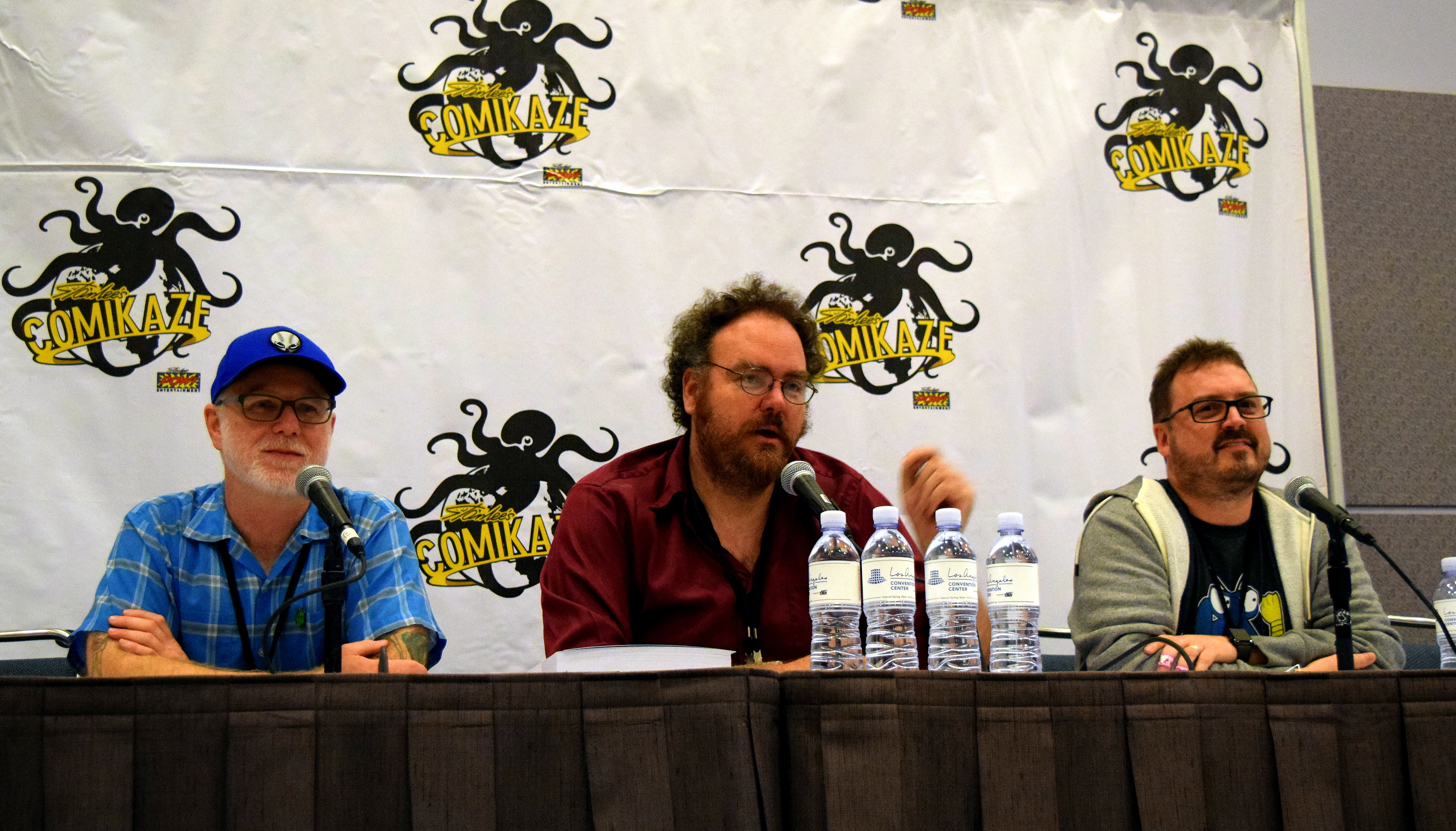
Back on September 17th of this year, we were stunned to hear of the sudden passing of C. Martin Croker, who most of us knew as the voice of Zorak, the mantis archnemesis, co-host, and bandleader on the epically influential Adult Swim animation/live-action talk show, Space Ghost Coast to Coast. In 2012, fellow Adult Swim star Eric Andre, cited the show’s technique of heavily editing celebrity interviews to whatever line of questioning that could be added in post-production as a huge inspiration. We ourselves have long adored the Space Ghost, and soon after seeing the programming lineup for Stan Lee’s Los Angeles Comic Con, we immediately circled the panel honoring C. Martin Croker (Clay as he was known to his friends and colleagues) on our event calendar. On the panel was voice actor Andy Merrill, the voice of Brak, Space Ghost’s childlike bean-loving enemy, and Jon Schnepp and Jay Wade Edwards, who both served as longtime editors on the show. The first half of the panel got deep into the editing process of Space Ghost Coast to Coast, which eventually led into a conversation about their time with Clay and his sizeable contributions to the show beyond his considerable voice acting skills and the mastery of the Zorak voice. Being that this panel was happening just a month or so after Clay’s passing, it gave a chance for many members of the audience during the question and answer portion to express their feelings about the late voice actor’s talents. One moment that stood out for us was a story that Schnepp shared about one of Clay’s barbeques when a child came up to Clay to ask him to do the voice of Zorak to which he (Clay) replied “I am sorry but Zorak isn’t here.” Soon after the child turned around, Clay started doing Zorak’s voice to make the child think that Zorak was lurking in the yard. Clay’s voice, imagination, and sense of humor were essential to the success of many of the early Adult Swim shows, and Schnepp, Merrill, and Edwards emphasized this through their many stories about working on Space Ghost Coast to Coast and Aqua Teen Hunger Force with Clay.

comic-con-c-martin-memorial-panel

From Left to Right: Jay Wade Edwards, Jon Schnepp, and Andy Merrill take questions from Adult Swim lovers and C. Martin Croker fans.

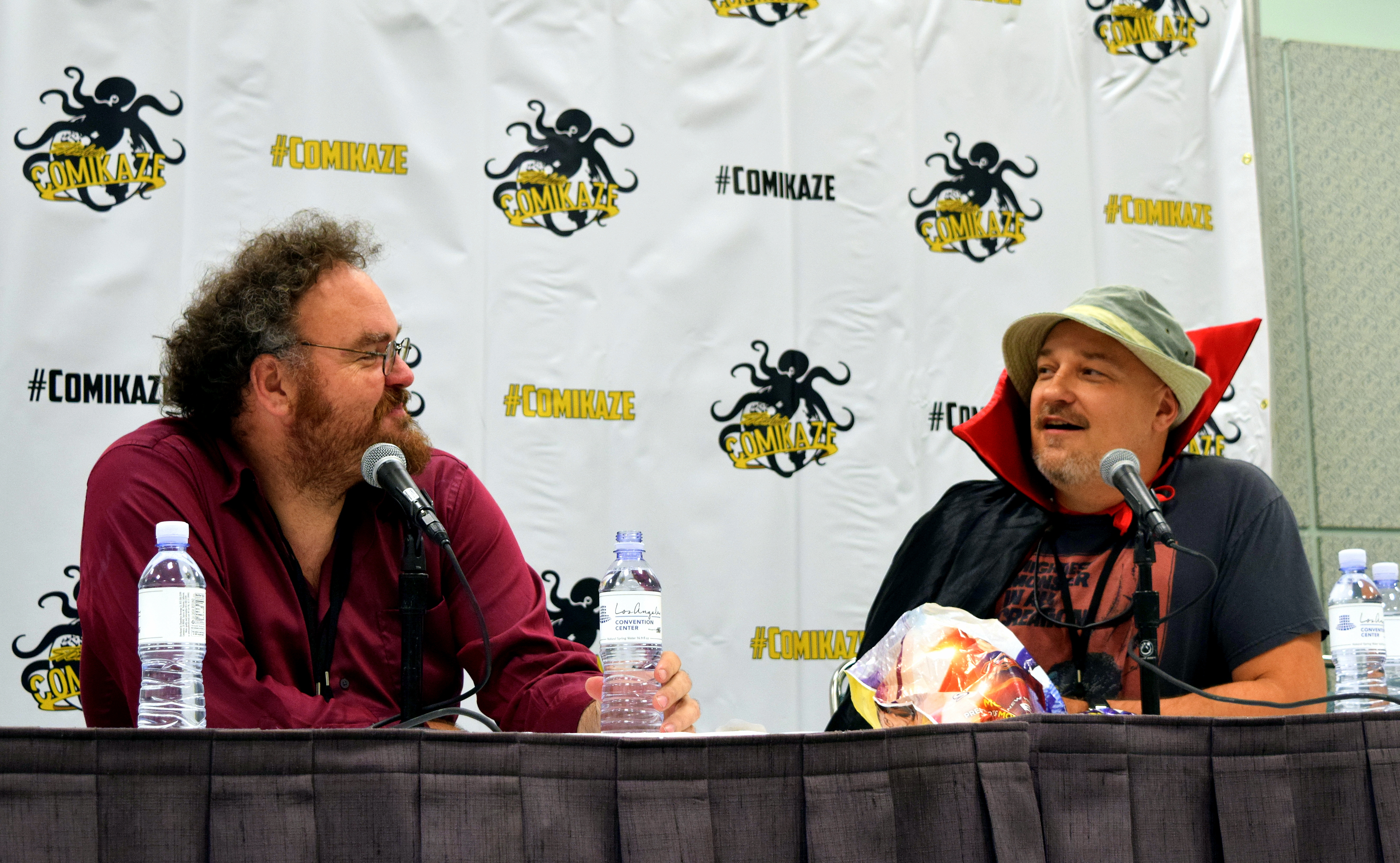
One of the highlights of the 2015 edition of Stan Lee’s Los Angeles Comic Con was the appearance of Tommy Blacha and his band of deviants from Titmouse, who relished the opportunity to jokingly torment audience members through the use of a sketchpad during the panel-long question and answer session. This year, Blacha (clad in vampire cape of course) returned to the convention along with Jon Schnepp to discuss the Adult Swim program they helped to create with Brendon Small, Metalocalypse. Blacha and Schnepp got deep into the multitude of inventive deaths that took place during the show’s four season run with the demise of the “Make a Wish” girl being a high point; even that one got us too on its original airing. During the panel, Blacha’s ability to embody William Murderface, Toki Wartooth, and Dr. Rockso at will was as funny as it was impressive. And, during the latter portion of the panel, when an auction of sorts of Metalocalypse memorabilia began to happen, it was Blacha’s impression of Toki that had the room laughing out loud when Schepp’s claim that they would be selling “rare” copies of the Dethklok hardcover book brought forth the following comment from Blacha/Toki…”Rare, you haves like three copies right theres!”

comic-con-metalocalypse-panel

From Left to Right: Jon Schnepp and the vampire metal star known as Tommy Blacha

On the second and final day of Stan Lee’s Los Angeles Comic Con, we spent the entire morning with the awkwardly lovely, fantastically entertaining, and always hilarious folks of Troma Entertainment. First, the Tromaville inhabitants unearthed Electric Apricot: Quest for Festeroo for a screening. Made in 2006 by Les Claypool of Primus, Electric Apricot follows the mockumentary structure of This is Spinal Tap but (appropriately) centers its jests at the jam band world. Featuring interviews with major jam band figures such as Bob Weir of the Grateful Dead and Warren Haynes of Gov’t Mule, Electric Apricot: Quest for Festeroo makes audience members uncomfortably wonder, “If this music is supposed to be so free form and groovy, then why are they so neurotic?” Les Claypool’s characterization of the jam band drummer named Lapdog spends two days in the studio miking his drum set before the band’s first recording and blaming the bass player during every take that fails. The jam guitarist, Gordo not only idolizes Jerry Garcia’s sound but also emulates the lead singer’s playing style, haircut, and girth. And, the Electric Apricot’s keyboardist, Herschel, the overly delicate musician who performs mantras while serving coffee at a local cafe, speaks to the camera in yoga poses. Also, we cannot forget Aiwass, the bassist who still lives in the treehouse in his family’s backyard. This mockumentary has its own share of laughs, and although the recording sequences go far past their joke being funny, the final scenes at Festeroo provide the audience with more than enough laughs to compensate for a thin middle.

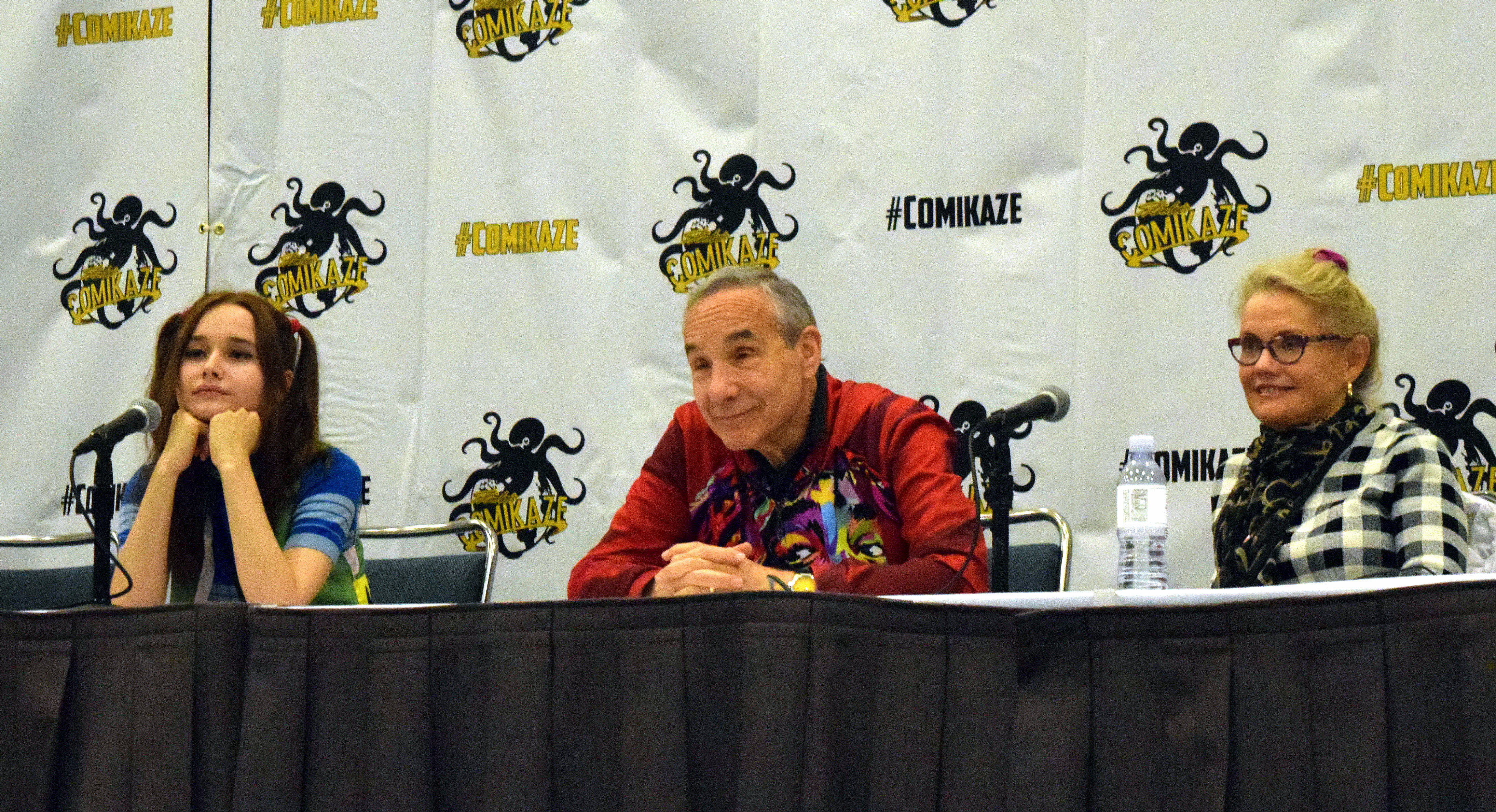
Immediately after the screening of Electric Apricot: Quest for Festeroo, the Troma Entertainment team emerged for a panel discussing the history and upcoming films of the underground, DIY organization that gave us The Toxic Avenger, Sgt. Kabukiman N.Y.P.D., and many other fun, wild, wacky, and outrageous films that we’ve come to expect from anything branded with the Troma name. Of course, the leader of Tromaville, Lloyd Kaufman was in attendance, and he brought many people with him, including Pat Swinney Kaufman, his wife and longtime Troma member, Jason McHugh, the man who plays the band manager of Electric Apricot and the producer of the mockumentary screened before, and Kansas Bowling, the precocious director of B.C. Butcher who we got a chance to speak with separately here in a short, but fun interview that you can read here. Throughout the panel, we heard plenty of funny and insane tales about Troma productions, including examples of how Sgt. Kabukiman struggles to handle his fame and tidbits of Lloyd’s film experience and extensive knowledge, but we heard one thing more than anything else: Troma Entertainment is a family, and Lloyd treats everyone in Tromaville like family. And, this was certainly true because everyone on the panel spoke of Lloyd like a father or a really cool uncle as he sat a few seats by. At the end of the panel, one could only hope to have a family like the Troma one; life would certainly be more entertaining and amazingly sweeter too.

comic-con-troma-panel

From Left to Right: Kansas Bowling, Lloyd Kaufman, and Pat Swinney Kaufman celebrating the past and present work of Troma Entertainment.

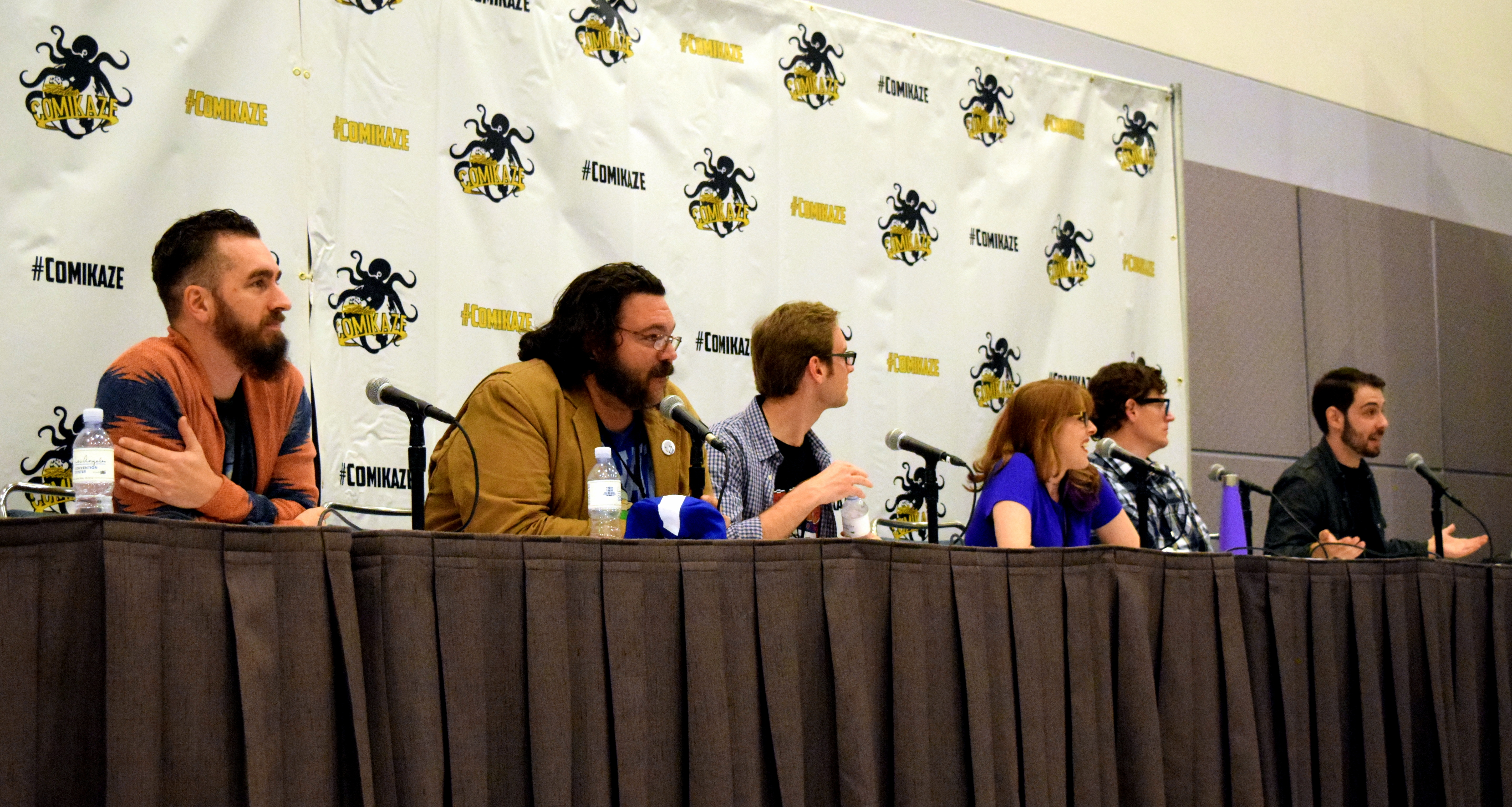
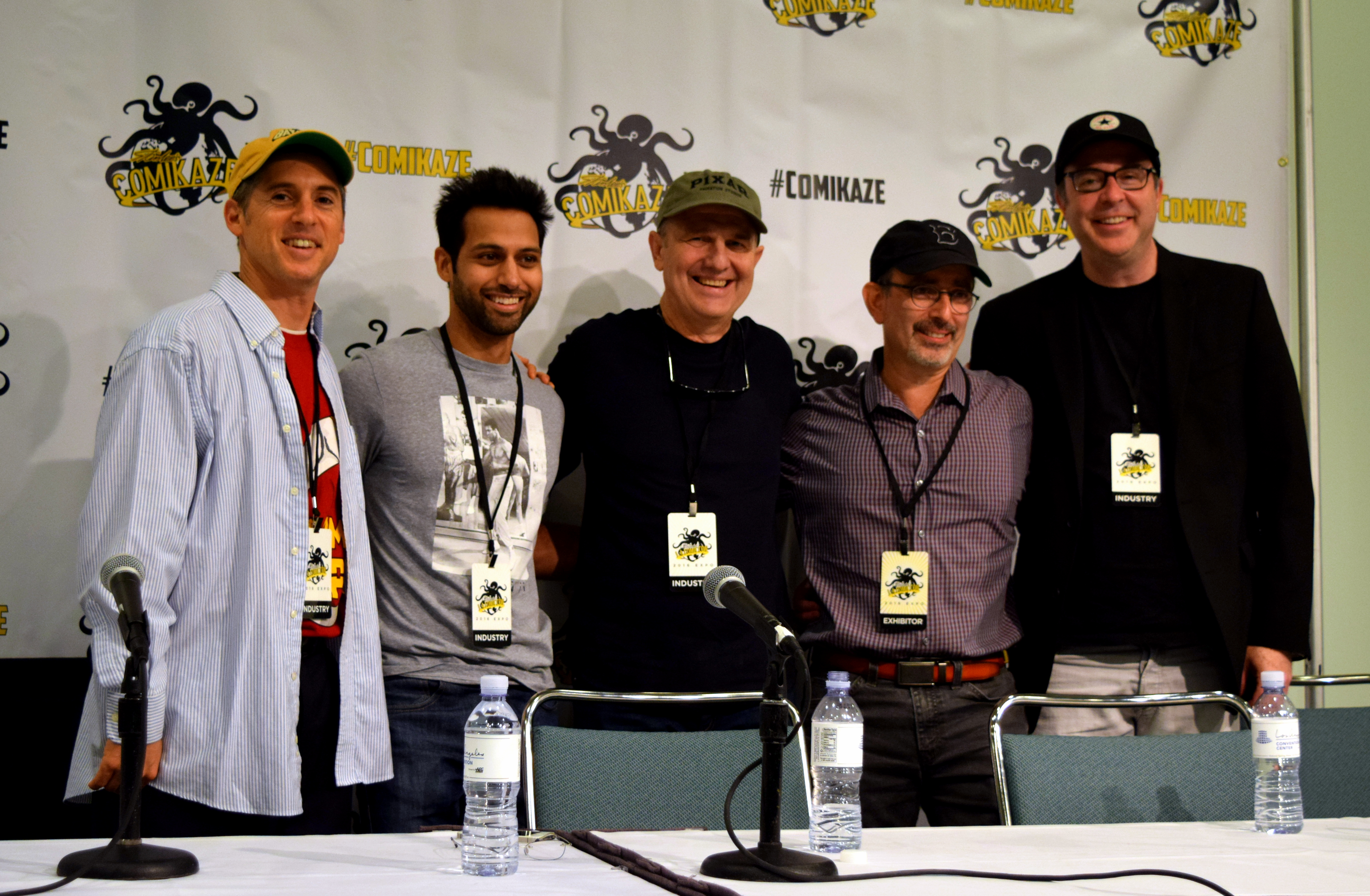
Another highlight from last year’s SLLACC was the “Heroes & (Crisis of) Faith” panel that was expertly moderated by Jordan B. Gorfinkel, the creator of the comic strip, Everything’s Relative. The panel (now in its fourth year at SLLACC) addresses issues of faith, religion, and atheism within entertainment, and this year’s edition had the theme: “Faith and Fallen Heroes: The interplay of faith and our work in the entertainment business.” The well-balanced group of speakers (Ali Mawji, Jim Covell, Jeffrey Alan Schechter and David Sacks), which was comprised of members of varying faiths, was asked a multitude of stimulating, introspective questions, including the need for perfection to be inherent within the individual heroes of each of the speaker’s religious texts. Regardless of where you stand on the subject of faith, the conversations that occur during every version of this panel always open up a massive load of questions that you will discuss long after the convention, which is why it is a panel we will never miss.

comic-con-faith-panel

From Left to Right: Jordan B. Gorfinkel, Ali Mawji, Jim Covell, Jeffrey Alan Schechter, and David Sacks at the end of their panel which reflected on the principles of Christianity, Islam, and Judaism on works of entertainment

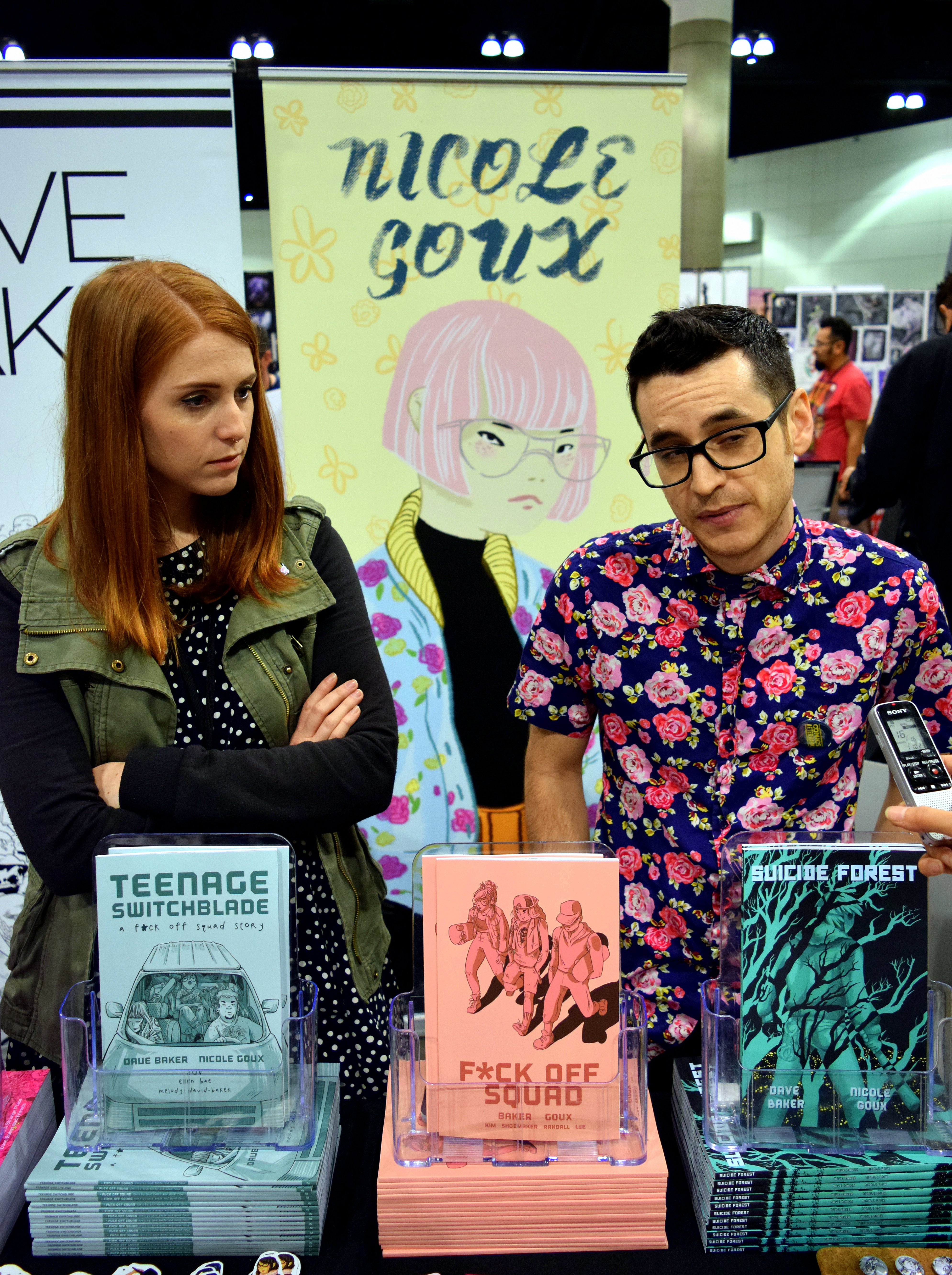
So far, we’ve focused this journey to Stan Lee’s Los Angeles Comic Con on panels and events, but of course, no trip to a con would be acceptable without some comicbook coverage. After walking up and down the aisles of Artist Alley, passing by everything from artwork to handmade buttons and hairpins, we met Dave Baker and Nicole Goux, the creators of Suicide Forest, F*ck Off Squad, and Action Hospital. In their work, Baker and Goux experiment with different drawing techniques, and their willingness to commit to a technique and see it to full fruition can be seen in Suicide Forest, a graphic novel set entirely in one room with one genuine scare and surprise that emerges from their design for character movements from page to page. In a world where comicbooks are becoming an incubator space for film and television, it was refreshing to see Baker’s and Goux’s work and to hear them speak about the meticulousness of their craft and their dedication to pushing comicbooks further as a medium in and of itself.  You can read Lily’s entire review of Suicide Forest here. 

comic-con-dave-baker-and-nicole-goux

Nicole Goux and Dave Baker speak about their collaborative process of writing and drawing comics.

For both of us, Heavy Metal magazine has been a part of our comicbook education for many years. Since 1977, Heavy Metal has featured exceptional contributions from artists around the world, and this year, at Stan Lee’s Los Angeles Comic Con, the magazine made issue #583, the Fear Issue, available just in time for Halloween. At last year’s con, The Invisibles creator Grant Morrison spoke about his approach to the magazine for 2016, the year of his inauguration as editor-in-chief, and this year, at the convention, we were able to see all of the fruit of his labor at the Heavy Metal booth that was covered with the beautiful covers of the magazine. With Morrison at the helm, Heavy Metal looks and is better than ever.

This year, Stan Lee’s Los Angeles Comic Con offered a vast buffet of offerings from television, film, and comicbooks; and if you are a fan of any or all of these media forms, the con was a place for you because you could learn more about the works you love from the people who made them while also getting to discover some new talent, all at a convention that balances humor, joy, reflection, optimism, and seriousness exceptionally well.

So, until next year…

comic-con-cosplay-c

Written by Lily and Generoso Fierro

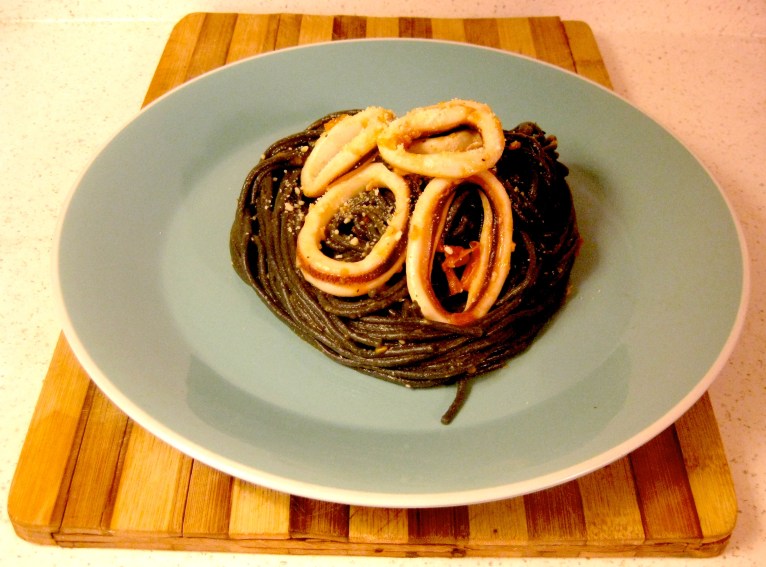
Generoso’s Dark and Tasty Pasta al Nero di Seppia con Calamari e Pomodoro

Standard

Ciao My Friends!

Lily and I have just returned back from Italy…Rome, Naples, and Capri to be exact and in our overloaded bags we brought back beautiful squid ink spaghetti from Naples!  So, with that in tow, I decided to make my take on Pasta al Nero di Seppia con Calamari e Pomodoro (Squid Ink Pasta With Squid and Tomatoes).  This is an awesome dish that should only take about 40 minutes from prep to plate.

Here’s what you will need: 1 pound of squid ink spaghetti, 1/2 pounds of raw squid. 4 roma tomatoes, 6 big bulbs of garlic, 1/2 cup of white wine, extra virgin olive oil, two sprigs of thyme, 1 teaspoon of red pepper flakes, 1/2 cup of grated romano cheese, salt and pepper.

Let us know how yours turns out and enjoy!!!

XOXO
Generoso and Lily

Music: Antonio Vivaldi’s Concerto In B, Op 10, No. 5


Failure, Success, and Life in Turkey: Özge Samanci’s Dare to Disappoint

Standard

When Marjane Satrapi’s Persepolis reached worldwide audiences, the book legitimized the graphic novel form as a medium for nonfiction, personal perspectives on historical events. With Persepolis, Satrapi materialized a subject we would expect more in literature than in cartooning, opening the floodgates for other autobiographical stories to emerge in graphic novels and to be taken with seriousness and read by audiences inside and outside of the comicbook world. But, despite this climate ripe for more “serious” graphic novels, few other autobiographical stories have received such broad appeal and even fewer have given glimpses into historical topics and cultural traditions bypassed by western media and schools.

Thankfully, within the last year, multiple graphic novels have risen to carry on the flame of history based stories told through a relatable narrator. Sonny Liew’s outstanding 2016 novel, The Art of Charlie Chan Hock Chye, employs a fictional memoir to recount an unbiased view of the modern history of Singapore, and Özge Samanci’s 2015 release, Dare to Disappoint, gives us insight into the cultural and political of landscape of Turkey during civil war, martial law, and afterward.  

When you open Dare to Disappoint, you may have the temptation to draw parallels between Samanci’s work and the seminal Persepolis, but let me prevent you from doing so. Do both document the effects of cultural and political turmoil on a person? Yes. Can both books be classified as a Bildungsroman for women? Yes. Do both look at the Islamic fundamentalism? Yes. Are both autobiographical? Yes.

The two books have a substantial amount of content in common, but Dare to Disappoint has four factors that distinguish it from Persepolis: its tone, its visual style, its setting, and its narrator’s journey of maturation. Consequently, silence any initial instincts to dismiss Dare to Disappoint as a Persepolis wannabe because if you do not, you will miss out on an intimate view into Turkey in the 1980s and an encouraging tale for adolescents to think for oneself.

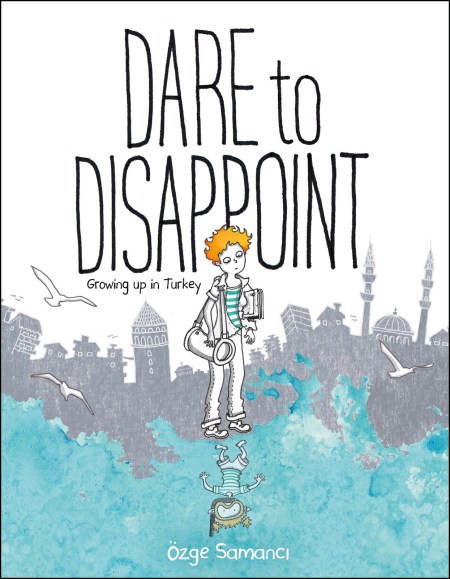
Cover for the light-hearted and relevant Dare to Disappoint

In Dare to Disappoint, Samanci captures the familial and societal pressures for professional success in a culturally repressed world and how all of those forces can influence and shape growth from childhood to adulthood. In under 200 pages, we see Samanci transform herself based on her desire to please various people in her life. Her teacher, Atatürk, the first president of Turkey, her father, and her sister all impact Samanci’s decisions throughout childhood and adolescence; the satisfaction of others takes first priority during these formative years. Even though Samanci has a wildness in her spirit that stems from her mother’s side, she mostly represses her desires to see the world and sea like her idol Jacques Cousteau and to work in the arts. As a result, by the time Samanci prepares to attend the same prestigious college as her sister, she has little self-confidence and possesses almost no understanding for what she really wants in life.

After continuing to follow the standards of others into adulthood, Samanci finds herself with a math degree she has taken too long to complete and a failed attempt to get a drama degree. Doing what will garner oohs and ahhs from neighbors and extended family has led her to failure in multiple ways, and ultimately, no one is happy, especially Samanci herself. Fortunately, failure tends to awaken a person, and by the end of Dare to Disappoint, Samanci finally realizes that thinking for herself has more value than her current course of conforming to the expectations of others; even though making her own decisions may lead to failure and disappointment, the disappointment in herself weighs heavier than the disappointment of others, especially since they will most likely be disappointed regardless, which she sees through everyone’s disappointment in Pelin, Samanci’s sister who graduates with a praised degree in engineering from the best school in Turkey but does not succeed in the field and works instead in a bank.  

As Samanci progresses, we see the changes happening to the Turkish political and cultural climate woven into the story of growth. Samanci’s observations on the severity of Turkish government on the daily lives of the nation’s citizens grow in depth and acuteness as she develops, and through these comments, we receive a perspective into Turkish history delivered without an overburdening omniscient narrator or a cold, sterile textbook presentation. This personal approach makes the understanding of Turkish history richer and more enjoyable. Occasionally, Samanci’s visual and tonal playfulness borders on the edge of too light, making the illustration of some moments in Turkish history feel far too jovial to be considered as an example of irony (one glaring case is the silliness of the drawings of the killings of the civil war between the liberal left and conservative right and the resulting military coup), but overall, the style effectively conveys the self-effacing nature of Samanci’s reflection on her own life.

With its vivid and lively visual style that mixes cartooning and artwork synthesized from images of real objects, Dare to Disappoint will appeal the most to teenagers, but it also has value for adults in its perspective on Turkish history. If you look at Dare to Disappoint and expect to find Persepolis, you will not get what you hope for, but that is not necessarily a bad thing. Samunci’s Dare to Disappoint centers itself more on the road to failure via the desires of others and the realization of this truth, making Samanci’s path to adulthood far different from that of the strong-willed and impassioned Satrapi. Both novels inspire; both inform; both offer complex views into cultural and political change. They just take different paths to get to their final messages of enlightenment.

Created by Özge Samanci, Dare to Disappoint is available via Margaret Ferguson Books.

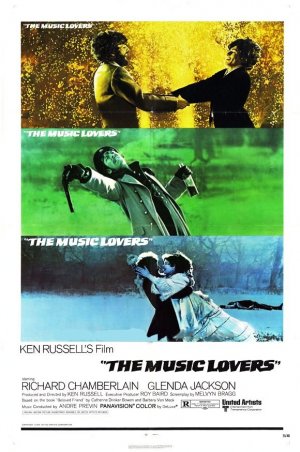
Ken Russell’s Woefully Misunderstood 1970 film, The Music Lovers

Standard
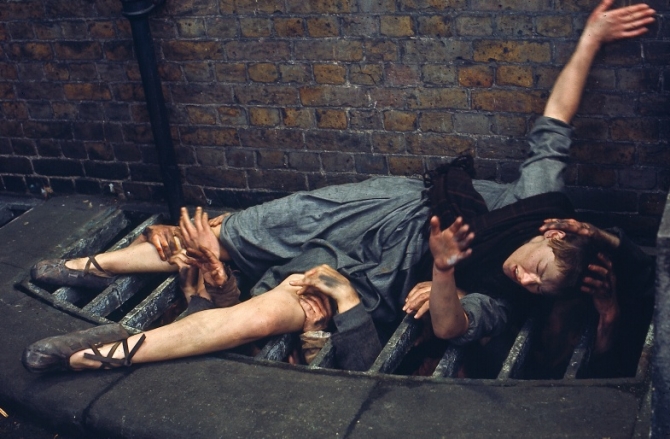
Music Lovers Still

The Real Tragedy Within The Music Lovers

Common sense would dictate that if it were the intention of Roy Baird, the producer of The Music Lovers, to make a concise reconstruction of the life of legendary Russian composer, Peter Ilyich Tchaikovsky, he should’ve considered someone other than Ken Russell to direct the film. Being that Baird had produced Russell’s previous film, 1969’s Women In Love, a dazzling adaptation of the D.H. Lawrence novel, as well as Lindsay Anderson’s groundbreaking surrealistic film about youth rebellion, If…, I would think that he knew exactly what he was getting into, as should’ve anyone else who had seen Russell’s previous work, and therefore all should have expected that the film was going to be the flamboyant director selecting what he needed from the composer’s life to emphasize his central thesis, rather than the construction of a long biopic with painstaking (read: tedious) detail to Tchaikovsky’s life story.  So I ask, why were critics surprised and disappointed in 1970 with The Music Lovers?

Then a young critic for The Chicago Sun Times, Roger Ebert upon seeing the film during its original release wrote, “Tchaikovsky may not have been dealt with in the fairest possible manner,” adding that, “The Music Lovers is totally irresponsible, then, as a film about, or inspired by, or parallel to, or bearing a vague resemblance to, Tchaikovsky, his life and times.” I, for one, have always taken the line “based on a true story” very seriously, and if you have read my review of the 1976 horror film that was “based on a true story,” The Town That Dread Sundown, you would know that I came down rather hard on their use of the facts associated with the very real murders that occurred in Texarana, Arkansas in the 1940s, but with The Music Lovers, I feel that the facts were augmented for a greater purpose than just simply sensationalism. I truly feel that there is one necessary fact of the film that Russell wants to make abundantly clear: Tchaikovsky was indeed a homosexual who would’ve done anything, selfish or not, to disguise that fact during a time when his sexual preference would have cost him the one thing that he truly loved, his music.

The Music Lovers screened with Freud, John Huston’s superb, but equally unorthodox, biopic on the father of psychoanalysis, at The Egyptian Theater on May 7th as part of a double feature tribute to the late London-born cinematographer, Douglas Slocombe, who passed away at the age of 103 on February 22 of this year. The Music Lovers was Slocombe’s only effort with Russell, and the visuals, as they would be in many of the pair’s individually subsequent films, are truly stunning as are the performances of Richard Chamberlain as Tchaikovsky and Glenda Jackson as Antonina Milyukova, the mentally ill woman who suffered from nymphomania and who the composer married to cover up his true sexuality, and through his disdain of her, Tchaikovsky helped to end her life in an insane asylum. Here, Russell augments the timeline as to when her institutionalization occurs as compared to his demise to add drama to the story. Also, the character of  Count Anton Chiluvsky (Christopher Gable) never actually existed but serves as a composite of Tchaikovsky’s lovers over the years. The one pure fabrication in the film is that Tchaikovsky’s benefactor, Madame Nadedja von Meck (Izabella Telezynska), took away her beloved composer’s money upon hearing that he was a homosexual. So, now that we are armed with the knowledge of the fact changing (and unflattering) choices that Russell made in telling Tchaikovsky’s life story, does it reduce the impact of the film’s central message and make it a less successful film? For me, it now comes down to whether or not Russell put his style over substance.

Russell has always possessed this uncanny ability of presenting the most human affecting moments while creating a narrative that is frenetic to distraction at times. I don’t feel that The Music Lovers consistently achieves these moments in the same confident way that Russell would in his next film, The Devils. For example, I think of the quiet pastoral moments when Father Urbain Grandier marries his true love to exemplify his pure faith in the face of the aristocracy of the Catholic Church in between the grotesque exorcisms of the nunnery that give balance to the film, and this level of peace in chaos does not exist in The Music Lovers. The many scenes in The Music Lovers that are actually related to musical performance (yes, Russell does mention his compositions a few times more than critics would lead you to believe) are whimsical but ultimately purposeful in seeing into the composer’s thought process, which given the masquerade Peter was forced to live, are a tad ghastly (the 1812 Overture montage does have a lot of decapitation through cannon fires, which strikes me as about right). Though not given the same level of space in the madness as Oliver Reed’s performance as Father Urbain Grandier in The Devils,  the moments of genuine pain, illness and sadness that are experienced by Antonina Milyukova through Glenda Jackson’s bravura performance are not lost in the frenzy of music, ribbons, and cholera nightmares of The Music Lovers. Remember that the title of this film is The Music Lovers and not Tchaikovsky (although the title was actually changed from Tchaikovsky as to not complete with a Russian film released a year earlier with that title). I feel that Russell’s final intentions to show that the real victim of the composer’s decision to conceal his sexuality was less the composer himself but more of the woman he duped into marrying him. Russell concludes that Tchaikovsky’s agonizing death from cholera was a self-inflicted wound brought from drinking diseased water, but Antonina Milyukova’s death in the snake pit was due to believing in a man whom she genuinely admired who put his selfish needs above her no matter what the cost.

 Original 1970 Trailer For The Music Lovers


So, was Russell’s decision “unfair” as Ebert suggested? The facts do bear out that the real Peter Ilyich Tchaikovsky destroyed another person so that he could continue doing what he loved, and although the film takes a heavy hand at times to drive this truth home, it is ultimately successful by painting a portrait of a man who was not only a great composer but also a man who was beneath contempt in his personal life. The Music Lovers is also the story of another very flawed person, Antonina Milyukova, who was led to believe that the person whom she admired for his music was as majestic as a human being as he was a creator. This isn’t a mindless musical biopic to get you humming tunes when leaving the theater, like Milos Forman’s Academy Award winning 1984 slop, AmadeusThe Music Lovers is a flawed but beautifully realized tragedy that is less about music and more about the evils of maintaining a false identity in the face of fame. 


Generoso and Lily’s Bovine Ska and Rocksteady: Prince Buster Memorial Part One-Buster’s Ska Productions 9-13-16

Standard
prince-buster-wild-bells-a

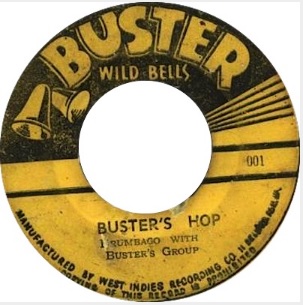
Buster’s Group fierce R&B on Wild Bells

Hello Bovine Ska and Rocksteady Listeners,

Just a few weeks ago, we memorialized saxophonist Deadly Headley Bennett, who would eventually play a role in Prince Buster’s history, and we’ll get to that in the middle of this program, but sadly, we have done many memorial shows these last few years, but this one has really impacted us in a very personal way.  Generoso has written a comprehensive and personal obituary on Buster which was published on Ink19 this week.

One of our favorite Jamaican artists of all time, Prince Buster, passed away on the morning of September 8th in Miami after complications from heart issues. Prince Buster had a stroke in 2009, but we had not heard anything about his health since then, so the announcement was extremely unexpected, and we’ve spent a lot of time mourning the loss of a music pioneer and a giant persona whose bravado brought even more to the iconic tracks that shaped Jamaican music history

Born as Cecil Bustamante Campbell, Prince Buster grew up with his grandmother in rural Jamaica. Here, he gained an interest in music after singing in churches.  When he was a teenager, he moved to Kingston and lived on Orange Street, and he naturally found an affinity for the sound system culture. Specifically, he spent a lot of time with Tom Wong, who is best known as Tom the Great Sebastian, who ran a sound system out of his shop and in the dancehalls of Kingston.

As the sound system culture further developed, each operator and their set of selectors would compete against each other. The big two were Coxsone Dodd’s Downbeat and Duke Reid’s the Trojan, and Prince Buster and his crew aligned himself with Coxsone, who was more of an underdog than Duke Reid. Buster provided Coxone’s dances with security, and eventually, he would become a selector for the Downbeat sound. With this experience, Buster was armed with plenty of knowledge on how to run a sound system, so he went to Tom Wong and asked him for a loan in order to create his own sound, which would become the renowned and popular Voice of the People.

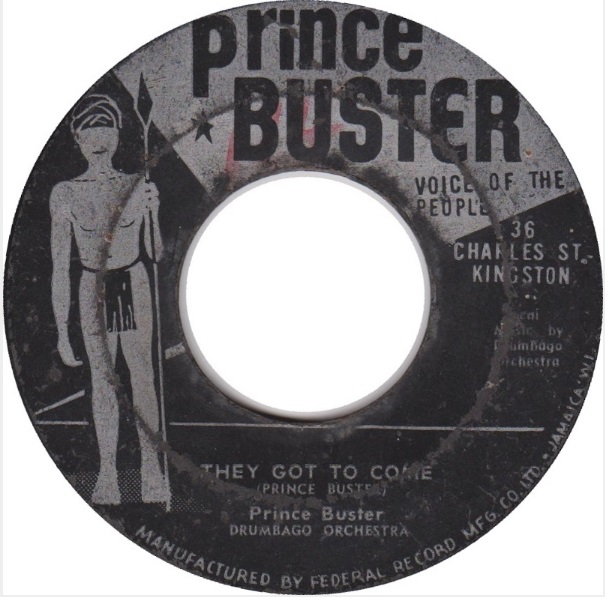
With his sound system up and running, Buster was ready to begin recording his own singles. Before he would ever appear in front of the microphone, Buster produced tracks to be played at his sound system; you will hear a selection of these tracks in this first set in the spotlight. To start this show, we heard from Buster himself. Though he had already established himself as a producer, in 1961, for his own Wildbells label, Buster recorded his very first track as a vocalist, “Little Honey,” which will start off the first of a two week tribute to the mighty Prince Buster, the Voice of the People.

Due to Mixcloud’s policy (you can only play four songs per artist every show), we have primarily structured this show on Prince Buster’s magnificent productions during the Jamaican rhythm and blues and ska eras.  You will hear some of the greatest hits of that time from Derrick Morgan, Eric Monty Morris, Basil Gabbidon and more! Included in this show are segments of Generoso’s 2002 interview with Prince Buster that was conducted a week before Buster was to play a show that Generoso helped produce in Boston that featured Buster, Derrick Morgan, Eric Morris, and Millicent Patsy Todd with the excellent reggae group, The Pressure Cooker backing up the artists.

The interview segments describe in detail, the controversial recording of the Folkes Brothers, “Oh Carolina,” the Black Head Chinaman record war between Buster and Derrick Morgan, and Buster’s duet with the late great singer, Slim Smith.

Here is Part One of our two part Prince Buster Memorial from September 13, 2016:


Generoso and Lily’s Bovine Ska and Rocksteady: Byron Lee’s Dragon’s Breath Label 9-6-16

Standard
dragons-breath-a

Keith Lyn on Lee’s Dragon’s Breath


Howdy Bovine Ska and Rocksteady Listeners,

Firstly, thank you to everyone how was kind enough to let us know how much they appreciated our Deadly Headly Bennett Memorial show.  Generoso was fortunate enough to have met Deadly back in 1999, when Headley and trombonist, Vin Gordon were performing with Justin Hinds.  Generoso and Headley got a chance to speak that night as Generoso was introducing the show at the Ocean Mist in Rhode Island.  All three men were very kind and exceptional musicians.  Thank you and respect to Vin, who is still with us and much respect to Justin and Headley for their kindness and great contribution to Jamaican music.

The September 6th, 2016 Generoso and Lily’s Bovine Ska and Rocksteady began with the to sets of rare rocksteady, starting with Stranger and Patsy with a lovely cut they did for Tip Top in 1967, Don’t Want To Be Hurt.  The second set began with The Wrigglers and their song, You Cannot Know, which they recorded for Giant in 1968 and that set ended with the King Of Rocksteady, Alton Ellis and My Time Is The Right Time.  Our weekly mento set featured another cut from our favorite mento, Count Lasher on Stanley Motta’s MRS label, Perfect Love.  We ended the first hour with a set of ska to get you ready for the sounds of the Dragon’s Breath label,    A standout during that ska set was from Joe White, a solo ska from him produced by Prince Buster for the Voice Of The People label in 1964, Nite Club!  That set ended with another Buster production, this time it’s the Maytals and their hit, Domino!  We then went right into our spotlight of the Dragon’s Breath label…

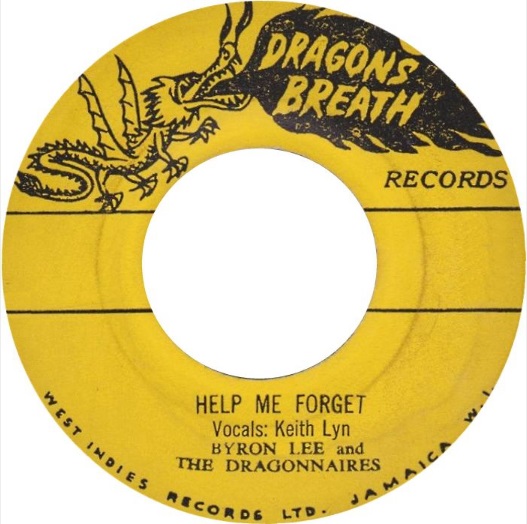
By 1956, Byron Lee and the Dragonaires had established themselves as a professional working band that toured the hotel and nightclub circuit. Before these touring years, the Dragonaires performed mento, but in order to play professionally, like so many other bands, they performed versions of American soul and R&B hits. Within three years, the group decided to take a shot at recording, and in 1959, they visited Edward Seaga at WIRL’s studios to record their first single, “Dumplins.” This single was released on the band’s label, Dragon’s Breath, appropriately named in the tradition of the group’s name and, this is the label of our spotlight tonight, which will exclusively contains Jamaican Rhythm and Blues and Ska. We kicked our label spotlight off with three tracks from the Dragonaires that were produced by Byron Lee himself, starting with “Dumplins,” the group’s recording debut.

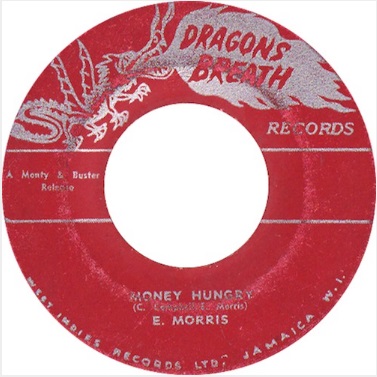
Dragon’s Breath was pretty short lived, with releases stopping in 1964. Interestingly, there was a bit of a gap in the label; no recordings were released in 1962. We do not know of the reason, but one could be that the label changed hands because by 1963, Prince Buster was the producer for the label and  from that moment on out, we heard those Buster productions as he took the helm of the music released by Dragon’s Breath, including two from Eric Monty Morris which began the second set of the spotlight.

XO Generoso and Lily

This is the September 6, 2016 Bovine Ska and Rocksteady and our spotlight on the Dragon’s Breath label:

Generoso and Lily’s Bovine Ska and Rocksteady: Felix “Deadly” Headley Bennett Memorial Show 8-30-16

Standard
deadly-headley-a

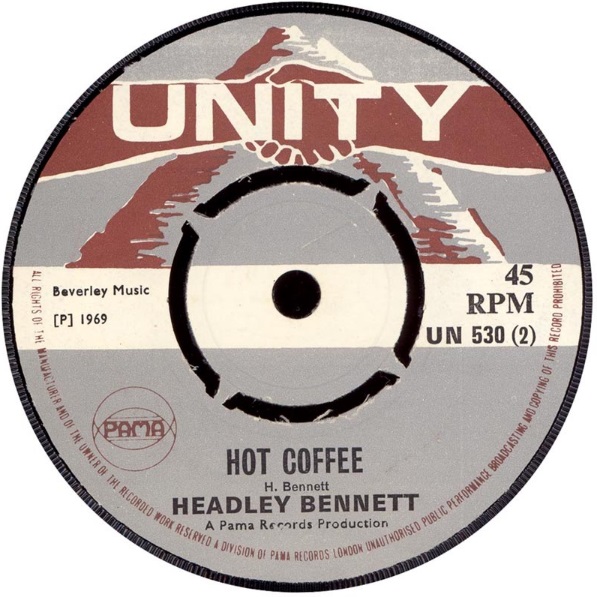
“Deadly” Headley Bennett UK Unity 

Hello Bovine Ska and Rocksteady Listeners,

It is with great sadness that we must report the passing of legendary saxophonist, Deadly Headley Bennett.

Deadly Headley passed away at his home on August 21st at the age of 85. He had been suffering from back and prostate issues since 2013, and two Sundays ago, he passed away suddenly after being up and about earlier in the day. We will pay tribute to Deadly Headley’s impressively prolific career for the full two hours of this week’s show.  Headley received the Order of Distinction in 2005 for all of his contributions to the progress of Jamaican music, and in this program, you’re going to hear some of the biggest tracks in Jamaican music because Deadly Headley was there for those history changing moments.

Born as Felix Bennett in Kingston, Deadly Headley started his music education at an exceptionally young age, enrolling in the Alpha Boys Catholic school at the age of five. With the education and support of the school’s music program, Deadly Headley emerged from the school ten years later, at the mere age of 15, as an accomplished saxophone player. 

As the fifties arrived, Bennett performed primarily in jazz, and as the sixties arrived, he had established himself as an excellent performer and session musician. Bennett’s recording career had a sudden and surprise beginning. Bennett performed and hung out with Rico, and when Rico was invited to play Coxsone’s sound system, Deadly Headley was part of the horn section. During this performance, Coxsone’s friend spotted him, and suggested that Bennett should be playing for Coxsone’s recordings.

Coxsone invited Bennett to Federal Studios, and Deadly Headley first recorded “Independence Blues” for him, with Lester Sterling also on the recording, which created a battle for solos between Lester and Deadly Headley. “Independence Blues” was cut for Coxsone’s D. Darling label and features the voice and guitar of Basil Gabbidon, and it is the track that would start Bennett’s many decade career in the recording industry. Consequently,  it is the track that will started tonight’s memorial on Deadly Headley Bennett.

In addition to recording in the studio in 1962, Deadly Headley also performed as a member of The Shieks in their performance to welcome Princess Margaret when she visited Jamaica to mark the nation’s independence. It is unclear as to what tracks Deadly Headley would play on for Coxsone in 1962, but his role was certain on recordings for a young producer named Leslie Kong and his Beverley’s label. It is well documented that Headley was a featured player for Leslie Kong, who insisted that Headley play a solo for the more prominent singles to come out on the label during its beginning  We then heard tracks on Beverley’s from not only a young Jimmy Cliff, Derrick Morgan and Eric Morris but also the very first recording of Bob Marley prior to his time with the Wailers.  Four tracks were cut at Beverley’s with Marley from that session with Headley in 1963, including “One Cup of Coffee,” “Do You Still Love Me,” “Terror”, and the track we will played on our tribute, “Judge Not”

In the early 1960s, Deadly Headley would play for a multitude of producers in the ska era and  Bennett would continue to record for Studio One during this time. Included in the tracks recorded for Coxsone Dodd is Wailer Peter Tosh’s “Maga Dog,” which features a wonderful solo from Headley Bennett. That was the track we played next on the show.

In 1966, rocksteady would become the preferred beat of the time, and Deadly Headley would play on some of the era’s finest tracks. Of course, during the rocksteady, the band that was most in demand bore the name of the man who invented the rhythm, Lyn Taitt. We then heard two instrumental tracks that feature Taitt’s guitar and Headley’s beautiful sax sound.

“Satta Massagana” was recorded at 7 am at Coxsone’s studio through Carlton Manning, who arranged for his brother Donald Manning and his group The Abyssinians to record in Coxsone’s studio without his approval or knowledge. “Satta Massagana” was the first recording of the session.   In the short session, three tracks were quickly recorded, and shortly thereafter, “Satta Massagana” became a hit rhythm that would get versions many many times

In 1969, Deadly Headley went to Canada and returned in 1977 and when Headley returned to Jamaica in ‘77, he was in as much demand as ever and performs on some of the most legendary albums of the era.  We went through album after album of his recordings from 1977 to 1979 and selected our favorite performances from Headley from those full length records.

Only one full length album bears Headley’s name in the title as the featured artist…35 Years From Alpha was produced in 1982 by the king of On-U Sound, Adrian Sherwood and featured Headley on alto sax, Bim Sherman on vocals, and fittingly his former horn section partner Rico on trombone. To end this two hour tribute to Headley, we played two selections from that amazing album.

Here is the August 30th, 2016 edition of Generoso and Lily’s Bovine Ska and Rocksteady and our two hour tribute to the late, great Felix “Deadly” Headley Bennett:

Standard
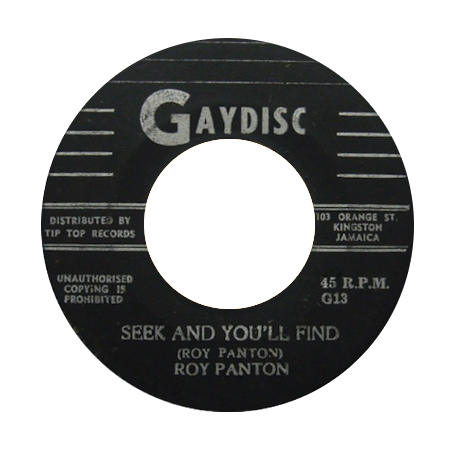
gaydisc-label-b

Roy Panton and Millie Small on Gaydisc

We started off the September 27th, 2016 Bovine Ska and Rocksteady with two sets of dazzling reggae beginning with a version to version produced by one of our favorites. Keith Hudson.   After a fun set of mento, we went into a long ska set beginning with our continued tribute to the late Prince Buster with the cut, Cincinnati Kid from 1965.  The ska set ended with a super rare cut that was also produced by Prince Buster, but performed by Lloyd Barnes in 1964 entitled, Time  Is Hard.  We then went into our spotlight of Lindon Pottinger’s Gaydisc Label.

Before Lindon Pottinger ventured into the music industry, he was an accomplished accountant and businessman. With his wife, Sonia, who would become one of the most distinguished women in the Jamaican music business, Lindon opened up a recording studio in the Pottinger home. This studio served as the center of recording for the SEP and Golden Arrow, and the label of our spotlight tonight: Gaydisc. The label started out in 1962 and was prolific until 1967, so this spotlight will contain ska, ballads, and rocksteady productions from Mr. Pottinger. We’ll start off with Al T. Joe’s “I’m On My Own”

In 1964, Lindon sold the recording equipment in his and Sonia’s home studio to Duke Reid, and in 1965, Lindon and Sonia parted ways.Despite these major changes, Lindon would continue to produce for Gaydisc. And, he would continue to manage his record pressing plant as well.

The Cables…Though the Cables formed in 1962 with Keble Drummond, Vincent Stoddard, and Elbert Stewart, they did not enter the recording studio until 1966. The first producer they visited was Lindon Pottinger, and their first single was “You Lied,” which was backed by Bobby Aitken and his band. You’ll heard The Cables’s debut single, which was released on Gaydisc.