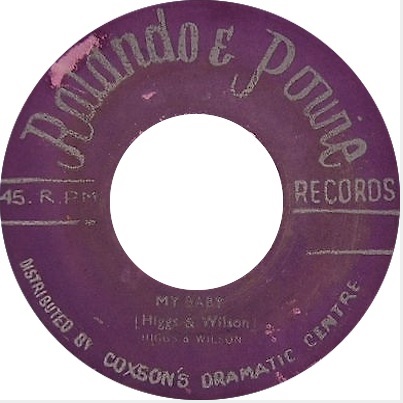
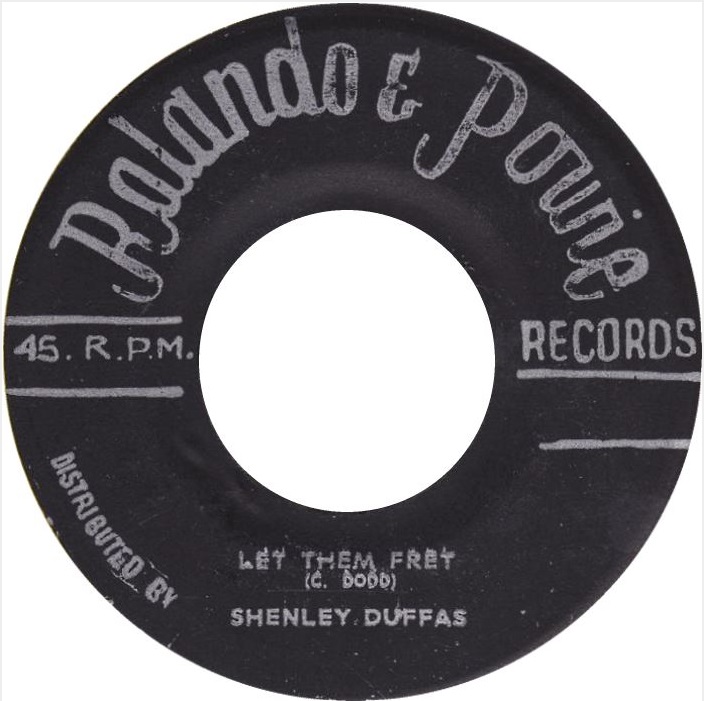
After two weeks of theme shows, we came back this week with our time-tested recipe for The Bovine Ska that included a spotlight of an early Coxsone imprint, Rolando And Powie which started midway through the show.
We dedicated this show to vocalist Jimmy Riley of The Sensations and The Uniques who recently announced on his official page on Facebook that he was in poor health. We send him and thoughts and prayers for a full recovery. To honor Jimmy Riley we started our show with his wonderful rocksteady from 1968 on Coxsone You Should Have Known and then followed with a version from The Gladiators, Tribulation. The second set of rocksteady began with a rarely heard Melodians cut on Treasure Isle, a beautiful harmony on Somewhere from 1967. After a nifty mento set which featured The Wrigglers 1960 tune, Little Boy which was released in 1960 Kalypso LP The Wrigglers Sing Calypso At The Arawak we threw out a scorching ska set that began with one that we have never played on the Bovine Ska, Love Is All I Had by The Federal Singers on Federal Records. Right after the ska set, we went right into our spotlight on the Rolando And Powie Label.
As a young man, Coxone Dodd moved to Florida to work as a crop picker, and during this time, he immersed himself in American Rhythm & Blues, which he had known via Tom the Great Sebastian’s soundsystem, but being in America, he was able to hear the latest hits and see live performances, giving him a new insight into the music. Consequently, when he moved back to Jamaica, Coxone Dodd opened up his Downbeat soundsystem, playing records he would regularly bring back from trips to America. As rock ‘n roll overshadowed rhythm and blues America, Coxsone decided to to record Jamaican musicians and to play fewer American records at his soundsystem. Initially, these recordings were only created as Dub plates, but upon realizing that commercial potential of the music played at the Downbeat, Coxsone Dodd began opening his own record label imprints, allowing the one off songs recorded on Dub plates to be enjoyed by anyone with a record player or via DJs on the radio.
During the sessions that produced singles for Coxsone Dodd’s labels, Dodd relied heavily on the talents of Rolando Alphonso, who was well known across the music industry as an excellent saxophonist and as a result was in high demand from multiple producers. Powie, a Chinese Jamaican friend of Roland’s, opened up the Rolando and Powie label, with Powie paying for the recording sessions that Roland performed on. In less than a year, Roland decided to record more for Coxsone, so Dodd bought out the Rolando and Powie label and used it to release his own productions.
We kicked off this spotlight on the Rolando and Powie label with Powie’s Hop, a track referring to Powie and one backed by the Alley Cats, a group that Rolando helped form and would be the key group to initially record for the label before Coxsone took it over.
You can listen to our full Gladdy Anderson retrospective from January 5th, 2016 HERE. Subscribe to our show on Mixcloud; it’s FREE, and you’ll get an email every Tuesday when we post a new show.
Happy December!!! Please help us and spread the word and repost if you liked the show! Repost anywhere you see fit.
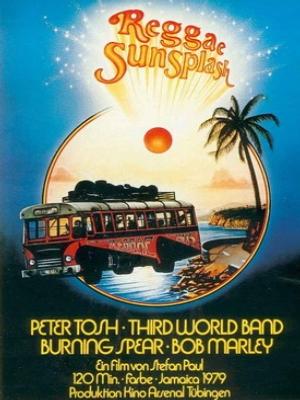
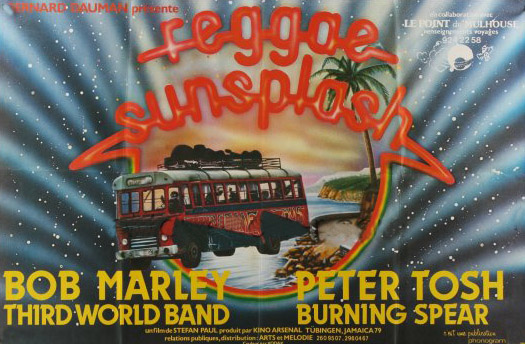
After over nineteen years of producing the Bovine Ska and Rocksteady Radio Show and being a lifelong Jamaican music fan, I am still amazed that I come across the occasional ska or reggae single that I have never heard of before, much less a full documentary. Though the island was producing hundreds of records a month during the latter half of the era that my show covers (1955-1975), Jamaica is still a geographically small island with a population a bit under three million people. Much was done by Jamaican citizens to preserve the music and culture on vinyl and film, but on many occasions, foreign directors and producers arrived on the island to capture the finest artistic moments. Such is the case with German-born director Stefan Paul, who is most noted for directing two well-known Bob Marley concert films, Bob Marley: Live In Concert and Bob Marley: The Legend Live, and 1982’s Bongo Man which featured Jimmy Cliff. All three of these films are fairly standard concert films that offer little insight into the featured artist or the attending audience, which contrast the director’s 1979 film Reggae By Bus aka Reggae Sunsplash,which centered on the notorious reggae music festival that took place in Montego Bay from July 3-7th in Jarrett Park, Montego Bay.
The Reggae Sunsplash Festivals were the invention of Jamaicans Tony Johnson, Don Green, Ronnie Burke, John Wakeling, and Ed Barclay, who staged the concerts in their homeland to further reggae music as a worldwide phenomenon. The original festival ran annually from 1978 to 1998 and was revived one final time in 2006 to feature the most notable Jamaican artists of their time, many of whom, such as Yellowman, Toots and The Maytals, and Big Youth, would subsequently release their individual performances from the festival with great returns given their prominence in the industry and the popularity of the event. After the success of the first Sunsplash, director Paul traveled to Jamaica almost a decade after his first documentary, Open Air 70, to film the second appearance of the festival and to interview artists involved with the festival and Jamaican citizens about the appeal and importance of reggae music, specifically from the Rastafarian perspective, which was rarely seen in reggae documentaries of the time.
Much like the soul music documentaries of the 1970s, Save The Children and Wattstax, concert scenes in Reggae By Bus are inter-spliced with the aforementioned interviews with artists and musicians alike. One poignant interview early on is with Winston Rodney aka Burning Spear, the consummate roots reggae vocalist and O.D. recipient, who just a year earlier had starred in the legendary narrative film, Rockers, directed by another non-Jamaican, Theodoros Bafaloukos. Interviewed playing a game of soccer in St. Ann’s Bay, Burning Spear is quick to tell director Paul that reggae reflects the voice of the Rasta community while the heavy handed, dry over narration reminds us that his music is “not about love or sex but is part of a political, nationalist Rastafarian propaganda machine.” When Paul asks Burning Spear about the togetherness of the Rastafarian community, Spear responds positively by saying, “We live together and play together. We are always together.” Soon we are oceanside with a group of Nyahbinghi drummers who sing along with their drumming and who then speak about the crucial nature of drums in Jamaican music in that the drum originated in Africa and is uplifting to the Jamaican and “puts them in the driving seat” as it brings them back to their pre-slavery roots. The drummers then discuss the “freaky nature” of modern reggae with its reliance of synthesizers and wah wah pedals, which draws away from the pure nature of the music.
Of all the acts that performed at the festival, only four acts are singled out from the 2nd Reggae Sunsplash to make it into the documentary: Bob Marley, Peter Tosh, Third World, and Burning Spear, and each are given substantial performance time on screen. A few standouts are the thrilling funk/reggae performances by Third World on the tracks Talk To Me and Third World Man, Burning Spear’s heartfelt voice on Slavery Days and much of Bob Marley’s impassioned performance, which constitutes the final third of the film, with my highlight being a reggae version of the earlier rocksteady gem from 1968 written by Marley for The Wailers’ own Wail N Soul label, “Hypocrites,”with the I-Three’s, Marley’s backing vocalists, filling in brilliantly for Peter and Bunny. By 1979, Bob Marley was a worldwide phenomenon, and thankfully there is a lot of footage floating around of his performances from the late 1970s, but this one is truly special. A short interview with Marley from his yard on Hope Road was inserted between the songs, and he speaks openly about how the other rhythms from Jamaica are for other classes of people and that reggae is the true music of the Rasta. The narrator furthers Marley’s comments about the true audience of reggae while we observe footage of the residents and shanties of Trenchtown, where Marley was born, and the impoverished area of St. Andrew’s Parish, where, despite its desperate conditions, managed to produce some of the greatest artists ranging from Alton Ellis to Delroy Wilson. Paul correctly explains that from “the mento, ska, and the rudy boy tradition that these musics were only appreciated by the lowest classes of that Jamaica” and stressed the “constant war between police and Rastas,” as they (Rastas) were still viewed in a negative way by polite Jamaican society. Though the narration is sporadically administered, and the style is delivered in an exceedingly dry way that doesn’t fit the overall feel of the film, it provides a mostly accurate cultural context for the music by showing you a 1970s Jamaica that was engulfed in political violence, which led to a mass exodus of businesses resulting in a faltering economy .
Bob Marley’s Interview In Reggae By Bus
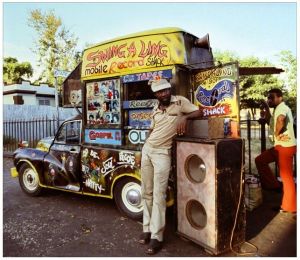
Past the essential performances seen in most concert films and the accompanying interviews, there is always one moment that stands higher for me in most films of this kind that becomes the reason why I would watch it again, and in Reggae By Bus, that is the rare glimpse of foundation deejay Charlie Ace’s Swing-A-Ling Vanin action on the streets of Kingston. Born Vernel Dixon, Charlie Ace would take his reggae-modified Morris van into all areas of Kingston selling the latest releases while live toasting over versions of newly pressed records. In Reggae By Bus we see Ace and a younger DJ taking their turns on the microphone while performing for a crowd that had gathered by the van. It is a fantastic scene that I’m sure director Paul was glad to have captured it, but again I sadly say “rare” in terms of footage as Charlie Ace was gunned down near his van roughly two years after this documentary was released.
Foundation Deejay Charlie Ace
Unlike its soul music counterpart Wattstax, I wished that Reggae By Bus spent more time collecting the stories that would frame the importance of the Reggae Sunsplash festival in terms of its cultural impact. A few attempts are made to put it in context, and they do resonate, but a few more moments with the average citizens of Kingston would’ve provided a clearer frame for the event. Regardless of that critique, there is too much essential footage within Stefan Paul’s film to discount it as just another reggae documentary, and although there has never been an official home video release, fragments of the film do exist online and are well worth your time. It’s an essential watch for the reggae fan and a good introduction for any curious viewer who wants to learn more about reggae.
Happy New Year Bovine Ska and Rocksteady Listeners!
Another tradition fulfilled this week as we on The Bovine Ska have produced our nineteenth New Years show where we play the first recordings of many of your favorite Jamaican artists. In some cases, the artist was part of a vocal group and we noted this when we backtracked each cut. Here are some of the tracks we played during this show.
Alton Ellis – Alton and Eddy – Muriel
Alton teamed up with Eddy Parkins after winning a few contests to record for Coxone Dodd. Muriel is believed to be one of Coxone’s first recordings aimed at commercial, rather than sound system release. Beyond Alton’s debut, this was a special track because it was written by Alton himself while he was worker as a laborer on a construction site.
Eric Monty Morris – My Nights Are Lonely
After seeing some success with his performances at Vere John’s talent shows, Eric Monty Morris teamed up with his neighborhood friend Derrick Morgan to record for Simeon Smith.
Winston Samuels – In Jail
The exact history of Winston Samuels is unclear, but we do know that his first single, released on Coxone’s All Stars label was a single that had opposite but connected titles: Paradise and In Jail
John Holt – I Cried A Tear
Before John Holt ever entered a studio, lots of folks were already talking about him. Beginning at the age of 12, Holt performed at talent shows, including the Vere John’s Opportunity Knocks Talent Show, and in total, during his competition years, won 28 awards. Given this success, it is no surprise that Holt caught the eye of Leslie Kong, who would record and release his first song, I Cried a Tear, for the Beverley’s label in 1962
Bob Marley – Judge Not
After moving to Trenchtown and gaining more experience with the growing Kingston music scene, Bob met Jimmy Cliff and Derrick Morgan, who together in 1962 would introduce the 17 year old Marley to Leslie Kong. Kong would record and release Marley’s first song, Judge Not, with Bob under the pseudonym Bobby Martell, a stage name given to Marley by Jimmy Cliff.
Desmond Dekker – Honor Your Mother and Father
As a young man, Desmond Dekker was a welder in Kingston. Here, he would sing with his co-workers and eventually, given his voice and talent, his co-workers convinced him to pursue a career in the recording industry. Dekker auditioned for Coxone Dodd first without success, and then traveled over to Leslie Kong, who signed him to a record deal. In 1962, Dekker’s first recording, Honor Your Mother and Father, a song Dekker wrote himself and was the one he auditioned with for Kong, was released on the Beverley’s label.
Jimmy Cliff – I’m Sorry
Cut as a dub plate for Sir Cavalier’s sound system, Jimmy Cliff recorded I’m Sorry a little before his formative years at Leslie Kong’s Beverley’s label.
Hopeton Lewis – The Regals – Shammy Back
As a young man, Hopeton Lewis sang at the Burnt Savannah Holiness Church, which nurtured and encouraged his talent and passion for music. Upon entering the music industry, Hopeton Lewis joined the vocal group, The Regals, who first recorded for Coxone Dodd and his Wincox label.
Junior Soul – Miss Kushie
Junior Soul, born Murvin Junior Smith, learned how to sing from the phenomenally talented Eric Monty Morris and Derrick Harriot and gained his stage name when he would perform for people with Jackson Jones. When he first decided to record, he went over to Sonia Pottinger’s Gayfeet label to record Miss Kushie in 1966.
You can listen to our full Gladdy Anderson retrospective from December 29, 2015 HERE. Subscribe to our show on Mixcloud; it’s FREE, and you’ll get an email every Tuesday when we post a new show.
Happy December!!! Please help us and spread the word and repost if you liked the show! Repost anywhere you see fit.
Earlier this year my wife Lily and I got to meet director Larry Cohen between a double feature screening of his seldom seen 1984 film, Special Effects, and his uneven yet wildly entertaining 1990 thriller, Ambulance, at the Egyptian Theater in Hollywood. Sadly, there was only a small crowd for those Thursday night screenings at the cavernous theater on Sunset Blvd., a theater where anything less than a sellout always feels dramatically under attended.
I especially felt a bit badly about the low turnout as I have long admired Cohen’s films, an admiration that began after my friend Ron and I got our hands on a VHS copy of his 1974 newborn baby that rips up everyone classic, It’s Alive. That horror film that set our standard for“batshit crazy” which we would use for every phantasmagorical film that we saw afterwards during our teen years. Besides ranking It’s Alive against other horror films of late 1970s and early 1980s, we also hunted down any movie that Cohen directed, with many being to our delight like Perfect Strangers in 1984 and Q in 1982. You remember Q don’t you? That was the one with giant flying lizard that had a thing for eating New Yorkers, which as young Philadelphians who hated the Mets and their fans was more enjoyable than perhaps originally intended, but of all of the films that Cohen had directed post-It’s Alive, we really loved his 1976 film, God Told Me To, a visually stunning science fiction horror film that centered on Catholic guilt,which we had seen not too long after Scorsese’s Mean Streets, which for ushad set the gold standard of dealing with our own Catholic guilt.
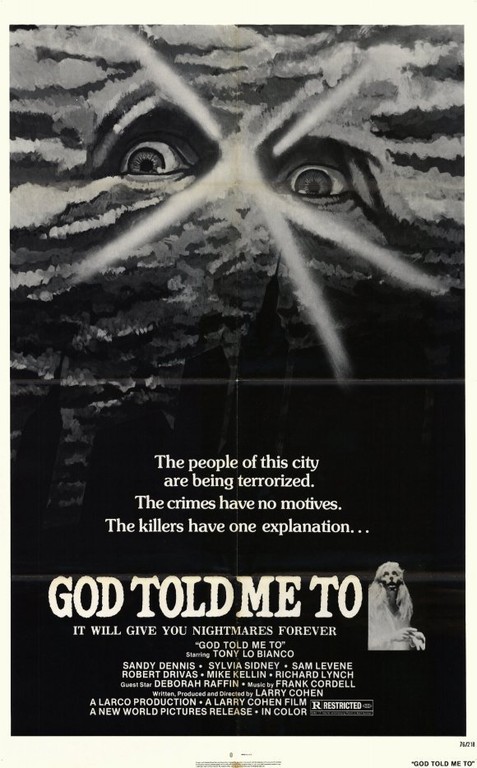
Cohen wrote, produced, and directed God Told Me To, which is centered on Catholic NYC Police Detective Peter Nicholas (Tony Lo Bianco), a well intentioned, sad sack cop who is investigating a series of random murders where the only constant is that the killers’ last utterance, which is the title of this film. If this supposedly God-inspired bloodbath doesn’t play with his Catholic guilt enough, Peter is in a severely dysfunctional open relationship between his wife of many years, Martha (the always sullen, Sandy Dennis), and his younger girlfriend, Casey (Deborah Raffin). The setup is good for a classic Italian Roman Catholic meltdown, which brings up a point that I have wondered about for years and regretfully neglected to ask Cohen that night at the Egyptian: “Why would you cast Italian-American actor Tony Lo Bianco to play essentially an Italian-American archetype but named that character Peter Nicholas?” Nicholas’s self-tormenting persona is quite similar to Mean Streets’ Roman Catholic repressed Charlie (Harvey Keitel), but as Mean Streets was released only a few years earlier, perhaps Cohen changed the character’s nationality to avoid comparison, which is almost unavoidable given the Catholic setup and its NYC location. It doesn’t change how much I appreciate this film in any way, but it does need mentioning if not for the one chance that I can face Cohen in the future without turning into a thirteen year old fan.
Through a bit of clever detective work, Peter finds out that all of the killers have been influenced by a religious cult leader named Bernard Phillips (Richard Lynch), a Christ-like figure from space whose alien race convinces these white, earth men to turn their arms on other white people, who historically had more authority and voting power in New York City. This subplot is commonplace as issues of race and social status have always been a part of most of Larry Cohen’s films since his debut dark comedy Bone in 1972 and his subsequent blaxploitation films Black Caesar and Hell Up In Harlem. Peter fittingly meets Bernard in the hell-like basement of a slum apartment building, and it’s here that Cohen creates his contrasting image of God, a hermaphroditic figure who argues with Peter about a possible revolution of minorities to bring them to the level of ruling class while still preaching hate like a dictator. It is the contrasting nature of the film that becomes God Told Me To’s strongest mechanism as it fills the narrative with a state similar to that which is occurring inside of Peter, the Madonna/whore complex that rules not only his romantic relationships but his familial relationships as we find out that the many of Bernard’s disciples may have been born out of interstellar virgin birth to make the whole guilt thing more than any Catholic can handle. In fact, all of the extraterrestrial/religious/racial themes of God Told Me To only serve to stress the real erupting urban landscape of a desperate 1970s New York that was experiencing the latter stages of white flight-inspired urban decay. Perhaps Louis Malle’s My Dinner With Andre, which would be released a few years later in 1981, defined Larry Cohen’s intentions with God Told Me To in a way that now makes complete sense: that this late 1970s New York was in fact some sort of sociological experiment or worse some sort of penal colony where the guards are actually the prisoners that never saw the kind of revolution that Bernard suggests, leaving the town in an unsatisfying malaise.
Considering the low budget of God Told Me To, Cohen leaves a lot of the money on the screen, as this may be the most visually striking piece of his career. Most impressive are the sessions between Bernard and Peter that take place in the gold-lit bathed boiler room of the apartment building. The schlock is at a minimum here as we not only feel the frenzy so present in Cohen’s work but also a state of awe that needed to be present so that the audience could empathize as to how Bernard could convince his disciples to go out and kill on his behalf. The scenes of the alien abduction of virgin brides also gets the first class sci-fi treatment here as does the score by Frank Cordell, who filled in for legendary composer Bernard Herrmann, who had scored Cohen’s It’s Alive and had agreed to score God Told Me To but passed away shortly after accepting the contract. Cordell’s score, much in the mold of Hermann’s music for It’s Alive, does a fantastic job in driving the overall creepiness of the narrative.
Original Trailer For God Told Me To
As messy as all of this sounds, God Told Me To’s science fiction/horror/sexualstructure keeps the viewer off kilter for the entire ninety minutes while never losing its protagonist Peter Nicholas in the process in the same way that Scorsese’s Mean Streets‘ over the top realism and violence never loses its hero, Charlie. Both men looking to keep the peace but neither realizing that the only peace they need cannot come solely from saving those around them but by saving themselves. So, whether Cohen saw Mean Streets and decided to give it the Cohen touch or if it is a totally original concept, only Larry knows, but either way, it brings home the damage that years of getting smacked in the hand by rulers held by potentially alien women wearing capes can do to a good Catholic boy who is only trying to do the right thing.
Happy Holidays Bovine Ska and Rocksteady Listeners!
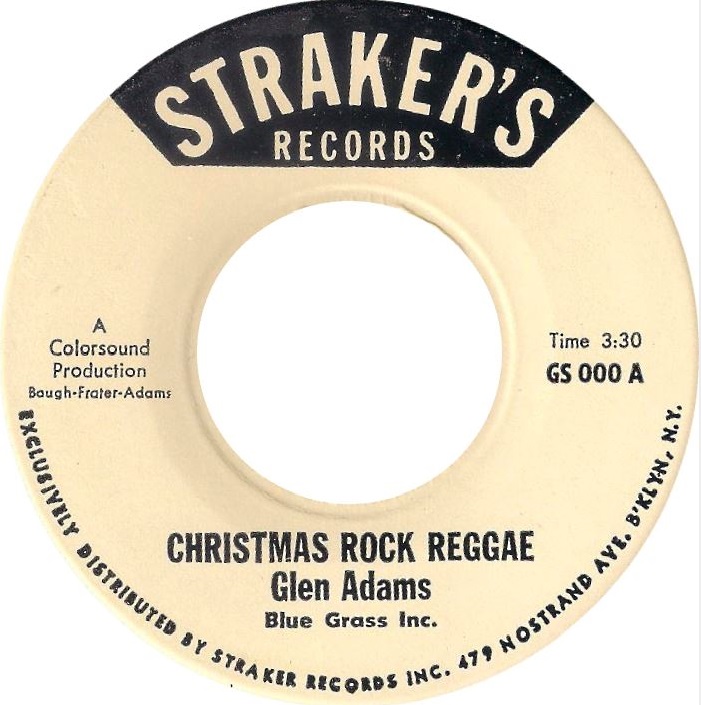
For the nineteenth year in a row, we have produced a show that not only features some of the best and rarest Jamaican Christmas tunes from 1955-1978 like Glen Adams’ 1974 cut for Straker’s Records Christmas Rock Reggae and Jackie Mittoo’s 1978 After Christmas, a dubby haunting organ driven version of Joy To The World, but also we gave you tidbits of Jamaican holiday traditions and foods as well.
Christmas across all cultures has a variety of traditions. Here in America, traditions are often focused on the food we share on the holiday, with staples including turkey, ham, eggnog, and gingerbread cookies. For Americans, you may wonder, what is Christmas like in Jamaica? Christmas time in Jamaica often means the creation of traditional items for the table, and one of those staples is Sorrel drink. Sorrel is a cold, delicious, spicy and festively red-pink tea made from Sorrel, which is also known as roselle. The roselle is a plant in the hibiscus family, and after the flower blooms on the plant, the sepals of the flower become the source for the tea. The roselle grown in Jamaica was transported to Latin America in colonial times, thus creating the agua de Jamaica you see in Mexico and in taquerias in Los Angeles. The Sorrel drink in Jamaica is often spiced with pimento berries, the fruit that makes allspice, and ginger along with a wee bit of rum, making a festive drink that is perfect for celebrating Christmas, especially in the warm weather of Jamaica.
One of the other staples of Christmas is Christmas cake, a black rum cake made with dried fruit that makes American fruit cake look shameful. Christmas cake is sometimes made for weddings as well, but it is most common around Christmas time. With origins from English Christmas Pudding, Jamaican Christmas cake uses rum and red wine to soak dried fruits such as prunes, raisins, cherries, and dates, which gives the dessert an intense brown color.
Another major tradition of Christmas in Jamaica is the visit to the Grand Market on Christmas eve. The Grand Market opens in major towns, with vendors selling toys, sweets, fresh fruit, snacks, games, and clothes. Sound systems and bands also play music throughout the day, and families gather to celebrate the holiday together with some shopping, strolling, eating, and viewing of Christmas decorations on nearby buildings.
Jonkonnu bands were long ago a tradition of the Christmas season. The Jonkonnu bands would parade down the street in large, masquerade costumes. The traditional set of Jonkonnu characters include the horned Cow Head, Policeman, Horse Head, Wild Indian, Devil, Belly-woman, Pitchy-Patchy and sometimes a Bride and House Head who carried an image of a great house on his head. Today, these theatrical bands are not as common, but a few still perform around the holiday.
After Christmas Day, Boxing Day is celebrated, which is a day to further spend with family and to spread cheer. Boxing Day is often spent with extended family and is the time to thank people who provide a service to you throughout the year such as the postal or newspaper delivery or local businesses that you regularly frequent.
You can listen to our full Gladdy Anderson retrospective from December 20, 2015 HERE. Subscribe to our show on Mixcloud; it’s FREE, and you’ll get an email every Tuesday when we post a new show.
Happy December!!! Please help us and spread the word and repost if you liked the show! Repost anywhere you see fit.
It is quite cold here in Southern California and as I had a cold as well I thought to make this warm comforting soup for you, Zuppa con Lenticchie e Pomodori (Italian Lentil and Tomato Soup) . This is an easy to make and hearty soup that only needs a few ingredients and just a bit of cooking time (about one hour). Here is what you’ll need: One pound of lentils, one an of crushed tomatoes, one container of chicken broth, 3 spring onions, 6 large carrots, one bulb of garlic, salt, pepper, and olive oil. Give the short video a watch and let me know how yours turned out. Happy New Year!!
We started off this week’s show with a a version to version of The Ethiopians’ classic, Pirate and Gregory Issacs Do You Ever to highlight our first two sets of early reggae. After a stirring mento set, we ended the first hour with a set of blazing ska before going into the Olive Blossom Label spotlight at the start of the second hour.
In the years of ska, King Edwards, Duke Reid, and Coxone Dodd, and Prince Buster dominated the sound systems and the charts. As rocksteady arrived, Prince Buster fell a bit out of the limelight as Coxone, Duke, and Leslie Kong attracted the stars to their labels. During this rocksteady period, Prince Buster opened up his Olive Blossom imprint, which had beautiful tracks and excellent productions, even if the biggest singers were not recording for Buster.
Fundamental to the great sounds of the Olive Blossom label was the contribution of Lynn Taitt and last week’s spotlight artist, Gladstone Anderson. This pair, as they did with Merritone, Gayfeet, and any other label they traveled to during the rocksteady era, arranged the musicians for this new rhythm that they were seminal in creating. Adding to the talents of Taitt and Anderson was Prince Buster’s fearless commitment to placing unique sounds within his recordings, which he did in the ska era and is in the foreground of our favorite track that you’ll hear at the closing of this label spotlight. We started with a killer cut from Dawn Penn with the mid-tempo ska/rocksteady, “Are You There.”
At this point, you may be wondering, what are all of Buster’s labels? There are plenty, with each dedicated to a specific period in Jamaican music or a specific period of Buster’s life. The imprints included: Prince Buster, Shack, Soulsville Center, Islam, Olive Blossom, Buster Wild Bells, and Voice of the People. And, if you were wondering if Prince Buster continued to be tough through the rocksteady, Lee Scratch Perry, who recorded “Call On Me” for Olive Blossom, has said that one of the benefits of recording for Buster during the Olive Blossom years was that Buster was fair to his artists and that he stood up and protected his artists if other people wanted to give them a hard time.
Subscribe to our show on Mixcloud; it’s FREE, and you’ll get an email every Tuesday when we post a new show. Happy December!!! Please help us and spread the word and repost if you liked the show! Repost anywhere you see fit.
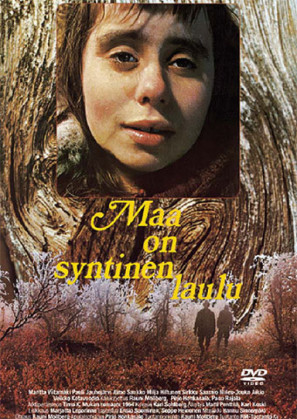
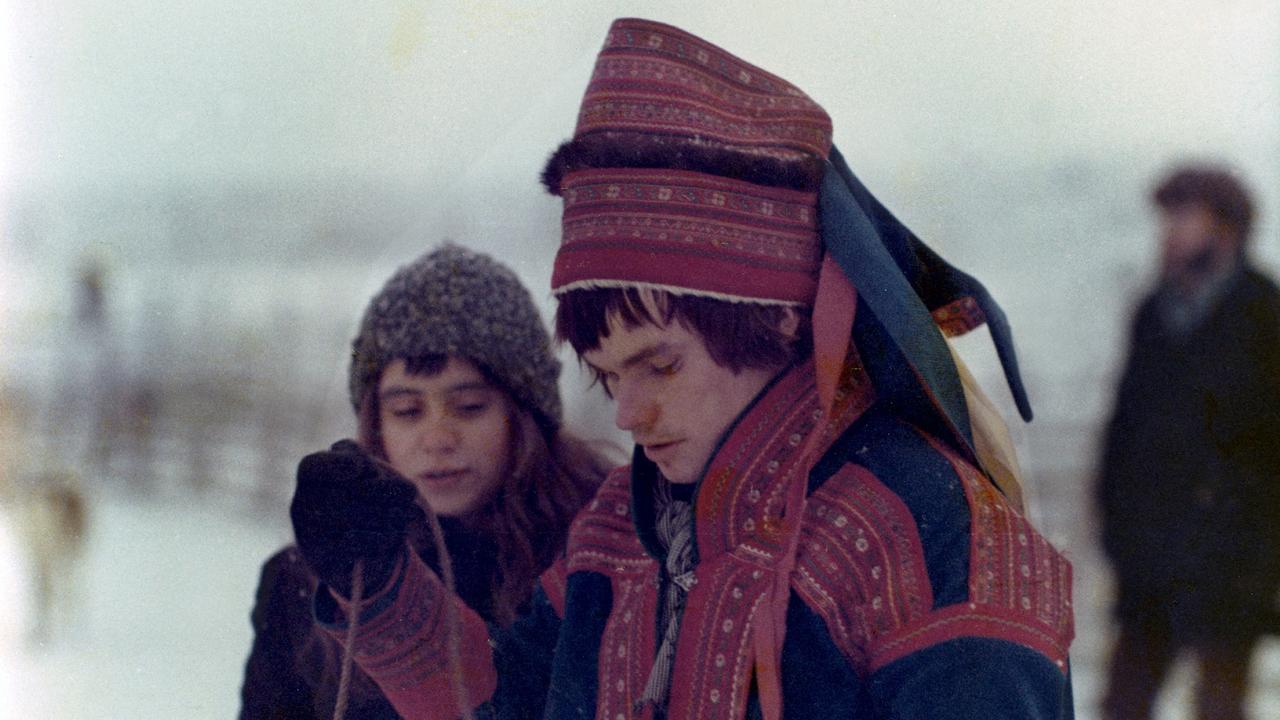
One can only imagine the unsettling rural environment that Timo Mukka, the author of the novel that would become the film, Maa On Syntinen Laulu (The Earth Is A Sinful Song), was raised in during his short life. Born in Sweden, Mukka’s family migrated to the village of Orajärvi in Northern Finland during the last months of the Lapland War, a rarely spoken of conflict that was separate from World War Two which was fought between Finland and Germany from September 1944 to April 1945 in Finland’s northernmost Lapland Province. After fascism had been defeated, Mukka’s village was divided between conservative Lutheran Laestadianist Christians and communists, and it is in that kind of Lapland village with its diametrically opposed social and political attitudes that would become the setting for The Earth Is A Sinful Song.
The film follows a sexually awakening young woman named Martta Viitamäki (Martta Mäkelä) who lives in a one room farmhouse with her grandfather (Aimo Saukko) in a small village in Lapland. Though they share the room, Martta sleeps in the nude, which is a source of duress for her grandfather, who scolds her in a shockingly vulgar fashion. Soon, Martta is up and about, tending to her farming chores. Given the simplicity of these moments,I am immediately reminded of Liv Ullman’s 1995 adaptation of Kristin Lavransdatter, the Norwegian historical novel about the travails of a farmer’s daughter who grows up during the 14th Century, except The Earth Is A Sinful Song is set shortly after The Lapland War, in 1947. There is nary a modern element in this village, and this adds to the timeless naturalism of the film. This very well could be the Scandinavian village from Kristin Lavransdatter, not only due to the homes, wagons, and sleds, which appear to be those of a different century, but also, as we will soon find out, the primordial ways that the inhabitants behave behave towards each other.
This is a poor village village where Martta begins to explore her options for a man, but it is also brutal beyond the butchering of animals that is commonplace on a farm (not for the faint of heart as the beatings of horses, dogs and killings of animals are all real in a way that makes the electric hammer in a slaughterhouse seem like a kiss on the forehead). At the end of one day when the village gathers for a dance by the water, a drifter who is dancing with some of the local women gets murdered, which receives the reaction that one would expect when finding roadkill: “What was he?” “Oh well.” and life goes on. When Martta’s grandfather works all night to only end up delivering a stillborn calf of a woman’s prize cow, there is only a small moment of pause before the cow’s owner offers a fuck to grandpa as a form of payment. In fact, most of the film is delivered in such an unsentimental way, creating a harsh documentary-like feeling, which also borders on nihilism. You await the moment when someone becomes affected by the grotesqueness around them, but rest assured, that will be a long wait. Adding into the daily atrocities towards animals throughout the film is the hideous response to Martta’s growing desires as a woman, which is met with the occasional grope and rape from the boorish men in the town. As horrible as all of this sounds, none of it is sensationalized, which is an excellent show of restraint by first time feature director Rauni Mollberg. Though tough to watch at times, the almost absurd nature of the goings on play into the overwhelmingly realistic and somewhat claustrophobic feeling of this town.
Needless to say that at this point the romantic prospects for Martta seem slim; that is until Oula (Niiles-Jouni Aikio), a boyishly handsome and sweet reindeer herder and salesman, comes to town. Oula also has an eye for Martta, and after a quick scene in which a group of reindeer are corralled and stabbed repeatedly in a scene reminiscent to many a drunken Memorial Day picnic in Philly gone wrong from my youth, they talk of sex. In fact after the Caligulaesque bloodletting of the reindeer sale, the whole town starts in on a bit of a bone sucking-marrow guzzling Roman-era orgy with its ferocious pairing off, which goes so off the rails that the other faction in town evokes the power of everyone’s favorite party killers, the clergy. In fact, this is the hardcore, one-room-God-forbid-you-fall asleep-for-a-second kind of sermon that scares everyone straight for a moment with the threat of hell fire. I write “just for a moment,” as Martta, who is now pregnant with someone’s child, turns her attention to Hannes, a young naive boy in the village who Martta seems intent on schooling in her favorite pastime while she awaits the return of Oula. With all that is happening in Martta’s sexual explorations, you await her grandfather’s reaction, which ends up being fairly passive, despite a few rude comments. It is only when Juhani, Martta’s usually absent father, comes into the picture that you see a day of reckoning looming over Martta and her illegitimate child. Juhani carries a level of self-loathing and violence that goes well beyond any of the rogues we have seen so far in the film. This will get even uglier quickly.
The Earth Is A Sinful Song is one of those rare films that manages to juggle intense drama with a naturally flowing storytelling style that keeps the viewer engaged in a way that you feel that you are watching a perfectly constructed documentary. Much of the success can be attributed to Mollberg’s cinéma vérité approach to the characters created by Mutta that offers a snapshot of the politically bipolar community where the author was raised. The town reveled in its post war sexual freedoms as much as it was repelled by them due to the teachings of their organized faith, creating an antithetical, passively brutal yet hedonistic society.
With heavy hearts we are sad to report that pianist and vocalist Gladstone “Gladdy” Anderson has passed away.
As a studio musician and an arranger, Gladdy worked for many labels and many house bands, making this memorial show probably one of the most difficult to put together, but one that we are proud to present to honor the fantastic work of Gladdy Anderson. Born in Jones Town in 1934, Gladstone “Gladdy” Anderson had musical influences quite early in his life. Though his father was a railway engineer, his uncle was Aubrey Adams, pianist for groups such as Clue J and the Blues Blasters and band leader for the Courtleigh Manor Hotel house band. Adams taught Gladdy how to play piano as a boy. As Gladdy continued to practice as a teenager, Adams took a trip to Panama, and when he returned, he introduced Gladdy to Duke Reid, where Gladdy first focused on playing rhythm parts on piano, occasionally getting a chance to play with his uncle, who performed the primary piano, organ, and keyboard parts. At Duke Reid’s Gladdy would also rise in the ranks, becoming one of the first people hopeful artists would audition for. Given Gladdy’s early history with Duke Reid, wekickoff off this memorial spotlight on Gladdy Anderson with three tracks from the Duke Reid All Stars; tracks where Gladdy would play with his uncle Aubrey Adams.
The sheer number of tracks that Gladdy played on is staggering as was the many different musicians in bands that he recorded with throughout his legendary career.
Duke Reid All Stars
Drumbago, Aubrey Adams, Cluett Johnson (bass), Ernest Ranglin (guitar), Rico trombone, Rolando Alphonso (saxophone), Theo Beckford (piano)
Buster All Stars
Drumbago, Cecil Bustamente Campbell, Dennis “Ska” Campbell, Ernest Ranglin, Gladstone Anderson, Jah Jerry Haynes, Karl Bryan, Lloyd Knibbs, Oswald Brooks, Raymond Harper, Rico Rodriguez, Val Bennett
Skatalites
The Skatalites – Gladdy would be on the piano parts for the Skatalites, replacing Jackie Mittoo because Duke Reid preferred Gladdy
Tommy McCook and the Supersonics
initial lineup: Johnny Moore and Lloyd Knibb, the group also included trombonist Danny Simpson. Herman Marquison sax, pianist Gladstone Anderson, Winston Wright on organ, Clifton ‘Jackie’ Jackson on bass and either George Tucker or Ranny ‘Bop’ Williams on guitar
Lynn Taitt and the Jets Gladdy with Hux Brown (guitar), Bryan Atkinson, Joe Isaacs, Deadly Headly, and Carlton Samuels
Gladdy was uniquely prolific, and given his reputation and constant work beginning in the 50s, he was present at some key points in the evolution of Jamaican music. When in the studio with Lynn Taitt, who Gladdy helped as a translator and band leader because many musicians had difficulty understanding Lynn because of his Trinidadian accent, Gladdy was in the band that would record the first rocksteady track, Hopeton Lewis’ “Take It Easy.” In fact, it is believed that Gladdy may have been the person to name the rocksteady genre, given that he described the recording of “Take It Easy” as “rock steady.”
With the tune, “Hold Them” -Roy Shirley had this melody and brought it over to Gladdy and Joe Gibbs. During the rehearsal, he brought Slim Smith and Ken Boothe to perform backing vocals, but after rehearsing the song, Gladdy suggested that Roy perform the song as a soloist because he better understood the rocksteady rhythm at the time.
A gifted vocalist, the second hour of our tribute began with tunes from The Seraphines, which was the name Stranger Cole and Gladdy came up with when they sang fro Sonia Pottinger and her Gayfeet label. The duo would also record hits under their own names like “Just Like A River” and “Seeing Is Knowing” but due to Mixcloud’s policy that limits the amount of tracks that one program can play from one artist, we limited his vocal spotlight to the Seraphines cuts. We welcome you to find these tracks yourself as they are quite impressive.
During this period that saw Gladdy arise as a vocalist, he of course continued to play on a huge amount of tunes during the rocksteady and reggae eras.
The Crystalites
Barry Biggs, Bongo Herman, Bongo Les, Gladstone Anderson, Jackie Jackson (3), Karl Bryan, Larry McDonald, Lynford Brown, Paul Douglas, Wallace Wilson (2), Winston Wright
Clancy Eccles’ Dynamites, the backing band for Eccles’ productions
Gladdy Anderson (piano) Hux Brown (lead guitar), Jackie Jackson (bass), Winston Grennon (drums), Neville Hinds (organ) and Wallace Wilson (rhythm guitar), while others who recorded with the group included Hugh Malcolm (drums) and Winston Wright (organ)
Harry J All Stars
Winston Wright (organ, keyboard), Val Bennett (saxophone), Aston “Family Man” Barrett (bass), Boris Gardiner (bass), Jackie Jackson (bass), Carlton Barrett (drums)
Mudie’s All Stars
known as Gladdy’s All Stars occasionally for tracks led by Gladdy
Joe Gibbs and the Professionals 1. Sly Dunbar, Bobby Ellis, George Fulwood, Vin Gordon, Tommy McCook, Lloyd Parks, Robbie Shakespeare, Earl Chinna Smith, and Ruddy ThomasR.I.P. Gladdy. Thank you for all that you did to drive this music we love forward.
You can listen to our full Gladdy Anderson retrospective from December 8, 2015 HERE. Subscribe to our show on Mixcloud; it’s FREE, and you’ll get an email every Tuesday when we post a new show.
Happy December!!! Please help us and spread the word and repost if you liked the show! Repost anywhere you see fit.
In 2010, legendary South Korean actress Yoon Jeong-hee came out of a sixteen year retirement to play Yang mi-ja, the protagonist of Lee Chang-dong’s internationally acclaimed film, Poetry. For Yoon’s textured performance as a grandmother who is steadily succumbing to Alzheimer’s while trying to keep her grandson, whom she is raising, out of prison for a rape charge earned her a much deserved Los Angeles Film Critics Association Award for Best Actress. To most of us in the West, Poetry gave us our first exposure to Yoon Jeong-hee, a talented and occasionally controversial actress in the South Korean cinema of the 1960s and 70s, an actress who was often referred to during her heyday as part of the “Troika” (three) along with Moon Hee and Nam Jeong-im as the most popular actresses of their generation and given Yoon’s performances in some of the more notorious titles from that period of South Korean cinema, she was a natural choice for the lead in “Poetry” as her character, Yang mi-ja, must resort to any means necessary to save her grandson, including sexual soliciting at the age of sixty six.
One of more notorious titles that Yoon Jeong-hee starred in during her youth was in Yahaeng (Night Journey) a 1977 film by prolific director, Kim Soo-yong where Yoon plays Miss Lee, an unmarried bank clerk in an immense bank in downtown Seoul. I mention that she is unmarried as that fact is bandied about her office along with the flippant use of the “old maid” tag which has been bestowed upon her and one other female co-worker, a woman that is Miss Lee’s last unwed colleague who is about to tie the knot, an occasion that Miss Lee is not at all that happy about, as that wedding will leave her as the only single woman in her office.
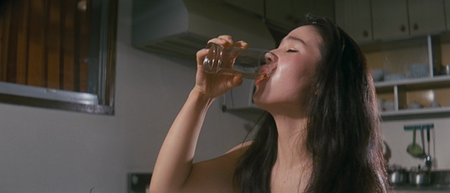
Seated slightly behind Miss Lee at the bank is Mr. Park, Miss Lee’s supervisor, who only occasionally throws a glance at our protagonist though it seems that she is interested in him. After her shift is over, Miss Lee takes a bus and gets off at a military cemetery, heads to the grocery store where she picks up a few things and goes home to her apartment where Miss Lee cooks herself dinner and falls asleep on the couch. While still asleep the door opens and Miss Lee’s supervisor Mr. Park menacingly walks in and carries her off to the bedroom which is shot in a way that doesn’t look too consensual, and he proceeds to mount her for what seems like eight seconds, gratifies himself, and rolls off to sleep which which makes it abundantly clear that Mr. Park is not into sharing an orgasm with Miss Lee. We then learn that the two have been living together but they have kept this fact a secret from their coworkers upon Mr. Park’s request in order to avoid gossip which in conjunction with his poor sexual performance, makes their relationship even more pathetic.
Given the impending marriage of her co-worker, Miss Lee also wants to go legit but Mr. Park describes marriage as “lame” and you understand quickly that this relationship isn’t going anywhere fast. To add insult to injury, Miss Lee has to go stag to the wedding of co-worker so she takes a week’s vacation and decides to visit her hometown to explore her past where you learn that the one true love of her life was killed while serving in the Vietnam War, and that he is buried in the cemetery across the street from her Seoul apartment. Miss Lee soon returns to the city, and she heads to the bars, not necessarily looking for love but more to test the potentially dangerous ramifications of being a single woman engaging a world full of singles, similar to the character of Theresa in Richard Brooks’ equally controversial film released the same year, Looking For Mr. Goodbar.
Night Journey remains as one of the highlights of Kim Soo-yong’s oeuvre, and it is adapted from a work by the acclaimed 20th-century novelist Kim Seung-ok. Though it is based on Kim Seung-ok’s novel, Night Journey also shares a lot with Mr. Goodbar, the aforementioned film of Richard Brooks besides the central plot of a woman who is desperate to see a world beyond her past, using sexuality to compensate for loss which in the case of Miss Lee’s loss of her true love, whereas Theresa it is more an issue of lost time from her youth caused by illness and Catholic repression. Kim soo-yong employs a similarly loose narrative structure and mixes daring cinematography and sound to create a modernist aesthetic that allows you into the mind of the film’s central character. Actress Yoon Jeong-hee brings a beautifully righteous rebellion to Miss Lee in the same way that would do over thirty years later with her character in Poetry. Both characters are trapped by their age and the customs of the society that they live in which assumes that they must be complacent, waiting for men to rescue them so that they can live out their lives.
Given the time period when most South Korean films were shot to give only the male perspective, Night Journey remains as a striking statement for a growing number of women of its era who wanted to free themselves from repression. As righteous as the film is though, there is one scene that possibly does go against the makeup of Miss Lee’s character and that is a scene in which Miss Lee, during one of her solo escapades into the city, is raped and appears to have enjoyed it so much that she goes to the same location the next night seemingly to have the moment happen again. If the rape had occurred with Miss Lee’s outrage, I would’ve assumed that this was added to supply a punishment for her rebellion, serving as a precautionary tale in order for the film to make it past the censors but she clearly seems to enjoy it.
If director Kim’s goal was to make a point that Miss Lee’s desire to willingly be a victim of rape due to the fact that her current sex life is a collection of unsatisfying moments, that would be very bold condemnation of that era’s men but what I actually feel is the purpose of that rape is that Miss Lee’s perception of sexuality has been augmented based on her first sexual experiences being derived from a teacher who molested her as a teen that we see in flashbacks early in the Night Journey. If the latter rationale is the case, then one has to wonder as to what is the overarching statement of sexual freedom and repression that director Kim is making with Night Journey. Is that statement that all women in society have been punished by men for so long that the line between the sexual act of love and the brutality of rape has been blurred?
Night Journey Full Movie
Incredibly, given the film’s salacious content in a country that is even more sexually repressed than the United States, the production of Night Journey actually predates Mr. Goodbar by four years as it wrapped in 1973 but was attacked by censors and was shelved for years before being released in an edited version in 1977. Rumors persist that two cuts of the film exist, but director Kim maintains that this is not true though I personally would love to have seen his true vision for the film. Regardless, of the cuts that one imagines were made, Night Journey is an intelligently made film depicting one woman’s impossible struggle to free herself from past tragedies, violence, and contemporary repression. As for actress Yoon Jeong-hee, given her performance here and in such magnificent films like 1967’s Mist, I am thrilled that she ended her career with 2010’s Poetry, forever solidifying Yoon as an actress who never strayed away from controversial and important roles for women.






 LILY & GENEROSO 4EVER!