After beginning last week with all that version to version madness, we decided to hit the ground running with some terrific skas beginning with The Maytals and their wonderful cut for the Kentone label in 1964, “One Look,” and we ended that first set with the offbeat drumming behind Norma Fraser’s terrific vocals on “Come On Pretty Baby,” a top tune for Vincent Randy Chin in 1963. The second set of ska featured a killer solo from the late Don Drummond on “Garden Of Love,” which was released on Treasure Isle in 1964. After that set, we gave you a mento set with one of the best versions of “She Pon Top,” done here by Baba Motta. Ending the first hour was a long set of rocksteadys that included one of the meanest breakups songs of all time, “Tripe Girl” by The Heptones. Listen to the lyrics on that one friends, as that relationship must have ended extremely poorly to invoke that kind of hatred. We then started the second hour with our tribute to Phil Pratt’s sensational reggae imprint, SOUNDS UNITED.
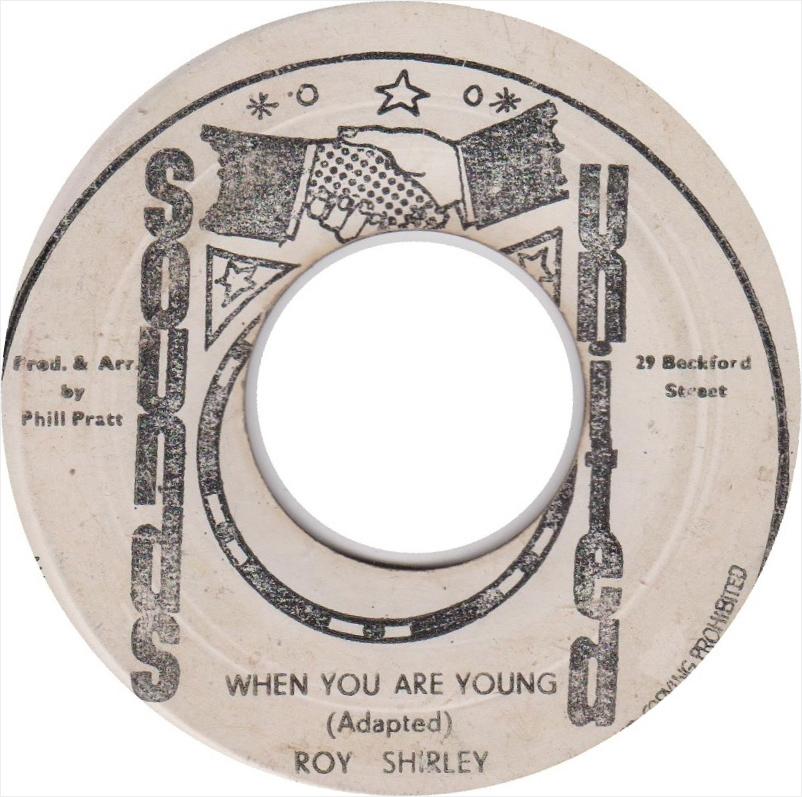
Born as George Phillips, Phil Pratt is a regular favorite in the Fierro house. Originally trained as an upholsterer, French polisher, and cabinet maker, Pratt got his foot into the music industry as a box carrier for Coxone Dodd’s Downbeat soundsystem. After hearing him sing and produce, Roy Shirley introduced Pratt to Bunny Lee, who would then take him to Ken Lack of Caltone, the man who really jumpstarted Pratt’s work as a producer, releasing his productions and eventually giving him his own imprint, the Jontom label. After Jontom, Pratt opened up his Sunshot label on Orange Street. Along with Sunshot, Pratt had another label of his own called Sounds United, with many of the releases being produced and arranged by Pratt himself, and this is the label we are shining a light on in this episode of the Generoso and Lily’s Bovine Ska and Rocksteady, beginning with Pat Kelly’s reworking of The Techniques hit, “I Wish It Would Rain,” from 1971.
Of the artists who spent time with Phil Pratt and the Sounds United label, one of the most productive artist-producer collaborations occurred with Al Campbell. Oddly enough, when Pratt decided to record Al Campbell, many people were surprised, believing that Al did not have a singing voice suitable to be recorded. However, Pratt felt he had something and worked with him to shape up his vocal style for records, and that faith and trust between Pratt and Campbell can be heard in the recordings.
In 1982, Pratt bowed out of the music industry. He lives in London and spends his time today in his two restaurants.
You can hear our full show from October 6th, 2015 HERE. Subscribe to our show on Mixcloud, it’s free and you’ll get an email every Tuesday when our new show goes up.
Enjoy!! Please help us and spread the word and repost if you liked the show! Repost anywhere you see fit.
Generoso been under the belief that his beloved carpaccio was a Sicilian dish, as many of the best dishes of the fish variety emanate from Sicily, but there is enough evidence that Tuna Carpaccio first appeared in a Venetian cafe sometime in the 16th century. Regardless of its true origin, this dish has been changed a million times for a million different tastes. Most Italian dishes are contigent on getting the freshest and finest ingredients that you can find, and Generoso’s take on tuna carpaccio may be the best example of a Italian dish that demands the best ingredients. You will need about 8 ounces of sushi-grade tuna (nothing else will do), extra virgin olive oil, one shallot, two ounces of fresh basil, two large garlic cloves, a half glass of white wine, two large lemons, and two ounces of capers. The tuna is “cooked” like ceviche using citrus so the time from prep to plate is short, about 30 minutes. A good baguette will be a welcome addition when serving this.
Super for hot summer nights, like the 100+ day when we made this dish. Enjoy! And let us know how yours turns out!
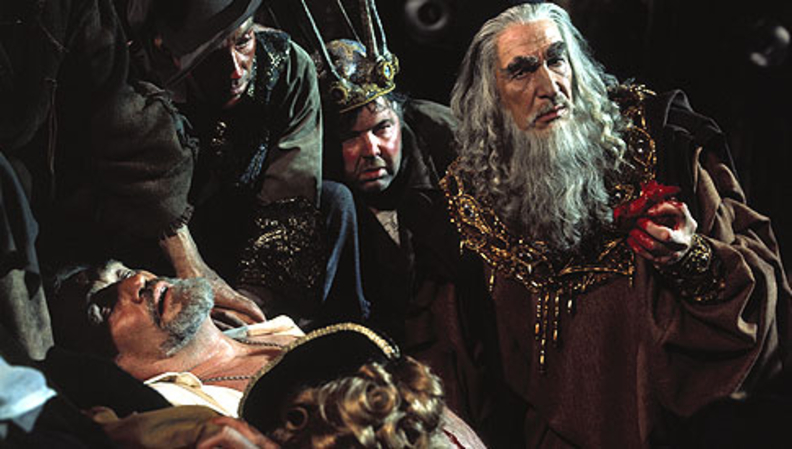
I guess I have always loved Vincent Price in the same way that so many others do: in the ghoulish Edgar Allen Poe reciting kind of way. Even we fans of Mr. Price sometimes forget that he didn’t start in films that dripped blood. Sure, early on, he starred in a few horror films such as “Tower of London” with Karloff in 1939 and in “The Invisible Man Returns” in 1940, but Vincent was also an exceptional character actor in film noirs like Otto Preminger’s Academy Award winning “Laura” and “The Web,” starring against Edmund O’Brien. Things changed for Vincent after 1953 when “House of Wax” became a huge hit in the middle of the 3-D fad, and then it was almost all horror after that with the success of “The Fly” and of course “The Return of The Fly” and many more Hollywood horror films from that decade. Come the 1960s and Roger Corman getting his hands on Price for AIP, Price was locked into a feast on the terror train as he made several adaptations of the aforementioned Poe with Corman including, “The Pit and The Pendulum,” “The Masque of the Red Death,” and “The Raven.” In fact Vincent and Roger made no less than eight adaptations of Poe’s work, all fairly low budget but always coming in above expectations courtesy of Price in the lead. I have often wondered if Vincent enjoyed being the king of horror as so many people have called him over the years. After all, Price studied Fine Arts at the University of London and began his stage career in Orson Welles’ Mercury Theatre, so when I heard that he attempts Shakespeare in “Theatre Of Blood,” I was intrigued. Could Price go back to his roots and perform Shakespeare on screen after almost forty years of stabbing zombies? Well, I am thrilled to write “yes,” but you know that Shakespeare with Vincent Price is going to come with a bit of deliberately served ham and a hefty body count.
Price plays Edward Lionheart, a “serious” actor who attempts suicide by diving into the Thames but is secretly rescued by a pack of riverside hobos. Lionheart’s suicide attempt comes after an evening when he is humiliated by The London Theatre Critics Circle who trash a series of Shakespearean plays that he has just produced, and as far as the theatre community is concerned, Lionheart jumped to his death and is nevermore. With his death a fabrication, our thespian Edward, like so many of the heroes contained in Bill Shakespeare’s works is craving revenge and, with his newfound homeless friends in tow as his band of brothers, sets on the critics who have scorned him by giving them a performance of “The Bard” that they will never forget because it will be the last thing they will ever see. You see, Edward isn’t going to give them a humorous scene from “Twelfth Night” or “Much Ado About Nothing.” No, when Edward performs a scene from “The Merchant Of Venice,” he will bring in our critic and actually take his “pound of flesh” in this translation as payment for the bad reviews that he has always received from his now kidnapped critics in some fairly graphic scenes that come to life in a way that I’m sure would’ve made even Shakespeare himself shudder a bit. The plays are then acted out for Lionheart’s most attentive audience of all, The Theatre of Blood which is his adorning collection of tramps.
Yes, all of your favorite Shakespearean nasties are here for you to witness in living color. One envious critic is conned by Lionheart into murdering his wife just like Othello murders his bride Desdemona. Another critic gets the Julius Caesar Ides of March treatment in the form of a dozen knife-wielding hobos. An alcoholic critic is drowned in a vat of wine and dragged through a cemetery by wild horses à la Richard III. With the bodies of the recently critical reviewers piling up and armed with the suspicion that our non-dead thespian might be behind the killings, our comical Inspector Boot (Milo O’Shea) and Sergeant Dogge (Eric Sykes) scour the streets of London to locate Lionheart, starting with his faithful daughter, Edwina (an always fetching Diana Rigg), a make-up artist. She is defiant in the face of the law which isn’t a surprise as she is in league with her father and his artistic vendetta. Alas, she convinces the last surviving critic to visit the Theatre Of Blood, setting up the final scene of demented pathos.
Original Trailer For Theatre Of Blood
Director Douglas Hickox commands the entirety of the film with a bold vigor and rarely matched lunacy and comedy that keeps the narrative flowing with ease. The scenes of gore are, again, a bit tough to take at points, but those moments are needed to push the comedic back into the horrific. Riggs, O’ Shea, and Sykes are wonderful in their supporting roles, but this truly is the role that Vincent Price was born to play. Outside of the gory mayhem that only the haunting Price could bask in unlike no other, there are the many moments of joy that seem to fly out of Price when performing the myriad of Shakespearean characters that he must play in “Theatre Of Blood.” I had to check myself to see if what I was witnessing was an Edward Lionheart, who gleefully has finally found the audience he was always looking for, or screen actor Vincent Price, who finally gets to read soliloquies that he has always dreamed of performing on screen, even if they are played for a laugh and with some amount of cinematic blood on his hands.
This week’s program began with a massive triple version of Johnny Clarke’s 1974 tune,”None Shall Escape The Judgement.” We followed that set with another set of early reggae gems beginning with two awesome versions of The Impressions gem, “You Must Believe Me” performed by Ninety and Dennis Alcapone and the Rupie Edwards All Stars. Our mento set began with an awesome track from Roy Shurland and the Trenton Spence Quartet who gave us their take on the classic which was released on the Kalypso Label, “Matty Belly.” After two more mento cuts, we played you a set of skas which featured one of our favorites from the smooth voice of Ken Parker, “Before and After” which he recorded for Studio One in 1966. We ended the first hour with another Coxsone Dodd production, this time from Winston Stewart from 1964,”Leave Me Alone.” We started the second hour of the show with our spotlight on Prince Buster’s ISLAM label.
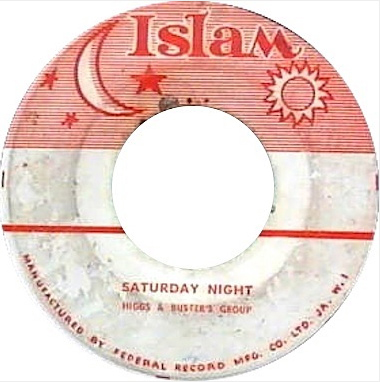
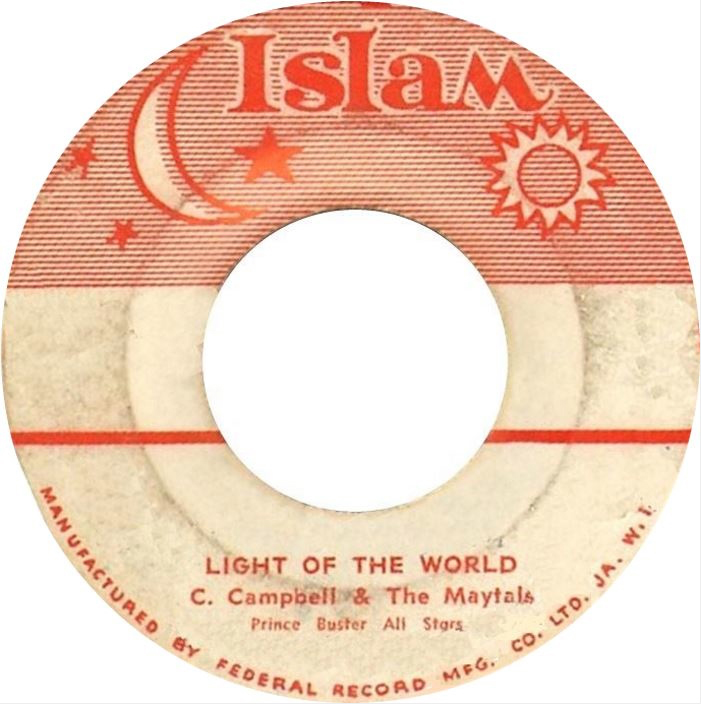
Another Prince Buster label for the spotlight you ask? Why yes! Two months ago, we featured the earliest Buster imprint, Wild Bells and this week, we are looking at his Islam label. In 1964, Prince Buster, under the invitation and encouragement of Muhammad Ali, attended a Nation of Islam talk at Mosque 29 in Miami. Upon returning to Jamaica, he converted from his original Christian faith to the Islam faith. Upon this spiritual change, Buster created a new imprint in honor of his conversion, appropriately named Islam. We begun the spotlight on this Prince buster label with a full set of tracks from the year of the Islam label’s foundation, 1964. One of the reasons why we selected the Islam label was the variety of artists who recorded for the label, including Lord Inventor, who you just heard from Lord Inventor was a Guayanese singer who traveled to Jamaica to cut some sides for notable producers, including Prince Buster. We also played a track from The Watermen, who were actually The Royals and they were: Roy Cousins, Errol Green, Berthram ‘Harry’ Johnson, and Maurice ‘Professor’ Johnson. For some odd reason, the pressings of Save Mama at the time, for Islam and the English press on Blue Beat listed group under the name of The Watermen, and this would be the only single for The Royals under this pseudonym. Also played in this spotlight were The Charmers, the duo of Lloyd Tyrell and Roy Willis. They were super prolific in 1964, recording for Coxone Dodd, Duke Reid, and that one for Prince Buster on the Islam label in its primary year. As the duo’s career continued, they would also record for Sonia Pottinger while continuing their recordings with Coxsone.
Recently, on a very humid Wednesday night, my wife and I traveled to a unusually empty Cinefamily screening of a somewhat notoriously fetishistic and ethereal film by James B. Harris entitled “Some Kind Of Loving.” A few years earlier, I was in the midst of a obsession of the writings of James Ellroy and found a copy of “Cop,” a 1988 film that Harris directed, which was based on Ellroy’s novel , “Blood On The Moon.” I really loved the book and appreciated what Harris had done to bring it to the screen, but I later found out that the film had been mercilessly panned by critics on its release back in the day.
Before going out to see “Some Kind Of Loving,” I had read a few critiques of the film written shortly after its release in 1973 and found them to be equally vicious in their attacks, with many of the reviews simply calling it “pretentious.” I could shrug a few bad reviews off, but unlike “Cop,” the source material was a short story by John Collier whom I have never been that great of a fan of, and the film starred Zalman King, the softcore writer-director of the “Wild Orchid” films of the late 1980s and 1990s, which were one-dimensional twaddle as was his screenplay for the immensely popular Adrian Lyne sex film, “9 1/2 Weeks.” Still, with little else in the theaters, why not see “Some Call It Loving” to see if perhaps Harris had been onto something, directing his second feature film away from producing Kubrick’s brilliant early works; “Lolita,” “Paths Of Glory,” and “The Killing?” After all, Harris’ directorial debut, 1965’s “The Bedford Incident” was a tightly told thriller starring Sidney Poitier that goes down as a lost action gem from a decade packed with excellent films in that genre. It should also be said that of Harris’ five directorial efforts, “Some Call It Loving” is the only non-action film with Harris’ last film being the very average Wesley Snipes police shoot em up, “Boiling Point.”
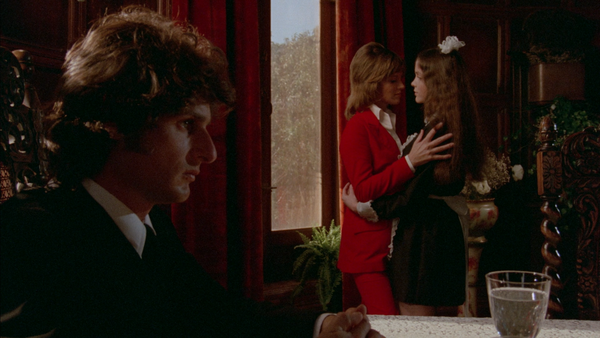
“Some Call It Loving” has for its center, an exquisitely bored, 70s natural looking adopted jazz saxophone player named Robert Troy (Zalman King giving a purposeful trance-like performance), who one evening attends a carnival to only be lured into the tent to witness an actual “Sleeping Beauty,” who our carny barker claims has been asleep for eight years. Our barker/carnival doctor begins charging a tent of overly creepy men a dollar a person to kiss our comatose yet seraphic maiden in the false hopes of awakening her, but our hero Robert chooses to not pay the dollar for the cheap thrill and instead opts to purchase Sleeping Beauty outright for twenty thousand dollars paired with what appears to be a beneficent set of motives. For his twenty Gs, Robert gets the entire carny act including the fair Sleeping Beauty and the good doctor’s Ford microbus, complete with a hippy’s painting of the act’s star attraction on the side of the vehicle. It is now back to his European-style villa where Robert sets Beauty up with elegant sleeping quarters, which doesn’t seem to phase the two women he lives with, who are coupled together in a bed of their own. One has to wonder from this point forward if Robert’s blasé countenance is due to a constant over-stimulation of libido and what role will Sleeping Beauty play in the further awakening of his own sexual malaise.
Robert’s Goes Numb While Jennifer Awakens
Soon after, with Sleeping Beauty tucked away, Robert goes off to the local jazz bar where he plays a set for a posh audience and for a virtually incomprehensible blathering junkie called “Jeff,” whom Robert considers his best friend, played by none other than Richard Pryor, who had played alongside Zalman King two years earlier in the now forgotten 1971 comedy-drama, “You’ve Got to Walk It Like You Talk It or You’ll Lose That Beat,” where Pryor plays another substance abusing character against King’s freewheeling hippy. To say that Pryor plays what Spike Lee normally refers to as “The Magical Negro” to King’s Robert in “Some Call It Loving” would be fairly accurate if it wasn’t for the fact that to assume that cliched role, the black character would have to say something that was somewhat philosophical or least coherent. Here Pryor takes his patented wino character to the ultimate extreme and makes him otherworldly in his inability to communicate any distinguishable word. I’m a lifelong Pryor fan, having listened to his albums all through my adolescence, but it was all beeps and buzzes to me here in this film. My best guess is that Pryor represents the unbridled soul that Robert represses with his stoic appearance.
Once back at home, Robert finds Jennifer (Sleeping Beauty’s actual name) awake and begins what would be a romantic and nurturing relationship, which by this point we can assume is less than what will be required based on the carrying on of Robert’s roommates. Bit by bit Jennifer embraces her freedom of sexual expression and becomes a willing participant in the fetishistic games that go on the mansion, which appears to disappoint Robert and his need to satisfy his voyeuristic desire to see her innocence corrupted, causing him to emotionally retreat and one one occasion, to even leave the mansion in order to seek out erotic stimulation from other women, which inevitably ends in failure as their willingness to participate through financial compensation only dampens his voyeuristic tendencies even more. With an acceptance that his sexual desires will not be fulfilled, Robert decides to flee the mansion and its ominous suggestions of depravity behind and takes Jennifer and the micro bus on a short road trip that eventually leads back to the mansion and to a scene of religious repression for the sake of the purification of all involved.
Though the plot of “Some Call It Loving” sounds a bit pretentious, I genuinely feel Harris’ intentions were to create an American version of the films that were successful in Europe during the late 1960s, as there are similar examinations of voyeurism in the Nouveau Roman novels and film work of French director Alain-Robbe Grillet for example. Past the issues mentioned before with a few of the performances, “Some Call It Loving” does possess great merit in its storytelling style and demands a second viewing. The intense diffusion used in the film was lensed by Italian cinematographer Mario Tosi, who a few years later would effectively layer diffusion all over Brian DePalma’s 1976 nightmarish horror classic, “Carrie.” It is clear that the deliberately slow pace of “Some Call It Loving” would not and did not go over well here in the USA, both with critics and audiences in 1973 as stated earlier, but the film was widely applauded in Europe as stated by Harris in this 2008 Q&A done with the director at Cinefamily:
The screening we attended last Wednesday was not a 35mm print, but a recently released Blu Ray from Etiquette Pictures, who did an excellent job with the transfer of this film. I personally am excited to pick up a copy as it possesses commentary and a featurette with director Harris and cinematographer Tosi, which I hope might shed more light on the low budget production of this misunderstood film that broke up a Wednesday evening and fostered an intense discussion and more than a few confused looks between my wife and I on trip home on that tepid evening last week.
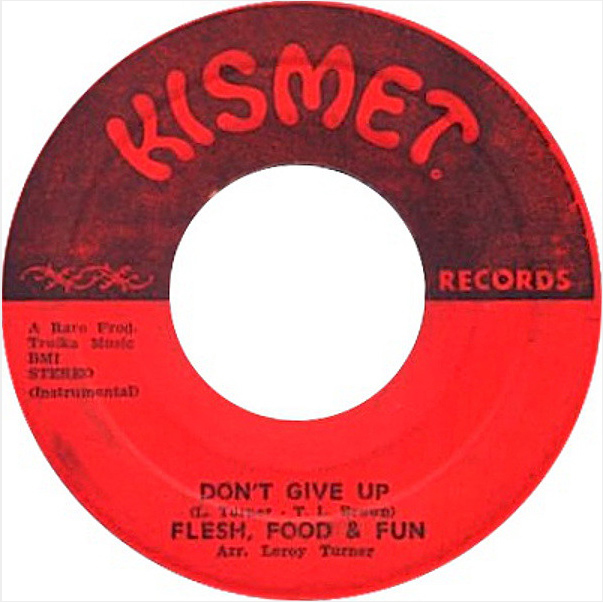
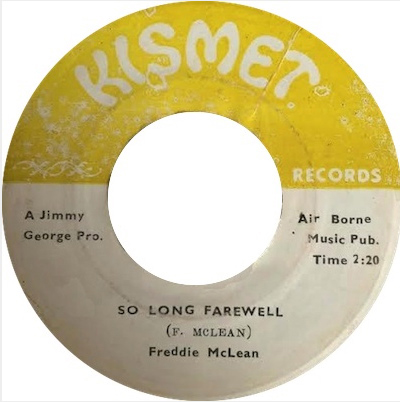
This week we have a spotlight for those of you who love rocksteady and reggae as we delve deep into Pat Hardy’s KISMET LABEL! We opened up the show with two sets of ska featuring a rare release by Vic Taylor on the Pussy Cat Label entitled “Yes.” Another gem from the first two sets of ska that opened the show is “You Say, She Say” from the Sneer Townersl, a fun vocal group that we always wish had recorded more. That cut came out on Kentone in 1965. We also realize that we rarely mention the background disco albums on this blogpost and as this week contained two gem LP, we must mention Lalomie Washburn superb 1977 LP on Parachute Records entitled, “MY Music Is Hot.” The second hour featured the Eurodisco sounds of La Pamplemousse from the self-titled record that came out on AVI in 1976. After a mento set and a long set of rare rocksteady tracks, we went into the Kismet Label spotlight which began the second hour of the show.
Little is known about the Kismet label, even though it was quite prolific.Some represses of Amalgamated records also existed on the label, making us suspect that Kismet may have been a Joe Gibbs imprint. We do know that Pat Hardy was the owner of Kismet, which emerged as an avenue for releases of The Progressions, his vocal group. The Progressions original members were Pat Hardy, Tony Russell, and Milton Henry with Derrick Bucknor and Rudy Mills joining as later members. As a result of the label’s focus on the group, multiple members would take a stab at producing and arranging for the label. The group and many other Kismet recordings were introduced to England with the Pama compilation, Reggae to the UK With Love. On early tracks from The Progressions, you’ll hear Lynn Taitt and the Jets backing the vocalists and Timmy George as the producer, including the track that opened the spotlight entitled, “Give Me Love.” You’ll hear some amazing cuts on this spotlight from Dave And Ansel Collins, Freddie McKay, The Emotions and more!
Generoso loves he Scotch Egg and has dined on them on many an occasion over the years but he always felt that something was missing so he transformed this classic dish into a bizarre Italian version that we enjoy every now and then. The basic idea is there, a 6 minute boiled egg nestled into the middle of a large meatball that is deep fried but Generoso makes a few changes to the recipe that we know you will enjoy.
What you’ll need is a pound of ground pork and a pound of ground beef (80% lean) as opposed to the sausage meat that is normally used in the traditional Scotch Egg. You’ll also need about 9 large eggs, a half pound of unseasoned bread crumbs (Generoso uses panko), a half pound of all purpose white flour, four carrots. one green onion with bulb, 12 cloves of garlic, two stalks of fresh oregano, three stalks of fresh parsley, one can of puree tomatoes, olive oil, 1/2 cup of ground parmesan, salt, and pepper. A deep fryer is awesome is you got one, otherwise please be careful when using a pot as a deep fryer. Please let us know how yours turns out and repost to your friends!
Music: Rachmaninoff: Suite No. 2 for two pianos, Op. 17
There are moments in war that almost seem too barbaric to have ever happened, and then there are those places such as Weigl Institute in Lwów, Poland, where the work was so completely bizarre yet sanely conducted to make it possible to save lives that it could not be imagined by the brightest minds of fiction. During the Nazi occupation of Poland in World War Two, Polish biologist Rudolf Weigl created the first effective vaccine against typhus, which was killing thousands every day during the war. At the institute, Weigl would place lice into a matchbox sized contraption that had a screen on one side, which would be mounted onto the legs of people who would be paid in extra rations to be blood donors for the lice. The lice would be drained of blood in order to create a typhoid vaccine that was not only given to the Nazis but also snuck out to the ghettos of Poland, saving countless infected people. For his intended lice feeders, Weigl would employ Polish underground agents, Jews, and Polish intellectuals to spare them from being taken to camps. One of these men who would be saved by Weigl by being employed as a “lice feeder” was Miroslaw Żuławski, the father of Andrzej Żuławski, the director of the film I will review this week, “The Third Part Of The Night.”
For anyone who has seen any film directed by Andrzej Żuławski these last forty four years knows that surrealistic imagery and a fantastic narrative are standard in all of his films but never has his work felt as personal as it is here with his debut work. Andrzej was born in Poland in November of 1940, a little more than a year after the German occupation of his homeland, which means that most of the story that plays out here occurred while he was still a young child, while his father Miroslaw (who co-wrote the screenplay) was a member of Związek Walki Zbrojnej, an underground army formed to undermine the invaded Nazi forces in Poland and, as such, was hidden by Weigl and at times “fed lice” in order to keep his affiliation with the underground army a secret.
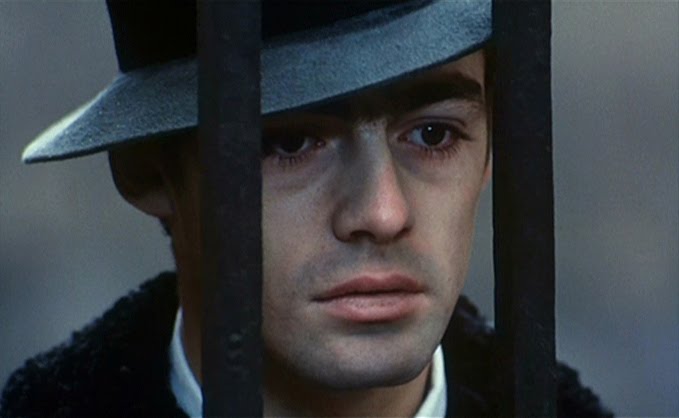
The title and much of the framework of the film are derived from The Book Of Revelation, which in the mostly Roman Catholic country of the Zulawskis, naturally plays an important part in understanding the immense guilt the protagonist of Michal feels, which starts at the very beginning of the film when Nazi cavalry subbing in for the Four Horsemen Of The Apocalypse, ride into Michal’s stately country home and slaughter his wife and son. Michal and his father witness the killings from afar and escape to the town of Lwów where Michal (Leszek Teleszynski), an intellectual and violinist like his father, joins the resistance to make a difference in the war. Michal is immediately sent on a mission, which turns out to be a trap and results in his partner being killed and Michal wounded. Seeking refuge from the Nazis, Michal ducks into an apartment building stairwell where he watches in terror as a similarly dressed man is mistaken for him and taken away in a moment eerily reminiscent of a scene from Andrzej Wajda’s first feature film “Generation.” Michal then ascends the stairs into the arrested man’s apartment only to find the man’s wife, who is bears a striking resemblance to Michal’s own wife, Helena, in labor. Michal helps the woman deliver her child and now, due his guilt and complicity in her husband’s capture, must find a way to take care of her and support his new family.
In a way, Michal is given a second chance in life and tries to rectify his past cowardice by being there for his new family, yet his conscience is never truly clear as his dead son appears throughout the film to add to his guilt. These early scenes are punctuated with what would become a staple of all of Żuławski’s work for years to come: the erratic and unchained handheld camerawork and blue-green color scheme, here done by Witold Sobocinski who also lensed films for master Polish director Andrzej Wajda, whom Żuławski worked under for years prior to his feature debut. The music here also deftly adds to the hellish goings on and is scored by Andrzej Korzynski, another Wajda regular, who creates a mix of Ennio Morriconesque over distorted stick guitar and experimental/industrial samples.
Once Michal resides himself to the task of becoming his doppelganger’s wife’s sole support, it is off to the Weigl Institute (the actual institute was used for these scenes), where he is told to sit with a group of men as he voluntarily ties boxes of lice to his legs as to become a human feeding station. These factually based scenes of intellectuals, giving their blood for self-preservation and voluntarily carrying a disease become the perfect metaphor for the absurdity of war. Żuławski and Sobocinski highlight these moments with clinical close-ups of the feeding and subsequent removal of the blood from the lice that seem to come from Dante more than the pages of a history book. Michal’s ascent from simply a feeder to lab technician who extracts the tainted blood seems to happen easily, but it still does not lead to any sort of victory against evil as the world around Michal descends into deeper madness, leading him back the futility of mounting any resistance in the face of the oncoming apocalypse. This sentiment is made clear with the title sequence of the film which references Revelation 8:12-13:
The fourth angel sounded his trumpet, and a third of the sun was struck, a third of the moon, and a third of the stars, so that a third of them turned dark. A third of the day was without light, and also a third of the night. Then I looked, and I heard an eagle flying in midheaven, saying with a loud voice, “Woe, woe, woe to those who dwell on the earth, because of the remaining blasts of the trumpet of the three angels who are about to sound!”
A Trailer For The Third Part Of The Night
The actual closing of the Weigl Institute was not brought on by the Nazis but by the invading Russian forces whom, due the terms defined by the Pottsdam Conference, would soon claim Lwów, Poland as part of the USSR and eventually as a town in the Ukraine. The Nazis, as brutal as they were to the Jews, would at least allow the Polish Roman Catholics to practice their faith unlike the invading Communists, and Żuławski, in an interview conducted in 2004, finds this fact more distasteful than the Nazi occupation. The oncoming apocalypse may be seen in terms of replacing one Satan with another, making all attempts at defeating the Nazis just so the Soviets could resume a more severe process of dictatorship as futile a gesture as trying the stave off the impending Biblical prophecy of an end of days that will most assuredly come. In this world, for Michal, the only recourse to attain peace is the complete acceptance of his fate in the presence of something greater than it all.
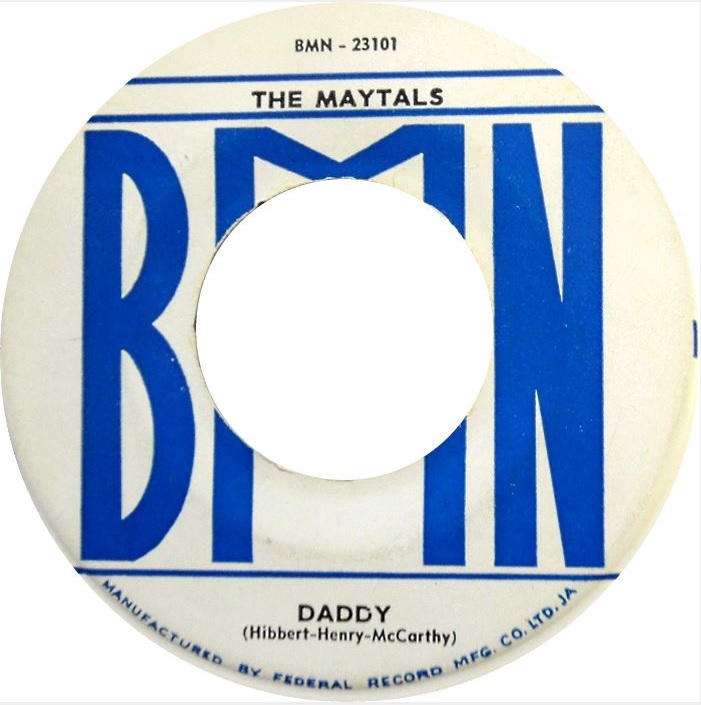
First, we wish Happy Birthday to our dear friend and Studio One artist Dudley Sibley. Over the years Dudley has been a source of vital information to our show and we really appreciate it. In honor of Dudley, we began this week’s show with our favorite track that he recorded, “Message Of Old.” We followed with two sets of rocksteady to begin the show before going into a mento set that featured another gem from Chin’s Calyposo Sextet “Woman’s Tenderness.” We ended that first hour with a set of rare ska beginning with The Monarch’s 1965 cut for Kentone Records, “All Of Me” and ending with Roland Alphonso’s mighty instrumental “Jazz Ska” from King Edwards. We then began the second hour with our spotlight of the BMN Label…
Owned and founded by Ronnie Nasralla, BMN is an acronym. B for the Blues Busters. M for the Maytals. And, N for Nasralla.
A high school classmate of Byron Lee, Ronnie was an early member of the Byron Lee’s Dragonaires. The group received their first major moment of fame when featured as the house band seen in Dr. No. Then, in 1964, Ronnie as the manager and Byron as the band leader arranged for a special dance at the Glass Bucket, an uptown Kingston club, to promote ska to Edward Seaga and executives from Atlantic records in order to represent Jamaican culture to America. With this promotion, the group traveled to America to perform on TV and in American clubs and would eventually represent Jamaica at the World’s Fair, with Ronnie choreographing the dancers for the performance.
On a more production side, Ronnie worked with George Benson, the owner of WIRL after Edward Seaga sold it to him, in order to build a recording studio in the backyard of the WIRL building. In turn, he developed the knowledge for production and began to produce the bands he managed, including the major two in the name of his label and many others that you will hear on this BMN label spotlight.
Ronnie formed the Federation of Musicians with Byron Lee and Sonny Bradshaw to prevent musicians from getting exploited, creating new rules to prevent overlong hours and new standards to creating recording contracts and paying salary. In 1966, the label won the festival song of the year with Toots and the Maytals Bam Bam Festival song. Winner of the first ever Jamaican Independence Festival song competition. Ronnie received the Order of Distinction in 2013.
Listen to the entire program from September 15th, 2015 with the BMN spotlight HERE:
Please let us know what you think of the show via the comments and if you you enjoyed what we did, please subscribe to us on Mixcloud. It is FREE!
Again, Italian is such a pretty language as Zuppa di Pesce simply means “fish soup.”
From the coast of Tuscany comes this awesome tomato and seafood based soup that is super easy to make!
The most time that you will spend in preparation is when you select your seafood. You will need shrimp, octopus, clams, and whatever sea fish you wish to add as well as a can of puree tomatoes, parsley, 8 cloves of garlic, red wine, extra virgin olive oil, salt, pepper, ground parmesan, and a hearty bread of your choice. Cooking time should only be about 70 minutes. Enjoy and let us know how yours turns out! XO Generoso










 LILY & GENEROSO 4EVER!