Generoso’s Rigatoni Con Due Formaggi e Salsiccia (Rigatoni With Two Cheeses and Sausage)

Standard

The word decadent does not even begin to surmise Generoso’s creation, Rigatoni Con Due Formaggi e Salsiccia (Rigatoni With Two Cheeses and Sausage). WARNING: This dish is for the dead of winter so we implore you not to make this ridiculously fattening, creamy dish during a season where you cannot easily burn it off.

You will need: Two boxes of rigatoni, 1 pound of sweet Italian sausage, 6 oz of pecorino romano cheese, 8 oz of whole milk mozzarella, three large eggs (oh no, not eggs too!), 1 can of tomato puree, six cloves of garlic, fresh parsley, oregano, salt, pepper, olive oil.

Music by Mauro Giuliani, 2 Rondo for Piano and Guitar. Op.68

Unraveling The “True” Horror Of 1976’s “The Town That Dreaded Sundown”

Standard
phantom trombone

The Real “Phantom” Was Not This Crafty

“Based on a True Story” has always been an excellent marketing tool for films going back decades. From Alfred Hitchcock’s “Psycho” and Tobe Hooper’s “Texas Chainsaw Massacre,” which both took their ideas from the actions of real life Wisconsin serial killer and cannibal, Ed Gein, whose life had little to do with the aforementioned films to Kimberly Peirce’s “Boys Don’t Cry” which brutally stretched the truth to make a gender hero out of petty thief Brandon Teena, Hollywood has always taken liberties with “true” stories to suit its own political and sensationalist gains. Most recently there has been a lot of controversy surrounding the Clint Eastwood biopic “American Sniper,” based on the memoirs of Chris Kyle, the Navy Seal who was certified as the deadliest sniper in US Military History. It is clear that liberties had been taken with the history and even the memoirs written by Kyle himself for the film version, which drew the ire of many critics, who claimed that the film was just an attempt at propaganda by Eastwood. The one thing we have learned from all of this is that the evoking of the term, “too soon,” may be the best strategy that Hollywood may have to adhere to when attempting the “Based on a True Story” film. Then again, if your machine can spin the negative press that results from dramatic license, it has almost always meant more to a studio in ticket sales, which is sadly why the tagline exists in the first place.

Such was the case in 1976 when American International Pictures decided to premiere director/producer Charles B. Pierce’s drive-in film, “The Town That Dreaded Sundown” in Texarkana, Arkansas, the very town where some thirty years earlier, a masked man began slaughtering people in what would be known as “phantom attacks” of mostly young lovers in the dead of night. Family and friends of the victims were all still very much alive in 1976, and so a very powerful magnifying glass was held up to construction of characters and scenarios of director Pierce’s film. A film that is widely considered, along with Bob Clarke’s “Black Christmas,” as one of the earliest examples of the film genre we now know as the slasher film.

The film begins with a teenage couple, Sammy Fuller and Linda Mae Jenkins, who, while parked on lover’s lane, are assaulted by the “phantom.” The phantom appears faceless in a way that would become too familiar to horror film fans for years to come: think Jason Voorhees’ hockey mask from “Friday The Thirteenth,” or Mike Myers’ “Halloween” clay face, or any other version of the phantom that we would see with knife in hand in late 1970s but with the added “bonus” of occasionally seeing the victim from the killer’s eyes, which would become one of the defining characteristics of the slasher film genre. This facet was nothing entirely new to cinema as that approach had been taken by legendary British director Michael Powell’s in his 1960 film “Peeping Tom,” except that director Powell’s little death trip through the eyes of his killer cost him his film career as its brutality was too hard to handle for audiences of his era. Despite Powell’s demise, this approach to horror would be the standard for the next decade, like it or not.

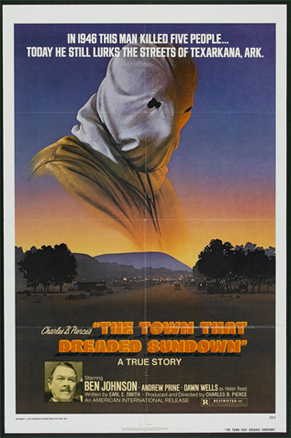
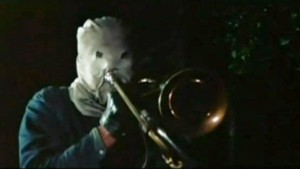
Adding to the horror of the film, Charles Pierce uses aspects of the real life attacks for “The Town That Dreaded Sundown,” and thus these scenes are still genuinely horrific but were severely augmented for the film as well. Murder victim Linda Mae Jenkins for example, is found having been “bitten and chewed on,” but that was not the case in the original killing it was based on and was an odd and unsubstantiated choice for Pierce to use that additional act to further his villain’s sadistic qualities. Where Pierce takes even more substantial liberties is in the death of the character, Peggy Loomis, who is murdered when “the phantom” ties a knife to the retractor of her trombone and kills her in a similar fashion as Mark Lewis, Powell’s “Peeping Tom” killer who uses a knife mounted to a camera as his weapon of choice. In the film, Peggy is assaulted with her boyfriend Roy while amorously parking, while the actual pair of Betty Jo Booker and Paul Martin were just friends and were shot to death. Multiple lawsuits were eventually brought against the film’s producers on a variety of issues relating to the unflattering depiction of some of real life victims. Even a lawsuit was started by the city of Texarkana against the ad campaign for the film which had as its tagline, “In 1946 this man killed five people…today he still lurks the streets of Texarkana, Ark.” Allthough director Pierce worked to remove the “still lurks” part of the tagline, it was still very present in the posters for the film.

For a “drive-in” film that was made for a mere $400,000, the cinematography and quality of performances of “The Town That Dreaded Sundown” is a cut above most of the entries that would be classified as drive-in worthy. The addition of veteran actor Ben Johnson, who appears just a few years after his Oscar awarded performance as “Sam The Lion” in Peter Bogdonovich’s “The Last Picture Show” adds much to the overall believability of the film. Though the over narration comes across as a tad ridiculous, and the humor injected in the narrative takes away from the overall tension, it is still a remarkably well-made horror film that still packs more than a few scenes of genuine terror.

Original 1976 Trailer For The Town That Dreaded Sundown

All this makes one wonder then, why was there a necessity to alter the real tragedy that had befallen Texarkana to create a more unbelievable horror story when the actual story was terrifying on its own? To create an almost documentary-style narrative, Pierce even went as far as including the dates of the actual murders on screen, but, alas, some dates were incorrect, further magnifying the oddly inconsistent commitment to the reality of the “phantom attacks.” It seems that Pierce’s desire to use the stylistic elements from Powell’s “Peeping Tom” and Bob Clarke’s “Black Christmas” outweighed the actual facts of this crime spree that occurred in 1946, leading to the strange deviations from the true story and ultimately doing a disservice to the people of that region who were still tied to the reality of those attacks. Though flawed both aesthetically and factually, “The Town That Dreaded Sundown” continues to stand as a key film that shaped the horror genre of the 1970s. Bizarrely, despite the initial negative reactions from the city the film makes its setting, it is screened every year at Halloween for free by the Parks and Recreation Department of Texarkana in the very park where some of the actual murders occurred.

I guess the “phantom” makes for a good boogie man these days, but I wonder if the good folks of Texarkana know that the real “phantom” existed and brought true terror to the town they call home.

Lily’s Savory and Geometrically Delicious Banh Gio!

Standard

For Lily, many of these recipes bring back memories of eating after school meals with her grandmother. Nothing brings back more memories for her than Banh Gio.

This cone shaped savory rice dumpling filled with pork, onions, and wood ear mushrooms was something that Lily ate often when she was a little kid. The smell of them steaming was always a welcoming one when she got off of the school bus and entered her grandmother’s home.

Banh Gio is quite simple to make! The rolling and filling technique is a little tricky, but Lily will show you how to do it!

Once steamed, Banh Gio can be eaten plain or with a drizzle of soy sauce (Lily and Generoso’s preferred way to eat). Enjoy!

Music by Alexander Borodin’s String Quartet no. 2 in D

Bovine Ska and Rocksteady 3/11/15: Horace Andy

Standard
horace andy-you are my angel

Horace Andy on Soul Sound in 1972


We started off this past week’s Bovine Ska and Rocksteady with a Derrick and Patsy cover of a song that might go down as one of the most influential in Jamaican music history.  “Let The Good Times Roll” which was a huge hit for Shirley and Lee not only only in the States but in the early days of the Jamaican sound system.  So popular was this cut and Shirley’s childlike vocals that it inspired a generation of Jamaican female vocalists like Millie Small, and Millicent “Patsy” Todd who does a fine job on this cover.  It was followed by seven songs from the Jamaican Rhythm and Blues period including Bobby Aitken’s 1962 cut for the Blues Label, “Hello” and the Blues Busters “Lost My Baby” a beautiful side on the Starlite label in 1992 as well.  And after a set of mento and a pretty set of rocksteady that began with a rare one from Prince Buster from 1967 called “This Gun For Hire!”  We then started a long overdue spotlight of Horace Andy.

Born as Horace Keith Hinds, Horace Andy was born in Kingston in 1951. The cousin of Justin Hinds, he also had a very distinctive voice, so in order to delineate himself from his cousin, Coxone Dodd actually picked a different stage name for him. At the time of Horace’s arrival to the music scene in Kingston, Bob Andy’s career was rising, so Coxone gave Horace the same surname to gain some of the fame coming from Bob. Despite the similar name and the songwriting talent, Horace’s voice however was so different so that when he auditioned for Coxone at Studio One, the producer and label in which he would spend a large chunk of his career, he recalls all of the session musicians at the time dropping their instruments and laughing. Despite the reaction of Studio One’s musicians, another producer had actually heard and taken a chance on Horace Andy first. He actually began his music career with a producer very much adored on the BSR, Phil Pratt. We started with Black Man’s Country, his first recording, which was released on Caltone to kick off this spotlight.

Black Man’s Country did not see too much success, and consequently, Horace ended up at Studio One, where he would gain much of his popularity. His first single for Studio One “Got to Be Sure” was actually the song he auditioned on to the uproarious laughter of the session crew. And at Studio One, Horace would also record his highly regarded LP Skylarking. We heard his debut single for Studio One first and then some highlights from Skylarking next. As a child, Horace spent a lot of time in the library reading, which would end up influencing his songwriting.  A few notes on some of his finest tracks:

Every Tongue Shall Tell: Yes. Well for some Christian minded people and Rasta people it means any wrong you do you are going to have to talk when the time comes. Because that’s what they say the King James Version tells us. That’s what the Bible says and you must live by what the Bible says. But you know the people are not doing it. They only talk it. But that is the reason why [I sang it] because of the inspiration of the Bible. It was before I was even born – “Every tongue shall tell” that means everyone shall confess their wrongs when the right time comes.

See A Man’s Face Inspiration: See A Man was something that happened a long time ago. You see, when you speak the truth no one believes you. I learned that a long, long time ago. Even when you tell your mum “Mum, it’s not me do it” you get bap bap “A you do it!” That’s why more time you have to be close to the kids them and believe them when they tell you things. So I know from a long time ago that no one believes the truth when you talk the truth. That’s why I wrote that song. And because a young man broke my little sister’s heart. It had so much meaning that he broke my little sister’s heart and that’s why I wrote that song then.

You Are My Angel Inspiration: No. Those things just came natural. We love the woman and we look upon her as the mother of the earth. She multiplies and she creates so the father says life. Life is so important so we have to love and respect the woman. Don’t kick them, don’t box them, don’t rape them – no no no. I say it on stage and the ladies scream “We love you Horace!” You are my angel is the original source for the Massive Attack track Angel that Horace collaborated with them on

Money The Root of All Evil:Because I saw it. As a young man growing up I saw it. Because money, wow, it has its good and it has its bad. And because producers weren’t paying me – that’s why I wrote that song.

We hope you enjoy the show!  Love from Lily and Generoso

You can here the entire program: HERE

The archive of this show will be available until 3/25/15


Bovine Ska and Rocksteady 3/4/15: Derrick Harriott’s Crystal Label

Standard
crystal B

The Jiving Juniors On The Crystal Label

This week was a special two hour retrospective of Derrick Harriott’s Crystal/Move and Groove Labels.

Born in Kingston in 1939, Derrick Harriott was the youngest of 5 children. At a very young age, he sang in church, and eventually, his singing and performing would accelerate when he went to school. Derrick Harriott began his music career with his friend Claude Sang Jr with the duo, Sang and Harriott. The two attended Excelsior High School together, and in school, they would practice together and perform, wooing their schoolmates with their music, and in turn, their schoolmates encouraged the duo to enter the Vere Johns Opportunity Hour talent show in 1955. The two did not make the final round this initial time, but they would win it in 1957 and at a minimum manage to be in the finals after their first win.  Despite their popularity in the live performance circuit, Sang and Harriott broke up when Sang left Jamaica for schooling. In 1958, Harriot formed the Jiving Juniors with Eugene Dwyer (bass), Maurice Wynter (Tenor), Claude’s younger brother, Herman Sang on piano, and Harriott on lead tenor and falsetto. The Jiving Juniors gained quite a bit of fame with successful performances on the Vere Johns Opportunity Hour, so successful in fact that they earned a special spot on the show.

We started this two hour spotlight on The Crystal Label by playing four tracks from Derrick Harriott and the Jiving Juniors. The Crystal label, which was named supposedly because of “a fortune teller with a crystal ball… and crystal means very clear”  Here, at the Crystal label, he would first release his own solo tracks, but he quickly began to record other artists. We also played one excellent solo track from Derrick, and then his early recordings for the Crystal label with other artists in ska such as Roy Panton and Don Levy.

Very early in the label’s career, Derrick had a great eye and ear for talent, being one of the first to record many singers. Keith and Tex started with him, and they also helped recruit some talent over to Derrick, including who you just heard from, Rudy Mills, who was Keith Rowe’s cousin’s husband, and Keith brought Rudy over to Crystal to first record.

Backing up the vocal artists and recording a many instrumentals of their own, were The Crystalites, Derrick’s house band, which had a rotating line up, but Derrick selected from an amazing pool of session musicians including: Barry Biggs, Bongo Herman, Gladstone Anderson, Jackie Jackson, Larry McDonald, Lynford Brown, Paul Douglas, Wallace Wilson, Winston Wright.

By 1970, Derrick had really built up a reputation as a strong producer, so much so that his output that year would gain him the title of the best producer of 1970 by Swing magazine.  We then played The Ethiopians No Baptism next, which was a highlight from a great year of productions and a hit for the Crystal label. As mentioned before, Keith and Tex got their start with Derrick Harriott and gained quite a lot of fame with him, who in addition to singing their tracks for him, they also sang harmony for other Derrick Harriott productions. Stop That Train was an enormous hit for them, so much so that other DJs who came to the Crystal label would toast on them.

One story has Derrick who had heard people talking about Big Youth, going out and searching for him in order to record him. Big Youth would actually end up using his promotional picture on the Those Reggae Oldies album released on the Crystal label for the artwork on his own Negusa Nagast label

Another DJ that had success on Crystal was Scotty,  born David Scott, originally started singing with Valman Smykle and  Franklin Spence in the rocksteady group, The Federals, but he would come into his greatest prominence as a DJ/toaster for Derrick Harriott’s Crystal label. He would toast on versions of early hits from the Crystal label, like the version of Stop that Train heard in the first hour of the show. Now then played another version to version. We then heard Scotty toasts over his boss’s hit “The Loser.” Scotty was given the full LP treatment by Derrick on the Crytal label in 1971 with a collection of his best toasting on the album School Days.

In 1966, Derrick opened up Derrick’s One Stop record shop on 125 King Street, making him one of few singers who produced, ran his own label and his own record shop. The name One Stop was perfect because up and coming artists could go to the shop to pitch music to Derrick, and he could record them and sell the record in his own shop. In addition, visitors to the shop were attracted to the big hits on other labels in stock, but given that they stepped into Derrick’s shop, they could also gain more exposure to the Crystal label releases than they would in other record shops in Kingston. This record shop extension of Derrick Harriott’s work would help further Derrick’s success as more and more hits were released on the his labels.

You can here the entire program: HERE

The archive of this show will be available until 3/18/15


Jerzy Skolimowski Directs Alan Bates In The Mesmerizing 1978 Supernatural Thriller, “The Shout”

Standard
shout04

Alan Bates and Susannah York in “The Shout”

I first saw Jerzy Skolimowski’s “The Shout” as part of the Harvard Film Archive’s sensational retrospective of the fifty plus year career of the famed Polish director and screenwriter of Roman Polanski’s “Knife In The Water.” “The Shout” is a faithful and visually stunning adaption of a short story written by poet Robert Graves, and of all the films that were shown during that retrospective back in 2010, it was the one film that left the greatest impression on me, even to this day.

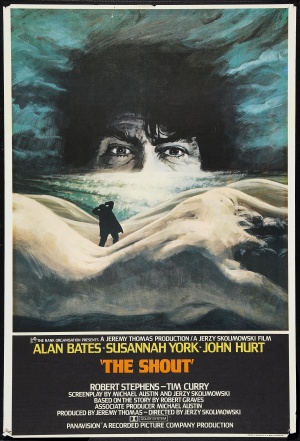
A supernatural thriller shot with a non-linear narrative, “The Shout” uses a cricket match at a mental institution as its framing device. In the eerily scenic yards of the institution, we have Crossley (Alan Bates) a newly arrived mental patient who sits in a small shack besides a foppish, coiffed man named Robert (Tim Curry) who Crossley assists in scoring the match that features a team of loons. Shortly after Crossley’s ranting, we soon meet the charming young couple, Rachel and Anthony Fielding (Susannah York and John Hurt) who have domesticated themselves into an almost brother and sister relationship, devoid of any carnality. We first meet them at the nearby beach where they vividly imagine a man armed only with a sharp bone, coming towards him in a threatening manner. Somewhat flustered, the Fieldings saunter back to their idyllic country home in Devon, England where Richard composes experimental music by mostly capturing the sounds of nature and distorting them as he sees fit. Though Richard composes secular music, he is also the local church’s organist and despite his vicar’s plea for a resurgence of faith during Sunday services, Richard will leave the church for an illicit tryst with the wife of the local cobbler, but before he does, he will encounter Crossley.

Crossley sneaks up on Richard and immediately addresses the concept of the Christian soul and how it is “imprisoned by the body.” He then asks, “if imprisoned, wouldn’t the soul be better off inside of a tree?” Richard takes leave of Crossley but returns home to find him sitting in front of his house, looking for an invitation to lunch. Richard complies and soon Crossley will make his stay last much longer than anyone had hoped for.

During the subsequent lunch, Crossley regales our pastoral couple with tales of his Aboriginal life, his bride, and the murder of his own children, which he claims is a perfectly acceptable tradition for the Aborigines, but this fact does not go over well with the Fieldings, nor does Crossley’s story of female possession that can easily occur by the keeping an item of a women’s wardrobe. It seems that Crossley has found Rachel’s shoe buckle and with that discovery, his Svengaliesque inclusion into the Fielding’s lives has begun. Our Crossley also has confided in Richard his unnatural ability to shout a sound so powerful that it will kill all around it. Richard of course needs proof and follows Crossley to the same beach where he and his wife imagined the Aborigine coming towards them. Crossley does shout and all life around him suffers for it; he is an actual force of nature, and soon, he will take his possession of Rachel in the same way he controls his surroundings.

Director Skolimowski does an excellent job at keeping the identity of Crossley a secret, allowing the viewers to draw their own conclusions, adding to the thrill. Is he an Aboriginal shaman, in line with the powers of nature? Or is Crossley in congress with the devil aiming at the possessions of the Fielding’s souls? Or is his entire existence the ramblings of a mental patient? The simple fact is that it doesn’t matter how he (Crossley) goes about affecting those around him; it is why, which may come down to the basic idea of the conflict that occurs inside the character of Richard, an opportunist who seems content to distort nature with his recordings, his masculinity with his desire for domestication, and similarly his non-secular morality with his infidelity against his wife, Rachel. Skolimowski alludes to these transgressions in both the natural and spiritual world, leading to a conclusion that is a sort of Biblical punishment for those who defy both the kingdom of God and mother nature’s reaction with the film’s loudest “shout” being created outside of Crossley’s human body.

Original Trailer for 1978’s “The Shout”

Given the critical acclaim of Skolimowski’s earlier work and the author of the source material for “The Shout,” it should come as no surprise that the film version of the Graves short story would draw the immense talent it did, hitting the screen with the prime acting abilities of York, Bates, and Hurt as well as the fearless cinematography of Mike Malloy, whose imaginative visuals add much to the stark moments of natural conflict. Reviews of the “The Shout” at the time of its release vacillated between an overall dislike to overwhelming praise, which is best thing you can say about any great work of art as to how it effects people. “The Shout” did share the Grand Prize that year at Cannes with another misunderstood film of its era, Marco Ferreri’s ode to fading masculinity by way of the destruction of the natural world, “Bye Bye Monkey.”  I guessed people actually cared about an environment and its bond to masculinity during that decade.

Generoso Rolls A Mean Braciola!

Standard

Braciola is a variance on the Italian dish known as Involtini.  In Italy, Involtini are thin slices of pork, chicken, or beef that are rolled with Parmesan or Romano, usually held together with a toothpick, broiled and are served as the second course in a traditional meal.  As I was taught in the more Southern Italian/US version which is like Involtini except we lose the toothpick for an bondage-master’s Saturday night supply of twine as we would drop our Involtini into our Sunday’s ragu, where it would be slowed cooked for many many hours.  What comes out is a tender, almost flakey beef entree that I serve with pasta; In this case, Orecchiette, which is dearest Lily’s favorite.

You will need the following ingredients for the braciola and the ragu:  One pound of flank steak, cooking twine, five cloves of garlic, one cup of ground romano, three ounces of provolone cheese, one cup of white wine, one cup of unseasoned bread crumbs, two cans of crushed tomatoes, salt, pepper, olive oil, a small bunch of fresh parsley, one pound of Italian sweet sausage.   As always we hope that you enjoy this recipe and do let us know how you do with your attempt . Love, Generoso and Lily!

Music: 2 Legendes, S. 175 by Franz Liszt.

Alan J. Pakula and James L. Brooks Team Up To Create A Smart “Rom Com” In 1979’s “Starting Over”

Standard
starting-over-car

Reynolds and Clayburgh in “Starting Over”

I have dedicated this blog to those lost films of the 1970s mostly from the perspective of films that have been “forgotten” or “hard to find,” but this week I will use director Alan J. Pakula’s 1979 effort, “Starting Over” to discuss a genre that I feel that is truly lost: the intelligently made “rom com.” We all know the term “rom com,” that hideous mess of the last few decades of the Sarah Jessica Parker and Kate Hudson kind that serves its ideas so warmed over that the mere mention of one will send most film watchers who expect anything more than a trifle running for the hills. There was a time though when romance was not always looked at in a giggling beautiful people kind of way; you all remember the time when the Albert Brooks and Woody Allens dominated the landscape, don’t you?

Alan J. Pakula was no where near the aforementioned directors’ world during the 1970s, as he, like so many of his contemporaries, were too busy examining the paranoia of a Nixon-era America in films like “Klute,” “All The President’s Men” and “The Parralax View.” One wonders why after such huge successes, that Pakula would gravitate towards romance? Perhaps the reason lies within the critical and commercial failure of his heavy-handed 1978 film, “Comes A Horseman,” which included the death of stuntman, Jim Sheppard, or perhaps it was the chance to work with the talented young screenwriter, James L. Brooks, the successful creator of “The Mary Tyler Moore Show” that had Pakula thinking in a new direction. Regardless of the reasoning, there is much to like about “Starting Over,” Pakula’s last film of that decade.

The film opens with Phil Potter (an eerily clean-shaven Burt Reynolds, free of his Smokey and The Bandit stache) staring at his wife Jessica (Candice Bergen) as she performs a comedically flat version of her new song “Better Than Ever,” an almost mockingly nasty poke at late seventies feminism, which she wrote about their fading marriage. She soon carelessly tells Phil that she has filed and has been granted a divorce. Phil takes it passively and packs his bags for Boston where he can regroup and stay with his brother Mickey (the always solid Charles Durning) and his over-sensitive wife Marva (Frances Sternhagen, who is better known as “Cliff’s mom” on Cheers). On the request of Marva, Phil is off to a divorce workshop in the basement of Boston’s famed Trinity Church, where he and his fellow sad sacks sit and discuss their failed marriages with a sitcom-esque cadence of moans and accusations as they fight off the hoard of divorced women, who like approaching Visigoths, pound the door every time that their stay in the basement is supposed to start. Here, we can see the brilliance of James L. Brooks dialog writing in television. Sure, the jokes have laugh space like any good episode of “Rhoda” (another Brooks creation), but they are no less hysterical and real.

Phil seems happy to go to these meetings and that encourages Marva and Mickey to inflict more kindness on Phil as they secretly invite their preschool teacher friend Marilyn (ironically played by Jill Clayburgh just a year after she defined the modern divorcee in An Unmarried Woman) to a dinner/setup to meet Phil. They hit it off, but because she is equally gun shy after a failed relationship, she pushes our Phil away, even setting him up with another divorcee friend of hers, Marie, who seems more hungry to get at Phil than he had ever dreamed of, sending him running back to Marilyn as he begs her for any kind of evening, romantic or not. It’s abundantly clear that Phil is not over his ex-wife, but he craves companionship at some level, and Marilyn will begrudgingly comply, though she is still keeping her guard up. You know the wife is not out of the picture, not even close, but Marilyn just likes Phil too much to not see this through. Clayburgh’s ability with comedic dialog is to be commended here, and I truly wished that she had done more comedy, and she plays Marilyn fragile but smart and handles each scene with a demented confidence that feels like she knows what is best for her, but she also knows that the hammer will fall soon. As far as Burt is concerned, well, needless to say that this is 1970s Burt Reynolds, so you are given the same classic cocky performance you always get in every film he stars in, which you of course love, regardless of how it does or doesn’t fit the character he is playing here.

Candice Bergen Trying To Win Her Ex Back With “Song”

You may be thinking at this point that the story of “Starting Over” doesn’t exactly fall to far off the “rom coms” of today, and in some ways you are right. A romantic film that plays out with some difficultly but one where you know that the two leads will get together in the end is the book definition of a “rom com,” but using that definition alone, “Annie Hall” and “Modern Romance” would also be considered “rom coms,” except that they create interesting, intelligent characters who progress through the narrative with smartly written dialog and situations that reach a level of uncomfortable that recent entries into this genre do not have the courage to do as to not upset their callow audiences. One would only have to look at the Thanksgiving scene in “Starting Over” when Phil invites Mickey, Marva, and Marilyn over to his apartment for dinner and callously crushes our Marilyn, who finally is feeling like she’s part of Phil’s life, when his ex-wife Jessica calls up, and Phil describes his new love to Jessica as “some friend of his brother’s.” It’s a genuinely soul crushing moment that seems to come out of nowhere, but it does somehow fits Phil’s hidden resolve to get back with Jessica, though he shouldn’t even consider it.

If there is a negative critique of “Starting Over,” it is that it does move too quickly towards an ending that doesn’t seem to fit Phil’s character. It almost resembles Albert Brooks’ desperate wedding proposal to Kathryn Harrold in “Modern Romance,” except that act furthers Brooks’ insipid obsession with the woman that he cannot stop breaking up with during the film. Phil Potter’s proposal to Marilyn in the end shows the weakness in James L. Brooks writing at the time as it seems more like something that would happen at the end of a 30 minute sitcom and not a film that is taking a hard look at the modern divorced man. James L. Brooks would tighten in endings during the 1980s with “Terms Of Endearment” and “Broadcast News.” Two excellent films that occasionally slip a bit too far into melodrama, but still come out with their edge intact.

Though “Starting Over” is not in the same league as some of the more honest films about men and women in the late 1970s, it is still packed with more than enough humor and excellent performances to lay waste against anything in the desolate land of the modern “rom com.”

Bovine Ska and Rocksteady 2/25/15: Roy and Millie

Standard
Roy and Millie Starlite

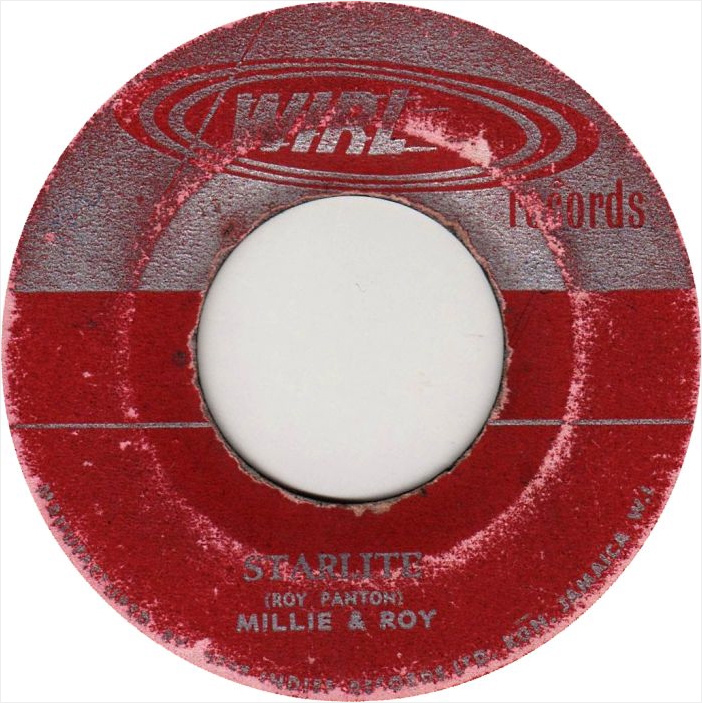
The Wonderful Vocals of Roy and Millie from 1963 on WIRL

This was a fun show and we were more than thrilled to send it out to all of you.  Starting off with a deep cut from the late sister of Alton Ellis, Hortense Ellis gave us the superb 1970 track, “Love Is The Key.” We continues with two full sets of early fast reggae ending with Gladdy Anderson’s 1969 vocal cut for Duke Reid, “Dollars and Cents,” which was released in England on the might Trojan label. As this week was without major snow for the first time all month, we felt the need to have a joyous spotlight in the form of a Roy and Millie spotlight.

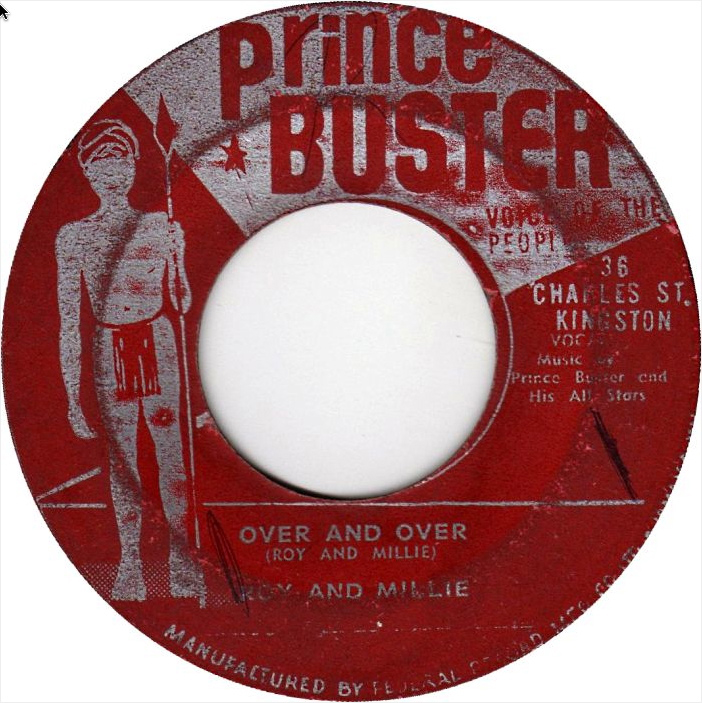
Born in Clarendon, Jamaica to a sugar plantation overseer, Millie Small began her music career on the Vere Johns Opportunity Hour. After winning the contest, Millie decided to move to Kingston for a greater opportunity to record and perform. As a young teenager, she first recorded Sugar Plum at Studio One with Owen Gray in 1962, which Roy Panton harmonized with her on because Coxone Dodd wanted a stronger voice on her part because Millie’s voice was much higher than other female voices. And after that initial collaboration, Coxone, seeing the success of the male-female duo through Derrick and Patsy, he suggested Roy and Millie sing as a duo, which was a good instinct; they would see so much local success and popularity together that Millie would eventually capture the attention of Chris Blackwell, who led her to her mega hit in England, My Boy Lollipop. We begun this spotlight on Roy and Millie, starting off with their first recording as a duo together, “We’ll Meet,” which was a debut hit for them that rose to the top ten of the Jamaican charts in 1962.

They would record many times afterwards Roy Panton would continue his recording career as a solo artist and with Yvonne Adams (Harrison) and they still perform to this day. Sadly, the whereabouts of Millie Small are unknown.  We know that she emigrated to England and has a daughter but little else is known. In 2011, Millie was awarded the Order of Distinction in Jamaica but the former Prime Minister, Edward Seaga, excepted it for her in her absence.

Listen to the full program: HERE.

Enjoy! The archive will be available until 3/9/2015


Lily’s Fabulous Cha Lua (Vietnamese Bologna)

Standard

Have you ever eaten a “House Special” Banh Mi and wondered what was the pale bologna-esque meat filling your delicious sandwich? Well, that’s cha lua!

Lily grew up eating cha regularly in its steamed and fried form, often with a piece of bread on one side of the plate and a huge chunk of cha on the other. This week, she shows you how to make this delicious pork treat!

She’ll show you how to make the pork paste, how to steam it in banana leaves, and how to fry it into golden patties.

Cha is great with a little bit of rice, a piece of bread, or all alone! It keeps in the fridge too, so it is good to have on hand for a quick meal or late night snack (Lily and Generoso actually made small sandwiches while writing this post).

Enjoy!

Music by Gustav Mahler, Songs of A Wayfarer.