Bovine Ska and Rocksteady 10/22/14: Saying Goodbye To John Holt

Standard
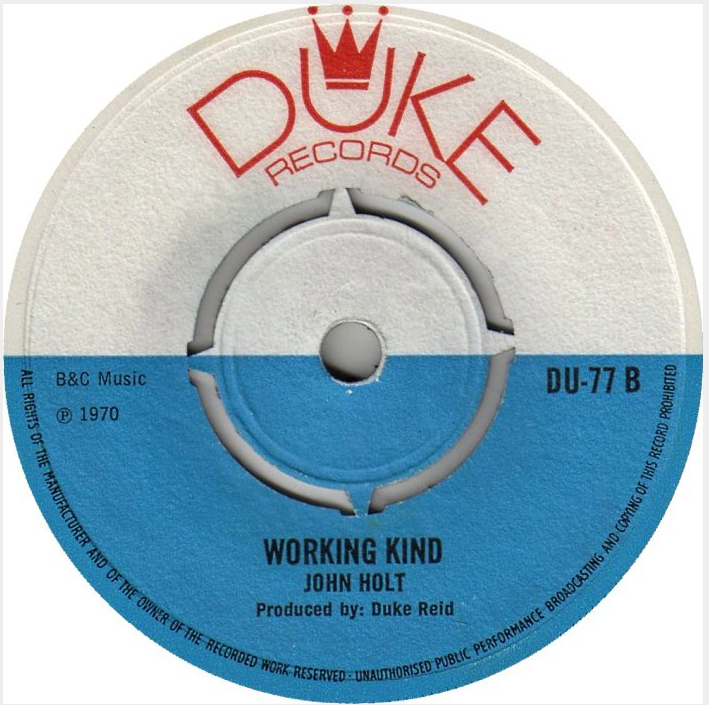
John Holt Working Kind

John Holt’s 1970 Release “Working Kind”

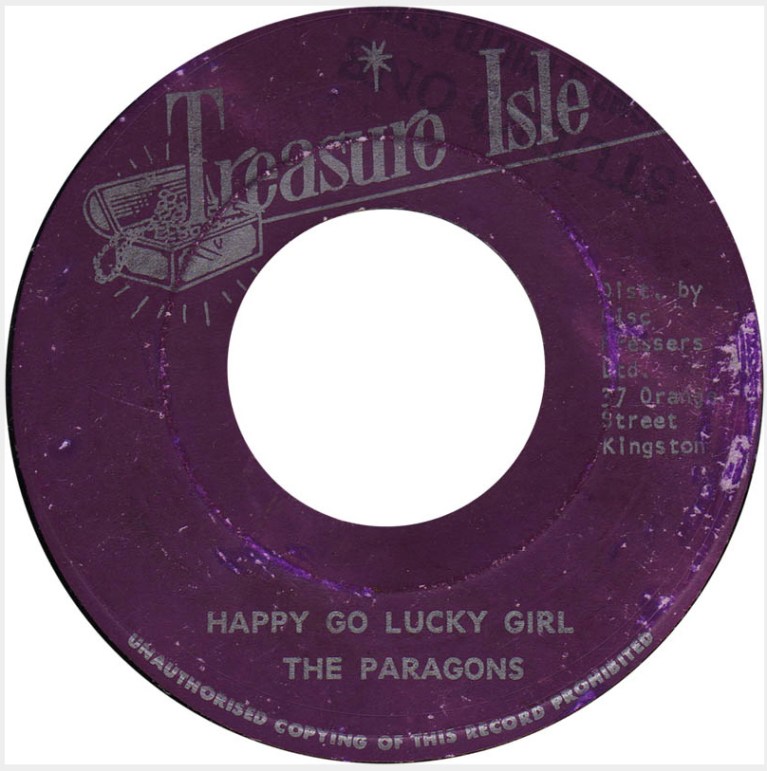
When I started the Bovine Ska and Rocksteady back in 1996, a show that has always focused on early Jamaican music, I knew that there would be a time when a lot of the artists that I had loved from that period would begin to pass away but I would never have imagined the occurrences that have happened these last few months.  Hopeton Lewis, Jackie Bernard, Tito Simon and now, arguably the most celebrated of that group, Sir John Holt, has passed away at the age of 69 in London.  There had been rumors of his passing since Holt had collapsed at the One Love Festival in England not too long ago but now the rumors are confirmed true.  This past week, we dedicated the entire show to John Holt, from his earliest recordings with Leslie Kong at Beverley’s, through his time as the lead singer of the hugely successful vocal group, The Paragons, and finally as an even more popular solo artist.  You will hear one of the finest voices to have ever recorded in Jamaica.

John Holt was born in Greenwich Farm, Kingston on July 11th, 1947.  At the young age of 12, Holt entered the music industry with performances at talent shows. Like so many of his peers, Holt would perform in these shows and would also eventually make multiple appearances on the (like Veer Left) Vere John’s Opportunity Knocks Talent Show. During these early competition years, Holt won a total of 28 awards. As Holt gained fame from the shows, he attracted the attention of Lesley Kong and recorded his first single for the Beverley’s label in 1962. His first recorded single is what we started off with during this John Holt memorial show.

Given the popularity of vocal groups and duos in the early 1960s in Jamaica, a very young Holt teamed up with Alton Ellis to record a duet in 1964, for Vincent Randy Chin called “Rum Bumpers,” a fun ska number about bootlegging. That same year John Holt would join what would soon become one of the most popular vocals groups in Jamaican history, The Paragons. However, he was not initially involved when the group was conceptualized at the back of the Kingston Parish Church, by Keith Anderson, better known as Bob Andy, and Tyrone Evans in the very early 1960s. Andy and Evans were members of the church and started singing as a duo on the church compound.  Bob Andy, in an interview from 2013, explained the group’s beginnings.

“There were lots of duos in the market at the time: The Blue Busters, Keith and Enid, Higgs and Wilson, Alton and Eddy, to name a few. Tyrone felt that was kind of a strong field, so we started listening to groups with more than two, like The Drifters, The Four Tops, and The Temptations. While we rehearsed and played the piano, lots of people would join in. We tried many, until we settled with Evans, Howard Barrett and myself. Then someone told us about John, who was on his way to becoming a solo artiste after winning on Vere Johns, and so we got him into the group. He fit perfectly and we continued as four until I left, and they decided they’d remain a trio,” he said.  

Andy went further, explaining that at one point the group swelled to five, with the inclusion of Junior Menz, a future lead vocalist of the Techniques and the name Pentagon was contemplated, but when Menz left, they settled with the name, Paragons. The Paragons version with Holt first cut tracks for Coxone’s Supreme label, and we played those songs first. After recording for Coxone, the Paragons traveled over to his rival, Duke Reid and cut more tracks for Treasure Isle and would see their greatest fame as a trio. In 1967, at the peak of rocksteady, The Paragons would record a few tracks for Winston Blake’s Merritone Label.

Though the Paragons officially split up in 1970 with the immigration of Tyrone Evans and Howard Barrett to America, Holt had been recording singles as a solo artist throughout the late 60s at the Paragons main label, Treasure Isle but also for his old producer, Coxsone Dodd, and young producer Bunny Lee. We’ll hear those singles next.  Holt’s popularity continued to grow in both Jamaica and in England and the demand for full length releases of his solo work grew rapidly. His first full length would come courtesy of Coxsone and the superb 1970 LP, A Love I Can Feel.   He would record his subsequent LP with Coxsone, for UK release, with it’s hit title cut, OK Fred. A follow-up record simply entitled “Holt,” produced by Bunny Lee and released on Jaguar would also prove hugely popular in England with the hit version of “Stick By Me.” Holt would also contribute vocals to a couple of brilliant songs on the seminal Prince Buster produced release featuring a young DJ named Big Youth, entitled “Chi Chi Run” in 1972.  He would then work with Harry Mudie on the lavishly produced 1972 classic, “Time Is The Master.”  Giving Holt’s vocals that string accompaniment that would become the trademark of many of his recordings, specifically aimed at the UK audiences.

Putting this show together reminded us as to how great his voice was.  John Holt will truly be missed.  R.I.P. John.

Listen to the show via the WMBR archives here: LISTEN HERE

This link will be active until 11/4/2014

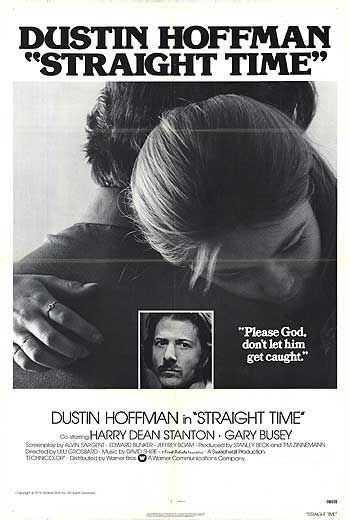
An Ex-Con Writes The Story And Dustin Hoffman Sort of Directs 1978’s “Straight Time”

Standard
Straight Time 1978 Poster

Original poster for 1978’s “Straight Time”

The 1970s were a pretty successful time for Dustin Hoffman. After the critical and box office successes of “The Graduate” and “Midnight Cowboy” in the late 1960s, Hoffman’s career was in full flight, so by the late 1970s, he was on a torrid pace, starring in a string of films that are now viewed as modern classics such as “All The Presidents Men,” “Straw Dogs,” and “Lenny.”

So in 1978 after all of these hits, Hoffman could use his status to bring to the screen a personal project and try his hand at directing, so he subsequently purchased the film rights to the novel, “No Beast So Fierce,” about an ex-con trying to go “straight,” which was actually written by an ex-con, Edward Bunker. Bunker had initially written the manuscript while still serving time in San Quentin for theft and eventual the murder of another convict (he says he didn’t do it). After his release, Bunker would help write the screenplay for “Straight Time” with Alvin Sargent, Jeffrey Boam, and Nancy Dowd (uncredited), and to add even more authenticity, Hoffman would even give Edward Bunker a small acting part in the film.

The rumor then, which is now Hollywood legend, was that Hoffman was incredibly difficult to work with and that he had been known  as an insufferable perfectionist, a fact that Hoffman later exploited for comedic sake in 1983’s “Tootsie.” Yes, Hoffman was known to drive so many directors insane that it shouldn’t come as a surprise that he even fired himself as the director of “Straight Time,” because he felt that combining acting and directing was compromising his performance. Hoffman hated failure, so in a decade where he didn’t make too many missteps, he oddly decided to replace himself as the director of his own film with Ulu Grosbard, the celebrated Broadway director and the man behind Hoffman’s only universally accepted flop of his 70s career, 1971’s whiny, “A Star Is Born”  styled mess that was painfully entitled,  “Who Is Harry Kellerman and Why Is He Saying Those Terrible Things About Me?”

Though he repudiated his performance, Hoffman is excellent as Max Dembo, a career thief was has just been released after a six year prison sentence. His parole officer Earl (M. Emmet Walsh) hounds Max in a way that makes you believe that he has absolutely nothing else to do. No personal vendetta in place here, Earl is just exceedingly confident that Max is going to trip up soon and violate his own parole. This almost surrealistic, obsessive persecution seems to be a clear manifestation of Bunker’s own fear of going back inside prison.

As part of his parole, Max must find work and does so at an employment agency where he meets a young woman named Jenny (Theresa Russell) who he asks out, and they immediately become a thing.   Max punches the clock at his canning factory job and tries to keep it clean, but after Earl discovers some proof of the heroin that Max’s friend Willy (a pre-Buddy Holly Gary Busey) left in his room, Max is dragged back to jail for a parole violation.  Inside, Max’s blood is tested clean of dope, and he is released but soon realizes that he will never again be left alone and ditches Earl to go back to a life of thieving with his pal, Jerry (Harry Dean Stanton).

If you were reading the last two paragraphs correctly, you would have noticed that there is a ton of talent in the supporting cast in “Straight Time.” I even neglected to mention Academy Award winning actress “Kathy Bates” who has a small role here as well. Here in lies the major strength’s of this film, it’s casting. Hoffman may have been critical of his own talent, but his performance is desperate and strong, and it is his critical nature that may have truly saved this production as he really knew how to pick them. Though the dialog rings true in “Straight Time,” the story and direction are pretty standard, but it does provide a solid frame to showcase this collection of acting talent.

The official 1978 trailer to “Straight Time”

“Straight Time” opened in 1978 to mixed reviews and a weak box office, which makes me think that maybe Hoffman wasn’t the only one with standards that might have been a bit too high during that decade. “Straight Time” is not a masterpiece by any means but should be noted for its performances, which as I wrote earlier in this review are very fine. Sadly, Dustin Hoffman would not try his hand at directing for another thirty years until he made the elderly snorefest, “Quartet,” another trite old white folks film made for the Judy Dench crowd.  Hoffman doesn’t act in “Quartet,” which I guess corrects his earlier mistake of acting and directing at the same time, but I wished that he had at least tried to direct one more film during that charmed period when he held acting to such a high standard.

Lily Cooks Up Delicious Yu Choy and Oyster Sauce

Standard

Yu Choy is similar to Chinese broccoli. Oddly, in the northeast, it is more readily available than broccoli. As a result, the Fierros eat it a lot.

The key component to this week’s dish, Yu Choy with Oyster Sauce, is the Mushroom Oyster Sauce that tops the Yu Choy. Lily will show you how to make the sauce and how to prepare the greens! This is one of her few one pot dishes, so it is a fast and simple recipe. Feel free to use the sauce for other dishes as well. It is a pretty tasty base sauce for egg noodles!

Enjoy!

Music courtesy of Antonin Dvořák, String Quartet no. 12 ‘American’, Op. 96 in F.

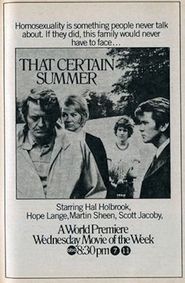
Homosexuality On American Television: 1972’s “That Certain Summer”

Standard
ThatCertainSummerAd

1972 Print Ad for “That Certain Summer”

Last week for this blog, I reviewed the excellent made-for-television version of “All Quiet On The Western Front” directed by Delbert Mann of “Marty” fame. During that review I reveled in the daring of the television films and mini-series of the 1970s, mostly concentrating on the choice of young directors who were tabbed at the time to make films for TV, such as Wes Craven, John Carpenter, and Toby Hooper. What I neglected to mention was the daring selection of topics that the networks chose during that time period, everything from drug abuse, to prostitution and yes, even the boy in the plastic bubble. Sadly, most of these topics were given the slightly heavier than ABC Afterschool Special treatment but every now and then one was handled properly, and that was the case with 1972’s “That Certain Summer” directed by Lamont Johnson.

Based on the novel by Burton Wohl, who also wrote the controversial, “A Cold Wind in August,” and “The China Syndrome,” “That Certain Summer” is the first American television movie to address homosexuality in a sympathetic way. The subject had received the big screen treatment in Hollywood to varying degrees of success in films like 1961’s “The Children’s Hour,” and 1967’s “The Fox” but it wasn’t until William Friedkin’s 1970 film, “The Boys In The Band,” that an American film showed homosexuals behaving in a less than psychotic way with no violent aftermath. Unfortunately “Boys In the Band” was not commercially successful, but due to its notoriety, it did bring the subject forward and allowed homosexuality to have a treatment for a more mainstream audience just two years later.

“That Certain Summer” is the story of Doug Salter, a divorced man who lives with his partner Gary in San Francisco. Doug’s son Nick, who resides in LA with his mother, is unaware of his father’s sexual preference, so when Nick plans to spend the summer with his dad, Doug asks Gary to move out so that their life together can stay a secret. Despite their best efforts, Nick finds out about Doug and Gary’s relationship, becomes upset and runs away, and eventually returns to his father who tries to help his son understand his sexuality, which isn’t all together successful. The handling of these moments for its era is done surprisingly well, and much of that success can be attributed to its choice of stars.

Playing Doug would be Hal Holbrook, who would soon become one of the busiest actors of the 1970s with roles in “Julia” and “All The President’s Men.” In 1972, Holbrook had only been in films for a few years and the general sentiment in Hollywood at the time was that any part playing a homosexual was career suicide. He initially turned down the role but eventually accepted the part because he felt a kinship to the main character of Doug, primarily due to the fact that he had recently separated from his wife but was unable to tell his young children about the split.

The actor selected to play his partner, Gary, was Martin Sheen, who like Holbrook had only been in films for a few years, so when presented with the possible negative reaction to playing a gay character he responded, “I’d robbed banks and kidnapped children and raped women and murdered people, you know, in any number of shows. Now I was going to play a gay guy and that was like considered a career ender. Oh, for Christ’s sake! What kind of culture do we live in?”

The film did not harm either of their careers as soon after “That Certain Summer,” Sheen would portray Kit Carruthers, the charismatic sociopath in Terrence Mallick’s masterpiece, “Badlands,” and just two years later he would work again with “That Certain Summer” director Lamont Johnson on another superb and controversial television movie, “The Execution of Private Slovik” about the only American solider to be executed for desertion in World War Two.  In 2007, Holbrook, after a long, varied career, would receive an Oscar nomination for Best Supporting Actor for “Into The Wild,” making him the oldest actor (at age 82) to get an Oscar nomination for a supporting role.

As for “That Certain Summer,” after re-watching it after all these years, I will attest that it is a fairly tame handling of the material, but again it is always done tactfully and with great attention to small emotional moments by the film’s excellent leads. Sadly, it should also be noted that despite films like “That Certain Summer,” and “The Boys In The Band,” LGBT issues were not automatically given the respect that you would hope for in Hollywood, and unfortunately, for the rest of the decade, gay-themed but exploitative films like “A Different Story” were produced and released. Regardless, it is extraordinary that a film like “That Certain Summer” was greenlit for television in the early 1970s, and we should consider ourselves lucky to have seen such two distinguished actors take a chance by working on a film with such a volatile subject matter for its time.

Bovine Ska and Rocksteady: 10/15/14 Generoso’s Birthday Show and 1968!

Standard
Three Tops Great 68 Train

The Three Tops “Great 68 Train” from 1968

Besides being the year of Generoso’s birth, 1968 was one hell of a year for Jamaican music. That year saw the end of the rocksteady era and the rise of a new rhythm in Jamaica…reggae. As the tradition goes during the last eighteen years of the Bovine Ska and Rocksteady, Generoso’s birthday radio program is punctuated by having good friends stop by the station, the making of a cake with one slightly disturbing word as it’s message for the year, and the playing of tracks from 1968, both rocksteady and reggae of course.

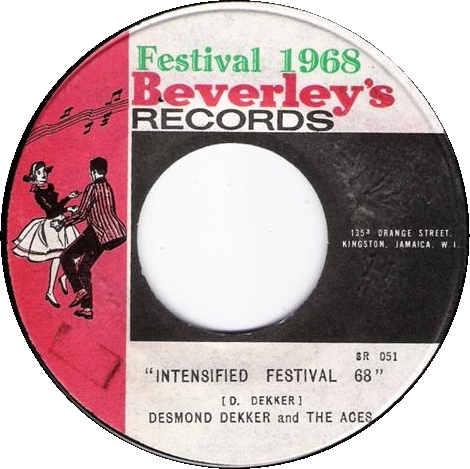
The show begins this year with eight tracks that actually feature the year “1968” in their title, many of which were Jamaican song competition entries for that year like “Intensified ’68” by the late, great Desmond Dekker which begins this year’s show followed by the version from Lynn Taitt and The Jets going out as always to Magnus. The Three Tops punchy rhythm on “Great ’68 Train” produced by Coxsone followed and a smart reggae from producer/vocalist Clancy Eccles “Festival ‘68” ended that opening set. Of the 1968 titled tracks we played, we must say that “Come Down 68” featuring the smooth voice of Trinidadian, Kentrick Patrick, a.k.a. Lord Creator is my favorite. We so wished that Creator had cut more tracks during early reggae as his voice was made for the rhythm and the track does remind me of his masterpiece, “Such Is Life,” which he cut for Randy’s.

This year, we called out to the listeners for their favorite 1968 tracks and our good friend Melody Wining suggested the track that many people regard as the very first reggae release… “Do The Reggay,” a Beverley’s produced cut that does possess that irresistible early reggae rhythm that we love here on the show, and a lead vocal from Toots which is as always as raw and brilliant as you could ever hope for in a cut.

Finally, we want to wish love to you our Brian, Nancy, and Brett who came to the station that night to help us celebrate and to all of our listeners and friends who called or emailed good wishes throughout the day and the show.

Listen to the show via the WMBR archives here: LISTEN HERE

This link will be active until 10/28/2014

Generoso and His Triple Layer Italian Cream Birthday Cake!

Standard

It is 1:15AM on Generoso’s Birthday so I guess its now time to make his birthday cake!! A triple layer Italian chocolate and vanilla cream cake which is damn delicious, if not terribly decorated (we have no skill here). This cake does take some time but I think you will love to make one for yourself and Generoso and Lily will show you how.   You will need at least a dozen eggs, a pound of butter, confectioners sugar, a couple of large chocolate bars, vanilla extract, sugar, milk, flour and one serious blender!

Background music is by  my buddy, Ottorino Respighi and his Suite no. 1 from Ancient Airs and Dances.

Bovine Ska and Rocksteady 10/8/14: Clarendonians Ska

Standard
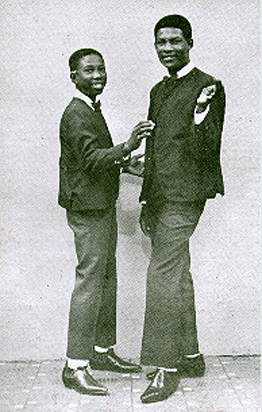
clarendonians photo

Ernest Wilson and Peter Austin: The Clarendonians

We started off the Bovine Ska and Rocksteady this week with a thunderous version to version excursion which we always send out to my mentor and dearest departed friend Magnus Johnstone:  Errol Dunkley and his killer cut on Count Shelly from 1973, “Where Must I Go,” followed by Daddy URoy’s version, “Merry Go Round” which was cut for High Note in 1976.  We had a fun mento set this week that started with a bizarre release on MRS that featured a new-report style tribute to Princess Margaret entitled “Caribbean Curtsy.”

The history behind the Clarendonians is a bit unclear and conflicting.  We know for a fact that Fitzroy Ernest Wilson and Peter Austin were the two founding members of the group. Both grew up in Hayes, Clarendon and formed the duo in 1963 when Austin was 18 and Wilson was only 12. After performing in local talent shows, the Clarendonians caught the eyes of the music industry and recorded first for Leslie Kong in 1963 with their single, “A Day Will Come.” As Austin and Wilson continued to perform, they caught the attention of Coxone Dodd and began recording for his Studio One And after this point, things get very confusing, but before we dive into the cloudy history of the Clarendonians line up, we’ll first hear “A Day Will Come,” their first single and then their early cuts for Studio One. We know that Freddie McGregor joined the Clarendonians at the age of seven, and it is believed that Coxone Dodd was the one who suggested that Freddie should be the member to expand the Clarendonians into a trio. While the Clarendonians recorded as a trio, the members of the group also recorded in duets with each other. McGregor recorded with Wilson as the duo Freddie and Fitzie, and Austin also recorded with McGregor as Freddie and Peter. And even though the duet recordings did not include all three members of the Clarendonians, the recordings of the duets were often branded with the Clarendonians name. And to make matters much more confusing, each member of the Clarendonians recorded solo tracks that were occasionally pressed with the Clarendonians name as well.

Despite all of the confusion and mystery surrounding who exactly is on each recording that claims to be that of the Clarendonians, we do know that there are three core members, and as a trio they predominantly recorded for Studio One.  Austin became disaffected with Dodd in the late 1960s and went on to record as a solo artist for producer Ken Lack and Phil Pratt, but eventually left the music industry and went on to work as an aviation supervisor at Norman Manley International Airport. Of the Clarendonians, Ernest Wilson was the first member to establish himself as a solo artist. McGregor took more time to establish himself as a solo artist, working at Studio One as a session drummer and backing singer, and eventually found success with “Bobby Bobylon”, and of the trio, had one of the most successful careers. On “The Best of the Clarendonians” record pressed by Studio One, there are only pictures of Austin and Wilson (as seen above). In addition, there is written introduction and description completed by Vin Dunning which does not mention Freddie McGregor in any way.

On October 8th, 2014, we did our spotlight on The Clarendonians from the earliest recordings during the ska era only.  We hope you enjoy it!

Listen to the full spotlight and the show via the WMBR archives here: LISTEN HERE

This link will be active until 10/21/2014.

The Director of “Marty” Boldly Adapts A Classic for Television: 1979’s “All Quiet On The Western Front”

Standard
All-Quiet-on-the-Western-Front DVD

All Quiet On The Western Front UK Blu Ray

Director Delbert Mann, who passed away in 2007, was one of those great pioneers of early dramatic television. Mann began his career in the late 1940s and saw success through the 1950s directing episodes of The Philco-Goodyear Television Playhouse, a weekly teleplay program of adapted classics and newer work that was being written by some of the best talents of the day such as Tad Mosel, David Shaw, and Paddy Chayefsky. In fact, Mann and Chayesfsky would team up in 1953 for the teleplay of “Marty,” the story of a lonely, unattractive, Brooklyn butcher who is desperate to find love. The original  teleplay version had a talented young actor named Rod Steiger in the titular role, but when a film version was to be adapted two years later they went with the more experienced actor, Ernest Borgnine, to play the hapless lead.  This choice in casting proved a good move, as the film was both a critical and commercial success, winning both the Academy Award for Best Picture and the Palm D’Or at Cannes in the same year, a feat that has only been done twice since in film history. Mann then spent most of the 1960s bizarrely making lighthearted and successful Hollywood bedroom comedies with Doris Day but would eventually return exclusively to directing television after his successful adaptation of Johanna Spyri’s “Heidi” in 1968.

In the 1970s, television movies and miniseries were a real cultural phenomenon as cinemas were losing out to the growing television audience. Blockbusters would eventually start to change this in the coming decades, but there was still a real audience for serious drama that could be watched at home.  First class Hollywood actors and directors were lured into making television movies and mini-series that drew incredible ratings such as: “The Autobiography of Miss Jane Pittman,” which starred Cicely Tyson, “The Execution of Private Slovik” which starred Martin Sheen and Ned Beatty and most notably the “Holocaust” mini-series which not only brought in A-list talent like Meryl Streep and James Woods but also raised the ante on the depiction of graphic violence on mainstream television. The brutal horrors of war shown in that NBC mini-series did not dissuade viewers from watching, so a year later in 1979, Mann embarked on a high budget television adaptation of the classic but brutal anti-war novel, “All Quiet On The Western Front” for CBS.

As in his days at The Philco-Goodyear Television Playhouse, Mann went with some bright young stars from television for his project, here in the form of Richard Thomas, the soft-voiced “John Boy” from the Waltons, he who would play the main character, “Paul Baumer,” from Erich Maria Remarque’s book. As a boy, I was a huge fan of The Waltons, so seeing Richard Thomas play anyone but John Boy was difficult for me but given that his character on The Waltons was a sensitive writer like Paul Baumer, for me it added to the sadness of what his character had to endure. For Paul Baumer’s mentor, Mann would also bring in his old friend from “Marty,” Ernest Borgnine, to play Stanislaus Katczinsky or Kat, the grizzled old hand who guides Paul through the grim reality of combat. Borgnine is excellent in this role and brings a real tough compassion to the character. Rounding out the cast would be the great actress of stage and screen, Patricia Neal, to play Paul’s dying mother and notable English actors, Sir Ian Holm, as the brutal yet cowardly sergeant “Himmelstoss” and Donald Pleasance, who gives an excellent portrayal of Kantorek, the school professor who fills the minds of Paul and his friends with thoughts of  German superiority and heroism. Even with such an excellent cast that had been assembled, the adaptation must have been somewhat daunting for Mann as the original filmed version of the book, directed by Lewis Milestone in 1930, had won Best Picture and was widely regarded as a masterpiece by most critics.

Truthfully, Mann did not stray too far from Milestone’s original vision as far as the narrative but being that this production was almost fifty years later, Mann did have the ability to increase the visual expression of violence which he does to the degree that is more in line with Remarque’s book. The first time we see the grotesque horrors of trench warfare in Mann’s version, we immediately understand the futility of this war in a way that Milestone could not depict in 1930. Though the violence in the 1979 version is extremely unpleasant, it is never gratuitous and is there solely to drive the point home of the Paul’s heartbreaking experiences as a soldier during the “war to end all wars.”

I should say here that in 1978 I was in the fifth grade and we were all forced to read “All Quiet On The Western Front” by my pseudo-hippie teacher Ms. Lombardi (I say pseudo-hippie because the Catholic school I went to would only allow so much peace and love), but the book hit me hard. A year later in 1979, Mann’s film would be the first time I would see a book I read be made into a film which brought me great excitement though I feared what I would see. It would be worse than I expected as Mann harshly depicts the tragic scenes that one can never forget, such as the key moment when Paul sorrowfully regrets the bayonetting a French soldier who he must then stay with during a shelling barrage, or the moment when a young recruit is fatally poisoned while trying to retrieve his helmet in a trench filled with mustard gas. Then there is the saddest moment of the film in my opinion, when Paul realizes that he has carried his wounded friend Kat to an aid station to only find out that his friend had been dead for some time. Mann and his cast do great justice to the book and even though the film won an Emmy, some critics argued the necessity of another filmed version of this book, but to be honest, there had been another World War, Korea, and Vietnam since the Milestone film in 1930 so I feel strongly that even though Mann’s version may not be as artful as the original, it was very necessary to make a more relevant version for my violence-numbed generation.

Mann’s “All Quiet On The Western Front” was edited down from 150 minutes to 129 minutes for a European theatrical release in 1979 and for a while that was the only version available on DVD.  Thankfully in 2009, a UK Blu-Ray was released of the film in its full 150 minute version so that you can see for yourself the masterful adaptation of great novel by one of the true talents from the golden age of television, the late Delbert Mann.

Bovine Ska and Rocksteady 10/1/14: Bop and The Beltones

Standard

1968 Trojan Records release of “I’ll Follow You.”


A joyous week at the Bovine Ska and Rocksteady as we celebrated our first wedding anniversary as married peoples 🙂  Thus we began with two sets of killer Jamaican ska and a mento set of questionable virtues!  We also did as our spotlight, one that has never been done on this show, that of Bop and the Beltones!

Bop and The Beltones were originally Rudolph Simmonds (who was known as Bop the dancer), Keith Mitchell, and Owen Laing who first recorded with Coxsone at Studio One and were under contract with him for some time in their early career. Trevor Shields was a young musician who would practice with his guitar and sing at school when he would one day run into The Beltones who invited him to ‘jam’ with them.  This was a strange time for the group because they were frustrated with the lack of progress coming from Studio One, and at the same time Bop left the group in order to pursue a dancing career in the U.S.   In a moment of fate, Keble Drummond introduced the Beltones to Harry J, who at the time was only an insurance salesman looking to enter the music industry. Harry J heard the group and wanted the Beltones to be a part of his emerging label, and the group accepted.

After hearing the group rehearse No More Heartaches, a track written by the newly appointed Beltone, Trevor Shields, Harry J actually rearranged the harmonies in the group, making Trevor the Lead instead of Keith, who was the original lead for the track. After the rearrangement, the group recorded No More Heartaches with Harry J as the producer, but given that Harry did not have a studio yet, the single was actually physically recorded at the studio of Studio One. After No More Heartaches got the Beltones some popularity in Jamaica, the group performed at the Carib theater, toured the North Coast, and appeared on both  TV at JBC and radio at RJR.  Their recordings ended up doing well in England because they were distributed by Trojan, but the band did not see a ton of success, and eventually, they called it quits, with Owen moving to Canada and Keith moving to the U.S. Trevor would continue recording as a solo artist and with other groups.

On October 1st, 2014, we did our spotlight on Bop and the Beltones from the earliest recordings during the rocksteady era with Studio One through their time with Harry J.

Listen to the full spotlight and the show via the WMBR archives here: LISTEN HERE

This link will be active until 10/14/2014.


The Joy of Making Pasta e Fagioli With Generoso

Standard

“Pasta e Fagioli” is the best proof of the Italian language helping to make even the most basic things sound elegant.  The direct translation for the essential dish, is “pasta with beans” but as I stated with my recipe for chicken cacciatore, it is not a put it down because basic can sometimes be very delicious.  Many people make this dish like a soup but not in the Fierro household, where Pasta e Fagioli has always been prepared as a non-watery, intensely garlicky pasta dish.   The ingredients are super basic; tomatoes, garlic, cannellini beans (sometimes called navy beans), ditalini pasta and olive oil.  Also, by definition, this dish is vegetarian, even vegan actually, and should only take an hour or so to prepare.  Enjoy the video and let me know how yours turned out!  Music is the Concerto for Cello and Orchestra in D Minor by Edouard Lalo